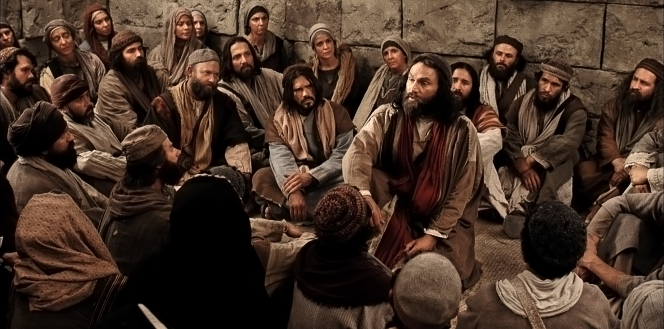
From Judges To Kings

(TOP FIVE TAKEAWAYS)

Dale Pollard

God had established the Judges to rule Israel rather than a king which was typical for other nations during that period. God grants their request to have a king even though this kind of leadership was bound to fail. Despite the fact that God told them how they ought to govern themselves, the people caved to peer pressure from surrounding nations. God handed those free moral agents of Israel a shovel and they began to dig.

With that context in mind, here’s a portion of Samuel’s final words to a people who’ve just made a poor decision to reject God’s guidance. 

“Then Samuel called on the Lord, and that same day the Lord sent thunder and rain. So all the people stood in awe of the Lord and of Samuel.

19 The people all said to Samuel, “Pray to the Lord your God for your servants so that we will not die, for we have added to all our other sins the evil of asking for a king.”

20 “Do not be afraid,” Samuel replied. “You have done all this evil; yet do not turn away from the Lord, but serve the Lord with all your heart. 21 Do not turn away after useless idols. They can do you no good, nor can they rescue you, because they are useless. 22 For the sake of his great name the Lord will not reject his people, because the Lord was pleased to make you his own. 23 As for me, far be it from me that I should sin against the Lord by failing to pray for you. And I will teach you the way that is good and right. 24 But be sure to fear the Lord and serve him faithfully with all your heart; consider what great things he has done for you. 25 Yet if you persist in doing evil, both you and your king will perish.”
I Samuel 12.18-25

TOP FIVE TAKEAWAYS 

  1. There’s a needed message for the church today. We should never let our previous sins hold us back from pressing forward. Samuel tells the children of Israel not to let the evil in their recent past keep them down— but he doesn’t pretend as if they hadn’t sinned against God. 
  2. There’s hope. Samuel tells the people that God is quick to forgive. He still is!
  3. There’s a reminder to be selfless in prayer. It’s interesting that Samuel says that his failure to pray for God’s people would be a sinful thing for him to do. 
  4. There’s a glimpse of God’s power. Samuel tells the people to fear the Lord AND remember what He’s done for them. God could have wiped them out. He clearly had the power as He demonstrated a portion of it over nature in the beginning of this section. 
  5. There’s a warning— motivated by love. It was true for the children of Israel and it’s true for us today. If we persist in doing evil, we will perish. 

Fearless

Dale Pollard

It began with just a few men. They didn’t know exactly what kind of damage they were about to inflict on their own reputation— for all eternity. There’s an intense account found in Acts 15 where we’re introduced to  “some men” and they’re on their way from Judea. They begin to teach,

 “Unless you are circumcised according to the custom of Moses, you cannot be saved.”

 Paul and Barnabas rise to the challenge and they debate them fearlessly, but the damage had already been done. The argument had  not only confused them but it stirred up the entire group to the point that it was decided to take matters to the very top. Off they went to the apostles and elders in Jerusalem. 

HERE’S WHAT WENT DOWN

Paul and Barnabas hadn’t lost faith and in fact, they proclaimed what God had done for the Gentiles to all who would listen on their trip. The news of God’s grace to all races and nations brought them great joy. In Jerusalem the apostles and elders had gathered to deal with the conflict. It didn’t take long for the group to separate into two teams with two different beliefs about God’s will for us all. It was at this moment where Peter stands up and begins to speak. He explains that God knows the heart of all of us. He’s always known this! 

HERE’S HOW IT HAPPENED 

The Spirit had descended on the apostles to prove that there is no discrimination between Jews and Gentiles. The demand for proof is always in our hearts, and so the Spirit demonstrated miraculous powers to give credence. Peter would explain that under the Jewish law, even Moses and the greats couldn’t bear the load. It wasn’t sustainable, and it wasn’t meant to last. 

It’s verse twelve that gives one some additional insight. It says,

 “And all the assembly fell silent, and they listened to Barnabas and Paul as they related what signs and wonders God had done though them among the Gentiles.” 

HERE’S THE POINT

How do we solve our conflicting views that spring up in our midst? There’s only one effective way to do so and that’s to take our matters of division to the top. Not preachers, teachers, deacons, or elders, but to the very top. But if God is going to speak, we’ve got to be quiet. The assembly went silent. Everyone there, no matter what their belief decided to listen. Speaking over each other never solved a problem and this is true on a congregational level, and a personal one.

HERE’S A QUESTION 

 How many times do we fall victim to the bias assembly of thoughts in our own minds when reading God’s word? It can be difficult to hush those voices, but it’s when we do that real, positive change finally has a chance to take root. 

A Quiet Assembly

Tuesday’s Column: Dale Mail

Dale Pollard

It began with just a few men. They didn’t know exactly what kind of damage they were about to inflict on their own reputation, for all of eternity. The account is found in Acts 15 with “some men”  going down from Judea and teaching, “Unless you are circumcised according to the custom of Moses, you cannot be saved.” Paul and Barnabas debated them fearlessly, but the damage had been done. The argument had so successfully confused and stirred up the assembled group that it was decided to take matters up the command chain. They were off to meet with the apostles and elders in Jerusalem. 

Paul and Barnabas hadn’t lost faith and in fact, they proclaimed what God had done for the Gentiles to all who would listen on their trip. The news of God’s grace to all races and nations brought the listeners a great joy. In Jerusalem, the apostles and elders had already gathered to deal with the fierce conflict. It didn’t take long for the group to separate into two teams each holding two different beliefs about God’s will for all. It was at this moment where Peter stands up and begins to speak. He explains that God knows the heart of all of us and He’s always known. 

The spirit had descended on the apostles to prove that there is no discrimination between Jews and Gentiles. The demand for proof is always in our hearts, and so the Spirit demonstrated miraculous powers to give credence. Peter would explain that under the Jewish law, even Moses and the greats couldn’t bear the load. It wasn’t sustainable, and it wasn’t meant to last. 

It’s verse twelve that gives one some additional insight. It says, “And all the assembly fell silent, and they listened to Barnabas and Paul as they related what signs and wonders God had done though them among the Gentiles.” How do we solve our conflicting views that spring up in our midst? There’s only one effective way to do so and that’s to take our matters of division to the top. Not preachers, teachers, deacons, or elders, but to the very top.

If God is going to speak, we’ve got to be quiet. The assembly went silent. Everyone there, no matter what their belief was—decided to listen. Speaking over each other never solved a problem and this is true on a congregational level, as well as a personal one. How many times do we fall victim to the assembly of the thoughts and bias in our own minds when reading God’s word? It can be difficult to hush those voices, but it’s when we do that real change has a chance to take root. 

Jesus Has All Authority

Monday’s Column: Neal At The Cross

Neal Pollard

Jesus has come to Jerusalem and taken the gloves off. By His unparalleled authority, He is directly challenging the religious establishment whose shallow righteousness has been rejected by His Father. He has come to take the Old Law out of the way and establish His church. It’s teaching like this parable in Luke 20:9-18 that will provoke those leaders to the point that they will trump up charges and bribe false witnesses to arrest, try, and have Him crucified. This parable is stark and shocking, and the moral as heavy as an anvil. Notice.

THESE LEADERS WERE GUILTY OF IMPROPER STEWARDSHIP (9). The “man” in the parable represents God, the Father. He made Israel a nation and gave the Jews a Law to follow and keep. The Jews, particularly the religious leadership, were entrusted with faithfully carrying it out, but they did not. 

THEY WERE GUILTY OF TAKING WHAT DIDN’T BELONG TO THEM (10). In fact, these leaders–dubbed “the vine-growers” by Jesus in this parable–thought that they were in charge. They sought to make people subject to them, to follow their rules (cf. Rom. 10:3-4). The end result was vain religion (Mat. 15:8-9).

THEY WERE GUILTY OF ABUSING THOSE SENT TO THEM (11-15). The “slaves” sent to them were presumably prophets and teachers, no doubt inclusive of John the Baptist. These were the Father’s spokesmen, come to teach and correct them. Each one sent was treated the same, sad way: they “beat him and sent him away empty-handed.” Last of all, the son was sent (13-14). The “owner” (the Father) sent Him, saying, “I will send my beloved son; perhaps they will respect him” (13). Instead, seeing Him as the heir, they plotted to kill Him (14). Obviously, Jesus is referring to Himself and the very thoughts these religious leaders were thinking as He told the parable! 

THEY WERE GUILTY OF LOSING WHAT WAS ENTRUSTED TO THEM (16-18). Instead of being convicted by this parable, these religious leaders recoil at the moral of the parable: “What, then, will the owner of the vineyard do to them? He will come and destroy these vine-growers and will give the vineyard to others” (15-16). Their emotion boils over and they audibly reply to Jesus’ parable, “May it never be!” They missed the travesty of the behavior they and their forefathers had shown to God’s messengers and the sin they were about to perpetrate on His Son. They didn’t want to lose their grip on the power and influence they had taken. But Jesus doubles down, changing the imagery from a vineyard to building construction. They were going to reject Jesus, the stone, but He would be made the chief corner stone. He would judge and destroy them, if they did not abandon their rebellion.

Jesus is full of love, kindness, and peace. But, that’s an incomplete picture of Him. He came to establish His rule and reign. He must be King and Lord of our lives. We must submit to His way and truth to enjoy His life. 

Open Bible on a black table with book marker and pink highlighting
Jesus Has All Authority

OUR PROBLEM WITH AUTHORITY

Monday’s Column: Neal At The Cross

Neal Pollard

A researcher at the Royal Society of Medicine in the UK published a paper called “The Spoilt Generation.” He ties the alarming rates of child depression, teenage pregnancy, obesity, violent crimes by adolescents, and more to a basic lack of respect for authority (Daily Mail).  The Cato Institute published a study simply entitled, “Respect For Authority.” One of its most basic findings is that the public believes social instability follows  disrespect for authority (Cato). 

What do you think?  Have you noticed a decline of respect in society for parents, teachers, the police, employers, and  others in a position of authority? Most of us would agree it’s happening, and that it is not good.  Peter warns about it in the most sobering of terms, speaking of the unrighteous who face eternal punishment as those who, in part, “despise authority (2 Pt 2:10). Jude offers a very similar warning, describing those who turn God’s  grace into permission to do whatever they please (4), and this includes their “rejecting authority” (8).  So why do we often have a problem with authority?

We have a problem with rebelliousness. Saul, the earthly king, had a problem with rebellion (1 Sam. 15:23). Paul writes Timothy, discussing why the Law of Moses existed. It was for unrighteous people, and at the top of that list were the lawless and rebellious (1 Tim. 1:9). Rebellion is insubordination. It characterized the period of the Judges, when everyone did what they thought was right to them (17:6; 21:25). As we look at crime in our current society, we see the fruit of rebellion. CNN reports a 33% increase in homicides in major U.S. cities from 2019 to 2020, and now it is up another 24% since the beginning of 2021 (CNN). Yet, cities like Baltimore no longer prosecute drug possession, prostitution, and other low-level offenses. In California, shoplifting has in some places ceased to have any legal ramifications. How many looters in major U.S. cities have never served a day in jail or paid a penny in fines? Romans 13 clearly condemns this. Paul says “whoever resists authority has opposed the ordinance of God; and they who have opposed will receive condemnation upon themselves” (2). Most of us would condemn this nationally, but do we struggle with rebellion against authority closer to home? Do we struggle with it against employers, elders, and parents? Rebelliousness can be milder than murder and more limited than against government. Do we only submit if we accept what they lead us to do? Do we maintain meekness and gentleness only if we agree with them? Rebellion is not the mark of a disciple of Christ; such have a different master. 

We have a problem with respect. Paul says, “We ask you, brothers, to respect those who labor among you and are over you in the Lord and admonish you, and to esteem them very highly in love because of their work. Be at peace among yourselves” (1 Th. 5:12-13). Esteem, as a verb, is found 28 times and means to think, consider, or regard. Paul is telling the church how to regard their leaders (“very highly in love”) and why (“because of their work”). Interestingly, the noun form of this verbs is often tied to various types of leadership–“Ruler” (Mt. 2:6), “leader” (Lk. 22:26), “governor” (Acts 7:10), “chief” (Acts 14:12) and “leading men” (Acts 15:22). But in 1 Thessalonians 5:13, it is a verb and means to engage in the intellectual process of thinking of them with the highest respect. The word “esteem” deals with our character generally and not just how we treat elders and any other leaders. Philippians 2:3 says, “With humility of mind regard one another as more important than yourselves.” But Peter speaks of some who “count it a pleasure to revel in doing wrong” (2 Pet. 2:13). Respect is a matter of how you set your mind. If we don’t have it in our hearts to respect those in authority, it can’t help but show in the way we speak to them or about them. Our children learn how to treat authority figures by watching and listening to us. What are we teaching them?

We have a problem with our religion. “Religion” is only found  four times in the New Testament. It means appropriate beliefs and the devout practice of our obligations (Louw-Nida, 530). How do we properly express our religion? It is not just about worshipping the way God commands. That’s a vital part, but only one way. Paul tells us what his pre-Christian religion looked like (Acts 26:5). He tells us about the false religion of some, ruled by their fleshly minds (Col. 2:18). James uses the word “religion” twice, in James 1:26-27. He teaches that pure, untainted religion is proven or disproven by your thoughts, words, and deeds. When I show disdain toward those in authority in or out of the church context, I’m telling everyone who witnesses it about my religion. I am making an impression on them that will either lead them closer to God or farther away from Him. Whatever I tell them about the one(s) in authority, I am telling them far more about me. If they follow my lead, will they stumble (cf. Lk. 17:1-2)? 


Our problem with authority is ultimately a problem with God. When Paul tells Rome that those who resist authority oppose God’s will, he was talking about a government ruled by wicked Caesars who murdered Christians. When I disapprove of or disagree with those in positions of authority, in the nation, church, workplace or home, I must respond how God says respond. I must leave the rest to Him. 

God’s “House-Law”

Wednesday’s Column: “Third’s Words”

Gary III

Gary Pollard

Every home has some kind of system in place to keep order. Maybe you were told to take your shoes off at the door, keep your elbows off the table, make your bed in the morning, or brush your teeth more than twice a month. Every home is different and the expectations for conduct and cleanliness vary accordingly. However your home was structured, you were at least bound to a set of rules in some form.

God’s house is no different. I’m not just talking about the building we meet in for worship, but that anytime His family offers up worship to Him we are expected to follow His rules. I Timothy 1.4 talks about God’s “house-law” (often mistranslated “stewardship” or “godly edification”). The word is οικονομία (oikonomia), combining οίκος (house) with νόμος (law). What does this mean in context? In I Timothy Paul publicly berates two members who were teaching “myths and endless genealogies which do not promote the house law of God in faith” (1.3, 4; 20).

If any teaching goes against what God has told us He wants, it’s a violation of His house-law. We understand this when it comes to daily life outside of religious activities. If we break the law we are held accountable to it. We understand that violating the laws our governments put in place to maintain order and promote justice carries consequences. Some, though, do not act as if the same applies to God’s people in a religious context.

God’s house-law is more specifically defined in I Timothy 2.1-8. Anytime and anywhere Christian men and women offer worship together, God expects qualified Christian men to lead. This is made clear with the phrase, “…in every place” (2.8). God’s house, God’s rules.

Not just any man can lead, though! He must be someone who is able to lift holy hands (that is, he is pure in life and can offer worship without the stain of sin), he must be cool-headed, and he can’t be unstable in his faith (2.8). God’s house, God’s rules.

God expects women to avoid drawing undue attention to themselves (2.9, 10) and are to allow godly men to lead them in worship (2.11-14). His house, his rules.

In all of my vast wisdom and experience as a child, I didn’t always agree with or like all of my family’s house rules. Probably every teen and their unfortunate parents experience this. My feelings about a house rule did not alter its validity in any way. It was not my house so I was not in a position to change or violate the rules. Trying to do so was not only futile but often carried consequences.

God’s design for His church is not acceptable to the secular world. In their disagreement or downright hostility toward it they have pushed many churches into changing God’s house-laws. This doesn’t fly in the legal world, the home, or in any setting where rules were set in place by those most qualified to make them. Why would it work with God?

We may not always understand why God made the laws that He did, but this is where the faith aspect of 1 Timothy 1.4 comes into play. We have to ask ourselves, “Do we trust that God knew what He was doing when He made these laws, and do I really want to challenge Him on the rules He made for His own family?” At the end of the day we must remember that in God’s house we follow God’s laws. Many of the problems facing the church in 2020 can be solved simply by accepting this fact! If we do – as in any family – we will not only have harmony in the church, but a permanent, peaceful home with God after this life.

Job 38.4-7

Korah’s Rebellion 

Tuesday’s Column: Dale Mail

IMG_1381

Dale Pollard

For the next few weeks we will look at some of the lesser known Biblical accounts, and the lessons we can learn from them. 

In Numbers sixteen there is a strange and terrifying event that unfolds. It has all the ingredients of a great movie. There’s rebellion, jealousy, vengeance, and drama but it’s so much more than a story. It’s history, and it’s been divinely recorded for our learning.

Korah seems to be the individual that starts a rebellion against God’s chosen leader, Moses. He hops up on his high horse and rallies together two hundred and fifty other leaders among the people. This group, no doubt, gave him the confidence to directly confront Moses face to face. He says, “You’ve overstepped yourself, Moses! Take a look around at the people you’re trying to lead. They are just as righteous as you, and God is in their midst!” Moses falls on his face, then says, “Tomorrow, God will make His stand with who He chooses.”

When morning comes, Korah and his fellow rebels bring incense to the Tent of Meeting to offer up to God. In the meantime, an intense conversation between God and Moses takes place. God, filled with righteous anger, is about to demolish every one of them in their tents, but Moses pleads with God to give them a chance. So, a warning is given to the people, “stay away from the tents of these evil men!” No sooner had the warning been given, the earth opens up and Korah and all those belonging to him are swallowed up by the earth. Fear spreads among the people as they were afraid for their lives, and who could blame them? God then strikes down the two hundred and fifty leaders with fire— the worship offerings still in their hands. What an account! Of course there are several applicable lessons for us, but here are just three.

Mind your Maker.

God chose for His people who He wanted to be in the leadership positions. When Korah felt that he knew better, the consequences were fatal. May we never fall victim to the mindset that tells us that we know better than God. Our Lord wants us to live a certain way, and worship a certain way. When we make changes to His divine commands, just like Korah, we have overstepped our bounds.

Mind your mingling.

How did so many band together with Korah? They were all mingling in the wrong crowd. Every one of those men made a choice. They chose to grumble and complain together, then they died together. It doesn’t matter how many people think the same way we do if that thinking isn’t Patterned after God’s thinking.

Mind your motives.

What drove these men to take such a stance? They were motivated by pride, discontentment, anger, greed, and self-righteousness. All of these attitudes are toxic for the church today, and all of them still lead to destruction.

While this account is a humbling reminder of God’s reaction to disobedience, there’s more to the story. Although Korah was out of line, his descendants would prove to be more upright (Numbers 26:11). They even go on to write some of the Psalms in the years to come, including Psalm 42. Your upbringing and roots do not have to dictate your eternity. Like Korah, we all have a choice. My prayer is that as these historical events are read we learn from them and press forward, more determined to be faithful children to a perfect Father.

“As the dear thirsts for water, so my soul longs for you, O God. My soul thirsts for God, for the living God.” 

Psalm 42:1-2

40455086_10155783567500922_7374175323555889152_n

The Inevitable Standard

Neal Pollard

Everywhere, each generation tries to figure out the why and how of living. Most will not find the right path (Mat. 7:13-14). Almost all are convicted, even passionate, about the way they wish to live life. They may be fiery about politics, social issues, relationships, and even religious ideals, and to be consistent they must appeal to some ultimately, overarching authority that makes right right and wrong wrong whatever their point of view. Will it be feelings, friends, the majority, the minority, the church, family, a teacher, culture, or something else? The Bible claims to be the arbitrator by which all matters are judged. But if not the Bible, there has to be some universal absolutes with an adequate origin to compel people to follow it. Whether the issue is rape, murder, stealing, or similar norm that stands between order and chaos, there has to be adequate reason to submit to it. 

This inevitable standard helps us decide whether or not a Creator exists. If there is nothing (no One) greater, bigger, wiser, and stronger than us, why can’t we decide right and wrong as our whims determine? Why would we desire civilization and peace? Why would we wish good will or at least peaceful coexistence with each other?

The inevitable standard helps us decide which god (God) is to be followed. Do their alleged writings and teachings cohere and show consistency? Do they adequately answer the great questions of life?

The inevitable standard helps us decide whether or not Bible doctrines taught by men are consistent with and true to what the Bible actually teaches. How do we know how to worship, be saved from sins, what roles to play in life, what our purpose is, and how to reach a desirable destiny? The nonsensical claim that you have your truth and I have mine is unacceptable in every other discipline (building construction, medicine, physics, mathematics, etc.). Even falling back on “you have your interpretation and I have mine” is a dangerous slope since there are matters of life and godless ( Pet. 1:3). 

The inevitable standard helps us fulfill our roles in the home, the church, and the world. How should we live and how should we help our physical family, spiritual family, and communities live? It matters!

It may gall us to think we all must concede to a standard of right and wrong, of absolute truth. To say that all of us are accountable to the same standard may be construed as bigoted, small-minded, or narrow, but everything falls apart if each of us follows our own set of rules. Imagine an interstate where every driver followed whatever they thought they should and ignored whatever they felt they could or should. All of us are on the road of life heading somewhere. How will we get there? There is an inevitable standard, given by God to us through men He moved to write it down (2 Tim. 3:16-17). 

tape measure.jpg

THERE IS A PATTERN OF TEACHING

Neal Pollard

The Bible claims to hold the answer to your greatest problem. Not only that, but it helps you to identify what that problem is which you may or may not even know about. In Romans 6:16-18, Paul talks about a “form of teaching” given to those at Rome. 

Paul writes this powerful epistle to emphasize that salvation is by faith and not by works of law, but faith in what? One might say, “Faith in Jesus,” and Paul makes that point repeated in Romans (3:22; 3:26, for example). But how do we have faith in Jesus? He says, “So faith comes from hearing, and hearing by the word of Christ” (10:17). 

Elsewhere, Paul reminds us that there is “one faith” (Eph. 4:5), so a purely subjective faith (what we think we should believe) is not the faith commanded in Scripture. So, we’re looking a t a faith produced by reading, learning, and following God’s Word.

No wonder, then, that Paul emphasizes the importance of obedience in this text. Does God want you and me and everyone else to obey the same thing? Or can you pick what you want to obey while I pick what I want to obey and everyone else do the same? Paul talks about an objective standard of teaching that is for everyone, everywhere, for all time. Look closer at what he says in this brief passage of Scripture and what it means for us today.

THE FACT OF THE PATTERN (Rom. 6:17)

Paul talks about a form, a kind, class, or thing that suggests a model or pattern (BDAG 1020). It is the word used in the Greek Old Testament in Exodus 25:40 and quoted by Stephen (Acts 7:44). Translators chose the word form (“standard,” ESV, or “pattern,” NIV) in this verse. 

For those who pour concrete, you use “form boards” to cause it to conform to their shape in width, length, and height. Without some way to hold the concrete, what a waste of time and money! The concrete would be totally useless. It’s the same concept for those who bake and use cake moulds, muffin pans and cookie cutters. If you put dough or mix into a round pan, you don’t expect a rectangular finished product. 

Paul talks about a teaching that conforms to a certain form or pattern, having definite, identifiable structure. So, the Romans received teaching that was meant to produce the same result in every case. A growing number of people look at the Bible as basically shapeless and formless. They reject the idea of pattern theology, the very thing Paul appeals to in Romans 6:17. The alternative to there being a pattern for salvation, worship, church leadership and organization, sexuality, morality, gender roles, and all teaching is that we have no pattern.

Without a standard to appeal to, how do we determine right and wrong? Historically, when humanity rejects an absolute standard, we choose what we think is right and wrong (cf. Jud. 17:6). This is a fatal way to live (Prov. 16:25), and it destroys societies (Prov. 14:34). But everyone is going to appeal to something as the final say and authority, even if it’s only self. There is a “standard of sound words” (2 Tim. 1:13). It must be retained and it carries with it the authority of Christ Jesus.

THE FRUIT OF THE PATTERN (Rom. 6:17-18)

Since there is a pattern of teaching, what are the consequences? Paul implies that we must obey it and commit to it, just as the Romans did. The end result of such obedience is that we become slaves to the right master. Everyone will inevitably be enslaved, whether to sin or righteousness. This pattern shows us the right choice to make. We’re not just talking about information, but rather information which leads one to do something and become something. 

THE FREEDOM OF THE PATTERN (Rom. 6:18)

Ironically, those who reject the idea of pattern theology claim that such unfairly restricts and inhibits us. But, Paul draws a different conclusion. Obeying the form of teaching and committing themselves to it led them to be free from sin. Sin brings spiritual death (5:12), condemnation (5:16), enslavement (6:6), and deception (7:11). If we understand the true nature of sin (which biblical teaching defines), we will want to be free from the burden of it.  The form of teaching shows us how to do that. Anyone who wants freedom from sin can have it, but anyone who wants freedom from sin must follow the pattern. 

Obeying Christ’s teaching is not legalism. It is faith in His power, but also submission to His will. There is truth. We can know it (John 8:32). We must obey it (Rom. 6:17). It will free us (John 8:32)! 

fh07may_pourc_01-2

Observations From Perhaps The Most Difficult Passage In The New Testament

Neal Pollard

What is perhaps the most difficult statement in the Bible is not grammatically complex or difficult to comprehend from an intellectual standpoint. But what elder, preacher, or other member has not agonized over it many times. Asked point blank for His teaching on the subject of marriage, divorce, and remarriage, Jesus says, “Because of your hardness of heart Moses permitted you to divorce your wives; but from the beginning it has not been this way. And I say to you, whoever divorces his wife, except for immorality, and marries another woman commits adultery” (Mat. 19:8-9). There are quite a few observations that can be made from this reading.

  • Jesus makes a timeless statement (“from the beginning”).
  • Jesus makes a universal statement (This applies to “whoever”).
  • Jesus makes an authoritative statement (“I say to you”)–Matthew often reveals Jesus’ contrasting His teaching with the inferior Law of Moses.
  • Jesus does not mandate (necessitate) that divorce occur in the case of fornication.
  • Jesus identifies the exception to the rule (“whoever divorces his wife and marries another woman commits adultery”)–It is fornication (BDAG–“Unlawful sexual intercourse”).
  • Jesus’ teaching here cannot be negated by other Scripture (cf. 1 Cor. 7; 2 Cor. 5:17).
  • Jesus teaches that another marriage (excepting for one’s spouse’s fornication) is adulterous.
  • Jesus does not free the guilty to remarry.
  • The duration of adultery in the second marriage considered by Jesus persists as long as that subsequent marriage persists.
  • The teaching has been difficult from this inception (see Mat. 19:10-12).

This passage must be taught patiently, lovingly, wisely, compassionately, and prayerfully! Yet, on what grounds can we decide not to teach it? Treating it with the reverence it deserves, why would we seek to dismantle or discredit it? Of course, we would not.  By teaching it, we risk losing good will and favor with many but by teaching it as Jesus taught it we show respect and fidelity to His supreme authority. May God grant us “a spirit…of power and love and discipline” (2 Tim. 1:7) on this eternally important passage. 

800px-Wedding_rings_photo_by_Litho_Printers

HOW IS TRUTH DETERMINED?

Neal Pollard

Recently, I received some feedback on a recent article (Truth Is Truth, No Matter Who Disagrees With It). Negative feedback is not rare, but expected when we put ideas down on paper (or on electronic media like blogs). This feedback was not personal, nor unkind. Yet, it reflects the thinking of so many who shun the idea of absolute, objective truth. Consider the major arguments made by the one who wrote:

—No matter what you believe, the majority disagrees with you.
—You are no smarter or more sincere than those who disagree with you.
—Everyone is certain their religion is right, but this is a function of the brain and proof of nothing
—Conflicting views within the “Restoration Movement” shows the fallacy of being certain about truth
—Certainty is dangerous because it does not allow for change

The last three arguments seem more of a confrontation of certainty than arguments against truth, but consider each of these individually.

Does the inevitability of disagreement nullify the idea of absolute truth? If someone argues our answer that two plus two equals four, and were able to get a majority to side with them that the answer is five, does that nullify the truth of what two plus two equals?

If a person with demonstrable intellectual capacity and apparent sincerity nonetheless avers that two plus two equals five, do we rewrite the laws of addition and reprint the textbooks? If not, why not? Is it not because we can take two of something, add it to two more of the same something, like integers or apples or books, and find the inescapable, universal truth that now there are four?

Can any religion be certain that they are right, but be wrong? Universalists believe everyone will ultimately be saved. Those who believe that murdering those they deem “infidels” pleases their God and they teach others that this is truth. Cults often dub their leaders the Messiah. On what basis would we object or oppose any religious tenet, like these, without an objective standard of truth?

Does the imperfection of people in applying revealed truth impugn the reality of absolute truth? It will never be suggested that anyone is perfectly interpreting or applying the perfect standard of truth, including those trying to restore New Testament Christianity (which, incidentally, implies belief in a perfect, objective standard of truth). But, does that mean restoration can or should be rejected for ideas which clearly contradict what the New Testament says (i.e., “sinner’s prayer’ versus how the New Testament teaches people were saved)?

If there is a conflict between the certainty of New Testament teaching and the desire for change, which is to be preferred and chosen? The religious world has changed a myriad of things that the New Testament explicitly teaches must be done or taught a certain way. Isn’t it a faulty premise to choose change proposed by men, when it assaults a certainty revealed by God?

That there is religious confusion and division is indisputable. It is disheartening. The Bible warns that articulate, polished religious leaders would teach things contrary to the revealed truth of the New Testament (Gal. 1:6-9; 2 John 9-11; Rev. 22:18-19). Let us never put confidence in man, but let us ever put confidence in the truth of Scripture.

OLYMPUS DIGITAL CAMERA

The Christian And Government 

Neal Pollard

There is a passage that can be so disturbing because it is so adamantly clear. That passage is Romans 13:1-7. The early church fathers had a lot to say about this passage. They lived at a time when the government sponsored and led persecution and even execution of Christians simply for being Christians and sharing Christ with others. Nobody living in our country today has any experience with what this is like. Despite the pain and price inflicted by the Roman Empire on them, over and over the early Christians defended Paul’s words in Romans 13.

  • Basil—It is right to submit to higher authority whenever a command of God is not violated thereby
  • Ambrosiaster—Those who believe cannot play fast and loose with the law
  • Apollinaris—To disobey rulers is condemned as a mistaken way of thinking
  • Chrysostom—There should be rulers and ruled and…that things should not just lapse into anarchy is the work of God’s wisdom (Ancient Christian Commentary, Vol. VI, Oden, ed.).

Whether you long for the Obama administration or love the Trump administration, whether you love or loathe your governor, senators, and congressmen, Romans 13 applies to us today.  Whatever your feelings about law enforcement or our judicial system, Romans 13 applies to us today. No one should be more conscientious about their relationship to the Civil Government than a Christian. What does this text reveal to us about “the earthly powers that be?”

  • The government has a Divine source (1). They are “from God” and “established by God.”
  • The government is a divine statute (2). Paul calls their ruling “the ordinance of God” and he warns against opposing such.
  • The government is comprised of Divine servants (3-6). The term Paul repeatedly uses of those within such earthly institutions is “ministers of God” (“servants of God,” 6) bearing the sword, bringing wrath, and devoting themselves to maintaining divinely-ordained order on earth.
  • The government carries Divine stipulations (7). God calls for Christians to render them what is due to them, namely taxes, customs, fear, and honor.

The limit to this is if they command us (forbidding or making us) to do what would cause us to disobey God (cf. Acts 5:29). That is not the same as commanding us to do something that restricts our “rights,” “freedoms,” or “liberties.” There may be privileges we enjoy in a free nation which contribute to our comfort, happiness, and enjoyment. They may even be dubbed “unalienable rights” in our national constitution. May we never confuse earthly privilege with divine precept. The inspired Paul makes it clear that God is behind government for the reasons seen above. Peter, in a context about civil government, reminds us that we are “aliens and strangers” on this earth (1 Pet. 2:11; cf. 13ff). As we loudly, lustily sing, “This world is not my home, I’m just a passing through…”  “For such is the will of God that by doing right you may silence the ignorance of foolish men” (1 Pet. 2:15). May God give us the strength and wisdom to this end!

Maison Carrée, Temple of Rome and Augustus

The Rasputin Rule

Neal Pollard

Very little good can be said of Gregory Rasputin. Robert Goldston, in The Russian Revolution, writes that he “was, like his father before him, essentially a rowdy peasant. He soon developed a reputation in his hometown as a horse thief, drunkard, seducer of young girls, and general good for nothing. He had no education and remained largely illiterate all his life. His one apparent attribute was great physical strength. He was a coarse-featured man with a heavy black beard and strangely piercing eye” (82). Because times in Russia circa 1905 were desperate and grim, a rascal like Rasputin could rise. He went to Saint Petersburg, weaseled his way up the ranks of nobility, and eventually rose to become the most intimate advisor of Czar Nicolas II and especially the superstitious Czarina Alix. Many historians believe that, in the fateful, final years of the Romanov dynasty, Rasputin was the unofficial, yet undisputed, ruler of Russia.

He was grossly immoral and unscrupulous. At his words, jobs and even lives were spared or taken. Though he had abandoned his wife and children, Rasputin made his way as a self-professed prophet and “holy beggar.” The Czarina, in all her correspondence, simply called Rasputin “the Friend.” The royal family implicitly trusted Rasputin. Rasputin, in turn, urged the royal family to rule by absolute despotism. Many thought Rasputin to possess powers of hypnotism and the ability to do magic. Giving him the control of hundreds of millions of peoples’ lives, the Czar contributed to his own murder and that of the entire royal family in the revolution of 1917. For Rasputin’s part, he was murdered in 1914 by a small group of conspiring nobles who lured him to one of their houses and shot him repeatedly after poisoned food and wine did not do the trick.

The most amazing part of this story involves the irony of it all. A ne’er-do-well essentially becomes head of the largest country in the world. A grossly immoral man is viewed as a “holy man.” The head of a dynasty that had lasted hundreds of years put all its trust and hope in such a one. What incredible folly!

However, the majority of humanity has done the same thing from time immemorial. The prince of darkness, the king of ne’er-do-well, is their spiritual advisor. As foolish as it is, people stake their eternal destiny on his wholly corrupt guidance. They risk it all, mesmerized by his wiles. Consequently, they are duped into calling “evil good and good evil…who are wise in their own eyes and clever in their own sight” (Isa. 5:20-21). Yet, it is not a revolution but The Judgment that will undo them. They stand to lose more than physical life; they will lose their souls (Mat. 10:28). Beware of the pied piper of souls! Be careful who you make your spiritual counselor. It matters!

grigori-rasputin-4

The Eye Of The Beholder

Neal Pollard

The theme of our recently completed lectureship was, “Every Man Did What Was Right In His Own Eyes.” This seems to be the summary statement of this entire period of Bible history. It is interesting that this idea shows up more than in just the two verses where the statement appears (Judges 17:6; 21:25). Samson wanted the woman of Timnah because “she looked good to” him (Judges 14:3,7; literally, “she was right in his eyes”). In reality, she was a loose, treacherous, and idolatrous woman, but she seemed right to him. In that dark story about the Levite man, the elderly Ephraimite man, the Levite’s concubine and the Ephraimite’s virgin daughter, the old man, seeking to placate the wicked Benjamites, offered the women to them “to do with them whatever” they wished (Judges 19:24; literally, “the good in your eyes”). Obviously, what was right in these men’s eyes was reprehensible and vile. It is one of the most extreme examples of wickedness recorded in the Bible.

Elsewhere, the Bible says, “The way of a fool is right in his own eyes” (Proverbs 12:15a), and “Every man’s way is right in his own eyes” (Proverbs 21:2a). We often think things seem right when they are far from it (Proverbs 14:12; 16:25; 18:17).  After talking about those who mix up right and wrong and good and evil, Isaiah tells us why they do this. He warns that they “are wise in their own eyes and clever in their own sight” (Isaiah 5:21).

In the world, the church, and our own lives, we are tempted to do what is right in our own eyes. We justify habits, relationships, desires, religious practices, lifestyles, and choices about which God warns in His Word by ignoring that and rationalizing, rewording, and reframing them. We use emotional arguments. We twist Scripture. In the end, when we do these things, we reject God’s authority and seek to become the standard ourselves. The book of Judges was written, in part, to show us what happens when we do it and how God feels when we do it.  The well-worn phrase goes, “Beauty is in the eye of the beholder.” That may be. But right and wrong is not such as is in the eye of the beholder. That is determined by the One who possesses “the all-seeing eye” (Proverbs 15:3).

eye-211610_640

Misguided Anarchists

Neal Pollard

In her excellent book about the many events leading up to World War I, Barbara Tuchman, in The Proud Tower, spends a chapter talking about the anarchist movements swirling particularly around Europe and the United States. It was the inspiration for several assassinations of important political figures, including one of our presidents—William McKinley. In the wake of the industrial revolution, many immigrant, uneducated, illiterate, and otherwise disadvantaged people, worked an incredibly high number of hours each week for less than living wages. They lived in deplorable conditions and had nearly no prospects of improving their plight or the plight of their children. A growing proposal around the industrialized world was to throw off all government and institute what amounted to a global commune with a total sharing of assets. It was not Communism because it did not want any organization or officials to rule and govern. Those who truly embraced the cause put total faith in man, in every case, to be noble and devoid of base motives like greed, power, and self-interest. It was anti-religious, anti-capitalist, anti-authority of any kind. Other than inspire attacks on famous people, the anarchists never came close to materializing their desired revolution. Rationale people knew there must be order and law.

Periodically, a similar movement rears its head even within the body of Christ. Christianity, in their view, is reduced to a single, undefined maxim: “Love Jesus.” While it can seem appealing, when it is viewed uncritically, it is unsustainable and self-defeating. When Jesus was asked the greatest commandment in the Law, He replied by saying it was a total love of God. He added that the second greatest command was loving others. Yet, throughout the gospels, Jesus expressed so many other specific commands for His followers that build upon that vital foundation. The men to whom He delegated authority to reveal His will and commands (John 14:26; 16:13) revealed His expectations of His followers. Pulpits and leaderships that deemphasize, avoid, or attempt to nullify these commands may be acting from high motives and noble desires, but they are more harmful than those anarchists of over 100 years ago. They encourage more than civil disobedience. They encourage disobeying the God who will one day judge mankind. Human governments may rule from corruption, self-service, and oppressive intentions, but God’s Word never does. What God commands for us is only for our good. How should we respond? We should humbly, reverently, lovingly, and totally submit to His reign and rule in our lives. May that be our highest aim!

london_0

WISDOM IS VINDICATED BY ALL HER CHILDREN

Neal Pollard

There was an old joke or riddle that went, “Have you stopped beating your wife yet?” How would a man respond? If he said “no,” it was tantamount to confessing to being a wife beater. If he said “yes,” it suggested that he was a former wife-beater. Either way, the conundrum had him struck.  Have you ever had someone try to place you into such a bind?

It has been said that the only way to avoid criticism is to say nothing, do nothing, and be nothing. If you are striving to serve Christ and fulfill your purpose as a Christian, there is at least some likelihood that you will be opposed and even accused in some way. Jesus discusses that very matter in Luke seven. He’s teaching His disciples and compares His generation to children who criticize no matter what a person does—some criticizing people for being too somber, others criticizing people for being too festive. Jesus uses that illustration to speak of how God’s enemies criticized John the Baptist and then Himself. The criticism revealed that if John had acted like Jesus and Jesus had acted like John, the critics would still have been dissatisfied.

Isn’t it interesting that Jesus did not give us a manual for handling labeling, libelous critics? He does not say to write books or articles, preach sermons, get on TV or the radio, and the like, spending the precious resources of time, money, and influence countering the charges of those who are seemingly not content unless they can bully or intimidate their prey into conforming to the gospel according to them—the arbitrary standard for others they have created and uphold.

Here is Jesus’ summation: “Yet wisdom is vindicated by all her children.”  What does that mean? Look at the offspring of the teaching. What is the result of Jesus’ ministry? People are taught the truth, led to live the way God wants, and are pointed to the narrow way. Criticisms notwithstanding, that’s the fruit.  Speaking of which, Jesus also uses that analogy in the sermon on the mount. He begins and ends the analogy with the idea that “you will know them by their fruits” (Mat. 7:16,20).  But, this is a fair test for everyone.

What is the fruit of the hypercritical attacker? Not only ask if what they teach is technically true, but do they meet the tests of honesty, consistency, kindness, fairness, and love. Do they demonstrate the spirit of Christ, bear the fruit of the Spirit, demonstrate the Christian graces, fulfill the inspired definition of love in 1 Corinthians 13, act like the new man, and the like? So often, we do not stop to inspect the inspector. Whether we do or not, the Lord will inspect the work of us all at the end.

Each of us must focus on pleasing God and being absolutely sure that we are submitting to His authority and obeying His will. The standard of judgment at the last day will not be the man-made rules of even the potshot-takers, but instead the words of Christ (John 12:48). Let us be careful to grow in our knowledge of His will each day so we can discern between divine expectations and human regulations. At the end, what we should desire is heavenly vindication. The rest will ultimately take care of itself.

a-the_peanut_gallery-1577449

The Ever-Fixed Mark

Neal Pollard

This phrase is taken from Shakespeare’s Sonnet 116 to describe love. While it is an apt, poetic description of love, it also is the perfect modifier of God’s Word. If there is a word to describe the current culture, it is “change.” Our world is enamored with it, constantly changing its mind, its values, its standards of right and wrong, its worldview, and its priorities. Swept up in all of this are societal attitudes about so many things.

What was once right is now wrong. What was wrong is now right. And while not every instance of this is wrong, so many of them are the product of mankind pushing the envelope of previous norms and standards of decency. Let me cite some specific examples:

  • The definition of marriage
  • The definition of gender
  • Sexual mores
  • The sanctity and humanity of the unborn
  • The view of the inspiration and authority of Scripture
  • Male and female leadership roles
  • The move from monotheism to polytheism (one God to many Gods)
  • The existence of God and the deity of Jesus Christ
  • The ethics of honesty, hard work, and service

Our list could be much longer, but these representative items have all fallen victim to the world’s push for what it sees as greater freedom, satisfaction, and happiness. Those who rely on the Bible as their infallible guide already know how the story turns out for those who make themselves the standard. “I know, O Lord, that a man’s way is not in himself, nor is it in a man to direct his steps” (Jer. 10:23). More solemnly, Solomon says, “There is a way which seems right to a man, but its end is the way of death” (Prov. 16:25). In Paul’s day, suppressing, speculative, sensual, and subverting souls rejected God in deference to self-guidance with destructive results (Rom. 1:18ff). Thus it will always be when man builds upon the foundation of himself.

What happens with us, individually and collectively, when we build upon the rock of Scripture is survival in the severest tests (Mat. 7:24-25). When we see Scripture as something to change us rather than something subject to our changes, we have a sure standard by which to chart our lives. Antecedent societies have experienced the trauma of spiritual self-determination (cf. Prov. 14:34). In a world enamored with unrighteous change, may we determine to fix our gaze on the ever-fixed mark of Scripture!

harrows_bristle_board_bullseye

Doing It Our Way Instead Of God’s Way

Neal Pollard

I have pondered lately about why there is such a growing tendency to overlook the plainly revealed will and mind of God in favor of what either lacks authority or violates His Word. It would be impossible to be exhaustive, lacking the ability to read the mind, judge the motives, and know the heart. However, in a general way, here are a few observations.

  • Feelings have taken priority over reason. Personal preference and one’s inner voice becomes the guiding star for one’s behavior and concepts, and truth gets dethroned. Hearts are hardened against revealed truth and decisions are made based on personal sentiment. In an attempt to avoid hurting feelings, escape ostracism, preserve an image with the world, and have its good will, individuals become their own judges, juries, and pardoners.
  • We have witnessed people of influence “get away with it.” For years, our national heroes and leaders, athletes, politicians, and celebrities, have “gotten away with it” (see both presidential candidates). If society’s elite and influential can do wrong and get away with it, why shouldn’t everyone else?
  • God does not practice instant retribution in the Christian Age. God does not execute immediate punishment upon the wicked or wrongdoer today. “He has fixed a day in which He will judge the world in righteousness…” (Acts 17:31). The fact that some do not get “caught” in sin in this life does not mean God won’t exact justice upon the impenitent ultimately, but because He does not immediately execute sentence against an evil work we can conclude He will not at all (cf. Ecc. 8:11).
  • Man has developed an insatiable hunger for instant gratification. Pleasure and passion, for many, have become stronger determining influences than eternity and judgment. When the flesh is in control, spiritual things are crowded out of the mind. Jesus says that one can only submit to one master, never two (Mat. 6:24). Flesh and spirit are warring parties (Rom. 8:4-8). Gratifying the flesh can kill concern over the consequence of misdeeds.

We cannot do it alone, without God. The fact is, we must totally surrender to Him. His guidance must be embraced. His will must rule. His strength must be accepted. Truly making Him Lord means making His Word the governing influence of our hearts and lives. Such a humble, honest, and heartfelt submission will help us defeat a mindset set on minding our thoughts and ways over His (see Isa. 55:8-9).

Grandpas' Bibles
My grandpas’ Bibles (Mom’s Dad’s on the left, Dad’s Dad’s on the right). 


Misguided Malice

Neal Pollard

I served the Livingston Police Department in Sumter County, Alabama, as a reserve officer for two years. I had a uniform and a badge, though the service I rendered was as chaplain.  The relationship between law enforcement and citizens there was very positive, but I remember talking with officers about the media bias and agenda of liberal politicians they witnessed locally and nationally. This was nearly a quarter century ago, long before the advent of social media and nearly omnipresent camera phones and videos which can be deceptive both for what they show and what they do not. In light of baffling events in Dallas, Texas, and Baton Rouge, Louisiana, in the last few weeks, as well as the inane calls to defund police, it is hard not to think that huge numbers of people have been duped by political rhetoric and a thoughtless mob mentality. While no profession can be completely free of corrupt individuals (who should be found out and prosecuted with full vigor), the existence of law enforcement and peace officers is a vital cog in the wheel of civilization and order in society. Eliminating these agencies is tantamount to removing a fence keeping a pack of bloodthirsty pit bulls from a neighboring playground full of children.

It is a characteristic of worldliness to disdain authority.  The Christian’s attitude and response is to be different. To Christians living in a world with not a fraction of the liberties we enjoy in society today, Paul instructed, “Every person is to be in subjection to the governing authorities. For there is no authority except from God, and those which exist are established by God. Therefore whoever resists authority has opposed the ordinance of God; and they who have opposed will receive condemnation upon themselves. For rulers are not a cause of fear for good behavior, but for evil. Do you want to have no fear of authority? Do what is good and you will have praise from the same; for it is a minister of God to you for good. But if you do what is evil, be afraid; for it does not bear the sword for nothing; for it is a minister of God, an avenger who brings wrath on the one who practices evil. Therefore it is necessary to be in subjection, not only because of wrath, but also for conscience’ sake” (Rom. 13:1-5). There are sobering, inescapable truths here which should be revered by those who are servants of God. God is mentioned five times in these verses, and He is intrinsically tied to earthly authorities. They are from God (1), established by God (1), an ordinance of God (2), and ministers of God (4).

In 2 Timothy 3, Paul tells us the earmarks of difficult times. So many of these traits are evidenced in the growing anarchy of the present day—revilers, unloving, irreconcilable, without self-control, brutal, haters of good, treacherous, and reckless (1-4).  In addition to such attitudes and actions being sinful, they are too often misguided. Police are symbols of law and order, and they are easy targets for those who commit or are effected by lawlessness. It seems that more of our passion and animus should be directed toward criminals and less toward our crime stoppers.

Let us take to heart Peter’s counsel to persecuted Christians and “submit [ourselves] for the Lord’s sake to every human institution, whether to a king as the one in authority, or to governors as sent by him for the punishment of evildoers and the praise of those who do right. For such is the will of God that by doing right [we] may silence the ignorance of foolish men” (1 Pet. 2:13-15). If we can rationalize and argue away this Bible truth, why can we not do the same with any other timeless principle of Scripture? May God help us all to hold tightly to the Light of the Bible, that the world may see how it should respond in this troublesome world.

1185791_10151610389890922_1576500141_n

Do We Need Permission?

Neal Pollard

For several years while in Virginia, I enjoyed going out with a couple of dear Christian brothers to hunt for Civil War relics.  Of course, hunting on federal property was a serious crime and was unthinkable. However, so many of the personal properties owned by residents in the Richmond area were treasure troves of those artifacts. Their woods and fields held bullets, shells, buckles, buttons, and the like. Dave Young, Jr., always followed the same procedure before our hunts. He would go see the homeowners where we wanted to hunt, people he had known, built friendships and done business with for years. If we got their permission—sometimes the thoughtless or unethical practices of other hunters made them inclined to refuse us—then we would go on their property and hunt for relics. It was their land and their right to permit or deny. If we had ever chosen to hunt one of those places without permission and got caught, it would have been a silly argument to say, “They did not tell us we couldn’t hunt here.”

This example is crude and imperfect, but I think it illustrates a principle most can understand. It is not natural to construe someone’s silence as permission. Yet, when it comes to matters of faith and practice in religion, we attempt that very approach.

When it comes to how we live and serve in this life, we have to have God’s approval for whatever we do (Col. 3:17). When He tells us what His will is on any matter, our response to that should be thoughtful, careful, and submissive.  To be otherwise would be thoughtless, careless, and rebellious—with God’s stated desires.  To think that God would give us physical life, generous physical blessings, incredible spiritual blessings, spiritual life, and powerful promises on a continuous basis and we could ever be callous or cavalier about what He wants reveals an unfathomable audacity. Frank Chesser once depicted such an attitude this way, saying, “It has no respect for either the sound or the silence of God’s voice. It only does what the Bible says in a given area because it happens to agree with the Bible on that point. At the first sign of conflict, it will have its own way ever time” (The Spirit of Liberalism 18).

Church music in worship often gets isolated from the larger principle.  How we worship God in song, whether with or without mechanical instruments, is just one specific of a much broader principle. God has told us what He wants for church music (Eph. 5:19; Col. 3:16). Whatever we do must meet His expressed will. Projecting songs, using songbooks or shape notes, having a song leader, or singing in parts or four-part harmony still falls within the category of His command that we sing. But this same principle covers everything we do in worship as well as the specific commands He has for us regarding our work as a church, our response to His grace in order to have His salvation, and the like.

Our culture teaches us to ask, “Why can’t I?” It encourages us to say, “You didn’t say I couldn’t.” But, “the whole world lies in the power of the evil one” (1 John 5:19). The humble spirit of a grateful, grace-receiving child of God, when viewing the will of God, should always be, “Do I have permission for that?”  Such is neither cowering fear or abject slavery.  It is adoration and reverence for a Lord who gave everything that we “may know Him and the power of His resurrection and the fellowship of His sufferings, being conformed to His death” (Phil. 3:10).

FullSizeRender 2
Some of my relics from back in the day