Most of my life, I’ve heard that I should be memorizing Scripture. From Bible class teachers, parents, college professors, and more. Some Scriptures you hear and read so much, you don’t have to work to memorize it. You already know it. It’s already written on your heart. And if you’ve used the same Bible for years, you can probably even find exactly which verse you’re looking for not by the book name or chapter, but by the location on the page. There are many places in Scripture that we can find the author encouraging the reader to memorize Scripture. But why?
“Why is it so important to memorize Scripture if I have access to the Bible at all times?”
Well, there’s actually more than one answer to that question…
Because God said so. This is one of those answers we probably heard as children. And the…
We would all like to improve in many ways, but many of us are also well aware of the flaws we feel are holding us back. Those shortcomings tend to get in the way, slow us down, or even prevent us from achieving the quality of life that we desire. While there is plenty of room for improvement in my life, I have found that there is a simple way to clearly envision where I am currently, and also plan for where I would like to be in the future.
It’s true that our burdens often come from our blessings. For example, the blessing of having a car may result in the burden of expensive bills that follow a mechanical issue.
I believe that there are five major buckets of blessings that we all must give our time and attention to. They are the five categories that, if purposefully tended, help our lives to be wonderful. On the other hand, if neglected, we find ourselves in a head-spinning spiral of worry and anxiety.
These buckets are:
Faith
Mental maturity
Physical health
Relationships
Work
If one of those buckets isn’t filled with the proper content, the effects, I’m sure you’re aware, are negative. If these crucial categories are filled correctly, our quality of life will only improve.
God is the Creator of life itself which makes Him the leading authority on the subject. Consider how He can help you in each of the five areas listed here.
Faith
By denying self, our focus is diverted away from our negative self absorption. Putting God and others first can give you a better, fresh, and positive perspective.
Acts 20:35
Mental maturity
When we seek to understand our own minds and what makes us tick, we’ll be able to identify where these negative thoughts and reactions originate.
Philippians 4:8
Physical health
Poor health habits like fast-food diets, lack of physical exercise, and sleep deprivation only make dealing with stress all the more difficult. God designed your body to function properly when properly taken care of.
Luke 1:37
Relationships
Every relationship, whether in marriage, friendship, family, coworkers, or the church, all have one thing in common—they were made by God. Thankfully, God wrote a book to help us understand who we are to be to each individual that make up those groups.
Romans 12:16
Work
God built us to work— He expects us to. Some choose to be lazy, and they suffer. Others choose to constantly work to the neglect of the four other areas mentioned. There must be a balance, and God knows that.
Psalm 128:2
While there’s a lot more to be said concerning these five categories, I hope this simplifies things and helps refocus on what really matters.
Hopefully, looking at life through His divine lens is a reminder of Who we should turn to for everything. He has given us the ultimate assurance— and He is willing to give us the ultimate assistance.
One of the facts I remember and retained from elementary school is that the purchase of the Alaska Territory by the United States from the Russian Empire was known as “Seward’s Folly.” $7 million for a frozen wasteland thousands of miles from Washington, D.C., right after the Civil War surely must have seemed bizarre (at the time, it was also called [President Andrew] “Johnson’s Polar Bear Garden” and “Walrussia,” among other things)(a few details from History.com). History has long since vindicated the wisdom of Seward’s vision.
Rehoboam’s folly was folly from beginning to end. Though God’s foreknowledge and providence caused Him to work through these events to keep His promise of bringing the Messiah, Rehoboam was no willing accomplice. Instead, he committed an inexcusable blunder that proved him to be an apple falling light years from his father’s tree. How could he be so foolish?
First, let’s quickly review what happened. Jeroboam hears about Solomon’s death, and he leaves his exile in Egypt to return to Israel. The nation had high regard for the son of Nebat and summoned him to go with a delegation of them to ask Rehoboam to lighten the yoke of taxation his father, Solomon, had levied on them in order to fund the building projects the chief of which were his own house and the temple (cf. 9:15). Rehoboam asked for three days to consider their request. When they return in three days, he not only refused their request but answered them harshly (10).
So what contributed to his foolhardy decision at the start of his reign? There are several implications. Cronyism appears to have played a part. He favored the flatterers from among his own friends and associates, “who grew up with him” (10).
Ego likewise factors in. Their flattering suggestion was to tell the people, “My little finger is thicker than my father’s loins! Whereas my father loaded you with a heavy yoke, I will add to your yoke; my father disciplined you with whips, but I will discipline you with scorpions” (10-11).
Akin to cronyism was his bias against the older, wiser counselors who served his father. It’s certainly not unique to Rehoboam to consider the counsel of the aged to be out of touch and irrelevant (cf. Job 12:12).
Then, there was a lack of empathy. Leadership is doomed where leaders fail to hear and grasp the plight of the people.
Finally, there was divine foreknowledge. God knew the arrogance and pride of Rehoboam and He used it to fulfill His divine will. The writer ends the paragraph, saying, “So the king did not listen to the people; for it was a turn of events from the Lord, that He might establish His word, which the Lord spoke through Ahijah the Shilonite to Jeroboam the son of Nebat” (15).
God’s people today do well to revisit the folly of Rehoboam in order to be reminded of the wisdom of impartiality, humility, empathy, and compassion. Failure to do so is foolish indeed!
“Have Yourself a Merry Little Christmas” was featured in the 1944 movie Meet Me in St. Louis. Judy Garland was the original performer. I will provide the song’s setting without spoiling the film since it is pertinent to our topic.
Circumstances cause the family patriarch depicted within the film to declare that the family is moving to New York. He is alone in wanting to make such a move. Everyone else is content to stay in their current hometown, especially with the upcoming World’s Fair that St. Louis will be hosting in 1904.
The youngest daughter, Tootie, took the news especially hard. Judy Garland’s character, Esther, tries to console Tootie by singing, “Have Yourself a Merry Little Christmas.” The original lyrics, which you’ve likely not heard unless you’ve watched the movie or listened to an older cover of the song, were “Until then, we’ll have to muddle through somehow.” Garland also sang, “Next year, all our troubles will be out of sight.”1
We can credit Frank Sinatra for changing a melancholy Christmas song into a happier one. He told the song’s writer, Hugh Martin, in 1957 that his album was called “A Jolly Christmas.” So, he asked the songwriter if he could “jolly up” that line for him. The songwriter obliged, changing the lyric to “Hang a shining star atop the highest bough.” “Next year…” likewise became “From now on all our troubles will be out of sight.”2
We cannot say that every Christmas season is as great as those experienced in our youth. As we get older, economics impact our celebrations. We take note of those missing. Perhaps, we no longer have good health. Or an every-hundred-year-pandemic might decide to come along and interfere with our plans. For those Christmases, we must “muddle through somehow.”
At least one time in David’s life found him “unmerry” from life’s circumstances. And David likewise had to muddle through until things could get better. This occasion was when David was fleeing for his life because of his son Absalom’s political coup. David and his retainers found themselves in a position where they were “hungry and weary and thirsty in the wilderness.” (2 Samuel 17.29 NASB1995) What David did during this muddling remains an example for those finding it difficult to be joyous today.
First, David did not isolate himself, having the company of his retinue (2 Samuel 17.22). People tend to isolate themselves when depressed. But it is not the isolation causing difficulties. It is the resulting loneliness often found in isolation. People may think they are all alone in the world or that the world is against them. God said it is not good to be thus isolated (Genesis 2.18; Ecclesiastes 4.9-12). So, reach out to others, if necessary, since the assistance others give enables them to fulfill Christ’s law (Galatians 6.2).
Second, David accepted the kindness of others (2 Samuel 17.27-29). I do not think it an exaggeration to say David could not have defeated Absalom without the aid of such people. Christians must be kind and tender-hearted to one another (Ephesians 4.32; Colossians 3.12-15; 1 Peter 3.8). And since we must extend such love and kindness to others, we must learn to receive these same overtures in return. That seems to be tricky for some people to realize. Muddling through is easier with brethren!
Third, David wisely used his time of muddling (2 Samuel 18.1ff). David counts the number of able-bodied men with him who could fight. Then, he divides them into companies and appoints men over thousands and hundreds. The result, of course, was an army capable of battling Absalom. Despite resulting in the death of Absalom, the battle ensured that David could return to Jerusalem. His muddling days were over. In like manner, perhaps now is not an excellent time for us; we are muddling through life. But do what you can, with what you have, where you are. During these difficult times, the plans you make may result in a later victory.
So, as others seem to be having “…the Most Wonderful Time of the Year,” you may find yourself unable to experience that coveted merry time. Emulate David’s example. If you see a family member or friend muddling through, ensure they are not lonely, providing them whatever aid is needed. In so doing, may we all note, Lord willing, that “Next year, all our troubles will be out of sight.”
2 Willman, Chris. “How ‘Have Yourself a Merry Little Christmas’ Became One of the Season’s Most Beloved Songs.” EW.com, Meredith Corporation, 22 Dec. 2006, ew.com/article/2007/01/08/history-popular-holiday-song/. Updated December 23, 2020
Stephen Coss, author of The Fever of 1721: The Epidemic That Revolutionized Medicine and American Politics, relates the fascinating story of the first widespread inoculation effort in the fight against the deadly plague of smallpox. At a time when medical practice was steeped in vast misunderstanding and wrongheaded medical treatments (more than half a century later, George Washington’s doctors would facilitate his death by treating his cold and fever through bloodletting!), two unlikely men were able to withstand the withering criticism of the local medical community and superstitious Boston residents who adamantly vilified them both. One was a physician, Zabdiel Boylston, ostracized, threatened, and condemned by his peers and the town’s council. The other was Cotton Mather, forever infamous for his superstitious influence in the Salem witch hunt and trials that led to the execution of over 20 innocent people a quarter-century earlier. Both believed that by infecting a person with a small amount of smallpox, they could prevent death and even a serious, scarring case of the frightening disease. No less than young Benjamin Franklin piled on with criticism and satire against the two men’s campaign, but both were ultimately vindicated as the inoculations proved far superior in saving lives in Boston’s deadliest smallpox outbreak. It took a lot of courage and conviction for these men to persist in the face of resistance from the highest places of their society.
What if there was a disease that threatened one hundred percent of the global population, one that proved one hundred percent fatal if untreated? What if there was a remedy available that was proven to save every patient from otherwise certain death? What if you knew it worked? Would you have the courage and conviction to offer it to the infected, even in the face of intimidation and threat?
Over 600 years before Christ, a prophet wrote, “Is there no balm in Gilead? Is there no physician there? Why then has the health of the daughter of my people not been restored?” (Jer. 8:22). The balm of Gilead, who was also the Great Physician, came to be the remedy and administer it to the willing (Mat. 9:12; Mk. 2:17; Lk. 4:23; 5:31). He left us in charge of offering this remedy and trying to prevent spiritual death (Jn. 8:21,24) in as many people as possible. Most will reject or at least ignore the offer, unaware of the gravity of their condition. That cannot deter us! Jesus is counting on us to apply His blood to rescue the perishing and care for the dying. A day is coming when there will be no more remedy (cf. 2 Chron. 36:16), but we must be out sharing it until that moment! There are people out there searching for a cure (Mat. 7:7-8). Whatever it costs us, let’s not stop until we’ve helped as many people as we can!
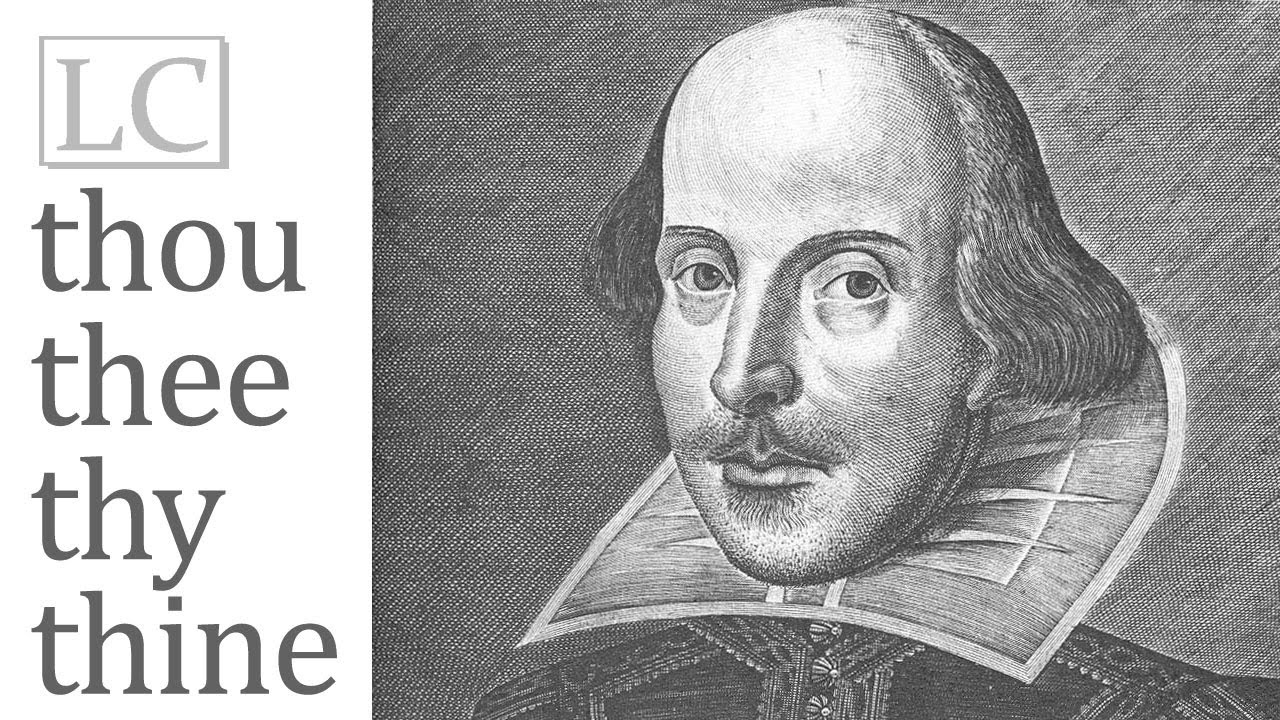
A prominent religious group is pretty well-known for their use of archaic pronouns in prayer. When asked about it, their official response is (paraphrased), “It’s more reverent and respectful,” (ldsliving.com). They believe that prayer is something that requires a special vocabulary, one that demonstrates a deeper respect for God.
We do it, too, and for the same reasons they cite. I would like to offer some points to consider:
1. Early Modern English does not demonstrate a greater level of respect. Why not use Middle English? Why not use Greek or Hebrew or Latin or Aramaic? From a purely linguistic standpoint, thee/thou/thine are not more formal in this century, and haven’t been for roughly three centuries (Yaswen, University of Toronto). Reverence comes from the heart. It is not something that can be invoked with a special vocabulary.
2. It can be detrimental to evanglism. God expects us to emulate our culture as long as it doesn’t violate his law (I Cor 9.19-27). Many non-religious people, when talking about religious things, will switch to archaic, exaggerated English to highlight the oddness of religious people. An example in mainstream culture is the show Supernatural. One of the main characters reads something with archaic wording to another main character. When asked about it, his response was, “…that’s how God talks” (S8, E19). If our goal is to reach the lost, we should try to avoid potential obstacles (that aren’t related to doctrinal issues). When we invite them to worship, hearing, “Well-pleasing in thy sight,” or, “This, thy table,” or, “We thank thee, father,” etc. may reinforce Christianity’s irrelevance/social incompatibility in their minds.
3. Biblical prayers do not teach a pattern of special language at all. Jesus’ example prayer was very simple (Matthew 6). Paul’s prayers did not differ from his conversational language (Eph 1.18; 3.14ff; Rom 1.8-10; 15.30-33; I Cor 1.4ff; II Cor 1.3ff; 9.12ff; Col 4.2ff; I Thess 3.9ff; 5.23f; II Tim 1.16ff; Philemon 4ff). No New Testament example suggests that using anything other than conversational language is superior. What does matter is our spiritual state when we pray (Jn 9.31; I Pt 3.7; I Tim 2.8).
To be very clear, this is not a salvation issue at all. This is not even an indictment those who use Early Modern English pronouns in prayer. I strongly believe that Christians who pray or direct worship using old English have pure motives and are simply doing what they think most honors God! Hopefully this will serve as encouragement to evaluate our approach to prayer and worship so we can most effectively lead people to God.
“To the Jews I became like a Jew so that I could help save them…to those who don’t practice the Law I became like someone who doesn’t practice the Law to help save them (though I am still ruled by Christ’s law). To those who are weak, I became weak so that I could help save them. I did this so that I could save people in any way possible. I do all this to make the Good News known. I do this so I can share in the blessings of the Good News” (I Cor 9.20-23).
It wasn’t before the destruction of the world. There’s no time for vineyard planting when you’re focused on the end.
He didn’t get drunk while on board the ark, either. There’s no time to get drunk when you’re well aware that God is literally keeping you afloat! He could hear God’s power in the storm and see it all around him in the form of water when he peers out of the window of the ark.
He planted the vineyard after the rain stopped, the water levels lowered, and when there was dry ground to plant on.
Why the wine?
While scripture doesn’t give us an exact reason we can use some reasoning. Maybe he drank his fill in order to forget or deal with the traumatic event that he just survived. Maybe the reality of the situation finally set in and the ordeal had finally caught up with him.
Perhaps he drank the wine to simply distract himself. It could be that in his mind he had fulfilled his purpose and accomplished his mission. What else was there to do? Lastly, maybe he became drunk to celebrate the fact that he and his family survived what nobody else did. All of these reasons are possible and even understandable. But none of these excuses were acceptable or pleasing to his Savior.
Trouble seems to come knocking when we lose our sense of purpose and mission. I think Noah would agree that we’re more easily distractible when we believe we have the time to be distracted. Noah’s real purpose in life was not to build an ark. It was to live righteously, as he was doing just that before God even approached him. A righteous man listens to God and speaks on behalf of God as Noah did when he built the ark and preached to the world around him. His mission wasn’t over when the ark landed in the mountains. According to Genesis 9.28, Noah had 350 years of life remaining after the flood. His celebration and relief, like ours, is promised to be waiting for us after our lives on earth are completed. Noah still had a mission and purpose, but he had just forgotten what that was. Let’s learn from him and be mindful of why we’re here— to live within the grace of God (Gen. 6.8).
We’ve all heard the phrase, “When it rains, it pours.” While there are rare occasions that we might get to focus on a single responsibility or situation, most of our time is spent juggling several simultaneously. When one challenge arises, we expect a few more to come knocking. While this can be overwhelming (a feeling Satan just loves for us to have), these are the times in our life when we find out what we’re really made of. When it seems hardest to make a godly decision, when it seems impossible to know the right answer, when you don’t WANT to do the right thing, when the rubber meets the road, your response reveals the contents of your heart. Over the past few weeks, I have seen fellow Christians, young children, and total strangers whose lives have been turned upside down by tragedy, uncertainty, and harm. In…
For whatever reason, I have been fascinated with stories of maritime disaster. I have read about the Titanic, but have even read more closely about the Lusitania, the Edmund Fitzgerald, the HMS Hood (for more, click here), and more. Perhaps few things could conjure up more fear than the thought of being thrust into a cold, deep ocean with no way to stay afloat, subject to attack and almost certain drowning. Poets have drawn upon such imagery, but so do the psalm writers. Read Psalm 42:7 or Psalm 69:2, 14-15 or Psalm 88:7. It is also the way Psalm 130 begins.
It seems to me that the writer is depicting the rolling waves we encounter in life, the ups and downs and the good and bad. How will I respond when I am in the storm, whether a literal storm, a storm others bring upon me or a storm I bring upon myself? What will I do when the winds have subsided and the storm has passed? Let’s look at this psalm as depicting four successive waves.
APPREHENSION: Our Cries And Supplications (1-2)
(Wave One)
We find the writer in a watery valley, looking up at a high, but descending, wave. It causes him to cry out and voice his pleas and supplications. The crisis may be financial, medical, familial, personal, or spiritual. It may seem like the world is crashing in on top of you. Do you sink in waves of worry, fear, and doubt? Or do you cry out to God for help? The writer sets an example for us, when we feel like we will be buried by trouble!
TRANSGRESSION: Our Iniquities And Unforgiven Sins (3-4)
(Wave Two)
Though the writer moves away from the metaphor, the idea continues. When you wade in the ocean and reach a shelf, you can no longer put your feet on the bottom. You can sink or swim, but you cannot stand. Verse three asks, “If You, Lord, should mark iniquities, O Lord, who could stand?” The question is rhetorical, but a lifesaver is thrown! “But there is forgiveness with You, that You may be feared.” Perhaps better imagery is to see the Omnipotent Hand of God reaching into the deep, grabbing our outstretched, up- stretched hand! Perhaps self-inflicted trouble, our sins, cause us to sink deeper than any other trouble.
EXPECTATION: Our Waiting And Hoping (5-7a)
(Wave Three)
Perhaps we could envision this as one floating to the top or having their head come up out of the water. The writer uses two significant, connected words–“wait” and “hope.” Help is coming! Just wait. Hope. You’re trusting, praying, studying, serving, and enduring. Maybe you feel like you’re holding onto a splintered plank that’s separating in the aftermath of your shipwreck, but you hear the sound of the rescue vessel humming on the waters. You know Who is at the helm, so you hang on!
REALIZATION: Our Mercy And Redemption (7-8)
(Wave Four)
I don’t know about you, but I don’t think I could be coaxed off a massive barge onto a rickety rowboat. But, most of us would make the exchange in the opposite scenario. Yet, the world clings to the leaky carrier of lostness when the ship of salvation is within reach. The writer calls heaven’s help “lovingkindness” and “abundant redemption.” This is the way I want to view the tumultuous waves of this world, from the safety of God’s saving grace. Resting in His everlasting arms, I can experience confidence and assurance at life’s worst while keeping my focus on Him at life’s best!
You are probably facing, enduring, or looking back at one of those first three waves right now. We sometimes singing, “Jesus, Savior, pilot me over life’s tempestuous sea; Unknown waves before me roll, hiding rock and treacherous shoal, chart and compass came from Thee, Jesus, Savior, pilot me.” We are echoing the sentiments of the psalmist in Psalm 130. Wherever you are in life, be sure you are letting Him lift and lead you! It’s the only way to reach eternal safety (John 14:6)!
There’s the story told of an elderly lady that was amazed at how nice the young man next door was. Everyday he would help her gather things from her car or help her in her yard. One day the old lady finally asked the young man, “Son, how did you become such a fine person?” The young man replied, “Well, when I was a boy, I had a drug problem.” The old lady was shocked and said, “I can’t believe that.” The young man replied, “It’s true, my parents drug me to church on Sunday morning, drug me to church on Sunday night, and drug me to church on Wednesday night.” Have you ever paused and thought about why you go to church? What reason causes you to bring your kids to worship? What’s the point? Contained in the pages of God’s Word we can find at least three reasons why we go to church.
A Past Example
God is a God of remembrance. He would repeatedly instruct, comfort, and encourage the Israelites by reminding them of things He had done in the past. He used reminders of past instances to help motivate His people. God’s Word continues to do that for us today. It is filled with past examples to help remind us why we come together each week. We go to church because of a past example (Acts 2:41-47; Acts 20:7).
A Present Encouragement
1 Thessalonians 5:11 says, “Therefore encourage one another and build one another up, just as you are doing.” Hebrews 3:13 says, “But exhort one another every day, as long as it is called ‘today,’ that none of you may be hardened by the deceitfulness of sin.” Each week in the world we may feel outnumbered trying to live a godly life. When we come together we’re reminded that we aren’t the only ones that are trying to be like Christ. William Ward once said, “Flatter me, and I may not believe you. Criticize me, and I may not like you. Ignore me, and I may not forgive you. Encourage me, and I will not forget you.” Our present encouragement comes from unity and the sharing we all have with each other. We’re encouraged through fellowship, but also praise. Worship is a time to reflect on God and what He has done for us. We focus on His nature and His love and we praise Him because we are blessed beyond belief. Our present encouragement comes from our time spent praising God our Father. We come to worship to receive our present encouragement.
A Future Event
On February 3, 2018, Robert Meilhammer, 51, of Crapo, Maryland, was struck in the head by a dead Canada goose. The bird that hit him was 14 pounds and had a nearly 6 foot wingspan. It plunged from the sky after a fellow waterfowl hunter fired a blind shot on a flock overhead. The goose fell about 90 feet, knocking the hunter out instantly and causing head and facial injuries. If you could see what was coming you would prepare. If Robert Meilhammer would’ve known about the goose coming he could’ve taken a step forward to keep from getting knocked out. If we knew what was coming, we would prepare. God in his love and grace has revealed what is coming and what needs to be done in order to prepare. We come together to remind each other of the day that is coming in the future. We come together to encourage our church family to fight the good fight, keep the faith, and to stay the course. Mark 16:16 says, “Whoever believes and is baptized will be saved, but whoever does not believe will be condemned.” The judgement day is coming and God is clear on what we should be doing. Get prepared and stay prepared by going to church. We assemble as a family on the first day of the week because of a past example, a present encouragement, and a future event.
I’ve heard some say of a house left standing after a tornado or hurricane that God must have spared the structure’s owner from material loss because of their righteousness. But, unfortunately, such statements imply that the neighboring destroyed property belonged to the unrighteous. Yet Jesus said, “for He (God) causes His sun to rise on the evil and the good, and sends rain on the righteous and the unrighteous” (Matthew 5.45, all ref. NASB1995 unless otherwise indicated).
Even amongst the destruction, though, if someone is observant enough, he sees what he chooses to call miraculous. However, since a miracle is the suspension of God’s natural laws, we understand that the word “miracle” oft becomes an adjective to describe what defies human comprehension. In reality, laws of nature explain the “skipped” houses or why a decorated Christmas tree can remain amidst a room, missing its walls and a part of its ceiling.
For example, there can be what scientists call “suction vortices” within tornadoes. Within a more significant tornado, these many vortices move in a looping, cycloid pattern that will hit some things while completely missing others.1 In other words, the hand of God was in the creation of the natural laws resulting in the occasional formation of tornadoes, with their suction vortices, as opposed to directing storms into particular locations.
But did God originally intend for His natural laws to include such destructive phenomena? Think back to the world God initially created. God called it “very good” (Genesis 1.31). What changed? Humanity used its free moral agency to sin, bringing change to the world. In fact, things got so bad that God destroyed the original world. Peter says, “…by the word of God the heavens existed long ago and the earth was formed out of water and by water, through which the world at that time was destroyed, being flooded with water” (2 Peter 3.5-6).
Among those mechanisms that God put into place in the world emerging from the flood are the weather patterns that spawn tornadoes and hurricanes. The patient patriarch, Job, observed the following regarding the wisdom known to God: “…He imparted weight to the wind and meted out the waters by measure…He set a limit for the rain and a course for the thunderbolt…He saw it and declared it; He established it and also searched it out” (Job 28.25-27).
Now, the point of our devotional today is not to increase the misery of those having suffered loss during what insurance companies euphemistically call “acts of God.” Yes, things like tornadoes and hurricanes do arise because of sin. However, it is not a part of the chastisement God sends upon us (cf. Hebrews 12.4ff). So, if you want to see God after a tornado, do not see it in a church building with no roof, but with all its hymnals and pew Bibles still safely secured in the pew racks. That is likely but a side effect of natural law.
No, look for God in His grace. As Fred Rogers often said, “When I was a boy, and I would see scary things in the news, my mother would say to me, ‘Look for the helpers. You will always find people who are helping.’”2 Might I suggest that it is in the helpers that we see the actual hand of God? His Providence works through the people clearing debris, handing out food, and providing shelter to those who have lost everything. These fulfill the law of Christ (Galatians 6.2). Thus, God does not only shelter some in a storm. He provides for all of the weary through the agency of those whom He made in His image (Genesis 1.26-27).
Sources Consulted and Cited
1 Seman, Steven, et al. “Tornado Damage, Safety, and Myths.” Tornado Damage, Safety, and Myths | METEO 3: Introductory Meteorology, The Pennsylvania State University, www.e-education.psu.edu/meteo3/l9_p8.html.
Jesus is the great healer and the Bible is full of passages that comfort, encourage, give endurance, and help us cope with a broken world. It’s full of so much more! A higher purpose gives us existential meaning, and the Bible outlines that purpose. It also has a few passages that fire me up, and those are the ones I want to share today.
Revelation 21
This is our reason to live the Christian life (Matt 19.28; Rom 8.18-25; I Pet 1.3-7, 13; 4.12-19; II Pet 1.3-4, 10-11; 3.3-13; I Jn 3.1-3). We’re looking forward to something much better, but what kind of stuff are we looking for?
– Zero dysfunction! No pain, grief, disease, crime, taxes, tornados, war, death in general, aimbots (if you know you know), etc.
– God gets rid of tears (Rev 21.4)! The context is a message of hope for early Christians who were dealing with devastating loss. But God will ἐξαλείψει all tears. Exaleipsei is future (will happen), and seems to be a comfort word. I had always pictured a Men in Black kind of thing, where all painful memories are obliterated and new ones made. But the word seems to indicate that an interaction with an infinitely compassionate Father will be more than adequate to get rid of any pain. If you’ve ever comforted a spouse or child who was grieving and physically wiped their tears away, that’s what this word describes.
– Everything is brand new (21.5)! None of the junk that we’ve dealt with here will be compatible with our new home.It will be wildly exciting: the best accomplishments of each nation will be there (21.25-26). God and his son provide all we need (21.22-24). True unity exists because we’ll all be on the same side (21.27). No need for healthcare or accountants or coroners or search and rescue or militaries or law enforcement! Those exist to push back against evil, which won’t exist in our new home. Revelation 21 is a rich chapter, but it’s full of excitement! God doesn’t speak empty words. Take him at his word and read the chapter very carefully. It’s hard to walk away from that study without getting pumped for heaven!!!
Jesus, the master teacher (Luke 8:1-21), shows His humanity as He fell asleep as the disciples sailed across the Sea of Galilee (23). Assuming the boat to be large enough to transport at least 13 people and provide Jesus room to repose, it makes the situation more impressive when “a fierce gale of wind descended on the lake, and they began to be swamped and to be in danger” (23). We know that at least four of the men in that boat made their living negotiating these waters as fishermen, and we would guess they had seen their share of storms. But this one was apparently exceptional. They woke Jesus up in a panic, exclaiming, “Master, Master, we are perishing!” (24).
When Kathy and I were young newlyweds, we worked with the church in Livingston, Alabama. Our best song leader was a man who grew up close friends of Gus Nichols’ children. His name was Selman Falls, and his repertoire of songs was vast. He taught us the song, “He Will Hide Me,” written by Mary Servoss in 1878. The first verse says, “When the storms of life are raging, tempests wild on sea and land, I will seek a place of refuge, in the shadow of God’s hand.” Few metaphors seem more fitting than to call our trials and difficulties “storms.” I confess that more than one of these has led me to panic and to pray, “Master, Master, I am perishing!” Our trials disturb our peace, rock our world, and threaten our stability.
Will you notice how Jesus handled this? First, He acted. Then, He admonished. He did not lecture while waves crashed and water encroached. He took care of the problem. But, then He said, “Where is your faith?” Luke mentions no sober self-reflection on the part of the disciples. Instead, they marveled. They responded, in fear and amazement, “Who then is this, that He commands even the winds and the water, and they obey Him?” (25). Storms are opportunities for us to ask, then answer, such an identity question. It’s the right question. Not, why did this storm come? Why me? But, Who then is this? Who is the master of the maelstrom? Who is the commander of the crushing confusion?
Chances are great that several of you are in the midst of some kind of storm. The boat is rocking, the winds are howling, and the prospects are not promising. What will you do? More importantly, what will you allow Him to do? He still stills storms!
Business on 31W bypass, relatively close to our church building
Saudi Arabia hosts an annual beauty contest for camels with a multimillion-dollar prize. This year’s King Abdulaziz Camel Festival reward is $66 million (USD). As extravagant as this prize sounds to Westerners, camels are an established multimillion-dollar industry in Saudi Arabia and a fixture of Bedouin culture. To determine a winner, judges evaluate the camelid’s posture, humps, necks, and head shapes. And, since so much is at stake in these contests, officials ban cosmetic alterations that beautify camels.
Sky News’ Amar Mehta reports that officials have, this year, disqualified over 40 entries in the King Abdulaziz Camel Festival for Botox use. This number is an increase from the 12 Botox-injected camels disqualified in 2018. Since officials look for such cheaters and impose strict penalties on the same, why would anyone take the risk? If I were to guess, I would say that cheaters would cite 66 million reasons. If no one finds the deception, he can increase his bank account and reputation.
As you recollect, Jesus selected a man as an apostle who was as sneaky as a Botox-injecting camel breeder. John wrote of this apostle in his Gospel. This apostle’s name was Judas. When Mary anointed the feet of Jesus with costly oil, Judas rebuked Mary for “wasting” something considered valuable. Then, Judas declared that they should have sold Mary’s oil and used the proceeds to enrich the poor. But John reveals Judas’ heart. “Now he said this, not because he was concerned about the poor, but because he was a thief, and as he had the money box, he used to pilfer what was put into it” (John 12.6 NASB1995).
In like manner, why do any think they can fool the God Who sees our hearts? The Hebrews’ writer reminds us, “And there is no creature hidden from His sight, but all things are open and laid bare to the eyes of Him with whom we have to do” (4.13 NASB1995). It may be that we can fool the eyes of our fellow man who likewise awaits judgment, but our Judge will reveal all our deeds, whether good or evil (Ecclesiastes 12.14).
Yes, God sees the Botox, fillers, and other tricks we use to look good on the outside. So then, “let us draw near with a sincere heart in full assurance of faith, having our hearts sprinkled clean from an evil conscience and our bodies washed with pure water. Let us hold fast the confession of our hope without wavering, for He who promised is faithful” (Hebrews 10.22-23 NASB1995).
What if someone were to offer you a thousand dollars for every soul you would earnestly try to lead to Christ? Would you try harder to lead more souls to Him than you are endeavoring to do now? Is it possible that we would attempt to do for money what we sometimes hesitate or shrink from doing now in obedience to God’s command? Is money a stronger motivator than our love for God? What hinders us from thinking about other people? Many times we will make excuses and say, “that person won’t listen,” or “they’re too far gone.” We are called to plant the seed of the gospel, not examine the soil and determine if it’ll take the seed. We share the gospel message no matter what soil it lands on. It may be rocky, it may fall among thorns, it may land on the road and never take root, or it may land on good soil. We love the lost because it is a command (Phil. 2:3; Rom. 13:8-10), it imitates Christ’s example (1 Jn. 4:16,19), and it is our calling as Christians (Jn. 13:34-35, Eph. 4:32). So how can we show our love to the lost? What does it mean for us to love others? It means suffering with those who suffer. Hurting with those who are hurting. Helping those who need a hand. Picking up someone when they are down. Being a friend to the lonely. Writing a card to the grieving. Making a meal for those who are mourning. Bringing the good news of salvation to the lost. As God’s children, let’s show Who we belong to by loving the souls that are around us.
This time of year, seasonal affective disorder is an issue many face. Dealing with occasional slumps is part of the human experience, but for some people depression is a near-permanent experience. I’ll share some of the verses I go to for these exact issues, but with some explanation attached.
Rom 8.18-27 can be summed up like this: “Everything in creation is a little broken, and we’re all waiting for the day when it’s not broken anymore.”
This isn’t to say that everyone deals with depression, but everyone deals with something. Chronic depression is just as much a byproduct of a flawed reality as arthritis, economic downturn, and car accidents.
For this discussion, there are two principles in Romans 8 that I take to heart: one, depression does NOT mean we don’t love God enough. It’s just another reminder that we aren’t supposed to be here forever. Two, it’s not going to last forever. We can put up with almost anything for a little while. Having the energy to put up with it, though, is something we’ll address with the next passage.
I Tim 5.23 – “Stop drinking water exclusively and use a little wine for your stomach’s sake and your constant sickness.”
Look at the principle of this verse, please. It’s not a suggestion to use alcohol as a treatment for depression. Alcohol is known to make depression much worse! The principle is that God has given us the ability to use man-made substances to help sickness.
In fact, Paul uses commands (imperatives), not suggestions here. “Stop drinking water (only),” is one. Paul tells him to make use of (χρῶ, an imperative) a small amount of wine because it would help him manage his chronic stomach issues.
A person dealing with chronic depression – under a health worker’s direction, of course – is absolutely free to use medication to help manage daily life. It doesn’t indicate a “lack of faith” in any way, and it doesn’t mean a person isn’t dependent on God. God himself, through Paul, encourages the responsible use of medication when necessary.
I Cor 7.7 (paraphrased) – “Not everyone has the same abilities.”
This is specifically talking about sexual urges in a completely different context from our discussion. Paul encouraged Christians who were about to face difficulties to avoid the issues that may come with getting married. It’s a lot easier to disown God when an enemy can exploit a person’s love for their spouse. Paul pointed out that not everyone has the same amount of self-control, so if marriage would keep away sexual temptation, go for it.
That said, there’s still a valuable principle here: not everyone has the same abilities. Many Christians who face chronic depression often make things worse for their faith by comparing themselves to other Christians. “(Insert Name) is way more involved, more energetic, more put together, way ahead of me spiritually.” God knows our heart (I Ki 8.39; Rev 2.23). If we aren’t putting all that we can into our faith, we’ll be held accountable for that. God knows what our limits are, and will judge us accordingly.
This principle does not excuse anyone from serving God to the best of their abilities. What it should do is help us put our own abilities into perspective. We have different levels of ability, and God knows that.
In summary: Chronic depression is a very real byproduct of a broken world. God encourages us to take advantage of whatever medical care we have access to. God knows our hearts, which should both provide comfort and push us to grow.
Some people just seem to be born with great people skills. Perhaps their personality type just naturally draws others to them. While natural ability may give some a leg up, the great news is that anyone can learn to work well with others and you can develop better interpersonal skills. In fact, it’s really a biblical command!
The church is made up of all kinds of people and that being the case, we must all be in the people business. Thankfully, our Lord doesn’t leave us high and dry to try and figure these things out on our own. Dispersed throughout the Bible we find several sections of scripture that teach us how to communicate, empathize, and get along with others effectively. God’s interpersonal skills cannot be matched. As the Creator, He understands exactly how humans think and behave. Here are twelve insights on interpersonal skills sent to us from above.
1. Speak evil of no one (I Thess. 5:14)
2. A soft answer turns away wrath, but harsh words stir up anger(Proverbs 15:1)
3. The wise of heart is called perceptive, and pleasant speech increasespersuasiveness (Proverbs 16:21)
4. Be gentle and show courtesy to all people (Titus 3:2)
5. Do good to everyone (Gal. 6:10)
6. Bear one another’s burdens (Gal. 6:2)
7. As you wish that others would do to you, do so to them (Luke 6:31)
8. Discern your own thoughts, identify your intentions (Heb. 4:12)
9. Treat others like you would treat Jesus. How would you interact withHim? (Matthew 25:40)
10. Season your speech with grace. It’s the saviors All-Spice for everyrelationship building goal (Col. 4:5-6)
11. Praise God and be joyful, it attracts people (Psalm 100:1-5)
12.Be ready for every good work, speak evil of no one, avoid quarreling, begentle, show courtesy to all people (Titus 3:1-15)
Notice how many passages in the Bible command us to speak differently than everyone else? All of these insights can be simply summed up in just one sentence. Talk, walk, and live more like Jesus. He was perfect in every way and that includes how he interacted with others. Modeling ourselves after the Savior will not only improve our relationship skills with others, but also with Him.
Jesus also teaches us that no matter how gentle and loving we are, we’ll still make some people upset. That’s alright! As long as we’re acting like the Lord in all things.
Henry Adams wrote, “One friend in a lifetime is much, two are many, and three are hardly possible.” While I do not share his pessimism or cynicism, I do believe that true, close friends are certainly not prevalent. There are too many factors at play. Friendships take time, trust, and transparency. Some things can be barriers to developing close companionship from contrasting values to clashing viewpoints.
The Bible gives insight into factors essential to building true, lasting friendships. Since God made man, He knows what makes us tick and operate at our optimism levels. Here are four quick principles:
A Friend Loves At All Times (Proverbs 17:17).
Solomon does not suggest blind loyalty or blanket endorsement. Scripture does not encourage fellowship with the unfruitful works of darkness (Eph. 5:11), but it also points out that we all struggle with sin problems (Rom. 3:23). We also are prone to weak moments and we go through trials and reverses of fortune. It is a blessing to know we have people we can count on to be there even when we’re not at our best or enjoying our mountaintop moments (Heb. 12:12-13; Rom. 12:15).
For The Despairing Man, There Should Be Kindness From His Friend (Job 6:14).
For every one we exchange superficial greetings with, even as we are carrying our hidden cares, we need true friends to turn to for help when we face deep needs in our hours of trial. Rare is the friend who knows, sympathizes, and is ready to help with a kind word or deed. You can imagine how Job’s friends added to his despair by failing to offer that when he needed it most. So many things bring despair–job loss, family crisis, financial reverse, health issues, and other life changes. It is then that astute acts of kindness make a lasting impact and forge true friendships.
If They Fall, One Will Lift Up His Fellow (Ecc. 4:10).
Solomon does not specify whether the falling is physical, emotional, or spiritual. No matter what makes us fall, it is the trustworthy response of a friend that he focuses on. How tragic not to have someone in our lives with a ready hand when we are sinking! What if we are falling away from God (Jas. 5:19-20)? What if we are losing faith or overwhelmed (Mat. 14:30)? “The Lord sustains all who fall” (Ps. 145:14), and what a blessing when He does so through a faithful friend!
Faithful Are The Wounds Of A Friend (Prov. 27:6).
We need people in our lives who are more than “yes” men and women. True friends care enough to correct if we are going off course. We need those who don’t just rubber stamp our speech, validate our every action, or automatically take our side. None of that helps us refine our character or makes us fit for the Master’s use. It’s not easy to tell someone we like and care about that they’ve fallen short in some way, but having a friend that deep and genuine is a true blessing in life.
These passages challenge me to ask, “What kind of friend am I to others?” Am I deeper than a fellow sport’s fan, a person with common interests, or even a co-member of the church? Can I be counted on to be there in the valleys as well as the mountaintop days? Can I be trusted with kindness on despairing days? Am I a lifter? Do I have the courage even to say the difficult things in difficult moments? I want to be that kind of friend to my friends!
Some of our dearest friends, whom we were blessed to see this past weekend.
Cayden is a student at Western Kentucky University and is from Scottsville.
Cayden Ross
If you’ve ever taken any kind of introductory biology or ecology class, you’ve probably heard of a few animals that display what we call migratory patterns. It’s pretty self-explanatory, but what these animals do is they live at one location for one part of the year and somewhere else for the other part of the year. For example, there are certain species of whales that inhabit the waters around Alaska. In the Alaskan summers, there’s an abundance of food for these whales to feed on, but when the harsh winter temperatures set in, these whales’ food source becomes scarce, and these whales will migrate south to waters around Hawaii, Central Mexico, and even Asia. But when the summer returns in Alaska, these whales have this instinct to return home. Another example that might hit closer to home is that we saw tons of migratory birds flying right over Kentucky, heading south for the winter within the last few weeks and months. When spring comes back around, we will see these same birds heading back north for the summer. I find it interesting that these animals have this instinct to return home, but the neat thing is that God gives us this instinct as well. Now obviously, I’m not talking about some sort of strange migratory pattern or anything of that nature. I’m speaking about a homesickness, a passion that we Christians should have for heaven.
Ecclesiastes 3:11 says, “He has made everything beautiful in its time. Also, he has put eternity into man’s heart, yet so that he cannot find out what God has done from the beginning to the end.”
This verse tells us that we are all eternal and that God created us with eternity in mind. We know that when we pass on from this life, we are going to either one of two places, but we as Christians have this desire to live in heaven with our father forever. This world just simply isn’t our home.
Let me give you this illustration… imagine you take a fish out of water and put it on land. That fish will never be happy! It doesn’t matter if you give that fish a wad of 100-dollar bills or build it a giant home and give it a fancy car. It still won’t be happy because it doesn’t belong on land.
As Christians, our life here on Earth is similar. It doesn’t matter how much money we have, or how big our house is, or what kind of car we drive because we will never be as happy here as we will be in heaven.
Heaven is a place that we cannot even imagine…
1st Corinthians 2:9 says, “What no eye has seen, nor ear heard,
nor the heart of man imagined,
what God has prepared for those who love him.”
We don’t have all the answers to what our home in heaven will look like or what it will feel like, but the most important thing is that when we get there, we will be in the presence of God for eternity, and He wants each and every single one of us there.











/cloudfront-us-east-1.images.arcpublishing.com/gray/IAJKGJ5YCFCPLKYW2OSSQSDVZI.jpg)






 The Preacher Pollard Blog