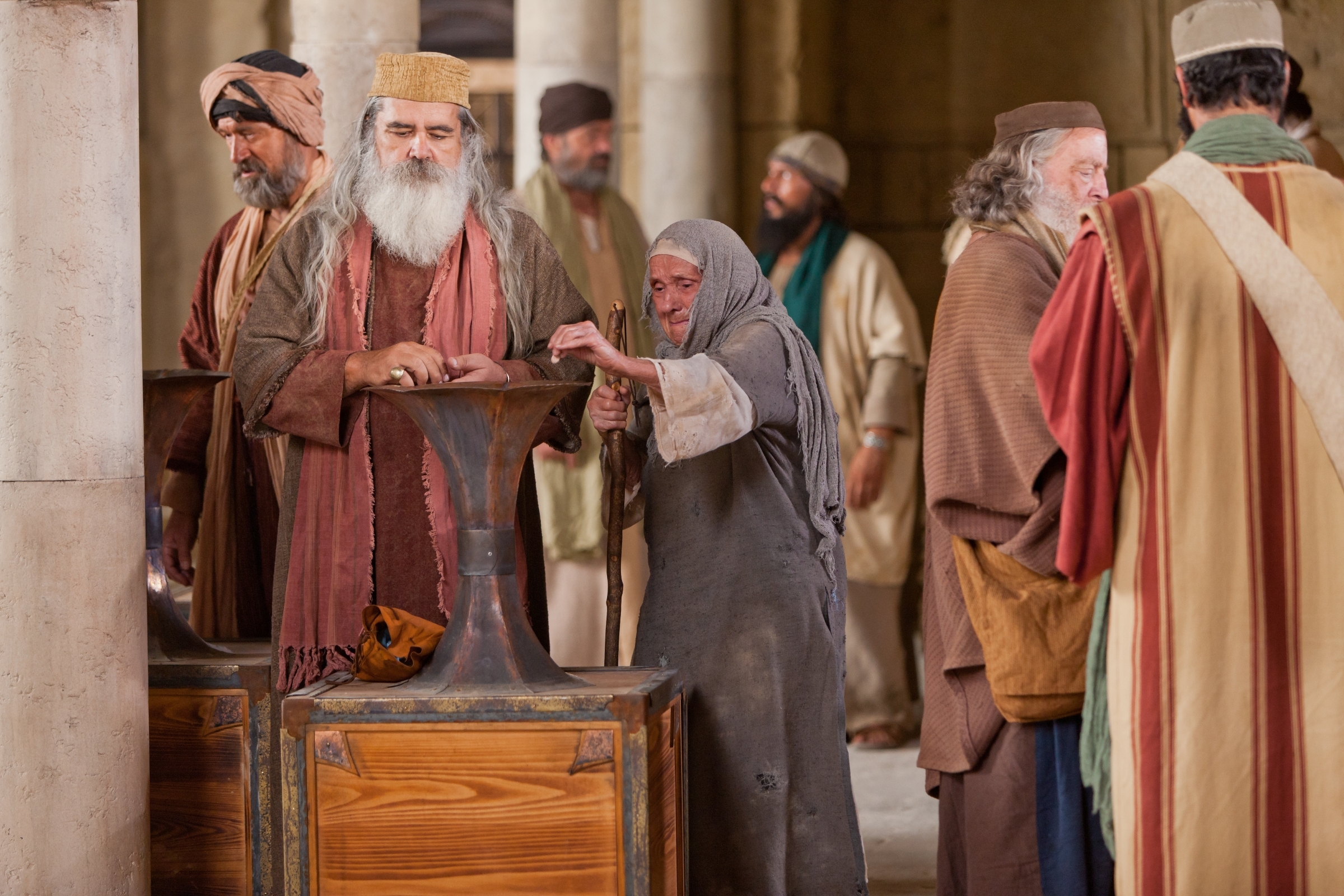
Can These Dry Bones Live Again?

Tuesday’s Column: Dale Mail 

blond man with goatee smiling at camera with blazer on
Dale Pollard

Six hundred years before Christ would make His providential appearance, a righteous man finds himself in captivity. While exiled, Ezekiel was able to witness the spirit of God in a very intimate way (Ezekiel 1). Even so, he was still living under the thumb of the Babylonians like every other Israelite with him. While under these unideal circumstances though, he is privileged to see awe inspiring visions from God. Have you ever paid attention to the eerie sensations described throughout this book? In Ezekiel 1:4, the prophet feels a great and stormy wind on the bank of the river Chebar. The wind brings with it a massive cloud with fire flashing around it and a substance like glowing metal in the center of it. The wings of the creatures he saw (verse 24) made sounds like that of roaring waters. The voice of the Almighty was like the sound of a great army camp. What sights he was able to see! This great connection to God didn’t take away his pain or sorrow, though.

Chapter 19 is one long lament as Ezekiel cries over his hard-hearted Israelite brothers. Why won’t they listen to him? Even after Ezekiel performs some radical visual illustrations like eating his bread over dung and laying on his side for an entire year, they won’t respond to the “invitation.” How frustrating is that, preachers? God never abandons His faithful servant but His confused prophet is still left to wonder what God is going to do about the mess which makes up his reality. A familiar feeling for many faithful Christians today.  

Never underestimate the hand of the Almighty. This truthful statement can be pulled from Ezekiel 37, when the prophet is taken up and then placed in the middle of a dark valley. Ezekiel is surrounded on all sides by heaps of dry human bones and he’s probably wondering why in the world God has taken him to such a place. The text answers the question by asking a question. God speaks to Ezekiel and says, “Can these dry bones live again?” What an odd thing to ask. However, Ezekiel responds, “Only you know, oh Lord.”

It’s always when we’re deep in the valleys of life that we’re forced to answer the difficult questions about God’s abilities. When we’re surrounded by darkness, the question we have to ask is, “Does God have the power to see me through this?” If you remember, Ezekiel has become frustrated with the fact that Israel just won’t listen to him or Him. He’s lost hope in their ability to change— they’re just too far gone. However, God demonstrates to His prophet in a dramatic way that NOTHING is impossible for Him. 

He doesn’t bring the bones to life in the blink of an eye, but we know He could have. Instead, He allows Ezekiel to hear those bones rattle and to hear the sounds of fibers and flesh sticking together. He wanted to leave an impression on Ezekiel to demonstrate the might of the Almighty. Ezekiel had no idea how those bones came to life, but he knew one thing for certain. God did it. You may not understand why God has allowed you to enter your valley, but you can be certain that He has the power to see you through. You are standing on your two feet because God has given you the strength to do so. God has promised His faithful servants a heavenly light at the end of our tunnels and whatever God says— He will always accomplish (Ezekiel 37:14). 

What Generous Giving Shows

Monday’s Column: Neal At The Cross

Neal Pollard

After praising the Corinthians in the midst of his second letter to them, Paul challenges their growth in a specific area of their Christianity. It is an area where several need to be challenged. Jesus urges us to have proper hearts by laying up treasure in heaven (Mat. 6:19-21) and Paul spends time showing what a proper heart looks like. Notice what he says on this subject in 2 Corinthians 8. 

GENEROUS GIVING REFLECTS THE GRACE OF THE LORD (1-2,9)

Paul holds up the impoverished churches of Macedonia and the Lord Jesus Christ as examples of grace for the Corinthians. The poor saints of Macedonia, in a great ordeal of affliction, had abundant joy and a wealth of liberality to give generously despite that poverty. Who does that look like? The Lord Jesus Christ, who, though rich, for our sakes became poor that we through His poverty might become rich. Do you want to look like Jesus? Give generously and abundantly.

GENEROUS GIVING REVEALS AN EAGER, SACRIFICIAL HEART (3-6)

What kind of hearts did the Macedonians have? They had willing hearts, which caused them to give “beyond their ability” (3). They had begging hearts, which considered being allowed to give a favor (4). They had giving hearts, which prompted a financial generosity out of their first giving themselves to God (5). How is my giving? Let me first ask how my heart is, when it comes to “my” money. Paul uses Macedonia’s example to spur on Corinth.

GENEROUS GIVING REINFORCES OTHER OTHER SPIRITUAL QUALITIES (7-8,24)

Paul credits Corinth for their faith, utterance, knowledge, earnestness, love, and sincerity. The first three seem to be alluding to their spiritual gifts (cf. 1 Cor. 12-14), necessary to grow the church. The last three are attitudes Christians must possess. Yet, Paul tosses generosity right onto that figurative pile. He calls for them to abound in this gracious work, too. It proved the sincerity of their love. Later, Paul urges them to “show them the proof of your love and of our reason for boasting about you” (24). It’s not generous giving or these other qualities, or vice versa. God wants all of us. 

GENEROUS GIVING READIES ONE FOR COMPLETION (10-15)

Paul calls for them to finish what they intended to do in this matter. Intentions, as great as they may be, cannot be spent or used to meet the various needs Paul is concerned about. The completion of it was as vital as the readiness to do it. God sees giving as the great equalizer between those with abundance and those with need. He’s not talking about redistribution of wealth. He’s talking about a healthy attitude toward one’s wealth that leads to God supplying all that’s needed through our generosity. Don’t just intend or desire to give. Do it!

GENEROUS GIVING RESULTS IN ACCOMPLISHING GOD’S WORK (16-24)

This is a matter of practicality. Real needs in spreading the gospel existed, requiring monetary aid to accomplish. Titus brought it to their attention. Paul is reminding them of it. As they participated in this gracious work, they were helping the church. 

Do you find it interesting that for the inspired Paul, the subject of giving was not off-limits whether he was talking about the rich or the poor or the weak or the strong? Giving is a fundamental aspect and expression of our faith. It is not a substitute for good works. It is a specific example, one of many good works. We need to excel in this gracious work also!

I Want To Be A Lipizzaner

Friday’s Column: Brent’s Bent

Brent Pollard

The majestic Lipizzan horse is a sight to behold. One of its dressage gaits is called the levade. If you’ve seen a horse in a heraldic setting, you’ve likely seen something akin to this pose. The horse raises and draws in its forelegs, balancing its bodyweight on its bent hind legs. Lipizzaners are relatively few today, with about 3,000 of them in the world. However, owners prize them for their docile and highly obedient natures. These characteristics are something I wish to emphasize as I consider Jesus’ appeal for us to be “meek” or “gentle” (Matthew 5.5).  

The history of the Lipizzan breed goes back to around 800 A.D. Muslims invaded the Iberian peninsula and brought their Arabian and Berber horses with them. The Muslims bred their Arabians and Berbers with local Spanish horse breeds. One of the resulting horse breeds was the Andalusian. Fast forward to the late 1500s, and you find Archduke Charles II establishing a stud in Lipizza, Austria, known today as Lilica. He bred this Andalusian with Arabian, Berber, Baroque, and the now-extinct Neapolitan horses. The horses produced in Lipizza were equally at home on the battlefield and in aristocratic riding venues.  

In the same latter half of the sixteenth century, the Spanish Riding School began in Vienna. This school has trained these Austrian bred horses for over 450 years using the classical dressage, which the Greek, Xenophon, described. And that is the glue that brings this entire discourse together. Xenophon referred to properly trained horses, ready for battle, as praus. That is the Greek word used by Jesus in Matthew 5.5. So, if you want to see a horse that has been meeked, look at the Lipizzaner during its performance.  

Interestingly, with time’s passage, meekness has been equated to weakness or timidity. Surely weakness or timidity would not be a mindset needed for those wishing to enter the Kingdom. If a horse acted as the modern conception of that word, it would be useless. Is this desirable trait watered down due to its probable source of Psalm 37.11? David wrote: “But the meek shall inherit the earth; and shall delight themselves in the abundance of peace” (KJV).  

Newer translations of that passage, like the NASB1995, will substitute “humility” for the word meek. However, if you look to the original Hebrew, the term employed is anav. The Brown-Driver-Briggs Hebrew and English Lexicon suggests that within this context, anav means “poor, weak, and afflicted Israel.”1 If you read the entire thirty-seventh Psalm, you note that David describes the destruction of evildoers, which creates a void to be filled by the anav (meek or humble) persons (Psalm 37.7-11). 

The problem with bringing David’s meaning to Jesus’ Sermon on the Mount is the Septuagint would have likely influenced Matthew as he recorded the words of our Lord, and it uses praus. Of course, it may be that Jesus quoted the Septuagint, too. Christ seems to do so on several occasions. As Koine Greek was the lingua franca, why wouldn’t He use the Septuagint in His public teaching? Ultimately, it matters little whether Jesus quoted from the Masoretic Text or the Septuagint since we must deal with the Greek in which the Holy Spirit wrote it for you and me today.  

As a quick aside, the church or Kingdom is not an institution that Jesus’ meek will be inheriting from defeated evildoers, as were David’s meek. Instead, Jesus built this institution Himself and now adds the saved to it (Acts 2.47). These saved may be sin-weary and spiritually afflicted upon entry (cf. Matthew 11.28-30), but Jesus adds them to a spotless church without blemish (Ephesians 5.27). Even if Psalm 37.11 was in the mind of our Lord when He preached, He made an entirely different application of it centered on the idea of the “meeked man.” 

Aristotle said that a meek man was one remaining between the extremes of cowardice and recklessness. In other words, a courageous man. 2 That takes us back to Xenophon and our Lipizzaners, the descendants of the Greek war-horse. What kind of a horse would Alexander the Great ride to glory on the battlefield? We know because historians have written much about him. The horse’s name was Bucephalus. Plutarch said Alexander perceived that Bucephalus was spooked by his own shadow and so situated the animal to face away from his source of fear. 3 No man could ride Bucephalus but Alexander. Alexander brought Bucephalus’ power under control. Following the body of knowledge passed down by such men as Xenophon, young Alexander meeked Bucephalus.  

So, what virtue was Jesus urging us to adopt? Naturally, we cannot physically become Lipizzaners. Still, we can discipline ourselves to become docile (i.e., ready to receive instruction) and highly obedient (i.e., willing to carry out those orders) as that magnificent horse. As such, we are equally as fit for service in the war against Satan as being a Barnabas to fellow Christians. Hence, a meeked Christian is far from poor and weak. He knows who holds his reins. As such, he enjoys what is his and what the Lord has promised him. Doesn’t that make you want to be like the Lipizzaner too?   

Sources Cited and Consulted 

1 “Strong’s Hebrew: 6035. עָנָו (Anav) — Poor, Afflicted, Humble, Meek.” Bible Hub, Bible Hub, biblehub.com/hebrew/6035.htm

2 Chaignot, Mary  Jane. “Definition of Meekness.” BibleWise, Biblewise.com, www.biblewise.com/bible_study/questions/definition-meekness.php

3 Wasson, Donald L. “Bucephalus.” World History Encyclopedia, World History Encyclopedia, 2 Feb. 2022, www.worldhistory.org/Bucephalus/

Kawsar, Iffat. “Lipizzan Horse: A Horse Dedicated to Spanish Riding School in Vienna.” The Vet Expert, The Vet Expert, 11 June 2021, www.thevetexpert.com/lipizzan-horse-a-horse-dedicated-to-spanish-riding-school-in-viena/.  

Photo credit: Max Pixel (Creative Commons)

Facing Fear With Christ

Thursday’s Column: Captain’s Blog

Carl Pollard

When it comes to storms, people either love them or hate them. Personally I find storms to be relaxing. I love hearing the lighting and thunder rumble and shake the house. Some people are deathly afraid of storms and for good reason. If a storm is violent enough, it can end up costing millions of dollars in damage. 
Storms are a majestic show of God’s power. Did you know that a single bolt of lighting contains up to one billion volts of electricity? That’s enough electricity to power 56 houses for 24 hours straight…from a single strike! It can generate temperatures six times hotter than the surface of the sun. Storms are majestic, but also can be terrifying. 
I want to take a brief look at a well-known account in scripture. Matthew 14 is the account of Jesus walking on the water. Verse 24 says, “But the boat was already a long distance from the land, battered by the waves; for the wind was contrary.”‭‭ This storm is so great that even experienced fishermen couldn’t handle it. 
Peter, James and John were fishermen by trade. They knew how handle storms, but this one was so great they couldn’t control the boat. Matthew tells us it was during the fourth watch which would’ve been from 3-6 AM., a massive storm in the middle of the night. And it was at this moment Jesus comes to the apostles walking on the water. 
What is their reaction? They believe Jesus to be a ghost or “evil spirit.” And honestly if I was in their position I’d be afraid, too. Verse 27 gives us three significant reminders. “But immediately Jesus spoke to them, saying, ‘Take courage, it is I; do not be afraid.’”
“Take Courage” 

Jesus tells them to have courage in a scenario that many would be scared for their life in. 


“It is I” 

“ego emi.” This phrase reminds us of what God said to Moses: “I AM WHO I AM” (Ex. 3:14). Jesus says, “it is I”–the “I AM,” The all-powerful. 


Do not be afraid” 
He tells them not to fear. To suppress the natural reaction and to trust in the great I AM. The next time we encounter storms in our lives, take courage BECAUSE, The Great I AM, has got you in His hand. So don’t be afraid. Trust the Loving Savior to care for you. 

Newest “Light Of The World” Episode (Groundhog Day Special)

Latest “Life And Favor” Post

Excellent article by Janelle Pollard

Being Like Your Parents

Wednesday’s Column: Learning From Lehman

Luke Lohden

Have you seen the Progressive commercials with Dr. Rick?  In these commercials, he tries to teach parents how to “un-become” their parents?  For instance, he helps them say the right tech terms, like “hashtag,” or helps them to have airline tickets on their phone, and not paper tickets.  They are really funny.  Do your parents have certain sayings that they say all of the time to you?  Like, “If I’ve told you once, I’ve told you a thousand times,” or how about “money doesn’t grow on trees?”  Or even better, “don’t make me stop this car?”  Our parents tell us things like this to help us.  The truth is, we need to be like our Christian parents, not unlike them.  They have been where we are or where we are heading.  Their advice can prevent us from making serious mistakes.  

According to many surveys, about 70% of Christian students leave the church during college.  According to a recent study, the reasons are because they had no strong Biblical foundation,  lack of social opportunities outside of worship service, the anti-Christian views present at universities, and the lack of other Christian friends on campus.  Because of these potential problems, our parents play an important role in our Christian faith and our future walk with God.  

How do You stay faithful to God and obey your parents through your teen years? According to Ephesians 6:1-3, honoring your father and mother is very important. These verses say, “Children obey your parents in the Lord for this is right. Honor your father and mother, which is the first commandment, that it may be well with you and you may live long on the Earth.” According to Exodus 20:12, it states, “Honor your father and your mother that your days may be long upon the land which the Lord your God is giving you.” Proverbs 22:6 also has some information about children obeying their parents. It says, “Train up a child in the way he should go and when he is old he will not depart from.” Proverbs 29:15 also says, “The rod and rebuke give wisdom, but a child left to himself brings shame to his mother.”  This verse means that children and teens need guidance.  If they don’t have guidance, they will turn away from Christ.  

If we honor our father and mother and do all that we are told by them, we will live long on this Earth.   We could be going through a stage where we are defiant and not wanting to do what our parents tell us.  We’ve got to learn to listen to them even though we might not like what they decide all the time.  We finally understand, maybe even in later years, that our parents have rules in place to protect us as well as help us.  In order to follow God and live long on this Earth, we have to do all that is expected by them and do it as best as we can.  We are never going to be perfect, but we have to give it our best.  We know that our parents want what is best for us and they want us to go to Heaven.  We need to do more than just obey our parents and honor them.  We also have to continue trying to follow God’s Commandments, read the Bible, and tell others about Jesus. 

.

What Does Our Face Say About Us?

Tuesday’s Column: Dale Mail

blond man with goatee smiling at camera with blazer on
Dale Pollard

Your heart is only a little bigger than your fist and it weighs a mere 7-15 ounces. Despite it’s small size, on the inside you’ll find a massive stadium. There are battles that take place in this stadium on a daily basis. In the movies the good guy will always win, but in this arena? It will depend on who or what is the strongest. 

The Bible gives us several vivid descriptions of what goes on inside the heart, so let’s explore that. 

How can we know what’s going inside your heart today? 

A cheerful disposition can be the sign of a healthy heart according to Proverbs 15:13. This tells us that our outward appearance can give away our interior. 

Check out this section of scripture to see that in action. 

“On Abel God looked with favor, but on Cain and his offering He did not look with favor. God said to Cain why are you angry why has your countenance fallen? If you do right will you not be accepted? But if you do that which is not right, sin is crouching at the door” 

Gen. 4.5-6

God already knew what was in Cain’s heart but notice how He explains to Cain that his body language had given away his inward struggles. 

Cain is livid and his countenance had fallen. In the following verses Cain ends up killing his own brother because that darkness had taken over. 

While we can assume what somebody might be dealing with by observing their countenance, we can’t be absolutely sure. Some people are great at masking their inward selves but God isn’t fooled by our camouflage. 

Here are two prime examples of that truth. 

In 1 Kings 12, Jeroboam takes the throne and is now leader over the Northern tribes of Israel. In the Southern kingdom, they had the capital of Jerusalem where all the Israelites in that region would gather to sacrifice to the Lord. 

The Bible indicates to us the very plans that Jeroboam said in the “privacy” of his heart. He built his own place of worship and foolishly placed those golden calves up for his new kingdom to worship.

In Luke 16.15, Jesus will prove once again that He’s the son of God by listening in on the secret conversations of that take place in the heart. 

May we never forget that we serve a God who has a perfect and intimate knowledge of us. There might be things hidden within us that nobody on earth knows about, but it’s not hidden in heaven. To deny the fact that God can see through you is to deny the fact that we are all humans created in His image. Who is the champion of your heart today? 

Three Men Named Ananias

Monday’s Column: Neal At The Cross

Neal Pollard

Recently, I heard Dr. Ted Burleson point out that the book of Acts reveals three men named Ananias. The first one is in Acts five, the second one is in Acts nine, and the last one is in Acts 23. Those three men are very much unalike from one another in some basic, important ways.

The Ananias in Acts 5 was a Christian known for lying to Peter and to God about his offering. On the heels of Barnabas’ publicized and praised generosity, this man conspired with his wife to deceive the church about how much they were giving. While we do not read his words or even read that he spoke, it is implied that he did talk this over with Sapphira. His entire legacy is of a liar! Isn’t it tragic that the rest of his life, including his conversion, are completely omitted. This is all we know about him. What a sobering object lesson that I can undo a great deal of other good in my life if I let sin reign in my heart!

The Ananias in Acts 23 was the Jewish High Priest Paul stood before after he was arrested in Jerusalem. “Ananias was High Priest from A.D. 47 to 66, when he was assassinated by the Jews because of his support of the Romans during the Jewish uprising” (Newman and Nida, 432). We also learn that he was “famous for bribery and plunder of temple offerings” (Gangal, 386). Then we see, “His action (having Paul struck on the mouth, NP) was completely in character. Josephus depicted him as one of the very worst of the high priests, known for his pro-Roman sentiments, his extreme cruelty, and his greed” (Polhill, 468). He is known both in Scripture and out of Scripture for being unscrupulous. He will lead the attack against Paul before Felix (Acts 24:1-9). Not only does he refuse to accept Christ, he persecutes and attacks Christ’s messengers. He went out into eternity a sworn enemy of Jesus. At the Judgment, he will stand before Him! He reminds me that life is about preparing for eternity, and it is tragic to live for self in this life and reject the One who died for me.

The Ananias in the middle, in Acts 9, is completely unlike the other two who shared his name. He is introduced to us as a “disciple” (10). The Lord chose him for a choice mission, to go preach to Saul of Tarsus (10). As fearful as that task understandably was, he obeyed the Lord and went (11-17). Acts 22 adds that he was devout (God-fearing)(12), well-spoken of by other Jews in Damascus (12), and a faithful preacher (14) who was bold in message (16). Jesus did not convert Saul on the road; He chose a human messenger on earth to preach to him. Of all the disciples he could have chosen, this Ananias was given the opportunity. This man seized the opportunity and helped give the world the greatest preacher, save Jesus, the world has ever known! Nothing is said about this man after he preached to Saul. Whatever else happened in his life, Ananias is praised for his courage and faithfulness. He is forever linked to this eventual apostle, the man who baptized the ultimate world evangelist whose name we all know 2,000 years later. 

There are other “Neals” in the world today. None of us have our names in the Bible, but which of us will have our names in the “book of life” (Phil. 4:3; Rev. 3:5)? Of course, the same is true of you whatever your name is. How we respond to the Lord’s grace as well as His will matters. Ask Sapphira’s husband. Ask Paul’s antagonizer. Ask Paul’s preacher. We have one life to prepare for the next life. May we so live that our name will be associated with the Name above all names (Phil. 2:9-10)!  

Calling On And Looking To Jesus

Friday’s Column: Brent’s Bent

Brent Pollard

For practitioners of Japan’s True Pure Land Buddhism, one desires to enter the pure land upon death. In so doing, he could bypass our corrupt world and enter the western paradise where he could quickly achieve nirvana. Conversely, True Pure Land Buddhism has a hellish alternative in which souls are tortured by oni (i.e., demons) until they are purged of their sins and can enter the Pure Land. No one desires torture. So, the Japanese would recite the nembutsu: “I call on the Amida Buddha.” In medieval Japan, practitioners of True Pure Land Buddhism would lay on their deathbeds holding on to a string as an added measure. That string led to a painting of Amida and his cohorts. As they looked longingly towards the picture, they hoped that their escaped soul would travel the line and enter the western paradise. 

It may be that upon reading the previous paragraph, you thought of the apostle Paul in ancient Athens. He told the men of Athens that he perceived them as superstitious, literally δεισιδαιμονεστέρους—“very fearful of gods” (Acts 17.22). As Japan is often called the home of eight million gods, with the Buddhas incorporated into the mix, it is easy to label the Japanese as superstitious. Yet, I note something different when I hear about this True Pure Land Buddhism. It would almost seem that True Pure Land Buddhism rubbed elbows with Christianity somewhere. It is conceivable since Pure Land Buddhism arose in India during the second century A.D. before making its way to east Asia. However, note two intriguing features of True Pure Land Buddhism reminding one of Christianity. 1) Calling on Amida’s name and 2) Looking to Amida for hope. 

Joel prophesied that those calling up the name of the Lord would be saved (Joel 2.32). Peter and Paul quote this verse from Joel’s prophecy regarding salvation within the New Covenant (Acts 2.21; Romans 10.13). So, there is most assuredly power in the name of Jesus Christ. Peter says there is “no other name under heaven that has been given among men by which we must be saved” (Acts 4.12, all ref. NASB1995 unless otherwise indicated). But calling on Jesus’ name is not like reciting a nembutsu. Paul shows us that we call upon the name of Jesus when our faith moves us to action. After seeing Jesus on the road to Damascus, Paul has been fasting and praying for several days. The prophet Ananias finds Paul in his misery and says, “ Now why do you delay? Get up and be baptized, and wash away your sins, calling on His name” (Acts 22.16 NASB1995). See then how Paul called on Jesus’ name. Paul submitted himself to baptism for the washing away of his sins. In so doing, Paul called on the name of Jesus. 

Do we not also look to Jesus to give hope? Well, we do not stare at an artist’s rendering of the Christ upon our deathbed. But we do look to Him in life as our hope. After citing many examples of those from whom we could find a worthy model of faithfulness, the Hebrews’ writer adds: “Fixing our eyes on Jesus, the author and perfecter of faith, who for the joy set before Him endured the cross, despising the shame, and has sat down at the right hand of the throne of God. For consider Him who has endured such hostility by sinners against Himself, so that you will not grow weary and lose heart” (Hebrews 12.2-3). The KJV says we look to Jesus. Either way, our eyes are drawn to and become fixated upon Him. This hope we have in Jesus is an anchor for the soul (Hebrews 6.19). 

It remains a challenge to preach the Gospel in those parts of the world where Buddhism has taken root. I’ve heard missionaries remark of the antagonism against Christianity within the Buddhist world. Yet, it seems strange that within at least one branch of Buddhism, there is a central figure who is something of a Messiah. Considering that so much of Buddhism asks you to find salvation from within yourself, there are at least some within that belief system who recognize the nature of the human condition is such that we must rely on the grace of someone greater. Therefore, even in hostile environments, may we endeavor to preach that the One willing and able to save is the Lord Jesus Christ. Let us tell the world to call upon and look to Jesus.

courtesy via Flickr


God Owns My Mouth

Thursday’s Column: Captain’s Blog

Carl Pollard

In Psalm 19:14, David says, “May the words of my mouth be acceptable in your sight.” Knowing that the author of scripture is God Almighty, David hopes that the words he speaks would be impacted by his knowledge of the Law. Shouldn’t we long for the same thing as Christians? We know who the author of the Bible is, we understand the way we are called to live and speak, and that should influence our words. The Bible is very clear on how we are to speak. 

Our words are a direct reflection of our faith. James 1:26, “If anyone thinks he is religious and does not bridle his tongue but deceives his heart, this person’s religion is worthless.” Do you call yourself a Christian but fail to control your words? James would say we are deceiving ourselves. Our speech is directly impacted by our religion. Our faith should change our speech and make it stand out from the world. 

The Bible also gives us a very sobering warning in Matthew 12:36-37. Jesus says, “I tell you, on the day of judgment people will give account for every careless word they speak, for by your words you will be justified, and by your words you will be condemned.” On that day will we find justification or condemnation from the words we have spoken? We should use this knowledge to help guard our speech. 
Scripture also tells us in Luke 6:45 that, “The good person out of the good treasure of his heart produces good, and the evil person out of his evil treasure produces evil, for out of the abundance of the heart his mouth speaks.” We can know the condition of our hearts by what is contained in our words. 


Our tongue has a way of getting us in trouble. Ever heard the saying, “Keep your words soft and sweet because you never know when you may have to eat them”? We can do a lot of damage if we aren’t careful.

On every car there’s this handy little device called a fuel filter. A fuel filter is in between your car’s engine and the gas tank. Its job is to keep all the sediment and dirt that accumulates in the gas tank over time from getting to the engine. Basically it keeps impurities from destroying your engine. Our words need a fuel filter between the mind and the mouth. Think about what you are about to say. Is it impure or harmful in any way? Don’t say it. President Calvin Coolidge was famously known as a man of few words. His nickname was “Silent Cal.” His wife, Grace Goodhue Coolidge, told the story of a young woman who sat next to her husband at a dinner party. She told Coolidge she had a bet with a friend that she could get at least three words of conversation from him. Without looking at her he quietly retorted, “You lose.” Coolidge understood very well the value of using only carefully considered words—and those being few in number.


We filter our words and carefully choose them because, like David, we understand who we belong to when we are Christians. God now owns our words and we use them to glorify Him in everything. God’s Word should affect our own words.

Bring Your Thinking Cap

Wednesday’s Column: Third’s Word

Gary Pollard

Today’s article may be a little chaotic. It’s about something not well-defined or understood, and its solution is unknown to me. This article will hopefully serve as a target; it’d be good to have lots of Christian minds brainstorming solutions to this issue.

Just about everyone’s had THE virus. I’ve had it once for sure, maybe twice. It don’t mess around. I started developing symptoms after recovery that, apparently, quite a few people have developed. It’s commonly called Long Covid or PASC. Symptoms include fatigue, cognitive difficulties, decreased mobility, respiratory and cardiological issues, pain, malaise, and many others (psu.edu). You probably either know someone dealing with this now, or are dealing with it yourself.

Research is not super easy to get ahold of, and what I could find was either low-quality or not peer reviewed. Its existence isn’t really contested, but little is known about its prevalence. Best I could find was that about 43% of those who recover will experience Long Covid. Many haven’t recovered after almost two years!

My concern with this is its potential effect on faith. Things like driving at night, interacting with lots of people, spending time together outside of worship, church events, service projects, teaching/preaching/song leading, evangelism, etc. are part of our Christian life. While some of these can be difficult on a good day, they’re now practically impossible (or significantly more difficult) for people with Long Covid.

The church has always had members with chronic, debilitating diseases. Normally, our shut-ins are a very small percentage of overall membership. With Long Covid often compared to the effects of chemotherapy, this number is likely to grow significantly. If roughly half of our recovered members end up with these long-term effects, how do we address this?

Since it affects both young adults and senior citizens, how do we navigate its impact? What can members who now have Long Covid do to stay active in their churches? While living with a chronic health condition is no cake walk, those of us who do are at least mentally equipped to accept it. Members who enjoyed good health before Long Covid are struggling to adapt to this change.

At some point in the near-ish future, I hope to write an article with potential solutions. It will be geared toward those who’re experiencing major health issues for the first time. In the meantime, it wouldn’t hurt to do a lot of praying, planning, brainstorming, and creative problem solving. Nothing’s too big for God, and we’ll find a solution with his help.

Sheep, Love The Shepherds

Tuesday’s Column: Dale Mail

blond man with goatee smiling at camera with blazer on
Dale Pollard

Though scripture doesn’t say, you can be sure David’s sheep had no idea how lucky they were to have a shepherd like him. They were just sheep after all. How could they fully appreciate the extent that David went to in order to keep them safe? Before this begins to sound ridiculous, let’s remember that at least two of David’s sheep were carried off in the jaws of a lion and a bear. When the terrified bleating of an unfortunate sheep is heard by the shepherd, he sprints after the wild animal knowing all the while— it’s just a sheep. It’s just one sheep! Nevertheless, David strikes the predator and saves the sheep (1 Sam. 17.34-35).  

What made David a good shepherd? It certainly wasn’t his stature. The average male of his day stood around five feet tall. He was also the youngest of his family and often unappreciated (1 Sam. 16.11,17.29,33). It was David’s heart and not his height that made him exceptional. He was a natural shepherd of sheep, and of people. 

David is sent by his father, Jesse, to deliver bread for his brothers who are among Saul’s army. When he arrives on scene everyone, including the king, is afraid and unwilling to take a stand against the arrogant Goliath. But before the giant warrior from Gath meets the shepherd boy from Bethlehem, a few more giants will be faced. 

The first giant was the giant of degradation. 

David’s own brother, Eliab, would greet him with two belittling questions that would make a lesser man feel sheepish, but not this shepherd. Eliab asks, “why have you come down here? And who is watching the few sheep?” David’s brother doesn’t think he belongs among warriors and that he is only capable of handling a small number of dumb animals. 

The second giant was that of accusation.

In the same breath Eliab would accuse and insult David three different times. He claims, “I know how conceited you are and how wicked your heart is. You’ve only come to watch the battle.” How wrong he was and how dare he insult such a godly man! It’s interesting to note that David had an answer to each of these questions and accusations, but never attempts to defend himself. His father sent him, that’s why he was there. He was there to deliver nourishment for this dear brother who had, no doubt, worked up an appetite doing absolutely nothing. No retaliation or snarky remark would escape from the shepherd’s mouth because nothing like that was in his heart (Matt. 12.34).

The third giant David would conquer would be the towering giant of indignity.

He didn’t shame his brother and he didn’t let his brothers shaming keep him from shining. 

Shepherds put up with a lot, don’t they? Good shepherds really put up with a lot. Faithful god-fearing elders within the Lord’s church all over the world are faced with giants more often than they should. Sometimes the giants they face are their own sheep. How easy it is to make confident accusations against them, to question their intentions, hearts, and capabilities. That unpaid servant of God is more often than not the first one to come running when the bleating of a wayward member is heard. When we find ourselves in the clutches of our various trials, they attempt to pry us out. At times they earnestly pray over and take on burdens that aren’t theirs to carry. Faithful elders will find themselves in a position where they could make the sheep feel shame, but choose to save the feelings of others because that’s what a good shepherd does. It’s not their height, it’s their heart. The sheep need to love their shepherds, because the shepherds love their sheep!

Latest Episode Of “Light Of The World”

“Our Love For God” (Hiram Kemp)

“Dear church…”

Monday’s Column: Neal At The Cross

Neal Pollard

When I was in elementary school, we had a teacher who taught us how to properly write a letter. Miss Crews, my fourth grade teacher, told us it included the heading, greeting, body, complimentary closing, and signature. Isn’t it interesting what we retain (or fail to retain) from childhood?

Applying that basic analysis to the New Testament epistles, we are greatly helped. In addition to reading who the epistle of 1 Corinthians is from (1:1) and who it is to (1:2), we have a heading (helped by the information in verse 2), greeting (1:3), body (1:4-16:18), complimentary closing (16:19-20, 22-24), and signature (16:21). It is also in this first section of the letter (1:1-17) that we find the purpose of the letter. Notice some key aspects of these first several verses.

PAUL REMINDS THEM OF WHO THEY ARE (1:2-3)

In the daily grind, I can be apt to forget exactly who I am and who God has called me to be. It seems this had happened to the entire congregation at Corinth. Paul starts out this letter by reminding them they belong to God, set apart, and recipients of grace and peace. 

PAUL TELLS THEM WHAT GOD HAS DONE FOR THEM (1:4-9)

Except for Galatians, Paul begins with a prayer, blessing, or thanksgiving. Here, Paul reminds them of how blessed they are–with grace (1:4), riches (1:5), confirmation (1:6), various blessings (1:7), hope (1:8), and fellowship with the Father and Son (1:9). I don’t know about you, but I often need to be reminded of how mindful the Lord has been of me. I need to reflect on my blessings so I won’t obsess over my problems. Paul is going to be addressing a serious problem in their lives, but he starts by centering their focus on their spiritual treasures. 

PAUL URGES SOMETHING OF THEM (1:10-17)

One of the ways a New Testament writer indicated the purpose of his writing is through petition verbs. While Paul actually uses a petition verb three times in this letter (1:10, 4:16, and 16:15), there’s no doubt that his first one sets the tone for the rest of the letter. They have a big problem at Corinth: division. We can see this in greater detail as we walk through the letter, but their division was seen in their allegiance to men instead of Christ, in their worship services, in their exercise of spiritual gifts, in their exercise of their Christian liberties, in their view on various sins, and more. So, Paul brings them into focus here.

  • He urges them to be complete, by being of the same mind and judgment (1:10).
  • He urges them to see the true nature of Christ (1:11-13).
  • He urges them to focus on the gospel and the cross (1:14-17). 

Keep in mind, as you read through this entire letter, that God had something He wanted Corinth and all subsequent churches and Christians facing the same general struggle to understand. It requires us to keep sight of our identity, blessings, and purpose. Otherwise, we open the door to division which can be the gateway to “disorder and every evil thing” (Jas. 3:16). 

photo credit: Flickr

Know The Enemy And Know Yourself 

Friday’s Column: Brent’s Bent

Brent Pollard

For wisdom, one cannot beat God’s inspired Word. That Word, Jesus said, is truth (John 17.17). Even so, the secular works of man can be insightful. For example, soldiers and captains of industry alike still quote China’s Sun Tzu. From his work, The Art of War, we take our title. However, the full quotation is longer. Therefore, I will share it to provide context. 

“If you know the enemy and know yourself, you need not fear the result of a hundred battles. If you know yourself but not the enemy, for every victory gained you will also suffer a defeat. If you know neither the enemy nor yourself, you will succumb in every battle.” 1  

I realize some might say this is obvious enough to be a truism. Yet, for some, it is advice that seems so novel despite having parallels in Holy Writ. Doesn’t the Bible teach us to know our enemy as well as ourselves? Of course, it does.  

  • “Be of sober spirit, be on the alert. Your adversary, the devil, prowls around like a roaring lion, seeking someone to devour.” (1 Peter 5.8, all ref. NASB1995 unless otherwise indicated) We see our enemy is on the prowl. That noun denotes stealth. Yet, it likewise signifies he is continuously on the move, a restless foe. This restlessness seems evident in the introduction of Job when we find Satan flippantly admitting to God’s question of where he has been that he has been “roaming about on the earth and walking around on it” (Job 1.7). Hence, in knowing our enemy, we expect that he will attack us at any time from any location. Thus, we must maintain our sobriety (i.e., sensibility) and state of preparedness (i.e., alert). As we introspectively examine ourselves, do we note that state of readiness to combat a cunning enemy? Do we have the tools for offense and defense ready? 
  • Paul reminds us that our battle is against spiritual enemies (Ephesians 6.12). And those enemies have a leader that likes to use “schemes” (“wiles” KJV) (Ephesians 6.11). In other words, we do not expect our enemy to fight fairly. In pure militaristic terms, the devil is engaged in guerrilla warfare. He cannot win the war against a superior enemy (i.e., God), so he snipes those he can. Within the same context, though, we observe what we have at our disposal: the panoply of God. God’s armor consists of a loin covering (truth), breastplate (righteousness), shoes (readiness), shield (faith), sword (God’s Word), and helmet (salvation) (Ephesians 6.13-17). These items we must wield with prayer and alertness if we desire to win (Ephesians 6.18). Do we actively use God’s armor, or has our apathetic spirit cast it aside? 

In all fairness, Sun Tzu admits that knowledge alone cannot ensure every victory. And we acknowledge that, as Christians, there are times when we lose a battle against the enemy. Everyone sins (Romans 3.23). There are even occasions when the enemy is in more significant numbers. In such situations, Tzu says it is best to avoid the enemy. Of course, we cannot do that as Christians (John 17.14-16). But we can flee from sin (1 Corinthians 6.18; 10.14; 1 Timothy 6.10-12; 2 Timothy 2.22). And we must keep good company to ensure we are not corrupted (1 Corinthians 15.33). We must periodically check our footing (1 Corinthians 10.12). And when we are seeking to restore someone, we must look to ourselves so that we are not tempted (Galatians 6.1). In the end, though, Tzu’s truism serves us well. We must know our enemy and ourselves. In the interim, as we fight this good fight, we look forward to the day when God will destroy the enemy. Until then, we take comfort from these inspired words: 

“For whatever is born of God overcomes the world; and this is the victory that has overcome the world—our faith.” (1 John 5.4) 

Sources Cited 

1 Tzu, Sun. “A Quote from the Art of War.” Goodreads, Goodreads, https://www.goodreads.com/quotes/17976-if-you-know-the-enemy-and-know-yourself-you-need

The Real Thing

Wednesday’s Column: Third’s Words

Gary Pollard

“Let love be genuine.” This phrase from Romans 12.9 is familiar and deceptively simple. It sounds good and feels good! But what does it mean? 

It means we can’t pretend to love people. Ανυποκριτος means “not pretending” or “acting” something. In other words, don’t pretend to love people with the goal of getting something out of it. Don’t pretend to love people when we don’t. 

We don’t usually show our real selves to other people. Aside from our close friends and family, we show other people who we want them to see. There’s nothing wrong with this; all cultures adopt levels of social scripting and behaviors based on how close we are with another person. The church is a family, and it’s hard to remember that sometimes. We’d rather keep people at arm’s length (I’m guilty of this) than get into the messiness of close relationships. 

Once we get past the formal, arm’s length level of closeness, things get complicated and messy. But they’re also rewarding and uplifting! Whatever we see in our Christian family, God expects us to love like we mean it. There’s no room for fake in this family! Since our lifestyle can be challenging, we need to know that we can rely on each other.

God showed us genuine love by proving it. He proves it every day by keeping us “good to go” if we’re walking in light (I Jn 1). Showing real love has personal benefits, sure, but it mainly benefits others. We may never know how much showing genuine love impacts another person, but it could be the pivotal point of their relationship with God! How cool is it that, just by being genuine, we potentially change people’s eternity?! 

Light Of The World (Season Two, Episode Two)

Time Management — Life and Favor (Job 10:12)

By Janelle Pollard As a nurse, time management is very important. There are often more tasks to do than it seems I have time for. Generally, what I do in the first 2 hours determines how the next 10 will go. Some mornings, I get right to work, doing full assessments on my patients, filling […]

Time Management — Life and Favor (Job 10:12)

God’s Solutions For Our Problems

Tuesday’s Column: Dale Mail

blond man with goatee smiling at camera with blazer on
Dale Pollard

It’s been said that the there are more stars in the known universe than all of the sand on earth combined. That being said, in just one grain of sand there are more atoms than all of the stars. That’s pretty amazing. Our planet is but a speck in the grandeur of space. Countless stars, planets, galaxies, lightyears and somehow God is well aware of the happenings of people. Have you stood on the mountain tops? Have you observed the power of the oceans as the waves crash on the shore? Has your heart almost stopped after the vibrating sensation of a thunder clap resonates in your chest? The might of the Creator is everywhere in the world around us and at times it just demands to be noticed. 
A section of scripture that is mysterious and fascinating is found in 1 Kings 19:11-13. The Lord of hosts is about to show Himself to a depressed and exhausted Elijah, but in a way that he would never forget. “The Lord said, ‘go out on the mountain in the presence of the Lord, for the Lord is about to pass by.’ Then a great and powerful wind tore the mountains apart and shattered the rocks before the Lord, but the Lord was not in the wind. After the wind there was an earthquake, but the Lord was not in the earthquake. After the earthquake came a fire, but the Lord was not in the fire. And after the fire came a gentle whisper. When Elijah heard it, he pulled his cloak over his face and went out to stand at the mouth of the cave. Then the voice said, ‘what are you doing here Elijah?’” In the solitude of Horeb, Elijah seeks to avoid the troubles of his world. 
The acoustics of the mountainous area along with the time spent in silence must have made the shattering rocks, raging fire, splitting hills, and rumbling earth all but deafening and definitely a terrifying display of divine power. Then in sharp contrast, a still whisper comes. This gentleness, no doubt, is the reason Elijah decides to cautiously emerge from his hiding place. God is teaching His worn-out servant a lesson that holds true for us today. The fact is, there is no more God, His wisdom, power, and presence in an earthquake than there is in the sweet breath of a blooming flower. The quiet ticking of a wrist watch reveals just as much intelligence and purpose as does the striking of a clock tower’s bell. 
One may walk out into an open field at night and stare up into the vast sky, lit up with numerous twinkling stars and declare, “I’ve found God!” But God is no more in the sky than He is in the blades of grass flattened beneath your feet. The question came to Elijah from that still voice, “What are you doing here?” To the prophet, his problems were too great and too large and his solution was to run and hide. God, in a magnificent way, is trying to remind Elijah of his place.
 Our place in life is not to take matters into our own hands or solve life’s many difficulties on our own. The answer is not to run away, but to walk humbly with our awesome God. He is strong enough to lift our burdens, wise enough to counsel us, patient enough to allow us to learn, and loving enough to constantly forgive.