Finding Contentment in Economic Uncertainty: Biblical Wisdom for Today’s Financial Anxiety

When Paul wrote to the brethren of Philippi, the Romans had already implemented tariffs to boost revenue, oversee and regulate the movement of goods across their lands, and unify various economies within the empire, all while preserving Roman economic dominance. Hence, the Apostle had a good idea of how tariffs impacted one’s finances. Yet, as we’ve already observed, he preached contentment regardless of one’s financial circumstances. Paul could make tents if his brethren weren’t financially providing for him (see Acts 18.3). Clearly, the Roman tariffs enforced by the notorious Nero were not a source of sleepless nights for Paul. 

Brent Pollard

Many individuals frequently misinterpret the writings of the Apostle Paul, pulling them from their intended context. Peter observed this concern regarding numerous writings of Paul (see 2 Peter 3.14-16). Philippians 4:13 states, “I can do all things through Him who strengthens me” (NASB95). Paul wasn’t suggesting that believers can attain every wish through Christ’s strength; instead, he pointed out that they can withstand any financial circumstance, whether in plenty or want. Remembering this when consuming news or scrolling through social media chatter regarding our economy’s current and potentially future state is crucial.

A Gallup poll published on April 20, 2025, revealed that many respondents expressed worries about the potential downturn of their financial situations. A significant 45% of respondents to a survey by the Pew Research Center on April 23, 2025, expressed concern about a potential economic decline. The responses indicate that participants’ primary worry centers on the cost of products. A recent poll by CNBC and SurveyMonkey, published on April 10, 2025, showed that 73% of respondents claimed to face financial stress. Notably, the latter part of the CNBC/SurveyMonkey poll reveals that 66% of respondents attributed their financial stress to Donald Trump’s tariffs.

I am not writing this to defend any man or political party. I do this because Jesus forbade us from succumbing to worry, particularly regarding our needs for food and clothing (see Matthew 6:25–34). Paul conveyed to Timothy that anyone who possesses these two gifts promised by Jesus to those who prioritize God’s kingdom and righteousness should find contentment (1 Timothy 6.8). In light of that foundational principle, I aim to alleviate your concerns by delving into the historical context of this recent financial specter: the tariff. 

When Paul wrote to the brethren of Philippi, the Romans had already implemented tariffs to boost revenue, oversee and regulate the movement of goods across their lands, and unify various economies within the empire, all while preserving Roman economic dominance. Hence, the Apostle had a good idea of how tariffs impacted one’s finances. Yet, as we’ve already observed, he preached contentment regardless of one’s financial circumstances. Paul could make tents if his brethren weren’t financially providing for him (see Acts 18.3). Clearly, the Roman tariffs enforced by the notorious Nero were not a source of sleepless nights for Paul. 

However, tariffs have existed for an even longer time. Clay tablets from ancient Sumerian cities, dating back to approximately 2,500 BC, document the duties imposed on goods that traversed their lands. The adversaries of the post-exilic Jews sought to undermine the Temple’s reconstruction by prompting the Persian king to scrutinize the Jews. Ezra 4:20 reveals a critical insight regarding the Hebrews: “…mighty kings have ruled over Jerusalem, governing all the provinces beyond the River, and that tribute, custom and toll were paid to them” (NASB95). In other words, kings like David used tariffs. 

Adam Smith, often regarded as the father of capitalism, clearly opposed tariffs under most circumstances. Conservative thinkers such as Thomas Sowell and Milton Friedman share Smith’s perspective. Libertarian Republican Rand Paul contends that tariffs essentially function as a tax burden on the American citizen. As a result, individuals across the political spectrum agree that Donald Trump’s tariffs will have negative financial repercussions for us. Undeniably, tariffs lead to a rise in the cost of goods. This increase will hit hard in a nation like ours, which has become reliant on inexpensive products frequently produced by forced labor overseas. Take, for instance, the Apple iPhone. Tim Cook mentioned that an iPhone made in America would come with an additional cost of $300. Analyst Dan Ives has boldly asserted that a U.S.-manufactured iPhone could carry a staggering price tag of $3,500! How could one not worry when hearing these dire predictions?

Jesus reminded us, “So do not worry about tomorrow; for tomorrow will care for itself. Each day has enough trouble of its own” (Matthew 6.34 NASB95). In simpler terms, avoid creating unnecessary problems for yourself since every day brings challenges. Focus on the task at hand and tackle what’s right in front of you. In the prayer model, Jesus instructed us to request solely for “our daily bread.” Luke articulates it as: “Give us each day our daily bread” (Luke 11.3 NASB95). The outcome remains uncertain because of one President’s choice to impose reciprocal tariffs. (Among those tariffs Trump implemented, only those against China are punitive.)

An age-old adage in the news industry goes, “If it bleeds, it leads.” What is the significance of this? This phrase highlights how the media often places sensational, violent, or shocking news stories at the forefront of broadcasts or on the front pages. It’s a harsh reality that media outlets tend to spotlight stories filled with conflict, tragedy, or violence, as these are the ones that capture attention and boost viewership or readership. “Bleeding” is a metaphor for any significant or negative occurrence, while “leading” indicates that these narratives receive prominent visibility. The apprehension surrounding Trump’s tariffs fits into this category, given that Donald Trump is incredibly divisive. 

What impact will all of this have on us? Are we on the brink of another Great Depression, or could these tariffs act as a national dose of Ipecac, cleansing us of our reliance on foreign-made goods and encouraging industries that left the United States to return? Those issues do not pertain to the realm of devotional contemplation. Our emphasis is “That which has been is that which will be, And that which has been done is that which will be done. So there is nothing new under the sun” (Ecclesiastes 1.9 NASB95). We are not the first people on planet Earth to experience monetary disturbances. And, if God allows time to continue, we will not be the last. Paul reminded Timothy that we entered this world with nothing and will leave it with nothing (1 Timothy 6.7). We must trust God’s ability to feed and clothe us providentially (see again Matthew 6.25-34).

In times of economic uncertainty, it is essential to remember that God’s provision has never faltered. The challenges we face today are not unique in the grand scheme of history. As those before us have navigated financial struggles, we can trust God’s guidance and providence for our needs. Let us find comfort in knowing there is nothing new under the sun and place our faith in His eternal care for us. 

Works Cited

Dhue, Stephanie, and Sharon Epperson. “Majority of Americans Are Financially Stressed from Tariff Turmoil, CNBC Survey Finds.” CNBC, 10 Apr. 2025, www.cnbc.com/2025/04/10/majority-of-americans-are-financially-stressed-from-tariff-turmoil-cnbc-survey.html.

Saad, Lydia. “Americans’ Economic, Financial Expectations Sink in April.” Gallup, 10 Apr. 2025, news.gallup.com/poll/659630/americans-economic-financial-expectations-sink-april.aspx.

Pew Research Center. “Economic Ratings and Concerns 2025.” Pew Research Center, 23 Apr. 2025, www.pewresearch.org/politics/2025/04/23/economic-ratings-and-concerns-2025/.

The Almanac. “Ancient Taxes.” Vol. 48, no. 28, 2 Apr. 2002, almanac.upenn.edu/archive/v48/n28/AncientTaxes.html.

Daley, Beth. “Ancient Rome Used High Tariffs to Raise Money Too, and Created Other Economic Problems Along the Way.” The Conversation, 3 Apr. 2025, theconversation.com/ancient-rome-used-high-tariffs-to-raise-money-too-and-created-other-economic-problems-along-the-way-253752.

Leswing, Kif. “Here’s How Much a Made-in-the-USA iPhone Would Cost.” CNBC, 11 Apr. 2025, www.cnbc.com/2025/04/11/heres-how-much-a-made-in-the-usa-iphone-would-cost.html.

Rejoice In Everything

Carl Pollard

Kentucky used to have several species of wolves, but in the 1980’s they were officially labeled extinct. Back in the 70s and early 80s there was a special bounty offered for wolves caught alive. Each live wolf brought into captivity would bring $5,000! 

That turned two men, Sam and Jed, into fortune hunters. They headed for the forest. Day and night they looked for their $5,000 wolf, but they couldn’t find him. It was hopeless. One night, as they camped in a clearing, Sam awoke to find more than 50 wolves surrounding the camp. 

Their eyes were flaming and their teeth were bared. He nudged his friend and said, “Jed, wake up! We’re rich!” That’s a pretty good attitude to have despite the situation. 

A positive attitude will take you far in life. What about the day when attitude won’t carry you through? What about the day when life’s circumstances are simply overwhelming? We tend to lose sight of Who our God is in these times. That’s when we need encouragement the most. Encouragement is “the action of giving someone support, confidence, or hope.”

In the days that we are overcome with troubles, sometimes a good attitude alone isn’t enough. The peace that passes all understanding is one of the most precious forms of encouragement that God has ever given us. It’s the solution for the pursuit of peace. It’s the peace that comes when we avoid impure actions. And it’s the satisfying answer in our chase for contentment, for the ability to truly enjoy life. If your desire is to experience the peace of God that surpasses understanding you must 

Choose Joy (4) 

Before Paul ever wrote his letter to the church at Philippi discussing the idea of unity, he had already been there in person. 

When Paul first visited Philippi, it didn’t take him long to find trouble. He and Silas were arrested, stripped of their clothes in front of a crowd, and brutally beaten. (Acts 16:22) 

When Paul and Silas regained consciousness, they were in the most secure portion of the Philippian jail, surrounded by prisoners. Their wounds were fresh, and the dirt of the prison floor must have added to the torment. With their feet in stocks designed for discomfort, it made for a day when Paul and Silas needed encouragement about as badly as they ever had.

So what is their reaction to a really bad day?

Acts 16:25 says, “About midnight Paul and Silas were praying and singing hymns to God, and the prisoners were listening to them,”

I’ve always found that passage of scripture nearly unbelievable. Two men serving God were singing praise to God, on a day when God was apparently nowhere to be seen. 

Paul had seen God’s power before. 

In fact, a miracle of God was what led to all the trouble. So where was the miracle during the arrest, the humiliation, and the beating? 

Why had God let His missionaries sit in the rot of a prison dungeon all afternoon, and half the night? The bigger question: is, “Why would Paul and Silas sing praise to God under such conditions?”

This is rarely our reaction when we face trials. While they are praising God an earthquake shook the prison, Paul and Silas were freed from their chains, but the prison didn’t collapse upon them. By morning, their wounds were clean, and the gospel was sweeping across the city and the guard of the prison believed and was baptized. There must be a connection between what happened to Paul in Philippi on his first visit, and what he wrote to the church there several years later.

“Rejoice in the Lord always,” Paul wrote 4:4. 

Could they have forgotten Paul the prisoner who sang at midnight? “Don’t be anxious about anything. Instead, pray. And God’s peace will cover your heart.” Choosing joy in the midst of anxiety is faith lived out.

Paul and Silas used an opportunity that most would see as rock bottom to spread the word. Their response to choose joy led to the establishing of the church that Paul is writing to. They aren’t just being told to rejoice always, they saw firsthand two men who were anxious about nothing, and they had God’s peace! If you want this same peace that lets you rejoice in the worst of circumstances, choose prayer instead of worry. Choose to rejoice, because we have the ability to control how we respond. 

God can take you through your hardest moments.

Man Digs Tunnel Through Mountain With Hand Tools

Thursday’s Column: Dale Mail

Dale Pollard

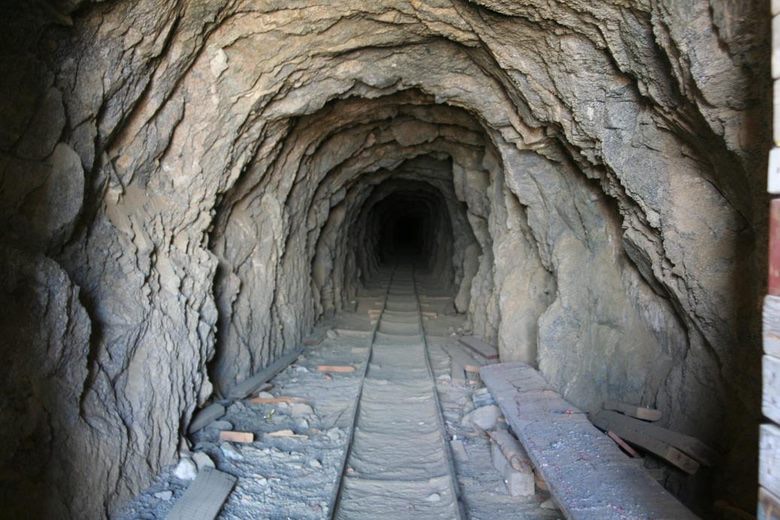
In the El Paso Mountains of the Mojave Desert, there’s a strange and mysterious tunnel. This tunnel cuts a half-mile into solid granite— but goes nowhere. William Henry Schmidt, or “Burro” Schmidt, began digging this tunnel by hand in order to provide a shortcut through the mountain. 

This solo construction project began around the year 1902 while Schmidt was hauling iron ore around the mountain to get to a railroad which would then take the ore to be smelted. 

This strenuous trip around the mountain proved to be a dangerous and time consuming journey. At some point, Schmidt decided to burro straight through the mountain which would, in his mind, save him time. With a simple pick axe and other various hand tools, he began to dig. 

And dig. 

And dig some more. 

For roughly thirty eight years he alone would continue to chisel and bore into the mountain. When he was sixty eight years old, he finally saw rays of sunlight shining through cracks in the rock wall in front of him. He finally emerged on the other side of the mountain— but his efforts were all for nothing. 

Not only did his tunnel end at the top of a steep cliff in the middle of nowhere, but unbeknownst to him during the years he had been digging, a construction crew had built a road providing the more convenient route he had been working so hard to create.

THAT SCARY SENSATION OF DESPERATION 

With four hundred men, Esau marches towards Jacob. The two brothers had parted ways years earlier under strained and deceitful conditions. Jacob, with the help of his mother, had taken advantage of his aging father and stole the birthright belonging to his older sibling. Now Jacob is filled with fear and an overwhelming sense of desperation he cries out to God.

Save me, I pray, from the hand of my brother Esau, for I am afraid he will come and attack me, and also the mothers with their children. But you have said, ‘I will surely make you prosper and will make your descendants like the sand of the sea, which cannot be counted.” 

Gen. 32.11-12 

Jacob, like so many others since his time, had spent his life carving out his own path. He attempted to create shortcuts to his own success and he suffered great losses on account of it. His family relationships were shattered, his finances took unnecessary blows, and his standing with God was turbulent at best. 

Instead of waiting on the LORD to deliver or even answer him, Jacob operates in a predictable manner. He creates a plan and sets in motion without counsel. Hundreds of cattle, servants and goods are collected and prepared as peace offerings for Esau. 

“I will pacify him with the gifts I am sending on ahead; later, when I see him, perhaps he will receive me.”

Gen. 32.21 

Let’s take a moment to assess the tense situation as it’s unfolding. 

Jacob was desperate when he didn’t have to be. Esau wasn’t angry. 

To make matters worse, the night before Jacob is to meet Esau we read that Jacob wrestles with God— when he didn’t have to. In the process he lost sleep, spent all of his energy, and then limps away with an injured hip (Gen. 32.22-32). 

WINNING WITH LESS WRESTLING 

How many times in our personal lives do we make matters more stressful than they have to be? We do that when we’re determined to find our own solutions and we leave God out of the crucial planning process. We’ll carve into metaphorical mountains thinking that we’ll solve a problem and emerge victorious only to discover that the efforts put forth were futile. 

God’s waiting for us to wait on Him. Let Him lead and let Him be the guide. Pray and wait in a ready state. When God answers and we follow with action, life is less stressful and we’re more successful. 

Burro Schmidt’s Tunnel 

“Be Not Dismayed Whate’er Betide”

Friday’s Column: Brent’s Bent

Brent Pollard

Our younger and non-U.S. readers may not be able to relate to the economic news that the U.S. economy is experiencing inflation, unlike anything we’ve seen in 40 years. Indeed, this period of “stagflation” (i.e., stagnant economy plus inflation) began even before my birth, noticeably during the Administration inherited by Gerald Ford after Richard Nixon’s resignation.  

The genesis for this economic downturn started with the decision of President Nixon to take the United States off the gold standard in 1971. It was necessary to prevent the country from defaulting on its debts but was only a short-term solution. Had government become fiscally responsible, they could have gotten the nation out of debt and reinstituted the gold standard. But, rather than curb spending, the government began spending more since they could print more bills. And Ford was honest to a fault, from a political perspective, since he admitted the poor state of the Union in his address in 1975. 

“I must say to you that the state of the Union is not good: Millions of Americans are out of work. Recession and inflation are eroding the money of millions more. Prices are too high, and sales are too slow. This year’s Federal deficit will be about $30 billion; next year’s probably $45 billion. The national debt will rise to over $500 billion. Our plant capacity and productivity are not increasing fast enough. We depend on others for essential energy. Some people question their Government’s ability to make hard decisions and stick with them; they expect Washington politics as usual.”1  

Looking to make a change, Americans voted for the Democrat candidate running against Ford in 1976. Supreme Court Justice Warren Burger swore in President Jimmy Carter on January 20, 1977. However, instead of bringing positive changes to the economy, things grew worse under President Carter. Ironically, candidate Carter had successfully used Arthur Okun’s “Misery Index” in his campaign to highlight the miserable performance of Ford’s economy.Yet, it would not be long until the “Misery Index” became an albatross around Carter’s neck. Carter’s opponent in the 1980 presidential race, Ronald Reagan, even made a point to note that Carter was mum about the “Misery Index” of his tenure.3 I dare say that most laymen still associate the “Misery Index” with Jimmy Carter, not Gerald Ford.  

The CPI (consumer price index) is used to gauge inflation. Unfortunately, it has risen to 8.5%.4 To curb inflation, the Federal Reserve Bank will inevitably raise interest rates. The simple explanation for this is that the Federal Reserve Bank wants to discourage you from spending money. So, with rising interest rates, that new automobile or house will cost even more, and you will decide to make do with what you have. As a result, demand will decrease and theoretically lower inflation. The only positive thing resulting from such an economy is that your savings account will finally accrue more interest. The bad news is that the money you earn will not have the same buying power if inflation is high.  

I was but a child, but I recall the stagflation of the Carter Administration. My father preached for a domestic mission church in west Georgia. He received financial support from a congregation in Tennessee but still had to find other employment periodically to provide for his family. Briefly, my mother even tried to get a job as a seamstress at a Hanes factory outside of LaGrange, Georgia. We lived austerely and had more than one of Dolly Parton’s “Hard Candy Christmas.” However, my father could parlay those savings into later real estate purchases when the economy improved. The point is that even Christians experience lean times, but they don’t last forever. 

Would you believe that this is what Paul talked about with his financial supporters in Philippi? He told them he had learned to get along with much or little (Philippians 4.11-12). Paul said that even meant having to go hungry at times. Yet, he could do it because Christ gave him strength (Philippians 4.13). So, yes, that oft-quoted verse is about money. Though it is nice to think we can tap into our Lord’s power to accomplish difficult tasks, like quitting a bad habit, we should not lose sight of the context, especially in a terrible economy.  

David said long ago that he had never seen the righteous forsaken or his seed begging for bread (Psalm 37.25). Indeed, Jesus reminds us that God will supply the needs of those seeking Him and His Kingdom first (Matthew 6.33). But our necessities are just that, necessary. Beans and cornbread can sate hunger as effectively as filet mignon and mushroom Bordelaise. So, God is not promising you the “king’s dainties” (cf. Daniel 1.8 ASV). But you will receive enough sustenance to maintain life.  

Moreover, as a Christian, you have the added blessing of your church family. The first Christians saw after one another’s needs, even selling their property to help support their brethren (cf. Acts 4.32-35). I am not suggesting that things will become bad enough today to necessitate such drastic measures, but it is still encouraging to know that we have others watching our backs. Indeed, they will help us with our burdens as we help carry theirs (Galatians 6.2,10). 

Yes, things may get worse before getting better. The younger generations may not know what to make of these things. And we might see people sinning as the post-exilic Jews who robbed God by withholding their tithes to Him (Malachi 3.8-12). In these times, God encourages more generosity, not stinginess. As He told the Jews of old, He is more than capable of opening the portals of heaven to shower us with blessings. Do not lose that faith and trust that as we learn to do without, we might also learn how to properly conduct ourselves when we abound in this world’s goods. 

Sources Cited 

1  Ford, Gerald. “President Gerald R. Ford’s Address before a Joint Session of the Congress Reporting on the State of the Union.” Gerald Ford’s 1975 State of the Union Address, Gerald R. Ford Presidential Library and Museum, www.fordlibrarymuseum.gov/library/speeches/750028.htm

2  Phelan, John. “The Return of the ‘Misery Index’.” American Experiment, Center of the American Experiment, 27 Jan. 2022,www.americanexperiment.org/the-return-of-the-misery-index/

3 Ibid 

4 McCormick, Emily. “Inflation Rises by the Most since 1981 as CPI Jumps 8.5% in March.” Yahoo! Finance, Yahoo!, 12 Apr. 2022, finance.yahoo.com/news/consumer-price-index-cpi-inflation-march-2022-123202319.html

More About God

Thursday’s Column: Captain’s Blog


Carl Pollard

It’s physically impossible for us to know everything about God. Our minds wouldn’t be able to comprehend Who He Is, but this doesn’t give us an excuse to not try and know more about the Creator. When I was younger, I believed in God. I knew He existed, but I failed to grasp some very important things about God. For example, how much He cares for us. 
Matthew 10:31-32 says, “But the very hairs of your head are all numbered. So do not fear; you are more valuable than many sparrows.” Have you ever stopped to think about the fact that God cares for you personally? When we pray to Him, He takes the time to listen to our problems. People pay thousands of dollars for someone to listen to them. This care that God has for us is greater than anything on earth.
With this in mind, we need to spend more time trying to grow our relationship with Him. John 3:16 shows just how badly God desires to call us His own. God loved the world. He cares for us and wants us. Knowing how much He cares for us, let’s use this to work harder in our relationship with God. Earthly relationships take work. If we love someone it takes effort to have a healthy relationship. It takes time, commitment, sacrifice, and communication. It’s the same in our relationship with God.
My parents used to say, “Remember who you are and Whose you are.” If we would understand more about God, the fact that He is our Father and that He is the source of Love, we can live right for Him. Knowing these things about the Father brings understanding. We now understand that,

A personal knowledge of God leads to

–A Prayerful Life (1 John 5:14) 

–A Peaceful life (2 Thes. 3:16) 

–A Purposeful Life (Ecc. 12:13-14)

Photo credit: Pixabay

5 Buckets For Life

Tuesday’s Column: Dale Mail

blond man with goatee smiling at camera with blazer on
Dale Pollard

We would all like to improve in many ways, but many of us are also well aware of the flaws we feel are holding us back. Those shortcomings tend to get in the way, slow us down, or even prevent us from achieving the quality of life that we desire. While there is plenty of room for improvement in my life, I have found that there is a simple way to clearly envision where I am currently, and also plan for where I would like to be in the future. 

It’s true that our burdens often come from our blessings. For example, the blessing of having a car may result in the burden of expensive bills that follow a mechanical issue. 

I believe that there are five major buckets of blessings that we all must give our time and attention to. They are the five categories that, if purposefully tended, help our lives to be wonderful. On the other hand, if neglected, we find ourselves in a head-spinning spiral of worry and anxiety. 

These buckets are: 

  1. Faith 
  2. Mental maturity 
  3. Physical health 
  4. Relationships 
  5. Work 

If one of those buckets isn’t filled with the proper content, the effects, I’m sure you’re aware, are negative. If these crucial categories are filled correctly, our quality of life will only improve. 

God is the Creator of life itself which makes Him the leading authority on the subject. Consider how He can help you in each of the five areas listed here.

Faith 

By denying self, our focus is diverted away from our negative self absorption. Putting God and others first can give you a better, fresh, and positive perspective. 

Acts 20:35

Mental maturity 

When we seek to understand our own minds and what makes us tick, we’ll be able to identify where these negative thoughts and reactions originate. 

Philippians 4:8

Physical health 

Poor health habits like fast-food diets, lack of physical exercise, and sleep deprivation only make dealing with stress all the more difficult. God designed your body to function properly when properly taken care of. 

Luke 1:37 

Relationships 

Every relationship, whether in marriage, friendship, family, coworkers, or the church, all have one thing in common—they were made by God. Thankfully, God wrote a book to help us understand who we are to be to each individual that make up those groups. 

Romans 12:16

Work 

God built us to work— He expects us to. Some choose to be lazy, and they suffer. Others choose to constantly work to the neglect of the four other areas mentioned. There must be a balance, and God knows that. 

Psalm 128:2 

While there’s a lot more to be said concerning these five categories, I hope this simplifies things and helps refocus on what really matters. 

Hopefully, looking at life through His divine lens is a reminder of Who we should turn to for everything. He has given us the ultimate assurance— and He is willing to give us the ultimate assistance. 

Four Waves On The Sea Of Life

Monday’s Column: Neal At The Cross

Neal Pollard

For whatever reason, I have been fascinated with stories of maritime disaster. I have read about the Titanic, but have even read more closely about the Lusitania, the Edmund Fitzgerald, the HMS Hood (for more, click here), and more. Perhaps few things could conjure up more fear than the thought of being thrust into a cold, deep ocean with no way to stay afloat, subject to attack and almost certain drowning. Poets have drawn upon such imagery, but so do the psalm writers. Read Psalm 42:7 or Psalm 69:2, 14-15 or Psalm 88:7. It is also the way Psalm 130 begins.

It seems to me that the writer is depicting the rolling waves we encounter in life, the ups and downs and the good and bad. How will I respond when I am in the storm, whether a literal storm, a storm others bring upon me or a storm I bring upon myself? What will I do when the winds have subsided and the storm has passed? Let’s look at this psalm as depicting four successive waves. 

APPREHENSION: Our Cries And Supplications (1-2)

(Wave One)

We find the writer in a watery valley, looking up at a high, but descending, wave. It causes him to cry out and voice his pleas and supplications. The crisis may be financial, medical, familial, personal, or spiritual. It may seem like the world is crashing in on top of you. Do you sink in waves of worry, fear, and doubt? Or do you cry out to God for help? The writer sets an example for us, when we feel like we will be buried by trouble!

TRANSGRESSION: Our Iniquities And Unforgiven Sins (3-4)

(Wave Two)

Though the writer moves away from the metaphor, the idea continues. When you wade in the ocean and reach a shelf, you can no longer put your feet on the bottom. You can sink or swim, but you cannot stand. Verse three asks, “If You, Lord, should mark iniquities, O Lord, who could stand?” The question is rhetorical, but a lifesaver is thrown! “But there is forgiveness with You, that You may be feared.” Perhaps better imagery is to see the Omnipotent Hand of God reaching into the deep, grabbing our outstretched, up- stretched hand! Perhaps self-inflicted trouble, our sins, cause us to sink deeper than any other trouble. 

EXPECTATION: Our Waiting And Hoping (5-7a)

(Wave Three)

Perhaps we could envision this as one floating to the top or having their head come up out of the water. The writer uses two significant, connected words–“wait” and “hope.” Help is coming! Just wait. Hope. You’re trusting, praying, studying, serving, and enduring. Maybe you feel like you’re holding onto a splintered plank that’s separating in the aftermath of your shipwreck, but you hear the sound of the rescue vessel humming on the waters. You know Who is at the helm, so you hang on!

REALIZATION: Our Mercy And Redemption (7-8)

(Wave Four)

I don’t know about you, but I don’t think I could be coaxed off a massive barge onto a rickety rowboat. But, most of us would make the exchange in the opposite scenario. Yet, the world clings to the leaky carrier of lostness when the ship of salvation is within reach. The writer calls heaven’s help “lovingkindness” and “abundant redemption.” This is the way I want to view the tumultuous waves of this world, from the safety of God’s saving grace. Resting in His everlasting arms, I can experience confidence and assurance at life’s worst while keeping my focus on Him at life’s best! 

You are probably facing, enduring, or looking back at one of those first three waves right now. We sometimes singing, “Jesus, Savior, pilot me over life’s tempestuous sea; Unknown waves before me roll, hiding rock and treacherous shoal, chart and compass came from Thee, Jesus, Savior, pilot me.” We are echoing the sentiments of the psalmist in Psalm 130. Wherever you are in life, be sure you are letting Him lift and lead you! It’s the only way to reach eternal safety (John 14:6)! 

Fears Are Funny

Tuesday Column: Dale Mail

image-e1601983688162

Dale Pollard

Do you remember what any of your childhood fears were? Maybe you never really grew out of those fears.  I can remember a number of phobias I had as a child but one of them was not arachnophobia. In fact, me and my younger brother would collect spiders from the backyard and put them all in a container in our bedroom. At night we would put a flashlight behind a clear cage and watch all the spiders make their webs— occasionally fight each other. I don’t believe mom ever discovered this little secret. For some reason as I grew older (more mature) I developed a fear of spiders, despite having played with them often as a young kid.

Fears can be funny like that. They can come from bad experiences or just somewhere in the back of our minds. There’s a lot of fear in the world today!

One of my favorite psalms in the Bible is Psalm 46. We read about what seems to be those worst case scenarios, but God still reigns over all. What if the earth gives way? What if the mountains are thrown into the sea? What if the wrong man becomes our new president? What if this virus never goes away? Even so, we have no reason to fear. God is bigger than our fears. We serve a Being with that much power and it should fill us with courage. What are you afraid of? 

Make God A Priority

Friday’s Column: Captain’s Blog

pollards10

Carl Pollard

There’s a story told of four men that went into the woods on a deer hunt one morning. The men split into groups of two and set out for the day. When evening rolled around, 2 of the 4 hunters had already returned and set up camp and were waiting on the other 2 men to return. Hours passed by when finally one of the hunters staggered into camp carrying a massive 8 point buck. The hunters asked where the other guy was, and the man answered and said, “He had a stroke earlier and is a couple miles up the trail.” The men are shocked and they say, “Why did you cary the deer back and leave your friend?” The hunter paused for a moment and said, “Well…I didn’t want my deer to get stolen.” 

Sometimes in life our priorities can get a little mixed up. Maybe not to the point where we would choose a deer over a person, but nevertheless, each one of use is prone to lose focus. The definition of priority is “something that is regarded as more important than another.” For example, when you choose “priority shipping,” it is regarded as more important by the postal service and reaches its destination quicker. The things that we prioritize are the things that take up the majority of our time, money, and effort. A student trying to get a good grade will make studying their top priority. A football player that is trying to be the best will make training, exercise, and memorizing the team plays a top priority. And so it is with any aspect and profession. 

There is revealed to us a top priority for us as christians in God’s Word. In Matthew six Jesus is just about halfway through His sermon on the mount when He turns His focus onto the subject of worry in verse 25. He says multiple times “do not be anxious.” And He goes on to give us a reason why. Jesus explains that God’s care for us is our reason for not worrying. We are more valuable than grass and birds. Therefore do not be anxious. God values us infinitely more than birds and flowers. It is at the end of this section that we find our priority. Verse 33 says, “But seek first the kingdom of God and his righteousness, and all these things will be added to you.” 

According to this verse, what is it that we should make a priority? What should we be putting our energy and focus into? The kingdom of God. “Seek first” literally means to “chase after.” Jesus tells us that we are to be in constant pursuit of the Kingdom. This means we are actively chasing and longing for it. Not just the kingdom of God, but also HIS righteousness. Not our own, but God’s. This is accomplished through constant prayer and daily scripture reading, continuous reflection and growth, caring for those around us and copying the mindset of Christ in everything. 

Make God a priority, and the worries of this world will be taken care of. Chase after God and He has promised to take care of us. 

kisspng-royalty-free-corporation-clip-art-light-priority-5add0df1b76503.0275899515244364657512


How To Avoid Worrying About Your Kids

Monday’s Column: Neal At The Cross

pollard

Neal Pollard

For those not on social media and connected either with Kathy or any of our three sons, Carl, our youngest (and Thursday’s blog writer), was in a serious motorcycle accident a little over a week ago. A large pickup truck tried to turn left onto the highway and Carl hit it going highway speed. Our concern was for both his immediate safety and longterm health. Add this to two sons unofficially assisting police in breaking up a local theft ring, a son tackling a shoplifter attempting to flee a store and interrupting a gang initiation beating, broken bones, ER trips, ICU stints for health issues, and that’s not to mention innumerable “close calls,” “near misses,” “close shaves,” and “narrow escapes.”  Of course, it’s not just health. What about their relationships? What about their jobs, careers, and financial futures? What about the country they are inheriting or the children God may bless them with? Most of all, what about their spiritual condition, their faith, and their relationship with Christ? With each new phase of life, we are left to numerous consider “what ifs.” For future empty-nesters, that does not decline or disappear when they leave home. If anything, it mounts. So, how does a Christian not worry about their children?

Philippians 4:6. Paul urges us to “be anxious for nothing.” That word for anxious depicts apprehension, being unduly concerned about possible danger or misfortune. We can drive ourselves crazy thinking of all the scary scenarios. Paul says instead to pray (speak to God and petition His help), supplicate (urgently request God to meet the need, suggesting begging and pleading), and express gratitude. Specifically articulate the help you seek from God. Won’t this just make things worse? Not at all. Instead, “the peace of God, which surpasses all comprehension, will guard your hearts and your minds in Christ Jesus” (7).

Luke 12:25-26. Luke records Jesus’ voluminous teaching on various material concerns. In the middle of it, Jesus shares a principle that applies to any number of matters. He teaches, “And which of you by worrying can add a single hour to his life’s span? If then you cannot do even a very little thing, why do you worry about other matters?” What a practical, sensible truth. What do we change by endless fretting and worrying? Does it change outcomes? Does the exercise of worry keep the bad and scary things from occurring? Does it override the freewill choices of our children or others? We are at one place at a time. God knows everything (30). “He who keeps you will not slumber…nor sleep” (Psa. 121:3-4). Trust that! 

Matthew 6:33. What Matthew records is close to parallel to the material in Luke 12, though the wording and setting are different. The counsel here is about prioritization. It’s hard to “let go and let God,” but that’s Jesus’ bottom-line guidance. Again, in context, He’s dealing with material things rather than our kids. But substituting the one concern for the other does not change the principle. We are well-served to practice “God-firstness” from as early as possible, before our children are born. We should strive to live by that principle throughout the years they are in our homes, trying to show it to them. Then, we must continue to live it out personally and exemplify it before them after they leave the home. God’s kingdom, His will, His righteousness, His goals, His Word comes first and foremost. Keeping focus on that, trust Him to take care of not only us but those whose lives we care about. Jesus sweetly consoles us, “So do not worry about tomorrow, for tomorrow will care for itself. Each day has enough trouble of its own” (34).

1 Peter 5:7. I love how Peter acknowledges that we all have anxiety. We’re all tempted (and all of us at least occasionally succumb to the temptation) to worry. Peter’s words are practical. Humbling yourself under God’s all-powerful hand, throw all your anxieties on Him. He is strong enough to carry it. Do you know what’s the best part? Not only can He do it, He wants to. Why? He cares for you! He’s your Father. “Care” here means concern and anxiousness. Our lives matter to Him. His heart is involved. We may not stop to think that all of us are His children. The difference is that this Father can see the future, is fully in control, will never be startled or surprised, and never lacks for what to say, how to react, and what to do. How foolish not to give Him the things we would obsess over, be consumed with, and eaten up by. 

I wish I could tell you I will never worry about Gary, Dale, and Carl again. Those who know them know what a tall task that is. I wish I could tell you that you will never worry about your precious children again. But, none of us should. We can make progress and get better if we’ll feed on the rich truths of passages like the ones we’ve visited briefly together today. Go back and read them again. Drink deeply of their comforting, helpful truths. They will help you trust Him more with whatever frightening prospects you face regarding your children’s lives. I don’t promise. He does! 


Saturday at Hebron church of Christ (where Carl, center, preaches). This was at Carl and Emily’s wedding shower. The boys had just returned from hunting wild hogs near Demopolis, AL. It never ends!

Division

Wednesday’s Column: Third’s Words

Gary III

Gary Pollard

In this volatile political climate, many Christians face some uncomfortable dilemmas. Is party line a salvation issue? How do we handle seemingly irreconcilable differences? What do we do going forward?
 
Rather than delving into those questions, I’d like to focus on the attitude of the early church, which faced internal division–Jew/Gentile controversies like in Acts 15, opinions over cultural matters as seen in I Corinthians 8 and Romans 14, and external pressures.
 
In keeping with the spirit of the early church, let’s focus on the following list.
 
  1. We must focus on and grow our own spiritual culture, independent of our earthly nationality (while observing Romans 13).
  2. We must be faithful Christians who value being righteous, no matter the cost.
  3. We must manage our concerns and worries by spending MORE time with each other and developing our faith.
  4. We may need to see ourselves less as Americans and more as Christians. If we remember that our kingdom is the church first, we will be far more united.
  5. Be awesome citizens. When outsiders hear about us, it should be that we never cause trouble, we are loyal to each other, we are selfless, we help people, we have strong families, we rely on each other, we are pleasant to be around, we are dedicated to our faith, and we love people who treat us poorly.
  6. We must remember that priority number one is heaven. Everything else is second.
  7. We must avoid talking or posting on social media about non-salvation issues that can and do create division or offense, out of courtesy and respect for each other (Romans 14.1-4; 13ff).
 
If these are the things we worry about and focus on, no political division or any other heartburn-inducing unpleasantness can affect us. Besides being happier, we’ll be a stronger church!

“We Have Nothing to Offer but Fear Itself” 

Friday’s Column: Brent’s Biblical Bytes

81121814_2462862270639428_5746232403106463744_n

Brent Pollard

We have entered the vestibule of a new year. Upon reflection, one might realize how subjective the significance of this day is. Neil deGrasse Tyson likes to point this out annually. For example, in 2011, he tweeted: “January 1, 2011: Happy New Year to all –at this arbitrary spot in Earth’s orbit around the Sun.” (Tyson) Consider China. They may observe the Gregorian calendar to conduct global business, but they will not celebrate the new year until February 12, 2021. Why is there a discrepancy? The Chinese, like the Jews, have a lunar-based calendar. God may have created time as a construct in our material universe, but the only “clocks” He provided were the moon and the sun (Genesis 1.14-19), and it is easier to mark time by the moon since we watch it wax and wane. The sun may appear a little lower or higher in the sky, but it is always making its same east-west circuit.  

Even so, we choose January 1 as a special day to begin making necessary or desirable changes to our lives. I would hope that in an age of “fear porn,” the child of God will choose calm. I apologize if the use of that four-letter word is offensive. However, “fear porn” is an expression that has entered our vernacular. Oxford defines this specific usage of the word “porn” as follows: “[in combination or with modifier] Television programs, magazines, books, etc. that are regarded as emphasizing the sensuous or sensational aspects of a nonsexual subject and stimulating a compulsive interest in their audience.” (“Porn”)  Perhaps the definition provided by a user of the less-authoritative Urban Dictionary is more accessible.  “Mainstream Media content that deliberately and enticingly plays on people’s fears about disaster, disease, and death.” (Animalfarm1984) 

While addressing the Great Depression, Democrat Franklin Delano Rosevelt famously stated, “…the only thing we have to fear is fear itself.” Among others, Michael Reagan, speaking of his political opponents, has altered the maxim to be “the only thing we have to offer is fear itself.” (Reagan) I imagine there are those considering that indictment up to debate. However, it is not my point to assign blame to political parties or politicians. Many thrive on instilling fear regardless of political affiliation. As one writer for a pop-psychology magazine opined, fear is “the most powerful motivator of all.” (Wilson)    

I set out to recall a time in my life in which no Chicken Little was trying to scare me about something. I fail to remember a season when all was well with the world. In nearly a half-century of life, alarmists told me of the perils I face from nuclear war, a new ice age, a hole in the ozone layer, acid rain, killer bees, the deforestation of the Amazon region, the policies of Ronald Reagan, Y2K, global-warming-no-wait-let’s-call-it-climate-change-to-cover-all-our-bases, the policies of Barrack Obama, Ebola, the very existence of Donald Trump, the Illuminati, Globalists, Antifa, Black Lives Matter, COVID-19, and, now, Joe Biden’s socialist regime. Phew. Sadly, I have occasionally given such Chicken Littles a greater hearing than the assurances found in God’s Word.  

What was it that the inspired Apostle John said? “You are from God, little children, and have overcome them; because greater is He who is in you than he who is in the world” (1 John 4.4 NASB1995). Jesus created and now sustains creation (Colossians 1.16-17). It is He who will destroy it when the time comes (2 Peter 3.10). In the interim, as God promised Noah: “While the earth remains, seedtime and harvest, and cold and heat, and summer and winter, and day and night shall not cease (Genesis 8.22 NASB1995).” It may be that we figuratively see the writing on the wall as Belshazzar indeed did in Daniel 5, but even so, God will be our Rock. Even if the mountains crumble and fall into the sea, He is still our refuge (Psalm 46). It is OK to face uncertainty with apprehension like Habakkuk did as he awaited the impending Babylonian invasion (Habakkuk 3.2,16). Yet, like Habakkuk (and the Apostle Paul), we must bravely move forward, recognizing our dependence upon Providence (Habakkuk 3.17-19; Philippians 4.11-13). Regardless of what 2021 may hold, if you seek God and His Kingdom first, God has your back (Matthew 6.33)! 

Works Cited 

Tyson, Neil deGrasse (neiltyson). “January 1, 2011: Happy New Year to all –at this arbitrary spot in Earth’s orbit around the Sun.” 1 January 2011, 2:55 p.m. Tweet. 

“Porn: Definition of Porn by Oxford Dictionary on Lexico.com Also Meaning of Porn.” Lexico Dictionaries | English, Lexico Dictionaries,www.lexico.com/en/definition/porn

Animalfarm1984. “Fear Porn.” Urban Dictionary, Urban Dictionary, 26 June 2020, www.urbandictionary.com/define.php?term=Fear+Porn

Reagan, Michael. “Stories in the News – Ketchikan, Alaska – The Fear Peddlers.” Sitnews, Stories in the News, 15 May 2003, 4:25 p.m.,www.sitnews.net/Columnist/051503_reagan.html

Wilson, Robert. “The Most Powerful Motivator.” Psychology Today, Sussex Publishers, 23 Sept. 2009, www.psychologytoday.com/us/blog/the-main-ingredient/200909/the-most-powerful-motivator


Making My Lot A Lot Better 

Monday’s Column: Dale Mail

image

Dale Pollard

Nothing makes a problem bigger like feeling discontent.
Nothing makes the future dimmer like being discontent.
Nothing buys you happiness, no matter the money spent. 
It breeds greed and disappointment, and above all— the discontent. 

According to Psych Central, discontentment leads to some unhealthy ways of coping with anxiety and depression. It can lead us on a never ending chase of those fleeting and euphoric moments which always leave one feeling empty inside. 

Paul would pen the words, “…I have learned in whatever situation I am to be content” (Phil. 4:11b).

He writes to the church at Philippi, from prison. Paul was no stranger to being wrongly charged as a criminal. He spent several nights behind bars throughout his life, but from Philippians 1:20  he seems to know that his time on earth is coming to an end. 

The Romans were notorious for finding the most creative ways of torturing their victims before their final execution and Paul preaches the gospel of a Man who was crucified for His ministry. The agonizing thoughts of a similar death had to have entered into the apostle’s mind. Though the details of his anxieties are not recorded, what is recorded is the awe-inspiring language he uses to describe the kind of faith he owns. He is unafraid of death; he even seems to welcome it! 

In the gloom of a prison cell where there was no doubt a melancholy atmosphere about him, Paul’s mind is thinking on those things which are true, honorable, just, pure, lovely, and commendable. This mindset has led him to be content and at peace. His contentment remained the same regardless of the bleak outside circumstances. 

His life teaches us three basic truths about contentment: 

  1. Anyone can be content through anything— at any time. 
  2. Contentment is a recognized and willful dependence on God.
  3. It is something that has to be LEARNED (4:11).

Being a prisoner of Rome had some negative social stigmas, just as it does today. Timothy even struggled with Paul’s imprisonment, so what made the church at Philippi listen to his letter from behind bars? Paul’s unshakable faith and commitment to the work of Christ had to play a part in inspiring them. A lifestyle that can offer hope and peace that nobody and nothing can take from us— speaks for itself. Paul demonstrates the power of Christ at work in him to the church at Philippi, and to every congregation that’s ever existed since then. 

We have everything we need but don’t deserve because of Jesus— let’s be content. 

meerkat, stack, family, cute, happy, fur, furry, contentment, content |  Pikist

The Curious Case Of The Caratinga Cow

Tuesday’s Column: Dale Mail

DaleandJanelledirectorypic

Dale Pollard


We know that tomorrow isn’t promised and we also understand that, unless God comes first, everyone will die one day. With that being said, I am almost 100% certain that nobody reading this will pass from this life after having a cow fall through your roof. The “steaks” just aren’t that high. While this is an unlikely way to die, it’s not an impossible way to go. In fact, this is exactly what happened to Joao Souza in 2013. A one-ton cow was grazing on the hills behind his home in Caratinga before it somehow found it’s way up on to his roof. An unknowing Souza was snoozing on his couch when suddenly his life was over. The asbestos-filled roof collapsed under the weight of the cow. Being done in by a bovine is not exactly a bodacious way to make that final transition, but the media had reported two more similar events of cows seemingly falling from the sky in this area just two years prior. Even though this event actually occurred, how ridiculous would it be for us to spend our days in fear— worrying that we will meet a similar fate? 

The last verse of Matthew six will tell you not to exert so much energy worrying about tomorrow. This passage has brought peace and comfort to many Christians throughout the years, but many of us still worry about our tomorrows. I guess if our tomorrows were actually ours to begin with, we may really have something to fear. The truth is, God owns the future. He doesn’t tell us not to worry about the things that are unlikely to happen, He simply tells us not to worry. God’s almighty hand still holds the world, and for the faithful believer this reality can set your mind to rest. I’m not sure what tomorrow brings. It’s possible that a cow could even come crashing through my roof and send me into eternity— but that’s alright. It’s not just alright because I could use a little more dairy in my diet, but it’s alright because a life in Christ comes with a secure future. It doesn’t matter what Fox News tells us when the Good News already told us everything we need to know. No matter what the day may bring nothing can change the fact that Jesus came, He died, and He definitely is alive, well, and active every day. Don’t worry about tomorrow. Let’s live our lives with joy and in the peace only He can provide. 

cow-2896329_960_720

    I hope this moos you and that you have an udderly fantastic day. If this beefed up your spiritual cow-fidence please share with someone else.  

My God Is So Big

Tuesday’s Column: Dale Mail

IMG_1381

Dale Pollard

My problems are so big, my worries so mighty, there’s nothing my anxieties can’t do. Wait, that’s not how that song goes. It’s been said that the there are more stars in the known universe than all of the sand on earth combined. That being said, in just one grain of sand there are more atoms than all of the stars. That’s pretty amazing. Our planet is but a speck in the grandeur of space. Countless stars, planets, galaxies, lightyears and somehow God is well aware of the happenings of people.

Have you stood on the mountain tops? Have you observed the power of the oceans as the waves crash on the shore? Has your heart almost stopped after the vibrating sensation of a thunder clap resinates in your chest? The might of the Creator is everywhere in the world around us and at times it just demands to be noticed.

1 Kings 19:11-13 is a section of scripture that is mysterious and fascinating. The Lord of hosts is about to show Himself to a depressed and exhausted Elijah, but in a way that he would never forget. “The Lord said, ‘go out on the mountain in the presence of the Lord, for the Lord is about to pass by.’ Then a great and powerful wind tore the mountains apart and shattered the rocks before the Lord, but the Lord was not in the wind. After the wind there was an earthquake, but the Lord was not in the earthquake. After the earthquake came a fire, but the Lord was not in the fire. And after the fire came a gentle whisper. When Elijah heard it, he pulled his cloak over his face and went out to stand at the mouth of the cave. Then the voice said, ‘what are you doing here Elijah?’” In the hush of Horeb, Elijah seeks to avoid the troubles of his world. The acoustics of the mountainous area along with the time spent in silence must have made the shattering rocks, raging fire, splitting hills, and rumbling earth all but deafening and definitely a terrifying display of divine power. Then in sharp contrast, a still whisper comes. This gentleness, no doubt, is the reason Elijah decides to cautiously emerge from his hiding place. God is teaching His worn-out servant a lesson that holds true for us today.

The fact is, there is no more God, His wisdom, power, and presence in an earthquake than there is in the sweet breath of a blooming flower. The quiet ticking of a wrist watch reveals just as much intelligence and purpose as does the striking of a clock tower’s bell. One may walk out into an open field at night and stare up into the vast sky, lit up with numerous twinkling stars and declare, “I’ve found God!” But God is no more in the sky than He is in the blades of grass flattened beneath your feet. The question came to Elijah from that still voice, “What are you doing here?” To the prophet, his problems were too great and too large and his solution was to run and hide. God, in a magnificent way, is trying to remind Elijah of his place. Our place in life is not to take matters into our own hands or solve life’s many difficulties on our own. The answer is not to run away, but to walk humbly with our awesome God. He is strong enough to lift our burdens, wise enough to counsel us, patient enough to allow us to learn, and loving enough to constantly forgive. My God is so big, so strong, and so mighty, there’s nothing my God cannot do— for you, too. 

28661198_10215059820467071_276448063235616888_n
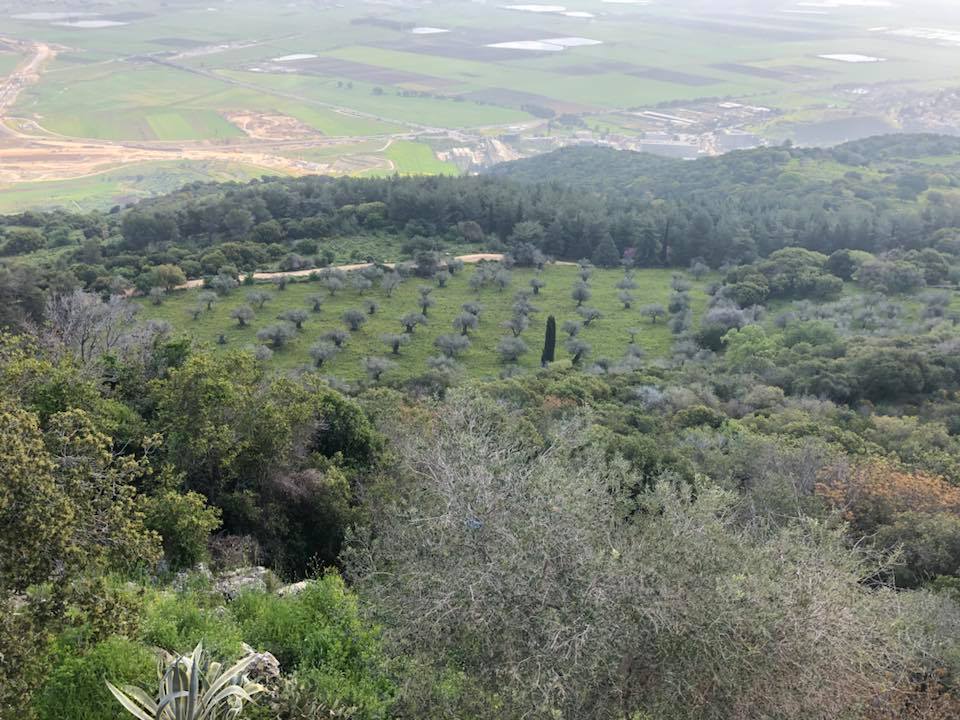
A view from Mt. Carmel (Israel)

When Will I Ever Be Free…

Neal Pollard

…Of concerns over the future–decisions to make, the specter of tomorrow, growing old, retirement?
…Of sin–fighting temptation and not always winning, beating one thing and then finding another cropping up in its place, and the guilt it brings?
…Of disappointment–both of what I inflict and what is inflicted upon me?
…Of fear–when it comes to my spouse, my children, my parents, my brethren, our nation?
…Of doubt–whether in the process of prayer, struggles with asking God “why?,” or especially doubting myself?
…Of neglect–leaving undone things central to my purpose as a Christian due to apathy, distraction, misplaced priorities, and the like?
...Of failure–trying and not succeeding, not trying hard enough, not knowing what or how to try, and of simply falling short?
…Of betrayal–whether through gossip, lying, broken promises, insincerity, or treachery?
…Of insecurity–that can result from any of these and other struggles?

We don’t always have days when we wonder these things, but they come around often enough that they can prey on our minds. Sometimes, we face these questions due to our shortcomings. Other times, it’s because of the failings of others. Both can lead to despair.

The wonderful news is that we can be free of them all. There is a day coming when none of these will weigh us down ever again. I love the encouragement of the Hebrews’ writer, who urges, “Therefore, since we are surrounded by so great a cloud of witnesses, let us also lay aside every weight, and sin which clings so closely, and let us run with endurance the race that is set before us, looking to Jesus, the founder and perfecter of our faith, who for the joy that was set before him endured the cross, despising the shame, and is seated at the right hand of the throne of God. Consider him who endured from sinners such hostility against himself, so that you may not grow weary or fainthearted” (12:1-3). 

Whether we are struggling due to our sinfulness or if it is any other weight, we’re encouraged to hang on and hang in there. When the struggle might be the greatest, that’s when we’ve got to turn and fix our focus on Jesus. Watch how He won! See what He did! Remember that He helps make it possible for us to fight and win.  

If you are in the valley of despair right now, for whatever reason, don’t give up! Look to Jesus. Hang on! The end is in sight. Through Him, we will overcome!

4345500222_b70e4f3204_b


The Rubber Band Metaphor

Neal Pollard

The rubber band’s a handy tool
If it but follows a simple rule
It must know how much that it can take
If it goes beyond that, it might break

It does no good inside the drawer
Or on a peg inside the store
It must assume its intended use
If sitting unused, it amounts to abuse

But when in working operation
It must guard against its ruination
Stretched too often or too far
It will not work or be up to par.

Just like that loop which holds together
That which needs a trusty tether
You and I must know our max
And not our limit to unduly tax

We’re not useful up on the shelf
We must work hard, extend ourself
But taken too far, we risk too much
We can hurt ourselves by doing such

Let’s prayerfully consider each opportunity
And realize none has complete immunity
From burnout, fallout, stress and strain—
Then we’ll be useful, happy, strong and sane!

1036633_large

Grappling Over Grass?

Neal Pollard

I heard about the guy last week who tried to choke his neighbor’s lawn service worker for failing to weed the neighbor’s flower bed.  The worker explained he had been hired to cut and trim the grass, but not the beds.  This apparently unsatisfactory answer led to the “choker” leaving visible marks on his victim and ultimately being charged with a count of felony battery.  The irate neighbor was convinced that the lack of weeding was causing him to now be fighting weeds in his own lawn.  The attacking neighbor tried to pull the victim off his riding mower and grabbed him by the neck.

If these are all the facts, what an extreme case of mixed up priorities.  Hurting another person over how unkempt or manicured his or their lawn is?  It seems unthinkable. But many of us know “that” neighbor.  Some of us may wrestle with being “that” neighbor.  If we could step back, we might see how silly excessive obsession with such things is.

In speaking about worry, Jesus reminds us that the grass of the field is alive today and tomorrow is thrown into the furnace (Mat. 6:30). Peter adds that the grass withers (1 Pe. 1:24). James similarly speaks of withering, fading, and expiring grass (1:10ff).  These men said this to make a spiritual point about worrying, the Word, and wisdom, but the fact remains that grass is numbered among those things that will be burned up at the end of the world (2 Pe. 3:10).  Yet, the souls of men will continue somewhere everlastingly (cf. Mat. 25:46).

Are we spending too much time grappling over grass, fretting over finances, or wrapped up in the world?  Are we giving the best part of ourselves for that which in the end matters least?  Jesus said, “Do not work for the food which perishes, but for the food which endures to eternal life…” (John 6:27).  Maybe it’s not food or grass for you.  Whatever earthly thing it may be, put it in its proper place.  And put Him in His proper place (cf. Mat. 6:33).