Immortality

Carl Pollard

Immortality

“the ability to live forever, eternal life.” 

As a Christian, the gospel you believed is not mainly about escaping hell, it’s about entering eternal life. Immortality is the center of our hope. From the beginning, God formed us for eternal life. The Tree of Life stood in Eden as a sign. Humanity was meant to live, and to walk with God without end (Gen 2:9). Sin broke that design and brought the sentence of death (Gen 3:22-24). Death became the doorway through which grace would one day lead us back to life.

And grace has come. Jesus Christ, the Resurrection and the Life, has “abolished death and brought life and immortality to light through the gospel” (2 Tim 1:10). When He rose, He unveiled the firstfruits of a new humanity, bodies raised imperishable, souls made whole, creation set free (1 Cor 15:42-49; Rom 8:21). The same power that raised Jesus from the dead is the down-payment on our own resurrection (Eph 1:13-14; Rom 8:11).

This is why the New Testament writers spoke with triumph. “Death is swallowed up in victory!” (1 Cor 15:54). The last enemy is defeated, not negotiated with.

What will this immortality feel like? Revelation gives us the clearest glimpse: God Himself will wipe away every tear. Death, mourning, crying, and pain will be former things, remembered no more (Rev 21:4). We will see His face (Rev 22:4). We will know as we are known (1 Cor 13:12). Every longing planted in us by the Creator, longings for beauty, for love, for purpose, for home, will be satisfied beyond imagination, yet never exhausted. Eternity will not be monotonous; it will be the ever-fresh discovery of the infinite God! 

The world groans, our bodies weaken, our hearts break, but none of it is the final word. Christ has died, Christ is risen, Christ will come again. And when He appears, we shall be like Him, for we shall see Him as He is (1 John 3:2).

Until that day, let this joy shape everything. Work without despair. Love without fear of loss. Suffer without bitterness. Give without calculation. The clock is broken, the future is secure. We are headed toward a life where sin cannot diminish us, death cannot touch us, and God will be our everlasting light.

This is the joy of immortality: not just that we will live forever, but that we will live forever with Him, fully alive and fully home.

Come, Lord Jesus.

Reasons To Be Thankful

Carl Pollard

As a Christian, the list is endless. But here’s a few: 

  1. God is eternally good and His steadfast love never ends (Psalm 136:1) 
  2. He chose you before the foundation of the world (Eph. 1:3–4)
  3. You are forgiven and your sins are removed as far as the east is from the west (Psa 103:12)
  4. Christ redeemed you with His own blood while you were still His enemy (Rom. 5:8)
  5. You have been adopted as a beloved child of God (1 John 3:1)
  6. The Spirit lives inside you as a guarantee of your inheritance (Eph. 1:13–14)
  7. Every spiritual blessing in the heavenly places already belongs to you in Christ (Eph. 1:3)
  8. Nothing can separate you from the love of God in Christ Jesus (Rom. 8:38–39)
  9. Your name is written in the Lamb’s Book of Life (Phil. 4:3) 
  10. Jesus is praying for you right now (Heb. 7:25)
  11. Death has been swallowed up in victory (1 Cor. 15:54, 57)
  12. One day you will see Him face to face and be made like Him (1 John 3:2)
  13. He will wipe away every tear and make all things new (Rev. 21:4–5)
  14. His mercies are new every single morning (Lam.3:22–23)
  15. He cares for YOU (1 Pt. 5:7) 

As a Christian, you aren’t just tolerated, you are infinitely loved, irrevocably chosen, completely forgiven, eternally kept, and destined for glory. That is why, in everything and always, we give thanks. 

“This is the will of God in Christ Jesus for you: give thanks in all circumstances.” 1 Thes. 5:18

Did Jesus Go to Hell? Clearing Up a Common Misunderstanding

Brent Pollard

How often we hear it said—in songs, in sermons, even recited in ancient creeds—that Jesus “went to hell” after His crucifixion. The phrase rolls off the tongue with such familiarity that few pause to question whether Scripture actually teaches such a thing. Yet here is where we must be careful, for familiarity can breed assumption, and assumption can obscure truth.

The reality is both simpler and more glorious than the popular notion suggests. Yes, Jesus descended somewhere after His death—but it was not to the hell of eternal punishment. The confusion arises from a tangle of translation issues, historical traditions, and well-meaning but imprecise language. However, God’s Word speaks with unmistakable clarity once we understand what terms like HadesSheol, and Gehenna actually mean.

Let us think clearly about this matter, for the truth of Christ’s death and resurrection deserves nothing less than our most careful attention.

The Root of the Confusion: Words Matter

Much of our confusion stems from a problem as simple as translation. Scripture employs three distinct words to describe the afterlife, each with its own meaning:

  • Sheol (Old Testament): The realm of the dead—a shadowy place where all departed souls once dwelt
  • Hades (New Testament): The Greek equivalent of Sheol—the temporary abode of the dead
  • Gehenna: The place of final, eternal punishment—what we properly call hell

Here lies the problem: older English translations, particularly the King James Version, routinely render all three of these words as “hell,” even though they carry distinct meanings. Imagine the muddle this creates! It’s rather like using the word ‘home’ to describe a house, a hotel, and a prison all at once.

Consider Acts 2.27, which in the King James reads: “Thou wilt not leave my soul in hell.” But the Greek word Peter quotes from the Psalms is Hades, not Gehenna. Peter is declaring that God would not abandon Jesus to the realm of the dead—the temporary holding place of departed souls. He is not saying Jesus entered the fires of eternal judgment.

This distinction matters immensely. To collapse these words into one English term is to blur what God has made clear.

The Apostles’ Creed and Historical Development

Many point to the Apostles’ Creed, which states that Christ “descended into hell,” as proof of this doctrine. But even here, history reveals something important: this phrase did not appear in the earliest versions of the Creed. When they first added the term, they translated it as “Hades” instead of “hell.” This translation emphasizes that Jesus did not suffer punishment; instead, He truly died and entered the realm of the dead.

The Creed intended to combat early heresies that denied Jesus’ full humanity. The Creed was saying, in effect: “He really died. His death was no illusion.” This statement is orthodox truth. But somewhere along the way, “descended into Hades” morphed in popular understanding into “descended into hell,” and theological precision—accurately understanding and articulating biblical truths—gave way to theological confusion.

Medieval Imagination and the “Harrowing of Hell”

If you’ve seen medieval art or passion plays, you’ve likely encountered dramatic depictions of Jesus storming the gates of hell, releasing captives, and binding Satan in chains. These images are vivid, memorable, and deeply rooted in Christian culture. There’s only one problem: none of it comes from Scripture.

The so-called “Harrowing of Hell” developed from apocryphal writings—texts that early Christians never accepted as inspired Scripture. These stories captured the imagination and found expression in art, literature, and liturgy throughout the medieval period. They tell a good story, but they are not God’s story.

Here we must be discerning. Just because something appears in Christian tradition does not mean it appears in Christian Scripture. We honor the past, yes, but we bow only to the authority of God’s revealed Word.

What About 1 Peter 3.19–20?

Some appeal to 1 Peter 3.19, where Peter writes that Christ “went and preached to the spirits in prison.” At first glance, this might seem to support the idea that Jesus descended into hell to preach. But look closer.

Peter never uses the word Gehenna here. He doesn’t say Jesus entered the place of eternal punishment. The “spirits in prison” likely refers to the fallen angels of Genesis 6 or to the souls of the disobedient from Noah’s day. And the “preaching” mentioned is not an offer of salvation—it’s a proclamation of victory.

Think of it: Would the triumphant, risen Christ journey to hell to offer redemption to those who had already rejected God? This concept contradicts everything Scripture teaches about the finality of death and judgment, which means that once a person dies, they face judgment (Hebrews 9.27). What Peter describes is not an evangelistic campaign in the underworld, but a declaration of Christ’s conquest over sin, death, and the powers of darkness.

Where Did Jesus Actually Go?

Scripture answers this question with beautiful simplicity:

  • His body was laid in the tomb (Matthew 27.59–60)
  • His spirit went to Hades—specifically to Paradise, the place of blessing for the righteous dead (Luke 23.43)
  • God did not abandon Him there (Acts 2.27, 31)
  • He rose victoriously on the third day (1 Corinthians 15.4)

Notice what Jesus promised the thief on the cross: “Today you will be with me in Paradise” (Luke 23.43). Not hell. Not torment. Paradise—the blessed side of Hades, where the righteous awaited the resurrection.

Hades is the temporary realm of the dead, not the final hell. It is the waiting room, not the eternal chamber. Jesus never set foot in Gehenna, the place prepared for the devil and his angels (Matthew 25.41). To say otherwise is to add to Scripture what God never said.

Why This Matters

Why be so careful about these distinctions? Because truth matters. Because God’s Word deserves precision. Because the gospel itself is at stake.

If Jesus suffered the fires of hell as part of our redemption, then His sacrifice on the cross was incomplete. But Scripture declares that on the cross, Jesus cried, “It is finished” (John 19.30). The payment was complete. He accomplished His work. He descended into death, yes—but not into damnation. This reaffirms the fullness of our redemption and the security of our faith in Christ.

God’s sovereignty shines through this truth. He orchestrated redemption exactly as He planned—through the death, burial, and resurrection of His Son. Jesus conquered death by entering it and emerging victorious. He didn’t storm the gates of hell; He broke the chains of death itself.

Conclusion: Death Conquered, Not Hell Invaded

The belief that Jesus “went to hell” is born from translation confusion, historical development, medieval imagination, and misinterpreted Scripture. But when we let God’s Word speak for itself, the picture becomes clear: Jesus entered Hades—the realm of the dead—and triumphed over it.

He truly died. He truly descended into the domain of death. And He truly rose again, bringing life and immortality to light through the gospel (2 Timothy 1.10).

What practical difference does this make? Everything. Because Jesus conquered death—not hell—we can face our own mortality with confidence. “Because I live,” Jesus said, “you also will live” (John 14.19). That’s not just doctrine; that’s hope. That’s victory. That’s the gospel.

So let us speak carefully about these things. Let us honor Scripture’s precision. And let us marvel at the One who entered death’s dark valley and emerged with the keys of death and Hades in His victorious hand (Revelation 1.18). He didn’t invade hell—He abolished death. And because He lives, we shall live also.


A DIFFERENT SPIRIT

Decades earlier, out in the wilderness, a young Caleb stood (nearly) alone. Moses sent the twelve spies into Canaan to scout the land (Numbers 13), in the minds of the terrified ten– the land of giants was unconquerable. Only two men believed that God was bigger, Joshua and Caleb. They urged the rest to move forward and take what He had promised, but it wasn’t going to happen.

Dale Pollard

Decades earlier, out in the wilderness, a young Caleb stood (nearly) alone. Moses sent the twelve spies into Canaan to scout the land (Numbers 13), in the minds of the terrified ten– the land of giants was unconquerable. Only two men believed that God was bigger, Joshua and Caleb. They urged the rest to move forward and take what He had promised, but it wasn’t going to happen. 

For his courage, God vows to Caleb: 

“But my servant Caleb, because he has a different spirit and has followed me fully, I will bring him into the land into which he went, and his descendants shall possess it” (Numbers 14:24). 

That promise wouldn’t be fulfilled for nearly half a century! By the time the land being divided among the tribes, Caleb was 85 years old. His spirit, however, was stronger than before. In Joshua 14, Caleb goes confidently to Joshua. He says,

 “I am 85 years old. I am still as strong today as I was in the day that Moses sent me… Now therefore give me this mountain of which the Lord spoke in that day” (Joshua 14:10-12). 

Which mountain? That would be Hebron. A mountain that was still inhabited by the Anakim– giants descended from the very people who melted the hearts of those ten spies years ago. To anybody else Caleb’s inheritance seemed like an impossible one. It would have appeared more like a curse– certainly not a blessing.  

But up the mountain he went. God and Caleb secured that territory (Joshua 15.13-14), and the mountain that covered the people in a shadow of their previous shame now serves as a reminder. Between Faith and fear, the former is the more formidable force. 

Four Quick Lessons:

  1. Faith will always outlast fear.
  2. Waiting is not wasted. Caleb looked forward for 45 years, but never became bitter or gave up on God.
  3. Strength is spiritual. That “different spirit” that Caleb possessed sounds similar to that of the saints (Romans 8.9-11, I Corinthians 3.16). 
  4. Excuses are useless, God uses the toothless (Caleb was 85). 

The Cleveland Spiders

The Cleveland team was dreadful. It showed on the field and in the stands, where they drew an average of 199 fans after their first 16 home games. Only 6,088 fans watched them play that year, an average of 145 diehards per home game. They were so bad, they decided to play most of their games on the road.

Neal Pollard

Inexplicably, I remain a Colorado Rockies fan when many of my Denver-area friends have abandoned ship with this historically bad baseball team. The Rockies are last in total pitching and fielding (defense) and seventh-worst in hitting. That means they can’t pitch, hit, or field. They go into the All-Star game 22-74, on pace to join some dubious, infamous company. In the “modern era” (since 1901), there was the 1916 Philadelphia A’s who won 36 and lost 117. The 1935 Boston Braves and 1962 New York Mets were almost as bad. Closer to the present, you’d have to include the 2003 Detroit Tigers (43-119) and the 2024 Chicago White Sox (41-121). But, the symbol and epitome of terrible baseball has to be the 1899 Cleveland Spiders. They finished that season 20-134! But, their hard luck was more of a business decision.

The 1898 team boasted Hall of Famers Cy Young, Jesse Burkett, and Bobby Wallace, but the owners, who also owned the St. Louis Browns, felt that a good team would draw more fans in Missouri than Ohio. So, they depleted the Spider roster and stocked the Browns roster. The Cleveland team was dreadful. It showed on the field and in the stands, where they drew an average of 199 fans after their first 16 home games. Only 6,088 fans watched them play that year, an average of 145 diehards per home game. They were so bad, they decided to play most of their games on the road. To commemorate the centennial “celebration” of Clevelands wandering exiles, J. Thomas Hetrick memorialized them in his 1999 book, Misfits! Baseball’s Worst Team Ever. Apparently, the Spanish-American war, a failed effort to clean up bad language on the field, and “too many games” (expanding to 154; today, it’s 162) had already cut into fan attendance, but watching a “sideshow” like the Cleveland Spiders led to a disastrous end to a once-proud, championship-caliber franchise.

To fail in athletics may lead to a less than desirable footnote in sports history. To fail in academics and economics can create a legacy that stains one’s family name. But, in just about every arena, failure need not affect one’s spiritual standing. Think of biblical underdogs that had little chance of success, if God was not factored in. Why, all of Israel were sitting ducks against the Canaanites without God (Deut. 7:24; Josh. 21:44)! David looked like no match for Goliath (1 Sam. 17:33)! Hezekiah and lowly Judah, on paper, were no match for Sennacherib and the Assyrians (Isa. 37:14-20)! Even the early church seemed overwhelmed in their objectives and mismatched in their mission (1 Cor. 1:26-29)!

How do we explain this? How can we seem to lack the talent, resources, exposure, and influence of the world, and yet still be described as over-comers (John 16:33), conquerors (Rom. 8:37), victors (1 Cor. 15:57), and greater (1 John 4:4) than the world? Perhaps this helps. The final tally has not been recorded, and it will not be in this life! Evaluation day will surprise the whole world, when we stand before The Judge (Mat. 7:13-14, 21-23; Rev. 20:11-15). God’s not going to reward the most accomplished by earthly measurements. Our eternal success or failure will be tied to our response to the One who defeated death and the devil (Heb. 2:14-15). If we trusted and obeyed Him and His blood covers our sins, we will go to heaven even if we don’t have a nickel to our name, a well-defined skill in our toolbox, a diploma or degree on our wall, or a celebrity in our family tree. Maybe others deem you a “loser,” but if you are a “winner” with God that’s the record you want to have!

All Things New

Revelation 21 isn’t fantasy; it’s certain. God will fulfill this promise. For early Christians and us, it’s a call to persevere.

Carl Pollard

The book of Revelation is often misunderstood, neglected, and misused. Its complex imagery and cultural gap make it tough for 21st-century readers. As Peter noted in 2 Peter 3:16, some “twist” such texts to their own destruction. Sadly, Revelation suffers this fate.

In Revelation 21, John shares a vision given to the seven churches of Asia—a message of victory through Christ. Written for Christians under Roman persecution, it offered hope amid suffering. Its Hebrew numerology and imagery resonated then, but today, many distort its meaning. Yet, Christ’s victory remains clear.

John sees the end: God’s triumph over evil, a glimpse of the world’s future, and the faithful’s reward. This prophecy is certain, like all God’s promises. For those in Christ, it’s the ultimate experience. Revelation 21 shows God making “all things new.” Notice what is new: 

A New Creation (Verses 1-2)

John sees a new heaven and earth, the old gone. No sea—symbol of chaos—remains. The New Jerusalem descends, God’s people radiant, ready for eternal fellowship. God restores creation, erasing all brokenness.

A New Connection (Verses 3-4)

God will dwell with His people, His presence intimate. Tears, death, and pain vanish. This is perfect fellowship, every sorrow erased by God’s nearness.

A Final Condition (Verses 6-8)

God declares, “I am making all things new!” He offers eternal life freely, but those rejecting Him face separation. This is God’s final justice and mercy.

Revelation 21 isn’t fantasy; it’s certain. God will fulfill this promise. For early Christians and us, it’s a call to persevere. In a broken world, we await a new creation, connection, and condition. Let’s live faithfully, eyes on the day God makes all things new.

Tempests And Tornadoes

Neal Pollard

In 2009, Gary, Dale, and I took a scenic route back from Neosho, Missouri, where I’d held a meeting, to Denver, Colorado. It took us through Greensburg, Kansas, site of one of the most destructive tornadoes in U.S. history. That was May 4, 2007. Just two years later, the nearest city to Neosho, Joplin, would experience one of the deadliest tornadoes in modern times. 160 people lost their lives. I have been to Moore, Oklahoma, several times. From 1998 to 2015, this Oklahoma City suburb experienced nine tornadoes, three of them large enough to take lives. One in 1999 claimed 46 lives, and another in 2013 claimed 24. Of course, we experienced a deadly, destructive tornado here in Bowling Green less than four years ago.

The Bible doesn’t use the word tornado (or hurricane). But, it does speak of violent windstorms (Zech. 7:14; Mark 4:37ff), tempests (Job 9:17; Psa. 55:8), whirlwinds (Hos. 8:7), thunderstorms (Exo. 9:18; Job 37:1ff), hailstorms (Psa. 148:8; Hag. 2:17), and similar natural events. Whether the ancients experienced an EF-5 or not, they saw the destructive force of nature often enough. Inevitably, inspired writers compared the trials and difficulties of life to storms. Think of some compelling parallels.

  • Both can come suddenly and unexpectedly.
  • Both can inflict damage that leave lasting consequences.
  • Both can evoke strong emotions like anxiety, fear, distress, and sorrow.
  • Both awake in us feelings of dependency and inadequacy.
  • Both should heighten our awareness of the God who rules wind, water, and world.
  • Both are no respecters of our status, education, income, age, etc.
  • Both are confronted better with adequate shelter and protection.

No doubt, this is an incomplete list. But, God’s wisdom included the inspired illustrations of physical storms to prepare us for the storms of life. Isaiah foresees a glorious future “like a refuge from the wind and a shelter from the storm, like streams of water in a dry country, like the shade of a huge rock in a parched land” (Isa. 32:2). In the face of a host of potential threats, the psalmist asserts, “He who dwells in the shelter of the Most High Will abide in the shadow of the Almighty. I will say to the Lord, “My refuge and my fortress, My God, in whom I trust!” (Psalm 91:1-2).

Perhaps you are facing something that you’d liken to a tornado or tempest in your inmost being. This will continue as long as we’re in this body on this earth and this life. God does not promise us exemption from their presence, but He does promise us escape from their power. If you are in the midst of the storm, hold onto Him. He promises that you will survive and that ultimately you will triumph.

It Ain’t Me

Gary Pollard

One of the most difficult things (at least for me) to accept about grace is this: There’s nothing we can do to deserve it, or be “worthy” of it. When I sin, it just makes me feel even more unworthy. This can quickly devolve into apathy — why even try? Every sin seems to compound, every prayer for strength seems ignored. If prayers for strength are ignored, surely prayers for forgiveness are, too! 

This mentality is not a healthy one. But how does one go from an intellectual understanding of grace’s power to accepting the reality of human imperfection? How do we prevent defeat in the aftermath of mistakes? If there’s a fix-all answer to this, I haven’t found it. 

Perhaps the answer is a lack of faith. At its core, faith is really confidence — that God exists, that he rewards people who try hard to have a relationship with him, that his grace is enough for us because his power is most effectively displayed through weakness. 

Maybe it’s disbelief. Does Jesus really forgive us when we sin? Yeah, Paul says “I don’t understand why I act the way I do. I don’t do the good I want to do, and I do the evil I hate. … But I am not really the one doing the evil. It is sin living in me that does it” (Rom 7.15, 17, 20). But later he says, “You are not ruled by your sinful selves. You are ruled by spirit, if God’s spirit really lives in you” (8.9). What does he mean by “ruled”? If I can’t seem to avoid sin, am I not ruled by it? What about Rom 6.2? “So do you think we should continue sinning so that God will give us more and more grace? Of course not! Our old sinful life ended. It’s dead. So how can we continue living in sin?” Which is it? Are we ok because we sin even when we don’t want to? Or are we in trouble because we’re not immune to sin? Maybe this would be better classed under confidence, but it’s so hard to believe that God still wants a relationship with people who claim to love him while vulnerable to sin’s influence. 

Scripture seems to clear this up, if we can only accept its significance: “We know that the law is spiritual, but I am not. I am so human. Sin rules me as if I were its slave. I don’t understand why I act the way I do. I don’t do the good I want to do, I do the evil I hate. And if I don’t want to do what I do, that means I agree that the law is good” (Rom 7.14-16). 

The question each person seems to have to answer is, “Do I really hate sin’s influence in my life?” God knows the true answer to that question. Romans 6.12 says, “Don’t let sin control your life here. You must not be ruled by the things your sinful self makes you want to do.” A few verses later, “In the past you were slaves to sin and you did not even think about doing right.” Verse 23, in the context of these chapters, says that all people are going to die physically because every human has sinned. But all who despise sin (while still vulnerable to its influence) and follow God will be “no longer under death’s power” because Jesus defeated sin’s ultimate punishment. 

We can’t avoid death, just like we can’t avoid sin. Where our heart really is makes the difference. “So I have learned this rule: When I want to do good, evil is there with me. In my mind I am happy with God’s law. But I see another law working in my body. That law makes war against the law that my mind accepts. That other law working in my body is the law of sin, and that law makes me its prisoner.” 

God knows we’re human. God knows we’re weak and constantly fighting sin’s influence. We’re not God, we’re not impervious to its control. Even Paul said, “What a miserable person I am! Who will save me from this body that brings me death?” The answer is Jesus, the one who will rescue us from our current bodies if our “minds serve God’s law, even as our bodies serve the law of sin” (7.25). 

Finally, “Now there is no more condemnation for those who are in Christ Jesus. This is because the law of the spirit of life that comes from Christ Jesus has freed us from the law of sin and death. … God used a human life to destroy sin.” What does this mean? This means if we live to do what God wants us to do, he will give our bodies life on the last day (8.11). We’re never going to be free of sin’s influence in our lives, but we choose our masters. Will we pursue sin with our hearts and actions, or will we serve God with our hearts while the weakness of sin only makes us anticipate freedom (8.18ff) even more? We aren’t doing this alone — we have Jesus defending us (I Jn 2.1-2) and we have God searching our intent (Rom 8.26-27). 

“We know that everything God made has been waiting in pain like a woman ready to give birth to a child. Not just the created world, either — we’ve also been waiting with pain inside us. We have the spirit as the first part of God’s promise. So we are waiting for God to finish making us his children. I mean we are waiting for our bodies to be made free.” 

Losing A Shoe, Winning The Race

Monday’s Column: Neal At The Cross

Neal Pollard

Before a track meet in Omaha, Nebraska, the first Saturday of this month, Terence “Bud” Crawford was most renowned for his perfect 38-0 record as a professional boxer. His unblemished record includes 29 knockouts, but he, then later millions more, saw his seven-year-old daughter deliver the most unlikely knockout blow many of us have seen. Little Talaya ran out of her shoe at the starting block, then fell behind the rest of the pack by 20 meters in this 200 meter race while she put it back on. Not only did she not give up, she stormed back and won the race with seconds to spare. She has aptly with words like grit, determination, and undaunted. Heroic and inspiring have also been bandied about. Perhaps her drive not to lose comes from her father, but she certainly reflected well on him (ESPN report here).

The Bible refers to life as running a race (Heb. 12:1). Paul urges us to run in order to win (1 Cor. 9:24). He was concerned about running in vain (Gal. 2:2). He was determined to finish the course (2 Tim. 4:7). While Paul and the writer of Hebrews describe a race that sounds more like a marathon than a couple hundred yards, it will require all the more grit and determination to successfully complete. There will be encumbrances and entanglements. Whether problems or pressures, things will happen that can bring us to a standstill. In those moments, we may be tempted to quit. Those are the times we can remember our Father and reflect His ways! In our case, He’s not just watching! He can help us win.

Are you discouraged? Do you feel defeated? Maybe it’s something someone has done to you. Maybe it’s something you have done. Whatever it is, perhaps you feel it’s useless to go on. By getting back on track, you may not only win the race yourself but inspire so many others through your successful finish! Don’t give up! The reward is worth the effort. “In the future there is laid up for me the crown of righteousness, which the Lord, the righteous Judge, will award to me on that day; and not only to me, but also to all who have loved His appearing” (2 Tim. 4:8).

Know The Enemy And Know Yourself 

Friday’s Column: Brent’s Bent

Brent Pollard

For wisdom, one cannot beat God’s inspired Word. That Word, Jesus said, is truth (John 17.17). Even so, the secular works of man can be insightful. For example, soldiers and captains of industry alike still quote China’s Sun Tzu. From his work, The Art of War, we take our title. However, the full quotation is longer. Therefore, I will share it to provide context. 

“If you know the enemy and know yourself, you need not fear the result of a hundred battles. If you know yourself but not the enemy, for every victory gained you will also suffer a defeat. If you know neither the enemy nor yourself, you will succumb in every battle.” 1  

I realize some might say this is obvious enough to be a truism. Yet, for some, it is advice that seems so novel despite having parallels in Holy Writ. Doesn’t the Bible teach us to know our enemy as well as ourselves? Of course, it does.  

  • “Be of sober spirit, be on the alert. Your adversary, the devil, prowls around like a roaring lion, seeking someone to devour.” (1 Peter 5.8, all ref. NASB1995 unless otherwise indicated) We see our enemy is on the prowl. That noun denotes stealth. Yet, it likewise signifies he is continuously on the move, a restless foe. This restlessness seems evident in the introduction of Job when we find Satan flippantly admitting to God’s question of where he has been that he has been “roaming about on the earth and walking around on it” (Job 1.7). Hence, in knowing our enemy, we expect that he will attack us at any time from any location. Thus, we must maintain our sobriety (i.e., sensibility) and state of preparedness (i.e., alert). As we introspectively examine ourselves, do we note that state of readiness to combat a cunning enemy? Do we have the tools for offense and defense ready? 
  • Paul reminds us that our battle is against spiritual enemies (Ephesians 6.12). And those enemies have a leader that likes to use “schemes” (“wiles” KJV) (Ephesians 6.11). In other words, we do not expect our enemy to fight fairly. In pure militaristic terms, the devil is engaged in guerrilla warfare. He cannot win the war against a superior enemy (i.e., God), so he snipes those he can. Within the same context, though, we observe what we have at our disposal: the panoply of God. God’s armor consists of a loin covering (truth), breastplate (righteousness), shoes (readiness), shield (faith), sword (God’s Word), and helmet (salvation) (Ephesians 6.13-17). These items we must wield with prayer and alertness if we desire to win (Ephesians 6.18). Do we actively use God’s armor, or has our apathetic spirit cast it aside? 

In all fairness, Sun Tzu admits that knowledge alone cannot ensure every victory. And we acknowledge that, as Christians, there are times when we lose a battle against the enemy. Everyone sins (Romans 3.23). There are even occasions when the enemy is in more significant numbers. In such situations, Tzu says it is best to avoid the enemy. Of course, we cannot do that as Christians (John 17.14-16). But we can flee from sin (1 Corinthians 6.18; 10.14; 1 Timothy 6.10-12; 2 Timothy 2.22). And we must keep good company to ensure we are not corrupted (1 Corinthians 15.33). We must periodically check our footing (1 Corinthians 10.12). And when we are seeking to restore someone, we must look to ourselves so that we are not tempted (Galatians 6.1). In the end, though, Tzu’s truism serves us well. We must know our enemy and ourselves. In the interim, as we fight this good fight, we look forward to the day when God will destroy the enemy. Until then, we take comfort from these inspired words: 

“For whatever is born of God overcomes the world; and this is the victory that has overcome the world—our faith.” (1 John 5.4) 

Sources Cited 

1 Tzu, Sun. “A Quote from the Art of War.” Goodreads, Goodreads, https://www.goodreads.com/quotes/17976-if-you-know-the-enemy-and-know-yourself-you-need

Six Hands And A Stick 

Tuesday’s Column: Dale Mail

Daleheadshot

Dale Pollard

In the opening verses of Exodus 17, the faith of the Israelites is being tested. They’re in the wilderness and their human limitations begin to lead them to say and do things that end up defining their character for all eternity. It’s chapters in the Old Testament like this that set the stage for God to teach difficult lessons for them— and us.
There’s no water for them to drink and the feeling of thirst ignites a wild-fire of complaints. The text reads, “‘Therefore the people quarreled with Moses and they said ‘give us water to drink!’ And Moses said ‘Why do you do you quarrel with me? Why do you test the Lord?’” From here, it only escalates. The children begin to accuse Moses of attempted genocide.  They say, “Why did you bring us out here from Egypt? To die of thirst?” These people have seen the power of God, and they knew that the miracles which Moses performed were evidence of his Divine connection. The fact that they ask him for water when there is none proves that they knew Moses could do something about it.
It’s not only the Israelites that struggle with their rocky faith in God, however.  Moses also pleads with the Lord. He prays, “What shall I do with these people? They’re almost ready to stone me!” God responds by saying in verse five, “…take in your hand the staff which you struck the Nile, and go.” The wording is deliberate here. God is reminding Moses and the children what He has already done with that simple wooden staff in their past.  As Moses walked through that  wilderness leading his people, he holds in his hand a constant reminder. In his hand is a stick— a stick that God used to provide for His people.
If God can use some wood as an instrument to satisfy thirst and protect a large crowd of complainers, why do some still question God’s ability to care for us today? The place where Moses struck the rock was named, “Massah and Maribah” which translates, “Is the Lord among us or not?” It’s both a name and a question His children still ask from time to time today.
In the last section of this chapter, we can observe an intentional layout of the text. The army of Amalek challenges the Israelites to battle. With his faith restored in God’s power, Moses says, “Tomorrow I will stand on top of the hill with the staff of God in my hand.” On the day of battle, Moses holds the staff above his head. Whenever it was held up, the Israelites prevailed. When the staff was lowered, Amalek’s army prevailed.
Verses twelve and thirteen carry much application for us today. They say, “But the hands of Moses grew weary, and they placed a stone under him and he sat on it, while Aaron and Hur held up his hands on either side. So His hands were steady until the going down of the son.” At least three major lessons can be derived from this section of scripture.
Lesson one, church leaders can’t lead us to our eternal victory alone. Moses did not win the battle that day. God did.
Lesson two, church leaders need help because even a stick can become heavy after a while. God never intended for one man to lead His people. There must be an eldership so that these men can help each other hold up the word of God. Their victory came when four more hands took on the burden and shared the weight.
Lesson three, there is no obstacle we will face that God’s faithful people can’t overcome. Even if all the armies in the world had decided to attack the Israelites that day, three men and God would have still brought them to victory. If God can accomplish so much with a piece of wood, who are we to limit His power today? There is nothing we can’t do under the leadership of, not mere men, but God. Moses knew God could accomplish anything through him and some wood— today we would do well to remember what God can do with us and our willingness to serve.
biblical-leadership-not-as-simple-as-you-think-702x336-1

The Eternal Optimist

Friday’s Column: Supplemental Strength

81121814_2462862270639428_5746232403106463744_n

Brent Pollard

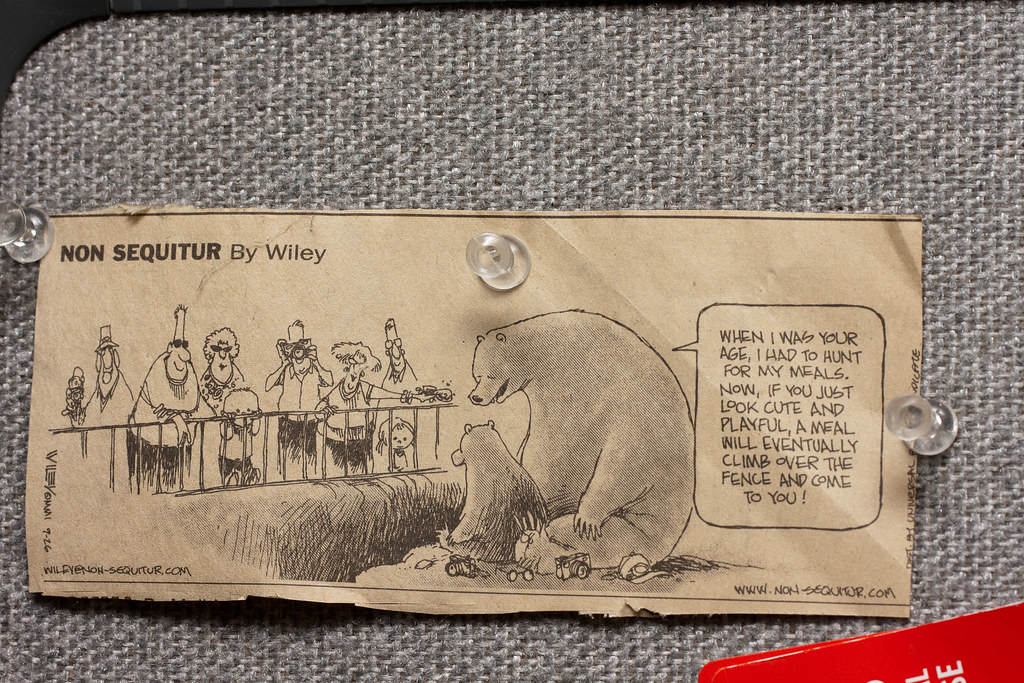
Wiley Miller is the creator of the comic strip, Non Sequitur. When apolitical, Miller’s strip can be enjoyable. I cut one of his strips from a daily edition of The Fayetteville Observer (Fayetteville, NC) back in the early aughts featuring “the eternal optimist.” In the one-panel comic, the grim reaper stands before a man in business attire. This eternal optimist calls to his wife in another room: “Well, honey, it doesn’t look like I have to worry about that long commute anymore.” I kept that strip until it yellowed with age and crumbled into oblivion. I did so for another reason than having a dark sense of humor. I hope I am an optimist on the order of the businessman finding something good to say even in the face of death.

Paul had such a character. He told the Philippians that he had everything to gain in death, as a Christian, and needed only remain for the sake of the brethren (Philippians 1.21-26). Nearing the end of his life, a confident Paul told Timothy, “I have fought the good fight, I have finished the course, I have kept the faith; in the future there is laid up for me the crown of righteousness, which the Lord, the righteous Judge, will award to me on that day; and not only to me, but also to all who have loved His appearing.” (2 Timothy 4.7-8 NASB). Why was Paul an eternal optimist? It was not because he was free of sin. Indeed, Paul considered himself the chief of sinners (1 Timothy 1.15). However, Paul was full of faith and understood God’s grace.

We cannot afford to live in fear, whether that fear is of death or whether we are “good enough.” We must do the will of God. John says, “But if we walk in the Light as He Himself is in the Light, we have fellowship with one another, and the blood of Jesus His Son cleanses us from all sin” (1 John 1.7 NASB). That faith may not always take us to places providing comfort. Shadrach, Meshach, and Abed-nego had their faith put to the test. Nebuchadnezzar had instructed everyone to bow to his golden image in worship. The young Hebrews refused because they remembered the Law of Moses and their covenant relationship with God. Nebuchadnezzar was angry with the young men and told them they would perish in a fiery furnace. They replied, “O Nebuchadnezzar, we do not need to give you an answer concerning this matter. If it be so, our God whom we serve is able to deliver us from the furnace of blazing fire; and He will deliver us out of your hand, O king. But even if He does not, let it be known to you, O king, that we are not going to serve your gods or worship the golden image that you have set up.” (Daniel 3.16b-18 NASB).

Did you notice why they did not fear? Can you see why they were optimistic? They understood their God was more powerful than a king and could deliver them. Yet, even if God did not deliver them, they still realized they had an obligation to serve Him regardless. These days the world seems scary. There is so much bad news on TV. But our God is more powerful. Thus, we can even say, “If I do catch COVID-19, God will deliver me. But even if He does not, I know Heaven will be my home.” Other scenarios would likewise suffice as an example. However, this is one of the things that seems to be on the minds of many today. Build your faith and become an eternal optimist as well. The world, in turn, will become a less daunting place.

6642913339_1ccb2896d6_b
A different Non Sequitur sampling

How To Make The Best Of A Bad Situation 

Tuesday’s Column: Dale Mail

IMG_1381

Dale Pollard

Rattlesnakes are large, venomous snakes that live throughout North and South America. In my humble opinion, they are one of the most terrifying creatures on the planet–from the hair-raising sound of that rattle to those intimidating fangs that can be up to six inches long. The bite from one of these monsters is excruciatingly painful. If you were to be bitten, at first you would experience a tingling feeling, followed by an intense burning sensation. After this you would feel lightheaded and begin sweating profusely. Your vision would become blurry, and each breath would be more strained than the last one.

If left untreated, it can be fatal to humans. All of that sounds terrible doesn’t it? What good could possibly come from a deadly rattlesnake? Well, at some point in history, somebody looked at these snakes and decided that they would make a beautiful pair of boots. That’s how to make something great, out of something terrible. There is no doubt in my mind that the inventor of snakeskin boots was an optimist. He could see the good, even when staring into the dark vertical pupils of pure reptilian evil.

When faced with hardship, that simply comes from living in a fallen world, it can be a challenge to see the silver lining in each dark cloud. American basketball player, Charles Barkley once said, “Sometimes the light at the end of the tunnel is a train.” That’s definitely how it can feel sometimes! Although we have books in the Bible like Job and James that teach us how we should view our earthly struggles, here are just a few reminders from our God.

Number one, remember that each day is worth rejoicing over. Psalm 118:24 gives us the reason why— because today is another day that the Lord has made. It’s not my day; it’s God’s day. Reminder number two, what we can’t see in times of difficulty, is worth waiting for. Paul would inform us in Romans 8:27, “But if we hope in what we don’t see, we wait for it with patience.” In the muck of life it may feel at times that there’s just no way out. Just because you may not see the end in sight, rest assured that our hope is in a promise that was put in place before time itself began (2 Timothy 1:9). The last reminder is simply this, that God made the world you are living in and Jesus is currently creating the world we will one day live in (John 14:1-3). I firmly believe each day that passes can only mean that heaven will be that much more beautiful. If God created this world in six days, in all it’s beauty, imagine the splendor of our home to come. Now, if that doesn’t make a bad situation a good one, I don’t know what will! Here are the lyrics to an optimistic hymn that I hope get stuck in your head for quite a while.

“I care not today what tomorrow may bring, if shadow or sunshine or rain. The Lord I know ruleth o’er everything, and all of my worry is vain. Living by faith in Jesus above, trusting confiding in His great love. From all harm safe in His sheltering arm, I’m living by faith and feel no alarm.”

rattlesnake boots
One of two pair of rattlesnake skin boots I own.

Coping With Thorns

Neal Pollard

Satan is the accuser of the brethren (Rev. 12:10). He is the author of audacity, and he showed it first in Eden. He is at work today through temptation and suffering to try and dismantle our faith. He is a presence in our personal lives (1 Pet. 5:8). If there’s hurt, he’s happy. If there’s sin, he’s satisfied. He can’t force anyone to sin (Js. 1:13-15). He can’t make us fall away (John 10:28-29). But, he’s at work. Paul writes about something that has long mystified the Bible student, in 2 Corinthians 12:7-10. In that passage, we have:

  • The reality of the thorn (7)
  • The reproach of the thorn (7)
  • The reason for the thorn (7)
  • The result of the thorn (7)
  • The response to the thorn (8-10).

Paul reveals Satan’s involvement in that thorn. This troubles me. I have never asked for a thorn in the flesh and I have no reason to think Paul asked for his, but he got one anyway. What do you do when you have a thorn in the flesh? Consider at least three things Paul teaches us in this powerful passage.

No one is immune from thorns. Who’s talking in this text? The great apostle Paul, a man God gave revelations, who’s preaching across the world, converting so many, and achieving name recognition for the best of reasons. If you ever thought anybody would be sheltered for doing right, it would be him. But Paul says there was given to him a thorn in the flesh. That makes me uncomfortable. I need spiritual lessons about God and myself, as Paul and even Job, who Satan was allowed to buffet, did. If a great Old Testament patriarch and great New Testament preacher had thorns to deal with, I know I am not immune.

Sometimes, God lets the thorn stay. We may have to accept that our given affliction may never come to an end as long as we’re on this earth. A recurring or chronic illness, constant adversary, or irreversible limitation may not be removed. I wish I knew why God told Paul “no” and why he sometimes tells us “no” when we ask for our thorns to be removed. But, even if we keep the thorn, God’s grace is sufficient and He can use that very thing to accomplish good through us for the Kingdom. God uses thorns to supply us with humility and grace. If our thorn comes and stays rather than comes and goes, God will use it for our good and to accomplish good if we will properly view it.

Thorns are growth opportunities. If we remain faithful to God through our thorns, we will spiritually grow. Satan is rebuffed and defeated, as he was with Paul and Job. But, for every Paul and Job, how many have let affliction and adversity destroy their faith? We know God’s power eclipses Satan’s. But don’t underestimate this enemy (2 Cor. 2:11; 11:14; 12:7). One of Paul’s final points in the letter is about God’s great power (13:4). Paul was weakened by affliction, but he could endure because of faith. God is more powerful than Satan and Paul’s thorn is but one proof of it. Lyte wrote,

As woods, when shaken by the breeze, take deeper, firmer root,
As winter’s frosts but make the trees abound in summer fruit;
So every Heaven-sent pang and throe that Christian firmness tries,
But nerves us for our work below, and forms us for the skies.

Is it a trial or a blessing in disguise? Doesn’t it depend on how we view it and what we do with it? Satan wants to use afflictions to destroy us, but God is greater. He can transform our tragedies into triumphs. Trust Him through the thorns. The roses will appear!

d854897661b1aa845ddca7a690139563

“Satan Wants You”

Neal Pollard

Mike Vestal was speaking to preachers at this year’s Polishing The Pulpit in Sevierville, Tennessee, on the subject of discouragement. One of his many poignant points was that Satan would dearly love to get to the preacher. He made the striking statement, “Satan wants you!”  This is true of more than the preacher. He is ever after every faithful Christian.  Do you remember that shortly before His crucifixion, Jesus warned an overconfident Peter, “Simon, Simon, behold, Satan has demanded permission to sift you like wheat” (Luke 22:31)? It is sobering to contemplate his ravenous yearning for us (cf. 1 Pet. 5:8)!

Consider that Satan wants your:

  • Soul
  • Influence
  • Effectiveness
  • Energy
  • Money
  • Stages of life (youth, prime, golden years)
  • Heart
  • Family (spouse, children, parents)
  • Passion
  • Time
  • Worship
  • Body
  • Speech
  • Confidence
  • Assurance
  • Attention

When we break down the totality of his voracious appetite for each of us individually, we can see just how viciously and actively he is pursuing us. He can work through the more obvious avenues like sexual immorality, unrighteous conduct, and overt worldliness. He is as content with more subtle channels like attitude, strife, grudge bearing, dishonesty, greed, and gossip. The Bible makes it clear that as long as he can make headway into the heart and life, he’ll take it.

The thrilling news is that he cannot make us or take us without our permission. Furthermore, Jesus empowers us to prevail through His sacrifice and resources. Hebrews 2:14 shows us that Jesus rendered him powerless against the children of God.

The greatest news of all is that God wants you! He has gone to the greatest lengths to prove it. If we will give our lives to Him, it does not matter what the Devil attempts. He will fail!  Resist him with the power of God (1 Pet. 5:9; Jas. 4:7-8) and he will flee from you! Just don’t let your guard down! Keep your faith up!

5602666514_64b59ec5c1_m


Jahaziel’s Comforting Message

Neal Pollard

Jahaziel would have been a man of interesting and diverse talents. As a Levite, he would have served with the priests in the temple. As one of the sons of Asaph, he would have either been a literal descendant “or more probably [one of] a class of poets and singers who recognized him as [his] master” (Easton, M. G. Easton’s Bible dictionary 1893 : n. pag. Print.). But on the occasion recorded in 2 Chronicles 20, Jahaziel would have been a “seer” or prophet. The Spirit of the Lord comes upon him during the reign of Jehoshaphat, a righteous king of Judah (2 Chron. 20:14). Judah has been invaded by the Moabites and the Ammonites (20:1). Jehoshaphat’s response is righteous, seeking the Lord, proclaiming a fast, and leading a prayer service (20:3-13). Entire families, men, infants, women, and children were all assembled, “standing before the Lord” (13). Then, it happens. Jahaziel is the man God chooses and uses to respond to the touching prayer of the king.  What can we learn from Jahaziel’s message?

  • It was predicated upon the Lord’s power to deliver (15). He says, “The battle is not yours but God’s.” They were helpless alone and the message was that God was able to deliver them. The power belongs to the Lord. How we need that reminder today! In our personal battles with sin and trials, we so often are guilty of going it alone. Isn’t it thrilling to know that we have help in our fiercest battles (cf. 1 Cor. 10:13)?
  • It was precise in its instructions (16). Jahazael told them a specific time (“tomorrow”), a specific action (“go down against them”) and a specific place (“at the end of the valley in front of the wilderness of Jeruel”).  God wanted His people to know exactly what to expect and exactly what He expected them to do.  What comfort it is to know that God has laid out His instructions precisely and plainly. He’s not trying to trick us. He has told us what we need to do and what is ultimately coming when all is said and done (cf. Heb. 9:27).
  • It pointed to the salvation of the Lord (17).  The height of comfort might be this phrase: “station yourselves, stand and see the salvation of the LORD on your behalf.”  From the proper position, we can see the salvation of the Lord on our behalf. The hard-hearted, indifferent, bitter, and negative person is spiritually blind to it, but we should see it! When I am stationed at the pinnacle of prayer, the citadel of Scripture, the lookout of the Lord’s Supper, the gate of gratitude, or the fortress of forgiveness, I see the salvation of the Lord. Like gazing intently at a masterpiece, the longer I look the greater the nuances, details, and expertise emerge from the canvas of His work in my life. We can turn nowhere besides Calvary to see the clearest demonstration of the Lord’s salvation on our behalf!
  • It promised divine assistance (17). Jahaziel’s conclusion is profound. He ends, “the LORD is with you.” Sure enough, “The Lord set ambushes” (22), “the Lord had made them rejoice over their enemies” (27), and “the Lord had fought against the enemies of Israel” (29). The result was peace and rest (30). Are you confident of that? Whatever you are going through now and whatever lies ahead, do you believe that He is with you (cf. Mat. 28:20; Heb. 13:5-6)? He has never failed and by His perfect character He never will!
  • It provoked praise and thanksgiving (18-19). From the top down, reverent worship and loud praise followed the mighty message of Jahaziel. This was faith in action! They believed the Word and proceeded as if it had already happened. Shouldn’t we be so confident in God’s promises that we respond in the same way? What struggle will you face that’s bigger than the promise of God?

Just like that, Jahaziel fades back into the woodwork of obscurity! His minute of sacred fame came and went, but how masterfully the Master used Him. However anonymous or average you may believe yourself to be, God has a greater message for you to share than He did for Jahaziel! As you faithfully share it, you can help produce an even greater outcome in the life of somebody you know. Perhaps He will use you to save someone from spiritual rather than physical death!  Be on the lookout for that opportunity today and share God’s comforting message.

beracah-valley_fjenkins_05192010_037sm
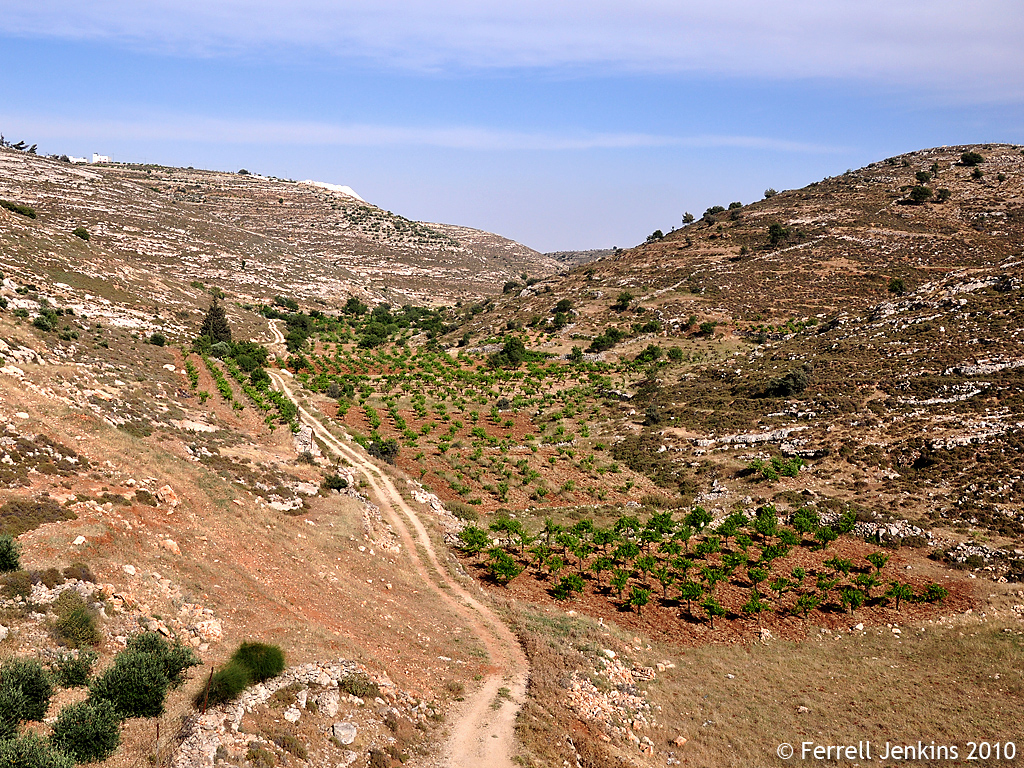
The wilderness of Jeruel

How Do You Spell “Cross”?

Neal Pollard

  1. “SEE”– Look at Calvary. Don’t turn away. I know it’s not easy. What is done to Him is shameful. I know. But, look closely! Past the spittle. Beyond the blood. There. In His eyes. Friend, that is love. It is love for you! See the nails in His hands and feet, fastening Him to a tree He created for man’s use. Look at the love He has for you!
  2. “ARE?”–Are you able to see that He bled and died for you? Are you willing to admit you’re lost without Him? Are you ready to submit to His will, to obey Him, and to live for Him? Are you prepared for eternity? Are you convinced?
  3. “OH”–Hear His cries of pain and agony. The death of a thousand deaths. Bitter moans of His disciples. The gasp of heaven’s angels. The sorrow of a Father for His only begotten Son! The gasps and exclamations of a hateful mob.
  4. “SS”–That’s the hiss of the beguiling serpent. The one who is bruising the heel of the perfect One, putting God the Son in the tomb. This is his moment of triumph. Though resurrection will soon spell victory for Christ and hope for man, at the cross the devil must be enjoying his front row seat at Calvary. Doesn’t he anger you? Disgust you? Motivate you? Live for Jesus, the Lion of Judah. Don’t live for the roaring, devouring lion.

Friends, the cross spells the difference between heaven and hell, hope and hopelessness, joy and sorrow, night and day!

4468491785_0c64a0f076_o_d

“The People…In The Wilderness”

Neal Pollard

Shortly before Joab turns the tide of Absalom’s rebellion by killing him, David, the rebel’s father, had reached a low ebb in his reign.  David and his faithful followers had been on the run from Absalom for some time, hiding and trying to escape rout and death. Worry was a regular exercise for David during this time (2 Sam. 15:14), as was weeping (2 Sam. 15:30) and weariness (2 Sam. 16:14).  Just before the fateful day of his son’s death, David and his loyal followers fled for their lives and survived thanks to the crafty counsel of Hushai.  The state of the people, at this point, is described in 1 Samuel 17:29: “The people are hungry and weary and thirsty in the wilderness.”  They were at the end of their rope, worn and frazzled by their very real problems.

Have you wrestled with worry, weeping, and weariness lately?  Can you relate?  Maybe you are feeling overwhelmed and overmatched by things going on in your life.  As we read this account, there are several reasons to hope.

THEY WERE NOT ALONE.  2 Samuel 17:22 notes that it was “David and all the people who were with him” who arose and crossed the Jordan to go to Mahanaim.  Each struggled, anxious and uncertain, but how comforting that they were able to go together.  The Christian should never have to go it alone.  There are those around us who to help bear our burdens (Gal. 6:2).  From the beginning of the church, this has been the case.  Acts 2:44 says, “All who had believed were together.”  While each of us may be struggling with individual problems, struggling is part of the human condition (Job 14:1).  In God’s wisdom, He has made the church a place where we can help and support each other (1 Th. 5:11).

THEY WERE BENEFICIARIES OF KINDNESS. What happens when they get to Mahanaim? Shobi, Machir, and Barzillai are waiting for them.  That had to be encouraging by itself.  But look what they had with them—“beds, basins, pottery, wheat, barley, flour, parched grain, beans, lentils, parched seeds, honey, curds, sheep, and cheese of the herd” (28-29a).  Those three men saw their brethren were suffering, hurting, and needy.  So what did they do?  I have seen this in the church more times than I can remember.  A brother or sister was in financial, emotional, or spiritual need, and their brethren showered them with kindness and love. So many of God’s people take to heart Paul’s exhortation, “Be kind to one another, tender-hearted…” (Eph. 4:32a).  See 1 Corinthians 13:4, Colossians 3:12-15, and 1 Peter 3:8, and you see the heart of so many of our fellow-Christians.  How helpful when we are in the wilderness!

THEY WERE SOON VICTORIOUS.  David draws up a battle plan in 2 Samuel 18:1, and before long the threat was quelled. There were still plenty of challenges that lay directly ahead, but they had doubtless learned a valuable lesson in the wilderness. Their victory did not mean that they were exempt from further problems, but they had experienced God’s deliverance. What a powerful lesson for us!  Yes, we will continue to struggle so long as we are pilgrims on this earth (cf. 1 Pet. 2:11), but there is a victorious “day of visitation” on the horizon (1 Pet. 2:12).

Are you “in the wilderness”?  Hang in there!  Focus on the people God has put in your life, be attuned to their kindness and encouragement, and remember the great victory God has promised you.