The Silence Of The Lamb

Neal Pollard

What do you contemplate during the Lord’s Supper? Your mind could go in a thousand directions, the cruelty and infliction of pain, the hatred and rejection, the eternal plan of God, His unending love, the ugliness of your sin, and on and on.

There is a curious aspect to the entire frenetic proceedings that Jesus endured. You first read about it in Isaiah’s prophecy concerning the atonement offered by the “Suffering Servant.” The prophet wrote, “He was oppressed and He was afflicted, Yet He did not open His mouth; Like a lamb that is led to slaughter, And like a sheep that is silent before its shearers, So He did not open His mouth” (53:7; cf. Acts 8:32). For emphasis, he says it twice: “He did not open His mouth.”

At the end of the gospel accounts, after Jesus’ arrest, we see two significant periods of time where this applied to Him. Before the Jews in the farce and mockery of a trial, Jesus kept silent (Mat. 26:63; Mark 14:62; Luke 23:9). Then, when handed before the Romans and their governor, Pilate, He did not answer (Mat. 27:12-14) and He gave him no answer (John 19:9). Scholars have scoured the ancient records in an effort to find anything like it in the legal annals of the Jews or Greco-Roman society.

Why did Jesus keep silent through the judgment phase of His crucifixion? He was not totally silent (Mat. 26:64; Luke 22:67-701), but as the charges bombarded and cascaded He gave no rebuttal. It was not that He could not. He had bested them in every debate and silenced them (see Mat. 22:46).

Why the silence?

  • He came to suffer, not to speak.
  • They would not have been convinced by His words any more than His wonderful works.
  • Jesus does not see this as a legal matter, but a spiritual necessity.
  • He placed His fate in the hands of God, as He prayed in Gethsemane (Mat. 26:39; John 6:38).
  • He accepted His situation.
  • The charge brought by two witnesses in Matthew 26:60-61 was technically true, though they twisted His words.
  • It provides a stark and compelling contrast between accusers and accused, which the reader readily sees.

No doubt there are more reasons, some known only to God. But it provides as much tension and drama in the Passion as it does confirmation of prophetic claims. It stands as but one of a thousand pictures of a loving, determined Savior to endure whatever necessary to pay for our sins with His life. The next time you contemplate the various “scenes of fear and woe,” take a moment to reflect on the silence of the Lamb. Through it, He truly speaks volumes!


1The reason for this is explained well by Stuart K. Weber : “When Jesus refused to answer and the attempts of the chief priests failed to convict Jesus, Caiaphas took the lead. I charge you under oath by the living God was the priest’s trump card. According to Jewish law, the priest had the authority to force a person to testify. If Jesus remained silent, he would violate the law. His decision to answer showed his respect for civil law and authority” (Holman NTC, 446-447).

What To Do When The Bull Has You By The Horns

Often, we panic or worry. Or we despair and even give up. We may talk like Elisha’s servant, who seeing the Syrian army surrounding them, cried, “Alas, my master! What shall we do?” (2 Kings 6:15). The problems, pressures, and pains of life can so gouge us that we are ready to come unglued! 

Neal Pollard

What does a bull running amuck along the streets of Pamplona think about? If they have thoughts and they live to gore, then one particular bull may have been pretty pleased with his results. He gored two brothers, Lawrence and Michael Lenahan, simultaneously, in the annual running of the bulls festival. Fortunately for both of them, their wounds did not prove to be fatal (details here). 

When we tackle a problem head on, determined to be decisive, we often say we are “taking the bull by the horns.” This phrase probably comes either from rounding up cattle or bullfighting. It assumes the person has control of (or is trying to take control of) a situation. However, what do you do when the situation seems to be taking control of you? What do you do when the bull has you by its horns?

Often, we panic or worry. Or we despair and even give up. We may talk like Elisha’s servant, who seeing the Syrian army surrounding them, cried, “Alas, my master! What shall we do?” (2 Kings 6:15). The problems, pressures, and pains of life can so gouge us that we are ready to come unglued! 

What’s the answer? Elisha’s prayer holds the key when we’re gored with grief and stuck by sorrows. He pleads, “O LORD, please open his eyes that he may see” (17). In response, “the LORD opened the eyes of the young man, and he saw, and behold, the mountain was full of horses and chariots of fire all around Elisha” (17). 

When you are in the midst of a painful problem, you may not actually see the power and protection of heaven in such a visible, dramatic way. But be assured that you serve the same God with the same power! He will never leave us or forsake us (Heb. 13:5). 

As you find yourself running down the narrow way (cf. Mat. 7:13-14), you are prone to attack from one who’s set his sights on you. He may not actually have horns, but he has ways to try and afflict you (cf. 2 Cor. 2:11; 12:7; Eph. 6:11,16). Trust this. “Greater is He who is in you than he who is in the world” (1 John 4:4). 

When The Clouds Speak

Reflections on God’s Power and Presence in the Book of Job

Brent Pollard

In the book of Job, clouds represent more than just weather patterns; they embody profound metaphors for God’s inscrutable mystery, immense majesty, and sovereign authority. Such imagery offers spiritual insights for individuals seeking to understand the fullness of God’s presence in their lives. These verses combine lyrical elegance with eternal truths for those committed to honoring the authority of Scripture.

Consider what the clouds reveal about our Creator.

1. Clouds Reflect God’s Majesty and Grandeur

“He wraps up the waters in His clouds, and the cloud does not burst under them.” —Job 26.8

Here, we witness the magnificent tapestry of God’s sovereign design. Clouds transport vast quantities of water without releasing it—a stunning equilibrium that surpasses human understanding and highlights God’s supreme authority over His creation. Although science can clarify the complexities of atmospheric physics, we must not forget that behind every natural law stands the sovereign hand of the divine Lawgiver.

In this passage, Job contemplates God’s authority over the depths, the heavens, and the essence of life (Job 26.5–13). The clouds testify to His greatness, who upholds all things by His Word (Hebrews 1.3).

2. Clouds Reveal God’s Mystery and Hiddenness

“‘Clouds are a hiding place for Him, so that He cannot see; and He walks on the vault of heaven.’” —Job 22.14

Although Eliphaz’s views on Job’s culpability are mistaken, he reflects a profound biblical truth: God’s ways often remain enigmatic to humanity. Just as the cloud on Sinai obscured Moses (Exodus 19.9) and the tabernacle radiated with God’s glory (Exodus 40.34–38), the cloud in Job stands as a significant symbol of God’s concealed magnificence.

During periods of uncertainty, it’s crucial to remember that God isn’t far away; instead, He is deeply engaged, even when we can’t perceive His presence. As Paul states, “For we walk by faith, not by sight” (2 Corinthians 5.7). Genuine righteousness is demonstrated through trust in God, even when His intentions are not completely clear.

3. Clouds Symbolize God’s Sovereignty Over Nature

“Do you know about the layers of the thick clouds, the wonders of one perfect in knowledge…” —Job 37.16

Elihu urges Job to contemplate the marvels of the sky. The One who is “perfect in knowledge” has meticulously arranged the clouds. In a realm characterized by change and unpredictability, those with unwavering faith find comfort in knowing God sovereignly governs all creation.

This profound truth is echoed in Jesus’s words when He rebuked the wind and the sea, showing that the Creator commands authority over the storm (Mark 4.39–41). Job’s description of the cloud powerfully foreshadows Christ’s sovereign control over the wind and the waves.

4. Clouds Are a Backdrop for Divine Encounter

Although Job existed before the Mosaic law, clouds as vessels of divine encounters are evident throughout Scripture:

• In Exodus 13.21, the Lord guided Israel with a pillar of cloud.

• In Exodus 19.9, He came down to Sinai in a thick cloud to converse with Moses.

• In Matthew 17.5, a brilliant cloud enveloped the mount of transfiguration, and God’s voice proclaimed, “This is My beloved Son, with whom I am well-pleased; listen to Him!”

The pattern is clear: God often reveals His presence through the cloud. What seems obscure to human eyes is, in fact, the gateway to divine revelation. Much like Moses and Elijah, the faithful are urged to climb the mountain—even when surrounded by fog—to receive the Word from the Lord.

5. Clouds Teach Us to Wait on God’s Timing

“Can anyone understand the spreading of the clouds, the thundering of His pavilion?” —Job 36.29

Elihu draws our focus to the profound mystery of God’s workings. We lack control over the clouds and do not understand their complex paths entirely. They emerge, transform, and bring rain at the right moment. Similarly, God’s answers remain beyond our understanding.

The clouds teach us patience, reminding us that the Lord is active even when those clouds obscure our clarity. As the psalmist eloquently says, “Clouds and thick darkness surround Him; righteousness and justice are the foundation of His throne.” (Psalm 97.2).

Conclusion: The Cloud Is Not the End of the Story

Job might not understand the full extent of his suffering, but he experiences a profound revelation of God’s greatness, which is enough. Although the clouds may obscure, they also reveal the glory above. They announce God’s power, veil His splendor, and sustain creation. One day, those clouds will serve a different purpose.

“Behold, He is coming with the clouds, and every eye will see Him, even those who pierced Him; and all the tribes of the earth will mourn over Him. So it is to be. Amen.” —Revelation 1.7

The clouds that once hid God’s glory will eventually reveal the majestic Christ in His fullness. As we walk beneath the expansive sky—occasionally in darkness, often in reverence—we remain assured that above every cloud, the Sovereign Lord reigns.

Unless otherwise indicated, Scripture quotations are taken from the NASB® (New American Standard Bible®, 1995 Updated Edition). Copyright © 1995 by The Lockman Foundation. Used by permission. All rights reserved

Keep Hurtin’

Gary Pollard

This is a break from Origen’s First Principles. I’m slow: it takes me a long time to wrap my head around something. Romans 7 and 8 are about our constant battle against our sinful nature. We have the side that wants to be holy and serve God, and we have the side that betrays our human weaknesses. It’s an awful existence in many ways. Even Paul said, “What a miserable person I am! Who will save me from this body that brings me death?”

Then we get to 8.17 where Paul talks about suffering. I always assumed this was a shift in topic because he gets into stuff that won’t happen until Jesus returns. But since he spent the previous several paragraphs talking about our constant, sometimes-demoralizing struggle against sin, I don’t think this is necessarily about physical suffering.

God’s Spirit helps our spirit — our mind, emotion, intent, any aspect of being that can’t be measured — in that fight. There are outside influences in our struggle against sin, of course, but Paul really focuses on the stuff that hurts: our own sinful weakness. We hate that we’re weak. We’re ashamed of our failures. We’re “waiting for God to finish making us his own children…we are waiting for our bodies to be made free.”

In the meantime, we suffer. Maybe not physically — though in some places on this earth that’s a reality — but certainly spiritually. We know our faults and failures better than anyone. Our spirits, burdened by the knowledge of our own weakness, groan to God with pain too deep for words. And he helps us!

“We are very weak, but God’s Spirit helps with our weakness. We don’t know how to pray like we should, but the spirit speaks to God for us, begging on our behalf with groaning too deep for words.”

Guilt is a powerful weapon in the enemy’s hands, and we all have too much of it. The struggle and the pain is normal — it’s guaranteed for anyone who wants to be like God. It’s never going to happen in this life! We can’t ever be good like God! But we can try, and we can at least ensure that sin isn’t the master we serve. If you feel that pain, odds are you’re on the right track.

Right after this section, full of empathy and hope and reassurance and warning, Paul says,

“Who can accuse the people God has chosen? No one! God is the one who makes them right.

Who can say that God’s people are guilty? No one! Christ Jesus died for us, but that is not all.

He was also raised from death. And now he is at God’s right side, speaking to him for us. Can anything separate us from Christ’s love? Can trouble or problems or persecution separate us from his love?”

The struggle and its pain is normal. It’s a sign that our hearts are set on something we won’t achieve until our bodies have been freed. God helps us, he understands, and we cannot let the enemy demoralize us into giving up. It’s harder to keep struggling against our sinful weakness, but it will be so worth it!

“But in all these troubles we have complete victory through God, who has shown his love for us. Yes, I am sure that nothing can separate us from God’s love—not death, life, angels, or ruling spirits. I am sure that nothing now, nothing in the future, no powers, nothing above us or nothing below us—nothing in the whole created world—will ever be able to separate us from the love God has shown us in Christ Jesus our Lord.”

Isaiah: The Holy One Who Rules The World (XLVII)

“The Suffering Servant” (53:1-12)

Neal Pollard

Walvoord and Zuck observe, “This is perhaps the best-known section in the Book of Isaiah. Several parts of this passage are quoted in the New Testament: Isaiah 52:15 in Romans 15:21; Isaiah 53:1 in John 12:38 and Romans 10:16; Isaiah 53:4 in Matthew 8:17; Isaiah 53:7–8 in Acts 8:32–33; Isaiah 53:9 in 1 Peter 2:22; and Isaiah 53:12 in Luke 22:37” (BKC, 1106).  This chapter is the most recognizably Messianic of the entire book of Isaiah. It is the completion of the fourth Servant Poem, in which the prophet reveals three crucial facts about Him.

The suffering servant would be overlooked (1-2). Why? Given the prelude of this Servant (52:13-15), this is a surprising fact. This exalted and glorified One is described now as a tender shoot, a root out of dry ground, with no stately form or majesty, and without an attractive appearance. The message about Him and from Him is deemed unbelievable (1). He grows up among the people, who cannot but see Him only as a carpenter, Mary’s son, with younger brothers and sisters, and, thus, a cause of offense (Mark 6:3). He is “this man” (Luke 7:39). The root out of dry ground takes our minds back to Isaiah 11:1, the tender shoot of Jesse. Physically unremarkable, financially modest, and without any sort of commending pedigree, He was an average, ordinary-looking Man among men. 

The suffering servant would be oppressed (3-10a). Beyond His humble circumstances, His contemptible appearance, combined with His relentless effort to spread His unconventional message backed by undeniable miracles, led to His opponents doing all within their power to punish and silence Him. Graphically, Isaiah foretells what those among whom He dwelled dispatched of Him (or so they thought). His oppression was vicious. It led Him to experience despising, forsaking, grieving, sorrowing, and condescending (3,7). His oppression was vicarious. It led Him to experience things for us, things we deserved to experience but that He went through on our behalf (4-6,8). James Smith gives us a concise chart of this:

OUR EXPERIENCEHIS EXPERIENCE
GriefsBore
SorrowsCarried
TransgressionPierced Through
IniquitiesCrushed
PeaceChastening
HealedScourging

 Smith, James E. The Major Prophets. Joplin, MO: College Press, 1992. Print. Old Testament Survey Series, 149. 

His oppression was voluntary (7). Reading the fulfillment of this in the gospels as Jesus stands before Pilate and His many accusers, He chose not to speak to defend Himself. He knew that as a sacrificial Lamb, He had to submit to their torture and injustice. His oppression was violent, as we see from the many words associated with the death He would die (9). His oppression was victorious (9-10). It accomplished the Divine purpose, in which He played a part as God the Word. He successfully became the blood offering for our sins (10). But that last fact points us to the last major point of the chapter (10b-12). 

The suffering servant would be an overcomer (10b-12). As this was the premeditated plan of heaven, the Godhead knew that death could not keep Him down and the grave could not hold Him (1 Cor. 15:54-57). That’s why the Lord was “pleased” to allow such cruelty to occur. After being made a guilt offering for our sins, “the Lord would prolong His days” (10). Notice how the vicarious nature of the suffering Servant’s sacrifice would satisfy divine justice and solve humanity’s spiritual debt problem. 

Why Suffering?

Gary Pollard

This week’s is possibly one of the most-asked existential questions out there. “Why is suffering a part of the human experience?” Believer and non-believer alike struggle with this one. Believers and even many agnostics struggle to justify the existence of an all-powerful, all-loving God with “bone cancer in children” and other seemingly senseless evils. Non-believers may struggle with the existence of suffering, too, especially if their worldview involves progressivism. After thousands of years of lessons learned, shouldn’t we have found a way to eliminate suffering? 

The Bible answers this question: we brought suffering to the human experience by violating the relationship we had with God. The story of the Bible is one that ultimately repairs this condition, thanks to God becoming human and sacrificing himself to repair that breach. On top of that, he came back to life as proof-of-concept and as a promise — we will have immortality, too. The message of Christianity is one that looks forward to a time without evil’s consequences (especially suffering and death). For many people, accepting the hard truth of our (i.e. humanity’s) culpability in the existence of suffering is too much. It can’t be that simple! 

We could illustrate this with an adapted pagan myth. Pandora’s box is well-known to many — she opened a box that contained all of the evil in the world, but with hope attached to them. There was no returning those things to the box and it affected everyone. While the framework of the story is decidedly pagan, it is rooted in historical fact. The first woman on earth did actually open something like Pandora’s box, introducing entropy to the planet for the first time. The consequences were far-reaching, as Christians believe all of humanity came from her. We are living with the consequences of Pandora’s box having been opened. 

Even if we look at this from a totally naturalistic standpoint, the existence of suffering does not necessarily preclude an all-powerful, loving God. In fact, it offers a fairly reasonable explanation for why suffering affects good people! What it does lack is anything resembling meaningful hope for a brighter future — this explanation ends with physical death, the beginning of eternal non-existence. A naturalistic explanation is something like this: There is suffering in the world because we’re all born ignorant and have to learn from the mistakes we make. Mistakes often have a ripple effect, and can sometimes negatively affect others. For example, a new driver’s inexperience may cause an accident that takes the life of an innocent person. It’s seemingly random, chaotic, senseless. What did that other person do to deserve death? Nothing, they were just in the wrong place at the wrong time. Even the naturalistic worldview understands that bending nature’s laws to prevent all tragedies would have devastating consequences in our current framework. 

So why doesn’t God intervene in every situation? The short answer is “we don’t know.” He does often intervene (cf. Hb 1.14; I Kgs 17.8-16; Ruth; Dan 3.8-30, and many, many others), but we don’t always know why. His perspective is infinite, ours is not. It’s frustrating, painful, and confusing at times, but we all accept that it’s temporary. We know that he won’t allow us to deal with more than we’re capable of handling with character intact (I Cor 10.13), but not too much beyond this. Christianity views suffering as part of the human experience that we’re quite ready to leave behind. This is why death is something we look forward to! 

We have sufferings now, but they are nothing compared to the great glory that will be given to us. Everything that God made is waiting with excitement for the time when he will show the world who his children are. The whole world wants very much for that to happen (Rom 8.18-19). 

I have told you these things so that you can have peace in me. In this world you will have troubles. But be brave! I have overcome the world” (Jn 16.33). 

Encouraged By Eternity

Dale Pollard

What will Heaven be like? While some biblical authors will attempt to explain aspects of our eternal home’s appearance, Peter chooses to tell us what it won’t be like. He states, it won’t perish. Heaven won’t be a place that can be defiled as the earth has become in many ways down here. Our new home above will be perfect on day one (though it’s a place outside time) as on day one billion (I Pt. 1.4). So Peter tells us what paradise won’t be like by explaining the difference between Heaven and earth. 

Interestingly, Peter tells us about our inheritance to give us motivation while in the middle of our earthly trials. We should be motivated to endure the lowest valleys in life because of what awaits us. This seems to be something we’d all agree with; however, some seem to be motivated by fear of the punishment rather than faith in the prize. While it’s true that the fear of the Lord is the beginning of knowledge (Prov. 9.10-12), God wants us to live out our faith based on the knowledge of eternal rest. 

As one makes their way down through the chapter the reason Peter begins by elucidating our heavenly home becomes clear. With all of that in mind, we’re told to prepare mentally for what we’re called to do (v.13). We must prepare our minds for action! What things demand preparation in your own mind? For some it’s their view of God or the reason they suffer in the first place. They may think if they don’t live perfectly then they’ll be lost forever— so they anxiously go about living a “check list” style Christianity. 

THREE WAYS TO PREPARE YOUR MIND 

Preparing the mind means educating the mind. 

1. Educate the mind about the concept and workings of the amazing grace Jesus offers us.

2. Prepare the mind by filling the mind with the glories of heaven. 

3. Prepare the mind by studying the benefits of Christian suffering, rather than allowing our suffering to negatively distort our view of God. 

A Pre-Written Obituary

Neal Pollard

On July 18, 1969, as the world waited for Apollo 11 to land on the moon, presidential speechwriter William Safire had an unpleasant task. He had to write a contingency speech for Richard Nixon to read in the event the astronauts became stranded on the moon. It began, “Fate has ordained that the men who went to the moon to explore in peace will stay on the moon to rest in peace.” Can you imagine anyone being willing to go on a mission so dangerous that they write your obituary before you leave?

But it happened 2700 years earlier when Isaiah wrote the obituary of Jesus of Nazareth. “Who has believed our report? and to whom is the arm of the Lord revealed? For he shall grow up before him as a tender plant, and as a root out of a dry ground: he hath no form nor comeliness; and when we shall see him, there is no beauty that we should desire him. He is despised and rejected of men; a man of sorrows, and acquainted with grief: and we hid as it were our faces from him; he was despised, and we esteemed him not” (Isaiah 53:1-3). 

You have to think that a prophecy so important to Jewish hope and expectation would have been read frequently in the temple and the synagogues, so how many times did Jesus hear it read? The theme of Isaiah 53 often seems to be on His mind, though He doesn’t directly quote it in the gospels. In Matthew 9:15, He tells His disciples that He would be taken away from them and Isaiah 53:8 says, “He was taken and cut off.” In Matthew 17:12, the disciples bring up Elijah and Jesus connects him to His own suffering. Repeatedly in the gospels, when Jesus connects His coming suffering and death, He is appealing to an aspect of Messianic Prophecy highlighted by Isaiah that was unmistakeable if unpopular. 

Isaiah describes His suffering, but the crux of His story is salvation. But just as that word crux means “cross,” it’s difficult to separate the victory from the viciousness. Yet, because Jesus was willing to accept His deadly mission, we can have eternal life! 

Don’t Fight For Your Faith

Gary Pollard

The rest of I Peter 3 is about two key points: be good to each other as a church, and don’t lash out at the world when they hurt you. We’ll look at a couple of applications from this section. 

Verse 14 says, “Don’t be afraid of people who make you suffer. Don’t worry about it, either. Make sure Christ is the ultimate authority in your life.” This is the context for a verse often misused: “Always be ready to answer everyone who asks you to explain about the hope you have.”

The entire section is about suffering. Peter tells us that our fear of God should be greater than our fear of people who make us suffer. We usually try to explain away φοβος (phobos) as meaning “respect” or “reverence”, but that’s not what this word means. It means terror. I Pt 3.15 tells us, “We need to be more terrified of the consequences of abandoning God than we are of people who want to hurt us.” We can only do that by making Jesus the most important thing about our lives. 

As if that’s not hard enough, God also expects us to handle these potentially life-threatening confrontations with gentleness and respect, and offer a rational explanation for our hope of new life. This leaves no room for a hostile response (including self-defense) when we’re being attacked because of our faith. Remember Jesus’s reaction to mistreatment according to I Pt 2.23 — “People insulted him, but he did not insult them back. He suffered, but he did not threaten anyone. No, he let God take care of him. God is the one who judges rightly.” And, “It is better to suffer for doing good than for doing wrong. Yes, it is better if that is what God wants. Christ himself suffered when he died for you, and with that one death he paid for your sins. He was not guilty, but he died for people who are guilty. He did this to bring all of you to God” (3.17-18). 

The rest of this section is a doozy, so we’ll save that for next week. 

The Advantages Of Faith

Neal Pollard

Paul settles into the heart of his argument and thesis of the epistle to the Galatians in 3:1-14. It is a letter full of contrasts–law and gospel, Spirit and flesh, Jew and Gentile, circumcision and uncircumcision, slave and free, Jerusalem of earth and above, Abraham’s seed of old and now, and faith with works of law (2:16), There is no mistaking Paul’s decided emphasis upon the advantages of faith, a word he uses 22 times in 20 verses of Galatians. He also uses the verb form an additional four times (2:7,16; 3:6,22). In this paragraph, Paul reminds these Christians that false teachers (1:6-9) were “bewitching” them into believing they were required to submit to “works of the law” in order to be acceptable to Christ. Relying on that threatened to render their Christian lives “vain” (4). It would make them “foolish” (1,3). 

Positively, Paul makes his case for the pure, true gospel of Christ by highlighting what they gain by faith in Him. Notice what he says.

  • One receives the Spirit by faith (2-3,5,14). While Paul is talking about the miraculous work of the Spirit as part of this discussion (5), he also seems to be referring to the indwelling of the Spirit common to all who are in Christ (cf. Acts 2:38; Gal. 3;14; 4:6). The benefits of that are multiplied. We are perfected (3:3). We eagerly wait for the hope of righteousness (5:5). We do not gratify the desires of the flesh (5:16). We bear the right fruit (5:22-23). We live spiritual lives, keeping in step with the Spirit (5:25). We ultimately reap eternal life (6:8). The Holy Spirit never directly operated on the hearts of Christians, never interfered with man’s free will. One cannot rightly claim that the Spirit is moving him or her to do “X” or not do “Y,” imparting divine revelation apart from God’s revealed word in the Bible. Yet, neither should we discount or minimize the great blessing of God’s indwelling presence that comes by faith (Rom. 8:11; 1 Cor. 6:19; 2 Tim. 1:14). 
  • One suffers with purpose by faith (4). Paul teaches this by asking, “Did you suffer so many things in vain—if indeed it was in vain?” Much as Paul argues the vanity of suffering if there is no resurrection (1 Cor. 15:2), he argues that suffering for Christ is pointless without faith in His life, death, resurrection, and total rule and authority. Why are we willing to be ridiculed, ostracized, and rejected by friends, family, co-workers, fellow-students, and others, if not for faith in Christ?
  • One is counted righteous by faith (6). Abraham lived 430 years before the Law (17), but he was justified. How? By faith. Paul is telling the Galatians they are not counted righteous by law, but by faith. So are we.
  • One is a child of Abraham by faith (7). Paul is going to continue to develop this throughout the chapter and into the next chapter. We are spiritual descendants of Abraham by faith in Christ, not by the works of law (29). 
  • One is justified by faith (8). We looked at justification in chapter two, but remember that it means to be made righteous. Law does not do that. Faith in Christ does. 
  • One is blessed by faith (8-10,13,14). Paul’s point is that to be justified by law, one would have to keep all of it perfectly. None of us can do that! The blessing is that because Christ became a curse for us (13), we can be blessed by trusting in that sacrifice. I strive to live a sin-free life, but because I cannot perfectly do so I am blessed by Him as I walk in His light (1 John 1:7). 
  • One lives by faith (11-12). The “living” in this context is not primarily referring to living on earth, but ultimately living eternally with God after this life. We enter into a spiritual condition of life by our obedient faith, and we ultimately escape spiritual death by faith! 

Sadly, the influence of some in religious error can make us shy away from faith as well as grace. Faith and grace can be misunderstood, causing people to minimize the importance and necessity of obedience (12). But, if we are not careful, we can lose sight of the Christ we are to obey. We can trust in ourselves and our works, forgetting that He is the power. Without His saving work, nothing we do would matter at all. It is never “faith alone” that saves. Even in this chapter, faith leads one to be baptized and thereby clothed with Christ (26-27). It never could have entered Paul’s mind to argue that faith does not have works of obedience which accompany them. He is combating a mindset that argued that one’s salvation came because of the works (in context, the works of the Old Law) rather than the saving power of Christ. Who or what do you trust in? 

The End Is Near?

Gary Pollard

The message of I Peter could be summarized like this: God calls us to endure suffering, just like Christ suffered. He calls us to live morally pure lives, if for no other reason than our fear of dying in a lost state. We can live morally pure lives through exposure to his word and through submission to each other. We have no idea how much time we have, so we should make the best of it. 

The key verse of I Peter is 4.7 — The end of all things is near. Keep your minds clear and control yourselves. This will help you in your prayers. 

Several times throughout the letter, Peter warns them of their impending suffering, which would cause many of them to die. He uses what sounds like military terminology in a few verses, the kind of pep-talk a leader would give his soldiers before doing battle. “Many of you won’t make it through this. What’s more important than this life is how you live it, because this life isn’t the end for any of us.” 

Over the next few weeks, we’ll do an application-based study of I Peter. For those interested in reading more than will be discussed in these articles, I highly recommend using the Easy to Read Version (free on biblegateway.com and on their app). It does a fantastic job of relaying the full meaning of the original text using language a child could understand.

Christian, Strengthen Your Heart

Carl Pollard

“You too be patient; strengthen your hearts, for the coming of the Lord is near.” James 5:8 

The heart has been a topic that James has mentioned several times in his letter. 

  • 1:26 We can deceive our hearts
  • 3:14 We can fill our hearts with “bitter jealousy and selfish ambition.” 
  • 4:8 We are called to “purify our hearts” 
  • 5:5 Self-indulgence can fatten our hearts for the day of slaughter

But now in contrast, James tells us to strengthen our hearts. He’s not telling us to start a cardio regimen, eat cheerios and take CoQ10. The heart is the center of our thinking. It is what influences our actions. 

When we strengthen our center of thinking, there is a direct correlation to what we will focus on in this life. 

What should be our focus? The coming of the Lord! James tells them that this day was near. Not that the end of the world was at hand, but that through death, the suffering Christian’s he is writing to would be standing before the throne of God very soon. 

This gives us a glimpse into the extent of their suffering. They were so mistreated that they were at the point of death. Rather than worry about self-preservation, think about where you will be the moment you pass from this life. 

We are told that our life is a vapor (James 4:14), here one minute and gone the next. So don’t get so focused on the suffering that you face to the detriment of your soul. If we lose focus on the eternal, what’s the point of prolonging the temporal? 

These poor Christians would have been tempted to do anything they could to take care of their families. James says in verse 9, “Do not complain, brethren, against one another, so that you yourselves may not be judged; behold, the Judge is standing right at the door.”

If you make plans to go over to a friend’s house, your journey begins at home, you get in your car, drive the route, arrive at their home, get out of your car, and go to the door. Entering through the door is the last step before you are in their home. That the Judge is standing right at the door paints the picture that our judgment is right in front of us. Judgment is near, our life is a vapor. Don’t do something in this life that will put you in the same boat as the unrighteous. 

James began his letter with a statement on suffering, and he ends by talking about trials. Suffering can produce endurance (1:2). Suffering can also give us a stronger heart. As Christians in the 21st century we might be tempted to act as though judgment is far off in the future. 

Does the thought of Christ coming back in 30 seconds scare you? If we knew for certain that Christ was coming back in 30 seconds, what would you be thinking?

…Do you feel relieved that it didn’t happen? If so, why? Are you disappointed? The coming of the Lord is near for each one of us. At any moment we could be standing before God. We should live with this thought in mind every day. 

For those who have strengthened their hearts there will be a reward beyond comprehension. When suffering comes, strengthen your heart.

What It Means To Be Called

Thursday’s Column: Captain’s Blog

1 Peter 5:10 says, “And the God of all grace, who called you to his eternal glory in Christ, after you have suffered a little while, will himself restore you and make you strong, firm and steadfast.” 

The entire purpose of 1 Peter is to encourage and exhort Christians in their suffering. Peter ends the entire book with a promise that God will make them strong, firm and steadfast. This same God has called us into His eternal glory in Christ. John Gill once said, “This call is not a mere external one by the ministry of the word, which is not always effectual and unto salvation; but an internal, special, and efficacious one, and which is high, holy, heavenly, and unchangeable.” 

This call is what labeled us as Christians, what saved us from darkness, and what gave us God’s Son. We can learn so much about who we are as Christians by studying this word in the New Testament. The Greek word kaleo is used by several authors to explain our spiritual state. This word teaches us what we used to be without Christ. Without being called we would not be holy, we would still be in the darkness, without being called we would not be labeled as God’s children, and without being called we would not be in the eternal glory in Christ. 

Peter’s use of the word “called” in his letter is through inspiration. It helps us recognize our condition outside of Christ. It shows servants how to endure suffering. It gives an example to wives on how to submit to their husbands. We can see that we were outside of Christ and the blessings of the light before being called.

In 1 Peter, almost every use of the word “called” is followed by a definite article. Five times out of six “you” is said immediately following the word “called.” This call is directed towards us as Christians. We are called to do or be these various things for God. God also has called us. Peter writes that God is the one calling which implies that we must do the answering. So when are we going to answer the call from God?

As we live our Christian lives we must keep in mind our former condition, and be thankful for where we are now. God has truly blessed us by calling us as Christians. So do we give thanks to Him for what He has done? Do we carry out the standards that are in place by being called out? We must evaluate our christian walk and see if we are living up to our call to be separated from the world, and connected to Christ.

Carl Pollard

Three Reasons To Work For Each Other

Wednesday’s Column: Third’s Words

In I Thessalonians 1.2-3, we’re motivated to work for each other for three reasons. First is our faith, which is a confidence that Jesus is coming back for us. It’s enough to make us go out of our way for each other. Our love for God is another motivator. We love God because he promised us a life with Jesus forever. Because he showed this kind of love, we show the same love to each other. Our hope is the last motivator listed in this section. A better word for this is anticipation. According to research led by Dr Andrew Huberman (neurobiologist and behavioral scientist at Stanford School of Medicine), anticipation is one of the strongest human emotions. This makes perfect sense, as our anticipation of Jesus’s return is why we live the Christian life. This is almost a word-for-word parallel to I Corinthians 13. 

I Thessalonians 1.4-6 reminds us that God loves us, so he chose us to be rescued. A few thousand years ago, God chose Israel to be his special people. When they were faithful to him, they enjoyed physical blessings and a relationship with him. God chose us to live with him forever. We’re his special people. Paul also points out that we can trust God to deliver on his promise. This will show up again later in the letter. God promised that we’ll live with him forever when his son comes back for us. Faith means confidence or trust. When we trust God to deliver on his promise, we’re demonstrating faith. 

This section also teaches that we can find happiness while we’re suffering. The anticipation we have of Jesus’s return is the only reason this statement is true. If this life is all there is, we’re the most miserable group of people in the world. What makes death, suffering, and anxiety worth the pain? How can we have any semblance of sanity when all the bad stuff happens? We keep going because he promised he’d come back for us, and because this life is short any way! 

Gary Pollard

The Local Preacher (Part 6)

Thursday’s Column: Captain’s Blog

In Acts 20:24, Paul says, “…But I do not consider my life of any account as dear to myself…in order that I may finish my course.” 

What an incredible attitude. In verse 24 Paul stated the reason he was willing to face the dangers in Jerusalem. He was ready to surrender his life for the gospel. In his epistles Paul often stated his readiness to suffer, even to die for Christ. Paul had completely given his life to Christ. He was willing to die for what he believed. Are we? As ministers we should believe in the word of God so much that we are willing to give our lives for it. What are our lives to us? How much do they mean to us? Do we care so much about our lives that we are willing to preserve them over preserving the word? Those are a lot of questions, but there’s one simple fact that we must remember. A preacher that is not willing to give his life for the cause of Christ is not worthy to preach. 

God’s church, the Bride of Christ, deserves a man willing to lay down his life for the gospel. When Jesus came to Paul on the road to Damascus, He gave Paul his life’s mission. By the grace of God, Paul completed a lifelong service to Him. As ministers, there is not a better life to model ours after, besides Jesus, than the life of Paul. He was selfless to the very end. His body was a mere tool just for the cause of Christ. What does that take? A lifetime of studying and growing our relationship with the Lord. A man with a poor or lacking relationship with God does not belong in the pulpit. 

From the book of Acts we can pull many examples from Paul’s life and apply them to that of the modern day minister. The Bible is 1900 years old, but it is still a practical guide to today’s preachers. We have different challenges that may seem like new issues, but Paul proves over and over again that following Christ wholeheartedly is all we truly need to make it as successful ministers in the church today. Who does the church see in the pulpit? Who does the church need in the pulpit? These are often two very different things. The preacher can act one way in front of everyone, but who he is when he’s alone is what counts. Does he study and pray constantly? A minister should follow closely the example of Paul, and in doing so he will not fail. If every church had a preacher like Paul the church would be a strong and thriving group. 

Carl Pollard

What To Do When Things Seem To Be Falling Apart

Wednesday’s Column: Third’s Words

Gary Pollard

The country seems to be falling apart. What can we do right now in our messed up culture? These are some observations from I & II Peter:

  1. Focus, first and foremost, on our reward (I Pt 1.3-5). 
  2. View hardship as a way to grow (1.6-9). 
  3. Appreciate our grace, since it gives us sustained innocence in God’s eyes (1.10-12). 
  4. When times get hard, put 100% of our hope in the second coming (1.13). 
  5. We won’t get caught up in our worldly culture, but double down on being moral like Jesus (1.14-20). 
  6. Put all of our confidence and hope in God (as opposed to people) (1.21). 
  7. Practice genuine love for our Christian family (1.22-23). 
  8. Keep the brevity of our lives in the forefront of our minds (1.24-25). 
  9. Get rid of negative character attributes (2.1). 
  10. Spend more time in Bible study (2.2-8). 
  11. Remember that we’re a sovereign nation as God’s people (2.9-10). 
  12. Set a good example, especially around worldly people (2.11-12). 
  13. Submit to all governing authorities, both because it’s what God wants and because it reflects the church well (2.13-17). 
  14. Go through difficulty with patience and grace (2.18-25). 
  15. Husbands and wives can cultivate and strengthen their marriages (3.1-7). 
  16. Make our church family our highest priority (3.8). 
  17. Be good to people who mistreat us (3.9-13). 
  18. Don’t stress about people who mistreat us because of our beliefs (3.14-22). 
  19. Resist the temptation to fall back on sinful habits when difficulty happens (4.1-6). 
  20. Remember that our lives are short (4.7). 
  21. Love our Christian family, take care of them, and be unified in our relationship with God (4.8-11). 
  22. Expect difficulty, and see it as suffering with Jesus (4.12-14). 
  23. Trust God with our lives when things get difficult (4.15-19). 
  24. Give our lives completely to God (5.6). 
  25. Give all of our anxieties to God (5.7). 
  26. Remember that Satan is our true enemy, and he wants us to mess up — don’t let him win (5.8-9). 
  27. Remember that even worst-case scenarios are short-lived (5.10). 
  28. Remember that apostles and prophets predicted that things would get rough toward the end (II Pt 3.1-4; cf II Thess 2.1-3; II Tim 3.1). 
  29. Remember that God is fully in charge of Earth’s destiny (3.5-8). 
  30. Remember that this Earth is temporary (3.10). 
  31. Remember that God expects us to live as if tomorrow’s the end (3.11-12). 
  32. Remember that we’re living for a new earth and sky (3.13, cf Rev 21.1-2; Is 65.17; Mt 19.28). 
  33. “Therefore, beloved, since you are waiting for these, be diligent to be found without spot or imperfection, and at peace. And consider God’s patience to be salvation…” (3.14-15). 

Remaining faithful during times of adversity

 Saturday’s Column: Learning From Lehman

Ohssel Tyson

For the past four years I have been going though what I believe to be the toughest battle I have ever had to face in my life with our warrior princess Kiyomie’s medical condition. God blessed me with my greatest desire and greatest fear as a father; which was to have my daughter; and one of my babies getting sick and me not being able to do anything to make them better.

We decided that my wife would come to the United States in October of 2017 after our homeland was devastated by category five Hurricane Maria. It was a difficult but necessary decision because Kerssel was pregnant and the prenatal care she needed wasn’t available post-hurricane. I joined my wife in February of 2018 and we had flights booked to return home in April of 2018. Before traveling I had set up everything in Kiki’s nursery which was also my office where I did my studies; her crib was right next to my desk, I had so many plans for my baby girl and was ready to bring her home.

What we had no idea of is that we were heading right into another hurricane; one of a different nature. Kiki suffered severe brain injury during birth and this changed our entire life: we could not return home, we had to leave my six year old son Éjiké and our families behind in Dominica which ached our hearts daily. The life we knew was basically over. We had our family’s support but were here all alone, in a foreign land with no one close to come help during the toughest period of our life.

We both had to resign from our jobs. We were forced to sell everything we owned in order to survive here, we went from being one hundred percent independent to one hundred percent dependant on others, we had to seek assistance to pay our monthly bills and purchase the most basic of necessities for our children and ourselves– diapers, wipes, deodorant, toothpaste, bath soap and everything else. We were unable to care for ourselves the way we used to, unable to provide for our children, only going to the doctor or dentist if we were very ill, not purchasing new clothing or undergarments even though we desperately needed them.

Through so many sleepless nights, emergency room visits and hospital stays we managed to keep surviving, by the grace of God. It is hard and lonely but we have no choice other than continuing to be resilient and keep focused on Kiki getting better. (We’ve had so many nights that we got little to no sleep that right now we consider a night of 4 hours of sleep a good night rest)

We didn’t think that our life could have gotten any worse but then on August 10th 2020 we got the dreadful news that my wife’s mom had suddenly passed at only 56 years old. From that day our lives was under a dark cloud; well, that’s how it felt. Mom, as we all called her, was our main pillar of support; our greatest cheer leader and prayer warrior; she sent messages every single day to both Kerssel and I telling us how strong we are and great parents we are and that Kiki will be healed and to remain faithful. That day in August took so much away from us, after mom’s passing everyday just felt like we were going through motions, like robots, just floating around under that dark cloud.

Mrs. Dawn Pitcock had been working with Kiki since she was discharged from the NICU. She and her family became a friend and remained in close contact even after Kiki aged out of the First Steps program. She had mentioned her church and asked if we’d like to visit, but we never did then. We were still under this dark cloud. Sometime after mom’s passing Dawn asked whether we would mind if she and elders from her church come by to visit and pray with us.

Russell, Dana and Dawn came one Sunday after service, we conversed for a while, we prayed and we cried; that blessed Sunday afternoon is one I will never forget as it felt like that first ray of sunshine piercing through the dark clouds. We started studying and getting a better understanding of God’s word with the assistance of Russell, Neal and Greg. Our faith started to grow stronger and we began feeling better, our lives felt a little less cloudy day by day. We started attending Sunday service when we were

able to, Kiki’s condition determines whether we can but we kept studying via zoom.

We had discussed baptism a few times but I didn’t feel fully ready until April 6th, 2021, on that day, I called Neal and told him that we were ready. When we got to church building there were several other members of our Leman Avenue family there to support us. Kerssel and I were baptized on that day and man that felt good, it was a new life in every aspect.

Yes we are still going through tribulations. Kiki still has tons of medical complications and has a long way to go. Yes we still seek assistance to cover every single expense that we have. BUT, because our faith in God, and ourselves have grown, our bond with God is getting stronger and our understanding of God’s word and love for us and his purpose for allowing us to go through what we are going through; we are able to better appreciate our situation. God have been right there with us all along, he continues to supply our every need; he has, housed us, fed us, and clothed us physically and spiritually.

In our lives on a daily basis we encounter troubles, problems, adversity; no matter how small or complex they are, they always pose a challenge physically, emotionally, psychologically and spiritually.

In these moments we feel weak, we feel defeated and are forced to face problems to great for us to handle; so we turn our attention to God and begin questioning him, WHY? Why am I going through this? Why me? What Lord can I do to solve this problem? During these challenges we are unable to continue our tasks like normal; so we stop, evaluate our situation, ask God for wisdom, obey his word, have faith and trust him to bring the help that we need.

The apostle James had a response to adversity which has helped me through my own troubles.

James 1:2-6

 Consider it pure joy, my brothers, when you are involved in various trials, because you know that the testing of your faith produces endurance. But you must let endurance have its full effect, so that you may be mature and complete, lacking nothing. Now if any of you lacks wisdom, he should ask God, who gives to everyone generously without a rebuke, and it will be given to him. But he must ask in faith, without any doubts, for the one who has doubts is like a wave of the sea that is driven and tossed by the wind.

When going through these challenging times in life the best resort is to turn to Jesus, I can guarantee without any doubt that no matter what the problem is, you will find guidance to a solution within the word of God. Apply the appropriate scripture, faith and the very best effort you can, to every adversity you face and you will be victorious.

In conclusion I say to you, through every adversity, trial and tribulation seek God for he is always waiting to guide us through our troubles and ultimately draw us closer to him.

Have faith no matter how small it is: Faith in God, faith in yourself, faith that God is greater than your problem, faith that God is helping you through the adversity, faith that you will overcome.

Nurture your faith and watch your faith grow. Mathew 17:20 tells us, “…Because of your lack of faith. I tell all of you with certainty, if you have faith like a grain of mustard seed, you can say to this mountain, ‘Move from here to there,’ and it will move, and nothing will be impossible for you.”

If you can move a mountain with faith the size of a mustard seed, can you imagine the magnitude of power you would possess with faith the size of a tennis ball or basketball or greater?

I’ll close with some words and verses I recite whenever I’m having a moment of weakness during a challenge and the effect that they have on me is miraculous, I recited them right before coming up here; they are:

I believe that God is with me.
I believe that God is helping me. I believe that God is guiding me.

I can do all things through Christ who strengthens me (Philippians 4:13). What shall we then say to these things? If God be for us, who can be against us? (Romans 8:31)

Thank you for listening, thank you for being our family when we most needed one, thank you for the support given to my family in every single way.

Good Out Of Tragedy

Monday’s Column: Neal At The Cross

Neal Pollard

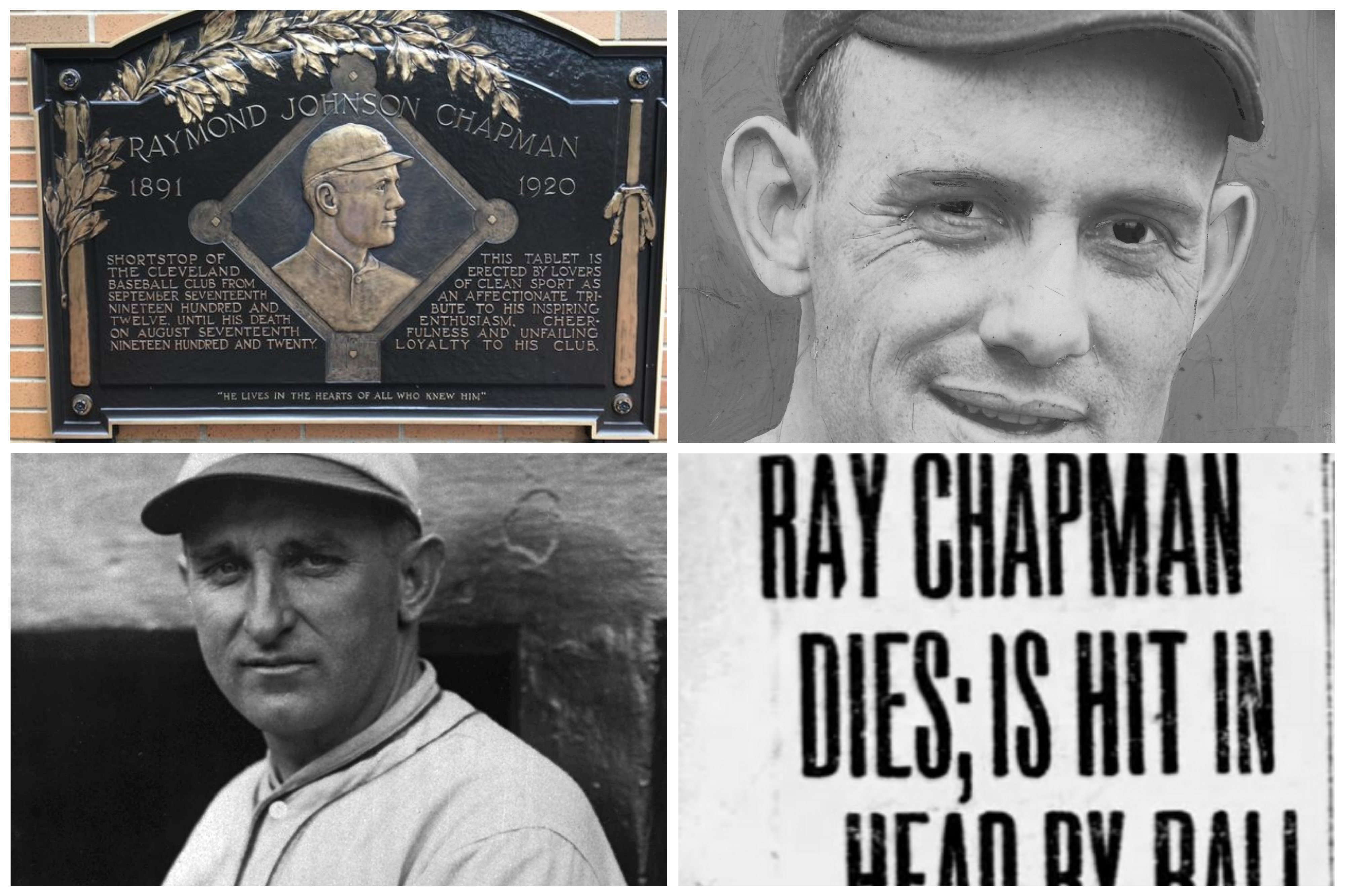
Up the road in Ohio County, Kentucky, Beaver Dam native Ray Chapman grew up to be a great baseball player. He was so good, in fact, that he was able to play nine seasons as the Cleveland Indians shortstop. He was renowned at the time for his defense, bunt singles, batting average, and stolen bases, but he is remembered as the only Major League baseball player to be killed on the field in a game. When he played, the baseball could be scuffed and sullied with everything from dirt to licorice to tobacco juice. This not only made it harder to see, but more erratic out of the pitcher’s hand. On August 16, 1920, near twilight at Yankee Stadium in New York City, Yankee pitcher Carl May hit Chapman in the side of the head with a fastball. The errant throw caused fatal brain damage, and Chapman died the next morning. It shook the baseball world.

This tragedy brought both immediate and eventual change to the game. It was because of this incident that umpires began a practice that continues over a century later of replacing a baseball when it becomes scuffed and dirty. The “spit ball” pitch was banned, for similar reasons. While it would take a few decades, the implementation of the baseball helmet is traced back to Chapman’s untimely death. While it would have been better for Chapman, a newly wed and newly expectant father, to have avoided this devastating end, it has likely saved several lives. It’s impossible to know how many might have been harmed by dirty baseballs through the years, but one can find sports articles detailing the likes of Kirby Puckett, Sammy Sosa, Chris Dickerson, and others who may have been spared a worse result by having on the protective helmet.

It is so easy to view tragic circumstances in isolation, especially those that happen to us personally. In light of the many tragedies that can happen in life, I say this with fear and trepidation. But, Scripture has already made that point. Out of various, fiery trials, these can “result in praise and honor and glory at the revelation of Jesus Christ” (1 Pet. 1:6-7). James said to consider your various trails as a cause for all joy, “knowing that the testing of your faith produces endurance” (Js. 1:2-3). James even says of the ultimate Old Testament sufferer, “We count those blessed who have endured. You have heard of the endurance of Job and have seen the outcome of the Lord’s dealings, that the Lord is full of compassion and is merciful” (5:11). To make such an application of a man who endured such tragedy is startling! Why does he mention Job? So that we can learn, adjust, and overcome!

Make no mistake about it, we all prefer to avoid heartache, sorrow, and loss. But, when those things come to us, Scripture urges us to adopt a heavenly mindset. See the produce in the pain, the hope on the other side of the hurt. Sometimes, it may be that others witness our faith in the midst of our trial and it may help them in their own walk of faith (Phil. 1:14). Whatever the case, even our own greatest adversity can result in someone else’s advantage. That’s an unintended benefit of suffering.

2 Peter (Part 2)

Wednesday’s Column: Third’s Words

Gary Pollard

I’ll be repeating the book of II Peter in present-day terminology. It’s not a true translation of the book, as I am not qualified to do so. It will be based on an exegetical study of the book and will lean heavily on the SBL and UBS Greek New Testaments, as well as comparisons with other translations (ESV, NASB, NIV, ERV, NLT). My goal is to reflect the text accurately, and to highlight the intent of the author using concepts and vocabulary in common use today. 

This is not an essentially literal translation, and should be read as something of a commentary. 

Message is Credible

Family, you have to make sure you’re in a good place when it comes to your relationship with Jesus. If you’re practicing all those qualities we just talked about, you’ll be ok. You’ll make it to eternal life. You know this stuff already, but it’s always a good idea to remind you. You’re already in a good place, but as long as I’m alive, I’ll keep reminding you. I’m going to die soon. Jesus made that clear to me. Because of this, I want to make sure you’ll remember everything I taught you. What we taught you originally is still valid. Jesus is powerful and he’s coming back to us. We weren’t duped into believing an intricate lie. We were firsthand witnesses to his superior nature! One time, the ultimate power – God – validated this by saying, “This is my son. I love him and I think very highly of him.” He said that right in front of us while we were with Jesus on a mountain. His voice came from the sky. This made us confident that we have the right message. Since we’re confident in this message, you should be, too! Focus on what we’ve told you like you’d focus on a light source in a dark room. Hang onto this until the end, when everything will be light and darkness won’t exist. It’s very important that you understand something: we don’t get to decide what a prophecy means. No human has ever produced a legitimate prophecy. Those came from men who were influenced by God’s spirit. 

1 Peter–Part IX

Wednesday’s Column: Third’s Words

Gary Pollard

For the next several weeks, I’ll be repeating the book of I Peter in present-day terminology. It’s not a true translation of the book, as I am not qualified to do so. It will be based on an exegetical study of the book and will lean heavily on the SBL and UBS Greek New Testaments, as well as comparisons with other translations (ESV, NASB, NIV, ERV, NLT). My goal is to reflect the text accurately, and to highlight the intent of the author using concepts and vocabulary in common use today. 

This is not an essentially literal translation, and should be read as something of a commentary. 

Everything’s about to come to an end. You have to be reasonable and self-controlled for the sake of your prayers. Most importantly, don’t ever lose your love for each other. Love hides all kinds of mistakes. Take care of each other without complaining. Use your assets to help each other, since God helps us in so many ways. If your talent is speaking, speak as if you’re talking for God. If helping others is your talent, do it with limitless energy. This way every aspect of our lives gives credit to God by our dedication to Jesus. He gets all recognition and authority forever! 

Family, don’t let these hard times shock you. Don’t feel like you’ve been targeted. You are suffering like Jesus did, so let that keep your spirits up! When he comes back, we’re going to be indescribably happy! If people insult you because you love Jesus, you’re lucky! The full weight of God’s spirit and power is with you. Just make sure none of you suffer because of something you’ve done wrong, like murder, stealing, practicing morally bad things, or sticking your nose where it doesn’t belong. If you suffer because of your faith, though, don’t feel bad! Instead, give all the credit to God. 

We’re about to be judged by God. Since we’re going to be judged first, how do you think it’s going to be for people who rejected God? It’s hard enough for a morally good person to be saved, so what’s going to happen to morally bad people who don’t follow God? Since we’re about to suffer, we have to trust God with our lives. He’s going to take care of us if we’re doing the right thing! 

Since we’re about to face difficulties, it’s very important that your elders lead you carefully. I’m an elder, too, and also look forward to sharing in the recognition we have coming to us. Elders, don’t lead people because you feel like you have to. Do it because it’s what God wants! Don’t lead because you want to get something financially out of it. Don’t abuse your power, but lead by example. When the ultimate leader shows up, your reward will be indestructible! 

Bodmer Papyrus of Peter’s epistles