Desiring God

Carl Pollard

“Delight yourself in the LORD, and he will give you the desires of your heart.” 

  • Psalm 37:4

One of the most loved and frequently quoted verses in Scripture is Psalm 37:4. At first glance it can sound like a blank check: “Love God and you’ll get whatever you want.” But a closer look reveals something far deeper and more beautiful. The verse is not primarily about getting what we want; it is about God changing what we want until He Himself becomes the great desire of our hearts.

Psalm 37 is an acrostic wisdom psalm written by David in his old age (v. 25). Its main concern is the age-old question, “Why do the wicked prosper while the righteous suffer?” David’s answer is trust and delight in the Lord rather than envy or anger toward evildoers (vv. 1–8). In this setting, verse 4 is not a prosperity promise detached from reality; it is godly counsel for people who feel overlooked while others seem to “have it all.”

The Hebrew verb translated “delight,” is intensive and rare. It means to be delicate or pampered, to take exquisite pleasure in something. It is the same root used in Isaiah 66:11 for a nursing baby delighting in its mother’s milk, total satisfaction, soft enjoyment, unhurried pleasure.

So David is not commanding gritted-teeth duty (“Try really hard to like God”). He is inviting us into a relationship where God Himself becomes our highest pleasure, our richest feast, our greatest reward.

The Promise: “He Will Give You the Desires of Your Heart.” Grammatically, the second half of the verse can be read two ways, both of which are true and complementary:

1. Causative reading (most translations): When you delight in the Lord, He grants the desires that are now in your heart—desires that have been transformed by your delight in Him. The more we enjoy God, the more our desires align with what He loves to give.

2. Identical reading (favored by many Hebrew scholars): “He will give you the desires of your heart” means He will place new desires in your heart. In other words, the reward of delighting in God is that God Himself becomes the desire of our heart.

John Piper once summarized this second reading: “God is most glorified in us when we are most satisfied in Him.” Psalm 37:4 is therefore the biblical basis for what has come to be called Christian Hedonism, the conviction that God is not honored by reluctant obedience but by hearts that have found their deepest joy in Him.

To “delight yourself in the Lord” isn’t a feeling we try to manufacture; it is a discipline we pursue by faith:

  • Meditate on who God is (His beauty, holiness, love, grace).
  • Remember what God has done, especially in the cross and resurrection.
  • Pray the prayers of Scripture that ask God to change our tastes (Ps 90:14; Ps 27:4; Ps 73:25–26). Tastebuds change, I used to hate onions…now I love them! Same thing happens in Christ. The longer you seek Him, the more you desire Him. The world loses its sway. 
  • Fight the fight of faith to see and savor Jesus above all competing pleasures.

When we do, something happens: the things we once thought we couldn’t live without begin to lose their grip, and we discover that the Giver is infinitely more satisfying than any of His gifts.

Psalm 37:4 is not a promise that God will fund every whim of a heart still curved in on itself. It is a promise that if we will seek our pleasure in God, He will make sure we are never disappointed. He will either satisfy our (new, God-shaped) desires, or, better yet, He will satisfy us with Himself.

“Whom have I in heaven but you? 

And there is nothing on earth that I desire besides you. 

My flesh and my heart may fail, 

but God is the strength of my heart and my portion forever.” 

  • Psalm 73:25–26

A DIFFERENT SPIRIT

Decades earlier, out in the wilderness, a young Caleb stood (nearly) alone. Moses sent the twelve spies into Canaan to scout the land (Numbers 13), in the minds of the terrified ten– the land of giants was unconquerable. Only two men believed that God was bigger, Joshua and Caleb. They urged the rest to move forward and take what He had promised, but it wasn’t going to happen.

Dale Pollard

Decades earlier, out in the wilderness, a young Caleb stood (nearly) alone. Moses sent the twelve spies into Canaan to scout the land (Numbers 13), in the minds of the terrified ten– the land of giants was unconquerable. Only two men believed that God was bigger, Joshua and Caleb. They urged the rest to move forward and take what He had promised, but it wasn’t going to happen. 

For his courage, God vows to Caleb: 

“But my servant Caleb, because he has a different spirit and has followed me fully, I will bring him into the land into which he went, and his descendants shall possess it” (Numbers 14:24). 

That promise wouldn’t be fulfilled for nearly half a century! By the time the land being divided among the tribes, Caleb was 85 years old. His spirit, however, was stronger than before. In Joshua 14, Caleb goes confidently to Joshua. He says,

 “I am 85 years old. I am still as strong today as I was in the day that Moses sent me… Now therefore give me this mountain of which the Lord spoke in that day” (Joshua 14:10-12). 

Which mountain? That would be Hebron. A mountain that was still inhabited by the Anakim– giants descended from the very people who melted the hearts of those ten spies years ago. To anybody else Caleb’s inheritance seemed like an impossible one. It would have appeared more like a curse– certainly not a blessing.  

But up the mountain he went. God and Caleb secured that territory (Joshua 15.13-14), and the mountain that covered the people in a shadow of their previous shame now serves as a reminder. Between Faith and fear, the former is the more formidable force. 

Four Quick Lessons:

  1. Faith will always outlast fear.
  2. Waiting is not wasted. Caleb looked forward for 45 years, but never became bitter or gave up on God.
  3. Strength is spiritual. That “different spirit” that Caleb possessed sounds similar to that of the saints (Romans 8.9-11, I Corinthians 3.16). 
  4. Excuses are useless, God uses the toothless (Caleb was 85). 

It Ain’t Me

Gary Pollard

One of the most difficult things (at least for me) to accept about grace is this: There’s nothing we can do to deserve it, or be “worthy” of it. When I sin, it just makes me feel even more unworthy. This can quickly devolve into apathy — why even try? Every sin seems to compound, every prayer for strength seems ignored. If prayers for strength are ignored, surely prayers for forgiveness are, too! 

This mentality is not a healthy one. But how does one go from an intellectual understanding of grace’s power to accepting the reality of human imperfection? How do we prevent defeat in the aftermath of mistakes? If there’s a fix-all answer to this, I haven’t found it. 

Perhaps the answer is a lack of faith. At its core, faith is really confidence — that God exists, that he rewards people who try hard to have a relationship with him, that his grace is enough for us because his power is most effectively displayed through weakness. 

Maybe it’s disbelief. Does Jesus really forgive us when we sin? Yeah, Paul says “I don’t understand why I act the way I do. I don’t do the good I want to do, and I do the evil I hate. … But I am not really the one doing the evil. It is sin living in me that does it” (Rom 7.15, 17, 20). But later he says, “You are not ruled by your sinful selves. You are ruled by spirit, if God’s spirit really lives in you” (8.9). What does he mean by “ruled”? If I can’t seem to avoid sin, am I not ruled by it? What about Rom 6.2? “So do you think we should continue sinning so that God will give us more and more grace? Of course not! Our old sinful life ended. It’s dead. So how can we continue living in sin?” Which is it? Are we ok because we sin even when we don’t want to? Or are we in trouble because we’re not immune to sin? Maybe this would be better classed under confidence, but it’s so hard to believe that God still wants a relationship with people who claim to love him while vulnerable to sin’s influence. 

Scripture seems to clear this up, if we can only accept its significance: “We know that the law is spiritual, but I am not. I am so human. Sin rules me as if I were its slave. I don’t understand why I act the way I do. I don’t do the good I want to do, I do the evil I hate. And if I don’t want to do what I do, that means I agree that the law is good” (Rom 7.14-16). 

The question each person seems to have to answer is, “Do I really hate sin’s influence in my life?” God knows the true answer to that question. Romans 6.12 says, “Don’t let sin control your life here. You must not be ruled by the things your sinful self makes you want to do.” A few verses later, “In the past you were slaves to sin and you did not even think about doing right.” Verse 23, in the context of these chapters, says that all people are going to die physically because every human has sinned. But all who despise sin (while still vulnerable to its influence) and follow God will be “no longer under death’s power” because Jesus defeated sin’s ultimate punishment. 

We can’t avoid death, just like we can’t avoid sin. Where our heart really is makes the difference. “So I have learned this rule: When I want to do good, evil is there with me. In my mind I am happy with God’s law. But I see another law working in my body. That law makes war against the law that my mind accepts. That other law working in my body is the law of sin, and that law makes me its prisoner.” 

God knows we’re human. God knows we’re weak and constantly fighting sin’s influence. We’re not God, we’re not impervious to its control. Even Paul said, “What a miserable person I am! Who will save me from this body that brings me death?” The answer is Jesus, the one who will rescue us from our current bodies if our “minds serve God’s law, even as our bodies serve the law of sin” (7.25). 

Finally, “Now there is no more condemnation for those who are in Christ Jesus. This is because the law of the spirit of life that comes from Christ Jesus has freed us from the law of sin and death. … God used a human life to destroy sin.” What does this mean? This means if we live to do what God wants us to do, he will give our bodies life on the last day (8.11). We’re never going to be free of sin’s influence in our lives, but we choose our masters. Will we pursue sin with our hearts and actions, or will we serve God with our hearts while the weakness of sin only makes us anticipate freedom (8.18ff) even more? We aren’t doing this alone — we have Jesus defending us (I Jn 2.1-2) and we have God searching our intent (Rom 8.26-27). 

“We know that everything God made has been waiting in pain like a woman ready to give birth to a child. Not just the created world, either — we’ve also been waiting with pain inside us. We have the spirit as the first part of God’s promise. So we are waiting for God to finish making us his children. I mean we are waiting for our bodies to be made free.” 

Deuteronomy: The Second Giving Of The Law (X)

Why Israel Was Inheriting The Land (9:1-29)

Neal Pollard

The challenge was formidable! The inhabitants still included giants and their fortifications were still high and impregnable (1-2). How would they do it? More to the point, why should they anticipate that it would happen? 

The power and promise of God (3-4a,5). He builds on something he has just said,  “But you shall remember the Lord your God, for it is He who is giving you power to make wealth, that He may confirm His covenant which He swore to your fathers, as it is this day” (8:18). God would be a consuming fire destroying, subduing and driving the natives out of the land (3-4). They could believe this because God had sworn it with an oath to their forefathers, Abraham, Isaac, and Jacob (5; Gen. 12:7). The ark of the Lord would go ahead of them as they invaded Canaan (Josh. 3:11). Consider the prayer the weeping prophet would pray, thinking back to this moment in history, when his people faced a self-induced crisis (read Jeremiah 32:17-22). 

The wickedness of the Canaanites (4-5). God makes a point of it to say that the conquest was not a matter of Israel’s meritorious goodness. He warned against such self-righteousness. He corrects the mindset, stating, “It is not for your righteousness or for the uprightness of your heart that you are going to possess their land, but it is because of the wickedness of these nations that the Lord your God is driving them out before you” (5). Genesis 15:16 had predicted this day would come. Now it was time. Even today, we are saved “not on the basis of deeds which we have done in righteousness, but according to His mercy, by the washing of regeneration and renewing by the Holy Spirit” (Titus 3:5). This should humble us and combat any self-righteousness on our part. 

The righteousness of God (6). This is implied by Moses’ three-fold use of “righteousness” (4,5,6), when the people are told it was not because of their righteousness. The word means “the state of doing what is required according to a standard, the state or condition of fairly deciding what is right in a legal case, without prejudice, and the state of not having any sin or its associated guilt, according to a standard” (Swanson, DBL, np). This does not describe man at his best, much less the conduct of Israel from the moment they left Egypt. Instead, God’s faithful character was bringing this conquest about. They needed to never forget that. Through Christ, we are made the righteousness of God through Him (2 Cor. 5:21). We have no basis to establish our own righteousness (Rom. 10:1ff). Isaiah would describe our righteous deeds, at best, as “filthy garments” (64:6). 

The intercession of Moses (7-29). What a powerful illustration we have in the bulk of this chapter. Moses reviews how they provoked the Lord to wrath, from Mount Sinai through these 40 years in the wilderness (7-8). They were rebellious against God (7,24). They acted corruptly and turned aside (12). They were stubborn and fit for destruction (13-14). They sinned against God (16). They were wicked (27). They needed to clearly understand this to grasp why they were alive to hear this impassioned sermon. In addition to the character of God already mentioned, there was the righteous intercession of their godly, earthly leader. Moses pleaded with God on their behalf. What did he do?

  • He fell down before the Lord (18).
  • He fasted for 40 days and nights (18).
  • He prayed for Aaron and the people (19-20,26).
  • He destroyed what offended God (21). 
  • He appealed to God’s goodness and promises (27-29).

Consider how wonderful it is to know that godly people are praying for us. Many times throughout the years, I have bowed my head in meetings with elders where they prayed earnestly on behalf of their sheep who struggled physically, financially, emotionally, and spiritually. This is in addition to their private petitions. What about the godly women, older and younger, whose ministry includes intercessory prayer? How much have we been spared and what floodgates of blessings have been opened to us because of the righteous prayers of others on our behalf (Jas. 5:16)? Thank God for godly Christians who steadfastly pray for their brethren, for you and me (1 Th. 5:17). May we be people who do that for others, too! 

Genesis: These Are The Generations (XVII)

A Presumptuous Decision (16:1-16)

Neal Pollard

It is very possible that Hagar was a consequence of Abram’s decision to go down to Egypt to escape drought, where he deceived the Pharaoh and was given livestock and servants (12:16). If she came into his house through Abram’s weakness, she becomes the center of domestic drama through Sarai’s weakness. Genesis 16 tells us that Sarai “conceived” the plan to raise up children through Hagar, her handmaid, and she pitches this idea to Abram (1-2). 

This practice of a wife giving her maid to her husband is admittedly a difficult thing for most of us to grasp, but it was apparently common in the Patriarchal Age as demonstrated by Leah and Rachel (ch. 30). Typically, the child born of the union was thought to be credited to the wife. Here, Sarai defended her rationalizing by blaming God. She said, “The Lord has prevented me from bearing children” (2). Scripture does not indicate this, but simply that she was barren (11:30).

Things changed after the union of Abram and Hagar was successful. Hagar despises Sarai in a way that was transparent to Abram’s wife (4). While Sarai takes the blame for the horribly misguided choice (5), she pressures Abram to do something about it. Abram leaves it to Sarai to handle, and she treats Hagar so harshly that the Egyptian flees (6). Interestingly, her name is Semitic and means “to flee” (TWOT, 206). 

That is exactly what Hagar does. The angel of the Lord finds her by a spring of water in the wilderness (7). It seems indisputably clear that the angel of the Lord here is a theophany (physical manifestation of God, NP). This is not merely an angel, but God Himself. I agree with good men, such as Roy Lanier, Sr., and Wayne Jackson, that this is even more than a manifestation of God. This is the preincarnate (before becoming flesh) Son of God (see https://christiancourier.com/articles/a-brief-study-of-the-angel-of-jehovah and Timeless Trinity). How do we know that Hagar encounters God here?

  • He approaches her as God approaches Adam and Eve in the garden (3:9).
  • His promise to her is delivered with the weight of God, as when He issues promises to Abraham in chapter 15.
  • Moses calls this Being “Lord” (13a).
  • Hagar calls this Being “You are a God who sees” (13).
  • She marvels that she did not die, since she saw Him (13b).
  • The name given to the well where she encountered Him signifies Deity (14).

The angel of the Lord issues promises and prophesy concerning the son to be born to her. He tells her what to name the child (Ishmael) and why–“because the Lord has given heed to your affliction” (11). He foretells the contentious nature of Ishmael and his descendants, and indicates where they would settle (12). 

Abram must have believed that God spoke to Hagar since he names the child Ishmael (15). We are also informed that Abram is 86 at the time of the boy’s birth. Ishmael will become a teenager before God’s seed promise will be fulfilled. As we will see, this will cause more strife.

What a reminder that we add trouble to our lives when we make decisions without consulting God or when we take matters into our own hands. When God has revealed His will, our only response should be to wait and trust. We cannot anticipate the trouble we will bring into our lives and the lives of others when we insist on pursuing our own agenda. Yet, even when we falter, the faithful God not only sees but He foresees. The faithfulness of God persists even when we waver in our faithfulness (2 Tim. 2:13). 

Genesis: These Are The Generations (XIII)

Stumbling In The Face Of Blessings (12:1-20)

Neal Pollard

How important is Abram to the subsequent narrative of the entire Old Testament? From creation to the flood is at least 1656 years, and it is covered in six chapters. Abram’s lifespan is 175 years (25:7), and it is covered in 15 chapters (ch. 11-25)! In the first full chapter, this chapter, we see the development of Abram’s faith.

To say “development” is to point out that it needed to grow and mature. As this chapter and even later circumstances show, Abram wrestles with fear and anxiety when facing intimidation. Yet, God foresaw what his faith could become and chose this man to father the nation through whom His Son would come. 

A Commission (1,4-6,8-10). Let’s not dismiss the greatness of Abram’s faith to receive and obey such an incredible charge, a call to leave his homeland for a distant land (1). The commendation of Scripture is, “So Abram went forth as the Lord had spoken to him” (4a). He was 75 years old, and while he would live another century he was at best middle-aged! Abram collected his apparently considerable possessions and the people of his household and traveled toward Canaan. The trek recorded here covers hundreds of miles, with Abram first going northeast well into modern-day Syria before heading southwest into the heart of what would become Israel. However, Abram goes on his own much further south into Egypt because of famine (10). This would prove a stumbling block in his journey of faith.

A Commitment (2-3, 7). God binds Himself with an incredible promise to Abram that requires divine ability to fulfill. There are several components to this promise:

  • I will make of you a great nation (2).
  • I will bless you (2).
  • I will make your name great (2).
  • I will bless those who bless you (3).
  • I will curse those who curse you (3).
  • In you all the families of the earth will be blessed (3).
  • To your descendants I will give this land (7).

As you can see, there are seven parts to what God promises Abram. Eventually, God will fulfill every one of them even though some would be long after this patriarch’s death. While we see obedient faith on this man’s part, we also see grace and mercy on God’s part through each stage of this mission.

A Concern (11-14). Perhaps it was a lapse of faith that caused Abram to head into Egypt for famine relief (there is no record of God telling him to go down there). His confidence is certainly shaken once he and Sarai get into this pagan territory. Knowing his wife’s beauty, Abram coaches her to mislead any who inquire about her by telling them he was her brother rather than her husband. Technically, they are half-siblings (20:12), but that was not the nature of their relationship. Sure enough, his concern was well-founded. The Egyptians, seeing Sarai, found her “very beautiful” (14).

A Compromise (15-20). Abram’s faith failed him in Egypt. By his influence, Sarai sells the lie. Because of it, Pharaoh takes her into his house (15) and gifts Abram with much livestock and servants (16). The Lord strike’s the pharaoh’s house with plagues, leading him to confront Abram (17-18). Not only did Abram deceive, but he also brought suffering on others and was the proper subject of rebuke from this pagan ruler. Pharaoh says, ““What is this you have done to me? Why did you not tell me that she was your wife? Why did you say, ‘She is my sister,’ so that I took her for my wife? Now then, here is your wife, take her and go” (18-19). God’s providence is still with Abram and Sarai, as they are allowed to leave unharmed and with increased goods (20). God shows grace and favor even when His people fell short.

While these words are written worlds away from where we are today, I think about some unmistakable parallels to our circumstances today. We have been given a commission (Mat. 28:18-19), one requiring faith on our part to follow. Yet, with that comes a divine commitment of help and His presence (Mat. 28:20). We are going out as sheep among wolves (Mat. 10:16), and being frightened and intimidated in carrying out our mission is an ever-present concern (1 Pet. 3:14-15). What we cannot do is compromise our faith! God is counting on us to faithfully represent Him to the world. However, isn’t it wonderful that God extends His grace and mercy when we do fail? This is not a license to give up and stop pursuing our mission! Abram doesn’t stop. Let us be thankful for God’s patience and faithfulness, even when we are not at our best. We can still be people of faith, even if we stumble along the narrow road.  

The Three “Ps” Of Godliness

Monday’s Column: Neal At The Cross

On Sunday mornings in the multipurpose room, Derek Johnson and I are co-teaching a book by Donald S. Whitney entitled Spiritual Disciplines for the Christian Life. It is a very challenging book based on Paul’s words to Timothy in 1 Timothy 4:7-8. The NAS renders it, “But have nothing to do with worldly fables fit only for old women. On the other hand, discipline yourself for the purpose of godliness; for bodily discipline is only of little profit, but godliness is profitable for all things, since it holds promise for the present life and also for the life to come.”

First, notice Paul’s emphasis on discipline. It is from the Greek word that gives us our word “gymnasium.” It suggests training and exercise or, as Louw-Nida defines it, “to experience vigorous training and control, with the implication of increased physical and/or moral strength” (466). We are to vigorously exercise ourselves in pursuit of godliness. Godliness is a key word and concept in this letter, found eight times in these six chapters. Godliness is the aim of life (2:2), the result of right doctrine (6:3), the fruit of contentment (6:6), and the evidence of being a man or woman of God (6:11). It is something that must be pursued. 

Notice the benefits that come when we discipline ourselves unto godliness. 

We find our purpose (7). The phrase “purpose of godliness” is actually the translators way of rendering the form of godliness in this verse. Literally, the idea is “train yourself for godliness” (ESV). Godliness is our purpose. We are here in this life to live like God. It’s the idea of showing God the awe and respect He deserves. We are not following the myths of this world. We are bowing down to the Great I Am with our lives. It’s why we’re on this earth!

We enjoy a profit (8). I try to exercise every day, to stave off the effects of old age and to stay in some semblance of shape. But my running times get slower and the amount of weight I can lift decreases. I may be delaying the inevitable, but they call it inevitable for a reason. Paul contrasts bodily exercise (and any other earthly discipline) with godliness. The difference with godliness and everything else is that only godliness is profitable “for all things.” That speaks to totality and entirety. No phase or aspect of your life can fail to be blessed and improved by the exercise of godliness, every relationship, activity, thought, word, and deed. 

We realize God’s promises (8).  Godliness is the gateway to a better life here and eternal life hereafter. The word for promise is a legal word, denoting a contract, agreement, or summons. It is a promissory note written on the integrity and character of God. Pursue godliness and have your best life now and then!

What’s the opposite of godliness? Paul uses it once in this letter (1:9). It refers to violating God’s rules and our relationship with Him. It’s “living without regard for religious belief or practice” (Swanson, np). That approach to life misses our purpose, our own profit, and God’s promises. It’s the way the world counsels us to live, but so many have discovered that it’s empty and unfulfilling. 

What then? Let’s strive to live godly lives! We were made for such a life! 

Neal Pollard

Three Reasons To Work For Each Other

Wednesday’s Column: Third’s Words

In I Thessalonians 1.2-3, we’re motivated to work for each other for three reasons. First is our faith, which is a confidence that Jesus is coming back for us. It’s enough to make us go out of our way for each other. Our love for God is another motivator. We love God because he promised us a life with Jesus forever. Because he showed this kind of love, we show the same love to each other. Our hope is the last motivator listed in this section. A better word for this is anticipation. According to research led by Dr Andrew Huberman (neurobiologist and behavioral scientist at Stanford School of Medicine), anticipation is one of the strongest human emotions. This makes perfect sense, as our anticipation of Jesus’s return is why we live the Christian life. This is almost a word-for-word parallel to I Corinthians 13. 

I Thessalonians 1.4-6 reminds us that God loves us, so he chose us to be rescued. A few thousand years ago, God chose Israel to be his special people. When they were faithful to him, they enjoyed physical blessings and a relationship with him. God chose us to live with him forever. We’re his special people. Paul also points out that we can trust God to deliver on his promise. This will show up again later in the letter. God promised that we’ll live with him forever when his son comes back for us. Faith means confidence or trust. When we trust God to deliver on his promise, we’re demonstrating faith. 

This section also teaches that we can find happiness while we’re suffering. The anticipation we have of Jesus’s return is the only reason this statement is true. If this life is all there is, we’re the most miserable group of people in the world. What makes death, suffering, and anxiety worth the pain? How can we have any semblance of sanity when all the bad stuff happens? We keep going because he promised he’d come back for us, and because this life is short any way! 

Gary Pollard

The 11th-Hour Man

Monday’s Column: Neal At The Cross

Neal Pollard

70 or 80 years we live,

That rule for many holds true

But a guarantee that nobody can give

Is when Christ comes or living is through.

But I saw a man near the end of that span

Heart softened by the truth

Fully obey the gospel plan

Though gone were the days of his youth.

He’d heard God’s Word preached repeatedly

From many able men

Discussed his need, heard many a plea

To arise and wash away his sin.

Loved ones, family and friends

Prayed often for his decision

Wanting his soul purified and cleansed

To see life with heavenly vision.

The persistent concern of a godly man

Who revisited his soul’s condition

Watered much sowing over that man’s lifespan 

Resulting in godly contrition

I heard him confess his faith in Christ

And watched him go under the water

His heart surrendered, his will sacrificed

Christ’s blood was his soul’s sin blotter.

I tell you his story to move your heart

To the power of sharing with persistence

It’s never too late to do your part

To overcome a delayer’s resistance.

Jesus taught a moral tale

Of a landowner seeking for workers

Who paid a fair wage for a job done well

To the finishers, no pay for the shirkers

The householder sought workers all day

Found some morning and noon, yet some late

Despite different hours, they all got the same pay

Which made the more seasoned workers irate

But the master was generous, it was his call to make

The offer was freely taken by all,

The moral is simple, there’s an offer to take

There’s an answer to make to God’s call.

Some respond in the sunrise of living

Others come in the heat of the day

But however late one’s commitment is given

To those faithful at death He gives eternal pay.

This isn’t to encourage delaying

Tomorrow is not guaranteed

But in Scripture it goes without saying

No one’s too old for God’s grace to intercede! 

Galatians

Wednesday’s Column: Third’s Words

Gary Pollard

Galatians is written to a group of non-Jewish Christians. Paul converted them with a simple message: Jesus came to earth to give us grace and immortality. We get that by believing what we’ve heard about him coming back to life and by being baptized into his grace. At some point, Jewish converts infiltrated their church and started aggressively promoting Jewish traditions. They told the Galatian Christians that if they really wanted to be saved, they needed to follow certain Jewish customs. The entire book is both a refutation of that teaching and a dire warning to any Christian who tries to add to God’s requirements. 

Jesus’s sacrifice was to free us from this evil world we live in. Romans 8.22-25 says, “We know that everything God made has been waiting until now in pain like a woman ready to give birth to a child. Not only the Earth, but we also have been waiting with pain inside us. We have God’s Spirit as the first part of his promise. So we are waiting for God to finish making us his own children. I mean we are waiting for our bodies to be made free. We were saved to have this hope. If we can see what we are waiting for, that is not really hope. People don’t hope for something they already have. But we are hoping for something we don’t have yet, and we are waiting for it patiently.”

The whole purpose of Christianity is to anticipate Jesus’s return, and help the rest of the world face that day prepared. Paul reminded the Galatians that they weren’t saved by any old human way. The only legitimate source of truth and hope is God. 

Can These Dry Bones Live Again?

Tuesday’s Column: Dale Mail 

blond man with goatee smiling at camera with blazer on
Dale Pollard

Six hundred years before Christ would make His providential appearance, a righteous man finds himself in captivity. While exiled, Ezekiel was able to witness the spirit of God in a very intimate way (Ezekiel 1). Even so, he was still living under the thumb of the Babylonians like every other Israelite with him. While under these unideal circumstances though, he is privileged to see awe inspiring visions from God. Have you ever paid attention to the eerie sensations described throughout this book? In Ezekiel 1:4, the prophet feels a great and stormy wind on the bank of the river Chebar. The wind brings with it a massive cloud with fire flashing around it and a substance like glowing metal in the center of it. The wings of the creatures he saw (verse 24) made sounds like that of roaring waters. The voice of the Almighty was like the sound of a great army camp. What sights he was able to see! This great connection to God didn’t take away his pain or sorrow, though.

Chapter 19 is one long lament as Ezekiel cries over his hard-hearted Israelite brothers. Why won’t they listen to him? Even after Ezekiel performs some radical visual illustrations like eating his bread over dung and laying on his side for an entire year, they won’t respond to the “invitation.” How frustrating is that, preachers? God never abandons His faithful servant but His confused prophet is still left to wonder what God is going to do about the mess which makes up his reality. A familiar feeling for many faithful Christians today.  

Never underestimate the hand of the Almighty. This truthful statement can be pulled from Ezekiel 37, when the prophet is taken up and then placed in the middle of a dark valley. Ezekiel is surrounded on all sides by heaps of dry human bones and he’s probably wondering why in the world God has taken him to such a place. The text answers the question by asking a question. God speaks to Ezekiel and says, “Can these dry bones live again?” What an odd thing to ask. However, Ezekiel responds, “Only you know, oh Lord.”

It’s always when we’re deep in the valleys of life that we’re forced to answer the difficult questions about God’s abilities. When we’re surrounded by darkness, the question we have to ask is, “Does God have the power to see me through this?” If you remember, Ezekiel has become frustrated with the fact that Israel just won’t listen to him or Him. He’s lost hope in their ability to change— they’re just too far gone. However, God demonstrates to His prophet in a dramatic way that NOTHING is impossible for Him. 

He doesn’t bring the bones to life in the blink of an eye, but we know He could have. Instead, He allows Ezekiel to hear those bones rattle and to hear the sounds of fibers and flesh sticking together. He wanted to leave an impression on Ezekiel to demonstrate the might of the Almighty. Ezekiel had no idea how those bones came to life, but he knew one thing for certain. God did it. You may not understand why God has allowed you to enter your valley, but you can be certain that He has the power to see you through. You are standing on your two feet because God has given you the strength to do so. God has promised His faithful servants a heavenly light at the end of our tunnels and whatever God says— He will always accomplish (Ezekiel 37:14). 

WHEN GOD CONQUERS A HEART

Monday’s Column: Neal At The Cross

img_5670

Neal Pollard

The story of Rahab the harlot is one of the better-known stories of the entire Conquest Period. Perhaps it is because it occurs before but is connected with the most famous (and first) place to be conquered, Jericho, but it is also because of who the heroine of the story is. Three New Testament writers mention her, Matthew for her place in the Messianic genealogies (Mat. 1:5), the writer of Hebrews for her faith (Heb. 11:31), and James for her works (Jas. 2:25). But, there is no escaping who she was or how she made her living when Israelite spies paid her a visit. The Hebrew word, ZANA, means “to commit fornication, be a harlot, play the harlot, illicit heterosexual intercourse,” TWOT). They say, “Such persons received hire (Deut 23:19), had identifying marks (Gen 38:15; Prov 7:10; Jer 3:3), had their own houses (Jer 5:7), and were to be shunned (Prov 23:27)” (ibid.). She is not only a Canaanite, but she operated a sordid business.

But from the moment we hear from her in Scripture, we can see that there is much more to her than the aforementioned description. Despite the fact that she needed to do more growing (don’t we all?), she shows the difference God can make in even the most unlikely places. What do we find in Joshua two?

When God conquers a heart, one will be ruled by His authority (2-5). The Bible doesn’t sanction Rahab’s lie, but consider for a moment that she was ordered by the King of Jericho to surrender the two spies from Israel. She feels no allegiance to the earthly ruler, and she will explain that it is because of her faith in Jehovah (9). If God has conquered our hearts, won’t we say with Peter and John, “We must obey God rather than men” (Acts 5:29)?

When God conquers a heart, one will help His people (6-7,14-21). She saved the spies’ lives. She hid them and helped them escape. She recognized these men as God’s servants doing God’s business. She wanted to serve and protect them. Ultimately, she lets them down through her window and enables their escape (15, 20). Those whose hearts God possess are allies of the righteous (Mal. 3:18). 

When God conquers a heart, one has faith in God’s provision (8-13). Nothing in the text tells us that the spies preached to her, yet somehow she had arrived at the conviction that she could have hope of salvation. She says she knew God had given Israel the land (9), something these spies’ fathers most likely did not believe (cf. Num. 13-14). She saw how afraid her fellow-citizens were of God’s wrath and power, working through His people (9). She had faith based on the signs and works God had performed from the Red Sea to the Amorites (10). It led her to acknowledge God as “God in heaven above and on earth beneath” (11). Therefore, she asked, in exchange for protecting the spies, for the deliverance of her family and herself (12-13). She hadn’t seen the battle yet, but she believed that it belonged to the Lord. It takes genuine faith to draw a conclusion like that. We’ve not experienced death, the resurrection, the judgment, and an eternal destiny, but do we have faith that God will provide for us through them (cf. 1 Pet. 1:3-9)? If God possesses our hearts, we do!

When God conquers a heart, one will meet the conditions of salvation (14-21). The spies made the salvation of Rahab and her family conditioned upon three things: tie a scarlet thread in her window (18), gather all she wanted to be saved into her house (18), and not tell anyone these spies’ business (20). There was no picking and choosing what she preferred to follow. Obedience meant the difference in life and death (5:25). So today, a heart which God owns will not shun to do anything His Word commands. There’s no arguing, bargaining, debating, or rationalizing, but instead a faith that does what God wills. 

The spies’ mission was a great success and Joshua was encouraged (22-24). They were ready to do battle, ready to conquer. Back in Jericho, there was a woman born into a life of godlessness who had lived a life of worldliness who now faced the hope of happiness and righteousness. Great things follow when we allow God to conquer our hearts! 

Neal’s Note: I send out an email most mornings that I call “The Lehman Learner.” I walk through books of the Bible (in the past I’ve done the Psalms, Luke, 1-2 Corinthians, 1-2 Kings, etc.). This article is from last week. If you would like to receive The Lehman Learner, write to this email and request it. You will be added to the mailing list.)

Much More Better

Wednesday’s Column: Third’s Words

IMG_3575

Gary Pollard

Jesus wants us to have a perfect eternity with him because he sees us as family (Heb. 2.11-14). He took drastic measures to make sure anyone who wants to could easily get a passport to heaven. 

  • He took a 33 year demotion to save us (Heb. 2.9). The engineer and fabricator of reality stepped down to an entry-level position so His own creation could abuse and kill him. 
  • An immortal being allowed Himself to die. He did this to experience what all of us have to experience (2.9). 
  • The best pulmonologists have a respiratory disorder (or a family member with one). They empathize and know from personal experience what works. Jesus was the perfect person to give out freedom because He personally experienced what we go through. If someone’s going to be in charge of handing out grace, who better than someone who can empathize with our struggles (2.10; 17,18)? 
  • He makes us perfect in God’s eyes (2.11). 
  • He brags on His family to the father and to the faithful dead who are hanging out with Him until judgment (2.11-13; 12.21-23). 
  • Death is scary and uncertain, but not for Christians. Satan used our fear of death against us (2.14; cf Rom. 8.15), but Jesus confiscated Satan’s power.  
  • He made God very accessible, which makes it easy to stay faithful (4.16). 
  • He’s better than ancient human priests – and even they were gentle/patient with ignorant and weak believers (5.1,2). If they were patient with ignorant, weak believers, He’s even more patient (5.5-10). 
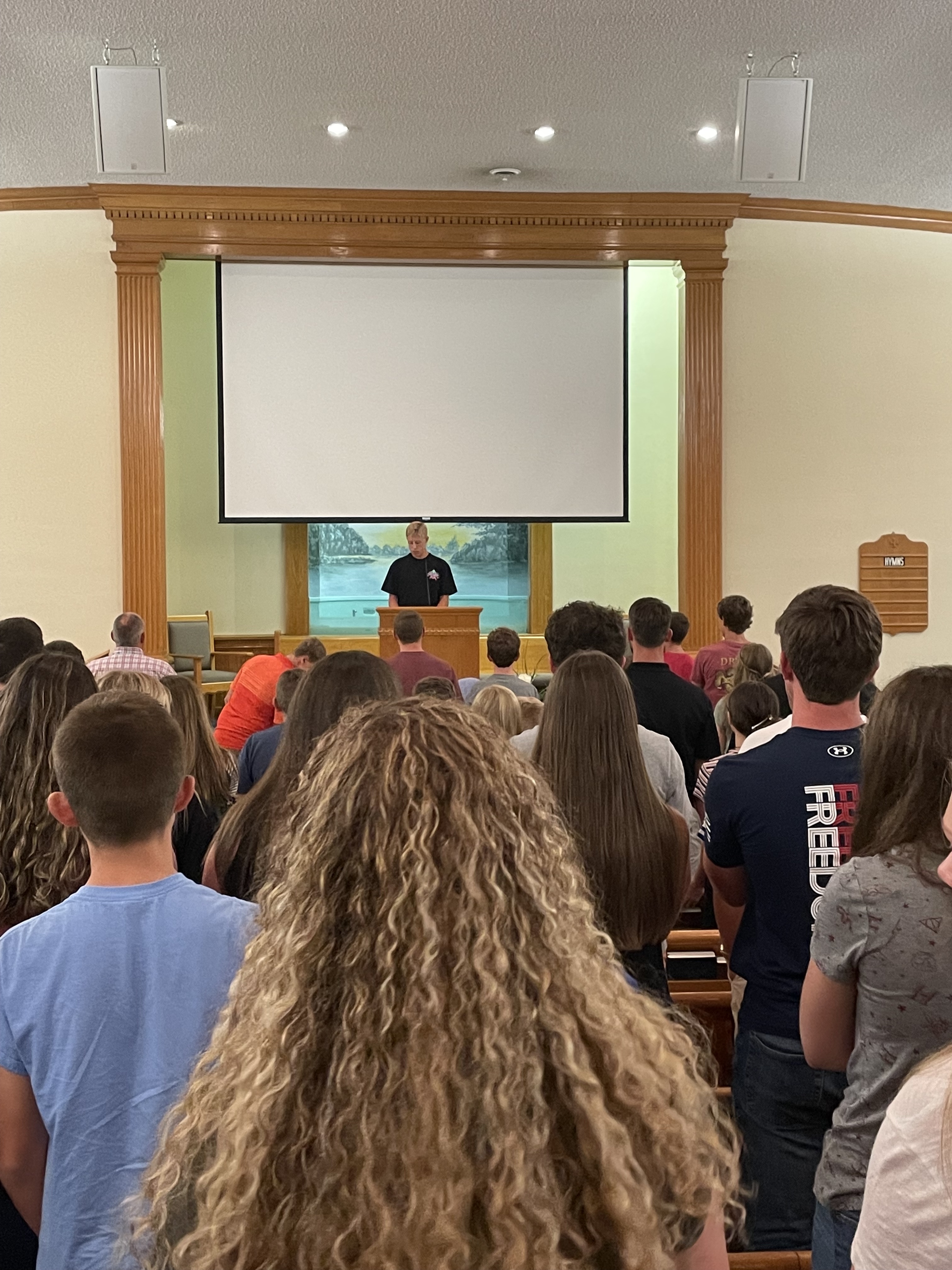
Teens stand for Scripture reading at recent Summer Youth Series (Chase Johnson reading)

 Homesick For Heaven 

Tuesday’s Column: Dale Mail

Daleheadshot

Dale Pollard

There is so much debate out there as to what Heaven will actually be like. Some make the argument that we just can’t know for sure. We know that there will be no tears in Heaven, so since that is the case there will definitely be some meatloaf there. Because in a place where there is no meatloaf present, I would cry. Now with that out of the way, let’s look at three quick promises about Heaven.

First there is the promise of “relationship.” In Revelation 21:3 it says, “He will dwell among us…” Not just any relationship, an actual relationship with Jesus Christ.

The second promise is that of “Relief.” In the very next verse it says, “God shall wipe away every tear from their eyes; there shall be no more death, nor sorrow, nor crying. There shall be no more pain, for the former things have passed away.” How many of us can’t wait for that day?

Now the third promise is one that is pulled from a verse that many people do not like to read. In Revelation 21:8 we see that there is a promise of “refuge.” You see, Heaven is going to be so great because of who will not be there. After we get a glimpse of what is promised to those who love Him (James 1:12), we see what is promised to those that don’t. Yet even here we see a blessing. Heaven is going to be place that is absent of, “…the cowardly, unbelieving, abominable, murderers, sexually immoral, sorcerers, idolaters, and all liars…” Heaven is going to be a place filled with family. The faithful Church family.

I’m going to Heaven! It’s a choice. It’s a choice to live right and follow Christ no matter what. You have the ability to say it confidently and you should never have to wonder if you’re going to Heaven. It’s a promise! Take hold of that promise, because it’s the only thing that matters.

46453077_10155947353545922_2964157557481930752_o


“It Shall Stand Forever”

Neal Pollard

Kathy and I visited the Notre Dame Cathedral in Paris, France, in February of 2006. It is an ornate, historic building. It dates to the 1100s, surviving the threats of many wars including World War I and World War II. But, it has been dilapidating for some time. Earlier today, a fire inside the spire caused it and one of its towers to collapse. Now, officials are saying that the whole frame is burning and will not survive. Whether or not they rebuild this Catholic Church building, this 900 year edifice will be gone.

There are buildings that have been around millennia before New Testament Days on most of the continents. If they continue until the Second Coming of Christ, they will cease to exist that day (2 Pet. 3:10). King Nebuchadnezzar had a dream over 500 years before Christ, and God helped Daniel understand its meaning (Dan. 2:28). The colossal figure he saw in that dream was a vision about the coming Kingdom of Christ. Daniel says, “In the days of those kings the God of heaven will set up a kingdom which will never be destroyed, and that kingdom will not be left for another people; it will crush and put an end to all these kingdoms, but it will itself endure forever” (Dan. 2:44). 

A careful study of unfolding history reveals this particular kingdom to be the church of our Lord, a Kingdom Jesus said would be established during the lifetime of some of His disciples (Mat. 16:28). It would come with power (Mark 9:1), a promise Jesus reiterates in Acts 1:8-11. That power came by way of the Holy Spirit’s coming upon the apostles on the Day of Pentecost in Acts 2. Through this means, the Lord’s church was established in Jerusalem that day (Acts 2:37-47). The Roman Empire, which ruled the earth that day, eventually collapsed. No nation or empire can rival the spiritual Kingdom of Christ. His church will stand forever (Heb. 12:28). Nothing can overtake or overpower it (Mat. 16:18). 

Assaults against the church have been ongoing for twenty centuries. At times, it has been invisible to recorded history, but it continues to stand. Her members have been assaulted many times throughout the centuries. Property has been destroyed. Possessions have been taken. Lives have been lost. But, still she stands! This Kingdom shall stand forever! A Divine promise encircles it. This confidence is fire proof! 

notre_dame_a_paris_01
Notre Dame Cathedral before today’s fire

Singing With The Understanding: “Beneath The Cross Of Jesus”

Neal Pollard

Most of us have favorite songs and hymns. My favorite category of hymns is songs about the cross. I love the somber, dramatic feel of Beneath the Cross of Jesus, a hymn penned right after the close of the Civil War by Elizabeth C. Clephane and one set to the music we sing with it by Frederick Maker a dozen years later in 1881. The cross of Calvary is treated as a metaphor of protection for one in a wilderness. One might envision the wandering Israelites making their way to the Promised Land and apply that, figuratively, to our journey through this world of sin toward heaven. But the song will change scenes multiple times until, in the last verse, it is a most personal challenge to each of us to be faithful disciples of this crucified Lord.

The first verse introduces the foot of the cross as a shadow of a mighty rock where we find relief and a home to rest in from trials and difficulties while pilgrims in a weary land (the world). We might easily think of Israel’s exodus from Egypt. Some songbooks have a notation to define “fain,” a word used in the first line. It means “gladly.” I am happy to shelter behind Christ’s cross in adversities.

The second verse builds upon the metaphor of the first verse, then subtly shifts to an event from the book of Genesis. The cross is, again, a shelter and refuge. But, then, he shifts to an allusion to Jacob’s dream (Genesis 28:10ff). He has left his father’s house and his brother’s wrath and beds down near Haran. He lays down, using stones for a pillow, and falls asleep. Moses writes, “He had a dream, and behold, a ladder was set on the earth with its top reaching to heaven; and behold, the angels of God were ascending and descending on it.  And behold, the Lord stood above it and said, “I am the Lord, the God of your father Abraham and the God of Isaac; the land on which you lie, I will give it to you and to your descendants” (12-13). This is where God reaffirms the promise He had made to Jacob’s grandfather and father to make of them a great nation. It symbolized hope, reward, and heavenly assistance. The song writer says the cross is just like the ladder in Jacob’s dream, except that I ascend to heaven by way of the cross. Again, Clephane uses a poetic, if obscure word, in this verse: “trysting.” The word means “meeting.” At the cross, God’s perfect love and justice meet. His love is shown and His justice satisfied by Christ’s sacrifice.

The third verse becomes a straightforward look at a literal remembrance of the graphic, horrific suffering of Jesus on the cross. She focuses on what our reaction should be–a smitten heart, tears, and a proper conclusion. How great is His love! How unworthy I am that He would demonstrate it to me (cf. Romans 5:8).

The last verse is the challenge to respond to that sacrifice. We are to live in the shadow of the cross, daily reflecting upon it and letting it affect how we live. We are to ignore all else to focus on Him. Clephane seems to allude to Paul’s words in Galatians 6:14, if ever so subtly. Too, there’s a challenge to not be ashamed of Jesus and the cross, but reserve our shame only for the sin in our life that made the cross necessary.

It is beautifully and intricately woven. Despite some unfamiliar, even archaic, poetic words, it is powerfully written. What a great song to prepare our minds for the Lord’s Supper or to sing when our motives gets clouded and our priorities get muddled. May we take the time, when we sing it, to consider the truth it teaches and the challenge it contains.

shadow-205510_960_720

Characteristics of Hope

Neal Pollard

An epistle centering around the superiority of Christi as our all-sufficient One would certainly be expected to contain a message of hope. While some had apparently given up Jesus as their hope (6:4-6), the writer of Hebrews had a higher estimation of those to whom he writes. for one thing, they had a legacy of good works and brotherly love and benevolence (6:10). His desire was that they would continue to stay strong. In expressing this, the writer suggests hope as an integral tool to keep them hanging onto their faith in Christ. In these final ten verses of Hebrews six, he mentions three qualities of hope that would help them–and will help us–hang onto our hope in Christ no matter what.

This hope is durable (11). Look at the language he uses. This hope was tied to an assurance that would endure “until the end.” It was a hope that would lead them to “inherit the promises” (12), just as Abraham’s hope in God led him to his inheritance (13-17). God desires to show us, as heirs of the promise through Christ, His unchanging purpose (17), so He guarantees that promise through an oath build upon the foundation of Himself. Hope which is guaranteed by the very nature and character of God is hope that will outlast anything! Nations rise and fall. Presidents serve only one or two terms. Supreme court justices, at most, can serve only a lifetime. Our hope transcends time.

This hope is tangible (18). These Christians needed to count on a refuge in difficult times (see 12:4), and we desire the same thing in our lives! Knowing that God is so trustworthy, we are encouraged to “take hold of hope” that is found only in Christ. To say that we can take hold of hope and that it is set before us means that it has substance. In a world where nothing seems certain, evidence from scripture, nature, order and design of the universe, and so much more allows us, by faith, to grab this hope. He had already told them to hold onto that hope in Christ earlier in the letter (3:6) and to encourage this response he points them to scripture (cf. 3:7-11; Psa. 95:7-11). Scripture helps us see the solid hope we have in Jesus.

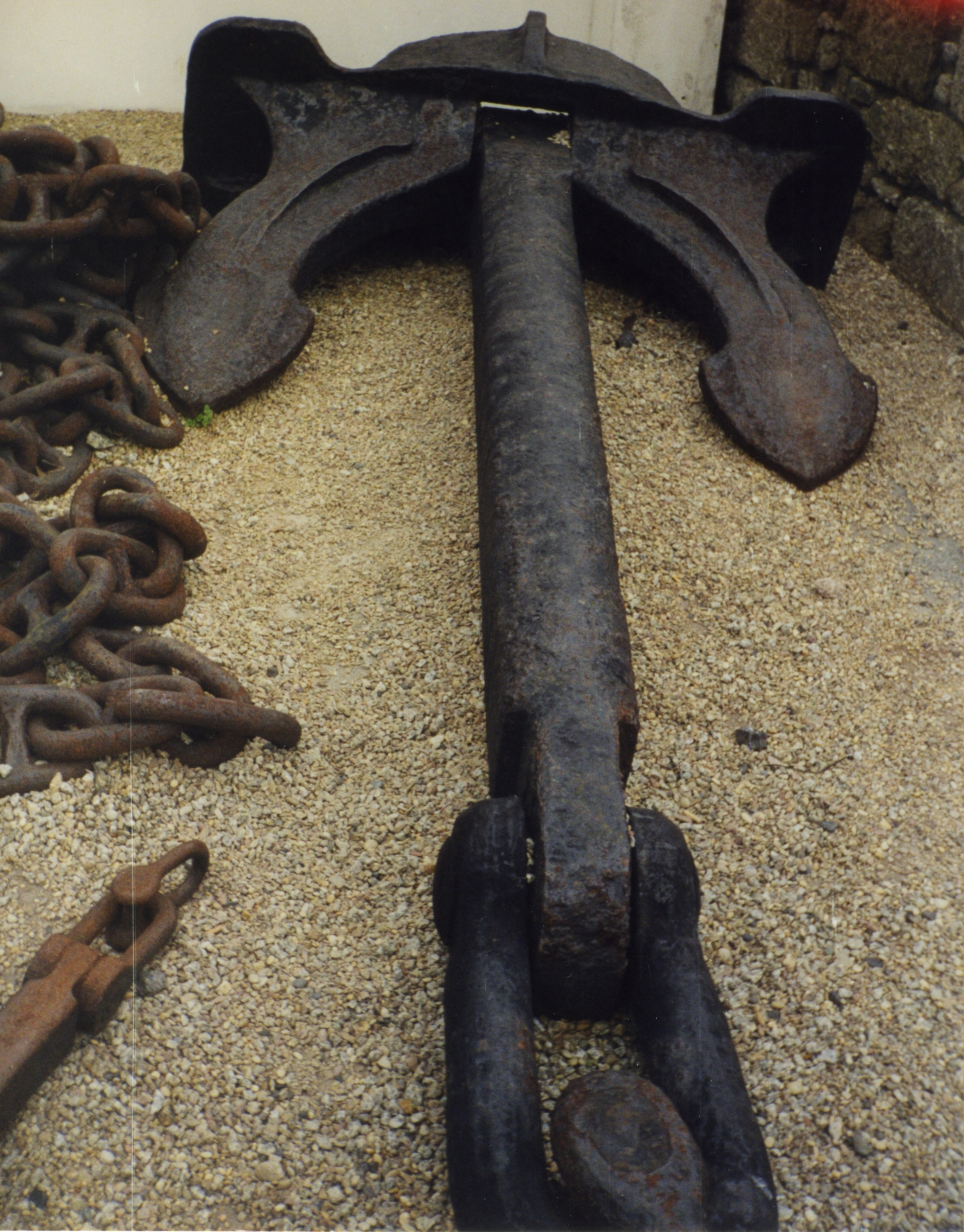
This hope is stable (19). It is an anchor. Anchors keep a vessel from drifting, an appropriate illustration since the Christians were tempted to drift from Christ (2:1). By maintaining their hope, they could anticipate three blessings: (1) sureness, (2) steadfastness, and (3) the service of the sacrificial Savior (19-20). All three of these descriptions of this Almighty anchor underline the security found in keeping ourselves anchored in Christ. Those who keep Jesus as their hope are able to weather the most horrific storms of life!

As Christians, we may find ourselves ready to abandon Jesus as our hope. So many things attempt to pull us from Him. Let us draw encouragement from this inspired writer, as surely these first Christians did, and rejoice in these changeless characteristics of hope!

anchor_england_-_scan01

Some Things That Will Not Be At The Judgment

Neal Pollard

What will the throne of judgment look like? What will Christ, the Judge, look like? Will the Judgment be experienced through the sense of sight? What will be different there from this life? What will be changed?

The Bible speaks often about the moment of reckoning, when the righteous and wicked dead (John 5:28-29) and all living (Mat. 25:31-33) will stand before the King of kings to give account for the conduct of the body (2 Cor. 5:10). As we attempt to paint a mental picture of the Judgment Day, some things shouldn’t be envisioned because they won’t be there.

  • There will not be an unbeliever at the Judgment (Phil. 2:10-11). With an introduction only heaven could produce, John says Jesus will come with clouds, every eye shall see Him, and all nations of the earth will wail because of Him (Rev. 1:7). No person will be able to continue in unbelief. Faith will be permanently past tense. Evidence of God’s power and the power of His promises will be beyond the realm of the hopes for and in the arena of the finally seen (Heb. 11:1). Jokes scoffing the Divine will not slip off the sin-darkened hearts of the defiant. No skeptics, no agnostics, no doubters, and no infidels will be at the Judgment.
  • There will not be a material possession at the Judgment (2 Pet. 3:10). The inhabitants of this planet seem to be more engrossed with things daily. The Lord calls things “corruptible” (1 Pet. 1:18) and inferior treasure (Mat. 6:19). People seek material things to provide them a life of joy, peace, and comfort. We will give an account for our stewardship of material things. We will answer “yes” or “no” when asked if we robbed God (Mal. 3:8). But no person will bring his possessions or amassed wealth into the venerable court of justice.
  • There will not be a mistrial at the Judgment (Acts 17:31). Each of us will appear before the Judgment seat of Christ (Rom. 14:10). We will each “stand trial” (2 Cor. 5:10). Christ, the “true” (John 8:16), universal (Acts 10:42), righteous (Acts 17:31), God-ordained (Rom. 2:16) and ready (1 Pet. 4:5) judge will sit to hear the case of every mentally accountable person to have lived. Jesus will judge without bias (Eph. 6:9) by relying on heaven’s unabridged record of the individual’s life (Rev. 20:12). He will judge according to the perfect law of liberty (Jas. 1:25). No one will be able to legitimately cry “foul.” When the law book is closed and the last judgment is handed down, no one will be able to find a loophole or mistake in the proceedings that will allow them to go free or be retried. There will not be any miscues or oversights.
  • There will be no secrets at the Judgment (Rom. 2:16). God now knows every man’s secret sins (Psa. 90:8) and He shall bring such things to the Judgment (Ecc. 12:14). God sees every secret place (Jer. 23:23). He reveals the deepest, darkest secrets (Dan. 2:22). At the Judgment, such things will judged (Rom. 2:16). “…All things are open and laid bare to the eyes of Him with whom we have to do” (Heb. 4:13b).
  • There will be no baptistery at the Judgment. Most people will go into eternity not having been washed, sanctified and justified (cf. 1 Cor. 6:11). As Christ divides the sheep from the goats, it will matter whether a person has fully obeyed the gospel (cf. 1 Pet. 3:21; Rom. 6:3-4; Col. 2:12; Acts 2:38; Gal. 3:27; Acts 22:16; Mark 16:16). Perhaps people will cry out for another person to baptize them. The angst of many who bargained for a later date to be baptized will be realized when they stand before Christ without His blood covering their sins.
  • There will be no invitation song at the Judgment. When the trumpet sounds, no sermon will be preached to convince the lost to obey the gospel. There’ll be no pleading with the lukewarm and unfaithful Christians. No song leader will stand before that numberless crowd to appeal to the lost and erring. Legions of hearts will be melted by the power of God. Fearful realization will fill those unready to meet Christ. Perhaps many will cry out for another chance, but the last opportunity will have passed.

There will be a righteous Judge who will give a fair trial to every individual. All will give an account. An eternal sentence will be handed down based upon one’s life and acceptance or rejection of Christ’s sacrifice. There will be no parole, stay of execution, or pardon for the lost. We all will need abundant grace to be able to stand at His right hand side, but Scripture tells us how that is extended. We must prepare for that in this life (Heb. 9:27). OLYMPUS DIGITAL CAMERA

GET READY!

Neal Pollard

As one who can count on one hand the number of snow events experienced in childhood, I have lived the last decade in Colorado where snow is more ordinary than oddity. Even so, the meteorological chatter is much higher in advance of an anticipated big storm this weekend. Because almost all my adult life has been spent in either Virginia or Colorado, we have heard many warnings.  In both places, it has seemed as though the weather experts were akin the boy crying wolf.  At the same time, in both places, we have had some huge surprises measured in feet rather than inches.

Perhaps because of this, locals in both places have at times been jaded and skeptical at these fearsome forecasts.  Their facial expressions say, “I’ll believe it when I see it.”  Why not? I remember a time in Virginia when the forecast was a foot of snow, all metro county schools closed in anticipation, and the next pre-dawn morning revealed starry skies without even a cloud.  Man, even with sophisticated radar and computer models, are at the mercy of the complexities of weather put in motion millennia ago by an all-powerful Creator.

We should not make the mistake of thinking God is like man (Ps. 50:21; Ezek. 28:2).  When He speaks of things to come, it is not mere prognostication or educated guessing.  He declares the end from the beginning (Isa. 46:10).  Thus, whatever He says is to come must not be dismissed.  It is a promise, as certain as His perfect character.

Throughout the New Testament, God is telling us to get ready for a day of judgment.  When writers say, “The Son of Man is going to come” (Mat. 16:27), “an hour is coming” (John 5:28-29), “all the nations will be gathered before Him” (Mat. 25:32), and the like, we should not expect a change in that forecast.  Just because it has not happened yet does not mean it will not come.  Peter warned of those who would say, “Where is the promise of His coming? For ever since the fathers fell asleep, all continues just as it was from the beginning of creation” (2 Pet. 3:4).  Nonetheless, Scripture says, “Get ready!” We don’t know when, but we should not wonder if.