How Can I Go On?

Tuesday’s Column: Dale Mail

DaleandJanelledirectorypic

Dale Pollard

How can we handle the hurt of losing someone we love?

Many emotions run through our hearts when we’re faced with the loss of a loved one. These emotions can present themselves as questions:

  • Confusion. Why did this happen?
  • Sadness. How will I go on?
  • Anger. Who allowed this to happen?

Who can answer these questions?  Who can provide comfort?  Who can guide our hearts through the heartbreaking moments of life?

Is it not the Creator of life who can explain the end of life, even though “end” is a very human term?

100 years from now I’ll be alive and so will you. 150 and 200 years from now,  I’ll be alive and so will you.

In Genesis 1:26-28, God said,  “Let us create man in our own image.”

  1. When God breathed into you the breath of life He gave you a piece of Himself called the soul which will live on forever…somewhere.
  2. When God created you in a more intimate way unlike the beasts of the field and the birds of the air He gave you free choice.
  3. He gave you the ability to reason.
  4. He gave you the ability to contact Him and be contacted by him.

How sad and how tragic it would be to live your life with no hope! Today, I’m here to offer wonderful, comforting news, at a time where such news seems all but missing.

God loves you more than anyone else does.

Though many cry for and with you when you grieve the loss of a loved one, that love falls short of the one who expresses His love in a way that’s perfect and unfailing. You will experience feelings you may not be able to put into words, but God feels and understands them. God can walk you through them. Life doesn’t have to be impossibly tragic and void of purpose.

God created the heart, so He can heal yours. God created the mind, so He can sort yours out. God made the soul, so He can save yours. God created the body, so He can give you rest. God created the eyes, so He can wipe your tears away. God created the shoulder, but His are the only shoulders capable of bearing the weight of all those who lean on them.

“Therefore comfort one another with these words” (1 Thes. 4:18).

garan_sunrise


Fantastic Fact About Forgiveness

Wednesday’s Column: Third’s Words

Gary III

Gary Pollard

When we forgive someone we usually do not forget what we forgave. Unless there is an underlying condition, our minds do not automatically or immediately delete irrelevant information, like something we no longer hold against another person. Because of this, it can be hard to understand what God’s forgiveness means for the Christian. We’ll think, “I know He has forgiven me, but there’s no way He’s forgotten about it. Maybe it will ‘cloud’ His decision to forgive me next time I ask.” 

This is a very common mindset, and one that I struggle with daily. When we look at scripture, though, it paints a very different picture of what God’s forgiveness really does! 

Forgiveness is the word ἀφίημι (afiemi). It has several definitions, according to Bauer: 

1. To dismiss or release someone from a place or presence. 

2. To release from a moral obligation or consequence, to cancel, remit, or pardon. 

3. To move away with implication of causing a separation, to leave or depart from. 

(BDAG 155)

Knowing this, we should look at Hebrews 8.12, “For I will be merciful to their iniquities, and I will not remember their sins anymore.” We understand that context is geared toward contrasting the old and new covenant, but it at least gives us insight into the process behind forgiveness. 

When we get forgiveness from God, that sin is eradicated. It no longer exists, it will not affect our relationship with God anymore. “Remember” in Hebrews eight is, “To call information to memory.” It’s not only that God no longer holds a sin against us, it’s that it ceases to exist in His mind. How awesome is that? 

When we ask God for forgiveness, let’s approach His throne with humility, yes, but also with confidence that He has the power and desire to make that sin disappear from our account forever. 

67838971_10156520118915922_8108397968467427328_n

Who Is God to Me? (Psa. 46:1-2)

Thursday’s Column: Captain’s Blog

IMG_0806

Carl Pollard

We are obsessed with our phones. A new study has found, that the heaviest smartphone users click, tap or swipe on their phone 5,427 times a day. Now that’s the top 10 percent of users, so we would expect it to be high, but even the average smartphone users still tap their phones almost half that many times a day. This means that some of us will touch our phones a couple million times a year (Adam Alter study).
The majority of the time we are on our phones is spent on social media. A place of fake relationships. We spend hours being “social” but this time spent never builds true relationships. The world is hungry for true and meaningful relationships. They waste hours online trying to get close to someone, but it always leaves them emptier than when they began.
As Christians we have a relationship with each other because of Christ, but even more, we have a relationship with God. The creator of this world. Let’s spend some time looking at this relationship we have with God. Who is God to me? Psalm 46 is a psalm of encouragement. The psalmist tells us to trust in God, to have hope in the relationship we have with Him, but this psalm also answers the question, Who Is God to Me?
He’s My Refuge/Strength. Verse one says, “God is our refuge and strength…” In my relationship with God, He’s my refuge. A place I can run to in times of need. He’s my strength, giving me more than I could ever have on my own.
Hafþór Júlíus Björnsson, a famous strongman, recently broke the world record deadlift pulling 1,104 pounds, breaking the previous record by 2 pounds. When I think of strong, this is what I think of. Lifting half a ton from the ground up to your waist, as mind boggling and impressive as this is, Hafþór still isn’t strong enough. None of us will ever have enough strength on our own. We may be physically strong, but spiritually God is the only one strong enough to help us walk the Christian walk.
The Hebrew word for refuge conveys the idea of a protective shelter (HALOT 571). God is a place of safety, a shelter that no one can break into. Thieves will break In and steal our possessions, but no one can ever take away our relationship with God. He’s our refuge, a place of safety. The word “strength” further builds onto the description of God. God is a strong refuge. And even more, He gives us that strength and refuge to help us in our walk. The strongest man is weak when compared to God. The most impenetrable of places pales in comparison to God. Who is God to me? He’s my strength and place of refuge.
He’s My Help. Verse one continues to say, “God is our refuge and strength, a very present help in trouble.” Trouble is something all of us will face. We run into opposition in almost every area of life.
“Good help is hard to find.” You’ll hear businessmen say this all the time. It’s a struggle that every restaurant, business, and church will run into. Who can we count on? We want people that are reliable. That’ll show up to work, get their job done, and be responsible. We need help. And the psalmist here tells us that God is our help.
God’s help is not hard to find. It is a help that is always there for us when we need it. Even more, God wants to help us. We all know people that when you ask for help, they’ll help you, but they really don’t want to. God wants to help his children, and that’s who God is to us.
He’s My Courage. Verse two says, “Therefore (because he is our refuge, strength, and help) we will not fear though the earth gives way, though the mountains be moved into the heart of the sea, though its waters roar and foam, though the mountains tremble at its swelling.” God is my courage because He helps me not fear what happens to me.
According to the DSM, specific phobias typically fall within five general categories: fears related to animals (spiders, dogs, insects), fears related to the natural environment (heights, thunder, darkness, fears related to blood, injury, or medical issues (injections, broken bones, falls), fears related to specific situations (flying, riding an elevator, driving), and other (choking, loud noises, drowning) (University of Pennsylvania study).
The world is full of fear. It is an ever present problem. I can’t stand heights and it all started when I had a nightmare where I was stuck by a belt loop at the top of the Eiffel Tower. Ever since I’ve been deathly afraid of heights.
My relationship with God gives me the choice to have courage instead of fear, hope instead of dread, joy instead of worry, and peace instead of anxiety. Though the earth gives way, though our world falls apart around us, we have courage instead of fear.
How does this help us? We need courage in so many areas: evangelism (we have a loving God to proclaim, but it isn’t always easy), confrontation (no one likes to call out a brother living in sin), family (courage to lead them to heaven, to make the hard calls), as a church (since we are called to live like Christ, we will make enemies), and Christian living (living righteously takes courage).
Who is God to Me? He’s my refuge, my strength, my help, and my courage. We spend hours each day on our phones, trying to be social or just wasting time. If our relationship with God was turned into a survey, how many times would we contact him? God wants a relationship with us, and sadly we tend to spend more time on social media than we do building our relationship with Him. Who is God to you? Is He your strength? Do you turn to him for help? Building and strengthening our relationship with God is the most important thing we will ever do.

8931592835_8c4ffe6396_b


Some Exciting Gifts From God   

Tuesday’s Column: Dale Mail

DaleandJanelledirectorypic

Dale Pollard

There’s a magic moment when a child discovers that two different paint colors combined can create an entirely different color. The possibilities seem endless! Red and yellow paints are dumped on a blank canvas and mixed to create a bright orange. That same excitement, on a whole new level, can be experienced when we discover that God mixed with “human nature” creates something far better and more beautiful. God is often the ingredient missing from our potential success as well as those goals we sometimes attempt to make alone. Consider the impact He has on our common life struggles…

1. When God is mixed with our sin – He creates forgiveness (Romans 4:7)

2. When God is mixed with our finances – He creates a healthy view of money and how to use it (Proverbs 13:11)

3. When God is mixed with our relationships – He creates a stronger and more      fulfilling bond (Eph. 4:2-3)

4. When you mix God with uncertainty – He creates certainty (Romans 8:28)

5. When you include God in difficult decisions – you find direction (Prov. 3:5-6)

6. When you mix God with depression/anxiety – you discover some relief (1 Peter 5:6-7)

7. When you include God in your work – you will get the best results (1 Cor. 2:9)

8. Add God to any fear – you not only get courage, but a total removal of fear (1  John 4:18)

In short, the more yellow you add to red, the brighter the orange. The more God you add to your life, the brighter the future becomes. If you desire a vibrant life, then God is what needs to saturate your mind, heart, and decisions.

When God is in my mind my mind becomes more holy.

When God finds His way into my heart, my heart develops more purity.

No meaningful and lasting change can be accomplished by sheer willpower and determination— if those two things are not mixed with an all-powerful God.

dale and tyler

“AND HE WILL BE THE STABILITY OF YOUR TIMES”

Monday’s Column: Neal At The Cross

pollard

Neal Pollard

In a world facing ever-changing circumstances, we need to be reminded of some truths about God. A great text that can help us do this is found in the writings of the Messianic prophet, Isaiah. He tells us some exciting facts about God in Isaiah 33:5-6.  In brief, Isaiah reminds us of God’s transcendence (“exalted…on high”), His trustworthiness (“has filled Zion with justice and righteousness”), and His treasure (“a wealth of salvation, wisdom and knowledge; The fear of the Lord is his treasure”).  In the midst of upholding God’s perfect character, the prophet makes this reassuring statement: “And He will be the stability of your times.”

In part, here is what that means to us today…

  • There is no minimum distance we have to keep from Him under any circumstance (Jas. 4:8).
  • There is no restriction or limit on our access to Him and His blessings, on prayer or His Word (Phil. 4:19). 
  • There is no chance that you will look for Him and He will not be there (Psa. 50:15).
  • There is no possibility that you will learn that what was true of Him yesterday is not true of Him today (or tomorrow)(Heb. 13:8)
  • There is no cancellation policy at the throne of grace for the child of God (Heb. 4:16).
  • There is no threat or danger that can keep you from the love of God (Rom. 8:38-39).
  • There is no earthly thing to nullify the truth that “the Lord is my helper, I will not be afraid” (Heb. 13:6). 
  • The more we expose ourselves to Him, the healthier we will be.
  • There is zero chance that you will go to Him for healing and have it fail (Jer. 8:22; Luke 5:31).

Scripture calls Him the Rock (Deut. 32:4), the shield (2 Sam. 22:31), my protection (Isa. 27:5), my shield, stronghold, and protection (2 Sam. 22:3), and a strong tower (Prov. 18:10). As Nebuchadnezzar understood, “all His works are true and His ways just” (Dan. 4:37). 

Take heart. Take on the day. Take comfort and refuge. “And He will be the stability of your times.”

pollard weddingDJ 410a
Random great photo: courtesy Baker Street Photography

Making Sense Of Grace

Wednesday’s Column: “Third’s Words”

10423661_10207901451272315_9069631728203375436_n

Gary Pollard III

Grace is a touchy subject. As with many other words commonly used in religious circles, it has potential to be misused or misunderstood. My hope is that this brief study on grace will shed some light on a confusing subject.

First, grace is possible for all men to have (Titus 2.11). It has been clearly displayed and advertised to everyone. The word “appeared” in that passage is epiphane, which means “to make an appearance.” No one is exempt from grace if they follow the right steps to receive it!

Second, grace keeps us in good standing with God if we are walking in the light (I John 1.7,8). In Acts 2.47, chairo (pronounced ky-roe) is translated “favor.” In Luke 6.32-34 Jesus uses it in a very interesting way. He says, “If you only love those who love you back, what credit is that to you?” Credit is charis, the word for grace.

So what is grace? What does it mean to you and me? If we are walking in the Light – trying our very best to follow God’s commands and allowing our faith to be the driving force of our lives – God takes care of our sin problem. When we slip up and make a mistake, God removes it from our record. This does NOT mean that we can sin all we want and God will just overlook it (see Romans 6.1,2). It does, however, mean that God is not waiting to strike us out of the book of life the moment we make a mistake.

Grace is what happens when God wants to do good for mankind. Luke 6.35 says, “Love your enemies, and do good, loan to others without expecting anything back; and your reward will be great, and you will be sons of the Most High; for He Himself is kind to ungrateful and evil men.” The word kind in the bolded phrase is charis: grace. It does not mean the same thing for evil men that it does for the Christian, but it does help us to get a better sense of what this word means.

God is rooting for His children (Christians). He WANTS us to get through this life and die in Him (Psalm 116;15). He isn’t our accuser waiting for us to slip up so He can condemn us. He helps us along the way, He shows good will to us, and He gives us His grace so that we can spend an eternity with Him as long as we are walking in the Light.

Learning To Pray From A Man After God’s Own Heart

Neal Pollard

When the disciples asked Jesus to teach them to pray (Luke 11:1), they were asking the most qualified instructor. However, they had a good teacher from the background of their own heritage in David. The book of Psalms is at times a songbook and at other times a prayer journal. Numerous examples of David’s prayers are contained in this beautiful book of Old Testament poetry. In Psalm 141, for example, we have several characteristics of prayer from a man after God’s own heart (cf. Acts 13:22).

First, David’s prayer was urgent (Psalm 141:1). He writes, “Lord, I cry out to You; make haste to me!” David saw prayer, not as a last resort, but as a first retreat. Since David knew God was able to help, he wasted no time in bringing matters into God’s own hands.

Then, David’s prayer was intense (Psalm 141:1b). He continues, “Give ear to my voice when I cry out to You.” You will not hear rote memorization of prayers or lackadaisical lethargy in David’s prayer. David cried out to God. He is pleading with God. These are indicators of a fervent prayer life, which God includes as typical of righteous people of prayer (James 5:16).

Further, David’s prayer was sincere (Psalm 141:2). He treated his prayers as if they were actually offerings or sacrifices. He says, “Let my prayers be set before You as incense, the lifting up of my hands as the evening sacrifice.” He was willing to lay open his prayers to the All-Seeing eye for His scrutiny. The entirety of this psalm reflects no superficial piety or pretentiousness. David simply laid his heart before God.

David put obvious trust and hope in the power of prayer. He had confidence in God’s ability and he had cognizance of his own dependence upon God’s ability. Never wait to turn to prayer until the need is desperate. The man after God’s own heart made prayer a staple in his religious diet. So should we.

pray-2558490_960_720

Paul’s Portrait Of God For Timothy

Neal Pollard

Devoting himself to a theme of godliness in writing his spiritual son, Timothy, Paul writes to encourage him to teach godliness to people who enjoy financial prosperity (1 Tim. 6:3-10, 17-19). Part of his instruction is to point rich Christians (the case can easily be made that American Christians qualify as this in nearly all instances and many preachers in foreign lands on U.S. support do, too, among their fellow natives) to where the truest treasures lay. Along with encouraging righteous behavior, Paul points to God. He gives life to all things (13). Paul also points to Christ Jesus, who is faithful (14) and who is coming again (14) to give “life indeed” in “the future” (19). Certainly, as Christ is divine, this picture describes Him, though it is obvious this is a portrait of God. He depicts God as:

  • Privileged—“Blessed” (15)
  • Particular—“Only” (15); “Alone” (16)
  • Predominant—“Sovereign” (15)
  • Preeminent—“King of kings and Lord of lords” (15); “Whom no man has seen or can see” (16)
  • Possessor—“Possesses immortality” (16)
  • Phenomenal—“Dwells in unapproachable light” (16)
  • Praiseworthy—“To Him be honor and eternal dominion!” (16)

Why would Paul remind a preacher (or have a preacher remind Christians) about who God is? As we see in the second letter to this young man, motivation is vital! What keeps me serving God when life is difficult? When the world around me ignores Him, mocks Him, rebels against Him, blasphemes Him, and dismisses Him, I need to serve and glorify Him. What will help me do that? I need to see Him for what He truly is! So Paul pulls out a series of superlatives to drive home the point, “How great is our God!” 

In a world full of ungodliness, of “worldly and empty chatter and the opposing arguments of what is falsely called ‘knowledge’” (20), we must be on “guard.” Nothing clarifies the task better than intently focusing on the nature of God. He provides (1:4), He is (1:17), He saves (2:4; 4:10), He is one (2:5), He lives and rules (3:15;4:10), He created (4:3-4), and He sees (5:21). What motivation!

p46

Truth Is Truth, No Matter WHO Disagrees With It

Neal Pollard

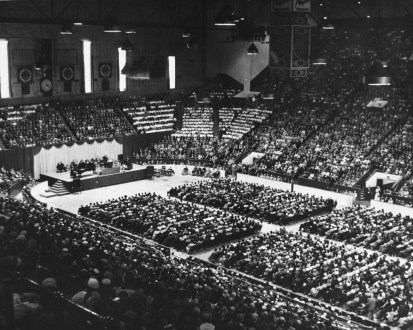
Today, one of the most famous preachers of modern times died just short of his 100th birthday. Not only did he achieve longevity, his name was almost synonymous with American religion in the 20th Century. He reached hundreds of millions of people through live crusades, radio, and television. He was regularly listed as one of the “Ten Most Admired Men in the World.” His website claimed that he preached to more people in live audiences than anyone else in history (info via FoxNews.com).  His influence on society is unmistakeable.

However, this much loved and now much lamented man used the weight of his name and influence to oppose something which Scripture seems very clearly to teach. In the answer section of his website, he addresses the question, “Is baptism necessary for salvation?” While answering that he believed it to be important and that he had done it himself, he also said, “If baptism were a requirement for salvation, we would certainly say that.” His answer makes clear that one becomes a saved convert before baptism, the thief on the cross being used as proof of that claim. Many of those who left comments under his answer shows how deeply influential and popular his teaching on this was.

I believe in the vitality of the saying, “It’s never a matter of ‘who’s right,’ but ‘what’s right.’” Something is never right because I say it, some other preacher, or even the most famous preacher of the 20th Century says it. Something is right because Jesus and His apostles and prophets said it. Here is what they said:

  • “He that believes and is baptized shall be saved” (Jesus)
  • “Repent, and each of you be baptized in the name of Jesus Christ for the forgiveness of sins” (Peter)
  • “Get up and be baptized, and wash away your sins, calling on His name” (Ananias)
  • “Or do you not know that all of us who have been baptized into Christ Jesus have been baptized into His death? Therefore we have been buried with Him through baptism into death, so that as Christ was raised from the dead through the glory of the Father, so we too might walk in newness of life” (Paul)
  • “For you are all sons of God through faith in Christ Jesus. For all of you who were baptized into Christ have clothed yourselves with Christ” (Paul)
  • “ Corresponding to that (Noah and family brought safely through the water, 20, NP), baptism now saves you—not the removal of dirt from the flesh, but an appeal to God for a good conscience—through the resurrection of Jesus Christ” (Peter)

I feel the loss of this renowned preacher is sad and tragic.  I appreciate his vast influence and the way he tried to use that for good in so many regards. Yet, if the Bereans found it necessary to compare the great apostle Paul’s preaching and teaching with Scripture, any of us who preach and teach today should want people to do the same. That’s the only way we will be able to determine what’s right!

55b-3246-1-1024x819

HE QUALIFIED US

Neal Pollard

When I was a student at Faulkner University, Schick Corporation sponsored a three-on-three intramural basketball competition known as Super Hoops. The school’s student activity director organized the tournament, and the winning team won a paid trip to the national tournament to compete for the national title. My senior year, four of us decided to form a team and compete for this coveted prize. We had a guy, Patrick Hunter, who was a slick ball handler and had been a point guard in High School. We had another guy, Bart Carter, who had actually played baseball at Mississippi State before transferring to Faulkner to become a Bible Major. There was me, more of an outside shooting threat if anything. But it was our fourth man, Mike Whisenant, who truly tipped the scales in our favor. He was a High School basketball star and was our big man. He also had a great shot, but we could depend on him to score inside consistently. Every team could have four players and you could rotate in and out to keep players fresh. But the guy who had to stay in, our workhorse, was Mike. It was certainly a team effort, but it was Mike who carried us to victory at Faulkner and punched our ticket to Atlanta. We got to stay at a very nice Hyatt hotel for free. We got meal vouchers, cool T-shirts, and I didn’t buy a razor for a couple of years. Although our glory was short-lived on the “national stage,” getting beat by Morehouse and then Valdosta State in a double-elimination format, we got to compete—thanks mostly to Mike’s skillset and abilities.

Perhaps that’s a crude way to illustrate a term used by Paul in Colossians 1:12, but follow me for a moment. Paul is in the middle of his prayer for the Colossians, telling them he wanted them (and by extension he wants us) to please God in all respects. The four ways to do that follow that imperative: bearing fruit, increasing in knowledge, being strengthened, and giving thanks. Paul says to give thanks to the Father, “who has qualified us to share in the inheritance of the saints in Light.” The word translated “qualified” here is only found one other time, in 2 Corinthians 3:6, where Paul says “our adequacy is from God, who also made us adequate as servants of a new covenant.” The same idea is conveyed in both passages.

Though I could not find the Greeks using this verb in an athletic sense, it literally means “to cause someone or something to be adequate for something” (Louw-Nida 678). The adverb form of the word appears many times in the New Testament, and means “sufficient in degree, sufficient, adequate, large enough” (Arndt, Danker, et al 472). Our word means to “render competent or worthy” (Zodhiates np). God is the cause of adequacy, the One who makes us competent and worthy to receive the inheritance. We have a part to play. We must be obedient, fruitful, knowledgeable, strong, and thankful. Without this proper response to God’s grace, we do not qualify for the prize. But, who is most responsible? Who do we most depend upon? It’s not us. It’s Him!

My illustration is feeble, but it helps give me a faint glimpse of what Paul is talking about. In an infinitely greater way, I owe my eventual, eternal prize to God’s ability and identity. But, because I want to please Him in all respects, I am going to work hard and with gratitude for the One who makes it all possible.

Screen Shot 2018-01-17 at 6.36.27 AM

Why Is The World Asking “Why?”

Neal Pollard

Today, everyone is hurting. Whether because of gun or knife violence or vehicular homicide, groups of people in our nation and other parts of the world are being torn from time and prematurely vaulted into eternity. We weep and mourn for the loss. We consider the enormous grief and heartache multiplied many families face from California to Florida, Connecticut to Texas, Colorado to Tennessee, Virginia to Nevada (and many other places).  Those whose voices we hear the most through all of this, like the national and local media, seem fixated on learning the perpetrator’s motive each time it occurs. Experts and analysts look at religious ideology or mental health issues. It seems as if they believe that if they can determine the motive, that will solve the violent epidemic that has disturbed the peace of so many people in our society. The danger of oversimplifying any specific tragedy notwithstanding, there are some right answers the world will have a difficult time embracing but that get us so much closer to resolving this plaguing problem. Why are these horrific crimes occurring?

  • The world has rejected God. Romans 1:28 says, “ And just as they did not see fit to acknowledge God any longer, God gave them over to a depraved mind, to do those things which are not proper….” “Not proper” seems benign to us in the way we use the phrase in English (bad table manners, having your shirt untucked, etc.). Kittel says, “Paul has in mind what is offensive even to natural human judgment. The decision against God leads to a complete loss of moral sensitivity, the unleashing of unnatural vices, and hence the type of conduct that even healthy pagans regard as improper” (386). Paul tells us this improper conduct includes “all unrighteousness, wickedness, greed, evil; full of envy, murder, strife” and other things we see in these current tragedies (29, cf. 30-31). Read the context to appreciate the rotten fruit of such thinking.
  • The world has redefined sin. A worldview or value system is built bit by bit, choice by choice. Paul writes, “Do not be deceived, God is not mocked; for whatever a man sows, this he will also reap. For the one who sows to his own flesh will from the flesh reap corruption, but the one who sows to the Spirit will from the Spirit reap eternal life” (Gal. 6:7-8). If we devalue human life through sinful practices like abortion or euthanasia, we plant destructive seed. If we glorify violence or imbibe in sins like pornography that objectify human beings, we plant desensitizing seed. Long ago, Isaiah warned, “Woe to those who call evil good, and good evil; Who substitute darkness for light and light for darkness; Who substitute bitter for sweet and sweet for bitter!” (5:20). Such leads to weeds which choke out spiritual fruit.
  • The world has rebelled against biblical counsel. The absolute truth of Scripture is lost in the shuffle of worldly values. Jesus says, “Treat others the same way you want them to treat you” (Luke 6:31). He says, “Love your enemies and pray for those who persecute you” (Mat. 5:44). Paul echoes, “Do not be overcome by evil, but overcome evil with good” (Rom. 12:21). He also writes, “Do nothing from selfishness or empty conceit, but with humility of mind regard one another as more important than yourselves; do not merely look out for your own personal interests, but also for the interests of others” (Phil. 2:3-4). The Bible urges us to be kind, unselfish, compassionate, and helpful through precepts and examples. The world has ignored the ethics of Scripture in preference of humanistic philosophy.
  • The world has replaced God with self as lord. What is the ultimate consequence of denying God the place that rightfully belongs only to Him? Isaiah referred to a worldly nation, saying, “I have spread out My hands all day long to a rebellious people, Who walk in the way which is not good, following their own thoughts” (65:2). Repeatedly, Scripture decries the folly of crowning ourselves king and dethroning God (Jer. 10:23; Prov. 14:12; 16:25).  When a society writes its own rules or tries to live life on its own terms, it charts a path for heartache and disaster. How concisely Solomon says this, that “Righteousness exalts a nation, but sin is a disgrace (shame, reproach) to any people” (Prov. 14:34). When whatever a person says, wants, or believes is what goes, ultimately nothing is out of bounds for him or her.

Brethren, in this frightening, dark, and uncertain atmosphere, a world which “lies in the power of the evil one” (1 John 5:19), we must share what we know! John says, “We know that we are of God…and we know that the Son of God has come, and has given us understanding so that we may know Him who is true; and we are in Him who is true, in His Son Jesus Christ. This is the true God and eternal life” (5:19a, 20). We have security, confidence, understanding, and hope, all because of God and His Son. Take courage and share that with everyone you can! It’s the only hope the world has!

kcmkjjb5i

“He sends forth springs in the valleys; They flow between the mountains”

Neal Pollard

This statement in Psalm 104:10 is spoken literally of God’s physical provision for His creatures. But, have you ever thought about how that is true for you and me when we find ourselves in the valleys of life? In between the mountaintops of successes and happy days, we can find ourselves seemingly down in the valley of the shadow of death (cf. 23:4). I am so thankful that in those moments that might seem dry and thirsty, God sends forth springs in the valleys of life. Whatever creates the valley for us, it can seem like a deep place hard to climb out of. How does God send forth spiritual and emotional springs for us, even in the valleys of life?

  • The church is a spring in the valleys of life. Other Christians lifting and encouraging us can be the medicine we need to take the next step through the valley. No wonder the church is such an expression of God’s wisdom (Eph. 3:10-11).
  • Prayer is a spring in the valleys of life. Pouring out our hearts to a God who understands us and knows our situation perfectly strengthens us.
  • Our family can be a spring in the valleys of life. Those of us who have Christian parents, siblings, children, and other relatives have a double blessing, family twice over. They can be the support and encouragement we need to keep moving.
  • Spiritual blessings are a spring in the valleys of life. Ephesians 1:3 says in a general way what the rest of the New Testament enumerates in a specific way. God is blessing us in so many ways because we are in His Son. Never do we appreciate that more than when we struggle.
  • The Bible is a spring in the valleys of life. There is wisdom and insight on every page, guidance for our journey. God has revealed the road map to help us traverse the narrow way to heaven. The narrow way will not keep us from traveling through valleys, and often it has valleys the broad way does not.
  • Faith or trust is a spring in the valleys of life. Like Paul, who often camped in the valleys of life, “I know whom I have believed and I am convinced that He is able to guard what I have entrusted to Him until that day” (2 Tim. 1:12). My eyes may be wet with tears in the valley, but my eyes of faith see with crystal clarity.
  • Hope is a spring in the valleys of life. It anchors the soul (Heb. 6:18-19), but it also helps lift us up. Because I face the future with confidence, no setback will keep me discouraged but so long. Tomorrow will be a brighter day!
  • Christian service is a spring in the valleys of life. Maybe nothing leads me through the valley any more than finding a fellow sojourner to help out of their valleys. When I focus outside of myself on other strugglers, I soon forget my unpleasant experience.

Many years ago, I heard Franklin Camp talk about the valleys of his life and how he overcame. His young daughter accidentally burned to death in a brush fire. He faced other huge losses in life, but brother Camp through it all was a man who had his eyes fixed on the ultimate mountaintop experience. In the valleys of life, let us look for the springs God sends. They will refresh, renew, and relieve us until our journey is complete.

valley-springs-lodging

FEAR!

Gary Pollard III

Have you ever been terrified? I have: I’ve been hit head-on at highway speed, been attacked by feral dogs on the Navajo reservations, and once had to eat kale.

Fear is a normal part of our life, and is sometimes an annoying reminder that we are vulnerable. Fear can save your life, or cause you to push yourself to overcome. Fear can also help you get to heaven.

The Bible talks about the fear of the Lord all throughout. The concept of fearing God is mentioned over 578 times in scripture! How do we fear the Lord? A very long time ago, a man named Jonathan Edwards preached a sermon called “Sinners in the Hands of an Angry God.” The premise of his sermon is that we are all walking a frayed tightrope over the fires of Hell with God just waiting for us to trip up and be eternally lost. His sermon is extremely well-known (even today), but is not an accurate portrayal of God’s disposition toward us (I John 1.7). Our fear of God – literal fear – comes from knowing that He is our judge and creator. It stems from a sense of awe at who He is and what He can do.

We’re all told to fear the Lord, but how do we do that in 2017? When you’re about to do something that the back of your mind tells you is probably not a good idea, think about the power of God. Think about standing in judgment before Him and how He would view your decisions. Think about the fact that your very existence is due to Him – do you think He’s not aware?

God is love by nature (I John 4.7, 8), but God is also our righteous Judge (Romans 2.2). Let’s keep that in mind this week while we’re making our decisions.

fear460

Happiness Guaranteed!

Neal Pollard

Who wouldn’t find that appealing? Many years ago, Hugo McCord wrote a book entitled, “Happiness Guaranteed.” In it, he wrote, “Is happiness difficult? Yes, to those on the wrong road. Is it elusive? Yes, to those who want it without a price. But to the simple, plain folk of the earth, willing to walk God’s road, willing to pay God’s price, happiness is, like God, not far from every one of us.”  Many spend a lifetime in a desperate, elusive attempt to be happy. What if there was a formula for true happiness? I believe we find it in Psalm 37:23-26. This text tells us what we need to be happy.

We need a direction mapped by God (23). If we make life a self-guided tour, we can guarantee ourselves a life of misery. Even a Christian’s heartaches often stem from our trying to “go it alone” without His guidance. He guides us through the Word (Psa. 119:105,133). He knows everything at the deepest level of comprehension. He understands what kind of life will make us happy and miserable. David says life without God’s guidance is chaotic and disorderly. I read about an optometrist who examined an elderly patient and asked, “Can you read the fifth line of the chart?” “No.” “How about the fourth line?” “No.” “Hmm. Try the second line.” “No.” “Surely you can read the first line.” The old man said, “Truth is I’ve never learned to read.” Have we learned to read? Have we gotten into the regular habit of consulting God’s divine roadmap?

We need a delight in His way (23). In a matter of minutes, you can find out what a person enjoys in life. It could be sports, politics, travel, shopping, mechanic-ing, nature, reading, fishing, horseback riding, or stamp-collecting. Kept in proper place and priority, these can be good, healthy, and legitimate. But way too many people get their thrills in illegitimate ways. They enjoy the unwholesome, filthy, perverted and vulgar. To many, “The word of the Lord is unto them a reproach; they have no delight in it” (Jer. 6:10). Solomon adds, “A fool does not delight in understanding…” (Prov. 18:2a). God’s outline for living, when followed, leads to delight. Other ways are paved with the heartache of others who foolishly paved those same paths previously.

We need a dependence on God’s providential care (24-25). Seven times in the Psalms, the writer tells God, “The righteous trust in You” (5:11; 9:10; 17:7; 25:22; 31:19; 55:23; 56:3). Your faith can be built if you trust that God, even when things seem doubtful, will provide what is needed and what is best. Not just materially, but in times when spiritual decisions must be made (cf. Gen. 22:8; Rom. 4:18-21). When we place our future, fears and fortunes in God’s almighty hands, we find true happiness (1 Pet. 5:7). David challenges us to find a case of a true follower forsaken by God. Satan wants us to think God doesn’t care about us. That’s what he wanted Job’s problems to do to Job—make him turn against God. If you are suffering right now, be assured that God hasn’t left you.

We need a duty to others (26). Norman Vincent Peale said, “The way to happiness: Keep your heart free from hate, your mind from worry. Live simply, expect little, give much. Scatter sunshine, forget self, think of others. Try this for a week and you will be surprised” (The Power of Positive Thinking, 54). Psalm 37:26 mentions two responsibilities we, being richly blessed by God, have to others. The  first, mercy, should express itself through acts of kindness. The second, lending, shows generosity. God ties generosity to true conversion. We give our money, our time, our talents, our heart, and ourselves. Listen to the joyful words from those spend themselves serving others. They say, “We are unworthy slaves; we have done only that which we ought to have done” (Lk. 17:10).

We overcomplicate life with needless worry, harmful actions, and heavy burdens. So many people, from a financial, social, and physical perspective, have every reason to be happy but are miserable! The opposite of that is true, too. One may be drained of every resource but faith, but no one can rob them of their joy (Ps. 128:2; Pr. 3:18; 14:21; 29:18)!

91yglo5s5dl

Facing The Storm

Neal Pollard

Springtime in the plains is a notorious time for storms. I was driving through northwest Texas near the time when three storm chasers were killed southwest of me on Tuesday afternoon. They died pursuing the storm, not directly because of it. They were there because conditions were ripe for tornadoes. 17 people were killed by tornadoes in 2016, but 24 have already died in them this year. Hollywood has captured our awe and fascination with them since The Wizard Of Oz. We view storms as mysterious, ominous, powerful, and frightening. They come in so many forms—hurricanes, floods, blizzards, cyclones, and more. But “storms” are synonymous with fear and sorrow.

Wouldn’t you classify some of the major, traumatic events of your life as storms.  They build and threaten, they strike, then they leave aftermath. The storm may take but a moment, but recovery can take days, months, or even years. Not surprisingly, the Bible uses the storm metaphorically to describe such moments in our lives. David wrote, “I would hasten to my place of refuge from the stormy wind and tempest” (Psa. 55:8). The man we most associate with such figurative storms, Job, laments, “You lift up the wind and cause me to ride; And you dissolve me in a storm” (30:22). Most frequently, the Bible uses storms representatively to describe God’s judgment. But, as Job and David show, sometimes storms strike the innocent and undeserving.

What do we do when facing a storm? We heed precautions. We take shelter.  We wait and endure. We ask for and trust God’s protection.

The world is full of people riding out storms today. That includes Christians. These storms are assaulting their bodies, bank accounts, relationships, spiritual strength, and spirits. Some feel safely sheltered, while others feel as if they are barely holding on. How do we face our storms?

* Seek help from others (Heb. 12:12-13; Ecc. 4:9-10).
* Search for possible benefits from it (Psa. 66:10; Rev. 21:3-4; Js. 1:2-4; etc.).
* See God’s power to help in it (Psa. 18:19; Rom. 8:28-38; 2 Pet. 2:9a).
* Shelter in the place of safety (Exo. 33:22; Psa. 91:1; Mat. 7:24-27).

God doesn’t cause evil or sin, but He allows it. We will always struggle with the “why” of this. But, we can grow our dependence on our great, perfect God when we are being battered. He is faithful. He wants to help. Lean on Him through your storms!

b3d-814151_960_720

Struggling Through Our Troubles

Neal Pollard

Have you ever had a problem or struggle that started out small but kept growing until it was larger than life? Did it come to consume your thoughts, keep you up at night, and become an overwhelming obsession? Maybe you devoted a lot of emotion to it.

Just by virtue of living on this earth, we will struggle (Job 14:1-2). Job knew struggle and turmoil! He lost one thing after another. His life seemed to unravel before his eyes.  Teddy Roosevelt is credited with saying, “When you are at the end of your rope, tie a knot and hold on.” Have you ever found yourself struggling at the end of your rope of faith? You are certainly far from alone in that. We certainly see Job dangling there, asking, “Why was I ever born?” (3:11) and “Why can’t I go ahead and die?” (3:20-22). David was there (Psa. 22:1). So was Jeremiah (ch. 37-38).

Of course, trouble takes on many forms and comes from many directions. Any number of passages can help us cope with the struggle of trouble, but consider Psalm 10. It refers to the wicked seven times and to the afflicted four times. It also speaks synonymously of the wicked as the greedy (13), evildoer (15), and those of the earth (18). It speaks of the afflicted as the unfortunate (8,10,14), humble (14), the orphan and oppressed (14,18). We know that our trouble can come from the wicked, but it can also come from no one source we can identify though it hurts just the same. Consider this Psalm about our troubles and what we can do about them.

Our perception in times of trouble (1-11). Our vision can become blurry by tears or rage, but our point of view is altered when trouble comes. The psalmist goes through this. He sees God as being distant (1). He saw the wicked as being in control or prospering (2-11). God seemed far away and life seemed unfair. The majority of every generation is wicked, and each generation of God’s faithful must reconcile the seeming success of the wicked and oppression of the affilicted righteous. We don’t begrudge the psalmist for his struggle to see through spiritual eyes. We can relate.

Our prayers in times of trouble (12-15). The psalmist admits his own struggle, then he shows us how to overcome it. His first response is to pray. He asks God to deliver (12). He asks God to remember (12-14). Finally, he asks God to vindicate (15).

Our praise in times of trouble (16). Before the prayer he’s perplexed and indignant. Afterward, he has insight, peace, and greater confidence. He springs from his knees with new perspective. Doesn’t prayer do that for us? The psalmist acknowledges God’s nature—“Lord” (Jehovah, five times in the Psalm), position—“King”, and duration—“forever and ever.” Do we spend more time focusing on the source of our troubles than on the solution?

Our proper perspective in times of trouble (17-18).  The psalmist is confident at the end of this psalm, saying, “you have heard” and “you will strengthen and listen.” Do you approach God that confident in His ability and desire to do what is best? We can be as confident as he is that God hears and helps when we hurt.

What is the greatest trouble we can face in this life? A disfiguring accident? Financial ruin? Loss of a parent, spouse, or child? The deterioration of health? The fall of our nation? Through Christ, none of these are too difficult to overcome. This Psalm reminds me that God still cares and He won’t abandon me. You and I can look at the cross and the church and be reassured of that. We know we can trust God (Rom. 8:28). God is able and willing to help us through every trouble.

6359108530478803001617573448_1112-gmat-struggle-970-630x420

WHY TODAY IS AN EXCITING DAY (poem)


Neal Pollard

From sea to sea, He is the same
No man can change His essence
From year to year, His eternal flame
Show His power and effervescence.

Whoever sits upon a throne
Or reigns a group or nation
We must that One make fully known
Through tireless proclamation

For all mankind must know that One
Who is changeless and transcendent
They must to Him yield before life’s done
And acknowledge on Him they’re dependent

Fickle, transient trends and times
Can’t blind us on this matter
The church’s mission in fair or foul climes
Is to take the Kingdom seed and it scatter.

And, so, we shall live and by such find peace
No matter the climate of our homeland
Leaning on God, who doesn’t change or cease
The trustworthy Rock upon which we stand!

Sunrise, Kauai

Remarkable Statements, In Historical Context

Neal Pollard

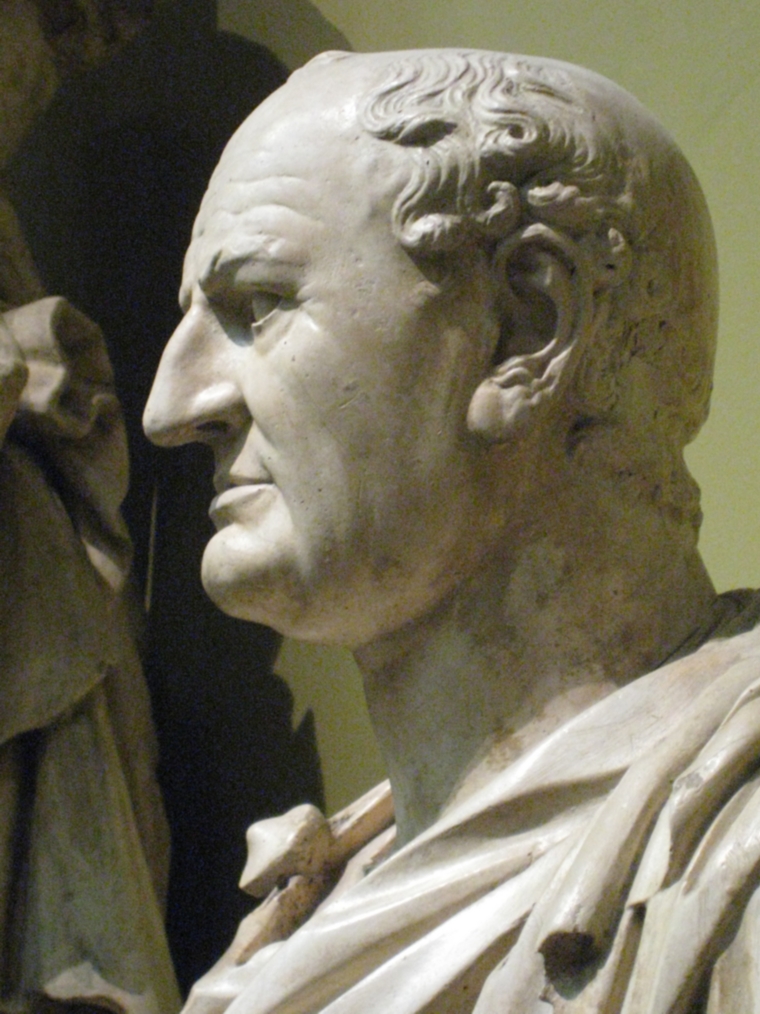
AD 30—Tiberius, who became cruel and mad, was the Roman Emperor when the church was established. Under his reign, right around the time of Pentecost, Rome was filled with terror after the murder of his once trusted advisor turned traitor, Sejanus (tribunesandtriumphs.org). Sanderson Beck comments that he was “preoccupied with sexual and sadistic perversions” the last several years of his life (he is believed to have been murdered)(san.beck.org). Jerusalem was directly governed by Rome. Acts, though probably written in the 60s, begins its historical chronicle around AD 30.

  • Acts 2:41—“So then, those who had received his word were baptized; and that day there were added about three thousand souls.”
  • Acts 4:4—“But many of those who had heard the message believed; and the number of the men came to be about five thousand.”
  • Acts 5:14—“And all the more believers in the Lord, multitudes of men and women, were constantly added to their number.”
  • Acts 6:7—“The word of God kept on spreading; and the number of the disciples continued to increase greatly in Jerusalem, and a great many of the priests were becoming obedient to the faith.”
  • See also Acts 12:24 and Acts 19:20,

AD 62-63—Nero, described as licentious, cruel, tyrannical, murderous, criminal, arson, vain,  perverse (tribunesandtriumphs.org) and, by historian Donald Wesson as a “cross-dressing exhibitionist” (ancient.eu), spearheaded the first organized persecution of Christians (N.S. Gill, ancienthistory.about.com). Tacitus says he blamed the Christians for his own burning of Rome. Many are the accounts of the cruel ways Nero put them to death (eyewitnesstohistory.com). Eusebius reports that Nero put both Paul and Peter to death (Church History, Book 2, Ch. 25). Before his death, Paul would report of such rapid growth throughout Nero’s reign. Peter’s outlook could not have been brighter.

  • Colossians 1:23—“if indeed you continue in the faith firmly established and steadfast, and not moved away from the hope of the gospel that you have heard, which was proclaimed in all creation under heaven, and of which I, Paul, was made a minister.”
  • 1 Peter 1:3—“Blessed be the God and Father of our Lord Jesus Christ, who according to His great mercy has caused us to be born again to a living hope through the resurrection of Jesus Christ from the dead.”

AD 90s—Domitian, best remembered as “the evil emperor who murdered thousands of Christians” (tribunesandtriumphs.org), reigned when John wrote his epistles and the book of Revelation. He was notorious for his cruelty and detachment from reality. John writes Revelation in large part to steady the Christians to withstand the onslaught of persecution caused by Domitian. His message to the Christians during the reign of Domitian was consistent:

  • 1 John 4:4—“You are from God, little children, and have overcome them; because greater is He who is in you than he who is in the world.”
  • 1 John 5:4—“For whatever is born of God overcomes the world; and this is the victory that has overcome the world—our faith.”
  • Revelation 1:6-7—“He has made us to be a kingdom, priests to His God and Father—to Him be the glory and the dominion forever and ever. Amen. Behold, He is coming with the clouds, and every eye will see Him, even those who pierced Him; and all the tribes of the earth will mourn over Him. So it is to be. Amen.”

How bad did things look, from an earthly perspective, during the reigns of evil rulers like Tiberius, Nero, and Domitian? The thing is, the early Christians did not look at things from an earthly perspective. As those trying to walk in the footsteps of New Testament Christians, will we imitate their faith and that perspective?

vespasianus03_pushkin

Some Powerful Promises

Neal Pollard

“You Will Have…”

—Treasure in heaven if you follow Jesus (Mat. 19:21; Mk. 10:21).
—Honor in the sight of all if you are humble (Lk. 14:10).
—Praise of rulers and authority if you do good (Rom. 13:3).
—An answer for the sinfully proud if you are persuaded about the Lord (2 Cor. 5:12).
—Brief tribulation if you are faithful, but then the crown of life (Rev. 2:10).

“You Will Be…”

—Judged in the way you judge (Mat. 7:2).
—Hated by all for Christ’s name (Mat. 10:22).
—Justified or condemned by your words (Mat. 12:37).
—Sons of the Most High by loving unconditionally (Lk. 6:35).
—Repaid for charitable kindness at the resurrection of the righteous (Lk. 14:14).
—Free indeed if freed by the Son (Jn. 8:36).
—Saved by faith in Christ (Ac. 16:31).
—Saved by confessing Christ (Rom. 10:9).
—Able to overcome any temptation (1 Co. 10:13).
—Enriched by being generous (2 Co. 9:11).
—Able to stand firm against the devil’s schemes if you put on the full armor of God (Eph. 6:11ff).
—A good servant of Christ Jesus by pointing out His Word (1 Tim. 4:6).
—Tested (Rev. 2:10).

“You Will Not…”

—Enter the kingdom of heaven without a righteousness surpassing the scribes and Pharisees (Mt. 5:20).
—Enter the kingdom of heaven without being converted like little children (Mt. 18:3).
—Carry out the desire of the flesh if you walk by the Spirit (Gal. 5:16).
—Grieve like the hopeless if you face the death of a faithful Christian (1 Th. 4:13).
—Grow weary and lose heart if you consider Jesus’ example of endurance (Heb. 12:3).

“You Will See…”

—Others faults more fairly when you look accurately at your own (Mt. 7:5).
—The Majesty and power of Jesus if you look with spiritual eyes (Mt. 26:64).
—The glory of God if you believe (Jn. 11:40).
—The King some day (Jn. 16:16-19).

“You Will Know…”

—Teachers by their fruits (Mt. 7:16,20).
—The emancipating truth (Jn. 8:32).
—The hope of God’s calling through faith in His revealed will (Eph. 1:18).
—How to respond to every man if you use gracious, well-seasoned speech (Col. 4:6).
—How to conduct yourself in the Lord’s church if you consult God’s Word (1 Tim. 3:15).

“You Will Receive…”

—All things you ask in prayer, believing (Mt. 21:22).
—If you ask in Christ’s name (Jn. 16:24).
—The gift of the Holy Spirit if you repent and are baptized for the remission of sins (Acts 2:38).
—The reward of the inheritance as the result of works of obedience (Col. 3:24).
—The unfading crown of glory if you are an elder who serves faithfully (1 Pet. 5:4).

In view of just a portion of God’s generosity, may we stand on the promises of God today and every day. One of the most thrilling statements of all Scripture is this: “He who promised is faithful” (Heb. 10:23). Whatever you are struggling with, claim this ironclad fact with its many implications! Holding onto it, surely you can handle any trial, temptation, or trouble you are facing.

pexels-photo-42379

Identifying The Source Of Trouble In The Congregation

Neal Pollard

One of my dad’s most memorable sermons, which he preached in more than one location, was actually a two-parter.  The first part was preached Sunday morning. Dad warned that he was going to identify the source of the problems in the congregation. He used a wipe board or chalkboard, and only put the first initial of each one up there as he preached. He said that everyone should come back that night and he would disclose the full names that went with the initials.  At one congregation, after the morning sermon, a large number of people came forward in response to the invitation.  Sure enough, that evening dad put the full names next to the initials:

  • Accuser of the brethren (Rev. 12:10)
  • Adversary (1 Pet. 5:8)
  • Beelzebub (Mat. 12:24)
  • Belial (2 Cor. 6:15)
  • Devil (Heb. 2:14)
  • Enemy (Mat. 13:39)
  • Father of lies (John 8:44)
  • God of this world (2 Cor. 4:4)
  • Prince… (Eph. 2:2; John 12:31)
  • Roaring Lion (1 Pet. 5:8)
  • Satan (Mat. 4:10)
  • Spirit that works in the sons of disobedience (Eph. 2:2)
  • Tempter (Mat. 4:3)

Now, in no way am I discounting the free will choices people make. James 1:13-15 very clearly places the blame of sin on the individuals choosing to act on their lusts and desires. One is not possessed or overtaken by the devil to do his will any more than a person is overtaken by God and made to do what’s right. But Jesus calls the devil the “father” of sinful behavior (John 8:44). John tells us that the one who practices sin is “of the devil” (1 Jn. 3:8). Those who sin are doing his will (2 Tim. 2:26).

Satan is at the heart of national, congregation, familial, and individual sin.  We’re told to resist him (Jas. 4:7; 1 Pet. 5:9). The hopeful fact is that, with God’s help, we can always successfully do so.  Let’s be aware that the devil does not want God’s children or His work to succeed. If he can thwart our efforts as a church to be united, faithful to God’s Word, evangelistic, and productive, he will do so. Knowing this, we should be more determined not to let him win!

lion-692219_960_720