The Volunteer Fire Department

Monday’s Column: Neal At The Cross

Neal Pollard

According to the National Fire Protection Association (NFPA), fire departments received 36,416,000 calls to respond in 2020. That included over 23 million for medical aid, 1,388,500 for fires, 750,000 for hazardous materials, and 5,938,500 for other hazardous conditions (NFPA Study). While a relatively small percentage of calls are actually to fires, firefighters leave with a mindset to save a life every time they respond to a call. A study by Hylton Haynes finished in November 2017 for NFPA research, there are 29,067 fire departments in the United States (NFPA Study II). With the total U.S. population above 330,000,000, that’s over 11,000 people for every fire department. But, no community would feel safe without trained firefighters living there. If we could pick the way we died, I can’t imagine any of us would choose death by fire. 

Jude paints a dramatic picture in verse 24 of his short epistle, calling on Christians to “save others, snatching them out of the fire.” That fire is “the punishment of eternal fire” (7). We are talking about a fire which God prepared for the devil and his angels (Mat. 25:41), but will use to punish the spiritually ignorant and the disobedient (2 Th. 1:7-8). It is unquenchable (Mark 9:43). It is a lake of fire (Rev. 20:14-15) that burns (Rev. 21:8). While it is hard to imagine that any would choose that fate, Scripture says the majority will (cf. Mat. 7:13-14; 25:46). So, God enlists you and me as volunteer firefighters. The thing with this fire is that people do not experience tangible warnings of it through their skin or lungs, telling them that this fire is encroaching. The only way to perceive this is with the heart, mind, and the eyes of faith. God is counting on us to appeal to those in danger through these means. God has given us the firefighting equipment we need through His Word and our lives as living examples of that Word. Though many incredibly do not want to be rescued, others do! The exhortation is to “snatch” those in danger of fire, to “grab or seize suddenly so as to remove or gain control; to snatch or take away” (BDAG 134). We cannot forcibly rescue anyone, but we must remain vigilant to pull out of the fire all who would welcome our intervention. 

Society still holds firefighters in high regard and few if any argue against the need for their existence. It is good for us to remember how God regards His children who are firefighters and how much He is relying on us to stay at that job (Dan. 12:3; 1 Cor. 1:21; Jas. 5:19-20)! Let’s keep working on our skills and improving our abilities to “save others, snatching them out of the fire.” Those rescued will be eternally grateful! 

via PxHere (Creative Common)

Proclaiming the Lord’s Death Until He Comes

Friday’s Column: Brent’s Bent

Brent Pollard

Though worship consists of five elements that worshipers may or may not participate in during every assembly of the saints, the one aspect of worship receiving the most attention on Sunday, at least, is the Lord’s Supper (aka Communion or Eucharist). One might say this is because the observance of the Lord’s Supper is exclusive to Sunday, or should be. However, I think we forget that giving of our means was commanded on every Sunday as well (1 Corinthians 16.1-2). So, it is not the relative rarity of this action compared to singing, prayer, and Bible study, making it precious to us. Instead, it is the purpose and meaning of the Lord’s Supper. 

The Lord’s Supper is an item of worship that is horizontal and vertical in its scope; it is something done to demonstrate our relationship with God and our fellow Christian. Though not as often referenced concerning the Lord’s Supper as 1 Corinthians 11.23ff, Paul highlights the communal aspect of the Lord’s Supper in chapter 10. He states that we cannot partake of the elements of the Lord’s Supper with our Lord and likewise eat and drink at the table of “demons” (10.21).  

Contextually, Paul’s words refer to the issue of dining in a pagan venue, even while professing that pagan gods are not real. The Corinthian Christians could not engage in activity, implying they shared the same faith with pagans. Even if they knew that those gods were not real, they created misunderstanding among the pagans and other Christians. So, while we commemorate our Lord’s death, burial, and resurrection with the Lord’s Supper, we share in the same hope and devotion towards the same.  

Yet there is another characteristic of the Lord’s Supper, making it precious to us. The Lord’s Supper provides us with the opportunity to evangelize. Paul states that this memorial feast is one we will keep until our Lord returns (1 Corinthians 11.26). And the very fact that we engage ourselves in its observance proclaims “the Lord’s death.”  

I am mindful of the opportunity presented by the Passover to fathers in their children’s instruction (Exodus 12.24-27). When the children asked, “Why do we observe this rite?” the fathers could explain the Passover and God’s deliverance of the children of Israel. So likewise, the child or visitor may ask, “Why do you observe the Lord’s Supper?” Or “Why do you observe the Lord’s Supper weekly?” In response to these questions, we can proclaim the Gospel of Jesus Christ.  

Despite being viewed as the “centerpiece” of the Sunday assembly, it seems odd how swiftly some congregations seem to fly through their observance of the Lord’s Supper. As it is a door to evangelism, one would think we should linger longer therein. Not only would the time of special communion be extended, but it could serve to plant seeds in good soil, which, if watered by Bible study, will enable God to provide an increase.  

So, next Sunday, as we observe the Lord’s Supper, let us remember everything making it a memorable feast, including personal introspection (1 Corinthians 11.29-31). We will demonstrate our fellowship with our brethren and the Lord. And we can use the time evangelistically. Therefore, let us provide non-Christians an opportunity to learn about the Gospel as we partake of the bread and drink the cup.    

Calling On And Looking To Jesus

Friday’s Column: Brent’s Bent

Brent Pollard

For practitioners of Japan’s True Pure Land Buddhism, one desires to enter the pure land upon death. In so doing, he could bypass our corrupt world and enter the western paradise where he could quickly achieve nirvana. Conversely, True Pure Land Buddhism has a hellish alternative in which souls are tortured by oni (i.e., demons) until they are purged of their sins and can enter the Pure Land. No one desires torture. So, the Japanese would recite the nembutsu: “I call on the Amida Buddha.” In medieval Japan, practitioners of True Pure Land Buddhism would lay on their deathbeds holding on to a string as an added measure. That string led to a painting of Amida and his cohorts. As they looked longingly towards the picture, they hoped that their escaped soul would travel the line and enter the western paradise. 

It may be that upon reading the previous paragraph, you thought of the apostle Paul in ancient Athens. He told the men of Athens that he perceived them as superstitious, literally δεισιδαιμονεστέρους—“very fearful of gods” (Acts 17.22). As Japan is often called the home of eight million gods, with the Buddhas incorporated into the mix, it is easy to label the Japanese as superstitious. Yet, I note something different when I hear about this True Pure Land Buddhism. It would almost seem that True Pure Land Buddhism rubbed elbows with Christianity somewhere. It is conceivable since Pure Land Buddhism arose in India during the second century A.D. before making its way to east Asia. However, note two intriguing features of True Pure Land Buddhism reminding one of Christianity. 1) Calling on Amida’s name and 2) Looking to Amida for hope. 

Joel prophesied that those calling up the name of the Lord would be saved (Joel 2.32). Peter and Paul quote this verse from Joel’s prophecy regarding salvation within the New Covenant (Acts 2.21; Romans 10.13). So, there is most assuredly power in the name of Jesus Christ. Peter says there is “no other name under heaven that has been given among men by which we must be saved” (Acts 4.12, all ref. NASB1995 unless otherwise indicated). But calling on Jesus’ name is not like reciting a nembutsu. Paul shows us that we call upon the name of Jesus when our faith moves us to action. After seeing Jesus on the road to Damascus, Paul has been fasting and praying for several days. The prophet Ananias finds Paul in his misery and says, “ Now why do you delay? Get up and be baptized, and wash away your sins, calling on His name” (Acts 22.16 NASB1995). See then how Paul called on Jesus’ name. Paul submitted himself to baptism for the washing away of his sins. In so doing, Paul called on the name of Jesus. 

Do we not also look to Jesus to give hope? Well, we do not stare at an artist’s rendering of the Christ upon our deathbed. But we do look to Him in life as our hope. After citing many examples of those from whom we could find a worthy model of faithfulness, the Hebrews’ writer adds: “Fixing our eyes on Jesus, the author and perfecter of faith, who for the joy set before Him endured the cross, despising the shame, and has sat down at the right hand of the throne of God. For consider Him who has endured such hostility by sinners against Himself, so that you will not grow weary and lose heart” (Hebrews 12.2-3). The KJV says we look to Jesus. Either way, our eyes are drawn to and become fixated upon Him. This hope we have in Jesus is an anchor for the soul (Hebrews 6.19). 

It remains a challenge to preach the Gospel in those parts of the world where Buddhism has taken root. I’ve heard missionaries remark of the antagonism against Christianity within the Buddhist world. Yet, it seems strange that within at least one branch of Buddhism, there is a central figure who is something of a Messiah. Considering that so much of Buddhism asks you to find salvation from within yourself, there are at least some within that belief system who recognize the nature of the human condition is such that we must rely on the grace of someone greater. Therefore, even in hostile environments, may we endeavor to preach that the One willing and able to save is the Lord Jesus Christ. Let us tell the world to call upon and look to Jesus.

courtesy via Flickr


Bring Your Thinking Cap

Wednesday’s Column: Third’s Word

Gary Pollard

Today’s article may be a little chaotic. It’s about something not well-defined or understood, and its solution is unknown to me. This article will hopefully serve as a target; it’d be good to have lots of Christian minds brainstorming solutions to this issue.

Just about everyone’s had THE virus. I’ve had it once for sure, maybe twice. It don’t mess around. I started developing symptoms after recovery that, apparently, quite a few people have developed. It’s commonly called Long Covid or PASC. Symptoms include fatigue, cognitive difficulties, decreased mobility, respiratory and cardiological issues, pain, malaise, and many others (psu.edu). You probably either know someone dealing with this now, or are dealing with it yourself.

Research is not super easy to get ahold of, and what I could find was either low-quality or not peer reviewed. Its existence isn’t really contested, but little is known about its prevalence. Best I could find was that about 43% of those who recover will experience Long Covid. Many haven’t recovered after almost two years!

My concern with this is its potential effect on faith. Things like driving at night, interacting with lots of people, spending time together outside of worship, church events, service projects, teaching/preaching/song leading, evangelism, etc. are part of our Christian life. While some of these can be difficult on a good day, they’re now practically impossible (or significantly more difficult) for people with Long Covid.

The church has always had members with chronic, debilitating diseases. Normally, our shut-ins are a very small percentage of overall membership. With Long Covid often compared to the effects of chemotherapy, this number is likely to grow significantly. If roughly half of our recovered members end up with these long-term effects, how do we address this?

Since it affects both young adults and senior citizens, how do we navigate its impact? What can members who now have Long Covid do to stay active in their churches? While living with a chronic health condition is no cake walk, those of us who do are at least mentally equipped to accept it. Members who enjoyed good health before Long Covid are struggling to adapt to this change.

At some point in the near-ish future, I hope to write an article with potential solutions. It will be geared toward those who’re experiencing major health issues for the first time. In the meantime, it wouldn’t hurt to do a lot of praying, planning, brainstorming, and creative problem solving. Nothing’s too big for God, and we’ll find a solution with his help.

Ignorance And Inoculation

Neal Pollard

Stephen Coss, author of The Fever of 1721: The Epidemic That Revolutionized Medicine and American Politics, relates the fascinating story of the first widespread inoculation effort in the fight against the deadly plague of smallpox. At a time when medical practice was steeped in vast misunderstanding and wrongheaded medical treatments (more than half a century later, George Washington’s doctors would facilitate his death by treating his cold and fever through bloodletting!), two unlikely men were able to withstand the withering criticism of the local medical community and superstitious Boston residents who adamantly vilified them both. One was a physician, Zabdiel Boylston, ostracized, threatened, and condemned by his peers and the town’s council. The other was Cotton Mather, forever infamous for his superstitious influence in the Salem witch hunt and trials that led to the execution of over 20 innocent people a quarter-century earlier. Both believed that by infecting a person with a small amount of smallpox, they could prevent death and even a serious, scarring case of the frightening disease. No less than young Benjamin Franklin piled on with criticism and satire against the two men’s campaign, but both were ultimately vindicated as the inoculations proved far superior in saving lives in Boston’s deadliest smallpox outbreak. It took a lot of courage and conviction for these men to persist in the face of resistance from the highest places of their society.

What if there was a disease that threatened one hundred percent of the global population, one that proved one hundred percent fatal if untreated? What if there was a remedy available that was proven to save every patient from otherwise certain death? What if you knew it worked? Would you have the courage and conviction to offer it to the infected, even in the face of intimidation and threat?

Over 600 years before Christ, a prophet wrote, “Is there no balm in Gilead? Is there no physician there? Why then has the health of the daughter of my people not been restored?” (Jer. 8:22). The balm of Gilead, who was also the Great Physician, came to be the remedy and administer it to the willing (Mat. 9:12; Mk. 2:17; Lk. 4:23; 5:31). He left us in charge of offering this remedy and trying to prevent spiritual death (Jn. 8:21,24) in as many people as possible. Most will reject or at least ignore the offer, unaware of the gravity of their condition. That cannot deter us! Jesus is counting on us to apply His blood to rescue the perishing and care for the dying. A day is coming when there will be no more remedy (cf. 2 Chron. 36:16), but we must be out sharing it until that moment! There are people out there searching for a cure (Mat. 7:7-8). Whatever it costs us, let’s not stop until we’ve helped as many people as we can!

Painting of Zabdiel Boylston

What I Saw On Sunday

Monday’s Column: Neal At The Cross


Neal Pollard

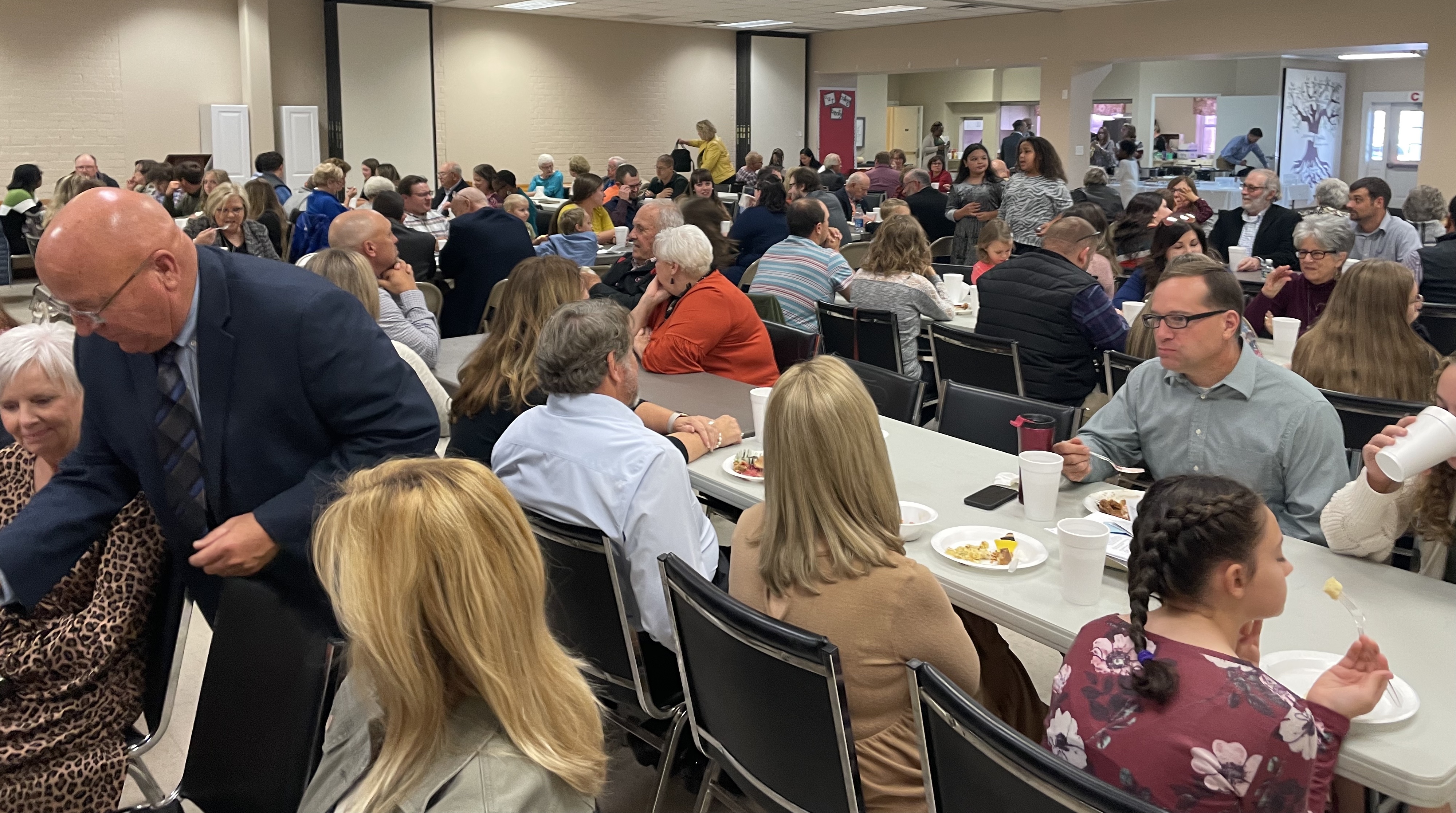
It was our largest crowd since before the Pandemic. It was a targeted effort to fill the building. The building was full! I asked several how many non-members were present and the most conservative answer was dozens, perhaps fifty. While we know that filling the pews is only one factor in encouraging people to follow Jesus (discipleship), it is a pretty fundamental and important one. Let me share a few exciting things I saw.

I saw the power of an invitation. The elders laid out a challenge to us to invite every non-member we could think of, coworkers, family members, friends, classmates, acquaintances, etc. That’s not revolutionary. Perhaps it was the sheer volume of invitations so many members issued. Such seeds were spread far and wide, and Sunday was an indication that some will come if asked. I am confident that many who were invited will come in the future, if we continue to ask. Philip invited Nathanael to “come and see” (John 1:46), and it changed Nathanael’s life! Andrew told his brother, Peter, “We have found the Christ” (John 1:41)! It changed not just Peter’s life, but the thousands of lives Peter eventually touched. Who knows the eternal impact made by all the invitations issued this weekend, but it shows that there’s still power in a simple invitation!

I saw the strength of teamwork. That was on display in so many ways. There was a huge team of people greeting those who entered our doors. Anticipating a lot of visitors, this was organized beyond the ordinary measure. It was exciting to see so many doing this, and it seemed to be infectious. Others joined in. It was evident in the efforts of multiple deacons and vision groups coordinating various works. It extended to members in the auditorium warmly welcoming unfamiliar faces and making our visitors feel at home. It continued on to the potluck after Bible class with the scores of people bringing an abundance of food, serving, assisting, and cleaning up. We were a finely-tuned machine of coordination. I could not help but think of Paul’s words, to Philippi (“make my joy complete by being of the same mind, maintaining the same love, united in spirit, intent on one purpose,” 2:2) and Colosse (“beyond all these things put on love, which is the perfect bond of unity,” 3:14). Sure, he had more in mind that one event on one day, but this is a key way such overall unity is built. 

I saw the example of leadership. This began with the eldership. They not only challenged us to invite, they led the way. It’s not an exaggeration to suggest that the four of them invited hundreds of people by text, phone, and face-to-face. They invited friends, family, acquaintances, and strangers! True leadership shows the way! This included those who led in worship. There was forethought, effort, and coordination from the greeting to the announcements and every act of worship in between them. This involved the membership who enthusiastically engaged in the worship. It also takes in every one that helped people find bathrooms and classrooms. Leadership always breeds more leadership. The writer of Hebrews says, “Remember those who led you, who spoke the word of God to you; and considering the result of their conduct, imitate their faith” (13:7). 

I saw the hope of tomorrow. The effects of the last 18-plus months have been deflating and demoralizing. We have lost members to Covid, physically and spiritually. It has derailed plans. It has distracted us. But Sunday showed that by faith in God and by following His plan, the best is yet to be! As we were reminded at the end of the day yesterday afternoon, we have worship every Sunday so let’s keep inviting. How many Bible studies will result from inviting others to church? How many future preachers, elders, deacons, soul-winners, and Bible class teachers are represented in those who walked through our doors yesterday, some for the first time ever? To some degree, we’ve got to be like Paul and say, “forgetting what lies behind and reaching forward to what lies ahead, I press on toward the goal for the prize of the upward call of God in Christ Jesus” (Phil. 3:13b-14). 

There’s more to do! There’s more inviting to do. There’s more follow up to do. But I see more than a special event in what occurred on Sunday! I see a culture change and a purposed people. Think what God can do with that!

Bring ‘Em Back Alive

Tuesday’s Column: Dale Mail

image

Dale Pollard

Frank Buck was a true adventurer. He lived in 1900’s and would travel all over the world bringing back all kinds of exotic animals. What set him apart from others in his profession was that he didn’t shoot the animals and bring back their stuffed skins. In Frank’s mind, anyone  could gun them down, but who would dare bring back a lion or a rhino— alive?

Frank Buck  probably didn’t know it, but he was very scriptural in his approach. Jesus sent us out to seek and to save the lost, not to destroy them. It seems as though some may have forgotten that key element. That infamous Wild West poster we see in movies reading, “WANTED! DEAD OR ALIVE” doesn’t fit the biblical model for evangelism.

 Soul-winning is about leading others to Christ. It’s not about winning the argument or flexing our vast amounts of knowledge. It’s not about proving someone how ignorant and wrong they are. It’s not about showing others how impossible we are to defeat in the match of verbal fisticuffs. It’s about saving their souls. Jesus is looking for those gutsy followers. The ones who are willing to take action and get out there! The Greek word “ZOGREO” only appears twice in the New Testament, as far as I know. The word literally means, “to take alive.” 
 
In Luke 5:10 the word is used to express one being taken alive for God. In 2 Timothy 2:26 Paul would us the word when talking about those who have been taken captive by the devil. These two verses remind us that all will be taken somehow. Some from life to death, others from death to life. Matthew 28 is the Great Commission, our permission to baptize people for the remission of their sins. You can be that gutsy follower since Jesus said He’s going to go out with us, “even to the end of the world.” Let’s get out there and bring ‘em back alive. 

We Are Not Doing Right” (2 Kings 7)

Monday Column: Neal At The Cross

pollard

Neal Pollard 

There was a famine in Samaria and everyone was desperate. The need for food was more pressing than the danger they faced in looking for it. Elisha predicted the end of the famine but Jehoram’s right hand man refused to believe it could happen so quickly. The prophet tells him he’d see it happen but that he would not eat of it (2).

Four lepers decided to throw themselves on the mercy of the Arameans, but God caused the besieging army to hear the sound of enemy armies. They imagine the worst and leave their camp in pursuit. So, when the lepers arrived at the camp, it was abandoned. They found food and riches beyond their wildest imagination. They start to hoard and gorge themselves, then had second thoughts. They say to each other, “We are not doing right. This day is a day of good news, but we are keeping silent; if we wait until morning light, punishment will overtake us. Now therefore come, let us go and tell the king’s household” (9). Several things stand out here.

THESE MEN HAD GOOD NEWS.

IT WAS WRONG FOR THEM TO KEEP SILENT ABOUT IT.

THEY EXPECTED PUNISHMENT IF THEY DIDN’T URGENTLY SHARE IT.

THEY ADMONISHED EACH OTHER TO TELL IT.

They did and they helped save the nation. God caused it to happen but He worked through these four lepers. The famine ended (and the royal officer was trampled at the gate—he saw the famine end but died before it could benefit him).

I am reminded of my task as a Christian, one spiritually sick with sin but in a similar situation. I have found good news. It is wrong for me to keep silent. I must not just share it but do so urgently! I also need to admonish you to realize you are in the same predicament as me. You cannot afford to keep silent! A feast awaits! 

7000 Chances

Friday’s Column: Captain’s Blog

carl emily truck


Carl Pollard

Research shows that the average person speaks at least 7,000 words a day, while many (you know who you are) speak much more than that. Think about what that means. 7000 words that will leave an imprint on those who hear. That’s an incredible opportunity that we are given…or maybe it’s a bad thing?
 
How do we use our words? As Christians those 7000 words should help us fulfill the command given to “make disciples” (Mt. 28:18-20). That begs the question, what should those 7000 words contain? Even more, what am I saying with those words?
 
We have the responsibility to share the good news with others, so what are my words doing to help accomplish this goal? Colossians 4:6 tells us what our daily speech should consist of. But first, notice the context. Colossians 4:5 says, “walk in wisdom towards outsiders, making the best use of the time.”
 
We have been called to make the best use of the time. Ephesians 5:15-16 reads, “Look carefully then how you walk, not as unwise but as wise, making the best use of the time, because the days are evil.” How do we do this? Colossians 4:6 tells us it’s by talking the right way. “Let your speech always be gracious, seasoned with salt, so that you may know how you ought to answer each person.”
 
If we want to walk with wisdom and be effective towards those in the world, we must use the proper words. As Christians, our speech should be attractive. “Let you speech always be gracious.” Gracious is defined as, “A winning quality or attractiveness that invites a favorable reaction.” What does it mean to look attractive? We use this word to describe someone or something that has favorable qualities that we enjoy. Applying that to our speech, it must ALWAYS be described this way. There should never a moment where we stop.
 
Ephesians 4:29 says, “Let no corrupting talk come out of your mouths, but only such as is good for building up, as fits the occasion, that it may give grace to those who hear.” We want people to leave conversations feeling better than when they first saw us. We want people to see Jesus in our speech.
 
We must always try our best to use attractive words. Always look for ways to encourage and help others with our speech. This means on the internet or in person. Our words are attractive when they are sincere and honest. We are called to have attractive speech, and the words we use must be genuine and real. Not saying them to sound holy or to look good, but out of love and concern for the souls of those who hear.
Got to see these two Huntsville area preachers and their lovely wives Wednesday night.

Are You Ready?

Jeremy Waddell

jeremy talking

A lot of you do not know this about me but I grew up on a dairy farm. Holstein cows were a part of every day of my life up until about five or six years ago.

I have milked, showed, studied, and researched cows for years and invested so much time, effort and even money into cows. I can answer almost any question and have a deep conversation at any moment and can be confident in my answers when it comes to a Holstein cow… who won the show, who owns it, where it came from, her genetics.

The thing is… cows are no longer part of my life. I still have all that knowledge that worked so hard for, but it is basically useless in my everyday life.

Most people I deal with today would think I was crazy and probably take offense if I came up and asked what they thought about the rump and legs on that cow.

The need for that knowledge faded away just like every other earthly thing will and does for each of us.

I am sure we all have things in our life that seemed so important at one time and that we have moved on from. It faded away and was not near as important as we thought it was. Things of this earth will always fade away at some point.

God, Jesus, and the Bible does not fade away and never will!

1 Peter 1:4 tells us that God has given us an inheritance that is incorruptible and undefiled and that does not
fade away. It is reserved in heaven for each of us because of the blood that Jesus shed for us. We should have the same knowledge and confidence in the Bible and about Jesus that we have about our hobby or job or whatever else it is that consumes our time and know that it will never become useless. If anything, it should get more and more important in our lives.

We should be able to have:

-Have a conversation about Jesus and not be nervous
-Be confident in answering questions about the Bible
-Quote scripture and passages from heart just as we can the facts about our hobby or job and whatever interest we have that consumes us on a daily basis.

1 Peter 3:15 says, “But sanctify the Lord God in your hearts, and always be ready to give a defense to everyone who asks you a reason for the hope that is in you, with meekness and fear;” God has given us everything we need to be prepared to win souls AND to save our own soul.  2 Timothy 3:16-17 tells us, “All Scripture is given by inspiration of God, and is profitable for doctrine, for reproof, for correction, for instruction in righteousness, that the man of God may be complete, thoroughly equipped for every good work.”

We need that same knowledge, passion, and fire for studying the Word of God and being the “workman” that we are for our hobbies and earthly things. Being able to teach anyone at any time about Jesus and have ready answers for them. There are people out there that want to hear about Jesus. We need to be ready and able to talk to them, teach them and most importantly be an example to them. Remember: ““Study to show thyself approved unto God, a workman who does not need to be ashamed, rightly dividing the word of truth” (2 Tim. 2:15). 

  • –  Are you the worker God wants you to be?

  • –  Are you ready to use the tools He has given you? The Bible, your abilities and talents

  • –  Are you ready to put in the time and effort that you need to to be the Christian that

    God wants you to be? To study and learn from something that will never fade away or become useless.

Listen! 

Tuesday’s Column: Dale Mail

Daleheadshot

Dale Pollard

Listen! That’s how Jesus starts His lesson in Mark 4:3. He has just stepped out onto a boat so that He could speak to the large crowd that had gathered to hear Him. This was a very special sermon. Jesus is going to give the secret to all of His parables by telling a unique parable about the farmer who goes out to sow on the various kinds of ground. When Jesus said “Listen!” He was talking to a specific kind of person. 

He wasn’t interested in the one who would hear His words and then fall away later when called to stand up for their faith. He wasn’t looking for the one who would hear His words and then foolishly decide that this world had more to offer. 

Jesus said “listen!” because He knew that some would hear His words and those words would change their lives. They would live out His teachings. They would become those lamps He would later discuss later in the chapter. Those who truly listened to this specific sermon and took it to heart would bear fruit. It’s humbling to think that some only believe they’ve listened to Jesus, but on the last day will find out that they only thought they listened (verse 25). 

Are we listening to the Savior? One way Jesus tells us we can know if we and others are listening is by looking at the fruit being planted. This section of scripture is a great reminder that there are many who will not hear the Lord and His life-changing and life-saving message, but there are also those out there in our communities who are willing and waiting for us to share Him with them.

THE CHURCH’S OPPORTUNITIES

Monday’s Column: Neal At The Cross

Neal Pollard


No pandemic or problem can suppress or destroy the church’s opportunities. If it could withstand the withering attacks of persecution in its first few centuries, the body of our Lord can come through this current storm stronger than it was before. The church’s opportunities are limitless because…

  • The gospel is still powerful (Rom. 1:16). 
  • Christ is still the Savior of the world (1 John 4:14). 
  • The church is still the manifold wisdom of God (Eph. 3:9-11).
  • The mission is still in force (Mat. 28:19).
  • We still have the only answer to the world’s biggest problem (Rom. 5:6-10). 
  • We can demonstrate the most powerful attraction of discipleship (John 13:34).
  • His kingdom will never be utterly shaken or destroyed (Dan. 2:44; Heb. 12:28). 
  • The recent crisis has awakened a sense of purpose in so many Christians.
  • Heaven is as desirable as ever and hell as unwelcome (cf. Mat. 25:31-46).
  • We know we are bigger than pettiness, division, and senseless strife (1 Cor. 1:10-13). 
  • Man still senses that life is bigger than a few years on this earth (Ecc. 12:13-14).
  • Hope still serves as an anchor for the soul (Heb. 6:19). 
  • The world has no viable competition to what only Jesus can give (1 John 4:4; 5:4). 
  • We are not ignorant of the devil’s devices (2 Cor. 2:11).
  • There is no substitute for fellowship, the assembly, and corporate worship and study (Heb. 10:24).
  • We may appreciate the importance of relationships like never before (Rom. 12:3-21).

Truly, this list is much longer, but suffice it to serve as a reminder that these need not be “the worst of times.” God can make them the best of times as we move forward, eyes fixed on eternity and the wonderful work between here and there. Let’s seize those opportunities (Gal. 6:10)! 

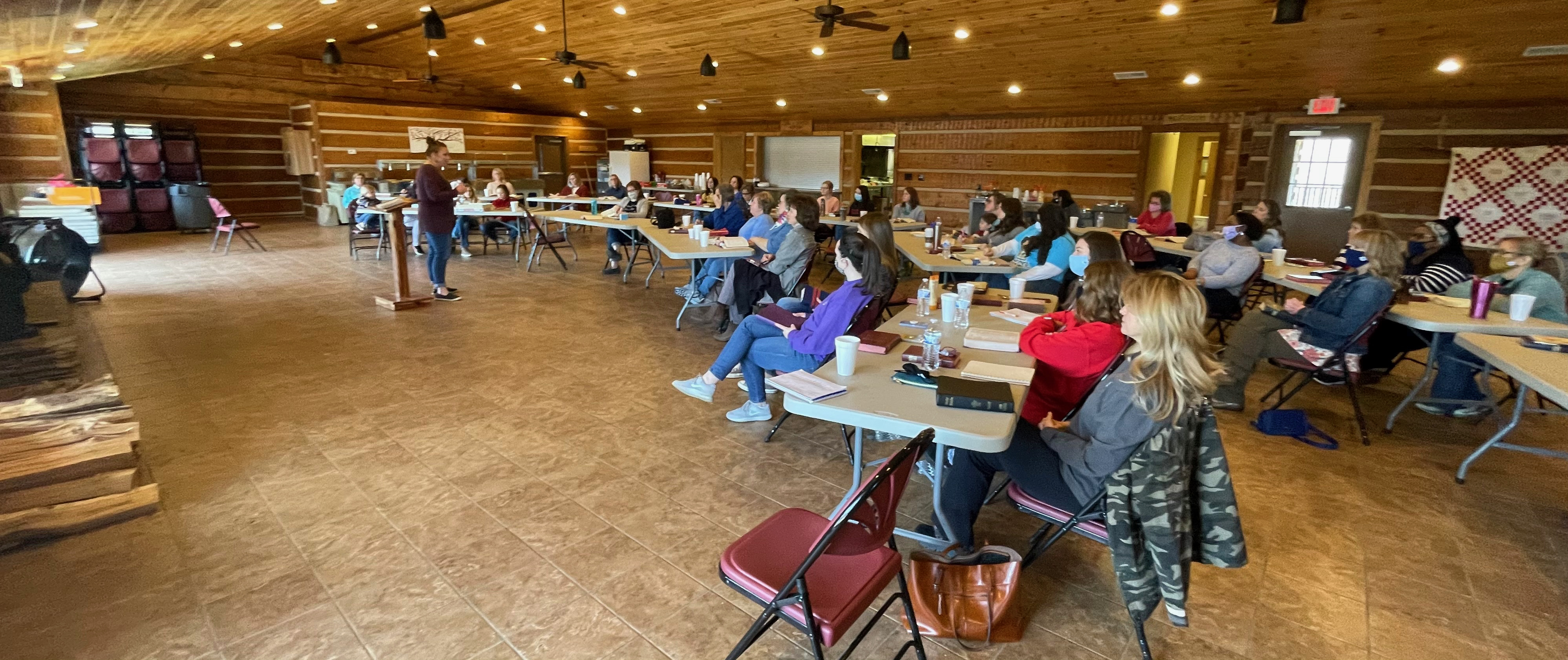
Saturday morning’s Ladies Retreat with guest speaker, Whitney Watson, of Corsicana, TX. Over 60 were in attendance Friday and Saturday.

The Prime Objective

Such powerful words describe it.  The words “convert,” “save,” “restore,” “recover,” and the like depict the job God left Christians to do (cf. Gal. 6:1; 2 Tim. 2:26; Js. 5:19-20; etc.).  The awesome business of God’s people is to be builders in the kingdom upon a foundation originating in eternity (1 Cor. 3:9-15).  Each child of God is a private engaged in spiritual warfare against a tactician only God has the power to defeat (Eph. 6:10ff).

There is ample reason to be filled with excitement and dread at the task before us!  God has entrusted the business of snatching souls out of eternal fire and transferring people out of darkness into His marvelous light to us earthen vessels (2 Cor. 4:7).  The moment we come out of the waters of baptism, we rise to walk in newness of life (Rom. 6:3-4).  That life entails culling out negative things, bad habits, poor attitudes, old ways of living.  Yet, it also calls for actions and ambitions that a non-Christian could not begin to comprehend.  The sign of genuine faith taken root is the desire to share the good news we ourselves have learned.

Soul-winning is the frontline focus of the family of God.  All else that we do should be an extension or support of this primary work.  Benevolence, though done simply for its own sake, can be a springboard of evangelistic opportunity.  Fellowship is designed to not only build up the saints, but be an atmosphere — be it worship or fellowship outside the corporate assemblies— that honors God and creates hunger and thirst for righteousness.  Non-Christians who come to our assemblies can then believe (cf. 1 Cor. 14:23-24).  They share our company, see the light of Christ in us, and want the joy and peace that the world cannot provide (John 14:27; Mat. 5:16).  

Everywhere we go, mingling in groups and having various associations, there are opportunities.  There is that person who seems to stand out from others who are more frivolously engaged in life.  There is the one who, when others have long shut their ears to truth, is open-minded enough and respectful enough of truth to believe and accept the Bible.  A song that is used in many soul-winning campaigns is Lead Me To Some Soul Today.  God is not going to “lay” anything miraculously on our heart, leading us through some direct operation to some particular person or to say some particular thing.  Yet, providentially, He can open doors that leads us to find the one in search of God’s way.  Our active desire should be to cultivate our hunger and optimism for this great, primary work of the church.

With all else to distract us or compete with our attention and affection, may we never forget the prime objective! We are saved to save (2 Tim. 2:2). Find the searcher and lead the lost! It’s why we’re here. 

“It’s Not About Me” In 1 Peter 3 (Part Two)


Wednesday’s Column: Third’s Words

Gary III

Gary Pollard

 
1 Peter 3.8ff is a passage with tons of application. What I’d like to do is simply break it down and apply as we go.
 
3.8 –   Is addressed to every Christian, as opposed to the gender-specific commands of the previous section. Christians are told to have a unified mindset, understanding of the needs of others, affection for each other, compassion for each other, and a sober view of self.
 
3.9 – In the context of being ridiculed or outright persecuted for faith, we’re commanded not to stoop to a hostile person’s level. Instead, we are only to say good things to and about them. The word for “bless” here would be like us giving a glowing review of someone, even when they’re hostile to us. Why? Because God promised us a glowing review, even though our lifestyle was hostile to Him before we were faithful.
 
3.10-12 – If we want to have good days, we have to control our tongues, reject evil, and actively do beneficial things for others. If we do, God looks at us with approval. If not, He is against us.
 
3.13 – If we pursue doing good things with energy, no one can say anything against us. Who can assault the character of someone passionate about bringing good into others’ lives?
 
3.14But even if they do is a contrast not as plainly seen in English. This verse starts with a powerful contrastive (αλλα) that points to how we should act in the face of totally unwarranted hostility. Even if our pursuit of good gets us in trouble, we can still be happy! Even in this life we cannot lose. We cannot let fear dictate our behavior, and we cannot let anyone’s intimidation cause us to react with hostility.
 
3.15 – Instead, we should make the most special place in our heart God’s place. We don’t serve fear, we serve God. If someone shows hostility to us when we’re doing good, we have to be ready to give a rational explanation for our hope with an attitude that proves our supernatural allegiance. Our fear of God must be greater than our fear of man.
 
We do this because our goal is to bring others to God! It’s hard, but we can only do it when we remove self from the equation. People tend to attack what they do not understand. By using reason and by restraining our emotional response, we can help save their souls. We were all hostile to God at one point, but we now have mercy. Being controlled and rational while under “attack” is not a normal human response. Our response can mean the difference in someone’s eternal destination!

Not So Common Courtesy 

Friday’s Column: Brent’s Biblical Bytes

81121814_2462862270639428_5746232403106463744_n

Brent Pollard

The folks at Merriam-Webster define “common courtesy” as “politeness that people can usually be expected to show.” 1 One notes that courtesy doesn’t seem as ordinary as it once was, at least in the West. In the more collectivist societies of the East, people prize social harmony more than individualism. When you have millions of people packed into a metropolis, I suppose such a mindset is essential for survival. However, it translates into an attitude that suggests that I take great care not to upset or inconvenience the people around me. 

I got to thinking about common courtesy as I was driving along a stretch of U.S. 129/U.S. 19 in the northeast Georgia mountains. Since slower traffic is expected, especially during tourist season, planners provided periodic passing lanes to allow for those conducting everyday business to pass the leaf-gawkers. For the spaces in between, these planners likewise added pull-offs for slower vehicles to pull off and let the faster traffic get by. Most of the time, this traffic arrangement works out nicely. However, you do encounter the occasional driver who lacks the aforementioned common courtesy, as I did when recently getting stuck behind a truck pulling a horse trailer hauling several horses.   

As Christians, we are to extend courtesy as a matter of faith. Paul tells us that we are to esteem others before self and be as mindful of them as ourselves (Philippians 2.3-4). As lovely as that is when taking an earthly journey, we see how the mindset also benefits the heavenly journey. No, I am not saying that the act of utilizing a pull-off will win a lost soul to Christ. What I am suggesting, though, is that people take notice of how we conduct ourselves. As Edgar Guest famously stated, people desire sermons they can see. Since a courteous person is already mindful of others, it is but an extra step for him or her to adopt a servant’s heart. Note that following his admonition to esteem others first, Paul transitions to telling us about needing the servant-mind of Christ (Philippians 2.5-8). 

With whom are you more likely to strike up a conversation? A rude person or a courteous one? Through the extension of common courtesy, you make yourself more amiable to others. And since common courtesy is no longer so common, you stand a better chance of making yourself stand out in a crowd. So, go the extra mile (cf. Matthew 5.38-42). Develop habits contributing to becoming more courteous and foster the heart of a servant within you.  

WORKS CITED 

1 “Common courtesy.” Merriam-Webster.com Dictionary, Merriam-Webster, https://www.merriam-webster.com/dictionary/common%20courtesy. Accessed 1 Oct. 2020. 

More Than A Fish Story!

Tuesday’s Column: Dale Mail

Dale Pollard

Some times it can feel like our life is a ship on the verge of breaking apart in a violent storm. Maybe we placed too much trust in the now creaking wooden planks that buckle and groan over dark turbulent waters. In a last stitch effort to stay afloat, we madly rush about throwing any non-essentials overboard.

At times we turn to anything or anyone in an attempt to discover some lifesaving advice— perhaps a miracle? If you’re a child of God, you’ve got access to salvation even in the storms. Jonah 1:4-5 depicts chaos, panic, and overwhelming fear. Those sailors on the boat with Jonah had no idea where they should turn for their salvation. With each passing moment their ship threatened to burst into splinters and “each one cried out to his god” (v. 5).

But Jonah? He’s asleep. He has some kind of knowledge and relationship with the Creator, but he doesn’t fully understand how powerful his God really is.

The application, then, is humbling. Today our communities are filled with people whose lives are rocked and they’re looking for a savior with lifesaving power. They turn to the things in which they’ve placed their trust, and to no avail. How many of us hold the answers they need, but at times find ourselves spiritually sleeping— selfishly keeping this message to ourselves?

The Lifeboat Baby

Monday’s Column: Neal At The Cross

pollard

Neal Pollard

While many today have no idea who Jesse Roper Mohorovic is, he was a celebrity from the moment of his birth on March 30, 1942, off Cape Hatteras, North Carolina. The United States had entered World War II only a few months before, and German U-Boats “prowled the Atlantic sea lanes, and the waters off the Virginia-Carolina coast were ‘the most dangerous on earth'” (C. Brian Kelly, Military History, 9/05, 74). In fact, the Germans killed twice as many seamen in their U-boat campaign off the east coast than died at Pearl Harbor. 

Jesse’s mother, Desanka, was 8 1/2 months pregnant, traveling on a passenger freighter that was torpedoed. She faced peril after peril, from getting out of her cabin to the harrowing escape in a lifeboat to an overnight storm. In the middle of all of it, the freighter sunk and her doctor injured in their dramatic escape, she gave birth in Lifeboat #4 to a baby boy at 2:30 A.M. Two days later, they were rescued by the Navy destroyer Jesse Roper. 

The media covered many of the early milestones of his life, and even documented his interests and favorite baseball team. He later appeared on the TV shows To Tell The Truth and I’ve Got A Secret. He earned a law degree, served in the Navy, and had a career in marketing. He died of lung cancer about two years after his 2003 retirement (via JOC.com). 

It is no wonder that “The Lifeboat Baby” would become such a sensation, especially given the real drama behind his birth. Perhaps he would have been part of anonymous tragedy if he and his mother had been among the 5000 who perished, but his birth and life became a symbol of hope and victory. Indeed, “Newspapers heralded Jesse as living proof the Allies could not be defeated” (Kelly). 

We live in increasingly grim times. Our current battle is spiritual in nature, as sin and immorality seem to have the upper hand. Souls are perishing in infinitely greater numbers (cf. Mat. 7:13-14). While we cannot save them all, we need to be in search of those we can reach with the gospel. We must muster greater courage to share the good news and help those searching reach safety. They need to know there is hope and victory possible, and that Christ will ultimately win (1 John 5:4-5; 1 Cor. 15:24-25).  These babes in Christ are unlikely to capture the attention of the media, but each of them have the rapt attention of heaven. God is counting on you and me helping to deliver them, regardless of how stormy things may be. Each individual matters to God. How wonderful that we might partner with God and His Word, and help a soul be one whose name is written in the Lamb’s Book of Life (Rev. 21:27)!


Photo via Naval History and Heritage Command

Mission Possible

Monday’s Column: Neal At The Cross

Neal Pollard

Writing to a church filled with multiple ethnic groups, Paul has a broad goal in mind in writing the Roman epistle.  Having dedicated himself to “world-wide” evangelism, as Acts and his letters show, his heart was on more than winning Jews in one small part of the world.

In Romans ten, Paul is reaching the crescendo of the doctrinal argument he makes in Romans 1:15-17 about salvation through faith in Christ.  In the middle of the chapter, he states some principles that are worthy of our attention.  Consider briefly Romans 10:5-17.

Here, we have the message expressed (5-10).  It is the message Paul has been stressing throughout the letter, a message of “righteousness based on faith” (6).  It is a word of faith (8), one emphasizing what the scriptures say (Paul quotes Deut. 30:12, 14, 21, Psa. 19:4, Isa. 28:16, 52:7, 53:1, 65:1-2, and Joel 2:32 just from Rom. 10:6-21), and a message meant to touch the heart (8) and lead one to eternal salvation (9-10).  Thankfully, the same word that tells us to “make disciples” tells us to do that through the divine message of scripture.

We also have the men envisioned (11-13).  Twice, Paul says that “whoever” (11,13) calls on the name of the Lord will be saved.  The Lord’s riches are for “all who call on Him” (12).  He makes no distinction between Jew and Greek (12).  That underscores the biblical idea that God wants all men everywhere to be saved (cf. 1 Tim. 2:4).  

We have the means executed (14-16).  Paul exalts preaching and preachers.  This is honorable work requiring honorable people.  They are an indispensable part of God’s soul-winning plan (14).  They are divinely sent (15).  They are positively described (15b). They dispense good news (16).  As Paul writes Corinth, preaching is God’s medium for saving men’s souls (1 Cor. 1:18).

Finally, we have the mission embodied (17).  The word of Christ must be heard, and faith results by hearing that word.  People do not teach themselves.  Societies are not won accidentally or incidentally.  There must be deliberate, often sacrificial, activity—preaching, planting seed, and perseverant persistence—to fulfill that mission.

We have mission work to do right here.  We have it to do daily at our jobs and in our more immediate communities and neighborhoods.  Whether you are going across the street or around the world, fulfill your mission! 

How TEN Creative Congregations Are Growing In 2020 

Tuesday’s Column: Dale Mail

DaleandJanelledirectorypic

Dale Pollard

COVID19 may be a serious problem, but the real damage is the affect it has had on congregations who are tempted to just throw in the towel. These congregations are just hoping that next year will be a better one. It’s this mindset that makes some feel like God has somehow lost control over this year— is God smaller or weaker than the virus? Absolutely not. 

Here are TEN creative congregations that have decided to adapt and overcome some of the challenges of 2020— and they’re working! Who’s to say it won’t work for your church family? 

  1. The Hebron church of Christ in Grant, Alabama, despite a smaller building, bought new microphone equipment so that they are able to have drive-in services and members are able to listen through their car radios. An un-intimidating way for visitors to be able to drive up and hear the gospel preached from the comfort of their own vehicles. Many other churches are also doing this, bringing people from the community to hear the gospel preached.
  2. The Chase Park church in Huntsville, Alabama, has implemented the local police force to help people exit in and out of the building in an orderly fashion. This has developed a great relationship with the police officers who have shown interest in the church after meeting some of the loving members. 
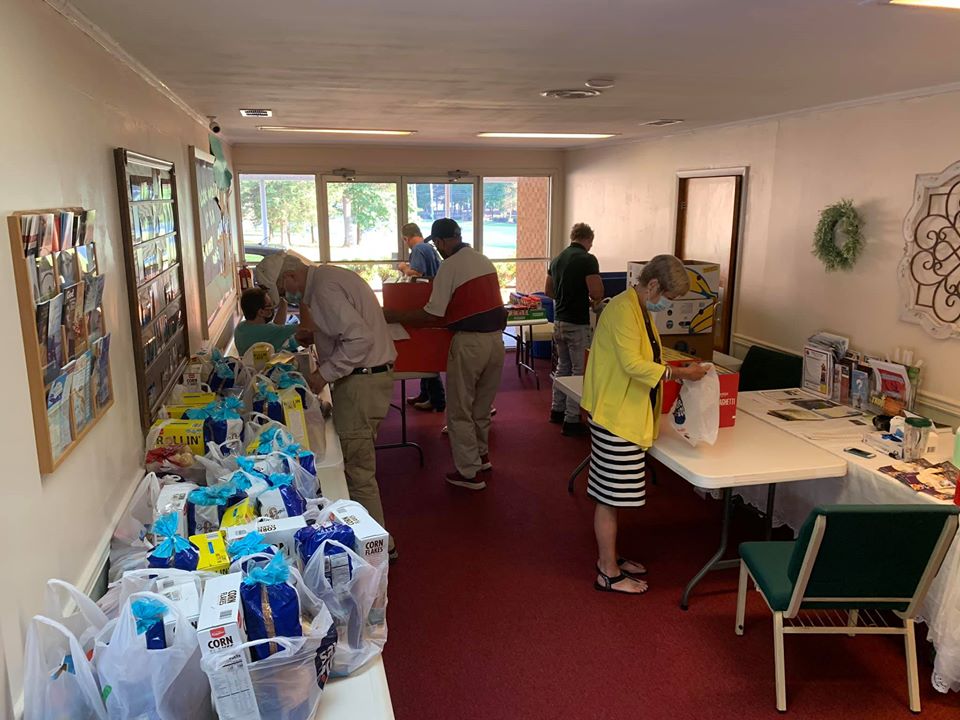
  3. The Farley church in South Huntsville, Alabama, had a food drive for those in the community who have fallen on hard times. Gloves and masks were worn to load the groceries up in people’s cars. Some church pamphlets were given, emails and phone numbers were written down, along with any prayer requests they might have. It has resulted in several local contacts. 
  4. Many of the Lehman Avenue church members in Bowling Green, Kentucky, led by the elders, have been driving around every Sunday afternoon to visit shut-ins. They deliver bread, sing, and pray with them. It has made a great impact on the morale within the body there. 
  5. The Wisconsin Avenue church in Huron, South Dakota, have come up with a creative way to reach out to the community by building what they call a “Blessing Box” in front of the building. In this box the locals have access food and Bible study material. 
  6. The preacher of the LaFollete church, Ben Shafer, in Tennessee, has been producing daily devotional videos to help the members stay connected and in the Word. This is also being done by Bud Woodall, the preacher for the Northeast congregation in Albuquerque, New Mexico, Andy Miller, a minister for the Southern Hills church in Franklin, Tennessee, and in countless other congregations.
  7. The hispanic minister, Chase Turner, at the Jackson Street church in Monroe, Louisiana, has discovered that posting videos/messages in Facebook groups that locals are a part of is a great way to get people interested in spiritual conversations. It has proven to be very effective! 
  8. Colt Mahana, who ministers at the Dahlonega church in Georgia, has started a daily college Bible study over Zoom. This daily study has made the college group there more engaged than they were before the pandemic. 
  9. Dr. Bob Turner had this to say about a church in Mannford Oklahoma: “I visited with several elders from numerous congregations over the last few months…I wanted to share what an eldership in Mannford, Oklahoma, has done over this period of time. While they do their classes over Facebook live, they have done additional things to help the congregation. First, they spend their Wednesday night time for prayer. Instead of teaching a class, they invited people from the community to submit prayer requests and they spend Wednesday evening praying for all the requests they receive. Second, they make special use of each holiday. For example, at Easter, since they could not host an Easter Egg hunt at the park with a potluck, the elders and wives stuffed eggs and the elders went to every home with children in the congregation and hide eggs for all the kids to have their own hunt at home. For Mother’s Day, they made a customized card and personally wrote a note and signed each card for every mother in the congregation. These are a few of the areas they have been creative to do and help members know they are cared for, thought about, and prayed over during this time. They have also emphasized that when they get back together, they want to do it right in order to make a good impression on anyone that might visit. They have constantly communicated with everyone in the congregation each week to make sure they have opportunity to share anything they might be dealing with.”
  10. Chuck Ramseur is working with a congregation in Virginia Beach, Virginia. This church family set up the Marco Polo app and encouraged everyone to share anything and everything going on during the day in their lives. It has helped them stay connected daily. Another area they took up working on is helping with the Crisis Pregnancy Center (alternative for woman thinking about abortion).This ministry has been one of the best outreach programs for the church. They’ve also planned services in the park on Sundays when they could not meet in the building, but could meet with social distancing in an open area.

So, there’s the proof! God is bigger than COVID19.

105950189_3248468518508147_1343333531772853091_o


 The People Project  

Tuesday’s Column: Dale Mail

Daleheadshot

Dale Pollard

This post is for the lady across the street. She works at the gas station. This post is for Charles. That’s the guy we always call when the office printer breaks down or a leaky roof needs repaired. This article is for my family. My family means the world to me and if my life can help ensure an eternal future together (and I mean every one of them) then I have accomplished something truly great. This post is for my wife. My wife will be in heaven with me— she must be! The truth is, this post is for the faithful child of God, the disgruntled member in the pew, the discouraged elder, and frustrated preacher— this post is for people. It’s for the new child of God that is still dripping wet from the waters of baptism, to the battle-hardened Christian with years of faithful service. God drew a line in the sand long ago after humans fell from grace and separated ourselves from Him. On one side of that line you have the lost. Their sheer abundance in our communities and the world has caused many congregations to become numb to their horrific eternal state. Still, on the other side of that line you have the faithful. No, not the uncommitted pew-warmers, but the faithful. Sadly there are those inside the church that are on the wrong side of the Divine line. Often they blend in with the faithful because they look and act like the faithful do. This is nothing new, but elderships still scratch their heads over stunted growth and disappearing members. Preachers lose their voices as they pound evangelism and outreach from the pulpit. The reservoirs are being depleted by years of drought. 

You’ll hear a lot of this kind of talk in some men’s meetings as the guys will sit around the table. After drinking coffee and filling their bellies with biscuits and gravy, it’s common for them to kick back and discuss what’s going on in the church. Obviously there are some big issues! So, who’s to blame? In an attempt to unmask the villain, one middle aged man exclaims, “if the leaders would _______”. A couple of his friends, who have clearly visited this topic a few times, nod their heads in approval. Another gentleman, with a white mustache, grunts as he repositions himself in his tin folding chair. Talk like this is uncomfortable, and it’s exhausting for many of them. The head hog at the trough clears his throat to let the others know he’s about to offer his respected opinion. He squints his eyes, leans back, then makes this statement. “It’s really society, you know. People just don’t go to church like they did when I was growing up!” Following this declaration, most of them will give their affirming “Mmm”’s and “exactly rights.” It’s at this point the tragic generational blame game begins. The wheels spin for a while, then everyone gets up and goes back to their homes to enjoy the rest of their Saturday. Tomorrow morning they dress up in their suits and ties and drive to worship. At worship they sit in the same spot, as the service carries on in it’s usual order. 

In a world full of people intent on destroying and demonizing one another, the church needs to be the church— now more than ever. Our communities, friends, family, and nation need us to be the church. That starts with you and me. Paul said, “Encourage and build one another up…” in 1 Thessalonians 5:11. We can’t do this enough, and we can’t overstate it’s importance. Who have you encouraged and built up this week? How will you do it today? The church is God’s way of improving people, and  the church is God’s perfect project— for people. 

4029650707_94207d006e_c