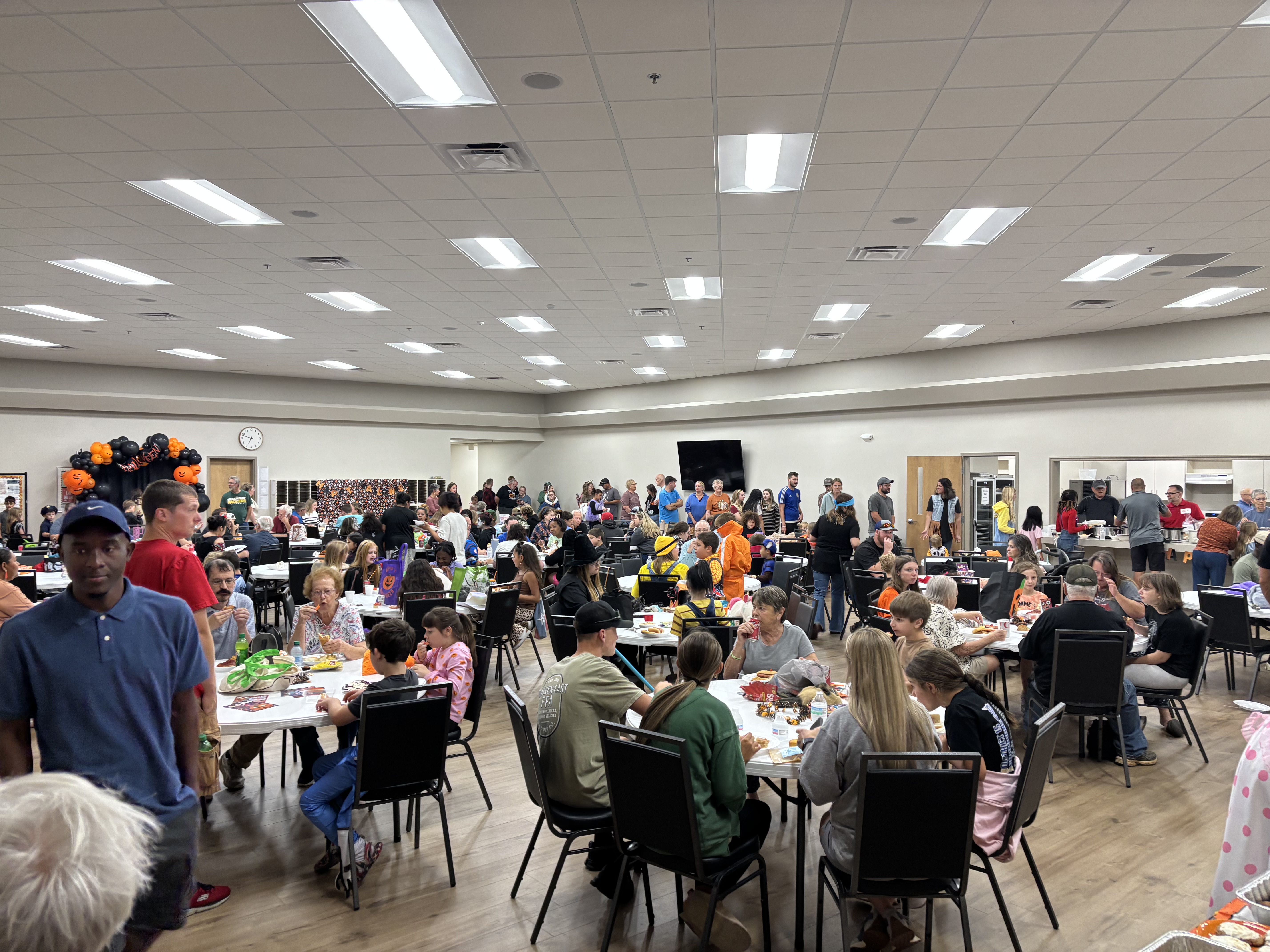
God’s People Care

Neal Pollard

  • For Their Community. Patriotic, civic-minded, generous, helpful, involved, and connected, God’s people strive to be good citizens and neighbors. Acts 2:47a; 5:13b).
  • For Visitors. Smiling, greeting, welcoming, inviting, and connecting, God’s people know that many visitors to church events and assemblies are future brothers and sisters and they want to do what they can to help facilitate that objective. Colossians 4:6; Philippians 2:15; Matthew 5:13-16.
  • For The Lost. Co-workers, family, friends, fellow-students, acquaintances, neighbors, and strangers, God’s people see the people in their lives as fellow-strugglers whose souls will spend eternity somewhere and they want it to be in heaven with them. Daniel 12:3; James 5:19-20; Proverbs 11:30
  • For Each Other. Empathetic, tuned-in, concerned, familiar, intuitive, and loving, God’s people rise to occasions of crisis and love in ordinary moments because they are intimately connected to each other by precious blood and like precious faith. 1 Thessalonians 5:11; Romans 12:9-10.
  • For Children. Wise, visionary, foresightful, nurturing, and of tender affection, God’s people hear their Savior’s admonition to imitate, encourage, and develop these impressionable, dear ones. Matthew 18:3ff; 19:14
  • For The Elderly. Concerned, attentive, prayerful, and connected, God’s people know it’s wise and important not to neglect and forget the part of our population that grows more lonely, isolated, frail, and needy with each passing day and they let them know they see and care. James 1:27; Proverbs 16:31; Proverbs 23:22
  • For Their Families. Responsible, judicious, properly-prioritizing, and consistent, God’s people realize that no advancement or success in the world is worth sacrificing the souls they most cherish and can most influence. Matthew 6:33; Ephesians 6:1-4; Proverbs 22:6; Deuteronomy 6:6-7
  • For Their Souls. Vigilant, conscientious, self-aware, and introspective, God’s people know all too well their humanity, weakness, and inconsistencies but grow more in love with God and heaven and less in love with this world every day. 1 John 2:15-17; Matthew 22:37-40.
  • For God’s Will. Whether gospel meetings, retreats, ladies days, daily Bible reading, workshops, lectureships, special or regular Bible classes, or worship assemblies, God’s people so often show up hungry for the bread of life and the spiritual meat, thirsty for the milk of the word, and considering all of it sweeter than honey. Hebrews 10:24-25; John 6:35; Hebrews 5:14; 1 Peter 2:2; Psalm 19:10

Aren’t there so many reasons to love God’s people?

A couple of pictures (credit Russell Simpson) from Saturday night’s Trunk or Treat. God’s people at Cumberland Trace really shined!

A Kingdom Opportunist

October hits, and life kicks into overdrive. Halloween, Thanksgiving, Christmas, New Year’s, it’s a relentless lineup! Family visits, work parties, and the creeping numbers on the scale keep you on your toes and in a food coma. In all this, it’s easy to let Bible study and prayer slip. But if you’re too busy for God, you’re too busy. So how do you balance life with spiritual growth?

Carl Pollard

October hits, and life kicks into overdrive. Halloween, Thanksgiving, Christmas, New Year’s, it’s a relentless lineup! Family visits, work parties, and the creeping numbers on the scale keep you on your toes and in a food coma. In all this, it’s easy to let Bible study and prayer slip. But if you’re too busy for God, you’re too busy. So how do you balance life with spiritual growth? Be a Kingdom Opportunist,  someone who spots and acts on God-given moments to advance His work, not for personal gain, but for His glory.

A Kingdom Opportunist sees openings in daily life and responds with faith and courage. Scripture shows us people who lived this way, always ready to act when God opened a door. 

Paul didn’t let circumstances stop him. In Acts 16:25-34, he and Silas are beaten and chained in a Philippian jail. Instead of giving up, they’re praying and singing hymns at midnight. When an earthquake opens the prison doors, they don’t run; they stay and share the gospel with the jailer, leading him to Christ. In Acts 17, Paul’s in Athens, surrounded by idols. He spots an altar to an “unknown God” and uses it to preach the gospel. Synagogue, marketplace, or jail cell, Paul turned every moment toward Christ. He teaches us to see opportunities in tough spots: a coworker’s question, a neighbor’s grief, a delayed schedule. These aren’t interruptions, they’re opportunities! 

In Acts 16:13-15, Lydia, a businesswoman in Philippi, hears Paul’s message by the river. God opens her heart, and she responds immediately, following Jesus and opening her home to Paul’s team. Her hospitality makes her house a base for the early church. Lydia didn’t need a stage or a title, she used her home, influence, and resources to serve God. What do you have? A spare hour? A skill? A kitchen table? Like Lydia, you can use what’s in your hand. 

Barnabas, the “son of encouragement,” saw what others missed. In Acts 9:26-27, when the disciples feared Saul (later Paul) because of his past, Barnabas took a chance, vouching for him and bringing him into the church. In Acts 11:25-26, he tracked down Paul in Tarsus, kickstarting his ministry. He also gave John Mark a second shot after a failure (Acts 15:36-39), helping him grow into a key servant. Barnabas invested in people, seeing God’s work where others saw problems. Who needs your encouragement? A struggling teen, a new Christian, a friend who messed up? A kind word or second chance can shift someone’s path for God’s glory.

Scripture is filled with examples. Esther risked her life to save her people, seeing her role as queen as God’s timing (Esther 4:16). The Shunammite woman gave Elisha a room, creating space for God’s work (2 Kings 4:8-10). Andrew brought his brother Peter to Jesus in a simple act that changed everything (John 1:40-42). Each saw God’s hand and acted, not for themselves, but for His purpose.

Unlike worldly opportunists chasing self-interest, Kingdom Opportunists are driven by God’s glory. They’re prayerful, discerning, and bold, ready to move when God opens a door. To live this way, pray daily for eyes to see opportunities. Study Scripture to be ready to share your faith. Use what you have: time, talents, or a listening ear. Step into hard situations with trust, like Paul. Encourage others, like Barnabas. And stay humble, pointing to Jesus.

God’s still opening doors every day, at work, home, or in your community. My prayer is that we’ll see these moments, respond with faith, and act with courage. As we do, God’s Kingdom grows, one opportunity at a time. You’re equipped for this moment. 

Be a Kingdom Opportunist!

Overcoming Evil With Good

On Wednesday, an assassin shocked the world by killing Charlie Kirk, a man known for his traditional viewpoints. Although he faced accusations of holding objectionable views, his actual offense was his effectiveness in conveying conservative and Bible-based concepts. Unable to defeat him in debates, his opponents resorted to silencing him with a bullet.

Brent Pollard

On Wednesday, an assassin shocked the world by killing Charlie Kirk, a man known for his traditional viewpoints. Although he faced accusations of holding objectionable views, his actual offense was his effectiveness in conveying conservative and Bible-based concepts. Unable to defeat him in debates, his opponents resorted to silencing him with a bullet.

Thursday commemorated 24 years since the 9/11 attacks that profoundly impacted our nation and altered countless lives indefinitely. For those of us who can recall, those feelings remain vivid. The haunting images of the smoldering World Trade Center towers, the Pentagon, and that desolate Pennsylvania field remain etched in our memories. Unease lingers in the pit of our stomachs when we hear the audio from that day: the radio chatter of first responders and the frantic calls to loved ones from the cellphones of those trapped on doomed planes or in the World Trade Center towers from which there was no escape.

Occurrences such as these deeply affect us and lead us toward hopelessness. If we are not cautious, they may also lead us to feelings of anger, a desire for retaliation, or a sense of hopeless withdrawal.

In moments like this, the words of the apostle Paul resonate: “Do not be overcome by evil, but overcome evil with good” (Romans 12.21). These words serve as a vital reminder, encouraging us to go beyond mere resistance to evil and to face it with the goodness of Christ actively.

Evil’s Real Power—and Its Limit

Evil exists, and the Bible presents it plainly. Paul had witnessed persecution, political corruption, and violence up close. Nevertheless, he refuses to let evil prevail in the end. Why?

Because Christ has already achieved victory through the cross and resurrection, the most formidable weapon of Satan—death—has been rendered ineffective. Evil may inflict pain, but it cannot prevail against the people of God.

Responding to hate with hate allows darkness to take root in our hearts. Responding with retaliation might seem instinctive, yet it merely compounds the damage. As Martin Luther King Jr. once stated, drawing inspiration from the words of John 1:5, “Darkness cannot drive out darkness; only light can do that.” Paul articulates the same concept in a compelling, Spirit-inspired statement: “overcome evil with good.”

Goodness as an Active Weapon

This call does not constitute passive avoidance. Paul’s instruction serves to motivate. In the lines of the surrounding context of Romans 12.21, he clearly articulates it:

• “Bless those who persecute you…” (v. 14).

• “Repay no one evil for evil…” (v. 17).

• “…if your enemy is hungry, feed him…” (v. 20).

Kindness transcends mere courteous expressions. This love, filled with the Spirit, nourishes, forgives, and serves, even when faced with mistreatment. This type of goodness illuminates a realm that transcends our earthly existence. According to the latter part of verse 20, such actions can “heap burning coals” upon the heads of those who wrong us. While vengeance ultimately belongs to God (Romans 12.19), we can find solace in the understanding that our goodness serves as a formidable weapon against evil.

Three Gospel Tasks Reframed

Considering Romans 12.21, the church’s mission takes on renewed urgency:

Evangelism: Proclaiming the ultimate good.

The goodness we provide transcends mere humanitarian efforts; it embodies the message of Jesus Christ, who was crucified and has risen from the dead. As the world grows weary of violence and retribution, individuals seek hope that evil cannot extinguish. Our testimony of forgiveness and reconciliation through Christ serves as a powerful act of overcoming evil.

Edification: Strengthening the saints.

It is not uncommon for believers to feel disheartened or frustrated as troubling news continues to accumulate. Romans 12 encourages us to uplift one another in maintaining a gentle spirit. By engaging in worship, study, and fellowship, we nurture goodness and stand against cynicism.

Benevolence: Doing tangible good.

Addressing needs—nourishing the hungry, providing solace to the grieving, assisting neighbors in distress—is not a secondary endeavor. We are fighting a battle of the spirit. Each act of compassion proclaims that darkness does not hold the ultimate authority.

Living the Verse Today

How can we apply Romans 12.21 today?

• Pray for enemies and victims alike. Name them before God.

• Guard your words. Refuse to spread hatred online or in conversation.

• Share Christ. Offer the gospel as the deepest good, the cure for sin’s root cause.

These actions may seem insignificant in the face of widespread evil, yet they hold great power because God amplifies them. The kingdom flourishes through small, Spirit-inspired acts of kindness.

Hope That Overcomes

When Jesus confronted the greatest evil—an unjust cross—He triumphed not by summoning legions of angels but by surrendering His life and rising again. His resurrection demonstrates that goodness is not a sign of weakness, but rather the unstoppable power of God.

The anniversary of 9/11 and Charlie Kirk’s tragic assassination serve as poignant reminders of the urgent need for strength in our world. Let us stand firm against the shadows of this time. With our hearts anchored in Christ, let us overcome evil with good—making the most of our time through evangelism, edification, and benevolence until His return.

“Do not be overcome by evil, but overcome evil with good” (Romans 12.21).

All Scripture quotations are from The Holy Bible, English Standard Version (ESV), © 2001 Crossway, a publishing ministry of Good News Publishers. Used by permission. All rights reserved.


What New Christians Need From Us

Neal Pollard
  • Excitement. From the moment they are part of the body of Christ, new Christians need to experience our joy over them. This needs to be sustained over their first weeks and months as a Christian. While developing relationships cannot stay at this initial phase forever, neither should they feel forgotten in a few days (cf. Acts 15:3; Phil. 1:25).
  • Embracing. While hugs and affection can be an effective means of helping everyone, including spiritual babes, I mean here making new Christians feel a part of the “group.” They have likely exchanged circles of influence and will have to give up some unwholesome relationships. They will do so, often still “rough around the edges” or still working through some worldly ways. They need our friendship and acceptance, our mature assistance as they are grafted in to the body (Rom. 15:7).
  • Example. New Christians by their nature do not know a lot about how to be a Christian. They rely on role models. Therefore, we will watch our attitude, our general speech, our words about others, our choices (recreation, clothing, entertainment, etc.), and our actions. Much is at stake (Mat. 18:6-7).
  • Enlistment. New Christians don’t have exhaustive experience with what the Christian life is to be like. They don’t know what next steps are, though they are usually “on fire” for the Lord and raring to go! Our task is to help them see that Christians are to do more than “be,” they are to “do.” We need to call them alongside and help them serve. If we can do this from the beginning, they will not have instilled in them the habits of inactivity or reduce the Christian life to a few hours assembling. Take them visiting, get them to help teach, have them sit in on Bible studies, and generally find what they are good at and help them find outlets to exercise their gifts (Rom. 12:6-8; Eph. 4:16).
  • Edification. That requires time spent together. Whether this occurs through table fellowship, social interests, church work, and just quality time, they need to be built up in the faith. If we will deepen the relationship generally, they will be more receptive to the most important way to be uplifted–through the assemblies (Heb. 10:24-25). This instruction remains vital, to “encourage one another and build up one another” (1 Th. 5:11).

What would you add?

Preachers And Preaching

The words of Paul have never been more urgently needed: “For since in the wisdom of God the world through its wisdom did not come to know God, God was well-pleased through the foolishness of the message preached to save those who believe” (1 Cor. 1:21).

Neal Pollard

Last night, we finished our third annual EQUIPPED workshop. It was uplifting for so many reasons, too many to try and list here. I want to focus on just one. Certainly, the speakers we had represented a diversity of style, background, schooling, age, race, and personality. To the person, each shared the common value of presenting God’s word faithfully, richly, and beneficially. In every session I attended (and I floated into multiple sessions many hours), I admired how effectively each exposed God’s message!

We also had representatives from six schools of preaching (Bear Valley Bible Institute, Brown Trail SOP, Florida SOP, Georgia SOP, Tri-Cities SOP, West Virginia SOP), not including speakers training preachers from these schools and in the Memphis SOP, Faulkner University, and Freed-Hardeman University. I talked with several of these men, and they speak of the urgent need we have to meet the surging preacher shortage crisis facing God’s people. Often, this shortage causes or hastens congregations having to shut their doors. At best, it hamstrings the work the local church can do. It is a reminder of our pressing need to emphasize the wonderful life preaching is, encouraging our sons to preach, and our daughters to want to marry preachers.

The best part of this weekend was seeing preachers from all over who came to feast on God’s word and get practical ideas to enhance their local works. If there was anything better than that, it was the several “prospective” preachers that were in attendance. Talking to young men who shared with me their aspiration to go preach, those who were making their plans to attend school for that purpose, and seeing young men who just need a person of influence in their lives to gently nudge them in that direction.

The words of Paul have never been more urgently needed: “For since in the wisdom of God the world through its wisdom did not come to know God, God was well-pleased through the foolishness of the message preached to save those who believe” (1 Cor. 1:21). Because we believe that, let’s encourage men to engage in the greatest mission God ever gave.

The Season of Impermanence:

What does an ancient oriental custom have to do with time management and the appreciation of the preciousness of time? No one can make the connection like Brent. Read more and be challenged by his unique perspective.

Reflections Beneath the Cherry Blossoms on Time, Purpose, and Eternity

Brent Pollard

In a poem, a twelfth-century Buddhist monk named Hoshi Saigyo stated that the cherry tree, or Sakura, only had one problem: it caused people to gather. Saigyo was undoubtedly referring to the ancient practice of hanami, which translates as “flower viewing.”

Indeed, people have gathered to view the lovely sakura blooms since at least the Heian period (794–1185 AD). Regarding motivation, the Japanese value the ephemeral quality of all flowers, especially cherry blossoms.

Each year, the Japanese Meteorological Corporation releases a calendar that estimates the bloom dates for sakura, reflecting Japan’s cultural reverence for impermanence. While the residents of Japan’s northernmost climes, such as Hokkaido, usually have to wait until the end of April or the first of May to see sakura flowers, people in Okinawa come together as early as mid-January to view the hikanzakura—also known as the Taiwan cherry—blossoms. Outside of the cherry trees gifted from Japan within the Tidal Basin of Washington, D.C., or the same variety of cherries planted in sufficient numbers for Macon, Georgia, to host the International Cherry Blossom Festival, one wishing to emulate the practice of hanami might well substitute another flowering tree, such as the plum or dogwood.

Some Japanese are so committed to hanami that they will travel throughout Japan’s 47 prefectures to catch the various cherry blossom spots. As for what hanami entails beyond the camera, one brings all the accouterments of a ground picnic: blankets and bentos (lunch boxes). Should you wish to participate in the celebrations, please be advised that some locations are so popular that people camp out early to secure a prime viewing spot. The most beloved of these blossoms is the Somei Yoshino, or Yoshino cherry—a variety whose pale petals are as fleeting as they are breathtaking.

In Japanese culture, the cherry blossom season marks the beginning of numerous significant life transitions. Since the academic and fiscal years begin in the spring, sakura is often associated with new responsibilities, personal growth, and the transition into adulthood—a theme not unlike the “season for everything” described in Ecclesiastes 3. It is common in Japanese films or anime to show two characters—possibly destined lovers—meeting beneath the cherry trees, their encounter tinged with beauty and impermanence as delicate pink petals fall around them. Such moments may seem mystical, but they reflect a more profound truth: Life moves quickly, bringing opportunities we must seize or let slip away. For Christians, this symbolism echoes the call to live purposefully and steward each season well—particularly those that signal the beginning of new responsibilities or callings.

The well-known Latin phrase carpe diem, meaning “seize the day,” may serve as a fitting analogy for the Japanese passion for flower viewing. Those of us in Christendom can better understand this concept through the eyes of the wise King Solomon. In Ecclesiastes 9.10, Solomon says, “Whatever your hand finds to do, do it with all your might; for there is no activity or planning or knowledge or wisdom in Sheol where you are going” (NASB95).

In other words, as the beauty of the sakura flower is fleeting, so too are our lives (see James 4.14). Though perhaps unspoken, the practice of hanami reminds participants of the impermanence of life, teaching us to hold what we have with reverence. In this way, hanami reflects a deeply rooted Zen sensibility that embraces transience not as a cause for sorrow but as an invitation to be fully present. For those of us shaped by Christian thought, this quiet awareness harmonizes with the wisdom of Ecclesiastes: that life, though brief, is to be lived with purpose, gratitude, and wholehearted devotion (see Ecclesiastes 12.13-14).

Given this potentially upsetting truth for some, it is clear how important it is to manage our time effectively. In the context of Ephesians 5.15-17, the Apostle Paul suggests that we make the most of our time by walking—or acting—wisely. Moses tells us in Psalm 90 that we are likely to live 70 years, but if we are strong, we may live to 80 (Psalm 90.10). Even so, there is no guarantee. Each of us has a set appointment with death (Hebrews 9.27) unless God’s will allows the second coming of Christ to occur first.

Thus, would you hoard the Gospel’s sacred treasure? How quickly could you overcome procrastination if you knew tomorrow would never come? How soon would you mend your broken relationships? Would you remain silent in the face of the wicked’s schemes? The questions linger—sobering, urgent, and real.

Indeed, the words of Laura E. Newell from the hymn “As the Life of a Flower” ring true: “As the life of a flower, as a breath or a sigh, so the years that we live as a dream hasten by; true, today we are here, but tomorrow may see just a grave in the vale, and a memory of me.”

Boldness, Generosity, And Commitment

Carl Pollard

Humanity faces its greatest challenge: sin, which creates a chasm between us and God. Yet, the church stands at the very heart of God’s divine solution to bridge this separation. In 2 Corinthians 5:17-21, we are reminded that in Christ, we are made anew, and through His church, the possibility of reconciliation with God is made real. The church is not just a body; it is where the ministry of reconciliation is both exercised and experienced.

The church plays an integral role in our ultimate salvation. Here, we are nurtured in our faith, guided by the teachings of Christ, and supported as we navigate the path toward eternal life. However, it’s disheartening to acknowledge that we often hesitate to share the remarkable gift of salvation. Now is the time for boldness!

We are God’s plan to bring the gift of life to the world! People need the church, and they need what you and I possess. Be strong and courageous as we face the unknown together as a family in Christ. Acts 4:29 encourages us, “And now, Lord, look upon their threats and grant to your servants to continue to speak your word with all boldness.” In the preceding verses, we see Peter and John standing before the council, threatened and commanded not to speak of the gospel. But instead of cowering, the church prayed for boldness to be the light they were called to be.

As we read in Acts 4:13, “Now when they saw the boldness of Peter and John, and perceived that they were uneducated, common men, they were astonished. And they recognized that they had been with Jesus.” The boldness of Peter and John was evident, and despite their lack of formal education, God was using them in significant ways. This is a powerful reminder for us today; it doesn’t matter if you stumble over words or if you think “sanguine” refers to a type of bird—God can still use you in incredible ways! Let’s pray that, as members of His church, we will be bold and share the marvelous news of salvation, ensuring that the legacy of the early church continues in our future.

The early church was bold, but it was also known for its generosity. The church holds a distinct position as the manifestation of God’s eternal purpose, unlike any other human institution. God calls us to embody generosity in every aspect of our lives. Being part of the church means fostering a culture of generosity, where we care for one another’s needs and create an environment filled with Christ’s love. We become each other’s safety net—not just financially, but spiritually and emotionally as well. We are generous with our time, our love, our resources, and our forgiveness.

Acts 4:34-35 describes a beautiful picture: “There was not a needy person among them, for as many as were owners of lands or houses sold them and brought the proceeds of what was sold and laid it at the apostles’ feet, and it was distributed to each as any had need.” God designed us to be a family that leans on one another, ensuring that any need is met here in our community. You’d be amazed at how powerful generosity can be as a tool for evangelism. There’s a reason God designed us this way—it draws people in.

Lastly, the early church exemplified commitment. We should strive to become a group of believers who are committed in every aspect of church life. Let us be dedicated to fellowship, encouragement, and love. We must commit ourselves to the Gospel, to our elders, and to the work of the church. It begins with each individual—no one can fulfill your role for you!

Acts 4:33 states, “And with great power the apostles were giving their testimony to the resurrection of the Lord Jesus, and great grace was upon them all.” Reflect on this: “This is my church. It is composed of people just like me. It will be friendly if I am. It will do a great work if I work. It will make generous gifts to many causes if I am generous. It will bring others into its fellowship if I bring them. Its seats will be filled if I fill them. It will be a church of loyalty and love, of faith and service. If I who make it what it is, am filled with these, Therefore, with God’s help, I dedicate myself to the task of being all these things I want my church to be.”

What do you envision for the body of believers where you attend? Be the change you wish to see. Commit personally, regardless of what others may say or do. You are part of the body of Christ, and He desires for you to be actively involved in His work. Embrace the boldness, generosity, and commitment that defined the early church, allowing us to fulfill our calling in today’s world.

The Messiah’s Mark

Carl Pollard

28 ways we can show others the influence that Christ has had in our life (Rom. 12:9ff) 

  1. Have genuine love 
  2. Hate evil 
  3. Hold on to what is good 
  4. Love one another 
  5. Outdo each other in showing honor
  6. Have zeal
  7. Fervent spirit 
  8. Serve the Lord 
  9. Rejoice in hope
  10. Be patient in tribulation 
  11. Pray constantly
  12. Contribute to the Saints 
  13. Be hospitable 
  14. Bless your persecutors 
  15. Do not curse your enemies 
  16. Rejoice with those who rejoice 
  17. Weep with those who weep 
  18. Live in harmony 
  19. Don’t be haughty 
  20. Associate with the lowly 
  21. Don’t think too much of yourself 
  22. Don’t repay evil with evil 
  23. Do what is honorable in the sight of everyone 
  24. Live peaceable 
  25. Don’t take revenge 
  26. Care for your enemies 
  27. Don’t let evil overcome you 
  28. Overcome evil with good

Lessons From The Men Of Issachar

Brent Pollard

1 Chronicles 12 describes David’s loyal followers gathering and supporting him as he prepared to become King of Israel. This chapter emphasizes the unity and strength that resulted from the various tribes rallying behind David, laying the groundwork for his reign and the kingdom’s unification.

The men of Issachar stood out among these tribes for their understanding of the times and their knowledge of what Israel should do (1 Chronicles 12.32). They understood that God had anointed David as king while Saul was on the throne. Their kinship with their brethren and willingness to support Israel led them to assist David and his men at Ziklag (1 Chronicles 12.40). Their leadership in this matter served as a model for other tribes that were still undecided.

We can draw inspiration from the men of Issachar and apply their lessons to our modern world during our current cultural civil war, characterized by fierce rhetoric and ideological conflicts.

We need wisdom and insight above all else. We must understand the complexities of our times like the men of Issachar did while avoiding falling prey to mere sentiment or rhetoric. We must recognize the cultural shifts, ideologies, and conflicts shaping our world today.

A usurper rules the world (1 John 5.19). We recognize that this usurper is a master manipulator who duped our mother, Eve, into sin (Genesis 3.1–7). Jesus referred to him as the father of lies and a murderer from our beginning (John 8.44). On the other hand, Revelation 19.16 reminds us that Christ is the King of Kings and Lord of Lords, God’s anointed (Acts 10.38). Yet, unfortunately, many people, including some of our family, friends, and neighbors, still regard Satan as their king.

We must demonstrate the men of Issachar’s willingness to put our efforts into action since we know what we must all do. When making decisions, we must use sound judgment by weighing various options and understanding the consequences. The Gospel’s teachings give us a sound mind, which leads to discipline. These characteristics enable us to face our opponents and carry out our duties without fear (2 Timothy 1.7). Amid our cultural civil war, it is critical to make decisions guided by God’s truth and values, contributing to the well-being of others and the pursuit of justice.

Second, even in discord, we should strive for harmony, following in the footsteps of the men of Issachar, who were instrumental in establishing and maintaining national peace. Even though we offer peace terms to people whose sins have gotten the best of them (cf. Matthew 5.9), they must know that their rebellion against God warrants death (Romans 6:23). Nonetheless, we bring the good news of God’s gift of eternal life through Christ. Regardless of contentious issues, we are encouraged to approach discussions and conflicts humbly, preaching the truth in love (Ephesians 4.5).  We can contribute to a more constructive and peaceful engagement with those harboring different points of view by encouraging dialogue and building bridges.

Third, Christian ethics should guide our responses to current issues, just as God’s commandments guided the men of Issachar. God has given us everything we require for life and godliness (2 Peter 1.3). We look to the Scriptures in our cultural context because the words of Christ will judge us (John 12.48). We can apply Christian ethics to issues of cultural civil war by drawing on Christ’s teachings and grounding our engagement in love, truth, and reconciliation. Even during heated debates, our words and actions should reflect Christ’s character (1 Peter 2.23). Peter reminds us that Christ suffered for us, leaving an example for us to follow in His footsteps (1 Peter 2.21).

Finally, the example of the men of Issachar encourages us to develop a voice of reason in these contentious times. We must cultivate a reasoned voice that speaks the truth, confronts sin, and offers hope, just as the men of Issachar did.

An event in the divided monarchy’s history illustrates this task. Ben-hadad, the Aramean king, had besieged Samaria, resulting in extreme conditions and even cannibalism. In a twist of events orchestrated by God, the Arameans were frightened into fleeing, leaving their supplies behind. The discovery of the abandoned camp by four lepers resulted in abundant riches and food.

Their consciences, however, troubled them, and they realized they couldn’t keep the good news to themselves (2 Kings 7.9). Likewise, we have information that is too good to keep to ourselves. As a result, we, like Issachar, should provide leadership and point people to the transformative power of the cross.

By incorporating these insights into our understanding of the men of Issachar, we can navigate the challenges of the cultural civil war with discernment, seek unity amid division, apply Christian ethics, and cultivate a reasoned voice. As a result, we can contribute to a more constructive and transformative engagement in our culture, even amid heated rhetoric and ideological clashes.

May the Lord give us the wisdom and courage to apply these principles daily. May we be reconcilers, peacemakers, and bearers of Christ’s transformative power.

Half Mast

Carl Pollard

We have an American flag in the front yard of our church building here at Scottsville. Sadly, I’ve noticed lately that is has been flying at half mast more often than not. It is a common practice to fly the flag at half mast after a tragedy occurs. Our world has always been filled with evil, but the method of acting on evil impulses has just changed over time. Why is the flag always at half mast? Because evil people continue to do what they have always done. Hurt others. 

Despite our political differences, we should all be able to agree on these facts: Shooting up a school is evil. Taking an innocent life is the epitome of wickedness. And yet we get distracted by the politics of the situation and fail to see who is truly responsible. Satan has a firm grip on our world, and if we don’t do something to bring people out of his hold, bad things will continue to happen to good people. 

We shouldn’t be surprised at the state of our country. We have removed God from every place, and a godless country will only ever be evil. If we truly want to fix the problems that are constantly happening, we need to start by bringing others to Christ. Parents need to raise their children in Christ and stop making excuses for bad behavior. Mankind is naturally inclined to wickedness. Genesis 6:5 says, “The Lord saw that the wickedness of man was great in the earth, and that every intention of the thoughts of his heart was only evil continually.” The further we move away from God, the closer we get to continual evil. 

Our flag has been at half mast far too often. I’m tired of hearing about all the innocent lives that are lost due to wicked people. Let’s put the politics aside and start focusing on the real issue. People are obsessed with following their own desires (James 1:15), and Satan loves to cheer us on. Only evil people would do what has been done lately, so let’s start teaching the love of Christ to a lost and dying world. There’s only One who can remove our wickedness, and now more than ever we need to proclaim Him! 

How The Church Can Use Technology To Reach A Changing World

Friday’s Column: Brent’s Bent

You’ve probably seen the results of the recent WSJ-NORC poll showing how much Americans’ views on patriotism, religion, and community involvement have changed in the past 25 years. It is disheartening. On a lark, I decided to query ChatGPT about this issue, asking:

How should the Christian community respond to generate interest in religion while remaining ambivalent about ideas of patriotism?

Here is ChatGPT’s response:

Firstly, the Christian community could focus on promoting the core values and teachings of their faith that resonate with people on a personal level, such as compassion, forgiveness, and unconditional love. This can be done through various means, such as community outreach programs, social media campaigns, and interfaith dialogues.

Additionally, the Christian community could leverage modern technologies to make their religious teachings more accessible to younger generations who are more inclined towards digital media. This could involve creating engaging and informative content, such as podcasts, videos, and blog posts, that can be shared on various online platforms.

It is also essential for the Christian community to remain open-minded and inclusive towards people of all backgrounds and beliefs. By fostering an environment of respect and understanding, the Christian community can demonstrate that religion is not about exclusion or superiority, but rather about embracing diversity and promoting universal values.

Lastly, the Christian community could work towards building meaningful connections with other faith-based communities and organizations to promote interfaith collaboration and mutual respect. By coming together with other groups and working towards common goals, the Christian community can demonstrate that religion is a unifying force that can transcend political ideologies and nationalistic sentiments.

You’ve probably noticed ChatGPT’s and all AI’s known leftist bias. But, again, this is something that the media has covered. These new technological marvels are known as LLMs (Learning Language Models). In other words, reading what humans have written makes them more intelligent. And many of these AIs got their samples from the internet. 

The internet is not exactly a haven for right-wing or Christian ideas. Values-oriented internet monitors have estimated that at least 80% of the non-dark web was pornography. Others argue that it is more likely to be around 30% pornography. Whatever the exact figures are, it should be evident that the ratio of non-Christian to Christian content on the internet is higher. Thus, we don’t expect AI to present God’s plan of salvation. That is why preachers exist (Romans 10.13–17).

That said, the insight of ChatGPT is fantastic, with a few caveats. Unfortunately, open-mindedness and inclusivity are typically buzzwords for turning a blind eye to sin, which we cannot do (Isaiah 5.20). Likewise, societal acceptance of abortion and sexual immorality doesn’t mean such things are acceptable to God (Acts 5.29). We also cannot fellowship with those who do not teach the truth, even if they call themselves “Christians” or are part of a monotheistic, Abrahamic faith (2 Corinthians 6.13–15; 1 Corinthians 10.21). Otherwise, this advice is surprisingly sound. 

As the gospel changes lives like nothing else can, why shouldn’t we preach God’s word to make it as accessible to others as possible? We should help people see how to apply the good news to their lives (Acts 8.30ff). To that end, we should go back to more expository-style preaching. 

There are so many broken homes that providing people with a sense of community and family is inviting. Who would not want to experience compassion, forgiveness, and unconditional love? But this requires getting out of our buildings and going where the people are. 

And, while we should not change the “old Jerusalem Gospel,” there is no reason why we cannot use modern methods to reach out to a lost and dying world (Matthew 10.16, emphasis mine). Unfortunately, more conservative mindsets are slow to adopt the latest technology. By the time more conservative minds feel comfortable venturing into new areas, those with whom they disagree ideologically will have dominated them. 

That said, the number of podcasts and videos our brothers and sisters are beginning to make available inspires me, and I hope this pattern continues. Political pundits, gamers, and true crime fans bury our offerings with their content. So you have to know what you are looking for to find it. It requires advertising and sharing our content with others. 

Even though we don’t want to waste our Lord’s money by following trends, it is prudent to keep up with new technology and figure out how to use it to spread God’s message worldwide. It’s important to remember that technology is constantly evolving, and we must adapt to it and use it in ways that reflect our values. By doing so, we can reach a larger audience and share God’s message with those who might not have heard it otherwise. 

How would you have answered this question I put to ChatGPT? 

Brent Pollard

The Courage To Share Christ

Saturday’s Column: Learning From Lehman

by Todd Dickerson

The Bible clearly tells us as Christians that we are to tell others about Christ and salvation.  Ephesians 4:11-12 reads, “And He gave the apostles, the prophets, the evangelists, the shepherds and teachers, to equip the saints for the work of ministry, for building up the body of Christ.”

The word doesn’t tell us this will always be an easy task or that we will have success in folks having interest in what we’re trying to tell them, but we are commanded to still try to do so.  There are a lot of excuses that have been made to avoid talking to others about the Bible.  Like, that’s the preacher’s job or I don’t really know what to say, or my favorite, I can’t speak well and don’t want to be rejected.

But 2 Corinthians 11:6 says that the apostle Paul had problems with his speaking but still proclaimed the word to many with success.  It reads: Even if I am unskilled in speaking, I am not so in knowledge: indeed, in every way we have made this plain to you in all things.

If we think we are lacking in how to talk to people about their salvation, the elders or ministers here at Lehman, I’m sure can be helpful in our efforts.

James 1:22 reads: But be doers of the word, and not hearers only, deceiving yourselves.  We have been put here on earth to love God and keep his commandments.

One of these commandments is found in Mark 16:15-16, which most know by heart.  “And He said to them, Go into all the world and proclaim the gospel to the whole creation.  Whoever believes and is baptized will be saved, but whoever does not believe will be condemned.”

The world needs to hear the good news and we should always be prepared to share it.  I often think back to a friend and a brother in Christ who has passed on from this life that loved to tell others about the word of God at a country store where we ate lunch.  There were some that referred to him as “preacher”.  But that seemed to make him more determined to try to teach them.  I have never been called “preacher” before, so maybe I have work to do in telling others the word.

We shouldn’t be afraid to talk to others because we are scared of being made fun of.  There are many in the Bible that were beaten and even killed for proclaiming the word.  So just being rejected shouldn’t bother us.

The world seems to put their faith in money and material things but it seems that most aren’t ever content.  Telling them about Jesus Christ and eternal life in heaven is what they need in their lives.

It has always made me feel good inside when I could help someone in need, and there is nothing you could give anyone that could be any better than the hope of eternal life.

There might be a time that we’re asked a question that we don’t know the answer, but we can always tell them we can get back to them after further study.  Telling folks the plan of salvation should be something we all know as well as anything.

The Bible tells us all will not be receptive to the gospel but there will be some that are.  Some are eager to be saved right away.  But there will be some that it takes some time.  Either way we are to plant the seed and God will give the increase.

These words are mainly from my lack of doing what I should be doing in my Christian walk.  My personal prayer is that God helps me realize the doors that are open for me and he gives me the courage to do what is commanded.

I had the good fortune of growing up in a Christian family and I guess becoming a Christian came fairly easy for me.  There are so many outside the walls of the church building that didn’t have the privilege of being in that environment.  It is not as easy for some of these to accept Christ and live the Christian life  because it hasn’t been a constant in their lives.  We need to share the word with them and not keep it to ourselves.

How much better things would be if all knew God’s word.  We probably all have family members or extended family that need to know the true word.  We hope that we can find the right way to talk to them and study the word without causing any family tension.  We can pray that we can approach these issues in a loving way and they can be reached because we all want to be in heaven together.  

There are multiple ways to start conversations with someone that eventually lead to talking about what the Bible has to say or we can simply ask if they would like a Bible study.  If you aren’t comfortable with a Bible study, there are members that will help with that.

Derek and Neal’s Sunday morning Bible class is a study on spiritual disciplines.  Personal evangelism is a discipline that should be right at the top of the list.  This past Sunday in class, Neal made a point on how the scripture should be real aloud in a public gathering.  We should do it with enthusiasm and let people know your privileged to be reading God’s word.  Talking to our friends and neighbors about Jesus Christ should be done with the same enthusiasm to show them we are happy to be Christians it’s the only way to have true contentment.  

Most of us here go to eat at restaurants occasionally, go get haircuts, get our vehicle serviced, go to the bank, and multiple other places that we can strike up conversation.  We can get excited pretty quick talking about politics or our favorite sports teams or our kids.  Hopefully, we can be excited about talking about Jesus and salvation.

 I’ll finish with John 13:34-35: “A new commandment I give unto you, that ye love one another; as I have loved you, ye are my disciples, if ye have love one to another.  If we truly love others, we will help them in any way we can to get to heaven.”

Todd Dickerson

The Humility Of Andrew

Friday’s Column: Brent’s Bent

Most historians agree that Andrew the Apostle was born between 5 and 10 AD in Bethsaida, Galilee. If correct, he would have been about the same age as Jesus. Andrew is a Greek name that means “manly” or “brave.” Among Jews, it appears to have been a popular choice as early as the second or third century BC. Interestingly, there is no proof that Andrew had a Hebrew or Aramaic name like his more well-known sibling. So, Andrew’s name is the very first thing that stands out. His family was willing to accept Hellenism, which is clear from the fact that his name is not Hebrew, as you might expect, but Greek. Andrew was born and raised in Galilee, a region in the first century that was historically and culturally as much Greek as Jewish.

Both Andrew and Simon (Peter) made their living as fishermen. This occupational choice seems to be why Jesus called them “fishers of men” in the gospels of Matthew and Mark. According to these narratives, Jesus was walking along the Sea of Galilee shore when he saw Simon and Andrew fishing and asked them to become his disciples. Jesus even stayed with these brothers in Capernaum after beginning his public ministry (Mark 1.29). It’s interesting that Luke, the physician, and the meticulous gospel author, doesn’t immediately mention Andrew’s presence or that he and Simon are brothers. According to Luke, Jesus used Simon’s boat twice: once to preach to the crowds on the shore and again to pull in a massive fish catch on a previously fruitless night. Even though Luke doesn’t name Andrew, he says that Simon (Peter) had help while trawling the waters when he caught the big fish Jesus told him to. Simon (Peter) called for backup and assistance from his friends in another boat after the massive fish trawl so that they could help him haul the fish ashore. Luke reveals that Andrew is Simon’s brother in the subsequent chapter. So, it’s safe to assume that Andrew was out fishing with Simon (Peter) at the time of the incident, which Luke records accurately. Luke shows that Andrew is often given less attention in the Bible than his better-known brother Simon (Peter). This is an interesting fact.

John devotes the most attention to Andrew. The Gospel of John states that Andrew followed the teachings of John the Baptist. Having been moved by the words of John the Baptist, Andrew and another of  John the Baptist’s disciples decided to follow Jesus. When Andrew saw Jesus, he knew he was the Messiah and told his brother. Thus, the Eastern Orthodox Church reveres him as Protokletos, meaning “the first called.” Andrew wasn’t one of Jesus’ inner circle of disciples and apostles (i.e., Peter, James, and John). Still, he probably had more access to Jesus than other disciples and apostles because Peter was his brother. Andrew was with the other disciples on the Mount of Olives when Jesus made one of his rare appearances with “the four.” Andrew asked Jesus to explain what he meant when he said the temple would be destroyed and the world would end.

Most people think that Andrew is the one who sets up meetings between other people and Jesus. For example, Andrew introduced Peter to Jesus (John 1.40–42). Andrew also brought the boy with the bread and fish to Jesus (John 6.8–9). Finally, when some Greeks wanted to see Jesus, they went to Philip, who went to Andrew, knowing that the latter could arrange their introduction (John 12.21–23). In Acts 1.13, Luke mentions that Andrew is in the upper room with the 120. Unfortunately, this verse is the last time we hear about him in the New Testament. As a result, tradition is our only source of information about Andrew’s evangelistic career.

Both Origen and Eusebius credit Andrew with preaching in Scythia. Nestor’s Chronicle says that he also went from the Black Sea to the Dnieper River and then to Kyiv to preach. Afterward, he went to Novgorod (Russia). Consequently, the countries of Russia, Romania, and Ukraine revere Andrew as a patron saint. According to Hippolytus of Rome, Andrew preached in Thrace. The apocryphal Acts of Andrew connect Andrew to Byzantium or Constantinople. Basil of Seleucia claims that Andrew traveled to Thrace, Scythia, and Achaea to spread the gospel. Tradition says that Andrew died a martyr’s death in Greece, in the city of Patras, in 60 AD.

Gregory of Tours, a theologian who lived in the sixth century, read old texts that said Andrew died on a Latin cross like the one used to kill Jesus. But later, it became a tradition that Andrew asked that he be crucified on an X-shaped cross, which is now called a “Saint Andrew’s Cross.” However, we cannot date this explanation for Andrew’s martyrdom before the late Middle Ages. Whether the X-shaped cross is correct, the symbol lives on in many flags worldwide. For example, Alabama and Florida use it in their standards in the United States. Also, The Disciples of Christ and the Episcopals, among other groups, use the St. Andrews Cross in their logos.

What do we have to gain from observing Andrew? First, Andrew emphasizes the significance of personal evangelism. We typically think of preachers, elders, and those who teach Bible classes as winning souls for Christ from the lectern or podium. However, people are often led to Jesus by people they already know, as we see with Andrew. Even better than a good sermon is bringing about change on the inside and strengthening relationships with others. And yet, that doesn’t mean preaching and sharing your faith in public aren’t necessary. They are. Andrew, on the other hand, is not shown in the Bible giving speeches to big crowds, writing letters, or doing anything else to draw attention to himself. That was irrelevant. Andrew was humble in his service to God’s kingdom. And it seems that Andrew had already figured this out before Jesus gave the Great Commission.

Similar to what we learned in the first lesson on evangelism, Andrews demonstrates that some things are too good to keep to yourself. As the first disciple to meet Jesus, Andrew couldn’t keep quiet about the Messiah’s arrival on Earth. Instead, he had to share the good news of Jesus with his family and friends, including his older brother. Andrew engaged in “word-of-mouth” advertising through his enthusiasm. As statistics show, word-of-mouth marketing is effective. The opinions of others who have made that purchase sway most consumers to buy something, not the commercial or sales pitch. According to Nielsen, word-of-mouth is more effective than advertising at getting people to try new products. It never ceases to amaze me that we can have a perfectly reasonable conversation about anything from pop culture to sports with a stranger, but we’ll never bring up the subject of Jesus Christ. Just think of everything we could achieve if we did! Like Andrew, we must conclude that the treasure we have found in Christ is too precious to squirrel away.

Finally, faithfulness is more valuable than fame. Put Andrew in context with the other two apostles, Peter and Paul. This second group would go on to have highly visible and influential ministries. They would address massive audiences, winning many souls for Christ. They encouraged Christians with their letters, which we still read and cherish today. Yet many more gospel ministers have done their work in relative obscurity and seen fruit for it. Andrew was a follower who participated in this latter group. His name may be less familiar to you. Not many people have heard of him. Still, Andrew showed humility, compassion, and faith in Christ that modern Christians would do well to imitate by serving without seeking praise, leading individuals (not crowds) to Christ, and letting God use his gifts as He saw fit. The Andrews of the world can save more lives than the Peters and Pauls.

Brent Pollard

Our Motives, Mission, And Message

Wednesday’s Column: Third’s Words

I Thessalonians 2.1-6 reminds us that our motivation for staying faithful shouldn’t be selfish. We’re not here to gain a following or expand a financial portfolio. Those things aren’t intrinsically wrong, but using Christianity as an opportunity for financial gain is terrible. We’re faithful because it’s what God wants, and because we want to live with him forever. 

The application of 2.7-12 is that God expects us to tell people about his son’s return, even if we have to do it alone. This means we don’t expect financial help as a condition for service. This means we teach with great patience. It means we share our time generously. It means we work hard. It means we invest all of our emotional resources into the work. 

2.13-16 teaches that our message originated with the creator. It has a powerful effect on people who believe it. It also draws negative attention from people who find it too otherworldly to accept. For the most part, people find it difficult to accept the idea of a God. Beyond that, most find it even harder to believe that this God will destroy the planet, and will only rescue those who follow him. To most it reads like science fiction. As with other things that don’t fit a naturalistic narrative, our worldview is attacked as bring fringe or fantasy or irrational. But God will handle those who try to stop his message from spreading, so our job is to keep at it until our time is up! 

Gary Pollard

“Baptism Only” And “Once-Baptized, Always-Saved”?

Monday’s Column: Neal At The Cross

Neal Pollard

The doctrines of “faith only” and “once-saved, always’ saved” have done so much to deceive religious people into believing things about the doctrine of salvation that are at odds with the Scripture, which teach that faith without works is dead (Js. 2:17,20,26) and that it is possible to fall from grace (Gal. 5:4; 2 Pet. 2:20-22). Therefore, many of our Bible classes and sermons have emphasized what the Bible teaches on these matters. We want to avoid an unscriptural position.

In the midst of emphasizing that a faith that saves is a faith that obeys, we rightly teach that repentance and baptism is part of saving faith (Ac. 2:38). We teach that baptism saves (1 Pet. 3:21). It washes away sins (Ac. 22:16). It clothes us with Christ (Gal. 3:27). These are just some of the Bible’s truths about the essentiality of baptism.

There is something we must guard against, however, in our properly emphasizing that baptism not only is part of God’s saving plan but is a pivotal part (1 Co. 12:13; Mk. 16:16; Rom. 6:3-4). We must not believe in “baptism only” or “once-baptized, always saved.” Is it possible to adhere to such a view? Perhaps.

  • A rush to baptism without grasping why it must be done and what must accompany it is insufficient. We read of people being pierced to the heart by the gospel (Ac. 2:37), asking what they must do, being told to “repent and be baptized” (Ac. 2:38), and receiving that word and doing so (Ac. 2:41). Baptism cannot substitute for the total heart and directional change which the gospel calls for (Rom. 6:17). 
  • The thought that baptism is the end of one’s commitment rather than the beginning is incorrect. As thoughtfully and deliberately as we can, we must teach the totality of discipleship (Mt. 16:24-26) and the necessity of counting the cost of discipleship (Lk. 14:28). Sometimes, the newly baptized conclude that since they have done so everything is settled. While baptism coupled with a correct understanding of Scripture does forgive one’s sins, one must begin and continue a walk in the light of Christ (1 Jn. 1:7-10). 

Christ’s Great Commission call to His disciples is to make disciples (Mt. 28:19). That includes baptizing them, but also teaching them (Mt. 28:19-20). In our teaching, we need to do all we can to paint Scripture’s complete picture not only of faith but also of baptism. There is no “magic” in the water (1 Pet. 3:21). Its saving ability comes when done by one who makes “an appeal to God for a good conscience.” We cannot leave babes in Christ to flounder without helping them form roots in Him. They need to know that baptism is not the end, but the beginning.

If someone in our directory has been baptized but shows no other sign of commitment, from attendance to involvement, we need to lovingly help them see that they are not spiritually OK (Gal. 6:1). When they die, we cannot preach them into heaven simply because they were properly taught and baptized years or decades ago. The life in Christ is about a “walk” (Eph. 4:1), not just about a moment when they got wet.

Motivations For Teaching Difficult Things

Monday’s Column: Neal At The Cross

Neal Pollard

It becomes clear from reading the second letter to the Corinthians that Paul feels the need to defend himself and his actions among his readers. He feared that he had been misunderstood in his previous work among them (cf. 1:12-14). In fact, it seems as though this is the purpose of the letter (look also at 5:11-12). If you remember from the first letter, he had some pretty challenging and unpopular things to say about how they were behaving. It’s not far-fetched to think that some of them not only would not appreciate what he said, but would attack him as the messenger for saying it. Sometimes, however lovingly and kindly we share the truth, it will offend the hearer who, instead of repenting, tries to undermine the one who said it.  As we read this section, think of Paul as a man, just like his audience, who has feelings, struggles, difficulties, and temptations, too. He also needed them to know that it was because he cared so much about them that he would not “shrink from declaring to [them] anything that was profitable” (cf. Acts 20:20). What drove Paul to minister to the Corinthians? Notice several things he says in 2 Corinthians one.

THE GRACE OF GOD (12)

He would not boast in himself, whether his abilities or knowledge or influence. Those are empty and unsatisfying. His motives were pure and he was helped by a grace he wanted them to appreciate, too. When we understand our need of God’s grace, it will move us to give Him our all in response. 

THE JUDGMENT DAY OF GOD (13-14)

Paul wanted them to be able to legitimately boast together and of one another at “the day of the Lord” (cf. 5:10). The word “boast” in modern English has negative connotations–bragging, arrogance, and sinful pride. Paul wanted to have confidence in them as they faced this Day, as confident as he hoped they were of him in view of it. We should share the whole counsel of God to make sure people are ready for the most important day of all. 

THE PROMISES OF GOD (20)

He shared the positive and negative, the promises and the warnings, because he knew God meant what He said. He would not equivocate or talk out of both sides of his mouth. He was going to give them “the whole purpose of God” (cf. Acts 20:27). He knew God was the supreme promise-keeper (2 Tim. 4:8; 2 Cor. 5:11-14). 

THE GLORY OF GOD (20)

Paul taught them for the glory of God. The Word is God’s. The promises are God’s. The salvation is from God. How silly for the fragile pottery to brag (4:7); the glory belongs to the Potter. Anything worthwhile we accomplish is always because of God. 

THE WORKING OF GOD (21-22)

Paul was moved by the knowledge that God is the one who establishes men (21), sets us apart (21), and gives us His Spirit (22). Knowing this, we should share Him with people so that God can accomplish His work in their lives. 

THE WITNESS OF GOD (23-24)

Wise teachers and preachers will remember that God is watching their work. He can see where no one else can–our hearts and motives. Knowing He knows me inside and out, I will check myself and do His work to bring the joy and strength of the hearers (23-24). 

THE PEOPLE OF GOD (2:1-4)

We should be moved by genuine love and concern for people. Those who share the word should share life with those who receive the word from them. Building relationships, being together in all the ups and downs of life, is what it is all about. It’s hard to imagine staying motivated to share the gospel with people we isolate ourselves from. 

Perhaps there are some preachers and teachers who just love beating up on their listeners (or readers). Motivation is individual to each one (Phil. 1:15-17). I have to believe that every faithful proclaimer wants not only to please God but also help as many people as possible go to heaven. There are so many great reasons why Christians should want to share God’s Word with others. Paul gives us a handful of them here. 

What’s On The Ballot?

Neal Pollard

For some, it’s their wallets. But, “beware, and be on your guard against every form of greed; for not even when one has an abundance does his life consist of his possessions” (Luke 12:15).

For some, it’s their walls. Whether the one at our national border or the ones around our home. National security is important. Law and order derives from God and Scripture (Rom. 13:1-7; 1 Pet. 2:13-14). But, remember, “Unless the LORD builds the house, they labor in vain who build it; Unless the LORD guards the city, the watchman keeps awake in vain” (Psa. 127:1). There should be higher motivation.

For some, it’s wokeness. Whether to protect hyper-racism or to combat cancel culture, some on either side will be driven by this issue. This certainly has been central to those whose vote is driven by education matters. Yet, it is so easy to let subjective ideas supplant God’s authoritative Word. We must be convicted by the truth of Jesus’ words in John 12:48: “He who rejects Me and does not receive My sayings, has one who judges him; the word I spoke is what will judge him at the last day.”

For some, it’s the womb. How sobering to vote in support of taking the life of the unborn or to be motivated by such. May we remember that one of the things God hates are “hands that shed innocent blood” (Prov. 6:16)!

For some, it’s worry. It may be general unease and anxiety about the “direction” of our country. There’s a fine line between civic duty and sinful worry. God is always on His throne. As ever, “…the Most High is ruler over the realm of mankind and bestows it on whomever He wishes” (Dan. 4:32).

For some, it’s the Word. The continued ability to teach the gospel to the lost, to worship together according to that Word, and to live according to God’s Word should underlie everything we do. That includes informing our votes in elections. But, may we keep in mind what the angel tells Zechariah to tell Zerubbabel: “‘Not by might nor by power, but by My Spirit,’ says the LORD of hosts” (Zech. 4:6). No election, however favorable to our convictions, is a substitute for making disciples (Mat. 28:18-20).

Many say “democracy is on the ballot,” though what that means depends on who says it. Hopefully, we all prayerfully deliberate and do our best to align everything we believe, endorse, and encourage with what the Word says! But when we leave the voting booth, we need to “go into all the world” and give them what they need more than anything–the hope of eternal life!

Five Ministry Ideas For Member Involvement

Tuesday’s Column: Dale Mail

Dale Pollard

You must have a plan. If the leadership has no plan to grow, then the members don’t have a path to follow. According to one Gallup poll taken in 2020, 47% of adults are affiliated with a religious group of some kind in the U.S. Those numbers drop even lower after considering the amount of members that make up the Lord’s church. Of that remnant, the faithful are in the minority. Knowing that God is able to help His church grow is one thing, but creating an environment that encourages growth is another. According to Paul, the more streamlined and dynamic we can be in our service to Him, the more growth occurs. 

“…from the whole body, being fitted and held together by what every joint supplies, according to the proper working of each individual.” 

  • Ephesians 4.16

So let’s simplify it. 

A growing environment focuses on two areas: 

A. For Spiritual Growth…

  • Have an excellent customized Bible curriculum
  • Focus efforts on the worship service planning 
  • Emphasis on group focused programs (teens, young adult, & seniors) 

B. For Numerical Growth…

  • Plan to grow your staff (outreach minister, youth minister, co-minister/associate) 
  • Look for needs and create jobs/ministries to fulfill those needs by getting others involved. Churches are often stagnant because there aren’t enough outlets for all members to plug in. 

Five Job Ideas For Church Families 

  1. Social Tech Team: Perfect for a youth group looking to get involved in public communications. Facebook, Instagram, church websites, podcasts, YouTube channels, e-banners, PowerPoint slides, and numerous other lights to help your “city” (Mat. 5:14) become more visible. Online presence is crucial and a team of young people seem perfect for that job. 
  2. Scoop Squad: There are visitors who walk in the back door each Sunday and for some reason they aren’t all coming back. What if your congregation had a few folks who have taken it on themselves to seek them out in the crowd and invite them to lunch? To their home? A cup of coffee? These people are soul focused and they’re determined to keep visitors coming back to hear more about Jesus. 
  3. Conversion Crew: Appoint someone with a passion for soul winning to head up a group that’s passionate about training others in the art of conversion. The more capable teachers you have, the more likely your members will invite the lost.
  4. The Howdy Boys: There’s nothing better than a warm smile and a handshake to make your presence in the room feel appreciated. The Howdy Boys (or the Welcome Women?) excel in conversation. They’re extroverts who can make a visitor’s first experience a stress-free one. After all, they get more than a “howdy” from a stranger. They’ll get directions to the nearest child care room, bathroom, classroom, and coffee room. Side note, “Caffeinated Christianity” isn’t a bad Bible study group name. 
  5. Builder Brigade: The question, “where can I help?” isn’t bad unless there isn’t an answer because there aren’t any options. Having a person(s) to help others find where their talents can bring Him the most glory is invaluable. If one were to place membership and then their talents were quickly put to work, the chances that apathy set in go down. Remove that “checklist mentality” by removing the option to simply attend without any responsibility. A team designed to create jobs or help others find their job is an important job. 

Why Do You Get Up In The Morning?

Tuesday’s Column: Dale Mail

Dale Pollard

In Romans one we find that Paul feels a great debt to the lost in the world around him because he’s got a message from above that people need to hear from him. He’s strongly convinced that if he doesn’t speak up, he hasn’t only failed spiritually but he’s failed the people who pass him by. Later in his letter he’ll write, 

“Brethren, my heart’s desire and my prayer to God for them is for their salvation. For I testify about them that they have a zeal for God, but not in accordance with knowledge. For not knowing about God’s righteousness and seeking to establish their own, they did not subject themselves to the righteousness of God. For Christ is the end of the law for righteousness to everyone who believes.” – Roman’s 10.1-4

From these verses we can learn a thing or two about the life of Paul and it serves as a mirror that reflects back to us our own priorities. 

His heart: It’s filled with a desire to spread the message of salvation to others. 

Paul is motivated by the amount of people walking around in darkness. What motivates us? What provokes us to action? For Paul, it was simple. There’s a great number of lost people in the world and we’ve been given an uncertain amount of time to make that number smaller. 

His eyes: They’re looking for those who might be saved. 

Paul is looking for those with a zeal for God, but who aren’t following Him correctly. There are people who are on fire for God, but their fire is misdirected. In other words, we should be looking for that fertile soil. 

His mind: Understands that there’s only one law and one path that the saved are walking. 

Christ is the end of the law for righteousness to everyone who believes. The righteous are the only people who truly believe. That belief is in the singular way to God. Paul was an effective soul winner because he was convinced that there are lost people who will remain lost if he doesn’t act. He was convinced that God’s way is the only way, and he is responsible for the opportunities to share that message with those God places in his life. 

If our motivation isn’t to seek and to save the lost, our priorities must be rearranged. 

What makes you get up in the morning? 

3 Reasons Vacation Bible School Is Worth It!

Tuesday’s Column: Dale Mail

Dale Pollard

This time of the year congregations are planning and preparing for another Vacation Bible School. When and why was this summer tradition started? It seems that even those who aren’t “church goers” still share childhood memories with those of us in the religious world. Across America kids will soon be drinking kool-aid and making Noah’s ark out of Popsicle sticks. They’ll also make memories that will stick with them for their whole lives.

The Hazy History 

 As much as this week means to many of us, one might assume the history to be well documented. However, who started the first VBS and when— is still debated. Some claim it all began in 1870, while others place the date closer to the 1920s. So the “when”’proves to be a little fuzzy, but the “why” seems constant. A thread that can be traced through many a VBS origin story is the reason it’s done. It was always designed with our children’s spiritual growth in mind. The goal was always to provide them wholesome entertainment while at the same time, introducing them to God and the Bible. 

So with that in mind… 

Here are 3 reasons why VBS is a worth the effort: 

  1. Youthful brains need this week. Studies done by Psych INFO, ERIC, MEDLINE, and Google Scholar as well as the University of Virginia library, all seem to agree that kids from 12-18 years old are the most impressionable. Meaning, the things they are taught and their experiences in these years will often impact their worldview for the rest of their lives. Any program within the church that’s geared towards teaching young people about Jesus can only have a positive influence on them. That window is relatively short so it’s crucial that parents do all they can to set them up for spiritual success. 
  2. Church families need this week. VBS takes a lot of work and it’s the kind of work that brings the church together. It’s mainly about the kids, but it’s not all about the kids. This is a time where members have an opportunity to bond and grow closer through the planning and preparation. Work days, crafts, skits, staff/teacher curriculum, decorating, T-shirt’s, and advertising all take teamwork. Team work is good work for good teams. 
  3. Adults need this week. The happiest among us are typically the children. With all of that work, the sweat, tears, and time that’s shoveled into this event— the payoff is the sound of an auditorium filled with energy and excitement. It’s good for adults to spend a week listening to the sound of voices singing loudly and unashamed. It’s good for the teachers and the chaperones to act and look a little ridiculous. There’s value in letting kids see us trade the khakis and neckties for face paint and costumes because it will send a message. To be a christian doesn’t mean to be serious, stoic, or stern— all the time. Those of us who have been members of the church for sometime know this to be true, but children who’s parents don’t think or speak highly of Christianity now have a chance to experience something to the contrary. 

While there might be mixed feelings about VBS within the church, there’s no denying it’s potential to effectively introduce Jesus to the young and young at heart. 

A picture of a Wyoming VBS from several decades ago.