Why We Are Here

Neal Pollard

It’s so easy to lose sight of our purpose. Even as Christians, our identity can become the things that are associated with this earth and this life. We can move along the road of life, unmindful of why we’re hear and what we’re to be doing with our time. Since at least my college days, I have asked God, “Help me make the most of my opportunities to Your glory.” He has opened doors I did not even know existed. These have not happened because of who I am, but all of it has happened because of who He is. That doesn’t mean that any of us can sit back passively until God makes things happen, but it is an exciting thing to try and order your life in such a way that He can use you for His purposes in the brief time we have on this earth.

The longer we live, the more we see our utter dependency upon Him and understand that “it is God who causes growth” (Col. 2:19; 1 Cor. 3:6-7). The Bible is His Word revealing His will, and we serve at His pleasure for His glory (Phil. 2:13). We can never forget that as long as we live in this life. None of us is indispensable and irreplaceable. Yet, for the brief period of time we’re here, we are a tool in God’s hand (cf. Rom. 6:12-13). We should work hard and prepare ourselves for service, but it’s exciting to watch God open doors and make things happen!

Life has its difficult moments, dark days, trials, temptations, and disappointments. But no life can compare to the Christian life. With all the temptation to be distracted by issues that will ultimately not matter to the dead and those in eternity, let us reflect daily on why God has us here.

If you would make for self a name, to seek for glory or for fame,
At life’s quick end, you’ll know the shame of serving self, not God.

If you make pleasing men your aim, and fawn and fumble for their acclaim,
When life is done, an empty same, of serving self, not God.

But if for Him you will proclaim, and let His glory be your flame,
At life’s great end He will exclaim, “Come home, O servant of God!”

—NP

04052016083009an-article-of-life-1000x0

THE POWER OF THE TONGUE

Neal Pollard

One of the leading stories in today’s news concerns a young woman, Michelle Carter, facing manslaughter charges for allegedly coercing her boyfriend, Conrad Roy, to commit suicide. He was 18 and she was 17. While at earlier points in their relationship she tried to dissuade his talk of suicide (he had attempted suicide before meeting her), by the end she was insistent and even steered him onto the subject of taking his own life. The night he succeeded in killing himself by carbon monoxide poisoning, she even urged him at one point to get back into the truck. The hundreds of text messages she wrote are disturbingly callous and malicious, and she faces 20 years in jail if convicted. Her words are at the heart of this case, and prosecutors say she is complicit in his death because of all that she said (The Washington Post online, 6/7/17, Kristine Phillips and Swati Sharma).

It is incredible to consider that this young woman used her words to so discourage and deflate another human being, to even actively push him to die. Yet, Scripture tells each of us that, spiritually, we all are exercising the power to either promote life or death through our words. Proverbs 18:21 tells us, “Death and life are in the power of the tongue.…”  This is why Paul urges us to give thought about the character and nature of our speech, saying, “Let your speech always be with grace, as though seasoned with salt, so that you will know how you should respond to each person” (Col. 4:6). Our speech can kill in many ways:

  • Vulgar, coarse speech that can encourage others to think of the unwholesome and sinful
  • Hypercritical speech that can deflate and discourage people’s good works
  • Gossipy speech that can cause people to be divided and distanced from undeserving victims
  • Dishonest speech that can lead people astray from the truth
  • Railing, sinfully angry speech that can be self-destructive to the speaker
  • Hypocritical speech that can cause people to be turned off by Christianity

We may be prone to excuse our words as harmless when in fact they can be a matter of spiritual life and death for ourselves or someone else. Our prayer should mirror that of the psalmist, who pleads, “Set a guard, O Lord, over my mouth; Keep watch over the door of my lips” (Psa. 141:3). We possess such power! Let us harness it and use it for life, not death (cf. Jas. 3:2-12).

maxresdefault

The Holiday Blues

Neal Pollard

It is amazing how many people lose loved ones around the holidays. If you consider that there are about six weeks between Thanksgiving and New Year’s Day, you realize the statistical probability. But, for one who loses a mate, child, or parent, the situation is not remotely clinical. It is deeply personal. It hurts more because a season of great memories and happiness is upended by grief and loss. An ominous anniversary now wedges itself into “the most wonderful time of the year.” Our congregations are filled with people who are struggling with such dark days, and they find coping particularly hard. They don’t begrudge the festive mood of their friends and brethren, but they may often feel on the outside looking in at such mirth. Scripture urges us to “weep with those who weep” (Rom. 12:15) and to “bear one another’s burdens” (Gal. 6:2). What can we do to help despondent brothers and sisters?

  • Take note. Whenever someone’s loved one, especially a spouse, passes away, keep a record of that and send a card or otherwise let them know you know the significance of the day. What an overt expression of love and concern!
  • Go out of our way. Seek them out and actively console them. You’re not trying to dredge up emotion, but you are desiring to acknowledge it.
  • Go to God for them. Whether or not you tell them, include them and their grief specifically in your prayers. Or, better yet, take a moment and pray with them on the spot.
  • Lend an ear and shed a tear. They may want to talk about their memories, the funeral, the songs that they sang at the funeral, their traditions, or the like. Open your heart and feel for them. It is such good emotional medicine for them and you will be a good servant of Christ.
  • Bring them in. Invite them for a meal, visit them, or ask them to come along on an outing. Take them out to see Christmas lights. They may refuse your invitation, but they’ll know you wanted to help.
  • Put yourself in their shoes. Peter urged the Christians to be, among other things, “sympathetic, brotherly, kindhearted…” (1 Pet. 3:8). Part of our own personal spiritual growth should be to grow more aware of and concerned about the feelings of others. It is an active mental exercise, but seeking to think about how such a grieving one must feel helps us help them but also helps us.
  • Rope in others. We don’t usually encourage talking about people behind their backs, but this is a significant exception. Inform the potentially unsuspecting of such a difficult anniversary so others can join you in this ministry of consolation. This is a triumphant take on “misery loves company.” Their misery is mitigated by more caring family reaching out to comfort them.

We love our Christian family. We should be quick to express it in ways that can make such a difference. Look out into the congregation and find those hurting hearts. Of course, this is needful even if their loss was in May or August, too. But, minister to minds with these mental millstones. Help them carry their load. Such is an active imitation of our soothing Savior!

holiday-grief

The Appointment We Cannot Escape

Neal Pollard

William T. Turner was captain of the Lusitania when it was torpedoed by a german U-boat in May, 1915. He was one of the few officers saved (Montreal Gazette, 6/24/33, obituary). The Atlantic writes in an article that Turner was “relieving captain” of the SS Ivernia when it was torpedoed by a German U-boat on New Year’s Day, 1917, and he once again survived (James Gould, 5/7/15). Turner was a man renowned for heroics and not a coward, which makes a captain surviving the sinking of two ships all the more incredible. But in 1933, after three, bed-ridden months, Turner succumbed to intestinal cancer (Gazette).

A few years ago, I wrote about Roy Sullivan, the park ranger who had survived seven lightning strikes (Preacher Pollard Blog). What an incredible tale of survival, but Sullivan insured his own mortality when he committed suicide in 1983 (ibid.). The man was incredible, but not invincible.

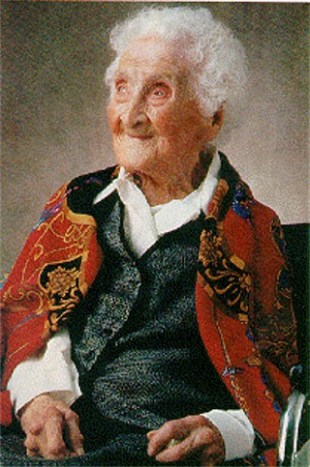
Jeanne Louise Calment is thought to be the world’s longest living person in modern times. She was born in 1875 in France, met Vincent Van Gogh as a young teenager, but eventually died in a nursing home in 1997, 122 years old! She took up fencing at 85, rode a bicycle until she was 100, ate two pounds of chocolate each week and quit smoking at 119 (http://anson.ucdavis.edu/~wang/calment.html). Back in the antediluvian period, in a purer world closer to creation, several lived over 900 years. But in each case, scripture punctuates their earthly existence by saying, “…and he died” (Gen. 5:5).

I have been involved in so many funerals as a preacher, from the first I assisted with Gary Hampton in Gainesville, Alabama, in 1992, until as recently as a couple of weeks ago. What strikes me as much as anything, whether in preparation for it visiting with the family or during slide shows during the service, is watching the progression of life unfolded in photos. Usually they are arranged chronologically, so that the fresh faces of the baby becomes the look of vitality found in children and young adults gives way to the robust strength of early to middle adulthood. Signs of aging subtly appear as the photos fade in and out, the added pounds or gray hairs or the advent of wrinkles. Pictures eventually show frailty and signs of physical deterioration. Then, one in attendance simply needs to gaze at the casket, if present, to see that this once fresh, new physical life does not go on forever.

The writer of Hebrews speaks in hopeful, positive terms to Christians as he proclaims the superiority and potency of Jesus, our great High Priest. At the cross, He offered His own life to “put away sin by the sacrifice of Himself” (9:26). Having a human body, Jesus was destined for death “inasmuch as it appointed for men to die once…” (9:27). Death is unavoidable, but it does not have to be unhinging. Death is followed by judgment, but that day can be the day of salvation realized and eager anticipation (9:28). What happens on the other side of death depends on what we do with Jesus on this side of it.  Whatever we decide, we will make the appointment Turner, Sullivan, Calment, Adam, and billions of others have already made. We must decide if we will meet it prepared.

jeanne_calment_1895

jeanne-calments-quotes-7
Jeanne later in life

Confident And Unafraid

Neal Pollard

Some are afraid of death because they’re uncertain of where they are going, but others are afraid of death because they are certain of where they are going! Paul was confident even in the face of death (2 Tim. 4:6-8). He could see his end coming but he embraced it. While it is possible to have a false hope and confidence about eternity (cf. Mat. 7:21-23), the faithful New Testament Christian should be confident and unafraid of death. By looking at the last words we have from Paul, we can learn from him how to face death. How could he be so confident even in the face of death?

He was going to face Jesus as judge (1). Our relationship with Christ makes the difference. If I don’t know Jesus and haven’t made Him Lord, I don’t want to face Him in the judgment. But if I’m in Christ, there are several reasons why I long to face Him there.

  • He understands us (Heb. 2:17-18; 4:15). Even before Christ came to earth, God was “mindful that we are but dust” (Psa. 103:14). When I stand before Christ, He will know what it was like to be me. He will have experienced temptation and be sympathetic and merciful.
  • He will be fair (2 Tim. 4:8—He’s the righteous judge). This means in accordance with what God requires. That means He won’t be more lenient than He’s promised, so I can’t expect to disobey His will in this life and hear Him say, “Claim your eternal inheritance in My Father’s house.” If I never obey the gospel, when I face Christ at the judgment He’ll be fair. If I obey the gospel but become unfaithful, when I face Him at the judgment He’ll be fair. But if I’ve tried to walk in His light, though I sometimes fell short, He’s going to be fair (1 Jn. 1:7-9). He knows I’ll be struggling with sin up until the day I die, but if He sees me struggling, He’s going to be fair. More than that, He’ll be merciful and faithful to atone for my sins!
  • He’s told us by what we’ll be judged (2 Tim. 4:2). It’s why we must faithfully present it in spirit and in truth “with great patience and instruction.” Jesus said His word will judge us in the last day (John 12:48).

I can face death confidently because it won’t be just any man judging me. Like you, I’ve had some people judge my actions and motives pretty harshly and unfairly. They may have thought they knew my heart or every fact, and they were ready and seemingly eager to pronounce me guilty. That’s not going to happen with Jesus! He’ll be consummately fair!

He spent his life doing good (5). This verse is the measuring stick of every gospel preacher, who asks, “Was my mind, endurance, work, and ministry as God wanted it to be?” No preacher wants to go through life and have these answers to be no. But in a broader sense, that’s a question every Christian needs to ask. Paul could look at his life with spiritual confidence (7). Three times, Paul, in essence, says, “I have” lived a faithful Christian life. You’ll remember that the first part of Paul’s life was spent not doing good, but from his conversion to his death he did good. Think about his missionary journeys in Acts. Think about all he went through for Christ that we read about in 2 Corinthians 11. What about the trials he mentions in Philippians 1? You may have a past you are ashamed of. Even as a Christian, you may have some regrets and things you wish you could change. But, if you’ve tried to walk in the light of Christ, you can face death and the judgment with blessed assurance.

He knew that he had a crown waiting (8). When we stop to think about death, it contains many variables that tend to make us anxious if not fearful. But Paul could look to death with the idea of its reward. The crown Paul speaks of is described in many ways in the New Testament:

  • It’s perfect (2 Tim. 4:8).
  • It’s permanent (1 Cor. 9:25).
  • It’s payment (Jas. 1:12).
  • It’s preeminent (1 Pet. 5:4).
  • It’s personal (Rev. 3:11).

But there’s not just one crown or a few crowns available. There’s one for “all who have loved his appearing.” If you sincerely desire it, you can receive it.

He knew that God would be with him (16-18). At the time he wrote, Paul knew betrayal and abandonment. Good friends had left him (10). At times, he had no one to stand with him. But he knew that One was always there (17). He was even confident of the future. Being delivered didn’t mean escaping physical death, but it meant rescue in the eternal sense.

You and I can live with the same blessed assurance of Paul. We’ll never go through anything alone (cf. Mat. 28:20). We may be pilgrims and strangers on earth (1 Pet. 2:11), but we aren’t one this journey by ourselves. The Lord will preserve and deliver us, as He did Paul.

I want to remain on this earth to enjoy family, friends, and brethren. I want to be as useful as I can be for as long as I can. But, like Paul, I can look forward to dying (cf. Phil. 1:21-24). We can be confident, even in the face of death!

leap_of_faith3

How Do You Spell “Cross”?

Neal Pollard

  1. “SEE”– Look at Calvary. Don’t turn away. I know it’s not easy. What is done to Him is shameful. I know. But, look closely! Past the spittle. Beyond the blood. There. In His eyes. Friend, that is love. It is love for you! See the nails in His hands and feet, fastening Him to a tree He created for man’s use. Look at the love He has for you!
  2. “ARE?”–Are you able to see that He bled and died for you? Are you willing to admit you’re lost without Him? Are you ready to submit to His will, to obey Him, and to live for Him? Are you prepared for eternity? Are you convinced?
  3. “OH”–Hear His cries of pain and agony. The death of a thousand deaths. Bitter moans of His disciples. The gasp of heaven’s angels. The sorrow of a Father for His only begotten Son! The gasps and exclamations of a hateful mob.
  4. “SS”–That’s the hiss of the beguiling serpent. The one who is bruising the heel of the perfect One, putting God the Son in the tomb. This is his moment of triumph. Though resurrection will soon spell victory for Christ and hope for man, at the cross the devil must be enjoying his front row seat at Calvary. Doesn’t he anger you? Disgust you? Motivate you? Live for Jesus, the Lion of Judah. Don’t live for the roaring, devouring lion.

Friends, the cross spells the difference between heaven and hell, hope and hopelessness, joy and sorrow, night and day!

4468491785_0c64a0f076_o_d

THE MORE I KNOW, THE LESS I KNOW

Neal Pollard

It is a true paradox. Today,  I’ve been married longer than I have ever been.  I’ve been a father longer than I have ever been.  The same is true for me as a Christian, a preacher, and every other relationship I am in.  My experience in all of these has never been greater than it is right now.  Yet, as I examine things, I realize just how much I do not know.  I am not saying that truth is unknowable, for such a statement would be false and contradictory to what God affirms in Scripture (John 8:32; Eph. 1:18; 1 Tim. 3:15; etc.).  It is just that I realize how little I understand compared to what needs to be understood, that I find the challenge of putting truth into practice in every situation requiring wisdom and understanding as daunting as I ever have.  Yet, despite such a realization, my optimism has never been greater.  Why?  Because I have never believed more strongly in the power and wisdom of God, nor have I ever depended more on Him for strength and provision where I am lacking than I do today.  I feel smaller, but He seems bigger.  While the walk on the narrow way seems a steeper, more strenuous, incline each day and the challenges to faith more daunting, more than proportionate to this is my realization that God “is able to do exceedingly abundantly above all that we ask or think, according to the power that works in us” (Eph. 3:20). My conviction about what the Bible says has never been stronger. My belief in God’s existence, involvement, concern, and righteousness has never been more than this moment.  Yet, my awareness of my finiteness and limitations, the transiency of this life, and the ferocity of the adversary is acute.  Incredibly, this doesn’t cause me to despair. It causes me to hope. It takes the focus off me and puts it where it belongs—on Him! He is able to establish me through His Word (Rom. 16:25). He is “able to make all grace abound to” me, that I, “having all sufficiency in all things, may have an abundance for every good work” (2 Cor. 9:8).  The most important thing for me to know, every day in every challenge and responsibility, is that God is able (Rom. 14:4; Phil. 3:21; 2 Tim. 1:12; Heb. 2:18).

Don’t misunderstand me. I am not despairing. I am not even frustrated. I am hopeful and excited.  One of the greatest promises of Scripture is, “But He gives more grace” (Jas. 4:6). He will walk with me through the darkest valleys (Psa. 23:4). As He holds my hand and guides me through His word and His providence, He also points me toward His house.  He tells me He will help me get home and when the narrow way becomes too steep or arduous for me to walk alone, He will carry me in His everlasting arms (cf. Deu. 32:7). I will keep studying His inspired guidebook and striving to apply it to my life.  And as I do, I will increase my dependence and reliance upon Him, confident that “He who has begun a good work in [me] will complete it until the day of Jesus Christ” (Phil. 1:6).  That’s really all I need to know!

The Holocaust: What Can Be In Men’s Hearts

Neal Pollard

Though mankind can construct a fantasy to explain our origin and propagate it in places like The Natural History Museum, we have a harder time skirting around our moral outrage at the atrocities committed by the Nazis from 1933 to 1945.  I made my third ever visit to the United States Holocaust Memorial Museum and, more than ever, I was dumbfounded at how anyone could perpetrate torture and treatment like the European Jews received at their hands.  Words like “wrong,” “immoral,” “evil,” “wicked,” and “barbaric” flow freely from the mouths of the visitors who see pictures or watch videos of the organized pogroms and the aftermath of the death cities they called concentration camps. Witnessing such depravity makes it easier to understand how men could take an innocent man like Jesus and be hardened enough to have Him crucified.  It also helps us appreciate how necessary that sacrifice was.

Hitler, if he worshipped anything, worshipped the occult.  He seemed not to truly acknowledge the existence of God, using His name only as a shield to defend his dictatorial policies.  His regime is an extreme example of what men, apart from God, are capable of doing.  With no sovereign standard to submit to and no transcendent truth to believe in, men become their own gods and write their own laws.  They so often do so without regard for the welfare and lives of other people.  They do as they please and what pleases them so often destroys them but also others.

Jesus warned of such a mindset in Luke 16, speaking to the Pharisees, saying, “You are those who justify yourselves before men, but God knows your hearts. For what is highly esteemed among men is an abomination in the sight of God” (15).  He warned on another occasion that “what comes out of a man defiles a man” (Mark 7:20), including “evil thoughts, adulteries, fornications, murders, theft, covetousness, wickedness, deceit, lewdness, an evil eye, blasphemy, pride, [and] foolishness” (21-22).  When men try to negate the nature of God and escape the existence of God, it leads to the perishing of people and the harm of humanity.  The answer is simple, if demanding: “‘Now, therefore,’ says the Lord, ‘Turn to Me with all your heart, With fasting, with weeping, and with mourning.’ So rend your heart, and not your garments; Return to the Lord your God, For He is gracious and merciful, Slow to anger, and of great kindness; And He relents from doing harm” (Joel 2:12-13).  Either way, it’s a matter of the heart! May our hearts get right and stay right.

Christ-less In Crisis

Neal Pollard

It is hard to describe the beauty of faith evidenced in Room 913 yesterday as all the elders and their wives, Wes and Teri Autrey, and Tiffanie and Bethany Vaught stood with Myrna and the rest of the Murphy family at University Hospital yesterday.  We sang songs and Dave Chamberlin prayed a touching, loving prayer.  Moments later, a godly, wonderful woman made her transition from this life to the better one. Despite the inevitable, natural flow of tears, the heartache of separation, and the final earthly stanza of a beautiful, 59-year-old love song played by Ray and Myrna.  Myrna was an obvious success as a mother, wife, grandmother, and friend, but central to everything she did and who she was was Christ.  She did not fear death nor the condition that brought it.  She was ready because of Christ.

When I think of the red-letter days that have occurred in our nation and world during my lifetime, whether the bombing of the Murrah Building, the horrors of 9/11, the unbelievable natural disaster of the December 26, 2004, tsumami (“Boxer Day Tsumami”), the disappearance of the Malaysia Airliner, and the like, I am made to think how many stood in the wake of such tragedy without the hope and promise made possible through Christ.  Yet, every ordinary day where death looms through the natural course of life, people come to those final moments either ignorant or bereft of the bright prospect of what happens beyond death.  Certainly, some think they have hope, but it is not hope rested in what they can find in Scripture but rather what they think, feel, or have been told is real and true.  In some ways, those situations are the most tragic of all. Others are convinced that we are the result of chance and will cease to be when we draw our last breath, yet they continue to try and live with purpose and even act in the interest of others without bothering to ask why they behave civilized with such an animalistic point of view.

But for the one whose hope is built on the truth of what God’s Word says, there is no tidal wave of heart or explosion of life powerful enough to wrench us free from that hope. Paul exalts that we are saved by unseen hope (Rom. 8:24-25). In the rest of the chapter, he proclaims the unfailing love and promise of God for the redeemed who place their trust in Him.  Paul encourages the Thessalonians not to face death, sorrowing like a world without hope (1 Thess. 4:13).  Without Christ’s resurrection, there is no hope (cf. 1 Cor. 15:19-20).  However, because He lives, we can face tomorrow, all fear is gone, we know who holds the future, and life is worth living (Bill Gaither lyrics from “Because He Lives”).

The Murphys will have sorrow and grief to bear.  This is a testimony to their humanity.  But they look at tomorrow with an even brighter anticipation.  This is a testimony to the Christ who lives in them.  It is available for us all!

A dear sister in Christ, Myrna Murphy

Coping With The Loss Of A Child

Neal Pollard

I have never lost a child and pray that I will precede them all in death.  Imagining the difficulty of that situation in no way equips me to feel the grief involved in such a loss.  Yet, the Bible is the answer book on this, as with any, situation.

In 2 Samuel 12:18-24, the Bible says, “And it came to pass on the seventh day, that the child died. And the servants of David feared to tell him that the child was dead: for they said, Behold, while the child was yet alive, we spake unto him, and he would not hearken unto our voice: how will he then vex himself, if we tell him that the child is dead?   But when David saw that his servants whispered, David perceived that the child was dead: therefore David said unto his servants, Is the child dead? And they said, He is dead.  Then David arose from the earth, and washed, and anointed himself, and changed his apparel, and came into the house of the LORD, and worshipped: then he came to his own house; and when he required, they set bread before him, and he did eat.   Then said his servants unto him, What thing is this that thou hast done? thou didst fast and weep for the child, while it was alive; but when the child was dead, thou didst rise and eat bread.  And he said, While the child was yet alive, I fasted and wept: for I said, Who can tell whether GOD will be gracious to me, that the child may live?   But now he is dead, wherefore should I fast? can I bring him back again? I shall go to him, but he shall not return to me. And David comforted Bathsheba his wife….”

The occasion of the death o a pre-born, newborn, infant, or young child must be a peculiarly difficult burden to bear.  It is untimely.  It is filled with the most painful of mysteries.  It is a most intense reminder of the ultimate end of all humanity (Hebrews 9:27).  Yet, it offers a ray of hope and comfort like no other funeral can.  Even as tears stain the cheek, there can be rejoicing in knowing the child is eternally safe.  It will never know the heartache, pain, disappointment, shame, guilt, fear or betrayl through which we routinely go simply by virtue of earthly life.

The Bible says that other parents lost small children.  An unnamed woman lost a son to death at the age of three days old (1 Kings 3:16-27).  1 Kings 14 tells of the death of Abijah, son of Ahab and Jezebel.  All we can tell from the term “child” in that text is that he was anywhere between infancy and adolescence; thus, a small child.  In the New Testament, Jairus lost a “little daughter” (Mark 5).  From ancient Job to the New Testament widow of Nain to today, parents have endured the difficult, unnatural task of burying their children.  Yet, there are special lessons to be learned in the account of David and Bathsheba’s little boy.  Consider four things, from the above text, to be gained when dealing with the loss of a little child.

Do not forget your relationship with God (20).  When David hears news of the child’s death, what is the first thing he does?  He arises from the dust of dejection and goes to church!  He had been praying to God all the time the child was dying.  It is natural that David continued his relationship with God.

It must have been a test of David’s faith.  Read the Psalms and you find the man after God’s own heart (cf. 1 Samuel 13:14) often asking God “why?”.   In Psalm 10:1, he said, “Why, O LORD, do you stand far off? Why do you hide yourself in times of trouble?”  He later says, “My God, my God, why have You forsaken me? Far from my deliverance are the words of my groaning.  O my God, I cry by day, but You do not answer; And by night, but I have no rest” (Psalm 22:1-2, NASU).   Remember that David cried seven days and nights over the child he lost.  Certainly, he knew that God was near, God cared, and God loved him, but he was hurting and things surely seemed unfair.

You may very well feel the same way when you lose a child.  Remember that this is natural, but do not forget your relationship to God.  Know that God is near, cares for you and loves you, too.  An oft-quoted but appropriate saying goes, “Where was God when my child died?”  “Exactly where He was when His Son died.”  Tragedy and suffering can always serve to build spiritual strength.  It can cause us to realize our dependence upon God.  It can help us sharpen our focus on heaven.  It can lead us to count our blessings and remember what we do have.

Remember that your lives must resume (20-22).  No, not today… or tomorrow.  In an unavoidable way, life could never be exactly the same.  Grief is natural and necessary, and it has no exact timetable.

Yet, look to David.  He got back to daily life.  When he received news of his baby’s death, he got up, went to worship, ate a meal, and resumed his work affairs.  As painful as such a loss has to be, one can be thankful and mindful of all that remains that is to be lived for and the many loved ones with whom one has left to live.  As hard as it is to imagine in the midst of grieving such a peculiar loss, you will laugh again and enjoy life again when the time is right.

Let a heavenly reunion motivate you (23).  To me, these are the most impressive words of the story.  David says, “I shall go to him, but he shall not return to me.”  We know where the baby was, so we know where David wanted to go.

Those who lose a little child have an extremely powerful motivation to go to heaven.  Not just that heaven is infinitely better than the awful alternative.  Not just the excitement of seeing God “face to face.”  There is a little child up there waiting for the arrival of his/her parents.  Imagine what a sweet reunion that will be, to see it there.  Each time such parents sing, “Won’t it be wonderful there…?,” they will have an extra measure of appreciation of those words.  Parents grieving this loss can live the remainder of their lives determined to “go to him.”

Find comfort in one another (24).  There is something in the text easy to overlook.  David goes and comforts his wife, Bathsheba.  Didn’t David need comforted, too?  Yes, but Bathsheba had a bond and relationship with the child that David did not.  Her emotional makeup and needs, in such loss, were different from his own.

There is a special need for a wife and mother at such a time as this.  As this tragedy can bring parents closer to God, it can also bring mutually aggrieved mates closer to one another.  It is a time when you can better appreciate Ecclessiastes 4:9, that “two are better than one….”  Thessalonica was going through tremendous heartache and even loss, and you will notice that at least seven different times Paul admonishes them to “comfort one another.”  God knew there would be times when we would need support.  There is special support available from one’s help-meet and companion.

When a little child dies, there is grief because of that tragedy.  There is also cause for rejoicing because of the assurance that can be had concerning the baby’s soul.  The sun will shine again through the clouds of sorrow.  The brightness of God’s love will break visibly before the dewy gaze once more.  Thank God for the comfort possible only in Christ.

Disturbed

Neal Pollard

The ISIS beheadings so frequently in the news and readily available on the internet are terrifying to behold and consider.  If terrorism is, as the Mac Dictionary defines it, “the use of violence and intimidation in the pursuit of political aims,” such would be terrorist activity.  The latest spectacle, involving 21 “Coptic Christians” (Egyptian Orthodox religion), seems to show the Islamic State organization is eager to isolate and persecute those seeking to follow Christ.

Do you ever wonder if there will come a day where New Testament Christians in this country may face the threat of death for standing up for Christ?  It has certainly happened to God’s people in the past, especially when the church was first established.  We read about the persecution that started with Stephen then extended to the saints at Jerusalem in the book of Acts.  We read of individuals like Paul, who suffered for Christ on many occasions (2 Cor. 11).  Then, there are the statements made to encourage Christians who might be rattled or scared at the prospect of such treatment.  Twice, writing the Thessalonians, Paul was concerned they would be disturbed by trouble (1 Th. 3:3; 2 Th. 2:2).  He wrote about how persecution was, at times, inevitable (Ph. 1:29; 1 Th. 3:4; 2 Tim. 2:3; 1 Pt. 3:14).  Of course, Christ showed us His way includes suffering (1 Pt. 2:21ff).

The Bible also gives us great encouragement in the face of the disturbing prospect of suffering for our faith.  Consider a few highlights:

  • We can rejoice if counted worthy of suffering for Christ (Acts 5:41).
  • Those who suffer with Him will be glorified with Him (Rom. 8:17).
  • Suffering can give one a clearer perspective and priority (Phil. 3:8).
  • Suffering is a plain indication of God’s righteous judgment so that we’ll be counted worthy of His Kingdom (2 Th. 1:5).
  • It finds favor with God if we are faithful through our sufferings (1 Pt. 2:19).
  • It is better to suffer for doing right than doing wrong (1 Pt. 4:17).
  • We can entrust our souls to a faithful Creator in doing what is right (1 Pt. 4:19).
  • The God of all grace will comfort those who suffer (1 Pt. 5:10).

I don’t think any of us relish or welcome the thought of suffering under any circumstances.  Yet, God has communicated these truths to us to help us decide in these potential trials.  Perhaps it will help us be less disturbed and more determined to be faithful even to the point of death (Rev. 2:10).

Death Is No Respecter

Neal Pollard

On the young man’s Facebook page, he made hopeful comments.  He had just graduated High School when he wrote, “Can’t wait to see what’s in store for my future.” Randomly, several weeks later, he gushed, “Some day, I’m going to travel the world.”  The Colorado Mesa University student from Lakewood, Colorado, was 19 years old when he went hiking in Bangs Canyon south of Grand Junction and fell to his death on Saturday.

Obituary columns are supposed to be filled with wrinkled faces and names that sound like our grandparent’s generation. Birth dates should go way back to the early or at least mid-1900s.  We’re just not conditioned to think that death can come to the young.  But if we are careful Bible readers, we realize that there is no guarantee that we reach Moses’ inspired guideline for life expectancy of 70 or 80 (Psa. 90:10).  We listen to James as the Holy Spirit leads him to write, “You do not know what your life will be like tomorrow. You are just a vapor that appears for a little while and then vanishes away” (4:14).  It does not say that the vapor floats around for a century and a half or more. We do not get to decide how high and long our vapor hangs in the air.

The fact of this uncertainty ought to cause all of us, wherever we are on the time continuum, to take the attitude James urges.  He writes, “Instead, you ought to say, ‘If the Lord wills, we will live and also do this or that'” (4:15).  Such a statement shows submission under God, humility before God, and obligation to God.  This will help us see each day as a gift from Him and should cause us to use it wisely and productively to accomplish His will.  It should also prompt us not to delay following and submitting our lives to Him.  Instead, it should cause us to not delay becoming a Christian, leaving a lifestyle of sin, or getting actively involved in serving Christ.

Most of us will likely reach a ripe old age.  The law of averages are at play.  But we do not get to choose if we do or do not.  What we can choose is who we serve and when!

Conquered The World And Left It With Empty Hand

Neal Pollard

Somehow, it has come down through the ages that Alexander the Great made this dying request, that he should be buried with his hands outside his coffin so that all his subjects could see that despite all the riches he had accumulated in life that he left the world empty-handed.  Artists through time have famously depicted this posture. It has been retold repeatedly.  Whether or not Alexander requested it, the sentiment reflects divine truth.  Paul told Timothy, “For we have brought nothing into this world, so we cannot take anything out of it either” (1 Tim. 6:7).  Similarly, Job said, “Naked I came from my mother’s womb, and naked I shall return there” (Job 1:21). Solomon similarly states of the wealthy, “As he had come naked from his mother’s womb, so will he return as he came. He will take nothing from the the fruit of his labor that he can carry in his hand” (Ecc. 5:15).

While even world conquerors cannot transport their treasures from time to eternity as they make the transition, everyone will exit the world having left so many things behind us.  We leave behind so much more than our financial assets.  We leave behind memories of ourselves, encouragements either given or withheld, speech either edifying or destructive, deeds which brought others closer to or further from Christ, family members influenced either to follow Christ or abandon Him, and similarly impactful matters.  When we leave earth, our hands are empty.  We have bequeathed all that we are and have for those whose lives we touched and influenced.  They pick up our habits, worldview, pleasures, interests, and priorities.  Some day, they will die and leave empty-handed, too, passing along what in some way we gave them to give.

You may never be a world conqueror, but here is how you conquer the world.  It takes faith and spiritual rebirth (1 Jn. 5:4).  But do not simply possess it.  Be sure to pass it along.

A Physician Not Afflicted With The Disease He’s Fighting

Neal Pollard

Buried in the headlines today is news that the doctor in charge of fighting an outbreak of Ebola in his country has contracted the disease himself.  The health minister of Sierre Leone said that Dr. Sheik Humarr Khan has a confirmed case of the deadly virus that has killed over 600 of his fellow-countrymen in 2014.  Three of the nurses working alongside Khan recently died trying to treat this disease for which there is no known cure or vaccine. Despite meticulous precautions, Khan could not evade contracting Ebola.

It is an unappealing prospect to consider having a job like Khan’s.  Exposing yourself to something utterly deadly (at times, Ebola has as high as a 90% mortality rate) to try and save your fellow-citizens is about as great a risk as a person can assume on this earth.  Not surprisingly, Khan has been hailed as a hero for using his expertise as a virologist to combat this frightful killer.  Now, his own life hangs in the balance (via news.yahoo.com).

The writer of Hebrews contrasts Jesus with the Levitical priests under the Old Law.  They were “sick” with the very sin they were appointed to “treat” among the nation of Israel (Heb. 7:27).  The writer says that Jesus had no need to do this for Himself because He was “holy, innocent, undefiled, separated from sinners…” (Heb. 7:26).  In other words, though thoroughly exposed to the deadly malady of sin, Jesus never succumbed to it.  Earlier, the epistle says, “For we do not have a high priest who cannot sympathize with our weaknesses, but One who has been tempted in all things as we are, yet without sin” (4:16).

Simply put, the One God sent to provide a cure for the deadliest condition ever known was fully exposed to it but did not fall prey to it.  He did, however, die because of it.  Incredibly, that was God’s intention from eternity. Yet, His ultimate sacrifice makes it possible for us to be cured of this otherwise hopeless and eternally fatal condition!  No wonder we praise Jesus as the “Great Physician.”

What We Learn From The Video Of The Fatal SUV-Semi Crash

Screen Shot 2013-12-09 at 2.32.08 PM


Neal Pollard

A relative sent me an inbox message earlier containing a 34-second video of an SUV that loses control and ultimately is destroyed by an oncoming semi-truck.  It is unquestionable that the driver dies instantly and the footage is incredibly disturbing.  While the details given were not accurate—this does not occur in the states nor is there evidence that it involves texting or distracted driving, the end result does not change.  The best information is that the driver in the February 24, 2012, crash was a 32-year-old Moscow resident named Alexander. Driving on the notoriously treacherous M-7 highway in Russia, he lost control of his Nissan Navara, collided with another vehicle, and then drifted into the path of an oncoming Freightliner big rig.  The much bigger semi obliterates the black Nissan into so many pieces and a young man races into eternity (information found and verified on snopes.com).  As I watched this tragedy, a flood of things went through my mind.

  • There can be but a breath between life and death, time and eternity.
  • Death is no respecter of persons, taking the very young, the very old, and every age in between.
  • Seeing something like this cannot but help one appreciate more deeply the value of life and the irreversible nature of death.
  • Statistically speaking, the chances Alexander died in a saved condition are very small.
  • A momentary loss of self-control can have permanent consequences.
  • Our mistakes and misdeeds impact others, too.

Perhaps there are other things to glean, but I would hope that the benefit we might derive from seeing or reading about something like this is to take some time to contemplate the reality of eternity.  Something about considering our mortality, which a video like this should cause, cuts away our rationalization, excuses, and pride.  It opens us up, if only momentarily, to our accountability and what is really true and truly real—that death is appointed and followed by judgment (Heb. 9:27), that we must each appear before Christ’s judgment seat and give an account of our lives (2 Cor. 5:10), and that life on earth is relatively brief (Job 14:1).  This life is about preparing for the next life.  Whether it is the return of Christ or the end of life, the time for preparation may end at any moment.  Let us live ready for that moment!

A Beautiful Tribute

Neal Pollard

Kathy and I attended the funeral of Mildred (Millie) King, Larry’s mom and relative to several Bear Valley members, this morning at the Loveland church of Christ.  Ron Lauterbach, the local preacher there, delivered a fine tribute to the godliness of this woman.  So many kind things were said by Ron as well as family members about her faithful Christian life.  It was all very inspiring.  However, the crowning moment of the service was her widower’s words in her honor.  Ron saved these words for last, and they were touching.  He spoke of his “sweetheart” of 62 years, reflecting on how she put Jesus Christ before anything and anyone else.  Then, he spoke about what a devoted mother and wife she was throughout these many decades.  It was touching to hear about this wife who dedicated her life to raising faithful children and standing faithfully behind and beside her man.  When the service was over, Kathy whispered to me, “I don’t know her, but I want to be just like her.”

Is there any better tribute that can be paid than a life lived well?  She served at times as a preacher’s wife, but mostly a school teacher’s wife.  She made many a meal and sent many a card to others.  Her service was very well attended, especially for a late Thursday morning.  All of this honored her, but nothing more than the ones closest to her lavishing such praise about her spiritual maturity and service.  And the one closest to her of all people, Leland King, spoke most tenderly, fondly, and cherishingly.  No praise outshines the genuine admiration and affection of one’s spouse, the person with the most intimate knowledge of that one.  This kind of legacy lives on, even after that one dies (cf. Heb. 11:4b).


“HAVING OUR ‘I’S’ ON THE DAY OF THE LORD”

Neal Pollard

The Thessalonians had a misunderstanding about the day of the Lord as it related to their dead loved ones.  Paul, moved by the Holy Spirit, set the record straight for these Christians.  As he helps them with their struggle, he gives the faithful great heavenly perspective to help them along.

  • INFORMATION–Paul helps them overcome ignorance concern- ing their dead loved ones and the Day of the Lord (13).  The information should alleviate suffering and instead bring hope.  So many are improperly informed about the Day of the Lord.  Information brings proper perspective.
  • INVITING–Our belief in the resurrection of Christ and the power involved in it to raise the dead in Him makes the prospect of the Day of the Lord more attractive (14-15).    What Paul says about that day for the living and the dead makes it something for which the spiritual mind should long.
  • INCREDIBLE–The description of the details of that day are amazing (16-17).  We can try and imagine it, but what we experience goes far beyond that.  Yet, these images do not frighten us.  They are an assurance to us.
  • INSPIRATIONAL–The net effect of Paul’s words in this paragraph is “comfort” (18).  Contemplating how that Day will be for the saved makes us long for it.  We are not living for here and now.  We live now for that endless Day!