For the next several weeks, I’ll be repeating the book of I Peter in present-day terminology. It’s not a true translation of the book, as I am not qualified to do so. It will be based on an exegetical study of the book and will lean heavily on the SBL and UBS Greek New Testaments, as well as comparisons with other translations (ESV, NASB, NIV, ERV, NLT). My goal is to reflect the text accurately, and to highlight the intent of the author using concepts and vocabulary in common use today.
This is not an essentially literal translation, and should be read as something of a commentary.
I Peter – Pt III
Since we’ve decided to follow God, we have to love each other unconditionally. We have to love each other without ulterior motives. We do this because we’ve cleaned up our lives. We weren’t born into a new life through natural means (like babies). Jesus gave us new life, and he’s never going to die. You’ve read this before, “Everything alive is like grass. Its impressive qualities are like the flowers that show up in grass. Grass dies, along with its flowers, but God’s word will live forever.” This is what you were taught already.
Since you know we’re on borrowed time, sustain yourself with God’s words. Babies instinctively crave what they need to stay alive. We must do the same with God’s words. If we decide that God’s words are good for us, we’ll be rescued when we “grow up.” Before we get to this point, we have to get rid of bad qualities. There’s no room for hate, dishonesty, hypocrisy, jealousy, or attacking character.
It’s easy to imagine how the grumbling began among Korah and other religious leaders of the Israelites. Eventually 250 joined and as the grumbling grew so did Korah’s confidence. It all came to a head as the mob approached Moses and the heated accusations start. Korah cries out, “We’re all just as righteous as you are! Why do you stand before us and bark orders?”
Moses does something unexpected and falls face down. He tells them, “In the morning the Lord will show you all who is holy.” How did those wicked Levites sleep that night? Were they confident that God would deliver them from their “tyrannical” ruler? Maybe they tossed and turned as all sleep escaped them. The following day we read in Numbers 16.32-35,
“and the earth opened its mouth and swallowed them and their households, and all those associated with Korah, together with their possessions.They went down alive into the realm of the dead, with everything they owned; the earth closed over them, and they perished and were gone from the community.At their cries, all the Israelites around them fled, shouting, “The earth is going to swallow us too!”And fire came out from the Lord and consumed the 250 men who were offering the incense.”
This wasn’t the end of the line for all of Korah’s family though. We read in Numbers 26.9-11,
“…Nemuel, Dathan, and Abiram. These are the Dathan and Abiram, chosen from the congregation, who contended against Moses and Aaron in the company of Korah, when they contended against the Lord and the earth opened its mouth and swallowed them up together with Korah, when that company died, when the fire devoured the 250 men, and they became a warning. But the sons of Korah did not die.”
Some of Korah’s family live on. Now, how would many people feel about God if they had watched their family and possessions swallowed up by the earth? A horrific event like that might make them bitter, angry, and traumatized. What a cruel and selfish God.
Interestingly enough, the sons of Korah are responsible for writing a few of the Psalms. They aren’t laments reflecting back on how God had treated them unfairly. In fact, it seems as though they had their eyes opened to the character of God. He is holy and they are in awe of their awesome Father.
Here are a few segments taken from Psalm 84, written by the sons of Korah.
Verses 1-2
“How lovely is your dwelling place, Lord Almighty!
My soul yearns, even faints, for the courts of the Lord; my heart and my flesh cry out for the living God.”
Verse 4
“Blessed are those who dwell in your house; they are ever praising you.”
Really? Blessed? Ever praising Him?
Verse 10
“Better is one day in your courts than a thousand elsewhere; I would rather be a doorkeeper in the house of my God than dwell in the tents of the wicked.”
The language does not reflect a family who has witnessed tragedy brought on by the hand of God. It seems they were spared because the Lord saw something inside them that wasn’t found in the hearts of the others. A heart willing to repent and live differently. God knew they could handle rebuke and had a sincere desire to live righteously. It’s been speculated that perhaps they were too young to understand why their father and the other Levitical leaders were outraged. Maybe they thought they were a part of a just cause? After all, these evil men were in a position of authority. They were their teachers. How could 250 religious rulers be wrong? Whatever the reasons, God proved to be right again.
There are people in this world who don’t understand the righteousness of the Lord. This lack of knowledge leads to terrible—often costly, decisions, and lifestyles.
If you ever find yourself questioning God and His Law we should look in rather than up for who’s to blame. History proves time and again that God is never the issue— we are. Sin, injustice, unfairness, and evil are human inventions. God has given us His son as the solution and in Him we find answers. Those answers bring us satisfaction and peace every time.
Water well dating back to the early 1800s. Location, Valhermoso Springs hotel. Lacey’s Spring, Alabama
When I was growing up, there were certain tasks that my parents would give me that I didn’t want to do. Washing the floorboards, weeding the garden, cutting vinyl siding, and digging holes with a post hole digger are just a few examples of what many of us would consider hard work.
I remember the hours working on these jobs, covered in sweat with blistered hands, and an all-around feeling of fatigue. There were a couple times In particular where I can remember my dad saying the classic phrase, “Son this is character-building work.” And then he would tell a story about some hard job he had to do as a kid. Looking back, these jobs really did build character, but there’s more to it than just digging a hole and sweating.
You can be a hard worker, and still lack honesty, sincerity, and humility. Character building takes serious work and commitment. Luckily, God has given us His perfect word that tells us how we can grow our character.
If you’ve ever struggled with living out your faith, or with your commitment to Christ, working on growing our character will help us to focus on what’s truly important in this life.
There are many different ways that we could go about building our character, and as we look to scripture a good place to start in this endeavor is by practicing righteous thinking. If we want to grow our character, we have to start changing the way that we think. Problem is, it’s a lot easier said than done. There are two different passages that tell us how we can practice righteous thinking.
Philippians 4:8 reads, “Finally, brothers, whatever is true, whatever is honorable, whatever is just, whatever is pure, whatever is lovely, whatever is commendable, if there is any excellence, if there is anything worthy of praise, think about these things.” As Christians we can learn to dwell on righteousness by filling our mind with godly traits. If we are truly set on transforming our minds to think on righteousness, we have to replace worldly thinking with godly traits.
Romans 12:1-2 says, “I appeal to you therefore, brothers, by the mercies of God, to present your bodies as a living sacrifice, holy and acceptable to God, which is your spiritual worship. Do not be conformed to this world, but be transformed by the renewal of your mind, that by testing you may discern what is the will of God, what is good and acceptable and perfect.” It’s possible to practice righteous thinking by renewing our mind with the will of God. No longer looking to ourselves as master, but to God. By doing this our thinking changes. Our focus shifts from this world, and our minds will dwell on righteousness.
Do you want to be known as a person of character? The first change we must undergo is to start thinking righteously. Righteous thinking is no easy task. It takes work, and many times we fall short of this goal. Thankfully we serve a loving God who wants nothing more than for us to spend an eternity with Him in Heaven.
Question is, do we want this future enough to make the right decisions?
Recently, I heard Dr. Ted Burleson point out that the book of Acts reveals three men named Ananias. The first one is in Acts five, the second one is in Acts nine, and the last one is in Acts 23. Those three men are very much unalike from one another in some basic, important ways.
The Ananias in Acts 5 was a Christian known for lying to Peter and to God about his offering. On the heels of Barnabas’ publicized and praised generosity, this man conspired with his wife to deceive the church about how much they were giving. While we do not read his words or even read that he spoke, it is implied that he did talk this over with Sapphira. His entire legacy is of a liar! Isn’t it tragic that the rest of his life, including his conversion, are completely omitted. This is all we know about him. What a sobering object lesson that I can undo a great deal of other good in my life if I let sin reign in my heart!
The Ananias in Acts 23 was the Jewish High Priest Paul stood before after he was arrested in Jerusalem. “Ananias was High Priest from A.D. 47 to 66, when he was assassinated by the Jews because of his support of the Romans during the Jewish uprising” (Newman and Nida, 432). We also learn that he was “famous for bribery and plunder of temple offerings” (Gangal, 386). Then we see, “His action (having Paul struck on the mouth, NP) was completely in character. Josephus depicted him as one of the very worst of the high priests, known for his pro-Roman sentiments, his extreme cruelty, and his greed” (Polhill, 468). He is known both in Scripture and out of Scripture for being unscrupulous. He will lead the attack against Paul before Felix (Acts 24:1-9). Not only does he refuse to accept Christ, he persecutes and attacks Christ’s messengers. He went out into eternity a sworn enemy of Jesus. At the Judgment, he will stand before Him! He reminds me that life is about preparing for eternity, and it is tragic to live for self in this life and reject the One who died for me.
The Ananias in the middle, in Acts 9, is completely unlike the other two who shared his name. He is introduced to us as a “disciple” (10). The Lord chose him for a choice mission, to go preach to Saul of Tarsus (10). As fearful as that task understandably was, he obeyed the Lord and went (11-17). Acts 22 adds that he was devout (God-fearing)(12), well-spoken of by other Jews in Damascus (12), and a faithful preacher (14) who was bold in message (16). Jesus did not convert Saul on the road; He chose a human messenger on earth to preach to him. Of all the disciples he could have chosen, this Ananias was given the opportunity. This man seized the opportunity and helped give the world the greatest preacher, save Jesus, the world has ever known! Nothing is said about this man after he preached to Saul. Whatever else happened in his life, Ananias is praised for his courage and faithfulness. He is forever linked to this eventual apostle, the man who baptized the ultimate world evangelist whose name we all know 2,000 years later.
There are other “Neals” in the world today. None of us have our names in the Bible, but which of us will have our names in the “book of life” (Phil. 4:3; Rev. 3:5)? Of course, the same is true of you whatever your name is. How we respond to the Lord’s grace as well as His will matters. Ask Sapphira’s husband. Ask Paul’s antagonizer. Ask Paul’s preacher. We have one life to prepare for the next life. May we so live that our name will be associated with the Name above all names (Phil. 2:9-10)!
Quite possibly one of the most difficult passages to read is 1 Samuel 15:3. In this verse God commands the Israelites to kill the Amalekites and He specifically says, “kill both man and woman, child and infant, ox and sheep, camel and donkey.” This verse is used by many to discredit the Bible and mock those that believe in a “God that murders babies.”
At first glance, this verse appears to be morally wrong. Did God really command the Israelites to commit infanticide? If He did, why would we serve a God like that? Why take the time to pursue a relationship with God knowing that He shed innocent blood? Doesn’t Proverbs 6:17 say that God “hates hands that shed innocent blood?” Maybe God’s a hypocrite and there’s a double standard. Maybe God doesn’t really love His creation. Maybe we serve a God that isn’t as pure and holy as He claims to be. Or maybe there’s a reason why God gave this command.
1 Samuel 15:3 can be better understood if we recognize several important facts.
The Context. In order to properly handle God’s Word, we can’t just pick a verse and read it at face value. So it is important that we read the context. Verse two shows us that the Amalekites attacked Israel on their journey out of Egypt. In return God promised to one day utterly destroy the nation (Deut. 25:17-19). From the moment the Amalekites chose to fight the nation of Israel, their fate was sealed…but not immediately. Exodus 17:8-16 records the events that took place and God says, “the Lord will have war with Amalek from generation to generation.” 1 Samuel 15:3 is God keeping His word.
Biblical and secular history. The Amalekites were recorded as being ruthless and cruel. They would actively search for pregnant women and kill their babies before killing the mother. In raids they would kill women, children, and everything else. They killed for sport and they raided places for fun. They didn’t fight other nations trying to protect themselves or their land, they just enjoyed slaughtering people and taking their stuff. The Amalekites were known for their cruelty, but also their hate for the Israelites. History also reveals that the Amalekites required that any and every living offspring was to avenge any nation or people that attacked them. This is seen with the Israelites in scripture. For 300 years the people of Israel fought with them. “Generation after generation” experienced war with the Amalekites. 300 years God let the murdering of His own chosen people to happen.
Why did God let them do this for so long? Well, why did God save Rahab? Or tell Noah to warn the sinful people about the flood? Why did God promise not to destroy a city if there were just ten righteous people in it? Why did God send prophet after prophet to warn the Israelites of their sin? Why did God allow His own creation to spit on, mock and crucify His only Son? Because God is a God of mercy and second chances. The Amalekites were given 300 years to repent, but 1 Samuel 15:3 is the result of their lack of repentance. God warned them what would happen, and there had to be punishment for sin.
But what about the innocent children and babies? Do you think God knew their future and what they would eventually become? God would never destroy a person that wanted to be saved. God wants everyone to come to repentance. 300 years of children and not a single one came to God and asked for repentance. God knows a whole lot more than we do. He has a perfect knowledge of the past, present and future. Since the culture of the Amalekites demanded that their offspring continue to murder and raid, the killing of the Israelites never ceased. If only a select group were killed, the problem would persist in the future as it had in the past.
God cannot sin, and in His infinite knowledge He gave a command that was without sin. A sinful nation that refused to acknowledge God had to face the consequences. On the judgement day there will be many people who are punished because of their sin. God in His mercy has given us a way to be saved, but it is up to each individual to make the decision that will ultimately lead to either torment or salvation. God is patient and loving, but He is also holy and righteous in His judgment.
How much do you trust a liar? A study was conducted by Psychology Today where they asked 1000 people how many lies they’ve told in the last 24 hours. The average answer was two lies, but 75 percent of men said they would lie if they were talking about their social status. 80 percent of women said they have lied about their weight.
The average person we come in contact with has no problem lying to us. Whether it’s at work, in school or to friends and family, the majority of people feel that it’s morally okay to lie.
Ephesians 4:25 says, “Therefore, laying aside falsehood, speak truth each one of you with his neighbor, for we are members of one another.”
“Therefore” is a grammatical tie to previous verses. Each time we read this word we should see it as a finger pointing up to the previous verses. Contextually Paul is saying, “Therefore, since we have put on the new self lay aside falsehood.”
If you’re a Christian reading this verse, you have put on the new self. So we are commanded to stop lying and be truthful in our interactions with others.
Paul commands us to tell the truth. This seems like a simple command, yet sadly we get caught up in telling lies. We want what’s easiest. Many are tempted to take what seems to be the easy way out.
But there is something to keep in mind the next time we are tempted to lie:
Our reputation is ruined by dishonesty. If people catch us lying, why would they believe us at all? The boy who cried wolf is a prime example of this very fact. We all know how this story goes, and the bottom line is we lose our credibility if we lie. When we are honest and choose to tell the truth, people will trust us, and God’s Word has a better chance of reaching the lost.
When it comes to our Christianity, we want people to trust us. When we lie we lose our credibility and our ability to proclaim the gospel is harmed. Telling the truth in every situation is an attribute we are to have in our new walk with Christ. Plus, nobody wants to be friends with a liar.
Growing up there were certain tasks that my parents would give me that I didn’t want to do. Washing the floorboards, weeding the garden, cutting vinyl siding, and digging holes with a post hole digger. These are just a few examples of what many of us would consider hard work.
I remember the hours working on these jobs, covered in sweat with blistered hands, and an all-around feeling of fatigue. There were a couple times in particular where I can remember my dad saying the classic phrase, “Son this is character building work.” And then he would tell a story about some hard job he had to do as a kid. Looking back, these jobs really did build character, but there’s more to it than just digging a hole and sweating.
You can be a hard worker, and still lack honesty, sincerity, and humility. Character building takes serious work and commitment. Luckily, God has given us His perfect word that tells us how we can grow our character.
If you’ve ever struggled with living out your faith, or with your commitment to Christ, working on growing our character will help you focus on what’s truly important in this life.
There are many different ways that we could go about building our character, and as we look to scripture a good place to start in this endeavor is by practicing righteous thinking. If we want to grow our character, we have to start changing the way that we think. Problem is, it’s a lot easier said than done. There are two different passages that tell us how we can practice righteous thinking.
Philippians 4:8: “Finally, brothers, whatever is true, whatever is honorable, whatever is just, whatever is pure, whatever is lovely, whatever is commendable, if there is any excellence, if there is anything worthy of praise, think about these things.” As Christians we can learn to dwell on righteousness by filling our mind with godly traits. If we are truly set on transforming our minds to think on righteousness, we have to replace worldly thinking with godly traits.
Romans 12:1-2: “I appeal to you therefore, brothers, by the mercies of God, to present your bodies as a living sacrifice, holy and acceptable to God, which is your reasonable service. Do not be conformed to this world, but be transformed by the renewal of your mind, that by testing you may discern what is the will of God, what is good and acceptable and perfect.” It’s possible to practice righteous thinking by renewing our mind with the will of God. We’re no longer looking to ourselves as master, but to God. By doing this our thinking changes. Our focus shifts from this world, and our minds will dwell on righteousness.
Do you want to be known as a person of character? The first change we must undergo is to start thinking righteously. Righteous thinking is no easy task. It takes work, and many times we fall short of this goal. Thankfully we serve a loving God that wants nothing more than for us to spend an eternity with Him in Heaven.
Question is, do we want this future enough to make the right decisions?
My wife, my parents, and I took a personality test tonight just for kicks. It was a simplified test, nothing too in-depth, but was very entertaining and insightful. There were two sections to the test: one with a row of strengths under four different personalities and another with a row of weaknesses for those same personality types.
For all of us, it took quite a while to complete the strengths sections; it took probably less than a minute to complete the weaknesses section. It’s a lot easier to readily admit and focus on our flaws and faults than it is to honestly acknowledge our strengths.
Maybe it’s because we’re hesitant to praise ourselves (this isn’t always a bad thing, but we tend to overdo it). Maybe it’s because it’s easier to see our glaring weaknesses than our helpful strengths. Weaknesses usually sound something like, “I am… ” or, “I have…” or, “I can’t…” or, “I’m not…” followed by a negative attribute.
Focusing on our weaknesses is detrimental for two primary reasons.
First, focusing on weakness restricts growth. Even when pointing out some major issues with the church at Philippi, Paul lays on the praise heavily before exposing flaws. When he wrote to Timothy to rebuke him (II Timothy) he made sure to point out his strengths, too. We have to be balanced as we look to improve ourselves. We can acknowledge the presence of a weakness, but focusing on it will likely destroy any effort we make to grow past it.
Secondly, focusing on our weaknesses can be selfish. We can place a disproportionate emphasis on ourselves when we criticize self or lean on weakness as a crutch/excuse. It can also be selfish because while we’re overanalyzing and criticizing ourselves, we can easily overlook growth opportunities.
Strengths allow us to do for others. Focusing on what we cando and we aregood at doing empowers us to help others. Obsessing over our weaknesses can make us too internally focused; capitalizing on our strong points allows us to focus more on other people.
When we do a mental self-checkup to see where we can improve, let’s focus more on how we can use our strengths to help others and less on how flawed we are. Of course we’re flawed – but we can also do a lot of good for others and we have the blood of Jesus to keep us pure (I John 1.7). As a wise man once told me, “If you focus on your strengths, your weaknesses will take care of themselves.”
There is an obscure Bible character that holds a great deal of fascination for me. His name is Harbona(h) and his name only appears twice, both in connection with the account of Esther. He is introduced in Esther 1:10 and plays a key role in this divine story of providence in Esther 7:9. His name means “donkey driver.” Granted, his name means more than that. The Exhaustive Dictionary of Bible Names says his name means, “Warlike; martial; a destroyer. Ass driver; the anger of him who builds” (Cornwall and Smith 96). Harbonah was the eunuch in Ahaseurus’ court who informed the king of Haman’s treachery, saying, “Behold indeed, the gallows standing at Haman’s house fifty cubits high, which Hanan made for Mordecai who spoke good on behalf of the king!” Ahaseurus, true to form, wasted no time and said, “Hang him on it.” Thus, ended the life of the man who tried to end the life of the Jews, through whom the Messiah of the world would eventually be born. Thus, Harbonah has an important footnote in the beautiful unfolding of God’s providence in the life and book of Esther. His name is favorably included in only sacred volume God ever moved men to write. That’s a pretty good legacy for a man whose name means “donkey driver.”
All of us are probably curious, if uninformed, about what our name means. I once learned that my middle name, by which as a “junior” I am called, Neal, means “champion.” Lest I should be exalted above measure, my first name, Gary, means “hunting dog.” My surname, Pollard, means “tree topper.” Thus, taken together, I can be proud to know that my full name means “champion hunting dog tree topper.” Solomon wrote about a good name, calling it better than it is more desired than great wealth (Prov. 22:1) and better than a good ointment (Ecc. 7:1). Regardless of what your given name means, what means most and how your name will be remembered on the lips of others, good or bad, is determined by what you do on this earth as is associated with that name. So even if your name is Rafe Bosephus McGillicutty, that name will be sweet on others’ lips if how you wear your name honors the Lord and promotes His cause.
Pick out a local church leader and pray for him and his family for several minutes, being very specific in your petitions on their behalf.
Email a missionary to encourage them and get an update on how their work is going.
Buy a gift card and try to give it anonymously to a young or struggling family you know.
Thoughtfully select several people to compliment and encourage by writing on their Facebook wall or other social media platform.
Briefly visit a brother or sister in an assisted living facility or nursing home.
Ask a co-worker, classmate, or neighbor what you can be praying for them about.
Listen to a book of the Bible in its entirety on your commute.
Let go of a grudge or deep-seated resentment.
Do an unexpected deed of kindness for a random stranger.
Speak to someone you see regularly about your faith–what God is doing in your life, what’s going on at church, etc.
Spend some one-on-one time with one of your children (playing a game they enjoy, going for a walk, taking them out to eat, etc.).
Show love to your mate in some tangible way you know he/she enjoys (speak their “love language”).
Practice pleasantness with everyone you meet today, being mindful of your facial expressions and body language.
Carve out some time for meaningful, personal devotion (including Bible reading, singing, and prayer)–make worship more than a Sunday matter!
None of these are overly time-consuming. Pick as many as you can. If you cannot get to them all today, then pick up where you left off tomorrow. Grow your list. Use your imagination and creativity. Find yourself looking and acting more like Jesus! See yourself in Matthew 5:13-16.
Some years ago an AP wire report yielded this incredible, true story. Apparently a dirty joke was sent by a company employee to 6,000 people! What was so unusual? The perpetrator, intending to send a daily report to reporters and government officials, was a federal communications commission employee! The headline read, “Joke Is On The FCC” (via Philadelphia Inquirer, 5/9/99). The FCC, charged with setting decency limits on various media outlets, was guilty of that which they are employed to prevent. Ironic!
The jokes abound. Plumbers have the worst pipers. Electricians have the faultiest wiring. Doctors are the sickest people. Preachers’ kids get in the most trouble. They learn it from the elders’ kids. While these are more axiomatic than true, there are guilty plumbers, electricians, doctors, preachers, elders, lawyers, politicians, and the like out there. They get such attention because they fail at that which is supposed to epitomize and characterize them!
Christians become Christians through grace and obedient faith (Eph. 2:8-10). But Christianity is more than a state of being. It requires certain characteristics to be in one’s life. A Christian is part of a spiritually “chosen race, royal priesthood, and holy nation” and is a person “for God’s own possession” (1 Pet. 2:9). Moreover, a Christian is one redeemed from all iniquity, purified unto himself, and zealous of good works (Ti. 2:14). A Christian is one who has put fleshly deeds to death (Col. 3:5). A Christian takes on “the fruit of the Spirit” (Gal. 5:22-23), which means assuming a code of conduct and disposition of heart that is clear before the world’s eyes (Matt. 5:14-16).
There is an irreconcilable irony when a Christian is indistinct, indifferent, immoral, and inconsistent! Like salt without taste, a Christian who dresses, talks, and behaves like a worldly person cannot be properly used by God (cf. Matt. 5:13). A Christian without ethics, morality, honesty, and integrity is a walking oxymoron. A Christain who talks one talk and walks another makes no sense and draws no following, at least none leading to Christ (cf. John 12:32; 1 Cor. 11:1).
Will the “Great Report” reveal that we, as Christians, spoke and showed the saving message or the wrong message? What message are we sending to others? Let it not be the irony of wearing a name we are not honoring.
Seven churches in Asia Minor (modern-day Turkey). Each remembered for an overall characteristic. The same is true for individual Bible characters, isn’t it? Most remember Moses, Samson, David, Jeroboam, Jonah, Jeremiah, Nehemiah, Judas, Peter, Paul, and John for a particular attribute, whatever else could describe their lives. That’s more than fascinating. It’s sobering.
What about you and me? Is there a word others–those we attend school with, work with, live near, attend church with, or share family ties with–would use to describe us? Here are some possibilities:
Grumpy
Disagreeable
Dishonest
Hot-tempered
Unreliable
Divisive
Worldly
Gossiping
Selfish
Such attributes are the cumulative result of the attitude, words, and actions that we portray each day we live. Everybody has good days and bad days. But, there is an overall tenor and flavor to our lives that cause people to associate something with us. However, the word might be different:
Gentle
Patient
Loving
Kind
Serving
Sacrificial
Unselfish
Humble
Uniting
Faithful
Courageous
That, too, is being built moment by moment, day by day.
With both groups of words, we can think of people who epitomize characteristic above. But I want to know, “Which one would best describe me?” Don’t you want to know that about you?The good news, if you don’t like the answer there’s time to change that. Dickens’ Christmastime novel about Ebenezer Scrooge is written to make that very point. Infinitely more importantly, the Bible is written to make that point. We can be transformed through the influence of Christ in our hearts and lives (Rom. 12:1-2; 2 Cor. 3:18). How will you be remembered?
A comedienne draws attention for being mean-spirited and cutting when roasting a White House press secretary recently. While cringe-worthy, it’s hardly an isolated incident. Nor is it confined to Washington politics, being seen across the spectrum of society. Civility has taken a beating in the current culture. Social media may be a breeding ground for insults, attacks, hostility, and animosity, but it’s hardly confined to just that forum.
Make no mistake, a lack of kindness is a hallmark of worldliness and unrighteousness. It is the antithesis of a quality God demands of the Christian. Ephesians 4:32 commands, “Be kind to one another….” The original word translated “kind” here is found seven times in the New Testament, and it is a divine quality. In fact, in six of the seven references, God demonstrates it. In Ephesians 4:32, it is to be exhibited by us in view of God’s having shown it to us through Christ. It means “pertaining to that which is pleasant or easy, with the implication of suitability” (Louw 246). It causes no discomfort, meets a high standard of value, is morally good and benevolent, and is beneficent (BDAG 1090). In common usage in New Testament times, the word, when referring to people, was synonymous with being decent, of good disposition, gentle, good-hearted, and morally upright (Kittel 1320). In other words, people in society could and did recognize its presence in people. Its absence is also, sadly, noteworthy.
The old adage “kill them with kindness” might imply utilizing kindness to get an advantage or revenge on someone unkind, making us look good and them look bad. God calls for something more out of those of us striving to hold up the Light to a dark world. The world is sin-sick, and rude, coarse, hateful attitudes, words and actions are but a symptom of this. We have the medicine the world needs, even if it fails to see its need. Some will be drawn to it when they see it in us.
Paul counsels Rome with inspired advice that will help us cure the rude, ugly, spiteful, and vicious behavior we often encounter. He says, “Never pay back evil for evil to anyone. Respect what is right in the sight of all men. If possible, so far as it depends on you, be at peace with all men. Never take your own revenge, beloved, but leave room for the wrath of God, for it is written, ‘Vengeance is Mine, I will repay,’ says the Lord. ‘But if your enemy is hungry, feed him, and if he is thirsty, give him a drink; for in so doing you will heap burning coals on his head.’ Do not be overcome by evil, but overcome evil with good” (Rom. 12:17-21). Look closely at what he says. Avoid the payback mentality. Go to great lengths to preserve peace. Leave revenge to God. Don’t stoop to the world’s level.
This imitation of God with revolutionize the places where we practice this. The moral malignancy plaguing our world cries out for medicine, and we as Christians know where to access it. Let’s discipline ourselves to use it, even in the face of those spreading the spiritual sickness of spite.
It has been said that visitors make up their mind about a church in the first ten minutes of their visit. Before they’ll even discern the doctrine we teach or form an impression about the distinctiveness of our worship, they’ve already decided. If you will walk through the first ten minutes of each time you come to services, you can discern the needs visitors have when they “enter” (cf. 1 Cor. 14:23-24) our midst. Consider these needs.
Where to park. Designating visitor parking and having members park as far from the main entrance is thoughtfulness. Having a greeter or greeters in the parking lot who can make contact quickly and facilitate with friendliness makes a positive impression.
Where the restrooms are. Good hospitality ought to drive us to be thoughtful and even proactive (i.e., when greeting, point out the nearest facilities). Along with this is showing them where the nursery is. If they have infants, toddlers, or small children, they are likely to have needs during their time in attendance.
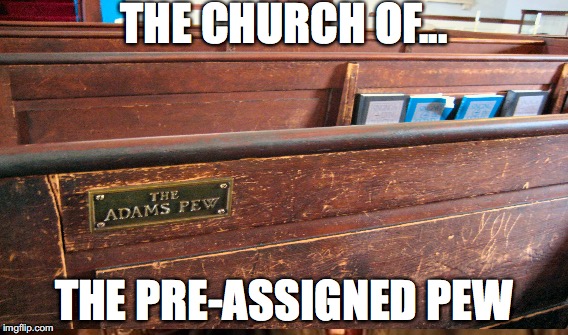
Where to sit. An obvious practical help here is not to crowd the seats at the rear of the auditorium. It’s less awkward to be seated without parading past rows and rows of people. If there’s a full crowd, have designated personnel, pleasant, friendly, and considerate, to help them find a seat. Never, ever, never have a designated pew! “Pew-itis” is a disease that should be eradicated from every congregation.
What to expect. This is something worship leaders can do, explaining periodically why we do what we do in a “user-friendly” (as opposed to browbeating) way. Door greeters and those at a welcome center can help, as can visitor packets that cogently explain things. Such packets can include not just activities we do, but a map of where we do them.
How to find out more. Have a “new member orientation class” or a “Church 101” class available for those who are “seeking.” It can include an annual church calendar of events, ministries, church leadership (complete with pictures and bios), ways to be involved, and the like to orient newcomers.
At first, it may seem hard to identify book, chapter, and verse for the foregoing suggestions. But consider these principles. There’s the Golden Rule (Mat. 7:12; Luke 6:31). There’s the principle of the Law of Moses, which says, “The stranger who resides with you shall be to you as the native among you, and you shall love him as yourself, for you were aliens in the land of Egypt; I am the Lord your God” (Lev. 19:34). Colossians 4:5 urges wisdom with outsiders, making the most of the opportunity. Being Christians, we should be ever increasing in the mentality that puts others before self (Phil. 2:3-4). How do we best serve Jesus? By serving others, including our visitors and newcomers.
“What do you want to be when you grow up?” “What will they put on your headstone?” It’s the kind of fundamental questions that accompany us all along the road of life. We want to have significance, to serve purpose, and to matter. Whether motivated by legacy or something larger than self, the thoughtful periodic evaluate the difference they are making to those whose lives they touch. Of all people, Christians should take that matter seriously. Consider this.
You Are Leaving A Footprint. Your decisions are observed by friends, family, and even those who only know you incidentally or even not at all. You are a leader. So many people will eventually wind up somewhere because of what you do with and in your life. Paul could say, “Be imitators of me, just as I also am of Christ” (1 Cor. 11:1). In the most dramatic facet of this fact, people will be led toward an eternal destination through your influence. You are leading people toward or away from heaven. It’s in your heart, attitude, words, priorities, conduct, and passions. To a line of folks longer than you could imagine, you are yelling, “Follow me!” Ask yourself, “Where am I going?”
You Are Leaving A Fingerprint. You are touching people’s lives. Your hands are in a variety of endeavors—your occupational life, your social life, your personal life, and your spiritual life. You are a servant of something and someone. Paul says it’s inevitable (Rom. 6:16). Everyone works at something, even if it’s laziness. It’s a legacy of labor. Where will people remember that your hands were most often seen? Will your chief legacy be whatever your occupation was? Your civic service? Your material accumulation and notoriety? Your pursuit of pleasure? Or will it be your involvement in people’s lives and with people’s souls? Consider this challenge, to “strengthen the hands that are weak and the knees that are feeble” (Heb. 12:12). Your hands will find something to do (cf. Ecc. 9:9). Make it count for God.
You Are Leaving An Imprint. Isn’t it sobering to think that all of us are associated with some quality. When our name is brought up, something—either directly or indirectly—is attached to it. For some, it will be: “grouchy,” “gossipy,” “complaining,” “foul-mouthed,” “critical,” “selfish,” “dishonest,” “arrogant,” “icy,” and the like. Fair or not, such broad labels are typically made interaction by interaction. For others, it will be: “humble,” “sincere,” “encouraging,” “dependable,” “loving,” “joyful,” “godly,” “positive,” etc. You may feel yourself plain and insignificant, but you will leave an indelible impression on others throughout your life. Even the one talent man, who tried to bury his talent, had to give an account for it (Matt. 25:14-30).
Leadership, labor, and legacy. These are gifts given by God to us all. What a powerful opportunity, one that lies before us daily! The great news is that if we don’t like the footprints, fingerprints, and imprints we have left and are leaving behind, we can change course. My favorite version of A Christmas Carol (and the best version!) is the one starring George C. Scott. He captures the remarkable transformation of Ebenezer Scrooge, a malevolent miser who becomes a merry mirth-maker. Charles Dickens shows us that anyone is redeemable if they’ll genuinely and fervently change. Of course, the Bible beat him to that message (Rom. 12:2; Acts 3:19; etc.). Our time here is so short. May we all have the wisdom to know what is most important and pursue it relentlessly.
A Bear Valley member gave me a mailer she received from a new, area denomination. The oversized postcard, in attractive colors (the background of which looks to be a paint palette), leads with the header, “Messy Grace.” The subtitle reads, “It’s okay to not be okay.” The brief message beneath says, “God loves you. God cares for you. God wants a relationship with you. NO MATTER WHAT!” Now, there is a lot of truth in that message, if we don’t necessarily care for some of the jargon. Could it leave a wrong impression? Yes, if the message does not include the response we need to make to His amazing grace. We cannot stay messy, if that means willful sin. But we will all continue to have our messes, even after coming to Him.
But, the mailer itself, with the self-appointed slogan, is what got me to thinking. If our visitors got to write our slogan, what would it be? For some places I’ve visited, it could be the following: “Don’t Sit On My Pew!”, “Race You To The Restaurants!”, “Visitors? What Visitors?”, “Joy Is For Liberals”, or “Are You Ready To Rumble?” If the Lord wrote our slogan, what would it be? For some congregations He diagnosed, it was also less than flattering: “We’ve Left Our First Love” (Rev. 2:5), “We’re Following False Teachers” (Rev. 2:14-16), “We Tolerate Immorality” (Rev. 2:20ff), “We Look Alive, But We’re Really Dead” (Rev. 3:1), and “We Think We’re Something Great, But We’re In Really Bad Shape” (Rev. 3:15ff).
Here at Bear Valley, there are several potential slogans I would hope represent who we are and what we are trying to convey by the way we act when we’re together on Sunday and Wednesday as well as our interaction at other times. Here are some good options:
“We Love One Another” (John 13:35).
“We Walk In Truth” (3 John 4).
“We Continue In His Word” (John 8:31).
“We Bear One Another’s Burdens” (Gal. 6:2).
“We Like Being Together” (Acts 2:42ff).
“We Look For Our Lost Sheep” (Luke 15:4).
“We Know Who The Enemy Is” (Eph. 6:11).
“We’re Not Conformed But Transformed” (Rom. 12:2).
“We Put Others Before Self” (Phil. 2:3-4).
“We Act Toward Others As If Doing For Christ” (Mat. 25:40).
The thing is, we are going to have a general character and emphasis as a congregation. Whatever we prioritize and do, that’s what it is. It’s not what we say, sing, or “sloganize.” To see it in print is sobering. May we collectively strive to earn a reputation that reveres our Master, reflects our mission, and renews our minds.
There is a famous line from the longstanding game show, To Tell The Truth, that is so apropos here. On the show three people would all claim to be someone and make their pitch to “prove” it, then at the end the host would ask, “Will the real __________ please stand up?” Recently, a real-life version of this game surfaced in Pasco County, Florida, regarding a seemingly harmless man with a normal life in Zephyr Hills. He was a husband, father, landlord, pilot, and upstanding citizen, and he carried off the ruse for over 20 years! But the real Terry Symansky drowned in 1991.
Richard Hoagland, who had once boarded with Terry’s dad in Palm Beach, Florida, learned of Terry’s death, stole the death certificate to get his birth certificate from Ohio, which he used to obtain an Alabama’s driver’s license in order to obtain a Florida’s driver’s license! He also married Mary Hossler Hickman in 1995, with whom he has a teenage son. Meanwhile, back in Indiana, Hoagland has a wife and four children whom he abandoned with a story that the FBI was after him for embezzling millions of dollars (The Washington Post, “He Left A Family And Started A New One Using A Dead Man’s Identity, Police Say,” Peter Holley, 7/24/16). Think of the carnage for at least three families: the real Symanskys, the fake, Florida Symanskys, and the Indiana Hoaglands. Untangling this mess will not be easy, all because a man decided to try and be someone he obviously wasn’t. A professor who studies identity theft summed it up rightly, saying, “It will all catch up with you” (Holley).
Sure, this is outrageous and despicable. But, have we stopped to consider that something far worse than this happens, spiritually, more times than can be counted? Whenever a Christian behaves one way among the saints but another way away from that fellowship and environment, a similar phenomenon unfolds. Some would be blown away to learn that their co-worker, fellow team parent, neighbor, classmate, and the like, is actually a Christian. Were they to see them participating in worship, they would be baffled, using God’s name in a reverent, respectful way. To know that they, perhaps, were a church leader would be beyond the pale. In this way, it can be quite easy to assume an identity. All it requires is keeping “Group A” (the church) separated, as much as possible, from “Group B” (worldly associations). But, persisting in such a life will, sooner or later, catch up with the perpetrator (cf. 1 Tim. 5:24).
God sent Jeremiah to stand at the “front door” of the “church building” (so to speak) and tell the people entering for worship, “‘Hear the word of the Lord, all you of Judah, who enter by these gates to worship the Lord!’” Thus says the Lord of hosts, the God of Israel, “Amend your ways and your deeds, and I will let you dwell in this place” (7:2-3). He specifies, “Will you steal, murder, and commit adultery and swear falsely, and offer sacrifices to Baal and walk after other gods that you have not known, then come and stand before Me in this house, which is called by My name, and say, ‘We are delivered!’—that you may do all these abominations? Has this house, which is called by My name, become a den of robbers in your sight? Behold, I, even I, have seen it,’ declares the Lord” (7:9-11). They thought a day of worship substituted for six days of ungodly living, but the last word is most chilling. God says, “I, even I, have seen it.” Whoever else we may fool with a double-life, we cannot fool God.
Integrity requires honesty and strong, moral character. There must be genuineness, wherever we are and whoever we are with. May God help us to be the genuine article, all the time.
A customer who ate at Randy’s Southside Diner in Grand Junction unluckily left $3,000 in a bank envelope at his booth. Fortunately, his busboy was Johnny Duckworth. Johnny gave it to his boss, who through the ATM bank slip in the envelope was able to track down the rightful owner. That unnamed person gave Johnny a $300 tip, but strangers started a “gofundme” page for the struggling Duckworth and have raised nearly $4000 for the young man. In an interview, he said he did not for a moment consider keeping the money, adding, “I work for a living” (denverpost.com).
You’ve not likely had honesty pay so well for you. At least not financially. But, as the proverbial adage goes, “honesty does pay.” How?
In reputation. Honestly builds businesses, friendships, leadership, and the like, when people have implicit confidence in your word (cf. Proverbs 14:25).
In relationships. People trust you and are closer to you when you are honest with them. The opposite is true, too, that people keep their emotional distance from you if you are dishonest (Ephesians 4:25).
In righteousness. Your character is built through dedication to unconditional truthfulness (Proverbs 12:17).
In reliability. Who will people come to, lean on, and go to? The honest. They know where they stand with such a one (Proverbs 12:19).
In respect. While you may fear hurting feelings and alienating others through courageous honesty, you gain the admiration of most through transparency and scrupulous speech and behavior (1 Kings 22:13-14).
Sadly, doing the right thing was once routine but now it merits newsworthiness. May the tribe of Johnny Duckworths increase. When we as Christians are renowned for our kind honesty, we will draw a world in search of goodness and trustworthiness to the One who “cannot lie” (Titus 1:2).
Positively traumatic. I don’t know another way to describe it. Sure, I knew about the gentle receding of hair on my forehead—or “sixhead,” as my good friend Dean Murphy recently called it. However, nothing prepared me for “the picture.” Sure, I’ve had people, even recently, noting the thinning of my hair on top. I found the noting of that irritating and even, at times, amusing. But, the stark, unflinching, and brutally honest photo was utterly convicting. There, in living color, was my immutably glabrous cranium. OK. My bald spot. I have no idea how long I’ve walked around sporting this condensed coif, but I can see it now… every time I look at that picture.
That blind spot was more vain than dangerous. There are situations in life where a blind spot can be more serious. Driving down the highway, we may miss another vehicle that is in our blind spot—not visible in our rearview mirrors but still most definitely there. But the far more common blind spots of our lives have to do with what we cannot, do not, or choose not to see.
It is easy for us to see the faults of others, their sins of attitude, speech, and action. We marvel that they seem oblivious to them. After all, we see it all so clearly. Yet, in our own lives, we may not be seeing clearly. We do not realize how unfriendly we appear to others, how self-promoting, how braggadocios, how sarcastic, how unhelpful, how harsh, or how suggestive our words and deeds appear to others. Solomon notes that “all the ways of a man are clean in his own sight” (Prov. 16:2a). Relying on others to tell us is really not fair to them. After all, they must navigate around and through their own blind spots on the commutes of their daily lives.
Paul helps us identify these social and spiritual blindspots. He writes, “Test yourselves to see if you are in the faith; examine yourselves” (2 Cor. 13:5). The best way to actively view our lives is through the mirror of God’s Word (cf. Jas. 1:23). As we look closely and carefully into it, we see ourselves better. How vital that we get a better view of how our own lives impact others, for good or ill! This is about more than vanity. This has more serious far-reaching implications. May the Lord give us the courage to see our blind spots and the strength to eliminate them.
There it is on the fella in the sweater in the far left seat of the front row.
There is an old episode of Father Knows Best where Bud, the Andersons’ son, has a glowing write up in the local newspaper for his star performance as his High School’s placekicker. Success goes to his head, leading Bud to break the team’s training rules and stay out past 9:00 P.M. His father finds out and urges him to tell his coach. Bud begrudgingly does so, and he becomes convinced that his doing the right thing and being honest would lead the coach to let him off with a warning or look the other way. When he’s told he cannot play that week because of his violation, he sulks and even blames his dad for giving him bad advice. Eventually, Bud takes ownership of his misdeed, has a more humble attitude toward his importance, and even appreciates the decisions of his dad and coach to help him excel as a person more than a player.
Perhaps personal ethics have eroded to the point that many find such advice and subsequent actions preposterous and wrongheaded. The lesson was that actions have consequences and that honesty should be practiced, not for reward but simply because it is right to do so. Trustworthiness and responsibility are the fruits of integrity and uprightness.
These principles, though unstated in that old television show, are thoroughly biblical in nature. Broadly, the Bible praises those of upright heart (Ps. 7:10; 64:10). Psalm 15 says those who walk uprightly, work righteousness, and speaks truth in his heart (2). It is often more difficult to do the right thing than the easier thing, but the path of least resistance does not usually lead us in the right direction. We made each of our boys read Alex Harris’ Do Hard Things: A Teenage Rebellion Against Low Expectations. An overarching principle is that your choices should not be made based on what’s most convenient or least demanding. Character is built when we have the courage of God’s convictions and do what is right, whatever it may seem to cost us in the short-term. Ultimately, we will be better for it and so will the people in our lives!