God’s People Care

Neal Pollard

  • For Their Community. Patriotic, civic-minded, generous, helpful, involved, and connected, God’s people strive to be good citizens and neighbors. Acts 2:47a; 5:13b).
  • For Visitors. Smiling, greeting, welcoming, inviting, and connecting, God’s people know that many visitors to church events and assemblies are future brothers and sisters and they want to do what they can to help facilitate that objective. Colossians 4:6; Philippians 2:15; Matthew 5:13-16.
  • For The Lost. Co-workers, family, friends, fellow-students, acquaintances, neighbors, and strangers, God’s people see the people in their lives as fellow-strugglers whose souls will spend eternity somewhere and they want it to be in heaven with them. Daniel 12:3; James 5:19-20; Proverbs 11:30
  • For Each Other. Empathetic, tuned-in, concerned, familiar, intuitive, and loving, God’s people rise to occasions of crisis and love in ordinary moments because they are intimately connected to each other by precious blood and like precious faith. 1 Thessalonians 5:11; Romans 12:9-10.
  • For Children. Wise, visionary, foresightful, nurturing, and of tender affection, God’s people hear their Savior’s admonition to imitate, encourage, and develop these impressionable, dear ones. Matthew 18:3ff; 19:14
  • For The Elderly. Concerned, attentive, prayerful, and connected, God’s people know it’s wise and important not to neglect and forget the part of our population that grows more lonely, isolated, frail, and needy with each passing day and they let them know they see and care. James 1:27; Proverbs 16:31; Proverbs 23:22
  • For Their Families. Responsible, judicious, properly-prioritizing, and consistent, God’s people realize that no advancement or success in the world is worth sacrificing the souls they most cherish and can most influence. Matthew 6:33; Ephesians 6:1-4; Proverbs 22:6; Deuteronomy 6:6-7
  • For Their Souls. Vigilant, conscientious, self-aware, and introspective, God’s people know all too well their humanity, weakness, and inconsistencies but grow more in love with God and heaven and less in love with this world every day. 1 John 2:15-17; Matthew 22:37-40.
  • For God’s Will. Whether gospel meetings, retreats, ladies days, daily Bible reading, workshops, lectureships, special or regular Bible classes, or worship assemblies, God’s people so often show up hungry for the bread of life and the spiritual meat, thirsty for the milk of the word, and considering all of it sweeter than honey. Hebrews 10:24-25; John 6:35; Hebrews 5:14; 1 Peter 2:2; Psalm 19:10

Aren’t there so many reasons to love God’s people?

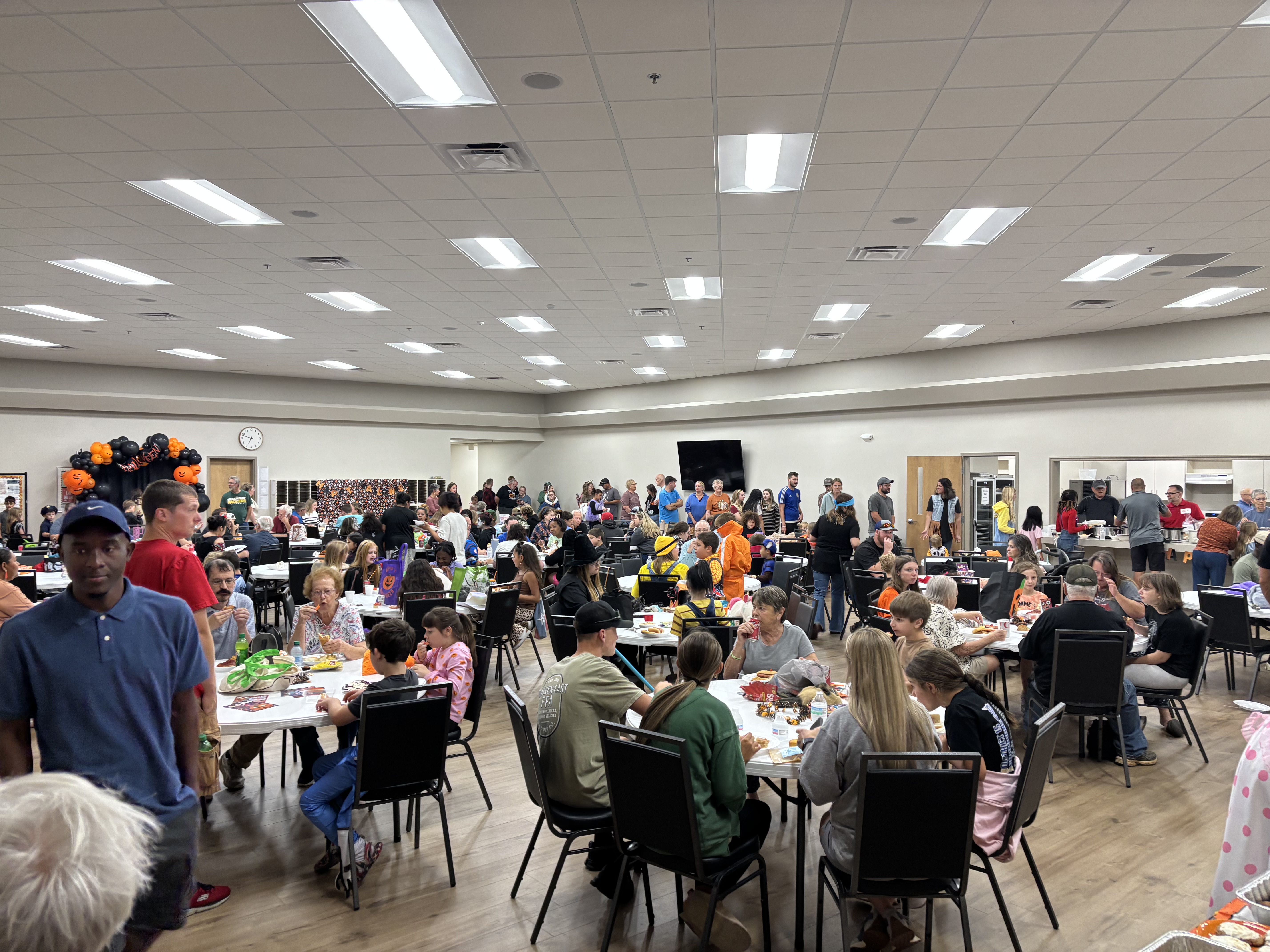
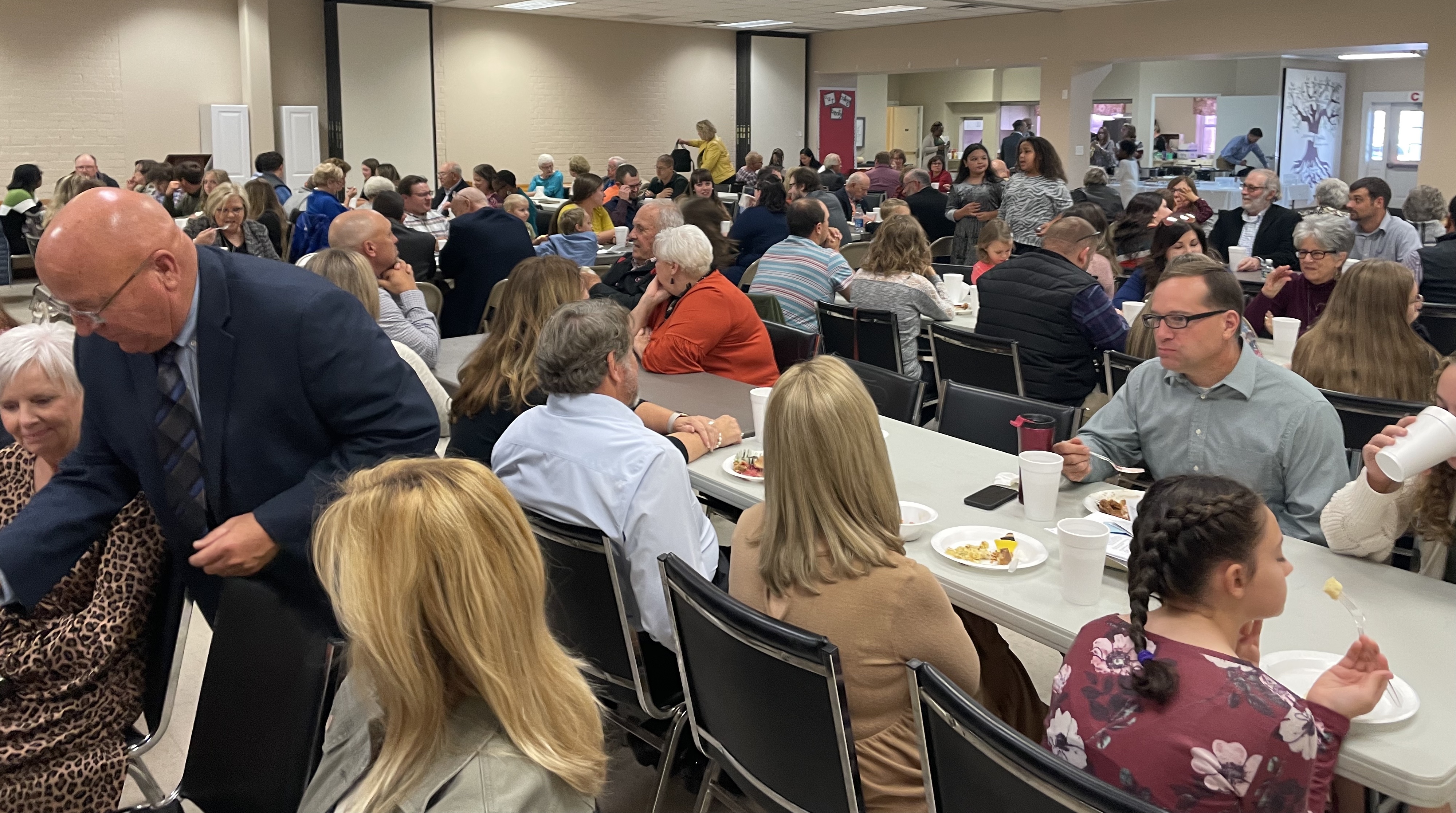
A couple of pictures (credit Russell Simpson) from Saturday night’s Trunk or Treat. God’s people at Cumberland Trace really shined!


Emulating The Early Church

Carl Pollard

There is no greater achievement than to embody the believers we read about in Acts 4. How did they act, and what did they do? While they were not perfect, they were shaped under the guidance and leadership of inspired apostles. What we need today is to become the church of the past in the present.

If people truly understood the Church, no one would ever leave it. Many today express valid concerns about those who have departed and continue to leave. It appears there is a significant lack of appreciation for the Lord’s church. I believe this stems from misunderstanding. If people grasped what the Lord’s church represents and recognized God’s work within it, we would cultivate a much deeper love for the church.

The longer I spend among the body of Christ, the more I recognize the church as essential to my life. As you know, the church isn’t merely a building or an institution; it is the living, breathing body of Christ, designed by God to fulfill His eternal purpose. Unfortunately, many misunderstand or undervalue the church’s role.

The church was not conceived in the mind of man; it is God’s spiritual body, composed of those who have obeyed the gospel of Jesus. Christ reigns as the head of that body. 1 Peter 2 describes the church as a temple, a nation, and a royal priesthood—this is the Lord’s Church.

One term used to describe the church signifies the universal body of believers. From the beginning, the church has been part of God’s grand design. It is not a human invention but a divine institution established by Christ Himself. In Matthew 16:18, Jesus states, “I will build my church, and the gates of Hades will not prevail against it.” Here, we learn from the Son of God that the church is a divine creation, birthed from Christ’s authority and sacrifice.

The family we join through baptism originated in the mind of God. We need the one true church—not a cheap imitation. This family began with God’s vision, was fulfilled by the sacrifice of His Son, and was established in Acts 2 through Peter’s preaching. We need THAT church!

This family consists of all kinds of people; it is a melting pot, as God designed it to be. Within the church, Satan attempts to isolate and polarize individuals based on these differences. Paul reminds us in Galatians 3:28 that, in the one true church, distinctions such as male or female, slave or free, Jew or Gentile do not matter. We are all ONE in Christ. What some may view as a weakness is, in fact, our strength—if we can embrace it.

Acts 4:32 states, “Now the full number of those who believed were of one heart and soul, and no one said that any of the things that belonged to him was his own, but they had everything in common.” They were unified in purpose, prayer, and perseverance. They shared the same goals, prayed for the same needs, and faced challenges together.

When confronted with threats and opposition, the early church responded with fervent prayer, coming together to seek God’s strength and guidance. They prayed for resilience in their faith—an essential prayer for us all to share TOGETHER. The early church exemplified unity, and our goal as a body of believers today should be to cultivate that same unity now and in the future.

The Beauty Of Community

Neal Pollard

God created us knowing our need for socialization (Gen. 2:18). Since the making of man and woman, humanity has been in or sought community. All of us are in the global community of humanity, since “He made from one man every nation of mankind to live on all the face of the earth” (Acts 17:26). Wherever or whenever you live, you share basic needs, fears, drives, and desires no matter how different your social, economic, and political circumstances are.

But think about your more immediate community. Over the last few days, Kathy and I have been reminded of this. Last Friday morning, we received a ring notification. It was a teen girl telling us our milk cow, Peaches, was in her yard! This neighbor lived far enough away that I didn’t know who she was! I immediately followed her (without my phone) while Kathy went to grab the halter. But she didn’t know where this girl lived.

In the three hour fiasco of getting her back in our pasture, it was a cooperative effort between us and multiple neighbors. Kathy went door to door talking to our neighbors, trying to find either the girl or the cow. She and our next door neighbor, Tracy Harrell, exchanged several texts through the morning trying to find our “girl.” She walked next door to our sweet neighbor, Brenda Willoughby (whose sister is Lehman’s Gracie Norton’s dear friend), in search of Peaches. It took the help of community to resolve our “crisis.”

Later that same day, coming back from Columbia, Kentucky, Kathy and I were driving back on a back road near our house. A freak storm downed two trees on Iron Bridge Road, standing between us and returning before Kathy had to leave for our Friday night singing and my speaking at a congregation’s family retreat. Vehicles began to pile up and several of us got out of our vehicles as a couple of guys with chainsaws began cutting through branches and sectioning the trees. The rest of us drug them out of the road. We moved one, then the other. Working right next to me at both trees, ironically, was Tracy’s husband, David. We were neighbors not only in a literal sense, but in the sense of cooperating to resolve a “crisis.”

God has created the church as the ultimate community. He conceived it from eternity (Eph. 3:9-11). He knew not only that He would be glorified in it (Eph. 3:21), but that we would benefit from the support, help, and strength found in it. This community is also described as a family (1 Tim. 3:15; 5:1-2). Think about how we lean on our physical families as a community, where we share, lift loads, intervene, and more. In the church, there are times when I am strong and you are weak. God tells me to bear your burdens (Gal. 6:2). Other times, I may be the one who is weak and needs your strength (Gal. 6:1). Many crises, physically, economically, socially, and spiritually, plague our wonderful spiritual community. The proper response is to rally around each other, showing our love and care by pitching in to help resolve whatever crisis arises.

Thank God that He gave us the best social network we could have to survive the challenges of this world. Tragically, some turn to politics, sports, and similar communities what God designed to supply through the community of His people. When we trust His plan, we are blessed by experiencing the beauty of the community He thought up to help us make it through this world spiritually alive! May we lean on each other, whatever our “crisis.”

God’s Family

Saturday’s Column: Learning From Lehman

Nick Dubree

Around our house, my wife has pictures with different sayings, like – “In this kitchen we lick the spoon”, “Blessed”, “Gather”, and “Give Thanks”. As much as I make fun of these light-hearted sayings, one of them caught my attention this week. It says:

“In this house we – say please and thank you, never give up, love one another, show respect, think good thoughts, say I’m sorry, give second chances, sing out loud, try to do better, give hugs, are a family.”

I couldn’t help but think about how this not only applies to my personal family, but to my church family as well. Obviously we could take each one of these phrases and spend time comparing them to our church family, but I want to spend time on just a few.

#1: Love one another and show respect.

John 13:34-35 says, “A new commandment I give to you, that you love one another: just as I have loved you, you are also to love one another. By this all people will know that you are my disciples, if you have love for one another.”

Loving one another is a command from God and acts as a type of evangelism to the world. We should love in this family.

#2: Say I’m sorry and give second chances.

In Luke 15:20-24, we read about this happening in between the prodigal son and his father. In verse 21 it says, “And the son said to him, ‘Father, I have sinned against heaven and before you. I am no longer worthy to be called your son.’”

Not only did the father forgive his son, but he gave him a second chance. Verse 24 says, “For this my son was dead, and now is alive again; he was lost, and is found. And they began to celebrate.”

The church family should be one where we feel comfortable enough to say we are sorry and humble enough to give second chances. 

#3: We are a family.

Acts 2:44-47 gives a perfect picture of what the New Testament church family should look like. These new Christians were helping each other, spending time together, and praising God with one another. They were a family, just like we are today.

If you aren’t apart of this family yet, now is the time!

When the Wolf and the Lamb Eat Together

Friday’s Column: Brent’s Bent

Brent Pollard

Isaiah 65.17-25 is interesting. Some have mistakenly concluded that it is a prophecy of Christ’s “millennial kingdom” because it resembles passages in John’s revelation. However, we might agree that it refers to the millennium only if others use that term to describe the entire period between Jesus Christ’s two advents. 

Contextually, this prophecy appears alongside others concerning the church or the kingdom. Paul summarizes the blessings God promised Isaiah in this passage: “Blessed be the God and Father of our Lord Jesus Christ, who has blessed us with every spiritual blessing in the heavenly places in Christ” (Ephesians 1.3 NASB1995). 

And we’ve been in these final days since Pentecost (Acts 2.16-21). As a result, we should not be surprised by its longevity (i.e., more than two millennia and counting) because God metaphorically predicted that its cohorts would live a long time (Isaiah 65.20). Furthermore, this extension is advantageous because it provides opportunities for those who need to repent (cf. 2 Peter 3.9). 

But what does Isaiah 65:25 mean by the wolf eating with the lamb? Because wolves and lambs are predators and prey, people assume it must refer to the millennial kingdom. Otherwise, the wolves would be the ones devouring the lambs. So, we can’t discuss anything current. Nonetheless, they fail to remember that there once existed a time when wolves and lambs ate together. They did so on the ark that God instructed Noah to build. The ark served as God’s refuge during His wrath. 

Today, the church serves as that refuge. Even when wolves are nearby, lambs will still be able to eat within that place of safety. Some people believe God’s providence protects His children, so they have no fear despite living in a wolf-infested world. Others argue that because God changes the obedient’s nature through the Gospel, the wolves and lambs can eat together within the church because their personalities have changed. They are brand-new creatures (2 Corinthians 5.17). All of these interpretations are correct, but there is an intriguing corollary. 

Who was the primary apostle to the Gentiles? Peter’s sermon converted the first Gentiles (Acts 10.34ff), but the Lord chose to send Paul to the Gentiles (Acts 26.17). Jesus tore down the dividing wall between Jew and Gentile (Ephesians 2.13-15), allowing those like Paul to welcome the Gentiles into Zion (cf. Isaiah 62.1-3). However, what do we know about Paul’s history? Paul belonged to the Benjamite tribe. 

God allowed Israel to prophesy his sons’ futures as he lay dying (Genesis 49.1-27). According to Jacob, “Benjamin is a ravenous wolf; In the morning he devours the prey, And in the evening he divides the spoil” (Genesis 49.27 NASB1995). Paul was thus a ravenous wolf whose conversion caused him to eat with the lambs (Acts 20.7). No longer a church persecutor content to put Christians to death for their crime of faith in Jesus, Paul became Christ’s ambassador to increase the flock of Christ. 

A true example of the wolf eating with the lamb is found only in God’s kingdom, the church. 

What I Saw On Sunday

Monday’s Column: Neal At The Cross


Neal Pollard

It was our largest crowd since before the Pandemic. It was a targeted effort to fill the building. The building was full! I asked several how many non-members were present and the most conservative answer was dozens, perhaps fifty. While we know that filling the pews is only one factor in encouraging people to follow Jesus (discipleship), it is a pretty fundamental and important one. Let me share a few exciting things I saw.

I saw the power of an invitation. The elders laid out a challenge to us to invite every non-member we could think of, coworkers, family members, friends, classmates, acquaintances, etc. That’s not revolutionary. Perhaps it was the sheer volume of invitations so many members issued. Such seeds were spread far and wide, and Sunday was an indication that some will come if asked. I am confident that many who were invited will come in the future, if we continue to ask. Philip invited Nathanael to “come and see” (John 1:46), and it changed Nathanael’s life! Andrew told his brother, Peter, “We have found the Christ” (John 1:41)! It changed not just Peter’s life, but the thousands of lives Peter eventually touched. Who knows the eternal impact made by all the invitations issued this weekend, but it shows that there’s still power in a simple invitation!

I saw the strength of teamwork. That was on display in so many ways. There was a huge team of people greeting those who entered our doors. Anticipating a lot of visitors, this was organized beyond the ordinary measure. It was exciting to see so many doing this, and it seemed to be infectious. Others joined in. It was evident in the efforts of multiple deacons and vision groups coordinating various works. It extended to members in the auditorium warmly welcoming unfamiliar faces and making our visitors feel at home. It continued on to the potluck after Bible class with the scores of people bringing an abundance of food, serving, assisting, and cleaning up. We were a finely-tuned machine of coordination. I could not help but think of Paul’s words, to Philippi (“make my joy complete by being of the same mind, maintaining the same love, united in spirit, intent on one purpose,” 2:2) and Colosse (“beyond all these things put on love, which is the perfect bond of unity,” 3:14). Sure, he had more in mind that one event on one day, but this is a key way such overall unity is built. 

I saw the example of leadership. This began with the eldership. They not only challenged us to invite, they led the way. It’s not an exaggeration to suggest that the four of them invited hundreds of people by text, phone, and face-to-face. They invited friends, family, acquaintances, and strangers! True leadership shows the way! This included those who led in worship. There was forethought, effort, and coordination from the greeting to the announcements and every act of worship in between them. This involved the membership who enthusiastically engaged in the worship. It also takes in every one that helped people find bathrooms and classrooms. Leadership always breeds more leadership. The writer of Hebrews says, “Remember those who led you, who spoke the word of God to you; and considering the result of their conduct, imitate their faith” (13:7). 

I saw the hope of tomorrow. The effects of the last 18-plus months have been deflating and demoralizing. We have lost members to Covid, physically and spiritually. It has derailed plans. It has distracted us. But Sunday showed that by faith in God and by following His plan, the best is yet to be! As we were reminded at the end of the day yesterday afternoon, we have worship every Sunday so let’s keep inviting. How many Bible studies will result from inviting others to church? How many future preachers, elders, deacons, soul-winners, and Bible class teachers are represented in those who walked through our doors yesterday, some for the first time ever? To some degree, we’ve got to be like Paul and say, “forgetting what lies behind and reaching forward to what lies ahead, I press on toward the goal for the prize of the upward call of God in Christ Jesus” (Phil. 3:13b-14). 

There’s more to do! There’s more inviting to do. There’s more follow up to do. But I see more than a special event in what occurred on Sunday! I see a culture change and a purposed people. Think what God can do with that!

“I Can’t Come To Church Because Of Covid”

(Tuesday Supplement. Note: I am well aware that there are those who are immunocompromised and cannot attend. This is not in any way meant to discourage or dishearten those in this condition. God knows and understands.)

Neal Pollard

Covid has touched nearly every family I know, including my own. It would be foolish to say that it is harmless. It has claimed nearly 5 million lives as of today. So, I have heard from many good, thoughtful people, this statement: “I can’t come to church because of Covid.” Please accept that with deep, genuine love, there are a few questions that need to be asked alongside of this.

Are we being consistent? Are we still going to the grocery store, the restaurants, the beauty shop, the office, the classroom, the gym, and the doctor? Chances are at least as great that we will contract Covid in one of those places as at church. People are not more clean or careful in those places. 

Are we properly prioritizing?  Perhaps we see the stores, the job, the school, and the medical as essential and necessary. Jesus puts our spiritual health and that of His body above all else (Mat. 6:33; 16:26). How could we conclude that any of these others are more important than His kingdom?

Are we considering others? Perhaps we console ourselves by saying that we’re getting what we need by watching Facebook, Vimeo, YouTube, or wherever services are live-streamed. But, worship and Bible class is not simply about our being fed. We must consider one another to stimulate unto love and good deeds (Heb. 10:24). That is said in connection with assembling together (Heb. 10:25), and how is this done by one who stays away from the assembly?

Are we weakening our spiritual strength? Is it getting easier to stay away or opt to just catch it on the phone, computer, or TV when we don’t feel like coming? Are we losing our desire to be with God’s people? Isolation has many effects, some more subtle than others.

Are we assessing our fears? Those who are waiting for Covid to go away will be waiting years or longer. This is a virus. Scientists doubt that it can be eradicated. It spreads too quickly. Perhaps it will be like Polio or smallpox, but how long will that be? Will we stay home for years? Meanwhile, where will be, spiritually, years from now if we have disconnected from our spiritual family? 

After 18 months, perhaps it is time to do some serious reevaluating? Instead of only allowing news outlets to be our guide, we need to balance that with careful study of God’s Word. Instead of considering just this life on earth, we should balance that by considering this life is for preparing for eternity. We need to be back together–all of us, now more than ever. 

Way Isolated

Wednesday’s Column: Third’s Words

garyandme521

Gary Pollard

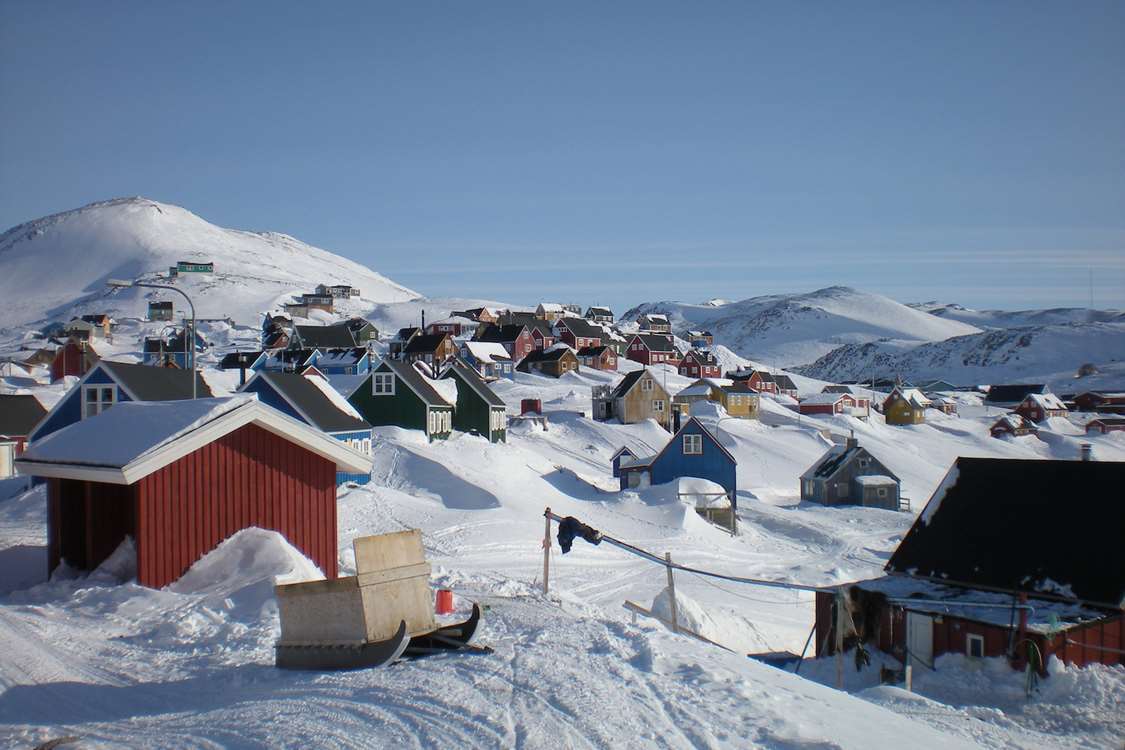
What do Svalbard, Norway, Tracy Arm Fjord, Alaska, and Ittoqqortoormiit, Greenland have in common? They’re all cold, isolated, beautiful, and quiet. Their remoteness alone is what drives at least part of their economies! The absence of “noise” is extremely attractive to a lot of people. Getting away from all the hatefulness, conflict, combat, and general unrest of society sounds like a dream!

God expects Christians to be getaways just like these cities.
“…lead a quiet life and handle your own business…” (I Thess 4.11). “…lead a quiet, calm life defined by godliness and dignity” (I Tim 2.2). “…be at peace with everyone” (Rom 12.18).
“…live in peace…” (II Cor 13.11).

Someone looking to get away from the noise of our world may look to the spiritual. When these outsiders look into our spiritual families, what do they see? A way to escape the world by seeking God, or more of the same old noise they were trying to get away from?

“Do you want to live a great life? Watch your mouth, and don’t try to fool people. Run away from evil, practice good. Look for peace and chase it” (I Pet 3.10-11).

“I Wish The Church…”

Monday’s Column: Neal At The Cross

pollard

Neal Pollard

  • “…Cared More About The Lost!” (But, when did I last invite someone to church or invite someone to study the Bible?)
  • “…Checked On The Sick And Shut In.” (But, when did I last make a call or visit to them?)
  • “…Was Friendly!” (But, do I talk to, welcome, and make feel at home visitors and more than my close circle of friends?)
  • “…Did A Better Job With The Singing.” (But, do I sing out, show enthusiasm, and participate with my whole heart?)
  • “…Invested More In The Youth.” (But, am I doing all I can to help them grow, from my attitude toward the church to my personal investment in them?)
  • “…Was Active!” (But, do I volunteer when help is needed, prioritizing it over the things of the world?)
  • “…Was Growing.” (But, how invested am I in being an ambassador for Christ, 2 Cor. 5:20?)

So often, we talk about “the church” in a passive, third-person way. We are critical of her leaders, her activities (or lack thereof), and her members as if we are detached observers. The picture of the early church was of individuals who were personally invested. We are overcome by the consumer mindset of the culture when we sit back and take shots at the perceived shortcomings of our local congregation. Look at the New Testament Christians. Barnabas didn’t fret about how stingy or discouraging the church was; He was generous and encouraging (Acts 4:36-37). Stephen didn’t express his frustration at the church’s lack of courage and conviction; He literally preached himself to death (Acts 6-7). Dorcas didn’t wring her hands at how uncaring and detached the church was; She continually did deeds of kindness and charity (Acts 9:36). They may have been extraordinary in their actions, but they were just “regular members of the church.” They were the church. They didn’t sit in judgment of her. Why? They were too busy working to build her up. When I am tempted to play armchair analyst, I should begin with my own faithfulness and involvement. There is so much the Lord expects me to do to help the church. My investment may cause others to be grateful and excited to be a part of the church! I can most influence me (2 Cor. 13:5)! 

On January 20, 1961, in John F. Kennedy’s inaugural address, he uttered the famous line, “Ask not what your country can do for you–ask what you can do for your country.” Here is the very ending of the address: “With a good conscience our only sure reward, with history the final judge of our deeds, let us go forth to lead the land we love, asking His blessing and His help, but knowing that here on earth God’s work must truly be our own.” If that is true of a citizen’s mindset of a nation, how much more a Christian’s mindset in that holy nation, the church? 

A Pig In A Dress

Tuesday’s Column: Dale Mail 

image

Dale Pollard

The Muppets are great. Those classic characters like Kermit the Frog, Animal, and Fozzy Bear have entertained us for years. The writers of that show understood and appreciated the humor found in irony. In one particular episode, Mrs. Piggy is about to marry Kermit and It’s hilarious to see a pig in a wedding dress. Pigs don’t wear dresses…or do they?

The church has been described as the “Bride of Christ” (2 Cor. 11:2-3). What kind of bride are we? An ugly bride is not unified, calloused towards one another, hateful, hard hearted, hard headed, and proud. The truth is, an ugly church can only be made up of ugly people. Sin is an ugly thing, and the display and manifestations of sins such as pride and hatred turn even the worldly away.

Think about 1 Peter 3:8-11, “Finally, all of you, have unity of mind, sympathy, brotherly love, a tender heart, and a humble mind. Do not repay evil for evil or reviling for reviling, but on the contrary, bless, for to this you were called, that you may obtain a blessing. For “Whoever desires to love life and see good days, let him keep his tongue from evil and his lips from speaking deceit; let him turn away from evil and do good; let him seek peace and pursue it.” What we have described and depicted here is an attractive bride. Don’t let your life combined with Jesus be a juxtaposition. Don’t make the Bride of Christ a pig in a dress.

We’re Different & The Same 

Tuesday’s Column: Dale Mail


Dale Pollard

When it comes to the families that make up the church, what ties us together is a common bright future. While every family has its differences, one constant remains— the church. All strive to follow those guidelines laid out in scripture. Paul says in Philippians 1:6, “And I’m SURE of this, that He who began a good work in you will bring it to completion at the day of Jesus Christ.” 

The writer speaks with assurance, and that confidence is well-placed. From “His-story” we see that God always completes His projects. He never dreams; He creates. He decided to create the world and here it is. He decided to save the world, and here we are. 

Paul also would write in Romans 7-8 that the flesh tends to get in the way of the spiritual. God is perfect, but we’re not. That’s what makes us a work in progress. Aren’t we thankful that God provides the solutions to “fix” us up? 

We’re involved in a great work because there simply is no better work  than what is being done by His church. That being said, many of us struggle with overcomplicating things. We try to make sense of our individual lives, and when we leave God out it all becomes a discouraging battle. Where’s the peace? Joy? Confidence? Maybe it was left behind when we left God’s path. Thankfully God came down to earth years ago to teach us everything we need to know. We see that in His interactions with people. Even His twelve original followers were an odd group. 

Each had a diverse background. Some were Fishermen and some tax collectors. 

Each one had a unique personality too! They ranged from timid to assertive.

 Each one had spiritual battles from greed to crippling doubt.  

Yet each one rallied under His leadership and were united through a common hope. 

What’s changed? Not much. 

The personalities, talents, backgrounds, and flaws mixed together create a unique blend that make up each one of us. Yet, here we are rallied under His leadership, united in common hope. 

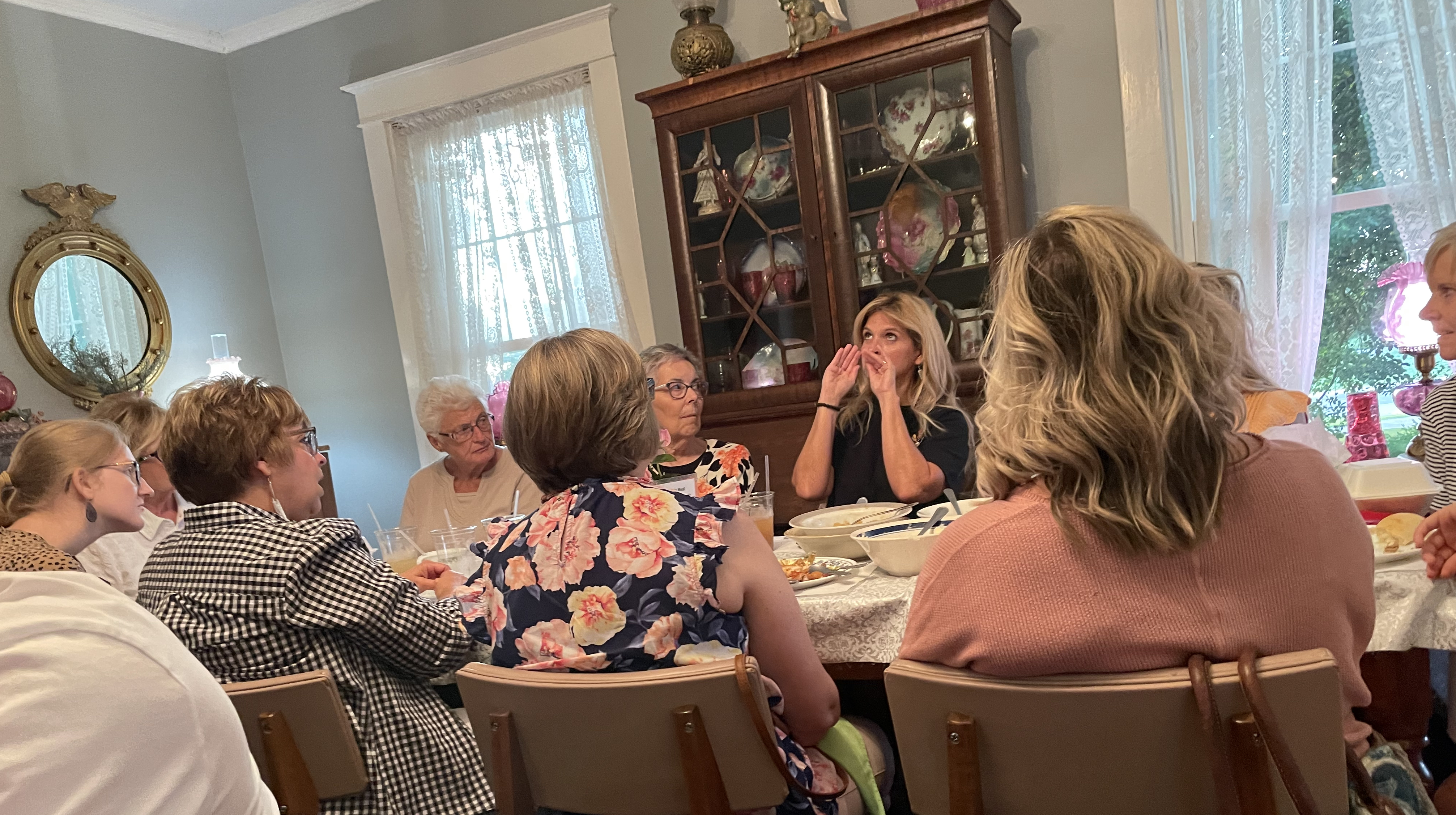
Several Lehman ladies (men are at the table in the foreground) enjoying “Federal Grove” the night before it (sadly) closed, being regaled with one of Kathy’s stories. I think this one was about snakes crawling out of a hole.

Made To Be Functional

Wednesday’s Column: “Third’s Words”

Gary III

Gary N. Pollard, III

Ephesians 4 describes some spiritual gifts. Their purpose is to allow the church to function as it should. A properly functioning church spends eternity with God. 

A functional church is on the same page (one mind), has spiritual depth, and is workable (more on that in a bit). 

Ephesians 4.12ff is about members’ roles. What are they for? Everyone serves to equip saints. Saints are people who have pledged allegiance to God. 

We train for morally good works and become stronger through encouragement (12,16). We work toward a unified mindset, knowing Jesus, spiritual maturity, and we pursue the highest standard (Jesus) (13,14). 

We work to avoid immaturity and gullibility (14). We pursue maturity until our mindset emulates Christ’s (15). He’s described (multiple times) as the standard we have to have. There’s no room for spiritual laziness here. 

Jesus causes growth spiritually, but only if we’ve become soil that can be worked. If our minds aren’t mature, we aren’t workable. Elders are spiritual farmers, our hearts are the soil. If we use Jesus as our standard, we are workable. If not, we’re spiritually dead. 

So, what can we do individually? Make the church strong by pursuing unity, by having spiritual depth, and by being workable. If we work on those things we will spend forever with God. 

God’s “House-Law”

Wednesday’s Column: “Third’s Words”

Gary III

Gary Pollard

Every home has some kind of system in place to keep order. Maybe you were told to take your shoes off at the door, keep your elbows off the table, make your bed in the morning, or brush your teeth more than twice a month. Every home is different and the expectations for conduct and cleanliness vary accordingly. However your home was structured, you were at least bound to a set of rules in some form.

God’s house is no different. I’m not just talking about the building we meet in for worship, but that anytime His family offers up worship to Him we are expected to follow His rules. I Timothy 1.4 talks about God’s “house-law” (often mistranslated “stewardship” or “godly edification”). The word is οικονομία (oikonomia), combining οίκος (house) with νόμος (law). What does this mean in context? In I Timothy Paul publicly berates two members who were teaching “myths and endless genealogies which do not promote the house law of God in faith” (1.3, 4; 20).

If any teaching goes against what God has told us He wants, it’s a violation of His house-law. We understand this when it comes to daily life outside of religious activities. If we break the law we are held accountable to it. We understand that violating the laws our governments put in place to maintain order and promote justice carries consequences. Some, though, do not act as if the same applies to God’s people in a religious context.

God’s house-law is more specifically defined in I Timothy 2.1-8. Anytime and anywhere Christian men and women offer worship together, God expects qualified Christian men to lead. This is made clear with the phrase, “…in every place” (2.8). God’s house, God’s rules.

Not just any man can lead, though! He must be someone who is able to lift holy hands (that is, he is pure in life and can offer worship without the stain of sin), he must be cool-headed, and he can’t be unstable in his faith (2.8). God’s house, God’s rules.

God expects women to avoid drawing undue attention to themselves (2.9, 10) and are to allow godly men to lead them in worship (2.11-14). His house, his rules.

In all of my vast wisdom and experience as a child, I didn’t always agree with or like all of my family’s house rules. Probably every teen and their unfortunate parents experience this. My feelings about a house rule did not alter its validity in any way. It was not my house so I was not in a position to change or violate the rules. Trying to do so was not only futile but often carried consequences.

God’s design for His church is not acceptable to the secular world. In their disagreement or downright hostility toward it they have pushed many churches into changing God’s house-laws. This doesn’t fly in the legal world, the home, or in any setting where rules were set in place by those most qualified to make them. Why would it work with God?

We may not always understand why God made the laws that He did, but this is where the faith aspect of 1 Timothy 1.4 comes into play. We have to ask ourselves, “Do we trust that God knew what He was doing when He made these laws, and do I really want to challenge Him on the rules He made for His own family?” At the end of the day we must remember that in God’s house we follow God’s laws. Many of the problems facing the church in 2020 can be solved simply by accepting this fact! If we do – as in any family – we will not only have harmony in the church, but a permanent, peaceful home with God after this life.

Job 38.4-7

Division

Wednesday’s Column: Third’s Words

Gary III

Gary Pollard

In this volatile political climate, many Christians face some uncomfortable dilemmas. Is party line a salvation issue? How do we handle seemingly irreconcilable differences? What do we do going forward?
 
Rather than delving into those questions, I’d like to focus on the attitude of the early church, which faced internal division–Jew/Gentile controversies like in Acts 15, opinions over cultural matters as seen in I Corinthians 8 and Romans 14, and external pressures.
 
In keeping with the spirit of the early church, let’s focus on the following list.
 
  1. We must focus on and grow our own spiritual culture, independent of our earthly nationality (while observing Romans 13).
  2. We must be faithful Christians who value being righteous, no matter the cost.
  3. We must manage our concerns and worries by spending MORE time with each other and developing our faith.
  4. We may need to see ourselves less as Americans and more as Christians. If we remember that our kingdom is the church first, we will be far more united.
  5. Be awesome citizens. When outsiders hear about us, it should be that we never cause trouble, we are loyal to each other, we are selfless, we help people, we have strong families, we rely on each other, we are pleasant to be around, we are dedicated to our faith, and we love people who treat us poorly.
  6. We must remember that priority number one is heaven. Everything else is second.
  7. We must avoid talking or posting on social media about non-salvation issues that can and do create division or offense, out of courtesy and respect for each other (Romans 14.1-4; 13ff).
 
If these are the things we worry about and focus on, no political division or any other heartburn-inducing unpleasantness can affect us. Besides being happier, we’ll be a stronger church!

The Bosque Redondo Blunder

MONDAY’S COLUMN: NEAL AT THE CROSS

Neal Pollard

In the wake of James Polk’s vision for “manifest destiny,” the United States purchased and/or fought for the territory that gave us the current boundaries of our nation. To maintain and protect this newfound territory, one of the military strategies included the building of forts throughout the west to protect settlers from especially the Native American tribes who were reacting to the invasion of their ancestral home. Kit Carson, former fur trapper, explorer, and extraordinary tracker, was a civilian ultimately urged into serving out west in a military stretched thin back east by the Civil War. He was appointed by General James Carleton to round up 9000 Navajo and 500 Mescalero Apache and place them in a reservation Carleton dreamed up. From the time he visited there, he was enamored with the terrain, trees, and beauty of the place. So the nearly 10,000 Native Americans were detained and displaced and forced to settle at Bosque Redondo. 

While it was a disaster on paper, it was even worse in real life. Neither the Navajo nor Apache were agrarian people, but both were forced to farm. They were enemies of one another, but they were forced to live together at Bosque Redondo. The crops were destroyed by cut worms and hail storms, and the army rations inadequate. The water was alkaline, making them sick. Smallpox decimated their numbers. Winters were bitterly cold and the inhabitants were ill-prepared and ill-equipped.  They were forced laborers, slaves ironically settled at this reservation by the U.S. Government and President Lincoln the very year of the Emancipation Proclamation. It was as much a failure for the government. It was an exorbitantly expensive venture, costly to start and even more to maintain. Beyond the inhumanity and immorality of the venture, it was inept and inane. Carlton envisioned paradise, but delivered purgatory (information a summary of content in Hampton Side’s book, Blood And Thunder).

Bosque Redondo is but one example of the disaster which follow’s man’s attempt to create what he vainly sees as either utopian or idyllic. Contrast that with some of God’s plans. First, He put man and woman in a perfect paradise wherein He supplied their every need (Gen. 2:8-14). Later, after they sinned and were expelled from there, God promised a land which flowed with milk and honey. It was a good and spacious land (Exo. 3:8). While sin tainted their existence there and ultimately cost them ownership, the provision was not the problem. 

Along the way, God promised the creation of a domain unlike any other. It would be for all nations (Gen. 22:18; Isa. 2:2). It would never be destroyed, nor left to other peoples (Dan. 2:44). It was the result of the eternal planning and purpose of God (Eph. 3:9-11). God left a perfect blueprint for its creation and for the citizens’ conduct (Isa. 2:3; Mic. 4:2). We know it as the church (Eph. 1:22-23; 4:4). It is described in that epistle: “So then you are no longer strangers and aliens, but you are fellow citizens with the saints, and are of God’s household, having been built on the foundation of the apostles and prophets, Christ Jesus Himself being the corner stone, in whom the whole building, being fitted together, is growing into a holy temple in the Lord, in whom you also are being built together into a dwelling of God in the Spirit” (2:19-22). 

In this divine institution, God has brought together people diverse and unlike each other and united them through His Son. He has taken spiritual slaves and gave them freedom. He has taken those poor and emaciated by sin and made them rich (Eph. 2:7; Phil. 4:19). He has given them boundless blessings by His Son (Eph. 1:3). His church is right in design, discharge, and destiny. Far from a blunder, His body is a bountiful blessing! Only God could take a people besieged by sin and dysfunction and give us something infinitely better. Just imagine what our eternal home is going to be (Rev. 21-22)! 

“Secret Service”

Wednesday’s Column: Third’s Words

Gary III

Gary Pollard

Whenever we hear about the United States Secret Service, we generally picture an elite agent with dark sunglasses and an earpiece. They certainly are elite, with only 1% of 15,600 applicants being accepted as Special Agents in 2011. They have extremely important jobs, from protecting the president and his family to investigating financial crimes in order to protect our economy. Being a Special Agent or any of the other elite positions in this government branch is not easy to achieve. These government agents have a huge responsibility and the public often keeps a close eye on them.

It’s no wonder, then, that they would come under scrutiny when something goes wrong. In 2014, Omar Jose Gonzalez jumped the White House fence and ran across the North Lawn with a knife. He was able to make it through the front door and past a security guard, making it as far as the East Room before being tackled by another guard.

The church is made of imperfect humans. We are called to live to a higher standard and to hold one another to a higher standard. Whenever someone makes a mistake – especially someone in a position of leadership – it’s easy for us to gossip, condemn, talk about “what we would have done,” or offer insincere criticism. Worse yet, it’s easy to tarnish the name of the church just because of the mistakes of someone inside. Yes, sin must be dealt with in a godly way. But using the mistakes of others as an excuse to damage the bride of Christ is inexcusable. Let us always strive to not only hold ourselves to the highest possible standard, but to also keep the name of God’s people in high standing with the world and with each other.

Why I Love The Church

Thursday’s Column: Carlnormous Comments

carl pic

Carl Pollard

I love the Church because…
  1. God loved me enough to establish it.
  2. Jesus loves the Church.
  3. The Church loves Jesus.
  4. The Church is a family.
  5. The Church is filled with true friendships.
  6. The Church is a source of encouragement.
  7. I’ve seen firsthand the comfort that the Church provides.
  8. The Church is considerate of others.
  9. The Church is a place for the broken.
  10. The Church is a place for the weak.
  11. In the Church I belong to God.
  12. The Church has perfected potlucks.
  13. Jesus is the Head of the Church.
  14. The Church is the unified body of Christ.
  15. The Church helps me to be a better Christian.
  16. The Church helps to show me my purpose in life.
  17. I’ve met people that have changed my life.
  18. The Church helps me love God more.
  19. The Church is motivated.
  20. The Church reminds me that this world is not my home.
  21. The Church shows me the power of song.
  22. The Church shows me the power of the Gospel.
  23. The Church creates a bond that is impossible to find anywhere else.
  24. The Church shows me how amazing grace really is.
  25. The Church is a place of spiritual support.
  26. The Church is a place of physical comfort.
  27. The Church is a place of emotional healing.
  28. I leave every service feeling renewed.
  29. The Church helps me interact better with people.
  30. The Church at times helps me practice patience.
  31. The Church is a reminder that we are equal in Christ.
  32. The Church is a place filled with servants.
  33. The Church helps bring out the best in me.
  34. I want to go to Heaven.
  35. The Church helps me glorify God.
  36. The Church is the family I worship God with.
  37. The Church is exciting!
  38. The Church is where I belong.
  39. I can’t imagine a life without the Church.
  40. The Church puts my focus where it belongs; on God, and other people.
  41. The Church is selfless.
  42. The Church is life changing.
  43. God wants me to love the Church.
  44. The Church makes you feel needed.
  45. The Church makes me more considerate of others.
  46. I want to be a part of God’s plan.
  47. The Church helps me be closer to my physical family.
  48. The Church gives me memories that will last a lifetime.
  49. The Church is filled with people that I will never have to say goodbye to.
  50. The Church of Christ helps me keep heaven in view.
1 Corinthians 12:12-13
 
 
Photo credit: Grant Wilson

Patriotism

Wednesday’s Column: Third’s Words

Gary III

Gary Pollard

I’m a red-blooded American. I love my rights, I love my guns, I love my country, I love my freedoms. I am filled with patriotic pride whenever these things come into play and whenever this great country succeeds. I love the United States of America. 

It hit me whilst mowing at my parents’ property that I do not usually feel the same sense of “patriotism” when it comes to the church. There is absolutely nothing wrong at all with being patriotic, but most of my fervor, emotional energy, love, and grace is awakened by love for a country that won’t last forever. 

We’re all — to some extent — in this boat. We live on this earth, in this time, with these problems. It’s hard to draw focus away from what’s going on here and balance that with undying love for the church. 

Our nation has made some big mistakes in the past (and present), but because it is — overall — a great nation, we don’t pack our bags and move to a different country. Yet, many allow hurt feelings, imperfections, miscommunications, differing opinions, and even stuff like dress codes and translation preference dampen their love for the church. 

If we show (and we means me, too) the same level of love, concern, and emotion for the body of Christ that we do for our country, there isn’t anything that can slow us down. If we extend the same level of grace for the imperfections of others in the church as we do for the imperfections of our nation, there’s no stopping us. Our allegiance is to our country, but even more to our King. If we can live that out, we will grow the church immeasurably. 

pledge_of_allegiance_to_the_flag2c_8th_division_lccn2001703605

The Tie That Binds 

Tuesday’s Column: Dale Mail

image

Dale Pollard

When it comes to the families that make up the church, what ties us together is a common bright future. While every family has it’s differences, one constant remains— the church. All strive to follow those guidelines laid out in Scripture. Paul says in Philippians 1:6, “And I’m SURE of this, that He who began a good work in you will bring it to completion at the day of Jesus Christ.”

The writer speaks with assurance, and that confidence is well placed. From His-story we see that God always completes His projects. He never dreams, He creates. He decided to create the world and here it is. He decided to save the world, and here we are.

Paul also would write in Romans 7-8 that the flesh tends to get in the way of the spiritual. God is perfect, but we’re not. That’s what makes us a work in progress. Aren’t we thankful that God provides the solutions to “fix” us up?

We’re involved in a great work because there simply is no better work than what is being done by His church. That being said, many of us struggle with overcomplicating things. We try to make sense of our individual lives, and when we leave God out it all becomes a discouraging battle. Where’s the peace? Joy? Confidence? Maybe it was left behind when we left God’s path. Thankfully God came down to earth years ago to teach us everything we need to know. We see that in His interactions with people. Even His twelve original followers were an odd group.

Each had a diverse background. Some were Fishermen and some tax collectors.

Each one had a unique personality too! They ranged from timid to assertive.

Each one had spiritual battles from greed to crippling doubt.

Yet each one rallied under His leadership and were united through a common hope.

What’s changed? Not much.

The personalities, talents, backgrounds, and flaws mixed together create a unique blend that make up each one of us. Yet, here we are rallied under His leadership, united in common hope.

800px_colourbox1580110

Maybe Nobody’s Right?

Tuesday’s Column: Dale Mail

DaleandJanelledirectorypic

Dale Pollard

Wasted potential is a terrible tragedy and this could not be more true when it comes to those who squander their potential in the church. Consider two common examples we find in many congregations today. There may be an older man who uses the respect, earned by his lengthy life experiences, as a platform to give strong opinions— disguised as gospel truth. Or, what about the young woman who has been labeled as a liberal? She has these new and fresh ideas, but many aren’t Divinely authorized in scripture.

Both of these individuals could not be any different, yet both have caused severe damage in their local church families. The older man clearly has a commanding presence. When he speaks, people will listen. What a gift! He could build up and strengthen the church in numerous ways— if he put his mind to it. He owns the power of persuasion, a talent others deeply desire. The young woman also has talent. She’s outspoken, energetic, and inspiring to many of her peers. She’s loving, gentle, and full of life. With so much to offer, how could she throw it all away by pushing her modern, but unbiblical views?

The elderly may argue that the problems we find in the church today are on account of young minds with liberal beliefs. The younger generation have become disenchanted with “church” because they believe it’s outdated, hypocritical, legalistic, and impossibly demanding. While there is truth to be found on both sides of the fence, it’s also true that talent is a tool that is often misused.

The elderly bring experience and wisdom. The young bring energy and enthusiasm— though I do acknowledge that these stereotypes may occasionally be seen in members of both groups. If there are thoughtless accusations, without thoughtful solutions, you end up with a congregation full of members fighting for the spoon which stirs the pot. A serious solution can only be scriptural. After all, God made people and He knows how to fix them.

Maybe we need to go back to those basic and foundational principles that we find in that thriving first century church. Despite adversity and an overwhelming hostile environment, they had Jesus’ power over the world (John 16:33). Since this is the case, may we never fool ourselves into believing the lie that the strange darkness of our time is too dark for The Light that is Christ. When this poison is digested, the devil smirks, and droves of people stumble into eternity unprepared all on account of a literal and tragically damning lie.

God has allowed us to discover hope, experience growth, and uncover a calming peace when simple Christianity is practiced. It’s this beautiful simplicity that makes God’s will a rewarding journey to seek and follow. The power of God can turn a struggling congregation into a thriving one, but there must be a radical transformation in the heart of each individual that makes up that Body. It’s radical, but it’s not complicated. It will take prayer, a reliance on God, courage to act, and a willful determination to follow Jesus wherever He goes (Luke 9:57-62).

So where do we begin? With a dedication to the understanding of Him, and those made in His image.

6016780468_67a298ed8e