The Truth

The most urgent question anyone can ask is, “What must I do to be saved?” Its answer determines your eternal destiny. Sadly, many people have believed false promises: good deeds, or a quick prayer, but Scripture speaks with unwavering clarity.

Carl Pollard 

The most urgent question anyone can ask is, “What must I do to be saved?” Its answer determines your eternal destiny. Sadly, many people have believed false promises: good deeds, or a quick prayer, but Scripture speaks with unwavering clarity. Baptism is God’s non-negotiable command for salvation, the moment sins are washed away and we call on Jesus’ name. Not a ritual or optional act, baptism is where God’s grace meets our obedience. This undeniable truth is seen in Paul, Peter, and Pentecost. 

Paul’s conversion in Acts 9, 22, and 26 sets the standard. As Saul, he hunted Christians, dragging them to punishment. On the road to Damascus, Jesus blinds him with a vision (Acts 9:3–6), telling him to wait in the city. Ananias finds Saul praying (Acts 9:11), but neither seeing Jesus, believing, or fasting for three days removed his sins. Acts 22:16 is unmistakable: Ananias commands, “And now why do you wait? Rise and be baptized and wash away your sins, calling on his name.” Paul’s sins stayed until baptism, not his vision, faith, prayers or belief took away his sins. This breaks the lie of “faith alone.” Baptism is God’s chosen moment for forgiveness, where Paul’s obedience met divine grace.

Peter leaves no doubt in 1 Peter 3:21: “Baptism, which corresponds to this, now saves you, not as a removal of dirt from the body but as an appeal to God for a good conscience, through the resurrection of Jesus Christ.” Linking baptism to Noah’s flood, Peter says it saves, not by washing skin, but as our plea to God for forgiveness, empowered by Christ’s resurrection. Romans 6:3–4 confirms baptism is where we die to sin, are buried with Jesus, and rise to new life. To reject baptism is to reject God’s plan for salvation.

On Pentecost, Acts 2:38 shows the church’s birth. Peter’s sermon convicts the crowd for crucifying Jesus, and they cry, “What shall we do?” Peter’s answer is absolute: “Repent and be baptized every one of you in the name of Jesus Christ for the forgiveness of your sins, and you will receive the gift of the Holy Spirit.” That day, 3,000 were baptized, added to the church (Acts 2:41). Baptism wasn’t a later gesture, it was where forgiveness and the Spirit were received, God’s ordained step for salvation.

Scripture’s pattern is simple: Paul’s sins were washed away in baptism (Acts 22:16), Peter says baptism saves (1 Peter 3:21), and Pentecost links it to forgiveness (Acts 2:38). Mark 16:16 Jesus says, “Whoever believes and is baptized will be saved.” Acts 8:36–38 shows the eunuch baptized immediately upon belief. No “sinner’s prayer” exists in Scripture, salvation requires hearing the gospel (Romans 10:17), believing Jesus is Lord (John 8:24), repenting (Luke 13:3), confessing His name (Romans 10:9–10), and being baptized. The world’s claim that baptism is optional is a lie; God’s Word demands it.

If you haven’t been baptized for the forgiveness of your sins, your soul is at stake. Don’t delay, eternity hangs in the balance. That conviction in your heart is God’s call to obey. Repent and be baptized now before it’s too late. If you’re in Christ, proclaim this truth to others. Share it with loved ones, study with them, and lead them to Jesus. Baptism is God’s command to enter His family. Will you obey His Word today?

Urgently Doing Something Weird

Dale Pollard

“Look! Water! What prevents me from being baptized?” He commanded his chariot to stop and was baptized immediately (Acts 8:36-39). 

“…the same hour of the night…” (Acts 16:33).

If you’re ready— don’t wait. 

You know you’re ready when you feel an urgency that’s based on your understanding of God’s expectation. Once you know what it means to follow Jesus, and you know what it means to be lost, you know you have sins that need to be addressed, and you know that we’re not promised tomorrow. It’s fear driven, it’s love driven, and it’s clarity driven. While there’s nothing sinful about scheduling your baptism, it could be an indicator that you’re not exactly sure why you’re doing it. If you know you have sin that needs washed away, why would anybody wait? 

So, Baptism Is Weird 

This is my opinion based on conversations I’ve had with Christians who struggle with either the reason they were baptized or some other hold up they face before getting into the water. It’s just a strange thing to do. 

What About Feelings? 

You might feel relief. You might feel awkward or slightly uncomfortable. You might not feel anything at all. But don’t base your own baptism off of how you feel but rather what you know to be occurring. The baptism garments can be leaky and the water might be a little cold or dirty. The act itself might seem so foreign or unnatural that the whole event is tense or fills you with anxiety. 

All of that doesn’t matter. 

Is it a little weird? It can be. I’ve baptized people and even dropped a guy and had to start all over! We laughed, he was immersed, we hugged, and we quietly got out of the baptistery. His family didn’t know whether or not they should clap or sing or— really what to do afterwards!

All of that doesn’t matter. 

It has nothing to do with the people who are around; this is strictly a you and God thing. God’s doing every bit of the cleansing and adding. You need a belief that convicts you enough to act on an unnatural faith. You need two arms and a strong back to get the job done. You’ll need a body of water deep enough to cover you. That’s it! You don’t need family and friends around or a minister to give his certificate of approval. Everything is between you and God. Don’t overthink the Truth. God’s trying to save you, and it’s really that simple. 

————————————————

Here’s all the examples of salvation through baptism in the book of Acts: 

 (Acts 2:38,41; 8:12; 8:36-39; 9:18; 22:16; 10:48; 16:15; 16:33; 18:8; 19:5).

The Worship Was Delayed And Nobody Cared!

Neal Pollard

I have never been a part of a service like last night. C.J. and Walter Moore met to study the Bible an hour before evening worship. At the end of the study, they knew they needed to obey the gospel. They did not want to wait. Their mom, Shannon Anthony, had also been studying and was ready to be baptized. This sweet family was ready, together, to be united with Christ. So, we asked each to make the confession of their faith, and then each was baptized. It is our custom to have a welcome circle afterward, and we did just that. Hiram shared beautiful, encouraging thoughts, then David Pahman, on behalf of our shepherds, prayed for these precious souls! Finally, around 6:40, we had our announcements. The actual worship service was much abbreviated, punctuated by Harry Potter’s beautiful, heartfelt prayer. But, I believe everyone left the assemblies last night with greater faith, hope, and determination to live the Christian life.

The church faces challenges. Her leaders have to do (and lead us to do) hard things. We live in a world that seems to steadily move further away from God. Our own lives are filled with difficulties. But, moments like last night are spiritual vitamins and nutrients that more than keep us going. They motivate us to do more for His cause! I doubt that anyone present last night will soon forget the time the worship was delayed while the church family enjoyed three additions! In fact, we’d love to see it happen every week!

Here it is, for anyone who’d like to watch

The 11th-Hour Man

Monday’s Column: Neal At The Cross

Neal Pollard

70 or 80 years we live,

That rule for many holds true

But a guarantee that nobody can give

Is when Christ comes or living is through.

But I saw a man near the end of that span

Heart softened by the truth

Fully obey the gospel plan

Though gone were the days of his youth.

He’d heard God’s Word preached repeatedly

From many able men

Discussed his need, heard many a plea

To arise and wash away his sin.

Loved ones, family and friends

Prayed often for his decision

Wanting his soul purified and cleansed

To see life with heavenly vision.

The persistent concern of a godly man

Who revisited his soul’s condition

Watered much sowing over that man’s lifespan 

Resulting in godly contrition

I heard him confess his faith in Christ

And watched him go under the water

His heart surrendered, his will sacrificed

Christ’s blood was his soul’s sin blotter.

I tell you his story to move your heart

To the power of sharing with persistence

It’s never too late to do your part

To overcome a delayer’s resistance.

Jesus taught a moral tale

Of a landowner seeking for workers

Who paid a fair wage for a job done well

To the finishers, no pay for the shirkers

The householder sought workers all day

Found some morning and noon, yet some late

Despite different hours, they all got the same pay

Which made the more seasoned workers irate

But the master was generous, it was his call to make

The offer was freely taken by all,

The moral is simple, there’s an offer to take

There’s an answer to make to God’s call.

Some respond in the sunrise of living

Others come in the heat of the day

But however late one’s commitment is given

To those faithful at death He gives eternal pay.

This isn’t to encourage delaying

Tomorrow is not guaranteed

But in Scripture it goes without saying

No one’s too old for God’s grace to intercede! 

“Baptism Only” And “Once-Baptized, Always-Saved”?

Monday’s Column: Neal At The Cross

Neal Pollard

The doctrines of “faith only” and “once-saved, always’ saved” have done so much to deceive religious people into believing things about the doctrine of salvation that are at odds with the Scripture, which teach that faith without works is dead (Js. 2:17,20,26) and that it is possible to fall from grace (Gal. 5:4; 2 Pet. 2:20-22). Therefore, many of our Bible classes and sermons have emphasized what the Bible teaches on these matters. We want to avoid an unscriptural position.

In the midst of emphasizing that a faith that saves is a faith that obeys, we rightly teach that repentance and baptism is part of saving faith (Ac. 2:38). We teach that baptism saves (1 Pet. 3:21). It washes away sins (Ac. 22:16). It clothes us with Christ (Gal. 3:27). These are just some of the Bible’s truths about the essentiality of baptism.

There is something we must guard against, however, in our properly emphasizing that baptism not only is part of God’s saving plan but is a pivotal part (1 Co. 12:13; Mk. 16:16; Rom. 6:3-4). We must not believe in “baptism only” or “once-baptized, always saved.” Is it possible to adhere to such a view? Perhaps.

  • A rush to baptism without grasping why it must be done and what must accompany it is insufficient. We read of people being pierced to the heart by the gospel (Ac. 2:37), asking what they must do, being told to “repent and be baptized” (Ac. 2:38), and receiving that word and doing so (Ac. 2:41). Baptism cannot substitute for the total heart and directional change which the gospel calls for (Rom. 6:17). 
  • The thought that baptism is the end of one’s commitment rather than the beginning is incorrect. As thoughtfully and deliberately as we can, we must teach the totality of discipleship (Mt. 16:24-26) and the necessity of counting the cost of discipleship (Lk. 14:28). Sometimes, the newly baptized conclude that since they have done so everything is settled. While baptism coupled with a correct understanding of Scripture does forgive one’s sins, one must begin and continue a walk in the light of Christ (1 Jn. 1:7-10). 

Christ’s Great Commission call to His disciples is to make disciples (Mt. 28:19). That includes baptizing them, but also teaching them (Mt. 28:19-20). In our teaching, we need to do all we can to paint Scripture’s complete picture not only of faith but also of baptism. There is no “magic” in the water (1 Pet. 3:21). Its saving ability comes when done by one who makes “an appeal to God for a good conscience.” We cannot leave babes in Christ to flounder without helping them form roots in Him. They need to know that baptism is not the end, but the beginning.

If someone in our directory has been baptized but shows no other sign of commitment, from attendance to involvement, we need to lovingly help them see that they are not spiritually OK (Gal. 6:1). When they die, we cannot preach them into heaven simply because they were properly taught and baptized years or decades ago. The life in Christ is about a “walk” (Eph. 4:1), not just about a moment when they got wet.

Can You Find The Blood?

Friday’s Column: Brent’s Bent

Brent Pollard

Hypovolemic shock recently put me in the hospital. As dehydration was the precipitant leading to this condition, I needed IV fluids, stat! I used to have such wondrous veins, vast highways of blood running through the hypodermis. All the cellular denizens of my body were happy and enriched by their life-giving flow. Metaphorically, if those veins of my youth were one of those two paths leading to our eternal destiny, it would lead to hell, being wide and broad. But, alas, with chronic health, and especially dehydration, they repented and became the strait and narrow way. The IVs that the nurses initially placed soon became infiltrated. Fortunately, the hospital has ultrasound guided peripheral IV teams capable of making the most challenging sticks. These technicians came to my bedside and put two new IV sites into my deeper veins. When I had the nurse pull those from me before my release, she expressed surprise over the needle’s length. Sometimes, it takes great effort to find the “blood” (i.e., vein) in medicine. 

I begin with an apology to the squeamish. The topic of blood and needles can be unsettling. I appreciate this. I might wince, too, had repeated phlebotomies not conditioned me to be a pincushion. However, the subject of blood is necessary for our salvation. When man fell from God’s grace, God must have instituted the sacrificial system as the means whereby one could assuage His wrath. We know not His specific instructions but realize God gave them to the patriarchs. The Hebrews writer says Abel provided a sacrifice by faith, faith being a conviction resulting from hearing God’s Word (Hebrews 11.4; Romans 10.17). A sacrificial system codified by God addressed the various types of noncapital sins under Moses’ Law. There were mandatory and voluntary sacrifices. Sadly, for those innocent animals, the Hebrews writer reminds us that their blood could not remove sin (Hebrews 10.3-4). During Passover, scholars believe that Wadi Kidron (i.e., Kidron Brook) ran red from the blood of sacrifices offered on the Temple Mount. Commentators of the Scriptures note that Jesus would have had to cross over this stream of blood to climb the height of Mount Olivet.  

Fortunately for us, the blood we must find to receive salvation does not require an ultrasound or a trip to a cattle feedlot. Instead, Jesus shed His saving blood atop the Place of the Skull in the first century, ushering in His New Testament. Moreover, the Hebrews writer tells us that this efficacious blood obtained eternal redemption for us (Hebrews 9.12). Best of all, Jesus only had to provide this sacrifice once for all time (Hebrews 10.10). Yet, all I have noted thus far is that Jesus shed this blood, that this blood is available. Scriptures remind us that without blood, God does not forgive sinners (Hebrews 9.22). So, we still need directions to the “fountain filled with blood, Drawn from Immanuel’s veins.” Thankfully, the apostle Paul informs us that the act of baptism (i.e., immersion in water) enables us to be in the likeness of the death, burial, and resurrection of our Lord (Romans 6.3-5). Why baptism? Jesus shed His blood in death (John 19.34). And since we cannot literally bathe in the flowing blood of Christ, we must do so figuratively. Again, baptism is where you receive that symbolic washing of Christ’s blood. Once cleansed by baptism, John tells us that a faithful life of striving to walk in the Light enables us to remain in contact with that saving blood (1 John 1.7). 

Yes, baptism is where we find the blood. Therefore, quoting the preacher Ananias as he spoke to the crestfallen Saul of Tarsus three days removed from the Damascus road: “Now why do you delay? Get up and be baptized, and wash away your sins, calling on His name.” (Acts 22.16 NASB1995)  


Four-horned altar found in the Judean hill country

The Location Of Salvation

Thursday’s Column: Captain’s Blog

Carl Pollard

Most people can think of a specific location that brings them joy. It could be a vacation destination, a certain getaway spot, or a favorite city or park. It’s a location that is filled with memories and good times. We find ourselves dreaming about those places when we are loaded down with life. What we wouldn’t give to be relaxing on that beach, away from all the work and responsibilities. What is it about these places that causes us to long to be there? It’s the thought of being somewhere that’s free of care and worry. 
In scripture, salvation is often described as being found in a very specific location. The Bible records numerous examples of when God saved His people in a specific location. The Passover in Exodus 12 is an example of this. If the people wanted to keep their firstborn children, they were to spread blood on the doorposts of their homes. By doing this, the death angel would pass over the houses with blood on them. There are several other examples of salvation being in a specific location such as Noah’s ark in Genesis 6-9 and Rahab’s home in Joshua 2.
If salvation was found on the ark and in Rahab’s home, where is it now? Scripture teaches us that the church Christ died to establish is the place of safety today. 

The plan: a new covenant (Mark 14:24)
–The purpose: save the souls that are added to the body (Rom. 8:1-3) 
–The promise: eternal life (1 Jn. 5:11) 

The Old Testament examples mentioned all contained specific instructions: Build the ark out of gopher wood, pick a certain amount of animals, and tie a scarlet rope to the window. These specific locations brought salvation but only through obedience to God and His plan. 
What specific instructions do we have today? The contents of the New Testament explain in perfect detail how we can be added to God’s location of salvation. The ark saved Noah and His family from destruction, the scarlet rope tied to the window of Rahab’s home saved her and her family, and baptism (Acts 2:38; 1 Pt. 3:21) will save anyone and everyone that wishes to be added to the church. 

Christ’s Focus On Getting Rid Of Sin

Wednesday’s Column: Third’s Words


Gary Pollard

This week we will do a brief study of I Peter 3.17-22. 

In verse 17, the emphasis in the original text is “doing good.” If it is God’s desire (this is emphasized) that we suffer, it is better (stronger, more prominent, more advantageous) that we suffer for doing good works than evil works. How much more powerful a message do we send when we come under fire for doing something that benefits others? If we suffer for doing something bad, we’re just another criminal. But to suffer in the act of doing something good – in context – is a far more powerful evangelistic tool. 

In the following verses, Peter gives a powerful example of Christ’s focus on getting rid of sin. He put everything into saving mankind – including giving His own life – so that we could all have the opportunity to come to God. Even before the destruction of the world through the flood He made sure everything had the opportunity to hear about their spiritual state. Whether this was done through Noah and his sons or whether He had a more direct hand in this is immaterial. The point of the text is that the message got out to those who are “now in prison.” His goal was to bring others to God, even when it caused Him suffering. 

Only those who did listen and obey – eight people – were rescued from evil by the waters of the flood. Notice that the Spirit does not record Noah’s ark as being what saved them! They were saved in the important sense by the destruction of evil. Our focus is not earthly. 

Just as water saved Noah and his family from evil, water saves us from spiritual death. Being immersed in water is how we make a formal appeal to God for a clear conscience! Some translations render this, “A promise to God from a good conscience,” as if baptism is some kind of outward sign of an inward faith. This is not reflected in Greek; it is a conscience cleared by an appeal to God, because of the resurrection of Jesus. He has all power, so He can clear our record when we submit to Him. 

Having all of this as a background, we have some motivation to keep our actions pure, suffer for doing good things, and understand that God’s power is what saves us. Peter gives many other phenomenal motivators for living a pure life, which we will look at in detail in the coming weeks. 

Necessary, But Not Essential

Friday’s Column: Supplemental Strength

brent 2020

Brent Pollard

Has your job been deemed “essential” during our mitigation efforts against COVID-19? If not, you are likely either working from home or are facing a difficult financial situation as we await the reopening of our economy. Noting the choices made by certain people in positions of authority about essential and nonessential workers, however, makes this whole process of determination seem…capricious.

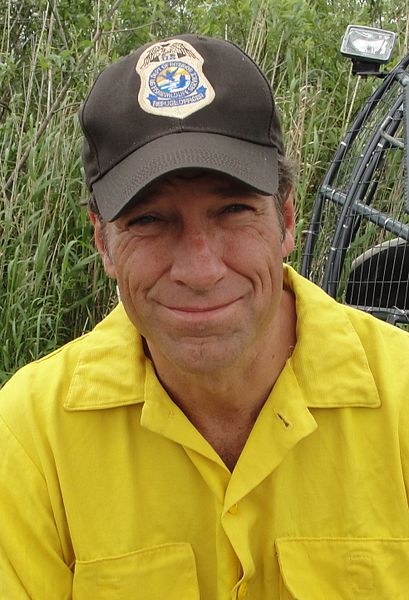
Mike Rowe, a man who made a name for himself doing the “dirty jobs” other people refused to do, stated his opinion was that there was no job that is nonessential. Appearing on a cable news program, he said, “Right now, there is this fascinating conversation going on on your network and all the networks, where we are making a distinction between essential workers and nonessential workers.” Rowe continued, “…there’s something tricky with the language going on here because, with regard to an economy, I don’t think there is any such thing as a nonessential worker.” 1

Rowe did admit that certain positions are greatly needed during a pandemic. Hence, we have greater need for a doctor now than a center fielder for a Major League Baseball team. “I just wanted to make the point that, when we talk about the economy, all work is essential,” Rowe stated. “Maybe it’s a distinction without too much of a difference, but in my mind, there is no such thing right now as a nonessential worker.” 2

Rowe makes a good point. For a healthy economy, every able-bodied person of age, must work. When person “A” earns a paycheck, he spends it in person “B’s” store. Person “B” can then provide for his own family. The property taxes person “B” pays allows person “C’s” child to go to school. In other words, the economy is something in which we all play a role, whether we appreciate our role within it or not. Yet, we see what happens when we purposely shut down a country to mitigate a virus. All the financial gains about which our country boasted for the last few years was wiped out in six weeks!

This isn’t a message about the economy or politics or Mike Rowe. It is rather about the harmful consequences we bring about by rashly judging what’s essential and nonessential without considering the bigger picture. When you have extra time, enter in the words, “baptism” along with “essential” and “necessary,” into your internet search engine of choice. I did. I found one page that proffered “101 Reasons Why Water Baptism is Not Necessary to be Saved.”

Fortunately, we have the book of Acts, also known as the “book of conversions.” Acts has many examples of people who, having heard the proclamation of the Gospel, submitted to baptism. It is a troublesome book for the one seeking to discount the necessity of baptism’s role in salvation. For this reason, such practitioners of a perverted gospel must say, “Baptism is an outward sign of an inward faith.” In other words, all these people were baptized to show their salvation rather than receive it.

Even if we only had the example of Paul’s conversion in the book of Acts, we would have enough reason to prove why baptism is not only necessary but essential. Paul was a man, made miserable by his newly acquired knowledge he was a sinner. He prayed fervently for three days. If one could “pray through” then Paul should have been able to have done so. And yet, when the preacher Ananias arrived, he saw the pathetic state that Paul was in and said, “Now why do you delay? Get up and be baptized, and wash away your sins, calling on His name” (Acts 22.16). Did Paul not realize he was saved and needed only to perform a ritual to confirm his salvation? If true, Paul was the most miserable Christian about whom we read in the pages of the New Testament during those three days he prayed and fasted.

We might make a tough judgment call because of a virus and shut down certain sectors of our economy since we believe them less essential during a health crisis. Ultimately, though, we realize even those deemed “nonessential” do play an important part in our economy, as Rowe suggested. We need them if we are going to climb up out of this trillion-dollar deficit hole this crisis has made us fall into.

Likewise, people may capriciously proclaim baptism nonessential. However, one wanting total restoration to the innocence lost in Eden must also know a demon’s faith (James 2.19) is not only insufficient to save but fatal (Mark 16.16).

References

1  Shiver, Phil. “’Dirty Jobs’ Star Mike Rowe: There’s No Such Thing as a ‘Nonessential Worker’.” The Blaze, Blaze Media LLC, 2 Apr. 2020, www.theblaze.com/news/mike-rowe-non-essential-worker.
ibid.

409px-ready_for_a_dirty_job_28cropped29

Two Important Ways Water Is Found In the Bible

Thursday’s Column: Captain’s Blog

IMG_0806

Carl Pollard

The longest anyone has ever gone without air is 22 minutes. The longest anyone has ever gone without food is 74 days. But when it comes to water, our bodies can only last so long without it. Water is one of the most essential parts of the human body. It makes up two- thirds of our bodies. The common answer for how long the average person can go without water is about 3 days, but it actually varies from person to person. In strenuous conditions you can lose up to 1.5 liters of sweat an hour, but in comfortable conditions an adult man can go a week or more without water.

Andreas Mihavecz, an 18-year-old Austrian man, may have survived the longest without drinking water: Police accidentally left him in a holding cell for 18 days in 1979. It’s a fuzzy record, though, since he allegedly licked condensation off the walls of the prison. The point is this, water is essential to physical life. What does scripture have to say about water? I’d like to notice two brief ways that water is used in scripture.

Water is mentioned as a way to salvation (John 3:5; Acts 2:38). John 3:5 says, “Jesus answered, “Truly, truly, I say to you, unless one is born of water and the Spirit he cannot enter into the kingdom of God.” What happens if we are not born of water and the Spirit? Eternal life will not become a reality. Water itself is not what saves, but the process of obeying the holy command of God. A very well known quote is this, “My faith is not in the water, but in the One that told me to get into the water.” Water is what gives us eternal life, but only through the act of baptism.

One of the cool attributes of water is that it has the ability to take on impurities, and it
can also release them when it evaporates and becomes purified. What happens at baptism? We are lowered into water and our spiritual impurities are taken away and we come up pure.

I stumbled across an article one time that said this, “Thirst Drives Sailors to Drink Sea Water.” It was July 30th, 1945 and the Battle Cruiser USS Indianapolis was returning home from a mission. On the way back it was struck by a Japanese torpedo. Sadly this ship didn’t make it home. In fact, in just 12 minutes 300 men died and 900 were in the water.

Those in the water went on to endure 4 days and 5 nights in the water. No food, no water and under the blazing sun of the pacific. Of the 900 that went into the water, only 316 survived the lack of water and the shark attacks. One of the survivors was the chief medical officer. He recorded his experiences and said this, “There was nothing I could do, nothing I could do but give advice, bury the dead at sea, save the lifejackets, and try to keep the men from drinking the water. When the hot sun came out, and we were in this crystal clear ocean, we were so thirsty. You couldn’t believe it wasn’t good enough to drink. I had a hard time convincing the men they shouldn’t drink. The real young ones…you take away their hope, you take away their water and food, they would drink the salt water and they would go fast. I can remember striking the ones who were drinking the salt water to try to stop them. They would get dehydrated, then become maniacal. There were mass hallucinations. I was amazed how everyone would see the same thing. One man would see something, and then everyone else would see it. Even I fought the hallucinations off and on. Something always brought me back.”

A lot of times people think, “There is no way that this won’t save me.” How couldn’t I be saved if I’m sprinkled with water? Or if I say a prayer asking Jesus into my heart? Whatever it is, they look at salt water and think it will quench their thirst, that it will save them. But God has told us what to do, and it is up to us on whether we listen or not.

Water is also used as a metaphor describing a way to strengthen our resolve. Isaiah 43:2 says, “When you pass through the waters, I will be with you. And through the rivers, they will not overflow you. When you walk through the fire, you will not be scorched, Nor will the flame burn you.” Water here is used as an example of trials and hard times. These waters help us to lean on Christ. We can have comfort in Him. But what is the point of these trials? God can’t use us if we are filled with sin and imperfections. Through these trials and hard times we are purified and God is able to use us.

Water is essential for survival, as every living thing would die without it. Did you know that 97% of water is undrinkable? Thankfully God designed the ocean to evaporate and rain down on us as purified water. When water freezes it gets lighter and floats, saving arctic sea life from getting squished under the weight of the ice.

What does the tired athlete ask for after he performs? Water. What is the word you hear from the traveler lost in the desert? Water. What do you hear from the sick and feverish man laying in his bed? Water. What does the wounded soldier on the battlefield cry for? Water. How beautiful it is that we come to the Living Water for nourishment. We must ask ourselves, Are we quenching our spiritual thirst with the one and only true source?


My Recent Sermon On Baptism

Listen Here

“WHAT PREVENTS ME FROM BEING BAPTIZED?”

Neal Pollard

Philip encounters a man returning from worshipping God in Jerusalem. The man, an Ethiopian eunuch, was reading from the scroll of Isaiah.  Philip engages him in conversation, asking the African man if he understood what he was reading.  This very important man was humble enough to ask for help, and Philip climbed into the chariot and delved into the text, Isaiah 53 as we would recognize it today, and taught him about Jesus.  This led the Ethiopian to ask, “Look! Water! What prevents me from being baptized?” (Acts 8:36, NASU).  He is saying that he understood who Jesus is, understood his need, and was now at a place where there was sufficient water for him to be baptized in order to have his sins forgiven.  Perhaps Philip pointed out the fact that Jesus died, was buried, and rose again and through baptism we reenact those very aspects (cf. Rom. 6:1-6). Perhaps Philip discussed the fact that a baptism “washes away sins” for believers in Christ who act in obedient faith (cf. Acts 22:16).  Whatever Philip preached about Jesus, it led the eunuch to correctly deduce his need to be baptized.

There are a good number of people who are currently or were formerly in a Bible study with someone, learned their need to be baptized into Christ (cf. Gal. 3:27), but have yet to do so.  There are an untold number of young people who are of accountable age who as of yet have not been baptized.  How many spouses of Christians know they need to do it, but have not been baptized?  Each individual mentioned in the groups above, as well as all others, are of infinite value to God (cf. Matt. 16:26).  No doubt, God would desire anyone who has yet to come to the knowledge of the truth to do so and be saved (1 Tim. 2:4).  Would he not want us all to ask, “What prevents me from being baptized?”

Certainly, one might give many answers to this question.  Let us examine some answers commonly given to this question.

“I’m Not Ready.”

Some individuals are not ready.  There are some too young to truly know right from wrong.  There are some who have not yet been sufficiently taught.  However, there are some who are not ready for the commitment, the sacrifice, and the submission needed to make Jesus Lord. There will never be a better sacrifice than Jesus.  One will never have more time left to give to the Lord than right now. God cannot possibly extend more love or grace. If one is not ready, he or she should ask, “What will ready me?”

“I’m Afraid.”

Fear is understandable.  Jesus apparently experienced it (cf. Heb. 5:7; Lk. 22:42). Paul experienced fear (Col. 4:4).  Peter certainly grappled with fear (cf. Matt. 26:69-74; 1 Pet. 3:14-15).  John exhorted the Christians in his audience not to succumb to fear, as it is a barrier to salvation (Rev. 21:8).  

One might fear the change that follows becoming a Christian.  One might fear failure in their Christian walk.  One might fear the reaction and even the rejection of others.  Jesus once taught, “Do not fear those who kill the body but are unable to kill the soul; but rather fear Him who is able to destroy both soul and body in hell” (Matt. 10:28).  One must evaluate those fears and ask if any of them is worth risking the fearful prospect of standing before the Lord without His blood covering their sins.
“I’m Not Sure.”

Peter unquestionably says, “Make certain about His calling and choosing you” (2 Pet. 1:10).  However, he is not giving people an excuse to put off obeying Christ.  Remember, he is speaking to those already purified from their former sins (1:9)–those who had already been baptized. There is a need to reason through scripture (cf. Isa. 1:18). Paul reasoned with individuals about Christ on many occasions (Acts 17:2, 17; 18:4, 19; 24:25).  The fact is that the biblical claims about who Jesus is and how one receives the benefits of His grace are most reasonable. Rationalization, hard-heartedness, and self-will may be the seeds that grow into weeds of doubt, but there is no need to doubt or allow doubt to prevent one from submitting to Christ.

“I Don’t Believe.”

One may or may not say those specific words.  Yet, when one sees the truth of scripture, knows the personal accountability demanded, and does nothing about it, that one essentially does not believe.  At least, faith is insufficient to properly respond to God’s amazing grace. This is a hard truth to confront in ourselves.  I see it.  I know it.  But, I will not act upon it.  The Hebrews writer says the Israelites could not enter the promised land because of unbelief (Heb. 3:19), and he warns us against imitating them (Heb. 3:12ff).  Even the demons believe and tremble, though it does them no good (cf. Jas. 2:19).  We must believe and be baptized to be saved (Mark 16:16).

Perhaps you are one who could ask yourself, “What prevents me from being baptized?”  Cast a long mental gaze at the cross of Calvary and comprehend the love and sacrifice evidenced there.  Such was for you (cf. Gal. 2:20).  God’s love for you is personal. He wants nothing more than for you to live with Him eternally, and He has told you what is involved in that (cf. Acts 2:38).  What prevents you from being baptized?

59334951_2375790432443980_1175219523108732928_n

Truth Is Truth, No Matter WHO Disagrees With It

Neal Pollard

Today, one of the most famous preachers of modern times died just short of his 100th birthday. Not only did he achieve longevity, his name was almost synonymous with American religion in the 20th Century. He reached hundreds of millions of people through live crusades, radio, and television. He was regularly listed as one of the “Ten Most Admired Men in the World.” His website claimed that he preached to more people in live audiences than anyone else in history (info via FoxNews.com).  His influence on society is unmistakeable.

However, this much loved and now much lamented man used the weight of his name and influence to oppose something which Scripture seems very clearly to teach. In the answer section of his website, he addresses the question, “Is baptism necessary for salvation?” While answering that he believed it to be important and that he had done it himself, he also said, “If baptism were a requirement for salvation, we would certainly say that.” His answer makes clear that one becomes a saved convert before baptism, the thief on the cross being used as proof of that claim. Many of those who left comments under his answer shows how deeply influential and popular his teaching on this was.

I believe in the vitality of the saying, “It’s never a matter of ‘who’s right,’ but ‘what’s right.’” Something is never right because I say it, some other preacher, or even the most famous preacher of the 20th Century says it. Something is right because Jesus and His apostles and prophets said it. Here is what they said:

  • “He that believes and is baptized shall be saved” (Jesus)
  • “Repent, and each of you be baptized in the name of Jesus Christ for the forgiveness of sins” (Peter)
  • “Get up and be baptized, and wash away your sins, calling on His name” (Ananias)
  • “Or do you not know that all of us who have been baptized into Christ Jesus have been baptized into His death? Therefore we have been buried with Him through baptism into death, so that as Christ was raised from the dead through the glory of the Father, so we too might walk in newness of life” (Paul)
  • “For you are all sons of God through faith in Christ Jesus. For all of you who were baptized into Christ have clothed yourselves with Christ” (Paul)
  • “ Corresponding to that (Noah and family brought safely through the water, 20, NP), baptism now saves you—not the removal of dirt from the flesh, but an appeal to God for a good conscience—through the resurrection of Jesus Christ” (Peter)

I feel the loss of this renowned preacher is sad and tragic.  I appreciate his vast influence and the way he tried to use that for good in so many regards. Yet, if the Bereans found it necessary to compare the great apostle Paul’s preaching and teaching with Scripture, any of us who preach and teach today should want people to do the same. That’s the only way we will be able to determine what’s right!

55b-3246-1-1024x819

“Wait Until Fall”

Neal Pollard

It was a beautiful experience, talking with our newest brother in Christ last night. It was beautiful watching him be bombarded with love and attention from member after member. Listening to him tell his story built my confidence in the simplicity of the Bible when a person reads it without prejudice or agenda. What an affirmation that God has a will for us and He made sure it was understandable to the seeker. As Jesus put it, “Seek, and you shall find” (Mat. 7:7).

Roberto has been seeking. As he has been attending a large, area Community Church, he has also been studying his Bible. He’s been a diligent student. Along the way, he read the repeated emphasis upon baptism as a necessity for salvation. This prompted him to approach his church and ask if he could be baptized. He was told that they baptize in the fall, and he could be baptized then. His immediate concern? What if I am killed in a car wreck or my phone blows up when I charge it? There was no manipulative or badgering teacher filling his head with such scenarios. Instead, he could make the connection between a command from God and the consequences of disobeying it.

He started Googling the importance of baptism and eventually found World Bible School. This led him to connect with Terry Pace, a Christian in Flint, Michigan, who studied with him. Roberto wanted to know if he could be baptized. Terry went to work. Terry’s son, Sam, happens to preach at the Northwest congregation in Westminster. One of the Northwest members, Allan Javellana, met him to study with him on Monday and found out he had sufficient understanding to be baptized. Since he lives close to Bear Valley, Allan brought him to our building where Wayne Nelson let him in. Allan stressed with Roberto the importance of working and worshipping with a group that is trying to answer Bible questions with Bible answers.

On Pentecost, they asked “What shall we do?” (Acts 2:37). They were told (Acts 2:38), and they acted that day (Acts 2:41).

On the road to Gaza, the eunuch asked Philip (who had preached Jesus to him, Acts 8:35), “Look! Water! What prevents me from being baptized?” (Acts 8:36). They stopped the chariot right there and then, and he was baptized (Acts 8:38).

At Cornelius’ house in Caesarea, this Gentile asked Peter to come over from Joppa (Acts 10:23ff). Cornelius knew Peter would be speaking words by which he could be saved (Acts 11:14). When it was clear that God wanted Gentiles to be saved (Acts 10:44-47), Cornelius and his household were baptized on the spot (Acts 10:48).

In the prison in Philippi, the jailor asked, “What must I do to be saved?” (Acts 16:30). He’s told to believe on the Lord Jesus Christ (Acts 16:31), Who they proceed to teach him about (Acts 16:32). Armed with this knowledge of the Savior, this jailor “immediately…was baptized, he and all his household” (Acts 16:33).

Nobody waited because God’s answer was “now.” What has changed from then to now? What would make a different answer acceptable today? Roberto is another, amazing example of what a receptive heart does when faced with God’s Word and will. Simply, humbly do what He says. Oh, that I will approach God’s Word the same way!

water-baptism

Identifying As A Christian

Neal Pollard

There are so many “identifying” stories these days. A white woman, Rachel Dolezal, identifying as a black woman, was back in the news over the weekend. A biological female who identifies as male and has taken testosterone, Mack Beggs, won the Texas girls wrestling title. In a recent interview, Dr. Keith Ablow suggested that such delusional (he is using the term in a psychological, not pejorative, sense) reasoning opens the door for a young person who “identifies” as a 65-year-old to receive Medicare benefits (foxnews.com). Really, every new case of “identifying” reveals the absurdity behind the thinking. All the wishing, wanting, and hoping in the world cannot change ironclad facts. As we used to say discussing reality of any kind growing up, “It is what it is.”

If there is anything more harmful than delusion, it may be denial. For centuries, good, sincere people have claimed to be Christians who have not followed what the New Testament reveals is necessary to become one. They have followed some humanly-devised plan or idea (accept Jesus in your heart by faith, say a prayer, believe the Holy Spirit gives you an experience of grace, etc.). Leaders and teachers who have devised such ideas do not do so from a sustainable, biblical source.  Repeatedly, whether in the gospels (Mark 16:16), the book of history (Acts 2:38; 22:16), or the epistles (Rom. 6:4; Gal. 3:27; Col. 2:12; 1 Pet. 3:21), we find a simple, but essential, act that stands between one not being and being a Christian. But the idea that one can fail to do this and still be a Christian is pervasively taught, believed, and practiced.

Akin to this is the belief that one can claim to be a Christian, then live any way they wish. Their speech, conduct, and attitude can exactly mirror and mimic the world’s. Their aspirations, pursuits, and values can be completely worldly. But, when death visits a loved one or comes to them or at some similar time when it would be advantageous to claim so, they aver that they are a Christian. While they may have followed God’s plan to become one, they think of themselves as saved and safe even while walking in darkness (cf. 1 John 1:6-9).

It takes more than a claim. Facts are stubborn things. The ultimate source of what is factual is God’s Word. It educates us about gender (Gen. 1:27) and race (Acts 17:26). It educates us about who a Christian is (Acts 2). It educates us about faithful Christian living (cf. Rom. 12:1-2). If we wish to be accurate in the way we “identify” ourselves, we must let Scripture inform our view!

rachel_dolezal_speaking_at_spokane_rally_may_2015

Celebrating Independence Day

Neal Pollard

Scores of people from virtually every nation on earth make the journey by land, sea, and air to come to the United States, “the land of the free and the home of the brave.”  The day in American history, marked by the signing of the Declaration of Independence during the Revolutionary War with Britain, is considered the birthday of America.  “Independence Day” symbolizes not merely a day, but a way of life and the blessings of living in a free nation.

Mark’s gospel begins with the life of John the Baptist, the forerunner of Christ.  In the passage, Mark tells about the many people from Jerusalem and all the land of Judah who came to be baptized by him.  This immersion, though not the one to which all believers must submit today for salvation (cf. Mark 16:16), was an important precursor to Jesus’ earthly ministry.  Apollos (Acts 18:25) and certain men of Ephesus (Acts 19:1ff) were among those even in the Christian age who had previously undergone it.  The baptism bears a remarkable resemblance to the water baptism of the Great Commission.  It was a baptism involving repentance (Mark 1:4), as is baptism under Christ’s covenant (Acts 2:38).  It was a baptism resulting in the remission of sins (Mark 1:4), as is baptism into Christ today (Acts 2:38).  It was a baptism done in much water (Mark 1:5; cf. John 3:23).  So it is with baptism into Christ (Acts 8:38-39; Romans 6:3-4).  It was a baptism properly submitted to only by those understanding its importance in light of their sin problem (Mark 1:5).  So it is with baptism into Christ (Acts 22:16).

Both the baptism of John and the baptism of the Great Commission share this, too.  Both brought freedom and independence from sin, each in its proper dispensation.  Freedom to vote, own property, and pursue happiness are wonderful, but nothing compares to the Independence Day we celebrate when we are baptized into Christ.

miamifireworks

What Keeps People From Salvation?

Neal Pollard

  • Ignorance: They have not learned how to be saved
  • Fear: They know the potential cost of being saved
  • Pride: They do not want to admit they are not saved
  • Loyalty: They fear that they will be tacitly condemning those they care for if they are saved
  • Comfort: They do not want to do what it takes to be saved
  • Emotion: They feel they are saved
  • Guilt: They do not believe they can be saved
  • Prejudice: They cannot see the necessity of following what certain scriptures say they must do to be saved
  • Sin: They enjoy something(s) too much to surrender in order to be saved
  • Self: They want to follow their own terms to be saved
  • Blindness: They cannot see through their religious traditions and doctrines in order to be saved
  • Responsibilities: They are too busy with life to be saved

So many more excuses might be given by someone who refuses to do what God says to do in order to be saved, but whatever excuse is given overlooks the fact that God allowed no excuse to keep Him from sending His Son, that Christ allowed no excuse to keep Him from going to the cross, that the Holy Spirit allowed no excuse to keep Him from revealing to us through the Bible how to be saved, that the apostles and early Christians allowed no excuse to keep them from sharing and doing God’s will for salvation (even at the cost of their lives), and that so many throughout time have not allowed these same excuses to keep them from obeying the gospel to be saved. Salvation is so important, eternity is so long, the soul is so precious, sin is so destructive, the devil is so ravenous, and the world is so wrong that we must remove every barrier that might stand in our way. If we were to write down our reason for not being saved and keep it until the day of judgment, how valid and reasonable would it sound as we conveyed it to Christ? If we would not want to tell Him then, let’s not let it keep us from Him now.  “Behold, now is the acceptable time, behold, now is the day of salvation” (2 Cor. 6:2b).

South Fork Church of Christ baptistry mural looking in from the

Devon Allen’s Baptism

Neal Pollard

I will preface this by saying I cannot determine anything specific about the religion of Devon Allen, a remarkable college student-athlete at the University of Oregon. He is in the headlines now as a starting football player who qualified for the Olympics in track and field.  It was during his training and competition for the latter that he decided the time was right to be baptized. So he was, in the Willamette River in Eugene last Friday before the watchful gaze of family and teammates from his track and football teams. No less than ESPN reported on his religious quest alongside his impressive athletic achievements. The article ended with the proper sentiment, particularly if Allen was baptized in the right way for the right reason. It reads, “It was the right starting line for two different races” (Chantel Jennings, espn.com).

I am encouraged that Jennings found this newsworthy. I am encouraged that Allen thought baptism to be so important. I am encouraged that his friends and family showed up in impressive numbers to witness this act.

When even so many in Christendom go the extra mile in denying the importance and significance of baptism, Devon troubled himself to do it. We do not know, but he might have said what the Ethiopian said: “Look! Water! What prevents me from being baptized?” (Acts 8:36b). As he studied with Oregon football team chaplain, could he have been taught the New Testament truth that baptism is for the remission of sins (Acts 2:38), baptism washes away sins (Acts 22:16), baptism reenacts Christ’s death, burial, and resurrection (Romans 6:1-4), baptism puts one into Christ (Galatians 3:27), baptism buries one with Christ (Colossians 2:12), and baptism saves one (1 Peter 3:21)? If he was taught baptism from the New Testament, these are the kinds of things he would have heard.

Regardless of Allen’s understanding about baptism’s function in God’s plan to save us, one who is taught in accordance with the several passages above and who has a good and honest heart (cf. Luke 8:15) will want to be baptized without delay (cf. Acts 22:16). Like the jailor at Philippi, they will submit to baptism even if it is the middle of the night (Acts 16:33). Like the 3,000 on Pentecost, they will demonstrate gladly receiving the word by being baptized (Acts 2:41). Thus, they will be saved.

My prayer is that Devon Allen understand these Bible facts and responded the way he did because he humbly accepted their truth. More than that, my prayer is that those who need to make the decision to be baptized will not let anything hinder them from doing what Jesus died to make possible for us all. May we ignore all rationalization that leads us to resist the act which, from a believing, penitent heart, washes our sins away.

102707-oregon-autzen-uoentrance1

Facts Deduced About Baptism From The Eunuch

Neal Pollard

The book of Acts is wonderful for teaching the history of the church as well as providing examples of how people became Christians. From the first gospel sermon (Acts 2), baptism is central and essential to God’s plan of salvation. The emphasis is even found through facts implied from these statements and examples. Consider some facts deduced about baptism from the conversion of the Ethiopian eunuch.

  • First, baptism is part of preaching Jesus. In Acts 8:35, Philip began with the eunuch from the passage the eunuch had been reading (Isaiah 53), and “he preached Jesus to him.” Consequently, the eunuch, when they came past a body of water, said, “Look! Water! What prevents me from being baptized?” Why would this man ask such a question unless preaching Jesus included preaching the necessity of baptism?
  • Second, baptism is part of believing (Acts 8:37). Philip ties his request for baptism to the essentiality of faith preceding baptism. The eunuch confesses belief “that Jesus Christ is the Son of God.” Jesus had sent His disciples with this understanding, that “he who has believed and is baptized shall be saved” (Mark 16:16a).
  • Third, baptism involves urgency (Acts 8:38). The eunuch ordered the chariot to stop. Why? Why not wait until he was back in Africa? Why not wait until Philip collected several others and then have a baptismal service for them all at once? When the Eunuch saw water, for some reason he wanted to submit to baptism right then and there.
  • Fourth, baptism involves immersion (Acts 8:39). We primarily know this because the word “baptism” means “strictly dip, immerse in water (Friberg & Miller, 87). However, the fact that Philip and the eunuch both went down into the water indicates that baptism must involve more than sprinkling or even pouring. This man  (and Philip) went to the trouble of getting wet by going down into the water.
  • Fifth, baptism produces rejoicing (Acts 8:39). The first evidence of joy comes after the eunuch comes up out of the water, not when Philip preached Jesus or when the eunuch confessed belief in Jesus. There was something important and necessary about the act of baptism.

Despite a religious world filled with groups who resist, argue against, and deny the importance of baptism, that one example (and there are several others–Acts 2:36-47; 8:12-13; 9:18+22:16; 16:15; 16:30-33; etc.) leaves no doubt about the indispensable part baptism plays in God’s plan to redeem humanity. Thank God for this conversion example in Acts 8. May our hearts be open to accept what the Word says to us (Luke 8:15).

13055587_1079852015371168_1598737744818493967_n
Megan Meeks was baptized this past Thursday, 4/21/16, in Denver, CO. The plan has not changed since Acts 8.

We Sure Love Baptisms!

Neal Pollard

There are some things about social media that are extremely irritating—click baiting, pot-stirring, fight-picking, self-pitying, and the like. But there are a great many positives in that medium, too. Of all of them, I believe that posts of baptisms have to be my favorite. I do not appear to be alone in that estimation.  Judging from post reactions and comments, a great many others do as well. We love it when there are pictures. We love the “back story.” We love knowing that our friends, neighbors, co-workers, and family members have good, honest hearts softened by the power of Divine Revelation. We love knowing they have a clean slate and a fresh start, and are poised to begin their walk on Narrow Road.

All of this leads me to several random observations:

  • True good news needs no hype, trumping, manufacturing, or baiting.
  • It is New Testament thinking to rejoice at such good news (Acts 8:39; 15:3).
  • What a confirmation the obedience of others to the gospel is to our own decision to do so.
  • It restores our faith in the potential of humanity and the power of the gospel (Rom. 1:16; Heb. 4:12).
  • It builds our confidence in the Bible to see people imitate the examples of the New Testament, doing what they did the way they did it (Mark 16:16; Acts 2:38; 8:13, 38; 9:18; 10:48; 16:14-15; 31-33; 22:16; Rom. 6:3-4; Gal. 3:26-27; Eph. 5:26; Col. 2:12; Titus 3:5; 1 Pet. 3:18-21).
  • The average Christian wants what is best for others, which is just one reason Christians are the best people on earth.
  • We want good news to travel fast, far and wide.
  • We know it pleases the Lord when a person comes to Him in obedient faith (see Luke 15).

There are doubtless many more observations we could make, but these are enough for me to thank God for His people and those who daily make the decision to become His people. It builds my faith and hope in my fellow human beings and my trust in heaven’s plan of salvation.  Thank you for finding joy in the right and best things! And let’s keep striving to perpetuate that joy through leading souls to the Savior.

12924440_10207948347340678_5218772026345282016_n
“Debbie” being baptized into Christ during a gospel meeting with Keith Mosher in Sylvester, GA, this week (photo credit: Jason Willis)