Thursday’s Column: Captain’s Blog

Carl Pollard


If there’s one thing disappointing me most, it’s the lack of productivity I often feel. There are many things I want to do. I don’t think I get even a quarter done. For many facing a similar predicament, it’s a matter of poor time management. Time is precious. We’re told to make the most of it since the days are evil (Ephesians 5.16). Contextually, this pertains to the efforts made by first-century Christians in their daily walk. Persecution was coming. Indeed, for some, their lives would soon be at an end. Did they want to depart for eternity’s shore feeling as if more could have done but had not been? That message remains prescient today. We enjoy civil liberties now including religious freedom. However, a tempest has been growing for half a century which seeks to strip away the vestiges of religion and morality from the body politic. In but a short time we may face the same uncertain prospects as they. Hence, our struggle to be productive is as important as ever.
This exhortation may be limited in scope, but I wish to address those who might have certain mitigating factors making Paul’s inspired admonition more difficult to keep. It’s one thing to be a timewaster when one is able-bodied. It’s another matter entirely when you’re limited from accomplishing as much by the limitations of the flesh. There are those accustomed to doing much. One day they young, full of vigor. In the blinking of an eye, though, they no longer recognize the person staring back at them in the mirror. The snow of many winters covers what hair is left on their heads. For such, it hurts getting out of bed. Something as simple as buttons on garments becomes a time-consuming challenge. They may be asking, “Why can’t I get as much done as I used to?” This can be especially vexing, spiritually.
Perhaps, you have an illness of the body or mind. Maybe you don’t have old age to blame for your aches and pains but an autoimmune disease that others dismiss because, from appearances, you look fine. Not only are you in pain but you feel alone because some have unfairly surmised you’re just lazy. It could be that you’ve had chemotherapy and experience what has been termed “chemo brain.” You find yourself struggling to remember simple details. If you don’t write something down, you’ll forget about it. Truly, I could share a plethora of other scenarios in which some malady besets the body or mind and causes one to feel unproductive or a timewaster. These should suffice.
Fortunately, we serve a gracious God. Not only is His grace sufficient for coping with our lot in life (2 Corinthians 12.9), but it takes into consideration our current estate. One can debate whether there are degrees of punishment from Luke 12.48. That’s not my purpose. A principle is established here, however, stating that we’re held accountable according to the responsibility entrusted to us. Why would God hold the enfeebled or impaired to the same standard as the able-bodied? This must be true of redeeming one’s time as well. Note, one cannot forsake his or her Christian duty. Yet, rather than beat up on yourself because of what you left unaccomplished, trust that God knows your situation intimately. The main thing is to show up and do the work of which you are capable (Matthew 20.1-16; 21.28-32). This is how you remain productive even while facing adversity in these evil days.


In the pantry there’s a package of white foam cups. A small gray mouse struggles to carry a cup out into a man’s front yard one at a time. Just one cup and one each day. The man sticks to a normal routine. He goes to work early, and he comes home late. He watches TV, cooks a meal, tinkers on projects in the garage, and goes to bed. It’s mindless, it’s robotic, but day in and day out the cycle repeats itself. He leaves for work and the mouse drags yet another cup out onto his lawn. It isn’t until his yard is filled with foam cups that the man takes notice. What a mess! He walks through the yard and picks a few of them up. As he examines them he says, “What a waste. Perfectly good cups, now useless and dirty. We have a limited amount of foam cups in our package, and there’s a day when the mouse will grab the last one. We better put them to use. ”
If God came to you and gave you the chance to make a single request, what would you ask for? Our prayer lives are usually filled with our personal wants and needs. There are countless things that tug at different areas of our heart as we approach our Father, the Creator of the universe. He can do anything, He has all the power, and in one way or another we all desire some Divine intervention. I would like my family to be healthy and happy. I would like to live out the rest of my days with no more worries or anxieties. I would like the peace that comes with total financial stability. I wish my dog would live to be one hundred and five. I would like to be successful in everything I put my mind to.
There are five hundred wants in my heart, but what do I desire more than anything? The answer to that question is deeply connected to our spiritual life. What my heart chases after, where my time and energy goes, and even what I ask God for spreads my top priorities before me. David writes in Psalm 27:4, “One thing I ask of the Lord, this is what I seek. That I may dwell in the house of the Lord all the days of my life, to gaze upon his beauty and inquire in His temple.” David is known as the man after God’s own heart, simply because his heart was after God. David’s one desire was to form a deep and meaningful relationship with God. He understood what truly matters in this life. He even makes that his specific and singular request of the Lord. He puts his faith in action as he seeks that relationship with God. His life was built around this, and everything else is secondary to him. His seeking was that hopeful expectation— the effort he put in to this pursuit was a demonstration of that belief in God’s ability to grant him his one thing. David spent his time wisely. Almost every day that was granted to him he used as an opportunity to seek His Lord.
God is the Alpha the Omega, the beginning and the end. His eyes can see the very point in time in which He decided to create everything. He can also step back and look at His timeline and see the exact moment in which He will bring all things to an end. The Bible is a gift and glimpse into His mind. In it we can see the powerful beginning to the world we live in. We can see how God works in our present, and we can read about a grand event that will come when the days run out.
What is that one thing you want more than anything else? Don’t let the cups pile up in your yard. Let’s all use the time we have to pursue the only thing that matters.


Neal Pollard
It’s the time of year when so many are buying or receiving calendars and planners or using an electronic version of the same. These can be key to organizing our lives, maximizing our time management, and strategizing ways to grow and improve in the future. Good stewardship really demands that you are “making the most of your time, because the days are evil” (Eph. 5:16).
In this task of planning life each day, please consider planning to do the following each and every day of 2020:
That’s enough to keep idleness from plaguing us, isn’t it? Consider how helpful this will be, not just on January 1, but also March 19, June 6, September 25, and December 30. This life is about overcoming (1 John 5:4), but perseverance is as much about the daily grind as it is the dramatic and grand. Zig Ziglar wrote that “people often say that motivation doesn’t last. Well, neither does bathing – that’s why we recommend it daily.” How profound! Plan on being a better you and on doing what that requires, day by day.
Neal Pollard
What would you add?

Neal Pollard
[NEAL’S NOTE: This poem was from the conclusion to the sermon I preached on this subject from Psalm 90]
If today was my last day and tomorrow found me gone
How would life be different, if that unknown somehow was known
Would I be a better person, would I live a better life
How much would I feed resentment, envy, bitterness and strife?
How would I choose to live, and what would be my emphasis
Being a blessing or a burden, full of service or selfishness?
Where would God be in my life, what place would He occupy,
If today was my last day, and before tomorrow I would die.
If today was my last day, and second chances all were through
And I stood before my judge and my eternal fate I knew
I would mourn and fall before Him, if I had not done what’s right
If I had chosen self and sin, if I had chosen eternal night.
But there’s no reason for apprehension, I can die w/head held high
If I die to self & live to Him, it won’t matter when I die.
Neal Pollard
Several years ago, when preaching in Virginia, I spoke with a sweet, 69-year-old woman who had watched our TV program and wanted to speak to me. During the course of our visit, she told me a story I will never forget. Tearfully, she told me of her 14-year-old grandson, Matthew, who locked himself in his room, took a pistol, put it in his mouth, and pulled the trigger. He was rushed to MCV Hospital in Richmond. He survived, but the bullet was permanently lodged in his sinus cavity and he was in constant, relentless pain. The greatest pain, however, was not physical. It was emotional and spiritual. Matthew’s mother and father routinely flew to Las Vegas to gamble, dumping him off with anyone who would take him. They might win a few thousand dollars on some trips, but they invariably lost their winnings and then some. The father had told the son, not long before his suicide attempt, “I wish I’d never set eyes on you!” The boy had told his grandmother, “Nobody loves me.” He had also told her, “I want somebody to take me to church.” When she offered, he said, “I want my daddy to come and sit beside me.” This dear elderly woman lamented that he grandson’s parents never showed Matthew love and affection. In the wake of that, a young man with most of life before him, could not bear the thought of continuing one more day in such a topsy, turvy, loveless circumstance.
I felt a flood of emotions: Pity, for the boy; Anger, for the parents; Sympathy, for the grandmother. Upon reflection, there are several lessons to be learned from Matthew’s plight.
There are too many young Matthews, empty inside, unsupported, unloved, and unaided. What condition is our home in? Is sin in the way? We should be careful how we walk in front of our children (cf. Eph. 5:15). We want them to do more than value their physical life. We want them to pursue and gain eternal life! May God bless us in that needed pursuit.

Neal Pollard
The first few decades we rush ahead
Wanting time to fly, but it creeps instead
Impatient to be older, sure that it’s our way
To freedom and happiness, where we’ll leisurely play.
Sure enough time goes rapidly by
Flashing so speedily, we watch it fly
Moments of grandeur, days that are grueling
Ordinary stretches our quick lives fueling
Soon the road in our rearview stretches much longer
Our foot on the brakes, though the pace is much stronger
The road out before us is sloped and quick,
We savor the present, future curves might make us sick.
But we know that this journey, so speedily taken
Will reach its destination, there’s no mistaking.
There’s still plenty of grand views on the side of this road
But we encounter new impediments and a heavier load
How could we go faster, as there are higher hills to climb?
Yet this road is so short and is hemmed in by time.
I praise God this journey is not a dead end,
I’m traveling to see my dear Savior and friend,
Who’s waiting my coming, however many more miles,
Where days are not counted, and tears become smiles.
That’s free of all calendars and increases in age,
And length of existence stretches one eternal page.
The law of averages says I’m about halfway through,
Or perhaps a bit farther, so here’s what I’ll do,
Make the most of each moment, helping others prepare
For a happy destination, showing how to get there.

Neal Pollard
In 1 Peter 1:13-19, there are three commands that relate to something that must be done regardless of how much time it takes to complete. They are, “fix your hope completely on grace” (13), “be holy in all your behavior” (15), and “conduct yourselves in fear” (17). There’s a fourth command of this type in verse 22: “Love one another from the heart.” All of these are done as the result of a salvation taught by the prophets and revealed to us. Because we’ve been saved, we should fix our hope on grace, be holy in behavior, conduct ourselves in fear, and love one another from the heart. Considering what God has done for us, we should be eager to do what He tells us to do. At the heart of the discussion, Peter calls for holiness. “Holy” is found 10 times in 1 Peter, but there are synonyms in the book, too (“behavior” or “manner of life”—7 times; “do good” or “right”—13 times). We want to be holy, do good, and behave, and this letter says a whole lot about how that looks. It’s faithfulness in suffering, distinctiveness in daily living, and keeping heavenly in focus. It’s captured in Peter’s petition (2:11). Our world places more emphasis on happiness than holiness, and if you have to choose one the world says choose happiness. But, God calls us to choose holiness. How do we do that?
We take the time for what is most important to us—sports, social media, hobbies, work, shopping, and the like. None of that ultimately matters. As we do anything, these or other things, we must make sure that we are holy in heart and conduct. It’s worth the time and will be worth it when there is no longer time.

Neal Pollard
It boomed when “copper was king” and owed its thriving existence to shell casings made for the Union Army in the far-away Civil War. Fittingly, her downtown streets were Union, Grant, Lincoln, and Sherman. There were 90 businesses in “Copper City” from 1865-1867. The extraction and production of copper ore found in such strikes as at Gopher Ridge, Quail Hill, and Hog Hill made Copperopolis a boom town for a short time. A huge fire in the center of town, in 1867, coupled with the enormous drop in demand for copper following the end of the Civil War, left the community a virtual ghost town. So, despite a few modest copper mining rebounds periodically through World War II, Copperopolis, which yielded $12 million in copper from 1861 to 1946, is a shell of its former self. It is a resort and recreation area today, a modest little town who once entertained the likes of Mark Twain, Nikola Tesla, and “Black Bart” (Charles Boles)(mymotherlode.com, calaverashistory.org/copperopolis).
History is fascinating, with its “rags to riches,” “riches to rags,” and even “rags to riches to rags” stories. Family histories play out the same way. So can the rise and fall of nations. The history of the church, wherever she has existed, may follow the same trajectory. The Jerusalem church of Christ, where it all began, once boasted thousands of members. In time, due to persecution and the introduction of false doctrines, the church there faded from view. Today, it has only a modest presence. The same could be said of other congregations we read about in the New Testament. Our congregation is somewhere on its course from the past to the future. Where will it be in 10 years? 50 years?
Then, I look at my own life. I have been a Christian for over 30 years. I have preached for over 25 years. There have been Bible studies with non-Christians and new Christians. There have been efforts to try and influence others with the gospel. My three sons are all nearly grown and on their own. My wife and I have labored together to serve Christ. But, each day, I must look and sincerely investigate what my spiritual trajectory is. Am I growing nearer to Christ, acting more like Christ? Am I bearing more or less fruit? Are my best days in His kingdom behind me or in front of me? The good news is that, to a great degree, that lies within the scope of my free will and deliberate choices. With God’s help and to His glory, I can make today, tomorrow, and beyond the brightest days of service to Him.
Look at your life. What legacy are you building? You will help determine that by what you do today. Paul says, “Therefore be careful how you walk, not as unwise men but as wise, making the most of your time, because the days are evil” (Eph. 5:15-16).

Neal Pollard
Here are the rules: Don’t use any resources to look up these answers. This is a quiz to test your knowledge.
Hopefully that was fun. How did you do?
If you got 12-15 right, you are fluent in current culture.
If you got 8-11 right, you are passable in current culture.
If you got 4-7 right, you are possibly living on an Amish farm or serving a stint in solitary confinement.
If you got less than 4 right, you may not have a pulse.
(Note: measurements are strictly facetious and unscientific).
Now for a second quiz:
How did you do on that test? We absorb so much of the culture because it surrounds us and demands our attention. We see it, hear it, and are in so many ways surrounded by it. The Bible is something we must be intentional about. We must go to it and spend time in it. When we do, we’ll grow in more than mere knowledge (cf. 2 Pet. 3:18). We’ll be nourished (1 Tim. 4:6), delighted (Ps. 1:2), enlivened (Ph. 2:16), protected (Ps. 119:11), revived (Ps. 119:25), and sanctified (Jn. 17:17). We’re not trying to win a trivia contest. We’re trying to overcome the world and go to heaven. Bible reading, studying, and meditation is key to that! Spend some time in The Word today and every day!
Answers To The First Quiz:
Answers To The Second Quiz:
Neal Pollard
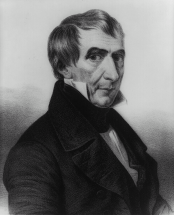
The shortest inaugural address was George Washington’s second, in 1793, and it was comprised of 193 words! William Henry Harrison, though raised a cultured, educated man, campaigned on a folksy ticket symbolized by the log cabin. To set a different, more cultured tone for his presidency, Harrison decided to give a lengthy, erudite speech on a bitterly cold, early March day in 1841. He spoke for nearly two hours, doing so without benefit of a topcoat or hat. Historians are generally agreed that Harrison’s motivation was to show himself not be a country bumpkin or simpleton. While it is unclear if his exposure led to the pneumonia that killed him exactly a month later, it still boils down to a lot of talk and very little execution.
How often do we, as congregations, spend a seemingly endless amount of time outlining, discussing, and rehashing grand plans? Goals and planning are vital to a church’s existence, but so often much talk produces little action. In any congregation’s mind, they are going to be a fast-growing, active, moving, and shaking bunch. Yet, so few churches are that. We spend our time laying out the plan and give ourselves so little time to do it.
We do that in our individual lives, too. We make big plans for tomorrow (cf. Jas. 4:13-15). Like the poet expressed it, “He was going to be all that man should be…tomorrow; no one would be kinder or braver than he…tomorrow.” Yet, the poet depicts the dreamer as one who died today while hoping for tomorrow. Are we making grand, long-winded speeches about all we are going to do? Are we spending such time outlining it that we have so little time left to execute it?
Think of all you know about William Henry Harrison compared to George Washington. Both were thinkers and planners, but oh the difference in how we remember each of the. Think, then do!


Neal Pollard
Take not the day for granted,
Who knows what the morrow brings,
What present joy be recanted,
What shut the mouth that now sings.
Too often we long for tomorrow,
Assuring ourselves it will be perfect,
Dissatisfied with present perceived sorrow
Viewing only today’s every defect.
But right now, this moment, is precious
It holds a bright and unique treasure
For the one with wisdom who confesses
Trust in Him who blesses without measure
Yes, God gave us this day in His kindness
To use for His glory and pleasure
How tragic to be struck with a blindness
To how rare and how useful that treasure.
So many have not been gifted these hours
They’ve ceased their ability to live them
Who long for what now exceeds their powers
Whose light is put out, not just dim.
What are we doing with the present
To build a spectacular time ahead
To make others’ lives blessed, not just pleasant
To bring life to the spiritually dead
Take not the day for granted,
It was given to be managed astutely
Embrace it, don’t be disenchanted
Do your best with it, strive resolutely!

Neal Pollard
Wayne Roberts forwarded an article to me about a bizarre incident that recently occurred in Fort Collins, Colorado. Colorado State University student Ted Nischan, who has a lead foot and limited income, went to the Fort Collins municipal court to pay a speeding ticket. What makes that newsworthy is that his form of payment was not cash, check, or credit. It was coins! $160 worth of pennies, nickels, dimes, and quarters. The court workers apparently does not accept that much money in that form of payment. His personal bank would not convert the money without charging him, a fee that would leave him short of what he owes the government. Court supervisor Fran Seaworth says that it would be a colossal waste of taxpayer money for a clerk to count out that much change. It is a refreshing, if unusual, example of prudence in a world of red-tape-filled bureaucracy (http://www.9news.com/news/local/article/260797/346/Fort-Collins-rejects-coins-as-payment-for-ticket).
In many areas of life, we risk bogging down in the minutia and majoring in the minor. Men’s business meetings or even elders’ meetings which regularly, predominantly deal with finance and material matters to the neglect of what our main mission is risks doing the equivalent of counting a bucket full of change (cf. Acts 6:3-4; 20:28). In our own personal, spiritual lives, when we are consumed with the here and now with little regard to eternal matters, are we frittering away time counting our bucket of change? That’s what the rich farmer did (Lk. 12:15-21). How easily we can lose sight of the important which poring over the ultimately inconsequential!

Neal Pollard
Singapore’s “Straits Time” reports that Samoa’s parliament announced they were switching time zones so that it lies west of the international date line. That island nation’s government makes this decision to get on the same time zone as its major trading partner, Australia. Currently, the dateline runs just west of the main island, making them 11 hours behind GMT and one of the last places to see the end of each day. Incidentally, 767 residents were born and 43 resident couples were married on December 30th. What are they going to do? Next year, they will have a December 30th, but this one is being stolen from them. Samoa will go from 11:59 PM on Thursday to 12:00 AM on Saturday morning. That day will be lost!
I don’t blame whatever percentage of the nation’s 200,000 people that will feel gipped of an entire day! However, we do that to ourselves in much smaller increments all the time. It is so easy to squander the precious, limited commodity we call time. We may not rob ourselves of entire days, but we may do so with our minutes and hours. We’ve heard the adage, “Time. That’s the stuff life is made of.” Yet, how many opportunities do we allow to go by the boards? Some spend much time in chat rooms, online discussion groups, or even Face Book rants. Time flies and lost souls have not been evangelized, sick have not been visited, lonely have not been tangibly encouraged, and on we could go! Entire days get lost this way! Web surfers do the same thing to themselves, as do those who while away their time glued to the TV or their computer screens in idle pursuits.
Stewardship refers to managing our God-given resources. Time is a fixed, finite, inflexible commodity from God to us. How are we using God’s golden moments?