Do You Focus On Your Strengths Or Weaknesses?

Wednesday’s Column: Third’s Words

Gary III

Gary Pollard

My wife, my parents, and I took a personality test tonight just for kicks. It was a simplified test, nothing too in-depth, but was very entertaining and insightful. There were two sections to the test: one with a row of strengths under four different personalities and another with a row of weaknesses for those same personality types. 

For all of us, it took quite a while to complete the strengths sections; it took probably less than a minute to complete the weaknesses section. It’s a lot easier to readily admit and focus on our flaws and faults than it is to honestly acknowledge our strengths. 

Maybe it’s because we’re hesitant to praise ourselves (this isn’t always a bad thing, but we tend to overdo it). Maybe it’s because it’s easier to see our glaring weaknesses than our helpful strengths. Weaknesses usually sound something like, “I am… ” or, “I have…” or, “I can’t…” or, “I’m not…” followed by a negative attribute. 

Focusing on our weaknesses is detrimental for two primary reasons. 

First, focusing on weakness restricts growth. Even when pointing out some major issues with the church at Philippi, Paul lays on the praise heavily before exposing flaws. When he wrote to Timothy to rebuke him (II Timothy) he made sure to point out his strengths, too. We have to be balanced as we look to improve ourselves. We can acknowledge the presence of a weakness, but focusing on it will likely destroy any effort we make to grow past it. 

Secondly, focusing on our weaknesses can be selfish. We can place a disproportionate emphasis on ourselves when we criticize self or lean on weakness as a crutch/excuse. It can also be selfish because while we’re overanalyzing and criticizing ourselves, we can easily overlook growth opportunities. 

Strengths allow us to do for others. Focusing on what we can do and we are good at doing empowers us to help others. Obsessing over our weaknesses can make us too internally focused; capitalizing on our strong points allows us to focus more on other people. 

When we do a mental self-checkup to see where we can improve, let’s focus more on how we can use our strengths to help others and less on how flawed we are. Of course we’re flawed – but we can also do a lot of good for others and we have the blood of Jesus to keep us pure (I John 1.7). As a wise man once told me, “If you focus on your strengths, your weaknesses will take care of themselves.” 

nine_temperaments

Walking with God In a Fallen World

Thursday’s Column: Captain’s Blog

carl pic

Carl Pollard

God’s desire from the very beginning of creation was to walk with man. Scripture tells us that He would walk in the garden in the cool of the day (Gen. 3:8). This was all undone when sin entered the world and created a chasm between God and mankind.
The theme of the Bible is the salvation of man, through Christ, to the glory of God. From the moment sin entered the world, God has been proactive in seeking a relationship with His creation. Through the perfect sacrifice of Christ, that relationship has been restored, and we are once again able to walk with God.
Even though we have peace with God again, at times it feels like we don’t have peace in our everyday lives. We turn on the news and watch as courthouses are set on fire, and a widespread virus continues to harm and kill people that we love. Yes, we have peace with God, but where is the peace in our own lives?
These are questions that most everyone has asked. But there’s one question I want us to focus on for a few moments; how does God want us to react to the events that are going on today? Let’s examine three encouraging verses that tell us how we are to conduct ourselves each day.
Proverbs 15:3. “The eyes of the Lord are in every place, keeping watch on the evil and the good.” God sees the violence, the grieving families, the struggling Christian. But God also sees how His children respond. God is in every part of His creation, at every moment in time. We may feel like He doesn’t see, or that He is indifferent to what’s going on, but His eyes are on the evil and the good. We respond in love because we know that God is watching.
Psalm 23:4. “Even though I walk through the valley of the shadow of death, I will fear no evil, for you are with me; your rod and your staff, they comfort me.” God not only sees what is going on, but He is with His children. The greatest of Christians still struggle with feelings of loneliness (Elijah in 1 Kings 19). Even though we walk through the shadow of death, we don’t fear the evil that we encounter because God has promised that He will be with us. We may see the hate, the hurt and the helplessness of mankind, but the comfort of God gives hope to His people.
Matthew 28:20. “…And behold, I am with you always, to the end of the age.” This is a promise first given by Jesus to His apostles, a promise that we as Christians sometimes fail to remember. The world isn’t perfect because sin has corrupted what God has made perfect. People will do you wrong, they’ll hurt you, and they’ll do whatever they feel like doing. We have a command to fulfill, and it can only be carried out with the presence of God.
Showing love to a world that’s full of hatred can seem impossible at times, but if we will remember who we are and Whose we are, we can and will get it done. Remember that God loves you, and the church loves you. Let’s be an example to those who are without this love.
canada-forest-trees-woods


Who Is God to Me? (Psa. 46:1-2)

Thursday’s Column: Captain’s Blog

IMG_0806

Carl Pollard

We are obsessed with our phones. A new study has found, that the heaviest smartphone users click, tap or swipe on their phone 5,427 times a day. Now that’s the top 10 percent of users, so we would expect it to be high, but even the average smartphone users still tap their phones almost half that many times a day. This means that some of us will touch our phones a couple million times a year (Adam Alter study).
The majority of the time we are on our phones is spent on social media. A place of fake relationships. We spend hours being “social” but this time spent never builds true relationships. The world is hungry for true and meaningful relationships. They waste hours online trying to get close to someone, but it always leaves them emptier than when they began.
As Christians we have a relationship with each other because of Christ, but even more, we have a relationship with God. The creator of this world. Let’s spend some time looking at this relationship we have with God. Who is God to me? Psalm 46 is a psalm of encouragement. The psalmist tells us to trust in God, to have hope in the relationship we have with Him, but this psalm also answers the question, Who Is God to Me?
He’s My Refuge/Strength. Verse one says, “God is our refuge and strength…” In my relationship with God, He’s my refuge. A place I can run to in times of need. He’s my strength, giving me more than I could ever have on my own.
Hafþór Júlíus Björnsson, a famous strongman, recently broke the world record deadlift pulling 1,104 pounds, breaking the previous record by 2 pounds. When I think of strong, this is what I think of. Lifting half a ton from the ground up to your waist, as mind boggling and impressive as this is, Hafþór still isn’t strong enough. None of us will ever have enough strength on our own. We may be physically strong, but spiritually God is the only one strong enough to help us walk the Christian walk.
The Hebrew word for refuge conveys the idea of a protective shelter (HALOT 571). God is a place of safety, a shelter that no one can break into. Thieves will break In and steal our possessions, but no one can ever take away our relationship with God. He’s our refuge, a place of safety. The word “strength” further builds onto the description of God. God is a strong refuge. And even more, He gives us that strength and refuge to help us in our walk. The strongest man is weak when compared to God. The most impenetrable of places pales in comparison to God. Who is God to me? He’s my strength and place of refuge.
He’s My Help. Verse one continues to say, “God is our refuge and strength, a very present help in trouble.” Trouble is something all of us will face. We run into opposition in almost every area of life.
“Good help is hard to find.” You’ll hear businessmen say this all the time. It’s a struggle that every restaurant, business, and church will run into. Who can we count on? We want people that are reliable. That’ll show up to work, get their job done, and be responsible. We need help. And the psalmist here tells us that God is our help.
God’s help is not hard to find. It is a help that is always there for us when we need it. Even more, God wants to help us. We all know people that when you ask for help, they’ll help you, but they really don’t want to. God wants to help his children, and that’s who God is to us.
He’s My Courage. Verse two says, “Therefore (because he is our refuge, strength, and help) we will not fear though the earth gives way, though the mountains be moved into the heart of the sea, though its waters roar and foam, though the mountains tremble at its swelling.” God is my courage because He helps me not fear what happens to me.
According to the DSM, specific phobias typically fall within five general categories: fears related to animals (spiders, dogs, insects), fears related to the natural environment (heights, thunder, darkness, fears related to blood, injury, or medical issues (injections, broken bones, falls), fears related to specific situations (flying, riding an elevator, driving), and other (choking, loud noises, drowning) (University of Pennsylvania study).
The world is full of fear. It is an ever present problem. I can’t stand heights and it all started when I had a nightmare where I was stuck by a belt loop at the top of the Eiffel Tower. Ever since I’ve been deathly afraid of heights.
My relationship with God gives me the choice to have courage instead of fear, hope instead of dread, joy instead of worry, and peace instead of anxiety. Though the earth gives way, though our world falls apart around us, we have courage instead of fear.
How does this help us? We need courage in so many areas: evangelism (we have a loving God to proclaim, but it isn’t always easy), confrontation (no one likes to call out a brother living in sin), family (courage to lead them to heaven, to make the hard calls), as a church (since we are called to live like Christ, we will make enemies), and Christian living (living righteously takes courage).
Who is God to Me? He’s my refuge, my strength, my help, and my courage. We spend hours each day on our phones, trying to be social or just wasting time. If our relationship with God was turned into a survey, how many times would we contact him? God wants a relationship with us, and sadly we tend to spend more time on social media than we do building our relationship with Him. Who is God to you? Is He your strength? Do you turn to him for help? Building and strengthening our relationship with God is the most important thing we will ever do.
8931592835_8c4ffe6396_b


David’s Prayer In the Cave (Psalm 142)

Thursday’s Column: Captain’s Blog

carl pic

Carl Pollard

It was in one of the lowest points in his life that David finds himself hiding in a cave praying to God. He says, “With my voice I cry out to the Lord; with my voice I plead for mercy to the Lord” (Psa.‬ ‭142:1‬).

David describes the circumstances that have caused him to feel discouraged. He says in verse 4, “Look to the right and see: there is none who takes notice of me; no refuge remains to me; no one cares for my soul.”

How often do we find ourselves feeling this same way? It could be the people we work with that don’t see the value of our Christianity. It could be friends at school pushing us to break our Christian values. It could even be our own families that don’t care for our souls.

David felt the loneliness of desertion with his own son, he felt betrayal from Saul, and he even willfully separated himself from God when he went after Bathsheba.

Many times we find ourselves in the cave. It could be that outside circumstances have put us there, or we sinned and are feeling the consequences of those choices.
‭‭
Put yourself in his shoes, hiding in a dark, desolate and damp cave feeling alone and deserted by everyone. Everyone except God. David never lost sight of God, and he knew that God would answer his prayer.

When we find ourselves in the dark, feeling deserted and alone, don’t lose sight of God. He will never turn His back on a struggling Christian. He cares for your soul.

havo_20080520_nc481huku-3_dboyle

A Bat’s Worst Nightmare

Thursday’s Column: Captain’s Blog

IMG_0806

Carl Pollard

I’m gonna be honest. I am not a fan of winter. It’s cold, snow is terrible, It’s freezing, and I hate snow. The worst thing about winter is that It gets dark at like 3 pm. In the summer you have these nice long, warm days but In the winter you got about 6 hours of daylight before it gets dark again.
Darkness is referred to quite a bit in scripture and many times it is used to describe sin. For example, “Walking in darkness” = walking in sin. “Living in darkness” = living in sin.
As Christians we are described as being taken out of darkness (sin) to walk in light (righteousness) (Ephesians 5).
But how did we get to this point? We read in John 8:12, “Again Jesus spoke to them, saying, “I am the light of the world. Whoever follows me will not walk in darkness, but will have the light of life.”
Because of Christ and His sacrifice and love for us we can now have the light of life. Without Christ we are forever in darkness, but with Christ he is our light that leads to salvation.
The choice to follow Christ means that our standard is The Light. Notice, He says, “will not walk in darkness…” This word is skotia which is described as, “the state of being devoid of light, darkness, gloom.” When we choose to live like the world, there is no light in us. When we remove Christ as our guide and live in sin, we are plunged into darkness.
But if He is our standard of living, in hard times we will have light, when we lose a loved one we will have light, and when we face difficult decisions we will have light.
The question we need to ask ourselves is this, “Do we prefer darkness over light? Do we prefer sin over righteousness?” The choice is ours, and each one of us makes this decision every day.
You may be asking what all of this has to do with the pandemic going on right now…well a bat started this whole thing, and bats live in caves, caves are dark and living in darkness is living in sin. Don’t be a bat.
maca-solitary-roosting-bat

“High Carb Diet”

Thursday’s Column: Captain’s Blog

IMG_0806

Carl Pollard

We all love a good piece of bread. Whether it’s garlic bread, cheesy bread, or just plain bread, everyone loves it. Bread is the greatest invention of all time, maybe ever (can you tell I wrote this before lunch?).
Jesus is described as being our spiritual bread. In John 6:35 Jesus is the “bread of life.” And in verse 32 He is called “the bread out of heaven.” Why would Jesus be called bread? When we take a closer look at these two verses, we can notice a few reasons why.
“Jesus then said to them, “Truly, truly, I say to you, it was not Moses who gave you the bread from heaven, but my Father gives you the true bread from heaven” (John‬ ‭6:32‬). There’s an analogy given by John that helps us to wrap our mind around Jesus being the Bread. Moses provided manna in the wilderness for Israel (bread from heaven), and Jesus (the bread) was sent from heaven to feed us spiritually.
It was amazing growing up with mom, THE Kathy Pollard, as the cook. And many times we would describe her food as “out of this world.” When we think of Christ, the Bread out of Heaven, He is literally out of this world.
Point is, we need to be feeding ourselves with this Bread. We need to be consistently meditating on God’s word, continually making it apart of who we are, and courageously manifesting it in our everyday lives.
“Jesus said to them, “I am the bread of life; whoever comes to me shall not hunger, and whoever believes in me shall never thirst” (John‬ ‭6:35‬). Two words in this verse are in the present tense– “comes” and “believes.” This means that for Jesus to be our bread we must continually come to Him and believe. Jesus is nourishment to those who are spiritually starved, mentally broken, and emotionally lost.
No matter how much bread we physically eat, it will never compete with how full and complete we will be in Christ. Are we turning to Him?
12764594_10208245679077795_625453659382235834_o
Just an example of some of the bread mom sustained me with growing up

Two Important Ways Water Is Found In the Bible

Thursday’s Column: Captain’s Blog

IMG_0806

Carl Pollard

The longest anyone has ever gone without air is 22 minutes. The longest anyone has ever gone without food is 74 days. But when it comes to water, our bodies can only last so long without it. Water is one of the most essential parts of the human body. It makes up two- thirds of our bodies. The common answer for how long the average person can go without water is about 3 days, but it actually varies from person to person. In strenuous conditions you can lose up to 1.5 liters of sweat an hour, but in comfortable conditions an adult man can go a week or more without water.

Andreas Mihavecz, an 18-year-old Austrian man, may have survived the longest without drinking water: Police accidentally left him in a holding cell for 18 days in 1979. It’s a fuzzy record, though, since he allegedly licked condensation off the walls of the prison. The point is this, water is essential to physical life. What does scripture have to say about water? I’d like to notice two brief ways that water is used in scripture.

Water is mentioned as a way to salvation (John 3:5; Acts 2:38). John 3:5 says, “Jesus answered, “Truly, truly, I say to you, unless one is born of water and the Spirit he cannot enter into the kingdom of God.” What happens if we are not born of water and the Spirit? Eternal life will not become a reality. Water itself is not what saves, but the process of obeying the holy command of God. A very well known quote is this, “My faith is not in the water, but in the One that told me to get into the water.” Water is what gives us eternal life, but only through the act of baptism.

One of the cool attributes of water is that it has the ability to take on impurities, and it
can also release them when it evaporates and becomes purified. What happens at baptism? We are lowered into water and our spiritual impurities are taken away and we come up pure.

I stumbled across an article one time that said this, “Thirst Drives Sailors to Drink Sea Water.” It was July 30th, 1945 and the Battle Cruiser USS Indianapolis was returning home from a mission. On the way back it was struck by a Japanese torpedo. Sadly this ship didn’t make it home. In fact, in just 12 minutes 300 men died and 900 were in the water.

Those in the water went on to endure 4 days and 5 nights in the water. No food, no water and under the blazing sun of the pacific. Of the 900 that went into the water, only 316 survived the lack of water and the shark attacks. One of the survivors was the chief medical officer. He recorded his experiences and said this, “There was nothing I could do, nothing I could do but give advice, bury the dead at sea, save the lifejackets, and try to keep the men from drinking the water. When the hot sun came out, and we were in this crystal clear ocean, we were so thirsty. You couldn’t believe it wasn’t good enough to drink. I had a hard time convincing the men they shouldn’t drink. The real young ones…you take away their hope, you take away their water and food, they would drink the salt water and they would go fast. I can remember striking the ones who were drinking the salt water to try to stop them. They would get dehydrated, then become maniacal. There were mass hallucinations. I was amazed how everyone would see the same thing. One man would see something, and then everyone else would see it. Even I fought the hallucinations off and on. Something always brought me back.”

A lot of times people think, “There is no way that this won’t save me.” How couldn’t I be saved if I’m sprinkled with water? Or if I say a prayer asking Jesus into my heart? Whatever it is, they look at salt water and think it will quench their thirst, that it will save them. But God has told us what to do, and it is up to us on whether we listen or not.

Water is also used as a metaphor describing a way to strengthen our resolve. Isaiah 43:2 says, “When you pass through the waters, I will be with you. And through the rivers, they will not overflow you. When you walk through the fire, you will not be scorched, Nor will the flame burn you.” Water here is used as an example of trials and hard times. These waters help us to lean on Christ. We can have comfort in Him. But what is the point of these trials? God can’t use us if we are filled with sin and imperfections. Through these trials and hard times we are purified and God is able to use us.

Water is essential for survival, as every living thing would die without it. Did you know that 97% of water is undrinkable? Thankfully God designed the ocean to evaporate and rain down on us as purified water. When water freezes it gets lighter and floats, saving arctic sea life from getting squished under the weight of the ice.

What does the tired athlete ask for after he performs? Water. What is the word you hear from the traveler lost in the desert? Water. What do you hear from the sick and feverish man laying in his bed? Water. What does the wounded soldier on the battlefield cry for? Water. How beautiful it is that we come to the Living Water for nourishment. We must ask ourselves, Are we quenching our spiritual thirst with the one and only true source?

Be Dependable!

Neal Pollard

One of the hamstrings of most every church is a lack of dependable Christians. When Christians do show themselves undependable, they contribute so much to a church—much frustration, disappointment, and friction. We should all be dependable. You probably know little about Shelemiah, Zadok, Pedaiah and Hanon.  Little is said about them. But listen to what is said.  They were placed in charge of the storehouses because “they were considered reliable” (Neh. 13:13).

What a glowing epitaph. One the other hand, David wrote of some wicked individuals, of whom he said, “There is nothing reliable in what they say” (Psa. 5:9). Too many otherwise good people are leaving such a reputation for themselves. In frustration, sometimes elders may join Solomon in asking, “Who can find a trustworthy man?” (Prov. 20:6). But, good news!  We can all be dependable.  Why?

First, we are ABLE. God blesses us with talents, time, and treasure. With them, we can (as good stewards) use our resources to God’s glory. If something hinders us from doing our duty, we can let others know and cover for us. But, whenever and wherever and however we can, we use ourselves as workers in the kingdom (Mat. 9:37).

Second, we are DEPENDENT. God pours blessings into our lives (Eph. 1:3; Js. 1:17). Without Him, we are nobody! Except God provided all our needs, we would be nowhere and have nothing. We are obligated, and our best efforts could never earn or repay God’s graciousness (Lk. 17:10). But, surely, appreciating His grace, we will be workmen (Eph. 2:8-10). When needs are made known by our elders or other church members—food or teachers or folks to visit or calls to make or new Christians to aid or missions to encourage or elderly, shut-ins to help—let us remember our dependence upon God and be dependable for those dependent folks around us.

Finally, you are thereby DEEPENED. When we do what we can in the kingdom, giving it our best, we are enriched and strengthened thereby. Our relationship with Christ is deepened, for we are imitating Him. Our appreciation for God’s blessings is deepened when we sacrifice and extend ourselves. Our faith is deepened by our interaction with those in need and by our participation in what needs doing. Our joy is deepened by being active and involved in the Lord’s work.

One song in our song book asks, “Can he depend on you?” If He has no hands but our hands to do His work today, shall we allow our hands to sit idle? Christianity is a commitment. It’s a wonderful commitment, but commitment nonetheless. Let us take it seriously and be a brother or sister upon whom our brethren and our God can rely!

800px-the_truesdell_bridge_collapse2c_view_from_the_south

“BLESSED”

Neal Pollard

I’ve never known a day when I didn’t live in a “preacher’s home.” “Preacher’s homes” are very much like every other home–problems, inside jokes, traditions, hobbies and interests, sin, laughter–except the chosen profession of the father is to serve either full-time or part-time as a proclaimer of God’s Word. At times, the home I grew up in was made of figurative glass, meaning I was occasionally subjected to unfair favoritism and criticism.  Kathy, also a lifetime resident of a “preacher’s home,” knows that feeling, too. Then, we subjected our sons to the exact same thing!

Whenever we are asked about what it is like to live this unique life (and lifestyle), different words would be appropriate:

  • Challenging–There can be elevated expectations and unrealistic assumptions about the preacher’s personal life, marriage, parenting, and the like. What Shakespeare’s Jewish character says of his people in the “Merchant of Venice” applies: “If you prick us, do we not bleed? If you tickle us, do we not laugh?” Life’s pressures and temptations visit our homes, too. 
  • Lonely–Occasionally, we feel alone and stand alone because of the message we preach. Usually, it’s not others who make us feel this way, but an innate part of the life.
  • Ordinary–Most preachers probably love to hear church members and those in the community say, “You’re just an ordinary person with an ordinary life.” To be genuine and real is, in my view, a worthy aim. See the opening paragraph.

But, please understand that the most fitting, usual words used to describe the life in preaching are positive, superlative words and phrases–“important,” “exciting,” “fulfilling,” “full,” “rewarding,” “humbling,” “meaningful,”and “uplifting.” Yesterday, we said “so long” to one of God’s greatest churches as we prepare to move to work with another one. I asked Kathy to describe a one-word assessment that best described how she felt in light of the generous words and acts from our spiritual family throughout the day. She used words like “Overwhelmed,” “grateful,” and “touched.” But then, scanning her brilliant mind as if to find that perfect summary word (as she usually does), she simply said, “Blessed.” 

We’ve been blessed by a lifetime of living the “preacher life.” Blessed by 27 years of full-time preaching. Blessed by 13 years of preaching at Bear Valley. Blessed by the opportunity to preach in this “next chapter” of life at Lehman Avenue. Blessed, as cracked pots (2 Cor. 4:7), to be used by the Master Potter. Far from a perfect life, it is certainly a blessed life. 

67581222_10219204449320202_5103434738455019520_n
Thank you, Bear Valley, for your many acts of kindness–yesterday and for the entirety of our time with you in Colorado. We love you and will miss you!

HE QUALIFIED US

Neal Pollard

When I was a student at Faulkner University, Schick Corporation sponsored a three-on-three intramural basketball competition known as Super Hoops. The school’s student activity director organized the tournament, and the winning team won a paid trip to the national tournament to compete for the national title. My senior year, four of us decided to form a team and compete for this coveted prize. We had a guy, Patrick Hunter, who was a slick ball handler and had been a point guard in High School. We had another guy, Bart Carter, who had actually played baseball at Mississippi State before transferring to Faulkner to become a Bible Major. There was me, more of an outside shooting threat if anything. But it was our fourth man, Mike Whisenant, who truly tipped the scales in our favor. He was a High School basketball star and was our big man. He also had a great shot, but we could depend on him to score inside consistently. Every team could have four players and you could rotate in and out to keep players fresh. But the guy who had to stay in, our workhorse, was Mike. It was certainly a team effort, but it was Mike who carried us to victory at Faulkner and punched our ticket to Atlanta. We got to stay at a very nice Hyatt hotel for free. We got meal vouchers, cool T-shirts, and I didn’t buy a razor for a couple of years. Although our glory was short-lived on the “national stage,” getting beat by Morehouse and then Valdosta State in a double-elimination format, we got to compete—thanks mostly to Mike’s skillset and abilities.

Perhaps that’s a crude way to illustrate a term used by Paul in Colossians 1:12, but follow me for a moment. Paul is in the middle of his prayer for the Colossians, telling them he wanted them (and by extension he wants us) to please God in all respects. The four ways to do that follow that imperative: bearing fruit, increasing in knowledge, being strengthened, and giving thanks. Paul says to give thanks to the Father, “who has qualified us to share in the inheritance of the saints in Light.” The word translated “qualified” here is only found one other time, in 2 Corinthians 3:6, where Paul says “our adequacy is from God, who also made us adequate as servants of a new covenant.” The same idea is conveyed in both passages.

Though I could not find the Greeks using this verb in an athletic sense, it literally means “to cause someone or something to be adequate for something” (Louw-Nida 678). The adverb form of the word appears many times in the New Testament, and means “sufficient in degree, sufficient, adequate, large enough” (Arndt, Danker, et al 472). Our word means to “render competent or worthy” (Zodhiates np). God is the cause of adequacy, the One who makes us competent and worthy to receive the inheritance. We have a part to play. We must be obedient, fruitful, knowledgeable, strong, and thankful. Without this proper response to God’s grace, we do not qualify for the prize. But, who is most responsible? Who do we most depend upon? It’s not us. It’s Him!

My illustration is feeble, but it helps give me a faint glimpse of what Paul is talking about. In an infinitely greater way, I owe my eventual, eternal prize to God’s ability and identity. But, because I want to please Him in all respects, I am going to work hard and with gratitude for the One who makes it all possible.

Screen Shot 2018-01-17 at 6.36.27 AM

SEARCHING FOR THAT SLIPPERY SERENITY

Neal Pollard

It was painful to watch my Georgia Bulldogs pulverized by the Auburn Tigers (my fellow Bronco fans can easily relate this year). Yet, later that Saturday evening, I found myself smiling and even cheering for a familiar face who was calmly embracing a signature win against college football’s number three team, Notre Dame. Level-headed. Even-keel. Happy. None of those words quite captured the way I wanted to describe Miami’s head coach, Mark Richt (former general of my beloved Dawgs). It was Dan Walken (USA Today, 11/13/17, 1C,6C) who found the one I was searching my mind for: “serene.” He is peaceful, placid, poised, and phlegmatic. But, as Walken points out, it’s not because the Hurricanes have ascended to number two in the Coaches and Press polls. He has been that all along, even the day he was fired at Georgia (his .740 winning percentage, 145-51, is the highest in college history for any coach ever to be fired). He was criticized for not being able to win the big game—which he still hasn’t. Second to that, the fan base was agitated that he was too concerned about his off-season mission work. There’s such an interesting story about how Richt came to faith, and how deeply his faith drives his life. Walken’s article mentions nothing of that, but few people who know about Richt fail to know how profoundly religion effects his life. It is, unquestionably, what drives his come-what-may serenity.

What characteristic best describes me? I know several I’d like for it to be, but, ultimately, I don’t get to describe myself. The people who know me or know about me get to do that. While the word “serene” is not found in most English translations, it is a biblical concept. 91 times, the New Testament uses a word (εἰρήνη—eirene) that is usually translated “peace.” Luke 11:21 has “undisturbed” (NASB). It can describe harmony between governments or in personal relationships, but it also describes a state of well-being within. In fact, that’s usually the way New Testament writers use it. Jesus says He offers a peace superior to what the world can give (John 14:27). A mind set on the Spirit is life and peace (Rom. 8:6). The God of hope can fill you with peace in believing (Rom. 15:13). This peace passes all comprehension and guards your heart and mind (Phil. 4:7). It can rule your heart (Col. 3:15). It can be yours in every circumstance (2 Thes. 3:16). Repeatedly, Scripture promises peace to the disciple of Christ.

But our world continually scrambles to find it, much less maintain it. It seeks to achieve peace through alcohol and drugs, firearms, money and things, achievement and success, and other earthly things to plug that void. If at our core we do not fill ourselves with the peace of God, we will find ourselves futilely searching and never finding tranquility and undisturbed calm. Richt was able to smile and be joyful at the press conference that centered around his dismissal. You and I can embrace joy and steadiness in the darkest, most painful, moments of life. We never want false hope or empty peace. But a life directed and submissive to the pure, unadulterated Word and will of God leads to unshakable peace. No matter what comes our way!

Would people say I am serene? What about you?

mark_richt_university_of_miami

THE KIND OF LIFE WE SHOULD LIVE

Neal Pollard

Most of us are familiar with the intimate words spoken by Jesus to His followers in John 14:1-6. They were words of active comfort for a man who was imminently facing the worst suffering humanity could ever know. Yet, from those gentle words of guidance, we find a beacon to show us what kind of life it is possible for us to live—no matter what!

We can live a fearless life (John 14:1). Our hearts don’t have to be troubled. That doesn’t mean we won’t face fears and uncertainties. How can we avoid it? But we can let our fears be subjugated to our Father. We can trust the Bible’s promises and follow its guidance on this (cf. John 14:27; Phil. 4:7).

We can live a faith-filled life (John 14:1b). A “theocentric” (God-centered) point of view will influence our decision-making and daily living. We can have assurance and conviction (Heb. 11:1), but we must have a faith accompanied by works of obedience (Js. 2:20). All of us have lives centered around something that we make most important of all. There are many noble things that could fill in that blank—profession, family, friends, or the like. These may be part of our identity, but they should not define us. Our faith should define us.

We can live a focused life (John 14:2-4). Jesus urges His disciples to focus on at least three things:

  • Focus on the Father’s house (2). Long for heaven.
  • Focus on the Son’s coming (3). Anticipate His return. We know death is an appointment followed by the Judgment (Heb. 9:27).
  • Focus on God’s fellowship (4). Long to be where God is and to follow where He leads. Let that desire lead you to fellowship with Him and His saints publicly and privately in your personal devotional life.

We live in a world full of distractions—technology, appointments, hobbies, politics, and sports. Never let any of those things get your life out of focus.

We can live a follower’s life (John 14:6). We must believe that Jesus is the only way. We must shun the politically-correct notion that says there are many ways. We must live the exclusive way that Scripture teaches. We cannot serve God on our own terms. We must submit to His way and His truth, and we can enjoy the eternal life He offers.

Fame, fortune, fun, friendship, and such may draw and lure us. But none of those things will last. Jesus points to the kind of life we should live. May we be wise enough to listen.

blaine_mansion_during_renovation

“I Don’t Feel Good Enough”

Neal Pollard

How many times have you said that? You may project an air of confidence that would make it hard for anyone to think you felt that way or you may wear it on your sleeves. But, if honesty prevails, we’d all confess to wrestling with that thought. Daily! With Paul, facing the scope of our challenge, we exclaim, “And who is adequate for these things?” (2 Cor. 2:16). BDAG informs us that “adequate” means “sufficient in degree…large enough; pertaining to meeting a standard, fit…competent, qualified, able” (472). As Paul’s words are in the context of ministry, conscientious preachers who read that statement really get it. We’re fragile pottery entrusted with a perfect, eternal, and divine message (2 Cor. 4:7).  Oh, how we feel our own humanity as we preach the mind of God to others struggling with their humanity. We know our every weakness better than anyone else does.

Yet, the struggle I mention is not just the preacher’s burden. The best Christians I know live each day fully aware of their inadequacies and insecurities. No matter how many good works they do, how faithful in attendance and duty they are, or how actively they seek opportunities to serve God, they struggle at times. May I suggest that this is one of the biggest blessings of living the Christian life. No, we don’t want to live in a shroud of guilt. Not at all! But, consider what happens when we acknowledge our glaring insufficiencies.  We can see our utter dependency on God that much better.

Could Moses have really led the Israelites for 40 years on his own ingenuity and oratory? Could Jeremiah have really faced his audience on his own temerity? Could a renewed Peter have really preached that Pentecost sermon to Jesus’ killers on the merits of his own homiletic greatness? Could Paul have really transformed the first-century world on the foundation of his cosmopolitan experience and top-notch education from Gamaliel University?

Repeatedly, throughout His ministry, Jesus decries the Pharisaical tendency of trusting in self (Luke 16:5; 18:9). Ultimately, it’s a farce anyway. I may struggle with different weaknesses than you, but I still struggle. While that is never an excuse to give up and indulge in sin (cf. Rom. 6:1-2), it is a great, daily starting place to appreciate our need of God’s favor and friendship. We are not going to make it through this world on our own merits. As the beautiful old song suggests, “I need Thee, oh, I need Thee, every hour I need Thee….”

Here’s the beautiful thing that happens when we recognize our shortcomings and inabilities. We become an empty vessel that God can fill to accomplish His work. God will open doors of opportunity for us to do, by His might, what we could never have hoped to do without Him. Whether doors of service (teacher, elder, preacher, deacon, etc.), lives of holiness, or works of obedience, we will live in amazement of His power. Or, as Paul put it, “Now to Him who is able to do far more abundantly beyond all that we ask or think, according to the power that works within us, to Him be the glory in the church and in Christ Jesus to all generations forever and ever” (Eph. 3:20-21). Take heart, Christian! You’re not doing this alone. You can’t! But, what can God not do? That thought is exciting and thrilling. With that in mind, no mountain is too formidable. He’s got this!

pexels-photo-208151

“3-2, With The Bases Loaded”

Neal Pollard

Dave Stewart, former Oakland A’s pitcher known for pitching well in the big games, was asked how he was able to shine when the spotlight was brightest. He explained that as children he and his brother would play against each other in the backyard. They would pretend they were in the “big game,” and it was always “3-2, with the bases loaded.” So, Dave would face the situation as if it were always the big game. He conditioned himself to confront the pressure situations, and through this he came to excel in the playoffs and World Series.

How do we excel in life? It is not by expecting and waiting for smooth sailing and an easy life. You do not grow in life when the sun is shining and there is zero wind resistance. Why not embrace challenges as catapults for personal growth? Look adversity in the eye and take it on.

The first-century church was in a situation where they faced opposition on an ongoing basis. They probably did not welcome this, but neither did they cower before it. In the face of fiery trials, they won the lost and kept the faith. In our own personal lives, we may dislike the thought of suffering. However, looking back, we may find these as the times where most growth occurred.

How do we face life? Are we looking for a beautiful, problem-free life? If so, we will be disappointed! More than that, we shall fail. We must through much tribulation enter the kingdom of God! Former Minnesota Vikings head football coach Dennis Green once told his team, “We are going to go on in the road, in the cold, in a hostile environment, and we don’t want it any other way.” That’s the philosophy to embrace in our spiritual lives. The world opposes us as we stand faithfully for Christ. That’s OK! It is a chance to excel to the glory of God.

dave_stewart_on_august_1_2009

Going Places (GUEST BAKER: Trent Woolley)

Trent Woolley

The other day I stumbled upon this rather innocuous quote – “Once a year, go someplace you’ve never been before” (Life’s Little Instruction Book).  Obviously, this quote is talking about travel, but I would like us to think of it as challenging ourselves to do things that we may have never done before. So, let’s take a look at some things that might help us, as a church, go places that we may have never been before:

  •   Volunteer to teach a class, or help teach a class, or help teach others how to teach a class
  •   Offer to pick-up someone who needs a ride to church
  •   Spend a month at the greeting table getting to know our visitors
  •   Prepare and present a 90 Seconds of Power
  •   Pray with an elder
  •   Commit to visit all the shut-ins this year
  •   Write a note of encouragement to all our members whose last name begins with R,
  •    or M, or C…
  •   Host a devotional for: the teens, the young professionals, the young families, the
    tweeners, the seniors
  •   Teach the congregation a new song, or an old song we don’t know
  •   Stand at one of the doors and greet everyone who comes in

    This is just a short list of some places we might have never been before, I’m sure
    there are other places that we all would like to try and go to.

    And if we start to think “I can’t do that”, let me remind us of what God tells us in Joshua 1:9: “Have I not commanded, you? Be strong and courageous. Do not be frightened, and do not be dismayed, for the LORD your God is with you wherever you go.”

night-camera-lens-map


Characteristics of Hope

Neal Pollard

An epistle centering around the superiority of Christi as our all-sufficient One would certainly be expected to contain a message of hope. While some had apparently given up Jesus as their hope (6:4-6), the writer of Hebrews had a higher estimation of those to whom he writes. for one thing, they had a legacy of good works and brotherly love and benevolence (6:10). His desire was that they would continue to stay strong. In expressing this, the writer suggests hope as an integral tool to keep them hanging onto their faith in Christ. In these final ten verses of Hebrews six, he mentions three qualities of hope that would help them–and will help us–hang onto our hope in Christ no matter what.

This hope is durable (11). Look at the language he uses. This hope was tied to an assurance that would endure “until the end.” It was a hope that would lead them to “inherit the promises” (12), just as Abraham’s hope in God led him to his inheritance (13-17). God desires to show us, as heirs of the promise through Christ, His unchanging purpose (17), so He guarantees that promise through an oath build upon the foundation of Himself. Hope which is guaranteed by the very nature and character of God is hope that will outlast anything! Nations rise and fall. Presidents serve only one or two terms. Supreme court justices, at most, can serve only a lifetime. Our hope transcends time.

This hope is tangible (18). These Christians needed to count on a refuge in difficult times (see 12:4), and we desire the same thing in our lives! Knowing that God is so trustworthy, we are encouraged to “take hold of hope” that is found only in Christ. To say that we can take hold of hope and that it is set before us means that it has substance. In a world where nothing seems certain, evidence from scripture, nature, order and design of the universe, and so much more allows us, by faith, to grab this hope. He had already told them to hold onto that hope in Christ earlier in the letter (3:6) and to encourage this response he points them to scripture (cf. 3:7-11; Psa. 95:7-11). Scripture helps us see the solid hope we have in Jesus.

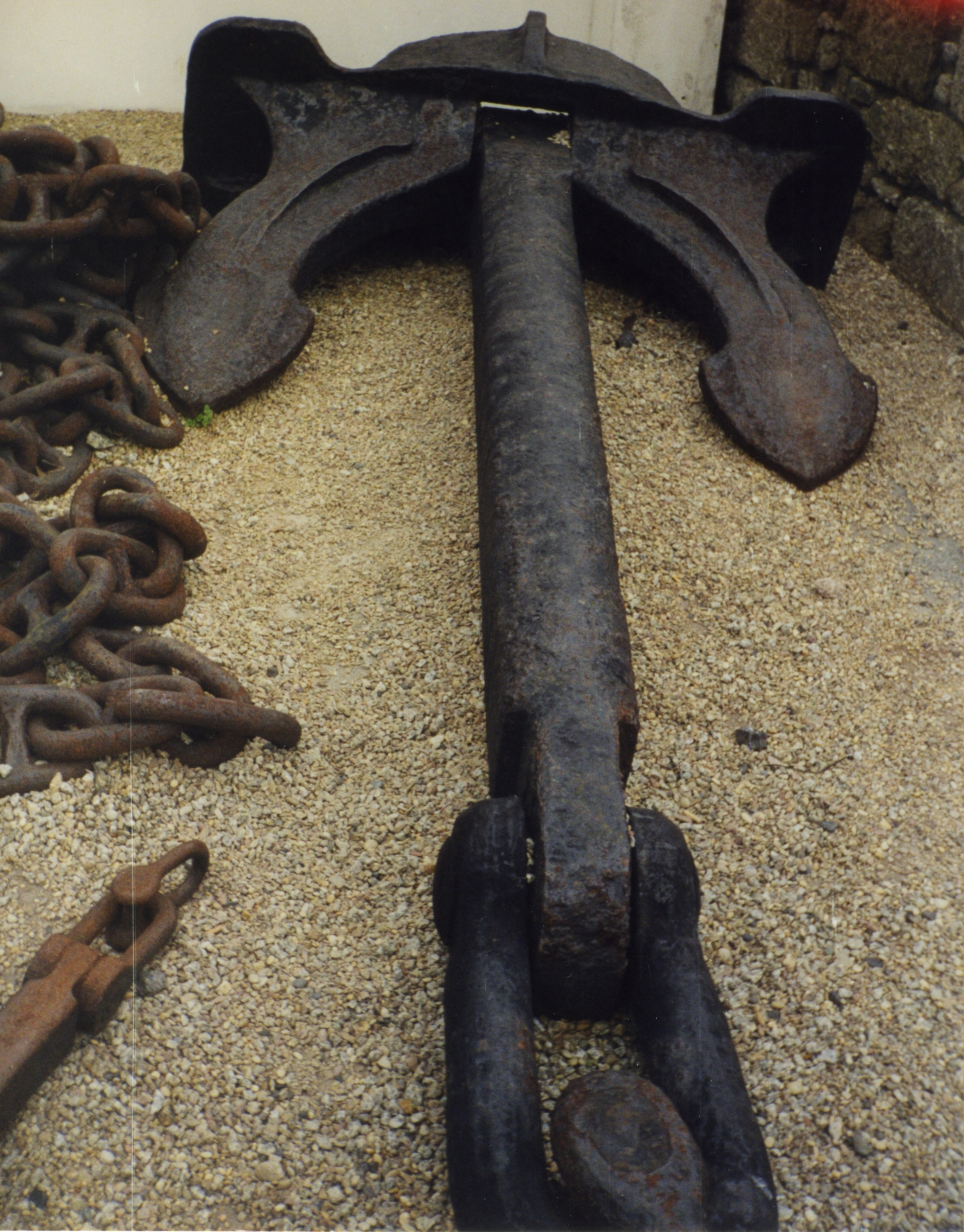
This hope is stable (19). It is an anchor. Anchors keep a vessel from drifting, an appropriate illustration since the Christians were tempted to drift from Christ (2:1). By maintaining their hope, they could anticipate three blessings: (1) sureness, (2) steadfastness, and (3) the service of the sacrificial Savior (19-20). All three of these descriptions of this Almighty anchor underline the security found in keeping ourselves anchored in Christ. Those who keep Jesus as their hope are able to weather the most horrific storms of life!

As Christians, we may find ourselves ready to abandon Jesus as our hope. So many things attempt to pull us from Him. Let us draw encouragement from this inspired writer, as surely these first Christians did, and rejoice in these changeless characteristics of hope!

anchor_england_-_scan01

Not All Peace Is The Same!

Neal Pollard

“Peace” is a geopolitical term associated with such terms as talks, treaties, accords, and the like. It’s the political antithesis of war. Of course, the term is co-opted by a wide variety of people in society, but so often peace is a misunderstood concept.  Or, people turn to the wrong source for peace.

The primary New Testament word for peace means “a set of favorable circumstances involving tranquility” or “to be without trouble, to have no worries, or to sit down in one’s heart” (Louw-Nida). BDAG defines it as harmony in relationships, a state of concord, and state of well-being. But, what is sometimes asserted as peace is not necessarily peace as God defines it.

There is false peace (1 Th. 5:3).  Paul addresses the words of those characterized as “in darkness” (4-6), lacking sobriety (7-9), as offerers of peace and safety in the face of destruction. These people are not after the right kind of peace and Paul implies they are “destined for wrath” and condemnation (9).  People who want peace on their own terms, living sinful lifestyles in rebellion against the will of God, advocate false peace. Whether or not they achieve some measure of that in this life, they are not destined to enjoy it eternally.

There is forged peace (1 Th. 5:13). Paul teaches that peace and harmony between people is something that must be worked toward. He tells the Christians to “live in peace with one another,” and then he proceeds to tell them how this is done. It includes submitting to the church’s leadership (12-13), and it calls for church leadership to give the church family whatever is needed from admonition to encouragement (14) and to lead the congregation to pursue peace and follow their example (cf. 15-22).  The kind of harmony and unity God wants is not accidental or incidental. It is the product of diligence and determination.

There is the Father’s peace (1 Th. 5:23).  Paul begins both epistles to the Thessalonians by tying together true peace and the Heavenly Father. Here he writes, “Now may the God of peace Himself sanctify you entirely; and may your spirit and soul and body be preserved complete, without blame at the coming of our Lord Jesus Christ.”  God’s peace is comprehensive, complete, and conquering. It strengthens one now and saves one at Christ’s second coming. Contrast this peace with the peace offers. Jesus does. He tells His disciples, “Peace I leave with you; My peace I give to you; not as the world gives do I give to you. Do not let your heart be troubled, nor let it be fearful” (John 14:27).

Right now, people have a growing desire for peace. There are turning in many directions for it. Ultimately, it won’t be found in the White House, the military, on Wall Street, or from within our own resources apart from the Father. Let us strive to forge peace between ourselves as His people, and model and offer it to a lost world desperately desiring it.

17855697235_165fcec995_o_d

What Does God See In You?

Neal Pollard

The inimitable historian, David McCullough, has churned out another masterpiece in his new book, The Wright Brothers.  Chronicling their lives before, on, and after that famous December day in 1903 in Kitty Hawk, North Carolina, McCullough, in his unique way, peels back the layers of the people who made the history.  One particular example of this is seen in the author’s conveyance of Wilbur Wright’s misgivings about what he was going to make of his life.  Writing to his older brother Lorin, Wilbur said, “The boys of the Wright family are all lacking in determination and push. That is the very reason that none of us have been or will be more than ordinary businessmen” (24). It is amusing to think that Wilbur made this statement in 1894, less than a decade before that historic first flight.  Every airplane trip you make is a testimony to the Wrights’ determination, push, and extraordinary industry of the bicycle shop brothers, Orville and Wilbur Wright.

What do you see when you look at your life?  Are you dismissive of your talents and opportunities?  Do you think yourself in terms of your “can’ts” or your “cans”?  Perhaps you are prone to discount your potential.

If that is you, you should consider the case of a few other people.  Moses resisted leadership, claiming to be a nobody (Exo. 3-4).  Saul hid himself in the baggage (1 Sam. 10:22).  Jeremiah apparently tried to hide behind his age (Jer. 1:6-7).  Timothy seems to have been fearful (2 Tim. 1:7).  Yet, each rose to a position of greatness and played an important part in God’s plan.  What was the “X” factor in every case?  As God told Judah through Jeremiah, “I know the plans I have for you, declares the Lord, plans for welfare and not for calamity to give you a future and a hope” (Jer. 29:11).  Solomon would say, “Commit your works to the Lord and your plans will be established” (Pro. 16:3).  Then, a millennia later, Paul tells the church at Philippi, “It is God who is at work in you, both to will and to work for His good pleasure” (Phi. 2:13).

Relax! Take the pressure off of yourself because, frankly, it is not about you.  It is about the God who is at work in you.  Chart a course that puts Him first in your life and dedicate yourself to trying, as hard as you can, to please Him.  Isn’t He strong and smart enough to open the right doors?  Is He able to do great things? Yes!  The incredible thing about that is that He has chosen to do great things through lowly people like you and me! Stop and consider this.  What does God see in you? What will He do through you to His glory?  Never stop asking that question!

FAMILY TOGETHERNESS

Neal Pollard

It was a bit ironic to me as a stood up to preach on the subject of family that I had my parents and two of my children sitting and listening.  How rare and wonderful that, normally separated by a couple of time zones and over a thousand miles, we were all able to be together in the same worship service!  It makes me long for heaven, when we can be in the presence of God in eternal adoration of Him and sweet fellowship with one another.  Being together with family is a blessing many of us take for granted and can maybe only fully appreciate when it tends more toward the exception than the rule.

One of the many incredible facets of God’s perfect design for the church is that He made us a family.  Paul depicts us as fathers, mothers, brothers and sisters (Titus 2:1-4).  He refers to it as God’s house (1 Timothy 3:15).  Christ is the bond that brings us together, with all our diversities (skin, background, income, education, etc.), to be a spiritual family.  The best attributes of family—love, acceptance, encouragement, motivation, understanding, heritage, leadership, unity, sympathy, assistance—come together in God’s family.  This is what has always baffled me when I think of brothers and sisters who can stay away from their spiritual family for weeks, months, and years at a time.  Who could sustain us and fill the vacuum caused by earthly life like God’s children, our spiritual siblings?

When you look at the church, you perceive it a certain way.  I’m convinced you are either drawn to it or repelled by it.  You long for her members or loathe them.  Certainly, there are the indifferent, the lukewarm, and those who are essentially unfeeling toward other members. But these are steadily moving toward abandoning their family.  Their hearts have already done so, if their bodies haven’t yet.  The indifferent and hostile may blame the church for their attitude, but we choose our mindset.  God puts us in this family (Acts 2:47), a plan He gave to help us successfully survive this life and obtain eternal life.  It’s a sign of spiritual health to long to be around, grow closer to, and be in love with the church.  Luke records, “And all those who had believed were together…” (Acts 2:44a).  What a beautiful picture!  We get to enjoy the same blessing today.  May we never take it for granted, but relish it.

pollards-in-georgia

What’s My Excuse?

Neal Pollard

Mark Speckman is an interesting story. He was a High School star linebacker, played Junior College then at a four-year NAIA college at the same position, and then coached college football for 20 years (he followed Dan Hawkins at Willamette in 1998).  He can write, type, use a cell phone, drive, play racquetball, and play trombone (USA Today, 10/4/05).  What’s so unusual about that?  Speckman was born without hands!  He has never let that stand in his way, but has used the handicap to inspire and motivate others.

Each of us will enjoy advantages and suffer some disadvantages throughout life, regardless of our age, income, citizenship, looks, and background.  While some seem to have greater challenges than others, the greatest determining factor seems to be attitude, focus, and determination.  Do I use my “handicaps” as an excuse? Am I full of self-pity? Do my problems cause me to give up and check out?

We will not know on this side of time what Paul’s “thorn in the flesh” was, but we know it tormented him (2 Cor. 12:7), drove him to his knees three times in prayer about it (12:8), and was a weakness for him (12:10).  He writes this after detailing the many trials he faced for doing what was right, preaching the gospel (2 Cor. 11:23-33).  Yet, he never fell back on any of this as an excuse for failing to reach, teach, serve, and help others.  Apparently, as he hurt within and worked through his own limitations, he kept his focus on doing the Lord’s work through his Christian service.

The question is not whether you suffer and struggle or even if you have a thorn to contend with.  In your own way, you probably will and on an ongoing basis.  Will it be a crutch or a catapult?  Will it hold you down or launch you higher?  That depends on you.  What will you do about it?