The Fight Between The Skunk And The Snake

Neal Pollard

Some time ago, I wrote, “I passed by a skunk and a snake, fighting tooth and nail. I didn’t stop and pet either or take sides. I got out of there as fast as I could.” That was metaphorical rather than actual, though I’ve had encounters with each animal individually. My point had to do with some of the “fights” that regularly occur on social media about some of the most unnecessary causes.

The common ground of these posts and articles are their extremely polarizing effect, drawing a multitude of allies and opponents. So often, they relate to matters that, of themselves, will not effect a single person’s eternity (though the poor stewardship of time, emphasis, tone, and attitude might imperil more than a few).

I have been tempted to weigh in on probably a thousand of these spats and civil wars, but I do not. It’s not that I do not have decided views on nearly all the debates. Instead, I try to project myself into the future. Will it expand my influence for Christ for good? What will my comment add to the spirit of brotherly love, magnanimity, unity, and church growth? Will I truly be helping struggling souls? Will it elevate the view of Jesus’ bride in the eyes of the lost, the weak, and the wayward? 

After reflecting, the answer is always the same. I cannot answer that for my interjecting brethren. Nor am I one to avoid preaching or personally discussing matters because they may be unpopular or alienating. However, because social media is more impersonal and lacking in the interpersonal dynamics of face-to-face interaction, we run a much greater risk of being misunderstood. 

Today, controversy can be created in real time. As a good friend of mine put it, “Everybody has a megaphone now.” What really requires courage is stepping out from behind a computer or phone and personally interacting with someone we disagree with in civil, loving discourse. It may not foster page views, mass reactions, and reams of online comments, but in the end it may reach more hearts and minds. 

In our current culture, dividing people into camps against each other is incredibly easy. But is it wise? Is it right (Proverbs 6:19b)? 

maxresdefault

How To Unite In A Culture Of Division

Neal Pollard

It’s no news flash to observe that our culture seems hopelessly divided along political lines. That seems to impact race, gender, and other lines, too. The most tragic consequence of this is that it has not left the church unaffected. Social media is often a barometer for how emotional and passionate brethren on both sides of this divide can become when discussing some specific aspect of this. We cannot hope that social media will provide the answer. Who your friends are and what their leanings are on political issues influence what shows up on your homepage as they share politically or socially charged blogs, videos, and the like. Pundits have, for a few years, theorized and analyzed the reality of a “political social media bubble.” Barton Swaim, in an August 1 article on The Weekly Standard online, said, “more than any other social media platforms, Facebook and Twitter are avenues for the kind of acrimony that has embittered our politics and poisoned reasonable dialog” (https://www.weeklystandard.com/barton-swaim/a-political-social-media-bubble). It’s not just conservative publications making that observation. Google the term “political social media bubble” and conservative, moderate, and liberal outlets can at least agree about its existence (a trip to The Guardian, New York Times, National Review, et al finds plenty of material if written from different points of view drawing different conclusions).  Too often, God’s people get drawn into this hurtful, messy arena and turn on each other like gladiators in the Roman Colosseum. The God of heaven must certainly weep.

This weekend, I visited the Lord’s church in Chesapeake, Virginia, a state that is often a political cauldron boiling hotter than many other places. I’m not sure how many congregations were represented, but we had to have had close to half white and half black people attending (with various Asian and Hispanic visitors there, too). Politics were mentioned a few times, but only in the sense that they have too often become a stumbling block and distraction in the Lord’s church and that they cannot solve our nation’s problems. But I was beholding the answer without it having to be pointed out. Those in attendance had a thirst for a “thus saith the Lord.” People of different colors lovingly, naturally worshipped, fellowshipped, visited, laughed with, and enjoyed each other throughout the weekend. It was genuine. It was deep. It was powerful. And it was neither contrived nor manipulated. Its glue and bond was the blood and body of God’s Son. Christ is the great uniter. As we unite on His terms and His way, we destroy barriers. That’s by design.

What Paul says to Jew and Gentile in Ephesians 2:14-18 can have application between black and white, Republican and Democrat, rich and poor, male and female, or however our country wants to erect barriers. Christ is our peace and can break down the barrier of any dividing wall. He helps us view each other as “fellow citizens” and “family” (2:19) who are “together” (2:21,22). When we get ahold of that, nothing can keep us apart!

43368956_10155859106275922_391409913101811712_n
At yesterday’s PM worship services at the Chesapeake church of Christ

Alternate Realities

Neal Pollard

I don’t know when I first noticed it, but I’ve noticed that it has dramatically intensified in the last few years. We might call it the “CNN-Foxnews Dissonance” where a specific event is viewed, explained, and interpreted in such different ways that the observer is left believing that it could not be just one single event but two totally different events instead. The cultural divide in our country is distinctly felt, and it is baffling that the world could be seen in such different ways by people who coexist beside each other day by day. Environment partially explains it, where we grew up, who influences us, and what we value. However, what guides our life–our authority–is perhaps the biggest influence on how we see the world. All of us base our lives upon a premise, a purpose, and a prospect (i.e., where we came from, why we’re here, and where we’re going). This belief system materially effects how we see our world.

Your worldview effects:

  • The value you place on people, especially as compared to other living things (animals, plants, etc.)
  • The value you place on human life, especially the most vulnerable ones (the pre-born, mentally challenged, chronically ill, terminal, and elderly)
  • The value you place on other people, especially compared to your own rights, feelings, etc.
  • The value you place on objective truth (whether or not you believe it exists)
  • Your stance on moral and ethical matters involving human sexuality
  • Why and how you interact with people in your various relationships (work, school, family, friends, etc.)
  • How you think, talk, and act.

It’s no wonder that people see our culture and our world so differently from each other. It’s more a matter of perception than proximity.  What erases these typically harmful dissonances is a mutual willingness to submit to the supreme authority. If we let God through His Word tell us how to see the world and if we come to it truly determined to listen to Him without prejudice and hardened hearts, we can see eye to eye on anything that has ultimate meaning and impact. What divides us from each other may be ourselves as much as the other person–our view of God, His will, and our submission to it.

men-arguing-illustration1

What To Do When Faced With A Sinking Ship

Neal Pollard

The ship is breaking apart. The timbers of civility. Crack! The planks of morality. Splinter!  The mast of critical thinking. Pop! As we hope to stay afloat, we cannot help but feel growing apprehension over the current state of our society. It’s not a matter of preserving or plastering over a past. It’s a matter of preserving peace in the present, but only if that means God’s people are serious about sharing the only possible remedy–Jesus! Yet, as it increasingly seems our country is ratcheted by prejudice, hatred, division, and rancor, we see the tranquility and calm from so many quarters threatened with the dark storms of violence and uncertainty.

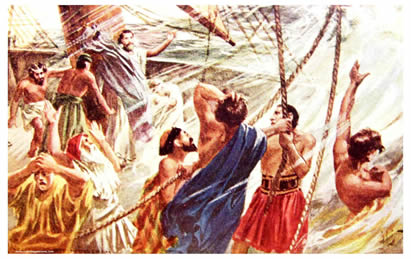
In Acts 27, Paul was with 275 other passengers on a boat bound for Rome from Caesarea, and its captain decided to test the Mediterranean Sea at a turbulent time. A violent storm, known as Euraquilo, caught the ship and ultimately battered it to pieces. It must have been an apprehensive time for the passengers and crew. Luke says the wind was violent, the ship was driven, the sun and moon didn’t appear for days, violently storm-tossed, they incurred damage and loss, and that all hope of their being saved was gradually abandoned. I cannot imagine the helpless, vulnerable feeling they must have felt. At least not literally.

It would be easy to let our national unrest and storminess tempt us to act irrationally (like some on Paul’s ship were tempted) or to give in to fear. But, Paul did five things we should do as we try to respond to the current turbulence.

  • He listened to God (Acts 27:23-24). Nobody else had a better or equal solution to their dire problem. The only way to be saved was to listen to God. Paul sought to persuade the people of this. In the ruckus and tumultuous noise, listen harder to God’s Word! It’s an anchor in stormy waters.
  • He believed God’s Word (Acts 27:25). It’s one thing to comprehend something, but quite another to put your trust in it. What God promised must have seemed quite far-fetched, that this way would save everyone. But, Paul didn’t waver. He said, “I believe God that it will turn out exactly as I have been told” (25). We are surrounded by people who need to witness our faith. As many as are persuaded will escape a shipwreck of faith (cf. 1 Tim. 1:19).
  • He encouraged hope (Acts 27:21-26). Despite the foolishness of their leaders, these people were given a message of hope. Paul says, “Keep up your courage!” (22,25). Despite the frightfulness of the moment, Paul offered a possible escape. Right now, you and I are uniquely positioned to give the only true hope available. It’s like an anchor for the soul, both sure and steadfast (Heb. 6:19)!
  • He warned the disobedient (Acts 27:31-32). There were those trying to break from God’s Word and will and do things another way. They were trying to take matters into their own hands. Paul spoke up against this! Such was defiance against the divine plan. What a message for us, who justify their sins rather than repent of them. We need to keep the message of righteousness, self-control, and the judgment to come before people (Acts 24:25).
  • He prayed faithfully (Acts 27:35). In this ordeal, Paul was a public example of prayer. Read every epistle of Paul’s and you’ll see his faithfulness in and dependency upon prayer. He appealed to the God he knew was the only hope for salvation. How much are we praying about the turmoil in our country (and world)? How much do those around us believe that we are dependent upon God?

Instead of focusing on the frightful winds currently blowing, let’s focus on the One who can calm the storm. Let’s get others to join us in that focus. Whatever happens to our nation, we must save as many souls as possible!

paul20in20storm


Caesar’s Citizen Headline: “The Jerusalem Church Splits Over Politics!”

Neal Pollard

Barak monitored the results of the latest Imperial policies out of Rome. And he hashed it and rehashed it with his brethren at the fellowship meals, on his job at the fish market, and definitely, with vehemence, within his inner circle of friends and family.  Elchanan came from a long line of zealots, and, although he had become a Christian several years before, his leanings and passion about the matter were well-known to anyone who spent any time with him. Michael, Zechariah, and Esther voiced their empathy for Elchanan’s position, while Gaius, Claudia, Junius, and Manius, ever loyal to the politics of their native homeland, aligned themselves with Barak. Unfortunately, they all also were Christians who worshipped together or in neighboring congregations around Jerusalem. They got so caught up in it that they marched, they protested, they pledged allegiance with oaths, they argued, and they held one another in contempt and suspicion. Meanwhile, Jews and Gentiles all around them lived and died without hearing the message of Jesus and the purpose He died to make available to them. They did not associate those early Christians with love. They had no clue about the heart of the gospel message, the good news they needed in the unstable times in which they lived. They failed to see distinctiveness and kindness. They saw a mirrored reflection of their unregenerate selves. Mired in the smallness of contemporary concern, the church at Jerusalem, distracted from their mission, never taught lost souls, devoted themselves to service, or lived lives that showed utmost trust in Jesus and His power to save and transform. Predictably, these small bands of disciples circled their chariots around themselves and hid their lights under their baskets.

That’s not quite the way Luke records it. Politics was a constant, headline news matter in the first century. There was volatility and polarization. With the theatre and stadiums, there were no shortages of entertainment diversions, too. But, reading the book of Acts, you find a quickly growing band of disciples reaching the thousands in number precisely because they stayed above the sensual fray of politics or any other ephemeral concerns. They understand what lasted and what wouldn’t. From the first verse that records their collective activity, they were “devoted” (Acts 2:42). Their devotion was powerfully, primarily, and passionately Jesus and His will.

It doesn’t matter that we’re 2000 years removed from that, or that our situation isn’t exactly parallel. Our mission hasn’t changed. Our primary focus must be the same as theirs. Ever wonder who benefits the most from our getting mired in the mud of these carnal things? It isn’t Jesus!

ancient_alexandria

WikiLeaks (And God)

Jeff Wiant (guest baker)

Up until this past election cycle I had never even heard of WikiLeaks. Months and endless press later, I have become very familiar with this website. For those who may have been living under a rock for the past few months, WikiLeaks is a website that publishes secret information, news leaks, and classified media that they receive from anonymous sources for the world to see. Just looking on their page the other day, I discovered links that would allow me to read private emails from a presidential candidate and her associates, secret files about global surveillance, private emails between top employees at Sony Pictures, and I could have even watched a classified video.

Through all of this browsing it made me start to wonder. With hindsight being 20/20, would the ones who wrote these emails or committed these acts have written or done things differently if they knew that in the future they would be exposed and the whole world would be able to see and judge them because of these leaks?

More importantly, this also got me thinking further about myself. Do I have any secrets that I would fear if they ever got out? Do I ever have thoughts in my head that are impure and unfaithful? Do I allow myself to continue to have these thoughts because, after all, I’m keeping them to myself? After all, who’s going to know?

Allow me to answer that question for us all:  GOD KNOWS! Like WikiLeaks in our world, God can, and does, unearth all these dark spots in our personal lives. But whereas there are still plenty of classified files and incriminating private emails out there that haven’t been, and won’t ever be, exposed by WikiLeaks, God already knows EVERYTHING there is to know about us.

As it says in Psalm 139:1-4, “O Lord, You have searched me and known me. You know when I sit down and when I rise up; You understand my thought from afar. You scrutinize my path and my lying down, and are intimately acquainted with all my ways. Even before there is a word on my tongue, behold, O Lord, You know it all.” God knows everything we do on the outside and the inside. Having that realization is very intimidating.

For more evidence of this you can also look at Hebrews 4:12-13, which states, “For the word of God is living and active and sharper than any two-edged sword, and piercing as far as the division of soul and spirit, of both joints and marrow, and able to judge the thoughts and intentions of the heart. And there is no creature hidden from His sight, but all things are open and laid bare to the eyes of Him with whom we have to do.”

We will all be judged. Not just based on what our family, friends, and the rest of the world see, but based on the EVERYTHING that God sees. You can’t hide anything from God. Knowing this, are there changes we need to make in our lives? Are there things we need to do and think about differently?

The good news is that it’s never too late and God is a forgiving God. If we do sin, we need to confess these sins to God ask for forgiveness (1 John 1:9). I challenge you to live with the knowledge in the front of your mind that God is always watching and listening. There are no secrets with God and there is no misleading God. Live the life He requires and you will receive your eternal reward in Heaven.

“Finally, brethren, whatever is true, whatever is honorable, whatever is right, whatever is pure, whatever is lovely, whatever is of good repute, if there is any excellence and if anything is worthy of praise, dwell on these things” (Phil. 4:8).

jeff-wiant-2
Jeff (holding Dallas)

Focus, Not Complacency 

Neal Pollard

Whether you are elated or despondent today, you face a serious danger as you absorb the reality of the election results. Prayer meetings for our nation transpired all around our country, even from brethren and friends in other nations. Individuals prayed fervently for God’s will to be done. What that will look like and what that will mean only time will reveal.  For many, relief replaces fear at the prospect of the “other side” winning. For others, disbelief and embarrassment, not to mention shock, have begun to roost.

One thing that has been emphasized in the days and weeks leading up to this historic election is that, no matter what, the church must step up and increase its militancy and evangelism. We must work and serve in bigger and greater ways. That has not changed. The kind of change and improvement this (and every) country needs most can only come from Christ. People of both (or neither) political parties still live in view of the Second Coming, the Judgment, and an eternal destination in either heaven or hell.

After warning about the futility of trusting in earthly governments, militaries, and the like, the Psalmist instructs, “Behold, the eye of the Lord is on those who fear Him, on those who hope for His lovingkindness, to deliver their soul from death and to keep them alive in famine. Our soul waits for the Lord; He is our help and our shield. For our heart rejoices in Him, because we trust in His holy name. Let Your lovingkindness, O Lord, be upon us, according as we have hoped in You” (Psa. 33:18-22). May that forever be the anthem of the people of God!

The only thing that is over is a political election. The church’s mission is as daunting, daring, and divinely-directed as it has ever been. However you view the national decision, please continue to see the heavenly vision. We are not here to make America great again, though most of us would desire that. We are here to help reconcile the world to Christ (2 Cor. 5:20; Mat. 28:18-20). I love the way my son, Dale, said it yesterday: “After the election, after the selection, I’m still thankful there was a resurrection that gives us direction.” That is the focus that must keep us oriented to our reason for being on this earth.

2000px-ballot_box_silhouette-svg

Remarkable Statements, In Historical Context

Neal Pollard

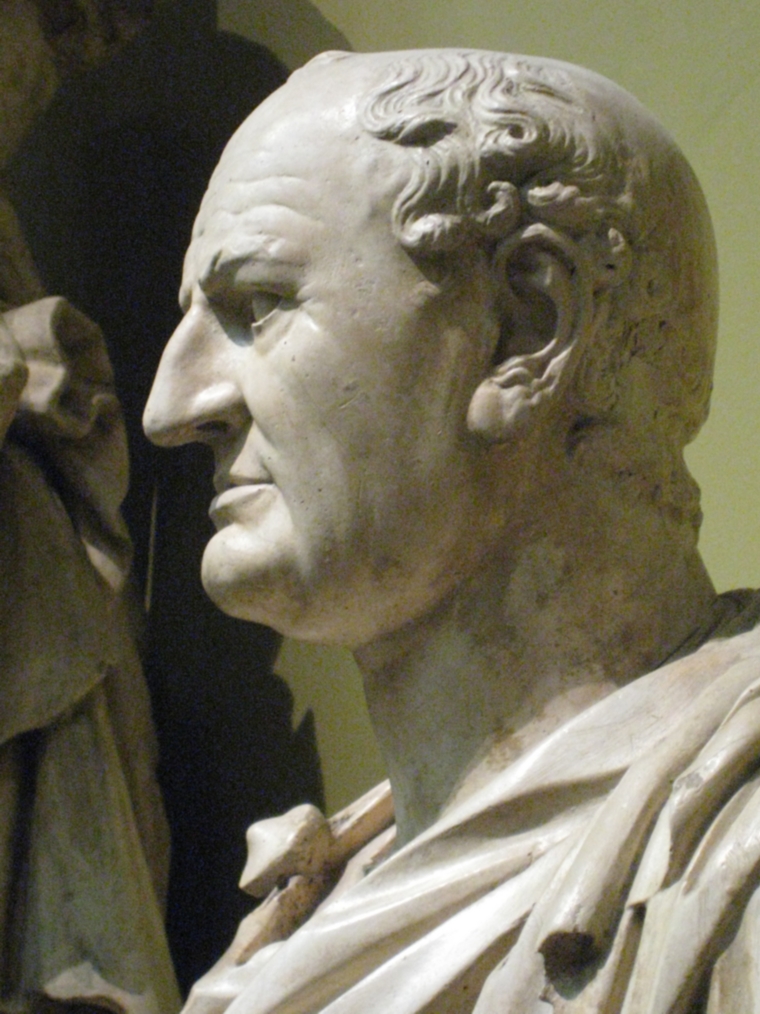
AD 30—Tiberius, who became cruel and mad, was the Roman Emperor when the church was established. Under his reign, right around the time of Pentecost, Rome was filled with terror after the murder of his once trusted advisor turned traitor, Sejanus (tribunesandtriumphs.org). Sanderson Beck comments that he was “preoccupied with sexual and sadistic perversions” the last several years of his life (he is believed to have been murdered)(san.beck.org). Jerusalem was directly governed by Rome. Acts, though probably written in the 60s, begins its historical chronicle around AD 30.

  • Acts 2:41—“So then, those who had received his word were baptized; and that day there were added about three thousand souls.”
  • Acts 4:4—“But many of those who had heard the message believed; and the number of the men came to be about five thousand.”
  • Acts 5:14—“And all the more believers in the Lord, multitudes of men and women, were constantly added to their number.”
  • Acts 6:7—“The word of God kept on spreading; and the number of the disciples continued to increase greatly in Jerusalem, and a great many of the priests were becoming obedient to the faith.”
  • See also Acts 12:24 and Acts 19:20,

AD 62-63—Nero, described as licentious, cruel, tyrannical, murderous, criminal, arson, vain,  perverse (tribunesandtriumphs.org) and, by historian Donald Wesson as a “cross-dressing exhibitionist” (ancient.eu), spearheaded the first organized persecution of Christians (N.S. Gill, ancienthistory.about.com). Tacitus says he blamed the Christians for his own burning of Rome. Many are the accounts of the cruel ways Nero put them to death (eyewitnesstohistory.com). Eusebius reports that Nero put both Paul and Peter to death (Church History, Book 2, Ch. 25). Before his death, Paul would report of such rapid growth throughout Nero’s reign. Peter’s outlook could not have been brighter.

  • Colossians 1:23—“if indeed you continue in the faith firmly established and steadfast, and not moved away from the hope of the gospel that you have heard, which was proclaimed in all creation under heaven, and of which I, Paul, was made a minister.”
  • 1 Peter 1:3—“Blessed be the God and Father of our Lord Jesus Christ, who according to His great mercy has caused us to be born again to a living hope through the resurrection of Jesus Christ from the dead.”

AD 90s—Domitian, best remembered as “the evil emperor who murdered thousands of Christians” (tribunesandtriumphs.org), reigned when John wrote his epistles and the book of Revelation. He was notorious for his cruelty and detachment from reality. John writes Revelation in large part to steady the Christians to withstand the onslaught of persecution caused by Domitian. His message to the Christians during the reign of Domitian was consistent:

  • 1 John 4:4—“You are from God, little children, and have overcome them; because greater is He who is in you than he who is in the world.”
  • 1 John 5:4—“For whatever is born of God overcomes the world; and this is the victory that has overcome the world—our faith.”
  • Revelation 1:6-7—“He has made us to be a kingdom, priests to His God and Father—to Him be the glory and the dominion forever and ever. Amen. Behold, He is coming with the clouds, and every eye will see Him, even those who pierced Him; and all the tribes of the earth will mourn over Him. So it is to be. Amen.”

How bad did things look, from an earthly perspective, during the reigns of evil rulers like Tiberius, Nero, and Domitian? The thing is, the early Christians did not look at things from an earthly perspective. As those trying to walk in the footsteps of New Testament Christians, will we imitate their faith and that perspective?

vespasianus03_pushkin

TO THOSE WHO DIVIDE BRETHREN

Neal Pollard

—“A perverse man spreads strife, and a slanderer separates intimate friends” (Prov. 16:28).
—“A worthless person, a wicked man is one who…spreads strife” (Prov. 6:12,14).
—“There are six things which the LORD hates, yes, seven which are an abomination to Him: …one who spreads strife among brothers” (Prov. 6:16,19).
—“Hatred stirs up strife, but love covers all transgressions” (Prov. 10:12).
—“Though his hatred covers itself with guile, his wickedness will be revealed before the assembly” (Prov. 26:26).
—“Keeping away from strife is an honor for a man, but any fool will quarrel” (Prov. 20:3).
—“Through insolence comes nothing but strife, but wisdom is with those who receive counsel” (Prov. 13:10).
—“The beginning of strife is like letting out water, So abandon the quarrel before it breaks out” (Prov. 17:14).
—“He who loves transgression loves strife…” (Prov. 17:19a).
—“Like charcoal to hot embers and wood to fire, So is a contentious man to kindle strife” (Prov. 26:21).
—“An arrogant man stirs up strife, But he who trusts in the Lord will prosper” (Prov. 28:25).

Suffice it to say, the Lord has not been silent on the matter. Our age is marked by the manufacturing and fanning the flames of controversy, endless argument, and divisive issues. Men seem to take pride in starting strife and stirring the pot. When we share the gospel, in gentleness (2 Tim. 2:24) and love (Eph. 4:15), it can still be met with devastating disagreement and vehement vituperation. But, thanks to mediums like social media, some among us have seized the platform to spread division where they could as easily work to promote love and unity among brethren.  I cannot presume heart or motives, but the fruit has been to start brotherhood brawls and to stratify schisms. It is worrisome that while we manufacture outrage on politics, race, law enforcement, “guilt by association,” nitpicking the church, or constantly bringing up the latest “what’s wrong with the church” scenario, 151,600 people die around the world every day (via http://www.ecology.com/birth-death-rates/)! Most of that number will have traveled the broad way that leads to destruction. Surely we can redirect our passion and conviction away from divisive diversions and do our part to stem the tide of such an eternal tragedy!

Meanwhile, we can resolve to see people, not skin color, God’s sovereignty, not party affiliation or uniform, the local church’s autonomy, not an opportunity to be a busybody, and with every other, similar scenario, not major in the minors. Jesus condemned the Pharisees for neglecting the weightier provisions of the law, justice, mercy and faithfulness while scrupulously focusing on matters comparatively minor (Mat. 23:23).  We have a brief time to use our talents and influence on this earth. Will our cause be social justice, brotherhood policing, or political activism, or will it be building up the kingdom through evangelism, edification, and benevolence? May God grant us all the wisdom to “not work for the food which perishes, but for the food which endures to eternal life…” (John 6:27). Be a builder, not a basher!

arguing-1296392_960_720

DIVIDING OVER POLITICS

Neal Pollard

“Rancor” is synonymous with hostility, bitterness, spite, and vitriol. In Ephesians 4:31, Paul warns the Christian against “bitterness and wrath and anger and clamor and slander [and] malice.” While it didn’t seem possible that this election cycle could produce more heat and saber-rattling than the last couple, it has already exceeded it. It is almost painful to watch the cable news networks, but we should expect the world to behave like the world. Yet, when I see brethren so vehemently defending their candidate and excoriating those who disagree with them, I am truly disheartened. Social media continues to pour gasoline on this already potent fire.

I try to imagine the apostles and early Christians, were they to have such an outlet, tying into one another and beating their chest as they debated each other over the merits of Claudius over Nero, devoting so much time arguing their points about which candidate would better favor the cause of Christianity.  Inspired writers had every opportunity to show such a participation and bias, but they are conspicuously silent. While I do not agree with the extreme that David Lipscomb took in his book On Civil Government, can we not, if we are not careful, veer toward the other extreme through blind allegiance to rulers who, when dispassionately and objectively viewed, honor and demonstrate evil over godliness? Whether it is foul language, deceit and dishonesty, and glorifying sexual immorality (a la Playboy!) or lying, pro-abortion, and criminal behavior, I am baffled as to why a Christian should get so invested in one candidate or exorcised at the other.  May we never prioritize America over our dear brotherhood or our heavenly goal. We gauge that priority by our thoughts, speech, attitude, and actions regardless of what we claim.

As a husband and father for whom the prospect of grandchildren may not be many years hence, I grasp with such personal investment the gravity of this year’s election and the current world situation. Yet, I can let the fear of that eclipse the infinitely bigger picture. What a glorious day it would be if we could steer our consuming passion toward Jesus and the mission He left us!

You may have a decided leaning toward the Republican or Democratic offering in this year’s election. Given this year’s choice, I don’t believe you can cling to either without your hands being very dirty. That being said, may we all be prayerful and imminently restrained in our interchange especially with our brethren and before the eyes of the world. Our unity in truth, our common mission, and our Christian example are eternally more important than politics. Period!

detail-of-american-flag-11279635008nzaN

“Truly In Vain Is Salvation Hoped For From…”


  • A politician or political party.
  • Wall Street.
  • Military might.
  • Our net worth or economic savvy.
  • Government programs.
  • The second amendment.
  • Popularity and fame.
  • The worship of nature.
  • Exercise and fitness.
  • The appeal of our good looks.
  • Walls.
  • The importance of our occupation or position.
  • Our national identity.
  • The Supreme Court.
  • Ethnicity and race.
  • Science and technology.
  • Any religious figure besides Jesus Christ (even those claiming to represent Him).
  • Family members and friends.

In Jeremiah 3:23, the prophet writes, “Truly in vain is salvation hoped for from the hills, and from the multitude of mountains: truly in the Lord our God is the salvation of Israel.” Jeremiah’s brethren put all their eggs in the wrong baskets. They neglected to see where true hope was found and where saving faith was to be put. Their misguided trust led to their downfall. It cannot be otherwise in any generation, including our own.

We may never say we put our trust in anything besides God, but “the proof is in the pudding.” We demonstrate what’s first and foremost to us every day, in word and deed. Ultimate deliverance from our greatest trials, struggles, and challenges comes from only one source. Jeremiah succinctly identifies it.  Is that what you are trusting? If so, let’s make sure everyone who knows us knows that!

—Neal Pollard

11800435_10153091791310922_2631856048550949852_n

PREACHERS AND POLITICAL ACTIVISM

Neal Pollard

Being patriotic and having a political heritage like we do in this country, we may have strong, personal convictions in the realm of politics. Engaging in the political process, from volunteering to voting to political meetings, can help us not only be a positive agent of change but also salt and light before the world. But nothing can have a quicker negative impact on ministry than a “stumping sermonizer” or “campaigning church man.” I’ve known preachers who seem CONSUMED with politics and can hardly speak without ranting about it.  It just comes out! Beware that the mouth speaks out of the abundance of what’s in the heart (Mat. 12:34). Some preachers betray that they’re dwelling more on things below than things above (Col. 3:1-2).

The church began in the midst of political rottenness and corruption. Tacitus wrote of Augustus Caesar that he “seduced the army with bonuses, and his cheap food policy was successful bait for civilians. Indeed, he attracted everybody’s goodwill by the enjoyable gift of peace. Then he gradually pushed ahead and absorbed the functions of the senate, the officials, and even the law. Opposition did not exist. War or judicial murder had disposed of all men of spirit. Upper-class survivors found that slavish obedience was the way to succeed, both politically and financially” (https://facultystaff.richmond.edu/~wstevens/history331texts/augtotib.html). Of course, certain Jews did consume themselves with political interest and revolted against Rome—A venture that ended badly at Jerusalem and Masada. Read Tamarin’s classic book, Revolt In Judea, if you want the horrible details.  Politicians of the first century were guilty of wanton sexual immorality, including homosexuality and adultery; They practiced infanticide and whet their appetites for death and violence in their stadiums and arenas.  Where is Peter’s or Paul’s diatribe in scripture against vices and corruptions that sound a lot like our day? Where are the early Christians with their pickets and protests against the government?  Instead, “They went everywhere preaching the word (Acts 8:4)!

Political activism will hurt our efforts to effectively evangelize. How tragic to lose a soul trying to win a political argument!  Political activism, in preachers, can negatively impact what the church has paid them to do. They certainly didn’t pay him to spend all day on social media trolling stories or writing quips. They didn’t hire him to go to political rallies, being more wrapped up in affairs of state than affairs of heaven.

Paul was actually able to have an audience with the most prominent politicians of his day. Was he interested in discussing national or imperial policy with them?  Before Felix and Agrippa, he preached righteousness, temperance and judgment to come.  In Acts 27, he says God appointed him to speak before Caesar.  What could happen among us if more were devoted to spiritual revival than political reform?

MERCY FOR THE MEADOW JUMPING MOUSE?

Neal Pollard

The meadow jumping mouse has made it to the status of “endangered” and is now protected by the Federal Endangered Species Act.  That means that cattle have more limited water and grazing access so that the mice’s habitat can be protected. Ranchers and cattlemen have taken the fight to U.S. District court in Albuquerque, New Mexico.  The habitat area covers portions of New Mexico, Arizona, and Colorado (The Denver Post, 9/10/14, A-2, “Colorado Roundup,” denverpost.com).  Meanwhile, a local politician is excoriated for his stand against abortion.  The web site “ontheissues.org” examines his record, where it is proven that he supported protecting life at all stages in 2010, voted to ban federal health coverage that included abortion, considers himself “pro-life,” prohibited federal funding for groups like Planned Parenthood, and the like. He is cast in commercials as an “anti-abortion radical” as well as one known for “his steadfast efforts to restrict women’s control over their lives” due to his “anti-abortion agenda.”

I sometimes wonder what would happen if time travel were possible and we could take such headlines back to our national forebears 100 years ago.  What would they think of federal mandates to protect rodents all while trumpeting protests in the loudest decibels possible against one in the place of government trying to take steps to afford protection for eternal beings made in the image of God.  Of course, if we could travel back further in time and cross the ocean until we reached the ancient middle east and showed these headlines to a prophet, apostle, or the Lord Himself, what would their reaction be?  Might they respond, “I was known by God from my mother’s womb, sanctified and ordained by Him for a specific job.” Or say of himself, “Your eyes saw my substance, being yet unformed.” Or describe pregnant women as being with “child” (rather than “fetus” or “tissue”)? Or speak of Jesus’ mother as having Him within her, a child, a person?

Everyone has a moral compass.  It is incredible to see how improperly calibrated many such compasses are.  In Resolute Bay, up in the Nunavut territory of Canada, a pilot attempting to land amid clouds crashed his plane, killing himself, his co-pilot, and ten passengers, in part due to a malfunctioning compass.  He could not believe it was true until ground sensors warned him of imminent contact with land.  His co-pilot seemed to have known better and pleaded with him to “go around,” to climb to safer altitude before retrying the landing.  The last words on record belonged to the pilot, who said, “Go-around thrust!” a split second before the crash (www.edmontonsun.com, Daniel Proussalidis, 3/25/14).  He hardly had time to think that he was misguided before his life ended.

Many will find out only too late their moral compass misguided their course in life!  Our work is to gently help them see the direction God tells them to go.  Only when their hearts, consciences, and affections are aligned with THE moral compass of the Bible will they be able to look at matters, big and small, and make rational, common sense decisions.  May God continue His forbearance with us as we try to repair the compass.

From Disinherited To Inheritors

Neal Pollard
When Greek politician Andreas Papandreou died in 1996, he left his entire hefty estate to his third wife, Dimitria Liani. His three sons and a daughter, who had married a politician who was Papandreou’s political enemy, were disinherited when she and her siblings’ refused to ostracize this enemy. It was contested in Greek court for years, but so far that will has apparently not been overturned. Certainly, money can bring out the best and worst in people. The children’s point of view is almost certainly that they, as blood relatives, have as much or more right to their father’s inheritance than a woman he married in the last decade of his life (information via Ray Moseley, Chicago Tribune, 9/29/96).


In the New Testament, sin is legitimate grounds for the Heavenly Father to disinherit us. Paul tells the Corinthians this in 1 Corinthians 6:9-11. But his message is one of good news. With God, it is possible to go from disinherited to inheritors. He tells them, “Do you not know that the unrighteous will not inherit the kingdom of God? Do not be deceived. Neither fornicators, nor idolaters, nor adulterers, nor homosexuals, nor sodomites, nor thieves, nor covetous, nor drunkards, nor revilers, nor extortioners will inherit the kingdom of God. And such were some of you. But you were washed, but you were sanctified, but you were justified in the name of the Lord Jesus and by the Spirit of our God.” This passage reveals several important truths.
First, there is a pertinent fact. “The unrighteous will not inherit the kingdom of God.” He repeats the thought in verse 10. That phrase indicates missing heaven and all the reward of it (cf. Mat. 25:34).
Second, there is a potential fraud. “Do not be deceived.” How vital that message is for our current culture! There is so much deception about the consequences of sin that it is impossible to keep up with, document, or catalog it.
Third, there are the particulars framed. Notice the sinful individuals enumerated—”fornicators…idolators…adulterers…homosexuals…sodomites…thieves..covetous…drunkards…revilers…extortioners.” Each of those lifestyles and behaviors merit greater study, but these are the ones who are disinherited by the Father. It is His estate and, as such, His call to make.
Then, there is a past forgotten. Human beings can carry vendettas and grudges to their graves, but the living God is not prone to such weakness. He does require repentance, implicit in the phrase “such were some of you.” Because they changed, God put the guilt of their sins in the rear-view mirror.
Finally, there is a purification forged. Paul concludes, “But you were washed…sanctified…justified in the name of the Lord Jesus and by the Spirit of our God.” God does not just leave us to wallow in our sins. He provides a way of escape. If we take it, He will make those past sins as if they never existed!
In other words, we can go from disinherited to inheritors!

“Addressing The Huge Unmet Needs Of Young Children”


Neal Pollard

The philosophically liberal magazine, American Prospect, included an article in the January/February, 2014, edition, by Sharon Lerner entitled, “Starting Smart.”  The article begins by asserting that there is almost universal support in the public, business, and political sectors for mandatory, universal Pre-K education.  Lerner, considering such broad favor, ardently calls for leveling the playing field wherever there is a perceived gap, and mandating public education for the nation’s youngest citizens is alleged as the way to go (62-65).  While I have multiple problems with the content of the article, my biggest disagreement is that social, economic, or other physical needs are, as the article contends, a small child’s greatest unmet needs.

The hugest unmet needs of young children in this and every culture are spiritual.  It would be interested to know what percentage of our nation’s children get even weekly Bible instruction.  For several decades, there has been a steep decline in spiritual interest in our country.  Secular interests have far eclipsed spiritual interest.  I am confident that such tragic facts, when we stand before Christ at the Judgment, will help explain the moral volcano that has spilled its damaging influence over just about every aspect of society.

While our evangelistic efforts can help us reach more “unchurched” folks and incorporate them into our Bible school program, something else has amazed me.  Growing up in the church, I have for all my life seen neglect from some members of the church in this area.  Parents did not bring their children to Bible class regularly if at all.  When those children grew up and left the home, they usually left the church, too.  I still witness that same trend, both in congregations where I have preached and in places where I travel to speak.  In essence, this robs children of the solid foundation they must have to navigate the turbulent spiritual waters of this life.  Parents, let us take Solomon’s words to heart and do all we can to properly train our children for later life and eternity (Pr. 22:6)!  God has entrusted their eternal welfare into our hands.

NO GOVERNMENT SHUTDOWN EVER!

Neal Pollard

Depending on your point of view, “government shutdown” may mean an undermining to your livelihood, a reduction of Washington interference, or a symbol of partisan politics.  Questions arise as to what government services and civilian activities will be impacted, and tensions are ratcheted from Pennsylvania Avenue to Wall Street.  A government shut down is so rare that it is headline newsworthy.

Of course we know that the strongest, largest empires the world has ever known have toppled, in some cases forever shutting down their governments.  Even countries that were once the seat of world power are now led by a much-weakened and much-reduced governmental authority.  Did you know that there is one government not in danger of ever facing a shutdown? It is not China, Russia, or Switzerland, either.  In fact, this government is ever-increasing and that is even a good thing.  Isaiah foresaw this, prophesying, “For a child will be born to us, a son will be given to us;  And the government will rest on His shoulders; And His name will be called Wonderful Counselor, Mighty God, Eternal Father, Prince of Peace. There will be no end to the increase of His government or of peace, On the throne of David and over his kingdom, To establish it and to uphold it with justice and righteousness From then on and forevermore. The zeal of the LORD of hosts will accomplish this” (9:6-7).

The Holy Spirit through Isaiah looked ahead to the birth and reign of Christ.  He refers to Him by a couple of names that reveal His Deity–Mighty God and Eternal Father.  He refers to Him by a couple of names that demonstrate His work–Wonderful Counselor and Prince of Peace.  Then, He turns to His coming reign as King.  Words like peace, justice and righteousness describe it.  In this, He also says “there will be no end to the increase of His government.”  Jesus wants to reign and rule over His creation.  The more He has control of our lives, the better our lives become.  The more fully we submit to Him, the greater good can be accomplished to His glory!  The best news is that, so long as He lives (and that’s FOREVER!), His reign will continue (cf. Dan. 2:44).  No matter which side of the aisle of American politics you stand, you should agree that this is the kind of “Big Government” we should all enthusiastically support!