In Job you find all kinds of interesting things like references to the earth’s rotation (Job 38.14), ocean floor vents (38.16), and even the movement of star clusters like the Pleiades (38.31).
But, there are a couple of powerful verses that also include a heavy dose of irony.
“Oh, that my words were recorded, that they were written on a scroll, that they were inscribed with an iron tool on lead, or engraved in rock forever!”
Job 19.23-24
A moment in the middle of Job’s pain and agony he seems to cry out those words, but they’re buried under many other laments and arguments concerning his terrible situation. The reader, though, already knows all of this because later in life Job wrote down his pain, questions, and his defense– on a scroll and engraved them forever. Just like he wanted!
Well, he desired to be remembered accurately. Job isn’t just venting. He wants future readers to know that his suffering was real and that his struggle with God came from a good place of honesty, not rebellion. An eternal scroll was proof that his story mattered to God, but also a reminder that God could in fact hear every word at a time when he felt like God couldn’t.
At the same time, this moment shows Job’s faith wrestling out in the open for all of us to benefit from. He believed that truth ultimately matters, even if it is not recognized right away. Ironically, Job’s wish is fulfilled. His words are preserved and read thousands of years later. What felt like a desperate plea is turned into his story of suffering before God that wasn’t wasted. God hears it all and answers every cry of confusion, and He can turn it into a lasting story of faith.
Often, we panic or worry. Or we despair and even give up. We may talk like Elisha’s servant, who seeing the Syrian army surrounding them, cried, “Alas, my master! What shall we do?” (2 Kings 6:15). The problems, pressures, and pains of life can so gouge us that we are ready to come unglued!
Neal Pollard
What does a bull running amuck along the streets of Pamplona think about? If they have thoughts and they live to gore, then one particular bull may have been pretty pleased with his results. He gored two brothers, Lawrence and Michael Lenahan, simultaneously, in the annual running of the bulls festival. Fortunately for both of them, their wounds did not prove to be fatal (details here).
When we tackle a problem head on, determined to be decisive, we often say we are “taking the bull by the horns.” This phrase probably comes either from rounding up cattle or bullfighting. It assumes the person has control of (or is trying to take control of) a situation. However, what do you do when the situation seems to be taking control of you? What do you do when the bull has you by its horns?
Often, we panic or worry. Or we despair and even give up. We may talk like Elisha’s servant, who seeing the Syrian army surrounding them, cried, “Alas, my master! What shall we do?” (2 Kings 6:15). The problems, pressures, and pains of life can so gouge us that we are ready to come unglued!
What’s the answer? Elisha’s prayer holds the key when we’re gored with grief and stuck by sorrows. He pleads, “O LORD, please open his eyes that he may see” (17). In response, “the LORD opened the eyes of the young man, and he saw, and behold, the mountain was full of horses and chariots of fire all around Elisha” (17).
When you are in the midst of a painful problem, you may not actually see the power and protection of heaven in such a visible, dramatic way. But be assured that you serve the same God with the same power! He will never leave us or forsake us (Heb. 13:5).
As you find yourself running down the narrow way (cf. Mat. 7:13-14), you are prone to attack from one who’s set his sights on you. He may not actually have horns, but he has ways to try and afflict you (cf. 2 Cor. 2:11; 12:7; Eph. 6:11,16). Trust this. “Greater is He who is in you than he who is in the world” (1 John 4:4).
This week’s is possibly one of the most-asked existential questions out there. “Why is suffering a part of the human experience?” Believer and non-believer alike struggle with this one. Believers and even many agnostics struggle to justify the existence of an all-powerful, all-loving God with “bone cancer in children” and other seemingly senseless evils. Non-believers may struggle with the existence of suffering, too, especially if their worldview involves progressivism. After thousands of years of lessons learned, shouldn’t we have found a way to eliminate suffering?
The Bible answers this question: we brought suffering to the human experience by violating the relationship we had with God. The story of the Bible is one that ultimately repairs this condition, thanks to God becoming human and sacrificing himself to repair that breach. On top of that, he came back to life as proof-of-concept and as a promise — we will have immortality, too. The message of Christianity is one that looks forward to a time without evil’s consequences (especially suffering and death). For many people, accepting the hard truth of our (i.e. humanity’s) culpability in the existence of suffering is too much. It can’t be that simple!
We could illustrate this with an adapted pagan myth. Pandora’s box is well-known to many — she opened a box that contained all of the evil in the world, but with hope attached to them. There was no returning those things to the box and it affected everyone. While the framework of the story is decidedly pagan, it is rooted in historical fact. The first woman on earth did actually open something like Pandora’s box, introducing entropy to the planet for the first time. The consequences were far-reaching, as Christians believe all of humanity came from her. We are living with the consequences of Pandora’s box having been opened.
Even if we look at this from a totally naturalistic standpoint, the existence of suffering does not necessarily preclude an all-powerful, loving God. In fact, it offers a fairly reasonable explanation for why suffering affects good people! What it does lack is anything resembling meaningful hope for a brighter future — this explanation ends with physical death, the beginning of eternal non-existence. A naturalistic explanation is something like this: There is suffering in the world because we’re all born ignorant and have to learn from the mistakes we make. Mistakes often have a ripple effect, and can sometimes negatively affect others. For example, a new driver’s inexperience may cause an accident that takes the life of an innocent person. It’s seemingly random, chaotic, senseless. What did that other person do to deserve death? Nothing, they were just in the wrong place at the wrong time. Even the naturalistic worldview understands that bending nature’s laws to prevent all tragedies would have devastating consequences in our current framework.
So why doesn’t God intervene in every situation? The short answer is “we don’t know.” He does often intervene (cf. Hb 1.14; I Kgs 17.8-16; Ruth; Dan 3.8-30, and many, many others), but we don’t always know why. His perspective is infinite, ours is not. It’s frustrating, painful, and confusing at times, but we all accept that it’s temporary. We know that he won’t allow us to deal with more than we’re capable of handling with character intact (I Cor 10.13), but not too much beyond this. Christianity views suffering as part of the human experience that we’re quite ready to leave behind. This is why death is something we look forward to!
We have sufferings now, but they are nothing compared to the great glory that will be given to us. Everything that God made is waiting with excitement for the time when he will show the world who his children are. The whole world wants very much for that to happen (Rom 8.18-19).
I have told you these things so that you can have peace in me. In this world you will have troubles. But be brave! I have overcome the world” (Jn 16.33).
One of the most difficult things (at least for me) to accept about grace is this: There’s nothing we can do to deserve it, or be “worthy” of it. When I sin, it just makes me feel even more unworthy. This can quickly devolve into apathy — why even try? Every sin seems to compound, every prayer for strength seems ignored. If prayers for strength are ignored, surely prayers for forgiveness are, too!
This mentality is not a healthy one. But how does one go from an intellectual understanding of grace’s power to accepting the reality of human imperfection? How do we prevent defeat in the aftermath of mistakes? If there’s a fix-all answer to this, I haven’t found it.
Perhaps the answer is a lack of faith. At its core, faith is really confidence — that God exists, that he rewards people who try hard to have a relationship with him, that his grace is enough for us because his power is most effectively displayed through weakness.
Maybe it’s disbelief. Does Jesus really forgive us when we sin? Yeah, Paul says “I don’t understand why I act the way I do. I don’t do the good I want to do, and I do the evil I hate. … But I am not really the one doing the evil. It is sin living in me that does it” (Rom 7.15, 17, 20). But later he says, “You are not ruled by your sinful selves. You are ruled by spirit, if God’s spirit really lives in you” (8.9). What does he mean by “ruled”? If I can’t seem to avoid sin, am I not ruled by it? What about Rom 6.2? “So do you think we should continue sinning so that God will give us more and more grace? Of course not! Our old sinful life ended. It’s dead. So how can we continue living in sin?” Which is it? Are we ok because we sin even when we don’t want to? Or are we in trouble because we’re not immune to sin? Maybe this would be better classed under confidence, but it’s so hard to believe that God still wants a relationship with people who claim to love him while vulnerable to sin’s influence.
Scripture seems to clear this up, if we can only accept its significance: “We know that the law is spiritual, but I am not. I am so human. Sin rules me as if I were its slave. I don’t understand why I act the way I do. I don’t do the good I want to do, I do the evil I hate. And if I don’t want to do what I do, that means I agree that the law is good” (Rom 7.14-16).
The question each person seems to have to answer is, “Do I really hate sin’s influence in my life?” God knows the true answer to that question. Romans 6.12 says, “Don’t let sin control your life here. You must not be ruled by the things your sinful self makes you want to do.” A few verses later, “In the past you were slaves to sin and you did not even think about doing right.” Verse 23, in the context of these chapters, says that all people are going to die physically because every human has sinned. But all who despise sin (while still vulnerable to its influence) and follow God will be “no longer under death’s power” because Jesus defeated sin’s ultimate punishment.
We can’t avoid death, just like we can’t avoid sin. Where our heart really is makes the difference. “So I have learned this rule: When I want to do good, evil is there with me. In my mind I am happy with God’s law. But I see another law working in my body. That law makes war against the law that my mind accepts. That other law working in my body is the law of sin, and that law makes me its prisoner.”
God knows we’re human. God knows we’re weak and constantly fighting sin’s influence. We’re not God, we’re not impervious to its control. Even Paul said, “What a miserable person I am! Who will save me from this body that brings me death?” The answer is Jesus, the one who will rescue us from our current bodies if our “minds serve God’s law, even as our bodies serve the law of sin” (7.25).
Finally, “Now there is no more condemnation for those who are in Christ Jesus. This is because the law of the spirit of life that comes from Christ Jesus has freed us from the law of sin and death. … God used a human life to destroy sin.” What does this mean? This means if we live to do what God wants us to do, he will give our bodies life on the last day (8.11). We’re never going to be free of sin’s influence in our lives, but we choose our masters. Will we pursue sin with our hearts and actions, or will we serve God with our hearts while the weakness of sin only makes us anticipate freedom (8.18ff) even more? We aren’t doing this alone — we have Jesus defending us (I Jn 2.1-2) and we have God searching our intent (Rom 8.26-27).
“We know that everything God made has been waiting in pain like a woman ready to give birth to a child. Not just the created world, either — we’ve also been waiting with pain inside us. We have the spirit as the first part of God’s promise. So we are waiting for God to finish making us his children. I mean we are waiting for our bodies to be made free.”
Encouragement from the Bible for Those with Chronic Illness
Brent Pollard
I constantly struggle with feeling the sufficiency of the actions that demonstrate my faith (James 2.18). Some days, just getting out of bed feels like an accomplishment. Some of this is due to my physical condition, while others are due to the psychological effects of chronic illness. Chronic illness and depression often go hand in hand. Because I, too, am just one of the clay lumps shaped by the Master’s hand, readers can benefit from their study of these personal issues.
Understanding chronic illness’s profound impact on one’s life is crucial. The daily battle with physical limitations and emotional burdens can leave one feeling isolated and misunderstood. In these moments of struggle, it’s essential to remember that the Bible offers profound comfort and assurance that God is deeply aware of and empathetic toward our pain.
The Bible beautifully portrays God’s compassion for those who are hurting, emphasizing His nearness to the brokenhearted (Psalm 34.18) and His gentle touch in healing their wounds (Psalm 147.3). He is not a cold, heartless god. Instead, He is a compassionate Father who witnesses our suffering and comes close to offer solace and restoration. Knowing that a compassionate Higher Power understands and empathizes with our struggles brings comfort.
God’s strength shines brightest in our moments of vulnerability. In his testimony, Paul said, “For when I am weak, then I am strong” (2 Corinthians 12.10). Even when dealing with chronic illness, our physical limitations do not diminish our value or the boundless potential that God sees within us. In 2 Corinthians 12.9, He assures us that His grace is more than enough and that we realize His power in moments of vulnerability. Through the divine power given to us, we can echo Paul’s words, which were spoken in the context of Christ seeing us through times of need and plenty: “I can do all things through Him who strengthens me” (Philippians 4:13 NASB).
Despite not aligning with the divine’s original plan, chronic illness can catalyze positive transformation in our lives. There is a comforting belief that all events in life unfold with purpose. An often-quoted verse that supports this idea is Romans 8.28. In its original context, this verse speaks to what God has done throughout human events for the benefit of His people, explicitly bringing us Christ and the Church. However, just like the concept of the butterfly effect, the things God does here and there through His providence touch and change our lives in unseen and unexpected ways. Therefore, we find comfort in the steadfast faith that our compassionate Creator carefully arranges every aspect of our lives, even amid our suffering.
In a society that values productivity above all, the existence of chronic illness can lead to feelings of inadequacy and insignificance. However, God’s love for us is not dependent on our productivity or abilities. Jesus extends a heartfelt invitation, saying, “Come to Me, all who are weary and heavy-laden, and I will give you rest.” (Matthew 11.28 NASB95). Our true worth lies not in our accomplishments but in the essence of our being as cherished offspring of the divine (Acts 17.28). We tend to look at surface beauty, but the divine gaze penetrates deep into the core of one’s being (1 Samuel 16.7).
Ultimately, we can find comfort by trusting in God’s caring embrace. Peter encourages us to cast our worries and burdens on him since he deeply cares for us (1 Peter 5.7). In moments of weariness, God extends His gentle hand, offering strength to those who seek comfort. He lifts those who trust Him, enabling them to rise above the world’s troubles like majestic eagles in flight (Isaiah 40.29–31). Amid our struggle with chronic illness, we find solace and renewal within the embrace of a merciful and omnipotent God.
In times of trial, the comforting presence of God’s Word reminds us that we are never alone. God understands our struggles and promises to support us with His unwavering love and strength. By embracing the timeless wisdom within it, we can find comfort and stability even in difficult times.
Love and forgiveness, two tenets of our Christian faith. Love and forgiveness, something we all desire and something God commands us to give to others. The New Testament is replete with scriptures on love and forgiveness. In Matthew chapter 5, in the sermon on the mount, Jesus instructs us to love our enemies. He also commands us to forgive others knowing the debt He paid for our forgiveness.
I recently attended a funeral. I did not know Elizabeth well, but I knew a lot about her influence. Tommy did her eulogy; she had asked him to do it.
I need to tell their story. A story the world would think odd but not those that know and understand the love and forgiveness we have in Jesus.
Elizabeth and Frank, her husband, had one son, Ted. Ted was coming home for Christmas break from college when he was killed by a drunk driver. Tommy was that drunk driver.
Tommy received what some may consider a light sentence … minimal jail time and community service to talk at schools about the dangers of drunk driving.
In the eulogy Tommy recalled how he felt as if nobody cared about him and that God had turned away from him. He realized the destruction and pain he caused in Elizabeth and Frank’s life.
As Tommy recalled, “I was walking home to my apartment one late evening and Elizabeth thought she recognized me and pulled over to the side of the road. I was fearful and reluctant when she rolled down the window of her car and asked if she could talk to me. She asked me to get in the car, that she just wanted to talk with me. As I got in, she explained that she did not want to harm me. She was desperately wanting to know who I was, how I felt about what I had done. She also wanted me to understand the great harm I had done. I felt the weight of my crime and I could not bear the sorrow. She asked about my past and alcoholism and why I would do something so careless. After several minutes Elizabeth asked me to promise I would not take a drink that night. We cried together and I promised I would not take that drink. Elizabeth had compassion for she could see a life of waste and a lost soul.”
Through her anger, grief and despair, Elizabeth saw a lost soul…someone in need of Jesus. Elizabeth and Frank fully understood the example Christ left us about love and forgiveness even when it is painful and not easy. The thought of a lost soul was greater than their grief. They began studying the Bible with Tommy and eventually he obeyed the gospel. They became active in Tommy’s life helping to guide him as a young Christian. Tommy is an active faithful Christian some forty years later.
Love and forgiveness – they are choices we decide to give or withhold.
Sometimes it’s loving and forgiving ourselves as Tommy did – sometimes it’s loving and forgiving others as Elizabeth and Frank did … always mindful of what Jesus did for us. HE did not withhold from us.
Love and forgiveness – God has it for each of us – we all need it – and HE freely gives it.
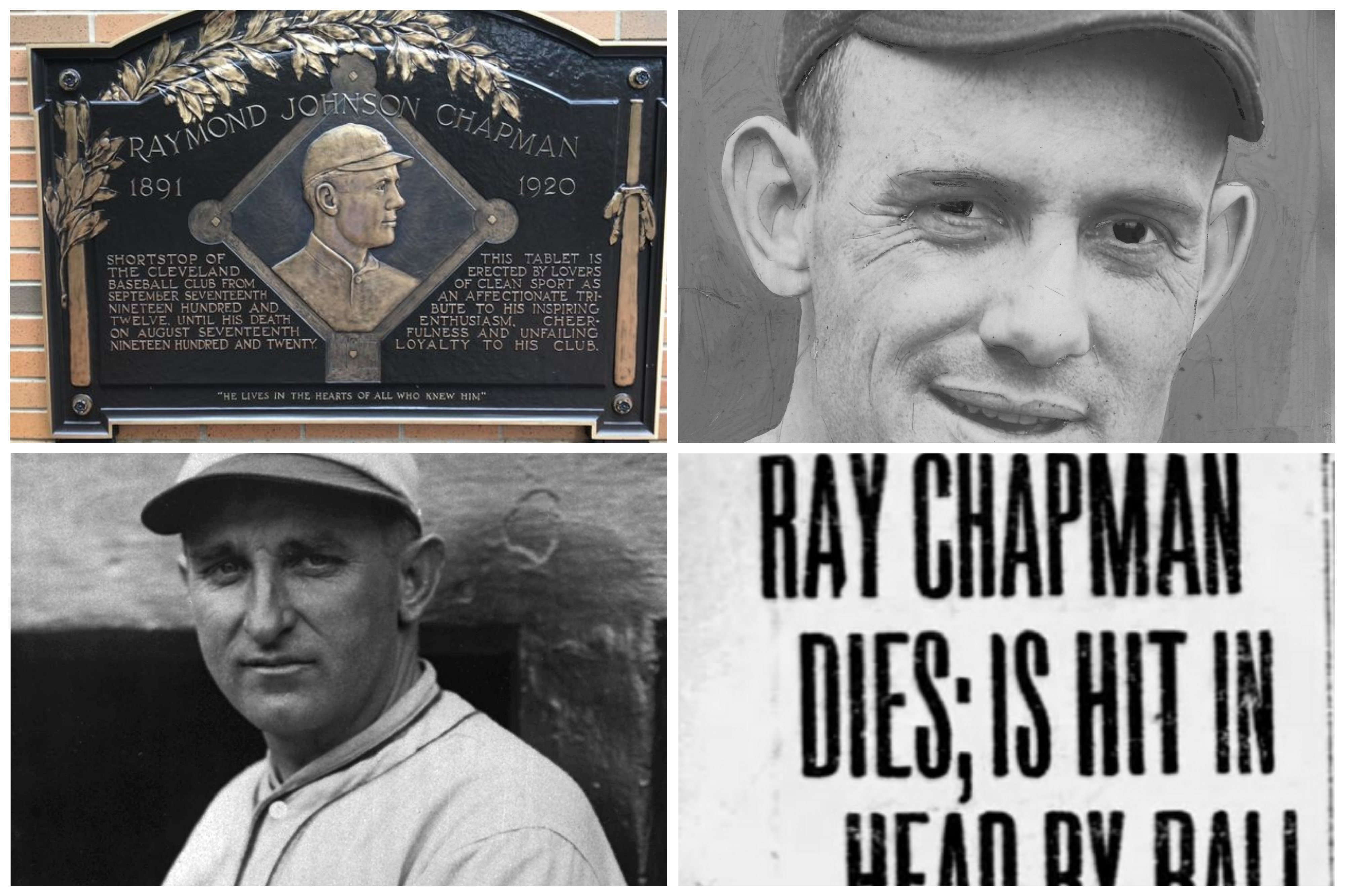
Up the road in Ohio County, Kentucky, Beaver Dam native Ray Chapman grew up to be a great baseball player. He was so good, in fact, that he was able to play nine seasons as the Cleveland Indians shortstop. He was renowned at the time for his defense, bunt singles, batting average, and stolen bases, but he is remembered as the only Major League baseball player to be killed on the field in a game. When he played, the baseball could be scuffed and sullied with everything from dirt to licorice to tobacco juice. This not only made it harder to see, but more erratic out of the pitcher’s hand. On August 16, 1920, near twilight at Yankee Stadium in New York City, Yankee pitcher Carl May hit Chapman in the side of the head with a fastball. The errant throw caused fatal brain damage, and Chapman died the next morning. It shook the baseball world.
This tragedy brought both immediate and eventual change to the game. It was because of this incident that umpires began a practice that continues over a century later of replacing a baseball when it becomes scuffed and dirty. The “spit ball” pitch was banned, for similar reasons. While it would take a few decades, the implementation of the baseball helmet is traced back to Chapman’s untimely death. While it would have been better for Chapman, a newly wed and newly expectant father, to have avoided this devastating end, it has likely saved several lives. It’s impossible to know how many might have been harmed by dirty baseballs through the years, but one can find sports articles detailing the likes of Kirby Puckett, Sammy Sosa, Chris Dickerson, and others who may have been spared a worse result by having on the protective helmet.
It is so easy to view tragic circumstances in isolation, especially those that happen to us personally. In light of the many tragedies that can happen in life, I say this with fear and trepidation. But, Scripture has already made that point. Out of various, fiery trials, these can “result in praise and honor and glory at the revelation of Jesus Christ” (1 Pet. 1:6-7). James said to consider your various trails as a cause for all joy, “knowing that the testing of your faith produces endurance” (Js. 1:2-3). James even says of the ultimate Old Testament sufferer, “We count those blessed who have endured. You have heard of the endurance of Job and have seen the outcome of the Lord’s dealings, that the Lord is full of compassion and is merciful” (5:11). To make such an application of a man who endured such tragedy is startling! Why does he mention Job? So that we can learn, adjust, and overcome!
Make no mistake about it, we all prefer to avoid heartache, sorrow, and loss. But, when those things come to us, Scripture urges us to adopt a heavenly mindset. See the produce in the pain, the hope on the other side of the hurt. Sometimes, it may be that others witness our faith in the midst of our trial and it may help them in their own walk of faith (Phil. 1:14). Whatever the case, even our own greatest adversity can result in someone else’s advantage. That’s an unintended benefit of suffering.
Jesus is the great healer and the Bible is full of passages that comfort, encourage, give endurance, and help us cope with a broken world. It’s full of so much more! A higher purpose gives us existential meaning, and the Bible outlines that purpose. It also has a few passages that fire me up, and those are the ones I want to share today.
Revelation 21
This is our reason to live the Christian life (Matt 19.28; Rom 8.18-25; I Pet 1.3-7, 13; 4.12-19; II Pet 1.3-4, 10-11; 3.3-13; I Jn 3.1-3). We’re looking forward to something much better, but what kind of stuff are we looking for?
– Zero dysfunction! No pain, grief, disease, crime, taxes, tornados, war, death in general, aimbots (if you know you know), etc.
– God gets rid of tears (Rev 21.4)! The context is a message of hope for early Christians who were dealing with devastating loss. But God will ἐξαλείψει all tears. Exaleipsei is future (will happen), and seems to be a comfort word. I had always pictured a Men in Black kind of thing, where all painful memories are obliterated and new ones made. But the word seems to indicate that an interaction with an infinitely compassionate Father will be more than adequate to get rid of any pain. If you’ve ever comforted a spouse or child who was grieving and physically wiped their tears away, that’s what this word describes.
– Everything is brand new (21.5)! None of the junk that we’ve dealt with here will be compatible with our new home.It will be wildly exciting: the best accomplishments of each nation will be there (21.25-26). God and his son provide all we need (21.22-24). True unity exists because we’ll all be on the same side (21.27). No need for healthcare or accountants or coroners or search and rescue or militaries or law enforcement! Those exist to push back against evil, which won’t exist in our new home. Revelation 21 is a rich chapter, but it’s full of excitement! God doesn’t speak empty words. Take him at his word and read the chapter very carefully. It’s hard to walk away from that study without getting pumped for heaven!!!
“Therefore humble yourselves under the mighty hand of God, that He may exalt you at the proper time, casting all your anxiety on Him, because He cares for you” (1 Pet. 5:6-7). Peter has just told younger men to be subject to elders (1-5), and for each group to conduct themselves with humility toward each other. The motivation for this is to avoid God’s rejection. Peter quotes Proverbs 3:34 to reinforce the point.
Peter then urges everyone to humble themselves in their relationship with God. That’s the same word that describes what Jesus did by being obedient to the point of death on the cross (Phil. 2:8). It means to go lower, to surrender prestige or status (BDAG 990). This humbling concerns a specific aspect of all of our lives. Each of us has “anxiety” to cope with. By definition, an anxiety is “a feeling of apprehension or distress in view of possible danger or misfortune” (Louw-Nida 312).
Right now, there are no doubt things which make you apprehensive and distressed. You may be facing danger or misfortune. On some level and to some degree, that describes the pressure and reality for nearly all of us these days. As beings created with the freedom of choice, we can try to cope with that ourselves with our own coping tools. Maybe, in our pride, we boast in our own ability to handle it all. Not only is that a delusion and a self-deception, it is flirting with disaster. Why not choose a better way? Peter lays that out for us.
Let’s survey the facts here.
GOD IS ABLE–You are entrusting yourself in His mighty hand. He is in control and has the power to rule in every situation. This is the same hand He holds you in the hollow of (Isa. 40:12).
GOD IS AWARE–He has the exclusive benefit of perfect foreknowledge. He knows what is going on now and He can see what will happen. As He works through time and events, He is choosing the proper time to lift you as you have surrendered yourself to His power and His wisdom. He knows everything that is going on in your situation. In fact, He knows about it at a much more intimate level than even you do.
GOD IS AFFECTIONATE–What motivates Him to act? He cares for you! Peter is telling us to throw all our anxiousness on God, like the disciples threw their coats on the colt so that Jesus could sit on it (Luke 19:35). Take each burden, fear, and worry you are carrying right now, that is weighing you down, and toss it into His mighty hand (a hand you will examine and find very capable–read Isaiah 40:12 again). Peter says He feels anxious concern for us. Sure, He can handle it. But it’s more than that. He wants to handle it. Why? Because you mean that much to Him!
I read this promise and I admonish myself. Why am I trying to carry this all by myself when God is offering to do this for me? He tells me to get myself out of the way and let Him handle this. Faced with my limitations and His limitless resources, it is futile and foolish to face these distressing matters in any other way!
Growing up, April first was a nightmare in our house. Dale and I would plan months in advance all the pranks we would do to each other. April Fool’s Day would start with small, harmless pranks. I would put soap on Dale’s toothbrush, Dale would tape my matchbox cars to the wall. And everything would be fine…but not for very long. It always ended up getting out of hand. As the day progressed the pranks got meaner and dirtier. I’d get mad and put salt in Dale’s drink, and he would turn around and get revenge by pouring salad dressing in my shoes. I’d get even more upset and would light one of his toys on fire, and Dale would lock me in a closet. But there was one instance I can still remember clearly; it was near the end of April Fool’s Day so we were both at the peak of mean pranks. I stole Dale’s hat while we were at the park, and threw it in the pond. And Dale got his revenge by taking my brand new scooter and throwing it into the lake. It was never seen again. Needless to say, mom banned pranks on April Fool’s for the rest of our time at home.
I say all of that to illustrate the very simple point that revenge never ends well. It doesn’t cultivate relationships, and it never strengthens our influence. Romans 12:19 reads, “Beloved, never avenge yourselves, but leave it to the wrath of God, for it is written, “Vengeance is mine, I will repay, says the Lord.”
Taking revenge can be quite tempting. Our sin-fueled, human emotions will naturally push us to take revenge and to get even with those who hurt us. We want to hurt those who hurt us. We want to insult them and avenge ourselves. Why? Because if we are honest, it feels good. It feels good to brake check the person that cut us off. It feels good to insult the person that spoke rudely to us. It feels good to take revenge because. WE want to get even with others. We take revenge because we selfishly think only of ourselves and how it’ll make US feel. But if we want to be called God’s children we must leave the avenging to our Father.
As Christians we should expect the world to hurt us because it’s driven by sin. The Christian, however, shouldn’t be the same because we are led by God. Taking revenge harms our influence, and it shows that we don’t truly trust that God will avenge us. God is our avenger and we must be careful to not practice what God has rightfully claimed. By following this command, not only are we letting God take care of us, we also open the door to a healthy relationship with those in the world as well as in the Church.
Tears are a very interesting and important part of the human anatomy. Tears are produced by the tear gland, which are small glands that are in our upper eyelid. Tears keep the surface of your eyeball clean, and help protect your eye from damage. But there’s another function of tears. They appear when we experience heartache and sadness. They form when we encounter joy, heartbreak, and sometimes for no reason with some people.
When we cry because of something emotionally painful, most of the time we wish that the problem never would’ve happened In the first place. Tears are a natural part of life. It’s going to happen, no matter how tough we claim to be. At some point we are going to break under the pressure of this world. That’s why I’d like to spend a few moments in one of the most encouraging passages of scripture in the Bible, Isaiah 25:8-9. In these two verses we will notice three painful types of tears that will be wiped away.
It reads, “He will swallow up death forever; and the Lord God will wipe away tears from all faces, and the reproach of his people he will take away from all the earth, for the Lord has spoken. It will be said on that day, “Behold, this is our God; we have waited for him, that he might save us. This is the Lord; we have waited for him; let us be glad and rejoice in his salvation.”
The first type of tears that will be wiped away are tears of death (v. 8). Every human on earth will experience death. Our lives will end in death, and scattered all throughout our days on earth we will lose those we love. Death is terrible. It tears us apart– we feel like we are drowning in heartbreak– that this pain will never end. We have to watch as mothers and fathers lose their children, children lose their parents, and spouses lose each other. Death is inevitable and something none of us ever want to go through. But there will come a day when we will never have to shed a tear over a loved one. We will never stand at a graveside again. God will make sure that his children never have to experience this heartache ever again. I long for heaven because the tears of death will be wiped away.
He will wipe away the tears of disgrace (8b). We can all agree that this world is full of evil. There is murder, rape, liars, gossip, and broken homes. This world is a place full of tears over the pain that comes from evil. Homes are torn apart and hearts are broken over the sin of others. A day will come when Christ will wipe away all tears (Rev. 21:4). A day will come when Christ will mend the hearts of the broken. David spoke of his Joy in God. He says, “Hear, O Lord, and be merciful to me! O Lord, be my helper!” You have turned my mourning into dancing; you have loosed my sackcloth and clothed me with gladness” (Psa. 30:10-11). As Christians we can turn to God with hope, knowing that He is our helper and strength. We don’t have to face the evil of this world on our own. God can turn our heartache into Joy. He can wipe away the tears that sin has placed in our eyes. A time will come when the tears of disgrace will be wiped away.
God will wipe away the tears of distance and discouragement (9). It is common after a tragedy has occurred to hear someone pray, “Jesus come quickly.” We say this because we know that Christ is our way of escape from this world. Christ is our hope. We want Him to come back, to help us escape the sin that is around us. Sometimes this distance from God can cause us to become discouraged and to think that He isn’t coming back to save us. God will wipe away the tears of discouragement.
And on that day we will say, “This is OUR God.” The God that we have placed all hope and faith in. “This is OUR God that we have waited on to save us.” “This is OUR God that has brought us salvation.” The day will come when God will wipe away the tears that have been formed by the distance and discouragement we encounter on earth.
The day will also come when we will be judged for how we lived on earth. Can we say that we have waited on God? Can we rejoice in His return? Can we truthfully say that we have placed our faith and hope in God? On that day our tears will either be wiped away, or they will continue on into eternity. The question we must ask ourselves is this: “Will God wipe away my tears?”
There is so much debate out there as to what Heaven will actually be like. Some make the argument that we just can’t know for sure. We know that there will be no tears in Heaven, so since that is the case there will definitely be some meatloaf there. Because in a place where there is no meatloaf present, I would cry. Now with that out of the way, let’s look at three quick promises about Heaven.
First there is the promise of “relationship.” In Revelation 21:3 it says, “He will dwell among us…” Not just any relationship, an actual relationship with Jesus Christ.
The second promise is that of “Relief.” In the very next verse it says, “God shall wipe away every tear from their eyes; there shall be no more death, nor sorrow, nor crying. There shall be no more pain, for the former things have passed away.” How many of us can’t wait for that day?
Now the third promise is one that is pulled from a verse that many people do not like to read. In Revelation 21:8 we see that there is a promise of “refuge.” You see, Heaven is going to be so great because of who will not be there. After we get a glimpse of what is promised to those who love Him (James 1:12), we see what is promised to those that don’t. Yet even here we see a blessing. Heaven is going to be place that is absent of, “…the cowardly, unbelieving, abominable, murderers, sexually immoral, sorcerers, idolaters, and all liars…” Heaven is going to be a place filled with family. The faithful Church family.
I’m going to Heaven! It’s a choice. It’s a choice to live right and follow Christ no matter what. You have the ability to say it confidently and you should never have to wonder if you’re going to Heaven. It’s a promise! Take hold of that promise, because it’s the only thing that matters.
If there’s one thing disappointing me most, it’s the lack of productivity I often feel. There are many things I want to do. I don’t think I get even a quarter done. For many facing a similar predicament, it’s a matter of poor time management. Time is precious. We’re told to make the most of it since the days are evil (Ephesians 5.16). Contextually, this pertains to the efforts made by first-century Christians in their daily walk. Persecution was coming. Indeed, for some, their lives would soon be at an end. Did they want to depart for eternity’s shore feeling as if more could have done but had not been? That message remains prescient today. We enjoy civil liberties now including religious freedom. However, a tempest has been growing for half a century which seeks to strip away the vestiges of religion and morality from the body politic. In but a short time we may face the same uncertain prospects as they. Hence, our struggle to be productive is as important as ever.
This exhortation may be limited in scope, but I wish to address those who might have certain mitigating factors making Paul’s inspired admonition more difficult to keep. It’s one thing to be a timewaster when one is able-bodied. It’s another matter entirely when you’re limited from accomplishing as much by the limitations of the flesh. There are those accustomed to doing much. One day they young, full of vigor. In the blinking of an eye, though, they no longer recognize the person staring back at them in the mirror. The snow of many winters covers what hair is left on their heads. For such, it hurts getting out of bed. Something as simple as buttons on garments becomes a time-consuming challenge. They may be asking, “Why can’t I get as much done as I used to?” This can be especially vexing, spiritually.
Perhaps, you have an illness of the body or mind. Maybe you don’t have old age to blame for your aches and pains but an autoimmune disease that others dismiss because, from appearances, you look fine. Not only are you in pain but you feel alone because some have unfairly surmised you’re just lazy. It could be that you’ve had chemotherapy and experience what has been termed “chemo brain.” You find yourself struggling to remember simple details. If you don’t write something down, you’ll forget about it. Truly, I could share a plethora of other scenarios in which some malady besets the body or mind and causes one to feel unproductive or a timewaster. These should suffice.
Fortunately, we serve a gracious God. Not only is His grace sufficient for coping with our lot in life (2 Corinthians 12.9), but it takes into consideration our current estate. One can debate whether there are degrees of punishment from Luke 12.48. That’s not my purpose. A principle is established here, however, stating that we’re held accountable according to the responsibility entrusted to us. Why would God hold the enfeebled or impaired to the same standard as the able-bodied? This must be true of redeeming one’s time as well. Note, one cannot forsake his or her Christian duty. Yet, rather than beat up on yourself because of what you left unaccomplished, trust that God knows your situation intimately. The main thing is to show up and do the work of which you are capable (Matthew 20.1-16; 21.28-32). This is how you remain productive even while facing adversity in these evil days.
These are some of the last words written by one of the greatest men who ever lived. He wrote them while in prison, waiting to die for his faith. He has just spoken of people he trusted who had deserted him. He is lacking even the bare essentials. A man, knowing how difficult his life was, had done additional great harm to him. No wonder he would open this window into his suffering soul and let us all look inside. Despite all this, he was not bitter.
Have you ever felt mistreated, even felt like people were actively against you? Or perhaps felt like people you count on abandoned or neglected you when you needed them? Maybe you have suffered for your faith. It is tempting to become bitter, even to lash out against the church and God.Paul is a great example of how to think when you feel unsupported and deserted by those you count on. After making that statement in 2 Timothy 4:16, he says some other things that can help us when we feel, at least in a small way, the way Paul felt.
Focus On The Lord. He could see how the Lord had helped through his darkest hours in the past (17). But, as importantly, he had confidence that the Lord would help him through future trials (18). Despite his unfair treatment, he could still say, “To Him be the glory forever and ever. Amen.” When people hurt and disappoint you, look higher!
Find Your Higher Purpose. Incredibly, Paul could sift through these sorrows and see God at work to accomplish His will. He’s suffering, but he can see a greater good. He says that he endured these hurts “…so that through me the proclamation might be fully accomplished, and that all the Gentiles might hear.” Can you look for what God, who doesn’t cause suffering, can do to bring good even out of those times? We’re prone to feel sorry for ourselves when God may be showing us and others His power through these situations to save souls and help lives.
Forgive. Paul doesn’t hold a grudge. Concerning those who let him down and even hurt him, he could say, “May it not be counted against them” (16). Doesn’t that sound like a Savior who asked God to forgive His tormentors? What a mindset! We can nurse perceived offenses, but how much better to be magnanimous toward those who we feel failed us in our hour of trial?
If you’ve never felt unsupported and deserted, you probably will at some future time. The temptation will be great to let it become a spiritual problem for you. Why not remember Paul’s response when he was in his deepest valley? It’s the way up to the spiritual mountaintop.
Problems aren’t inherently negative. Will you remember that? The middle-aged man with the persistent pain goes to the doctor, who discovers the malignant mass and gets him to the surgeon. The man’s life is saved by pain. The teenage Christian girl who endures the hurt of breaking up with the boy who is ungodly but who she loves feels pain. Eventually, though, as she raises her four children and enjoys marriage with a strong Christian man, she thanks God for that former pain. Illustrations of this point are endless.
How do you view your pain? By human nature, we tend to view suffering as the very worst thing that could happen to us. The anxiety of the medical test, the chronic disease that impacts every portion of our day and life, the permanent loss of a loved one through whatever events, or a rift in the family all can seem unbearable.
Will you remember that, as with the physical body and the emotional makeup, pain in our spiritual lives can have a positive benefit? We can learn from the painful thing. Pain can cause us to grow. Pain can serve as a spiritual refinery. After all, problems aren’t inherently negative. It is how we respond to the problems that makes all the difference. If we give up due to the problems we face, it’s devastating. If we sin in response to our pain, we fail and inflict damage on ourselves and others. If we blame God, we are in danger of allowing our pain to conquer us.
Despite those possibilities, though, none of these things have to occur. The encouraging thing is that how we respond to our problems is fully under our own control. We can be the example, in our suffering, that leads a lost soul to Christ or an erring Christian back home. We can be the role models others remember when they go down the road of trouble. We can bring glory to God by faithfully enduring such things.
Problems aren’t inherently negative! Thank God for this.
Springtime in the plains is a notorious time for storms. I was driving through northwest Texas near the time when three storm chasers were killed southwest of me on Tuesday afternoon. They died pursuing the storm, not directly because of it. They were there because conditions were ripe for tornadoes. 17 people were killed by tornadoes in 2016, but 24 have already died in them this year. Hollywood has captured our awe and fascination with them since The Wizard Of Oz. We view storms as mysterious, ominous, powerful, and frightening. They come in so many forms—hurricanes, floods, blizzards, cyclones, and more. But “storms” are synonymous with fear and sorrow.
Wouldn’t you classify some of the major, traumatic events of your life as storms. They build and threaten, they strike, then they leave aftermath. The storm may take but a moment, but recovery can take days, months, or even years. Not surprisingly, the Bible uses the storm metaphorically to describe such moments in our lives. David wrote, “I would hasten to my place of refuge from the stormy wind and tempest” (Psa. 55:8). The man we most associate with such figurative storms, Job, laments, “You lift up the wind and cause me to ride; And you dissolve me in a storm” (30:22). Most frequently, the Bible uses storms representatively to describe God’s judgment. But, as Job and David show, sometimes storms strike the innocent and undeserving.
What do we do when facing a storm? We heed precautions. We take shelter. We wait and endure. We ask for and trust God’s protection.
The world is full of people riding out storms today. That includes Christians. These storms are assaulting their bodies, bank accounts, relationships, spiritual strength, and spirits. Some feel safely sheltered, while others feel as if they are barely holding on. How do we face our storms?
* Seek help from others (Heb. 12:12-13; Ecc. 4:9-10).
* Search for possible benefits from it (Psa. 66:10; Rev. 21:3-4; Js. 1:2-4; etc.).
* See God’s power to help in it (Psa. 18:19; Rom. 8:28-38; 2 Pet. 2:9a).
* Shelter in the place of safety (Exo. 33:22; Psa. 91:1; Mat. 7:24-27).
God doesn’t cause evil or sin, but He allows it. We will always struggle with the “why” of this. But, we can grow our dependence on our great, perfect God when we are being battered. He is faithful. He wants to help. Lean on Him through your storms!
Have you ever had a problem or struggle that started out small but kept growing until it was larger than life? Did it come to consume your thoughts, keep you up at night, and become an overwhelming obsession? Maybe you devoted a lot of emotion to it.
Just by virtue of living on this earth, we will struggle (Job 14:1-2). Job knew struggle and turmoil! He lost one thing after another. His life seemed to unravel before his eyes. Teddy Roosevelt is credited with saying, “When you are at the end of your rope, tie a knot and hold on.” Have you ever found yourself struggling at the end of your rope of faith? You are certainly far from alone in that. We certainly see Job dangling there, asking, “Why was I ever born?” (3:11) and “Why can’t I go ahead and die?” (3:20-22). David was there (Psa. 22:1). So was Jeremiah (ch. 37-38).
Of course, trouble takes on many forms and comes from many directions. Any number of passages can help us cope with the struggle of trouble, but consider Psalm 10. It refers to the wicked seven times and to the afflicted four times. It also speaks synonymously of the wicked as the greedy (13), evildoer (15), and those of the earth (18). It speaks of the afflicted as the unfortunate (8,10,14), humble (14), the orphan and oppressed (14,18). We know that our trouble can come from the wicked, but it can also come from no one source we can identify though it hurts just the same. Consider this Psalm about our troubles and what we can do about them.
Our perception in times of trouble (1-11). Our vision can become blurry by tears or rage, but our point of view is altered when trouble comes. The psalmist goes through this. He sees God as being distant (1). He saw the wicked as being in control or prospering (2-11). God seemed far away and life seemed unfair. The majority of every generation is wicked, and each generation of God’s faithful must reconcile the seeming success of the wicked and oppression of the affilicted righteous. We don’t begrudge the psalmist for his struggle to see through spiritual eyes. We can relate.
Our prayers in times of trouble (12-15). The psalmist admits his own struggle, then he shows us how to overcome it. His first response is to pray. He asks God to deliver (12). He asks God to remember (12-14). Finally, he asks God to vindicate (15).
Our praise in times of trouble (16). Before the prayer he’s perplexed and indignant. Afterward, he has insight, peace, and greater confidence. He springs from his knees with new perspective. Doesn’t prayer do that for us? The psalmist acknowledges God’s nature—“Lord” (Jehovah, five times in the Psalm), position—“King”, and duration—“forever and ever.” Do we spend more time focusing on the source of our troubles than on the solution?
Our proper perspective in times of trouble (17-18). The psalmist is confident at the end of this psalm, saying, “you have heard” and “you will strengthen and listen.” Do you approach God that confident in His ability and desire to do what is best? We can be as confident as he is that God hears and helps when we hurt.
What is the greatest trouble we can face in this life? A disfiguring accident? Financial ruin? Loss of a parent, spouse, or child? The deterioration of health? The fall of our nation? Through Christ, none of these are too difficult to overcome. This Psalm reminds me that God still cares and He won’t abandon me. You and I can look at the cross and the church and be reassured of that. We know we can trust God (Rom. 8:28). God is able and willing to help us through every trouble.
She was born the year after the Civil War. Her mother died when she was three. Her father dropped her and her newborn sister off at the home of the widow of an army friend. Unable to care for the girls, the widow ultimately transferred care to a sweet, religious couple in the community. The girls spent happy years through their school days, but the older sister came to suffer from rheumatoid arthritis as a teenager. It steadily grew worse until she could not walk. Their adopted parents died within months of each other, and the young women were poor and had little prospect of earning money for themselves. Before her affliction, she had developed aspirations as a concert pianist and shown great promise as a poet and writer. Arthritis robbed her on the musical dreams, but she flourished as a poet and hymn writer. Rather than seek relief from her pain through suicide, she channeled her suffering into beautiful writing that continues to comfort others as it did in her lifetime. Ravi Zacharias summarized her suffering, saying, “Her body was embarrassed by incontinence, weakened by cancer, and twisted and deformed by rheumatoid arthritis. She was incapacitated for so long that according to one eyewitness she needed seven or eight pillows around her body just to cushion the raw sores she suffered from being bedridden” (“The Cry For A Reason In Suffering,” np; other information from The Story of Annie Johnson Flint, Rowland Bingham). Her poetry and songs are not riddled with bitterness or even soul-wrenching questions of why. You’ll find titles like “The Grace Of God,” “Not Down, But Through,” “Rest, Tired Heart,” “Grace Sufficient,” “He Giveth More Grace,” “He’s Helping Me Now,” and on the hopeful, positive compositions flow.
We have only one of her hymns in our song book, and it is entitled, “The World’s Bible.” These familiar words include the lines, “Christ has no hands but our hands to do His work today, He has no feet but our feet to lead men in the way….” I appreciate the living testimony Ms. Flint was of the way one who believes in Christ ought to respond to the tragedies and difficulties that can strike in this fallen world. I pray that I will never be wracked by such suffering, but if I do I would want the world to see the spirit in me that so many saw in her. Her life was one of trust in God’s sufficiency and strength through the darkest moments of life.
Our state (Colorado) was one of a few that has passed physician-assisted, right to die legislation in the recent election cycle. Besides the ethical slippery slope of people, even doctors and patients, selecting when to end life, there is in such an effort a failure to see the intrinsic value of life as well as God’s sovereign right over His creation. Ms. Flint’s situation makes us cringe in discomfort at first blush, but we see the refined beauty of a trusting heart to impart profound comfort despite life’s harshest turns. To persecuted Christians, Peter offers this hope for all strugglers when he writes, “After you have suffered for a little while, the God of all grace, who called you to His eternal glory in Christ, will Himself perfect, confirm, strengthen and establish you” (1 Pet. 5:10; cf. 1 Pet. 1:6-7). Whatever the trial, we can choose life instead of death, trust in God rather than trust in our own thoughts. Let us live in triumphant expectation, no matter what we may have to endure for the moment (Rom. 8:38-39; Psa. 30:5).
It is amazing how many people lose loved ones around the holidays. If you consider that there are about six weeks between Thanksgiving and New Year’s Day, you realize the statistical probability. But, for one who loses a mate, child, or parent, the situation is not remotely clinical. It is deeply personal. It hurts more because a season of great memories and happiness is upended by grief and loss. An ominous anniversary now wedges itself into “the most wonderful time of the year.” Our congregations are filled with people who are struggling with such dark days, and they find coping particularly hard. They don’t begrudge the festive mood of their friends and brethren, but they may often feel on the outside looking in at such mirth. Scripture urges us to “weep with those who weep” (Rom. 12:15) and to “bear one another’s burdens” (Gal. 6:2). What can we do to help despondent brothers and sisters?
Take note. Whenever someone’s loved one, especially a spouse, passes away, keep a record of that and send a card or otherwise let them know you know the significance of the day. What an overt expression of love and concern!
Go out of our way. Seek them out and actively console them. You’re not trying to dredge up emotion, but you are desiring to acknowledge it.
Go to God for them. Whether or not you tell them, include them and their grief specifically in your prayers. Or, better yet, take a moment and pray with them on the spot.
Lend an ear and shed a tear. They may want to talk about their memories, the funeral, the songs that they sang at the funeral, their traditions, or the like. Open your heart and feel for them. It is such good emotional medicine for them and you will be a good servant of Christ.
Bring them in. Invite them for a meal, visit them, or ask them to come along on an outing. Take them out to see Christmas lights. They may refuse your invitation, but they’ll know you wanted to help.
Put yourself in their shoes. Peter urged the Christians to be, among other things, “sympathetic, brotherly, kindhearted…” (1 Pet. 3:8). Part of our own personal spiritual growth should be to grow more aware of and concerned about the feelings of others. It is an active mental exercise, but seeking to think about how such a grieving one must feel helps us help them but also helps us.
Rope in others.We don’t usually encourage talking about people behind their backs, but this is a significant exception. Inform the potentially unsuspecting of such a difficult anniversary so others can join you in this ministry of consolation. This is a triumphant take on “misery loves company.” Their misery is mitigated by more caring family reaching out to comfort them.
We love our Christian family. We should be quick to express it in ways that can make such a difference. Look out into the congregation and find those hurting hearts. Of course, this is needful even if their loss was in May or August, too. But, minister to minds with these mental millstones. Help them carry their load. Such is an active imitation of our soothing Savior!
Jesus died an awful death. Ruthless assassins, terrorists, sadistic and serial killers, savage and perverted criminals have all received much more humane treatment than He received that day. What Jesus endured at the cross can only be described as vicious. Consider the violent aspects of His crucifixion.
There was physical torture. He was scourged, beaten with a jagged whip (Mat. 27:27). He was fitted with a crown of thorns (Mat. 27:29). He was hit on the head repeatedly with a staff (Mat. 27:30). The soldiers struck Him with their hands (John 19:3). He carried His heavy cross until it fell on Him (John 19:17). He was nailed to that cross (John 20:25).
There was mental anguish. His countrymen hatefully yelled for His death (Mat. 27:25). Soldiers mocked Him and pretended to worship Him (Mat. 27:29). People hurled abuse at Him (Mat. 27:39,40). Religious leaders mocked Him (Mat. 27:44). The Heavenly Father left Him alone (Mat. 27:46). His disciples followed Him, mourning and wailing (Luke 23:37). Earlier, all His disciples forsook Him and fled (Mark 14:50).
There was social embarrassment. They stripped Him (Mat. 27:25). He was spit upon (Mat. 27:30). The soldiers gambled for His clothes (Mat. 27:35). He was watched like a sideshow (Mat. 27:36). They jokingly put an elegant, purple robe on Him (Luke 23:11). He endured great shame (Heb. 12:2).
The sheer brutality of the crucifixion tells one how serious sin is! The proposal from heaven is, “Stop sinning and serve the Savior!” In the light of the cross, examine Heaven’s every demand, command, and reprimand. What expectation from the Father or requirement from the Son is too great? Before answering, look back at the cross!



















 The Preacher Pollard Blog