Expectation Versus Euthanasia

Neal Pollard

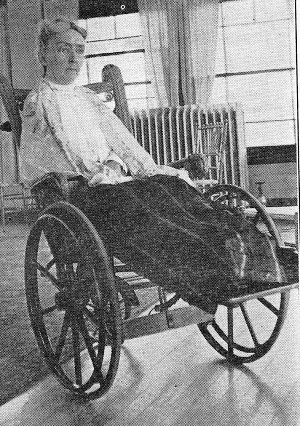
She was born the year after the Civil War. Her mother died when she was three. Her father dropped her and her newborn sister off at the home of the widow of an army friend. Unable to care for the girls, the widow ultimately transferred care to a sweet, religious couple in the community. The girls spent happy years through their school days, but the older sister came to suffer from rheumatoid arthritis as a teenager. It steadily grew worse until she could not walk. Their adopted parents died within months of each other, and the young women were poor and had little prospect of earning money for themselves. Before her affliction, she had developed aspirations as a concert pianist and shown great promise as a poet and writer. Arthritis robbed her on the musical dreams, but she flourished as a poet and hymn writer. Rather than seek relief from her pain through suicide, she channeled her suffering into beautiful writing that continues to comfort others as it did in her lifetime. Ravi Zacharias summarized her suffering, saying, “Her body was embarrassed by incontinence, weakened by cancer, and twisted and deformed by rheumatoid arthritis. She was incapacitated for so long that according to one eyewitness she needed seven or eight pillows around her body just to cushion the raw sores she suffered from being bedridden” (“The Cry For A Reason In Suffering,” np; other information from The Story of Annie Johnson Flint, Rowland Bingham). Her poetry and songs are not riddled with bitterness or even soul-wrenching questions of why. You’ll find titles like “The Grace Of God,” “Not Down, But Through,” “Rest, Tired Heart,” “Grace Sufficient,” “He Giveth More Grace,” “He’s Helping Me Now,” and on the hopeful, positive compositions flow.

We have only one of her hymns in our song book, and it is entitled, “The World’s Bible.” These familiar words include the lines, “Christ has no hands but our hands to do His work today, He has no feet but our feet to lead men in the way….” I appreciate the living testimony Ms. Flint was of the way one who believes in Christ ought to respond to the tragedies and difficulties that can strike in this fallen world. I pray that I will never be wracked by such suffering, but if I do I would want the world to see the spirit in me that so many saw in her. Her life was one of trust in God’s sufficiency and strength through the darkest moments of life.

Our state (Colorado) was one of a few that has passed physician-assisted, right to die legislation in the recent election cycle. Besides the ethical slippery slope of people, even doctors and patients, selecting when to end life, there is in such an effort a failure to see the intrinsic value of life as well as God’s sovereign right over His creation. Ms. Flint’s situation makes us cringe in discomfort at first blush, but we see the refined beauty of a trusting heart to impart profound comfort despite life’s harshest turns. To persecuted Christians, Peter offers this hope for all strugglers when he writes, “After you have suffered for a little while, the God of all grace, who called you to His eternal glory in Christ, will Himself perfect, confirm, strengthen and establish you” (1 Pet. 5:10; cf. 1 Pet. 1:6-7). Whatever the trial, we can choose life instead of death, trust in God rather than trust in our own thoughts. Let us live in triumphant expectation, no matter what we may have to endure for the moment (Rom. 8:38-39; Psa. 30:5).

flint_aj

The Holiday Blues

Neal Pollard

It is amazing how many people lose loved ones around the holidays. If you consider that there are about six weeks between Thanksgiving and New Year’s Day, you realize the statistical probability. But, for one who loses a mate, child, or parent, the situation is not remotely clinical. It is deeply personal. It hurts more because a season of great memories and happiness is upended by grief and loss. An ominous anniversary now wedges itself into “the most wonderful time of the year.” Our congregations are filled with people who are struggling with such dark days, and they find coping particularly hard. They don’t begrudge the festive mood of their friends and brethren, but they may often feel on the outside looking in at such mirth. Scripture urges us to “weep with those who weep” (Rom. 12:15) and to “bear one another’s burdens” (Gal. 6:2). What can we do to help despondent brothers and sisters?

  • Take note. Whenever someone’s loved one, especially a spouse, passes away, keep a record of that and send a card or otherwise let them know you know the significance of the day. What an overt expression of love and concern!
  • Go out of our way. Seek them out and actively console them. You’re not trying to dredge up emotion, but you are desiring to acknowledge it.
  • Go to God for them. Whether or not you tell them, include them and their grief specifically in your prayers. Or, better yet, take a moment and pray with them on the spot.
  • Lend an ear and shed a tear. They may want to talk about their memories, the funeral, the songs that they sang at the funeral, their traditions, or the like. Open your heart and feel for them. It is such good emotional medicine for them and you will be a good servant of Christ.
  • Bring them in. Invite them for a meal, visit them, or ask them to come along on an outing. Take them out to see Christmas lights. They may refuse your invitation, but they’ll know you wanted to help.
  • Put yourself in their shoes. Peter urged the Christians to be, among other things, “sympathetic, brotherly, kindhearted…” (1 Pet. 3:8). Part of our own personal spiritual growth should be to grow more aware of and concerned about the feelings of others. It is an active mental exercise, but seeking to think about how such a grieving one must feel helps us help them but also helps us.
  • Rope in others. We don’t usually encourage talking about people behind their backs, but this is a significant exception. Inform the potentially unsuspecting of such a difficult anniversary so others can join you in this ministry of consolation. This is a triumphant take on “misery loves company.” Their misery is mitigated by more caring family reaching out to comfort them.

We love our Christian family. We should be quick to express it in ways that can make such a difference. Look out into the congregation and find those hurting hearts. Of course, this is needful even if their loss was in May or August, too. But, minister to minds with these mental millstones. Help them carry their load. Such is an active imitation of our soothing Savior!

holiday-grief

The Suffering Of Jesus And Commitment

Neal Pollard

Jesus died an awful death. Ruthless assassins, terrorists, sadistic and serial killers, savage and perverted criminals have all received much more humane treatment than He received that day. What Jesus endured at the cross can only be described as vicious. Consider the violent aspects of His crucifixion.

There was physical torture. He was scourged, beaten with a jagged whip (Mat. 27:27). He was fitted with a crown of thorns (Mat. 27:29). He was hit on the head repeatedly with a staff (Mat. 27:30). The soldiers struck Him with their hands (John 19:3). He carried His heavy cross until it fell on Him (John 19:17). He was nailed to that cross (John 20:25).

There was mental anguish. His countrymen hatefully yelled for His death (Mat. 27:25). Soldiers mocked Him and pretended to worship Him (Mat. 27:29). People hurled abuse at Him (Mat. 27:39,40). Religious leaders mocked Him (Mat. 27:44). The Heavenly Father left Him alone (Mat. 27:46). His disciples followed Him, mourning and wailing (Luke 23:37). Earlier, all His disciples forsook Him and fled (Mark 14:50).

There was social embarrassment. They stripped Him (Mat. 27:25). He was spit upon (Mat. 27:30). The soldiers gambled for His clothes (Mat. 27:35). He was watched like a sideshow (Mat. 27:36). They jokingly put an elegant, purple robe on Him (Luke 23:11). He endured great shame (Heb. 12:2).

The sheer brutality of the crucifixion tells one how serious sin is! The proposal from heaven is, “Stop sinning and serve the Savior!” In the light of the cross, examine Heaven’s every demand, command, and reprimand. What expectation from the Father or requirement from the Son is too great? Before answering, look back at the cross!

cross-211992_960_720

How Do You Spell “Cross”?

Neal Pollard

  1. “SEE”– Look at Calvary. Don’t turn away. I know it’s not easy. What is done to Him is shameful. I know. But, look closely! Past the spittle. Beyond the blood. There. In His eyes. Friend, that is love. It is love for you! See the nails in His hands and feet, fastening Him to a tree He created for man’s use. Look at the love He has for you!
  2. “ARE?”–Are you able to see that He bled and died for you? Are you willing to admit you’re lost without Him? Are you ready to submit to His will, to obey Him, and to live for Him? Are you prepared for eternity? Are you convinced?
  3. “OH”–Hear His cries of pain and agony. The death of a thousand deaths. Bitter moans of His disciples. The gasp of heaven’s angels. The sorrow of a Father for His only begotten Son! The gasps and exclamations of a hateful mob.
  4. “SS”–That’s the hiss of the beguiling serpent. The one who is bruising the heel of the perfect One, putting God the Son in the tomb. This is his moment of triumph. Though resurrection will soon spell victory for Christ and hope for man, at the cross the devil must be enjoying his front row seat at Calvary. Doesn’t he anger you? Disgust you? Motivate you? Live for Jesus, the Lion of Judah. Don’t live for the roaring, devouring lion.

Friends, the cross spells the difference between heaven and hell, hope and hopelessness, joy and sorrow, night and day!

4468491785_0c64a0f076_o_d

Our Brethren Are Suffering

Neal Pollard

The United Nations’ very conservative estimate is that well over 2,000 people have died in the Donetsk region of Eastern Ukraine in fighting between that nation’s government have clashed with separatists.  So many of the towns and cities in the region have congregations of God’s people, many of their preachers trained in our foreign extension school that for years was in Kramatorsk and of late has been in Gorlovka. One of our graduates reports that two gospel preachers have been kidnapped this month, though one of them has since been released.  Our brethren in Ukraine have been facing the terror of daily bombing and shooting as well as fear for their safety when they assemble.

The ebola outbreak is an ongoing health concern and it is not yet contained.  Nations affected include Liberia, Guinea, Sierra Leone, and even Nigeria.  One of two Americans on medical missions in Liberia, Dr. Kent Brantly, is a member of the church.  While its not clear whether any of our native brethren in these African nations have gotten sick or died, they certainly feel the threat and concern of a disease that claims between 50 and 90 percent of those who contract it. 

Around the world at any given time, we have brothers and sisters who face health scares, hunger, harm, and hatred.  Persecution, natural disaster, famine, and war are no respecter of persons, and “our people” are often affected.  How they need our constant prayers as well as whatever assistance we can prudently provide.

On our pews in the local church, though without the drama and press coverage, there are always those who are struggling with hurts, heartaches, health, home, and hardship.  They may not trumpet their complaints or even publicly ask for encouragement, silently suffering.  As we interact with each other, let us keep in mind the potential hidden concerns and burdens being borne.  

Paul encourages us, in the spirit of unity, to “have the same care for one another” (1 Co. 12:25). He tells Colosse, “Put on a heart of compassion, kindness, humility, gentleness, and patience” (Col. 3:12). He tells Philippi to to look out “for the interests of others” (Phi. 2:4).  Are we busy and bothered by our own concerns? Certainly! But may we ever cultivate greater sensitivity toward the silent suffering of our spiritual family, both near and far.

Members of the Slavyansk church of Christ (including a BVBIU graduate from our first class) holding bomb shrapnel that exploded near the church building. Photo Credit: Jeff Abrams.