THE BLINK

Tuesday’s Column: Dale Mail

Dale Pollard

God created the world in 6 days.

144 hours. 

8,640 minutes. 

518,400 seconds. 

That’s not a lengthy period of time to create the human experience but it’s all destined to end in an instant. Just like that, time is gone— 

everybody. Everywhere. Will be carried off into eternity. 

The blink of an eye happens in 0.3 of a second. 

God gave us that ability so that we might protect our delicate corneas and sclera from dust particles and other small debris which easily aggravate the eye. 

The reflex and speed of the human blink is testimony to our mighty Creator’s designing ability but in His divine wisdom, He knew the blink would also be an illustration for the way in which He will return on day. 

The average person will blink 15 to 20 times a minute.

900 to 1,200 times an hour.

14,400 to 19,200 times a day.

100,800 to 134,400 times a week.

That’s between 5.2 and 7.1 million times a year. 

In other words, it seems like God intended to remind us all millions of times a year that He is coming back.

The blink of an eye occurs in 0.3 a second. 

You can’t hear the gospel message in that time.

You can’t believe that Jesus is the son of God in that time.

You won’t be able to repent in that amount of time.

You couldn’t confess Jesus as your Lord and Savior in that time.

You certainly can’t be immersed in water for the forgiveness of sins in that time. 

“In a moment, in the twinkling of an eye, at the last trumpet. For the trumpet will sound, and the dead will be raised imperishable, and we shall be changed.” – I Cor. 15:52

Now is the time to prepare for that last and final blink.

Crisis

Wednesday’s Column: Third’s Words

Gary III

Gary Pollard

  • 1918 had the Spanish Flu pandemic that killed at least 675,000 people in the United States and 50,000,000 worldwide.
  • 1929 birthed the Great Depression, a multi year period of societal upheaval and economic collapse.
  • 1941 ultimately led to our involvement in a world war after the attack at Pearl Harbor.
  • 1963 saw the dramatic assassination of JFK.
  • 1986 put a damper on the excitement of space exploration with the tragedy of the Challenger explosion.
  • Violent crime rose dramatically from the 60’s to the 90’s, enough that most people no longer left their houses unlocked and were less likely to trust their fellow people.
  • 2001 marked the beginning of a global war on terror with an awful display of evil.
  • 2008 saw the Great Recession, the aftermath of which may be one of the causes of our great political division.
  • 2020 was a train wreck we need not discuss further.
 
This is by no means an exhaustive list! It covers some major events that affected Americans in the last 100 years, but much more could easily be said about the negatives of our history.
 
This is important: Immunity was attained after two years of the Spanish Flu pandemic. Lifespans increased by a few years during the Depression and led to a hearty generation of folks who helped to win the Second World War. That war, as horrible as it was, led to many incredible breakthroughs in medical and other sciences, not to mention historically unprecedented economic prosperity. The 1960s at least exposed the ungodly, ugly nature of hatred and racism, leading to some positive changes that were long overdue.
 
Even in the worst of times, good happens. But even if it doesn’t, hope is invulnerable! For a Christian, these issues are simply the result of a fallen world and they’re temporary. The end of life for us is the beginning! We have one important thing that no crisis can destroy: hope. We are absolutely certain that death will be the moment we get to live in a perfect world with our creator (see also II Peter 3.13ff; Matthew 19.28; Ephesians 1.18ff).
 
Nothing can or should dampen our faith in God, our hope for a better life, our mission to pull people out of darkness, our attitude, our love for each other, our dedication to spiritual growth, our responsibility to take care of people, our resilience in difficult times, and our critical compulsion to emulate Jesus in every possible way while we still breathe.

Pointless Baggage

Tuesday’s Column: Dale Mail

Daleheadshot

Dale Pollard

On Paul’s third missionary journey he would write to a congregation in Rome. Today this letter is viewed as sone of the most theologically deep books in our New Testament. Some think that there are portions of Scripture that are best left alone, or that only a preacher or Bible teacher can decipher the “code.” When we do some digging into the original audience that Paul was writing to, we see something interesting. He was delivering these deep theological concepts to a church that seemed to be largely lacking in spiritual knowledge. In fact, some of the members of this 1st-century church believed that God was glorified through their sins! Clearly they had some growing to do. Paul didn’t say they needed to stick with simple Christian concepts or the basics; he still tries to teach them the difficult and more complicated aspects of Christianity.

This is a call for us to challenge ourselves in our daily studies. The Bible was meant to be understood, but that doesn’t mean that it won’t take some effort on our part. The book of Romans is a rewarding book to study. In fact, it’s difficult to find another book that can give the Christian more joy and confidence in their salvation. In Romans 8:1, Paul writes, “There is therefore no condemnation for those who are in Christ Jesus.” At first glance this may just be a verse that many skim past because of how familiar we are with it. When we study the application of such a simple verse, in context, the benefits are incredible.

There’s no need to agonize over our relationship with Christ, if we’re in Christ. Paul simplifies our salvation by telling us that if we have obeyed the gospel and we’re striving to follow Jesus, we don’t have to live in fear of our standing before God. In fact, this phrase, “in Christ,” appears 172 times in the New Testament, but it’s a phrase that is largely misunderstood. Some Christians believe that through the course of their week they bounce from “saved” to “lost” on a daily basis. The idea of being “in” Christ is really describing a spiritual union— much like marriage! You don’t wake up everyday and ask your spouse,  “Are we still married?” and then worry throughout the day that despite your spouse’s confirmation, you’re just not convinced that you’re really married to them. If we haven’t done anything to separate that union with Christ, we can live confidently knowing we are saved.

What a wonderful feeling. The book of Romans is one that helps us to let of any pointless baggage and live a life of peace and joy. 

Tell Me About Grace

Thursday’s Column: Carlnormous Comments

carl-pic

Carl Pollard

  1. Grace brings peace (1 Thessalonians 1:1).
  2. Grace gives us favor with God (Romans 3:24).
  3. Grace is the generous attitude God has towards His people (Ephesians 1:6).
  4. Grace brings salvation to sinful man (Titus 2:11).
  5. Grace teaches us how to live (Titus 2:11-12).
  6. Grace gives us a glimpse of God’s Character (John 1:16).
  7. Grace appeared in the flesh (Titus 2:11).
  8. Grace originated from God (Eph. 2:4-5).
  9. Grace is powerful (2 Corinthians 12:9).
  10. Grace helps put Heaven in view (Acts 15:11).
  11. Grace helps us be the salt of the earth (Acts 4:33).
  12. Grace is an attribute of Christ (John 1:14).
  13. Grace is an attribute of Christians (2 Corinthians 8:7).
  14. Grace puts the word “Christ” in Christian (John 1:17).
  15. Grace is a powerful motivator (Titus 2:13-14).
  16. Grace is a gift (that is often left unopened, Ephesians 2:8).
  17. Grace gives us hope (Romans 6:14).
  18. Grace shows us the love of God (Romans 5:8).
  19. Grace brings comfort (Hebrews 4:16).
  20. Grace is given to the humble (James 4:6).
  21. Grace gives us strength ( 2 Timothy 2:1).
 
Amazing Grace, how sweet the sound,
That saved a wretch like me.
I once was lost but now am found,
Was blind, but now I see.
 
T’was Grace that taught my heart to fear.
And Grace, my fears relieved.
How precious did that Grace appear
The hour I first believed.

The Lifeboat Baby

Monday’s Column: Neal At The Cross

pollard

Neal Pollard

While many today have no idea who Jesse Roper Mohorovic is, he was a celebrity from the moment of his birth on March 30, 1942, off Cape Hatteras, North Carolina. The United States had entered World War II only a few months before, and German U-Boats “prowled the Atlantic sea lanes, and the waters off the Virginia-Carolina coast were ‘the most dangerous on earth'” (C. Brian Kelly, Military History, 9/05, 74). In fact, the Germans killed twice as many seamen in their U-boat campaign off the east coast than died at Pearl Harbor. 

Jesse’s mother, Desanka, was 8 1/2 months pregnant, traveling on a passenger freighter that was torpedoed. She faced peril after peril, from getting out of her cabin to the harrowing escape in a lifeboat to an overnight storm. In the middle of all of it, the freighter sunk and her doctor injured in their dramatic escape, she gave birth in Lifeboat #4 to a baby boy at 2:30 A.M. Two days later, they were rescued by the Navy destroyer Jesse Roper. 

The media covered many of the early milestones of his life, and even documented his interests and favorite baseball team. He later appeared on the TV shows To Tell The Truth and I’ve Got A Secret. He earned a law degree, served in the Navy, and had a career in marketing. He died of lung cancer about two years after his 2003 retirement (via JOC.com). 

It is no wonder that “The Lifeboat Baby” would become such a sensation, especially given the real drama behind his birth. Perhaps he would have been part of anonymous tragedy if he and his mother had been among the 5000 who perished, but his birth and life became a symbol of hope and victory. Indeed, “Newspapers heralded Jesse as living proof the Allies could not be defeated” (Kelly). 

We live in increasingly grim times. Our current battle is spiritual in nature, as sin and immorality seem to have the upper hand. Souls are perishing in infinitely greater numbers (cf. Mat. 7:13-14). While we cannot save them all, we need to be in search of those we can reach with the gospel. We must muster greater courage to share the good news and help those searching reach safety. They need to know there is hope and victory possible, and that Christ will ultimately win (1 John 5:4-5; 1 Cor. 15:24-25).  These babes in Christ are unlikely to capture the attention of the media, but each of them have the rapt attention of heaven. God is counting on you and me helping to deliver them, regardless of how stormy things may be. Each individual matters to God. How wonderful that we might partner with God and His Word, and help a soul be one whose name is written in the Lamb’s Book of Life (Rev. 21:27)!


Photo via Naval History and Heritage Command

What Happens After “Happily Ever After”?

Monday’s Column: Neal at the Cross

pollard

Neal Pollard

It’s something they never tell you in the romantic movie. The ending of the storyline so full of twists and turns, where he and she might not have ended up together but seemed destined to be together, is so happy and perfect. Both are all smiles, with stars in their eyes, when we see “The End” and the credits roll.

They never tell you what happens after the fairy tale wedding or the long-awaited kiss. He refuses to ask directions as they fade into the sunset. They argue over where to eat that romantic dinner. He speaks without thinking and says something thoughtless, followed by tense silence. 

I am not critiquing one of the sacrosanct principles of romantic movies and books. Happy endings can be a great escape from reality and a feel good experience. Yet, when we hold it up as the unqualified expectation for our own lives, we set ourselves up for trouble. Social media is rife with posts and pictures which can perpetuate the fiction that the people we friend and follow are constantly living out “happily ever after.” Life is always grand, and success and satisfaction is the constant. 

Don’t misunderstand. So much of what we experience in life is shaped by attitude. Being positive can help us negotiate those hairpin curves in the road of life. But, coping through positivity is different from allowing disappointment to make us disenchanted with failing to meet the unrealistic expectation that every problem and adversity can be wrapped up into a pretty, neat package with a frilly bow on top. 

It’s quite the balancing act, isn’t it? Scripture teaches to think on healthy, beneficial things come what may (Phil. 4:8). Or, as Solomon puts it, “All the days of the afflicted are bad, but a cheerful heart has a continual feast” (Prov. 15:15). Yet, Job (14:1) and Solomon (Ecc. 2:23) do not sugarcoat the reality that life is often painful, grievous, and full of trouble both day and night. 

May I offer some encouragement?

  • To the newlyweds, neither of you is perfect and there is no way you can always agree and get along without mutual compromise and effort. You will have so many great days, but there will be some mountains to climb and valleys you must pass through. No couple out there is breezing through married life. Turning to one another (and God) rather than on one another when marriage is hard will forge your bond come what may (1 Pet. 3:7).
  • To the new parents, though that baby looks perfect and angelic, he or she will introduce demands, needs, concerns, and challenges you never knew existed before. Each developmental stage will be accompanied by incredible highs and lows. As you look into the faces of your children, you will be looking at eternity and knowing the weight of your decisions and leadership. But, savor those little ordinary moments. You are placing puzzle pieces that will one day become your children’s picture of their childhood. How you handled the hard times will be at least as important as how you handled the fun times (Prov. 22:6). 
  • To the new Christian, it is right for you to relish the feeling of relief and joy over being forgiven and cleansed from sins. The burden of guilt has been lifted. You are experiencing something in Christ that you never knew existed. But, there will be difficult days. The devil lurks (1 Pet. 5:8). Selfish desires can derail (Jas. 1:13-15). Suffering for your faith should be expected (1 Pet. 4:16; Acts 14:22), but by hanging on your eternal destiny is better than you can imagine. Along the journey, you will grow, mature, and develop into someone better and stronger as Christ lives in you (Gal. 2:20). 
  • To the Christian who publicly repents, you had no idea how much support, love, and encouragement you were going to receive. You feel the relief of forgiveness and restored hope. There’s clarity and purpose where there had been confusion and distraction. Things are better now (cf. Jas. 5:16; 1 Jn. 1:9), but the battles and temptations that led you away are still there. You will still have to face the consequences of bad choices, but you will not regret turning to God and your spiritual family for help. This is the first step of your rededication. Keep walking and never stop (Mat. 7:13-14; 1 Th. 2:12).

There are so many other phases and circumstances deserving the same kind of encouragement. The bottom line for each is the same. When viewed with heavenly eyes, each of us is staring at the ultimate happy ending. Even as our exterior deteriorates, our inner man is renewed daily (2 Cor. 4:16). Our momentary difficulties will give way to incomparable glory (2 Cor. 4:17-18).  The best is yet to come (2 Cor. 5). But, between now and then, we all have to negotiate bumps in the road. That’s OK. Keep following Christ on this narrow road and the “ever after” will transcend your greatest hopes (Mat. 16:24ff). 

Words For The Aching Heart 

Tuesday’s Column: Dale Mail

image 

Dale Pollard

Why do we hurt? In Bible classes and in sermons you have been pointed to scriptures such as James 1:2, which says, “Count it all joy my brethren, when you fall into various trials.” You may then find yourself wondering about that specific trial you are forced to miserably wade through. 

Perhaps you think, “But what good could possibly come from this?” Or maybe you even question, “why would God let me experience this kind of heartache?” This is when a faithful Christian may sink into a pessimistic kind of bitterness that slowly steals each smile and smothers even the faintest glimmer of hope. If Jesus could sit with you and lovingly give you some wisdom, I’d imagine this is what He’d say.

I dreaded that cross, the cruel instrument of death.
I felt such intense emotion with each painful and strained breath.
Embarrassed, I was stretched naked amid a hateful crowd—
but prayed for their forgiveness, with my bleeding head bowed.

I intimately knew trauma, isolation, abandonment, and shame.
I lost everything for everyone, so peace and glory you would gain.
It’s that joy I’ve set before you, even seen through tearful eyes,
that will push you, as it did Me, through each valley and each sigh. 

No matter what you’re fighting here, don’t worry, stress or fear.
Today it hurts, tomorrow it’s over, in the twinkling of an eye I’ll appear.
Life is brief and fragile like that of a lowly dove, and like the dove,
with broken wing still mending, look hopefully above.
–Dale Pollard
(These words were inspired by the words found in Hebrews 12:1-3.)

I’d like to encourage you, if you’re suffering through a trial in life, to read Psalm 69.  It’s a lament psalm, which may help you put into words what your aching heart is feeling.

“What we really need and what the psalms of lament provide is a way to live through times of disorientation with God as an intimate traveling companion.”
– Glenn Pemberton

gettyimages-155353005-58bdb2013df78c353c7f2a6d

Because He Lives

Wednesday’s Column: Third’s Words (Round 2)

Gary III

Gary Pollard


This song by the Gaithers was written in 1971 at the height of the Vietnam War. Also happening in this country was great civil unrest, school and public arena shootings, civil rights/suffrage/anti-war protests, political unrest, economic downturn, and concerns over the rising influence of communism. It was written during the Cold War when children had to do nuclear attack drills at school.
I never noticed how important the line, “this child can face uncertain days because He lives” was until seeing the year it was published. Those were definitely uncertain days.
Our time isn’t much different. I don’t have to elaborate on the stuff that makes our days uncertain – we’re very aware. We are able to handle what’s going on because He lives. No political unrest, civil disorder, threat of war, disease, or economic downturn can keep shut us down for good because He lives.
“Because He lives, I can face tomorrow. Because He lives, all fear is gone. Because I know He hold the future, and life is worth the living just because He lives.”

THE GREATNESS OF LOVE

Thursday’s Column: Captain’s Blog

IMG_0806

Carl Pollard

Love is the ultimate gift we can have as Christians. Paul in 1 Corinthians 13 shows us why love is greater. It’s patient, kind, humble, and selfless. He wraps up this section by saying, “But now faith, hope, love, abide these three; but the greatest of these is love.” Why is love the greatest?
The Importance of Faith. Paul tells us that now “abide these three.” He uses the Greek word meno (“to continue to exist, remain, last, persist, continue to live).” We are commanded to remain in and live in faith. What does this mean? It means our lives must be transformed by our faith. It must be a LIVING faith. Not a one time faith, but a continual faith and trust in God. And this applies to all three attributes. Continue to live in faith, hope and love. We have to ask, “What does it look like when a Christian lives in faith?” To understand this we need to recognize that faith is “state of believing on the basis of the reliability of the one trusted, trust, confidence.” Faith is the Christian fully trusting in God because we believe in His promises.
People have ruined the meaning of faith. They will say that Christians have a “blind faith,” one that is almost illogical and irrational. As Christians we aren’t commanded to have a blind faith, but a faith based off of the evidence that we can see. There is evidence of an almighty creator, evidence that is seen in His infallible word, evidence that can be seen in His marvelous creation, and evidence that is based in logic by just taking a moment to look at the many different ways that God has revealed Himself to us. Paul tells us to live in faith, a faith that is backed by confidence.
The Need For Hope. The Christian walk is based on the hope of heaven. Biblical Hope is a confident expectation of the future we have as Christians. There’s a great need for Hope. Many in the world feel hopeless, especially when they see the news and look at what is going on around them. It can be easy to feel hopeless at times. To feel overwhelmed by the sin that surrounds us. It’s natural to feel this because we live in a fallen world where people do whatever they want with no regard for others. Paul remind us that we have hope, and even more than that, he tell us to remain in this hope and let it be an encouragement in times of need.
If we ever feel helpless, think of what we have to hope in as people that God has Called: The hope of a reunion with fellow Christians that have gone on, the hope of an eternity spent with the Father, the hope of a time where God will wipe away the tears of his children, and the hope of a time where we will never have to experience heartbreak and say those painful goodbyes. Each one of us will experience death, but it is not the end because we have hope.
The Greatness Of Love. Love is greater than faith and hope. Why? Why is love the greatest? What happens to our faith? It becomes sight. The One we have had faith in will be with us in person. The future we have hoped for all our lives will become a reality. But love, love will continue on for an eternity.
As Christians we will be separated from those who are filled with hate and be in a place filled with love. Our faith and hope will end, but love will never cease. Think about a place filled with pure love. Surrounded by likeminded people that have this sacrificial love, and living forever with the Author and perfecter of true love.
Why is love the greatest? Because it lasts.
98076001_10222323083564109_2429609840536977408_o

How Can I Go On?

Tuesday’s Column: Dale Mail

DaleandJanelledirectorypic

Dale Pollard

How can we handle the hurt of losing someone we love?

Many emotions run through our hearts when we’re faced with the loss of a loved one. These emotions can present themselves as questions:

  • Confusion. Why did this happen?
  • Sadness. How will I go on?
  • Anger. Who allowed this to happen?

Who can answer these questions?  Who can provide comfort?  Who can guide our hearts through the heartbreaking moments of life?

Is it not the Creator of life who can explain the end of life, even though “end” is a very human term?

100 years from now I’ll be alive and so will you. 150 and 200 years from now,  I’ll be alive and so will you.

In Genesis 1:26-28, God said,  “Let us create man in our own image.”

  1. When God breathed into you the breath of life He gave you a piece of Himself called the soul which will live on forever…somewhere.
  2. When God created you in a more intimate way unlike the beasts of the field and the birds of the air He gave you free choice.
  3. He gave you the ability to reason.
  4. He gave you the ability to contact Him and be contacted by him.

How sad and how tragic it would be to live your life with no hope! Today, I’m here to offer wonderful, comforting news, at a time where such news seems all but missing.

God loves you more than anyone else does.

Though many cry for and with you when you grieve the loss of a loved one, that love falls short of the one who expresses His love in a way that’s perfect and unfailing. You will experience feelings you may not be able to put into words, but God feels and understands them. God can walk you through them. Life doesn’t have to be impossibly tragic and void of purpose.

God created the heart, so He can heal yours. God created the mind, so He can sort yours out. God made the soul, so He can save yours. God created the body, so He can give you rest. God created the eyes, so He can wipe your tears away. God created the shoulder, but His are the only shoulders capable of bearing the weight of all those who lean on them.

“Therefore comfort one another with these words” (1 Thes. 4:18).

garan_sunrise


Walking with God In a Fallen World

Thursday’s Column: Captain’s Blog

carl pic

Carl Pollard

God’s desire from the very beginning of creation was to walk with man. Scripture tells us that He would walk in the garden in the cool of the day (Gen. 3:8). This was all undone when sin entered the world and created a chasm between God and mankind.
The theme of the Bible is the salvation of man, through Christ, to the glory of God. From the moment sin entered the world, God has been proactive in seeking a relationship with His creation. Through the perfect sacrifice of Christ, that relationship has been restored, and we are once again able to walk with God.
Even though we have peace with God again, at times it feels like we don’t have peace in our everyday lives. We turn on the news and watch as courthouses are set on fire, and a widespread virus continues to harm and kill people that we love. Yes, we have peace with God, but where is the peace in our own lives?
These are questions that most everyone has asked. But there’s one question I want us to focus on for a few moments; how does God want us to react to the events that are going on today? Let’s examine three encouraging verses that tell us how we are to conduct ourselves each day.
Proverbs 15:3. “The eyes of the Lord are in every place, keeping watch on the evil and the good.” God sees the violence, the grieving families, the struggling Christian. But God also sees how His children respond. God is in every part of His creation, at every moment in time. We may feel like He doesn’t see, or that He is indifferent to what’s going on, but His eyes are on the evil and the good. We respond in love because we know that God is watching.
Psalm 23:4. “Even though I walk through the valley of the shadow of death, I will fear no evil, for you are with me; your rod and your staff, they comfort me.” God not only sees what is going on, but He is with His children. The greatest of Christians still struggle with feelings of loneliness (Elijah in 1 Kings 19). Even though we walk through the shadow of death, we don’t fear the evil that we encounter because God has promised that He will be with us. We may see the hate, the hurt and the helplessness of mankind, but the comfort of God gives hope to His people.
Matthew 28:20. “…And behold, I am with you always, to the end of the age.” This is a promise first given by Jesus to His apostles, a promise that we as Christians sometimes fail to remember. The world isn’t perfect because sin has corrupted what God has made perfect. People will do you wrong, they’ll hurt you, and they’ll do whatever they feel like doing. We have a command to fulfill, and it can only be carried out with the presence of God.
Showing love to a world that’s full of hatred can seem impossible at times, but if we will remember who we are and Whose we are, we can and will get it done. Remember that God loves you, and the church loves you. Let’s be an example to those who are without this love.
canada-forest-trees-woods


The Eternal Optimist

Friday’s Column: Supplemental Strength

81121814_2462862270639428_5746232403106463744_n

Brent Pollard

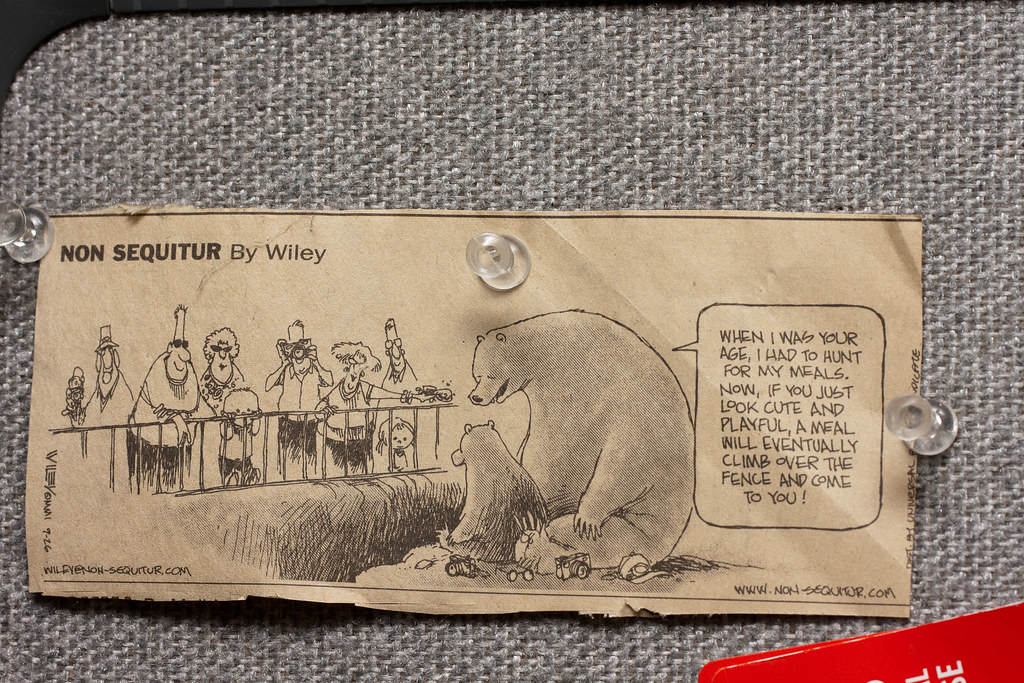
Wiley Miller is the creator of the comic strip, Non Sequitur. When apolitical, Miller’s strip can be enjoyable. I cut one of his strips from a daily edition of The Fayetteville Observer (Fayetteville, NC) back in the early aughts featuring “the eternal optimist.” In the one-panel comic, the grim reaper stands before a man in business attire. This eternal optimist calls to his wife in another room: “Well, honey, it doesn’t look like I have to worry about that long commute anymore.” I kept that strip until it yellowed with age and crumbled into oblivion. I did so for another reason than having a dark sense of humor. I hope I am an optimist on the order of the businessman finding something good to say even in the face of death.

Paul had such a character. He told the Philippians that he had everything to gain in death, as a Christian, and needed only remain for the sake of the brethren (Philippians 1.21-26). Nearing the end of his life, a confident Paul told Timothy, “I have fought the good fight, I have finished the course, I have kept the faith; in the future there is laid up for me the crown of righteousness, which the Lord, the righteous Judge, will award to me on that day; and not only to me, but also to all who have loved His appearing.” (2 Timothy 4.7-8 NASB). Why was Paul an eternal optimist? It was not because he was free of sin. Indeed, Paul considered himself the chief of sinners (1 Timothy 1.15). However, Paul was full of faith and understood God’s grace.

We cannot afford to live in fear, whether that fear is of death or whether we are “good enough.” We must do the will of God. John says, “But if we walk in the Light as He Himself is in the Light, we have fellowship with one another, and the blood of Jesus His Son cleanses us from all sin” (1 John 1.7 NASB). That faith may not always take us to places providing comfort. Shadrach, Meshach, and Abed-nego had their faith put to the test. Nebuchadnezzar had instructed everyone to bow to his golden image in worship. The young Hebrews refused because they remembered the Law of Moses and their covenant relationship with God. Nebuchadnezzar was angry with the young men and told them they would perish in a fiery furnace. They replied, “O Nebuchadnezzar, we do not need to give you an answer concerning this matter. If it be so, our God whom we serve is able to deliver us from the furnace of blazing fire; and He will deliver us out of your hand, O king. But even if He does not, let it be known to you, O king, that we are not going to serve your gods or worship the golden image that you have set up.” (Daniel 3.16b-18 NASB).

Did you notice why they did not fear? Can you see why they were optimistic? They understood their God was more powerful than a king and could deliver them. Yet, even if God did not deliver them, they still realized they had an obligation to serve Him regardless. These days the world seems scary. There is so much bad news on TV. But our God is more powerful. Thus, we can even say, “If I do catch COVID-19, God will deliver me. But even if He does not, I know Heaven will be my home.” Other scenarios would likewise suffice as an example. However, this is one of the things that seems to be on the minds of many today. Build your faith and become an eternal optimist as well. The world, in turn, will become a less daunting place.

6642913339_1ccb2896d6_b
A different Non Sequitur sampling

Hope In A Hopeless Situation

Monday’s Column: Neal at the Cross


IMG_1922

Neal Pollard

Nadezhda Khazina was born in Russia at the turn of the 20th Century. She met and married the famous poet, Osip Mandelstam, in Kiev, Ukraine, after the Russian Revolution and establishment of communism. The couple saw enough of that system of government to conclude it was destructive and harmful, so they railed against it as they had opportunity. Mandelstam had a wide audience through his poetry, and his 1934 epigram about Joseph Stalin was a work he called “his suicide note” and that has been described as his “sixteen line death sentence.” He was arrested, exiled, and died of exposure and neglect four years later. Nadezhda became even more active in crusading against the tactics used in the Soviet Union, then near the end of her life she wrote a two volume autobiography of her life and work: Hope Against Hope (1970) and Hope Abandoned (1974)(https://spartacus-educational.com/RUSkhazina.htm). What’s interesting is looking up the name “Nadezhda” or the more familiar form “Nadia”; the name means “hope.” In fact, Lois Fisher-Ruge wrote a book by that title in 1989.

Do you see the irony? Her name meant hope, but her life was full of hopes dashed and hopelessness in the midst of her struggle. But, she kept on working because of the hope she felt. 

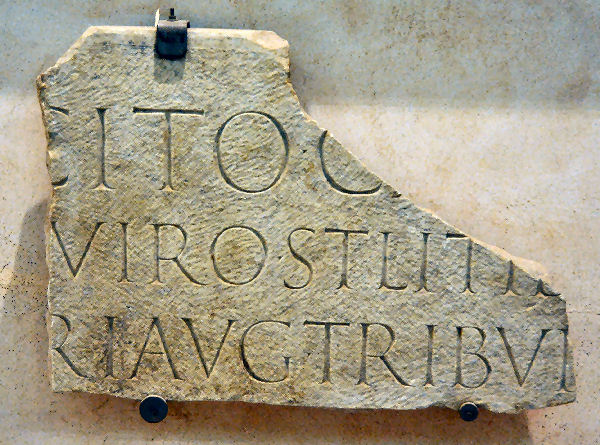
Peter writes 1 Peter to Christians who were going to see some seemingly hopeless situations in their lives. Some of them lived in Bithynia, a region whose governor, Pliny, famously bragged to the emperor Trajan at the turn of the second century about his pogrom of executing professed Christians for their faith. This was just about half a century after Peter writes this epistle warning of persecution. 

Despite Peter’s warning about the testing of their faith in unfavorable circumstances, he frequently mentions not just the ultimate reward we see for faithfully serving Christ but also “hope.” Five times in the first three chapters, Peter mentions this hope. It’s a living hope caused by Christ’s resurrection (1:3), a complete hope (1:13), a hope in God (1:21; 3:5), and a reasonable hope (3:15). The world around them was hopeless; they lived without hope. They wanted to drag the Christians into that hopeless state, but Peter urges them to hold onto hope. 

Our hopes are tested by times like these, by a world full of sin and iniquity. It’s easy to restrict our focus to this earth and this life. Peter’s words are for us, too! Do not be hopeless! You have Christ. Only those in Him have legitimate hope! 

DCIM/101MEDIA/DJI_0254.JPG
Drone photo from Nick Dubree of our drive in service at our new property. 

God’s Spiritual Stimulus Plan

Wednesday’s Column: Third’s Words

Gary III

Gary Pollard

Many Americans have recently been recipients of a stimulus check. Quite a few have taken that and made some big purchases or padded a savings account or used it for much-needed relief. Whether or not this stimulus was an economically sound decision, most have seen it as a well-timed gift that – at least in the short term – has lessened some of the difficulties of this pandemic. It was designed to bring relief, and for many it has. 

We often look at salvation as something we received at baptism (which we did, I Pt. 3.21, Acts 2.38, Col. 2.12-14). We are grateful to have grace and a mediator for when we fall short as Christians, and this gift is not something we should ever take for granted. 

When we think about how we got salvation, though, we don’t always think about the enormous amount of preparation that went into it. The ability to have our sin problem erased (Colossians describes it as a certificate of debt with legal demands in 2.14) is no small gift. 

I Peter 1.10-12 says, “As to this salvation, the prophets who prophesied of the grace that would come to you made careful searches and inquiries, seeking to know what person or time the Spirit of Christ was indicating as He predicted the sufferings of Christ and the glories to follow. It was revealed to them that they were not serving themselves, but you, in these things which now have been announced to you through those who preached the gospel to you by the Holy Spirit sent from Heaven – things into which angels long to look.” 

Briefly, I’d look to look at how this passage brings out the enormous value of salvation. Firstly, ancient prophets were told that this salvation was for future generations. They wrote about this while living under a far more difficult system of godly living, knowing that they would not be beneficiaries of that salvation. 

Secondly, the early church benefited from the sacrifices and hardships of those who brought the message of salvation to them. It was valuable enough that those men were willing to assume that risk to give it to others. 

Thirdly, angels – who, like the early prophets, are not beneficiaries of this salvation – were extremely interested in salvation. 

If two of the groups mentioned here were not even beneficiaries but strongly desired to know more about it or recorded it for all time, what does that tell us about salvation’s value? Peter set up its value this way to encourage the early church to live holy lives. 

Knowing just how valuable our salvation is should push us to live like we appreciate it! Not only does it have enormous value as a gift, the One who gave it wants us to have it. With that in mind, let’s cultivate greater appreciation and godliness because of the awesome gift of salvation. And if we know anyone who could use it, let’s pass the good news on to them, too. 

49776934207_46b3afb190_b

Some Exciting Gifts From God   

Tuesday’s Column: Dale Mail

DaleandJanelledirectorypic

Dale Pollard

There’s a magic moment when a child discovers that two different paint colors combined can create an entirely different color. The possibilities seem endless! Red and yellow paints are dumped on a blank canvas and mixed to create a bright orange. That same excitement, on a whole new level, can be experienced when we discover that God mixed with “human nature” creates something far better and more beautiful. God is often the ingredient missing from our potential success as well as those goals we sometimes attempt to make alone. Consider the impact He has on our common life struggles…

1. When God is mixed with our sin – He creates forgiveness (Romans 4:7)

2. When God is mixed with our finances – He creates a healthy view of money and how to use it (Proverbs 13:11)

3. When God is mixed with our relationships – He creates a stronger and more      fulfilling bond (Eph. 4:2-3)

4. When you mix God with uncertainty – He creates certainty (Romans 8:28)

5. When you include God in difficult decisions – you find direction (Prov. 3:5-6)

6. When you mix God with depression/anxiety – you discover some relief (1 Peter 5:6-7)

7. When you include God in your work – you will get the best results (1 Cor. 2:9)

8. Add God to any fear – you not only get courage, but a total removal of fear (1  John 4:18)

In short, the more yellow you add to red, the brighter the orange. The more God you add to your life, the brighter the future becomes. If you desire a vibrant life, then God is what needs to saturate your mind, heart, and decisions.

When God is in my mind my mind becomes more holy.

When God finds His way into my heart, my heart develops more purity.

No meaningful and lasting change can be accomplished by sheer willpower and determination— if those two things are not mixed with an all-powerful God.

dale and tyler

Understanding “Gospel” In The Colossians Epistle

Wednesday’s Column: Third’s Word

Gary III

Gary Pollard

If you’re remotely religious, you’re familiar with the word “gospel.” It has a wide semantic range, describing everything from a genre of music (and a few sub-genres) to the trustworthiness of a statement (“gospel truth”) to an all-encompassing description of religious doctrine. 

The word literally means, “God’s good news to humans,” from εὐαγγέλιον. It is mostly about the life and times of Jesus and the spiritual rewards we have when we accept that hope and follow God’s plan of salvation. It is so common and familiar to many of us that we sometimes overlook its importance. 

We often hear about “spiritual blessings,” but the definitions we are given of them are sometimes (if not often) frustratingly ambiguous. Colossians 1:3-12 gives us a beautiful description of those blessings. One of them is the gospel! Here’s why: 

1. The Gospel is Hope

A phenomenon so common to my generation (it’s immortalized in more than a few memes) is the idea of existential crisis. We ask questions like, “What am I doing? Why am I here? What’s my purpose? Why am I working this dead-end job?” We don’t like to think of where we’ll be in 20 years because that’s downright depressing. Will it be more of the same? The crushing weight of a meaningless existence is at the forefront of so many minds. 

The good news we have is described in Colossians 1:5 as, “…the hope reserved for you in heaven…” That’s purpose! What kind of hope? What are we looking for? We have been given the means to live a life with purpose. It won’t be easy, but it guarantees a perfect existence after we’re gone. This hope for heaven is central to the gospel. 

2. The Gospel Makes Us Better People

Once the Colossian Christians changed their lives, were immersed, and changed their lifestyles, they had a great love for each other and all of the other Christians (1:4). We can be friendly to others (even complete strangers), but Christianity promotes unconditional love for others. The world tries to achieve this artificially, but Christianity accomplishes this through unity and self-sacrifice based on guidance from scripture. 

If we are as dedicated as we should be, it also gives us endurance and patience when we deal with difficulty (1:11, 12). Those who follow God’s will and are dedicated to serving Him are guaranteed a perfect and meaningful existence after this life (Colossians 1:5, 12). 

We are confronted with our own mortality more often than we’d like (especially today). This has a whole lot of people questioning their purpose and their destiny. Christianity offers the greatest gift ever given: purpose and destiny. God has told us how to have both of those things; we can live a meaningful life here, no matter how difficult, and we can have a perfect life there. If you are looking for meaning and purpose in this life, look no further than the gospel – it is how we can be pure here, living a purposeful life with perfect hope for the next. 

vault-1144249_960_720

 Is Our Savior Sleeping? 

Tuesday’s Column: Dale Mail

Daleheadshot

Dale Pollard

Have you ever been afraid of your imagination? At times that fear can be so convincing that you truly believe that the worst case scenario is somehow inevitable. Try and make that opening question relevant to your life. Think about a specific event or experience where you were afraid of something that never came to fruition. The grip of anxiety can be debilitating as you wait for your medical test results to come in. You agonize over the poor quality of life you might have if there is ever an unexpected economic collapse. Your hairline might rapidly recede as you stress over the outcome of the war our nation is still involved in, and do I even need to mention the new global pandemic? You’re robbed of sleep as you imagine the potential horrible outcomes that may never happen. These things may never happen because the Lord could come. They may never happen because whatever you’re afraid of— it’s simply worse in your own mind. It may never happen because God has proven Himself to be one who calms the storm instead of letting you perish.

I believe we would all benefit from recalling those occasions in our past where fear proved unnecessary and we worked ourselves up for nothing! If the fear in your life has a big appetite and it’s devouring all your time and peace, maybe it’s time to feed something else. Sitting Bull once said, “Inside of me there are two dogs. One is mean and evil and the other is good. They fight each other all the time. When asked which one wins I answer, ‘the one I feed the most.’” How vividly this illustrates a daily struggle for so many. Fear and faith will scrap with one another until we decide which one will win. Do you think our faith would emerge victorious every day if we could physically witness God’s power, but in a miraculous way? If my own eyes could witness Jesus bring the dead back from the grave, cast out a demon, or walk on stormy waters, then I would never worry again. Or would I? Seeing Jesus perform miracles never made anyone perfect. His disciples were far from perfect and they stood feet from the Savior while He did things only God could do.

On one occasion, which was hinted at earlier, Jesus calms the storm after being abruptly awakened by His terrified followers (Mark 4). There are some details about this account that will help us feed our faith when fear threatens to win the day.

First, our cries to God, even in the desperate times, are heard. The disciples exclaim, “Don’t you care that we’re about to die?” Following this fearful plea, Jesus will demonstrate a fraction of His awesome power. After all, what is calming a stormy sea to the One who spoke every drop of water into existence?

Second, excessive fear of anything in this world is a foolish mistake. God is bigger and greater than our worries.

Third, God is not asleep. It may seem like He is when we don’t feel optimistic about the future, but it’s when we recognize that He’s the only answer to our peace that He will calm our storm. 

IMG_4740

THE POWER OF HOPE

Monday’s Column: Neal at the Cross

pollard

Neal Pollard

Have you been struggling with some feelings of hopelessness lately? Whenever we have a hard time seeing the end in sight or we face uncertainty or are exposed to fears and anxieties, it can undermine our determination to have hope. Yet, over a hundred times in Scripture, God points us to the hope His children have through Him and His promises. We have such a resource because of the rock-solid expectation He provides. Whatever may happen to us this week, this month, or this year, the Christian can look forward with confidence at the fulfillment of what God through Christ promises us. And Scripture says it so many ways:

–Hope does not disappoint (Romans 5:5)
–Hope helps us persevere with eagerness (Romans 8:24-25)
–Hope causes rejoicing (Romans 12:12)
–Hope fills you with all joy and peace in believing (Romans 15:13)
–Hope is an abiding quality, alongside such elite qualities as faith and love (1 Corinthians 13:13)
–Hope enables deliverance (2 Corinthians 1:10)
–There is one, unconquerable hope (Ephesians 1:18; 4:4)
–Hope is tied to earnest expectation and boldness (2 Corinthians 3:12; Philippians 1:20)
–Hope is connected to steadfastness (Colossians 1:23; 1 Thessalonians 1:3)
–Hope offsets grief (1 Thessalonians 4:13)
–Hope tunes our hearts to look for Jesus’ appearing (1 Timothy 4:10; Titus 2:13)
–Hope encourages the pursuit of our eternal life (Titus 1:2; 3:7)
–Hope anchors the soul (Hebrews 6:19)
–Hope helps us draw near to God (Hebrews 7:19)
–Hope is tied to endurance (Hebrews 10:23)
–Hope is instrumental to faith (Hebrews 11:1)
–Hope prepares for eternity (Colossians 1:5; 1 Peter 1:3,13)
–Hope helps give a defense (1 Peter 3:15)
–Hope purifies (1 John 3:3)

Remember this:

“How blessed is he whose help is the God of Jacob, Whose hope is in the Lord his God” (Psalm 146:5).
“The hope of the righteous is gladness…” (Proverbs 10:28).
“The Lord is my portion,” says my soul, “Therefore I have hope in Him” (Lamentations 3:24).
“Christ Jesus…is our hope” (1 Timothy 1:1). 

You will face nothing today or ever that is too destructive, terrifying, or powerful to offset this hope! That doesn’t mean be rash, reckless, or rebellious. It does mean be faith-filled, optimistic, and courageous! Are your faith and hope in God (1 Peter 1:21)?  

91282223_10221605336700886_5506081862256164864_n-1

 Homesick For Heaven 

Tuesday’s Column: Dale Mail

Daleheadshot

Dale Pollard

There is so much debate out there as to what Heaven will actually be like. Some make the argument that we just can’t know for sure. We know that there will be no tears in Heaven, so since that is the case there will definitely be some meatloaf there. Because in a place where there is no meatloaf present, I would cry. Now with that out of the way, let’s look at three quick promises about Heaven.

First there is the promise of “relationship.” In Revelation 21:3 it says, “He will dwell among us…” Not just any relationship, an actual relationship with Jesus Christ.

The second promise is that of “Relief.” In the very next verse it says, “God shall wipe away every tear from their eyes; there shall be no more death, nor sorrow, nor crying. There shall be no more pain, for the former things have passed away.” How many of us can’t wait for that day?

Now the third promise is one that is pulled from a verse that many people do not like to read. In Revelation 21:8 we see that there is a promise of “refuge.” You see, Heaven is going to be so great because of who will not be there. After we get a glimpse of what is promised to those who love Him (James 1:12), we see what is promised to those that don’t. Yet even here we see a blessing. Heaven is going to be place that is absent of, “…the cowardly, unbelieving, abominable, murderers, sexually immoral, sorcerers, idolaters, and all liars…” Heaven is going to be a place filled with family. The faithful Church family.

I’m going to Heaven! It’s a choice. It’s a choice to live right and follow Christ no matter what. You have the ability to say it confidently and you should never have to wonder if you’re going to Heaven. It’s a promise! Take hold of that promise, because it’s the only thing that matters.

46453077_10155947353545922_2964157557481930752_o


“AND HE WILL BE THE STABILITY OF YOUR TIMES”

Monday’s Column: Neal At The Cross

pollard

Neal Pollard

In a world facing ever-changing circumstances, we need to be reminded of some truths about God. A great text that can help us do this is found in the writings of the Messianic prophet, Isaiah. He tells us some exciting facts about God in Isaiah 33:5-6.  In brief, Isaiah reminds us of God’s transcendence (“exalted…on high”), His trustworthiness (“has filled Zion with justice and righteousness”), and His treasure (“a wealth of salvation, wisdom and knowledge; The fear of the Lord is his treasure”).  In the midst of upholding God’s perfect character, the prophet makes this reassuring statement: “And He will be the stability of your times.”

In part, here is what that means to us today

  • There is no minimum distance we have to keep from Him under any circumstance (Jas. 4:8).
  • There is no restriction or limit on our access to Him and His blessings, on prayer or His Word (Phil. 4:19). 
  • There is no chance that you will look for Him and He will not be there (Psa. 50:15).
  • There is no possibility that you will learn that what was true of Him yesterday is not true of Him today (or tomorrow)(Heb. 13:8)
  • There is no cancellation policy at the throne of grace for the child of God (Heb. 4:16).
  • There is no threat or danger that can keep you from the love of God (Rom. 8:38-39).
  • There is no earthly thing to nullify the truth that “the Lord is my helper, I will not be afraid” (Heb. 13:6). 
  • The more we expose ourselves to Him, the healthier we will be.
  • There is zero chance that you will go to Him for healing and have it fail (Jer. 8:22; Luke 5:31).

Scripture calls Him the Rock (Deut. 32:4), the shield (2 Sam. 22:31), my protection (Isa. 27:5), my shield, stronghold, and protection (2 Sam. 22:3), and a strong tower (Prov. 18:10). As Nebuchadnezzar understood, “all His works are true and His ways just” (Dan. 4:37). 

Take heart. Take on the day. Take comfort and refuge. “And He will be the stability of your times.”

pollard weddingDJ 410a
Random great photo: courtesy Baker Street Photography