“Blood And Treasure”

Monday’s Column: Neal At The Cross

Neal Pollard

Bob Drury and Tom Clavin wrote the instant New York Times bestseller book, Blood And Treasure: Daniel Boone and the Fight for America’s First Frontier. The book is gripping and informative, and the title speaks to the price paid by not only Boone but so many others who waded into dangerous conflict with Native American tribes which cost so many lives on both sides and depleted resources from these conflicts but also from the French, British, and even newly-formed American governments. Boone, who narrowly escaped death on many occasions, outlived six of his ten children. James and Israel died violent deaths in conflicts with Native Americans. He lost a brother, Ned, to the same fate. The authors do a masterful job of speaking to the costs paid by many in search of a “better life.”

Daniel Boone had a sister named Hannah Pennington. Her first husband, John Stewart, was killed by Indians. They had four daughters together. She then married Richard Pennington and had four more children, three sons and a daughter. They ultimately migrated to the area right outside the small community of Tompkinsville, Kentucky. The year was 1798, and it was in the area known as “Mill Creek” that the local Baptist preacher named John Mulkey would begin to have misgivings about John Calvin’s teachings on subjects like unconditional election. Ultimately, it would lead him in the fall of 1809 to stand before his congregation and ask all that agreed with him that the Bible alone should be their guide follow him out the west door of what is still to this day called the Old Mulkey Meetinghouse. 150 of the 200 present did so, and Hannah Pennington was in that number. It is estimated that both John Mulkey and his son, also named John, would each baptize about 10,000 people and establish congregations all across the “western reserve” and beyond. 

What price she paid for breaking with the religion of friends and family we are not really told. She died in the home of her son, Daniel Boone Pennington, in 1828 at the age of 82. But she lived at a time when many were making the painful decision of leaving behind the religious tradition of ancestors in favor of following simple New Testament Christianity, participating in an effort that is today often called “The Restoration Movement.” It is an effort we should continue to attempt, to have no book but the Bible and no creed but the Christ. It may be unpopular in a culture that is moving further from the Bible and opposing a great many biblical principles.

What price are we willing to pay? The writer of Hebrews commends the Christians in his audience for their sacrifices as new Christians, who “endured a great conflict of sufferings, partly by being made a public spectacle through reproaches and tribulations, and partly by becoming sharers with those who were so treated” (10:32-33). He told them, “…You showed sympathy to the prisoners and accepted joyfully the seizure of your property, knowing that you have for yourselves a better possession and a lasting one” (34). But, he expressed this concern about them now, some years later, telling them that “you have not yet resisted to the point of shedding blood in your striving against sin; and you have forgotten the exhortation which is addressed to you as sons” (12:4-5). 

We are searching for something better than a new land on some new frontier on this earth. We seek “a better possession and a lasting one.” What will that cost us? It is hard to say. The writer of Hebrews says it might cost “blood and treasure.” Whatever it costs us, we must be willing to pay in order to “run with endurance the race that is set before us” (12:1). 

Read more: “Blood And Treasure”

Sources Consulted:

Brochure

Anyplace America

John Mulkey

Mulkey Meetinghouse

Light Of The World (Season 2, Episode 1): Hiram Kemp

Debut Of SEASON TWO (Cutting Out Complaining by Hiram Kemp)

Latest “Light Of The World” Episode

“What The Grace Of God Teaches”

Lessons Of The Past (2)

The Bosque Redondo Blunder

MONDAY’S COLUMN: NEAL AT THE CROSS

Neal Pollard

In the wake of James Polk’s vision for “manifest destiny,” the United States purchased and/or fought for the territory that gave us the current boundaries of our nation. To maintain and protect this newfound territory, one of the military strategies included the building of forts throughout the west to protect settlers from especially the Native American tribes who were reacting to the invasion of their ancestral home. Kit Carson, former fur trapper, explorer, and extraordinary tracker, was a civilian ultimately urged into serving out west in a military stretched thin back east by the Civil War. He was appointed by General James Carleton to round up 9000 Navajo and 500 Mescalero Apache and place them in a reservation Carleton dreamed up. From the time he visited there, he was enamored with the terrain, trees, and beauty of the place. So the nearly 10,000 Native Americans were detained and displaced and forced to settle at Bosque Redondo. 

While it was a disaster on paper, it was even worse in real life. Neither the Navajo nor Apache were agrarian people, but both were forced to farm. They were enemies of one another, but they were forced to live together at Bosque Redondo. The crops were destroyed by cut worms and hail storms, and the army rations inadequate. The water was alkaline, making them sick. Smallpox decimated their numbers. Winters were bitterly cold and the inhabitants were ill-prepared and ill-equipped.  They were forced laborers, slaves ironically settled at this reservation by the U.S. Government and President Lincoln the very year of the Emancipation Proclamation. It was as much a failure for the government. It was an exorbitantly expensive venture, costly to start and even more to maintain. Beyond the inhumanity and immorality of the venture, it was inept and inane. Carlton envisioned paradise, but delivered purgatory (information a summary of content in Hampton Side’s book, Blood And Thunder).

Bosque Redondo is but one example of the disaster which follow’s man’s attempt to create what he vainly sees as either utopian or idyllic. Contrast that with some of God’s plans. First, He put man and woman in a perfect paradise wherein He supplied their every need (Gen. 2:8-14). Later, after they sinned and were expelled from there, God promised a land which flowed with milk and honey. It was a good and spacious land (Exo. 3:8). While sin tainted their existence there and ultimately cost them ownership, the provision was not the problem. 

Along the way, God promised the creation of a domain unlike any other. It would be for all nations (Gen. 22:18; Isa. 2:2). It would never be destroyed, nor left to other peoples (Dan. 2:44). It was the result of the eternal planning and purpose of God (Eph. 3:9-11). God left a perfect blueprint for its creation and for the citizens’ conduct (Isa. 2:3; Mic. 4:2). We know it as the church (Eph. 1:22-23; 4:4). It is described in that epistle: “So then you are no longer strangers and aliens, but you are fellow citizens with the saints, and are of God’s household, having been built on the foundation of the apostles and prophets, Christ Jesus Himself being the corner stone, in whom the whole building, being fitted together, is growing into a holy temple in the Lord, in whom you also are being built together into a dwelling of God in the Spirit” (2:19-22). 

In this divine institution, God has brought together people diverse and unlike each other and united them through His Son. He has taken spiritual slaves and gave them freedom. He has taken those poor and emaciated by sin and made them rich (Eph. 2:7; Phil. 4:19). He has given them boundless blessings by His Son (Eph. 1:3). His church is right in design, discharge, and destiny. Far from a blunder, His body is a bountiful blessing! Only God could take a people besieged by sin and dysfunction and give us something infinitely better. Just imagine what our eternal home is going to be (Rev. 21-22)! 

Why I Love The Church

Thursday’s Column: Carlnormous Comments

carl pic

Carl Pollard

I love the Church because…
  1. God loved me enough to establish it.
  2. Jesus loves the Church.
  3. The Church loves Jesus.
  4. The Church is a family.
  5. The Church is filled with true friendships.
  6. The Church is a source of encouragement.
  7. I’ve seen firsthand the comfort that the Church provides.
  8. The Church is considerate of others.
  9. The Church is a place for the broken.
  10. The Church is a place for the weak.
  11. In the Church I belong to God.
  12. The Church has perfected potlucks.
  13. Jesus is the Head of the Church.
  14. The Church is the unified body of Christ.
  15. The Church helps me to be a better Christian.
  16. The Church helps to show me my purpose in life.
  17. I’ve met people that have changed my life.
  18. The Church helps me love God more.
  19. The Church is motivated.
  20. The Church reminds me that this world is not my home.
  21. The Church shows me the power of song.
  22. The Church shows me the power of the Gospel.
  23. The Church creates a bond that is impossible to find anywhere else.
  24. The Church shows me how amazing grace really is.
  25. The Church is a place of spiritual support.
  26. The Church is a place of physical comfort.
  27. The Church is a place of emotional healing.
  28. I leave every service feeling renewed.
  29. The Church helps me interact better with people.
  30. The Church at times helps me practice patience.
  31. The Church is a reminder that we are equal in Christ.
  32. The Church is a place filled with servants.
  33. The Church helps bring out the best in me.
  34. I want to go to Heaven.
  35. The Church helps me glorify God.
  36. The Church is the family I worship God with.
  37. The Church is exciting!
  38. The Church is where I belong.
  39. I can’t imagine a life without the Church.
  40. The Church puts my focus where it belongs; on God, and other people.
  41. The Church is selfless.
  42. The Church is life changing.
  43. God wants me to love the Church.
  44. The Church makes you feel needed.
  45. The Church makes me more considerate of others.
  46. I want to be a part of God’s plan.
  47. The Church helps me be closer to my physical family.
  48. The Church gives me memories that will last a lifetime.
  49. The Church is filled with people that I will never have to say goodbye to.
  50. The Church of Christ helps me keep heaven in view.
1 Corinthians 12:12-13
 
 
Photo credit: Grant Wilson

I Just Can’t Share Their Bitterness

Neal Pollard

I write this as someone who has spent his entire life in a preacher’s home. I grew up a preacher’s kid, whose dad was fired twice (once for baptizing a black woman and later for standing against the “New Hermeneutic”). I have been a full-time preacher for nearly thirty years myself. Now, my sons are devoting their lives full-time to preaching. To an extent, our family’s lives have revolved around preaching. Have there been hurts, disappointments, and occasions of mistreatment? Certainly. Of course, plumbers, lawyers, accountants, engineers, and builders will tell you the same. But, we work with Christians, who should know better? That’s true, but they are still humans constantly struggling with the battle of self. 

My dad has always spoken of the value and blessing of the church, even when dealing with personal hurts. He loves the Lord and His church. As we grew up in the home, he taught us to have a high esteem for the precious bride of Christ. In college, I had one teacher who especially counseled us to look at the church–and the people who make it up–with hopeful, optimistic eyes. We generally find what we are looking for. If we are looking for injustices, offenses, and disappointments, we’ll see an endless supply of it whether we’re looking at elders, deacons, long-time members, or new or weak Christians. If we can view the foibles of others with patience, compassion, and empathy, we are likely to help each other grow and transform. We will definitely steer away from an “us versus them” mentality.

If you are in full-time ministry for any length of time, you will have some stories to tell. Some will be full of joy and excitement. Share these generously. They will encourage and edify. Some will be unbelievable, but not in a good way. Use wisdom and discretion about how, who and if you tell those. What are we hoping to accomplish by such sharing?

Preaching is not lucrative business. It’s not paradise on earth. It’s not easy and not everyone can (or should) do it. But, it’s the greatest work in the world! It constantly impacts eternity in seen and unseen ways, in a way that perhaps nothing else can match. There will be some lumps and bumps. Ask Paul (2 Cor. 11:23ff). But, listen to Paul, too. In prison, he wrote of rejoicing about preaching despite its various pitfalls (Phil. 1:14-24). Some seem bitter about how they have been treated in preaching, and I hope they can work through it. But, I love this life so much, and I just can’t share their bitterness!

IMG_6377
Our staff introducing themselves to the 2019 Future Preachers Training Campers

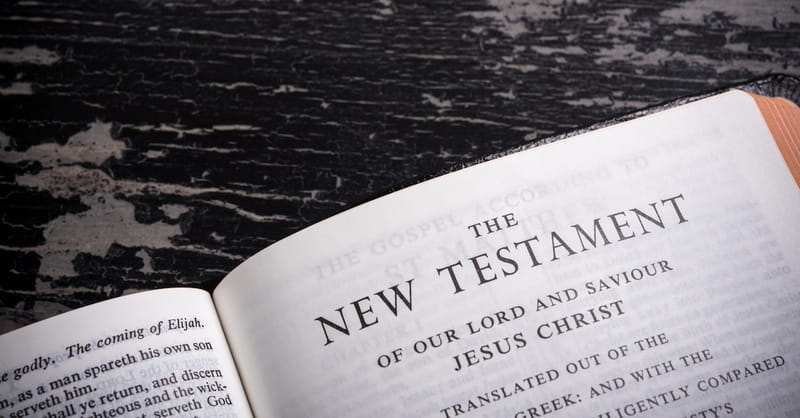
New Testament Christianity

Neal Pollard

  • The New Testament claims to be the source of authority for all we do of eternal importance, no matter when or where we live (Col. 3:17; 2 Pet. 1:3,20-21; 2 Tim. 3:16-17).
  • The New Testament will not share authority with any other book or “revelation” (Gal. 1:6-9; Jude 3).
  • The New Testament reveals how a person becomes a Christian (Acts 2:37-47; Eph. 4:4-6).
  • The New Testament teaches us that the Lord adds Christians to His church (Acts 2:47).
  • The New Testament shows us how that church is organized and led (Acts 20:28; 1 Tim. 3:1-12; Phil. 1:1; 1 Pet. 5:1-4).
  • The New Testament gives us the day the Christians met to worship (Acts 20:7; 1 Cor. 16:1-2).
  • The New Testament clarifies for us the various roles and responsibilities God has given to each gender of Christians in the work and worship of His church (1 Tim. 2:8-15).
  • The New Testament teaches the Christian how God wants to be worshipped (John 4:24).
  • The New Testament outlines the Christian’s purpose and work (Eph. 4:11-16).
  • The New Testament is dedicated to showing how one, as a faithful Christian, has eternal life and the hope of heaven (Ti. 1:2; Rev. 2:10; ch. 21-22).
  • The New Testament helps one understand how God wants marriage and family to function, to build Christian homes (Mat. 19:1-12; Eph. 5:22-6:4; 1 Pet. 3:1-7).
  • The New Testament urges Christian growth and thoroughly teaches how that is accomplished (2 Pet. 3:18; Ti. 2:11-14; John 15:1ff; etc.).
  • The New Testament constantly speaks of how the Christian needs to and benefits from developing an intimate relationship with the Godhead (1 Th. 5:17; 2 Tim. 2:15; John 15:14; Mat. 22:36-40).
  • The New Testament teaches that Christians prove to others their discipleship to Christ by loving one another (John 13:34-35).
  • The New Testament reveals that Christians are tasked with duplicating themselves by teaching the gospel to those outside of Christ (Mat. 28:18-20; Acts 8:4; Col. 1:23).
  • The New Testament asserts itself as the unfailing, universal guide regarding anything that will ultimately matter (2 Pet. 1:3; John 14:26; 16:13; etc.).

If what we are after is divine guidance for who a Christian is, what he or she does, and how God wants one to live, where else would we turn but to the New Testament? A God who engineered us for eternity and tells us we have but two eternal dwelling places would be cruel and unloving if He did not give us clear, thorough answers to any matter that is important to Him. How loving and faithful for God to give us such an unambiguous guide.

58366-nt-rely.800w.tn_

“It Shall Stand Forever”

Neal Pollard

Kathy and I visited the Notre Dame Cathedral in Paris, France, in February of 2006. It is an ornate, historic building. It dates to the 1100s, surviving the threats of many wars including World War I and World War II. But, it has been dilapidating for some time. Earlier today, a fire inside the spire caused it and one of its towers to collapse. Now, officials are saying that the whole frame is burning and will not survive. Whether or not they rebuild this Catholic Church building, this 900 year edifice will be gone.

There are buildings that have been around millennia before New Testament Days on most of the continents. If they continue until the Second Coming of Christ, they will cease to exist that day (2 Pet. 3:10). King Nebuchadnezzar had a dream over 500 years before Christ, and God helped Daniel understand its meaning (Dan. 2:28). The colossal figure he saw in that dream was a vision about the coming Kingdom of Christ. Daniel says, “In the days of those kings the God of heaven will set up a kingdom which will never be destroyed, and that kingdom will not be left for another people; it will crush and put an end to all these kingdoms, but it will itself endure forever” (Dan. 2:44). 

A careful study of unfolding history reveals this particular kingdom to be the church of our Lord, a Kingdom Jesus said would be established during the lifetime of some of His disciples (Mat. 16:28). It would come with power (Mark 9:1), a promise Jesus reiterates in Acts 1:8-11. That power came by way of the Holy Spirit’s coming upon the apostles on the Day of Pentecost in Acts 2. Through this means, the Lord’s church was established in Jerusalem that day (Acts 2:37-47). The Roman Empire, which ruled the earth that day, eventually collapsed. No nation or empire can rival the spiritual Kingdom of Christ. His church will stand forever (Heb. 12:28). Nothing can overtake or overpower it (Mat. 16:18). 

Assaults against the church have been ongoing for twenty centuries. At times, it has been invisible to recorded history, but it continues to stand. Her members have been assaulted many times throughout the centuries. Property has been destroyed. Possessions have been taken. Lives have been lost. But, still she stands! This Kingdom shall stand forever! A Divine promise encircles it. This confidence is fire proof! 

notre_dame_a_paris_01
Notre Dame Cathedral before today’s fire

Encouraging To Read The Mind Of Our Teens

Neal Pollard

In a recent question and answer session, it became apparent what’s really on the hearts and minds of our teens. You could see the depth and conviction of the questions and concerns filling the hearts of our teens. They want to know more about how to share their faith, what to say and how to say it. They want to know how to be a bigger influence on the world around them. They want to know what the Bible says about a wide variety of matters. 

It’s hard for our teenagers to live in this world. They are facing challenges we never even imagined could be a reality. The world’s worldview is drifting and dangerous, yet these courageous young people have a David-like heart of faith and are showing dauntless daring to do what’s right. I have no idea what they’ll ask or how they’ll drive our conversation for the next couple of days, but I look forward to it based on what I’ve already seen. They are from all over the country, facing problems and pressures that in some cases are based on their region of the country and, thanks to mediums like social media, some things in common with every other teen in the room with them. As BJ remarked, the more things change the more they stay the same. In broad principle, there is nothing new under the sun. But, I’m encouraged to see how God’s people of this generation are embracing the challenge with a desire to know what God has to say about it. We’d appreciate your prayers as we seek to encourage so many teens who have already encouraged us greatly!

IMG_3874
A still from a singing in the Atrium at PTP from a few nights ago.


VISITORS—HANDLE WITH CARE!

Neal Pollard

I’m not sure where the phrase, “handle with care,” originated. It’s usually reserved for advice regarding that which is fragile or even volatile. It really is applicable to those who visit our assemblies because of their value and importance. They came through the doors of our church building intentionally and with a purpose. Initially, we cannot know why or how sincere their purpose. That process of discovery could not be more important. Consider some reasons why we should handle every visitor with care:

  • Each has an eternal soul (cf. Mat. 25:46). 
  • God could not love that visitor any more than He does (John 3:16; 1 Tim. 2:6).
  • God loves that visitor as much as He loves you and me (Acts 10:34-35). 
  • That visitor is likely seeking spiritual guidance (cf. Mat. 7:7).
  • Each visitor is subjected to a first impression, being left by you and me.
  • That visitor is going to make judgments about the church, the Bible and Christ based on what he or she sees (or fails to see) from you and me.
  • The smallest gesture of kindness toward such a one could lead to the salvation of a soul.
  • We cannot know what anyone else is doing to make their first visit a good one.
  • Each one is being exposed to the Bible and to New Testament worship, and follow up can lead to further interest.
  • That soul is connected to many others, who might subsequently be reached (2 Tim. 2:2). 
  • You and I are official ambassadors for Christ (2 Cor. 5:20).
  • The Golden Rule should prompt our warmth, helpfulness, and sensitivity (Luke 6:31).
  • We are each part of a team, trying to connect each of them with what only Christ can offer them (1 Cor. 12:18; John 14:6).
  • There is no guarantee that there will be a next time (Prov. 27:1).
  • Statistics tell us that most visitors find the churches they visit to be unfriendly toward “outsiders” (see, for example: Thom Rainer).
  • Loving others is commanded, and visitors are included in “others” (Rom. 13:9; Gal. 5:14; Jas. 2:8; etc.).
  • Visitors constitute perhaps the easiest inroad to developing interest in a Bible study, as such have reached out to us by attending.
  • Our excuses (“I’m shy,” “That’s not my job,” “I’m not good at it,” “I’m busy”) ring hollow when carefully examined. 
  • We love the church and believe in its relevance and importance.
  • Each contact is a valuable way you and I can contribute service for our Servant-Savior (cf. John 13:12ff; Mat. 20:28).

The list is far from exhaustive. I am convinced that none of us neglects a visitor out of contempt or even indifference. Yet, it is good for you and I to encourage each other, to “stimulate one another to love and good deeds” especially as it pertains to assembly-related matters (Heb. 10:24-25). Wouldn’t it be exciting to be the friendliest church around, especially if our message and practice is faithful to God’s Word? What a powerful combination! Let’s help each other earn such a reputation, for reasons such as the above. 

fellowship201

“GM”

Neal Pollard

I make a notation “GM” along with the date and place on the paper copy of my sermons to indicate that I preached that sermon in a gospel meeting. It is one of my homemade preacher shorthand notations. Growing up a “PK” (“preacher’s kid,” of course), I’ve got a lot of GM memories. I would not trade anything for them, especially the indelible imprint they made on me in shaping the adult I have become. Let me encourage you to bring your children and yourselves to our gospel meetings for what they will mean to your faith and for the part of you they will forever become. To me, the GM of gospel meeting stands for a few other things, too.

Great Memories. When James Watkins held a meeting for us in 1984 in Franklin, Ga., I led singing that Sunday night. I was 14, and this participation was a big deal to me. I led, “Hallelujah, Praise Jehovah” and in verse three mistakenly bellowed out, “All ye fruitless trees and cedars.” Once when the air conditioner was out, we opened the side doors on either side of the pulpit for relief in that muggy July, west Georgia heat. This was an open invitation for the horse fly that landed on the calf of my leg during the chorus of “the song before our opening prayer,” which bit mercilessly until I could swat it during said prayer (which was by no means a quiet slap).

I remember attending a meeting in Carrollton, Georgia, and being jolted by Bobby Duncan’s dramatic cries of “the boy is home!” in his powerful telling of the story of the prodigal son. I remember, though, I was no more than 5 or 6, the smell of hay and watching members set up a portable baptistery for a tent meeting my dad preached in Aragon, Ga. I remember the family car rides when we rode to others’ meetings. I remember the baptisms, restorations, preaching, and fellowship so much a part of these special times.

Giant Men. Through this venue I first became acquainted with men who became my heroes: Frank Chesser, Perry Cotham, Howard Swann, James Watkins, Bobby Duncan, Truman Cobb, Franklin Camp, Winfred Clark, Wendell Winkler, Glen Posey, Ken Thomas, V.P. Black and others. I remember playing basketball with Ken Thomas, who had to play in his socks and still took us all to school (he also demolished me in a game of “punt, pass, and kick”). I recall having me heart stirred and being convicted of sin by the penetrating preaching of Frank Chesser.

I vividly recall being amazed by Perry Cotham, who seemed to me even three decades ago to be a very old preacher (I saw him preach in California when he was in his late 90s). I will never forget being touched by Franklin Camp’s tender heart as he told the story of Christ’s crucifixion. I was wowed by J.J. Turner’s ability to turn a phrase. There was the time when I walked by James Watkins’ hotel room and saw him diligently studying his Bible in the middle of the afternoon. These men were spiritual giants to me.

Gospel Message. Even as a child, I learned so much from the sermons I heard. I saw things in a new way because every preacher has his own unique style, history of study, and method of delivery. I was challenged by the Bible-centered approach these men faithfully took. I got my first glimpse at sermon organization, taking crude notes and main points from sermonic masterpieces. Meeting after meeting, year after year turned my heart and mind more and more to the Bible. Even then, I saw, at least to a juvenile degree, the effectiveness of this method of evangelism and edification.

Give your children, your mate, your non-Christian friends and neighbors, and yourself the pleasure of experiencing these unparalleled joys. The Godhead and the heavenly host pay particular interest to each service of every gospel meeting. Let us join them there and grow from hearing anew the wonderful story of love. It will stay with you for a lifetime.

dad-gallery-042407

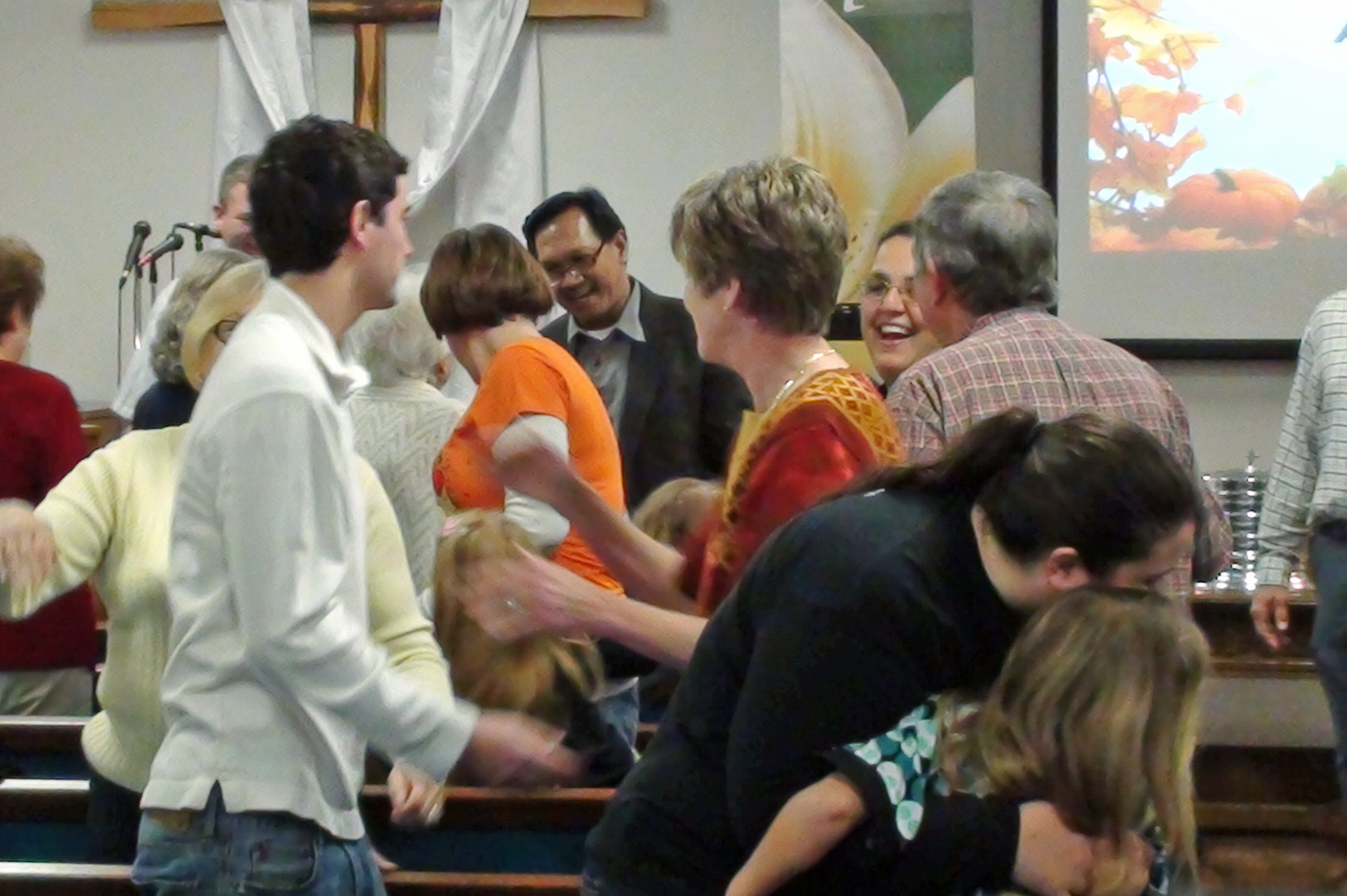
That’s The Church For You!

Neal Pollard

  • Where you can build relationships with some of finest, most enjoyable people on earth.
  • Where the world gets smaller and mutual connections are usually a conversation away.
  • Where God’s Word is honored and imperfect people try to follow it.
  • Where Christ is at the heart of every idea, program, and plan, but also every class period and worship assembly.
  • Where you connect with people throughout the week, from thoughts and prayers to cards, calls, messages, and visits.
  • Where hope is always vibrant whatever in the world is happening, where joy is always possible however gloomy the forecast.
  • Where there’s always room for more members to be added to the family.
  • Where young and old, rich and poor, educated and uneducated blend together in a harmony that cannot be found anywhere else on earth.
  • Where we literally get a foretaste of glory divine.
  • Where you feel a part of something so truly profound in purpose and exciting in destiny that sometimes you have to pinch yourself to make sure it’s real. And it is.
  • Where you have clarity and grounding in the midst of chaos and confusion.
  • Where you have heritage and history, but just as much hope and hankering.
  • Where truth is honored, and the way, though difficult, is clear.

A couple of closing caveats. No, I do not think the church, from the human side, is perfect. We have our foibles, fragility, and faults, but our foundation is flawless. No, the church is not a place, it is a people. “Where” indicates that the church, as a body, is a place where I can fit, belong, and function. No, this is not a Pollyanna-like, rose-colored glasses view of the church that glosses over or is ignorant of times when God’s people do not behave like they ought. But, when too often the diatribe is “what’s wrong with the church” and the mantra is, with negative and sarcastic spin, “that’s the church for you,” maybe it’s time we take a moment to count some of the blessings and perks of membership in the institution bought with the life and blood of Jesus (Acts 20:28). Obviously, there are other items to be added to the list. Feel free to do so! Generously.

IMG_2894
At the end of morning worship at the Katy, TX, church of Christ, 4/10/16.

Googling Church

Neal Pollard

Despite Seth Stephens-Davidowitz’s fall, 2015, pessimistic forecast in the “Sunday Review” column of the New York Times, where he perhaps wistfully reports Google searches for God down 15% in the first half of this decade and presents data showing Kim Kardashian as at least 10 times more popular than Jesus (if such is gauged by Google searches)(“Googling For God,” 9/15/15), a front-page “USA Snapshot” from last weekend’s USA Today’s front page reveals a different statistic. Google Trends, which has been tracking searches since 2004, says that Google queries for the word “church” peak at Easter and spiked last year at 68% (3/25-3/27, 1A). Looking at Google.com/trends, searches for church in the last seven days spiked in too many categories to list but included “church service” (110% rise), “mass-church” (100%), “churches near me” (90%), and “Catholic Church (near me)” (both 100%).  Good friends of mine who are devout Catholics have referred to such querists and Easter or Christmas-only attendees as “C&Es” (Christmas and Easter), “CEOs (Christmas-Easter Only),” “Chreasters” (Christmas and Easter Christians) and “Submarine Christians” (because they only surface a few times per year). I’m not picking on Catholics, but singling them out since they see the biggest attendance spike and put special emphasis on those holidays as “holy days” with heightened importance over other days of the year.  Protestant denominations experience something similar if on a smaller scale. Many congregations of churches of Christ can attest to a rise in visitors on certain days, whether Easter, Mother’s Day, or Christmas.

While I strongly disapprove of the unpalatable, but predictable, gigging and gauging of those provocateurs with “in your face,” polarizing statements and ensuing debates praising and condemning these religious holidays, I am hard pressed to ignore the hard and anecdotal data. More people come to church services, including our church services, on these days.  While I have preached on the resurrection at Easter and the birth of Christ when Christmas fell on a Sunday (and cannot see how such is wrong) and while I have also preached “educational” sermons about the origin of these holidays and how we celebrate these great truths each Sunday and each day (which I believe is also legitimate), there is a matter of greater importance we must consider.

Yesterday morning, Bear Valley had a big crowd that included several visitors. Mark Hanstein preached on the work of elders. Nothing was said to highlight or downplay the resurrection. There were no awkward speeches about the origin of the Easter holiday and no pageantry to pander to guests. The worship, from the singing to the supplications and the Supper to the sermon and the sacrificing of the salary, was uplifting and encouraging.  As usual.

Every time we assemble to praise God and encourage our fellow Christians, we need to be sensitive to the fact that we are blessed with visitors. If we want to impact and reach those who “come into all the building,” on “special” or “ordinary” days, we need to prove it by doing everything we can to connect with them and take the conversation further. As you warmly greet them and find out more about them, ask them what brought them to church, what questions they might have, what their lunch plans are, if they are members of the church of Christ, and what you might do to be of service to them. Be genuinely interested and prove it with your words, facial expressions, and body language.

Did you know that the top church related search trends include “the church” (up 100%), “Christ church” (up 30%) and “church of Christ” (up 20% and the seventh most popular church related search), according to Google.com/trends? Who knows exactly what that means? But I can tell you what it means when a non-Christian visitor comes to one of our services. They are searching for something bigger than themselves. The real question is, “Are we searching for them?”

google search

The Word Is “Relationship”

Neal Pollard

Soon, we’ll have lived in our current home for two years.  We are enjoying the house, the location, the neighborhood, and most of the neighbors. However, one that lives pretty nearby has proven less than pleasant.  His wife is an officer in our neighborhood HOA, and each month’s newsletter is a new posting of the hierarchy’s “95 theses.”  Hardly anyone can keep from committing at least one infraction—certainly not us.  They’ve had very little communication with us except when the husband complained that our compost pile was too close to the fence (on the other side of which were his garbage cans).  Recently, while seeking our permission to re-paint their house, he took the opportunity to inspect the state of cleanliness of our garage.  I share his desire that we keep our homes and yards in good shape, as property values are riding on our collective interest in such.  The problem for them is that they have spurned our efforts at a relationship and they have done nothing to create one themselves.  Thus, we tolerate and peacefully co-exist.  But, there is no relationship.

Have you thought about how vital relationships are to our lives?  Think about how ineffective we are with people without them.  At best, we are mere associates. At worst, we become antagonists.  Think of how vital the entity of relationship is to:

  • Marriage (1 Pet. 3:7).
  • Parenting (Deu. 6:1ff).
  • A congregation (1 Th. 5:11).
  • Shepherding (John 10:4-5).
  • Church discipline (2 Cor. 2:6-8).
  • Restoring the erring (Gal. 6:1-2).
  • Preaching (2 Tim. 2:24-26; 4:2).
  • Church works (Eph. 4:16).
  • Deacons’ work (Acts 6:7).
  • Soul-winning (Col. 4:2-6).
  • Friendship (Prov. 18:24b).

Taking the time to build rapport may be mentally and emotionally exhausting at times.  The best of relationships will have their downs as well as their ups.  But God created us social beings not meant for isolation (Gen. 2:18).  Joel O’Steen is shallow and superficial in his “preaching,” but tens of thousands of people are drawn to him because they find him relatable. His message is deadly, but his method is engaging.  Some who consider themselves the staunchest “defenders of the faith” are virtual porcupines with their quills primed to stick those in their proximity.  Surely those of us striving to follow New Testament Christianity can strive to build relationships while we steadfastly teach and follow the truth.  How much more effective will we be as we conquer this principle every day?

A LINK TO HISTORY

Neal Pollard

He was named after a World War I general, born in Los Angeles in 1918 just after the American doughboys went “over there.”  There are four men who played Major League Baseball older than Robert Pershing (“Bobby”) Doerr (Mike Sandlock in 99, Eddie Carnett and Alex Monchak are 98, and Carl Miles in 16 days older than Bobby), but his Major League debut was the earliest.  Unlike anybody else among the top 15 oldest living baseball players, Doerr was an everyday player who achieved some notoriety. He’s the oldest living player who is in the Hall of Fame.  But, making his debut in 1937, Doerr is a part of these interesting facts.  He played against Lou Gehrig, Joe Dimaggio, Mel Ott, Hank Greenburg, Schoolboy Rowe, Lloyd and Paul Waner, and Pie Traynor, as well as many other all-time greats.  Jimmy Foxx and Lefty Grove were teammates. Lefty pitched to Babe Ruth, Ty Cobb, and Tris Speaker. In 1925, his rookie season, Grove sat across the dugout from Jimmy Austin (age 46), Oscar Stanage (age 42) and Chief Bender (age 41). Sitting in his dugout, though, was Jack Quinn (age 42), who was a teammate of Austin’s on the 1909 New York Highlanders, a team that also included Willie Keeler and Jack Chesbro. We could keep going, but we’ll stop there. Doerr, a man still in his right mind, could tell you all about Lefty Grove and heard who knows how many stories Grove told about players who played in the 1800s, connections to the earliest days of baseball.  Doerr is a link to history (info via baseball-reference.com).

How many have pointed out the interesting facts from the Genesis genealogies, where it is possible that Noah’s grandfather, Methusaleh, may have known Adam?  They were most certainly contemporaries, and that covers a span of 1656 years (https://answersingenesis.org/bible-timeline/timeline-for-the-flood/).  Noah and Seth, Adam’s third son, would have been alive together for 34 years before Seth’s death. To appreciate how incredible that is, consider that 1656 years ago was the year 359 A.D., 4 years before Constantine’s grandson, Julian the Apostate, becomes Roman emperor (http://www.fsmitha.com/time/ce04.htm).

It would not take a lot of digging around in our congregations to find individuals who provide us a link to church history.  Consider Bear Valley for a moment. Johnson Kell had Hugo McCord stay in his home one summer several decades ago, the two even going on a long run together.  Converted as a soldier during World War II, Johnson would have been in the church when great preachers like Marshall Keeble, N.B. Hardeman, and others were helping the church grow so much.  Harry Denewiler grew up in the church, and at nearly 90, could have been in the assemblies when great preachers of the 1920s were filling the pulpits of the midwest.  Two of our members, Jean Wilmington and Maurya Fulkerson, were baptized by Rue Porter when they were school-age girls. No doubt others have recollections of the church that reach back to the 1920s and 1930s, like Neva Morgan, Carolyn Barber, the Brennans, and others. Many conversations I had some years ago with Rooksby and Bea Stigers centered around their recollections of those who spoke of the establishment of the church in the Denver area.

As a lover of history, I am thrilled in my soul to think that we are linked to great men and women of God who helped start and build up the Lord’s church.  When I was seven years old, my family and I visited in the home of Zana Michael, a then 100-year-old sister in Christ who was a member where dad was preaching in Barrackville, West Virginia.  She was four years old when the church there was established. Some of the great preachers of the 19th Century traversed the bergs and valleys around Barrackville and sister Michael heard several of them. We got to hear her, regaled by her clear recollections, and linked through her to such wonderful history.

Screen Shot 2015-06-10 at 9.53.39 AM
Zana Michael is the lady in the middle

Isn’t it thrilling to think of ourselves as being surrounded by so great a cloud of witnesses (Heb. 12:1), sometimes getting to hear from those who heard from those who take us further back in time toward the beginning of the church?  This afternoon, as Carl and I sit and watch the Rockies and Cardinals lock horns on the baseball diamond, we’ll get another chance to join the historical continuum of a grand old game. Every Lord’s Day, as we engage together in worship to God, we join in the grandest historical continuum of all, linked ultimately to Peter, Paul, John, and the rest. Until we exult in heaven some day, what could exceed that thrill?

THE CHURCH OF CHRIST

Neal Pollard

Within five minutes of the Bear Valley church building, you will find Atonement Lutheran, Landmark Tabernacle, Bear Valley Church of God of Prophesy, Bear Valley Fellowship, Christ Congregational Church, Hope Crossing Church, and Light of Christ of Anglican.  Expand the search by just a mile or so and that number increases quite a lot.  For the casual passerby, who observes our plain, ordinary facilities, they likely consider us just another in a series of churches or denominations.  In fact, to them, the words are exact synonyms.  Were they to visit each of the churches listed, including us, these observers would conclude that we all share a certain number of things in common while each having uniquenesses that set us apart.  Their deduction from this would run the gamut of perplexity, amusement, curiosity, inquisitiveness, and even, perhaps, disdain and hostility.  When we all meet in large, four-walled edifices with foundations and roofs, with classrooms, an auditorium, some sort of rostrum, a foyer, and even some type of baptistery or “font.”  So, just seeing us from the road or even stepping inside of our building is not enough to tell them who we really are.

If we are serious about the belief that we are trying to be the church of the New Testament, pre-denominational, and apart from Catholic or Protestant ancestry, what is our responsibility?  What is our responsibility to God, one another, and the culture at large?  Are there principles or precepts that should guide us in seeking to be faithful to the pattern the Lord left for His church to follow?  If so, here are some priorities we must emphasize:

  • Identity.  Are we known to our neighbors, friends, co-workers, and family? If so, what are we known for? A deacon here recently related a conversation his boss made about her nephew, who she contemptuously related was a member of the “church of Christ,” an “ultraconservative” group that “doesn’t believe in instruments and women preachers.”  Certainly, her statement said a lot about her, but is that how we want to be identified?  What I mean is, when someone thinks of the church of Christ, wouldn’t we rather be known for what we do believe in and what we are for?  Remarkably, Jesus impresses His disciples with this command: “”A new commandment I give to you, that you love one another, even as I have loved you, that you also love one another. By this all men will know that you are My disciples, if you have love for one another” (John 13:34-35).  The early church exemplified this (see Acts 2:42-47).  Their loving way did not make them popular of universally beloved.  That is not the goal of discipleship or the intention of our Savior (see Matthew 10:37), but we are to demonstrate love.
  • Authority.  To the untrained eye who visits our assemblies, the male leadership, the a cappella singing, the every-week-observance of the Lord’s Supper, the sharing of a “plan of salvation” that necessitates baptism, and the like may or may not evoke serious consideration.  Elsewhere, in denominational churches, they will see choirs, rock bands, “tongue-speaking,” women preachers, babies sprinkled, priests officiating, and liturgical recitations (maybe in a different language).  The thrust of evangelism, not to mention a periodic, thoughtful explanation of why we do what we do in worship and teaching, is to explain why we do (or don’t do) what we do (or don’t do).  Essentially, it boils down to the principle spelled out in Colossians 3:17: “Whatever you do in word or deed, do all in the name of the Lord Jesus, giving thanks through Him to God the Father.”  He has all authority (Mat. 28:18).  He is the head of the church (Eph. 1:22; 5:23). He guided His apostles into all truth (John 14:26; 16:13).  Thus, our concerted, ongoing effort is to honor and submit to His will wherever He specifies a matter (cf. 2 Pet. 1:3).  If He has specified it, we do it exactly and only that way.  If He has not specified it, we use our best judgment and the most expedient way to carry it out.
  • Practicality.  Synonyms might be “applicable,” “relevant,” or “relatable.” Our mission, first of all, is to enact the truth of God’s word in our everyday lives. This is a matter of example or influence.  Many a member of the body has given the Head a black eye by not following what the church teaches we believe.  Our mission is also a matter of trying to build a bridge to the community around us.  In matters that do not equate to “right and wrong,” can we establish rapport? To the extent that we do not violate Scriptural principles like modesty and decency, does our dress make it easier or harder for us to reach others? So long as their message is biblical and fulfill the criteria of psalms, hymns, and spiritual songs, do our songs’ melodies and words help “outsiders,” younger members, and new Christians understand His Word and will? Or do they need an lexicon for archaic words? Do our Bible School materials, tracts, bulletin boards, and visual aids seem 21st Century or like a first edition work of Gutenberg’s press? It is possible that there are some who pant for every new, trendy, shiny thing that comes along, hoping it will lure the unsuspecting unchurched one into our midst.  That extreme should not drive us to be obtuse or mysterious in terminology, outmoded in approach, and outlandish in frugality or form.  To be clownish or undignified is unacceptable, but neither should we be cold or unnatural.

This is not the irreducible minimum, the end all of the discussion.  But, if we will take who we are, whose we are, and who we are here for seriously, the uniqueness of simple, New Testament Christianity will shine through us and cause us to impact our community and our world for Christ.  Isn’t that what we should desire?

BEAUTIFUL FAITH

Neal Pollard

Every day Johnson Kell visits is a good day.  Today was a good day.  Though we were initially talking about some sad and depressing matters happening currently within churches of Christ and particularly a west coast university traditionally affiliated with the church, Johnson cannot help but talk about good and wonderful things he’s seen and experienced within God’s family.  He told the true story of how one positive experience has made such a ripple effect within our wonderful brotherhood.  It centers around a young man steeped in a denomination but dissatisfied with their teaching.  He had a friend, a love interest, who was from Wyoming. She attended a funeral in Casper and was so impressed by what was said and done by the local church of Christ there that she was converted.  She told this young man, who had moved to work on a golf course in Ventura, California, where Johnson and Dorothy was attending at the time, about the church.  He visited. The Ventura preacher, Floyd Davis, studied with Ken, who obeyed the gospel.  Ken went on to marry, not the Wyoming girl, but another young woman attending with him at Harding University.  He went on to get his doctorate degree in Texas and has built a fine Christian home.

That story by itself shows the power of the gospel upon an honest and open heart. When someone is searching for truth, he or she will find it!  If one has no interest in God’s truth, no amount of persuasion or argumentation may be enough.  The gospel still works, however dark our world seems to be getting.

Yet, as beautiful as anything I’ve ever seen is a heart seasoned by decades of trial and triumph.  As Johnson relayed this story to me, he choked up several times in his elation over the conversion of the young woman and the young man.  Never have I known one as touched by the gospel and its positive effects on others as Johnson is.  Get him to talk about the cross of Calvary, heaven’s plan of salvation, the joy of Christian fellowship, or any such similar subject and tender emotion will follow.  Listen to him pray.  Tap into his vast reservoir of memories of the church and you get a transparent view of beautiful faith.  Spend any length of time with Johnson and you know he’s spent lengthy time with Jesus.  Every time we part company, I pray, “Lord, let my faith shine like Johnson’s.”  Hebrews 13:7 seems to be speaking of elders, but the principle applies to this former elder: “Considering the result of their conduct, imitate their faith” (7b).  When it comes to Johnson’s life (and all those like him), that’s my advice!

Taken almost 8 years old, when Johnson (then 88) was teaching our boys to play tennis at the courts on Dartmouth.

The “Religious Condition Of The People”

Neal Pollard

After describing the “religion of the heart, not of the head,” scripture-less sermons of his contemporaries, a certain writer then focused on the consequent religious condition of the people.  He wrote,

The religious condition of the people very greatly corresponded to the teaching
of these preachers. The native common sense of some told them, that if God
gave a revelation to man, it certainly was one that man can understand.  That
it was unreasonable God should give a revelation of his will, and then need an
interpreter of it to the very men, for and to whom he gave it, so they studied it
for themselves, and learned many of its truths…

But the masses of the people did not study the Bible, made no effort to learn
what God had revealed in this Book to men, looked at it as a sealed Book to
them, made no effort to a religious life further than to live a respectable moral
life, obey the laws of the land, and maintain a reputable character among their
fellowmen…The religious life was one of impulse and feelings, days of sunshine
and cloud, moments of joy and hope, succeeded by long periods of doubt and
despair. They had no though of regular, faithful, self-denying obedience to God
bearing the fruit of joy and peace in the Holy Ghost.
(Lipscomb, David. Life and Sermons of Jesse L. Sewell.
Nashville: Gospel Advocate, 1891. p. 35-36).

Lipscomb wrote concerning those in mid-19th Century Tennessee, but it was probably true of mainstream America at the time.  They experienced different religious influences, particularly the ideas of hardline Calvinism.  Yet, how similar it sounds to even our own day.  Some are willing to hold themselves personally accountable for knowing the Bible, God’s written revelation.  They know they need to study and follow it, and they are open to do that.  Yet, the masses still try to live a self-guided, vaguely “moral” life of doing good things without learning for themselves what God’s instruction book says.  As the result, they meander through life in a sort of rudderless fashion.  That is, they have no concrete guide and show no serious interest in what God wants them to do.  At least, their interest is not great enough to drive them to read, study, and try to understand the Bible.

We have an obligation to seek searchers and point them to “the Book.” We also have a responsibility to ourselves, to faithfully delve into the Sacred pages, discern God’s will and then be changed by it.  The masses will likely always be as they were in Lipscomb’s and our day.  Our task is to go deeper and help others do the same.

“I Don’t Consider Myself Unfaithful”

Neal Pollard

An intelligent, independent young American man in his mid-20s showed up at the Siem Reap church building for mid-week services.  He not only grew up in the church, but he even attended a “Christian” high school and one of our brotherhood universities.  He is doing field research for an advanced degree in cultural anthropology, which brought him to Cambodia.  He is a decent, inquisitive person seemingly intent on bringing positive change to this world, but upon leaving his home state after graduating college he ceased association with the church.  When asked about his religious life, he said, “I don’t consider myself unfaithful, but I’m not attending the church right now.  I guess you could say I’m taking a break.”

Rather than being a “what’s wrong with young people is…” or “what’s wrong with the church is…” article, I want to think in terms of what faithfulness or unfaithfulness is.  Is it something we can gauge, and, if so, how?  Can we claim faithfulness but fail to demonstrate it?

The Bible speaks of the faithfulness of God, for example.  How do we know He is faithful?  Moses suggests we conclude such based on His work, ways, and attributes (Deut. 32:4). The psalmist points to His word and work (Psa. 33:4).  Faithfulness involved His working wonders and deliberately planning (Isa. 25:1).

In the same way, the Bible identifies faithfulness as something tangible and measurable, as visible as justice and mercy (Mat. 23:23), as demonstrable as love, joy, peace, patience, kindness, goodness, gentleness, and self-control (Gal. 5:22-23).  The very word refers to loyalty and trustworthiness (Utley, np).  In Galatians 5:22, it “describes the believer’s new relationship with people, especially believers” (ibid.).  In this list, it is more than trust or belief.  The other eight words indicate ethical qualities, so this should be interpreted as such, too.  In other words, being faithful is seen by how we live and what we do.  Can we be faithful to Christ and His church when we do not attach ourselves to a local congregation, provoking others to love and good works as a manner of habit (Heb. 10:24-25).  If we are not seeking to build up one another (1 Th. 5:11) or cause the growth of the body (Eph. 4:16), how is that not unfaithful?  Twice in the gospels, Jesus tells parables concerning faithfully accomplish our Christian responsibilities (Mat. 25:14-30; Luke 19:11-27). There could be no judgment and accountability without there being concrete ways to measure and determine faithfulness.

We do not get to define it for ourselves.  The Lord has already revealed what He considers faithfulness and unfaithfulness.  Ceasing to work for and worship Him, failing to encourage the spiritual family, and abstaining from such service as soul-winning and moral distinctiveness are tangible indicators that we have ceased from faithfulness.  Let us so live that in the end we can hear our Lord exclaim, “Well done, good and faithful servant” (Mat. 25:21,23).

Carl preaching at the mid-week service at Siem Reap church of Christ.