The practice of immersing someone in water for ritual purposes may go all the way to 3,150 BC at the very beginning of Dynastic Egypt, perhaps 2,000 years before Moses was born. It was for sure a common practice in the Old Kingdom, as we find it mentioned in the Pyramid Texts (which date to about 2,350 BC, or close to 1,000 years before Moses, though parts of it seem to be much older).
The ancient Egyptians believed that the sun “died” every evening, had to swim through the depths of the cosmic ocean, and was reborn every morning at sunrise. There’s ample evidence from the earliest of their writings that this was not originally believed in a literal sense, but was used as a simplified means to communicate information about the movement of celestial bodies. The meaning devolved later into a worship of a sun-god, and every other planet’s representative “deity”.
Either way, there was profound symbolism in the “death” of the sun every evening as it dipped below the horizon of the sea, and its resurrection in the morning as it appeared to come up from the watery horizon to new life. The most important through-line in the practice was ritual death and rebirth. The initiate was washed by water, just as the sun appeared to be every evening. They were no longer the same person that went into the water, just as the sun was renewed every morning. It was death to the old self and rebirth.
Plutarch wrote about baptism in his book On Isis and Osiris (which was published around the same time as John’s writings). In the Roman Era in Egypt, they associated baptism with purification, rebirth (as Osiris rising from the Nile), and initiation into divine mysteries. Water was considered to be the primordial source of all things, and baptism was how one was purified. Plutarch did not apply any of this to Christianity or Christian practices, as far as I know. He was mostly interested in talking about the cycles of the sun as they were represented in Egyptian myths about Osiris.
The important thing is that ancient cultures universally associated baptism with rebirth, and saw a physical analog for this in the rising and setting sun. Many other ancient cultures practiced this in some form, though not all used water — some used blood. The Jewish people used water for ritual cleansing, and John used it to let everyone know that the old system was about to die and be reborn in a superior “body” through Christ.
So seeing baptism as merely an “outward sign of an inward faith” does not appear to have any historical or cultural precedent. For thousands of years before Christianity, it was understood to be a rebirth ritual. You had to have water (or blood) before you could experience new life.
The killing of Stephen was the grim harbinger of a new era for the early church, spawned by the actions of the young man introduced to us in Act 7:58. Saul inadvertently helped the church to further its move to do as Jesus foretold, going from Jerusalem to Judea and Samaria (Acts 1:8). Ironically, it would be this man Saul who would help Christianity and the Lord’s church go to “the remotest part of the earth” (Acts 1:8; 13:1ff; Rom. 10:18; Col. 1:23). For now, Saul stands opposed to Christ and His people.
Acts 8 gives us the specifics. He “was in hearty agreement with putting [Stephen] to death” (1). That very day a “great persecution began against the church in Jerusalem” (1), scattering it. While they took time to bury Stephen, Saul “began ravaging the church” (3). This was invasive, violent, and life-altering for Christians, but they responded by “preaching the word” (4).
One of the seven men selected to help the church feed the Grecian widows in Acts 6, Philip, “went down to the city of Samaria and began proclaiming Christ to them” (5). They paid attention to what he said as they saw the signs he performed (6). His deeds were so remarkable that it brought great joy to the city (8), even a renowned magician, Simon, was among the many believers who believed Philip’s preaching and submitted to baptism (9-13). With so many new disciples in the city, word reached the apostles who sent Peter and John to Samaria to lay hands on them so that they would receive the Holy Spirit (14-17). This caught Simon’s eye, as one widely proclaimed in the city as “the Great Power of God” (10), and he sought to buy this gift (18-19). Peter rebukes Simon, urging him to repent of such wickedness so that he might be forgiven (22). Simon was poisoned and enslaved by his unrighteous desire to have the gift possessed by the apostles to cause faith in the gospel (23-24).
There is only one message being shared by Philip and the other Christians. It is called “the word” (4), “proclaiming Christ” (5), and “preaching the good news about the kingdom of God and the name of Jesus Christ” (12). Yet, there are three distinct responses to that singular gospel. Saul represents one response–hatred, opposition, and violence. Simon represents another–an opportunity to enrich and exalt self. The Samaritans represent yet another–faith, obedience, and rejoicing. It is incredible that this one message could elicit such diverse reactions from different people, but it still happens that way today.
Some are totally turned off by the message, others want to use it for personal means, and still others are deeply convicted by its truth and desire to follow it. Our job is not to judge who is or isn’t worthy recipients; instead, as they did in Acts 8, we are to spread it. It is still God’s power to save believers (Rom. 1:16). We leave that part to Him. Our part is to preach and proclaim it.
Noah did not speak his condemnation; he delivered it with a hammer.
Brent Pollard
“By this he condemned the world…” (Hebrews 11.7 ESV)
Noah did not speak his condemnation; he delivered it with a hammer.
The Paradox of Faithful Action
God warned Noah of what had never happened. No flood had come, maybe not even rain, but Noah believed. Here lies the essence of faith: trusting God’s word over visible evidence. Faith always looks foolish to those who measure reality by sight alone.
But Noah did more than believe—he obeyed. He built when building made no sense. For perhaps a century, every timber he shaped was a sermon, every nail he drove was a declaration: God has spoken, judgment is coming, salvation requires obedience.
Faith and obedience cannot be separated. You cannot say you trust God while ignoring what He commands. Abel offered, Abraham went, Moses led, and Noah built. Faith provides the motive; obedience supplies the evidence.
The Silent Sermon
How did Noah condemn the world? Although he was a preacher of righteousness (2 Peter 2.25), he didn’t have to preach fire and brimstone. Simply living differently —a lifestyle that caused him to gain God’s favor (Genesis 6.8) —was enough.
His obedience proved a devastating truth: men can do what God asks. Every person who watched Noah work and turned away chose their fate. They had a living demonstration that obedience was possible. Their rejection was therefore inexcusable.
Light does not condemn through accusation but through illumination (Ephesians 5.11-14). It simply shines, and darkness is exposed. Noah’s righteousness revealed his generation’s corruption. His faith validated God’s warnings and justified God’s judgment.
People often find holy living difficult to accept because it eliminates all justifications for their actions.
The Standard That Stands
The principle persists. Our world still measures itself by its own broken standards. It expresses surprise that God’s children refuse to join in sinful deeds (1 Peter 4.4). It ridicules divine authority (Jude 1.8) and promotes independence from God.
But when believers walk in obedience—when they love enemies, forgive debts, remain pure, speak truth, sacrifice comfort—they become living witnesses that God’s way works (Matthew 5.13-16). The faithful need not condemn with words. Their transformed lives speak louder (see 1 Corinthians 4.20).
Your obedience declares to the world: “It can be done. God’s commands are not impossible. Your disobedience is a choice.”
Obedience isn’t about pride; it’s about sharing a testimony. It’s not about judging others from a position of superiority, but rather facing the reality of the situation head-on.
The Reward of Response
Noah “became an heir of the righteousness that comes by faith.” His obedience saved his household—not because works earn salvation, but because faith receives grace on God’s terms.
We can relate to this as well. When we obey the gospel by believing, repenting, confessing Christ, and being baptized, we do not earn salvation through our actions; instead, we accept the gift. The very act that saves us sets us apart. By faith we walk differently, and by walking differently, we expose the world’s rebellion.
God’s sovereignty ordains both the gift and the response. He saves through obedient faith because it pleases Him to do so.
The Echo Continues
Noah’s hammer still sounds across the ages. Each blow proclaimed that faith builds while others mock, that obedience acts while others doubt.
Every soul who moves “with godly fear” becomes an unwitting judge—not through malice but through faithful contrast. The world may scoff, but God saves through obedient faith.
Your life is either a sermon or a silence. Which will it be?
We are still constructing the ark. The rain continues to pour down. And God saves those who believe in Him and choose to obey.
The most urgent question anyone can ask is, “What must I do to be saved?” Its answer determines your eternal destiny. Sadly, many people have believed false promises: good deeds, or a quick prayer, but Scripture speaks with unwavering clarity.
Carl Pollard
The most urgent question anyone can ask is, “What must I do to be saved?” Its answer determines your eternal destiny. Sadly, many people have believed false promises: good deeds, or a quick prayer, but Scripture speaks with unwavering clarity. Baptism is God’s non-negotiable command for salvation, the moment sins are washed away and we call on Jesus’ name. Not a ritual or optional act, baptism is where God’s grace meets our obedience. This undeniable truth is seen in Paul, Peter, and Pentecost.
Paul’s conversion in Acts 9, 22, and 26 sets the standard. As Saul, he hunted Christians, dragging them to punishment. On the road to Damascus, Jesus blinds him with a vision (Acts 9:3–6), telling him to wait in the city. Ananias finds Saul praying (Acts 9:11), but neither seeing Jesus, believing, or fasting for three days removed his sins. Acts 22:16 is unmistakable: Ananias commands, “And now why do you wait? Rise and be baptized and wash away your sins, calling on his name.” Paul’s sins stayed until baptism, not his vision, faith, prayers or belief took away his sins. This breaks the lie of “faith alone.” Baptism is God’s chosen moment for forgiveness, where Paul’s obedience met divine grace.
Peter leaves no doubt in 1 Peter 3:21: “Baptism, which corresponds to this, now saves you, not as a removal of dirt from the body but as an appeal to God for a good conscience, through the resurrection of Jesus Christ.” Linking baptism to Noah’s flood, Peter says it saves, not by washing skin, but as our plea to God for forgiveness, empowered by Christ’s resurrection. Romans 6:3–4 confirms baptism is where we die to sin, are buried with Jesus, and rise to new life. To reject baptism is to reject God’s plan for salvation.
On Pentecost, Acts 2:38 shows the church’s birth. Peter’s sermon convicts the crowd for crucifying Jesus, and they cry, “What shall we do?” Peter’s answer is absolute: “Repent and be baptized every one of you in the name of Jesus Christ for the forgiveness of your sins, and you will receive the gift of the Holy Spirit.” That day, 3,000 were baptized, added to the church (Acts 2:41). Baptism wasn’t a later gesture, it was where forgiveness and the Spirit were received, God’s ordained step for salvation.
Scripture’s pattern is simple: Paul’s sins were washed away in baptism (Acts 22:16), Peter says baptism saves (1 Peter 3:21), and Pentecost links it to forgiveness (Acts 2:38). Mark 16:16 Jesus says, “Whoever believes and is baptized will be saved.” Acts 8:36–38 shows the eunuch baptized immediately upon belief. No “sinner’s prayer” exists in Scripture, salvation requires hearing the gospel (Romans 10:17), believing Jesus is Lord (John 8:24), repenting (Luke 13:3), confessing His name (Romans 10:9–10), and being baptized. The world’s claim that baptism is optional is a lie; God’s Word demands it.
If you haven’t been baptized for the forgiveness of your sins, your soul is at stake. Don’t delay, eternity hangs in the balance. That conviction in your heart is God’s call to obey. Repent and be baptized now before it’s too late. If you’re in Christ, proclaim this truth to others. Share it with loved ones, study with them, and lead them to Jesus. Baptism is God’s command to enter His family. Will you obey His Word today?
There is no greater achievement than to embody the believers we read about in Acts 4. How did they act, and what did they do? While they were not perfect, they were shaped under the guidance and leadership of inspired apostles. What we need today is to become the church of the past in the present.
If people truly understood the Church, no one would ever leave it. Many today express valid concerns about those who have departed and continue to leave. It appears there is a significant lack of appreciation for the Lord’s church. I believe this stems from misunderstanding. If people grasped what the Lord’s church represents and recognized God’s work within it, we would cultivate a much deeper love for the church.
The longer I spend among the body of Christ, the more I recognize the church as essential to my life. As you know, the church isn’t merely a building or an institution; it is the living, breathing body of Christ, designed by God to fulfill His eternal purpose. Unfortunately, many misunderstand or undervalue the church’s role.
The church was not conceived in the mind of man; it is God’s spiritual body, composed of those who have obeyed the gospel of Jesus. Christ reigns as the head of that body. 1 Peter 2 describes the church as a temple, a nation, and a royal priesthood—this is the Lord’s Church.
One term used to describe the church signifies the universal body of believers. From the beginning, the church has been part of God’s grand design. It is not a human invention but a divine institution established by Christ Himself. In Matthew 16:18, Jesus states, “I will build my church, and the gates of Hades will not prevail against it.” Here, we learn from the Son of God that the church is a divine creation, birthed from Christ’s authority and sacrifice.
The family we join through baptism originated in the mind of God. We need the one true church—not a cheap imitation. This family began with God’s vision, was fulfilled by the sacrifice of His Son, and was established in Acts 2 through Peter’s preaching. We need THAT church!
This family consists of all kinds of people; it is a melting pot, as God designed it to be. Within the church, Satan attempts to isolate and polarize individuals based on these differences. Paul reminds us in Galatians 3:28 that, in the one true church, distinctions such as male or female, slave or free, Jew or Gentile do not matter. We are all ONE in Christ. What some may view as a weakness is, in fact, our strength—if we can embrace it.
Acts 4:32 states, “Now the full number of those who believed were of one heart and soul, and no one said that any of the things that belonged to him was his own, but they had everything in common.” They were unified in purpose, prayer, and perseverance. They shared the same goals, prayed for the same needs, and faced challenges together.
When confronted with threats and opposition, the early church responded with fervent prayer, coming together to seek God’s strength and guidance. They prayed for resilience in their faith—an essential prayer for us all to share TOGETHER. The early church exemplified unity, and our goal as a body of believers today should be to cultivate that same unity now and in the future.
So much is said and taken for granted without benefit of further study. That’s true of history, but even more true of the Bible.
Neal Pollard
The very title might offend some people, but it is the truth. Of course, context helps. It was Edwin Booth, not John Wilkes. And it was Robert, not Abraham, Lincoln. Edwin and Robert were among customers buying passage on a sleeping car in Jersey City, New Jersey. Lincoln lost his balance and fell into an open space between the train and the station platform. By all accounts, he would have been crushed and likely killed if Edwin had not “vigorously seized” and “quickly pulled up and out” onto the platform (Letters of Note: Volume 1: An Eclectic Collection of Correspondence Deserving of a Wider Audience. Chronicle Books. 2014. p. 282).
Context can be very helpful. Without it, we can draw some erroneous and even fatal conclusions. This is especially true with the Bible, a book many may know a little about but neglect to study with depth and purpose. Doctrines and conclusions are based on statements taken out of context.
“Believe in the Lord Jesus, and you will be saved…” (Acts 16:31).
“The Lord hardened Pharaoh’s heart…” (Ex. 9:12; 10:20; 14:8; etc.).
“Jacob I loved, but Esau I hated…” (Mal. 1:2; Rom. 9:13).
“Whoever calls on the name of the Lord will be saved…” (Joel 2:32; Acts 2:21; Rom. 10:13).
“Where two or three are gathered together in My name, I am there in their midst” (Mat. 18:20).
Sometimes, the content of a verse is explained and understood better just by reading the verses before and after it. That is the case is Acts 16:31 and Matthew 18:20. In Acts, the jailor is taught about Jesus and faith includes repentance and baptism (Acts 16:32-34). In Matthew, the subject is not worship but church discipline (18:15ff).
Sometimes, a statement needs to be understood in light of the broader context. That would be the case regarding Pharaoh and Esau. The Lord hardened Pharaoh’s heart through the plagues, causing the Egyptian king to rebel against God’s will and choose pride over penitence. In the case of Esau, as Paul explains, the idea is of God’s sovereign choice. God was not unjust. He had a purpose for choosing Jacob over Esau (Rom. 9:11).
Sometimes, a statement causes us to look deeper into all the Bible says about the subject. Consider the idea of calling on the name of the Lord to be saved. Rather than salvation by confession, the Bible teaches what is involved in calling on the name of the Lord. Ananias taught Saul that this is done when one is baptized, washing away sins (Acts 22:16).
When we are studying the Bible, we must always do so contextually. Whether that is the immediate context (the verses around a statement) or the broader context (everything the Bible says about it or further light shed on it elsewhere), it makes the difference in the conclusions we draw. God expects us to “handle accurately the word of truth” (2 Tim. 2:15)! May we be the best Bible students we can be.
I’m trying to convince my wife (Janelle) that she needs to make a podcast/Youtube series that would provide a nurses perspective on the many kinds of medicines used in the Bible as well as the medical practices of ancient cultures mentioned in the Bible. Would their medical practices actually work or make things worse? If you think that would be interesting as well, please send her a message and let’s all annoy nurse Janelle until she makes it happen.
On a similar note, this article was written after researching a few of these bizarre medical practices.
DID YOU KNOW…
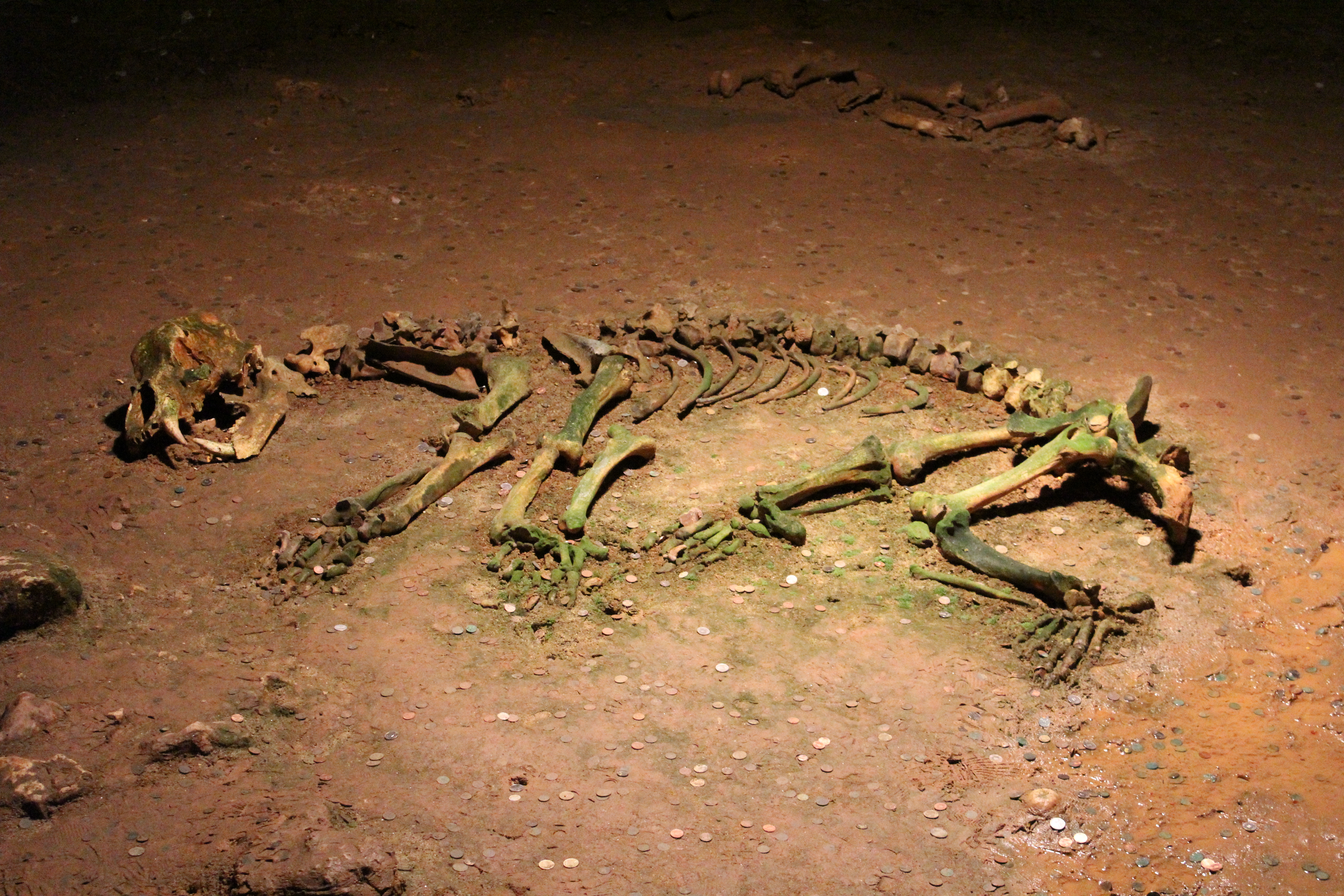
The use of dragon bones in medicine is a fascinating aspect of ancient beliefs, particularly if you view these “dragons” as possible examples of humans and dinosaurs co-existing. However, what’s really strange is the fact that various societies around the world all decided to use the bones in such a unique way— medicine.
For example, in medieval Europe, people sometimes discovered large bones and believed them to hold magical properties. Powders made from these bones were used as talismans or medicinal remedies.
During the Middle Ages, alchemists often incorporated “dragon” substances in their potions and elixirs. They believed that dragon bones could enhance the efficacy of their concoctions or serve as some sort of protective charm.
Some Mesoamerican civilizations had legends about dragon-like creatures, and they used the large fossilized bones in rituals and their medicinal practices because they believed the remains held mysterious power.
An article in the Associated Press in 2007 had this to say about the ancient Chinese:
“Villagers in central China spent decades digging up bones they believed belonged to flying dragons and using them in traditional medicines. Turns out the bones belonged to dinosaurs…
The calcium-rich bones were sometimes boiled with other ingredients and fed to children to treat dizziness and leg cramps.”
The Bible has an interesting account about “magic” bones in 2 Kings 13:20-21. This passage recounts the power of God working through the prophet Elijah— even after his death.
Here’s a brief summary for those who might be unfamiliar with this incredible account:
The prophet Elijah made a significant impact (perhaps the most significant) in Israel. Even after his death his prophetic legacy was admired by the people, but Elijah would perform one last miracle from beyond the grave. Some men were burying a man when they saw a raiding party coming. In haste, they threw the deceased man into the tomb where Elijah’s bones lay and when the dead man touched the bones of Elijah he came back to life and stood on his feet.
While there may or may not be anything to the medicinal benefits of dinosaur bones as claimed by ancient cultures, there’s no need to speculate where the power was coming from in our biblical account. It’s obvious that it was God’s hand at work and not the prophet’s bones. The same can be said of baptism or even our Bibles. The power isn’t in water found in a baptistery or words on a page because we know the source is actually our Savior. The cure to the world’s greatest disease isn’t some secret recipe that utilizes dragon bones. What we need is what we already have and it’s widely available.
“Be not wise in your own eyes; fear the LORD, and turn away from evil. It will be healing to your flesh and refreshment to your bones.”
I have never been a part of a service like last night. C.J. and Walter Moore met to study the Bible an hour before evening worship. At the end of the study, they knew they needed to obey the gospel. They did not want to wait. Their mom, Shannon Anthony, had also been studying and was ready to be baptized. This sweet family was ready, together, to be united with Christ. So, we asked each to make the confession of their faith, and then each was baptized. It is our custom to have a welcome circle afterward, and we did just that. Hiram shared beautiful, encouraging thoughts, then David Pahman, on behalf of our shepherds, prayed for these precious souls! Finally, around 6:40, we had our announcements. The actual worship service was much abbreviated, punctuated by Harry Potter’s beautiful, heartfelt prayer. But, I believe everyone left the assemblies last night with greater faith, hope, and determination to live the Christian life.
The church faces challenges. Her leaders have to do (and lead us to do) hard things. We live in a world that seems to steadily move further away from God. Our own lives are filled with difficulties. But, moments like last night are spiritual vitamins and nutrients that more than keep us going. They motivate us to do more for His cause! I doubt that anyone present last night will soon forget the time the worship was delayed while the church family enjoyed three additions! In fact, we’d love to see it happen every week!
There were some members of the early church who had difficulty accepting some of the basic teachings of Christianity. The Hebrews writer told them, “We have many things to tell you about this. But it’s hard to explain because you’ve stopped trying to understand. You’ve had enough time by now that you should be teachers. But you need someone to teach you again the first lessons of God’s teaching. You still need the teaching that is like milk. … Anyone who lives on this is still a baby and not able to understand much about living right. But solid food is for people who have grown up. From their experience they’ve learned to see the difference between good and evil” (Hb 5.11-14).
What’s the basic stuff that prevents us from being mature?
6.2 — Baptisms. This is probably Jewish washings and other irrelevant customs from the old system. They should’ve been past this by now.
6.2 — This one doesn’t really apply to us today, but “laying hands on people”, usually to give them God’s blessing or supernatural power.
6.2 — The resurrection of the dead and final judgment.
These basics should be a given for every Christian. The Hebrews writer’s audience had “had enough time by now to become teachers” only a couple decades after Jesus’s work. It’s been about 2,000 years for us. We have no excuse to be stuck in the basics!
So what should we be doing?
Hebrews 7-10 — Understand that Jesus is far superior to any other system of belief, he’s in the highest position of power in the universe, he lives to serve as our perfect high priest, the old system (Old Law) is irrelevant now (8.13), that Jesus’s sacrifice cleared humanity of how the Old Law convicted us of sin (9.15), understand that his return means rescue for those of us who are waiting for him (9.28), to think about and encourage each other to show love and do good things for other people (10.24-39), and to never lose our confidence in the power of our king (10-11).
This is a very simplified list for the sake of brevity, but a mature Christian tries hard to be like Jesus in how they live. They don’t give in when pressured by circumstance to deny Jesus through bad behavior. They accept suffering with grace and patience. Their confidence in who Jesus is and what he will do for us is never severely shaken. Their love for Christian family compels them to do good for them, and to encourage them by living like Jesus.
I have been seeing this 15-second commercial on TV recently. It is a picture of the sky above the clouds and the words, “When you die, are you going to heaven or not? You can know for sure. Heaven or not.net.”
Purchasing commercial time is very expensive. Someone is dedicated, and the subject matter could not be more important! As an ’80s song put it, we are living in a material world. Many do not think deeply enough about what happens after this life. A website dedicated to the very subject had me hopeful.
Visiting the website, I was impressed with the number of Scriptures used and the effort to use the Bible for every single point made. They cover the biblical explanation for our origin, the reliability of Scripture, the problem of sin, the sacrifice of Christ, and the need of salvation. I say biblical because they cite Scripture in each of these subject areas.
Please believe me when I say that I want to endorse and commend this website. I do not know who is behind it, other than the site “God Life,” a well-put-together website full of resources. But there were at least two erroneous statements made which contradict what the Bible teaches.
First, they claim that we are born with sin. Introducing the problem of sin, they write, “That makes it (heaven, NP) a problem for us…because we sin. It is our heritage. We are born with it.” We are born into a sinful world. Eventually, every one of us make the choice to sin. Their next statement, Romans 3:23, is correct. But it is different to say that “all have sinned” and that we are all born with sin. Ezekiel 18:4,20 state the truth that the son does not “bear the punishment of the father’s iniquity.” Teaching that we are born in sin is communicating the false idea that we inherit Adam’s sin. We surely inherit a fallen world because of his choice (Rom. 5:12), but as surely do not inherit his guilt. Our guilt comes through our own accountability. A newborn or small child is not accountable.
Second, their suggested remedy for addressing our sin problem in order to go to heaven is one of the most egregious religious errors formulated by religious people: “the sinner’s prayer.” They urge the reader to pray, “Dear God…I know I have sinned against you. Please forgive me. I receive Jesus…your only Son…right now as Savior of my life…having died to pay for my sins. Thank you for forgiving my sins…and for my new life.I pray this prayer in Jesus’ holy name, Amen!”
They are right to say that going to heaven means “you have to receive God’s gift of forgiveness and acceptance,” but wrong to suggest something that we have no biblical teaching or example for. The very first time Jesus was preached and the listeners asked what they should do, Peter could have given the counsel in the paragraph above. But he did not. He called for repentance and baptism (Acts 2:38), and those who gladly received the word did just that (Act 2:41). Please consider Mark 16:16, John 3:3-5, Acts 22:16, Romans 6:1-4, Galatians 3:26-27, Ephesians 4:4-6, Colossians 2:12, Titus 3:5, and 1 Peter 3:21.
All these passages show us that receiving God’s gift of forgiveness and acceptance goes beyond saying a prayer. It requires doing what people did in the first-century, when the gospel began to be preached and people first sought to do what they were taught. We need biblical example and teaching to adequately answer these sincere people’s powerful question.
I Pt 3.19 is a difficult verse on its face, but it’s easily explainable. It’s tied to 3.18, “His physical body was killed, but he was brought back to life in spirit.” 3.18 simply says that he also used God’s power to help Noah tell everyone that a global flood was imminent. All but 8 people were killed in the flood because they refused to listen. Those “spirits now in prison” are identified clearly as those who lived in the antediluvian world.
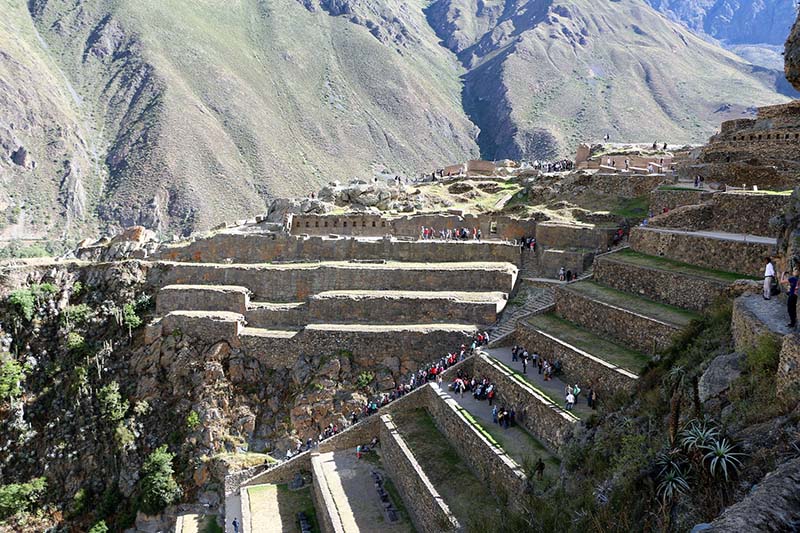
Interestingly, many megalithic structures around the world (Ollantaytambo, Barabar, Ajanta, Ellura caves, Puma Punku, the city of Petra, Derinkuyu, Saqsaywaman, the Great Pyramid of Giza, etc.) show strong evidence of having been built before the flood. Several of these seem to have been designed specifically to protect against a doomsday scenario. We know all people were warned about the flood, but it seems most preferred to put their trust in stone rather than a wooden boat.
3.21 is the crux of the matter. Just as Noah and his family were saved from evil because of the flood, we get a clean conscience through baptism. We only have hope because Jesus came back to life, proving that death is on borrowed time. If we want a life with Jesus in a perfect world after we die, we have to make a formal appeal to God for a clean conscience. According to this verse, the only way to make that appeal is through baptism.
“The signs” are a thread that run throughout the gospel of John. It is the signs observed by Nicodemus that brings this Pharisee to Jesus by night to speak with Him. He is a member of the Sanhedrin (7:50; 19:39), which is what John highlights by calling him a “ruler of the Jews” (cf. 7:48). The Sanhedrin, from the Greek word meaning “seated together,” was “a council in Jerusalem that functioned as the central judicial authority for Jews” (Myers, Eerdmans, 912). Yet, while that group will notoriously and constantly oppose Jesus and plot His death, Nicodemus approaches Jesus as a believer. He says, “Rabbi, we know that You have come from God as a teacher; for no one can do these signs that You do unless God is with him” (2). Who is the “we”? We are not told, but we do know that faith in Jesus is already beginning to spread.
Jesus, however, controls the direction of the conversation. He responds by teaching Nicodemus about the necessity of one being born again (3ff). This intrigues and mystifies that respected teacher. In this starlit classroom, Jesus lays the groundwork for a truth which future students like you and I also need to grasp.
The new birth is essential (3-5). Jesus says one must be born again. One must be born of water and the Spirit. Without this new birth, one cannot see or enter the kingdom of God. Paul is going to call this the “washing of regeneration and renewing by the Holy Spirit” (Titus 3:5).
The new birth is spiritual (6-8). Nicodemus is trying to understand Jesus’ teaching from a physical perspective, wondering if He meant literal rebirth–which he knew was impossible. Jesus contrasts that fleshly idea with being born of the Spirit. He likens this rebirth to the wind, something real but not something observable. We can see someone being baptized, but the cleansing of the soul and becoming a child of God is something actual which God sees but which we accept by faith.
The new birth is understandable (9-15). Now, Nicodemus is struggling to make sense of it, but Jesus says that is because he is thinking in earthly rather than heavenly terms. Those signs Nicodemus marveled at were designed to verify the truths He was teaching. All of it was meant to create faith in open hearts. To aid his understanding, Jesus asserts that He had come down from heaven to be “lifted up” (14). He refers this Old Testament scholar to an event during the wilderness wandering, when the brazen serpent was put on a pole to save the sinful Israelites who had complained and been bitten by serpents (Num. 21:9). Those who trusted in this remedy God provided to save their lives and looked on the pole did not die. Those who did not believe and look died. Jesus ties God’s grace and man’s obedient faith together to teach the new birth.
The new birth is providential (16-21). Simply put, God provided the new birth as part of His eternal plan. Jesus came to earth to teach that plan, but also to enact that plan. He was like the brazen serpent. He would have to be lifted up (14). He would have to be “given” (16). It was because men would not believe this that they would act in violence to kill Him, ironically facilitating God’s eternal plan of redemption (18-20). Jesus was going to expose the evil of men’s deeds, and they would hate Him for it. But Jesus, referring to Himself as Light (five times from verse 19 to 21), was illuminating the path of righteousness for those who believe (21).
I wonder what went through Nicodemus’ mind when he left Jesus that night. How many times did he review this lesson in his mind, pondering the weighty truths Jesus shared with him? What about when he tactfully defended Jesus when the Sanhedrin doubtfully disputed about Him (7:50-52)? What about when he helped fellow-Council member Joseph prepare Jesus’ body for burial after His crucifixion (19:38-39)? However that went, Nicodemus was taught one of the most important, yet basic, truths of all. He was faced with embracing it, and so are we. A place in God’s kingdom, eternal life, salvation, and coming to the Light are all blessings of being born again! It is an awesome thought that Jesus not only invites us to that, but gave His life to make it a reality.
We all need to come to ourselves in life so that we can make the right changes and do the things that God would have us to do. In Luke 15 we read about the prodigal son who went out and lived a life of sin and rebellion. But one day when he was away in a far country, the Bible says, “he came to himself” and then decided it was time to go home (Luke 15:17). Here are three times in life when I have come to myself and when you might need to do the same thing.
#1. Sobriety and turning from sin.
There was a time in my life when alcohol had a strong hold on me, and I was not living a sober and healthy life. I was allowing it to ruin me as a person and I had to come to myself and realize it was time to make a change. The Bible says whoever is led away with alcohol is not wise (Proverbs 20:1). I was being led away and nothing was going to change until I came to myself. We all sometimes notice sin in our lives, and we need to come to ourselves to repent and change it, Jesus said, “I tell you; but unless your repent, you will all likewise perish.” (Luke 13:3).
#2. Salvation
I came to a point when I recognized I needed God in my life and started to read and study the Bible. At that point I came to myself and realized that I was lost. I needed to be baptized into Jesus for the forgiveness of my sins as stated in Acts 2:38. I came to myself and made spiritual changes, and this is something everybody in the world needs to do.
#3. Service
After being baptized we need to find out where we can serve God and how we can be of use in his church. We need to come to ourselves and see how we can use our talents and abilities to serve in the church, help others, and glorify God. The Bible says, So, whether you eat or drink, or whatever you do, do all in the glory of God (1 Corinthians 10:31).
Be honest with yourself, find out what you can do, and then do it.
Reading Luke’s account of things, Saul may have been the chief threat to the Christians at the time recorded in Acts 8-9. He was “ravaging the church” (8:3), “breathing threats and murder against the disciples of the Lord” (9:1). He was doing “much harm” to the saints (9:13). He would look back on this part of his life, calling himself a harmful persecutor and killer of Christians (22:3ff; 26:9ff; 1 Cor. 15:9; 1 Tim. 1:13). The last thing we would expect, reading about his violent exploits against followers of Christ, would be a complete turnaround. But that’s what happens in Acts 9.
SAUL’S PLANS ARE CHANGED (1-3). He had letters from the High Priest to authorize his imprisoning of Christians. His zeal and passion to stop Christianity is as strong as could be, but Christ has a message for him. It literally stops him in his tracks. The Christian life can be a sudden, abrupt change even today. When one comes face to face with who Jesus is, it will cause unforeseen, dramatic changes in one’s life!
SAUL’S MIND IS CHANGED (4-7). His entire worldview about who Jesus is changes in what happens on this road to Damascus. He sees a light and hears a voice asking, “Saul, Saul, why are you persecuting Me?” (4). He’s not sure who he’s speaking to, but he knows it’s no mere man. Jesus tells Saul who He is, then tells Saul what to do next. He’s not saved on the road, but told to go to Damascus to await news of what he should do (6). The greatest question of life just may be, “Who is Jesus?” Saul thought he knew, but is finding out that everything he thought he knew was wrong.
SAUL’S PERSPECTIVE IS CHANGED (8-18). Saul is blinded on the road. He doesn’t eat, drink, or see for three days. Meanwhile, the Lord commissions a man named Ananias to go preach to Saul. Jesus could have easily laid it out there for Saul, but He chose the “foolishness of preaching” to save this persecutor (cf. 1 Cor. 1:21). Naturally, Ananias was apprehensive about his mission, knowing full well all that Saul had done to the saints (13-15). The Lord reassures the preacher that Saul has changed his mind and is ready to hear what he must do, so Ananias obediently goes to Damascus and preaches to him (17). The hardships and realities of life can totally change our perspective, leaving us receptive to the will of Christ. We might not have been seeking before suffering.
SAUL’S CONDITION IS CHANGED (18). In this moment, he could see–physically and spiritually. With spiritual sight restored, he “got up and was baptized.” Saul would later look back on this and tell us more of what Ananias preached to him. “The God of our fathers has appointed you to know His will and to see the Righteous One and to hear an utterance from His mouth. ‘For you will be a witness for Him to all men of what you have seen and heard. ‘Now why do you delay? Get up and be baptized, and wash away your sins, calling on His name'” (22:14-16). Baptism changed his spiritual condition before God. It washed away his sins. It brought about the change of condition, opening door to a change of mission. Baptism is but part of God’s saving plan, but it is the point at which sins are forgiven for a penitent believer.
SAUL’S FELLOWSHIP IS CHANGED (19ff). His environment is no longer Christian-haters. It’s the hated Christians. He spends several days with them. He would prove to be such an asset to the saints at Damascus, and he is ultimately, readily accepted as one of them. He fought against the very ones he fought for before becoming a Christian (22), until his former allies plot to kill him (23-24). His new spiritual family helps him steal away (25). He seeks to fellowship with the disciples in Jerusalem, but in an age long before instant communication and technology the word had not reached these saints. They fear he’s an infiltrator, coming among them to do them harm. Can you imagine sitting down for a fellowship meal with the man that imprisoned or killed a friend or loved one? That’s possibly the situation for Saul and these saints. Barnabas, the generous encourager we met in Acts 4, paves the way for Saul’s acceptance. He is ultimately welcomed into the fellowship. Sometimes, our comfort zone is challenged with the addition of new Christians into our fellowship. It could be their worldly background, their income bracket, their skin color, or some similar difference that requires our adjustment. God expects that we’ll overcome any such superficial barriers and see what ties us together–our faith in and following of Jesus.
SAUL’S MESSAGE IS CHANGED (20-31). He proclaimed that Jesus is the Son of God (20). He proved to opposing Jews that Jesus is the Christ (22). He spoke boldly in the name of Jesus (27). He spoke boldly in the name of the Lord, talking and arguing with the Hellenistic Jews (28-29). As hard as he had been fighting against Jesus, he was now fighting that hard for Him.
No wonder the most operative word is “change.” A change of life changes our mind and outlook, setting up a change of our spiritual state (if we respond properly to teaching) that reflects itself in a change of our spiritual environment and a change of our purpose and mission. No, it won’t happen with the flair and drama that Saul experienced, but the gospel is as powerful today as it was then (cf. Rom. 1:16). If being a disciple of Jesus hasn’t dramatically changed who we are and what we do, it may help us to look at Saul’s life and then our own. He can be an encouraging example that prompts us to go deeper and further in our faith. Conversion involves real change. Jesus says conversion is essential to entering the kingdom of heaven (Mat. 18:3), spiritual healing (John 12:40), and for sins to be wiped away (3:19). May people be able to see the change Jesus has made and is making in us!
I’ve got a jar on my desk and members of the Tompkinsville church of Christ have filled it with some very interesting questions! Here’s some of the latest for your enjoyment.
Q. Does God Change His Mind?
A. No, but He is merciful and at times His anger relents towards the sinful. When a sinner turns to God, He doesn’t change His mind but rather follows through with His predestined promise to save.
“God sent an angel to destroy Jerusalem.But as the angel was doing so, the LORD saw it and was grieved because of the calamity and said to the angel who was destroying the people, “Enough!”
– I Chron. 21.15
And he (Jonah) prayed to the Lord and said, “O Lord, is not this what I said when I was yet in my country? That is why I made haste to flee to Tarshish; for I knew that you are a gracious God and merciful, slow to anger and abounding in steadfast love, and relenting from disaster.
– Jonah 4.2
See also Hebrews 13.8 to read more about God’s unchanging nature.
Q. When a young man is baptized, should he still be taught by a lady?
A. Check out the article “Baptized Boys And Bible Class” on this blog. It goes into greater detail, but here’s an excerpt.
“First, it misses who is included in 1 Timothy 2:12. The Greek word translated “man” is the verse specially means “man, husband, sir.” All males are not under consideration. The Greek has words for child, including “infant” or “half-grown child” (Mat. 2:21), “child,” “son” or “daughter” (Mat. 10:21), and “young man” (Mat. 17:18). None of those words is used in 1 Timothy 2:12. The Holy Spirit chose the specific word meaning “adult man.” Boys eleven or twelve are not men!”
Q. Was John the Baptizer the first to baptize others?
A. He was the first one mentioned to be baptizing in the N.T. (Matt. 3.4-5) but he wasn’t the first to perform or facilitate a baptism. This goes all the way back to the book of Leviticus where ritual cleansing was common. You can still find ancient Mikveh’s in Jerusalem today were Jews would purify themselves according to their practices. The concept of submersion wasn’t a cultural novelty— but its significance changed with the arrival of Jesus.
Q. 1 John speaks of a plurality of “anti-Christ’s,” does that mean they’re multiple and also the end of the world is near?
A. An “anti-christ” is simply one who is against Christ. While there seems to be an individual known as “The Man of Lawlessness” who will make an appearance in the last days, his identity is speculated.
“Don’t let anyone deceive you in any way, for that day will not come until the rebellion occurs and the man of lawlessness is revealed, the man doomed to destruction.” – 2 Thess. 2.3
This topic is still hotly debated within the church. Throughout the years many have pondered over who the individual(s) might be. Names like Hitler, Pol Pot, the catholic papacy, and even an abstract idea where the Man of Lawlessness is simply “evil personified.” A modern idea that seems to be gaining traction is that artificial intelligence could be the “man” referred to in 2 Thess. The author of this post isn’t entirely sold on any of these ideas.
Q. Did all the animals talk in the Garden of Eden?
A. It’s interesting to note that the text in Genesis doesn’t indicate that Eve was surprised or frightened by a speaking serpent. We know that the serpent was among the “wild animals” God had made and is described as “crafty” (Gen. 3.1). The word “crafty” doesn’t necessarily indicate that it was the only animal that had the ability to speak. While Martin Luther believed the serpent was possessed by Satan, Flavius Josephus seemed to believe that all animals could speak during this time.
“At that epoch all the creatures spoke a common tongue” (Jewish Antiquities, I .41).
We won’t know one way or the other on this side of eternity, it’s interesting to read about a conversation between a man and a donkey in Numbers 22.
Then the Lord opened the donkey’s mouth, and it said to Balaam, “What have I done to you to make you beat me these three times?”
Balaam answered the donkey, “You have made a fool of me! If only I had a sword in my hand, I would kill you right now.”
The donkey said to Balaam, “Am I not your own donkey, which you have always ridden, to this day? Have I been in the habit of doing this to you?”
“No,” he said. – 22.28-30
Once again, if Balaam was taken back by his donkey’s sudden ability to speak, the text doesn’t record that reaction.
In 2018 a team at the Marineland Aquarium in Antibes, France, taught an orca whale named Wikie to speak. She was able to say the words “hello,” “good bye,” and “one, two, three.” Orcas and several species of birds have the vocal ability to speak the human tongue, so perhaps there’s some truth to Josephus’ claim.
On more than one occasion, Jesus compared the kingdom of heaven to a wedding feast. I’d like to focus on the parable contained in Matthew chapter 22 specifically. Jesus said, “The kingdom of heaven is like a certain king who arranged a marriage for his son, and sent out his servants to call those who were invited to the wedding; and they were not willing to come. Again, he sent out other servants, saying, ‘Tell those who are invited, “See, I have prepared my dinner; my oxen and fatted calf are killed, and all things are ready. Come to the wedding.”’ But they made light of it and went their ways, one to his own farm, another to his business. And the rest seized his servants, treated them spitefully, and killed them. But when the king heard about it, he was furious. And he sent out his armies, destroyed those murderers, and burned up their city. Then he said to his servants, ‘The wedding is ready, but those who were invited were not worthy. Therefore go into the highways, and as many as you find, invite to the wedding.’ So those servants went out into the highways and gathered together all whom they found, both bad and good. And the wedding hall was filled with guests.
“But when the king came in to see the guests, he saw a man there who did not have on a wedding garment. So he said to him, ‘Friend, how did you come in here without a wedding garment?’ And he was speechless. Then the king said to his servants, ‘Bind him hand and foot, take him away, and cast him into outer darkness; there will be weeping and gnashing of teeth.’ For many are called, but few are chosen.” (Matthew 22:2-14).
Looking back on this parable with the benefit of hindsight, knowing the centuries of the Church’s history, it’s easy to understand most of what Jesus is saying. The king had an initial group of people that were invited to wedding, but refused the invitation. In the same way, the invitation of the gospel was initially given to Jews only. However, especially among the religious establishment—Pharisees and Sadducees—there was widespread rejection of that invitation. So, the king opens up the invitation to everyone in the highways, both bad and good, just as the invitation of the gospel was extended to Gentiles and Jews alike—everyone is invited.
However, there’s the strange detail near the end that can confuse us in our modern times, living so far detached from the culture that Jesus gave the parable to. We see a man at the wedding who doesn’t have wedding clothes on, and he gets kicked out of the wedding because of it! In our culture, we might wonder about this man, perhaps even feel sorry for him. Perhaps he didn’t have good clothes for a wedding because he was poor and couldn’t afford them. But the way we do weddings is different from the way they did weddings in Jesus’ time and culture. Back in that day, the master of the wedding feast would provide garments for all of the wedding guests. In fact, it would be a great insult for someone to refuse to wear wedding garments at the feast. That’s why the man is speechless when the king asks him how he got in there without wedding garments.
What does that represent? Baptism. As many of us as are baptized into Christ have put on Christ (paraphrase Galatians 3:27). Just as the master of the feast provides wedding clothes for the guests, God provided baptism for us. And just as the man without wedding garments was thrown out, none of us should expect to attend the wedding feast if we aren’t wearing the garments God provided at His own cost.
The doctrines of “faith only” and “once-saved, always’ saved” have done so much to deceive religious people into believing things about the doctrine of salvation that are at odds with the Scripture, which teach that faith without works is dead (Js. 2:17,20,26) and that it is possible to fall from grace (Gal. 5:4; 2 Pet. 2:20-22). Therefore, many of our Bible classes and sermons have emphasized what the Bible teaches on these matters. We want to avoid an unscriptural position.
In the midst of emphasizing that a faith that saves is a faith that obeys, we rightly teach that repentance and baptism is part of saving faith (Ac. 2:38). We teach that baptism saves (1 Pet. 3:21). It washes away sins (Ac. 22:16). It clothes us with Christ (Gal. 3:27). These are just some of the Bible’s truths about the essentiality of baptism.
There is something we must guard against, however, in our properly emphasizing that baptism not only is part of God’s saving plan but is a pivotal part (1 Co. 12:13; Mk. 16:16; Rom. 6:3-4). We must not believe in “baptism only” or “once-baptized, always saved.” Is it possible to adhere to such a view? Perhaps.
A rush to baptism without grasping why it must be done and what must accompany it is insufficient. We read of people being pierced to the heart by the gospel (Ac. 2:37), asking what they must do, being told to “repent and be baptized” (Ac. 2:38), and receiving that word and doing so (Ac. 2:41). Baptism cannot substitute for the total heart and directional change which the gospel calls for (Rom. 6:17).
The thought that baptism is the end of one’s commitment rather than the beginning is incorrect. As thoughtfully and deliberately as we can, we must teach the totality of discipleship (Mt. 16:24-26) and the necessity of counting the cost of discipleship (Lk. 14:28). Sometimes, the newly baptized conclude that since they have done so everything is settled. While baptism coupled with a correct understanding of Scripture does forgive one’s sins, one must begin and continue a walk in the light of Christ (1 Jn. 1:7-10).
Christ’s Great Commission call to His disciples is to make disciples (Mt. 28:19). That includes baptizing them, but also teaching them (Mt. 28:19-20). In our teaching, we need to do all we can to paint Scripture’s complete picture not only of faith but also of baptism. There is no “magic” in the water (1 Pet. 3:21). Its saving ability comes when done by one who makes “an appeal to God for a good conscience.” We cannot leave babes in Christ to flounder without helping them form roots in Him. They need to know that baptism is not the end, but the beginning.
If someone in our directory has been baptized but shows no other sign of commitment, from attendance to involvement, we need to lovingly help them see that they are not spiritually OK (Gal. 6:1). When they die, we cannot preach them into heaven simply because they were properly taught and baptized years or decades ago. The life in Christ is about a “walk” (Eph. 4:1), not just about a moment when they got wet.
For the past four years I have been going though what I believe to be the toughest battle I have ever had to face in my life with our warrior princess Kiyomie’s medical condition. God blessed me with my greatest desire and greatest fear as a father; which was to have my daughter; and one of my babies getting sick and me not being able to do anything to make them better.
We decided that my wife would come to the United States in October of 2017 after our homeland was devastated by category five Hurricane Maria. It was a difficult but necessary decision because Kerssel was pregnant and the prenatal care she needed wasn’t available post-hurricane. I joined my wife in February of 2018 and we had flights booked to return home in April of 2018. Before traveling I had set up everything in Kiki’s nursery which was also my office where I did my studies; her crib was right next to my desk, I had so many plans for my baby girl and was ready to bring her home.
What we had no idea of is that we were heading right into another hurricane; one of a different nature. Kiki suffered severe brain injury during birth and this changed our entire life: we could not return home, we had to leave my six year old son Éjiké and our families behind in Dominica which ached our hearts daily. The life we knew was basically over. We had our family’s support but were here all alone, in a foreign land with no one close to come help during the toughest period of our life.
We both had to resign from our jobs. We were forced to sell everything we owned in order to survive here, we went from being one hundred percent independent to one hundred percent dependant on others, we had to seek assistance to pay our monthly bills and purchase the most basic of necessities for our children and ourselves– diapers, wipes, deodorant, toothpaste, bath soap and everything else. We were unable to care for ourselves the way we used to, unable to provide for our children, only going to the doctor or dentist if we were very ill, not purchasing new clothing or undergarments even though we desperately needed them.
Through so many sleepless nights, emergency room visits and hospital stays we managed to keep surviving, by the grace of God. It is hard and lonely but we have no choice other than continuing to be resilient and keep focused on Kiki getting better. (We’ve had so many nights that we got little to no sleep that right now we consider a night of 4 hours of sleep a good night rest)
We didn’t think that our life could have gotten any worse but then on August 10th 2020 we got the dreadful news that my wife’s mom had suddenly passed at only 56 years old. From that day our lives was under a dark cloud; well, that’s how it felt. Mom, as we all called her, was our main pillar of support; our greatest cheer leader and prayer warrior; she sent messages every single day to both Kerssel and I telling us how strong we are and great parents we are and that Kiki will be healed and to remain faithful. That day in August took so much away from us, after mom’s passing everyday just felt like we were going through motions, like robots, just floating around under that dark cloud.
Mrs. Dawn Pitcock had been working with Kiki since she was discharged from the NICU. She and her family became a friend and remained in close contact even after Kiki aged out of the First Steps program. She had mentioned her church and asked if we’d like to visit, but we never did then. We were still under this dark cloud. Sometime after mom’s passing Dawn asked whether we would mind if she and elders from her church come by to visit and pray with us.
Russell, Dana and Dawn came one Sunday after service, we conversed for a while, we prayed and we cried; that blessed Sunday afternoon is one I will never forget as it felt like that first ray of sunshine piercing through the dark clouds. We started studying and getting a better understanding of God’s word with the assistance of Russell, Neal and Greg. Our faith started to grow stronger and we began feeling better, our lives felt a little less cloudy day by day. We started attending Sunday service when we were
able to, Kiki’s condition determines whether we can but we kept studying via zoom.
We had discussed baptism a few times but I didn’t feel fully ready until April 6th, 2021, on that day, I called Neal and told him that we were ready. When we got to church building there were several other members of our Leman Avenue family there to support us. Kerssel and I were baptized on that day and man that felt good, it was a new life in every aspect.
Yes we are still going through tribulations. Kiki still has tons of medical complications and has a long way to go. Yes we still seek assistance to cover every single expense that we have. BUT, because our faith in God, and ourselves have grown, our bond with God is getting stronger and our understanding of God’s word and love for us and his purpose for allowing us to go through what we are going through; we are able to better appreciate our situation. God have been right there with us all along, he continues to supply our every need; he has, housed us, fed us, and clothed us physically and spiritually.
In our lives on a daily basis we encounter troubles, problems, adversity; no matter how small or complex they are, they always pose a challenge physically, emotionally, psychologically and spiritually.
In these moments we feel weak, we feel defeated and are forced to face problems to great for us to handle; so we turn our attention to God and begin questioning him, WHY? Why am I going through this? Why me? What Lord can I do to solve this problem? During these challenges we are unable to continue our tasks like normal; so we stop, evaluate our situation, ask God for wisdom, obey his word, have faith and trust him to bring the help that we need.
The apostle James had a response to adversity which has helped me through my own troubles.
James 1:2-6
Consider it pure joy, my brothers, when you are involved in various trials, because you know that the testing of your faith produces endurance. But you must let endurance have its full effect, so that you may be mature and complete, lacking nothing. Now if any of you lacks wisdom, he should ask God, who gives to everyone generously without a rebuke, and it will be given to him. But he must ask in faith, without any doubts, for the one who has doubts is like a wave of the sea that is driven and tossed by the wind.
When going through these challenging times in life the best resort is to turn to Jesus, I can guarantee without any doubt that no matter what the problem is, you will find guidance to a solution within the word of God. Apply the appropriate scripture, faith and the very best effort you can, to every adversity you face and you will be victorious.
In conclusion I say to you, through every adversity, trial and tribulation seek God for he is always waiting to guide us through our troubles and ultimately draw us closer to him.
Have faith no matter how small it is: Faith in God, faith in yourself, faith that God is greater than your problem, faith that God is helping you through the adversity, faith that you will overcome.
Nurture your faith and watch your faith grow. Mathew 17:20 tells us, “…Because of your lack of faith. I tell all of you with certainty, if you have faith like a grain of mustard seed, you can say to this mountain, ‘Move from here to there,’ and it will move, and nothing will be impossible for you.”
If you can move a mountain with faith the size of a mustard seed, can you imagine the magnitude of power you would possess with faith the size of a tennis ball or basketball or greater?
I’ll close with some words and verses I recite whenever I’m having a moment of weakness during a challenge and the effect that they have on me is miraculous, I recited them right before coming up here; they are:
I believe that God is with me. I believe that God is helping me. I believe that God is guiding me.
I can do all things through Christ who strengthens me (Philippians 4:13). What shall we then say to these things? If God be for us, who can be against us? (Romans 8:31)
Thank you for listening, thank you for being our family when we most needed one, thank you for the support given to my family in every single way.
For the next several weeks, I’ll be repeating the book of I Peter in present-day terminology. It’s not a true translation of the book, as I am not qualified to do so. It will be based on an exegetical study of the book and will lean heavily on the SBL and UBS Greek New Testaments, as well as comparisons with other translations (ESV, NASB, NIV, ERV, NLT). My goal is to reflect the text accurately, and to highlight the intent of the author using concepts and vocabulary in common use today.
This is not an essentially literal translation, and should be read as something of a commentary.
I Peter – Part VIII
Our lifestyles were hostile to God, but he died for us anyway! Moral perfection died to save morally imperfect people. He wanted to bring us to God! He was killed physically, but his spirit was brought back to life. This is the form he had back in Noah’s day. Even then he wanted to save people who were about to face total destruction! God waited patiently for them to change, giving them chance after chance while Noah was building the ark. They died; in fact, only eight people survived that flood.
Water saved Noah and his family from those evil people, and water saves us from evil, too. We don’t bury ourselves in water to take a bath. We bury ourselves in water to ask God for a clean slate. We can only do that because Jesus was brought back to life, sat next to God, and was given total control of every supernatural force.
Mentally prepare yourself to suffer. Jesus suffered while he was human! When we suffer physically, it’s because we stopped doing bad things. As long as we’re alive, we’re not chasing the unhealthy passions humans have. We do what God wants. You used to chase those unhealthy passions! You craved all things bad, got drunk, partied without restraint, and practiced horrible things while worshipping fake gods.
Since you used to do this, your old friends are shocked that you don’t anymore. They hate you and mistreat you now, but they’ll have to answer to God. He’s going to judge everyone who’s ever lived. Remember, the hope for rescue that Jesus gave us was offered to people who aren’t alive anymore. Since everyone’s going to face God, everyone is given the chance to live like God wants.










 The Preacher Pollard Blog