It was a great Sunday night crowd. Why not? Between the monthly Q&A sermon, the monthly singing night, and the ice cream fellowship, there were several additional drawing forces. It was so enticing for one grade-school boy that he made the unusual decision to sit on the front row, dead center. If you were there, you probably saw him. If you weren’t, you can see him on YouTube.
This young man had an unobstructed, undistracted view to some significant events. First, he was literally a couple of feet from Hiram as he preached. On multiple occasions, when he posed a question to the audience in his sermon, this young man nodded in silent answer. He was “locked in.” If he moved or squirmed, I didn’t see it.
Second, he witnessed the love, care, and support of the church family during the invitation song. One of our new Christians responded, asking for prayers and expressing a desire to live a more faithful life. Joe not only had the preacher on one side and an elder on the other, but the little boy had to move down to make room for several men who came down front to show their love and support for Joe. This great young man watched the emotion, joy, and concern of a church obeying the command, “confess your sins to one another, and pray for one another so that you may be healed” (Jas. 5:16).
Third, he sat there and sang several songs after the response. Each time I looked, he was enthusiastically trying to sing even songs he probably did not know. He has an expressive face, and the prevailing emotions I could see–including when I led–appeared to be all positive and interested.
After services, he was in the multipurpose room (MPR) indulging in some ice cream and having as much fun as a little boy could hope to. He was visiting and playing, and he was eating. Then, he went home.
I did not get the chance to ask him if he enjoyed being at church last night, but I think I know the answer. Children don’t do the best job of pretending, if they do or don’t like something. He appeared to have enjoyed himself. But he did more than that. He served as a great example to me. Not only did he come to the worship, but he came to worship. As he gave, he also received. I’d like to think his experience last night will be something he never forgets, something that serves as a foundation for his spiritual future. His mom brought him last night. Pray for him, that as he grows up, he will develop a faith that brings him to worship and carries him through life (cf. 2 Tim. 1:5).
“At that time the disciples came to Jesus and said, “Who then is greatest in the kingdom of heaven?” And He called a child to Himself and set him before them, and said, “Truly I say to you, unless you are converted and become like children, you will not enter the kingdom of heaven. Whoever then humbles himself as this child, he is the greatest in the kingdom of heaven. And whoever receives one such child in My name receives Me…” (Mat. 18:1-5).
Kevin praying for Joe, with our little fella on the front row (far left next to Bryce)
One of the greatest influences I have had in my life is my mom. I’m not sure if you were aware, but my mom has frequently been in and out of jail over the past several years. Not that she did anything to be thrown into jail, but rather she volunteers to go to the Detention Center in Elizabethtown and conduct bible studies with the women there. However, when she goes, she is only allowed to take her Bible in with her and they shut the door and lock it behind her. We’ve talked about it several times and there is only a couple of instances when she felt scared, when she felt like she was in danger.
Once she was having a Bible study and the topic was things we must do as Christians. Ephesians 2:10 tells us, “For we are His workmanship, created in Christ Jesus for good works, which God prepared beforehand that we should walk in them.” However, there was one woman there that was adamant that she did not have to do anything once she was “saved”. It got to the point that the woman was furious, and my mom was scared, and she wasn’t sure what to do or if the woman would harm her in some way. So, mom very calmly opened her Bible to Matthew 25 and gave it to the woman and asked her to read verses 31-46.
These verses reveal a judgment scene where the nations are gathered before God’s throne and are separated as a shepherd divides the sheep from the goats. Those to the right will inherit the kingdom prepared for them (meant for us) because they ministered to the least of these their brethren. Those to the left will depart into the everlasting fire prepared for the devil and his angels (not meant for us) because they did not minister to the least of these.
Upon reading the verses the woman broke down crying. She knew what she believed to be true wasn’t. If you ask my mom, she’ll tell you it was nothing she said that provoked this sudden and instant change in the woman, but rather it was the word of God.
Hebrews 4:12-13 tells us “For the word of God is living and powerful, and sharper than any two-edged sword, piercing even to the division of soul and spirit, and of joints and marrow, and is a discerner of the thoughts and intents of the heart. And there is no creature hidden from His sight, but all things are naked and open to the eyes of Him to whom we must give account.”
– Living – God’s word is active, able to achieve its purpose, working in people’s lives and it’s as relevant today as it was 2000 years ago.
– Powerful – God’s word has the power to change our thoughts, change our lives and change our eternal destiny.
– Pierces – God’s word pierces our soul with truth, points out our sins and provides the cure.
– Discernment – God’s word can perceive and recognize our every thought and intention.Isaiah 55:11 tells us “So shall My word be that goes forth from My mouth; It shall not return to Me void, but it shall accomplish what I please, and it shall prosper in the thing for which I sent it.” I’m not sure about the rest of the story. I hope the woman was able to leave with a new resolve to study and obey God’s word. However, we have God’s word available to us and it can do the same in our lives if we allow it. James 1:21 tells us, “Therefore lay aside all filthiness and overflow of wickedness, and receive with meekness the implanted word, which is able to save your souls.” That is, if we read and meditate in it, pray for understanding and if we are faithful and obedient to God’s commandments therein. God’s word is able to do instantly what man is unable to do.
The TL;DR (too long; didn’t read) version of this discussion is that when angels mated with human women, they produced abominable offspring whose spirits God refused to admit into the realm of the dead after He destroyed them in the Flood. The wandering spirits eventually possessed some people in the first century whom Jesus and the apostles were able to exorcise. These were the unclean spirits. Because of the power of Christ’s Gospel, they no longer have the ability to hijack our bodies today. If they are still present, they can only help to facilitate situations of temptation. But they cannot touch us or make us sin.
For those willing to understand how I arrived at the above summary, please keep reading.
Allow me to begin by indulging in a little inside baseball. In that case, I’ll start by highlighting one of the differences between my brother’s and my time at Faulkner University: two different godly men led the V.P. Black School of Biblical Studies. My brother had the opportunity to sit at the feet of the late Wendell Winkler, whose background was in preaching schools. Meanwhile, when I graduated, the late Kenneth Randolph was the dean. Brother Randolph decided he wanted students to build their libraries and encouraged instructors to assign textbooks to our classes whenever possible.
I studied hermeneutics under the late Martel Pace. When is an Example Binding? by Thomas B. Warren was the actual text. However, brother Pace insisted on us purchasing Gordon D. Fee and Douglas Stuart’s How to Read the Bible for All Its Worth. When the class began, brother Pace directed us to a sentence in Fee and Stuart’s book. That sentence stated that novel interpretations are incorrect. It is erroneous if no one has ever interpreted Scripture in a given way in over two thousand years of church history. With that clarification, brother Pace told us we could throw the book away as he didn’t want us to learn how to interpret the Bible from Fee and Stuart’s liberal hermeneutic.
Although I felt cheated at the time for wasting money on a book I wouldn’t use, brother Pace’s point has stuck with me. When I approach a Scripture or text and want to understand what it means, I first consult other Scriptures. Then, when I finally turn to human scholarship, I always look for the oldest interpretation of the Scripture. With this method, it is surprising how much of the doctrine taught in contemporary Christendom dates back less than 200 years. Other false doctrines may have origins in the 1500s, during the Protestant Reformation. Others emerged before 1000, eventually leading to the establishment of the first apostate church.
Despite being accurate regarding salvation, we sometimes see deviations from original thought in issues of Christian judgment. For example, I’ve been thinking about angels and demons. I’ve often said that much of what people believe they know about the subject finds basis in Milton rather than Scripture (e.g., the war in heaven). The Bible is silent on angels, including their orders and responsibilities. When asked who the archangels are, you will hear names other than Gabriel and Michael (i.e., Raphael and Uriel). According to some, an archangel by the name of Lucifer fell. From whence does this extra information come? The accepted canon of Scripture does not include it.
On the other hand, the apocryphal Book of Enoch is one source having a lot to say about angels. The Book of Watchers refers to the first thirty-six chapters of the Book of Enoch. The author of Watchers claims to explain things like how angels fell. Given that Jude quotes from the Book of Enoch, this source is more interesting than you might think. Jude quotes the apocryphal book in verses 14-15. This inclusion by the Holy Spirit does not imply that the Book of Enoch is anything other than apocryphal, but rather that this widely read book from before the first century AD still got a few things correct, precisely what Jude quotes. Although it is not a direct quotation, Jude verse six parallels ideas found in the Book of Watchers, namely that the “angels who did not keep their own domain but abandoned their proper abode” (NASB1995) refers to angels who chose to leave heaven to intermarry with human women.
It took a long time for me to accept this. I was of the school of thought that interpreted Genesis 6’s “sons of God” as the descendants of Seth, who began calling on the Lord’s name (Genesis 4.26). That was a more recent interpretation contradicting the phrase “sons of God,” which almost always referred to angels. Even so, I would never teach what I am about to discuss as doctrine because it may confuse some. However, if one considers the context of Jude, one will notice that the sin of verse six is akin to that of Sodom and Gomorrah (Jude 1.7). In other words, it was a matter of immoral sexual behavior. It was never in God’s plan for angels to have companions. They are presumably “complete,” lacking nothing in their distinct being. In response to the Sadducees, this is why Jesus stated, “…in the resurrection they neither marry nor are given in marriage, but are like angels in heaven” (emphasis mine—Matthew 22.30 NASB1995).
I’ve heard it preached that Jesus said angels can’t get married, but He said they don’t get married in heaven. It is not a giant leap to conclude that if angels took on a form with a digestive system (cf. Genesis 18.5ff), being able to eat, they could also take on a reproductive system commensurate with the masculine forms assumed in their interactions with humanity. Furthermore, Paul warns us that the devil can disguise himself as an angel of light (2 Corinthians 11.14). So, it appears God endowed angels with such abilities implied by taking on an assumed form.
But how does this relate to unclean spirits? What does this even have to do with Faulkner University and hermeneutics? Following the Scriptures, I will consult other scholarship sources; the earlier, the better. So, I went back and read what early Christian writers like Justin Martyr and Origen had to say about the subject. Justin, in particular, confirmed Jude’s message that the angels’ transgression was sexual. According to Justin, angels fell in love with human women and decided to copulate with them, the latter giving birth to the “mighty men of old, men of renown” (Genesis 6.4). These deviations resulted in conditions that caused God to regret creating man. One of the things that the Book of Watchers says that Justin seems to accept is that these fallen angels taught men how to make weapons of war and fight one another. Have you ever thought about Genesis 6.13? God saw the earth filled with violence. That is an intriguing coincidence.
As a result, God destroyed all except Noah, Noah’s family, and the animals aboard the ark with a Flood. But what became of those who died in the Flood? Would Ecclesiastes 12.7 not be applicable? Their “dust” was returned to the earth, while God received their spirits. But what if among the dead were spirits inhabiting bodies that God did not sanction, a cross between fallen angels and humans? Would He let those spirits into Sheol or Hades? Wouldn’t they be punished like the fallen angels for whom God created hell itself (2 Peter 2.4-10)?
It appears unlikely that the “unclean spirits” mentioned in the Gospels and the book of Acts are the spirits of evil, departed men. A teacher once told me that Legion hung out in the cemetery (Mark 5.1ff) to linger near their former bodies. In other words, whoever the Legion demons were, they were all former humans doomed to spend eternity in hell. But why would God choose to isolate the miraculous period of the first century to allow some evil deceased spirits to remain and not send them immediately into the realm of the dead, as Ecclesiastes 12.7 suggests? Of course, God could direct every such person into the path of Jesus or the apostles for exorcism, but it seems strange to defy nature just to read about a few exorcisms in the Gospels and Acts. Indeed, the ability to raise the dead alone could serve as the ultimate form of confirmation of the Gospel. Moreover, since the power of sin is death, raising the dead would still prove our Lord’s power of the kingdom of darkness (1 Corinthians 15.51-57).
Examine how Jesus interacts with these unclean spirits (aka demons). In Matthew’s account of Legion, another demon-possessed man accompanies Legion (Matthew 8.28). Both possessed men were violent and would not let anyone pass. The ones inside these men recognized Jesus as the Son of God and wondered if He had come to torment them ahead of time(Matthew 8.29). They asked Jesus to send them into an adjacent herd of swine if He was going to cast them out of those men (Matthew 8.31). When Jesus granted their request, the demons caused the herd of pigs to jump into the sea and drown (Matthew 8.32). Why not send them to Hades if these were the departed spirits of evil men? Why put them in pigs?
These unclean spirits knew God would destroy them, but they thought the time was too soon. Of course, we know that those in Tartarus, the place of torment within Hades, like the rich man, immediately knew their eternal fate, but how else would these possessing living men in the first century know such things? They had probably never experienced Tartarus’ torment because they were free to roam (cf. Matthew 12.43-45; Luke 11.24-26). Again, it would appear to be inconsistent with what we know about our existence following death. It makes more sense, however, if there have been spirits of grotesque angel-human hybrids roaming the earth since the Flood.
Let us look at some examples of demon exorcism in Acts to illustrate these fascinating phenomena further. First, Paul cast out an unclean spirit from a young woman who had been following him around Philippi, proclaiming him to be a servant of the Most High God and preaching the way of salvation (Acts 16.16-21). Paul became irritated with her and rebuked the spirit in Jesus’ name, causing the demon to flee. The event that led to Paul and Silas’ imprisonment in Philippi was this exorcism. When Paul expelled the evil spirit, he took away her divining ability that her owners exploited to make money. Then, in Ephesus, Paul exorcised demons without even being in their presence. People took handkerchiefs that Paul had touched, which were enough to heal and drive away the evil spirits (Acts 19.12).
This display of Jesus’ power prompted some of Paul’s opponents to try to imitate him. Finally, Acts 19.13-16 contains a humorous account of a failed exorcism. Sceva’s seven sons took it upon themselves to exorcise an evil spirit in the name of Jesus, whom Paul preaches. The demon said it recognized Jesus and Paul but wanted to know who these men were. The possessed man then leaped on them and thrashed them mercilessly. It caused quite a stir in Ephesus and inspired both Jews and Gentiles to exalt Jesus’ name (Acts 19.17).
There are no further references to unclean spirits after Ephesus. We know Paul told the Corinthians that the miraculous age would end when the perfect (i.e., complete) arrived (1 Corinthians 13.8-12). By the end of the first century, God had completed His revelation to mankind. And then there was the New Testament. But what about the spirits? Origen, a Christian who lived near the end of the second century, observed that the demons vanished along with the ending of the spiritual gifts bestowed by the apostles through the laying on of hands (cf. Acts 8.14-17).
In other words, Jesus Christ’s power defeated the kingdom of darkness. Those spirits, if still present, could no longer possess people or cause mischief as they did during the brief period described in the New Testament. This statement does not imply that Origen did not have some ideas. He did. Since, as James stated, our lusts entice us, allow our desires to conceive, and give birth to sin (James 1.14-15), the remaining unclean spirits serve as “midwives,” facilitating our sin. This truth does not absolve us of our guilt, but it may point to perpetrators in the unseen realm who are more than willing to assist us.
In loving the lost we should imitate the father in Luke 15:11-32. Notice his response to his son:
He was hopeful for his son to return
He was waiting and saw him from far off
He was compassionate
He runs out to him
He showered him with love
In loving the lost, do we show this same care and concern as the father in this parable? It is a command that we love the lost and we search for them, because what is lost has an eternal impact.
Notice the structure of Luke 15:
1 out of 100
1 out of 10
1 out of 2
Each one is just as valuable as the next. Every soul is worth loving. Every soul is worth fighting for.
In London there is an official governmental office for lost and found items. It is the London Transports “Lost Property Office.” It is located on the side of the Baker’s Street Station, just across the street from the fictitious residence of Sherlock Holmes. It has been there since 1933 and it is where all the lost items found on or in any of London’s transportation systems… subways, buses, cabs, etc., are placed to be reclaimed. Every year between 150,000 and 200,000 items are found and turned in to the LPO where officials attempt to locate owners and return their lost items.
Every year people lose wheelchairs, false teeth, watches, backpacks and lunch pails, umbrellas, cell phones, and what have you… between 2009 and 2010 38,000 books, 29,000 bags and 28,000 pieces of clothing were turned in. Oddities found and turned in included urns with human remains, a suitcase full of money, a human skull and a lawnmower.
People lose valuable items all the time, but most have lost their soul, the most valuable of their possessions, and they don’t even realize it. The sheep knew it was lost when it couldn’t find the flock, and some people will understand that something is missing in their life and search for it. The coin didn’t realize it was lost, because…well it was a coin. Some today will live as if nothing is missing. The prodigal son illustrates those who are lost, and know where to return to when they wish to come home.
Our job today as Christians is to show people what is missing. We are to be a shining light to them in darkness.
“This is good and acceptable in the sight of God our Savior, who desires all men to be saved and to come to the knowledge of the truth” (1 Tim. 2:3-4). When I was lost in Walmart I regretted that I went and chased after the toy dinosaur. All I wanted was to find my mom again. I was so happy when I saw her.
You may have a close friend that is searching for truth, and you will see the happiness you give them when they find what is missing, as Christians we are tasked with loving the lost, and what a privilege it is to be apart of sharing the joy of salvation with a lost and dying world.
I’ll be repeating the book of I John in present-day terminology. It’s not a true translation of the book, as I am not qualified to do so. It will be based on an exegetical study of the book and will lean heavily on the SBL and UBS Greek New Testaments, as well as comparisons with other translations (ESV, NASB, NIV, ERV, NLT). My goal is to reflect the text accurately, and to highlight the intent of the author using concepts and vocabulary in common use today.
This is not an “essentially literal” translation, and should be read as something of a commentary.
The World (Cont.)
Anyone who denies that Jesus is the chosen king is a liar. Anyone who rejects the father and the son is an enemy of Jesus. Anyone who rejects Jesus rejects his father, too.
But anyone who acknowledges Jesus partners with the father, too! It’s important that you stick to what you’ve heard from the start. If you do, you are partners with the son and the father. Through this message we’ve been promised eternal life.
I’m writing to you because people are trying to deceive you. He chose you, and that stands – no one needs to teach you anymore about it. When he chose you, you learned everything you needed to know. His choosing you was legitimate, not a deception. Stick with him.
Stick with him so that whenever he’s revealed, you can be confident. You don’t want to be disgraced when he comes back. If you know he’s morally perfect, then you really know that every person who practices moral excellence is his child.
There are plenty of great examples of godly parenting in the Bible, but there are just as many (if not more) examples of poor parenting. Tompkinsville, where I preach, is blessed to have several parents who are taking Proverbs 22.6 seriously and that’s something we shouldn’t take for granted. Perhaps no other Christian responsibility has the potential to build His kingdom and make the kind of impact like our responsibility to train and teach the next generation to love Jesus.
“How can a young person stay on the path of purity? By living according to your word.”
Psalm 119.9
There’s an unlimited amount of opinions and advice out there on the subject of parenting, but there’s something more meaningful about receiving it from faithful parents who have been successful.
Here Are 3 Pieces of Advice From Godly Parents
1. Children Need To Know That Marriage Isn’t Your Number One Goal In Life
“Our goal in life is to praise the God of glory. Too many young people become so enamored with the thought of getting married that they neglect to devote themselves to the service of God. They miss out on the joys of mission work and service because they are too concerned with finding their next date. Focus on God and (to utilize Jesus’ words) “all these things will be added to you,” because you will be surrounded by the kind of people who are worth marrying.”
2. Our Commitment To Christ Isn’t A Part Time Job
“An excuse is a skin of a reason stuffed with a lie. While under the Old Law Moses allowed a year off from marriage (Deut. 24.5) Jesus made it clear that all Christian parents can’t make Him their part time Lord (Lk. 9.57-62). Replace any excuse with an exertion of effort to glorify God, because excuses ring hollow in the ears of the divine.”
3. Model The Kind Of Person You Want Your Children To Be
“Being a parent should make you think about your every move. Your immature inclinations should take a backseat when the what you model before your children can have eternal ramifications. Just be godly.
Stand up for God.
Talk about God.
Have the courage you’d like your children to have.
Show them how it’s done.”
A sincere thanks to,
– Brett Petrillo – Hiram Kemp & – Ben Shafer
For their continual example of faithfulness, work in His kingdom, and their helpful insights on godly parenting.
The third section of Psalm 119 is highlighted by the third Hebrew letter, “gimel.” It has been said that this section contains the basic idea that the Law of the Lord makes a righteous person happy. If we let God define happiness, this makes sense. Even when a stranger (19), when full of reproach and contempt (22), when princes sit and talk against him (23), the righteous can see wonderful things (18) and experience delight (24). Notice what this righteous Bible student does as he drinks in the Word.
He Makes Tangible Requests
He asks God to “deal bountifully” with him (17), to “open his eyes” (18), and to “take away reproach and contempt” from him (22). Studying God’s Word is meant to be practical and life-changing. What an attitude to see Bible study as a partnership between ourselves and it’s powerful, transforming nature. We should expect blessing, enlightenment, and transformation when we plant the Word deep on our hearts.
He Makes Personal Application
Notice how many times in these eight verses the writer says “me,” “my,” and “I.” The request for blessing is “that I may live” (17). “Open my eyes, that I may behold” (18). “I am a stranger” (19). “Do not hide your commandments from me” (19). “My soul is crushed” (20). He asks that reproach and contempt be taken “from me” (22). “I observe” (22). Princes “talk against me” (23). His testimonies “are my delight” and “my counselors” (24). Bible study is a first-person endeavor first, before we make it a second-person (you) or third-person (them) task.
He Makes An Important Connection
The writer sees God’s power in the written word. His tribute is to the God who had these things written down and revealed to him. When we can make the connection that God is speaking to us when we read the Bible, it changes what we do with what we read. He refers to “Your word” (17), “Your law” (18), “Your commandments” (19,21), “Your ordinances” (20), “Your testimonies” (22,24), and “Your statutes” (23). No wonder some even so-called scholars try to undercut the inspiration of Scripture. If I can reduce the words of Scripture to the work of men, even “later scribes” who changed and added to some original, lost message or if I can express doubt over the validity or legitimacy of a passage or Bible book, then it becomes more of a take it or leave it message. Contrast that attitude with passages like 1 Peter 1:23 (“the living and enduring word of God”), Jeremiah 23:29 (God’s word is a fire and a hammer), 1 Thessalonians 2:13 (the word of God which performs its work in you who believe), Ephesians 6:17 (the sword of the Spirit), and John 12:48 (the word that will judge us in the last day). The Bible is from God to us, and we must always make that connection!
“Man did eat the bread of angels; He sent them food in abundance” (Psalm 78.25 NASB1995).
The Bible is a book whose depths we cannot comprehend. As a result, we discover something new every time we read the Scriptures. Recently, as our devotional Bible reading turned to Psalm 78, I had one of those moments. In verse 25, Asaph refers to manna and says God gave the Israelites “bread of angels.” I couldn’t recall hearing that addressed by any preacher I’d heard, nor had I previously read any commentaries on the verse. So I put on my “scuba gear” and went for a dive.
We must establish the context first. The main goals of Psalm 78 are that Israel should not repeat their unruly past and properly instruct future generations about God’s Law. Asaph recalls God’s miracles in Israel’s history, but Israel still rebelled. Asaph mentions one of these wonders: God feeding the people with manna from heaven. And God did this, although the Israelites had repeatedly enraged Him. According to Asaph, they put God to the test in their hearts (78.18).
As a result, our “bread of angels” was a providential answer to a need. The people were hungry, and God satisfied their hunger and provided more than they required. However, Asaph recalls that the people believed God should cater to their food preferences (78.18). So, God punished them again because they complained after He sent the manna (78.31-33). Asaph’s point was that they were unappreciative of a lavish gift.
Following the context, we will move on to the Hebrew language. Lechem abbirim is Hebrew for “bread of the mighty ones.” The word “abbir” appears 47 times in the Old Testament, referring to everything from animals to strong or stubborn men. However, only twice in some of our English translations is this word rendered as angels (Psalm 78.25,cf. Psalm 103.20). Why is this the case? The Septuagint is most likely the answer because the Greek translation of the Hebrew Scriptures uses the word “angels” here. We should also mention that the Latin Vulgate uses the phrase “panem angelorum” (bread of angels). And the translators of the King James Version were heavily influenced by the Latin Vulgate. But there could be more to it than that.
Another hint comes from a non-canonical book written by a Jew living in Alexandria during the first century BC who pretended to be Solomon. People refer to this as the Book of Wisdom. “In contrast, you fed your people with the food from angels,” Wisdom 16.20 says. Again and again, you provided your people with a bread that had been prepared in heaven. It was a bread that was able to satisfy anyone’s longing and please anyone’s taste.” (Common English Bible) Even though it lacks the weight of what God-breathed (cf. 2 Timothy 3.16), it still provides valuable commentary for understanding Jewish thought before Christ’s birth.
As a result, Asaph may have referred to angels—mighty ones—as ministering spirits (cf. Psalm 103.20-22; Hebrews 1.14). In other words, God prepared and sent the manna from heaven via the angels. If true, it would not be the first time the Bible mentions angels in passing. For example, Stephen stated that an angel was present in the burning bush (Acts 7.35). Otherwise, all we know about manna is that it came with the dew (Numbers 11.9). As a result, it descended from heaven.
Finally, most commentators agree that the bread of angels refers to food fit for angelic consumption or the king’s table (cf. Daniel 1.8). Manna, in other words, was a dish fit for heaven. Nonetheless, God gave it to men who did not value it. We might find a modern parallel in being given a free meal at a three-star Michelin restaurant but complaining that we would rather have eaten at McDonald’s. (With no offense to McDonald’s.)
Fortunately, this is not a matter of salvation, and there is room for debate. I agree with most commentators that the phrase refers to the quality of the food rather than the consumers’ identity. However, it is intriguing to speculate that angels may have been responsible for distributing it to the people. After all, people did not always see the angels who were present. The Arameans, for example, once pursued Elisha to his home in Dothan. The servant of Elisha was terrified, but Elisha prayed to God to open his eyes. God complied, and the servant saw the heavenly host encircling Dothan, protecting Elisha (2 Kings 6.15-17). So, even if manna arrived with the dew, it could still have been brought down from heaven by angels.
———————————————————-
[No, I haven’t given up on the book of Proverbs. Chapter 8 will pick up where the previous installments left off. I believe that my articles on Proverbs have become white noise for some of my readers. And they’ve lost interest. I appreciate the kind words of individuals who have read and valued those posts. Your kind words always make their way to me. Before tackling another block of Proverbs for a month or two, I’ll present a few weeks of non-Proverbs-related content. And God willing, I shall eventually conclude my study of Proverbs. Even once I resume the series, I anticipate taking a few more breaks, so please be patient with me until we finish the book of Proverbs. Thanks, Brent]
“Or what woman, if she has ten silver coins and loses one coin, does not light a lamp and sweep the house and search carefully until she finds it? When she has found it, she calls together her friends and neighbors, saying, ‘Rejoice with me, for I have found the coin which I had lost!’ In the same way, I tell you, there is joy in the presence of the angels of God over one sinner who repents.”
I don’t want to throw my brother, Dale, under the bus, but that dude loses everything. It’s almost a daily occurrence where he will ask me if I’ve seen his keys, or wallet, or shoes, or his car. There’s something about losing a valuable that unsettles us. We search and search and search for it. But when we finally find it, we’re thrilled.
The coin this woman was looking for was worth about one day’s wage. In today’s standards that’s about $3.25. Time and time again Luke stresses the value of one. Forget about the nine other coins, the one missing is what has value. If only we had this mentality with the lost souls around us. Imagine the impact we could have if we put this kind of energy into saving someone who is lost.
In Luke 15 Jesus tells us that you can be lost out of ignorance (the sheep), you can be lost out of carelessness (misplacing the coin), and finally you can be lost by choice (the prodigal son). Just because one was out of ignorance and one was out of carelessness, does not negate the fact that they are lost. A found soul causes joy in heaven!
I’ll be repeating the book of I John in present-day terminology. It’s not a true translation of the book, as I am not qualified to do so. It will be based on an exegetical study of the book and will lean heavily on the SBL and UBS Greek New Testaments, as well as comparisons with other translations (ESV, NASB, NIV, ERV, NLT). My goal is to reflect the text accurately, and to highlight the intent of the author using concepts and vocabulary in common use today.
This is not an “essentially literal” translation, and should be read as something of a commentary.
The World
My loved ones, do not love this world or anything in it. If you love the world, God doesn’t love you! There’s nothing good in this world. Unhealthy sexual desire, materialism, and unhealthy pride are not from God. They’re exclusive to the world, which is disappearing along with everything in it. Anyone who does what God wants, though, will live forever.
Little children, the end is coming soon. You’ve already heard that enemies of Christ are coming. Well, many of those enemies are already here. That’s how we know the end is coming soon. They left us, but they were never really with us or they would’ve stayed. They showed their true colors when they left.
But you have been chosen by the holy one, and you know everything you need to know. I’m not writing to you because you don’t know the truth, but because you do know it, unlike those who lie.
“If you held a grain of sand on the tip of your finger at arm’s length, that is the part of the universe you are seeing — just one little speck of the universe…”
NASA AdministratorBill Nelson
Isaiah Chapter 40
“Surely you understand who made the earth. It is the Lord who sits above the circle of the earth.”
V.21b-22a
“He rolled open the skies like a piece of cloth…He stretched out the skies like a tent to sit under.”
V.22b
Lift up your eyes on high and see:
“who created these? Who created all those armies in the sky?
Apparently, mankind has been curious about Jesus’ childhood and has desired to “fill in the blanks” concerning His temperament, personality, and activities during those formidable years. Most famously, the apocryphal (literally, “hidden writings,” not claiming or meeting the test of inspiration) “Gospel of Thomas” writes detailed, lengthy accounts of what Jesus did and how Jesus was as a boy. Mary Jane Chaignot summarizes this book, saying, “The gospel portrays Jesus as already endowed with special powers, but still having the mind of a child – a child who didn’t always use those powers wisely” (reference). Truly, a reading of this “gospel” (you can find the entire text: here) contradicts the idea of a sinlessly perfect Savior who could be our substitute and is at odds with the little we do see in the inspired writings of the gospels. It reflects humanity’s tendency to make God in his own image (see Psalm 50:21). Having said that, we benefit from what Luke is led to share with us from an incident when Jesus is twelve years old (2:42). “At the age of 12 a boy was prepared for his entry to the religious community which took place when he was 13” (Marshall, NIGTC, 126).
HE WAS FAITHFULLY TRAINED BY HIS PARENTS (Luke 2:41-42)
Luke reveals another fact consistent with what we’ve already seen from Joseph and Mary. They were faithfully obedient to the Law’s demands and commands. Every year, they went to the Passover feast (41). Did you know the entire nation of Israel neglected to properly observe the Passover from the days of Samuel to the time of King Josiah (2 Kings 23:21-23)? That means that such spiritual greats as David, Solomon, and Hezekiah failed in this regard during their illustrious reigns. Jesus’ parents made sure He was there every appointed time. That’s where we find Him in this account. By application, what a lesson for us as parents interested in the proper training of our children. At its best, this is difficult as we compete with the world’s message and appeal. We cannot afford to lose ground by keeping them from the fellowship of God’s people. Joseph and Mary were stewards of a precious soul.
HE WAS ENGROSSED IN LEARNING GOD’S WORD (43-47)
Jesus obviously did not restrict His study of Scripture to the “assemblies,” though. His family stayed the prescribed time in Jerusalem for the feast (seven days, according to Exo. 12:15), but Jesus, unencumbered with the time concerns of adults, stays behind (43)–not to play or get into mischief, but to sit in the temple among the teachers listening to them and asking them questions (46). His level of comprehension and depth of explanation amazed these experts on the Law of Moses, the best of the best (47). Seeing the spiritual focus of twelve-year-old Jesus, I am convicted to push myself to more intensely long for the nourishment of God’s Word (1 Tim. 4:6; 1 Pet. 2:2).
HE WAS IN SUBJECTION TO HIS PARENTS (48-51)
Luke tells us of the distress His family felt when they discovered He was not in the caravan of their relatives and other fellow-pilgrims making the long, arduous journey back to Nazareth. They go back and search for Jesus for three days before finding Him in the temple (44-46). Anyone who has even briefly lost their children at the mall or left them at the church building can well imagine what Joseph and Mary must have felt. This special child with which they were entrusted is lost! Where did He sleep those few nights He was alone? How early did He arrive and how late did He stay? When His parents do find Him, they find Him content and apparently unaware that they were looking for Him. His answer perplexes them, that He was being about His Father’s business. They felt mistreated, but nothing in Jesus’ reply demonstrates disrespect or dishonor. Luke reinforces this both with the statement of fact, that “He continued in subjection to them,” and the statement about His character (52). The One who would later demonstrate such amazing preaching and power was properly preparing Himself. That preparation included being what He should be in the home.
HE WAS GROWING IN EVERY GOOD WAY (52)
There are biblical statements which are incredibly comprehensive. The five fundamental demonstrations of nature, time, force, motion, space, and matter, are revealed in the first verse of the Bible. Here, the four areas of human development, intellectual, physical, spiritual, and social, are evident in the life of young Jesus. He “kept increasing in wisdom and stature, and in favor with God and man” (52). Parents, this teaches us about the responsibility we have to encourage the balanced development of our children. We cannot afford to neglect any of these areas. Do not downplay or downgrade the importance of learning and an education which does not come at the expense of faith. Help them to take care of their physical bodies, with proper nutrition, exercise, and teaching them to work and play. Make sure they are socially well-adjusted, not just with peers but also those older and younger than them–able to properly interact with strangers, acquaintances, and friends. Most of all, strive to develop their knowledge of the Bible and faith in the God who loves them. It’s a difficult balancing act, but it can be done! Like Jesus, our children need to grow in every good way!
We finally get a glimpse of Lady Folly. Granted, she is factually a person our author was aware of, but she is the embodiment of Lady Folly. Our author relates to his students something he witnessed with his eyes, the seduction of the simpleton. Indeed, Solomon seems preoccupied with sexual immorality, having discussed it several times. However, Solomon knows the damage caused by sexual sin. It is ruinous in multiple ways. And repetition is often a device used within instruction to ensure a pupil learns the material.
Solomon begins by directing students to God’s Law. What does God say about this? Indeed, God has prohibited sexual immorality within the Law. Therefore, the student need only properly esteem that Law, making it the apple of his eye. Furthermore, unlike the gaudy phylacteries worn by later Pharisees, the young man needs to write God’s Law on his heart. Those fortunate enough to live under the New Covenant already realize that God changed the nature of His Law so that the follower of the New Covenant can write God’s Law on his heart rather than a stone (Hebrews 10.15-17). It enables the disciple to carry God’s Word with him always.
After writing God’s Law on one’s heart, he seeks Lady Wisdom. She is here pictured as a sister. Think of the relationship many brothers have with their sisters. Do they not tend to be protective of them? Even Jacob’s brood did something drastic to protect the honor of their sister Dinah (cf. Genesis 34). So, the sister figure stands in stark contrast to Lady Folly, the seductress. With Wisdom, there is life, but Folly brings death. And this analogy of brothers and sisters continues under the New Covenant within the Body of Christ (cf. 1 Timothy 5.1-3).
These first five verses set the stage for the subsequent confrontation and seduction of the youth. As Solomon looks out his window, he sees the “simple ones” (KJV) gathered in the streets. But as is typically the case when the Bible uses words like a fool or simple, it is not about a lack of intelligence. Instead, such words denote a disdain for or a lack of instruction. Typically, it is because simple ones pursue carnal things rather than those spiritual experiences that bring wisdom. Hence, we have those who, if pure of heart, would have sought the safety of their homes. Instead, these men preferred hanging out in the dangerous streets.
One of the young men broke away from the pack to go towards “her” house (i.e., Lady Folly). Here, Solomon uses the poetry of the lengthening shadows to demonstrate the impending doom befalling the young man he is watching. The seductress is already out in the streets, making her way toward our simpleton. Though dressed as a harlot, this woman was someone’s wife. She took advantage of her husband’s absence to satiate her carnal desires. It seems that this was something she often did.
The seductress’ words obfuscate the evil deed by couching it similarly to the thanksgiving peace offering in which the priests sat down on the same day to consume their portion of the sacrifice (cf. Leviticus 7.15). Thus, she has a lot of food that they must eat together. It may be that the “harlot” is aware of the adage that the way to a man’s heart is through his stomach. Or it may be that this hints at her likewise being pagan on top of sexually immoral. Is she an Israelite? We don’t know. Her talk of paying vows might refer to the proceeds earned through sacred prostitution (i.e., prostitution in service to a fertility goddess like Astarte).
If so, Lady Folly poses more than the risks discussed in Proverbs 6. She is also a threat to his spiritual life. Solomon says the young man is like an ox to the slaughter. In other words, he is oblivious to what is about to happen. The adulteress has laid a successful trap. But unfortunately, this young man does not realize the cost his actions will ultimately cost. Sadly, many breaking God’s Law is unaware of the long-term consequences.
To such threats, Solomon offers three forms of defense. First, keep your mind safe. When a man’s thoughts wander in the direction of Lady Folly, he is in danger. Second, keep your distance, avoiding all contact, physically and mentally. Third, keep your eyes on her scorecard. In so doing, you will see the countless slain and her chambers of death. God does not shy away from telling us about men who were victims of illicit love or how they suffered afterward. Samson. David. Solomon. Each of those men sowed to the wind and reaped a whirlwind because of a woman.
Everyone should flee sexual immorality (1 Corinthians 6.18), but let the young men not have the same tragedy befall him as the wicked Abimelech. When Abimelech attacked Thebez, a woman cast down a millstone that struck Abimelech’s head, crushing his skull. He asked his armor-bearer to run him through with his sword so no one could say of him, “A woman slew him” (Judges 7.50-57). So may it also never be said of a man, spiritually, that a woman slew him. Stay away from Lady Folly.
“Now all the tax collectors and the sinners were coming near Him to listen to Him. Both the Pharisees and the scribes began to grumble, saying, “This man receives sinners and eats with them.(background of parables)” “So He told them this parable, saying,”What man among you, if he has a hundred sheep and has lost one of them, does not leave the ninety-nine in the open pasture and go after the one which is lost until he finds it? When he has found it, he lays it on his shoulders, rejoicing. And when he comes home, he calls together his friends and his neighbors, saying to them, ‘Rejoice with me, for I have found my sheep which was lost!’ I tell you that in the same way, there will be more joy in heaven over one sinner who repents than over ninety-nine righteous persons who need no repentance.”
Sheep aren’t the smartest of animals. They can be spooked easily and if their wool gets out of hand they can get stuck just by falling over. It’s very fitting that we are compared to sheep. We don’t always make the wisest decisions, but if we would just follow the shepherd we would never have a problem.
There are numerous ways that we can become lost, but many times it is due to our own ignorance. Just like a sheep. We become a meal for the devil the second we leave the protection of the shepherd. God’s love for the lost is something that is truly inspiring.
Animals tend to have a wandering nature about them. We are no different in that sense. We want to wander and explore. But it can be eternally damaging if we lose our soul in the process. So many different kinds of sins can peak our interest or get us curious. But Satan has been tempting Christians for 2000 years. He knows what works. He knows how to get a Christian to wander away from the shepherd. But it happens. People do fall away.
Thankfully that isn’t the end of the story. The shepherd longs for his sheep to return. He goes out and finds it, and when he does he’s joyful! God rejoices over our returned souls! Do we understand the pain we cause God when we fall away? Each one of us has the personal choice to make, Will I please God? Or will I break His heart? Many people have chosen to desert God. We must imitate the Father in loving those who have gone astray. We must show the same concern that this shepherd had for his sheep.
I’ll be repeating the book of I John in present-day terminology. It’s not a true translation of the book, as I am not qualified to do so. It will be based on an exegetical study of the book and will lean heavily on the SBL and UBS Greek New Testaments, as well as comparisons with other translations (ESV, NASB, NIV, ERV, NLT). My goal is to reflect the text accurately, and to highlight the intent of the author using concepts and vocabulary in common use today.
This is not an “essentially literal” translation, and should be read as something of a commentary.
Love & Hate
Loved ones, I’m not giving you a new commandment here. It’s the same one that’s existed since the beginning of time: love each other deeply. You’ve heard this before. It is new in a way, though. The same truth that existed in Jesus now exists in you. Darkness is disappearing and the true light is already shining through.
If someone claims to be in this light but hates their Christian family, they’re actually in darkness. If you love your Christian family, you’re a part of this light. You don’t trip other people in their walk, either. Anyone who hates their spiritual family lives and walks in darkness. They’re lost because the darkness has blinded them.
A Song
Children, I’m writing to you because Jesus forgave your sins.
Fathers, I’m writing to you because you’ve known this from the beginning.
Teens, I’m writing to you because you’ve defeated the evil one.
Children, I’m writing to you because you’ve always know the father.
Fathers, I’m writing to you because you’ve known this from the beginning.
Teens, I’m writing to you because you’re strong. God’s word lives in you, and has defeated the evil one.
In Romans 12:6-8, Paul lists some marvelous gifts that help us be living sacrifices that overcome this world (1-2) who don’t think too highly of self (3). These gifts include such beautiful attributes and actions as proclaiming the gospel (6), service (7), teaching (7), exhortation (8), giving (8), leading (8), and mercifulness (8). Who could fail to see the value of these gifts, on full display and at work in the body of Christ?
That being said, let’s be reminded that the following are not gifts:
Hypercriticism
Complaining
Gossip
Strife
Drama
Outbursts of anger
Pride and boasting
Selfcenteredness
Manipulation
Grudge-bearing
Too often, these drain the life of a congregation and are a drag on its attempted works. God is not glorified and the body is not edified. In Paul’s discussion about some specific gifts in 1 Corinthians 12-14, the word edification repeatedly comes up as rationale for the exercise of those gifts (14:3-5,12,17, 26). Gifts build up by design.
It’s proper and necessary for us to gauge our actions, to see if we are living as Paul urges the churches of Galatia: ” Now those who belong to Christ Jesus have crucified the flesh with its passions and desires. If we live by the Spirit, let us also walk by the Spirit. Let us not become boastful, challenging one another, envying one another” (Gal. 5:24-26).
God desires us to find our gifts and place in the body and pursue using them for His glory. The “non-gifts,” He wants us to crucify! They take no talent, but they rob us of peace and joy.
In Proverbs 6, Solomon offers five items of advice. These five protective measures encompass everything from financial decisions to sexual purity.
In verses 1-5, Solomon advises his sons not to take on someone else’s debt. Please remember that this is not a reference to the compassion God expects from His people. This guidance isn’t even about assisting a family member in need. The crucial distinction occurs in the second verse. According to Solomon, this is an example of speaking before thinking. The victim fell into a trap he created with his own words. One can only speculate why someone would make such a hasty pledge. It could be for appearances or because you believe the other person will do something good for you in the future.
This warning makes me think of what Paul told the young preacher Timothy. “Do not lay hands upon anyone too hastily and thereby share responsibility for the sins of others; keep yourself free from sin” (1 Timothy 5.22 NASB1995). We should remember that if we praise someone before we know what kind of person they are, they may hurt our reputation if they turn out to be less than good. “Guilt by association” is something that a lot of people think is true. Think about the damage that someone else’s debt can cause. If they don’t pay, you’ll be on the hook for a debt you never owed in the first place! The person who doesn’t do what he needs to do could ruin your finances.
Solomon says to go immediately and ask the other party to remove you from the pledge. It would be best if you didn’t go to sleep until the other person lets you out of the promise. Solomon even says that if you have to, you should beg. Then, even though it’s unpleasant, you deliver yourself like a prey escaping the hunter. (This part of Proverbs 6 makes me want to talk about the “entitlement mentality” and how helping others isn’t always best for their personal growth, and how they should live within their means, but I’ll be good and stay on task.)
In verses 6 through 11, we are told not to be lazy. In this passage, Solomon tells us to look at the ant. Solomon praises the ant’s tenacity in the absence of a leader. Even though ants have a queen and use pheromones to talk to each other, this doesn’t change Solomon’s point. If you’ve ever watched ants, you know that they don’t need taskmasters to watch over them all the time. The ants take charge. Whatever the queen tells them to do, they do it right away. The bigger ant doesn’t crack his whip to make the smaller ones work harder. Even the Greek Aesop noticed this, using an ant as the main character in one of his stories. The ant worked hard to prepare for winter, while the grasshopper (originally a cicada) preferred to play. When winter came, the ants were happy, but the grasshopper came to ask for food. (It’s important to note that the ant showed no kindness in the early versions of the story. The grasshopper, or cicada, got to “reap what he had sown.”)
Again, the New Testament has a cousin to our text. Paul tells the people of Thessalonica that people who don’t work shouldn’t be allowed to eat (2 Thessalonians 3.10). Laziness creates poverty. Solomon says that if one is “twiddling his thumbs,” poverty appears as a “vagabond.” As an American, I prefer to use the term “hobo” rather than “vagabond” because it conjures a more familiar image for my fellow citizens. I don’t know if hobos still exist today, but there were many of them during the Great Depression. Trains took these (mostly) men all over the country. They would never “hit a straight lick with a crooked stick.” They even made a hieroglyphic language that they left for other hobos. These symbols told you which houses would give you food, which would share food in exchange for work, and which places would give you food if you talked about religion. (In some respects, I cannot help but compare this to the recent “Great Resignation. The hobos decided to take advantage of the economic downturn to abandon society. In some ways, the same is true of those who choose not to report to work after COVID-19 disruptions.)
In verses 12–15, Solomon tells us to look out for bad people. Solomon says you can find “tells” about these people if you look for them. Most of the time, we use the word “tell” in the context of poker. If someone gets a good hand, he might make a specific face. In the same way, other players know when he has a good hand. The same is true for his facial expressions or body language when he gets a bad hand. The wicked’s body language may show they want to do bad things. Their offensive language can also show who they are. As another implication, tells can also be used to talk to a partner. For example, a bad guy might communicate to a partner how to best ambush you. Solomon has already said we should avoid these situations at all costs.
Now we get to the part of Proverbs 6 that most of us know: the seven things that God hates (6.16-19). These sins are interesting because they start in the heart and take over the sinner’s actions. A haughty expression means more than just arrogance. It means that a person thinks he or she is better than others. And if he is better than other people, his will comes first. Even his whims are more important than what you need. So, his pride, shown by his eyes, comes out in his lying tongue. People who lie do it to get the upper hand in a situation or avoid getting in trouble if caught. See how arrogance leads to lying! Because people often tell lies to save their necks, the sinner shows that he cares more about himself than his neighbors. So, if he has to shed the blood of innocent people to help his cause, he will.
Once a sinner gets to this point, he plans to do bad things and is willing to put in whatever effort is needed to make them happen. After that, he will tell any lie, even if it means lying about someone else. Lastly, this sinner is ready to ruin other people’s relationships to get what he wants. You’ve probably heard that all seven of these sins were done by those betraying Christ, giving Him to the Romans. It shouldn’t be a surprise. Can you think of Caiaphas? He said that Jesus should die instead of the entire nation of Israel (John 11.47-53; 18.14). Caiaphas, Judas, and the religious leaders of the Jews all do things that are on the list of seven things that God hates. It may take more thought to put the pieces together, but I’m sure other sins will follow the same pattern (e.g., abortion).
The remainder of Proverbs 6 is devoted to sexual immorality. We’ve already said that young men like the thrill of new experiences that a “strange woman,” like a prostitute or an adulteress, can give them. Solomon spends some time here explaining why adultery is the more expensive of the two encounters. Although he does not condone illicit relationships with prostitutes, adultery is worse than those relationships. Adultery is a sin against God, the lawful spouse, the adulterous woman, and oneself. Prostitution is a sin against God, the prostitute, and oneself. (Paul says in 1 Corinthians 6.18-19 that sexual immorality is a sin against oneself. We don’t always think of ourselves as people who could be hurt.) “Can a man take fire in his bosom and his clothes not be burned?” (6.27). Of course, this is not true. Any sexual sin will hurt him.
But the young man pays a different price for his extramarital sex. Most English translations use awkward language in verse 26, making it hard to understand what Solomon meant. “…for the price of a prostitute is only a loaf of bread, but a married woman hunts down a precious life,” says the English Standard Version. In other words, a meeting with a prostitute is a transaction, meaning one exchanges goods or money for “services.” Solomon says that the prostitute will only cost you a loaf of bread, by comparison. But how can you make things up to the man whose wife you slept with? Sadly, the answer is that you cannot. The Law said that if the young man stole property, he had to pay back the total amount. But he can’t compensate for what he stole by sleeping with another man’s wife. Maybe this is why God made adultery a crime punishable by death in the Law.
In chapter seven, Solomon warns his sons about “Lady Folly.” We’ll look at this chapter again next time, Lord willing.
Illustration from Aesop’s “Ant And The Grasshopper”
Over the next few blogs I want us to explore one of the Bible’s most powerful chapters, Luke 15. These parables spoken by Jesus transformed the lives of those who heard back then, and continue to do so today.
I was six years old and had no idea where my parents were. Every time we went to Walmart, mom would tell us to stay by her side. But I saw the coolest toy dinosaur I had ever seen. So I went to go look at it, and got lost. I ran up and down aisles but I couldn’t find her. So I started crying and just stood there. Eventually mom found me, and apparently they had been announcing over the loud speaker that my mom was up at the front, but I never heard.
It’s a terrible feeling to be lost. We’ve all experienced it before. There’s a very special chapter in the book of Luke. It’s called by many, “God’s Lost and Found Department.” Luke 15 contains three parables that convey God’s love for the lost. If we want to be a true child of God we must love what the Father loves. In this chapter we find three examples of the lost and God’s love for them. In this chapter, one of the things that stands out the most is God’s concern for sinners, but also His overflowing joy for their return. In this chapter we will understand better God’s love for mankind and the value of a soul. The true Christian will try to imitate this same love for the lost soul that is found here in this chapter.
I encourage you to read Luke 15 with God’s powerful love in mind. See you next week.
I’ll be repeating the book of I John in present-day terminology. It’s not a true translation of the book, as I am not qualified to do so. It will be based on an exegetical study of the book and will lean heavily on the SBL and UBS Greek New Testaments, as well as comparisons with other translations (ESV, NASB, NIV, ERV, NLT). My goal is to reflect the text accurately, and to highlight the intent of the author using concepts and vocabulary in common use today.
This is not an “essentially literal” translation, and should be read as something of a commentary.
Advocacy & Standards
My children, I’m writing all of this to you to help you avoid sin. But when we do sin, we have someone who came from God and who advocates for us: Jesus Christ, the morally perfect one who gets rid of every one of our sins. He doesn’t just take care of our sins, he does the same thing for the whole world!
We can know for sure that we know him if we do what he’s told us. Anyone who claims to know God but doesn’t do what he’s told us is a liar. The truth doesn’t exist in them.
If we do what he’s told us to do, the truth is in us and God’s love is, too. That’s how we know we’re with him. If we claim to be with him, we’re obligated to live by the same standard Jesus lived by.
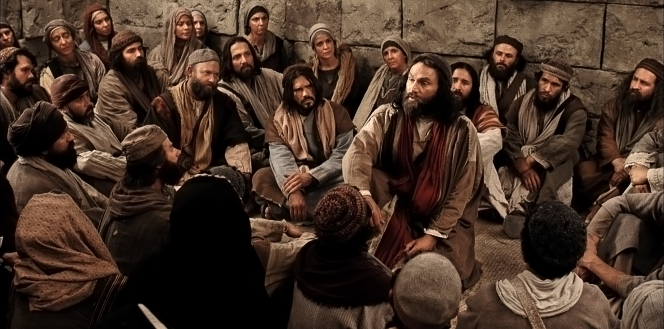
It began with just a few men. They didn’t know exactly what kind of damage they were about to inflict on their own reputation, for all of eternity. The account is found in Acts 15 with “some men” going down from Judea and teaching, “Unless you are circumcised according to the custom of Moses, you cannot be saved.” Paul and Barnabas debated them fearlessly, but the damage had been done. The argument had so successfully confused and stirred up the assembled group that it was decided to take matters up the command chain. They were off to meet with the apostles and elders in Jerusalem.
Paul and Barnabas hadn’t lost faith and in fact, they proclaimed what God had done for the Gentiles to all who would listen on their trip. The news of God’s grace to all races and nations brought the listeners a great joy. In Jerusalem, the apostles and elders had already gathered to deal with the fierce conflict. It didn’t take long for the group to separate into two teams each holding two different beliefs about God’s will for all. It was at this moment where Peter stands up and begins to speak. He explains that God knows the heart of all of us and He’s always known.
The spirit had descended on the apostles to prove that there is no discrimination between Jews and Gentiles. The demand for proof is always in our hearts, and so the Spirit demonstrated miraculous powers to give credence. Peter would explain that under the Jewish law, even Moses and the greats couldn’t bear the load. It wasn’t sustainable, and it wasn’t meant to last.
It’s verse twelve that gives one some additional insight. It says, “And all the assembly fell silent, and they listened to Barnabas and Paul as they related what signs and wonders God had done though them among the Gentiles.” How do we solve our conflicting views that spring up in our midst? There’s only one effective way to do so and that’s to take our matters of division to the top. Not preachers, teachers, deacons, or elders, but to the very top.
If God is going to speak, we’ve got to be quiet. The assembly went silent. Everyone there, no matter what their belief was—decided to listen. Speaking over each other never solved a problem and this is true on a congregational level, as well as a personal one. How many times do we fall victim to the assembly of the thoughts and bias in our own minds when reading God’s word? It can be difficult to hush those voices, but it’s when we do that real change has a chance to take root.


















 The Preacher Pollard Blog