When you sit down with a financial planner, they look at your age and try to help you determine how to reach retirement goals. Particularly younger clients are usually told to invest at least a fraction into new, small and foreign companies. These may be riskier, but they are key to successful investing. When you find that special someone with whom you think you want to spend the rest of your life, you become keenly aware of risk. You risk rejection by making your feelings known. You put your heart at risk for disappointment, betrayal and hurt. But, think of the payoff for taking such a risk! Marriage can bring greater bliss than one would think possible on this earth. When facing a job change or relocation, that is a scary proposition. Will it be a failure, a flop and a frustration? One never knows, but often the risk is rewarded with renewal, growth and challenge. Risk is inherent for success.
For the church to succeed and grow, it must take risks. It must risk displeasing some people in order to please and obey the Lord. It must risk financially, stretching and challenging itself through ambitious contribution goals. It must risk emotionally and socially, when its members strive to reach out to lost souls and face potential rejection. It must risk in these same ways to reach out to other members in an attempt to build relationships needed to make a church close and strong. Yet, those who take the risk find the results rewarding and gratifying. Do we believe that God blesses those who are willing to risk themselves, their pocketbooks, their hearts and lives for the good of the Kingdom?
Look at Barnabus and Saul (Acts 15:25-26). Their risk paid off in greater service to Christ. Look at Prisca and Aquila (Romans 16:4). They “risked their necks” for Paul. Why did they do this? Not just for the gratitude of other Christians, but also for “eternal life” (Romans 2:7). Epaphroditus risked his life for the Philippi church of Christ (Philippians 2:30). It was to bring him honor and bring the church reward in righteous giving (29-30). Churches willing to take risks for the Lord will succeed and they will also be personally blessed. Are you willing to take that risk?
In 1215, the English nobility threatened to use force if King John did not sign the Magna Carta, which limited the monarch’s authority. We herald this document as a crucial step towards constitutional democracy. It laid the foundation for protecting individual rights and the rule of law. Before the Magna Carta, the monarch had unchecked power and could make decisions without limitations or accountability. It was the era of the “divine right of kings.” The Magna Carta challenged this concept and established that even the monarch was subject to the law.
In 1 Samuel 8, the Israelites asked Samuel to appoint a king to rule over them, despite God’s warning that a king would take away their freedoms and rights. Since they expressed a desire for a king, Samuel sought guidance from God on how to proceed. God told Samuel they could have a king but that when they cried out for relief, He would not answer them (1 Samuel 8.18). Even so, the Israelites said, “No, but there shall be a king over us, so that we also may be like all the nations, and our king may judge us and go out before us and fight our battles” (1 Samuel 18.19–20 NASB).
After the Israelites established a monarchy, they experienced a gradual erosion of their freedoms and rights. Kings had the power to impose taxes, conscript soldiers, and make decisions without consulting the people. This centralized authority often led to abuses of power and a lack of accountability. Additionally, the Israelites’ dependence on a human king shifted their focus away from God and placed greater trust in human leadership, which ultimately had negative consequences for their spiritual well-being.
Consider what the prophet Jeremiah said of King Jehoiakim:
And the Lord says, “What sorrow awaits Jehoiakim, who builds his palace with forced labor. He builds injustice into its walls, for he makes his neighbors work for nothing. He does not pay them for their labor. He says, ‘I will build a magnificent palace with huge rooms and many windows. I will panel it throughout with fragrant cedar and paint it a lovely red.’ But a beautiful cedar palace does not make a great king! Your father, Josiah, also had plenty to eat and drink. But he was just and right in all his dealings. That is why God blessed him. He gave justice and help to the poor and needy, and everything went well for him. Isn’t that what it means to know me?” says the Lord. “But you! You have eyes only for greed and dishonesty! You murder the innocent, oppress the poor, and reign ruthlessly.” (Jeremiah 22.13-17 NLT)
Jehoiakim is an excellent example of what the kings of Israel and Judah had become. And God kept His word and did not heed their cries. Instead, He allowed them to suffer the consequences of their actions. As God warned through Isaiah, “They will pass through the land hard-pressed and famished, and it will turn out that when they are hungry, they will be enraged and curse their king and their God as they face upward” (Isaiah 8.21 NASB95).
What lesson can we learn from Israel as it emerged from the period of the judges when every man did what was right in his own eyes? Trying to impose our will upon God can harm us. Hence, “Be careful what you wish for.” Supposedly, that expression originated with Aesop’s fable “The Frogs Who Wished for a King.” But the plot of that tale is similar to the account in 1 Samuel, with the frogs asking Zeus to give them a king. In response, Zeus initially gave them a log. When they complained, Zeus gave them a crane, which gobbled many of them up.
Jesus taught us to pray that the Father would do His will in our lives (Matthew 6.10). He also set an example by surrendering his will to the Father in the Garden of Gethsemane (Luke 22.42). The latter meant that Jesus would offer His life on the cross (see Philippians 2.5-8).
In reflecting upon these historical and biblical narratives, we are reminded of the enduring lesson that desires for earthly power and authority, when unchecked and pursued without heed to moral and divine principles, can lead to unintended and dire consequences. The Magna Carta, born out of the need to limit unchecked royal power, is a testament to establishing legal and moral boundaries on leadership.
Likewise, the story in 1 Samuel 8 and the subsequent experiences of Israel and Judah are cautionary tales about the potential pitfalls of pursuing human kingship without due consideration of the divine will. The consequences of their insistence on having a human king ultimately led to oppression and spiritual decline.
In light of these lessons, we are encouraged to approach our desires and aspirations with humility, seeking alignment with higher principles and the divine will, as exemplified by Jesus’ prayer for God’s will to be done. As Christ’s selfless act on the cross demonstrates, giving up our will for a greater cause can result in outcomes that honor God and the welfare of humanity.
David penned roughly half of the psalms. His name appears above 73 of the psalms and the New Testament attributes him as the author of two more (Psalm 2 and 95). He may also have been the author of several more of the 50 anonymous or unattributed psalms. But we also find poetic work from David outside the psalms. There is 1 Chronicles 16:8-36, given by David to the sons of Asaph as a song of thanksgiving and worship (some of which appears also in Psalm 105:1-15). Then, there is 2 Samuel 22:1-51, which reflects much of the content of Psalm 18:2-50.
The occasion of this psalm is explicitly stated. It is a song to the Lord, acknowledging His delivering David from Saul and his other enemies. David was a man of war, and he was challenged and disrespected by so many over time during his 40 year reign. We might call him embattled, continually weighed down by difficulties with others. While he had some extreme spiritual low points and multiple lapses in judgment, his overall character was of a man who trusted in God to deliver him and who tried to faithfully follow Him.
In 2 Samuel 22, David centers his thoughts on who God is. Notice what about God he focuses on.
GOD IS OUR RESCUER (1-20,44-49).
GOD IS OUR REWARDER (21-22,24-27).
GOD IS OUR RULER (23).
GOD IS OUR REDEEMER (28).
GOD IS OUR ROCK (32,47).
GOD IS OUR REFUGE (29-31,33-34).
GOD IS OUR REINFORCER (35-43).
GOD IS OUR REASON (50-51).
Read through this beautiful psalm and see the gratitude and praise David pours out toward God. He had been in many valleys and through some uncertain and frightening times, but he refused to blame God and was unwilling to believe he had been abandoned by God. Perhaps we have no better example of how to respond to personal adversity and unfair treatment than David. Instead of turning bitter and losing faith, David doubled down on what he knew about God! He put his trust in Him and counted on Him to carry him through. He was confident in God’s ability to prove Himself the victor against any and every foe. Whatever you are going through right now, please focus on who God is–your rescuer (2 Tim. 4:18), your rewarder (Heb. 11:6), your ruler (Rev. 1:5), your redeemer (Ti. 2:14), your rock (1 Cor. 10:4), your refuge (Heb. 6:18), your reinforcer (Eph. 6:10), and your reason (John 20:30-31)!
I Pt 4.12-19 is another difficult passage. God doesn’t want us to be caught off-guard when bad things happen to us because of our faith. We shouldn’t think that we’ve been intentionally singled-out. If we’re going to suffer, it should be because we’re doing what God wants. The process of judgment began for the world, and it started with the church. If we live for God, we’re going to be ok. But we have to avoid living like the world because they won’t be saved at the end.
Chapter 5 is addressed to elders in the first four verses. Elders who are proactive in watching out for peoples’ souls will get a huge reward at the end. Jesus will personally give out that reward. Verse 5 reminds the rest of us that we should submit to the authority God gave elders, because God is against pride but will lift up people who practice humility. 6-11 is Peter’s parting encouragement to these Christians facing imminent death. Be confident in God! No matter what happens to us here, everything will be alright in the end. God will personally ensure that everything we go through in this life will be worth it!
Anecdotal and emotional appeals are made. Expressions of dissatisfaction with how things are “done in churches of Christ” and anxious concerns that we are in the minority seem to ignore something much more significant. What does the Bible say?
A preacher recently wrote, “I wonder how many of our members are as dumbfounded as many of our ministers about our current practices with women in our churches, but have allowed fear and caution to keep them silent as our practices remain the same. Is it groupthink? Do we have well thought out theologies supporting our current practices? Do most of us realize the oddity of our male dominated services in 21st century society? Perhaps there are more who want to ask these questions than we sometimes imagine.”
In an age when women have been allowed by society to ascend all the way to the top of the corporate ladder, assuming the heads of companies, the fields of medicine, science, politics, and education, it may seem odd to some that she does not lead singing, lead prayers, “preside” over or serve the Lord’s Supper, preach, or serve as an elder or deacon in mainstream churches of Christ. Is this a civil rights issue? Is it a cultural issue? Exactly what is the issue?
The reason that those certain preachers feel “there comes a time that silence must give way to words and actions” seems bigger than a single issue. The reason has to do with a basic approach to the Bible and an attitude toward what it is and how it serves today. If the issue was simply what the Bible has to say, the issue would be an open and shut case. In 1 Timothy 3:15, Paul tells Timothy he is writing that letter “so that you will know how one ought to conduct himself in the household of God, which is the church of the living God, the pillar and support of the truth.” This follows a “household of God” matter already mentioned by Paul in 1 Timothy 2:8- 15. Amid a discussion of women’s role, Paul says, “A woman must quietly receive instruction with entire submissiveness. But I do not allow a woman to teach or exercise authority over a man, but to remain quiet” (11-12). The reason he gives is not tied to first century culture. As Timothy was the preacher at Ephesus and was half-Greek himself, Paul did not appeal to ethnicity. He goes back to the creation, a different time, place, and ethnicity. Cultural practice or norm was not the issue.
Here is the issue. What is our attitude toward the Bible? Is it God-breathed, equipping man for every good work (2 Tim. 3:16-17)? Is the God who created each of us, our world, and the universe, with every amazing intricacy of design, smart enough and powerful enough to successfully communicate to man in written form in a way that would stand the tests of time, transmission (making copies from original documents), and translating it into different languages? Certainly, man would be incapable of this, but dare we say that God did not do this? Especially should we be careful when the Bible claims over and over again that God did communicate through inspired men.
If scripture is not reliable as the standard of religious authority and does not contain an established pattern for teaching and practice, so many other matters are up for grabs–the institution of marriage as it is, homosexuality, abortion, calling our Creator “Jehovah” rather than “Allah,” the Deity, atonement, and resurrection of Christ, and the list is truly inexhaustible. On what grounds do we reject clear teaching on women’s role in churches of Christ while accepting that there is no way to the Father but through Christ? Beware! This is bigger than a single issue. One’s attitude toward the inspiration and authority of scripture is the real, underlying issue!
Usually, people fall into 1 of 2 categories: List makers and everyone else and I don’t know what their collective is since I’ve never seen it written down. Now, myself being an introvert, I fall into the list maker category. I’m not obsessive about keeping a physical list, but a mental list is always there to almost a point of paranoia. But this list is necessary.
Me being an introvert, I need to have mentally prepared myself for what is going to happen. If there is a surprise I could freeze up. In order for me to be productive and effective I have to be prepared and anticipate all that is going to happen that day. This leads us into the lesson of being prepared for our future, specifically, by our past planning and future execution with our decisions at a high level overview.
Look with me in 1 Corinthians 15:12-18. [12] Now if Christ is proclaimed as raised from the dead, how can some of you say that there is no resurrection of the dead? [13] But if there is no resurrection of the dead, then not even Christ has been raised. [14] And if Christ has not been raised, then our preaching is in vain and your faith is in vain. [15] We are even found to be misrepresenting God, because we testified about God that he raised Christ, whom he did not raise if it is true that the dead are not raised. [16] For if the dead are not raised, not even Christ has been raised. [17] And if Christ has not been raised, your faith is futile and you are still in your sins. [18] Then those also who have fallen asleep in Christ have perished.
The part that I want to key in on is in vs 17. Now let’s look at vs 17 again with another lens. vs 17, if Christ has not been raised then your faith is futile and you are still in your sins. The other lens would say that a life of sin and without Christ is futile. Our whole existence, purpose, importance, any other strong words that you would want to add to that list, is futile.
Mounce defines futile as idle, ineffective, worthless, 1Co 3:20; groundless, deceptive, fallacious, 1Co 15:17; useless, fruitless, unprofitable. Reinforcing the idea throughout Scripture that without Christ what we do is useless.
If we continue reading the rest of 1 Corinthians 15 we see the importance of being baptized in 1 Corinthians 15:22, “For as in Adam all die, so also in Christ shall all be made alive.” And in verse 29 we see Paul asking the question if Jesus was dead what would be the benefit of baptism. It is Christ’s resurrection that gives us victory over death as we see Paul saying in 54 and 55 which is also a quote from Hosanna 13:14. Verse 56 explains briefly the relationship between law and sin, but Christ gives us victory.
So back to verse 17. If we believe in Christ then our life has and is a purpose. Whether it be our past selves or our current selves we know how our plans and preparedness set us up for our future. Are we prepared and ready? Have we done what is needed to secure our plans and not be surprised by our eternity. The great thing about this is we hold all the control in what we decide to do. We are running the race and all we have to do is finish, not be first.
Thanksgiving is just around the corner, and I can’t help but wonder how many people in the United States will take a moment to thank God. While some reject the day due to its association with Plymouth and the “original Thanksgiving” celebration, the fact remains that all of our presidents have thanked God in their Thanksgiving proclamations. Therefore, I am okay with doing away with the pilgrims as long as we can maintain the day’s significance set forth by historical figures such as Abraham Lincoln. On Thanksgiving Day, we reflect on our blessings, express our gratitude to God, and ask for His continued beneficent providence in our national life. Thus, unlike Easter and Christmas, which carry pagan baggage from the standpoint of their traditions, Thanksgiving is the most Christian of all federal holidays.
Luke records an instance during Christ’s ministry in which He encountered ingratitude on a par with modern America. Only one of the ten lepers He healed returned to thank Christ for what He had done (Luke 17.11–19). Jesus even asked, “Were there not ten cleansed?” (NASB Luke 17.17) People do their best to spin the nine’s actions in a positive light. Emotion overcame the nine, and they longed to return to their previous lives. Besides, they followed Christ’s command to go and show themselves to the priests. And what if the Samaritan only returned because he lacked a priest to whom he could present himself as a foreigner? In any case, Jesus told the Samaritan that his actions had made him “well” (Luke 17.19).
What prevents us from showing gratitude like the Samaritan? Here are seven possible reasons:
We are too busy and distracted. Modern life can be busy and distracting, making it difficult to appreciate the present moment and count blessings.
We can be too materialistic. It can be challenging to be grateful for what one has in consumerist societies because materialism has overtaken the value placed on intangibles like relationships and experiences.
We compare ourselves to others. Due to constant comparison with others and the influence of social media, one may experience feelings of inadequacy or jealousy, which can prevent one from feeling grateful for their life and circumstances.
We may have a negativity bias. People naturally tend to dwell on negative rather than positive things. Instead of focusing on what we have, we will concentrate on what we don’t. That inclination is a negativity bias.
We are on a hedonic treadmill. This phenomenon of becoming accustomed to pleasure is known as hedonic adaptation. In simpler terms, we get used to things emotionally. For example, when I acquire a new and shiny object, it brings me happiness. However, this happiness is short-lived, as I soon become accustomed to it.
Similarly, when something terrible happens, I feel sad but adapt to the change over time, and my happiness levels return to normal. As a side note, we note that God offers us joy, not happiness. Joy is renewed from within, avoiding the hedonic treadmill. Hence, it can even be an implied imperative (see Philippians 4.4).
We forget to be still. This results from failing to heed Psalm 46.10, which says, “Be still, and know that I am God” (KJV). A similar root cause is that people are too preoccupied with their lives to stop and offer thanks. Luke 11.24–26 shows that refraining from one bad behavior is not enough to prevent the substitution of another bad behavior. We need to fill the void by starting something useful. New Agers and Buddhists would call this “practicing mindfulness.”
But Christians do engage in their form of mindfulness as well. A Christian sets aside specific times for quiet reflection, away from the distractions of daily life, rather than sitting in the lotus position and breathing deeply. Christian mindfulness is about creating a space to focus inwardly and become more aware of God’s presence. Praying and reading the Bible are two of the best ways to accomplish this. Those who commit to being still and knowing God will be grateful.
We feel entitled. Individuals may feel entitled in societies where success and happiness are highly valued. This thinking can dull people’s gratitude and lead them to take their blessings for granted. Gifts become their norm rather than providential occurrences (see James 1.17).
As Thanksgiving draws near, we must truly understand what this holiday is all about. It’s not only a time for food and family gatherings but also genuine gratitude. In our busy lives, full of distractions and the pursuit of material comforts, we often forget to give thanks for the simple things. However, this day allows us to break free from these tendencies. It encourages us to step off the hedonic treadmill, put aside our negativity bias and the sense of entitlement that clouds our perception, and instead embrace a spirit of thankfulness. By being still, as suggested in Psalm 46:10, we can truly appreciate the blessings bestowed upon us, recognizing them as gifts from God rather than mere entitlements or passing pleasures. Thanksgiving, at its core, is a day to emulate the gratitude of the Samaritan leper, acknowledging our blessings and expressing our heartfelt thanks to the Divine. In doing so, we honor the tradition set forth by figures like Abraham Lincoln and cultivate a more profound sense of joy and contentment in our lives. So, let this Thanksgiving remind us to pause, reflect, and give thanks with a full heart.
Something you will hear often if you have spent any amount of time in the Lord’s Church is “read your Bible.” This simple, yet important command is needed in our walk with God. Why? The need for daily encouragement is essential because it is easy for our hearts to go astray without it. Without consistent meditation on God’s word we open the door to the mindset of the world.
The Israelites chose to stray away from God, they neglected His commands and let their hearts grow cold. The Hebrew writer tells us that Christ is able to discern our heart. He knows our spiritual condition, even if we have convinced others of something that isn’t true.
Hebrews 3:12 says, “Take care, brothers, lest there be in any of you an evil, unbelieving heart, leading you to fall away from the living God.” After the quotation in 3:7-11, the writer issues a warning (3:12). He warns the “brothers” (2:11-12,17; 3:1) not to have an “evil, unfaithful heart in falling away from the living God.” Even if no one else knows, God knows. Even if you attend services regularly, people say you’re a good person, and everyone is convinced you’re a Christian, God knows if your heart is evil.
So what do we do? How can we keep this from happening? Hebrews 3:14 says, “We are partakers with Christ if we hold fast till the end the confidence we had at first.”
Israel did not “hold fast” in faithfulness to the end of the journey (3:6,14). At the end of the discussion of this Psalm, the writer again urges the readers to “hold fast” to their confession (4:14). This is another way of urging them to “be faithful.”
We are to remain faithful and hold fast to the confession we made that Jesus is Lord, but the writer gives us a specific example in 3:12-15:
“Take care, brothers, lest there be in any of you an evil, unbelieving heart, leading you to fall away from the living God. 13 But exhort one another every day, as long as it is called “today,” that none of you may be hardened by the deceitfulness of sin. 14 For we have come to share in Christ, if indeed we hold our original confidence firm to the end. 15 As it is said, “Today, if you hear his voice, do not harden your hearts as in the rebellion.”
“Exhort one another.” That means to urge strongly, appeal to, urge, exhort, encourage. This is why we are a family. When we come together this is what we should be doing. Helping fellow brothers and sisters in our walk with God. By doing so we can stay strong and make sure our hearts are right with God. Because if they aren’t, Christ the living word is able to discern the heart of man.
The human heart is a complex thing. It sustains life, is constantly working and it is a necessity. Spiritually, our heart should be so focused on God and His word that it gives us eternal life. It should be constantly active so as to avoid spiritual death and complacency. It should always remain a necessity to grow and nurture our heart, motivated by the fact that Christ can see just who we are on the inside.
In I Pt 4.1-6, we’re reminded that “new life” means adopting a new lifestyle. Jesus was willing to suffer, so we should be too. For those who converted recently, their friends might think it’s rude that they don’t do the same things they used to. They might even be painted in a bad light around their old friends. It’s hard for anyone to lose their friends!
But we’re reminded in 4.7 that the end is near. In the context of I Peter, that was the end of their lives. For them, it was the end of all things. Its double meaning is that the end of the world is near. But this was written 2000 years ago, so how was the end near? God doesn’t experience time the same way we do. But in light of world history, 2000 years isn’t that much time. The Patriarchal Age lasted 2500 years. The Old Law was in effect for 1500 years. Until about 500 years ago, the Bible was not accessible to most of the world. It’s not too much of a stretch to assume that God assigned a dual meaning to this passage. We have no idea when the end will be, so we need to “keep our minds clear and control ourselves.”
How does God expect us to live while we’re waiting for the end of all things? 4.8 tells us to love each other deeply. How? By opening our homes to each other and sharing the food we have without complaining (9). By remembering that God gives us so much grace, and we should use our talents to help each other (10). If we’re good at encouraging, we should pursue that with all our strength. The same goes for serving others (11). This section tells us that time is too unpredictable and limited for us to be messing around. Humanity is diving headfirst into chaos, but that isn’t our concern. Even if this is the end, God wants us to use our time to help each other.
The concept of angels and angelic beings filling the role of guardian is found several times throughout scripture. A cherubim with a flaming sword that flashed in every direction to guard the the way to the tree of life (Genesis 3.24). Jesus tells us that each child is assigned an angel and that angel is of such high rank that it can see the face of God (Matthew 18.10). While certain angelic beings, like the Cherubs, are depicted as guardians— it’s possible that any rank of angel might serve in this way (Psalm 34.7).
Here are a few fascinating sections of scripture that shed light on the mysterious operation of God’s heavenly host.
Daniel’s Angel
The Old Testament provides several examples of angelic intervention, but what unfolds in Daniel 10-12 stands apart. A distressed Daniel had been praying for three weeks and it was starting to look as if God had forgotten about His prophet. After Daniel had spent twenty one days of fasting and prayer, we read,
“I looked up and there before me was a man dressed in linen, with a belt of fine gold from Uphaz around his waist. His body was like topaz, his face like lightning, his eyes like flaming torches, his arms and legs like the gleam of burnished bronze, and his voice like the sound of the multitude” (Daniel 10.5-6).
Daniel’s unnamed angel has finally arrived and he actually provides a reason for why it had taken him so long to respond to Daniel’s prayer. The angels explains, “Since the first day that you set your mind to gain understanding and to humble yourself before your God, your words were heard, and I have come in response to them. But the prince (patron angel) of the Persian kingdom resisted me twenty-one days. Then Michael, one of the chief princes (angels), came to help me, because I was detained there with the king of Persia” (Daniel 10.12-13).
Daniel’s angel was locked in combat with an evil spiritual force he called “the prince of Persia” and things had become so heated that Michael the Archangel (see also, Jude 1.9) had to intervene. Paul would later confirm the reality of spiritual warfare when he tells those first century Christians, “…we do not wrestle against flesh and blood, but against the rulers, against the authorities, against the cosmic powers over this present darkness, against the spiritual forces of evil in the heavenly places” (Ephesians 6.11-12).
Just as Daniel is about to receive information about the future sourced from the Book of Truth (see also, Revelation 20.12), the unnamed angel tells him, “No one supports me against them (the evil forces) except Michael, your prince. And in the first year of Darius the Mede, I took my stand to support and protect him” (Daniel 10.21,11.1).
Michael is called by the unnamed angel, “your prince.” The use of the term prince in Daniel 10 has only been used to describe spiritual beings that seemed to yield some kind of ruling power over a nation. Michael isn’t Daniel’s personal angel but instead Israel’s “patron angel.” If Michael wasn’t Daniel’s guardian angel, then perhaps the unnamed angel fulfilled that role. While the unnamed angel responded to Daniel’s prayer and revealed visions of the future— he then returns to continue fighting the prince of Persia. We’re also told that he took special interest in Darius the Mede, so it’s not likely that he was Daniel’s sole protector either.
Peter’s Angel
In Acts 12 we find King Herod on a rampage. He kills James the Brother of John with the sword and then throws Peter in prison. While Herod is persecuting the church, the church begins praying— and God answers with an angel. Peter’s trial is scheduled for the next day but he wouldn’t make it because, “Suddenly an angel of the Lord appeared and a light shone in the cell. He struck Peter on the side and woke him up. “Quick, get up!” he said, and the chains fell off Peter’s wrists.
Then the angel said to him, “Put on your clothes and sandals.” And Peter did so. “Wrap your cloak around you and follow me,” the angel told him. Peter followed him out of the prison, but he had no idea that what the angel was doing was really happening; he thought he was seeing a vision.
They passed the first and second guards and came to the iron gate leading to the city. It opened for them by itself, and they went through it. When they had walked the length of one street, suddenly the angel left him. Then Peter came to himself and said, “Now I know without a doubt that the Lord has sent his angel and rescued me from Herod’s clutches and from everything the Jewish people were hoping would happen.”
The way in which the angel strikes Peter to wake him, the chains falling off his wrists, the iron gate opening by itself, and then the angel’s sudden disappearance are all details we can appreciate. However, the following verses are also intriguing. Notice who Peter is mistaken for, “…. He (Peter) went to the house of Mary the mother of John, also called Mark, where many people had gathered and were praying. Peter knocked at the outer entrance, and a servant named Rhoda came to answer the door. When she recognized Peter’s voice, she was so overjoyed she ran back without opening it and exclaimed, “Peter is at the door!”
“You’re out of your mind,” they told her. When she kept insisting that it was so, they said, “It must be his angel.” But Peter kept on knocking, and when they opened the door and saw him, they were astonished” (Acts 12.7-16). The early Christian’s make an interesting assumption and they must have had reason to think that Peter’s angel either resembled or could resemble Peter himself.
Non-Canonical Coincidences
The Early Church Fathers On Patron Angels
Clement of Alexandria (Post 202 A.D.): “…for regiments of angels are distributed over nations and cities; and perhaps some even are assigned to particular individuals.”
Origen, Homilies on Luke (Post 233 A.D.): “To every man there are two attending angels, the one of justice and the other of wickedness.If there be good thoughts in our heart, and if righteousness be welling up in our soul, it can scarcely be doubted that an angel of the Lord is speaking to us. If, however, the thoughts of our heart be turned to evil,an angel of the Devil is speaking to us.”
Rabbinic Commentaries & The Mistaken Identity of Angels
An angel appears in the likeness of Moses (Devarim Rabbah 2.29).
In a Jewish commentary on Ecclesiastes; “At that time an angel descended in the form of Solomon and sat upon his throne” (Kohelet Rabbah 2.4).
Another commentary on Genesis, possibly based on older sources, claimed that Jacob wrestled with Esau’s guardian angel (Bereshit Rabbah 77.3).
The parable of the two brothers in Matthew 21 was an early favorite of mine in childhood, though it had nothing to do with the fact that I have a brother. Of course, the focus is on each of their relationships with the Father more than their relationship to each other. Jesus is illustrating, as He often does, the fact that the sinners would accept Him before the corrupt religious leaders would. Yet, the fundamental problem of the Pharisees, as Jesus points out in this parable, is their profession without proper performance.
By application, how tragic are intentions without attending actions. The second son who said he would not but did is commended for his change of heart. Do we ever see any who follow the example of that second son?
* “I will not do it.” Jesus’ point was not to refer to that large class of people who say they will not, then follow through. Obviously, though, an unwillingness to serve Christ and those He died to save is not commendable. Keeping our word not to be involved or committed just won’t do!
* “I ought to do it.” Here’s the remark of someone with enough conscience to know what is right, but not enough desire or discipline to make the “ought” the “is.” That just won’t do!
* “I may do it.” This is the word of someone who has decided not to decide. Tomorrow is always their best work day. They are ever deciding, but never deciding. Of course, neither will this do!
God’s ideal servant is the one who says he will, then does it. As Jesus shows in this parable, He is even pleased with the stubborn whose heart is softened. Yet, the above groups’ attitudes just won’t do, literally and figuratively!
15 Then the Pharisees went and plotted how to entangle him in his words. 16 And they sent their disciples to him, along with the Herodians, saying, “Teacher, we know that you are true and teach the way of God truthfully, and you do not care about anyone’s opinion, for you are not swayed by appearances. 17 Tell us, then, what you think. Is it lawful to pay taxes to Caesar, or not?” 18 But Jesus, aware of their malice, said, “Why put me to the test, you hypocrites? 19 Show me the coin for the tax.” And they brought him a denarius. 20 And Jesus said to them, “Whose likeness and inscription is this?” 21 They said, “Caesar’s.” Then he said to them, “Therefore render to Caesar the things that are Caesar’s, and to God the things that are God’s.” 22 When they heard it, they marveled. And they left him and went away.
We often speak of this passage as an example of how the Pharisees tried and failed to trap Jesus in a religious question. We also know we have a responsibility to pay taxes that we owe.
But let’s focus on the last part of Jesus’ response, “…and to God the things that are God’s.” What is God’s? If we use the same test that is used in this passage of whose image is on something, what is God’s image on? What do we owe God?
We don’t put an image of God on anything. “So God created man in his own image,
in the image of God he created him;male and female he created them” (Gen. 1:27). God’s image is on us. We are made in His likeness. We are what is due Him. So how do we give ourself to God?
What if we ask ourselves what’s the most important thing to do? Let’s look at another time someone quizzed Jesus. “And one of the scribes came up and heard them disputing with one another, and seeing that he answered them well, asked him, “Which commandment is the most important of all?” 29 Jesus answered, “The most important is, Hear, O Israel: The Lord our God, the Lord is one. 30 And you shall love the Lord your God with all your heart and with all your soul and with all your mind and with all your strength.’ 31 The second is this: You shall love your neighbor as yourself.’ There is no other commandment greater than these” (Mark 12:28-31).
Jesus gave two commands: loving God and loving your neighbor. This might sound like a test in school, “its just two questions” but then each has ten subparts and each answer is dependent on the previous. These were two loaded commands. This was an overview of the 10 commandments from Exodus 20. The first four were about loving God and the last six were about loving your neighbor. In John 14:15, Jesus says, “If you love me, you will keep my commandments.” I don’t mean for this to be a lesson about the Ten Commandments, but a reminder to love God completely.
If you are not loving God as Jesus described…
If you are not loving the Lord your God with all your heart and with all your soul and with all your mind and with all your strength…
A “guilty pleasure” is something that one enjoys despite believing other people don’t generally value it or think it’s strange or unusual. It often implies enjoyment of something that societal standards may view as low-brow or embarrassing, but the individual finds personal enjoyment in it regardless. This pleasure could be a specific type of music, a television show, food, or any other enjoyable activity that might not be considered “sophisticated” or “appropriate” by some.
Embarrassment or the acknowledgment that one’s enjoyment may not be socially acceptable causes the feeling of guilt. At the same time, “pleasure” indicates the personal joy or gratification one gets from it. Therefore, “guilty pleasure” does not always mean something unethical or immoral. It’s more about finding value in something that society frowns upon or labels as “low culture,” “kitsch,” “campy,” etc.
Rather than being due to actual wrongdoing, guilt often results from a contrast with one’s usual standards or tastes or from a perception of the judgment of others. The concept of guilty pleasure is widely recognized and accepted as a regular part of human behavior. Hence, whether you realize it or not, you likely have a few guilty pleasures too.
Dystopian and disaster scenarios are some of my guilty pleasures. I’ll use the 2004 apocalyptic thriller The Day After Tomorrow as an illustration. It nicely sums up Al Gore’s and Greta Thunberg’s exaggerated climate alarmism. But even Roland Emmerich, who brought us Independence Day, couldn’t find mainstream success with his ludicrous environmental doomsday epic. A 50% audience score and a 45% Tomatometer score on Rotten Tomatoes explain why it’s one of my “guilty pleasures.”
Recently, I came across “Doomsday: 10 Ways the World Will End” on the History Channel. As I had a little time on my hands, I gave it a watch. I was not disappointed. Having Michio Kaku as a guest on the show was a highlight for me. I can’t put my finger on why I find him so intriguing. Therefore, I pause the remote and pay attention whenever I see his face. This series had everything in its ten hypotheticals, from a mega eruption at Yellowstone to the Earth being pulled out of orbit and hurtled into the sun.
I smiled wryly as I listened to an anthropologist with huge gauges in his earlobes describe how the latter scenario would result in a gradual temperature rise that would eventually engulf the planet in “hell.” I couldn’t help but notice that the only time producers used Bible-related terminology was about a place of eternal punishment “where their worm does not die, and the fire is not extinguished” (Mark 9.48 NASB).
I wonder why I find it entertaining to watch things that I know to be implausible and ridiculous. I should swallow my pride rather than end up sounding like that Pharisee in the Temple. “God, I thank You that I am not like these academics who do not believe in You.” More than likely, I use my guilty pleasure to reassure myself that everything will be fine.
I’m not a natural salesperson. The sales commission I make would not be enough to support me. However, I have studied materials on success in a cold sale. A sale that has no prior leads is considered “cold.” You are going up to a total stranger and trying to make a sale. You may see why an evangelist would read such a book out of curiosity.
Imagining the worst-case scenario is one strategy for buffering the emotional impact of rejection. You might, for instance, imagine a situation in which, after you’ve formally introduced yourself to the homeowner, he goes off and punches you in the face for no apparent reason. If the person says “no” to your sales pitch, you can console yourself by thinking, “Well, at least he didn’t punch me in the face.” This method is great for calming your nerves.
When I watch a doomsday scenario movie or documentary, I immediately notice that the show’s producer has overlooked one crucial factor: the existence of God. God’s existence ensures that nature always follows its laws. Hence, Earth will not experience any disturbance in its orbit. Instead of suggesting that past eruptions in Yellowstone indicate a repeat occurrence, this evidence is more consistent with the mechanisms God used to destroy the world in a global deluge. Although mankind can make life on Earth quite unpleasant, only God has the power to wipe out all human life forever. In the meantime, He has promised that the cycle of planting and harvesting, cold and warmth, summer and winter, day and night, will never end (see Genesis 8.22).
Perhaps you don’t enjoy watching disaster films or documentaries. I understand. But maybe this will help you see why I refer to this as one of my “guilty pleasures.” I know you will agree that God’s promises are worth holding on to. When fear overwhelms you, even if it seems irrational, remember to take solace in the words we attribute to the sons of Korah in Psalm 46.
“God is our refuge and strength, A very ready help in trouble. Therefore we will not fear, though the Earth shakes And the mountains slip into the heart of the sea; Though its waters roar and foam, Though the mountains quake at its swelling pride.” (Psalm 46.1-4 NASB)
We used to sing a song in church growing up called, “There’s An Eye Watching You.” The chorus goes like this, “watching you, watching you, every day mind the course you pursue; watching you, watching you, there’s an all-seeing eye watching you.” As a kid and even into adulthood, I would sing this song and envision a giant eyeball in the sky. While this isn’t case, maybe it would do us good to think of God’s eye watching us each day.
Psalm 33:13-14 says, “The Lord looks down from heaven; he sees all the children of man; from where he sits enthroned he looks out on all the inhabitants of the earth.”
If God sees “all the inhabitants of the earth,” He is automatically breaking the laws of time and space. Tanzania, Africa is 8 hours ahead of where I am in Kentucky. Cambodia is 12 hours ahead. Half the world is asleep because half the world is in darkness at any given point in time. God is naturally present in every aspect of the natural order of things, in every manner, time and place. He sees EVERYONE!
God saw Hagar when she was on the run from Sarah (Gen. 16), and Hagar gives God a new name…”the God who sees” because God saw she was in need and helped her.
God saw righteous Noah in a world of wickedness. God saw Cain when he slaughtered his brother. God saw Israel in Egyptian captivity. God saw Joseph thrown into a pit and sold off by his brothers. God saw David as he hid from Saul and his men while they were trying to kill him. God saw Abraham obey His words and try to sacrifice his son Isaac. God saw His own Son, abused, rejected, spit on, and killed. God saw the early church as they were persecuted for following Christ. God sees you as you’re reading this article right now. God sees every deed and it is written down for the judgement day.
God sees everyone. Proverbs 15:3, “the eyes of the Lord are in every place, watching the evil and the good.” We live in a physical world with its four known space-time dimensions of length, width, height (or depth) and time. However, God dwells in a different realm—the spirit realm—beyond the perception of our physical senses. It’s not that God isn’t real; it’s a matter of His not being limited by the physical laws and dimensions that govern our world.
“For thus says the One who is high and lifted up, who inhabits eternity, whose name is Holy: ‘I dwell in the high and holy place, and also with him who is of a contrite and lowly spirit, to revive the spirit of the lowly, and to revive the heart of the contrite’” (Isaiah 57:15, ESV). God is spirit in the realm of timelessness rather than flesh in the sphere of time.
As Christians, we have a deep sense of comfort knowing that God, though timeless and eternal, is in time with us right now; He is not unreachably transcendent, but right here in this moment with us. And because He’s in this moment, He can respond to our needs and prayers.
We serve an incredible God. There’s no denying His amazing power and holiness.
A God who created everything with His Words. A God who sees all the inhabitants of the earth. A God who has the power and might to be everywhere on this earth at one time. A God who looked at me, who looked at you, and saw that we needed a savior.
So why then do we understand God’s power and yet still neglect our prayer life to Him? Or forget to study His Holy word? He sees what we do with our time, so make the most of it!
True understanding of Who God is will always result in righteous living.
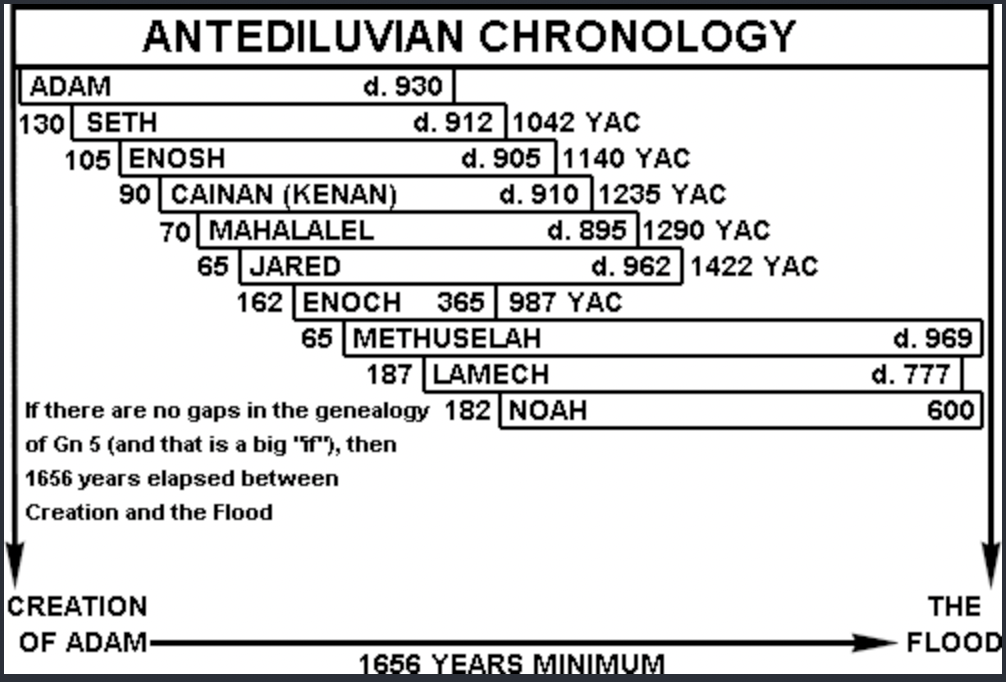
I Pt 3.19 is a difficult verse on its face, but it’s easily explainable. It’s tied to 3.18, “His physical body was killed, but he was brought back to life in spirit.” 3.18 simply says that he also used God’s power to help Noah tell everyone that a global flood was imminent. All but 8 people were killed in the flood because they refused to listen. Those “spirits now in prison” are identified clearly as those who lived in the antediluvian world.
Interestingly, many megalithic structures around the world (Ollantaytambo, Barabar, Ajanta, Ellura caves, Puma Punku, the city of Petra, Derinkuyu, Saqsaywaman, the Great Pyramid of Giza, etc.) show strong evidence of having been built before the flood. Several of these seem to have been designed specifically to protect against a doomsday scenario. We know all people were warned about the flood, but it seems most preferred to put their trust in stone rather than a wooden boat.
3.21 is the crux of the matter. Just as Noah and his family were saved from evil because of the flood, we get a clean conscience through baptism. We only have hope because Jesus came back to life, proving that death is on borrowed time. If we want a life with Jesus in a perfect world after we die, we have to make a formal appeal to God for a clean conscience. According to this verse, the only way to make that appeal is through baptism.
Joshua 23 marks the beginning of Joshua’s farewell address. He is “old, advanced in years” (1). He summons all Israel, their elders, heads, judges, and officers, to challenge and admonish them (2ff). He reviews all God had done to allow Israel to conquer Canaan (3-5). He wanted them to appreciate what God had given them. After reviewing their blessings, Joshua warns them to persevere going forward. There was another battle to fight, and that was a future apostasy. So, Joshua directs their attention to what they needed to do to fight that part of themselves that fall away from the Lord.
They would have to conquer complacency. He tells them to be firm (6), to keep and do all the Law (6), cling to the Lord (8), and take diligent heed (11). There could be no half-hearted following! They had to stay “all in.”
They would have to conquer compromise. They could not turn to the right or the left or associate with the nations surrounding them (6-7). They could not make these people’s gods their gods (7) or their women their spouses or friends (12). Failure to conquer compromise would carry grave consequences (16)!
They would have to conquer callousness. In the face of God’s promises and threats (14-15), they needed to keep their hearts soft to His Word. Instead, he wanted them to examine their hearts and souls and remain convicted (14)! Hardness of heart is spiritually fatal.
Perhaps the most formidable foe to my own faithfulness is me. Satan’s influence is certainly strong (1 John 5:19), but I must internalize James’ warning, too. ” Let no one say when he is tempted, “I am being tempted by God”; for God cannot be tempted by evil, and He Himself does not tempt anyone. But each one is tempted when he is carried away and enticed by his own lust. Then when lust has conceived, it gives birth to sin; and when sin is accomplished, it brings forth death” (Js. 1:13-15).
If I don’t conquer the desire for sin, I set in motion something ultimately lethal for myself. Tragically, Israel would not conquer themselves. They would become complacent, callous compromisers. And what God warned would happen did happen.
The comfort for us is that their outcome doesn’t have to be ours. We can look back on these events and learn from them. “Now these things happened to them as an example, and they were written for our instruction, upon whom the ends of the ages have come.Therefore let him who thinks he stands take heed that he does not fall. No temptation has overtaken you but such as is common to man; and God is faithful, who will not allow you to be tempted beyond what you are able, but with the temptation will provide the way of escape also, so that you will be able to endure it” (1 Cor. 10:11-13)!
Free will has been in the news recently with a neuroscientist, Robert Sapolsky, having recently published a book arguing that there is no free will. Let me set aside the scientific question for a moment and turn first to the Bible because there is a religious argument about free will. I once had a Calvinist professor sum up the debate as follows: “People who believe in free will say the Calvinist god is a tyrant, and the Calvinists say the God of free will is impotent.” While I understand that Calvinists want to protect God’s sovereignty against the implications of human free will (i.e. we can do things God doesn’t want us to do), that summary is lacking. Let’s look at some verses in the Bible that don’t usually come up in the debate on free will, and see what bearing they have:
Commands. God gives many commands throughout the Old and New Testaments—far too many to list exhaustively—but what does a command imply? If I were to command a person to bench press 10,000 pounds, do I seem reasonable? So, the Calvinist god that commands a person not to murder, if that person has no option over whether or not they murder, would be just as unreasonable. The God of the Bible is not unreasonable: “Come now, and let us reason together,” (Isaiah 1:18).
Choose. Most of the time, when the Bible speaks of choices, it speaks of God’s choices. That makes sense because of God’s sovereignty—His choices are certainly stronger than any of ours. However, there are several places where people are called upon to choose one thing over another. In one such place (2 Samuel 24:12), in response to David’s sin regarding a census, God specifically gives David 3 options for punishment and tells him to choose one. If David truly has no free will, then he has no options and no choice, which would make the Calvinist god a liar for telling him he did.
Who did Christ die for? We’re told (Romans 6:10, Hebrews 7:27) that Christ died “once for all.” If there’s no free will, why would Christ have to die for all? Couldn’t He just die for the sins that were going to be forgiven? But that just brings up the closely related question: Who does God want to save? We’re told twice in the Bible (1 Timothy 2:3-4 and 2 Peter 3:9) that God wants everyone to be saved. But we also know that not everyone will be saved (Matthew 7:13-14). The God of free will did make a sacrifice potent enough to cleanse every person that ever was, is, or will be of every sin that they ever committed, but He leaves to us the option of accepting it or rejecting it. The Calvinist god is either a liar again, telling people he wants to save them when he doesn’t, or perhaps he’s just not powerful enough to save everyone, making him the impotent one.
The God of the Bible, who gives us free will, is far more powerful and far more loving. He will allow you to stand against Him, but He’s too strong to be thwarted by any number of us. And even though He allows you to stand against Him, He made the sacrifice to save you so that you can choose to stand with Him. If there’s anyone here who’s been exercising their free will to reject God, consider instead to use your free will in your own best interest and accept God.
The Book of Hebrews is a crucial piece of writing that serves as a bridge between the Old and New Testaments. It demonstrates how the arrival of Jesus Christ fulfilled old promises. The narrative in the text shows how the old covenant, which relied on law and sacrifice, transformed into the new covenant, which operates through grace and redemption. This transformation is evident in chapters 8-10. Though God made the old covenant, it was only a temporary solution until the perfect one arrived – Christ’s selfless love. The text explains how something was amiss with the old covenant, but Christ’s sacrifice provided the ultimate solution to this problem.
Even though people performed the holy rituals and sacrifices of the old covenant with devotion, those actions were only a representation of what Christ could accomplish. In Hebrews 10.1, the author states that Jesus fulfilled what was happening in heaven, and the Tabernacle and its sacrifices only served as mere shadows. As our everlasting High Priest, Christ’s work goes beyond the earthly Tabernacle. He entered the heavenly sanctuary to offer His blood instead of animal blood, which secured our eternal salvation (Hebrews 9.11–12).
Jesus brings a better covenant based on better promises as we move from darkness to light (Hebrews 8.6). His sacrifice was a one-time offering that cleanses our consciences and allows us to have a relationship with God without hindrance (Hebrews 9.14). The key to this new covenant is Jesus’ sacrifice. Unlike the old covenant written in stone, God writes the new covenant in people’s hearts. It transforms people from within and empowers them to serve God with faithfulness (Hebrews 8.10).
The transition from the Old Covenant to the New Covenant brought a significant change not only in the way people worshipped God but also in how God related to them. With Jesus’ death, a new way opened up for us to confidently enter the Most Holy Place (Hebrews 10.19–20). Jesus acted as the mediator and witness of this new covenant. Under the old covenant, people observed the Day of Atonement once a year, which reminded them of their sins. However, Christ’s sacrifice is complete, sufficient, and everlasting (Hebrews 10.12–14).
The teaching in Hebrews serves as an encouragement for Jewish Christians to keep their faith strong by choosing the fullness of Christ’s sacrifice over the old covenant’s useless rules. This message is just as relevant today for all believers. We should celebrate the new covenant that Christ’s death made possible, which is not just a covenant of temporary rituals but an everlasting inheritance. The New Testament calls us to lead a holy life, have faith that we will be saved, and develop a personal and life-changing relationship with God. In short, the new covenant is superior in every sense as it completes God’s story of redemption and sets us on a path of eternal fellowship with Him.
Understanding the difference between the old and new covenants is as important today as in the early church. It not only helps us to understand the history of the Bible, but it also shapes how we practice our faith, dropping old rituals in favor of worship and service per a new, living faith. This change requires reassessing traditional practices. One such practice needing reevaluation by many professing the name of Christ in light of the new covenant is using mechanical instruments in worship. This topic is debated among believers, as some argue it aligns with the spirit of worship under the new covenant. However, it reflects an attachment to old practices that the new covenant has rendered obsolete since those like David, the writer of songs accompanied by musical instruments, lived under the old covenant.
The Hebrews writer states that, in contrast, we under the new covenant offer up the fruit of our lips (Hebrews 13.15). It’s the Spirit’s guidance that leads us to worship in truth and spirit (see John 4.23-24), pointing to a faith that is vibrant and active, rooted in the internal transformation Christ’s sacrifice brings. To fully realize the benefits of the new covenant, embracing this spirit-led rule of faith—secured by Jesus’ blood—is essential. Our worship and devotion to God should thus reflect the inner change wrought by Christ instead of a reliance on outdated rituals. As we navigate these changes, it is the heart transformed by Jesus that directs our service, a theme as central to the message of Hebrews as it is to our contemporary journey of faith.
Spending time focused on the family is a necessity. God has given parents a responsibility that should never be taken lightly. There are many opportunities in the church that we can take advantage of to create unified families– youth rallies, potlucks, family retreats, and so much more! Spending time together as a unified body, made up of many individual families, is a unique blessing only found in the church. When we choose to bring our families together and worship, eat food, and enjoy fellowship in Christ we imitate the early church.
In Acts 2, the church has just been established, and they eat together, sing together, learn together, pray together, and loved to spend time with each other. A close family In Christ spends time together. Worshipping together is a unifying process, but time spent together outside of the worship setting contributes to growth in our relationships with each other.
Shared history makes for a closer bond. Creating memories with our spiritual family builds unity.
That should be our goal today, tomorrow, and for our entire time on this earth. What does the Bible say about the fellowship we have together as a family?
We are given all kinds of descriptive names in the Bible.
The early church was called:
Those of the Way
The Called out
Christians
All of these names paint for us a special picture. Those in Christ are FAMILY. We are unified with each other by a bond stronger than any force on earth. June 4th, 1940 Winston Churchill gave a powerful speech that changed the tone of the Second World War. In his speech he said, “we shall fight on the beaches, we shall fight on the landing grounds, we shall fight in the fields and in the streets, we shall fight in the hills.”
Sadly, in today’s society this sounds like a description of most people’s family vacation…uh ha haaa.
When there is a lack of unity in our physical families, there will be a lack of unity in the spiritual family. For us to understand the importance of the fellowship we have in Christ, we need to define some terms. The Greek word translated “fellowship” in Acts 2:42 is koinonia. This is defined as “Close association involving mutual interests.” Basically, it is a group of people who have a tight bond because they all have the same interests.
Christian fellowship, then, is the mutually beneficial relationship between Christians, who can’t have the identical relationship with those outside the faith. We are, or should be, closer to each other than anyone in the world. This is a FAMILY. God expects us to have mutual interests, (His Will) and to spend time together building a mutually beneficial relationship.
So, what is Christian Fellowship? The context for the “high priestly prayer” in John 17 actually begins back in chapter 13. This is the last supper. Jesus washes the disciples feet, He tells the apostles one of them will betray Him, Satan enters into Judas, Jesus tells His followers to love each other, Simon is told he will deny Christ, Jesus tells us He is the Way, the truth and the life, Jesus promises the Spirit to the apostles, He tells them that He is the true vine, that they will be hated by the world, BUT, He has overcome the world.
After He says all of this, “Jesus lifts His eyes up to heaven and begins to pray” (John 17:1). This prayer is powerful, it’s humbling, it’s personal. Jesus truly cared for His disciples, and He cares for us today. This was the last prayer the apostles would hear before His death. Immediately after He finished they went to the garden and Jesus was arrested. So the question is, what does Jesus pray for just moments before His crucifixion? UNITY! Jesus was concerned about His apostles, He wanted them to be one, and He prayed for every Christian to be one! The bond we have through Christ is so precious, we should never neglect the family Christ died to create.
In John 17:20-26, Jesus prays specifically for those who will believe the apostles’ teachings, that is, US.
Why should we be so concerned about our unity? Because Christ died to create what we have today. And we can show the world the Father by creating lasting relationships with each other.