What Is Truth? When We Know But Won’t Act

It wasn’t a philosophical question. It was the exhausted sigh of a man who had compromised so often that truth had become meaningless. He had traded integrity for security so many times that he no longer recognized the currency.

Brent Pollard

The Man Who Couldn’t Afford Truth

Pontius Pilate governed Judea the way most of us manage our lives—by compromise. A mid-level Roman official ruling a resentful province, he had learned that survival meant bending to political winds. Truth, in his world, was whatever kept Caesar pleased and mobs quiet.

Then Truth walked into his courtroom.

“Are You the King of the Jews?” Pilate asked. Jesus answered, “For this I was born—to bear witness to the truth.”

Pilate’s response exposes every human heart: “What is truth?”

It wasn’t a philosophical question. It was the exhausted sigh of a man who had compromised so often that truth had become meaningless. He had traded integrity for security so many times that he no longer recognized the currency.

The Coward Who Saw Clearly

Here’s what haunts Pilate’s story: he knew.

Three times he declared Jesus innocent. His wife warned him in a dream. His conscience screamed. Yet when the priests threatened—”If you release this man, you are no friend of Caesar”—Pilate’s courage evaporated. He chose career over conscience, comfort over conviction.

Then came his famous gesture: washing his hands before the crowd, announcing, “I am innocent of this man’s blood.”

One cannot wash away guilt if one will not confess. Water cleanses skin, not souls. Pilate’s basin was as empty as his heart.

The Sovereignty in the Surrender

But here’s where God’s purposes shine through human failure: Pilate couldn’t escape his role in redemption. When he ordered the sign above Jesus’ cross—”Jesus of Nazareth, King of the Jews”—the priests demanded he change it. Pilate refused: “What I have written, I have written.”

It was petty revenge, yes—one last jab at those who had cornered him. But beyond Pilate’s passive-aggressive defiance, God was writing truth in permanent ink. The placard that Pilate meant as mockery became prophecy. The “criminal” was indeed the King—not just of Jews, but of Pilate, Rome, and all creation.

God doesn’t need our righteousness to accomplish His purposes. Even our failures serve His sovereign plan.

The Mirror We’d Rather Not See

Pilate is us.

We know what’s right but fear what it costs. We recognize truth but won’t stand for it when the crowd turns hostile. We wash our hands of responsibility while blood stains our souls.

You and I don’t drift into heaven. Neutrality before Christ is impossible—by doing nothing, Pilate crucified Him. Every day we face the same choice: Will we crown Christ as Lord, or dismiss Him when it’s inconvenient?

What Must We Do?

Stop washing your hands. Moral evasion solves nothing. Confession begins where excuses end.

Count the cost, then pay it. Following Christ may cost you approval, comfort, or even advancement. But what profit is there in gaining the world while losing your soul?

Remember who stands before you. Jesus didn’t stand before Pilate—Pilate stood before Jesus. We don’t judge truth; truth judges us.

Act while conscience speaks. Every ignored conviction hardens the heart. Pilate’s tragedy began long before that Friday morning—it started the first time he silenced what he knew was right.

The Final Word

History remembers Pilate not for his power but for his weakness. His name endures not as a hero, but as the coward who asked, “What is truth?” while Truth stood before him.

You and I won’t face Jesus in a Roman court. But we face Him daily in every choice between comfort and courage, between what people think and what God commands.

Pilate’s question remains: What is truth?

Jesus answers: “I am the way, the truth, and the life.”

The question isn’t whether truth exists. The question is whether we’ll bow to it—or spend our lives washing our hands.

The Truth That Sets Free: Understanding “Aletheia” in John’s Gospel

Brent Pollard

The Gospel of John presents a profound and intricate exploration of truth, beautifully captured in the Greek term aletheia (i.e., truth). This theme transcends mere philosophical inquiry and is a vital cornerstone of John’s theological message, interwoven within his narrative and intent. One of the most striking examples of this theme arises as Jesus stands before Pontius Pilate, bound and facing judgment. The Roman governor’s skeptical inquiry, “What is truth?” (John 18.38), carries a weight of irony, as the essence of truth is present before him, a reality that Pilate cannot perceive. This crucial moment underscores humanity’s recurring struggle to recognize the truth of the divine when confronted with its presence.

The Gospel of John employs this concept of truth approximately 25 times, a notable frequency that significantly exceeds its occurrence in the Synoptic Gospels, underscoring its importance. John clearly articulates his purpose for penning these words: “Therefore many other signs Jesus also performed in the presence of the disciples, which are not written in this book; but these have been written so that you may believe that Jesus is the Christ, the Son of God; and that believing you may have life in His name.” (John 20.30-31). The truth that John advocates is not merely theoretical or scholarly; it is deeply personal, embodied, and ultimately redemptive, guiding one toward faith and everlasting life.

From its first lines, the Gospel reveals Jesus as the embodiment of truth. “And the Word became flesh, and dwelt among us, and we saw His glory, glory as of the only begotten from the Father, full of grace and truth.” (John 1:14). John 1:17 beautifully encapsulates this truth: “For the Law was given through Moses; grace and truth were realized through Jesus Christ.” Thus, truth transcends propositions for discussion; it is a being to be met and understood. In a profound statement, He clearly articulates, “I am the way, and the truth, and the life” (John 14.6). In this significant narrative, Jesus weaves Himself into the very fabric of the essential themes found within John’s Gospel: He embodies the way to the Divine, stands as the supreme unveiling of truth, and serves as the wellspring of everlasting life. To encounter the essence of Jesus is to grasp the very nature of truth.

The deep bond between the divine and truth is significant for those who seek to follow and honor Him. The Lord speaks to the Samaritan woman, declaring that “true worshipers will worship the Father in spirit and truth” (John 4.23). This declaration is not merely a set of rules but a reflection of genuine worship, arising organically from a sincere understanding of the nature of Jesus. Faith in Jesus as the Messiah enables a form of worship grounded in His revelation’s fullness rather than in fragmented insights or established customs.

Moreover, the truth embodied in Jesus is a source of profound liberation. In the passage from John 8.31-32, there is a significant assurance given to those who place their faith in Him: “If you continue in My word, then you are truly disciples of Mine; and you will know the truth, and the truth will make you free.” This liberty is fundamentally of the spirit, acting as a release from the bondage of transgression. Embracing the teachings of Christ and nurturing a bond with Him opens the door to a profound and liberating transformation.

The Gospel reveals a stark dichotomy between truth and deception, highlighting the profound struggle of the spirit. The Lord challenges those who turn away from Him, showing their loyalty to their “father the devil,” who “does not stand in the truth because there is no truth in him.” (John 8.44). This clear division underscores that accepting truth requires a deliberate decision to turn away from darkness and move toward the illumination in Jesus (John 3.19-21).

The Holy Spirit profoundly influences our understanding of truth. The Lord speaks of the Holy Spirit as “the Spirit of truth” (John 14.17) and assures that this Spirit will lead His apostles into “all the truth” (John 16.13). This heavenly guidance is vital for the apostolic testimony that underpins the foundation of the early church. In the solemnity of His “High Priestly Prayer,” the Lord intercedes for His followers, uttering the profound request: “Sanctify them in the truth; Your word is truth.” (John 17.17). The journey of being made holy, a calling to be distinct for divine purposes, unfolds through the truths revealed in the sacred scriptures, culminating in the person of Christ.

John highlights the importance of truth because his role as a witness depends on it. John highlights the importance of truth because his role as a witness depends on it. He consistently asserts the truthfulness of his account, declaring near the cross, “And he who has seen has testified, and his testimony is true; and he knows that he is telling the truth, so that you also may believe.” (John 19:35). He emphasizes this in John 21:24: “This is the disciple who is testifying to these things and wrote these things, and we know that his testimony is true.” For John, truth is not just a conjecture; it requires experience, observation, and thorough documentation to inspire faith.

The notion of aletheia within the Gospel of John is vibrant and centered upon Christ. Truth is the essence of divinity, the embodiment of grace and truth, who walks among us. This profound reality lays the groundwork for genuine worship, grants freedom from sin, consecrates the faithful, and contrasts with deception. Pilate’s question lingers, provoking us to think: Shall we acknowledge and accept the truth that stands before us? John’s Gospel invites us to embrace Jesus as the embodiment of truth, allowing His teachings to transform our lives and, in the spirit of John, to bear witness to the truth that leads us toward everlasting life. To truly know Jesus means embracing the essence of truth, and placing your faith in Him leads to discovering the abundant life, John 10.10, found in His name.

Unless otherwise indicated, Scripture quotations are taken from the NASB® (New American Standard Bible®, 1995 Updated Edition). Copyright © 1995 by The Lockman Foundation. Used by permission. All rights reserved.

Assurance Of Truth

Carl Pollard

A few years back, my dad and I traveled to Cambodia for a mission trip. One evening, we wandered through the night market, looking at all the different shops. They had everything from designer clothes to headphones like Beats, Gucci belts, and even iPhones—all unbelievably cheap! I mean, we’re talking $5 for a Casio watch, $10 for an iPhone, and $12 for an iPad. 

At first, it felt like a dream, but the longer we looked, the more we realized something was off. Those “Beats By Dre” headphones actually said “Beats By Bray,” and the Ray-Ban sunglasses actually said “Roy-Bans.” The Casio watch I bought? It seemed legit but died after a few weeks. These knockoffs looked real at first glance, but upon closer inspection, the truth was clear. 

These fake items exist because somewhere, genuine designer products are out there, creating a market for the fakes. Just like those counterfeits, false truths abound today. Jesus warned us about false prophets, and we see their influence everywhere. Satan takes what’s valuable and crafts knockoffs that seem real but lack true worth. As Buddy the Elf famously said, “You sit on a throne of lies.”

In a world filled with deception, false teachings threaten our faith. Yet, John, the apostle Jesus loved, assured early believers that they could have confidence in their relationship with God. There’s no reason to fear; we can have the assurance of truth. God desires for us to feel secure in our faith, knowing that we are saved, a privilege not extended to those outside of Christ.

John makes it clear why he wrote his letters. In 1 John 5:13, he states, “I write these things to you who believe in the name of the Son of God, that you may know that you have eternal life.” This assurance isn’t a gamble; it’s a certainty for those who believe.

John encourages us to evaluate our faith through three tests. First, do you believe that Jesus is the Son of God? 1 John 4:9-10 emphasizes God’s love for us, even when we were unlovable. He sacrificed His Son so we could live through Him. Recognizing this love is crucial.

Next, do you obey God’s commands? 1 John 2:3-6 tells us that knowing Him means keeping His commandments. Obedience isn’t just about fear; it’s rooted in love. We must trust and obey God, finding assurance in our faith through our actions.

Lastly, do you show love toward others? 1 John 3:14 states that love for our brothers and sisters shows we’ve passed from death to life. Love is an active choice, demonstrated through our actions and sacrifices. 1 John 3:18-24 challenges us to love not just in words but in deeds. 

In summary, ask yourself three essential questions: Do you believe in Jesus? Do you obey the Father? Do you love others? If you answered no to any, you may not be right with God. But there’s hope. With a repentant heart, God is ready to forgive and embrace you. So, how badly do you want eternal life? Enough to change your behavior? Let’s strive to embody belief, love, and obedience in our lives.

Osophobia

Ososphobia: The Fear Of Cannibalism

Dale Pollard

The name is derived from a Greek word meaning “human-eater.” 

In the movie 20,000 Leagues Under The Sea there’s a scene where one of the main characters finds himself on an island in the middle of the ocean. Suspense begins to build as he hears the faint sound of bongo drums beating in the distance and that sound becomes louder and steadily closer. Suddenly, out of the jungle line a large group of spear-wielding cannibalistic natives appear and they’re running right at the protagonist. They chase the poor man across the beach and he barely escapes by the skin of his teeth. 

That scene was terrifying and it even instilled in me this irrational fear of cannibals, even though they’re rare here in Tompkinsville Kentucky. 

Did You Know?

In the 1830s, European explorers came to the Fiji islands and they were horrified to discover the local custom of cannibalism. In my humble opinion, exploration is just not worth a run in with human-eating humans. Today, there are allegedly isolated tribes in the most remote places that still partake in the practice of plating people. 

Fear Is Natural 

We all fear something! The one who claims to be fearless is afraid to admit or confront their fear. Fear isn’t wrong; it’s actually natural. We’re supposed to have a healthy fear of the Lord (Job 28:28) and Solomon discusses the natural fear of death in Ecclesiastes. Facing fear is a noble thing but it only truly matters in a spiritual sense. 

The Fear of Truth 

A common phobia in our world today seems to be the fear of truth itself. Many in the Lord’s church know family members and friends who have refused to listen and act on the truth found in God’s Word. They’re afraid to give up the teachings taught to them by their families or the religious groups they grew up in. They’re afraid that the truth requires them to give up a sin they tightly hold on to and the sacrifice which is required to follow Christ. 

The Power of Truth 

The gospel of John is all about truth. In it we learn that Jesus is the only way to heaven— and that’s the truth (John 14:6, 17:17). Though confronting that truth might occasionally make us fearful, we must show others that it also has the power to free and cleanse us of our past and future sins. We must teach through our actions, daily lives, and yes, by inviting them to look at this great truth in Bible study. 

Understanding Truth

Thursday’s Column: Captain’s Blog

Some things just don’t mix. Milk and orange juice, taxes and freedom, Coca cola and Mentos. But there is one particular mix that can sometimes be fatal. Blood pressure medicine can be a great thing, but when mixed with Advil/Ibuprofen it can harm your body and even give you a brain hemorrhage. If you mix rubbing alcohol and bleach you create chloroform. It’s safe to say that some things in life just don’t mix.

20-30 years after the ascension of Jesus, Paul wrote to a group of Celtic Christians in Galatia warning them of the dangers of mixing two teachings. We find the establishment of these Galatian churches in Acts 13-15 (Derbe, Lystra, Iconium, and Antioch of Pisidia). In 15:1 Some people came down from Judea teaching that circumcision was required for salvation. This occurred right after Paul had converted them. They are new Christians, and Paul had a “great debate” with them there. In Acts 15:5, the Pharisees who “had believed” were the ones commanding this of Christians. Fast forward a decade, and these teachers are back in Galatia teaching that circumcision is required for salvation.

In Galatians one, the question Paul is trying to answer is, “What is required for a person to be saved?” Forget circumcision, forget additional teachings, what does GOD say? Paul gives his answer by basically saying, “We need nothing other than what is contained in scripture to walk in the light.” There is only ONE gospel. In Verse 6 Paul says, “I am amazed that you are so quickly deserting Him who called you by the grace of Christ, for a different gospel.” He uses the word “amazed” or thaumazo. 

These were Christians who should’ve known better. Their quick acceptance of this addition to the gospel amazed Paul in a negative sense. In Acts 4:13, this same Greek word is used to describe the scribes and Pharisees’ reaction to the apostles’ teachings. Again in Mark 5:20, we read that people were amazed by Jesus’ teaching. Paul now uses this word to describe his reaction to these Christians deserting the gospel! This word could be accurately translated as “deeply disturbed.” 

If there is anything added to that which is necessary for the maintaining of your walk in the light, it is not necessary for salvation. These Christians should’ve known better, but sadly sometimes we are the same way. We know what’s right and wrong and yet we still choose poorly (speech, actions, thoughts). 

The message that these Christians were to accept was that of the death, burial, and resurrection of Jesus and the correct way to be saved. Any requirement outside of the plan of salvation is a false doctrine that must be condemned. If that other requirement is the sinner’s prayer, it must be condemned. If that other requirement is a “new wave of salvation,” as some denominations teach, it is to be condemned. If that other requirement is a tradition not necessary for salvation yet is enforced as such, it is to be condemned. We are only compelled to follow what is contained in God’s Holy Word. 

Let’s be careful as Christians to follow and teach solely what God has required of us. 

Carl Pollard

TRUTH: FROM CONFUSED TO CONVICTED

Tuesday’s Column: Dale Mail

blond man with goatee smiling at camera with blazer on
Dale Pollard

If you were to flip on the TV and watch a news channel, it can quickly become frustrating. Channels like CNN will often say something entirely different than FOX or vice versa. What’s actually true? Who can we trust? What should we believe? 

Just when your mind begins to become convinced of one thing, you hear or see something that changes your thinking once again. This creates the skeptic, the double-thinker, and the cynic. 

Since a variety of propaganda will always be pushed and those personal agendas will always be hidden, it’s more comforting than ever to read and soak in pure unadulterated truth. So, here are some of those truths we can count on that our found in the Bible. 

  1. God is real and His message to mankind can only be found in every inspired word written in the scripture (2 Tim. 3:16-17). 
  2. The scriptures teach mankind the means by which we are saved and added to His church. God adds us through our action- based belief, repentance, and immersion (Acts 2:42ff, Titus 1:5-11). 
  3. Christians must live faithfully and in accordance to His instructions (1 Peter 1:15). 
  4. The faithful can only truly worship by following the pattern which is demonstrated by the 1st-century church and Apostolic examples (1 Tim. 2:8-15). 
  5. The Bible teaches that one day everyone will walk through the door that leads out into eternity. Whether or not we are lost or saved as we pass through that door will be the determining factor that dictates where our final destination will be (Rev. 20.12).
  6. It’s our Christian duty to ensure that others are aware of this spiritual reality (Matt. 25:46, Ecc. 12:7, 1 Jn. 1:7). 
  7. God can’t lie and every word He wrote is true (Ti. 1:2; Ps. 119:160). 
  8. It’s our responsibility to study His message because it’s the only thing that matters. 

These truths will never change. They are a constant you can count on and we’ve only scratched the surface. It’s crucial that every follower of Christ is convicted and well versed in His Word. This is where and how we find peace and direction. The Bible is the only source that we can rely on  100% and that’s something that’s increasingly hard to find today. 

Test His Truth

Tuesday Column: Dale Mail

image-e1601983688162

Dale Pollard

(now the pulpit minister of the Tompkinsville church of Christ, Tompkinsville, KY)

   With countless opinions and information out there, God is just another “option” and the Bible is just “good advice to follow.” Dave Mustaine summed up how many people feel when he said, “The Bible and several other self help or enlightenment books cite the Seven Deadly Sins. They are: pride, greed, lust, envy, wrath, sloth, and gluttony. That pretty much covers everything that we do, that is sinful… or fun for that matter.”

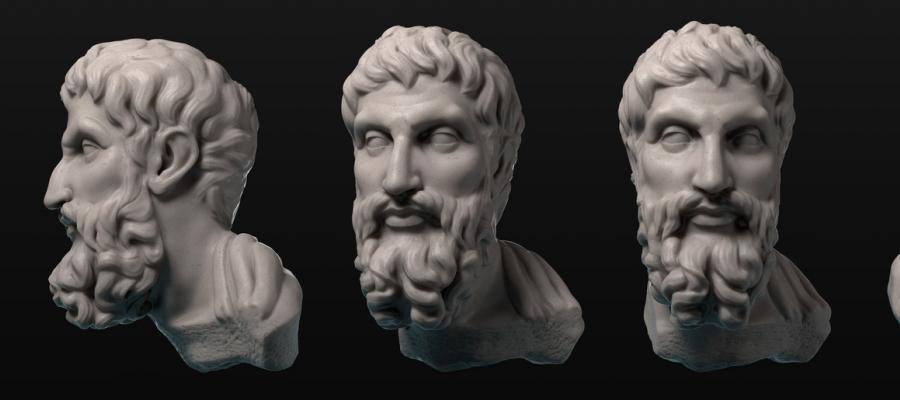
Is the Bible just an ancient “self-help” book that tells us not to do anything fun? Questioning God is not something new. Even Epicurus said, “Is God willing to prevent evil, but not able? Then He is not omnipotent. Is He able, but not willing? Then He is malevolent. Is He both able and willing? Then whence cometh evil? Is He neither able nor willing? Then why call Him God?” I truly believe that you can understand who God is just based on scripture. When He gave that book to man, He gave us a piece of Himself.

God wants a relationship with us (I Peter 5:6-7). This is why He has purposefully informed us about Himself. People need God whether they know it or not. I’d encourage you, as an individual,  to put the Bible on trial. Put the accuracy of its pages to the test. It has withstood hundreds of years of accusations and doubt. Often we are able to grow in our faith and belief as a result of seeking and searching. As His church, we have a responsibility to proclaim the excellence of our creator. We do it by our love for others, exposing the evidence of His existence, and introducing Jesus every opportunity we have. 


“Speak Your Truth”?

Monday’s Column: Neal At The Cross

pollard

Neal Pollard

“Speaking your truth means that you stay true to who you are, whether it’s your feelings, opinions, or morals. Don’t hide what you feel for the sake of someone else’s approval of you, it shouldn’t work that way (sic). Rather, you should stay true to your own opinion and voices, no matter what anyone else may think. While it’s easier said than done, you won’t ever regret speaking your truth” (source). Look at website after blog post, philosopher after supposed pundit, and you get further definitions of what people mean to convey by the phrase, “Speak your truth.” How did the phrase originate? 

Huffington Post credits Oprah Winfrey in a speech at The Golden Globes in 2018. She advocated creating positive change by “speaking your truth.” The article’s writer, Claire Fallon, seemed shocked and aghast at backlash to the phrase. Like Byron Tau of The Wall Street Journal, who tweeted, “Oprah employed a phrase that I’ve noticed a lot of other celebrity (sic) using these days: ‘your truth’ instead of ‘the truth.’ Why that phrasing? ‘Your truth’ undermines the idea of a shared set of common facts'” (1/8/18). She quoted Joseph A. Wulfsohn, who objected, “When we rely on ‘our truths,’ we get to choose what to believe.” Fallon defended the phrase as an exhortation for the less powerful to find their own voices and credited a 1927 poem as the genesis of the phrase, in a Max Ehrmann poem entitled “Desiderata” (source). 

So while there can be great merit and value to one respecting the feelings and opinions of others or advocating for those without power, there is inherent danger in the very idea of individual, subjective truth. In her excellent book, Total Truth, Nancy Pearcey quotes Udo Middelmann, who said we learn about objective truth from the time we are born. She then writes, “When a baby crawls to the edge of the crib and bumps his head against the wooden bars, he learns in a painful way that reality is objective. When a toddler tilts his high chair back until it falls to the floor, he learns that there is an objective structure to the universe. Reality does not bend itself to our subjective desires–a lesson that can be painful to learn even for adults. Thus we can confidently reject any philosophical position that leads to subjectivism. Why? Because it fails to account for what ordinary experience teaches us day by day. It is in tension with the data of experience” (395). 

Our calling is much higher than being true to self, following our own feelings, opinions, and morals. So much can distort and deform these things–selfishness, fleshly desires, improper and immoral guides and guidance, etc. (cf. Eph. 2:1-3; 4:17-19). Truth is transcendent (existing apart from and not subject to the material universe) and immutable (unchanging over time or unable to be changed). 

  • It can be practiced (John 3:21)
  • It can be known and it emancipates (John 8:32)
  • It is exclusive (John 14:6)
  • It is something we can be guided into, and it is exhaustive (John 16:13)

Men try to suppress it (Rom. 1:18), exchange it for a lie (Rom. 1:25), and disobey it (Rom. 2:8). But, philosophy defeats the idea of subjective truth (“your truth” and “my truth”) and Scripture makes clear that there is only one truth. You don’t have your truth and neither do I. God reveals the truth to us, and He holds us accountable to follow it. 

A Myth We Want to Believe 

Friday’s Column: Brent’s Biblical Bytes

81121814_2462862270639428_5746232403106463744_n

Brent Pollard

Are you hoping for a “white Christmas” like the ones that Irving Berlin alleged to know? If so, I have some disappointing news for you. The reality is white Christmases are rare. They have always been rare, at least as long as we have been keeping meteorological records. Yet, what of the picturesque scenes painted by Currier and Ives? What about the romantic notions of a snowy Christmas extolled by Bing Crosby, Rosemary Clooney, Danny Kaye, and Vera-Ellen in Michael Curtiz’s “White Christmas?” Yes, those are likewise a fabrication of Hollywood too.

There are two reasons that the belief in a “white Christmas” is faulty. First, there is the fact that Britain was a late adopter of the Gregorian calendar (1752). Hence, December 25th used to be January 6th. That makes a big difference from a meteorological standpoint. Second, Charles Dickens, the man who gave us our concept of the “modern Christmas,” lived during the coldest, snowiest part of the Little Ice Age (1805 to 1820). If one is prone to indulge in nostalgia, he allows his youth to color his perceptions of the present and future. So, young Charles Dickens enjoyed very snowy Christmases. In his earlier days, the snow fell and stuck around for some time. From his perspective, then, idyllic Christmases were white. America, in turn, blindly accepted the Dickensian Christmas as its role model.

It is not charming to learn that we have founded our hopes on a myth, correct?  At least the desire for a white Christmas is innocent. Yet, how many are investing their hopes in salvation based on the equivalent of tradition or myth? In Philippians 2.12, Paul tells us to “make an end of your own salvation with fear and trembling” (GNV). I chose this early English translation (Geneva) because it well-conveys the message from the Holy Spirit. Though salvation is a gift from God (Ephesians 2.8-9), we must endeavor to receive it. Thus, we make “an end” to it. Like the football thrown by the quarterback, we must catch the ball, tuck it in securely, and run to the endzone.

Why would someone purposely mislead another? The real answer, perhaps, is something known only by God. One of the most tragic narratives of the Old Testament is that of the young and old prophet. 1 Kings 13 records how God dispatched a young prophet to cry out against Jeroboam’s idolatry. Jeroboam wanted the young prophet to intercede on his behalf with God. God told the young prophet that even if Jeroboam offered half of his house, he would not dine with anyone but go straight home following a different route. So, the young prophet rejected Jeroboam’s request, repeating what God said.

The story does not end there, however. An old prophet living in Bethel asked the young prophet to dine with him. The young prophet repeated what God had told him. In response, the old prophet lied and told the young prophet that an angel spoke to him, permitting him to dine with him.  In a sense, the young prophet did not “make an end of (his) salvation with fear and trembling.” Rather than consulting God about the truth of what the old prophet said, he accepted the old prophet’s invitation. While sitting at the old prophet’s table, the old prophet told the young prophet that he would die since he disobeyed God. The young prophet finished his final meal and traveled the road towards home, where he met a lion that killed him. And despite being the instrument of his destruction, the old prophet lamented the young prophet after retrieving his dead body.

Just as with white Christmases, there are other myths we want to believe. We want to think that older people sharing kinship with us have our best spiritual interests at heart. For example, most people have “saintly” mothers and grandmothers who took them to a particular church in their youth. They paid attention to some preacher at those services who told them to believe in Jesus to receive salvation. And he calls himself a preacher, correct? Hence, he should be someone you can trust. As with the young prophet, there is a failure to learn the truth directly from the source: God. Jesus promises that we can know that truth (John 8.32) and identifies that knowable truth as God’s word (John 17.17).

However, rather than God’s truth, many would instead believe the doctrines of men, like Calvinism’s predestination, dubbed “the most comforting doctrine.” And they may embrace this false teaching as sincerely as Saul had embraced Judaism before meeting Jesus on the road to Damascus. Ultimately, their rationale has the same fragile foundation as a Dickensian novel or a Currier and Ives lithograph. Warm, fuzzy feelings serve as the basis for belief. That feeling is related to nostalgia for the “faith” of mom or dad or the beloved preacher, not truth. It is a feeling predicated on the myth that a loving God would not condemn any sincerely religious person even though Jesus said that those failing to obey the Father would depart (Matthew 7.21-23).

In conclusion, I’d advise you to heed Solomon’s counsel. “Buy the truth, but sell it not: likewise wisdom, instruction, and understanding” (Proverbs 23.23 GNV). Make sure your salvation has a better foundation than a white Christmas.

Further Reading

Staveley-Wadham, Rose. The Truth Behind the White Christmas Dream, Findmypast, 10 Dec. 2020, blog.britishnewspaperarchive.co.uk/2020/12/10/truth-behind-white-christmas-dream/.

“Traditional ‘White Christmas’ Thought to Be a Myth.” Traditional’ White Christmas’ Thought to Be a Myth | Century Ireland, RTÉ ,www.rte.ie/centuryireland/index.php/blog/traditional-white-christmas-thought-to-be-a-myth.

Ferwen. “A Christmas Carol: Dickens and the Little Ice Age.” Letters from Gondwana, Letters from Gondwana, 19 Dec. 2015, paleonerdish.wordpress.com/2014/12/24/a-christmas-carol-dickens-and-the-little-ice-age/.Ortiz, Diego Arguedas. “How Dickens Made Christmas White.” BBC Future, BBC, 21 Dec. 2018, www.bbc.com/future/article/20181217-how-dickens-made-white-christmas-a-myth.

Learning A Lesson From A Lantern

Wednesday’s Column: Third’s Words

Gary III

Gary Pollard

I’m a big fan of old fashioned lighting, especially old kerosene lanterns because they’re simple. I went to light one of my lanterns and the flame wouldn’t stay alive for more than a few seconds. I thought, “Maybe the vent is covered in carbon and there isn’t enough oxygen for the flame.” So, I took it apart, cleaned it out, and put it back together. I was sure it was the vent.

To my chagrin, the flame died within seconds even after the lantern was cleaned. Next I trimmed the wick because it seemed too dark; perhaps having a fresh wick would allow the flame to stay alive. It wasn’t a stopped vent, so it had to be the wick. Sure enough, the flame died even with a fresh wick. At this point I was stumped. 

The next day it occurred to me whilst putting gas in my car: the lantern was just out of kerosene! It was obvious to the extreme. I knew Chelsea would never let that one go. When I got home I put the kerosene into the lantern which, of course, was the solution to a simple problem that I overcomplicated.

This is a mundane example of a profound truth: we make mistakes as humans. Worse yet, some people put words in God’s mouth that He never used. “My God is a God of love – He wouldn’t condemn me just for this one little sin.” “God doesn’t care if we live the way we want.” Some use phrases like this with great confidence while overlooking an obvious truth: God has told us what He does and does not care about in His word.

If we aren’t in the word listening to God and allowing Him to change us, our solutions will end in failure. There was only one solution to keep that flame going in my lantern. There is only one right way to follow God, and He’s told us how to do that! Life will be so much easier for those who look to God for answers before relying on their own wisdom.

welcome-home

Mysterious Seeds

Monday’s Column: Neal At The Cross

pollard

Neal Pollard

In recent weeks, packets of seeds have been mailed to apparently random homes across the country. Dozens of folks received the seeds, which have Chinese labels but have not been confirmed as originating from China. A few days ago, the USDA confirmed that the seeds were harmless but still cautioned recipients not to plant them. The seed packets included mint, sage, cabbage, roses, and other plants. One working theory is that this was part of a “brushing scam,” where people receive unsolicited items from sellers who then post fake reviews (Joseph Wilkerson, msn.com, “Mysterious China seeds received by Americans identified by USDA”). But, given the current political climate, skepticism–and concern, suspicion, and even fear– abound!

One of the major projects Kathy has begun in our backyard is a “cottage garden.” You can research the origin and history of these gardens, which started in England perhaps as far back as the Medieval period. These gardens have a mix of flowers, herbs, and bushes, and the more elaborate of these gardens have trees, bees, and even livestock. Ours is simpler, with climbing roses on a trellis, boxwoods in the middle, herbs planted throughout, but included among the many packets of seeds planted was a mix called bee feed.  It has been fun to see a variety of mysterious seeds appear, like California poppies, Chinese forget me not, Coreopsis, and Sweet Alyssum. We’re not sure where the tall fringed bluebells came from, but it’s incredible to see such an eclectic mix growing and thriving and demonstrating Genesis 1:11 before our eyes. 

In the New Testament, Jesus teaches several parables involving seeds. In one, a man sows wheat seed in his field, then his enemy sows darnel, a weed resembling wheat. Only after they started growing could the two be differentiated. The landowner instructs his slaves to let them both grow up and separate them at harvest time (Mat. 13:24-30). This parable illustrates the lives of the righteous and unrighteous, whose destiny will be sorted out at the judgment (Jesus explains the parable in Mat. 13:36-43). It certainly can apply to true and false teachers (lawless stumbling blocks), who can seem similar but are also distinguishable to the discerning.

Jesus also teaches the parable of the mustard seed (Mat. 13:31-33), which shows God’s power to do great things through seemingly humble deeds attempted in true faith. Matthew, Mark, and Luke record the parable of the sower, the soils, and the seed. Luke 8:11 identifies the seed as the Word of God. The soils represent the different conditions of heart, three of which are futile and one of which is fertile. The sower is the one who spreads the word to people. 

Then, there is the parable of the seed (Mark 4:26-29). A man casts seed on the soil, and then gets to behold the marvel of how it transforms from seed to sprout, the soil producing it from blade to head to mature grain in the head. Then, he harvests it. The power is not in the sower, who is not around (or, in the parable, awake) when the seed produces. The growth of the seed is a marvel even to the sower. Where is the power? In the seed!

There are certainly some malicious ideas and teaching out there in the world. Sometimes, even truth can be shared from improper motivation. But, God’s Word is a seed which can produce incredible things in a heart and life that is good and fruitful. Have you ever seen someone who seemed like a poor candidate to become a Christian, much less become a force for good in God’s Kingdom? How does that happen? We can talk about planters and waterers, but God causes the growth (1 Cor. 3:6). You may not be an eloquent, sophisticated Bible teacher or soul-winner. You may feel you are unskilled.  But, when you share God’s Word with others, you will see the wonders of this mysterious process. It has been said that persuasion happens in the absence of the persuader, as the Word gets to work on a heart. The power is in the seed! Let’s be about planting it however, wherever, and to whomever we can, then witness the marvel of the seed producing in the recipients’ lives. It’s God’s plan! It works in mysterious ways! 

seeds

A Blanket Statement That Is 100% Right!

Tuesday’s Column: Dale Mail

DaleandJanelledirectorypic

Dale Pollard

Blankets have served as objects which provide security for children. They’re used on winter nights while you cozy up on the couch by the fire. You can probably think of that preferred blanket at your house. It’s the blanket that has warmed you for many years.  It’s a shame that such a wonderful thing is used to describe statements that are often harmful.

Blanket statements are usually unfair. In fact, they have a high potential of making the one using such statements seem pretty ignorant. It’s the posts on social media that begin with, “Everybody/anybody/all people that…”, which can create heated debates. All preachers talk too much. Everyone in the church is a hypocrite. Anybody that votes Democrat/Republican is not going to heaven. Everybody who believes the earth is flat is an idiot. The outcome of statements, stereotyping, or isolating a certain group of people has hardly ever accomplished anything of spiritual value. With that being said, there are many blanket statements made by Jesus that are accurate and invaluable. What makes Jesus the exception? God is never wrong.

In 1885, The New York Times gave a chilling report. A man simply known as “Jenkins” had been accidentally buried alive. His family was mortified. Documented cases of accidental live burials have been made as late as 2015. Being buried alive is a common phobia, even though it is exceedingly rare. With that being said, the fact that medical science has declared the living as dead in the 21st century is still shocking. God never makes a mistake, but humans have a track record of errors dating back to the garden. When God makes a blanket statement, He is never wrong or out of place.

Jesus says in John 14:6, “I am the way the truth and the life. No one comes to the Father except through me.” The Son of God states that He is the only Way and He’s the only Truth. Some men have an issue with those wonderful words of Jesus. If He is the only truth,  then anything that contradicts His teachings is wrong, even if we disagree. The earth is round, and yelling at it all day just because we believe it’s flat doesn’t change reality. Jesus made some very bold claims in scripture because we serve a bold God. God is Truth, and the truth is He wants you to live with Him for eternity.

gettyimages-1129638660

Walking 10 Miles To Avoid The “Bear”

Neal Pollard

Spoiler alert: This story does not make me look good.

It was 1984, and my family and I lived in Roopville, Georgia. We were enjoying one of those idyllic west Georgia October days, with temperatures cool enough for a jacket but the sun graciously, brightly beaming. It was a perfect Saturday to explore the woods, which is what my little brother, Brent, and I decided to do. I was 14 and he was 9. My parents owned several acres behind our house, and we boys felt adventurous. In such a mood, I decided I’d like to see how far those woods went, but rightly wondered if Brent was game for such a walk. Therefore, I had to have a ruse. We hadn’t walked too far when there was some noise nearby, and I went to work–concerned face, raised eyebrows, hushed voice, and panicked eyes. “Brent, I think I just saw a bear!” Trusting me to be a legitimate source of truth, he accepted my statement at face value. What was my solution to this sudden dilemma? Brent wanted to retreat back to the house, probably less than a quarter mile behind us. What sense did that make? Far better to keep walking away from the safety of our home deeper into the woods of neighbors and eventually strangers. As every older sibling knows, far too often seniority can trump sensibility. So, we ran from that “bear” for miles and hours. Eventually, our circuitous journey took us several miles south just outside the little town of Centralhatchee. We were gone for most of the daylight hours of that fateful Saturday, and the only credible decision I made that day was knowing we should walk north on Highway 27 to get back home. Suffice it to say, I was not hailed as the conquering hero upon our return that evening. But, throughout that walk, I built and strengthened the narrative that this lengthy sojourn was about escaping the razor-sharp clutches of my mythic bear. I mentioned it so often to Brent that day that it just became easy to tell my parents with such conviction. Under the vise of interrogation, my story unraveled. My punishment was swift and enduring.

I knew better. I wanted this adventure and I wanted company. One needs a calculator to compute the number of bad decisions cascading from my developing prefrontal cortex. But, in my heart of hearts, I knew I was lying to Brent. In time, I believed the lie myself. We survived my harebrained scheme, but my credibility took a hit.

“Honesty is the best policy.” That’s true of character. It’s no truer than for anyone in a position to teach someone else God’s Word. Some teachers themselves are deluded and believe a lie (2 Th. 2:10-12). Others “are false apostles, deceitful workers, disguising themselves as apostles of Christ. No wonder, for even Satan disguises himself as an angel of light. Therefore it is not surprising if his servants also disguise themselves as servants of righteousness, whose end will be according to their deeds” (2 Cor. 11:13-15). Such an eternal task befalls the teacher (Jas. 3:1). We must be honest with the text, honest with our conclusions, and that starts by being honest with ourselves. We’re leading people somewhere with how we live and what we say we believe is right and wrong. Let’s handle that with care. It’s about both the journey and the destination (Mat. 7:13-14).

51443429_2225973147661676_5918745592820924416_n
Exceedingly stylish pic of me and the bro a few years before the Centralhatchee Bear Escape.

The Inevitable Standard

Neal Pollard

Everywhere, each generation tries to figure out the why and how of living. Most will not find the right path (Mat. 7:13-14). Almost all are convicted, even passionate, about the way they wish to live life. They may be fiery about politics, social issues, relationships, and even religious ideals, and to be consistent they must appeal to some ultimately, overarching authority that makes right right and wrong wrong whatever their point of view. Will it be feelings, friends, the majority, the minority, the church, family, a teacher, culture, or something else? The Bible claims to be the arbitrator by which all matters are judged. But if not the Bible, there has to be some universal absolutes with an adequate origin to compel people to follow it. Whether the issue is rape, murder, stealing, or similar norm that stands between order and chaos, there has to be adequate reason to submit to it. 

This inevitable standard helps us decide whether or not a Creator exists. If there is nothing (no One) greater, bigger, wiser, and stronger than us, why can’t we decide right and wrong as our whims determine? Why would we desire civilization and peace? Why would we wish good will or at least peaceful coexistence with each other?

The inevitable standard helps us decide which god (God) is to be followed. Do their alleged writings and teachings cohere and show consistency? Do they adequately answer the great questions of life?

The inevitable standard helps us decide whether or not Bible doctrines taught by men are consistent with and true to what the Bible actually teaches. How do we know how to worship, be saved from sins, what roles to play in life, what our purpose is, and how to reach a desirable destiny? The nonsensical claim that you have your truth and I have mine is unacceptable in every other discipline (building construction, medicine, physics, mathematics, etc.). Even falling back on “you have your interpretation and I have mine” is a dangerous slope since there are matters of life and godless ( Pet. 1:3). 

The inevitable standard helps us fulfill our roles in the home, the church, and the world. How should we live and how should we help our physical family, spiritual family, and communities live? It matters!

It may gall us to think we all must concede to a standard of right and wrong, of absolute truth. To say that all of us are accountable to the same standard may be construed as bigoted, small-minded, or narrow, but everything falls apart if each of us follows our own set of rules. Imagine an interstate where every driver followed whatever they thought they should and ignored whatever they felt they could or should. All of us are on the road of life heading somewhere. How will we get there? There is an inevitable standard, given by God to us through men He moved to write it down (2 Tim. 3:16-17). 

tape measure.jpg

What To See When False Prophets Speak

Neal Pollard

Peter has a sobering warning for the church, writing, “But false prophets also arose among the people, just as there will also be false teachers among you, who will secretly introduce destructive heresies, even denying the Master who bought them, bringing swift destruction upon themselves” (2 Pet. 2:1). He warns them about the model, the methods, and the message of these men. The counterparts of these modern messengers is the false prophets of old.

Jeremiah lived at a time when such prophets flourished, and the result of their work was the destruction of the people. Jeremiah 23 is a graphic depiction of what God helped Jeremiah see as he looked at and listened to these sinful seers. Notice that in Jeremiah 23:9-40), he saw:

  • Tears (9-10)–Jeremiah was heartbroken, trembling, and overcome, because he knew their message was different from God’s Word and it was taking people off course. 
  • Pollution (11-12)–The Lord found their way wickedness, and this pollution made for a slippery path that would make them fall in calamity and punishment. 
  • Offensiveness (13-14)–They looked to the wrong spiritual source and it led the people of God to commit horrible depravity. 
  • Tragedy (15)–Their message was going to cause their own spiritual sickness and death.
  • Emptiness (16-18)–The message is from their own imagination and not from the Lord’s mouth, so they tell those who hate God they’ll have peace and those who walk in stubbornness that everything will be fine.
  • Storms (19-20)–The storm is the tempest of God’s wrath upon the heads of these false messengers. 
  • Audacity (21-25)–They ran, but God didn’t send them; They prophesied, but God didn’t speak to them; God was right there listening when they said, “I had a dream, I had a dream!”
  • Heart Trouble (26-27)–The prophets had spiritual heart trouble, and their message was loved by people with heart trouble. It resulted in both of them forgetting God. 
  • Straw (28)–Just as straw and grain are totally different things, so is God’s message and their false message. 
  • Judgment (29-40)–God’s Word is like fire and a hammer. He is against their Word and against them for misusing their speaking abilities and leading His people astray. They don’t furnish the people with “the slightest benefit.” They cause the people to forget what truth is.  The end result is tragedy. 

So many can have a message that sounds good, makes one feel good, but does no good! In fact, their message contradicts what God said in His Word. As we grow our Bible knowledge, it will help us see these messengers and their messages for what they are. God’s Word is a blessing to us, both now and eternally. But, measure their message against the Master’s. Embrace only the words that are from Him! Reject the words that come from them!

jeremiah-23-29

HOW IS TRUTH DETERMINED?

Neal Pollard

Recently, I received some feedback on a recent article (Truth Is Truth, No Matter Who Disagrees With It). Negative feedback is not rare, but expected when we put ideas down on paper (or on electronic media like blogs). This feedback was not personal, nor unkind. Yet, it reflects the thinking of so many who shun the idea of absolute, objective truth. Consider the major arguments made by the one who wrote:

—No matter what you believe, the majority disagrees with you.
—You are no smarter or more sincere than those who disagree with you.
—Everyone is certain their religion is right, but this is a function of the brain and proof of nothing
—Conflicting views within the “Restoration Movement” shows the fallacy of being certain about truth
—Certainty is dangerous because it does not allow for change

The last three arguments seem more of a confrontation of certainty than arguments against truth, but consider each of these individually.

Does the inevitability of disagreement nullify the idea of absolute truth? If someone argues our answer that two plus two equals four, and were able to get a majority to side with them that the answer is five, does that nullify the truth of what two plus two equals?

If a person with demonstrable intellectual capacity and apparent sincerity nonetheless avers that two plus two equals five, do we rewrite the laws of addition and reprint the textbooks? If not, why not? Is it not because we can take two of something, add it to two more of the same something, like integers or apples or books, and find the inescapable, universal truth that now there are four?

Can any religion be certain that they are right, but be wrong? Universalists believe everyone will ultimately be saved. Those who believe that murdering those they deem “infidels” pleases their God and they teach others that this is truth. Cults often dub their leaders the Messiah. On what basis would we object or oppose any religious tenet, like these, without an objective standard of truth?

Does the imperfection of people in applying revealed truth impugn the reality of absolute truth? It will never be suggested that anyone is perfectly interpreting or applying the perfect standard of truth, including those trying to restore New Testament Christianity (which, incidentally, implies belief in a perfect, objective standard of truth). But, does that mean restoration can or should be rejected for ideas which clearly contradict what the New Testament says (i.e., “sinner’s prayer’ versus how the New Testament teaches people were saved)?

If there is a conflict between the certainty of New Testament teaching and the desire for change, which is to be preferred and chosen? The religious world has changed a myriad of things that the New Testament explicitly teaches must be done or taught a certain way. Isn’t it a faulty premise to choose change proposed by men, when it assaults a certainty revealed by God?

That there is religious confusion and division is indisputable. It is disheartening. The Bible warns that articulate, polished religious leaders would teach things contrary to the revealed truth of the New Testament (Gal. 1:6-9; 2 John 9-11; Rev. 22:18-19). Let us never put confidence in man, but let us ever put confidence in the truth of Scripture.

OLYMPUS DIGITAL CAMERA

Truth Is Truth, No Matter WHO Disagrees With It

Neal Pollard

Today, one of the most famous preachers of modern times died just short of his 100th birthday. Not only did he achieve longevity, his name was almost synonymous with American religion in the 20th Century. He reached hundreds of millions of people through live crusades, radio, and television. He was regularly listed as one of the “Ten Most Admired Men in the World.” His website claimed that he preached to more people in live audiences than anyone else in history (info via FoxNews.com).  His influence on society is unmistakeable.

However, this much loved and now much lamented man used the weight of his name and influence to oppose something which Scripture seems very clearly to teach. In the answer section of his website, he addresses the question, “Is baptism necessary for salvation?” While answering that he believed it to be important and that he had done it himself, he also said, “If baptism were a requirement for salvation, we would certainly say that.” His answer makes clear that one becomes a saved convert before baptism, the thief on the cross being used as proof of that claim. Many of those who left comments under his answer shows how deeply influential and popular his teaching on this was.

I believe in the vitality of the saying, “It’s never a matter of ‘who’s right,’ but ‘what’s right.’” Something is never right because I say it, some other preacher, or even the most famous preacher of the 20th Century says it. Something is right because Jesus and His apostles and prophets said it. Here is what they said:

  • “He that believes and is baptized shall be saved” (Jesus)
  • “Repent, and each of you be baptized in the name of Jesus Christ for the forgiveness of sins” (Peter)
  • “Get up and be baptized, and wash away your sins, calling on His name” (Ananias)
  • “Or do you not know that all of us who have been baptized into Christ Jesus have been baptized into His death? Therefore we have been buried with Him through baptism into death, so that as Christ was raised from the dead through the glory of the Father, so we too might walk in newness of life” (Paul)
  • “For you are all sons of God through faith in Christ Jesus. For all of you who were baptized into Christ have clothed yourselves with Christ” (Paul)
  • “ Corresponding to that (Noah and family brought safely through the water, 20, NP), baptism now saves you—not the removal of dirt from the flesh, but an appeal to God for a good conscience—through the resurrection of Jesus Christ” (Peter)

I feel the loss of this renowned preacher is sad and tragic.  I appreciate his vast influence and the way he tried to use that for good in so many regards. Yet, if the Bereans found it necessary to compare the great apostle Paul’s preaching and teaching with Scripture, any of us who preach and teach today should want people to do the same. That’s the only way we will be able to determine what’s right!

55b-3246-1-1024x819

“You Can Find Somebody To Tell You What You Want To Hear”

Neal Pollard

Someone wants to be involved in an illicit relationship, defend an unscriptural marriage (or enter into one), engage in some vice or sinful behavior “in moderation” (or otherwise), and they talk to someone who shows them from scripture why it should not be done. Perhaps they ask several people and get the same discouragement. Sometimes, the inquirer is wise enough to let that guide them away from wrongdoing. Other times, they persist in looking for someone to tell them what they want to hear. Without exception, such a searcher will eventually—and probably sooner than later—find someone to validate and endorse their desire.

Solomon wrote, “The thoughts of the righteous are just, But the counsels of the wicked are deceitful” (Prov. 12:5). His father kicked off the songbook of Israel by saying, “How blessed is the man who does not walk in the counsel of the wicked…” (Psa. 1:1a). Job speaks of how he shunned “the counsel of the wicked” (Job 21:16; 22:18). Wicked Ahaziah was rejected by God, in part, “for his mother was his counselor to do wickedly” (2 Chr. 22:3).  This characteristic of human nature, whether giving or taking wicked counsel, is timeless. But, seeking counsel from the proper sources is encouraged by Scripture (Prov. 11:14; 15:22; 24:6). How can we make sure that we are hearing what we need to hear, not just what we want to hear?

  • We must realize our personal accountability (2 Cor. 5:10). No matter what anyone else tells us, we’ll stand individually in the Judgment. Christ’s word, as Judge, is the only one that ultimately matters. What has He said?
  • We must pray for wisdom and discernment (Col. 1:9). Are we ignoring a pricked conscience, clear teaching, or red flags? Is self in control, or is the Savior’s will?
  • We must grow in knowledge (2 Pet. 3:18).  Have we studied this out yet? Are we convinced beyond a doubt? What does the Lord say?
  • We must be honest with ourselves (Psa. 15:2). We cannot deal fairly in any situation if we’re deceiving ourselves. Lying to ourselves does not change God’s truth. It simply hurts us.
  • We must train our hearts to desire what is good (cf. 2 Pet. 2:14). This can be excruciatingly hard! Proverbs 21:10 says, “The soul of the wicked desires evil.” But listen to a cleansed heart: “Behold, You desire truth in the innermost being, and in the hidden part You will make me know wisdom” (Psa. 51:6).
  • We must put emphasis on the eternal rather than the temporary (2 Cor. 4:16ff). Is what we wish to pursue destructive to heavenly objectives? Are we risking an eternity in heaven for a few years of fleeting pleasure on earth? Nothing is worth sacrificing salvation!
  • We must weigh the advice of our counselors on the scales of truth (Prov. 18:17). The Berean Christians fact-checked an inspired apostle (Acts 17:6). We owe it to ourselves to compare what our advisers tell us—however much we love and respect them—with what God’s Word says. Many times they will align. If they do not, we must choose God’s Word every time!

Beware! At times, what we want to hear is right and good. Many times, it is not. As we lean on others, let us lean most heavily on “the rock” (Mat. 7:24)!

dreamstime_l_20586429

Who Is The “Troubler Of Israel”?

Neal Pollard

Ahab was the most wicked king in Israel’s history (1 Kings 16:30). To top it off, he was married to perhaps the most immoral woman revealed to us during the time of the divided kingdom in the Old Testament. Her name, Jezebel, is still somewhat infamous today. She destroyed the prophets of the Lord (1 Kings 18:4). The prophets who survived feared for their lives because of Ahab (18:9). Instead, Jezebel kept a stable of false prophets, 450 prophets of Baal and 400 prophets of Asherah (18:19). Read this section of 1 Kings and the first nine chapters of 2 Kings to get the full flavor of who this notorious couple was.

How ironic that when Elijah appears to Ahab before the prophet’s infamous confrontation with the false prophets on Mount Carmel, Ahab’s first words to him were, “Is this you, you troubler of Israel?” (18:17). There was controversy, division, problems, and trouble in the land, but Ahab’s narrative was distorted. Ahab was like a reckless drunk driver weaving in and out of traffic and blaming a law-abiding pedestrian for being in his way on the sidewalk. Elijah was not the troubler of Israel for daring to oppose the false ways of Ahab and Jezebel. He was doing exactly what God wanted him to do!

In our present, lawless age, there are so many “prophets” who come along with a message appealing to right ideas like peace, grace, unity, and love. Many of them package themselves in the garments of relevance, using our culture as their props and stage. The causes célèbre which our age reveres, some of which are diametrically opposed to the doctrine, ethics, and morality outlined in Scripture, are pushed at God’s people—who are shamed and made to feel unrighteous if they dare protest what is said. In some circles, it is asserted that anyone teaching that the Bible is authoritative, contains a pattern, and is God’s objective truth for all times, is Pharisaical, consumed with self-righteousness, hateful, mean-spirited, and divisive. In short, that they are “troublers of Israel.”

As a quick side-note, there are some who do press their personal proclivities, traditions, and convictions as divine truth. This is as accursed a thing as seeking to nullify what God has bound in heaven (cf. Mat. 16:19; Rev. 22:18-19). Such folks manufacture trouble rather than trouble people by faithfully sharing God’s Word. These occupy unenviable ground, in view of the end of all things.

Yet, anyone who conscientiously tries to follow God’s blueprint for how to share His truth (Eph. 4:15; 2 Tim. 2:24-26; Col. 4:6), who takes care to handle Scripture accurately (2 Tim. 2:15), is going to invariably encounter the Ahabs, Jezebels, Baalites, and Asherahists. Teach the singular, undenominational nature of the church (Eph. 4:4), the role of women in the church (1 Tim. 2:9-12), the essentiality of baptism in God’s saving plan (Acts 2:38), God’s plan for marriage and sexuality (Mat. 19:1-9; Heb. 13:4; Rom. 1:26-27), and the like, and it will come. The Ahabs will label you the troublemaker and the source of the problem.

In what may sound dark and grim, Paul warns Timothy that difficult times will come (2 Tim. 3:1). He speaks of men immoral in nature and inaccurate in message who succeed with the weak and impulsive (3:6), who themselves are “always learning and never able to come to the knowledge of the truth” (3:7), who in fact “oppose the truth, men of depraved mind, rejected in regard to the faith” (3:8). Ultimately, they will not carry the day (3:9). But they will always have their eager followers who “accumulate for themselves teachers in accordance to their own desires, and will turn away their ears from the truth and will turn aside to myths” (4:3-4).

Suppress the victim mentality if you are trying to be an Elijah in this Ahab society. On the job, at home, in the community, within the religious community at large, and even at times within the church, “preach the word” (2 Tim. 4:2). Do it with great patience and instruction, as Paul counsels. Don’t be a troubler in God’s eyes, but know that you will be seen as one in the eyes of some in this world. Keeping company with Elijah is not a bad thing.

012-elijah-baal

Misguided Anarchists

Neal Pollard

In her excellent book about the many events leading up to World War I, Barbara Tuchman, in The Proud Tower, spends a chapter talking about the anarchist movements swirling particularly around Europe and the United States. It was the inspiration for several assassinations of important political figures, including one of our presidents—William McKinley. In the wake of the industrial revolution, many immigrant, uneducated, illiterate, and otherwise disadvantaged people, worked an incredibly high number of hours each week for less than living wages. They lived in deplorable conditions and had nearly no prospects of improving their plight or the plight of their children. A growing proposal around the industrialized world was to throw off all government and institute what amounted to a global commune with a total sharing of assets. It was not Communism because it did not want any organization or officials to rule and govern. Those who truly embraced the cause put total faith in man, in every case, to be noble and devoid of base motives like greed, power, and self-interest. It was anti-religious, anti-capitalist, anti-authority of any kind. Other than inspire attacks on famous people, the anarchists never came close to materializing their desired revolution. Rationale people knew there must be order and law.

Periodically, a similar movement rears its head even within the body of Christ. Christianity, in their view, is reduced to a single, undefined maxim: “Love Jesus.” While it can seem appealing, when it is viewed uncritically, it is unsustainable and self-defeating. When Jesus was asked the greatest commandment in the Law, He replied by saying it was a total love of God. He added that the second greatest command was loving others. Yet, throughout the gospels, Jesus expressed so many other specific commands for His followers that build upon that vital foundation. The men to whom He delegated authority to reveal His will and commands (John 14:26; 16:13) revealed His expectations of His followers. Pulpits and leaderships that deemphasize, avoid, or attempt to nullify these commands may be acting from high motives and noble desires, but they are more harmful than those anarchists of over 100 years ago. They encourage more than civil disobedience. They encourage disobeying the God who will one day judge mankind. Human governments may rule from corruption, self-service, and oppressive intentions, but God’s Word never does. What God commands for us is only for our good. How should we respond? We should humbly, reverently, lovingly, and totally submit to His reign and rule in our lives. May that be our highest aim!

london_0