The Truth

The most urgent question anyone can ask is, “What must I do to be saved?” Its answer determines your eternal destiny. Sadly, many people have believed false promises: good deeds, or a quick prayer, but Scripture speaks with unwavering clarity.

Carl Pollard 

The most urgent question anyone can ask is, “What must I do to be saved?” Its answer determines your eternal destiny. Sadly, many people have believed false promises: good deeds, or a quick prayer, but Scripture speaks with unwavering clarity. Baptism is God’s non-negotiable command for salvation, the moment sins are washed away and we call on Jesus’ name. Not a ritual or optional act, baptism is where God’s grace meets our obedience. This undeniable truth is seen in Paul, Peter, and Pentecost. 

Paul’s conversion in Acts 9, 22, and 26 sets the standard. As Saul, he hunted Christians, dragging them to punishment. On the road to Damascus, Jesus blinds him with a vision (Acts 9:3–6), telling him to wait in the city. Ananias finds Saul praying (Acts 9:11), but neither seeing Jesus, believing, or fasting for three days removed his sins. Acts 22:16 is unmistakable: Ananias commands, “And now why do you wait? Rise and be baptized and wash away your sins, calling on his name.” Paul’s sins stayed until baptism, not his vision, faith, prayers or belief took away his sins. This breaks the lie of “faith alone.” Baptism is God’s chosen moment for forgiveness, where Paul’s obedience met divine grace.

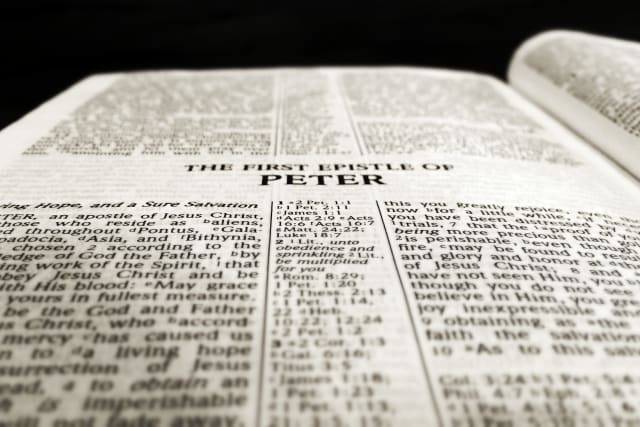
Peter leaves no doubt in 1 Peter 3:21: “Baptism, which corresponds to this, now saves you, not as a removal of dirt from the body but as an appeal to God for a good conscience, through the resurrection of Jesus Christ.” Linking baptism to Noah’s flood, Peter says it saves, not by washing skin, but as our plea to God for forgiveness, empowered by Christ’s resurrection. Romans 6:3–4 confirms baptism is where we die to sin, are buried with Jesus, and rise to new life. To reject baptism is to reject God’s plan for salvation.

On Pentecost, Acts 2:38 shows the church’s birth. Peter’s sermon convicts the crowd for crucifying Jesus, and they cry, “What shall we do?” Peter’s answer is absolute: “Repent and be baptized every one of you in the name of Jesus Christ for the forgiveness of your sins, and you will receive the gift of the Holy Spirit.” That day, 3,000 were baptized, added to the church (Acts 2:41). Baptism wasn’t a later gesture, it was where forgiveness and the Spirit were received, God’s ordained step for salvation.

Scripture’s pattern is simple: Paul’s sins were washed away in baptism (Acts 22:16), Peter says baptism saves (1 Peter 3:21), and Pentecost links it to forgiveness (Acts 2:38). Mark 16:16 Jesus says, “Whoever believes and is baptized will be saved.” Acts 8:36–38 shows the eunuch baptized immediately upon belief. No “sinner’s prayer” exists in Scripture, salvation requires hearing the gospel (Romans 10:17), believing Jesus is Lord (John 8:24), repenting (Luke 13:3), confessing His name (Romans 10:9–10), and being baptized. The world’s claim that baptism is optional is a lie; God’s Word demands it.

If you haven’t been baptized for the forgiveness of your sins, your soul is at stake. Don’t delay, eternity hangs in the balance. That conviction in your heart is God’s call to obey. Repent and be baptized now before it’s too late. If you’re in Christ, proclaim this truth to others. Share it with loved ones, study with them, and lead them to Jesus. Baptism is God’s command to enter His family. Will you obey His Word today?

Snakes, Saraphs, and Salvation

Herodotus casually mentions that there were snakes that would fly from Egypt every year from the Sinai wilderness (Herodotus 2.75-76). This may strike fear in the heart of any snake-fearing person, but it sure is interesting. Marco Polo would also write in his travel log about flying venomous “birds” as well as snakes of gigantic proportions as he explored Asia. 
The Bible records several strange serpents and one passage in particular is especially fascinating.

Dale Pollard

Herodotus casually mentions that there were snakes that would fly from Egypt every year from the Sinai wilderness (Herodotus 2.75-76). This may strike fear in the heart of any snake-fearing person, but it sure is interesting. Marco Polo would also write in his travel log about flying venomous “birds” as well as snakes of gigantic proportions as he explored Asia. 

The Bible records several strange serpents and one passage in particular is especially fascinating. 

In the book of Numbers there’s an account that’s made many readers scratch their heads as they wonder what these fiery serpents are (6-9) that God sent to plague the Israelites. 

The Lord sent fiery serpents among the people and they bit the people so that many people died in Israel. So the people came to moses and said “we have sinned because we have spoken against the Lord and you; intercede with the Lord, that He may remove the serpents from us. And Moses interceded for the people. Then the Lord said to Moses make a fiery serpent and set it on a standard, and it shall come about that everyone who is bitten when he looks at it he shall live. And Moses made a bronze serpent and set it on the standard and it came about that if a serpent bit any man, when he looked at the bronze serpent he lived.”

Some commentators have suggested that perhaps the strange description is of a particular kind of venomous snake. Others have made the observation that the Hebrew word for serpent here (Saraph) could be symbolic to indicate their color since it means “burning ones.” Interestingly enough there are bronze colored serpents around today in Australia that are incredibly poisonous. Perhaps there’s something to this based on the Lord’s instruction to Moses to fashion a serpent made of brass. Of course this description could also literally be taken to mean snakes which either breathed fire, or were somehow on fire. God was, after all, punishing a people who had complained of their miraculous meals of manna. 

Though the identity of these fiery serpents may always be a mystery, the lessons taught to us through this event are powerful. The connections John will make (Jn. 3.14-15) as well as the Hebrew writer (12.2) focus on the crucifixion and the concept of looking to Jesus for our salvation. 

The relationship between belief and action here are also telling. Those Israelites that believed were led by that same belief to look— then were healed. If we believe Jesus can and will heal us of our sins, then that belief must lead us to the water (Act 2.38, Mk. 16.16). 

The Gospel Is For ALL!

The news that the good news is for everyone is old news to us, but it is still big news! It does not matter who you are, where you are from, what you have done, or when you hear, the gospel is for you, too!

Neal Pollard

The first time the word “Gentiles” appears in Scripture is in Psalm 2:1 (your translation may have “nations”). Isn’t it interesting that this is a Messianic psalm? According to New Testament writers, the “mystery of Christ” and the “mystery of the gospel” is “that the Gentiles are fellow heirs and fellow members of the body…” (Eph. 3:6; cf. Rom. 16:25-27; Col. 1:27). Prophets like Isaiah foretold this (42:1). That’s incredibly important to you and me, since, presumably, the overwhelming majority of not only those who read this but also those who are members of the New Testament church in the 21st Century are ethnically Gentiles. Acts 10 is where it all began. Jesus’ roadmap of making disciples was ultimately heading to this destination (1:8). 

THE MAN (1-8). Luke introduces us to the Gentile who will first have the opportunity to hear the gospel. His righteous character is outlined: (a) “Devout” (profoundly reverent), (b) God-fearing, (c) Generous, and (d) Prayerful (2). He will later be described as “Cornelius, a centurion, a righteous and God-fearing man well spoken of by the entire nation of the Jews” (22). His “prayers and alms have ascended as a memorial before God” (4). He is directed by an angel of the Lord to send for Peter (5) who would preach to him (22). He was moral and full of faith in God, but he needed instruction and guidance. Though he was a good, moral man, he obviously needed more than that.

THE MISSIONARY (9ff). Peter is the first to preach the gospel to the Jews (Acts 2). Now, the Lord chooses him to be the first to preach it to the Gentiles. However reluctant he was about the first mission, this mission is far more complicated. So, the Lord gives him a visual to illustrate the legitimacy of this new mission. Peter “saw the sky opened up, and an object like a great sheet coming down, lowered by four corners to the ground, and there were in it all kinds of four-footed animals and crawling creatures of the earth and birds of the air. A voice came to him, ‘Get up, Peter, kill and eat!’” (11-13). At first, Peter refuses on the grounds that such was forbidden under the Law of Moses (Lev. 11:20-25; Deut. 14:4-20). But after divine reassurance and re-reassurance (14-16), Peter seems to get the message (cf. 28). When emissaries from Cornelius arrive to find Peter, he gives them lodging (23) then leaves with them the next day for Cornelius’ home (24). 

THE MESSAGE (13ff). Peter has to receive and comprehend the message before he can share it with Cornelius. The message is simple. No person is excluded. No one is unholy and unclean based solely on their ethnicity (15-16). While Peter is trying to connect those dots (17), it begins to make sense to him (19). It will form the launching point when he preaches Jesus to Cornelius and his house (34ff). 

The news that the good news is for everyone is old news to us, but it is still big news! It does not matter who you are, where you are from, what you have done, or when you hear, the gospel is for you, too! It is for your family, your neighbors, your co-workers, your classmates, your friends, your enemies–everybody! That may have started in Acts 10, but it will continue until the second coming of Christ. We must remove any hesitations and prejudices we may harbor and see every person through heavenly eyes. It’s our mission and God’s message for every man (and woman). 

Destroyed

Gary Pollard

It’s probably safe to assume we believe strongly that Jesus is our savior. But what does that mean? It means that Jesus is going to rescue us from something bad. You don’t save someone from a good situation. Salvation always implies the existence of a negative circumstance. Jesus is the one who will take us out of that negative circumstance and place us in a perfect one. What is this negative circumstance? To understand this, we have to study the word translated “salvation” (σωτηρια). God told us what his son will save us from. 

  1. Hb 11.7 — Noah was saved from the flood, meaning that he and his family didn’t drown with the rest of the world. 
  2. Acts 7.25 — Moses thought the people of Israel would understand that God sent him to save them from Egypt, but they didn’t. Their salvation meant rescue from Egypt. 
  3. Lk 1.68-79 — God speaks through John the baptist’s father, saying that God would save Israel from their enemies and from the power of those who hate them. 
  4. Phil 1.28 — Paul says that suffering for Christ is proof that he will save us while our enemies will be lost; word for lost here is απωλεια which means “destruction”. We will be saved from destruction. 
  5. II Cor 7.10 — Paul says that the kind of sorrow God wants to see leads us to avoiding the fate of evil people. 
  6. I Thess 5.9 — Paul connects salvation/rescue to Jesus’s return, whether we’re alive or dead; this rescue means we live with him when the ungodly are destroyed. 
  7. Hb 5.9 — The Hebrews writer says that Jesus will save us from death, just like God saved him from death. 
  8. I Pt 1.9 — Peter makes it clear that our salvation comes after death when Jesus returns. 
  9. II Pt 3.7 — Peter says that the current earth and sky are being preserved for a specific fate: judgment of earth in the form of consuming fire and the destruction of ungodly men. A few verses later, our fate is very different. Our rescue means that we won’t suffer the fate of ungodly men. 
  10. Lk 21.28 — Jesus commands his followers to stand up and shake off their fear when sun, moon, and stars all show some kind of terrifying indication that the world is ending — he says, “Know that it is almost time for God to save you.” From what? Earth’s destruction!

So we’ve established two things: One, Jesus is the one who saves. We have no hope for salvation through any other source. Two, we are being saved from three things — 1. Sin 2. Death 3. Destruction. All three of those things are pretty much interchangeable. Sin is death and sinners will be “destroyed” at the end. Every person on this planet will be made immortal when Jesus returns. The difference is that our immortal bodies will leave this earth with Jesus when he comes back, and everyone else will suffer on this earth as it burns. Jesus is saving us from the fate of the wicked at the end by saving us from our sins. 

IRONIES ABOUT THE BLOOD OF CHRIST

Neal Pollard

  • The blood that cost Him His life means life for me.
  • The blood that brought Him pain in shedding it brings me eternal peace.
  • The blood that, when He shed so much of it, surely caused Him sickness and fever heals my sin-sick soul.
  • The blood that was lost to Him is applied to me.
  • The blood that surely was hard to look at on that day is a beautiful sight for the eye of faith today.
  • The blood that was shed in wrath by man reconciles man to God.
  • The blood that poured out from His wounds is what mollifies and binds up my wounded soul.
  • The blood that was shed to His ridicule and shame brings me the highest possible place of honor.
  • The blood that came from an unblemished, perfect sacrifice is essential to cover my blemishes and imperfections.
  • The blood from the Son of God is needed to make me a child of God.
  • Blood and water came from Jesus at His death, but I contact His blood through the waters of baptism. 

The New Birth

Neal Pollard

“The signs” are a thread that run throughout the gospel of John. It is the signs observed by Nicodemus that brings this Pharisee to Jesus by night to speak with Him. He is a member of the Sanhedrin (7:50; 19:39), which is what John highlights by calling him a “ruler of the Jews” (cf. 7:48). The Sanhedrin, from the Greek word meaning “seated together,” was “a council in Jerusalem that functioned as the central judicial authority for Jews” (Myers, Eerdmans, 912). Yet, while that group will notoriously and constantly oppose Jesus and plot His death, Nicodemus approaches Jesus as a believer. He says, “Rabbi, we know that You have come from God as a teacher; for no one can do these signs that You do unless God is with him” (2). Who is the “we”? We are not told, but we do know that faith in Jesus is already beginning to spread. 

Jesus, however, controls the direction of the conversation. He responds by teaching Nicodemus about the necessity of one being born again (3ff). This intrigues and mystifies that respected teacher. In this starlit classroom, Jesus lays the groundwork for a truth which future students like you and I also need to grasp. 

The new birth is essential (3-5). Jesus says one must be born again. One must be born of water and the Spirit. Without this new birth, one cannot see or enter the kingdom of God. Paul is going to call this the “washing of regeneration and renewing by the Holy Spirit” (Titus 3:5). 

The new birth is spiritual (6-8). Nicodemus is trying to understand Jesus’ teaching from a physical perspective, wondering if He meant literal rebirth–which he knew was impossible. Jesus contrasts that fleshly idea with being born of the Spirit. He likens this rebirth to the wind, something real but not something observable. We can see someone being baptized, but the cleansing of the soul and becoming a child of God is something actual which God sees but which we accept by faith. 

The new birth is understandable (9-15). Now, Nicodemus is struggling to make sense of it, but Jesus says that is because he is thinking in earthly rather than heavenly terms. Those signs Nicodemus marveled at were designed to verify the truths He was teaching. All of it was meant to create faith in open hearts. To aid his understanding, Jesus asserts that He had come down from heaven to be “lifted up” (14). He refers this Old Testament scholar to an event during the wilderness wandering, when the brazen serpent was put on a pole to save the sinful Israelites who had complained and been bitten by serpents (Num. 21:9). Those who trusted in this remedy God provided to save their lives and looked on the pole did not die. Those who did not believe and look died. Jesus ties God’s grace and man’s obedient faith together to teach the new birth.

The new birth is providential (16-21). Simply put, God provided the new birth as part of His eternal plan. Jesus came to earth to teach that plan, but also to enact that plan. He was like the brazen serpent. He would have to be lifted up (14). He would have to be “given” (16). It was because men would not believe this that they would act in violence to kill Him, ironically facilitating God’s eternal plan of redemption (18-20). Jesus was going to expose the evil of men’s deeds, and they would hate Him for it. But Jesus, referring to Himself as Light (five times from verse 19 to 21), was illuminating the path of righteousness for those who believe (21). 

I wonder what went through Nicodemus’ mind when he left Jesus that night. How many times did he review this lesson in his mind, pondering the weighty truths Jesus shared with him? What about when he tactfully defended Jesus when the Sanhedrin doubtfully disputed about Him (7:50-52)? What about when he helped fellow-Council member Joseph prepare Jesus’ body for burial after His crucifixion (19:38-39)? However that went, Nicodemus was taught one of the most important, yet basic, truths of all. He was faced with embracing it, and so are we. A place in God’s kingdom, eternal life, salvation, and coming to the Light are all blessings of being born again! It is an awesome thought that Jesus not only invites us to that, but gave His life to make it a reality. 

The Location Of Salvation

Thursday’s Column: Captain’s Blog

Carl Pollard

Most people can think of a specific location that brings them joy. It could be a vacation destination, a certain getaway spot, or a favorite city or park. It’s a location that is filled with memories and good times. We find ourselves dreaming about those places when we are loaded down with life. What we wouldn’t give to be relaxing on that beach, away from all the work and responsibilities. What is it about these places that causes us to long to be there? It’s the thought of being somewhere that’s free of care and worry. 
In scripture, salvation is often described as being found in a very specific location. The Bible records numerous examples of when God saved His people in a specific location. The Passover in Exodus 12 is an example of this. If the people wanted to keep their firstborn children, they were to spread blood on the doorposts of their homes. By doing this, the death angel would pass over the houses with blood on them. There are several other examples of salvation being in a specific location such as Noah’s ark in Genesis 6-9 and Rahab’s home in Joshua 2.
If salvation was found on the ark and in Rahab’s home, where is it now? Scripture teaches us that the church Christ died to establish is the place of safety today. 

The plan: a new covenant (Mark 14:24)
–The purpose: save the souls that are added to the body (Rom. 8:1-3) 
–The promise: eternal life (1 Jn. 5:11) 

The Old Testament examples mentioned all contained specific instructions: Build the ark out of gopher wood, pick a certain amount of animals, and tie a scarlet rope to the window. These specific locations brought salvation but only through obedience to God and His plan. 
What specific instructions do we have today? The contents of the New Testament explain in perfect detail how we can be added to God’s location of salvation. The ark saved Noah and His family from destruction, the scarlet rope tied to the window of Rahab’s home saved her and her family, and baptism (Acts 2:38; 1 Pt. 3:21) will save anyone and everyone that wishes to be added to the church. 

The Lost Are Still Lost

Tuesday’s Column: Dale Mail

blond man with goatee smiling at camera with blazer on
Dale Pollard

It hurts and it’s hard to become attached to anyone who isn’t living faithfully because they’re lost. That means they’re not going to heaven. Sometimes lost people pretend like that’s not their reality by distracting themselves with things that make them feel like they’re not lost (Ecc. 2.24-25). 

There’s a good chance that you know people who aren’t going to heaven and many of you love people who aren’t and we’ve got to convince them to hear Jesus out. 

What can we do? 

We can simplify spiritual concepts so that people can understand a message that they desperately need to hear. 

Please don’t let anything get in your way of going home. If you think something might be in your way, God can use us to help you. There are more things to fear than Covid, vaccines, tornados, elections, and riots. 

Everybody responds to the invitation that Jesus extends. Many choose to say no— but nobody ever regrets saying yes. 

To you, responding might be a personal resolve and commitment to christ. 

“For those who live according to the flesh set their minds on the things of the flesh, but those who live according to the Spirit set their minds on the things of the Spirit.”

Romans 8.5 

A Message To Mankind

Thursday’s Column: Captain’s Blog

carl-pic

Carl Pollard

 
Someone once said, “There are two reasons I know the devil exists. Number one, the Bible tells me so. Number two, I’ve done business with him.” There is no denying that the world is filled with sin. Romans 3:23 tells us that “all have sinned and fall short of the glory of God.” The penalty for sin is condemnation. The wages of sin is death. Every time we sin, death is the payment.
 
Under the old law, people would watch as an innocent animal was slaughtered on their behalf. They would watch as these animals bled to death knowing that it was THEIR sin that caused it. In the New Testament we learn that our sins brought about the the death of Jesus. A pure and holy sacrifice, sent once and for all mankind (Romans 5:8).
 
But the death of God’s Son brings hope to mankind. This sacrifice means that our sins are not unforgivable. We can come before the throne of God and have them taken away. The Bible tells us of God’s love for us, and how badly He wants us to live with Him for all eternity. John 3:16 says, “for God so loved the world that He gave His only Son, that whoever believes in Him should not perish, but have eternal life.”
 
This message is a life-changer. But it will only change our life if we listen and obey it. Each and every person can be saved because God “shows no partiality…” (Acts 10:34). Salvation can be found, but only if we are willing to change and live according to God’s will.
 
“The times of ignorance God overlooked, but now he commands all people everywhere to repent…” (Acts‬ ‭17:30‬).

The Parable of the Lost Coin

Friday’s Column: Learning From Lehman

IMG_3998

Kason Eubanks

A little boy was riding his bike in the cemetery while his mother ran.  Obviously this mother isn’t very bright because who in the world runs in a cemetery surrounded by dead bodies.  Anyway, this boy rode his bike along the path and eventually could not find his mother.   After looking and calling for her, he became frantic.   His mother was also frantic at the far end of the cemetery. She picked up her pace and ran to retrace her steps. The further she ran the more frantic she became. Almost in tears she saw no sign of the little boy. She ran to the gate leading out of the cemetery. And that is where the little boy was. The boy was very young and I don’t know a lot about this story but what I do know is that I have a lifelong fear of cemeteries.

The Parable of the Lost Coin

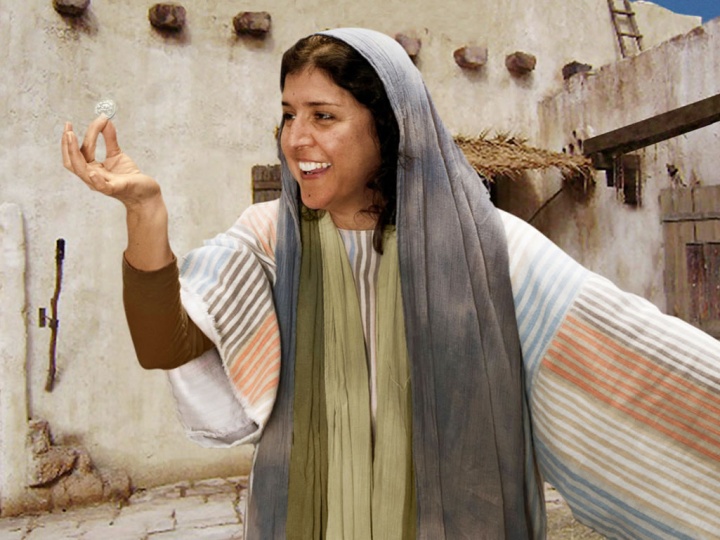
We read about a woman in Luke 15:8.  It states, “Or what woman, having ten silver coins, if she loses one coin, does not light a lamp, sweep the house, and search carefully until she finds it? And when she has found it, she calls her friends and neighbors together, saying, ‘Rejoice with me, for I have found the piece which I lost!’  Likewise, I say to you, there is joy in the presence of the angels of God over one sinner who repents.” This woman in the parable of the lost coin lit a lamp.  She uses the light to see. She knows the light is what she should follow to find the coin.  She also swept the WHOLE house.  She uses her physical energy to find the coin.  She doesn’t wait for the coin to just reappear; she puts effort into looking for it, and she receives her reward by finding the coin.  She spends time rejoicing with her neighbors.

If you lost a coin, would you search your whole house? Would you turn your house upside down just to find one coin? If I lost a coin I would not care one bit about that one coin that I lost. Matter of fact, I have lost a bunch of coins and I have never swept the house just to find them.  

It may be that you haven’t searched for God so you can have a home in heaven in the end, and maybe it is that you want to fix that issue. Or maybe you need to get your life on track. Whatever your need may be, do not remain lost! 

YOUR JUNK DRAWER


Sunday’s Column: Learning From Lehman

Dale Wiley

 
I read recently that one of the fastest growing business is storage units, closely following the Dollar General Stores. People have more ‘stuff’ than places to put them.
 
In our house, we have storage units we like to call  ‘Junk Drawers’. If we have an unexpected visitor we’ll do a swipe of stuff into the nearest drawer to hide all remnants of our ‘clutter’. I recently performed an ‘uncluttering’ and found some interesting items I forgot still existed. 
 
Items included:
  • 10 old TV remote control batteries that I hoped would regenerate but found that it wasn’t meant to be. 
  • 62 ink pens, each representing one of our many banks in the area. 
  • A 5 year old receipt from Auto Zone on a lawn mower battery with a 24 month guarantee. 
  • Some eclipse glasses from our big one 3 years ago. We have to be ready for the next one.
  • A receipt from Jim Fuqua Appliance Repair dated 1987. Although we don’t have the washing machine and Jim has since retired, a lifetime guarantee was promised and I holding him to it.
  • And finally, a love letter from my fiancé from 1972. After 48 yrs of marriage, She was disappointed to find it was in the junk drawer, but is now happy to have it framed and hanging on our bedroom wall.
 
You know, it’s hard to throw away old stuff and our old ways.
Eph 4:21-24 says to get rid of the Old Self and to put on the New Self.
Col 3:9-10 says to lay aside the Old Self and put on the New Self.
 
It could be that the drawers represent our lives. What we put in the drawers or leave in the drawers is up to us. We have the freedom to fill our lives with ‘junk’ or rubbish or with whatever the world gives us, or we can make sure we put  ‘in the drawer’ The things of Christ. 
 
Paul, in his letter to the church of Ephesus, pointed out some things that may be in the drawers of our lives, that we need to make a conscious decision to avoid, to lay aside, and to clear out. Look to Eph 4:17-32. Especially clear out  deceit, falsehood, anger, unwholesome words, bitterness, wrath, slander, and malice. But what happens if we just clear out the junk and then put the drawers back into the cabinet, empty?  How long will that cabinet stay empty? 
 
A 17th Century philosopher wrote, “There is a God-shaped vacuum in every person that can only be filled by the Creator and He is made known through Jesus Christ”. 
 
So, we just can’t leave the drawers of our lives empty…because something or someone or specifically the devil is always ready to creep in and fill it up again.  First Peter 5:8 reminds us to be vigilant against that adversary waiting to devour us..
 
Find the open, self-explanatory solutions to our ‘Junk Drawer’ dilemma in Col 3, 8-17.
 
  • Verse 8…To put them aside.
  • Verse 10..To put on the new self.
  • Verse 12..have a new heart.
  • Verse 13..To forgive.
  • Verse 15..Let the peace of Christ rule your heart.
  • And especially, “Beyond all things, Put on Love”. The perfect bond of unity, doing all things in the name of The Lord Jesus (Col. 3: 14-17). 

These Two Just Don’t Mix

THURSDAY’S COLUMN: “CAPTAIN’S BLOG”


181314946_10225338741073662_8563579952343234574_n

Carl Pollard

Some things just don’t mix. Milk and orange juice, Auburn and Alabama fans, Coca Cola and Mentos. There is one particular mix that can sometimes be fatal. Blood pressure medicine can be a great thing, but when mixed with Advil/Ibuprofen it can harm your body and even give you a brain hemorrhage.  If you mix two common household items, rubbing alcohol and bleach, you can create chloroform. 

It’s safe to say that some things in life just don’t mix. Twenty to thirty years after the ascension of Jesus, Paul wrote to a group of Christians in Galatia warning them of the dangers of mixing two teachings. In Galatians 1:6, Paul says, “I am amazed that you are so quickly deserting Him who called you in the grace of Christ and are turning to a different gospel.” He goes on to say in verse 7, “not that there is another one, but there are some who trouble you and want to distort the gospel of Christ.”

Paul is writing to the Galatians to answer a simple question: “What is required for a person to be saved?” Forget circumcision (Acts 15:1), forget additional teachings, what does GOD say? His answer can be summed up as this: “We need nothing other than what is found in scripture to walk in the Light.” 

Paul addresses the problem in verse six, and he uses the word “amazed” (“thaumazo”) (cf. Acts 4:13; Mark 5:20). He was amazed because these Christians should’ve known better than to listen to these false teachers. Paul’s point is that if there is anything added to that which is necessary for the maintaining of your walk in the light, it is not necessary for salvation.

These Christians should’ve known better, but sadly we are sometimes the same way. We know what’s right and wrong, yet still choose poorly. We know how our speech should be as Christians, we know how we should act and how we should think, but more often than not we make the wrong decision. 

The message that these Christians were to accept was that of the death, burial, and resurrection of Jesus and the correct way to be saved. Any requirement outside of the plan of salvation was to be condemned. If that other requirement is the sinner’s prayer, it must be condemned. If that other requirement is a “new wave of salvation,” as some denominations teach, it is to be condemned. If that other requirement is a tradition not necessary for salvation yet enforced as such, it is to be condemned. We are only compelled to follow what is contained in God’s Word. 

We do this because there is only one source of truth, as Paul goes on to say in Galatians 1:7-9. No one else (not even an angel) has the authority to add to what God has already completed. Scripture is our objective standard, the one source of truth that we can count on no matter what. 

Every year there are new medical breakthroughs that may change how a doctor treats his/her patient. For example, doctors used to bleed their patients because they thought there was such thing as “bleeding out bad blood.” We know this isn’t the case today and that’s because as humans our knowledge is fallible and subject to change. This is not the case for Christians. 

Our methods may change as time goes on, but our message and teachings will never change. Their author is our perfect, unchangeable, all-knowing, infallible God. 

We need nothing other than what is contained in scripture to walk in the light. Paul tells them what is required for salvation. There is only one Gospel that helps to walk in the light. There is only one source that the gospel has come from. We have to decide which gospel we will listen to. Will we let man ruin what God has deemed perfect? Will we let someone else tell us how to be saved? Man, on his own, doesn’t know how to be saved. 

God gave us one gospel through One source, now it is up to us to make the right decision.


via Popular Mechanics

Blessings

Wednesday’s Column: Third’s Words

gary and chelsea

Gary Pollard

How does Jesus feel about us? He created us, became human, and let us kill Him so He could make a new deal with us (Heb. 9.15-17). Most disregard Him, many are outright hostile. How could He love us at all? Because we know how most view God, it’s easy to lump ourselves into the same group as the hostiles. 

Ephesians gives some awesome insight into how Jesus feels about his people. 

1.3 – He gave us spiritual blessings through His sacrifice. 
1.4 – He had us in mind before He even started creating things. 
1.5 – He intended to make us part of His family. 
1.6 – He gave us grace. 
1.7 – He died to give us freedom. 
1.7 – He gives us forgiveness. 
1.9 – He told us what He wants. 
1.11 – He is going to give us an inheritance.
1.11-14 – He knows His own, and He’s looking to get us back home. 

 He didn’t just do nice things for us, though. Here’s how He feels about it: 

1.5 – Love motivated Him. 
1.5 – He wanted to do it. 
1.7 – He’s generous with His grace. 
1.8 – He’s generous with His grace. 
1.9 – He wanted to do it. 

We don’t deserve Him, but He loves us to death. We let Him down, but He gives us grace. He’d have every right to be exasperated with His imperfect family, but He’s not. People get on our nerves and societies fall apart, but we have the best family on the planet. Remember whose you are when you’re discouraged. No one wants you more than He does! 


The Invitation Song

Thursday’s Column: Captain’s Blog

carl-pic

Carl Pollard

Some of the most powerful messages are often delivered through song. If you want to really show someone how much you love them, you write a song. If you want to tell others about yourself or your family, you write a song. Songs are a great way to get across a message in a powerful way. In the church we sing songs for several reasons.
 
Paul tells us in Col. 3:16, “Let the word of Christ dwell in you richly, teaching and admonishing one another in all wisdom, singing psalms and hymns and spiritual songs, with thankfulness in your hearts to God.”
‭We sing to help the word of God dwell in our hearts. We sing to teach each other. We sing admonish and correct. We sing out of thankfulness for God. Since there are so many different reasons we sing, each song has a different message. Some are encouraging, some are reminders, and some are a plea to the sinner. We call some of these “invitation songs. ” And usually these are sung after a lesson as a way to encourage lost souls to respond and return.
 
“Though Your Sins Be As Scarlet” identifies a major problem that has plagued man since the Garden of Eden, our sin. The choices we make, the way we live, has stained us. This song calls to our attention the sin problem of man. This song is based on Isaiah 1:18, “Come now, let us reason together, says the Lord: though your sins are like scarlet, they shall be as white as snow; though they are red like crimson, they shall become like wool.”
This invitation song shows us the blessing that Christ has given. Though we’ve been stained by sin, they shall become like snow. Pure, holy, undefiled. If you’ve ever spilled grape juice on a white T-shirt, that’s the imagery.
 
Sin has ruined our hearts, but Christ is the perfect stain remover. He is able to remove every spot and blemish. Rom. 3:23 tells us that all have sinned and fallen short of the glory of God. Do we really think that we could live up to the glory of God himself? Could we have fixed this sin problem on our own? No. And we sing this song to remind us of WHO our solution is.
 
Through the gift of Christ they will be removed. Though your sins be as scarlet, they shall be as white as snow.
 
On an old rugged cross Jesus paid it all, and all to him I owe. I come just as I am, but I surrender all. Will you cherish the old rugged cross? Do you recognize the blessing and the blood that has washed us whiter than snow?
 
 
One of my favorite preachers delivering the invitation in Lexington, KY (2018)

Circle of Life

Wednesday’s Column: Third’s Words

gary and chelsea

Gary Pollard

  1. Earth Created (Gen. 1) (A)
  2. Man Sins, Earth Corrupted (Rom. 8) (B)
  3. Access to Tree of Life Blocked (Gen. 3) (C)
  4. Man Unified in Evil (Gen. 6) (D)
  5. Earth Destroyed by Water, Preserved for Destruction by Fire (II Pet. 3.6,7) (E)
  6. Jesus Grants Access to God As Mediator, High Priest, Perfect Sacrifice (Heb. 2.9; Rom. 8.17) (F)
  7. Man Rejects God, Unified in Evil (II Thess. 2.3-12) (4) (D)
  8. Earth Destroyed by Fire (II Pet. 3) (E)
  9. Man Redeemed, Creation Redeemed (Rom. 8.18-20; cf Mt. 19.28) (A, B)
  10. Access to Tree of Life Restored (Rev. 22.2) (C)
  11. God’s Own Live with Him, Share Unique Bond, Can Never Lose Paradise Again (II Pet. 3.13; Rom. 8.29; II Tim. 2.12) (F)

You can also look at it this way: 

  1. Earth Created (Gen. 1) New Heavens, New Earth (II Pet. 3.13; Rev. 21.1; Matt. 19.28)
  2. Man Sins, Earth Corrupted (Rom. 8.18-20) Man Redeemed, Earth Redeemed (Rom. 8.18-25)
  3. Access to Tree of Life Blocked (Gen. 3) Access to Tree of Life Restored (Rev. 22.2)
  4. Man Unified in Evil (Gen. 6)  Man Unified in Evil (II Thess. 2.3-12)
  5. Earth Destroyed by Water (Gen. 7; II Pet. 3.6,7) Earth Destroyed by Fire (II Pet. 3.7)
  6. Jesus Gives Access to Father (Heb. 2.9)  We Live With God (II Tim. 2.12; I Jn. 3.1ff; Rom. 8.29)

“The God and Father of our lord Jesus Christ is blessed. Thanks to His incredible mercy, we are born again into a living hope through the resurrection of Jesus Christ out of death. Because of this, we have an immortal inheritance that has no flaw and cannot wear out. This is guarded in heaven for you who are also guarded by God through faith. This salvation will be revealed to you at the end” (I Pet. 1.3ff).

Salvation

Wednesday’s Column: Third’s Words

gary and chelsea

Gary Pollard

We don’t typically associate salvation with death. Normally the opposite is true! In the New Testament salvation normally describes forgiveness of sins (Acts 4.12, for example). Escaping spiritual death is how the word is primarily used. The exception to this rule is fascinating and sobering. 

Human instinct compels us to avoid unpleasantness, suffering, and death. When faced with danger or difficulty, our default response is avoidance at all cost. This was a great temptation for many in the early church. 

Peter wrote to Christians who were about to face some awful hardships. He encouraged them by promising salvation, but it was a hard message to swallow. In the following examples, Peter used “salvation” to mean something different (it would have been understood to mean this because of context): 

  1. I Peter 1.5 – Death
  2. I Peter 1.8ff – Death
  3. I Peter 2.2ff – Death

How is death the same thing as salvation? For those who were suffering and stayed faithful, death was the ultimate salvation. For those whose lives were upended because of persecution, being with God forever was salvation. For those who lost their family members, salvation meant reunion. The ultimate result of faith is eternal life with God. 

How do we view difficulty? Do we compromise faith to avoid suffering? At worst, suffering leads to death. At best, suffering leads to death. Nothing can slow a faithful Christian down! We have salvation in this life (guilt does not weigh us down), and the end of this life is salvation. We have an awesome God. 

The Great Conjunction

Monday’s Column: Neal At The Cross

IMG_1922

Neal Pollard

There’s a reason why we know who Galileo is. In 1610, with his telescope, the astronomer discovered four moons orbiting Jupiter. The same year, he discovered a strange oval around Saturn eventually known to be its rings. Then, in 1623, he observed an astronomical event, happening once every 20 years, known as the “Great Conjunction.” This is when the two giant planets in our solar system, Jupiter and Saturn, travel together across the sky and appear aligned. In fact, they are so close that to the naked eye they almost appear to be one giant star (known popularly as “The Christmas Star”)(Bill Keeter, Nasa.gov). Tonight, 12/21/2020, is the closest our two biggest planets have appeared together since that night 397 years ago when Galileo dubbed this phenomena with its popular name. The last time most of the earth had the view it will have tonight was March 5, 1226. A popular theory for “the star” of Matthew 2:2, which drew the Magi from the east, was the “Great Conjunction” (which happened three times in 7 B.C., in May, September, and December)(Joe Rao, space.com). 

Did God, in His providence and the process of holding all things together (Col. 1:17), make the “Great Conjunction” part of His fulness of time (Gal. 4:4) that brought about the events surrounding the wise men and Herod in Matthew two? We cannot know that, but it is a powerful demonstration of the order and design of an omnipotent creator.

This God of order has made known some other “Great Conjunctions” through His eternal word:

  • Belief and baptism (Mark 16:16)–Together, they bring salvation
  • Faith and works (James 2:14-26)–Together, they ensure life
  • Repentance and baptism (Acts 2:38)–Together, they effect remission of sins
  • Faith, hope, and love (1 Cor. 13:13)–Together, they are the “abiding” things
  • Repentance and belief (Mark 1:15)–Together, they form the gospel of God
  • Righteousness, peace, and joy (Rom. 14:17)–Together, they constitute the kingdom of heaven
  • Life and peace (Rom. 8:6)–Together, they are consequences of the mind set on the Spirit
  • Spirit and truth (John 4:23-24)–Together, they form the essentials of true worship
  • Goodness, righteousness, and truth (Eph. 5:9)–Together, they form the fruit of the light)
  • Deed and truth (1 John 3:18)–Together, they demonstrate true love

There are actually so many more of these “combinations” or conjunctions that God has brought together. As compelling and awe-inspiring as His creative power is, as shown in tonight’s incredibly rare celestial occurrence, it simply builds our faith in His ability to fulfill the many great promises that saturate His Word. I hope skies are clear where you are tonight and that you will take the time to view the southwest sky right after sunset. Why not take a moment, as you gawk, to thank and praise the God who has so thoroughly revealed to you who He is and what He wants for your life?

Sources consulted:

https://www.nasa.gov/feature/the-great-conjunction-of-jupiter-and-saturn
https://www.space.com/great-conjunction-jupiter-saturn-2020-fun-facts

Christ’s Focus On Getting Rid Of Sin

Wednesday’s Column: Third’s Words


Gary Pollard

This week we will do a brief study of I Peter 3.17-22. 

In verse 17, the emphasis in the original text is “doing good.” If it is God’s desire (this is emphasized) that we suffer, it is better (stronger, more prominent, more advantageous) that we suffer for doing good works than evil works. How much more powerful a message do we send when we come under fire for doing something that benefits others? If we suffer for doing something bad, we’re just another criminal. But to suffer in the act of doing something good – in context – is a far more powerful evangelistic tool. 

In the following verses, Peter gives a powerful example of Christ’s focus on getting rid of sin. He put everything into saving mankind – including giving His own life – so that we could all have the opportunity to come to God. Even before the destruction of the world through the flood He made sure everything had the opportunity to hear about their spiritual state. Whether this was done through Noah and his sons or whether He had a more direct hand in this is immaterial. The point of the text is that the message got out to those who are “now in prison.” His goal was to bring others to God, even when it caused Him suffering. 

Only those who did listen and obey – eight people – were rescued from evil by the waters of the flood. Notice that the Spirit does not record Noah’s ark as being what saved them! They were saved in the important sense by the destruction of evil. Our focus is not earthly. 

Just as water saved Noah and his family from evil, water saves us from spiritual death. Being immersed in water is how we make a formal appeal to God for a clear conscience! Some translations render this, “A promise to God from a good conscience,” as if baptism is some kind of outward sign of an inward faith. This is not reflected in Greek; it is a conscience cleared by an appeal to God, because of the resurrection of Jesus. He has all power, so He can clear our record when we submit to Him. 

Having all of this as a background, we have some motivation to keep our actions pure, suffer for doing good things, and understand that God’s power is what saves us. Peter gives many other phenomenal motivators for living a pure life, which we will look at in detail in the coming weeks. 

KNOCKING DOWN THE WALLS OF JERICHO

Monday’s Column: Neal At The Cross

pollard

Neal Pollard

God had promised the land of Canaan as early as Abraham (Gen. 15:18ff). The first city of Israel’s conquest was Jericho (Josh. 6:1). The word about and reputation of God’s people preceded them, so Jericho “was tightly shut because of” them. Despite this, the LORD told Joshua that “the wall of the city will fall down flat” (Josh. 6:5). Israel followed God’s unorthodox battle plan and “the wall fell down flat” and “they took the city” (6:20). Though they’d suffer a setback because of one man’s disobedience, this was the dramatic start of what would be the accomplishment of the land promise made to Israel.

God also promised Abraham that in his seed all the nations of the earth would be blessed (Gen. 22:18). This was fulfilled through Christ (Gal. 3:28). One of the ways Jesus proved that He was the Christ was “with miracles and wonders and signs which God performed through Him” in their midst (Acts 2:22). He started His ministry in Galilee (Mat. 4:17) and ended it in Jerusalem (Mat. 16:21), but near the end He had His own Jericho triumphs. He had not one, but two that are recorded by the gospel writers. One involved Him performing one of His many miracles, gaining a victory over sickness, but the other was a triumph of a different kind gaining a victory over Satan. 

Luke indicates Jesus was approaching Jericho when He encounters a blind beggar (Luke 18:35). Matthew and Mark also seem to record the same miracle, identifying this man as Bartimaeus, and showing perhaps “that the Saviour went in and out at the same gate of the city, and that the miracle falls into two parts” (Lange 282). But Jesus’ knocks down the wall between the haves and have nots, the socially acceptable and the socially unacceptable, when He has mercy on him and gives him his sight (Luke 18:37-43). Immediately after Bartimaeus, Jesus enters Jericho and passes through (19:1). Now, he knocks down the wall between the righteous and the sinner (19:7). He went to be a guest in the house of Zaccheus, who wanted to see Jesus so badly that he climbed a tree. The end result of this encounter is “salvation” (19:9). 

Isn’t it interesting that the Hebrew name for Jesus is “Joshua”? Isn’t it also interesting that Jesus performs these miracles in proximity to the walls of Jericho? The walls that Jesus knocks down are important to us today. They tell us that the gospel is for the poor, the hurting, the needy, the seedy, the rejects, and the sinner. Wasn’t God preparing us for this when Joshua spares a harlot and her family in the destruction of Jericho (Josh. 6:22-23)? 

Jesus was certainly about knocking down the walls we can be quick to build. Who does Jesus want us to be taking the gospel to today? Certainly, He’s not against those who are financially blessed (Zaccheus was). He’s not against those who are socially well-connected (many Christian converts in Acts and the epistles were). But, here is where Jesus is revolutionary. As Paul puts it, “God has chosen the foolish things of the world to shame the wise, and God has chosen the weak things of the world to shame the things which are strong, and the base things of the world and the despised God has chosen, the things that are not” (1 Cor. 1:27-28). He chose “the poor of this world to be rich in faith and heirs of the kingdom” (Jas. 2:5). 

What should His church look like today? The gospel transforms lives and lifts people morally and spiritually higher. But, He’s interested in the Rahabs, Bartimaeuses, and Zeccheuses of our day! Jesus wants to break down barrier walls (Eph. 2:14). He wants you and me using the gospel to do the job for Him today! 

Kathy in Jericho, March, 2018

Going To The Son Road

Monday’s Column: Neal at the Cross

Neal Pollard
Avalanche Lake hike (Glacier Natl. Park)

It has been on my bucket list for as long as I can remember, going to northern Montana to see Glacier National Park. Though I lived only a long day’s drive from it for 13 years, it took moving across the country before we made the trip. Sometimes, the event cannot live up to the hype, but that was not the case with this experience. The beauty is as diverse as it is breathtaking. While there is so much to see, some of the most memorable sights are to be found along a route in the park known as the Going-To-The-Sun Road.

It has to be 50 of the most beautiful miles on the planet, with diverse wonders. You’ll see mountain streams cutting through the landscape.

There are breathtaking views of the northern Rocky Mountains throughout the length of this iconic road.

And, of course, there are the lakes that dot this God-kissed path.

There may be some impressive, enjoyable creations of man, but no one can outdo the Master Creator for displays of beauty. I’m glad I took some pictures, but there is no way I could ever forget what I saw.

I could not help thinking about how such an experience reinforces my faith in the existence of God or how it shows me what kind of God He is. How could anyone see what is on display in places like that park, then come away denying Him or concluding that mere random chance produced it?

But, given the name of this road, I also could not help but think about an analogy Jesus used when He walked the earth. He referred to the path of discipleship, following Him, as the narrow way (Mat. 7:14). It is a one-lane road, a singular path (“the way,” John 14:6). It can be an uphill climb (Acts 14:22; 1 Pet. 2:21). But, not only is there much beauty to be found along the journey (John 10:10), the payoff is without rival (Mat. 10:22; Rev. 21:1ff).

The Going-to-the-Sun Road is open only for a season and, though park officials can estimate when it will close each year (mid-to-late October), this cannot be precisely predicted. The road that leads to the Son is likewise open only for a season (Heb. 9:27), but no one knows when that road will forever be closed (Mat. 24:36; 25:10).

It breaks my heart to realize that most people are not on the “Going-to-the Son” road. They have charted a path that may bring them pleasure for a season (Heb. 11:25), but it will end in their eternal destruction (Mat. 25:46). Jesus has His disciples here to show others the way to Him (Mat. 28:19). He is preparing a place far superior to this world (John 14:2-3), a place we should be looking for (2 Pet. 3:13) and longing for (Heb. 11:16).

For all its tears and sorrows, the road of life is full of so much beauty, too. There is never a regret in taking the path of the Savior. But, there are lost and weary travelers who need our help to find it, too. May we find someone today to introduce to the “Going-to-the-Son Road.”