Rays On Gloomy Days

Tuesday’s Column: Dale Mail

For centuries, the locals of Meghalaya, India, have manipulated the roots of rubber trees to grow their natural bridges. Stretching over ditches and streams these natural structures will far outlast the man-made metal or wooden bridges that rot and decay in just a few years. The rubber-roots are self-strengthening and become more substantial over time by increasing in thickness. 

Meghalaya also happens to be the rainiest place on earth, receiving 467 inches of rainfall a year. Just to put that in perspective, New York will typically get around 60 inches a year. The men and women who work outdoors wear a sort of full body-umbrella made of bamboo and banana leaves.

One visiting reporter stopped a butcher who was carrying a basket of freshly-cut meat up a steep flight of stairs. He was asked if it was hard to live in a place with so much rain. The 26 year old man replied, “we can’t think about that. Here there’s always rain but we have to work, so it’s no good wondering about it.”

There are many people who tend to take this attitude after experiencing a rude awakening in life. When the days of innocence have passed us by we think tragedy, hardship, trials, and tribulations are just a part of the deal. 

It’s going to rain. It does no good to think about it— we trudge along. 

We’ve got overcast days, cold days, and rainy days— but it doesn’t mean we have to live without any light. 

This post is a simple one. Here’s a few passages to help brighten up the darker days. 

These verses don’t take the hurt out of life but they can put the hope back in our lives when we begin to lose drive. 

Isa. 60.19 

No longer will you need the sun to shine by day, nor the moon to give its light by night, for the Lord your God will be your everlasting light, and your God will be your glory.

John 1.4-5 

The Word gave life to everything that was created, and his life brought light to everyone. The light shines in the darkness, and the darkness can never extinguish it.

Ps. 40.1-3

I waited patiently for the Lord to help me, and he turned to me and heard my cry. He lifted me out of the pit of despair, out of the mud and the mire. He set my feet on solid ground and steadied me as I walked along. He has given me a new song to sing, a hymn of praise to our God. Many will see what he has done and be amazed. They will put their trust in the Lord.

I John 1.5 

This is the message we heard from Jesus and now declare to you: God is light, and there is no darkness in him at all.

I would argue that though it’s impossible for every day to be a sunny one, the Christian will always have access to the Light because of His son. 
Dale Pollard

What To Do When Things Seem To Be Falling Apart

Wednesday’s Column: Third’s Words

Gary Pollard

The country seems to be falling apart. What can we do right now in our messed up culture? These are some observations from I & II Peter:

  1. Focus, first and foremost, on our reward (I Pt 1.3-5). 
  2. View hardship as a way to grow (1.6-9). 
  3. Appreciate our grace, since it gives us sustained innocence in God’s eyes (1.10-12). 
  4. When times get hard, put 100% of our hope in the second coming (1.13). 
  5. We won’t get caught up in our worldly culture, but double down on being moral like Jesus (1.14-20). 
  6. Put all of our confidence and hope in God (as opposed to people) (1.21). 
  7. Practice genuine love for our Christian family (1.22-23). 
  8. Keep the brevity of our lives in the forefront of our minds (1.24-25). 
  9. Get rid of negative character attributes (2.1). 
  10. Spend more time in Bible study (2.2-8). 
  11. Remember that we’re a sovereign nation as God’s people (2.9-10). 
  12. Set a good example, especially around worldly people (2.11-12). 
  13. Submit to all governing authorities, both because it’s what God wants and because it reflects the church well (2.13-17). 
  14. Go through difficulty with patience and grace (2.18-25). 
  15. Husbands and wives can cultivate and strengthen their marriages (3.1-7). 
  16. Make our church family our highest priority (3.8). 
  17. Be good to people who mistreat us (3.9-13). 
  18. Don’t stress about people who mistreat us because of our beliefs (3.14-22). 
  19. Resist the temptation to fall back on sinful habits when difficulty happens (4.1-6). 
  20. Remember that our lives are short (4.7). 
  21. Love our Christian family, take care of them, and be unified in our relationship with God (4.8-11). 
  22. Expect difficulty, and see it as suffering with Jesus (4.12-14). 
  23. Trust God with our lives when things get difficult (4.15-19). 
  24. Give our lives completely to God (5.6). 
  25. Give all of our anxieties to God (5.7). 
  26. Remember that Satan is our true enemy, and he wants us to mess up — don’t let him win (5.8-9). 
  27. Remember that even worst-case scenarios are short-lived (5.10). 
  28. Remember that apostles and prophets predicted that things would get rough toward the end (II Pt 3.1-4; cf II Thess 2.1-3; II Tim 3.1). 
  29. Remember that God is fully in charge of Earth’s destiny (3.5-8). 
  30. Remember that this Earth is temporary (3.10). 
  31. Remember that God expects us to live as if tomorrow’s the end (3.11-12). 
  32. Remember that we’re living for a new earth and sky (3.13, cf Rev 21.1-2; Is 65.17; Mt 19.28). 
  33. “Therefore, beloved, since you are waiting for these, be diligent to be found without spot or imperfection, and at peace. And consider God’s patience to be salvation…” (3.14-15). 

Calling On And Looking To Jesus

Friday’s Column: Brent’s Bent

Brent Pollard

For practitioners of Japan’s True Pure Land Buddhism, one desires to enter the pure land upon death. In so doing, he could bypass our corrupt world and enter the western paradise where he could quickly achieve nirvana. Conversely, True Pure Land Buddhism has a hellish alternative in which souls are tortured by oni (i.e., demons) until they are purged of their sins and can enter the Pure Land. No one desires torture. So, the Japanese would recite the nembutsu: “I call on the Amida Buddha.” In medieval Japan, practitioners of True Pure Land Buddhism would lay on their deathbeds holding on to a string as an added measure. That string led to a painting of Amida and his cohorts. As they looked longingly towards the picture, they hoped that their escaped soul would travel the line and enter the western paradise. 

It may be that upon reading the previous paragraph, you thought of the apostle Paul in ancient Athens. He told the men of Athens that he perceived them as superstitious, literally δεισιδαιμονεστέρους—“very fearful of gods” (Acts 17.22). As Japan is often called the home of eight million gods, with the Buddhas incorporated into the mix, it is easy to label the Japanese as superstitious. Yet, I note something different when I hear about this True Pure Land Buddhism. It would almost seem that True Pure Land Buddhism rubbed elbows with Christianity somewhere. It is conceivable since Pure Land Buddhism arose in India during the second century A.D. before making its way to east Asia. However, note two intriguing features of True Pure Land Buddhism reminding one of Christianity. 1) Calling on Amida’s name and 2) Looking to Amida for hope. 

Joel prophesied that those calling up the name of the Lord would be saved (Joel 2.32). Peter and Paul quote this verse from Joel’s prophecy regarding salvation within the New Covenant (Acts 2.21; Romans 10.13). So, there is most assuredly power in the name of Jesus Christ. Peter says there is “no other name under heaven that has been given among men by which we must be saved” (Acts 4.12, all ref. NASB1995 unless otherwise indicated). But calling on Jesus’ name is not like reciting a nembutsu. Paul shows us that we call upon the name of Jesus when our faith moves us to action. After seeing Jesus on the road to Damascus, Paul has been fasting and praying for several days. The prophet Ananias finds Paul in his misery and says, “ Now why do you delay? Get up and be baptized, and wash away your sins, calling on His name” (Acts 22.16 NASB1995). See then how Paul called on Jesus’ name. Paul submitted himself to baptism for the washing away of his sins. In so doing, Paul called on the name of Jesus. 

Do we not also look to Jesus to give hope? Well, we do not stare at an artist’s rendering of the Christ upon our deathbed. But we do look to Him in life as our hope. After citing many examples of those from whom we could find a worthy model of faithfulness, the Hebrews’ writer adds: “Fixing our eyes on Jesus, the author and perfecter of faith, who for the joy set before Him endured the cross, despising the shame, and has sat down at the right hand of the throne of God. For consider Him who has endured such hostility by sinners against Himself, so that you will not grow weary and lose heart” (Hebrews 12.2-3). The KJV says we look to Jesus. Either way, our eyes are drawn to and become fixated upon Him. This hope we have in Jesus is an anchor for the soul (Hebrews 6.19). 

It remains a challenge to preach the Gospel in those parts of the world where Buddhism has taken root. I’ve heard missionaries remark of the antagonism against Christianity within the Buddhist world. Yet, it seems strange that within at least one branch of Buddhism, there is a central figure who is something of a Messiah. Considering that so much of Buddhism asks you to find salvation from within yourself, there are at least some within that belief system who recognize the nature of the human condition is such that we must rely on the grace of someone greater. Therefore, even in hostile environments, may we endeavor to preach that the One willing and able to save is the Lord Jesus Christ. Let us tell the world to call upon and look to Jesus.

courtesy via Flickr


Exaleipsei

Wednesday’s Column: Third’s Words

Gary Pollard

Jesus is the great healer and the Bible is full of passages that comfort, encourage, give endurance, and help us cope with a broken world. It’s full of so much more! A higher purpose gives us existential meaning, and the Bible outlines that purpose. It also has a few passages that fire me up, and those are the ones I want to share today.

Revelation 21

This is our reason to live the Christian life (Matt 19.28; Rom 8.18-25; I Pet 1.3-7, 13; 4.12-19; II Pet 1.3-4, 10-11; 3.3-13; I Jn 3.1-3). We’re looking forward to something much better, but what kind of stuff are we looking for?

  • –  Zero dysfunction! No pain, grief, disease, crime, taxes, tornados, war, death in general, aimbots (if you know you know), etc.
  • –  God gets rid of tears (Rev 21.4)! The context is a message of hope for early Christians who were dealing with devastating loss. But God will ἐξαλείψει all tears. Exaleipsei is future (will happen), and seems to be a comfort word. I had always pictured a Men in Black kind of thing, where all painful memories are obliterated and new ones made. But the word seems to indicate that an interaction with an infinitely compassionate Father will be more than adequate to get rid of any pain. If you’ve ever comforted a spouse or child who was grieving and physically wiped their tears away, that’s what this word describes.
  • –  Everything is brand new (21.5)! None of the junk that we’ve dealt with here will be compatible with our new home.It will be wildly exciting: the best accomplishments of each nation will be there (21.25-26). God and his son provide all we need (21.22-24). True unity exists because we’ll all be on the same side (21.27). No need for healthcare or accountants or coroners or search and rescue or militaries or law enforcement! Those exist to push back against evil, which won’t exist in our new home. Revelation 21 is a rich chapter, but it’s full of excitement! God doesn’t speak empty words. Take him at his word and read the chapter very carefully. It’s hard to walk away from that study without getting pumped for heaven!!!

Macaroni And Ketchup

Wednesday’s Column: Third’s Words

Gary Pollard

For the next few weeks, I’ll be sharing passages that help me in some way. Our faith is a lifelong work-in- progress. It can be high maintenance. The Bible helps us maintain a healthy faith in any circumstance. It counsels us, convicts us, excites us, scares us, and gives us hope for a perfect future.

I once thought I was the only person who liked ketchup on macaroni. Turns out, there’re like four other people on earth who like it, too. Finding out that we aren’t alone in something is super cool!

Maybe we’ve thought, “Man, I don’t know if other Christians struggle as much as I do.” I’ve used these passages in an article before, but they’re very powerful. We aren’t alone in our struggles!

“So I have learned this rule: when I want to do good, evil is there with me. In my mind I am happy with God’s law. But I see another law working in my body. That law makes war against the law that my mind accepts.

That other law working in my body is the law of sin, and that law makes me its prisoner. What a miserable person I am! Who will save me from this body that brings me death?

I thank God for his salvation through Jesus Christ our lord! So in my mind I am a slave to God’s law, but in my sinful self I am a slave to the law of sin.

So now anyone who is in Christ Jesus is not judged guilty. That is because in Christ Jesus the law of the spirit that brings life made you free” (Rom 7.21-8.2).

I Hope You Read This

Thursday’s Column: Captain’s Blog

img_0806-e1578582831473

Carl Pollard

We have abused this word. We say things like, “I hope there’s some food at the house” or, “I hope the weather is nice tomorrow,” and “I hope my team wins the Super Bowl.” The hope that’s mentioned in scripture has a completely different definition. 
 
The word in Romans 15:13, for example, is the Greek word “elpis. “Now may the God of hope fill you with all joy and peace in believing, so that you will abound in hope by the power of the Holy Spirit.” This word is defined as, “Looking forward to something with confidence” (BDAG 319).  It is an expectation that we have as Christians. We have hope because we call God our Father. 
 
The world does not have that relationship and because of this they have nothing to hope in. If they look forward to anything it’s pay day, or the weekend, or vacations. Every one of these come to an end and once again they are left with no hope. 
 
Don’t get me wrong, we look forward to these things too. And there’s nothing wrong with that, but this isn’t what we look forward to solely. We know that there is more to life than vacation. 
 
1 Peter 5:10 is an incredible verse that describes the hope we have. It says, “After you have suffered for a little while, the God of all grace, who called you to His eternal glory in Christ, will Himself perfect, confirm, strengthen and establish you.” 
 
This is true hope. It is the God of the universe Himself that will do this for each one of his children. We may not see it every day, but the world is lost and desperate. We have what they need. They’re desperate for guidance because they’re lost. They’re desperate for purpose because they have none. They’re desperate for Hope because the world offers nothing to those who are struggling. 
 
God has entrusted us with the answers to life, so what are we doing with this knowledge?

Keeping It Together

Wednesday’s Article: Third’s Words

Gary Pollard

Peter dropped a bombshell on the early church: “Everything’s about to end…” (I Pet. 4.7). For those early Christians, that meant death was close. Our natural reaction when facing imminent death is usually panic, followed by desperate attempts at self-preservation. History (even recent history) has shown us humanity’s trend when faced with potential calamity.

So, what does God expect us to do when we face the end? We’ll look at I Peter 4 for answers.

  • Be reasonable and self-controlled for the sake of our prayers (7). God can’t work with us when we’re freaking out.
  • Love each other with dedication (8). Love hides mistakes, and we’re full of them. When everything falls apart, we have to lean on each other.
  • Take care of each other without complaining (9).
  • Use your abilities to help each other (10-11). This could be through finance, words, or serving each other.

More could be said about this! The bottom line is that we can’t react like everyone else. When everything falls apart, we should stand out in a good way. We should be lights in a dark room. Our response to crisis could very well attract people stuck in darkness. We could not possibly help our fellow man more than by giving them the same hope we have!

We’re Different & The Same 

Tuesday’s Column: Dale Mail


Dale Pollard

When it comes to the families that make up the church, what ties us together is a common bright future. While every family has its differences, one constant remains— the church. All strive to follow those guidelines laid out in scripture. Paul says in Philippians 1:6, “And I’m SURE of this, that He who began a good work in you will bring it to completion at the day of Jesus Christ.” 

The writer speaks with assurance, and that confidence is well-placed. From “His-story” we see that God always completes His projects. He never dreams; He creates. He decided to create the world and here it is. He decided to save the world, and here we are. 

Paul also would write in Romans 7-8 that the flesh tends to get in the way of the spiritual. God is perfect, but we’re not. That’s what makes us a work in progress. Aren’t we thankful that God provides the solutions to “fix” us up? 

We’re involved in a great work because there simply is no better work  than what is being done by His church. That being said, many of us struggle with overcomplicating things. We try to make sense of our individual lives, and when we leave God out it all becomes a discouraging battle. Where’s the peace? Joy? Confidence? Maybe it was left behind when we left God’s path. Thankfully God came down to earth years ago to teach us everything we need to know. We see that in His interactions with people. Even His twelve original followers were an odd group. 

Each had a diverse background. Some were Fishermen and some tax collectors. 

Each one had a unique personality too! They ranged from timid to assertive.

 Each one had spiritual battles from greed to crippling doubt.  

Yet each one rallied under His leadership and were united through a common hope. 

What’s changed? Not much. 

The personalities, talents, backgrounds, and flaws mixed together create a unique blend that make up each one of us. Yet, here we are rallied under His leadership, united in common hope. 

Several Lehman ladies (men are at the table in the foreground) enjoying “Federal Grove” the night before it (sadly) closed, being regaled with one of Kathy’s stories. I think this one was about snakes crawling out of a hole.

Christianity: A Top Five List

Wednesday’s Column: Third’s Words

Gary Pollard

Life has been found in some of the most uninhabitable spots on earth. Bacterial life thrives in Lake Vostok in Antarctica, for example. Thiolava veneris was found thriving in the aftermath of a violent submarine volcanic eruption near the Canary Islands. Organisms that thrive in extreme environments are called “extremophiles” (noaa.gov). We’re always amazed when life thrives in extremely hostile environments.

The moral climate of our planet makes it extremely difficult to thrive. Humanity has created a moral environment consisting of self-interest, violence, apathy, and general dysfunction. In terms of population, they have the clear advantage. Christians are, by definition, extremophiles. We defy all expectations by thriving in an overwhelmingly hostile environment.

That said, we are studied by those who make up our environment. Many will come to the conclusion that we’re strange and warrant no further interest. Many will consider our loyalty to a supernatural morality to be hostile (II Tim. 3.12; Rom. 5.3,4). Few will wonder how we’re able to have hope, purpose, direction, resilience, and happiness in any condition.

Why would anyone want to be an extremophile? Why would anyone willingly assume a lifestyle that automatically puts them at odds with their own environment? Here’s why:

1. Everyone is going to live forever (Jn. 5.28,29). We want to live with the creator in a perfect world (II Pet. 3.13; Rev. 21.1,2; Rom. 8.18-25), not in an even worse world (Matt. 25; Rev. 21.8; II Thess. 1).

2. We didn’t make up the moral code we follow. Human error is not a factor in our worldview because it came from the creator (II Tim. 3; Jer. 31.31ff). This system can’t be corrupted and doesn’t take advantage of its constituents (unlike many human laws). We’re secure and confident because of this.

3. The creator went to extreme lengths to make sure we could easily have access to a perfect eternity (I Jn. 5.3; Heb. 9.11ff). Who wouldn’t want to follow a perfectly selfless leader?

4. We enjoy peace and existential purpose because our worldview isn’t from around here (I Pet. 1.1-10). It doesn’t matter what happens to us, we’re more than fine.

5. We’re not afraid of death (Heb. 2.14f). Self-preservation is not our main priority – how many people have done horrible things out of self-preservation? Lots! We don’t have a death wish, we’re just not afraid of death.

That’s just a sample of why we voluntarily become extremophiles. Done correctly, ours is the best life possible! It makes this one better, it makes the next one perfect. We can’t lose!

What Was Their Secret?

Gary Pollard

What got early Christians through hard times? What helped them grow? How were they able to thrive when their jobs, families, and personal safety were threatened?

They focused on hope. Biblical hope is confident expectation. God promised us a perfect life after this sometimes stinky one. The early church’s hope for death’s freedom gave courage and comfort (I Peter 1.3). Their hope for a perfect life had the same effect (II Peter 3.13; Romans 8.18ff).

They focused on grace. It keeps us from falling out with God, and it helps keep our motivation high (Romans 7.15ff; I John 1.7)!

They focused on God’s message to humans (I Peter 2.2). We have to view reality through God’s eyes. This isn’t possible without deep, meaningful, and unbiased study! The Bible is a collection of rich, fascinating insights into God’s nature and our future! It’s very helpful to use a version that’s easy to read and modern.

They focused on each other. The early church spent a ton of time together (special circumstance, but still cool: Acts 2.44). Their relationship provided encouragement and strength! Managing conflict healthily is also crucial for the church’s health (Matthew 18).

They focused on selflessness. We aren’t animals, so we should put the needs of others above our own (Romans 14; I Corinthians 8; All of Philippians). A selfless family can get through anything!

THE CHURCH’S OPPORTUNITIES

Monday’s Column: Neal At The Cross

Neal Pollard


No pandemic or problem can suppress or destroy the church’s opportunities. If it could withstand the withering attacks of persecution in its first few centuries, the body of our Lord can come through this current storm stronger than it was before. The church’s opportunities are limitless because…

  • The gospel is still powerful (Rom. 1:16). 
  • Christ is still the Savior of the world (1 John 4:14). 
  • The church is still the manifold wisdom of God (Eph. 3:9-11).
  • The mission is still in force (Mat. 28:19).
  • We still have the only answer to the world’s biggest problem (Rom. 5:6-10). 
  • We can demonstrate the most powerful attraction of discipleship (John 13:34).
  • His kingdom will never be utterly shaken or destroyed (Dan. 2:44; Heb. 12:28). 
  • The recent crisis has awakened a sense of purpose in so many Christians.
  • Heaven is as desirable as ever and hell as unwelcome (cf. Mat. 25:31-46).
  • We know we are bigger than pettiness, division, and senseless strife (1 Cor. 1:10-13). 
  • Man still senses that life is bigger than a few years on this earth (Ecc. 12:13-14).
  • Hope still serves as an anchor for the soul (Heb. 6:19). 
  • The world has no viable competition to what only Jesus can give (1 John 4:4; 5:4). 
  • We are not ignorant of the devil’s devices (2 Cor. 2:11).
  • There is no substitute for fellowship, the assembly, and corporate worship and study (Heb. 10:24).
  • We may appreciate the importance of relationships like never before (Rom. 12:3-21).

Truly, this list is much longer, but suffice it to serve as a reminder that these need not be “the worst of times.” God can make them the best of times as we move forward, eyes fixed on eternity and the wonderful work between here and there. Let’s seize those opportunities (Gal. 6:10)! 

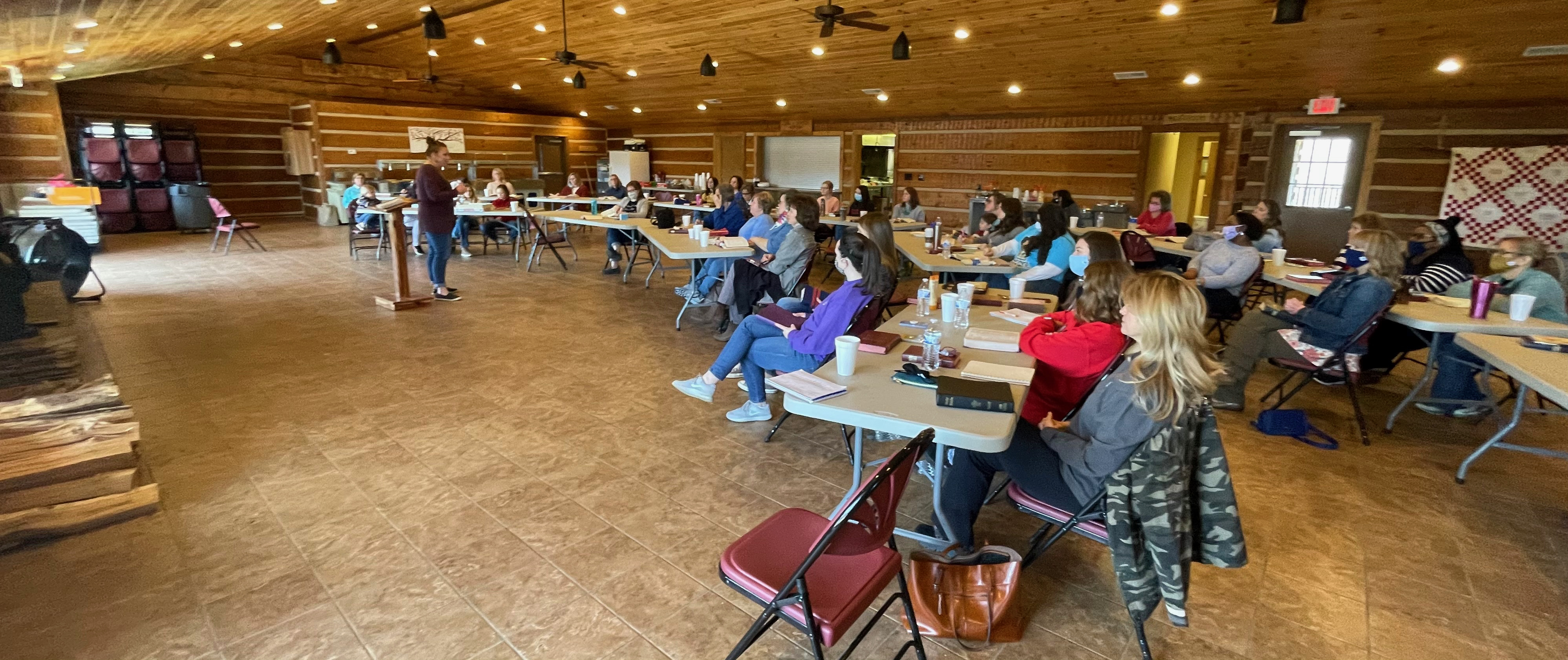
Saturday morning’s Ladies Retreat with guest speaker, Whitney Watson, of Corsicana, TX. Over 60 were in attendance Friday and Saturday.

Persecution And Hope (Part Two)

Wednesday’s Column: Third’s Words

Gary III

Gary Pollard

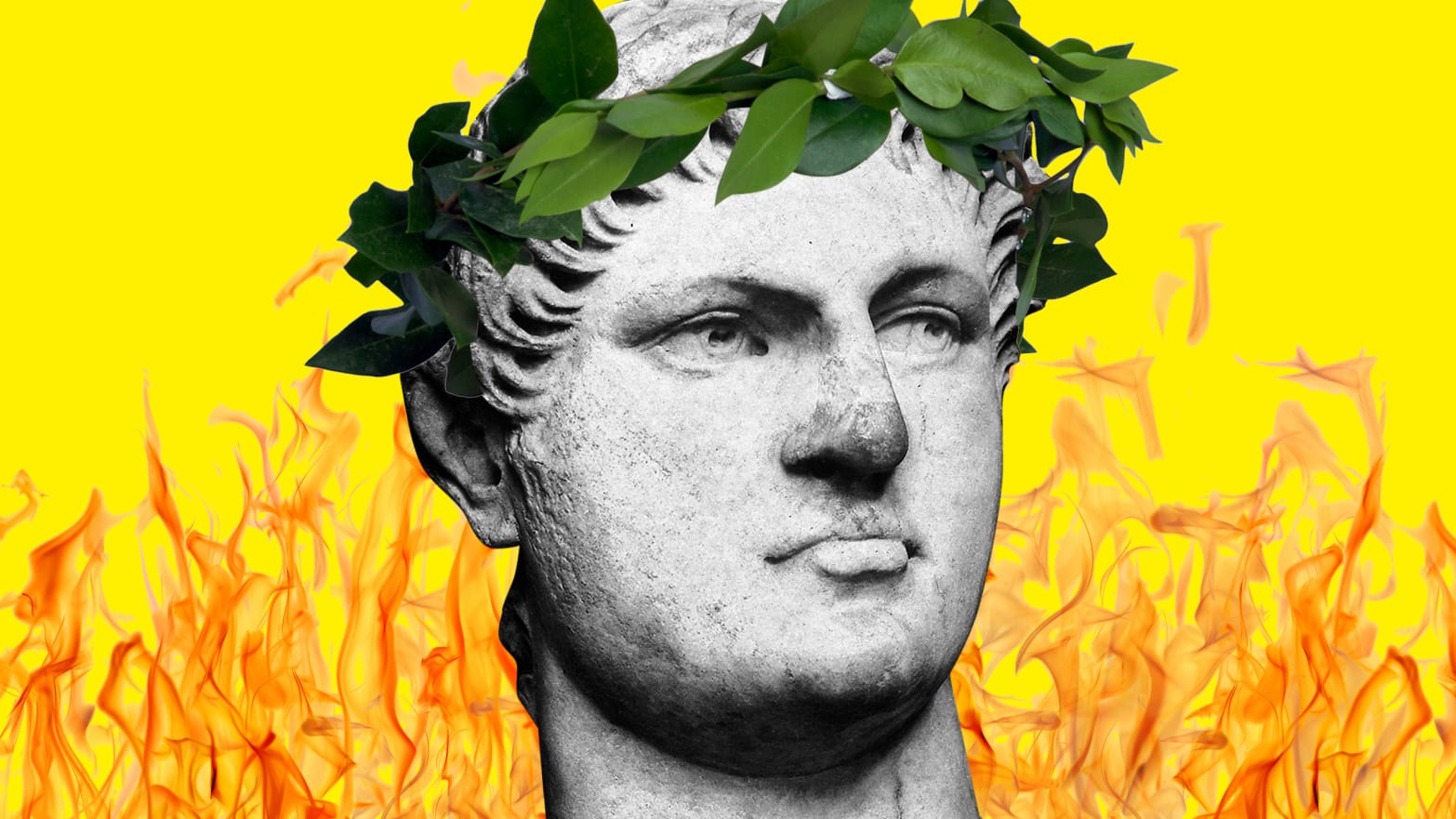
Last week we looked at an account from Tacitus describing the brutality of Nero against Christians who lived during his reign. Here are a few points to take away:
 
  • Jesus was a historical person.
  • Early Christians suffered immensely. If we want an idea of Christian endurance, we should look to this as an example. We do not really face persecution in the modern world.
  • That account makes inspired passages like I Peter 1.13-2.2 and I Peter 4.7 more personal. In 1.13-2.2, the Spirit tells Christians how to live while dealing with persecution with five commands:
    • Fix Your Hope (13)
    • Be Holy (15)
    • Conduct Yourselves in Fear (17)
    • Love Each Other (22)
    • Long for Pure Milk of the Word (2.2)
  • It gives more context for the desire to be in Heaven that early Christians had (II Peter 3.13; Romans 8.20-24; II Timothy 2.12).
 
“If only for this life we have hope in Christ, we are of all people most to be pitied” (I Corinthians 15.19).
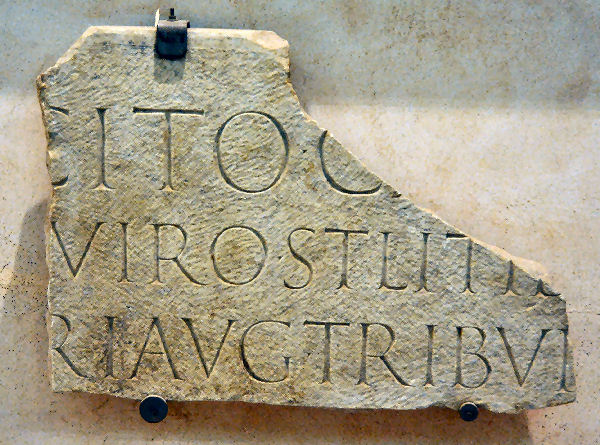
Tombstone of Tacitus (via Rome Museum)

Persecution And Hope (Part One)

Wednesday’s Column: Third’s Words

Gary III

Gary Pollard

Gaius Cornelius Tacitus (AD 56-120) wrote two secular historical works describing the reigns of Tiberius, Claudius, Nero, and Gabba, Otho, Vespasian, and Vitellius (Annals and Histories).
 
He was the son-in-law of Agricola, the Roman General responsible for Roman expansion throughout Europe, especially northern Britain. He was not a Christian by any means, but a patriotic Roman with a family heritage tied to its conquests.
 
In the following excerpt, Tacitus mentions Jesus (referred to as Christus) and details the persecution of early Christians. I have abbreviated some of the excerpt (ellipsis), given contextual explanation (brackets), and added emphasis (bolded text). The information in his writings is fascinating, but I found the following to be shareable.
 
“…The next thing was to seek means of propitiating the gods [because of the burning of Rome], and recourse was had to the Sibylline books… But all human efforts, all the lavish gifts of the emperor, and the propitiations of the gods, did not banish the sinister belief that the conflagration was the result of an order.
 
Consequently, to get rid of the report, Nero fastened the guilt and inflicted the most exquisite tortures on a class hated for their abominations, called Christians by the populace. Christus, from whom the name had its origin, suffered the extreme penalty during the reign of Tiberius at the hands of one of our procurators, Pontius Pilatus, and a most mischievous superstition [of resurrection], thus checked for the moment, again broke out not only in Judæa, the first source of the evil, but even in Rome…
 
Accordingly, an arrest was first made of all who pleaded guilty; then, upon their information, an immense multitude was convicted, not so much of the crime of firing the city, as of hatred against mankind. Mockery of every sort was added to their deaths. Covered with the skins of beasts, they were torn by dogs and perished, or were nailed to crosses, or were doomed to the flames and burnt, to serve as a nightly illumination, when daylight had expired.
 
Nero offered his gardens for the spectacle, and was exhibiting a show in the circus, while he mingled with the people in the dress of a charioteer or stood aloft on a car. Hence, even for criminals who deserved extreme and exemplary punishment, there arose a feeling of compassion; for it was not, as it seemed, for the public good, but to glut one man’s cruelty, that they were being destroyed.”
 
Annals of Tacitus Book XV

Crisis

Wednesday’s Column: Third’s Words

Gary III

Gary Pollard

  • 1918 had the Spanish Flu pandemic that killed at least 675,000 people in the United States and 50,000,000 worldwide.
  • 1929 birthed the Great Depression, a multi year period of societal upheaval and economic collapse.
  • 1941 ultimately led to our involvement in a world war after the attack at Pearl Harbor.
  • 1963 saw the dramatic assassination of JFK.
  • 1986 put a damper on the excitement of space exploration with the tragedy of the Challenger explosion.
  • Violent crime rose dramatically from the 60’s to the 90’s, enough that most people no longer left their houses unlocked and were less likely to trust their fellow people.
  • 2001 marked the beginning of a global war on terror with an awful display of evil.
  • 2008 saw the Great Recession, the aftermath of which may be one of the causes of our great political division.
  • 2020 was a train wreck we need not discuss further.
 
This is by no means an exhaustive list! It covers some major events that affected Americans in the last 100 years, but much more could easily be said about the negatives of our history.
 
This is important: Immunity was attained after two years of the Spanish Flu pandemic. Lifespans increased by a few years during the Depression and led to a hearty generation of folks who helped to win the Second World War. That war, as horrible as it was, led to many incredible breakthroughs in medical and other sciences, not to mention historically unprecedented economic prosperity. The 1960s at least exposed the ungodly, ugly nature of hatred and racism, leading to some positive changes that were long overdue.
 
Even in the worst of times, good happens. But even if it doesn’t, hope is invulnerable! For a Christian, these issues are simply the result of a fallen world and they’re temporary. The end of life for us is the beginning! We have one important thing that no crisis can destroy: hope. We are absolutely certain that death will be the moment we get to live in a perfect world with our creator (see also II Peter 3.13ff; Matthew 19.28; Ephesians 1.18ff).
 
Nothing can or should dampen our faith in God, our hope for a better life, our mission to pull people out of darkness, our attitude, our love for each other, our dedication to spiritual growth, our responsibility to take care of people, our resilience in difficult times, and our critical compulsion to emulate Jesus in every possible way while we still breathe.

THE GREATNESS OF LOVE

Thursday’s Column: Captain’s Blog

IMG_0806

Carl Pollard

Love is the ultimate gift we can have as Christians. Paul in 1 Corinthians 13 shows us why love is greater. It’s patient, kind, humble, and selfless. He wraps up this section by saying, “But now faith, hope, love, abide these three; but the greatest of these is love.” Why is love the greatest?
The Importance of Faith. Paul tells us that now “abide these three.” He uses the Greek word meno (“to continue to exist, remain, last, persist, continue to live).” We are commanded to remain in and live in faith. What does this mean? It means our lives must be transformed by our faith. It must be a LIVING faith. Not a one time faith, but a continual faith and trust in God. And this applies to all three attributes. Continue to live in faith, hope and love. We have to ask, “What does it look like when a Christian lives in faith?” To understand this we need to recognize that faith is “state of believing on the basis of the reliability of the one trusted, trust, confidence.” Faith is the Christian fully trusting in God because we believe in His promises.
People have ruined the meaning of faith. They will say that Christians have a “blind faith,” one that is almost illogical and irrational. As Christians we aren’t commanded to have a blind faith, but a faith based off of the evidence that we can see. There is evidence of an almighty creator, evidence that is seen in His infallible word, evidence that can be seen in His marvelous creation, and evidence that is based in logic by just taking a moment to look at the many different ways that God has revealed Himself to us. Paul tells us to live in faith, a faith that is backed by confidence.
The Need For Hope. The Christian walk is based on the hope of heaven. Biblical Hope is a confident expectation of the future we have as Christians. There’s a great need for Hope. Many in the world feel hopeless, especially when they see the news and look at what is going on around them. It can be easy to feel hopeless at times. To feel overwhelmed by the sin that surrounds us. It’s natural to feel this because we live in a fallen world where people do whatever they want with no regard for others. Paul remind us that we have hope, and even more than that, he tell us to remain in this hope and let it be an encouragement in times of need.
If we ever feel helpless, think of what we have to hope in as people that God has Called: The hope of a reunion with fellow Christians that have gone on, the hope of an eternity spent with the Father, the hope of a time where God will wipe away the tears of his children, and the hope of a time where we will never have to experience heartbreak and say those painful goodbyes. Each one of us will experience death, but it is not the end because we have hope.
The Greatness Of Love. Love is greater than faith and hope. Why? Why is love the greatest? What happens to our faith? It becomes sight. The One we have had faith in will be with us in person. The future we have hoped for all our lives will become a reality. But love, love will continue on for an eternity.
As Christians we will be separated from those who are filled with hate and be in a place filled with love. Our faith and hope will end, but love will never cease. Think about a place filled with pure love. Surrounded by likeminded people that have this sacrificial love, and living forever with the Author and perfecter of true love.
Why is love the greatest? Because it lasts.
98076001_10222323083564109_2429609840536977408_o

Hope In A Hopeless Situation

Monday’s Column: Neal at the Cross


IMG_1922

Neal Pollard

Nadezhda Khazina was born in Russia at the turn of the 20th Century. She met and married the famous poet, Osip Mandelstam, in Kiev, Ukraine, after the Russian Revolution and establishment of communism. The couple saw enough of that system of government to conclude it was destructive and harmful, so they railed against it as they had opportunity. Mandelstam had a wide audience through his poetry, and his 1934 epigram about Joseph Stalin was a work he called “his suicide note” and that has been described as his “sixteen line death sentence.” He was arrested, exiled, and died of exposure and neglect four years later. Nadezhda became even more active in crusading against the tactics used in the Soviet Union, then near the end of her life she wrote a two volume autobiography of her life and work: Hope Against Hope (1970) and Hope Abandoned (1974)(https://spartacus-educational.com/RUSkhazina.htm). What’s interesting is looking up the name “Nadezhda” or the more familiar form “Nadia”; the name means “hope.” In fact, Lois Fisher-Ruge wrote a book by that title in 1989.

Do you see the irony? Her name meant hope, but her life was full of hopes dashed and hopelessness in the midst of her struggle. But, she kept on working because of the hope she felt. 

Peter writes 1 Peter to Christians who were going to see some seemingly hopeless situations in their lives. Some of them lived in Bithynia, a region whose governor, Pliny, famously bragged to the emperor Trajan at the turn of the second century about his pogrom of executing professed Christians for their faith. This was just about half a century after Peter writes this epistle warning of persecution. 

Despite Peter’s warning about the testing of their faith in unfavorable circumstances, he frequently mentions not just the ultimate reward we see for faithfully serving Christ but also “hope.” Five times in the first three chapters, Peter mentions this hope. It’s a living hope caused by Christ’s resurrection (1:3), a complete hope (1:13), a hope in God (1:21; 3:5), and a reasonable hope (3:15). The world around them was hopeless; they lived without hope. They wanted to drag the Christians into that hopeless state, but Peter urges them to hold onto hope. 

Our hopes are tested by times like these, by a world full of sin and iniquity. It’s easy to restrict our focus to this earth and this life. Peter’s words are for us, too! Do not be hopeless! You have Christ. Only those in Him have legitimate hope! 

DCIM/101MEDIA/DJI_0254.JPG
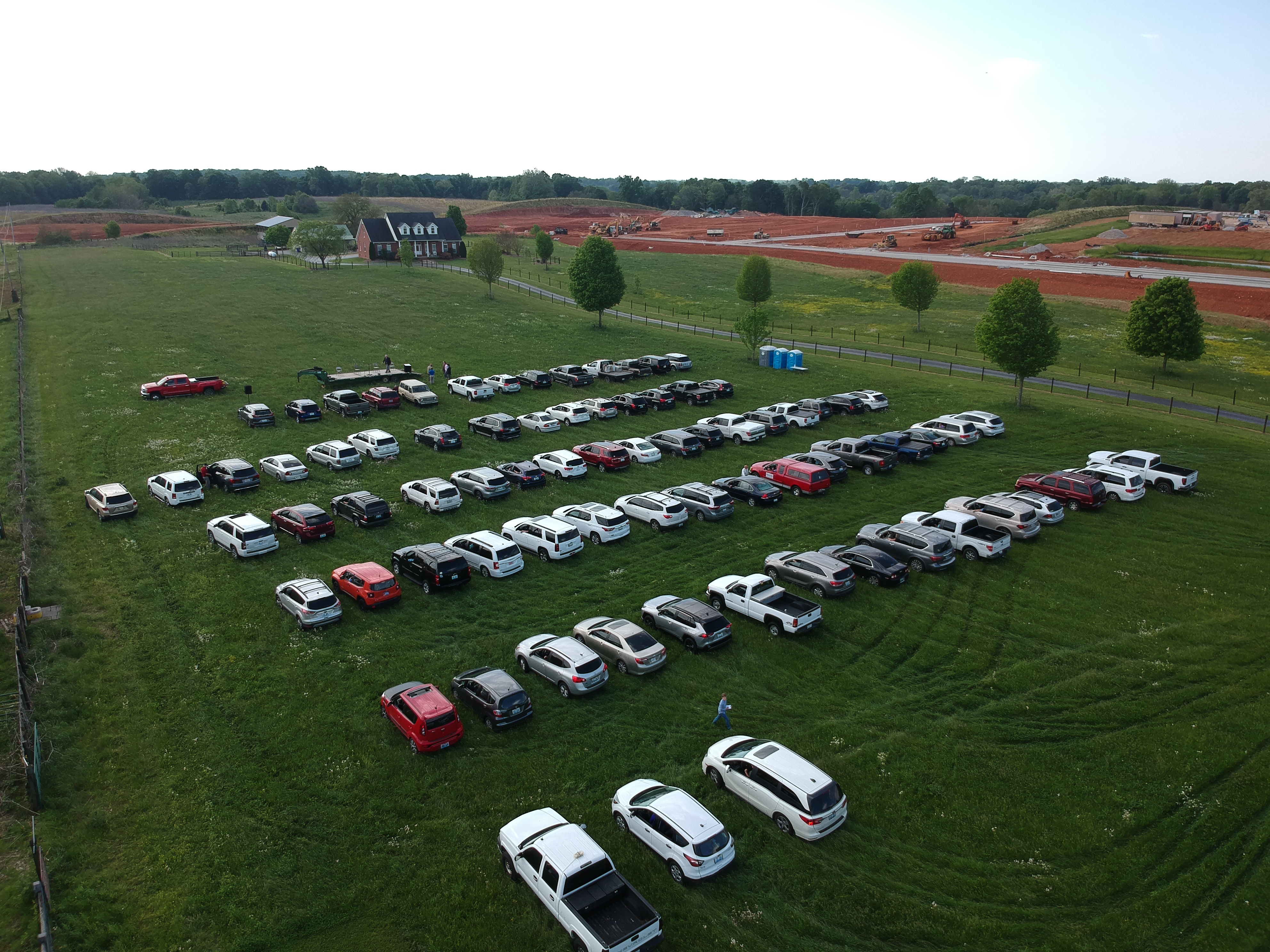
Drone photo from Nick Dubree of our drive in service at our new property. 

Understanding “Gospel” In The Colossians Epistle

Wednesday’s Column: Third’s Word

Gary III

Gary Pollard

If you’re remotely religious, you’re familiar with the word “gospel.” It has a wide semantic range, describing everything from a genre of music (and a few sub-genres) to the trustworthiness of a statement (“gospel truth”) to an all-encompassing description of religious doctrine. 

The word literally means, “God’s good news to humans,” from εὐαγγέλιον. It is mostly about the life and times of Jesus and the spiritual rewards we have when we accept that hope and follow God’s plan of salvation. It is so common and familiar to many of us that we sometimes overlook its importance. 

We often hear about “spiritual blessings,” but the definitions we are given of them are sometimes (if not often) frustratingly ambiguous. Colossians 1:3-12 gives us a beautiful description of those blessings. One of them is the gospel! Here’s why: 

1. The Gospel is Hope

A phenomenon so common to my generation (it’s immortalized in more than a few memes) is the idea of existential crisis. We ask questions like, “What am I doing? Why am I here? What’s my purpose? Why am I working this dead-end job?” We don’t like to think of where we’ll be in 20 years because that’s downright depressing. Will it be more of the same? The crushing weight of a meaningless existence is at the forefront of so many minds. 

The good news we have is described in Colossians 1:5 as, “…the hope reserved for you in heaven…” That’s purpose! What kind of hope? What are we looking for? We have been given the means to live a life with purpose. It won’t be easy, but it guarantees a perfect existence after we’re gone. This hope for heaven is central to the gospel. 

2. The Gospel Makes Us Better People

Once the Colossian Christians changed their lives, were immersed, and changed their lifestyles, they had a great love for each other and all of the other Christians (1:4). We can be friendly to others (even complete strangers), but Christianity promotes unconditional love for others. The world tries to achieve this artificially, but Christianity accomplishes this through unity and self-sacrifice based on guidance from scripture. 

If we are as dedicated as we should be, it also gives us endurance and patience when we deal with difficulty (1:11, 12). Those who follow God’s will and are dedicated to serving Him are guaranteed a perfect and meaningful existence after this life (Colossians 1:5, 12). 

We are confronted with our own mortality more often than we’d like (especially today). This has a whole lot of people questioning their purpose and their destiny. Christianity offers the greatest gift ever given: purpose and destiny. God has told us how to have both of those things; we can live a meaningful life here, no matter how difficult, and we can have a perfect life there. If you are looking for meaning and purpose in this life, look no further than the gospel – it is how we can be pure here, living a purposeful life with perfect hope for the next. 

vault-1144249_960_720

THE POWER OF HOPE

Monday’s Column: Neal at the Cross

pollard

Neal Pollard

Have you been struggling with some feelings of hopelessness lately? Whenever we have a hard time seeing the end in sight or we face uncertainty or are exposed to fears and anxieties, it can undermine our determination to have hope. Yet, over a hundred times in Scripture, God points us to the hope His children have through Him and His promises. We have such a resource because of the rock-solid expectation He provides. Whatever may happen to us this week, this month, or this year, the Christian can look forward with confidence at the fulfillment of what God through Christ promises us. And Scripture says it so many ways:

–Hope does not disappoint (Romans 5:5)
–Hope helps us persevere with eagerness (Romans 8:24-25)
–Hope causes rejoicing (Romans 12:12)
–Hope fills you with all joy and peace in believing (Romans 15:13)
–Hope is an abiding quality, alongside such elite qualities as faith and love (1 Corinthians 13:13)
–Hope enables deliverance (2 Corinthians 1:10)
–There is one, unconquerable hope (Ephesians 1:18; 4:4)
–Hope is tied to earnest expectation and boldness (2 Corinthians 3:12; Philippians 1:20)
–Hope is connected to steadfastness (Colossians 1:23; 1 Thessalonians 1:3)
–Hope offsets grief (1 Thessalonians 4:13)
–Hope tunes our hearts to look for Jesus’ appearing (1 Timothy 4:10; Titus 2:13)
–Hope encourages the pursuit of our eternal life (Titus 1:2; 3:7)
–Hope anchors the soul (Hebrews 6:19)
–Hope helps us draw near to God (Hebrews 7:19)
–Hope is tied to endurance (Hebrews 10:23)
–Hope is instrumental to faith (Hebrews 11:1)
–Hope prepares for eternity (Colossians 1:5; 1 Peter 1:3,13)
–Hope helps give a defense (1 Peter 3:15)
–Hope purifies (1 John 3:3)

Remember this:

“How blessed is he whose help is the God of Jacob, Whose hope is in the Lord his God” (Psalm 146:5).
“The hope of the righteous is gladness…” (Proverbs 10:28).
“The Lord is my portion,” says my soul, “Therefore I have hope in Him” (Lamentations 3:24).
“Christ Jesus…is our hope” (1 Timothy 1:1). 

You will face nothing today or ever that is too destructive, terrifying, or powerful to offset this hope! That doesn’t mean be rash, reckless, or rebellious. It does mean be faith-filled, optimistic, and courageous! Are your faith and hope in God (1 Peter 1:21)?  

91282223_10221605336700886_5506081862256164864_n-1

Longing For Hope

Thursday’s Column: Captain’s Blog

IMG_0806

Carl Pollard

We’ve spent three weeks looking at a few areas where the world is desperate. They long for guidance, purpose and finally, hope (1 Pt. 5:10).
We have abused this word. We say things like, “I hope there’s some food at the house” or, “I hope the weather is nice tomorrow,” and “I hope my team wins the super bowl.” The hope that’s mentioned is scripture has a completely different definition.
The word in Romans 15:13, for example, is the Greek word “elpis. “Now may the God of hope fill you with all joy and peace in believing, so that you will abound in hope by the power of the Holy Spirit.” This word is defined as, “looking forward to something with confidence” (BDAG 319).  It is an expectation that we have as Christian. We have hope because we call God our Father.
The world does not and because of this they have nothing to hope in. If they look forward to anything it’s pay day or the weekend or vacations. Every one of these come to an end and once again they are left with no hope.
Don’t get me wrong, we look forward to these things too. And there’s nothing wrong with that, but this isn’t what we look forward to solely. We know that there is more to life than vacation.
1 Peter 5:10 is an incredible verse that describes the hope we have. It says, “After you have suffered for a little while, the God of all grace, who called you to His eternal glory in Christ, will Himself perfect, confirm, strengthen and establish you.”
This is true hope. This is the God of the universe Himself that will do this for each one of his children. We may not see it every day, but the world is lost and desperate. We have what they need. They’re desperate for guidance because they’re lost. They’re desperate for purpose because they have none. They’re desperate for Hope because the world offers nothing to those who are struggling.
God has entrusted us with the answers to life, so what are we doing with this knowledge?
66510003_10156443547920922_292784965630820352_o

How To Make The Best Of A Bad Situation 

Tuesday’s Column: Dale Mail

IMG_1381

Dale Pollard

Rattlesnakes are large, venomous snakes that live throughout North and South America. In my humble opinion, they are one of the most terrifying creatures on the planet–from the hair-raising sound of that rattle to those intimidating fangs that can be up to six inches long. The bite from one of these monsters is excruciatingly painful. If you were to be bitten, at first you would experience a tingling feeling, followed by an intense burning sensation. After this you would feel lightheaded and begin sweating profusely. Your vision would become blurry, and each breath would be more strained than the last one.

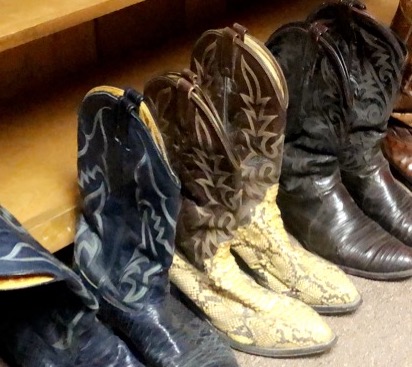
If left untreated, it can be fatal to humans. All of that sounds terrible doesn’t it? What good could possibly come from a deadly rattlesnake? Well, at some point in history, somebody looked at these snakes and decided that they would make a beautiful pair of boots. That’s how to make something great, out of something terrible. There is no doubt in my mind that the inventor of snakeskin boots was an optimist. He could see the good, even when staring into the dark vertical pupils of pure reptilian evil.

When faced with hardship, that simply comes from living in a fallen world, it can be a challenge to see the silver lining in each dark cloud. American basketball player, Charles Barkley once said, “Sometimes the light at the end of the tunnel is a train.” That’s definitely how it can feel sometimes! Although we have books in the Bible like Job and James that teach us how we should view our earthly struggles, here are just a few reminders from our God.

Number one, remember that each day is worth rejoicing over. Psalm 118:24 gives us the reason why— because today is another day that the Lord has made. It’s not my day; it’s God’s day. Reminder number two, what we can’t see in times of difficulty, is worth waiting for. Paul would inform us in Romans 8:27, “But if we hope in what we don’t see, we wait for it with patience.” In the muck of life it may feel at times that there’s just no way out. Just because you may not see the end in sight, rest assured that our hope is in a promise that was put in place before time itself began (2 Timothy 1:9). The last reminder is simply this, that God made the world you are living in and Jesus is currently creating the world we will one day live in (John 14:1-3). I firmly believe each day that passes can only mean that heaven will be that much more beautiful. If God created this world in six days, in all it’s beauty, imagine the splendor of our home to come. Now, if that doesn’t make a bad situation a good one, I don’t know what will! Here are the lyrics to an optimistic hymn that I hope get stuck in your head for quite a while.

“I care not today what tomorrow may bring, if shadow or sunshine or rain. The Lord I know ruleth o’er everything, and all of my worry is vain. Living by faith in Jesus above, trusting confiding in His great love. From all harm safe in His sheltering arm, I’m living by faith and feel no alarm.”

rattlesnake boots
One of two pair of rattlesnake skin boots I own.