“Virtue” Is Not A Dirty Word

Monday’s Column: Neal At The Cross

sunset and sweetie

Neal Pollard

Did you know that the term “virtue signaling” is now in the dictionary. An expression that has been used a lot in the wake of the pandemic and social unrest of last year and into this year, it means to “publicly express opinions or sentiments intended to demonstrate one’s good character or the moral correctness of one’s position on a particular issue” (Apple Dictionary, 2.3.0, 2005-2020). “Virtue signaling” is typically used in a derogatory manner. It is felt to be synonymous with jumping on the bandwagon of a popular cause or moral grandstanding, and is considered by those diagnosing a “virtue signaler” as one trying to win praise or acknowledgment from the likeminded for showing support for a social or political cause or to reprimand and rebuke those who feel or behave differently (dictionary.com). The disdain for this practice often arises from the apparent motives of the signaler, wanting to seem more caring, more righteous, or better than others on a given issue. Cancel culture and “wokeism” are often the more virulent strains of this social malady.

Jesus had a low threshold of tolerance for the ancient equivalent of the virtue signaler. Especially in Matthew 23, Jesus calls it out. “They say things and do not do them…” (3-4). How often have we seen people being hypocritical or inconsistent in matters they call out others on?  “They do all their deeds to be noticed by men” (5). Only God knows a person’s heart, but is that ever at play in this matter? “They love the places of honor…” (6). Especially may this be evidenced through social media where one may revel in the admiration or recognition of others for occupying the high ground by their signaling. The silent majority may be intimidated by virtue signals, but they are not inherently improved by them.

Depending on your point of view, you may well think that “virtue signaling” is a dirty phrase, that is bespeaks hypocrisy, political correctness, or the like. But, may we never tar the word “virtue” with the same brush. In a list of characteristics better known as the “Christian Virtues” (2 Pet. 1:5-7), Peter urges adding “moral excellence” or “virtue” to our faith. The word refers to “consummate ‘excellence’ or ‘merit’ within a social context” (BDAG, 130). While the Stoics and writers like Homer reserved it for “military valor or exploits, but also of distinction for other personal qualities and associated performance that enhance the common interest” (ibid.), inspired writers coopted the term to mean “uncommon character worthy of praise” (ibid.). While the word is only found a handful of times and more often refers to God (2 Pet. 1:3 and 1 Pet. 2:9), it should describe us, too. If we are praised for demonstrating virtuous qualities, we are to double down on filling our hearts with true righteousness and virtue (Phil. 4:8). 

Virtue, as God defines it and guides us to genuinely show it, will encourage others to look at God, glorify Him, and seek to follow Him. Humble, genuine godliness, seeking no attention and wanting no praise, is a powerful persuader. In fact, it’s central to how God wins the hearts of others (cf. Mat. 5:14-16). Let’s stay out of the virtue signaling business, but let us strive for truly virtuous living! God is counting on us to reflect His moral excellence to those foundering and floundering in unrighteousness. 

Paper straws: Environmental friendliness or an attempt to drive us crazy?

An Unsung Love Story

Thursday’s Column: Captain’s Blog

(Today, I’m pinch-hitting for Carl, who’s on his honeymoon this week. This is the wedding sermon portion of the ceremony performed last Friday in Summerville, GA. It was a beautiful wedding venue and occasion).

Neal Pollard

Introduction

A. One Of The Most Unsung Love Stories In The Bible Is Isaac & Rebekah

B. Their Romance & Relationship Is Revealed In Gen 24

    1. What impresses me most re: them is how they did so much right

        a. Rebekah is a very beautiful & pure young woman (16)

        b. She was a hard worker (16-20) & she had a wonderful attitude (58)

        c. She had a good relationship w/her family & his

   2. Isaac had a good head on his shoulders, he was a man of faith & family

       (25:21)

       a. & it apparently was love at first sight for Isaac (24:67)

       b. He was successful in his life's work (26:12-14)

       c. He was a patient & peace-loving man (26:20)

   3. In a day when God permitted a man to have more than one wife, & 

       his father Abraham did & his sons Jacob & Esau did

       a. Isaac was a one-woman-man

   4. It was a beautiful lifelong love story

       a. It was a story of devotion & affection

D. Their Story Is Not Unlike Yours

    1. I think Emily has the attributes of Rebekah we just saw

    2. Carl is a lot like Isaac in the ways we observed

    3. & your devotion & affection is so much like theirs, too

E. & To All Of Us Who Have Come To Witness This Joyful Occasion,

    There Are Other Parallels For Us To Consider:

   1. Many had invested so much into the moment the young couple met

      a. In Gen. 24, there was Abraham, his servant, & Rebekah's family

      b. They had invested their prayers, possessions & plans for these 2

   2. God was at the heart of both families' lives

       a. "God" is found 7 Xs in Gen 24, "LORD" is found 16 Xs

          1. Both families invoke His name a similar number of Xs

          2. Their faith was strong, & they conveyed that deep faith to I & R

              a. The moments before Isaac met Rebekah, he was worshipping (24:62)

              b. She was willing to leave her home to go to Isaac's home out of her trust in
God's providence & guidance in her life

          3. Their families encouraged them to serve & obey the Lord

              a. Abraham wanted his son to have a wife God would be pleased with

              b. Rebekah's brother & parents saw God's will in this & encouraged her to marry
Isaac

F. For A Few Minutes, I Want To Share With You Both Some Of The Blessings & Promises Shared
With Isaac & Rebekah

I. YOU WILL LIVE LIFE TOGETHER BEFORE THE LIVING ONE WHO SEES

A. When Isaac Met Rebekah, He Was Standing At Beer-Lahai-Roi

    1. It was the well at the place Hagar called "El-Roi," "A God who sees" (16:14)

    2. In 25:11, we read that the newly weds lived in this place

B. May I Encourage You To Remember That Today & Every Day For the Rest Of Your Lives, You
Will Be Living Before The God Who Sees

    1. Let that bring you comfort & hope, to encourage you

    2. He will see your ups & downs; Your victories & defeats

    3. There will be times when His presence & help are undoubtable

        a. Other times, you may be tempted to wonder

C. He Will Walk With You Both Throughout Your Lives

    1. Give Him 1st place, the most honored & cherished seat at the table of your marriage

    2. Pr 15:3--The eyes of the Lord are in every place, beholding the evil & the good

        a. It's not just a warning vs. sin; It's a promise as you do good

II. GOD WANTS TO HEAR YOU PRAY FOR YOUR SPOUSE

A. There Came A Time Of Stress & Adversity In Their Marriage

   1. You're aware that you'll face moments like those, too

B. It's Beautiful To See How Isaac Responds To This

   1. 25:21--Isaac prayed to the Lord on behalf of his wife

   2. Of all the good Isaac did in his life, nothing was better than this

C. There Will Be Moments When Your Problems May Threaten To Cause A Wedge Between You Two

   1. The best thing you will ever do in these Xs is to pray for each other, motivated by
your love & care for each other

   2. You will always need God's help; Let nothing keep you from praying to Him together

   3. & let nothing keep you from faithfully praying to God for each other

   4. 1 Pt 3:7--You husbands in the same way, live with your wives in an understanding way,
as with someone weaker, since she is a woman; and show her honor as a fellow heir of
the grace of life, so that your prayers will not be hindered


     a. When Peter says "your prayers," it's plural (God's encouraging both of you to pray
for each other)

   5. When you do, God will hear as He heard Isaac's prayer for Rebekah

 III. ALWAYS KEEP THE LINES OF COMMUNICATION OPEN

A. I've Heard Sermons And Bible Classes Re: The Danger Of Showing Favoritism With Your
Children & This Couple Is Used As Exhibit A

   1. But after the deception of Jacob & Esau's anger & grudge, Rebekah comes to Isaac &
freely shares her concerns w/Isaac (27:48)

       a. Isaac listens & the 2 of them work together to resolve the problem

B. Don't Wait For Problems To Arise Before You Start Communicating

   1. But certainly, when problems arise, be sure that you communicate freely, lovingly, &
persistently

   2. Companionship is re: needing each other & leaning on each other

C. Carl, Nourish & Cherish Emily; Love Her As X Loved The Church (Ep  5:25-28)

   1. Emily, love your husband so as to honor God's word (Ti 2:4-5)

   2. & realize the vital role communication plays in conveying your love

IV. FIND LOVE & COMFORT FROM ONE ANOTHER

A. Their Marriage Came At The Time Isaac Lost His Mother

   1. But the Bible tells us re: how they shared love & comfort w/one another (Gen 24:67)

   2. God has given you such a blessing in your marriage 

B. Never Miss An Opportunity To Express It To Each Other

   1. Like Solomon said

      a. Song 4:10--How beautiful is your love, my sister, my bride! How much better is your
love than wine,


     b. Or Song 7:6--How beautiful and how delightful you are, My love, with all your charms!

   2. & like his bride said to him

      a. Song 1:16--How handsome you are, my beloved, And so pleasant!

      b. Song 2:3--Like an apple tree among the trees of the forest, So is my beloved among
the young men. In his
shade I took great delight and sat down, And his fruit was
sweet to my taste.


C. Of Course, Do More Than Say It; Show It--Never Miss An Opportunity

   1. It will keep you on the sunny side of life on the stormiest days
Listening to the best man speech right before their exit.

Made To Be Functional

Wednesday’s Column: “Third’s Words”

Gary III

Gary N. Pollard, III

Ephesians 4 describes some spiritual gifts. Their purpose is to allow the church to function as it should. A properly functioning church spends eternity with God. 

A functional church is on the same page (one mind), has spiritual depth, and is workable (more on that in a bit). 

Ephesians 4.12ff is about members’ roles. What are they for? Everyone serves to equip saints. Saints are people who have pledged allegiance to God. 

We train for morally good works and become stronger through encouragement (12,16). We work toward a unified mindset, knowing Jesus, spiritual maturity, and we pursue the highest standard (Jesus) (13,14). 

We work to avoid immaturity and gullibility (14). We pursue maturity until our mindset emulates Christ’s (15). He’s described (multiple times) as the standard we have to have. There’s no room for spiritual laziness here. 

Jesus causes growth spiritually, but only if we’ve become soil that can be worked. If our minds aren’t mature, we aren’t workable. Elders are spiritual farmers, our hearts are the soil. If we use Jesus as our standard, we are workable. If not, we’re spiritually dead. 

So, what can we do individually? Make the church strong by pursuing unity, by having spiritual depth, and by being workable. If we work on those things we will spend forever with God. 

The Darkside Hackers

Tuesday’s Column: Dale Mail

image

Dale Pollard

Beware the DarkSide. No, that’s not a Star Wars reference. Just a few short weeks ago a cyber-gang who call themselves the “DarkSide” hacked the Colonial Pipeline and sparked a string of panic buyers to funnel jugs and containers full of gasoline. On May 7th the hacked pipeline authorized the ransom sum of $4.4 million to be transferred to the gang to try and settle this concerning situation. An odd spree of events and details shroud this whole thing and for those of us not familiar with the technological aspects, it seems even more unsettling. As Christians it’s okay to keep an eye on the latest events and protect yourself and family, but our watchful eyes would be far better put to use when it comes to our homes, personal faith, and church families. Take a look at what Jesus said in Matthew 7:15. 

“Watch out for false prophets. They come to you in sheep’s clothing, but inwardly they are ferocious wolves.” 

There are false prophets and messages everywhere in our world. They’re doing their best to hack into our spiritual lives and they’ve been successful at doing so. When our guards are down they blend in with the flock and disguise themselves with a counterfeit truth. Thankfully our Savior gives us the solution to uncovering their scheme before they get the chance. He says, “By their fruit you will recognize them…” We have an assurance given to us in Matthew 7:16 which guarantees we will not become a victim of these spiritual hackers. The wolves seek to drag us to the dark side, but with a watchful eye and the protection of the Father they can’t succeed. You won’t see any of this covered in the News but the good news is we have the Good News. It’s powerful and it’s always accurate. Be on the alert and stay watchful for the things that deserve the energy and our attention.

Roy Benavidez: Cheating Death For A While

Monday’s Column: Neal At The Cross

pollard

Neal Pollard

Thanks to MrBallen, popular millennial YouTuber, I reacquainted myself with the incredible story of Roy Benavidez through his video, “This man died 37 times.” His story, from childhood to death, is incredible. But it was his heroic acts on May 2, 1968, serving in Vietnam as an Army Special Forces Airborne team that he survived his most incredible, heroic feats. He was shot, hit with grenade shrapnel, bayoneted, and clubbed with numerous injuries so serious that at one point he was mistakenly put into a body bag, presumed dead. He charged with a helicopter rescue team so suddenly that he left his machine gun behind, armed with only a Bowie knife. He ran repeatedly into enemy fire at point blank range and continued bouncing back until he successfully rescued eight soldiers who undoubtedly would have been killed without him. When Ronald Reagan gave him the Medal of Honor 13 years later, he told White House Reporters, “You are going to hear something you will not believe if it were a script.” The Mexican-American orphan, raised in poverty and determined to serve his country, stared death in the face armed with little more than a devout faith and a devotion to his fellow soldiers. This after stepping on a land Mine in 1965 on his first tour of duty, after which doctors proclaimed he would never walk again. To the utter disbelief of medical personnel, he walked out of the hospital less than a year later and had qualified for special forces less than two years after that (additional information via psywarrior.com).

Schools, parks, and even a Navy ship have been named in his honor. He was often referred to as the man who could not be killed. He is a military legend. But, ultimately, in 1998, diabetes did what an array of enemy fighters trying their hardest could not do. It took his life. 

No one would want people to know this divine fact more than Mr. Benavidez would: “…it is appointed for men to die once…” (Heb. 9:27). Solomon adds, “For the living know they will die” (Ecc. 9:5). The sons of Korah echo, ” For he sees that even wise men die; The stupid and the senseless alike perish..” (Psa. 49:10a). The message is clear. One may evade death repeatedly, but not ultimately. Only the second coming of Christ will avert the unpreventable appointment with death (cf. Gen. 3:19). 

What can and must be prevented is what the book of Revelation four times refers to as “the second death” (2:11; 20:6,14; 21:8). It is powerful, painful, and punishing. But it’s avoidable. Christ died to defeat the power of physical death and the justice of spiritual death (Heb. 2:14-15). Jesus is the greatest hero of time and eternity, who faced death and overcame it to live forevermore and offer eternal life to those who follow Him (Mat. 16:24-27). He faced the worst that the most powerful enemy of all could throw against Him, and He utterly defeated him and  it. We needed rescue, and Jesus delivered us. Surely no one who understands that would choose to remain where he or she will eternally die. Physical death is sure. Spiritual death is not. God still pleads, “Choose life in order that you may live” (Deut. 30:19). 

Tortured Spirits 

Friday’s Column: Brent’s Biblical Bytes


Brent Pollard

From the title, one might assume I am writing an article about hell. While it is true that God’s Word describes hell as eternal torture for disobedient spirits, my topic is something else entirely. You see, I have become more aware of a disparity between those three parts comprising my singular being with each passing birthday. There is my intellect that still recalls youthful exuberance. In my mind, I can still free climb Mount Yonah in White County, Georgia. My body snarkily responds, “Are you crazy?” And then there is that part of me that will never die. Yes, my spirit. My spirit becomes tired. Not only do I crave to be clothed with my heavenly habitation (2 Corinthians 5.1ff), but I also want to leave this body that is subject to the temptation of sin (cf. Romans 7.14-8.1). I grow weary of hurting God.  

Fortunately, God created the “inner man” with the ability to experience daily renewal (2 Corinthians 4.16). Yet, this renewal will not occur if I am passive, sitting around waiting on God. Yes, He provides the inner man with strength through His Spirit (Ephesians 3.16). But you and I must engage in spiritual service, thereby enabling this renewal (Romans 12.1-2). This service requires that we strive for mastery over the boorish flesh holding our spirits prisoner. If we indulge our flesh, we will reap corruption (Galatians 6.8). Conversely, if we sow to the Spirit, we will reap eternal life. This choice makes all of the difference.  

So, to facilitate our daily renewal, our mindset plays a crucial role. Following Paul’s exhortation to “be anxious for nothing,” he reminds us that we have better things upon which to meditate (Philippians 4.6-8). In addition, we must follow David’s example of hiding God’s Word in our heart to prevent sin (Psalm 119.11). Thus fortified from within, we positively affect our actions (cf. Proverbs 23.7; Matthew 15.18-20). The execution of this task comprises the majority of our battle against the whims of our flesh. When successful, we maintain a tender heart that retains awareness of sin and prompts swift repentance when we occasionally stumble.   

Yes, we are all tortured spirits imprisoned by crude flesh.  But “Thanks be to God through Jesus Christ our Lord!” (Romans 7.25a NASB1995) His blood will offer continuous cleansing as long as we walk in fellowship with Him (1 John 1.7).        

“Pollard Boys” practicing for a great Doyle Lawson tune for Carl’s wedding today.

Examining Choices

[Note: With Carl getting married tomorrow, we are pinch-hitting for him this week.]

davesteeves

Dave Steeves

Choices. We all make them, some good, some bad, and if you’re anything like me, it seems sometimes we make  more bad than good.

In the book of Judges, we see some of the choices Samson made. It is clearly understood that Samson was set-apart by God before he was even conceived. You see, God had plans for Sampson. He was to be a Nazirite, meaning he would not drink wine or any other fermented drink. He could not make himself ceremonially unclean by coming in contact with a dead body. His head was also not to be touched by a razor.

Not only did Samson touch a dead animal but he ate honey from the lion’s carcass. Not long after that he threw a feast in a vineyard of all places. And to top it all off, he tells his wife the secret to his great strength is in his hair so she has his head shaved, breaking yet another Nazarite Vow.

Clearly, these are all bad choices that should’ve been evident to him. But, even though Sampson had broken these vows and would end up in chains because of them, God was able to use him. Samson delivered a mighty blow when he brought down the temple killing the Philistine rulers and himself.

You see, Samson was set aside by God but was still just a sinful human, not perfect by anyone’s standards. We too are sinful and set aside by God for a purpose. That purpose is to “go into all the world and preach the gospel to all creation” (Mark 16:15). Matthew 28:19 tells us,  “Therefore, go and make disciples of all nations, baptizing them in the name of the father and of the son and of the Holy Spirit.”
This instruction is given to all believers. If you are a Christian, this responsibility is yours, yesterday, today, and tomorrow. Our responsibility as Christians never stops. As long as we have breath in us we are to spread the good news. I am sure that some will say that God cannot use them, that they consider ourselves unworthy or unqualified.
Well guess what? God can and will use us in ways we can’t imagine. God will use each and everyone of us to further his kingdom if we just allow his will to be done in our lives. If we rely on our own strength we will fail, but if we trust in God and his strength we can’t fail. His promises are steadfast and never ceasing. All we have to do is trust in him and we can all do great things.

We read in Isaiah 41:10:  “So do not fear, for I am with you: do not be dismayed, for I am your God. I will strengthen you and help you: I will uphold you with my righteous right hand.” God‘s strength is available to all of us right now. I urge all of us  to take a look inside ourselves. Are we committed to the work of being a Christian? And if we aren’t, why not?
God is with us, ready and willing.  Won’t you let your loving father use you today? Allow Him to work through you to complete His good work. I can think of any no greater honor than to have God‘s will done in my life. Let’s make the choice!

steeves


You Are More Valuable Than A Yacht

Wednesday’s Column: Third’s Words

Screen Shot 2020-12-02 at 7.31.57 AM

Gary Neal Pollard III

The world’s most expensive new car is $18,000,000 (Bugatti La Voiture Noire). The most expensive house is around $2,000,000,000. According to Google, the most expensive thing in the world is apparently Walmart. It’s either Walmart or a $4,800,000,000 gold yacht. On the average US salary for a family it would take 100,000 households’ total income to purchase. Or, it would take one person 100,000 years. 

For most of us, those numbers are unattainable. That kind of value is totally out of reach. 

Jesus did something that makes those numbers look pathetic. He paid our insurmountable debt with something that cannot be valued with any mortal currency (I Peter 1.18,19; Acts 20.28). 

He values His church at one eternal blood sacrifice (Hebrews 9). We could not possibly drum up enough money over all history and economies to even approach one eternal blood sacrifice. And He paid that for us. God gave up everything to “buy” our spiritual freedom. 

I doubt myself constantly and even feel somewhat worthless at times. It’s part of our humanity! We instinctively know that we’re insignificant in this universe (Ps. 8; Ps. 144). But like David said (twice), He does care for and think about us, despite our insignificance. 

Spending eternity with God will be incredible by itself, but knowing that at death we will be face-to-face with the One who sees us as being that valuable is so exciting!! Knowing this, let’s do whatever it takes to make it there (I Cor. 6; 7; I Pet. 1.18f; Rev. 22.14-17). 

 The Doom of Jerusalem 

Tuesday Column: Dale Mail

image

Dale Pollard

Have you ever been to a “show and tell”? Maybe it was in school and the teacher asked you to get up in front of the class and show a particular object and explain and talk a little bit about it. I remember as a child dragging my giant yellow dump truck to class and showing everyone how the scoop on the back worked. I was very proud of it and after the class I sat on the truck and rode it down the hill in the parking lot. 

Jeremiah’s “show and tell” was not nearly as lighthearted. Instead of bringing a toy truck to show the people, he brought a sword and began to shave his face with it. The hair that he shaved off was what has been left alive by the people. The point of him dividing it into thirds was to make a point. That one third are the ones that survived the siege. Then the few that survive will be taken off but taken care of by God. In Zechariah 13 we find out that the fire of destruction took care of the first third. This wasn’t a fire that was meant to refine them. 

When we look at accounts like these it should make us think. Why was that account there? It’s definitely for our learning, but what is it that we need to take away? I believe at least two lessons can be learned from this. The first is that God will keep His word. If God says that He is going to punish the wicked for their wickedness, then He will most definitely do so. The second lesson to be learned is that in all of this, we can clearly see God’s love. Did God have to take care of the remnant? We know from previous scripture that God wanted to destroy them all at one point and start over. God still cares for His people and He still saw them through their trials, despite what they had done to Him. As His children today we need to realize that even though God may not necessarily strike us down on the spot for rejecting Him, He still takes it just as seriously. God still feels the same about selfishness and a self-serving lifestyle. It’s an ongoing battle to put away those human desires that pull us away from God but it’s a supernatural force that allows us to remain close to Him. 

Latest Light Of The World TV: “How To Handle Those In Error”

Panic Buying 

Friday’s Column: Brent’s Biblical Bytes

81121814_2462862270639428_5746232403106463744_n

Brent Pollard

Panic buying was in the news again following the Colonial Pipeline hack. People fearing a gasoline supply interruption bought up all the gasoline in many stations throughout the southeast and mid-Atlantic. You might also recall the panic buying of 2020 when the coronavirus pandemic inexplicably caused people to panic-buy toilet paper and paper towels. Why do people engage in this type of behavior? In a word, it is anxiety. Dr. Shahram Heshmat provides seven reasons people choose panic buying as the balm for uncertainty. I would like for us to consider those reasons in addition to the proper, Biblical response. 


  1. Emotions trump logic. People know they don’t need 100 rolls of toilet paper, but driven by fears of a possible shortage, their emotions convince them they would be “safer” buying enough to fill a shopping cart while it is available. Though we equate sobriety with abstention from intoxicants, it also highlights a watchful frame of mind. Paul counseled the brethren of Thessalonica to avoid spiritual stupor by remaining vigilant and sober (1 Thessalonians 5.6). Even if I know that there might be an upcoming shortage, my trust in God should prompt me to act rationally regarding the needs of others who likewise need to secure provisions for their own. Hence, all of us can get by with our typical toilet paper purchases.


  1. Fearful expectation. I anticipate the worst and become fearful before having a cause. Could it be that there will be a shortage of goods? Perhaps. If my compatriots and I hastily grab all of the items from a store’s shelf, then it becomes a self-fulfilling prophecy. Jesus told us to pray for our daily bread. Then, after reminding us of Providence, Jesus concluded this section of the Sermon on the Mount by saying: “So do not worry about tomorrow; for tomorrow will care for itself. Each day has enough trouble of its own” (Matthew 6.34 NASB1995). In other words, Jesus says to take things a day at a time. Tomorrow has its own set of concerns, and we can only deal with what is in front of us.


  1. & 4. The contagion of fear and herd mentality. Dr. Heshmat lists these as two of his seven reasons. The entwining of these ideas is such I will consider them together. Fear spreads like a virus. People sense fear in a group, believe there is justification for it, and follow the cues of others. God knew this about us when giving Moses instruction: “You shall not follow the masses in doing evil, nor shall you testify in a dispute so as to turn aside after a multitude in order to pervert justice” (Exodus 23.2 NASB1995). It doesn’t matter if “everyone is doing it” because we will give an accounting of ourselves before God (Romans 14.12). The incident of the Golden Calf illustrates how easy it is for us to get caught up in groupthink (cf. Exodus 32.1ff).


  1. & 6. Inability to deal with uncertainty and the desire to be in control. Once again, Dr. Heshmat deals with these separately, but I think they are related. Some people find it harder to deal with the unknown. Do you know someone who keeps watching the news or checking social media about a current event? Does it not seem to fuel their anxiety? Such a person likely keeps an eye open for which gas station has fuel or store has toilet paper. He convinces himself he is on top of things by swiftly grabbing up supply as it becomes available. But man is not in control due to the uncertainty of life (cf. James 4.13-15). There are things that we cannot know (Deuteronomy 29.29). We do best to trust the One Who will supply all our needs (Philippians 4.19).


  1. Misinformation. Dr. Heshmat explained how social media spread the misinformation about the toilet paper shortage. People in Japan thought there would be a toilet paper shortage because of what they had seen on social media. Given that we had a mad dash to buy toilet paper in the United States, it is apparent that the online rumors crossed the Pacific. The spread of false information is undoubtedly a hazard to having an interconnected world. It is interesting to note how Paul connects gossip (or being a busybody) to idleness. Paul tells Timothy that the church should not financially support young widows since their inactivity might encourage gossip (1 Timothy 5.11-15). Paul said that their undisciplined life led some in Thessalonica to act as busybodies (2 Thessalonians 3.11). In regards to such Thessalonians, Paul famously reminded that those unwilling to work should not eat (2 Thessalonians 3.10). Hence, if we enough time on our hands to entertain rumors, we may well be neglecting our Christian duty elsewhere.


Panic buying is a peculiar problem of modern man. However, it ultimately stems from anxiety, a commodity of which Christians are to be in short supply. Not only did Jesus tell us not to worry (Matthew 6.25ff), but Paul reminds us that prayer brings incomprehensible peace (Philippians 4.6-7). Let us avail ourselves of the precious promises of our Lord and cast our anxiety upon Him (1 Peter 5.7). 


Works Consulted 

Heshmat, Shahram. “7 Reasons for Panic-Buying Behavior.” Psychology Today, Sussex Publishers, 22 Mar. 2020, www.psychologytoday.com/us/blog/science-choice/202003/7-reasons-panic-buying-behavior


Life Lessons Hit Hard

Thursday’s Column: Captain’s Blog

IMG_0806
Carl Pollard
 
April 30th 2:30 PM.
 
It was a gorgeous sunny day without a cloud in the sky. I shot Dale a text and told him to meet up with me at a mom and pop gas station outside of Huntsville for a BLT.
 
I grabbed my motorcycle keys, helmet, and leather vest. On the way out the door I decided to throw on my jean jacket underneath my vest. I don’t know why I did this because the temperature was close to 80 degrees. I hopped on my bike, turned on some Hank Williams Jr., and headed towards Huntsville.
 
2:37 PM
 
I was biking on the road that led to those amazing gas station BLT’s. I had been on this road hundreds of times, but today’s trip ended a little differently than normal. I noticed a truck slowly pulling out of the driveway of the local shooting range. He crept forward and then stopped. I figured he was stopping because he saw me coming. I get about 100 feet away from the truck, and he pulls out. He turned left blocking both lanes of traffic and I knew what was about to happen. I pulled the clutch and grabbed a fist full of brakes, but it was too late.
 
2:38 PM
 
It’s amazing how many thoughts you can have in such a short time. Everything slowed down and as the truck got closer I thought about Emily, my family, my spiritual state, and BLT’s. The initial impact was to my left leg, then my head hit the front body panel of the truck. The last thing I remember is a sharp pain in my head and a blinding flash of white.
 
2:43 PM
 
I woke up in a ditch and the first thing I saw was my motorcycle upside down next to me and somehow “Feelin’ Better” by Hank was still playing from the speakers on my bike. Incredibly, I didn’t break a single bone or have any major head injuries. Needless to say, I never got that BLT.
 
May 12th 1:21 PM
 
I’m at the church building with my brother writing an article for tomorrow morning. I can’t stop thinking about everything that happened. I can’t help but feel like God’s providence was written all over that day.
The jean jacket I grabbed at the last minute saved my arms from getting road rash, the crash bars I installed literally the night before absorbed the initial impact. Those bars were an inch and a half solid steel pipe and they folded like a quesadilla. That would’ve been my leg if it weren’t for the time I spent installing them the night before.
 
I realized several important facts that day:
 
  1. Only God knows what tomorrow holds (Prov. 27:1).
  2. Death is certain, but when we die is uncertain. Because of sin we are destined to die. I could’ve died on a motorcycle, or from a heart attack from too much bacon. Bottom line, we must be spiritually prepared to leave this earth at any moment (Heb. 9:27; Matt. 24:42-44).
  3. Some things are more important than a motorcycle. Like my parents’ mental health and blood pressure. Emily’s well-being and peace of mind is far more important than a bike. It’s a matter of looking at things from the other person’s point of view. Practicing the golden rule (Matt. 7:12). I would be a wreck if either of my parents bought a motorcycle (pun intended).
 
So here’s my two cents for those reading this:
 
It’s beneficial to take a step back and look at our priorities. If we value anything on earth more than God, we will leave this earth unprepared.
 
If there’s sin in our lives, procrastination is the absolute worst thing we could do. Tomorrow is never promised.
 
Be mindful of what our actions do to others. It may not even be sinful, but it’s all about showing a love that values others’ peace of mind and well-being above yourself.
 
P.S. Watch out for black Dodge trucks; they don’t stop.

“Rhosts!”

Wednesday’s Column: Third’s Words

Gary Pollard

My favorite show is Scooby Doo (the originals, of course). It’s packed with ghosts and monsters, most of which are exposed as frauds or criminals. Mankind has been fascinated with ghosts and other postmortem apparitions for a while. They make great stories and nearly every culture has ghost stories. We point to widespread legends of dragons as one evidence of man’s coexistence with dinosaurs. Since so many cultures have these ghost stories, is it possible they’re true? 

Life and death are God’s jurisdiction, so let’s see if he’s said anything about the subject. Who better to ask about the other side than the one who controls it? 

Look at Luke 16.19-31. Whether this is literal or figurative is immaterial, I just want to look at something Jesus described in detail. A rich man neglected Lazarus (an impoverished man) and ended up in torment after death. He lets Abraham know that he has family on earth who don’t believe and he wants to prevent them from sharing his fate. 

Abraham points out that a large abyss acts as a barrier, preventing anyone from moving between realms. He’s specifically talking about passing from torment to paradise and vice versa, but the rich man was nonetheless incapable of leaving under his own power. 

Hebrews 9 says that we die one time and face judgment. This seems to indicate some permanence to our destination. We know that some spiritual entities are capable of interacting with our world (angels/demons) in some capacity, but the Bible doesn’t give us much detail. 

We can state with a decent degree of confidence, though, that the dead are stuck where they are. That’s a major comfort, too, because our future is secure if we die in Christ (I Peter 1.3-7). They make for great plots (and the best cartoon ever), but ghosts remain solidly in our awesome imaginations.  

MAKING PLANS FOR OUR OWN FUNERAL

Tuesday’s Column: Dale Mail

image

Dale Pollard

Recently I attended the funeral of a loving and godly mother. She was celebrated and greatly mourned over by her family and friends. As the funeral service went on there were memories that were brought up that made the audience laugh and cry, even those that didn’t know her all that well. How we are remembered in life is dictated not by a single day or moment, but how the life was spent overall. This concept should be one that we make a conscious effort to visit often. There’s a great question that every Christian should know the answer to. 

What does it mean to be a person after God’s own heart? 

According to Nathan the prophet, David was “the man”! Today we use that term when we are complementing one who has shown himself to be an overachiever or is excellent in some way. When Nathan said this to David, however, he was speaking on behalf of the king’s King. Nathan was accusing David of a great wickedness. 

That being said, David was remembered at the end of his life as someone who chased the heart of God. The Lord was his passion and his pursuit in life. He wanted to see through the eyes of God, follow in the steps of God, and mold himself into a tool that accomplished a will higher than his own. His life is summed up well in a single verse. 

“For David had done what was right in the eyes of the LORD and had not failed to keep any of the LORD’s commands all the days of his life–except in the case of Uriah the Hittite” ( 1 Kings 15:5). 

This verse does not indicate that David was only guilty of one sin while on this earth. It wasn’t that David stumbled and continued on the path of righteousness, but instead there was a season in his life where he completely abandoned God. He gave up the path of light for one of darkness. After Nathan boldly confronts him, he is reminded of his inward allegiance to his God and he changed his course of direction. David lost his son as a consequence. Another son rebels against him. His kingdom is no longer as peaceful as it once was and at the end of his life he sits on his throne as a weary and restless ruler. Even so, despite the darkness on all sides, he chose to stay in the light. 

In the end he wasn’t remembered as the “adulterous murderer.” He is praised for being Israel’s greatest king because he had a heart that mimicked the king of Kings. Let’s make our plans to be remembered as people who chased after the heart of God. 

How To Avoid Worrying About Your Kids

Monday’s Column: Neal At The Cross

pollard

Neal Pollard

For those not on social media and connected either with Kathy or any of our three sons, Carl, our youngest (and Thursday’s blog writer), was in a serious motorcycle accident a little over a week ago. A large pickup truck tried to turn left onto the highway and Carl hit it going highway speed. Our concern was for both his immediate safety and longterm health. Add this to two sons unofficially assisting police in breaking up a local theft ring, a son tackling a shoplifter attempting to flee a store and interrupting a gang initiation beating, broken bones, ER trips, ICU stints for health issues, and that’s not to mention innumerable “close calls,” “near misses,” “close shaves,” and “narrow escapes.”  Of course, it’s not just health. What about their relationships? What about their jobs, careers, and financial futures? What about the country they are inheriting or the children God may bless them with? Most of all, what about their spiritual condition, their faith, and their relationship with Christ? With each new phase of life, we are left to numerous consider “what ifs.” For future empty-nesters, that does not decline or disappear when they leave home. If anything, it mounts. So, how does a Christian not worry about their children?

Philippians 4:6. Paul urges us to “be anxious for nothing.” That word for anxious depicts apprehension, being unduly concerned about possible danger or misfortune. We can drive ourselves crazy thinking of all the scary scenarios. Paul says instead to pray (speak to God and petition His help), supplicate (urgently request God to meet the need, suggesting begging and pleading), and express gratitude. Specifically articulate the help you seek from God. Won’t this just make things worse? Not at all. Instead, “the peace of God, which surpasses all comprehension, will guard your hearts and your minds in Christ Jesus” (7).

Luke 12:25-26. Luke records Jesus’ voluminous teaching on various material concerns. In the middle of it, Jesus shares a principle that applies to any number of matters. He teaches, “And which of you by worrying can add a single hour to his life’s span? If then you cannot do even a very little thing, why do you worry about other matters?” What a practical, sensible truth. What do we change by endless fretting and worrying? Does it change outcomes? Does the exercise of worry keep the bad and scary things from occurring? Does it override the freewill choices of our children or others? We are at one place at a time. God knows everything (30). “He who keeps you will not slumber…nor sleep” (Psa. 121:3-4). Trust that! 

Matthew 6:33. What Matthew records is close to parallel to the material in Luke 12, though the wording and setting are different. The counsel here is about prioritization. It’s hard to “let go and let God,” but that’s Jesus’ bottom-line guidance. Again, in context, He’s dealing with material things rather than our kids. But substituting the one concern for the other does not change the principle. We are well-served to practice “God-firstness” from as early as possible, before our children are born. We should strive to live by that principle throughout the years they are in our homes, trying to show it to them. Then, we must continue to live it out personally and exemplify it before them after they leave the home. God’s kingdom, His will, His righteousness, His goals, His Word comes first and foremost. Keeping focus on that, trust Him to take care of not only us but those whose lives we care about. Jesus sweetly consoles us, “So do not worry about tomorrow, for tomorrow will care for itself. Each day has enough trouble of its own” (34).

1 Peter 5:7. I love how Peter acknowledges that we all have anxiety. We’re all tempted (and all of us at least occasionally succumb to the temptation) to worry. Peter’s words are practical. Humbling yourself under God’s all-powerful hand, throw all your anxieties on Him. He is strong enough to carry it. Do you know what’s the best part? Not only can He do it, He wants to. Why? He cares for you! He’s your Father. “Care” here means concern and anxiousness. Our lives matter to Him. His heart is involved. We may not stop to think that all of us are His children. The difference is that this Father can see the future, is fully in control, will never be startled or surprised, and never lacks for what to say, how to react, and what to do. How foolish not to give Him the things we would obsess over, be consumed with, and eaten up by. 

I wish I could tell you I will never worry about Gary, Dale, and Carl again. Those who know them know what a tall task that is. I wish I could tell you that you will never worry about your precious children again. But, none of us should. We can make progress and get better if we’ll feed on the rich truths of passages like the ones we’ve visited briefly together today. Go back and read them again. Drink deeply of their comforting, helpful truths. They will help you trust Him more with whatever frightening prospects you face regarding your children’s lives. I don’t promise. He does! 


Saturday at Hebron church of Christ (where Carl, center, preaches). This was at Carl and Emily’s wedding shower. The boys had just returned from hunting wild hogs near Demopolis, AL. It never ends!

“There Is Always Someone Watching”

IMG_5148

Todd Dickerson

Matthew 5:14-16 says, “You are the light of the world. A city that is set on a hill cannot be hidden. Nor do they light a lamp and put it under a basket, but on a lampstand, and it gives light to all who are in the house.  Let your light so shine before men, that they may see your good works and glorify your Father in heaven.” 

My grandmother was a good example of letting her Christian life shine. The lives she had an influence on are still evident today even though she passed on over 20 years ago. Growing up was always Sunday morning, evening, and Wednesday nights. We would leave home and always swing by and pick up my grandmother. She was most of the time standing outside waiting for us to pick her up. She never had gotten her driver’s license and my grandfather never attended church, so she rode with us. 

She was apparently the spiritual leader of her house when my dad and his brother and sister were growing up. My dad, as long as I can remember, was a deacon or elder and remains an elder today. That is not likely to have happened without Christian upbringing. 

You could tell my grandmother was a Christian by her actions and hearing her talk. She was always singing hymns around the house and reading her Bible. She was on the phone with people who missed services. I spent a lot of my childhood around my grandparents and I don’t recall her saying anything bad about anyone. She had her health issues but was always happy and loved her family very much. 

Later on, after Amy and I were married one Sunday morning I noticed my grandmother didn’t come in the building with mom and dad. Not long after, she came in with a smile on her face and my grandmother came in behind her. He was probably 80 years old at the time. I don’t remember him missing church on Sundays after that day. My grandfather obeyed the gospel a year or so later. I will never forget that day.

I never knew the conversations they had about his salvation, but my grandmother had always let her light shine and lived a good Christian life. She planted a lot of seeds in her life. Some took longer than others to germinate, but she had a Christian influence on a lot of folks. I guess my point in this is that we can all have influence on people by the way we live our lives. The old saying is that there is always someone watching. 

I am so glad my grandfather finally became a Christian. It is my opinion today that my grandmother’s Christian example is still reaping benefits. Her children, grandchildren, and great grandchildren are all Christians. I know that life is more fast-paced than it was back when my grandparents were raising a family but we still have plenty of opportunities to let our Christian light shine in all we do. 

“I’m Begging You, Let Me Work.”

 Friday’s Column: Brent’s Biblical Bytes

81121814_2462862270639428_5746232403106463744_n

Brent Pollard

We take our title from the final words spoken by the productive artist, Osamu Tezuka. As I skimmed his biography written by Helen McCarthy, I came across those haunting words as McCarthy discussed Tezuka’s passing in 1989 from stomach cancer. Frankly, I wonder what Tezuka felt he had left undone. Yes, Tezuka indeed had unfinished manga and animation projects, but his oeuvre includes “170,000 pages of comic art in around 700 different titles, from single-frame comics to epic series. He and his studios worked on more than seventy animated titles, from experimental films to TV series” (McCarthy 248).  

In addition, Tezuka was a  writer, illustrator, and designer. Having seen Mighty Atom (Astro Boy—US), Stanley Kubrick wrote a letter to Tezuka in 1965 asking him to be the art director of 2001: A Space Oddysey (1960s). Tezuka felt his schedule would be unaccommodating and turned down Kubrick’s offer (Artists). Even so, the global community acknowledged Tezuka’s work during his lifetime. He had accolades plenty. Though Hayao Miyazaki (Spirited Away, My Neighbor Totoro, etc.) has usurped Tezuka’s title of “Japan’s Walt Disney,” biographer Helen McCarthy notes that Tezuka was far more. She suggests that Tezuka was more like “Walt Disney, Stan Lee, Jack Kirby, Tim Burton, Arthur C. Clarke, and Carl Sagan all rolled into one incredibly prolific creator” (McCarthy 8).   

Was Tezuka merely a tortured artist? The artist often receives low pay and endures long hours, inviting illness and depressed mental states. This lifestyle seems especially true of mangaka and animators of Japan. As an aside, I note how many manga series I have read that went on sudden hiatus due to the mangaka’s health for these reasons. From a Western perspective, the Japanese are workaholics. In the United States, the artists would likely have unionized and gone on strike. Yet, Tezuka longed to keep drawing, even when it wasn’t lucrative or detrimental to his physical health. Since Tezuka has a son now working in the billion-dollar anime industry, it is doubtful Tezuka thought his work was his sole legacy. Yet, something drove Tezuka to keep churning out work. And in so doing, Tezuka not only shaped the “psychology of Japan’s postwar youth” (About Tezuka Osamu) but likewise “laid the foundations for the 21st-century image of a ‘cool Japan’” (McCarthy 12).  

Perhaps it was about identity? Maybe Tezuka could only see himself as an artist. I know many men who do not know what to do with downtime or retirement. These men define themselves by their occupation. This propensity is not necessarily a bad thing. However, such thinking can lead to discontentment and disappointment. If someone or something suddenly took your job from you, what would you do? Can you enjoy the life you have built for yourself through your industry? I realize I am asking deep philosophical questions that have nothing to do with devotional literature on their surface. Yet, these thoughts are pertinent to Christianity. Christianity is vocation number one (Ephesians 4.1). Thus, Christianity should be our identity. The things we do so we may eat (2 Thessalonians 3.10) are of secondary import. As long as one is faithful, it matters not if he is the captain of industry or shovels manure. We might add that our hobbies must likewise take a backseat to our Christian walk (Matthew 6.33). 

Yet, despite knowing, as Solomon concluded, that one’s duty is to “fear God and keep His commandments” (Ecclesiastes 12.13), we still have difficulty making an application. Even David and Asaph wrote psalms of an existential nature (Psalm 8 and 73). Perhaps this struggle results from the torture our fleshly bodies meet out upon our spirits (cf. Romans 7.14-8.1). Indeed, we wish to be rid of the flesh and clothe ourselves with our heavenly habitation (2 Corinthians 5.1ff). Hence, Paul understood what gain he had in death but acknowledged he had work to do while he remained (Philippians 1.21-22). Even so, I don’t know if Paul would have sounded like Tezuka, begging to do more work than he had already done when on Nero’s chopping block. All I know is that I hope to have a more cheerful tone when on my deathbed than Tezuka. I want to sound more confident like Paul: “I have fought the good fight, I have finished the course, I have kept the faith” (2 Timothy 4.7 NASB1995). The only way any of us can accomplish that, of course, is to ensure that we are about our Father’s business today.  


Works Cited 

The Art of Osamu Tezuka: God of Manga, by Helen McCarthy, Ilex, 2013, p. 248. 

“1960s.” Tezuka Osamu World, Tezuka Productions, web.archive.org/web/20080924175809/en.tezuka.co.jp/osamu/annals/1960.html

“Artists.” Modern Japan – Artists – Tezuka Osamu, Japan-Zone.com, www.japan-zone.com/modern/tezuka_osamu.shtml

The Art of Osamu Tezuka: God of Manga, by Helen McCarthy, Ilex, 2013, p. 8. 

“About Tezuka Osamu|Tezuka Osamu Official.” TezukaOsamu.net(EN), tezukaosamu.net/en/about/

The Art of Osamu Tezuka: God of Manga, by Helen McCarthy, Ilex, 2013, p. 12. 


Why Did God Save Me?

Thursday’s Column: Captain’s Blog

carl-pic

Carl Pollard

 
Growing up, my dad was incredible at just about everything. The only thing he was bad at was answering questions about school. We would get confused by a math problem and if mom wasn’t around to help us we would be forced to ask dad. It would be a simple problem like 17-9, and dad would spend 45 minutes explaining theories and ideas and fill a whole whiteboard with symbols and numbers and paragraphs. I would always be more confused afterwards than I was before.
 
There is a question that will always be present in the mind of a Christian. It is a question that, even when answered, doesn’t seem to make sense.  That question is, “Why did God save me?” When we step back and look at who God is, and who we are, why on earth would God still love us? There’s no denying the sin and darkness that is in the world, and there’s no denying that even as God’s children, we mess up and do the things we shouldn’t. A perfect creator chose to save each one of us that wears the name “Christian.” WHY?
 
God did everything out of love. A love that was perfect and sacrificial. A love that we did not deserve. But He loved us enough to sacrifice Himself so that we could be saved. God saved us because He wanted His creation to experience an eternity in heaven. The only reason we are able to be worshipping and wearing the title “children of God” is because God chose to love us.
 
But there is more to our salvation. God in His word tells us why He chose to save us. It has been said that, “Every right implies a responsibility, every opportunity implies an obligation, and every possession implies a duty.”
 
When we made the decision to put Christ on in baptism we accepted and acknowledged the responsibilities that came with our relationship with God. As children of God we have now been called to live a life of service to Him. By obeying the plan of salvation, we are saying that God is now our master.
 
1 Thessalonians 1:9 tells us that Christians are those who have “turned from idols to serve the one true God.” We have rejected our old way of living. Now we submit to God in everything.
 
Why did God save me? So that I can glorify Him with my life.
Carl, around his seventh birthday, probably getting a break from school.

Forgive

Wednesday’s Column: Third’s Words

Gary III

Gary Pollard

When someone fades into my lane or is driving erratically with phone unashamedly in hand, I channel my inner Jeremy Clarkson with an encouraging, “Maniac!” There’s no denying that distracted driving is irresponsible and grossly negligent, but my attitude is far from where it needs to be. There’s little room for patience or grace with that mentality. 

Shortly after soldiers drive stakes through his wrists and feet, Jesus says, “Father, forgive them because they don’t know what they’re doing” (Luke 23.34). Some early witnesses omit this verse, but the majority of witnesses include it. When reading these words it’s easy to think, “Jesus is so nice that He asks the Father to forgive people who are hurting Him.” It’s a nice gesture, or an example of how forgiving we need to be. 

Jesus did not ask God to forgive those soldiers. He demanded it! Αφες (afes: forgive) is an imperative. This was so much more than a nice gesture. As one who had the power to forgive sins (Matthew 9.6),He told the Father to forgive them. 

If anyone had the right to ban someone eternally, it was Jesus. We are going to be mistreated, and most can recall examples right away. How do we respond to people who mistreat us? II Corinthians 10.1 describes Jesus as gentle. That word means, “the quality of making allowances despite facts that might suggest reason for a different reaction” (Bauer επιείκεια). 

He set the bar to maximum height. Are we willing to reach it? That mentality can only be achieved by having genuine love for everyone. “Let us continue to love each other, for love comes from God. Anyone who loves is a child of God and knows God, but anyone who does not love does not know God, for God is love” (I Jn. 4.7f). 

I Am

Tuesday’s Column: Dale Mail

image

Dale Pollard


God speaks of Himself as simply “I Am.” This one powerful statement depicts His infinite presence and His existence through every age. What does it mean to know Him? How do you know if you do? To know of Jesus is very different than knowing Him.

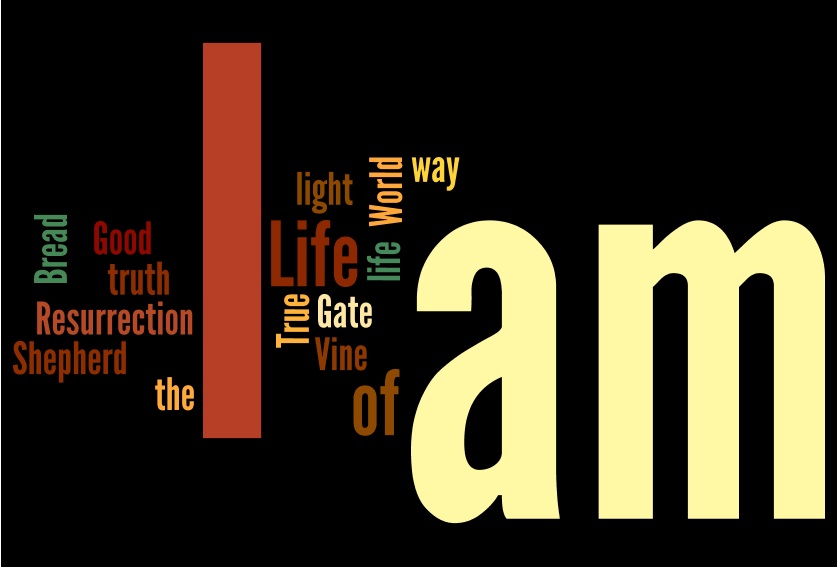
John is one of those books in the New Testament that will help us to become better aquatinted with the Christ. It’s the last of the gospels that paints us a vivid picture of who He was and is on a deeper level than even the three previous gospels. He’s the Bread of life, Light of the world, the Gate, Good Shepherd, Resurrection and Life, the Truth, and the Vine. All of these titles found within the book teach us a little more about the Savior of the world.

There are seven “I Am” statements in John referring to Jesus and three hundred throughout the entire Bible. They begin in Genesis and end in Revelation, and in many books in-between. You just can’t read very far without discovering something very profound about its Writer. He’s eternal. God’s desired response to this is simply for us to believe, respond, and live with our minds and hearts prepared to live with Him.

When Jesus describes Himself as the “I Am” it makes the religious leaders want to kill Him in John 8. To know Jesus, to really know Him, is something that many people have not fully understood. Even as Jesus walked among us mortals and we witnessed His miraculous power, there were still several that didn’t realize what it meant to follow Him (Luke 9:57-62).

While it’s true that everyone is made in the image of God, few reflect the Father’s image. Those that know Jesus introduce others to Him. With the knowledge that we are imperfect, let’s not forget that we also have the ability to have a relationship with Him. I am flawed and I am weak, but the Great I Am is interested in who I am. By the grace of God, I am His child. He is the bread of life that sustains us, the light that guides us, the gate we’ll walk through, and the truth that will save us. It’s not how great I am, but how great the Great I Am is. Do you know Jesus?