For Their Community. Patriotic, civic-minded, generous, helpful, involved, and connected, God’s people strive to be good citizens and neighbors. Acts 2:47a; 5:13b).
For Visitors. Smiling, greeting, welcoming, inviting, and connecting, God’s people know that many visitors to church events and assemblies are future brothers and sisters and they want to do what they can to help facilitate that objective. Colossians 4:6; Philippians 2:15; Matthew 5:13-16.
For The Lost. Co-workers, family, friends, fellow-students, acquaintances, neighbors, and strangers, God’s people see the people in their lives as fellow-strugglers whose souls will spend eternity somewhere and they want it to be in heaven with them. Daniel 12:3; James 5:19-20; Proverbs 11:30
For Each Other. Empathetic, tuned-in, concerned, familiar, intuitive, and loving, God’s people rise to occasions of crisis and love in ordinary moments because they are intimately connected to each other by precious blood and like precious faith. 1 Thessalonians 5:11; Romans 12:9-10.
For Children. Wise, visionary, foresightful, nurturing, and of tender affection, God’s people hear their Savior’s admonition to imitate, encourage, and develop these impressionable, dear ones. Matthew 18:3ff; 19:14
For The Elderly. Concerned, attentive, prayerful, and connected, God’s people know it’s wise and important not to neglect and forget the part of our population that grows more lonely, isolated, frail, and needy with each passing day and they let them know they see and care. James 1:27; Proverbs 16:31; Proverbs 23:22
For Their Families. Responsible, judicious, properly-prioritizing, and consistent, God’s people realize that no advancement or success in the world is worth sacrificing the souls they most cherish and can most influence. Matthew 6:33; Ephesians 6:1-4; Proverbs 22:6; Deuteronomy 6:6-7
For Their Souls. Vigilant, conscientious, self-aware, and introspective, God’s people know all too well their humanity, weakness, and inconsistencies but grow more in love with God and heaven and less in love with this world every day. 1 John 2:15-17; Matthew 22:37-40.
For God’s Will. Whether gospel meetings, retreats, ladies days, daily Bible reading, workshops, lectureships, special or regular Bible classes, or worship assemblies, God’s people so often show up hungry for the bread of life and the spiritual meat, thirsty for the milk of the word, and considering all of it sweeter than honey. Hebrews 10:24-25; John 6:35; Hebrews 5:14; 1 Peter 2:2; Psalm 19:10
Aren’t there so many reasons to love God’s people?
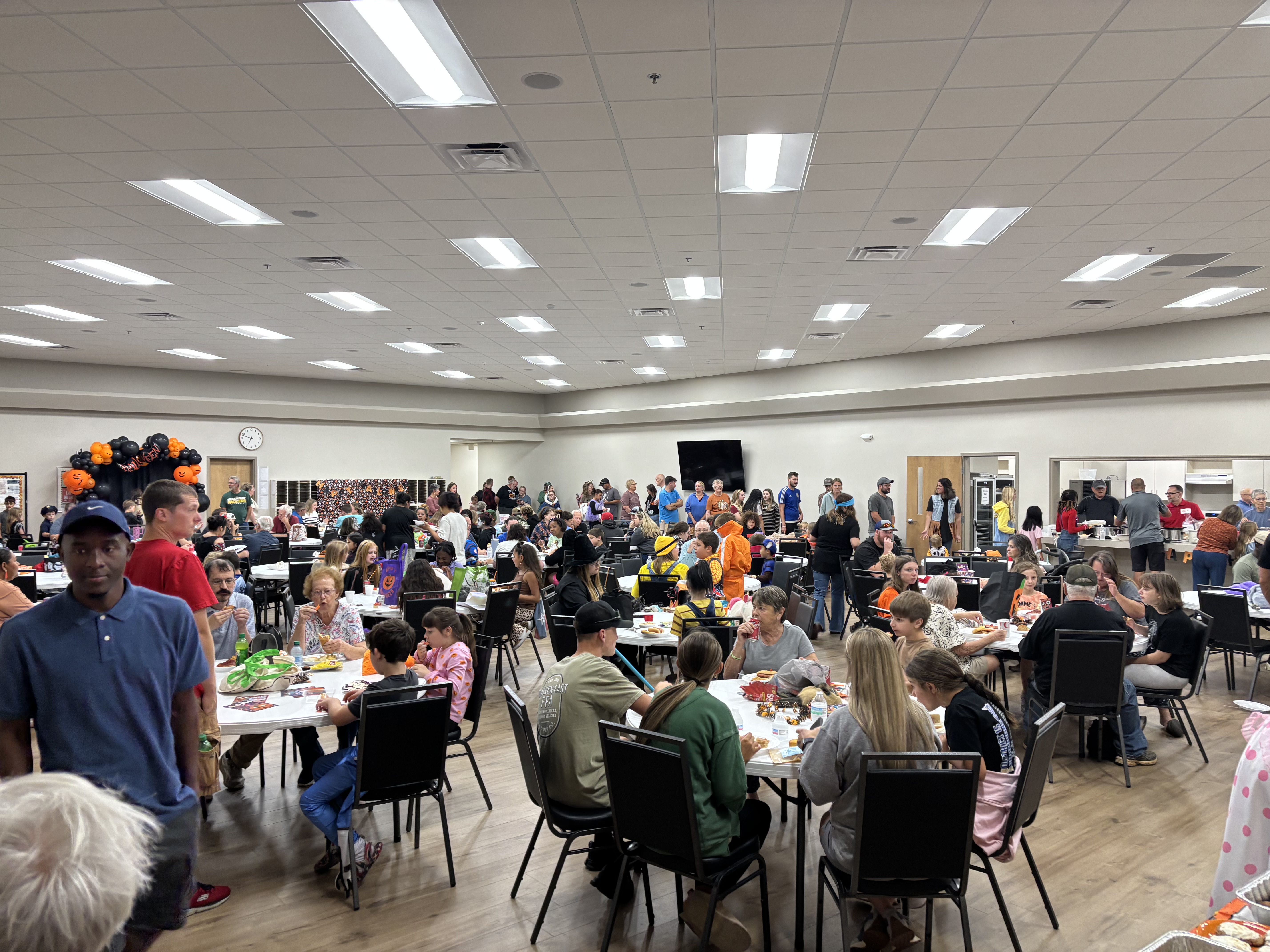
A couple of pictures (credit Russell Simpson) from Saturday night’s Trunk or Treat. God’s people at Cumberland Trace really shined!
H.G. Wells, an English writer, was never particularly religious, but after he had studied the history of the human race and had observed human life, he came to an interesting conclusion. He said, “Religion is the first thing and the last thing, and until a man has found God and been found by God, he begins at no beginning, he works to no end. He may have his friendships, his partial loyalties, his scraps of honor. But all these things fall into place and life falls into place only with God.”
I am thankful there is a God. That He exists, that He is in control, and that He offers eternal life. My life would be nothing if it wasn’t for His grace and love. There are a million different ways one could go about describing God the Father. Kind, loving, merciful, jealous, powerful, etc. Knowing God requires revelation. All that we know about Him is revealed in scripture. He chose to tell us who He is and what He has done for us.
To dwell on the revealed knowledge of God is one of life’s highest pursuits. There is no better way to spend your time than to learn of the God who created, restored, and saved us. In scripture we read of His perfect attributes, His unfathomable love, His gift of salvation. If we took every writer, philosopher, poet, Christian, and put them to work describing the nature of the Father, the book would be added to until the end of time. As finite humans, it is impossible for us to comprehend the infinite. Our limits will forever keep us from fully knowing God.
To know God completely and totally we would have to be God.
Of all the places in scripture we could look, there is one that stands out. It’s not John 3:16, Eph. 2:8, Rom. 1:16, 1 John 4:8, 2 Peter 3:9. This perfect description for God isn’t found in 10,000 words, it is found in one.
One single, Hebrew word incapsulates all of scripture, the theme of the Bible, and the attributes of God.
In the beginning God created the heavens and the earth, the sea and all that is in them. He created with His words, the very world we see today. However, the world we are in now isn’t exactly what it used to be.
God made man in His image, His likeness is found in us. He created Adam first, then Eve.
We ruled the earth, God’s prize possession.
He created us to love, to tend to the garden, to be with Him in perfect harmony. That is exactly what we see in Genesis 1-2, but things fundamentally changed in chapter three. The God who lovingly created the world, the garden for Adam and Eve, gave one single command. Don’t eat from the tree of knowledge.
This command gave His special creation a choice. A choice to love, or a choice to disobey. True love is a choice, it is never forced. Sadly as we are familiar with, Eve listened to the serpent and ate of tree. She then turned to her husband and He ate. It is at this moment they realize they are naked and made clothes for themselves. And then…nothing happens. No lighting bolt, no death, no thundering voice from God condemning them to hell forever. The Lord himself comes out to Adam, and notice how he comes. He comes walking. He wasn’t in a hurry to strike the offender. walking in the garden. “In the cool of the day”—not in the dead of night when things are all the more scary.
God is longsuffering, slow to anger, and of great mercy; and so He came walking, in the cool of the evening, when the sun was setting on the last day of Eden. Adam runs and tries to avoid the very God he had once met with confidence, the One he had the sweetest fellowship, talking with him as a man talks with his friend.
Gen. 3:9 The Lord God called to the man, and said one word, “ayyekkah” which is translated, “where are you?” Imagine hearing the voice of God as He cries, “Adam, where are you? This question reveals more than we have time to discuss. It showed that Adam was lost, or God would not have needed to ask him where he was.
Until we have lost something, we do not need to enquire about it. God’s first words after the fall, a question posed to His creation. In this one Hebrew word is compressed a whole theology. In this ONE word, we find the nature of God. Understand these are God’s first words to the FIRST sinner. In asking this question we learn that
God Pursues The Lost Sinner.
What Adam and Eve did was wrong.
They knew it, and so did God. God was very clear on what would happen if they ate of the fruit. “In that day you will surely die” are the exact words God used. When Adam and Eve heard God walking they chose to hide.
Why? Man had sinned against God. Notice the alienation of the heart that sin causes in the sinner. Adam should have sought out his Maker. He should have been running through the garden crying out for God,
“My God, my God, I have sinned against you. Where are you?” Adam should have fallen in humility at the feet of the Father.
He had a closer relationship with God than anyone in today. HE LIVED IN THE PRESENCE OF God. He should have called out to God, ran to His feet, and fallen on his face begging for mercy. But instead, Adam flees from God. The sinner does not come to God; God comes to him. It is not “My God, where are you?” but the first voice that broke the silence after the fall is the voice of grace, “Sinner where are you?” God comes to man; man does not seek his God.
Isn’t this how it has always been? From this one Hebrew Word, we read of a God who reaches out to us, even when we have done our best to hide ourselves from Him. “But God shows His love to us, in that while we were sinners, Christ died for the ungodly (Romans 5:8).” While we spit on the body of Christ, God is crying out, “where are you, sinner?” In this one word, a love like mankind has never experienced is displayed. When God asked, “where are you?” We learn of a God who pursues the sinner.
Today He continues to call, hoping that we will come to Him.
It’s probably safe to assume we believe strongly that Jesus is our savior. But what does that mean? It means that Jesus is going to rescue us from something bad. You don’t save someone from a good situation. Salvation always implies the existence of a negative circumstance. Jesus is the one who will take us out of that negative circumstance and place us in a perfect one. What is this negative circumstance? To understand this, we have to study the word translated “salvation” (σωτηρια). God told us what his son will save us from.
Hb 11.7 — Noah was saved from the flood, meaning that he and his family didn’t drown with the rest of the world.
Acts 7.25 — Moses thought the people of Israel would understand that God sent him to save them from Egypt, but they didn’t. Their salvation meant rescue from Egypt.
Lk 1.68-79 — God speaks through John the baptist’s father, saying that God would save Israel from their enemies and from the power of those who hate them.
Phil 1.28 — Paul says that suffering for Christ is proof that he will save us while our enemies will be lost; word for lost here is απωλεια which means “destruction”. We will be saved from destruction.
II Cor 7.10 — Paul says that the kind of sorrow God wants to see leads us to avoiding the fate of evil people.
I Thess 5.9 — Paul connects salvation/rescue to Jesus’s return, whether we’re alive or dead; this rescue means we live with him when the ungodly are destroyed.
Hb 5.9 — The Hebrews writer says that Jesus will save us from death, just like God saved him from death.
I Pt 1.9 — Peter makes it clear that our salvation comes after death when Jesus returns.
II Pt 3.7 — Peter says that the current earth and sky are being preserved for a specific fate: judgment of earth in the form of consuming fire and the destruction of ungodly men. A few verses later, our fate is very different. Our rescue means that we won’t suffer the fate of ungodly men.
Lk 21.28 — Jesus commands his followers to stand up and shake off their fear when sun, moon, and stars all show some kind of terrifying indication that the world is ending — he says, “Know that it is almost time for God to save you.” From what? Earth’s destruction!
So we’ve established two things: One, Jesus is the one who saves. We have no hope for salvation through any other source. Two, we are being saved from three things — 1. Sin 2. Death 3. Destruction. All three of those things are pretty much interchangeable. Sin is death and sinners will be “destroyed” at the end. Every person on this planet will be made immortal when Jesus returns. The difference is that our immortal bodies will leave this earth with Jesus when he comes back, and everyone else will suffer on this earth as it burns. Jesus is saving us from the fate of the wicked at the end by saving us from our sins.
Recently I had the privilege to attend the funeral of a godly man. Since he lived faithfully— it was a celebration. Funerals have a negative connotation with them but they’re really only all bad when the one who’s passed on did so outside of Christ.
You and I may wish for a longer life for ourselves and those we love but the ironic truth for the faithful Christian is this— the first to accept God’s decision of death is the one who died.
The faithful go to heaven and the lost do not. While we enjoy talking about and thinking about those who will and have been eternally saved, it’s just as important to remind ourselves of those who find themselves in the other camp.
It’s easy to forget that people are lost and maybe it’s because they’re easier to push to the back of our minds. It’s not a pleasant thought by any means and doing something about it tends to make us uncomfortable.
It hurts and it’s hard to become attached to anyone who isn’t living faithfully because they’re lost. That means they’re not going to heaven. Sometimes the lost pretend as if that’s not their reality by distracting themselves with the things that make them feel as if they’re not lost (Ecc. 2.24-25).
There’s a good chance that you know people who aren’t going to heaven and it’s even likely that you love people who aren’t. We’ve got to convince them to hear Jesus out— no matter what it takes.
What can we do?
We can simplify spiritual concepts so that people can understand a message that they desperately need to hear. Try to teach Jesus differently. Approach His will for their lives from different angles. How can Jesus help their marriage? Their children? Their addiction?
Please don’t let anything get in your way of going home. Don’t let friends and loved ones who aren’t living faithfully bring you down. Not only do you ultimately lose, but your loved ones outside of Christ have lost their greatest chance of coming into the Light.
Don’t ever lose hope. There may be unique and seemingly impossible odds stacked against you and your mission to convert the lost, but don’t put God in a human-sized box. Pray often and live in hopeful expectation.
“For those who live according to the flesh set their minds on the things of the flesh, but those who live according to the Spirit set their minds on the things of the Spirit.”Romans 8.5
Colossians 3.3 says, “Christ is now your life. When he comes again, you will share his glory.”
This has a follow-up: “So put everything evil out of your life: sexual sin, doing anything immoral, unhealthy desire, and wanting more things for yourself, which is the same as worshipping a false god (3.5). And, “Get these things out of your life: anger, losing your temper, doing or saying things that hurt others, and saying shameful things. Don’t lie to each other.”
These were the kinds of things we did before we were saved. God chose us to be his special people, so he expects us to show mercy to other people, to be kind, humble, gentle, and patient.
3.13 is an important verse because it refutes another harmful teaching we’ve all probably heard — “you don’t have to forgive someone unless they ask for forgiveness.” 3.13 says, “Don’t be angry with each other, but forgive each other. If someone wrongs you, forgive them. Forgive others because the lord forgave you.”
Not, “forgive others when they ask for forgiveness,” but, “forgive them because your master forgave you.” This is tied to three other concepts in this section — having love for each other (14), having God’s peace while living for peace (15) and being thankful (15).
If someone does something wrong to us, we should automatically forgive them. God forgives us when we mess up, even when we don’t ask for forgiveness (I Jn 1.7). We forgive each other because we love each other, just like God forgives us because he loves us.
Philip encounters a man returning from worshipping God in Jerusalem. The man, an Ethiopian eunuch, was reading from the scroll of Isaiah.Philip engages him in conversation, asking the African man if he understood what he was reading.This very important man was humble enough to ask for help, and Philip climbed into the chariot and delved into the text, Isaiah 53 as we would recognize it today, and taught him about Jesus.This led the Ethiopian to ask, “Look! Water! What prevents me from being baptized?” (Acts 8:36, NASU).He is saying that he understood who Jesus is, understood his need, and was now at a place where there was sufficient water for him to be baptized in order to have his sins forgiven.Perhaps Philip pointed out the fact that Jesus died, was buried, and rose again and through baptism we reenact those very aspects (cf. Rom. 6:1-6). Perhaps Philip discussed the fact that a baptism “washes away sins” for believers in Christ who act in obedient faith (cf. Acts 22:16).Whatever Philip preached about Jesus, it led the eunuch to correctly deduce his need to be baptized.
There are a good number of people who are currently or were formerly in a Bible study with someone, learned their need to be baptized into Christ (cf. Gal. 3:27), but have yet to do so.There are an untold number of young people who are of accountable age who as of yet have not been baptized.How many spouses of Christians know they need to do it, but have not been baptized?Each individual mentioned in the groups above, as well as all others, are of infinite value to God (cf. Matt. 16:26).No doubt, God would desire anyone who has yet to come to the knowledge of the truth to do so and be saved (1 Tim. 2:4).Would he not want us all to ask, “What prevents me from being baptized?”
Certainly, one might give many answers to this question.Let us examine some answers commonly given to this question.
“I’m Not Ready.”
Some individuals are not ready.There are some too young to truly know right from wrong.There are some who have not yet been sufficiently taught.However, there are some who are not ready for the commitment, the sacrifice, and the submission needed to make Jesus Lord. There will never be a better sacrifice than Jesus.One will never have more time left to give to the Lord than right now. God cannot possibly extend more love or grace. If one is not ready, he or she should ask, “What will ready me?”
“I’m Afraid.”
Fear is understandable.Jesus apparently experienced it (cf. Heb. 5:7; Lk. 22:42). Paul experienced fear (Col. 4:4).Peter certainly grappled with fear (cf. Matt. 26:69-74; 1 Pet. 3:14-15).John exhorted the Christians in his audience not to succumb to fear, as it is a barrier to salvation (Rev. 21:8).
One might fear the change that follows becoming a Christian.One might fear failure in their Christian walk.One might fear the reaction and even the rejection of others.Jesus once taught, “Do not fear those who kill the body but are unable to kill the soul; but rather fear Him who is able to destroy both soul and body in hell” (Matt. 10:28).One must evaluate those fears and ask if any of them is worth risking the fearful prospect of standing before the Lord without His blood covering their sins. “I’m Not Sure.”
Peter unquestionably says, “Make certain about His calling and choosing you” (2 Pet. 1:10).However, he is not giving people an excuse to put off obeying Christ.Remember, he is speaking to those already purified from their former sins (1:9)–those who had already been baptized. There is a need to reason through scripture (cf. Isa. 1:18). Paul reasoned with individuals about Christ on many occasions (Acts 17:2, 17; 18:4, 19; 24:25).The fact is that the biblical claims about who Jesus is and how one receives the benefits of His grace are most reasonable. Rationalization, hard-heartedness, and self-will may be the seeds that grow into weeds of doubt, but there is no need to doubt or allow doubt to prevent one from submitting to Christ.
“I Don’t Believe.”
One may or may not say those specific words.Yet, when one sees the truth of scripture, knows the personal accountability demanded, and does nothing about it, that one essentially does not believe.At least, faith is insufficient to properly respond to God’s amazing grace. This is a hard truth to confront in ourselves.I see it.I know it.But, I will not act upon it.The Hebrews writer says the Israelites could not enter the promised land because of unbelief (Heb. 3:19), and he warns us against imitating them (Heb. 3:12ff).Even the demons believe and tremble, though it does them no good (cf. Jas. 2:19).We must believe and be baptized to be saved (Mark 16:16).
Perhaps you are one who could ask yourself, “What prevents me from being baptized?”Cast a long mental gaze at the cross of Calvary and comprehend the love and sacrifice evidenced there.Such was for you (cf. Gal. 2:20).God’s love for you is personal. He wants nothing more than for you to live with Him eternally, and He has told you what is involved in that (cf. Acts 2:38).What prevents you from being baptized?
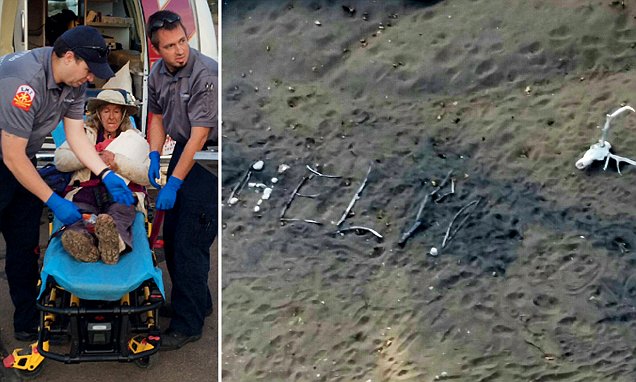
In an interview given at her home, Ann Rodgers appears a bit eccentric but a wonder to behold. The 72-year-old woman survived 9 days in an Arizona desert by eating plants and drinking pond water. She was driving to Phoenix via a remote stretch of back country road on the White River Indian Reservation when she got lost and subsequently ran out of gas. Thus began a series of efforts, building signal fires to draw the attention of rescuers or the forest service. She got lost while climbing a series of ridges trying to get cell signal. She and her dog faced gloomy odds, but she kept trying. She went missing on March 31st. On April 3rd, she used sticks and rocks to spell out “help.” To further draw attention to it, she found an antelope skull nearby and placed it with her message (via nbcnews.com). Since moving out west, I have learned that people frequently get lost in the vast stretches of deserts and mountains. I cannot find statistics for how many people get lost or how many are found alive or dead in the United States, but each incident is obviously traumatic for those involved. Can’t you imagine how desperately and completely those who realize their lostness long to be saved?
Wherever you go today, the vast majority of the people you encounter are going to be wandering through this world lost in the most profound way. Without rescue, they are heading for a fate infinitely worse than physical death. “Lost” is the way Jesus, the Good Shepherd, describes those not right with God. While He uses the word that way in three of the four gospels (Mat. 10:6; 18:11; Luke 19:10; John 18:9), it is the parables of Luke 15 that most vividly speak in these terms. The first parable, that of the lost sheep, draws on the search and rescue metaphor (Luke 15:4). That’s how Jesus likens the situation with one outside of God’s redemption.
Be watching for signs from the lost. They often send signals, if we are looking in the right places. Whether personal problems, major life changes (like marriage or having children), those new to the area, or those demonstrating an open mind, they may be just like the Ethiopian Eunuch and hoping for someone to guide them (Acts 8:30-31). Jesus has us here to conduct search and rescue missions. May we have our eyes peeled and keep ourselves equipped to rescue the lost. They are out there everywhere.
Unavoidably, you do! And consider what hinges on what kind of attitude you have. Often, the difference in winning and losing is attitude. Happiness and sadness is a matter of attitude rather than circumstances. Failure and success is determined, many times, by what kind of attitude we have toward the task. Even one’s attractiveness and repulsiveness are, many times, gauged by his or her attitude in life.
You, the Christian, have an attitude! You can be a sour-faced, negative, paranoid, bitter, fearful, stressed out, unhappy, grouchy, withdrawn, depressed, whiny, angry, hypercritical, pessimistic, suspicious, and therefore poor specimen of a Christian. Or, you can be a hopeful, interested, enthusiastic, peace-filled, joyful, bright, forgiving, compassionate, holy, pure, winsome, righteous, smiling beacon of light in a world filled with tons of negative, disgruntled, and chronically unhappy people.
Since your sins are forgiven, your Lord and Master is unmatched, your life is blessed, and your future is exciting, isn’t it natural that you should have a good attitude? A good attitude can transform the people around you, positively impact your circumstances, win the hearts of rivals and enemies, transform your own inner trouble, and give pleasure to the God of heaven. You didn’t know you had that much influence, did you? But you do! Use it for good by wielding a good attitude.
Salvation to restore a sin-sick soul, forgiveness for a guilty heart, and acceptance from a loving God despite our unworthiness are often more unbelievable to folks than any physical feat to attain. If our attitude reflects the consequences of having received those things, we can appeal to untold others to achieve the same state of life by following our lead. So, how’s your attitude?
The hope of finding survivors on the cargo ship El Faro has severely dwindled, as one of two lifeboats, severely damaged, has been discovered as well as one body. While the other lifeboat from the ship, with a capacity for 43 persons, has not been found in the ocean waters off the Bahamas, the 735 foot long ship sent a distress signal Thursday from near the eye of Hurricane Joaquin as it battled 20-30 foot waves. The Coast Guard is hopeful, but the realistic expectation is that this will soon be a recovery rather than rescue mission (info from cbsnews.com and reuters.com). Out of all the frightening ways to face death, being lost at sea has to be near the top. There’s the foreboding strength of battering waves, the immense, liquid darkness of the deep, the mystery of what lies beneath the surface, the horrific experience of drowning, and the overall helplessness in the face of a fierce overwhelming force. Since maritime history goes back for millennia, people both ancient and modern have faced the terrors of shipwreck. Dating at least as far back as the ship found off Dokos, Greece, dating back to 2700-2200 B.C. carrying a cargo of pottery (read more at http://www.mhargolid.nl/data/webb1992.pdf), mankind has experienced the sinking of ships.
No wonder New Testament writers seize on this common situation of life. Luke records (Acts 27:14) and Paul looks back on (2 Cor. 11:25) literal shipwrecks the apostle survived. How fitting that he is the one who describes those who lose their faith as those who have “suffered shipwreck” (1 Tim. 1:19). Preventing shipwreck, according to Paul, necessitates.
A fighting (1:18). Just as crew members must strain at their tasks on deck, despite weathering difficult winds and choppy seas, we cannot be passive and yielding in spiritual storms. Paul warns Ephesus against being “tossed here and there by waves and carried about by every wind of doctrine, by the trickery of men, by craftiness in deceitful scheming” (4:14). Faith is vital to equipping one for the spiritual fight.
A keeping (1:19). You can imagine someone clinging to ropes and rails or staying at the helm or rudder as they weather the storms of life. But the lifelines to which we must cling in such torrents is faith and a good conscience (see 1:5). Our spiritual constitution and fortitude spell the difference between survival and lostness.
A teaching (1:18-20). Training often spells the difference in surviving out at sea. Certainly, keeping a cool head and being able to use, when needed, that which has been previously learned is vital! Paul says as much regarding the survival of spiritual shipwreck. He mentions an entrusted command (1:18), prophesies (1:18), and being taught (1:20). The best teaching may not help the literal sailor in storm-tossed seas, but heavenly teaching is guaranteed to rescue those so equipped even in the face of the most seemingly insurmountable difficulties of life.
We had the feeling of finality of those lost at sea. Thankfully, as long as one lives, he or she can be recovered from spiritual shipwreck. But, they must come back from such depths and take hold of God’s life preserver, His Son Jesus Christ! Let us do our part to rescue the perishing, snatching them with pity from sin and the grave (2 Pet. 3:9).






 The Preacher Pollard Blog