The I AM

Dale Pollard

God speaks of Himself as simply “I Am.” This is one powerful statement depicts His infinite presence and His existence through every age. What does it mean to know Him? How do you know if you do? To know of Jesus is very different than knowing Him. 

John is one of those books in the New Testament that will help us to become better aquatinted with the Christ. It’s the last of the gospels that paints a vivid picture of who He was and is on a deeper level than even the three previous gospels. He’s the Bread of life, Light of the world, the Gate, Good Shepherd, Resurrection and Life, the Truth, and the Vine. All of these titles found within the book teach us a little more about the Savior of the world. 

There are seven “I Am” statements in John referring to Jesus and three hundred throughout the entire Bible. They begin in Genesis and end in Revelation, and in many books in-between. You just can’t read very far without discovering something very profound about its Writer. He’s eternal. God’s desired response to this is simply for us to believe, respond, and live with our minds and hearts prepared to live with Him. When Jesus describes Himself as the “I Am” it makes the religious leaders want to kill Him (John 8). 

To know Jesus, to really know Him, is something that many people have not fully understood. Even as Jesus walked among us mortals and we witnessed His miraculous power there were still several that didn’t realize what it meant to follow Him (Luke 9:57-62). While it’s true that everyone is made in the image of God, few reflect the Father’s image. 

Those that know Jesus introduce others to Him. With the knowledge that we are imperfect, let’s not forget that we also have the ability to have a relationship with Him. I am flawed and I am weak, but the Great I Am is interested in who I am. By the grace of God, we are called His children. He is the bread of life that sustains us, the light that guides us, the gate we’ll walk through, and the Truth that will save us. It’s not how great I am, but how great the Great I Am is. 

Halloween: A Reflection on Darkness and Light

Brent Pollard

A Matter of Personal Conviction

Whether or not a Christian should take part in Halloween festivities is ultimately a matter of personal conviction and conscience. As Paul wrote, “Each one should be fully convinced in his own mind” (Romans 14.5). I respect that there is a difference between believers attending wholesome community events—such as church-sponsored “trunk-or-treats”—and those who embrace the world’s fascination with the macabre. However, I want to caution Christians not to join the world in celebrating darkness, fear, and death.

Jesus taught that His followers are to be “the light of the world” (Matthew 5.14). How can we reflect His light if we participate in a celebration that often glorifies the very darkness we are called to overcome (Ephesians 5.8–11)?

The Pagan Origins of Halloween

Halloween’s origins trace back to the Celtic festival of Samhain, which marked the end of the harvest and the start of winter. The Celts believed that on this night, the barrier between the living and the dead weakened, allowing spirits to roam freely. To protect themselves, they lit bonfires and wore disguises to confuse wandering souls.

Scripture repeatedly warns against attempts to communicate with or ward off the dead. God told Israel, “There shall not be found among you… a medium or a necromancer or one who inquires of the dead” (Deuteronomy 18.10–11). Though today’s observance may seem harmless, its roots were steeped in superstition and fear of spirits rather than faith in God’s providence.

Roman Influence and Ancient Traditions

When Rome conquered Celtic lands, two Roman observances were merged with Samhain—one honoring the dead (Feralia) and the other celebrating Pomona, the goddess of fruit and trees. Some historians suggest that the custom of bobbing for apples originated from Pomona’s symbol, the apple.

This blending of pagan and civic ritual was typical of the ancient world. Yet Christians are urged not to conform to the world’s customs (Romans 12.2) or mix holy devotion with pagan superstition (2 Corinthians 6.14–17).

The Catholic Church and All Saints’ Day

In 609 AD, Boniface IV consecrated the Roman Pantheon to “All Saints,” creating a day to honor Christian martyrs. This celebration, later shifted to November 1 in the eighth century by Gregory III, is now called All Saints’ Day or All Hallows’ Day. The night before—All Hallows’ Eve—gradually evolved into “Halloween.”

Later, All Souls’ Day (November 2) was added to pray for all departed believers, forming a three-day observance known as Hallowtide. The intent may have been to Christianize pagan customs, but as with many such efforts, the old superstitions persisted under new names.

How Halloween Came to America

Medieval Europeans practiced “souling,” going door to door to offer prayers for the dead in exchange for food. Children later began “guising,” dressing in costumes to receive gifts. These traditions were brought to America by Irish and Scottish immigrants. In America, pumpkins replaced turnips as lanterns, and Halloween evolved into a largely secular, community-centered celebration.

However, Christians should remember that not all cultural inheritance is worth keeping. Paul reminded the Corinthians that while “everything is permissible,” not everything is beneficial (1 Corinthians 10.23).

The Dark Turn: From Pranks to Violence

From the late 1800s through the early 20th century, Halloween was often marked by destructive mischief—toppled outhouses, broken fences, and vandalized property. Communities responded by encouraging “trick-or-treating” as a safer alternative, channeling youthful energy into friendly fun instead of lawlessness (cf. Romans 13.10).

The Wholesome Era: Mid-Century Innocence

For several decades, Halloween reflected a more innocent, child-centered character. The imagery of It’s the Great Pumpkin, Charlie Brown (1966) captures that gentler spirit. But this era was short-lived. Beginning with Alfred Hitchcock’s Psycho and crystallized by 1978’s Halloween, the holiday once again took a darker tone. Instead of laughter and imagination, horror and bloodshed became its trademarks.

Modern Halloween: A Culture of Fear and Death

Today, many Halloween attractions and films glorify brutality and fear. The Saw franchise, “haunted” attractions that simulate torture, and “extreme haunts” that require liability waivers all reveal a troubling fascination with terror and pain. This fascination often crosses the line from harmless fun to a celebration of evil. The prophet Isaiah’s warning feels relevant: “Woe to those who call evil good and good evil, who put darkness for light and light for darkness” (Isaiah 5.20).

When society laughs at what should make it grieve, something vital has been lost. As Thomas Aquinas noted, when fear and cruelty turn into entertainment, compassion withers.

What Does the Bible Say About Halloween?

The Bible does not explicitly mention Halloween, but its principles still apply. We are told to “abstain from every form of evil” (1 Thessalonians 5.22) and to think on “whatever is true, honorable, just, pure, lovely, commendable” (Philippians 4.8). These principles guide our decision-making and help us discern what is beneficial to our faith.

Christ’s victory over darkness is total. “The light shines in the darkness, and the darkness has not overcome it” (John 1.5). We do not need to dabble in darkness to prove our courage or find excitement. Our joy comes from walking in the light (1 John 1.7).

Practicing Christian Discernment on Halloween

Discernment is essential. Paul commands, “Abhor what is evil; cling to what is good” (Romans 12.9). The question isn’t whether a Christian can hand out candy or dress up—it’s whether we are celebrating fear or reflecting faith.

Our participation should always glorify Christ (Colossians 3.17). If we choose to engage with the day at all, let it be to share light, kindness, and the gospel with our neighbors. “Do not be overcome by evil, but overcome evil with good” (Romans 12.21).

Conclusion: Light in the Midst of Darkness

On a night when much of the world delights in fear, the Christian’s calling is to stand as a beacon of peace and truth. Rather than imitating the darkness, we can offer an alternative—a message of victory through Christ, who conquered death itself. Let us be inspired to be that beacon, to share the light of Christ in the midst of darkness.

“For once you were darkness, but now you are light in the Lord. Walk as children of light” (Ephesians 5.8).

Jesus The Light

A few weeks ago, I ordered motion-sensing nightlights from Amazon. They’re not super bright, but their gentle glow keeps me from stumbling over the toys my kids leave scattered across the house. I’m half-convinced they place those blocks strategically to cause maximum damage! Those nightlights, though, are lifesavers. 

Light changes everything.

Carl Pollard

A few weeks ago, I ordered motion-sensing nightlights from Amazon. They’re not super bright, but their gentle glow keeps me from stumbling over the toys my kids leave scattered across the house. I’m half-convinced they place those blocks strategically to cause maximum damage! Those nightlights, though, are lifesavers. 

Light changes everything. It reveals what’s hidden, guides us safely, and offers comfort. A lighthouse directs ships to shore. Headlights illuminate the road ahead. When a strange noise echoes at night, a flick of a switch brings reassurance. Light is security, hope, and power. Sadly, our world grows darker every day. We’re flooded with voices—news alerts, influencers, politicians, even loved ones—competing for our attention. The noise can be overwhelming, drowning out what’s true and steady. Yet, through this chaos, one voice shines clearly: Jesus, proclaiming, “I am the light of the world. Whoever follows me will not walk in darkness, but will have the light of life” (John 8:12). In a world of distractions and deception, our Savior says He is the way, the truth, the life—a lifeline for us all.

To grasp the weight of Jesus’ words, imagine the scene in John 8. It’s the Feast of Tabernacles in Jerusalem, a week-long celebration of God’s provision for Israel in the wilderness. Each night, massive lampstands illuminated the temple courts, their flames recalling the pillar of fire that guided God’s people (Exodus 13:21-22). These lights symbolized God’s presence and guidance. Amid this glowing backdrop, Jesus stands and declares, “I am the light of the world.” This isn’t subtle. He’s claiming to be the fulfillment of those lamps, the God who led Israel. His Jewish audience understood: Isaiah 60:19 promises, “The Lord will be your everlasting light,” and Psalm 27:1 says, “The Lord is my light and my salvation.” Jesus is saying, “I am that God.”

When Jesus says “I AM,” He echoes God’s name from the burning bush: “I AM WHO I AM” (Exodus 3:14). Each “I AM” statement in John’s Gospel is a bold claim to divinity. Some argue Jesus never claimed to be God, but His actions tell a different story. He calms storms, as God does in Job 38. He gives sight to the blind, fulfilling Isaiah’s prophecy. He calls Himself the Good Shepherd, like God in Jeremiah 31. When accused of breaking the Sabbath, He claims to be its Lord (Luke 6), working to sustain creation while we rest. The Jews knew what He meant, accusing Him of blasphemy (John 8:59).

This darkness Jesus speaks of isn’t just poetic—it’s the spiritual reality of a world and heart estranged from God. In John 8, we see it: Pharisees, blind with self-righteousness, ready to stone a woman caught in adultery; the woman, trapped in shame; the crowds, restless for meaning. That’s our world too—chasing success, pleasure, or power, yet left empty. 

Jesus’ light exposes our sin and need, but it also overcomes them. He promises, “Follow me, and you’ll have the light of life.” The blind man in John 9 didn’t just gain sight; he saw Jesus and worshipped (John 9:38). The Pharisees, clinging to pride, stayed blind (John 9:40-41).

So, what do we do? First, recognize your darkness—pride, shame, or chasing what can’t satisfy. Second, follow Jesus daily, trusting His truth over the world’s noise. Finally, reflect His light, forgiving others or sharing the gospel (Matthew 5:14-16). Jesus, the Light of the World, is the God who conquers death and guides us home. 

The darkness is real, but His light is stronger. Will you step into it?

Origen’s “On First Principles” (Book 1, Ch. 2.11-13)

“The Son and the Spirit share in that same nature of divine goodness, because they come from the Father Himself. So, when anything else is called “good” in Scripture―whether angels, people, hearts, trees, or treasures―it’s called good only in a borrowed or figurative sense, not in the essential sense that belongs to God alone….”

Gary Pollard

[Editor’s Note: Gary is translating the Ante-Nicene Fathers works, beginning with Origin’s work. It is meant to update the British English of Roberts and Donaldson. What follows is part of that translation]

Thirdly, wisdom is called the radiance of eternal light. We already discussed the meaning of this phrase earlier, using the analogy of the sun and its rays to help explain it. Here, we’ll add just one further thought. Something is truly eternal if it never began to exist and never ceases to be what it is. This is what John means when he says, “God is light.” God’s wisdom is the radiance of that light―not just because it is light, but because it is eternal light. So, wisdom is the eternal and everlasting radiance of God. If we grasp this properly, we see clearly that the Son’s existence comes from the Father―but not in terms of time or from any origin other than God Himself.

Wisdom is also called the flawless mirror of God’s energy (or activity). So, we should first consider what the activity or working of God’s power is. It is a kind of living force through which God acts―whether in creating, governing the world, judging, or arranging all things in their proper time and place. Just as a mirror perfectly reflects everything a person does in front of it, wisdom should be understood as the flawless mirror of the Father’s power and actions. This is why Jesus Christ, who is the Wisdom of God, says, “The works that the Father does, the Son also does.” And again, “The Son can do nothing by Himself, but only what He sees the Father doing.”

The Son does not differ from the Father in power or action. The work of the Son is not separate from the work of the Father. Rather, both act in perfect unity―as if by one and the same motion. That’s why the Son is called a flawless mirror―to show that there is no difference at all between the Son and the Father. How then can it be right to say, as some do, that the Son imitates the Father like a student copies a teacher? Or that the Son creates material things based on spiritual patterns first made by the Father? These ideas don’t match what Scripture teaches. The gospel doesn’t say the Son does similar works to the Father―it says He does the same works, in the same way.

Now we turn to what it means that the Son is the image of His goodness. This, I believe, is similar to what we just said about the image in a mirror. God the Father is the original source of goodness, and the Son is born from that goodness. Because the Son fully reflects the Father, He can rightly be called the image of His goodness. The Son doesn’t possess some separate kind of goodness; His goodness is exactly the same as the Father’s. This is why the Rescuer says in the Gospel, “No one is good except God alone, the Father.” This statement shouldn’t be taken to mean that Christ is not good―but rather that his goodness comes entirely from the same source: the primal goodness of the Father.

The Son and the Spirit share in that same nature of divine goodness, because they come from the Father Himself. So, when anything else is called “good” in Scripture―whether angels, people, hearts, trees, or treasures―it’s called good only in a borrowed or figurative sense, not in the essential sense that belongs to God alone. To talk about all the titles of the Son of God―like true light, door, righteousness, sanctification, redemption, and many others―and to explain the reasons behind each one would take too long here. Since we’re content with what we’ve already said, we will continue on to the next part of our discussion.

Origen’s “On First Principles” (Book I, 1)

Gary Pollard

[Editor’s Note: Gary is translating the Ante-Nicene Fathers works, beginning with Origin’s work. It is meant to update the British English of Roberts and Donaldson. What follows is part of that translation]

I know that some people will try to say that God is physical somehow. This is because Moses said “Our God is a fire that destroys.” And in John’s gospel, “God is spirit, so the people who worship him must worship in spirit and truth.” According to those people, these are clear proofs that God has a body. Fire and spirit are tangible things, and those passages say that God is those things. But I have to ask those people: what do you do with the verse that says “God is light”? The same John also wrote “God is light, and there is no darkness in him at all.” It’s true! God is the light that gives us an understanding of truth, at least to people who are capable of taking it in. One of the Psalms says, “Your light lets us see light.” Is there any other kind of light that can bring enlightenment? Only God’s influence can give us an understanding of what is true. His influence is what leads us to him, because he is truth itself. That’s what the expression “your light allows us to see light” means — his light is Jesus, who makes it possible for us to see the father. Just because God is called “light” doesn’t mean that it’s like the light of the sun. It would be absurd for anyone to think that sunlight gives them access to the primal source of knowledge. It would be absurd to think that sunlight could lead someone to understand truth. 

“Love One Another”

Neal Pollard

One of my favorite songs, “The Greatest Commands,” starts with this imperative. As that song urges us, “Love is of God” (1 John 3:10). Having a divine source and being a command, it ought to really grab our attention. John explains by reinforcing why we should love one another.

IT IS AS OLD AS TIME (1 John 3:11-13). When a Bible writer leaves his own culture and goes back to the beginning, you know the subject is important. Jesus does this with marriage (Mat. 19:3-9). Paul does this with women’s role (1 Tim. 2:8-15). John does this with love. He takes us back to the edge of Eden, using Cain and Abel as examples. He implies that Cain killed Abel because he did not love his brother (12). He also is teaching that love is a work, not simply a feeling (12). He then shows us that Cain’s way is the world’s way (13). John will stress that following the Lord’s way is how we overcome the world (4:4; 5:4), and the Lord’s way is to love one another. 

IT IS A MATTER OF LIFE AND DEATH (1 John 3:14-16). It is a characteristic of the spiritually resurrected; it is how “we know that we have passed out of death into life” (14). We persist in a dead state if we do not love our brother (14). Hatred is the spiritual equivalent of murder (15; Mat. 5:21-26). At the other end of the spectrum, we know love by imitating Jesus and being willing to lay down our lives for the brothers (16). Building that kind of spiritual bond within the body of Christ matters so much to God! He wants us eliminating negative feelings, dissension, grudge-bearing, and animosity. He wants us building a spiritual bond that looks like the heart of Jesus, a heart that caused Him to go to the cross! What a challenge!

IT IS THE DIFFERENCE BETWEEN FAKE AND GENUINE (1 John 3:17-18). Saying “I love you” is incredibly easy. It is three one-syllable words. But our actions so often betray our claim. Do we literally put our money where our mouth is (17)? If we see our brother in need, whether financially, emotionally, socially, or spiritually, but show callous indifference, we need to go back to verse 10 and start reading again! The simple, powerful admonition is, “Little children, let us not love in word or talk but in deed and in truth” (18). In the context of works, James says, “If a brother or sister is poorly clothed and lacking in daily food, and one of you says to them, ‘Go in peace, be warmed and filled,’ without giving them the things needed for the body, what good is that? So also faith by itself, if it does not have works, is dead” (Jas. 2:14-16). Just like faith without works, words without loving action are dead and useless! It makes our “I love you’s” false and dishonest.

IT IS KEY TO OUR CONFIDENCE (1 John 3:19-24). John says, “By this…” (19). By what? By loving in deed and in truth. By loving in deed and in truth, “we shall know that we are of the truth and reassure our heart before him” (19). Look at all the conditional language in these verses. We should have confidence of our salvation if we love in deed and truth (19-21). We should have confidence that He will bless us and be with us if we keep this commandment to love one another (22-23). We should have confidence that we abide in God and He abides in us, if we keep His commandments (which includes, “love one another”)(24). John is not talking about cockiness or arrogance, but a blessed assurance that comes when we are striving to walk in the light (1:7). But, do not miss this point. Walking in the light necessitates brotherly love. You can’t have one without the other.

How should this change us? Won’t it kill grudges, feuds, avoidance, gossip, resentment, hostility, division, rivalry, suspicion, and the like? It will revolutionize the atmosphere of an entire congregation and the relationship between individual Christians in the congregation. It will draw us closer, into one another’s lives. Most of all, it causes us to imitate, please, and obey the God whose Son showed the greatest love of all (John 15:13)! 

Be The Light And Be An Example

Barrett Hammer

BE AN EXAMPLE

What does being an example mean?   Merriam Webster says one that serves as a pattern to be followed or not followed.  We are to be examples to others  throughout our lives. Whether that’s to our children, co workers, other Christians anyone we come in contact with. Whether we like it or not we are being watched by someone.  Someone will always be taking note of our actions, our attitude, and our  gratitude.  We all have had that person or persons in our lives that made an impact in some way.  Maybe from something they said or did or the example they set that we took notice.  A parent or grandparent a preacher or teacher. We may never know the impact we might have on others.  

In our spiritual discipline class we discussed learning. Neal raised the question of how did you become a Christian and began to write the answers from our class on the board.  Most of them were Godly mother, spouse, parents, someone else told me about Jesus. It was the people we were around the most that made a difference a lot of the time. 

Lets look at a few scriptures that relate to being and example to others.

1 Timothy 4:12  Let no one despise you for your youth, but set the believers an example in speech, in conduct, in love, in faith, in purity.

Titus 2:6-7  Likewise urge the younger men to be self controlled.  Show yourself in all respects to be a model of good works, and in your teaching show integrity, dignity.

And my favorite John 13:15 For I have given you an example that you also should do just as I have done to you. 

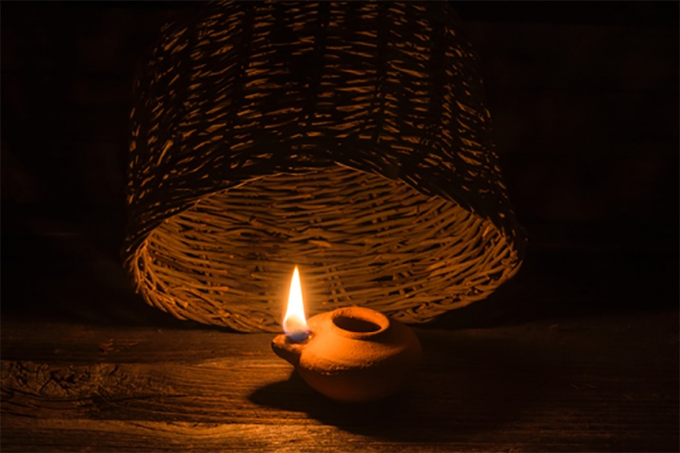
DON’TE WAIT AND BE THE LIGHT.  When we are going about our lives even during difficult times be the light. It starts now. “You are the salt of the earth but if the salt has become tasteless how can it be made salty again? It is no longer good for anything except to be thrown out and trampled under foot by men. You are the light of the world. A city set on a hill cannot be hidden nor does anyone light a lamp and put it under a basket, but on a lampstand  and it gives light to all who are in the house. Let your light shine before men in such a way that they may see your good works, and glorify your father who is in heaven” (Matt. 5:13-16). We can be the light to others and be an influence in their lives. Be optimistic and show gratitude. Show love. Try our best to live like Jesus lived.

I want to share some the lyrics to a song called Talking To Jesus. written by Brandon Lake Chris Brown and Steven Furtick.

Grandma used to pray out loud
By her bed every  night
To me it sounded like mumbling
Like she was out of her mind

She said boy this kind of praying is what saved my life
You oughta try it sometime
And now I know she was right
She was talking to Jesus

She’d been talking to Jesus for all her life
Mama used to drag me to church 
Sunday mornings and Wednesday nights
Khaki pants and a polo shirt

Boy I put up a fight
She said son some day you will thank me
For having God in your life
And yeah I know she was right

Cause now im talking to Jesus
She got me talking to Jesus
Yeah mama was right
I’ve got 3 of my own now
Trying to raise them up right

My oldest is fifteen
And I remember what that was like
Trying to deal with the drama
Trying to figure out the questions in life

And I’ve been looking for a way to show him
How to make it alright
Then he walked in my room
While I was saying my prayers the other night

He said I will come back later
I can tell you got a lot on your mind
I said its not an interruption
You couldn’t have picked a better time
Cause I was talking to Jesus
Come over and give it a try
We started talking to Jesus
And now he’s talking to Jesus
I hope he’s talking to Jesus the rest of his life.

We are always being watched by someone.  Someone whether its our family friends co workers or people in the community.  Even when we are alone God is taking note. In Matthew 10 he says he knows the hairs on our head they are numbered. 

We are being watched by God, we are being watched by children, we are being watched by others. What you do and how you live your life matters. It matters now so it can matter for eternity. 

A Light In The Dark

Tuesday’s Column: Dale Mail

Wherever light is, there is no darkness. That almost sounds silly and maybe a little obvious. Light and darkness in the Bible often depict the concept of good and evil but nowhere is the impression given that the dark is equal to light. In both the Old and the New Testaments, we find the concept of light and darkness. It represents the believers and the nonbelievers and it also represents good and evil. Biblical writers understood God to be the ultimate Light— the ultimate goodness of the world. When John refers to Jesus as “light” in his gospel this is the concept that he is trying to get across. Jesus is pure. He’s a beacon of hope— he is Light. Strangely, scientists are still baffled by light. NASA spent a mountain of money attempting to come up with a color so dark that it could even consume light but it just isn’t possible. 

No darkness can stifle the light of Jesus.

To this day He is shining bright through His followers to ensure that this dark world can see Him and that means we have an important job to do. In gospel of John, we find this profound statement, “…the light has come into the world, and men loved darkness rather than the light, for their deeds were evil” (John 3:19). At this point John begins another section on light and more is revealed about the two contrasting realities. There is the light, who is Jesus, and those who did not love the light because their deeds were evil. The reason they rejected the Light was because they were separated from it by their own wickedness. Evil is done with ease in the dark and we tend to fool ourselves into thinking that we are hidden and secure under its cover. 

Alaska’s crime rate significantly drops in the summer because the sun shines continually, but in the winter months the crime rate is much higher. It’s easier to get away with evil in darkness. Notice the bold statement following this, “Everyone who does evil hates the Light, and does not come to the light for fear that his deeds will be exposed” (John 3:20). Light exposes the wickedness, and exposure is not something an evil person desires.

 Today lights are used by doctors to shine down your throat, in your ear, and to expose any potential problems. We have automatic porch lights and flood lights as well as “brights” for those backroads. Jesus is here to expose the sins of others and welcome those that come to Him. This also goes to show that an individual can claim to love the Light, while living in darkness— this person hates the Light. Action speaks louder than words and in a spiritual sense this could not be more accurate. Do your actions reflect that you love the Light? 

Dale Pollard

What It Means To Be Called

Thursday’s Column: Captain’s Blog

1 Peter 5:10 says, “And the God of all grace, who called you to his eternal glory in Christ, after you have suffered a little while, will himself restore you and make you strong, firm and steadfast.” 

The entire purpose of 1 Peter is to encourage and exhort Christians in their suffering. Peter ends the entire book with a promise that God will make them strong, firm and steadfast. This same God has called us into His eternal glory in Christ. John Gill once said, “This call is not a mere external one by the ministry of the word, which is not always effectual and unto salvation; but an internal, special, and efficacious one, and which is high, holy, heavenly, and unchangeable.” 

This call is what labeled us as Christians, what saved us from darkness, and what gave us God’s Son. We can learn so much about who we are as Christians by studying this word in the New Testament. The Greek word kaleo is used by several authors to explain our spiritual state. This word teaches us what we used to be without Christ. Without being called we would not be holy, we would still be in the darkness, without being called we would not be labeled as God’s children, and without being called we would not be in the eternal glory in Christ. 

Peter’s use of the word “called” in his letter is through inspiration. It helps us recognize our condition outside of Christ. It shows servants how to endure suffering. It gives an example to wives on how to submit to their husbands. We can see that we were outside of Christ and the blessings of the light before being called.

In 1 Peter, almost every use of the word “called” is followed by a definite article. Five times out of six “you” is said immediately following the word “called.” This call is directed towards us as Christians. We are called to do or be these various things for God. God also has called us. Peter writes that God is the one calling which implies that we must do the answering. So when are we going to answer the call from God?

As we live our Christian lives we must keep in mind our former condition, and be thankful for where we are now. God has truly blessed us by calling us as Christians. So do we give thanks to Him for what He has done? Do we carry out the standards that are in place by being called out? We must evaluate our christian walk and see if we are living up to our call to be separated from the world, and connected to Christ.

Carl Pollard

Rays On Gloomy Days

Tuesday’s Column: Dale Mail

For centuries, the locals of Meghalaya, India, have manipulated the roots of rubber trees to grow their natural bridges. Stretching over ditches and streams these natural structures will far outlast the man-made metal or wooden bridges that rot and decay in just a few years. The rubber-roots are self-strengthening and become more substantial over time by increasing in thickness. 

Meghalaya also happens to be the rainiest place on earth, receiving 467 inches of rainfall a year. Just to put that in perspective, New York will typically get around 60 inches a year. The men and women who work outdoors wear a sort of full body-umbrella made of bamboo and banana leaves.

One visiting reporter stopped a butcher who was carrying a basket of freshly-cut meat up a steep flight of stairs. He was asked if it was hard to live in a place with so much rain. The 26 year old man replied, “we can’t think about that. Here there’s always rain but we have to work, so it’s no good wondering about it.”

There are many people who tend to take this attitude after experiencing a rude awakening in life. When the days of innocence have passed us by we think tragedy, hardship, trials, and tribulations are just a part of the deal. 

It’s going to rain. It does no good to think about it— we trudge along. 

We’ve got overcast days, cold days, and rainy days— but it doesn’t mean we have to live without any light. 

This post is a simple one. Here’s a few passages to help brighten up the darker days. 

These verses don’t take the hurt out of life but they can put the hope back in our lives when we begin to lose drive. 

Isa. 60.19 

No longer will you need the sun to shine by day, nor the moon to give its light by night, for the Lord your God will be your everlasting light, and your God will be your glory.

John 1.4-5 

The Word gave life to everything that was created, and his life brought light to everyone. The light shines in the darkness, and the darkness can never extinguish it.

Ps. 40.1-3

I waited patiently for the Lord to help me, and he turned to me and heard my cry. He lifted me out of the pit of despair, out of the mud and the mire. He set my feet on solid ground and steadied me as I walked along. He has given me a new song to sing, a hymn of praise to our God. Many will see what he has done and be amazed. They will put their trust in the Lord.

I John 1.5 

This is the message we heard from Jesus and now declare to you: God is light, and there is no darkness in him at all.

I would argue that though it’s impossible for every day to be a sunny one, the Christian will always have access to the Light because of His son. 

Dale Pollard

The Light Of The World

Thursday’s Column: Captain’s Blog

Carl Pollard

“Again Jesus spoke to them, saying, ‘I am the light of the world. Whoever follows me will not walk in darkness, but will have the light of life’” (John 8:12).

In the first century, the word “light” carried with it a deeper meaning. Light often described knowledge from the spiritual realm. Light meant true knowledge, in contrast with the darkness of ignorance. Knowing this gives more power to Jesus’s statement here. By saying these words Jesus is claiming to be the one who brings the true knowledge of God from heaven. 

Jesus isn’t just saying “I am a light” but that He is the light! The only way to know God is to recognize that Jesus is the ONLY light. Not Joseph Smith, or Buddha, but Christ alone is the light. 

Christ illuminates knowledge for this dark world. Jesus gives us real answers to the fundamental questions of life. Who am I? Where did I come from? What is my purpose? Where am I going?Questions that billions have struggled with are all answered by Jesus. Without Jesus, these questions will never be answered. Life following Jesus is a clear and wonderful life, a life where we have a purpose. We know who we are, and where we are going? 

Do you want to know why most people have nightlights in their homes? Because some guy was tired of hitting household objects when he got up in the middle of the night. We’ve all experienced it, perhaps the worst pain you can ever feel. Stubbing your pinky toe on a table or dresser at night. Think about a world without the true light. It’s futile. It’s a life spent stumbling and tripping in the dark. Living a life contrary to Christ’s teachings is “to walk in darkness.” The world is filled with people who live in darkness. 

They stumble through this world with no purpose or direction, groping around like people in a dark room. Picture Velma from Scooby-Doo. She was useless without her glasses, and when she dropped them she got on her knees and had to feel around and hope for the best. John makes it very clear that those who live in darkness have no fellowship with God, because God is light (1 Jn. 1:5). Why do people live in darkness? Some have never heard of Jesus while others reject Jesus because of their love for the darkness of sin. 

John 3:19 says, “‘And this is the judgment: the light has come into the world, and people loved the darkness rather than the light because their works were evil.’” On the other hand, those who have chosen to follow Jesus, “come to the light,” and are walking in the light (1 John 1:9). These people have a clear direction in life. They know what pleases God, and they make the right changes. 

These are the Christians that have true joy. These are the Christians that experience the blessing of having their sins continually cleansed by the perfect blood of Christ. 

Which one am I? Have I accepted Jesus as the light of the world? Does Jesus give me my direction and purpose? Darkness or light are the two paths, and we must choose where to walk. 

1 Peter–Part IV

Wednesday’s Column: Third’s Words

Gary Pollard

For the next several weeks, I’ll be repeating the book of I Peter in present-day terminology. It’s not a true translation of the book, as I am not qualified to do so. It will be based on an exegetical study of the book and will lean heavily on the SBL and UBS Greek New Testaments, as well as comparisons with other translations (ESV, NASB, NIV, ERV, NLT). My goal is to reflect the text accurately, and to highlight the intent of the author using concepts and vocabulary in common use today. 

This is not an essentially literal translation, and should be read as something of a commentary. 

I Peter – Pt IV

We’ve been a nation-in-the-making for a while, a group of people who serve God the right way through Jesus. We’re only in a good place with God because of Jesus. He was the first brick in this house, but no one on earth wanted him. God saw him as the most valuable! Each of us are also bricks being built into a special house by God and for God. You’ve read, “Look, I’m building a perfect foundation with a special stone. If you believe him, you won’t ever be disappointed.” If you believe him, he’s the most valuable thing in the world. 

For everyone else, “He’s the stone none of the builders wanted to use, but he became the foundation of the house anyway. They tripped over him and couldn’t stand him.” They couldn’t stand him because they didn’t follow his words. They are destined to die. 

That isn’t you, though. You’re a select group. You’re valuable servants. You’re a distinct nation. You’re destined to be God’s. We tell everyone about how perfect he is because he pulled us out of darkness. We exist in his awesome light now! Before he saved us, we had no identity. We have one now! Before he saved us, we had no special favor. We have it now! 

CONCEALED CARRIER

Monday’s Column: Neal At The Cross

img_5670

Neal Pollard

To get your concealed carry permit for a firearm in Kentucky, you can expect to undergo a background check, complete gun safety training, and pay a fee. There is a minimum age requirement, and there are other conditions to meet while holding a permit (which can be revoked or suspended). Did you know that in 2020, there were over 68,000 permits either issued or renewed? Since 1996, well over one million have been issued and renewed here. What does all that mean? It means that there are a lot of people you run into on the road, in the store, and just about any other public place who are carrying and you don’t know it. 

I do not mention any of this to induce or participate in a Second Amendment debate. There is a different type of “concealed carrier” which Jesus does not approve of. He preaches about it in His sermon on the Mount. He says, “You are the light of the world. A city set on a hill cannot be hidden; nor does anyone light a lamp and put it under a basket, but on the lampstand, and it gives light to all who are in the house. Let your light shine before men in such a way that they may see your good works, and glorify your Father who is in heaven” (Mat. 5:14-16).  Jesus exhorts His disciples not to conceal the light of their influence.

It is impossible for a true disciple to conceal their influence (14). Truly, one can claim to be a follower of Christ in an affirming environment like at church services or around Christians. Yet, if we can be around people away from these “easy” situations and no one knows, from our speech, action, attitude, and presence, that we are a Christian, how much of a disciple are we? Jesus says it should be totally obvious to everyone!

It is unprofitable for a disciple to conceal their influence (15). What good is it to be a disciple if those characteristics are suppressed and concealed? A lamp might as well be a piece of furniture if it is covered up. All the knowledge of who Jesus is and what He means is useless if we do not apply that by sharing Him in our daily lives! 

It is dishonorable for a disciple to conceal their influence (16). Our “light” is connected to doing the good works of a disciple and others glorifying the Father by witnessing the fruits of our influence. If seeing Christlike influence at work honors God, what does the opposite do?

God needs us spreading the influence of Christ every day and everywhere. There is no “secret service” branch in the Lord’s Army, and He doesn’t want any “concealed carry” light-bearers! No, not practicing your righteousness to be seen of men. Instead, practicing righteousness openly and without shame as you conduct yourself among the world. 

God’s Photons

Wednesday’s Column: Third’s Words

gary and chelsea

Gary Pollard

God is light. What does that mean? Before we get into that, it’s important to remember that we can’t understand everything about God. We know what he’s told us, but a lot of it is difficult to understand and/or accommodative language. It’s only appropriate that God can’t be adequately described with simplistic concepts. That said, spending a lot of time trying to understand who he is will only strengthen our relationship with him. 

God is light: 

  1. I Jn. 1.5 – This passage contrasts light with darkness. In this case, darkness is moral failure. Light is moral perfection. What makes this interesting is the use of a state-of-being verb (estin – is, exists, closely related to). He is light. God is morally perfect and totally immune to darkness. 
  2. I Tim. 6.16 – God lives in unapproachable light, no has seen him and no one can see him. If we were to see God in His true form, we would die (Ex. 33.20; cf. Jn. 1.8, 5.37, 6.46; Col. 1.15; I Jn. 4.12). We don’t fully understand what light is. Visible light is a tiny sliver of the massive electromagnetic spectrum, yet light interacts in some way with everything in creation. It can be harmless and it can be deadly. It can be mild and it can be powerful, depending on how it interacts with matter. Light (physical light) seems to be a glimpse into the nature of God (see Rom. 1.20; Jn. 1.9). 

There are many more passages (Ps. 76, 104; Jn. 1.9, 8.12; Acts 26; I Thess. 5). God is real. He thinks about us (Heb. 2). He’s personally invested in us (Rom. 8). We interact with reality the way we do because He designed it that way (Jn. 1.3-5). He is perfect love (I Jn. 4.8). He is terrifyingly powerful (Job 38). He wants humans to live with Him after time is dissolved (Jn. 14; I Tim. 2.4; II Pet. 3.9). All aspects of functional creation are extensions of His nature (love, patience, happiness, compassion, light, breathtaking beauty, empathy, companionship). God is amazing. 

The Silent Influence

Thursday’s Column: Carlnormous Comments

IMG_0806
Carl Pollard
 
I can still remember it like it was yesterday. It was a Friday morning and I came downstairs to see dad sitting where he always sat every single morning. He was in his lazy boy recliner drinking what was probably his third cup of coffee, wearing his fuzzy dad slippers and a pair of reading glasses. If I saw that combination, I knew what dad was doing.
 
Every morning he would get up early, grab his coffee, Bible, slippers and glasses, and sit in his lazy boy recliner. And every morning I would see him sitting there reading. When I look back and think about these instances, I now see just how powerful his actions were. He wouldn’t tell us what he was doing, he wouldn’t tell us to join him, he wouldn’t tell us why he was doing it. He would just grab his Bible and read.
 
When I think about influence this is what I think of. A committed man of God. Showing us by his actions how to grow our own relationship with The Father. The silent influence that I saw growing up has shown me the power of actions. Through his actions I saw what his priorities were. I saw what his focus was. I saw who he loved more than anyone else.
 
There’s nothing we should want more as Christians than to have this kind of influence on others. Not preaching at them day and night condemning them and cutting others down, but showing them by our actions what a relationship with God looks like. If we work on perfecting our faith and cultivating a genuine relationship with God, people WILL notice. For others to be affected by our influence we need to get three things straight: our priorities, our actions, and our speech.
 
When we think about winning souls, it’s best to start with our own before looking to others. If we can grow our faith and be fully invested in our relationship with God, people will notice and ultimately glorify God.
 
Matthew 5:13-16

Life Illustrated 

Tuesday’s Column: Dale Mail

DaleandJanelledirectorypic

Dale Pollard

Contentment In Life 

As a young boy I can clearly remember the feelings I had in school. I was ready to be done with text books, math, science, and all the other trials and tribulations that I felt were too much for me to bear. I longed for the day when I could set my own bedtime, go where I wanted to go, spend money on whatever I wanted, and be looked at as an adult. I wish there was still a once-hated nap time scheduled in my daily life. My life, like many others, consisted of school and play, yet I looked forward to a future life that my young heart deemed better. It’s not better and it’s not worse— rather I’m just faced with new challenges that come with a new stage in life. We look forward to the future, and there’s nothing wrong with that as long as we are content with the present. Older couples will often state how fast the time has gone! Parents will look back on the years that flew by and always seem to ask the question, “Where did the time go?” Every hour was sixty seconds, every day was twenty four hours, and every year was a full three hundred and sixty five days. Our bodies run down, our hair turns gray, and our problems don’t end– they just differ from chapter to chapter. We are all living a vapor of a life, then off to eternity! When the dust settles over our caskets, when friends and family leave the cemetery, when they move on with their lives, what is left behind is our legacy and the impact we made. If life is a vapor and eternity is endless, our focus should be on the latter.

Endurance In Life 

Wilbur Wright was playing ice hockey as a young man when one of the players struck him in the mouth with his hockey stick. Wilbur Wright, who was known for being outgoing and articulate, had plans to teach at Yale college. The complications with his injury made him give up that dream and go into a depression. The man that gave him the injury was known as the neighborhood bully, and it is speculated that he did this to Wilbur on purpose. That bully later on became addicted to cocaine and eventually he was discovered to be a mass murderer. He killed sixteen people after reading the book Dr. Jekyll and Mr. Hyde because he related to Mr. Hyde. Wilbur, despite an unfair and unplanned accident, went on to invent the first motorized airplane and change the world forever. Bad things happen to good people, but we have a choice on how we respond and what we chose to do next.

The Last Blink 

God created the world in 6 days. 144 hours. 8,640 minutes. 518,400 seconds. But He’ll come back and end it all in the blink of an eye. Just like that time is gone and everybody is sent into eternity. Though it’s a figure of speech, the average human can blink in 3/10ths of a second. God made “the blink” that quick so you could close your eye quickly enough to protect it from debris, bright bright light, and to illustrate for us the way He’ll return.

800px-orville_wilbur_wright
Wilbur Wright (right)

A Bat’s Worst Nightmare

Thursday’s Column: Captain’s Blog

IMG_0806

Carl Pollard

I’m gonna be honest. I am not a fan of winter. It’s cold, snow is terrible, It’s freezing, and I hate snow. The worst thing about winter is that It gets dark at like 3 pm. In the summer you have these nice long, warm days but In the winter you got about 6 hours of daylight before it gets dark again.
Darkness is referred to quite a bit in scripture and many times it is used to describe sin. For example, “Walking in darkness” = walking in sin. “Living in darkness” = living in sin.
As Christians we are described as being taken out of darkness (sin) to walk in light (righteousness) (Ephesians 5).
But how did we get to this point? We read in John 8:12, “Again Jesus spoke to them, saying, “I am the light of the world. Whoever follows me will not walk in darkness, but will have the light of life.”
Because of Christ and His sacrifice and love for us we can now have the light of life. Without Christ we are forever in darkness, but with Christ he is our light that leads to salvation.
The choice to follow Christ means that our standard is The Light. Notice, He says, “will not walk in darkness…” This word is skotia which is described as, “the state of being devoid of light, darkness, gloom.” When we choose to live like the world, there is no light in us. When we remove Christ as our guide and live in sin, we are plunged into darkness.
But if He is our standard of living, in hard times we will have light, when we lose a loved one we will have light, and when we face difficult decisions we will have light.
The question we need to ask ourselves is this, “Do we prefer darkness over light? Do we prefer sin over righteousness?” The choice is ours, and each one of us makes this decision every day.
You may be asking what all of this has to do with the pandemic going on right now…well a bat started this whole thing, and bats live in caves, caves are dark and living in darkness is living in sin. Don’t be a bat.
maca-solitary-roosting-bat

Making Sense Of Grace

Wednesday’s Column: “Third’s Words”

10423661_10207901451272315_9069631728203375436_n

Gary Pollard III

Grace is a touchy subject. As with many other words commonly used in religious circles, it has potential to be misused or misunderstood. My hope is that this brief study on grace will shed some light on a confusing subject.

First, grace is possible for all men to have (Titus 2.11). It has been clearly displayed and advertised to everyone. The word “appeared” in that passage is epiphane, which means “to make an appearance.” No one is exempt from grace if they follow the right steps to receive it!

Second, grace keeps us in good standing with God if we are walking in the light (I John 1.7,8). In Acts 2.47, chairo (pronounced ky-roe) is translated “favor.” In Luke 6.32-34 Jesus uses it in a very interesting way. He says, “If you only love those who love you back, what credit is that to you?” Credit is charis, the word for grace.

So what is grace? What does it mean to you and me? If we are walking in the Light – trying our very best to follow God’s commands and allowing our faith to be the driving force of our lives – God takes care of our sin problem. When we slip up and make a mistake, God removes it from our record. This does NOT mean that we can sin all we want and God will just overlook it (see Romans 6.1,2). It does, however, mean that God is not waiting to strike us out of the book of life the moment we make a mistake.

Grace is what happens when God wants to do good for mankind. Luke 6.35 says, “Love your enemies, and do good, loan to others without expecting anything back; and your reward will be great, and you will be sons of the Most High; for He Himself is kind to ungrateful and evil men.” The word kind in the bolded phrase is charis: grace. It does not mean the same thing for evil men that it does for the Christian, but it does help us to get a better sense of what this word means.

God is rooting for His children (Christians). He WANTS us to get through this life and die in Him (Psalm 116;15). He isn’t our accuser waiting for us to slip up so He can condemn us. He helps us along the way, He shows good will to us, and He gives us His grace so that we can spend an eternity with Him as long as we are walking in the Light.

Dark Churches

Neal Pollard

I was intrigued by an article written by Janet Thompson of crosswalk.com. The eye-catching title asked, “Why Is The Church Going Dark?” She meant this literally. Her complaint was about the design of many auditoriums having dim lighting and being windowless, almost like a movie theatre or concert venue. She wondered if this was to reach a younger generation or to set a certain mood. 

While I prefer a well-lit room, there is a more significant concern. Jesus taught, “You are the light of the world. A city set on a hill cannot be hidden; nor does anyone light a lamp and put it under a basket, but on the lampstand, and it gives light to all who are in the house. Let your light shine before men in such a way that they may see your good works, and glorify your Father who is in heaven” (Mat. 5:14-16). His words have nothing to do with church building designs, LED lighting, or window sizes. Preaching to His disciples, Jesus wants us to know that those reflecting His light cannot be hidden, but shine in such a way that others will see our good works and glorify God. 

  • Dark churches are situated in neighborhoods that know nothing about them.
  • Dark churches are so indistinct that the world can see no difference between themselves and those churches. 
  • Dark churches have no vision or plan to fulfill God’s purpose for them.
  • Dark churches exist to assemble, but not much more.
  • Dark churches focus inwardly, but neither outwardly nor upwardly. 
  • Dark churches operate from fear and prefer the safe route, taking no risks and attempting only what they can produce.
  • Dark churches are disconnected from the Light of the world.

It is good for us to constantly challenge ourselves, when setting budgets, making plans, gauging our true priorities, or evaluating the leadership or the pulpit. Are we doing what will help us be “Light-Bearers” or what will cause us to be “Dark Churches”? What an important question! Our actions determine the answer. 

dark churches

THE MYSTERY OF INFLUENCE

Neal Pollard

Several years ago, a fourteen-year-old girl named Shannon Smith was shot to death in her own back yard. A bullet lodged in her brain. Though already tragic and horrific, the story was made more tragic by the inexplicable nature of the shooting. Police, judging from the trajectory made by the entry would, concluded that the bullet fell from the sky. Somewhere nearby, some unknown person had fired a gun for no known reason. The bullet completed its path of travel inside an unsuspecting teenager. Tragic, indeed!

Who fired the gun and why? The action pales next to the consequence. Someone aimlessly fired a weapon. A child died and parents were left to mourn her loss. It was all so unnecessary and avoidable!

Christians are a special people, a God-possessed, holy group (1 Pet. 2:9). The world sees Christians (Matt. 5:16). They react to children of God, either “glorifying” (Matt. 5:16) or “blaspeming” (2 Sam. 12:14) Him. Christians are either transformed from worldliness or conformed to it (Rom. 12:2). Conformity carries tragic consequences.

Influence is an inevitable burden carried by every Christian. Others watch what we do, hear what we say, and evaluate our judgments. What we wear, how we talk, where we go, and with what we entertain ourselves may seem harmless or at least harmful only to us. Yet, we can aimlessly fire and eternally wound another’s soul by our influence.

The man or woman who fired that gun may not realize even now what they did with one “harmless” squeeze of a trigger. Maybe they will not know on this side of time. Just so, we may be shocked on that day to realize how many or exactly whom we influenced. We’re on a spiritual battlefield (Eph. 6). Let’s be careful not to shoot at the wrong side! We may wind up doing harm to the very people we’re commissioned to save. Let’s watch our aim!

635556363784254557-phxdc5-5gjqo8l36pjzj76wfkp-original
Shannon Smith (undated photo)