What Judas Missed: The Providence Of Absence

The Synoptic Gospels all record Jesus instituting the Lord’s Supper during the Last Supper. John, writing later, highlights different moments from the same night. When we lay these accounts side by side, a clearer picture emerges—one that reveals both divine providence and human frailty in sharp relief.

Brent Pollard

God’s wisdom shines through the four Gospel accounts in unexpected ways. Nowhere is this more evident than in the reconstruction of our Lord’s final Passover with His disciples.

The Synoptic Gospels all record Jesus instituting the Lord’s Supper during the Last Supper. John, writing later, highlights different moments from the same night. When we lay these accounts side by side, a clearer picture emerges—one that reveals both divine providence and human frailty in sharp relief.

Luke, the careful historian, notes that the final Passover began with an argument. The disciples disputed among themselves who was the greatest (22.24). This prompted Jesus to teach humility not only through words, but also through action. He wrapped a towel around His waist and washed their feet (John 13.4ff). True greatness, He demonstrated, lies in serving others.

However, John’s Gospel clarifies a crucial aspect of that night’s sequence. Despite his prominent place in Leonardo da Vinci’s famous painting, Judas probably wasn’t present when Jesus instituted the Lord’s Supper.

Here’s what likely happened: After washing the disciples’ feet, Jesus and the Twelve began their Passover meal. During this time, shortly after Jesus’ act of service, He handed a morsel of bread to Judas, identifying him as the betrayer (John 13.26). Judas departed immediately, vanishing into the night (John 13.30).

Only after Judas left did Jesus take the bread and declare it His body, which was soon to be broken (Matthew 26.26; Mark 14.22). Later still—meta to deipnesai, the Greek phrase meaning “after supper”—He took the cup and proclaimed it the new covenant in His blood (Luke 22.20; 1 Corinthians 11.25).

The betrayer had already gone.

Does Judas’s absence from this sacred moment carry symbolic weight? We must be careful not to over-read. Peter sat at that table, yet within hours, he would deny his Lord three times. As we often declare about the Lord’s Supper, participation has nothing to do with personal worthiness. None of us merits the sacrifice of the Lamb of God. None of the disciples gathered that night deserved what Jesus was about to do for them.

Judas’s swift departure likely served a more immediate, though no less providential, purpose. His exit facilitated the dark necessity that would lead to our Lord’s arrest in Gethsemane. God’s sovereignty moves through betrayal as surely as through blessing, orchestrating even the actions of the wicked for redemptive ends.

One question remains: Why didn’t John include the institution of the Lord’s Supper in his Gospel?

The answer sheds light on God’s design as revealed in Scripture. John’s was the last Gospel written. By then, the Synoptic Gospels had circulated throughout the churches for decades. Christians were already familiar with the details of how Jesus instituted the Lord’s Supper. This freed John, through the inspiration of the Holy Spirit, to provide what the other Gospel writers hadn’t recorded.

John gives us the intimate moments—the private teachings and prayers that occurred between supper and arrest. Consider the High Priestly Prayer of John 17, where Jesus intercedes for His disciples and for all who would believe through their word. Consider the comforting promise of John 14:1-3, where Jesus tells them that He is going to prepare a place for them in His Father’s house. These treasures appear nowhere in the Synoptic Gospels.

John’s Gospel doesn’t merely supplement the others—it completes the portrait. Each evangelist contributes unique dimensions to our understanding. Together they reveal not just what happened, but what it means.

When we delve into these unique perspectives, we gain something precious: a more comprehensive picture of Jesus’ final hours with those He loved. We see sovereignty and tenderness intertwined. We witness the depth of Christ’s care for His followers even as betrayal ripened and denial gestated in the hearts around that table.

Every detail carries weight. Every exclusion and inclusion serves a divine purpose. The argument about greatness becomes the occasion for the greatest act of humility. The betrayer’s exit clears the stage for the institution of the meal that would sustain the church through millennia. The absence of specific details in one Gospel creates space for other revelations in another.

The table Judas abandoned still stands. It declares that God’s grace reaches the unworthy, that true greatness kneels with a towel, that covenant blood speaks better things than thirty pieces of silver clutched by a traitor stumbling toward his fate.

We come to that table not because we deserve it, but because we desperately need it. We remember not merely historical events, but present realities—Christ’s body broken, His blood shed, His love poured out while we were yet sinners. And in remembering, we are transformed by the One who loved His own to the uttermost, even unto death.

Come. Remember. Be changed.

“I Am Not The Christ”

The apostle John introduces us to the work of John the Baptist by sharing the contentious back and forth between the priests and Levites and this preacher. The Pharisees had sent these leaders from Jerusalem to ascertain who this unconventional, but popular, preacher was.

Neal Pollard

The apostle John introduces us to the work of John the Baptist by sharing the contentious back and forth between the priests and Levites and this preacher. The Pharisees had sent these leaders from Jerusalem to ascertain who this unconventional, but popular, preacher was. He confessed, “I am not the Christ” (John 1:21). His circumstances were somewhat different from anyone else. His express job was to come as a forerunner, a herald to prepare people for Jesus’ coming. 

But he was not the last person who needed to acknowledge that truth. 

What about church leaders and servants? It can be easy to develop a Messiah Complex, seeing ourselves as people’s saviors. Whether they come for counsel or attach themselves to us for spiritual guidance, role confusion can happen easily–not just for the receiver, but also for the giver. We may take on their problems and our lives may get out of balance in seeking to help. Others need to understand, as we do, that we are not the Christ. We are His ambassadors (2 Cor. 5:20), but our task is to get them connected to Jesus. He alone can save (Acts 4:12).

What about those in close relationships? Whether a spouse, sibling, children, parent, or friend, one may find himself or herself enabling someone whose problems and issues become their own. We cannot be their conscience, moral compass, warden, or parole officer. We want to help and bear burdens (Gal. 6:2), but at some point each must bear their own load (Gal. 6:5). 

What about me? In a much different sense, I cannot substitute my convictions, feelings, opinions, or preferences for Jesus’ word and will. He has all authority (Mat. 28:18). When it comes to how I live, I don’t get to decide where He has already spoken (John 12:48). 

We can learn a lot from John. He consciously set about to maximize Christ and minimize self (John 3:30). It can be tricky to be a servant of Christ without becoming a substitute for Christ, but that is the challenge! Perhaps it starts with a deliberate effort, praying to remember who we are in God’s scheme of things. But is also means remembering who we are not! 

Jesus The Light

A few weeks ago, I ordered motion-sensing nightlights from Amazon. They’re not super bright, but their gentle glow keeps me from stumbling over the toys my kids leave scattered across the house. I’m half-convinced they place those blocks strategically to cause maximum damage! Those nightlights, though, are lifesavers. 

Light changes everything.

Carl Pollard

A few weeks ago, I ordered motion-sensing nightlights from Amazon. They’re not super bright, but their gentle glow keeps me from stumbling over the toys my kids leave scattered across the house. I’m half-convinced they place those blocks strategically to cause maximum damage! Those nightlights, though, are lifesavers. 

Light changes everything. It reveals what’s hidden, guides us safely, and offers comfort. A lighthouse directs ships to shore. Headlights illuminate the road ahead. When a strange noise echoes at night, a flick of a switch brings reassurance. Light is security, hope, and power. Sadly, our world grows darker every day. We’re flooded with voices—news alerts, influencers, politicians, even loved ones—competing for our attention. The noise can be overwhelming, drowning out what’s true and steady. Yet, through this chaos, one voice shines clearly: Jesus, proclaiming, “I am the light of the world. Whoever follows me will not walk in darkness, but will have the light of life” (John 8:12). In a world of distractions and deception, our Savior says He is the way, the truth, the life—a lifeline for us all.

To grasp the weight of Jesus’ words, imagine the scene in John 8. It’s the Feast of Tabernacles in Jerusalem, a week-long celebration of God’s provision for Israel in the wilderness. Each night, massive lampstands illuminated the temple courts, their flames recalling the pillar of fire that guided God’s people (Exodus 13:21-22). These lights symbolized God’s presence and guidance. Amid this glowing backdrop, Jesus stands and declares, “I am the light of the world.” This isn’t subtle. He’s claiming to be the fulfillment of those lamps, the God who led Israel. His Jewish audience understood: Isaiah 60:19 promises, “The Lord will be your everlasting light,” and Psalm 27:1 says, “The Lord is my light and my salvation.” Jesus is saying, “I am that God.”

When Jesus says “I AM,” He echoes God’s name from the burning bush: “I AM WHO I AM” (Exodus 3:14). Each “I AM” statement in John’s Gospel is a bold claim to divinity. Some argue Jesus never claimed to be God, but His actions tell a different story. He calms storms, as God does in Job 38. He gives sight to the blind, fulfilling Isaiah’s prophecy. He calls Himself the Good Shepherd, like God in Jeremiah 31. When accused of breaking the Sabbath, He claims to be its Lord (Luke 6), working to sustain creation while we rest. The Jews knew what He meant, accusing Him of blasphemy (John 8:59).

This darkness Jesus speaks of isn’t just poetic—it’s the spiritual reality of a world and heart estranged from God. In John 8, we see it: Pharisees, blind with self-righteousness, ready to stone a woman caught in adultery; the woman, trapped in shame; the crowds, restless for meaning. That’s our world too—chasing success, pleasure, or power, yet left empty. 

Jesus’ light exposes our sin and need, but it also overcomes them. He promises, “Follow me, and you’ll have the light of life.” The blind man in John 9 didn’t just gain sight; he saw Jesus and worshipped (John 9:38). The Pharisees, clinging to pride, stayed blind (John 9:40-41).

So, what do we do? First, recognize your darkness—pride, shame, or chasing what can’t satisfy. Second, follow Jesus daily, trusting His truth over the world’s noise. Finally, reflect His light, forgiving others or sharing the gospel (Matthew 5:14-16). Jesus, the Light of the World, is the God who conquers death and guides us home. 

The darkness is real, but His light is stronger. Will you step into it?

The Truth That Sets Free: Understanding “Aletheia” in John’s Gospel

Brent Pollard

The Gospel of John presents a profound and intricate exploration of truth, beautifully captured in the Greek term aletheia (i.e., truth). This theme transcends mere philosophical inquiry and is a vital cornerstone of John’s theological message, interwoven within his narrative and intent. One of the most striking examples of this theme arises as Jesus stands before Pontius Pilate, bound and facing judgment. The Roman governor’s skeptical inquiry, “What is truth?” (John 18.38), carries a weight of irony, as the essence of truth is present before him, a reality that Pilate cannot perceive. This crucial moment underscores humanity’s recurring struggle to recognize the truth of the divine when confronted with its presence.

The Gospel of John employs this concept of truth approximately 25 times, a notable frequency that significantly exceeds its occurrence in the Synoptic Gospels, underscoring its importance. John clearly articulates his purpose for penning these words: “Therefore many other signs Jesus also performed in the presence of the disciples, which are not written in this book; but these have been written so that you may believe that Jesus is the Christ, the Son of God; and that believing you may have life in His name.” (John 20.30-31). The truth that John advocates is not merely theoretical or scholarly; it is deeply personal, embodied, and ultimately redemptive, guiding one toward faith and everlasting life.

From its first lines, the Gospel reveals Jesus as the embodiment of truth. “And the Word became flesh, and dwelt among us, and we saw His glory, glory as of the only begotten from the Father, full of grace and truth.” (John 1:14). John 1:17 beautifully encapsulates this truth: “For the Law was given through Moses; grace and truth were realized through Jesus Christ.” Thus, truth transcends propositions for discussion; it is a being to be met and understood. In a profound statement, He clearly articulates, “I am the way, and the truth, and the life” (John 14.6). In this significant narrative, Jesus weaves Himself into the very fabric of the essential themes found within John’s Gospel: He embodies the way to the Divine, stands as the supreme unveiling of truth, and serves as the wellspring of everlasting life. To encounter the essence of Jesus is to grasp the very nature of truth.

The deep bond between the divine and truth is significant for those who seek to follow and honor Him. The Lord speaks to the Samaritan woman, declaring that “true worshipers will worship the Father in spirit and truth” (John 4.23). This declaration is not merely a set of rules but a reflection of genuine worship, arising organically from a sincere understanding of the nature of Jesus. Faith in Jesus as the Messiah enables a form of worship grounded in His revelation’s fullness rather than in fragmented insights or established customs.

Moreover, the truth embodied in Jesus is a source of profound liberation. In the passage from John 8.31-32, there is a significant assurance given to those who place their faith in Him: “If you continue in My word, then you are truly disciples of Mine; and you will know the truth, and the truth will make you free.” This liberty is fundamentally of the spirit, acting as a release from the bondage of transgression. Embracing the teachings of Christ and nurturing a bond with Him opens the door to a profound and liberating transformation.

The Gospel reveals a stark dichotomy between truth and deception, highlighting the profound struggle of the spirit. The Lord challenges those who turn away from Him, showing their loyalty to their “father the devil,” who “does not stand in the truth because there is no truth in him.” (John 8.44). This clear division underscores that accepting truth requires a deliberate decision to turn away from darkness and move toward the illumination in Jesus (John 3.19-21).

The Holy Spirit profoundly influences our understanding of truth. The Lord speaks of the Holy Spirit as “the Spirit of truth” (John 14.17) and assures that this Spirit will lead His apostles into “all the truth” (John 16.13). This heavenly guidance is vital for the apostolic testimony that underpins the foundation of the early church. In the solemnity of His “High Priestly Prayer,” the Lord intercedes for His followers, uttering the profound request: “Sanctify them in the truth; Your word is truth.” (John 17.17). The journey of being made holy, a calling to be distinct for divine purposes, unfolds through the truths revealed in the sacred scriptures, culminating in the person of Christ.

John highlights the importance of truth because his role as a witness depends on it. John highlights the importance of truth because his role as a witness depends on it. He consistently asserts the truthfulness of his account, declaring near the cross, “And he who has seen has testified, and his testimony is true; and he knows that he is telling the truth, so that you also may believe.” (John 19:35). He emphasizes this in John 21:24: “This is the disciple who is testifying to these things and wrote these things, and we know that his testimony is true.” For John, truth is not just a conjecture; it requires experience, observation, and thorough documentation to inspire faith.

The notion of aletheia within the Gospel of John is vibrant and centered upon Christ. Truth is the essence of divinity, the embodiment of grace and truth, who walks among us. This profound reality lays the groundwork for genuine worship, grants freedom from sin, consecrates the faithful, and contrasts with deception. Pilate’s question lingers, provoking us to think: Shall we acknowledge and accept the truth that stands before us? John’s Gospel invites us to embrace Jesus as the embodiment of truth, allowing His teachings to transform our lives and, in the spirit of John, to bear witness to the truth that leads us toward everlasting life. To truly know Jesus means embracing the essence of truth, and placing your faith in Him leads to discovering the abundant life, John 10.10, found in His name.

Unless otherwise indicated, Scripture quotations are taken from the NASB® (New American Standard Bible®, 1995 Updated Edition). Copyright © 1995 by The Lockman Foundation. Used by permission. All rights reserved.

Raising Godly Children

Do you ever wrestle with the challenge of raising faithful children (or grandchildren)? Are there certain ingredients necessary to accomplish this task?

Carl Pollard

Every morning, I pray for the spiritual health of my family and children. My son Rich can’t even say his sister’s name right, but I pray for his future walk with God, for his spouse, and his commitment to Christ. Amara can’t crawl yet, but I spend my mornings praying that she becomes a woman of faith like Ruth or Sarah. Jed, still in the womb, is listening to sermons through an umbilical cord, and I’m already lifting him up in prayer that he follows God’s will.

I want nothing more than to spend eternity with my wife, children, and family. How I lead as a father will shape how my kids see God the Father. I often feel guilty for my failures as a spiritual leader, fearing the responsibility for my family’s faith journey. My deepest desire is to see my children grounded in faith and in love with Christ.

This article is for you as a parent to realize the role you play in your children’s spiritual health. As long as they’re under your roof, you have a chance to instill a faith that will unite you for eternity.

You might think it’s strange that someone with little parenting experience is writing about raising faithful children, and you’re right. But thankfully, you don’t have to rely solely on my experience. Let’s take a look at the example of Zechariah and Elizabeth.

Unlike other gospels, Luke begins with the backstory of John the Baptist. To quote philosopher Jake Miller, “We never talk about John the Baptist, but I think that is a mistake. He is a really powerful example.” Jesus affirmed this in Matthew 11:11, saying that among those born of women, none is greater than John.

John was a man calling for repentance and preparing the way for the Lord. So, how did he come to be such a devoted servant? It was part of God’s plan, but Zechariah and Elizabeth played crucial roles in shaping his faith. They lived contrary to their culture, serving God under a tyrannical king while remaining faithful despite their barrenness and age.

Dedicated Believers

In Luke 1:5-6, we read that Zechariah and Elizabeth were righteous and blameless before God. Wouldn’t it be great to be known as blameless parents? Even dedicated believers will make mistakes; Zechariah faced challenges, including being made mute for his disbelief. But God doesn’t expect perfection—He expects dedication. They prayed earnestly for their child before he was even born. Do you spend time in prayer for your kids? Bringing them before the Lord is one of the best things you can do.

Diligent Teachers

In Luke 1:14-17, God reveals that John will be filled with the Holy Spirit and destined to turn many to the Lord. This highlights our responsibility to teach our children. Despite society’s expectations, John fulfilled his divine purpose. What are you prioritizing for your children? Are you encouraging their involvement in church? Just like teaching them to brush their teeth or study, it’s essential to guide them in their faith.

Devoted Nurturers

John had a challenging life ahead, and his parents understood that. As devoted nurturers, Zechariah and Elizabeth provided the guidance he needed. Kids will test your patience, but showing love and mercy is vital. They raised a son who was faithful to God.

What our world needs is more parents like Zechariah and Elizabeth—dedicated believers, diligent teachers, and devoted nurturers. Sadly, many children today lack godly role models. As parents, we have a profound responsibility. God chose Zechariah and Elizabeth for their unwavering dedication. So, I ask you: what kind of role model are you being for your children?

Assurance Of Truth

Carl Pollard

A few years back, my dad and I traveled to Cambodia for a mission trip. One evening, we wandered through the night market, looking at all the different shops. They had everything from designer clothes to headphones like Beats, Gucci belts, and even iPhones—all unbelievably cheap! I mean, we’re talking $5 for a Casio watch, $10 for an iPhone, and $12 for an iPad. 

At first, it felt like a dream, but the longer we looked, the more we realized something was off. Those “Beats By Dre” headphones actually said “Beats By Bray,” and the Ray-Ban sunglasses actually said “Roy-Bans.” The Casio watch I bought? It seemed legit but died after a few weeks. These knockoffs looked real at first glance, but upon closer inspection, the truth was clear. 

These fake items exist because somewhere, genuine designer products are out there, creating a market for the fakes. Just like those counterfeits, false truths abound today. Jesus warned us about false prophets, and we see their influence everywhere. Satan takes what’s valuable and crafts knockoffs that seem real but lack true worth. As Buddy the Elf famously said, “You sit on a throne of lies.”

In a world filled with deception, false teachings threaten our faith. Yet, John, the apostle Jesus loved, assured early believers that they could have confidence in their relationship with God. There’s no reason to fear; we can have the assurance of truth. God desires for us to feel secure in our faith, knowing that we are saved, a privilege not extended to those outside of Christ.

John makes it clear why he wrote his letters. In 1 John 5:13, he states, “I write these things to you who believe in the name of the Son of God, that you may know that you have eternal life.” This assurance isn’t a gamble; it’s a certainty for those who believe.

John encourages us to evaluate our faith through three tests. First, do you believe that Jesus is the Son of God? 1 John 4:9-10 emphasizes God’s love for us, even when we were unlovable. He sacrificed His Son so we could live through Him. Recognizing this love is crucial.

Next, do you obey God’s commands? 1 John 2:3-6 tells us that knowing Him means keeping His commandments. Obedience isn’t just about fear; it’s rooted in love. We must trust and obey God, finding assurance in our faith through our actions.

Lastly, do you show love toward others? 1 John 3:14 states that love for our brothers and sisters shows we’ve passed from death to life. Love is an active choice, demonstrated through our actions and sacrifices. 1 John 3:18-24 challenges us to love not just in words but in deeds. 

In summary, ask yourself three essential questions: Do you believe in Jesus? Do you obey the Father? Do you love others? If you answered no to any, you may not be right with God. But there’s hope. With a repentant heart, God is ready to forgive and embrace you. So, how badly do you want eternal life? Enough to change your behavior? Let’s strive to embody belief, love, and obedience in our lives.

Handling Our Sins As Christians

Neal Pollard

The Bible makes it very clear that every one sins (Rom. 3:10, 23). The Apostle John was a very righteous man. When all the other apostles ran away as Jesus was arrested and put through so much agony, John went with Jesus all the way to the cross (Jn. 19:25-27). He was called “the disciple whom He loved” (Jn. 13:23). But, this great apostle said, “If we say that we have no sin, we are deceiving ourselves and the truth is not in us”  (1 Jn. 1:8). The apostle Paul confessed to the fact that he struggled with sin, despite the fact that we recognize him as a faithful, fruitful Christian (Rom. 7:14-25).

 The question is, “Do I need to be baptized every time I sin?” The Bible makes it very clear that a person must be baptized in order to be saved. From the first time Jesus was preached to people, they asked what they should do. They were told to repent and be baptized for the forgiveness of their sins (Acts 2:38). The last New Testament scripture to deal with the sub- ject of baptism says, “Baptism saves you” (1 Pet. 3:21). There is no doubt but that God requires a person to be baptized in order to be saved.

However, once one is baptized into Christ (Gal. 3:27), he or she does not cease from sinning. That would be nice, but it is impossible (cf. Rom. 3:23).  We still struggle with temptation, weakness, and desires of the flesh. Yet, nowhere do we read in the New Testament of a command, example, or implied statement concerning being baptized to cover each sin one commits as a Christian. That is significant. We follow the New Testament as the pattern for our conduct, worship, and teaching on all matters.

So, what does a person do as a Christian when he or she sins? Let us return our focus to 1 John one. There, John writes, “If we say that we have fellowship with Him and yet walk in the darkness, we lie and do not practice the truth; but if we walk in the Light as He Himself is in the Light, we have fellowship with one another, and the blood of Jesus His Son cleanses us from all sin. If we say that we have no sin, we are deceiving ourselves and the truth is not in us. If we confess our sins, He is faithful and righteous to forgive us our sins and to cleanse us from all unrighteousness. If we say that we have not sinned, we make Him a liar and His word is not in us” (6-10). First, notice that one can claim to have fellowship with God but will disprove that claim by walking in sin. One cannot walk in darkness and have their sins covered.

Second, notice that fellowship with God is maintained by walking faithfully in Christ. The blood that forgives our sins in baptism continues to cleanse us as our walk is righteous. However, “walking in the Light” is not the same as sinless perfection. What John says in the next three verses proves this.  We are actually sinful to claim sinless perfection (8,10).

Third, notice what one does to maintain fellowship with God while coping with and trying to overcome sin. In verse 9, John speaks of an honest awareness of the presence of sin in our lives that leads us to confess our sins. Some deny, defend, or excuse their sins, but that makes one like those John warns about in verses 8 and 10. Instead, a humble, penitent heart that is quick to see and acknowledge the presence of sin in his or her life is one who will enjoy cleansing from a God faithful and just to forgive such sinners. How does a Christian handle personal sin? Do not make it a matter of lifestyle (7), but when sin does occur be ready to confess it (9).

 One other element implied by John and explicitly stated by Peter is the idea of repentance. In Acts 8, a man named Simon committed sin. Peter rebuked him for the sin, saying, “Therefore repent of this wickedness of yours, and pray the Lord that, if possible, the intention of your heart may be forgiven you” (22). Repentance and prayer are necessary acts for a Christian who sins. Paul praises the Corinthians for following the same pattern to handle their sins as Christians (see 2 Cor. 7:10-11).

It would be wonderful if we did not sin as Christians, but such is just not possible. Thus, when we do sin, we need to have an awareness of it, a heart that is sorry about it, and a determination to overcome it, repenting of it, confessing it, and praying about it.

The Giver Of Life

Carl Pollard

 There are some in the world who follow Christ for the wrong reasons. Perhaps they were told that everything in life would be perfect if they chose to follow Jesus. It is possible that they did it for their family and not out of their own conviction. Maybe they became a Christian to try and get some physical blessing out of it. 

To put our faith in action we are all motivated by something. If we aren’t careful, we can quickly lose motivation if it is based on the wrong ideas. For a few moments we are going to turn our attention to the cost of discipleship. As Christians, we are called to follow God, and not because our faith will come with certain perks. We follow Christ because He is the Son of the Living God. The truth of His resurrection compels us to put our faith in action. The many attributes of Christ compel us to trust in Him as Lord. He is worthy of our worship, our love, and our obedience. 

But even more, the beauty of the Gospel is that in trusting Jesus and acting out our faith, we find that He pours many blessings into our lives. This is not our motivation, but it is a side effect of faithfully following the Savior. I used to believe that it was wrong to think, “what’s in it for me.” 

We may even feel guilty for thinking this way. We do our best to put our faith in action and often we ask, “what’s the point?” 

This is NOT wrong. In fact, this is the definition of “counting the cost.” Luke 14:28, Jesus says, “For which of you, desiring to build a tower, does not first sit down and count the cost, whether he has enough to complete it?” 

In this section, Jesus is teaching us to realize just how much it will cost us to become His follower. Faith in action is no easy task. Obeying the Son of God isn’t a walk in the park. There were several occasions where the people believed that Jesus’ teachings were too hard to obey. But that sacrifice is part of following the Son of God. Deny self, take up cross, follow Him. 

Those are difficult decisions to make. 

Jesus, in Luke 14, shows us the importance of fully understanding what it will cost us to follow Him. In this mental exercise, you measure the cost against what you stand to gain in following Jesus (hint, you’ll gain far more than what it cost you). As we think about the idea of counting the cost, there’s one of many reasons why Jesus is worth the Cost: Jesus Gives Life

In John 6, Jesus presents some very difficult teachings to the crowds. He is teaching in the synagogue in the city of Capernaum to a large group of Jews. These hard teachings from Jesus actually caused many followers to leave Jesus! Verse 60 says, “When His followers heard this many of them said, ‘this teaching is hard, who can accept it?’” 

How often do we respond like this? 

There’s more discussion, and Jesus knew this would happen. Finally, in verse 66, it says that after He said these things His followers left him and followed Him no more. 

After these people leave Him, He turns to His disciples and notice what He says: “Do you want to go away as well?’” (67).

Peter answers, “Lord, to whom shall we go? You have the words of eternal life, and we have believed, and have come to know, that you are the Holy One of God.” Peter’s response is profound. When faced with the question, “will you also leave?”, his response is “to whom shall we go?” This is a question we must all consider. Who would you be without Christ? Who could take the place of Savior in your life? Many have made the decision to let the world be their savior.

If Christ wasn’t in your life, who could you turn to? 

It is in the identity of Jesus that we find the main appeal of God’s Son. Jesus is God. Peter realized this powerful truth. Christ has the words of eternal life. This was all he needed to follow Jesus to the very end. 

If Jesus is God, His words are more than just words. His words are truth. His words open our eyes to the truth of eternity. Jesus is worth following; He is worthy of our faith, because He gives us eternal Life. 

Jesus gives us the option to follow or leave. But who would we turn to? He is the Son of God, His words give life. This powerful encouragement shows us that every word of Jesus pierces the depths of our souls and binds our lives in truth. This cannot be found anywhere else. Others can offer words of wisdom and words of truth, but Jesus alone gives the words that can be trusted for an eternity.

As we count the cost, we must keep in mind that Jesus gives everlasting life to those who put their faith in Him.

“I Am He”

Carl Pollard

Jesus describes Himself in many ways throughout the Gospels. Each name further explains His love, care, protection, judgment, and attitude towards us. There is one name He used that caused quite an uprising in His earthly ministry. However before we dive into the New Testament, we must start at the beginning. 

Exodus 3. 

Here we read that Moses was shepherding his father-in-law’s flock. He takes the herd to Horeb, the mountain of God. While he is there with the animals he notices a bush engulfed in flames, but the bush wasn’t consumed by the fire. Moses goes closer to investigate, and he hears a voice from the bush call his name. This voice is the voice of God and He had a job for Moses to do. 

He had heard the cries of His people in Egyptian captivity, and verse 10 He tells Moses to deliver them from the hand of Pharaoh. Moses isn’t too thrilled with his new task, but pay special attention to the next few verses: Exodus 3:13–14 says, “Then Moses said to God, “Behold, I am going to the sons of Israel, and I will say to them, ‘The God of your fathers has sent me to you.’ Now they may say to me, ‘What is His name?’ What shall I say to them?” God said to Moses, “I AM WHO I AM”; and He said, “Thus you shall say to the sons of Israel, ‘I AM has sent me to you.’ ” 

When God revealed Himself to Moses, He identified Himself as “I AM.” These two words summarize God’s nature. He is the only: 

  • Uncreated
  • Eternal 
  • Always-existing Being. 

He is the I AM because He just is. He exists in all power and majesty, He has no timeline, no beginning, no end. He is I AM. No one else is like Him. Well, maybe someone is…

Seven times in the gospel of John, Jesus used the name “I Am” while claiming to possess certain attributes of God. For the Jews, numbers had special meaning. Seven is quite possibly the most important. In Hebrew numerology the number 7 represents completion or perfection. God created the world in 6 days, and rested on the seventh. The Jewish week had 7 days. Shabbat occurred every seven days. Noah brought 7 pairs of clean animals on the ark. The number Seven is the most important symbolic number in the Hebrew Bible. It conveys wholeness, perfection and for the Jew it came to represent holiness. 

It could be a coincidence, but I do think it’s interesting that Jesus says “I AM” 7 times in the gospel of John. He is God in the flesh, He came to make us complete, and whole. 

He came to make us holy. Seven times, He says, “I AM.” With that in mind, let’s look at the last time He says this. 

John 18

Jesus has just finished a lengthy discussion with His apostles at the last supper. He goes to the garden where He knows that He will be arrested. 

Verse 3 tells us, “So Judas, having procured a band of soldiers and some officers from the chief priests and the Pharisees, went there with lanterns and torches and weapons. Then Jesus, knowing all that would happen to him, came forward and said to them, “Whom do you seek?” They answered him, “Jesus of Nazareth.” Jesus said to them, “I am he.” Judas, who betrayed him, was standing with them.“ 

Look at the very next verse, “When Jesus said to them, ‘I am he,’ they drew back and fell to the ground.” This claim is made as a blatant show of divine power. A band of heavily armed men have shown up to arrest Jesus. Jesus asks who they were there for, and they respond “Jesus of Nazareth.” 

His self-identification in verse 6 does something incredible. Every last Pharisee, Roman soldier, and chief priest stumbled back and fell to the ground when Jesus spoke the words “I AM HE.” At His spoken word, these men are blown back. 

It’s interesting that this same apostle wrote later of the power of the LOGOS. 

So why did John record this? They came to arrest Jesus with weapons. Christ was clear that He knew what would happen, and He chose to cooperate with God’s plan. This moment highlights His sovereignty, reminding everyone that nothing happens to Him which is beyond His own control. 

He WILLINGLY gave Himself because no man can destroy the I AM. But the I AM can sacrifice Himself.

A Light In The Dark

Tuesday’s Column: Dale Mail

Wherever light is, there is no darkness. That almost sounds silly and maybe a little obvious. Light and darkness in the Bible often depict the concept of good and evil but nowhere is the impression given that the dark is equal to light. In both the Old and the New Testaments, we find the concept of light and darkness. It represents the believers and the nonbelievers and it also represents good and evil. Biblical writers understood God to be the ultimate Light— the ultimate goodness of the world. When John refers to Jesus as “light” in his gospel this is the concept that he is trying to get across. Jesus is pure. He’s a beacon of hope— he is Light. Strangely, scientists are still baffled by light. NASA spent a mountain of money attempting to come up with a color so dark that it could even consume light but it just isn’t possible. 

No darkness can stifle the light of Jesus.

To this day He is shining bright through His followers to ensure that this dark world can see Him and that means we have an important job to do. In gospel of John, we find this profound statement, “…the light has come into the world, and men loved darkness rather than the light, for their deeds were evil” (John 3:19). At this point John begins another section on light and more is revealed about the two contrasting realities. There is the light, who is Jesus, and those who did not love the light because their deeds were evil. The reason they rejected the Light was because they were separated from it by their own wickedness. Evil is done with ease in the dark and we tend to fool ourselves into thinking that we are hidden and secure under its cover. 

Alaska’s crime rate significantly drops in the summer because the sun shines continually, but in the winter months the crime rate is much higher. It’s easier to get away with evil in darkness. Notice the bold statement following this, “Everyone who does evil hates the Light, and does not come to the light for fear that his deeds will be exposed” (John 3:20). Light exposes the wickedness, and exposure is not something an evil person desires.

 Today lights are used by doctors to shine down your throat, in your ear, and to expose any potential problems. We have automatic porch lights and flood lights as well as “brights” for those backroads. Jesus is here to expose the sins of others and welcome those that come to Him. This also goes to show that an individual can claim to love the Light, while living in darkness— this person hates the Light. Action speaks louder than words and in a spiritual sense this could not be more accurate. Do your actions reflect that you love the Light? 

Dale Pollard

Love (1 John, Part 11)

Wednesday’s Column: Third’s Words

Gary Pollard

I’ll be repeating the book of I John in present-day terminology. It’s not a true translation of the book, as I am not qualified to do so. It will be based on an exegetical study of the book and will lean heavily on the SBL and UBS Greek New Testaments, as well as comparisons with other translations (ESV, NASB, NIV, ERV, NLT). My goal is to reflect the text accurately, and to highlight the intent of the author using concepts and vocabulary in common use today. 

This is not an “essentially literal” translation, and should be read as something of a commentary. 

Love

Loved ones, we should make a habit of showing each other selfless love. This is because love comes from God. Everyone who makes a habit of showing love is part of God’s family. They show that they know God well, too. If someone fails to practice selfless love, they don’t know who God is. God is love. 

This is how we know God loves us: he made it pretty clear when he sent his only son to earth to give us life forever. That was real love — not the same way we love God. No, God loved us so much that he sent his one son for the purpose of taking away all of our sins. Loved ones, since God showed us that kind of love, we owe each other love, too. 

At no point has anyone ever taken a good look at God. But since we love each other, he’s with us. He continues to grow his love in us!  

Friend Or Foe (1 John: Part Ten)

Wednesday’s Column: Third’s Words

Gary Pollard

I’ll be repeating the book of I John in present-day terminology. It’s not a true translation of the book, as I am not qualified to do so. It will be based on an exegetical study of the book and will lean heavily on the SBL and UBS Greek New Testaments, as well as comparisons with other translations (ESV, NASB, NIV, ERV, NLT). My goal is to reflect the text accurately, and to highlight the intent of the author using concepts and vocabulary in common use today. 

This is not an “essentially literal” translation, and should be read as something of a commentary. 

Friend or Foe

This is how you know you’re with him: he gave us his spirit.1 Loved ones, don’t believe every spirit, but really put them to the test to see if they came from God. You’ll need to test them because a whole lot of fake teachers were sent2 to the world. 

This is how you know if a spirit came from God: every spirit that comes from God will acknowledge that Jesus was sent to earth as a human. If a spirit refuses to acknowledge this, it isn’t God’s. In fact, it’s the spirit of Jesus’s enemies. You heard that the spirit of Jesus’s enemy was coming — it’s here now. 

Young ones, you are from God and have already beaten these spirits. How? Jesus is far more powerful than his enemies, and he’s with you. These enemies come from the world, so they talk like it — and the world listens to them. But we came from God. If you know God, you’ll listen to us. God’s enemies are the ones who don’t listen to us. This is how you can tell the difference between a legitimate spirit and a fake one.

1 In this context, πνευματος is used to mean something like “ethos” or “system of teaching”. God sent a legitimate belief system, then Satan counterattacked by sending a ton of illegitimate information to make truth more difficult to find.  

2  This is further evidenced by εξεληλυθασιν in 4.1 and εληλυθοτα in 4.2. The former describes false teachers sent to earth. The latter describes the one true teacher sent to earth. 

Don’t Hate (1 John: Part 8)

Wednesday’s Column: Third’s Words

Gary Pollard

I’ll be repeating the book of I John in present-day terminology. It’s not a true translation of the book, as I am not qualified to do so. It will be based on an exegetical study of the book and will lean heavily on the SBL and UBS Greek New Testaments, as well as comparisons with other translations (ESV, NASB, NIV, ERV, NLT). My goal is to reflect the text accurately, and to highlight the intent of the author using concepts and vocabulary in common use today. 

This is not an “essentially literal” translation, and should be read as something of a commentary. 

Don’t Hate

This is what you’ve heard from the beginning: you should love each other. Don’t be like Cain, he was evil. He slaughtered his own brother. Why would he do that? Because he did evil things, and his brother was morally pure. 

Don’t be surprised, family, if the world hates you. You know you’ve transferred from death to life when you love your Christian family. Those who don’t love their Christian family are still dead. 

Anyone who hates their Christian family is a murderer — and you know that no murderer lives forever. 

A Door In The Sky & The Trumpet Of His Voice 

Tuesday’s Column: Dale Mail

Dale Pollard

Blessed is the one who reads aloud the words of this prophecy, and blessed are those who hear it and take to heart what is written in it, because the time is near.

Revelation 1.3 

To prepare the mind for the door and the trumpet of chapter 4, let’s review the Revelator’s response. 

John Is Literally Paralyzed By Fear  

“When I saw him, I fell at his feet as though dead. Then he placed his right hand on me and said: “Do not be afraid.I am the First and the Last. I am the Living One; I was dead, and now look, I am alive for ever and ever! And I hold the keys of death and Hades.”  1.17

The Trumpet Of His Voice 

On the Lord’s Day I was in the Spirit, and I heard behind me a loud voice like a trumpet..” 1.10 

After this I looked, and there before me was a door standing open in heaven. And the voice I had first heard speaking to me like a trumpet said, “Come up here, and I will show you what must take place after this.” 4.1 

Let’s take a second to appreciate this window into the heavenly realm. These precious details should make you hunger for more. 

Let’s Speculate For A Moment 

Roman cornu found at Pompeii, Public domain

While the “trumpet” is used metaphorically, there’s a particular kind of trumpet that John may have been thinking of. It’s called the Roman Cornu. 

This brass signal trumpet was around nine feet long, curved into a “G” shape, and supported by a crossbar. Recently, two of these horns were found by archeologists in the ruins of Pompeii. 

These trumpets were used to direct Roman troops on the Roman battlefield. One military strategist by the name Vegetius said, 

“The rules (given by blowing the horn) must be punctually observed in all exercises and reviews so that the soldiers may be ready to obey them in action without hesitation according to the general’s orders either to charge or halt, to pursue the enemy or to retire.”

A trumpet that could be heard over the din of battle? That had to be loud. 

Click hear to listen to a short example of a perfect replica of a Cornu horn being blown. It’s loud, exciting, and terrifying. 

That’ll raise the hair on your neck. 

Traveling Through The Door In The Sky 

The voice of the Lord was like that of trumpet, and it was calling John to come through a door in the sky (4.1). 

We read that John was in the Spirit in Revelation 1.10, but something else seems to be going on here. This is a new experience and even with the help of Inspiration, it’s difficult to describe in a  limited human language. 

Did John’s body travel through the door as well? That’s anybody’s guess and while on earth— a concrete answer is impossible to find. 

Paul hardly even tried to describe his journey into the spiritual world as descriptive terms don’t seem to do it justice (2 Cor. 12.1-4). 

The Meaning Of The Door 

Was it a portal? Did it have hinges and a knocker? Was it floating? 

Before the imagination runs wild, let’s look at a couple of the practical points. 

  1. The door, while both symbolic and physical in some respects, represents perspective. John is stranded on an island, but God gives him another vantage point. Seeing things from a spiritual high place can help reorient ourselves. How does God see our lives? What does the church look like from up there? That’s what Revelation 1-3 is all about. 
  2. There’s a plan being worked out behind the veil of eternity. Just like Job suffered without knowing the details (Job 1), we can take comfort in the fact that things down here always go according to His plan. 

While the details aren’t as colorful as we would like them to be, here’s 3 important facts He would want us to remember. 

  1. There’s definitely a way into heaven. 
  2. God’s the only one who can open that door. 
  3. We should focus on preparing our souls to step across that final threshold. 

If you couldn’t confidentially walk into His throne room right now, that should be your number one concern. 

“In him and through faith in him we may approach God with freedom and confidence.”

Ephesians 3.12 

Do You Know Him Or Know Of Him?

Tuesday Column: Dale Mail

blond man with goatee smiling at camera with blazer on
Dale Pollard


God speaks of Himself as simply “I Am.” This is one powerful statement depicts His infinite presence and His existence through every age. What does it mean to know Him? How do you know if you do? To know of Jesus is very different than knowing Him.

John is one of those books in the New Testament that will help us to become better aquainted with the Christ. John paints us a vivid picture of who He was and is on a deeper level than even the three previous books.

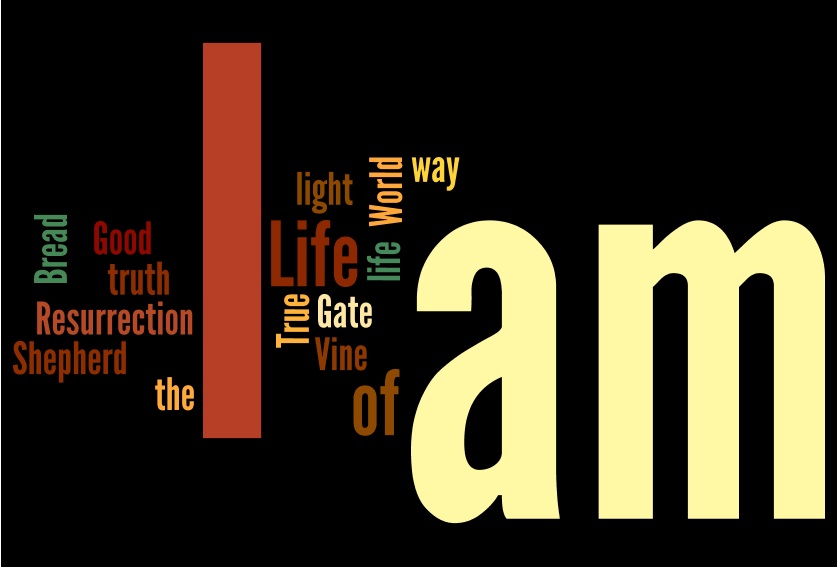
He’s the Bread of life, Light of the world, the Gate, Good Shepherd, Resurrection and Life, the Truth, and the Vine. All of these titles found within the book teach us a little more about the Savior of the world. There are seven “I Am” statements in John referring to Jesus and three hundred throughout the entire Bible. They begin in Genesis and end in Revelation, and in many books in-between. You just can’t read very far without discovering something very profound about it’s Writer.

He’s eternal. God’s desired response to this is simply for us to believe, respond, and live with our minds and hearts prepared to live with Him. When Jesus describes Himself as the “I Am” it makes the religious leaders want to kill Him in John 8. To know Jesus, to really know Him, is something that many people have not fully understood. Even as Jesus walked among us mortals and witnessed His miraculous power there were still several that didn’t realize what it meant to follow Him Luke 9:57-62.

While it’s true that everyone is made in the image of God, few reflect the Father’s image. Those that know Jesus introduce others to Him. With the knowledge that we are imperfect, let’s not forget that we also have the ability to have a relationship with Him. I am flawed and I am weak, but the Great I Am is interested in who I am.

By the grace of God, I am His child. He is the bread of life that sustains us, the light that guides us, the gate we’ll walk through, and the truth that will save us. It’s not how great I am, but how great the Great I Am is. Do you know Jesus?

The Coolest Intro

Wednesday Column: Third’s Words

gary and chelsea

Gary Pollard

One of the most concise and beautiful teachings about God is in John. He plainly states some awesome things, full of impact and depth.

“The Word existed in the beginning…” This, along with other statements made in this context, highlights how tragic it is that the world systemically rejects him. There was only a “beginning” because of him.

“…the Word existed with God, and the Word was God. He existed in the beginning with God, who created everything through Him. Nothing that exists was created without Him.” God took a demotion to save us (Heb. 2.9). The same one who used the Father’s power to fabricate reality.

“Life came from Him…” Humans only had the power to take life away from the source of life because He let them.

“…and this life was humanity’s light.” His selflessness gave us hope for a better existence.

“This light shined through the darkness, and darkness can’t smother it.” Evil is on borrowed time and it knows it. Jesus put a countdown on the existence of evil. When its time runs out, it’ll never bother His people again (II Pet. 3.13; Rev. 20.12-15).

We deal with real problems thanks to darkness. What Jesus did wasn’t just a nice gesture. He destroyed the very possibility of darkness, creating a reality in which His own – made eternally perfect through His sacrifice – can never mess things up again. I want to live in that kind of reality with that kind of God.

I Am

Tuesday’s Column: Dale Mail

image

Dale Pollard


God speaks of Himself as simply “I Am.” This one powerful statement depicts His infinite presence and His existence through every age. What does it mean to know Him? How do you know if you do? To know of Jesus is very different than knowing Him.

John is one of those books in the New Testament that will help us to become better aquatinted with the Christ. It’s the last of the gospels that paints us a vivid picture of who He was and is on a deeper level than even the three previous gospels. He’s the Bread of life, Light of the world, the Gate, Good Shepherd, Resurrection and Life, the Truth, and the Vine. All of these titles found within the book teach us a little more about the Savior of the world.

There are seven “I Am” statements in John referring to Jesus and three hundred throughout the entire Bible. They begin in Genesis and end in Revelation, and in many books in-between. You just can’t read very far without discovering something very profound about its Writer. He’s eternal. God’s desired response to this is simply for us to believe, respond, and live with our minds and hearts prepared to live with Him.

When Jesus describes Himself as the “I Am” it makes the religious leaders want to kill Him in John 8. To know Jesus, to really know Him, is something that many people have not fully understood. Even as Jesus walked among us mortals and we witnessed His miraculous power, there were still several that didn’t realize what it meant to follow Him (Luke 9:57-62).

While it’s true that everyone is made in the image of God, few reflect the Father’s image. Those that know Jesus introduce others to Him. With the knowledge that we are imperfect, let’s not forget that we also have the ability to have a relationship with Him. I am flawed and I am weak, but the Great I Am is interested in who I am. By the grace of God, I am His child. He is the bread of life that sustains us, the light that guides us, the gate we’ll walk through, and the truth that will save us. It’s not how great I am, but how great the Great I Am is. Do you know Jesus?

Facts About Jesus From John One That Many Deny

Monday’s Column: Neal At The Cross

preachingatPBL

Neal Pollard

Perhaps it is inevitable that someone as well-known as Jesus Christ would be subject to so much misinformation. Think about how things are said about Jesus that are not true. John’s gospel begins in a different way. His audience was wider than just Jews, just Romans, or just Greeks. His was truly a universal gospel, so he was writing to the whole world. In just the first several verses of his gospel, he affirms several things people subsequently denied about Him.

  • He is eternal (1-2)–“In the beginning was the Word” (see also 1:15,30).
  • He is deity (1)–“The Word was God” 
  • He created everything (3,10)
  • He became flesh (14)
  • He came to show us God, the Father (18)
  • His coming was to take away the sins of the world (29)
  • He is the Son of God (34)

There are those even in religion that say Jesus was a created being rather than being co-eternal as God. There are those who would reject the idea of the worship of Jesus being acceptable, though He is expressly called God. There are those who say that everything came into being by the process of evolution rather than Moses’ record (Gen. 1-2) being carried out by the Word (Col. 1:16-17). There are those who say God could not become flesh, since flesh is evil. There are those who deny the inspiration of Scripture, and thus would deny the New Testament actually records Jesus showing us the Father or otherwise communicating His will. 

It is incorrect to say that we can accept the biblical record of Jesus without faith. He existed eternally before becoming flesh. He was born of a virgin. He lived a totally sinless life. He died a death that satisfied God’s justice as a substitute for our sins. He was buried in a tomb, but was raised from the dead to live forevermore. He appeared to many of His disciples over forty days before ascending to heaven from which He will some day come again to judge the entire world. How can we say it takes no faith to follow Jesus? Instead, we should say that it takes more faith to embrace any competing explanation. The leading candidate to rival the biblical account is godless evolution. Try examining that with any level of care without discovering the infinitely greater amount of faith to explain how random chance and mindless, amoral matter produces the meticulously orderly, complex universe filled with intelligent life. 

Sometimes we are benefited by going back to basics. John one is written so simply and straightforwardly, yet it contains some of the biggest, broadest truths which so many reject. May we reflect carefully on the power of those truths so that it causes us to live better and differently! 

A Bat’s Worst Nightmare

Thursday’s Column: Captain’s Blog

IMG_0806

Carl Pollard

I’m gonna be honest. I am not a fan of winter. It’s cold, snow is terrible, It’s freezing, and I hate snow. The worst thing about winter is that It gets dark at like 3 pm. In the summer you have these nice long, warm days but In the winter you got about 6 hours of daylight before it gets dark again.
Darkness is referred to quite a bit in scripture and many times it is used to describe sin. For example, “Walking in darkness” = walking in sin. “Living in darkness” = living in sin.
As Christians we are described as being taken out of darkness (sin) to walk in light (righteousness) (Ephesians 5).
But how did we get to this point? We read in John 8:12, “Again Jesus spoke to them, saying, “I am the light of the world. Whoever follows me will not walk in darkness, but will have the light of life.”
Because of Christ and His sacrifice and love for us we can now have the light of life. Without Christ we are forever in darkness, but with Christ he is our light that leads to salvation.
The choice to follow Christ means that our standard is The Light. Notice, He says, “will not walk in darkness…” This word is skotia which is described as, “the state of being devoid of light, darkness, gloom.” When we choose to live like the world, there is no light in us. When we remove Christ as our guide and live in sin, we are plunged into darkness.
But if He is our standard of living, in hard times we will have light, when we lose a loved one we will have light, and when we face difficult decisions we will have light.
The question we need to ask ourselves is this, “Do we prefer darkness over light? Do we prefer sin over righteousness?” The choice is ours, and each one of us makes this decision every day.
You may be asking what all of this has to do with the pandemic going on right now…well a bat started this whole thing, and bats live in caves, caves are dark and living in darkness is living in sin. Don’t be a bat.
maca-solitary-roosting-bat

“High Carb Diet”

Thursday’s Column: Captain’s Blog

IMG_0806

Carl Pollard

We all love a good piece of bread. Whether it’s garlic bread, cheesy bread, or just plain bread, everyone loves it. Bread is the greatest invention of all time, maybe ever (can you tell I wrote this before lunch?).
Jesus is described as being our spiritual bread. In John 6:35 Jesus is the “bread of life.” And in verse 32 He is called “the bread out of heaven.” Why would Jesus be called bread? When we take a closer look at these two verses, we can notice a few reasons why.
“Jesus then said to them, “Truly, truly, I say to you, it was not Moses who gave you the bread from heaven, but my Father gives you the true bread from heaven” (John‬ ‭6:32‬). There’s an analogy given by John that helps us to wrap our mind around Jesus being the Bread. Moses provided manna in the wilderness for Israel (bread from heaven), and Jesus (the bread) was sent from heaven to feed us spiritually.
It was amazing growing up with mom, THE Kathy Pollard, as the cook. And many times we would describe her food as “out of this world.” When we think of Christ, the Bread out of Heaven, He is literally out of this world.
Point is, we need to be feeding ourselves with this Bread. We need to be consistently meditating on God’s word, continually making it apart of who we are, and courageously manifesting it in our everyday lives.
“Jesus said to them, “I am the bread of life; whoever comes to me shall not hunger, and whoever believes in me shall never thirst” (John‬ ‭6:35‬). Two words in this verse are in the present tense– “comes” and “believes.” This means that for Jesus to be our bread we must continually come to Him and believe. Jesus is nourishment to those who are spiritually starved, mentally broken, and emotionally lost.
No matter how much bread we physically eat, it will never compete with how full and complete we will be in Christ. Are we turning to Him?

12764594_10208245679077795_625453659382235834_o
Just an example of some of the bread mom sustained me with growing up