Encouragement

Wednesday’s Column: Third’s Words

Gary III

Gary Pollard

How important is encouragement? Winston Churchill understood its importance. It kept the morale of Great Britain high enough to not only survive the Blitzkrieg, but also link together as a country to defeat the Axis Powers. Hitler understood its importance – with it (by way of propaganda) he brought his country out of a decade or so long depression. Even the world’s worst people understood the value of encouragement. 

In the church, it is no different. Only, instead of facing a corrupt and violent world power, we face the Father of Lies and his army. This is a much more daunting enemy – but that is not all. We face discouragement in the church, we face rivalries, bitter jealousy, division over doctrinal matters, personality clashes, etc. 

Sometimes we find ourselves overwhelmed when we face these things – and for good reason! But this is why encouragement is so vital. England faced incendiary bombs and widespread death of their fellow countrymen. Germany faced severe poverty. What did it take to help these countries succeed? Encouragement. What will it take for us to overcome the challenges of being a Christian? Encouragement. 

In all of these cases, boosting morale did not magically happen. A respected individual got in front of the people and commended and encouraged them – this made all of the difference. Notice how Britain did during Churchill’s time as Prime Minister: they rallied themselves and helped defeat the Axis Powers in a short period of time. 

As Christians, we have to be the voice of encouragement for our brothers and sisters. When the church is unified toward a single cause and stands together for truth, she is far more successful than one bogged down in discouragement and strife. 

As we go about our lives, let us employ the mindset of encouragement, while seeking to create unity and high morale among our family. It may just make the difference in the eternal state of many people. 

“Therefore encourage one another and build up one another, just as you also are doing” (1 These. 5:11).


805px-sir_winston_churchill_-_19086236948
The motivational Winston Churchill

 The People Project  

Tuesday’s Column: Dale Mail

Daleheadshot

Dale Pollard

This post is for the lady across the street. She works at the gas station. This post is for Charles. That’s the guy we always call when the office printer breaks down or a leaky roof needs repaired. This article is for my family. My family means the world to me and if my life can help ensure an eternal future together (and I mean every one of them) then I have accomplished something truly great. This post is for my wife. My wife will be in heaven with me— she must be! The truth is, this post is for the faithful child of God, the disgruntled member in the pew, the discouraged elder, and frustrated preacher— this post is for people. It’s for the new child of God that is still dripping wet from the waters of baptism, to the battle-hardened Christian with years of faithful service. God drew a line in the sand long ago after humans fell from grace and separated ourselves from Him. On one side of that line you have the lost. Their sheer abundance in our communities and the world has caused many congregations to become numb to their horrific eternal state. Still, on the other side of that line you have the faithful. No, not the uncommitted pew-warmers, but the faithful. Sadly there are those inside the church that are on the wrong side of the Divine line. Often they blend in with the faithful because they look and act like the faithful do. This is nothing new, but elderships still scratch their heads over stunted growth and disappearing members. Preachers lose their voices as they pound evangelism and outreach from the pulpit. The reservoirs are being depleted by years of drought. 

You’ll hear a lot of this kind of talk in some men’s meetings as the guys will sit around the table. After drinking coffee and filling their bellies with biscuits and gravy, it’s common for them to kick back and discuss what’s going on in the church. Obviously there are some big issues! So, who’s to blame? In an attempt to unmask the villain, one middle aged man exclaims, “if the leaders would _______”. A couple of his friends, who have clearly visited this topic a few times, nod their heads in approval. Another gentleman, with a white mustache, grunts as he repositions himself in his tin folding chair. Talk like this is uncomfortable, and it’s exhausting for many of them. The head hog at the trough clears his throat to let the others know he’s about to offer his respected opinion. He squints his eyes, leans back, then makes this statement. “It’s really society, you know. People just don’t go to church like they did when I was growing up!” Following this declaration, most of them will give their affirming “Mmm”’s and “exactly rights.” It’s at this point the tragic generational blame game begins. The wheels spin for a while, then everyone gets up and goes back to their homes to enjoy the rest of their Saturday. Tomorrow morning they dress up in their suits and ties and drive to worship. At worship they sit in the same spot, as the service carries on in it’s usual order. 

In a world full of people intent on destroying and demonizing one another, the church needs to be the church— now more than ever. Our communities, friends, family, and nation need us to be the church. That starts with you and me. Paul said, “Encourage and build one another up…” in 1 Thessalonians 5:11. We can’t do this enough, and we can’t overstate it’s importance. Who have you encouraged and built up this week? How will you do it today? The church is God’s way of improving people, and  the church is God’s perfect project— for people. 

4029650707_94207d006e_c

σαπρός (Unwholesome)

Wednesday’s Column: Third’s Words

20638721_440919206307154_5479040032968788217_n

Gary Pollard


Yesterday Carl and I smelled something absolutely awful in his house. Bailey, his trouble-making Carolina dog, had just been let back in; she had evidently rolled around in the remains of an animal that recently reached putrefaction and it showed. We were gagging and gasping for air while attempting to find the source of the odor traumatizing our olfactory lobes. The deceased animal outside was found (kind of) and Bailey was forced into the bath. The sheer power of that stench was incredible.

Our words can have the same effect on a person’s ears that the decaying body of roadkill has on the nose. Ephesians 4.29 says, “Let no unwholesome word proceed from your mouth, but only words good for encouragement according to the need of the moment, so that it will give grace to those who hear.”

I want to focus on the word “unwholesome” here. When we hear “unwholesome,” we might think of a dirty joke, curse word, or some other graphic form of speech. That can be included in this word, for sure, but we need to take a closer look at what it means in scripture.

The word is σαπρός (sapros) which means, “to be of such poor quality as to be of little or no value,” or, “bad or unwholesome to the extent of being harmful.” It generally described something that was rotten or decayed and completely useless. That really widens the range of words we can describe as being unwholesome. In modern Greek, σαπρός means “putrid” and is used to describe the same putrefaction process Bailey unfortunately rolled in. It was awful to smell, and putrid words are awful to hear.

The next time we speak to someone, let’s put our words through a simple filter. Let’s ask ourselves, “Is this rotten? Is it going to be beneficial to the person hearing this? Does it encourage?” If our words are closer to rotting flesh than graceful encouragement, we must rethink them before they escape our lips. It’s not just a good idea, it’s certainly imperative to godly living.

82191052_10220859791302717_8552934994933186560_o

My First Sermon

Neal Pollard

My dad was holding a gospel meeting somewhere in the Carolinas and he asked me to preach the Sunday evening sermon of the week he was gone. It was April 12, 1987, and I was a Junior at Bradwell Institute (high school) in Hinesville, Georgia. He gave me one of his sermons and I basically, with little change, got up and preached it. I remember being scared out of my mind. I had no formal training (which is obvious from the grammar and pronunciation). Afterward, the congregation flooded me with compliments, which says everything about them and nothing about my abilities. But, it encouraged me. It helped solidify my desire to preach and became the foundation for my willingness to go preach around the area over the next year-plus (preaching in such places as Glennville, Jesup, and Brunswick, GA). It led me to choose Faulkner University, to major in Bible and meet great preachers and teachers like Wendell Winkler, Ken Randolph, Carl Cheatham, Leonard Johnson, Eris Benson, Donnie Hilliard, and others. My family led me to believe that gospel preaching was an honorable, important occupation. So did the Hinesville church of Christ, on that occasion and subsequent ones. So did brethren in those places where I filled in.

What an important lesson for families and congregations today! Paul asks some questions of eternal consequence: “How then will they call on Him in whom they have not believed? How will they believe in Him whom they have not heard? And how will they hear without a preacher? How will they preach unless they are sent? Just as it is written, “HOW BEAUTIFUL ARE THE FEET OF THOSE WHO BRING GOOD NEWS OF GOOD THINGS!” (Romans 10:14-15).  I pray that more adults will send a clear message to young men: preaching is important, respectable, and valuable! It should be considered as an option exercised by normal and even talented and intelligent individuals.

We’ve been engaged in full-time ministry for 28-plus years, and it has blessed our lives tremendously! It’s thrilling to watch our three sons giving themselves to that life, too. Let’s send more preachers!

(It’s hard for me to listen to, but it should encourage anyone who says, “I don’t have any talent for preaching!”)

Defeating The Adversity of Loneliness In The Communication Age

Friday’s Column: Supplemental Strength

brent 2020

Brent Pollard

Human connections are necessary. Though stated in the context of needing a mate comparable unto himself, God nevertheless said of man it wasn’t good for him to be alone (Genesis 2.18). Thus, God provided Adam with Eve. Elsewhere, the wise man of God reminds us of the advantages of having companions:

Two are better than one because they have a good return for their labor. For if either of them falls, the one will lift up his companion. But woe to the one who falls when there is not another to lift him up. Furthermore, if two lie down together they keep warm, but how can one be warm alone? And if one can overpower him who is alone, two can resist him. A cord of three strands is not quickly torn apart. (Ecclesiastes 4.9-12 NASB)

Hence, even if being around many people wearies our soul, we admit it’s a blessing to have those precious few upon whom we can depend to be there for us when we emerge from our solitude.
Jesus had His close companions. We don’t doubt He loved all those men He chose to be His apostles, but He singled out Peter, James, and John to be His “inner circle.” They were His confidants. It was to these three alone He shared His true glory (Matthew 17.1ff). Peter, James, and John also went further into the Garden of Gethsemane with Jesus as He prayed (Mark 14.32-35). In addition, John refers to himself throughout the Gospel he was inspired to pen as “the disciple whom the Lord loved” (John 21.20). This same passage also shows us that John leaned against the Lord during the last Passover (Can you imagine?).

God never intended us to face life alone. As mentioned previously, God provided the foundation for the family in the very beginning. The family has often been called the “bedrock of society.” Aristotle wrote in Politics that humans organized themselves first in families that birthed villages which, in turn, gave rise to the polis (i.e. city-state).  As we live in a world into which sin was welcomed, we understand people bound to us, even by ties of blood, may betray or abandon us. We see, then, the wisdom of God in giving to us the church.
It’s a sad paradox in a world of virtual, perpetual interconnectedness people feel lonelier than ever. The HRSA reveals that loneliness and social isolation is as bad for one’s health as smoking 15 cigarettes a day! 1 Just type in the words “loneliness epidemic” in a search engine and see what pops up. This isn’t a problem just for our seasoned citizens either. 2 There’s no excuse for the child of God to be lonely, however. Christ instituted the church to be God’s Household on earth (Ephesians 2.19). If we assemble as we ought, we will be stirred to love and the performance of good works (Hebrews 10.24-25). Furthermore, we encourage and build up one another in the church (1 Thessalonians 5.11; Ephesians 4.15-16).
Yes, we’re currently facing a global epidemic not physical in nature. It’s a disease of the heart perpetuated by loneliness, which focuses one’s attention inward on troubles and wants. God didn’t create you to be alone. Dismiss the foolish notion that the church is for the weak and embrace the strength it supplies the lonely heart. You’ll never find an app that can do for you what the church can.

References

1 “The ‘Loneliness Epidemic.’” Health Resources & Services Administration, HRSA.gov, 10 Jan. 2019, www.hrsa.gov/enews/past-issues/2019/january-17/loneliness-epidemic.


2 Howe, Neil. “Millennials And The Loneliness Epidemic.” Forbes, Forbes Media LLC, 3 May 2019, 13:21, www.forbes.com/sites/neilhowe/2019/05/03/millennials-and-the-loneliness-epidemic/#77096a8f7676.


66176598_10156443546915922_8223081566729928704_o

It Isn’t Hard To Find The Flaws

star_rating_1_of_5

Neal Pollard

Take a moment to think about what happens in the course of a typical day. The coffee’s too hot (or not hot enough) or it tastes funny. The car in front of me is going too slow. The internet’s malfunctioning. The waitress has forgotten me. My coworker is lazy or undependable. My spouse did that annoying thing again. I can’t believe my child left that mess or didn’t do the simple thing I asked. My friend was thoughtless. Think about how easy it is to become critical of everything and everyone. Basic to human nature is a tendency to point out what’s wrong with something and that tendency spills into our speech (or posts). 

One subject that seems to find its way into the crosshairs of critics is the church. Increasingly, we are given privy to its weaknesses, problems, shortcomings, mistakes, failures, ineptnesses, inadequacies, ignorances, and derelictions. Virtually any facet of the church seems fair game, but church leadership, mission, purpose, and function are predictable among the topics. It might be a lengthy article or a quick, social media rant. Scroll through a news feed and do your own research. Did you find one (or a few)? Or look through private groups you are a member of. Is it even worse there?

In every aspect of church life, regarding the “human side,” there will always be room for improvement. The church is full of people, and people sin and fall short of God’s glory. One does not have to look too far or too deep to find problems. 

Each of us has work to do to be a better soul-winner, steward, visionary, time manager, encourager, servant, prayer warrior, student, etc. But it would be very cool to see a revival of communication (written and oral) that says, “Do you know what I love and appreciate about the church?” That does not mean we bury our heads, ignoring problems and especially sin. Instead, it’s about challenging ourselves to be balanced. Whatever we look for, we typically find. Let’s just spend more time looking for what’s right and great about the Lord’s Bride. 

PREACHER, DON’T BE DISCOURAGED

Neal Pollard

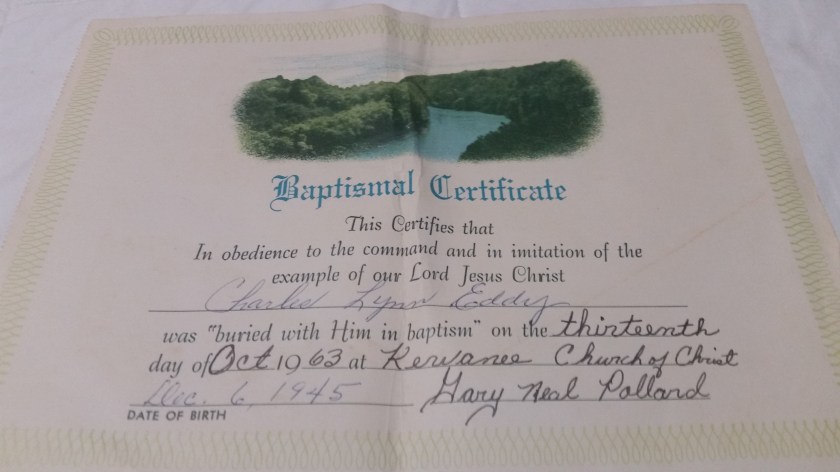
Recently, a young woman present to hear me speak in Kentucky asked me if I was related to a “Neal Pollard” who preached in Missouri in the 1960s. She had just attended her father’s funeral, and in going through his things after his death she found his baptismal certificate. I was elated to hear these details. Her dad and his mother, her grandmother, were baptized on October 13, 1963, by a young Freed-Hardeman student. This young man who was baptized would go on to serve for many years as an elder in the Lord’s church. Later that night, I called my dad and found out that Charles Eddy was one of 15 people who was baptized when he preached his “tryout” sermon at Kewanee. He had only preached four times in his life and this was his only sermon at that point. It was on the judgment and entitled, “What Will The End Be?” He had no idea what had happened with any of these men and women he baptized when only 19 years old. That was 55 years ago.

I have seen my dad go through some trials as a gospel preacher. There have even been times when he has been mistreated, but he has faithfully preached the gospel for well over half a century. In that time, he has done countless Bible studies, counseled Christians and non-Christians over literally tens of thousands of hours, ministered to young and old, healthy and sick, preached “in season and out of season” (2 Tim. 4:2) and even occasionally “endured hardship” while fulfilling his ministry (2 Tim. 4:5). He is a man of great faith and prayer, but I’ve seen him discouraged. He has wondered if his efforts mattered very much. That is often a side-effect of service.  But, I reveled to hear his excitement as we relived that memorable day and talked about that first work–of course, he was hired after having 15 baptisms in his “tryout” sermon! Dad also has done local work in Tennessee, Kentucky, Mississippi, West Virginia, North Carolina, and Georgia for those five-plus decades. Now that he’s retired, he still preaches every week for the church in Andrews, North Carolina. At 74-years-old, he’s still studying with and baptizing people and helping to build the faith of all different kinds of people. My dad has always been very evangelistic, but I don’t know how many have been baptized under the influence of his preaching. But, he’s also helped so many stay faithful and encouraged their growth and development. Occasionally, I still get to hear from them in person or through social media.

There are so many men through the years who have labored, like my dad, in anonymity–not considered “big names in the brotherhood.” Yet, many, many people will be in heaven because of their work. May every one, including but not limited to preachers, be encouraged in doing the Lord’s great work!  “But as for you, brethren, do not grow weary of doing good” (2 Th. 3:13).

20180805_213935.jpg
The first of many, many times my dad would fill out one of these. 

Teachers’ Aids

Neal Pollard

Several of our classes have assistants to the Bible class teacher.  She (or perhaps in select cases “he”) serves in a support role, helping students do handwork, find Bible verses, or occasionally keep order.  These are vital roles, and often a teacher’s aid later actually becomes a teacher.  Teachers’ aids are part of a great team and education system that benefits everyone in the classroom.

There is a constant, pressing need for more teachers’ aids.  I don’t mean in the actual classroom during the “Bible class hour.”  These aids are needed Sunday afternoons, late Wednesdays, Saturday afternoons, and/or opportune moments between these times.  These aids have even more power than those helping the teacher in the classroom.  They are the parents and care-givers of the students.  There are several ways they can “aid” the teachers who put in hours of preparation time and tons of energy and emotion into the task of teaching.

Aid teachers by making sure your children do their homework.  Most teachers give homework, memory work or activity sheets.  This is a vital supplement to the actual lesson taught in class.  When children come to class with their homework done, teachers are elated and made to feel that their efforts are appreciated.  They feel that their students take the class as seriously as they do.

Aid teachers by asking about what they have learned.  Ask your children what they talked about in class that day.  Ask them to review as much as they can.  Ask them what they learned and how they can make application from the class.  What better topic of conversation can parents and children discuss on the way home from services?

Aid teachers by making sure they feel appreciated.  One way to do this is by making sure you practice the first two suggestions.  However, having the child send a thank you note or by personally thanking your child’s teacher, you are aiding through the means of encouragement.  Everyone likes to feel appreciated.  Teachers are no different.

The qualifications are simple enough.  To be this type of teacher’s aid, simply do all you can to partner with the efforts of your children’s teachers.  Your child, your home, and your child’s teacher all will be blessed by it.

teacher-talking-with-students

Encourage!

Neal Pollard

Steven Covey has said, “Treat a man as he is and he will remain as he is. Treat a man as he can and should be and he will become as he can and should be.” There is great wisdom and truth in that. Encouragement requires unselfishness and thoughtfulness. It requires our looking at the other person and empathizing with their circumstances. It requires a genuine love, care, and concern. The interesting thing is that it does not have to cost anything, take much time, or demand a lot of energy. But, oh the benefit it gives to one who greatly needs it!

Such vital people as Joshua (1:38), David (1 Sam. 23:16), Hezekiah (2 Kings 19), the priests during Josiah’s reign (2 Chron. 35:2), the sons of Israel who returned from exile (Ezra 6:22), Darius the Mede (Dan. 11:1), the Christians in Syrian Antioch (Acts 11:23; 15:32), the brethren at Philippi (Acts 16:40), and Paul (Acts 18:27) are recorded in the Bible as having received it. Judges, kings, priests, children of God, Christians, apostles, and even those who were not in a covenant relationship with God all needed and benefited from receiving encouragement. That tells me that everyone I meet could use whatever encouragement I can give.

So, what can I do to encourage the people I encounter today?

  • Express genuine gratitude to someone for something he or she specifically does or demonstrates.
  • Pay someone an unexpected compliment.
  • Tell someone’s superior how much you appreciate their work, service, etc.
  • Do a task or favor for someone who seems stressed or depressed.
  • Look someone in the eye and sincerely ask them how they are doing.
  • Pay attention to one who may ordinarily labor anonymously (parking attendant, security officer, door greeter, janitor, etc.).
  • Show interest in a co-worker or employee who seems lonely, discouraged, or is new.
  • Write a kind note to someone else at church (for extra credit, let it be someone you do not know well), to a preacher you may or may not know who you appreciate, or to an acquaintance from your town or neighborhood.
  • Smile and wave at a little child or an elderly person you come across.

Challenge yourself to find additional ways and people you can encourage. Make it more than a daily dare. Make it an every day effort. You cannot know the full, positive impact you will have and the social, emotional, and even spiritual revolution you can begin in your home, your congregation, and your community. Maybe you, too, can earn a nickname like Barnabas had, and be known as a Son or Daughter of Encouragement (cf. Acts 4:36)! Have you given someone a shot of Vitamin E today? What are you waiting for?

encouragement-600x340


My Heroes Have Always Been Preachers

Neal Pollard

I got to walk through the Aigne-Marne World War I American Cemetery east of Paris, France, in the Spring of 2006. It was dedicated in 1923 by an army general who said, “Now and then, a veteran will come here to live again the brave days of that distant June. Our countrymen will come here in hours of depression and even of failure, and take new courage from this shrine of great deeds.” 100 years later, memories have faded and fewer go there for inspiration. But soldiers, as well as policemen, firefighters, and doctors, are role models of bravery, sacrifice, and commitment that make great heroes.

My heroes have always been preachers, and I appreciate the depth of understanding I’ve gained from them. I’ve been motivated to live closer to Christ because of their preaching. Earthly memorials fade with time, but the value of good Bible teaching only grows with the passing of time. We must always measure what every preacher says by the Word of God and never blindly accept something just because someone we admire is the speaker (cf. Acts 17:11). But with that in mind, you can learn so much from older gospel preachers.

LISTEN TO THEIR SERMONS. Many old audio sermons are available online. Try wsoj.net, thepreachersvault.podbean.com, schwegler.us, housetohouse.com, pioneerpreachers.com, and therestorationmovement.com. There, you’ll find sermons of preachers who were much older when I was a boy and teenager, like V.P. Black, Franklin Camp, Roy Lanier, Sr., Bobby Duncan, and Wendell Winkler. There are also sermons from men who died before many of us were born, like N.B. Hardeman, B.C. Goodpasture, G.C. Brewer, and Marshall Keeble. These men were from a time when the church was experiencing incredible growth and when gospel preaching emphasized Bible doctrines and fundamentals. It’s a glimpse into church history from the voices of men who helped make it. Some of them baptized thousands and established many congregations.

READ THEIR BOOKS. I do not refer just the preachers from another time period, but those today, too. Those who have put much study into a topic of Bible book can bless you life and relationship with God. Read church history biographies, topical studies, sermon books, debate books, and the like.

HEAR THEM LIVE. I just ordered a set of DVDs from the 1988 Faulkner University lectureship. Though I was there live as an 18-year-old freshman, I am looking forward to reliving those wonderful days. I heard Franklin Camp, Hugo McCord, Leroy Brownlow, George DeHoff, Winfred Clark, Rex Turner, Sr., and others. My parents carried us to gospel meetings where I got to hear great preachers who have long since died. We still have that opportunity today through gospel meetings, workshops, seminars, and lectureships. We need to value this treasure in “earthen vessels” (2 Cor. 4:7).

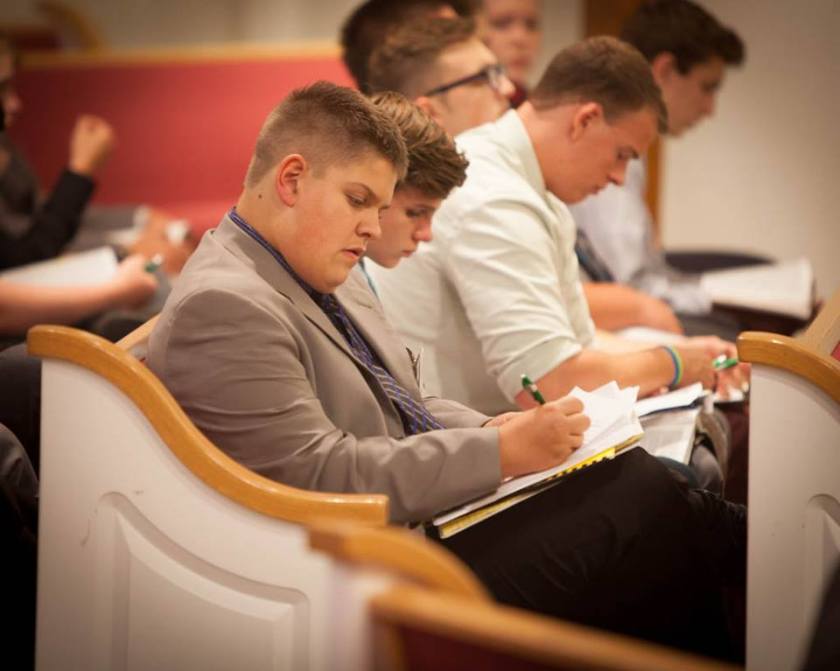
SPEND TIME WITH THEM. I have directed Future Preachers Training Camp since 2007. One of my goals for these teen boys is to allow them to see preachers out of the pulpit. Their teachers and counselors are mostly preachers. The campers find out we like sports, video games, listen to some of the same music, and go through many of the same kinds of things. We are ordinary men who sincerely care about them. Many preachers are interested in what’s going on in your life.

I feel I could have done many other things in life, but if I had it to do over again, I’d still be a preacher. That’s thanks in large part to the preachers I’ve known in my life. Take time to get to know preachers. It will encourage them, but it may just encourage you, too!

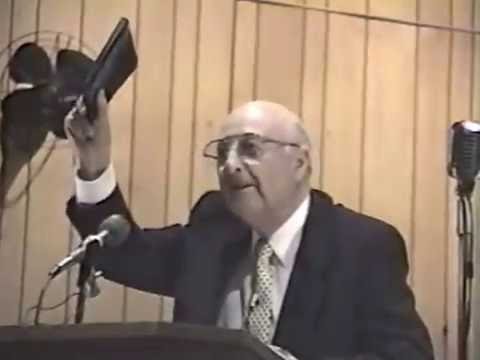
hqdefault
Perry Cotham in a 1989 debate in his “younger years” (77 years old). He was 101 when he died in 2013.

Embracing The Struggler

Neal Pollard

So much is said about the deficiencies of youth and young adults in our current culture. While every generation has its shortcomings, I have observed a hopeful trend. Perhaps it rests on the faulty foundations of political correctness and relativism, but young people today seem much more prone to accept and nurture those who have discernible difficulties like handicaps, mental or physical challenges, or social limitations.

Another way it shows up, specifically in the church, is the way they rally around those who are spiritually broken or in need. When a teenager or young adult responds to the invitation, watch how their peers flock to their side to show their support. This beautiful, tangible act is reflective of the father in the parable of the Prodigal Son, and it is a trait that the father so wanted from the older brother (cf. Luke 15:20,31-32). It looks a lot like the tender goodbye between Paul and the elders in Acts 20:37.

This willingness to reach out and comfort one another is a supremely biblical way of interacting within the family of God. 1 Thessalonians 5:11 says, “Therefore encourage one another and build up one another, just as you are also doing.”  God calls His people to have that kind of nurturing spirit. When we see those who are physically hurting, we should respond (Mat. 25:35-36; 1 Jn. 3:17). When we see those who are emotionally hurting, we should respond (Rom. 12:15). When we see those who are spiritually hurting, we should respond (Gal. 6:1-2; Jas. 5:19-20). The response should be more than token and certainly should not be heartless and surface. It should not be shown with favoritism, but to everyone who is in need of it.

This warm and loving response may not come as naturally to some of us who are older, but oh how crucial it is that we stretch ourselves to do it. Embracing a sinner does not mean embracing a sin. Let us discipline ourselves to see the difference. Hear the words of the Hebrews 12:12-13: “Therefore, strengthen the hands that are weak and the knees that are feeble, and make straight paths for your feet, so that the limb which is lame may not be put out of joint, but rather be healed.”

13407188_10209411714315519_8514604783791013955_n

Not Enough Room On A Short Pew

Neal Pollard

I witnessed something beautiful last night. A young man responded to the invitation and I was amazed by an outpouring of love and support shown by so many of his spiritual family. At least a dozen people, young men and young women as well as older men and women, came forward, too. They were not responding to the invitation to confess sin, but responding to this young man’s response. But there was room for about five on that short pew.  The rest of them either stood nearby or sat on adjoining pews.  They just wanted to be there for their friend and brother.

I could not help but think about what a beautiful display of family that was!  This young man was hurting and struggling. It takes a lot of courage to admit wrong, to ask for help, and to do so publicly. It is obvious that this congregation has concluded that no one should ever have to do that alone.

It is not the only way to do this, but it is definitely one way to bear one another’s burdens (Gal. 6:2), encourage and build up one another (1 Th. 5:11), provide edification according to the need of the moment (cf. Eph. 4:29), to bear the weaknesses of those without strength (Rom. 15:1), and to strengthen the hands that are weak and the knees that are feeble (Heb. 12:12). Think about what occurs with such an overwhelming outpouring of comfort! It tells the one who has come forward that they are special, important, and that they matter. It treats their problem(s) as most serious. It makes a statement about how they are seen, as a vital member of the body.

What would happen if every time anyone—a middle-aged man, an elderly widow, a struggling divorcee, a new member, a deacon, elder, or preacher, a teen, or any other sub-classification—publicly responded, they were met with such encouragement and consolation? Wouldn’t we be reflecting the heart of the Prodigal Son’s father in Luke 15, who ran to meet the boy who’d come home? Please consider this the next time someone publicly responds. Don’t worry what others may think of you. The one who responded didn’t worry about it.  Don’t stop to ask what it might look like. That broken man, woman, boy, or girl didn’t. If we’re going to err, let’s err on the side of charity and not severity! The church should ever seek ways to create a culture of compassion!

Remember the words of Paul: “So, as those who have been chosen of God, holy and beloved, put on a heart of compassion, kindness, humility, gentleness and patience; bearing with one another, and forgiving each other, whoever has a complaint against anyone; just as the Lord forgave you, so also should you” (Col. 3:12-13).

DCIM100MEDIA

No Fans?

Neal Pollard

Baltimore was the host of history yesterday.  Never, in nearly 150 years of professional baseball in America, has a regular season baseball game between two Major League teams been closed to the public.  I estimated the crowd inside Camden Yard to have been exactly zero fans in the stands, breaking Baltimore’s old record-low attendance of 655 on August 17, 1972, also against the White Sox.  There were fans behind the stadium gates in left-field and a small group gathered on the balcony of the Baltimore Hilton yesterday who could somewhat see the action, but their reaction as the home team won was muffled and faint as far as the players were concerned. The game was played this way because of the ongoing Baltimore riots, for the safety of fans and players.  The latter, when interviewed, talked about how eery and bizarre it was to play a game in front of no fans.

While we could chase the political and cultural rabbits stirred by the fact of those teams playing that game yesterday, let’s think about the players.  How hard is it to concentrate when you are on the field and can hear the sportswriters typing or the two scouts in the stands talking?  What’s it like to have success at the plate or on the mound and the appreciation be the deafening silence of the empty seats?  These guys make a whole lot of money, but, as Chris Davis said after the game, “When you’re rounding the bases, and the only cheers you hear were from outside the stadium, it’s a weird feeling. I’ll take any home run I can get at any time I can get it, but it’s definitely more fun when there are fans in the stands” (info via Dan Connolly, The Baltimore Sun online, 4/30/15, and baseball-almanac.com).  I think any of us could imagine how surreal and distracting that would be.

We are not running the Christian race to glorify self, for earthly accolades and recognition.  In fact, Jesus condemns such an approach to religion in Matthew six.  Yet, God knows how we are made, that we thrive on encouragement.  He tells wavering saints in Hebrews about the “great cloud of witnesses surrounding us” (12:1).  He mentions the crowd in the midst of the metaphor of running the race. While we cannot hear or see those referenced there, we can be audible and visible support for each other—strengthening weak hands, feeble knees, and heal others (12:12-13).  We must cheer each other on and “encourage one another and build up one another” (1 Thess. 5:11).  The world will not applaud us for standing up for what’s right and living the way God instructs. But, we have each other.  It’s not the size of the crowd, but the vociferousness of the cheering, that will make the difference.  Let’s be fans of one another, today and every day.

HE WAS COACHING ON ONE KNEE

Neal Pollard

What I’m about to do is painful and very nearly contrary to my nature.  It involves praising something about New England Patriots’ head coach Bill Bellichick, he of “Spy Gate” and “Deflate-Gate” infamy.  Yet, something he was witnessed doing on the sidelines during the late stages of Super Bowl XLIX gives great insight into why he has coached a record-tying four Super Bowl champions.  While Pete Carroll was on the other sideline, commendably patting players on the back and showing excitement and energy, Bellichick was seen on the other side of the field down on a knee speaking with players on both the offense and the defense.  For whatever we want to say about what we don’t like about him, he’s renowned within the team as a strict disciplinarian that even makes players nervous.  Without negotiation, he expects everyone to give their best.  And, he expects it done without fanfare, a Wall Street Journal article showing this with a memorable Bellichick quote: “Playing well is playing well. You can break it down into 17,000 adjectives, but it’s doing your job” (Kinkhabwala, 1/15/11).  But, when the Pats were down by 10 and panic might have overtaken him, he was calmly, coolly sharing an expectation or going over a game-plan to overcome the adversity.

So, I still don’t have to like him or the Patriots, but I appreciate that.

Leadership is about so many different, vital qualities. Energy and effervescence, passion and praise all can play a part.  However, there is hardly a substitute for a mentor, one who is serious, thoughtful, and caring enough to pull someone aside and give him or her individual attention.  The word usually translated “exhort” in the New Testament is from a Greek word which means “calling to,” “appeal to and earnestly request,” or “call to one’s side” (Kittel, np, Louw, np, and BDAG, 764).  Who doesn’t appreciate the loving, caring approach of an elder or other spiritual leaders, whether preachers, older members, deacons, and the like, who guide us and help us with biblical understanding, moral dilemmas, and ethical quandaries. They have that timely word when we are discouraged, that nugget of wisdom that seems meant for that moment.

I think we all desire leaders who will get down on one knee with us, as it were.  Leaders like these are who Paul had in mind when he wrote, “But we request of you, brethren, that you appreciate those who diligently labor among you, and have charge over you in the Lord and give you instruction, and that you esteem them very highly in love because of their work. Live in peace with one another” (1 Th. 5:12-13).   Thank God for great leaders who, with weighty responsibilities on many fronts, take a moment to come alongside us with encouragement and insight.

An Up And Comer In A Different Profession

Neal Pollard

How many human cannonballs at the circus can call themselves “Oxford-trained”?  30-year-old Gary Stocker, with law degree in tow, left a six figure income working as an academic law writer and legal recruitment officer and “ran away with Chaplin’s Circus” (Lizzy Buchan, Cambridge News Online, 7/11/14).  He actually is starting up the circus with a buddy he worked with as a street performer as a teenager, and he actually had continuing various performances while a student at the prestigious British university.  While many would be baffled to think of one leaving a comfortable, white-collar occupation for one that has been for the more common, blue-collar person since ancient Roman times, Stocker is choosing what he loves over what others thought more suitable for him.

A thought occurred to me as a new class is about to embark on their studies at the Bear Valley Bible Institute next week.  There is an analogy here, as men come to us not only from High School but more often from medical, business, agricultural, mechanical, military, law enforcement, and other professions. For 50 years, men have been leaving jobs, often well-paying, respectable ones, to pursue “the foolishness of preaching” (cf. 1 Co. 1:18-21).  Some, even close friends, brethren, and family, may question their thinking for undertaking such a pursuit and even offer resistance and dissuasion.  When they graduate and go into full-time ministry, they may never regain the income or have the notoriety they would have enjoyed in the secular world.  However, it can be argued they will be entering the most noble, worthwhile profession there is.  To work with the people of God and to bring the lost to God provides endless, invigorating opportunity and excitement. Each day is new, exciting, and rewarding.  Though it has its pressures, disappointments, and trials, it is a work that is easy to love!

There are men who may be successfully toiling in some other field, but they leave it for a love of preaching.  Thank God for these men.  Let us encourage them and ever have a hand in helping these “up and comers” in their new profession!

HAVING CONFIDENCE IN YOU


Neal Pollard
“What did he mean by that?” “Those elders never get it right!” “You know our preacher. What else would you expect?” “That deacon is destined to fail.” “Those people at church!” “They don’t like me.”
What would it be like to work with a congregation that had people who openly flaunted their sexual immorality, that was divisive, that even was guilty of worshiping pagan idols, that had members who were filled with sinful pride and arrogance, whose wealthy members neglected and mistreated the poor members, and who saw spiritual works and involvement as a competition? That was not a nightmare for the apostle Paul. It was a reality. The church was in Corinth, and he wrote multiple letters to them. The first one preserved by God in the Bible addressed a variety of problems including the above-mentioned ones. Then, in the epistle we know as 2 Corinthians, Paul conducts a follow up in which he commends their penitent spirit and encourages them to find comfort in Christ despite trials. No fewer than four times, Paul speaks of having confidence in them. As he viewed their reformation of character, he said, “I have confidence in you” (2 Cor. 2:3). Later, he says, “Great is my confidence in you” (2 Cor. 7:4). A few verses later, he says, “I rejoice that in everything I have confidence in you” (2 Cor. 7:16). He even relates Titus’ “great confidence” in Corinth (2 Cor. 8:22).
Paul is often credited for his master psychology, his knowledge of how to treat the brethren to “get the most” out of them. Yet, if Paul was this disingenuous manipulator, he would not draw heaven’s praise nor would he have found sustained success. The right conclusion is that Paul really did have confidence in his brethren. That does not mean that he thought they would never let him down or that he was gullible and naïve. It did not mean that he did not reprove and rebuke in appropriate measures. But, it did mean that Paul had faith in the average Christian’s ability to know and do “the right thing.”
Every church has its stumbling blocks, but no congregation could survive for any length of time made up entirely of them. Most congregations have a healthy number of building blocks and we do well to address them as Paul did Corinth. Do we have faith in each other? Or do we assume the worst motives and intentions on the part of others? Not only is that somewhat paranoid and miserable, but it is quite un-Paul-like. Let us have confidence in the other fellow. And let us strive to be worthy of others’ confidence in us!