Lessons From Adversity (1): Let Go and Let God

Friday’s Column: Supplemental Strength

brent 2020

Brent Pollard

We find God not in an anxious mind, but a still heart. God exhorts us in Psalm 46.10a, “Be still, and know that I am God” (KJV). Contextually, this statement occurs amid the possibility of much turmoil. We admit sometimes we must move forward to receive God’s deliverance, as the Israelites did when pressed by pharaoh’s army at the Red Sea (Exodus 14.13-16). Yet, there are also times when we can do nothing. For those times, we’re to be still.


What do we mean by “still?” Without trying to sound like a Hebrew scholar which I’m not, allow me to suggest by using this word God is saying, “Drop your arms!” In other words, quit fighting or putting up a resistance. The New American Standard states in Psalm 46.10a we are to “cease striving.” Each of us reach a point in our life when the time for our struggle ends and we must enter the vestibule of God’s Providence.


What do we do, for example, when the doctor says we have cancer? The Kubler-Ross model of grief puts anger as third on its list of seven stages. We all experience grief differently, so anger may come either sooner or later for you than at stage three. However, I can tell you from experience, anger is something you feel dealing with cancer. “Why me? Why not this sinner over here? I never smoked. I never drank. I’ve been chaste.” Yet, God says, “Be still, and know that I am God.” He has shown us through His Word, His grace is enough (2 Corinthians 12.8-10). And for any lingering anxiety, there’s prayer. What does prayer do? It grants peace we cannot even comprehend (Philippians 4.6-7).


Though an entire lesson can be given about Providence, let me briefly suggest why it’s more awesome than the miracles for which people beg when they hear “cancer.” For a miracle, God instantaneously suspends natural law, and directly intervenes. It’s amazing, I admit. It shows His power in a way one cannot ignore (e.g. parting the Red Sea). Yet, it’s also not the thing to which He must resort to heal one’s body of a disease like cancer. His Providence is there to use the immune system which He placed within us. Providence is quiet. It requires that we be still to observe it. When we do, we see God in a thousand different things. Like a domino stacking champion, God aligns the bits and pieces that, when struck, fall into place revealing the beautiful mosaic He planned for us all along.


The more still you make yourself throughout life, the more you see His Providence. Through prayer comes peace, yes, but so, too, the wisdom to know when to move and when to be still (James 1.4-6). So, let go and let God. Live faithfully and trust Him do the rest.

1930543_24646795921_6267_n
view from Pike’s Peak

After Cuts Become Scars

Neal Pollard

David was broken and battered by sin. He would feel its effects from his public life to his private life for the rest of his life. In the aftermath of his actions with Bathsheba and the subsequent cover-up, the wounds of sin left visible scars. Nathan’s accusing words perhaps ringing in his ears, he sits down to pen by inspiration the haunting, but hopeful, 51st Psalm. We often dwell more on the first part, the multifaceted description of sin and the more beautiful pictures of forgiveness. But, to me, the most beautiful part of the psalm is when David starts using the word “then.”

Satan would love for sin to defeat us. He would like the guilt to overwhelm us, to keep us from the restoration David longs for here. David is speaking prospectively, asking for a clean heart, renewed spirit, spiritual fellowship, joy and sustenance from God. But, he asks for it for a purpose. In doing so, he shows us what God wants to do with us and for us after our “cuts” become “scars.”

After the cuts become scars…

REACH OUT TO THE LOST (Psalm 51:13). On the other side of repentance, David was anxious to help others reeling from their spiritual wounds. As we overcome through God’s help, we can be a tool in His hand to relate to and rescue others struggling just like we did. It would be far better to have never gone down the road of sin, but having truly come back we can understand the desperate, dark place transgressors are walking. 

BE A FAITHFUL WORSHIPPER (Psalm 51:14). David, the master musician, had lost his song in the far country. He yearned for joyful song. Worship loses its power and purity in our lives when we are living in darkness. We feel hypocritical and empty, just going through the motions. But, back in His glorious light, we can experience that lifted up feeling once more. David shows us the blessing of restoration, a spirit renewed to enjoy further renewal in faithful worship.

GIVE GOD SACRIFICES (Psalm 51:15-17). David mentions the sacrifice of praise, a broken spirit, a broken and a contrite heart. It is obvious, from context, that these sacrifices would reveal themselves in his service to God and to others. This is not merely guilt-driven service, an effort to make amends for the evil influence of his sin. Having been made whole, David has a clarity of purpose that appreciates better what God wants from him. We can be fruitful and useful to Him, scars and all. 

ACCEPT GOD’S DELIGHT (Psalm 51:18-19). How many times did David relive those moments from the rooftop to the prophet’s visit? How often did he wish he could just go back and undo it all? How long did he wrestle with accepting God’s forgiveness and wondering if God could take him back? He shows an appreciation for the prospect of God’s delight. He rightly feels responsible for others, and he wants to lead them to do what’s right. But, I love what he anticipates. He knows God will be delighted with the offering.  Did you know that? Did you know that God can delight in you again, when you bring him your sin-scarred life and offer your righteous sacrifices? He doesn’t want to discard you. He wants to delight in you!

It must have continued to be hard for David. He had reminders everywhere. He could not undo his past. But, he did the right thing. Having dealt with his past, he focused on the present and looked to the future. That’s what God wants us to do after our cuts become scars!

people-2566201_960_720

Reflections On Worship, From A-Z

Neal Pollard

How great to say with David, “I was glad when they said to me, “Let us go to the house of the Lord” (Psalm 122:1).  Another psalm also urges, “Come, let us worship and bow down, Let us kneel before the Lord our Maker” (95:6).  Both verses are the attitude of a redeemed, transformed heart.  Worship is not a substitute for daily living, and we may find ourselves primarily or solely focused on assembling to the neglect of Christian duty or evangelism. But, though those be true, we cannot lose sight of the importance of fulfilling God’s command for His people to faithfully worship Him (John 4:24; Heb. 10:24ff).  More than that, as recipients of His grace, we will want to come before Him with what He wants, giving Him our best from an enthusiastic heart. What can help us do that?

A–TTENDANCE (It puts us in the right position–for ourselves, each other, and God)
B–
RETHREN (There’s a community, communion, and camaraderie in worship)
C–
HILDREN (Is there anything sweeter than seeing and hearing them worship?)
D–
ELIVERANCE (Delivered for a few moments from the profane, delivered for a lifetime by the Prince of Peace)
E–
FFORT (Hardwork, dedication, and preparation truly pay off!)
F–
AITHFULNESS (Obedience, consistency, and holiness fuels acceptable worship)
G–
OSPEL (Bible-centered worship highlights the best news of all time)
H–
EAVEN (Worship better prepares us for it, reminds us of it, and gives us a foretaste of it)
I–
NTEREST (See “attendance” and “faithfulness”; At some level, you can’t fake this)
J–
ESUS (We lift Him up, obey Him, and center everything around Him in every service)
K–
NOWLEDGE (We seek to know God more and understand Him better, in part, by worship)
L–
ISTENING (To God, through His Word, and each other, through the various acts)
M–
EMORIES (Young or old, each occasion provides an opportunity to make more of them)
N–
OTHING (What’s more special, important, fulfilling, and encouraging)
O–
PPORTUNITY (Different places and times have been forbidden from what we get to do multiple times per week)
P–
ARTICIPATION (Not just in the door and in a seat, but actively taking part)
Q–
UALITY (Not measured by voice quality or dynamic speech, but the very best we can with what we bring)
R–
ESPONSE (Each time we assemble to worship, we are responding to God and His gospel)
S–
ACRIFICE (You cannot properly define worship without it; It may be a sacrifice to come, but it must be an offering when you do)
T–
OGETHERNESS (Worship means fellowship and building our common bond)
U–
RGENCY (Feeling a pressing need to be here, and then to act on what we hear)
V–
ISITORS (These take note of how much worship means to us; They can see and sense it)
W–
ONDERFUL (God knew we needed worship, and that can touch us deeply)
X–RAY (Worship should lay our hearts bare and show us ourselves)
Y–OU (The presence of everyone, including you, spells the difference!)
Z–EAL (Passion and enthusiasm is observable, by others and, most of all, by God!)

Maybe we cannot fully grasp all of why God wants us worshipping Him, but He, as our Creator, knew we would need it to draw us closer to Him and each other. Let’s never let anything occupy a higher place in our hearts!

537893_378947542128289_990183257_n


THE NON-LITERARY PROPHETS: GAD

Neal Pollard

There are several prophets whose writings, by the inspiration of the Holy Spirit, make up part of the Old Testament canon. We often refer to them as the Major Prophets (Isaiah-Daniel) and the Minor Prophets (Hosea-Malachi). In addition, there is a biblical sense in which the remaining Old Testament writers would be rightly called prophets (from Moses to Samuel, but also including those who lived thereafter as they wrote by inspiration). Then, there are prophets whose labors are recorded by these writing prophets. Some we know very well: Elijah, Elisha, and Micaiah, for example. But, there are others whose works either take up less space in the inspired canon or whose work is lesser known. Let us look more deeply at some of these other, more unsung heroes, starting with the prophet Gad.

His Background

Nothing is said about where Gad is from, but it’s an educated guess to say it might be the tribe of Gad or perhaps he was from the Valley of Gad (cf. 2 Sam. 24:5). However, without that fact disclosed, that’s a mere conjecture. We do not know when he began his work as prophet, but the first mention of him is during Saul’s relentless hunt for David (1 Sam. 22:5). 

His Service

He is referred to as “David’s seer,” sometimes alongside Nathan his prophet and Samuel his seer (1 Chron. 29:29; 2 Chron. 29:25). He was quite a versatile man of God, a fact succinctly and well put by J.R. Dummalow: “He became the king’s seer after David was king (2S 24:11); he rebuked David for the sin of numbering Israel; and after David’s death, he wrote a history of that monarch’s reign (1C 29:29)” (193). So, he had the courage to rebuke the king when it was warranted, though his loyalty to him seems very clear. He appears to have been God’s man most of all.

His Value

  • His work was respected. When he told David to leave the stronghold, David did it (1 Sam. 22:5). David pleaded with Gad after the king had sinned (2 Sam. 24:14). He listened to Gad’s instructions for how to show fruits of repentance (2 Sam. 24:18ff). The respect was not derived from his wealth, power, education, looks, or worldly influence. The text does not even mention them. It was the work and the way Gad conducted it. So, the respect people have for us should come from the same place it did for Gad. We shouldn’t have to command or demand it. As we follow God faithfully, others will follow us (cf. 1 Cor. 11:1). 
  • His work was God-ordained. Gad’s authority derived from its source. He spoke in the name of the Lord (1 Chron. 21:19). He spoke with a “thus says the Lord” (1 Chron. 21:11). He spoke, “just as the Lord had commanded” (2 Sam. 24:19). God’s messengers’ clout and credibility is intrinsically connected to its God-ordained nature!
  • His work was versatile. He helped to strengthen the worship of God’s people (2 Chron. 29:25). He preached (2 Sam. 24:19). He ministered (2 Sam. 24:11ff). He wrote (1 Chron. 29:29). He was multi-talented, and he used his resources to God’s glory. That’s the challenge for us today (cf. Mat. 25:14-30), to use all God gives us to promote His work.
luca-giordano-king-david-reproached-by-the-prophet-gad
Oil painting of the depiction of Gad addressing David (Luca Giordano, Italian, 1634-1705)

Learning To Pray From A Man After God’s Own Heart

Neal Pollard

When the disciples asked Jesus to teach them to pray (Luke 11:1), they were asking the most qualified instructor. However, they had a good teacher from the background of their own heritage in David. The book of Psalms is at times a songbook and at other times a prayer journal. Numerous examples of David’s prayers are contained in this beautiful book of Old Testament poetry. In Psalm 141, for example, we have several characteristics of prayer from a man after God’s own heart (cf. Acts 13:22).

First, David’s prayer was urgent (Psalm 141:1). He writes, “Lord, I cry out to You; make haste to me!” David saw prayer, not as a last resort, but as a first retreat. Since David knew God was able to help, he wasted no time in bringing matters into God’s own hands.

Then, David’s prayer was intense (Psalm 141:1b). He continues, “Give ear to my voice when I cry out to You.” You will not hear rote memorization of prayers or lackadaisical lethargy in David’s prayer. David cried out to God. He is pleading with God. These are indicators of a fervent prayer life, which God includes as typical of righteous people of prayer (James 5:16).

Further, David’s prayer was sincere (Psalm 141:2). He treated his prayers as if they were actually offerings or sacrifices. He says, “Let my prayers be set before You as incense, the lifting up of my hands as the evening sacrifice.” He was willing to lay open his prayers to the All-Seeing eye for His scrutiny. The entirety of this psalm reflects no superficial piety or pretentiousness. David simply laid his heart before God.

David put obvious trust and hope in the power of prayer. He had confidence in God’s ability and he had cognizance of his own dependence upon God’s ability. Never wait to turn to prayer until the need is desperate. The man after God’s own heart made prayer a staple in his religious diet. So should we.

pray-2558490_960_720

Why We Need The Word

Neal Pollard

Many know that Psalm 119 is the greatest, inspired tribute to the Word of God known to man. 176 verses, eight verses under the heading of every Hebrew letter, grace these pages of our Bibles. All but a few verses mention some synonym for God’s Word. So many individual studies can be made of themes and thrusts in Psalm 119, but by reading it one discovers David giving many benefits or needs for studying the Bible. Consider what is no doubt an inexhaustible study.

  • To keep from sinning against God (11)
  • I am a stranger in the earth (19)
  • The influential can be against us at times (23)
  • Our soul often melts from heaviness (28)
  • To keep our eyes from worthless things (37)
  • To have an answer for him who reproaches us (42)
  • It causes hope (49)
  • For comfort in affliction (50, 76)
  • It causes righteous indignation (53)
  • It leads us to seek God’s favor with our whole heart (58)
  • It makes us choose better companions (63)
  • It brings good judgment and knowledge (66)
  • It prevents apostasy (67)
  • It makes us more attractive to the God-fearing (74)
  • That I may live (77, 93, etc.)
  • For revival (88)
  • For greater understanding (99)
  • To be upheld and safe (117)
  • To have a proper sense of self (125)
  • For a proper sense of values (128)
  • For proper emotional investment (136)
  • For righteous zeal (139)
  • For a proper sense of dependency (147)
  • It brings confidence (152)
  • It gives us the proper sentiment toward the world (158)
  • To develop a proper “praise life” (164)

psalm119

Zadok The Priest

Neal Pollard

Zadok the priest was neither an Anglican Church member or even British. Many associate his name with Handel’s 18th century coronation hymn, written first for King George II. But, he was a significant, if minor, Old Testament character. We learn at least four great lessons from his character, as revealed in Scripture.

  • He was a versatile servant of God. He is introduced as “a young man mighty of valor” (1 Chron. 12:28), but also as a priest of God (1 Chron. 15:11). Thus, he was handy in a fight while also helpful in reconciling men to God. What an example of a five or two talent man, able to serve God in more than one way. God has blessed most of us with the ability to do many things well. We should be motivated to use those skills for Him.
  • He was a respecter of God’s Word. His predecessor, Uzzah, disregarded God’s instructions for transporting the ark and paid for that with his life. Zadok was at the head of the list of priests tapped to do it the right way, according to God’s word (1 Chron. 15:11ff). Nothing we see after this does anything except strengthen the view that Zadok submitted to the divine will. What a legacy to leave, known as one who simply takes God at His word and strives to be obedient to it.
  • He was a loyal friend. When Absalom rebelled against King David, many in Israel aligned themselves with this usurping son. However, Zadok remained true to David (2 Sam. 15). David relied on him, with Abiathar, to keep tabs on the insurrection while ministering in Jerusalem. David knew he could count on Zadok. In the same way, Scripture praises such loyalty. David’s son penned that “A friend loves at all times, And a brother is born for adversity” (Prov. 17:17). We should be a friend others can count on at all times.
  • He was a good judge of character. Whether choosing to serve David over Absalom or Solomon over Adonijah, Zadok was an excellent discerner of the right choice. In both cases, these were the righteous and God-approved choices. Even Abiathar, who stood with David over Absalom, got it wrong when Adonijah tried to supplant God’s will concerning David’s rightful successor. For this reason, Zadok took his place alongside Samuel as the only priests to anoint a king during the United Kingdom period of Israel’s history (1 Kings 1:39). It was this event Handel coopted to write his coronation hymn. God had bright hopes for those who feared Him, that they would be able to “distinguish between the righteous and the wicked, between one who serves God and one who does not serve Him” (Mal. 3:18). That was Zadok, and it should be us–regarding preachers, elders, teachers, as well as every child of God we have dealings with. We must grow in our ability to be capable fruit inspectors (cf. Mat. 7:15-20; John 7:24).

Thank God for Bible characters who show us, with their lives, the way to please Him with ours. The times may, in some ways, be drastically different from when Zadok walked the earth. But, with the time God gives us, we would do well to imitate these traits of this priest of God remembering that God desires us to be faithful priests for Him today (cf. 1 Pet. 2:1-9).

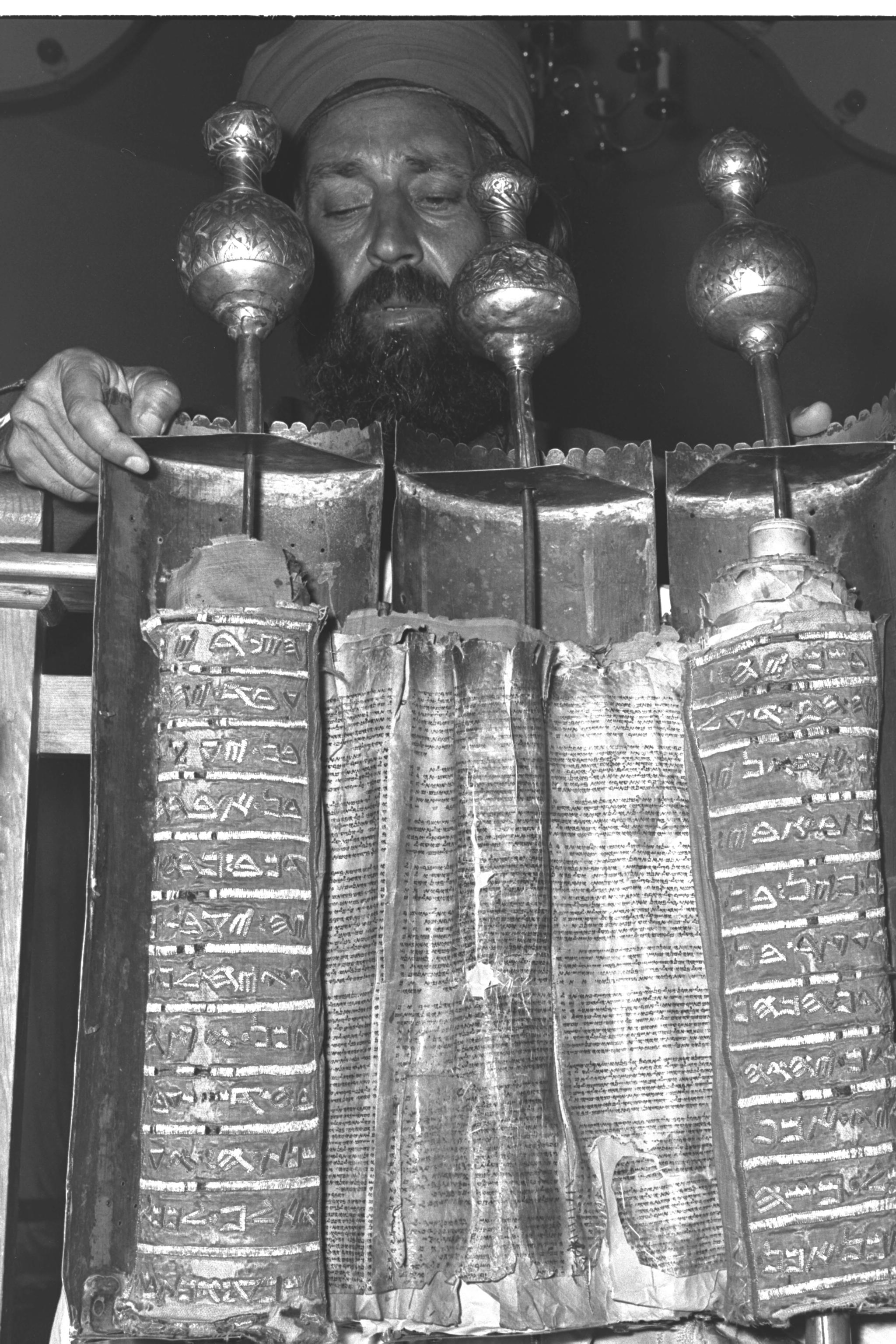
flickr_-_government_press_office_gpo_-_samaritan_priest_zadok_ben-avisha_hacohen

Tony Robbins And Proverbs Six

Neal Pollard

Perhaps you heard about the 30 “followers of motivational speaker Tony Robbins” who “were burned while walking on hot coals” in Dallas, Texas, over the weekend (nbcnews.com). Now, nearly 7,000 others were not injured, but when nearly three dozen were it became a national news story. The firewalk is “a symbolic experience that proves if you can make it through the fire, you can make it through anything” (ibid.).  But, there is a catch. Don’t run, have wet feet, or try to go across a firebed that is too long (the Guiness Book of World Records says the longest firewalk was just shy of 600 feet in Calgary in 2007).  No one seems to disagree that one cannot indefinitely walk on hot coals. God, who created fire and feet, moved Solomon to say, “Or can a man walk on hot coals and his feet not be scorched?” (Prov. 6:28).

This statement comes as part of Solomon’s warning about “the evil woman” and the “adulteress” (cf. 6:24).  He warns about her alluring beauty and ways (25), showing the consequences that one may miss when driven by lust rather than law: one is reduced (26), destroyed (32), wounded and disgraced (33), reproached (33), and repaid with revenge (34). One of Solomon’s two metaphors to depict adultery’s repercussions is feet being burned by walking on hot coals (the other is taking fire in his bosom and his clothes being burned).

Countless men and women have been deceived by the seemingly harmless effects of allowing attraction for someone other than their mate to grow in their hearts and minds. One may let admiration and attraction for this other person to take root in their hearts. Defenses are lowered and lines begin to be crossed. The thrill and excitement of the prospective relationship can come to eclipse rational thoughts, negative consequences, and the fallout in the lives of all the people affected. When David gazed at Bathsheba from his rooftop, he saw a beautiful, naked woman rather than murder, death, humiliation, dysfunction, loss of influence, and agonizing heartbreak. His unlawful desire for her prevented him from seeing past what he wanted in the moment.

God’s laws are immutable. One cannot flout them without the fruit that follows. So many who have crossed that line have desperately wished they could go back to the other side of that firebed and taken the righteous path. May each of us have the wisdom to see these kinds of things from God’s eyes, which are pure, right, and perfect. Realize that pursuing a person who is not your lawful mate is like playing with fire! Don’t get burned.

shoe-582851_960_720

THE MOANING OF A DOVE, THE GROWLING OF A LION

Neal Pollard

One of the more interesting Hebrew words in the Old Testament is the word translated “meditate” in passages such as Psalm 1:2.   הָגָה (“Haga”), most often found among the poets and prophets, has a wide range of meaning depending on derivation of the root word.  Elihu uses the word to speak of the “rumbling” of God’s voice (Job 37:2). Moses uses the word to speak of a “sigh” (Ps. 90:9). Isaiah uses the word to speak of the “moaning” of a dove (38:14) and “growling” of a lion (31:4). The occult mediums “whispered” and “muttered” their incantations (8:19) (Harris, et al, TWOT, 1999, n/p).  Yet, the word is often used to speak of a low voice within, pondering and rehearsing what God’s Word has to say and what it means.  This is how David and Joshua use the term in speaking of meditating day and night on God’s Word (cf. Jos. 1:8).  It is possible that in carefully considering God’s Word, the student would rehearse or mouth the words of God as they contemplated and looked into it.  One lexicography renders it “to read in an undertone” (Koehler, et al, HAL, 1999, n/p).

How one studies the Bible is very personal, but for it to have value and assist us in living the way God wants us to, there has to be a process in place that takes us beyond mere reading to comprehension and then on to application.  Meditation upon the Bible seems a vital part of this.  When is the last time in your personal Bible reading that you memorized, rehearsed, and meditated upon what you read that day?  Do you revisit in your mind what you read earlier, pondering meaning and relevance in your attempt to live as God wants you to live?  Have you found yourself returning to its truths again and again, convicting yourself of needed changes and improvements in your Christian walk?

Meditating upon God’s Word will build your reverence of it, your conviction that it as modern and relevant as today’s sunrise, and your view of it as the inspired, authoritative Word of God.  It will bind your mind and heart to the mind and heart of God.  It will help you elevate your thoughts and consider the bigger picture of eternity and not just the mundanity of earth.  It will have you singing with David, “Oh, how I love Your law! It is my meditation all the day” (Ps. 119:97).

PRAISE IDEAS FOR PRAYER

Neal Pollard

Prayer is a very personal exercise, a life built between an individual and God. Thus, these suggestions may of themselves feel intrusive or foreign to some.  However, through the years, I have heard many express some difficulty in knowing how to praise God or what to say in praise to Him when in prayer.  Leah, in naming Judah, was the first to articulate the idea (through his name), “I will praise” (Gen. 29:35).  Moses resolved the same at the head of his song in Exodus 15:2.  The remaining six times the phrase appears, the psalmist pens the words (Ps. 22:22; 35:18; 69:30; 109:30; 145:2; 146:2).  Twice in the Psalms we learn that “praise is becoming” (33:1; 147:1). In fact, it makes little sense to make the case for the importance of praise to anyone who professes a belief in God and has seen His blessings and assistance in his or her life.

Having said all of that, what are some specific things one can praise God for in the exercise of prayer?

  • Praise Him for His attributes (eternality, limitlessness, superlativeness).
  • Praise Him for the wonders of creation (try praying under a starry sky, as the sun is rising, or out in the midst of nature’s beauty—words of praise will flow like water).
  • Praise Him for His blessings.
  • Praise Him for His sovereignty and superiority.
  • Praise Him for His promises.
  • Praise Him for His desire to have relationship with you.
  • Praise Him for His providence.
  • Praise Him for His plan of salvation, giving thought to its component parts.
  • Praise Him for the glorious future He has prepared for you.
  • Praise Him for the victorious work of Christ and the spiritual benefits that brings you.

Obviously, this is just a primer list of ideas.  Contemplate God, His nature, His work, His personality, and you will have an ever-growing, ever-changing, and ever-deepening “praise component” to your prayer life.  It is good to thank Him and petition Him, but take sufficient time to exalt Him by infusing your supplications with praise to Him!  As David urged Asaph and his relatives to proclaim, “For great is the Lord, and greatly to be praised” (1 Chr. 16:25a). Amen!

Neal's Phone_20140906_003

Gay Marriage, Miley Cyrus, Clive Bundy, School Shootings


Neal Pollard

The internet is such a great search tool.  Many, including Christians, use it on a daily basis to be informed, inspired, and intrigued. Yet, it seems to me in the years I have been blogging, and especially in the last year or two, that so many are most interested in provocative and salacious ideas.  Perhaps it is the same morbid curiosity that makes us rubberneck when driving past a wreck on the highway.  Yet, the metrics that indicates searches on my blog show a much greater interest in the political and social latest trends and topics than articles that are more straightforwardly biblical or doctrinal (i.e., grace, the judgment, worship, etc.).

Why are we so intrigued with marathon bombings, LGBT, missing airplanes, national tragedies, outrageous and outlandish behavior from athletes and celebrities, second amendment and other political and governmental topics, hot-button-issues in our brotherhood, or controversial topics?  Certainly, as we live in this world and particularly western culture, these are daily topics of conversation.  As we immerse ourselves in our technological tools (phones, tablets, computers), these are often the “trending topics.”

In our haste and zeal to slake our thirst for these things, let us be sure to also feed our souls on what will strengthen us and prepare us for the bigger fish we have to fry.  The blessed, righteous man is described as one “whose is in the law of the Lord, and in His law he meditates day and night” (Ps. 1:2).  That in no way means the righteous person is aloof and uninterested in his or her world, current events, and even popular icons of the age.  The key difference is on what he or she meditates upon and delights in.  What thrills and appeals to us more? What do we more actively pursue?

The answers to those questions are dependent upon the individual.  One can be both informed about the world and more interested in the Word.  However, may we each be cautioned about what proper balance is as well as where our greater interest lay.  What draws our attention and attracts us?  Let us be sure it is hunger and thirst for righteousness (Mat. 5:6) more than anything under the sun!