We can learn a lot about an epistle just by looking at its imperatives. An imperative is a command. Paul’s letters become especially clear when listing out the commands in them! There’s more to understanding a letter than this, but it’s a great place to start. For example, here are the imperatives in Colossians:
Follow Christ Only (2.6)
Do not Follow Man’s Traditions (2.8)
Don’t Let Anyone Force You into Traditions (2.16)
Live for What is Above (3.1)
Think Only about What is Above (3.2)
Kill Every Immoral Behavior You Have (3.5)
Throw Away Bad Behaviors (3.8)
Do not Lie to Each Other (3.9)
Adopt Godly Traits (3.12)
Always be Grateful (3.15)
Let Jesus’s Teachings Live in You (3.16)
Wives, Submit to Your Husbands (3.18)
Husbands, Love Your Wives (3.19)
Husbands, do not do Things that Make Your Wife Bitter (3.19)
Children, Submit to Your Parents (3.20)
Fathers, do not Harass Your Children to the Point of Exasperation (21)
Servants, Submit to Your Masters in Everything (22)
Servants, Act as Though You Work for God, not a Human Master (3.23)
Servants, Remember that You are a Slave for Christ First (3.24)
Masters, Remember that You Have a Master in the Sky (4.1)
Never Stop Praying (4.2)
Make Sure You Behave around People Who don’t Believe (4.5)
Say Hi to Everyone in Laodicea for Us (4.15)
Read This Letter to the Church in Laodicea (4.16)
Tell Archippus, “Do the Work God Gave You” (4.17)
Remember Me in Prison (4.18)
See? You can use the commands to make a simple outline of the letter and get a good idea of what’s going on! There’s a good chance I’ve missed a couple, so if y’all find an imperative that isn’t on this list, shoot it my way.
Very clearly seen in His ministry, Jesus believed that prayer worked. He realized the effectiveness and power of prayer. Because of this, He had an intimate relationship with the Father. Before He came to this earth, He was close to the Father. He refused to let His flesh separate Him from God. He had a desire to spend time with the Father.
Sometimes, our motivation to pray is put out because we doubt that our prayers will work or make a difference. I for one have gone through periods of time where I failed to pray as I should, solely because of doubt.
This is straight from the mouth of Satan. What better way to weaken our faith than to place doubt in our minds in the Creator to which we pray through the Son?
What happens is we get this view of prayer that its all about the prayer requests. Not that it’s wrong to ask God for help, or pray for the sick, but all too often we see prayer as a help wanted billboard. We miss the point of prayer if this is all we see it as! Prayer is about talking with our Father, building and maintaining our relationship with our Savior!
How close would you be to your physical father if the only reason you called him and talked to him was to ask for favors? Prayer is all about connection. If we reduce prayer to nothing more than asking for things, we have failed to pray like Christ.
Making requests is one of the many needed aspects of prayer. It is true that Jesus spoke confidently to God, and requested things.
God is more than willing to answer His obedient children. James tells us that the prayer of a righteous man is effective. Jesus believed and acted on the confidence that God would answer or hear His prayers. We need to understand the heart and mind of Christ if we are to imitate His prayer life.
Jesus Was Not Passive. Far too often we believe (or act) as though once we pray about something, we don’t have to do anything more. It’s almost as if we see devotion to God and helping others as being mutually exclusive. We will pray for someone who is hurting, sick, or hungry and then do nothing more. Jesus prayed often, for long periods of time, but He was never passive. He didn’t separate faith from action. Jesus would pray, then heal. He believed, then acted. He would preach, then live what He taught. Why do we think it would be any different? Could it be that we are the answer to our prayers more often than we realize?
Maybe we are the ones to comfort those who are mourning. Maybe we are the ones who are supposed to feed the hungry. Maybe we are the ones who need to study with the lost. It’s important we pray for others, but we cannot be passive and expect our prayers to be answered.
Jesus warned against being passive in Matthew 25:31-46. Jesus is teaching about the final judgment we will all face in the end.
Notice how Jesus rejects those who aren’t concerned for the physical wellbeing of others. He will have nothing to do with Christian’s who fail to have an active prayer life (33-40). A prayer by itself won’t clothe someone. Prayer by itself won’t fill an empty stomach. A prayer with no action will never give someone a drink. Jesus accepts those who DO SOMETHING. Prayer should open our eyes to the needs of those around us.
If we have a say in the matter, if we have the ability to change someone’s circumstances WE ARE THE ANSWER TO OUR PRAYERS.
Jesus will reject a spirituality that is not concerned for the tangible needs of those around us. People matter to God. So much so that our eternity depends on how we care for anyone we may meet. Don’t get me wrong, God expects us to pray for others (Jesus’ example of prayer included praying for our enemies, and those we love), but He also expects us to be His hands and feet.
James 2:14-17, “What good is it, my brothers, if someone says he has faith but does not have works? Can that faith save him? If a brother or sister is poorly clothed and lacking in daily food, and one of you says to them, “Go in peace, be warmed and filled,” without giving them the things needed for the body, what good is that? So also faith by itself, if it does not have works, is dead.”
Unfortunately, we often use prayer as a substitute for action. In fact, it sounds so spiritual to say that we will pray about it; but highly hypocritical to have the tools and resources to do something about it but not act. Wives, how would you feel if you went to your husbands and asked them to put together that piece of furniture you bought from the store and they answered by saying “I’ll be praying about it.” Maybe you need the oil changed on your car and they say, “I’ll definitely be praying that gets taken care of.” How frustrating would that be?
At some point our prayers should open our eyes to the works we should be doing! Like Jesus, we should pray as though it all depended on God, but act responsibly and obediently as though it all depended on us.
Paul made a statement in Galatians 6.17 that is worth considering. Inspired by the Holy Spirit, he declared, “From now on let no one cause me trouble, for I bear on my body the marks of Jesus” (ESV). This statement raises the question: was he speaking literally? Did his fearless preaching of Jesus Christ result in physical marks? Considering the hardships listed in 2 Corinthians 11—195 stripes from the Jews, beatings with rods, and being stoned in Lystra—it’s plausible that Paul bore physical scars from these experiences. It’s unlikely any of us bear such marks for Jesus.
However, Paul’s message delves deeper than the physical scars. His letter to the Galatians also defended against accusations of being a false apostle. Critics claimed he received his message from men, not from divine revelation. Paul countered this by pointing to his scars as evidence of his apostleship and dedication to God’s truth. Thus, his physical marks were not just scars but proof of his faithfulness and the truth he preached.
This proof leads to a reflective question: if someone examined your life closely, would they see the truth of God’s Word as clearly as they might see the physical scars on Paul? It’s a challenging thought. Paul encourages us to bear the marks of Jesus, the marks of truth, in our lives. Remember Jesus’ words in John 17:17, “Sanctify them in the truth; your word is truth” (ESV). God’s word, the Bible, calls us to bear its marks in our lives actively.
Bearing the marks of Jesus Christ means living in alignment with His teachings and principles, allowing His truth to permeate every aspect of our lives. This involves reflecting His love, grace, and forgiveness in our interactions and consistently seeking to grow in understanding and applying His Word. As we embody God’s truth, we become living testimonies of His transformative power and a beacon of hope to those around us.
In conclusion, the marks of Jesus Christ that Paul bore are a profound metaphor for Christian life. Whether physical scars from persecution or the spiritual imprints of living according to Christ’s teachings, these marks signify a life committed to the gospel. Paul’s dedication serves as a reminder of discipleship’s cost and divine truth’s strength. As followers of Christ today, we are challenged to bear our own marks through our actions and life choices, not necessarily through physical suffering but through a commitment to living out His teachings. Let us strive to make the gospel’s truth visible in our lives, serving as clear indicators of our faith and commitment to Jesus Christ, thereby honoring the legacy of apostles like Paul and contributing to the witness of God’s kingdom on earth.
There were some members of the early church who had difficulty accepting some of the basic teachings of Christianity. The Hebrews writer told them, “We have many things to tell you about this. But it’s hard to explain because you’ve stopped trying to understand. You’ve had enough time by now that you should be teachers. But you need someone to teach you again the first lessons of God’s teaching. You still need the teaching that is like milk. … Anyone who lives on this is still a baby and not able to understand much about living right. But solid food is for people who have grown up. From their experience they’ve learned to see the difference between good and evil” (Hb 5.11-14).
What’s the basic stuff that prevents us from being mature?
6.2 — Baptisms. This is probably Jewish washings and other irrelevant customs from the old system. They should’ve been past this by now.
6.2 — This one doesn’t really apply to us today, but “laying hands on people”, usually to give them God’s blessing or supernatural power.
6.2 — The resurrection of the dead and final judgment.
These basics should be a given for every Christian. The Hebrews writer’s audience had “had enough time by now to become teachers” only a couple decades after Jesus’s work. It’s been about 2,000 years for us. We have no excuse to be stuck in the basics!
So what should we be doing?
Hebrews 7-10 — Understand that Jesus is far superior to any other system of belief, he’s in the highest position of power in the universe, he lives to serve as our perfect high priest, the old system (Old Law) is irrelevant now (8.13), that Jesus’s sacrifice cleared humanity of how the Old Law convicted us of sin (9.15), understand that his return means rescue for those of us who are waiting for him (9.28), to think about and encourage each other to show love and do good things for other people (10.24-39), and to never lose our confidence in the power of our king (10-11).
This is a very simplified list for the sake of brevity, but a mature Christian tries hard to be like Jesus in how they live. They don’t give in when pressured by circumstance to deny Jesus through bad behavior. They accept suffering with grace and patience. Their confidence in who Jesus is and what he will do for us is never severely shaken. Their love for Christian family compels them to do good for them, and to encourage them by living like Jesus.
I want to talk about something that everyone has some experience with: guilt. I think it’s safe to say whether you’re a little kid sneaking cookies from the pantry, lying to a friend, or disappointing someone you care about, we’ve all felt guilt and shame. I know I’m not an exception. Not long ago, I went to a friend’s house. It was supposed to be a stay at home night with a few friends. At least that’s what I thought, and what my mom had signed off on. Little did my mom or I know, my friends had other plans in mind, and that chill night went out the window. I ended up driving around harmlessly with my friends. I ‘forgot’ to tell my mom that things had changed, or that I would even be leaving my friend’s house. I thought that if I acted normal it would be fine, and what my mom doesn’t know won’t hurt her, right? But, I forgot about a minor detail. That little detail was that I had Life360 constantly giving my phone’s location to my mom. So, imagine her surprise when she looks at it, and sees me on the other side of the town when I was supposed to be at my friend’s house. I came home apologizing for breaking my mom’s trust, and lying to her. I learned my lesson, and luckily, my mom forgave me since it wasn’t as big of a deal as I thought it would be.
Sometimes in life we feel guilt or shame from our sins, and we think we have wandered so far away from the path God wants us on that he’ll never take us back. But, God never gives up on you, and you can always get back on track. The first example that comes to mind is the parable of the Prodigal Son, which is found in Luke 15. We all know the story. The younger son wanted his inheritance early, which his father graciously granted him. It didn’t take long for the son to lose every last cent of his dad’s money, and he then found himself at a low point in his life. He had no choice but to go back home poor, dirty, and ashamed. He just knew his dad was going to be so mad at him, and if he was lucky, maybe his dad would let him come back as a servant . But look at verse 20 through 24 “And he arose and came to his father. But while he was still a long way off, his father saw him and felt compassion, and ran and embraced him and kissed him. And the son said to him, ‘Father, I have sinned against heaven and before you. I am no longer worthy to be called your son.’ But the father said to his servants, ‘Bring quickly the best robe, and put it on him, and put a ring on his hand, and shoes on his feet. And bring the fattened calf and kill it, and let us eat and celebrate. For this my son was dead, and is alive again; he was lost, and is found.’ And they began to celebrate.” You see the son made a lot of mistakes, but His biggest was underestimating the love his father had for him.
God has that same love for us, and Romans 5:8 reassures us of that, saying, “but God shows his love for us in that while we were still sinners, Christ died for us.” Turn with me, also, to 1 John 4 verse 16 ”So we have come to know and to believe the love that God has for us. God is love, and whoever abides in love abides in God, and God abides in him.“ God’s love for us is stronger than any mistake we could make. All that matters to God is that we trust him and are willing to follow his commandments.
When we take Christ on in baptism we are supposed to stop walking our own path and follow him. If you disobey His commandments, you are denying Him, therefore you are separating yourself from him. But, even though you may be temporarily lost, that does not mean you’ve lost your salvation. One great analogy that Hiram mentioned at a recent Bible study, was for us to imagine our Christian walk as a literal walk. Everyone starts in one place and with each step that you take forward you stay on the path of God. Many people think that when you disobey God’s word and you go off the path, that you’ve lost your salvation, and are away from God. What Hiram reminded us however, is much different. I was told that every wrong direction that we take in life is just us taking one step back. It isn’t getting off the path of Christianity, it’s just a slight mistake in this long walk of life. I know many times I’ve taken a step back in my faith. In the story of the prodigal son, he took several steps back and his father was still waiting for him to come home. Our Father waits for us too, just like my mom was waiting for me when I got home that night.
Each Year towns and cities all over the country participate in New Year’s Eve parties and parades. One in particular is called the Tournament of Roses parade. Several years ago one of the floats that had entered in sputtered and died right in the middle of the parade. Turns out it was out of gas. The whole parade was held up until someone ran to get a can of gas. The amusing thing was this float belonged to the “Standard Oil Company.”
Despite its vast resources the float still ran out of gas. Even though Christians have access to almighty God, if we don’t dedicate our lives to Him, we will run out of Power.
It doesn’t matter who you know, it matters what you do. Someone once observed that a wasted life is really nothing more than a collection of wasted days. As God gives us life, each one of us starts the new year with the same number of opportunities—365—that we can choose to either use and invest in eternal things or allow to drift by without taking advantage of the gift we have been given.
The difference between those who succeed and those who fail is not found primarily in talent but in diligence and effort. And so the question we should constantly be asking ourselves is, “what are we doing with this new year?” Biblical Christianity requires growth. If who you are now (January 11th) is the same as you were last January, something must change!
God expects us to grow, and if we aren’t growing we have become complacent. So what will we do with this new year? We have the resources, we have the opportunities, so what’s stopping us?
I believe what happens to many of us is we don’t know where to start. We want to be better so we make a plan to read the Bible through in a year. Then we hit Leviticus and it goes out the window. We resolve to pray more and our lives get so busy we forget. We have got to better ourselves since we know it must be a priority, but what are some ways we can be better in 2024?
I’m glad you asked! Here are 6 ways to be better in 2024 from Philippians 4:1-9. Chapter four is where Paul brings everything to a point. Every example, every command, every prayer and request has been said in anticipation of this chapter. Paul desires nothing more than unity for this church at Philippi. He used Timothy, Epaphroditus, Christ, and himself as examples of humility and service because that is what it takes to be united as a body.
Paul gives us ways we can be better as individuals and as a church family:
Stand firm (1)
Work Together (2-3)
Be Joyful (4)
Learn To Be Gentle (5)
Pray More (6-7)
Control Your Thoughts (8-9)
Make this new year a time of growth as a Christian. Let’s be better!
Even though his name wasn’t on the list of scheduled participants, you could tell the debate was centered on him. All of the candidates had no choice but to acknowledge his influence. Ironically, the show’s biggest winner wasn’t even there in person, though he certainly was in spirit.
I’m talking about Donald J. Trump, the 45th President of the United States. Trump, the current Republican frontrunner, opted out of the first debate of the 2024 presidential election cycle. He didn’t need to attend. The debate host, Fox News, repeatedly mentioned Trump’s absence and decision to skip the first debate. Many questions focused on Trump, including a request for a show of hands from those who would vote for him as the Republican nominee in 2024.
Although several candidates, like DeSantis, raised their hands cautiously, only Asa Hutchinson abstained. Moderator Bret Baier referred to Trump as “the elephant not in the room.” Even though Trump wasn’t there in person, he still managed to steal the show.
Preacherpollard.com isn’t a political blog; instead, the primary goal of this space is to delve into the Bible and talk about how to apply its teachings to daily life. Nonetheless, occasionally, mundane occurrences trigger spiritual musings. In this case, Trump’s conspicuous absence from the debate prompted such a notion on my part.
Archaeological discoveries and ancient history have always piqued my interest. Beginning in the late twentieth century, I began to notice an increase in the usage of “BCE” and “CE” instead of “BC” and “AD” in historical dating. I was initially perplexed, but I quickly realized that these titles meant “Before the Common Era” and “Common Era,” respectively. What, I thought, made this time “common”? The response, unsurprisingly, was Jesus Christ. The impact of His followers, notably in the West and its global financial influence, led to the worldwide adoption of this calendar system, often for economic objectives.
Although I was late to the party, the attempt to downplay Christ’s temporal relevance has historical antecedents. In the 17th century, Johannes Kepler referred to it as the “vulgar era,” where “vulgar” translates to “common” in Latin. Similarly, “BCE” and “CE” were used by a few scholars in the 1800s.
However, the 1990s saw an explosion in the adoption of these nontraditional words for dating. During this time, there was a broader shift toward diversity, multiculturalism, and secularism, particularly in academic contexts. Many textbook publishers and academic publications adopted the BCE/CE system to be more “inclusive” and “unbiased.” This nomenclature gradually became standard in textbooks, and eventually, museums adopted it.
The paradox is that the system isn’t more inclusive when Christ’s name is left out. The “common era” still has Him as its starting point. His absence only emphasizes His power, much like how our current calendar system, which has been in place for over 1500 years, finds it more convenient to change nomenclature than history.
Jesus Christ’s influence extends far beyond religious belief. He is also a historical figure. He has profoundly impacted global culture, values, and history, and we inseparably perceive time through Him. Whether or not one acknowledges it, His legacy has had and will continue to impact how people think about and experience time.
Thus, I remembered Him while noticing how another figure, a much more flawed and insignificant figure, was still the winner of a debate the latter won in absentia.“And there is salvation in no one else; for there is no other name under heaven that has been given among mankind by which we must be saved.” (Acts 4.12 NASB)
It’s existed since the beginning. We’ve heard it ourselves and we’ve seen it with our own eyes. We’ve studied it and touched it with our own hands. This is the word of life, and this life was shown to us. Everything we’ve heard and witnessed and told you about is this eternal life. He came from the father and was revealed to us. We’ve told you everything we’ve seen and heard so you can partner with us. We have this partnership with the father, as well as with his son Jesus Christ. We’re writing this to you to make our joy complete.
The message that we’ve been hearing from him is the same one we’re giving you: God is made of light, and no darkness exists in him whatsoever. If we claim to be partners with him while our lives are defined by walking in darkness, we’re liars and can’t even practice the truth. But if our lives are defined by walking in light, we have partnership with each other. On top of that, the blood of God’s son Jesus gets rid of any and all sins we have!
If someone says they don’t have sin, they’re lying – no truth exists in them. If we admit that we have sin in our lives, he is consistent and morally pure, so he’ll forgive us and get rid of our moral impurity. If someone says they’ve never even sinned, they make God a liar. His word will have nothing to do with them.
My children, I’m writing all of this to you to help you avoid sin. But when we do sin, we have someone who came from God and who advocates for us: Jesus Christ, the morally perfect one who gets rid of every one of our sins. He doesn’t just take care of our sins, he does the same thing for everyone in the world!
We can know for sure that we know him if we do what he’s told us. Anyone who claims to know God but doesn’t do what he’s told us is a liar. The truth doesn’t exist in them. If we do what he’s told us to do, the truth is in us and God’s love is, too. That’s how we know we’re with him. If we claim to be with him, we’re obligated to live by the same standard Jesus lived by.
Loved ones, I’m not giving you a new commandment here. It’s the same one that’s existed since the beginning of time: love each other deeply. You’ve heard this before. It is new in a way, though. The same truth that existed in Jesus now exists in you. Darkness is disappearing and the true light is already shining through.
If someone claims to be in this light but hates their Christian family, they’re actually in darkness. If you love your Christian family, you’re a part of this light. You don’t trip other people in their walk, either. Anyone who hates their spiritual family lives and walks in darkness. They’re lost because the darkness has blinded them.
Children, I’m writing to you because Jesus forgave your sins.
Fathers, I’m writing to you because you’ve known this from the beginning.
Teens, I’m writing to you because you’ve defeated the evil one.
Children, I’m writing to you because you’ve always know the father.
Fathers, I’m writing to you because you’ve known this from the beginning.
Teens, I’m writing to you because you’re strong. God’s word lives in you, and has defeated the evil one.
My loved ones, do not love this world or anything in it. If you love the world, God doesn’t love you! There’s nothing good in this world. Unhealthy sexual desire, materialism, and unhealthy pride are not from God. They’re exclusive to the world, which is disappearing along with everything in it. Anyone who does what God wants, though, will live forever.
Little children, the end is coming soon. You’ve already heard that enemies of Christ are coming. Well, many of those enemies are already here. That’s how we know the end is coming soon. They left us, but they were never really with us or they would’ve stayed. They showed their true colors when they left.
But you have been chosen by the holy one, and you know everything you need to know. I’m not writing to you because you don’t know the truth, but because you do know it, unlike those who lie.
Anyone who denies that Jesus is the chosen king is a liar. Anyone who rejects the father and the son is an enemy of Jesus. Anyone who rejects Jesus rejects his father, too.
But anyone who acknowledges Jesus partners with the father, too! It’s important that you stick to what you’ve heard from the start. If you do, you are partners with the son and the father. Through this message we’ve been promised eternal life.
I’m writing to you because people are trying to deceive you. He chose you, and that stands – no one needs to teach you anymore about it. When he chose you, you learned everything you needed to know. His choosing you was true, not a deception. Stick with him. Stick with him so that when he comes back, we can have confidence without having to feel ashamed. You know that he’s morally perfect.
Look into the kind of love the father gave us: we can be called “God’s children,” and we actually are! The rest of the world doesn’t know us, but that’s because they never knew God.
We are God’s children right now, but we have no information about what we’re going to be in the future. What we do know is this — when it’s made known, we’ll be just like him. We know this because we’ll be able to see him the way he is now! Anyone who has the kind of hope that comes from him is pure, the same way he’s pure.
Anyone who continuously, consciously sins is anti-law. Sin itself is anti-law. We’ve known that Jesus was revealed to everyone1 so that he could lift away sin, and sin doesn’t exist for you when you’re partners with him. Everyone who sticks with him avoids sin – if you continuously sin, it means you’ve never seen or known him.
Children, don’t let anyone fool you. If you continually practice moral excellence, you’re as pure as he is. If you continuously practice sin, you’re an ally of satan. He’s been a sinner since the very beginning.
God’s son was sent here for a specific reason: to destroy satan’s work. Anyone who joins God’s family for real is able to avoid sin. How? His very essence lives in you, so you’re unable to commit sin because you came from God.
This is how you can tell the difference between God’s family and satan’s family: if they aren’t practicing moral goodness, they aren’t God’s. If they don’t selflessly love their Christian family, they aren’t God’s.
This is what you’ve heard from the beginning: you should love each other. Don’t be like Cain, he was evil. He slaughtered his own brother. Why would he do that? Because he did evil things, and his brother was morally pure.
Don’t be surprised, family, if the world hates you. You know you’ve transferred from death to life when you love your Christian family. Those who don’t love their Christian family are still dead. Anyone who hates their Christian family is a murderer — and you know that no murderer lives forever.
This is how we know what love is: Jesus gave up his own life for everyone. We owe each other our lives, too. Let’s say one of you is living life to the fullest, financially comfortable and stress-free. If you notice that one of your brothers or sisters needs basic necessities and you suppress your feelings of compassion, can God’s love exist in you at all? Children, don’t just say you love each other — prove it by how you treat each other.
This is how we know we exist in the truth: we can pacify our guilty consciences in front of God whenever our hearts condemn us. God is more powerful than our hearts and he knows everything! Loved ones, if our hearts don’t condemn us, we can be completely confident when we pray to God. If we ask him for something, he’ll give it to us. This is because we do what he’s asked and we listen to his commands.
These are his commands: believe in his son (Jesus, the king), and selflessly love each other. Everyone who carefully practices those commands is with God, and God is with them.
This is how you know you’re with him: he gave us his spirit. Loved ones, don’t believe every spirit, but really put them to the test to see if they came from God. You’ll need to test them because a whole lot of fake teachers were sent to the world.
This is how you know if a spirit came from God: every spirit that comes from God will acknowledge that Jesus was sent to earth as a human. If a spirit refuses to acknowledge this, it isn’t God’s. In fact, it’s the spirit of Jesus’s enemies. You heard that the spirit of Jesus’s enemy was coming — it’s here now.
Young ones, you are from God and have already beaten these spirits. How? Jesus is far more powerful than his enemies, and he’s with you. These enemies come from the world, so they talk like it — and the world listens to them. But we came from God. If you know God, you’ll listen to us. God’s enemies are the ones who don’t listen to us. This is how you can tell the difference between a legitimate spirit and a fake one.
Loved ones, we should make a habit of showing each other selfless love. This is because love comes from God. Everyone who makes a habit of showing love is part of God’s family. They show that they know God well, too. If someone fails to practice selfless love, they don’t know who God is. God is love.
This is how we know God loves us: he made it pretty clear when he sent his only son to earth to give us life forever. That was real love — not the same way we love God. No, God loved us so much that he sent his one son for the purpose of taking away all of our sins. Loved ones, since God showed us that kind of love, we owe each other love, too.
At no point has anyone ever taken a good look at God. But since we love each other, he’s with us. He continues to grow his love in us!
This is how we know that we’re with him and he’s with us: he gave us his spirit. We were there, we saw firsthand that the father sent his son on a mission to save the world. Whoever agrees that Jesus is actually God’s son is with God, and God is with them. Because we saw him, we came to believe and really understand the kind of selfless love that God has for us. God is love. The one who practices love is with God, and God is with them.
This love is being matured in us for a reason: so we can be completely confident on the last day when everyone is judged. If we have selfless love, we’re considered to be as pure as Jesus was when he was on earth. Love leaves no room for being afraid. If we mature our love, that love keeps us from being afraid. If we live in fear of judgment day, it’s because we haven’t matured in our love.
We practice love because he loved us first. If someone says, “I love God,” but still hates their Christian family, they’re a liar. How’re you supposed to love a God you can’t see while failing to love a Christian family you can see? It’s not possible. Remember the commands he gave us: we have to love God and love our Christian family, too.
Everyone who believes that Jesus is the king who came from God should also love everyone who belongs to God. When we love God and practice what he commanded, that’s how we know we love his family, too. We prove that we love God when we do what he’s commanded, and those commands aren’t difficult to live out.
If you’re a part of God’s family, you’ve already beaten the world. Our faith is how we’ve won — if you believe that Jesus is God’s son, you’ve won against the world already!
Jesus Christ is the one who came to earth with water and blood — notice that he didn’t just come here through water, but also with his own blood. And the true spirit attested to this, because it’s true. In fact, there are three proofs of who Jesus is: the true spirit, the water, and the blood. All three of these agree with each other. We accept what people say about Jesus when it’s true, but God’s testimony about Jesus is far superior.
This is what God said: if you keep believing that Jesus is God’s son, you have God’s approval. If you don’t believe God, you make him a liar. It means you never believed what God said about his son. God gave us eternal life, which exists only in his son. If you have his son, you have life. If you don’t have the son, you don’t have life.
We’re writing this to you so you’ll know you have life forever. This is for those of you who believe the name of God’s son. We can be confident when we talk to God — if we make a request that aligns with his will, he listens to us. We know he listens whenever we ask, and that he’ll give us what we ask for.
If one of you sees a Christian family member sin (not the kind that causes death), ask God to give them life, and he will. This only applies to the kind of sin that doesn’t cause death. There is a kind of sin that leads to death, and I’m not saying you should pray for someone who commits that kind of sin. Every morally wrong act is sin, but there are sins that don’t lead all the way to death.
We know that no one in God’s family continues to sin. God’s son personally protects us, and evil can’t affect him at all. We know that we belong to God, but evil controls the whole world. We know that when God’s son came to earth, he gave us the ability to understand the true one. We live in truth through his son, Jesus Christ. He is the truth, and he is life forever. Children, keep each other away from idols.
The second half of the Ephesian letter is addressed to showing how the redeemed walk in Christ. That cannot be divorced from the Christian’s function within the body of Christ, the church. It has often rightly been observed that Paul, in this epistle, is exalting the church of the Christ. It is valuable to God and to us because (1) It is the body of Christ, His Son (1:22-23; 4:4), (2) It is His means of reconciling all people together (2:16), (3) It makes us members of His household (2:19-22), (4) It is the means through which He shows His manifold wisdom and eternal purpose (3:9-11), (5) It is the means through which He receives glory (3:20-21), and (6) It is where and how God intends for us to use our talents and abilities to grow individually and collectively (4:11-16). Added to that list is what Paul says in what we call Ephesians 5:22-33. Paul makes it clear that the material he covers in this text illustrates a profound mystery; what he is saying “refers to Christ and the church” (32). Therefore, whatever else we take away from this text as inspired guidelines for marriage–which it is–we must understand that the church is the bride and Christ is the groom. When we see God’s binding legislation on the husband and wife in this text, we must remind ourselves that it illustrates the relationship between Christ and the church. Paul repeatedly gives this reminder (23, 25,27,29, 30,32). But, it’s not exclusively about that, as Paul concludes, “However, let each of you love his wife as himself, and let the wife see that she respects her husband” (33). In other words, Paul is saying, “Even though my underlying point is about Christ’s love for the church and the church’s need to submit to His authority, apply this to the marriage relationship!”
This illustration is about submission (22-24). The command here builds on the command previous to it, in Ephesians 5:21, that being filled with the Spirit is fulfilled by “submitting to one another out of reverence for Christ.” That is more generally about each member of the church. But, in a marriage between Christians, there would also be this mutual submission. Yet, in a specific way, God commands the wife to submit to the headship of her husband. Paul speaks “of submission involving recognition of an ordered structure… of the entity to whom/which appropriate respect is shown” (BDAG 1042). Louw and Nida add that it means “to bring something under the firm control of someone” (475). Kittel tells us that in the middle voice (i.e., the one commanded acting upon himself/herself) this is voluntary submission, but it is according to a divinely willed order (1159). The wife places herself under the leadership of her husband in a way that shows that she respect him (33). God commands this because, as previous commands in this letter, it does not come naturally or easily. It requires self-discipline and effort. The close the loop on the metaphor, Paul says, “Now as the church submits to Christ, so also wives should submit in everything to their husbands” (24). This is neither vague nor unclear, though it is difficult.
This illustration is about sacrificial love (25-30). The command here complements the one Paul gives to the wife. The husband is commanded to love his wife “as Christ loved the church and gave himself up for her” (25). The specific “love” mentioned here is not erotic, familial, or companionship centered. It is the highest form of love, “to have love for someone or something, based on sincere appreciation and high regard—‘to love, to regard with affection, loving concern, love” (Louw-Nida 292-293). This is the love used to describe why God gave His Son (John 3:16). Likewise, Paul here is saying that what husbands are called to show their wives is what prompted Jesus to lay down His life on the cross. Picture the intensity, the fierce devotion, the selfless care involved in that (as you read 5:26-27)! But that active interest also leads the husband, in love, to nourish and cherish her (29) as carefully as one acts to preserve self (28). Paul sharpens the focus of husbands on the sacrificial love Christ heaps on the church, and that is the bar God sets for the husband in the marriage. A husband is to be driven by concern, care, and genuine interest for the needs of his wife! Her greatest need is spiritual, so he will never abdicate the role of spiritual leadership. He will lovingly exercise it.
This illustration is about severing (31). When the old saying goes, “Marriage takes three,” it does not mean the husband, his wife, and a parent. In fact, a prerequisite of forming a marriage presupposes what Paul explicitly states here: “Therefore a man shall leave his father & mother & hold fast to his wife, & the two shall become one flesh” (31). Did you know that this is one of the first commands in the whole Bible? Paul quotes Genesis 2:24)? Jesus reiterates it in His teaching to restore marriage to its original state (Mat. 19:5; Mk. 10:7). Suffice it to say, this is a foundational principle. Just as God does not want any outside influences to interfere in the church’s relationship to Christ, He does not want any undue influences upon the marriage relationship. That includes the parents of the bride and/or groom! The legislation is spoken to the husband, but it is applicable to the wife. It is also a warning to the parents whose children leave their home and form their new home. While this does not mean total isolation and desertion of responsibilities to parents, whom we must always honor (6:3), it does mean that the relationship changes. The married couple are not under the rule of parents. They leave that relationship and form a new one, beautifully described as a “one flesh” relationship.
This metaphor is to help the church at Ephesus understand their relationship to Christ. But, let’s not miss the bottom line application, either. “This mystery is profound, and I am saying that it refers to Christ and the church. However, let each one of you love his wife as himself, and let the wife see that she respects her husband” (32-33).
“And He will judge between the nations, And will render decisions for many peoples; And they will hammer their swords into plowshares and their spears into pruning hooks. Nation will not lift up sword against nation, And never again will they learn war.” (Isaiah 2.4 NASB1995)
Once upon a time, my family and I shared a condo in Hinesville, Georgia. It was 1989. Life in a condominium was…interesting. Aside from the paper-thin walls, strangers were coming and going at all hours. Unfortunately, some of those strangers were individuals proselytizing for their religious beliefs. One lazy Saturday, a couple knocked on my door and started talking to me, eventually directing my attention to Isaiah 2.4 and asking what I thought of it.
I was only 14 then, and my knowledge of the Scriptures was still immature. However, a glance revealed it seemed too idyllic to be related to earth, so I responded with “heaven.” My visitors agreed that I was on the right track with my interpretation and explained how it referred to the Millennial Kingdom that Christ would establish on Earth one day. I politely listened but knew that their explanation, at the very least, did not match what my parents and teachers had shown me in the Bible.
I’m an adult “of a certain age” in 2022, and I’ve had more time to study the Scriptures. Nonetheless, I wish I had known what I know now in 1989 so that I could have tried to persuade my solicitors where they went wrong in their understanding. My initial response had been partially incorrect. What God revealed to Isaiah was heavenly in origin but established on earth in the first century AD. Verse two gives an obvious hint by stating that the events of verse four will happen in the “last days.”
The Holy Spirit descended on Peter and the other apostles on Pentecost, around 33 AD. They started preaching the first Gospel message. People wondered if Peter and his companions were inebriated, but Peter assured them that they had witnessed the fulfillment of Joel’s prophecy about the end times (Acts 2.17-21; Joel 2.28-32). God was pouring out His Spirit on men, heralding the arrival of the end times, the final dispensation governed by Christ’s Covenant.
On Pentecost, Peter used the keys entrusted to him by the Lord to unlock the kingdom God promised (Matthew 16.18-19; Daniel 2.44-45). The fact that it was the promised kingdom is also evident in Jesus’ statement in Mark 9.1. He stated that those to whom He spoke would be alive to witness the kingdom’s arrival with power (i.e., the Holy Spirit). Unless 2,000-year-olds are walking around, the kingdom has already arrived.
However, take note of the end of Isaiah 2.2: “…all the nations will stream to it.” This statement refers to Abraham’s Messianic promise (Genesis 22.18). Through Abraham’s seed, God would bless the nations of the earth. So, we have Jacob or Israel through Abraham’s seed, and through Israel, we have Judah. David was born of Judah’s lineage, to whom God promised an heir to establish His kingdom, build a house for God’s name, and establish His throne forever (2 Samuel 7.12-13).
God’s promise to Jehoiakim, a descendant of David, that none of his descendants would sit on David’s throne in perpetuity shows that this cannot refer to the same earthly throne on which David sat (Jeremiah 36.30-31). Indeed, no son of David would reign over Israel after their return from captivity. Descendants of Levi ruled the Hasmonean kingdom until the Romans conquered it about six decades before Christ’s birth. The Romans made Herod the Great, an Idumean who had married into the Hasmoneans, a vassal king over Judah.
When Jesus stood before Pontius Pilate, the Roman governor, Pilate asked Jesus if He was a king. Jesus informed Pilate that He was, but that His kingdom was not of this world (John 18.36-37). Instead, Jesus declared Himself to be the ruler of a spiritual kingdom whose subjects heeded His voice of truth. Jesus’ answer prompted Pilate to ask the age-old question, “What is truth?” (John 18.38) Before ascending to the Father, Jesus told His apostles to preach the forgiveness of sins to all nations, beginning in Jerusalem, where they would wait until clothed with power from on high (Luke 24.44-49). Take note of the word “power” (24.49) and Jesus’ statement in Mark 9.1.
So, the church is the kingdom. We could have determined this without reading these Scriptures by looking at Matthew 16.18-19, where Jesus uses the terms “church” and “kingdom” interchangeably. However, false beliefs about Christ’s kingdom and premillennialism seriously threaten generic Christendom. As we’ve seen, Jesus intended His followers to preach the Gospel to all nations, so He would also save Gentiles. In Acts 10, Peter converted a Gentile and his family. From that point forward, God’s kingdom included non-Jews.
Previously, a barrier separated Jews and Gentiles. That wall was the Mosaic Law. In the second chapter of the epistle bearing their name, Paul explains to the Ephesian brethren that enmity existed while the wall stood. Jesus tore down that barrier, making Jews and Gentiles one in the body of Christ (Ephesians 2.11ff). Jesus brought peace through this act. Let us return to Isaiah 2.4. The prophecy’s poetic language points to a time when warring parties living under the auspices of one Judge would transform their weapons of war into peacetime tools. Despite being on Earth, it sounds like heaven because the church is a heavenly place (Ephesians 1.3).
So, the church is this wondrous place where we turn swords into plowshares. The church has “neither Jew nor Greek, slave nor free man, male nor female” because we are all one in Christ (Galatians 3.28). As a result, rather than fighting one another, we must focus our efforts on our common foe, the devil (Ephesians 6.10ff).
When it comes to storms, people either love them or hate them. Personally I find storms to be relaxing. I love hearing the lighting and thunder rumble and shake the house. Some people are deathly afraid of storms and for good reason. If a storm is violent enough, it can end up costing millions of dollars in damage. Storms are a majestic show of God’s power. Did you know that a single bolt of lighting contains up to one billion volts of electricity? That’s enough electricity to power 56 houses for 24 hours straight…from a single strike! It can generate temperatures six times hotter than the surface of the sun. Storms are majestic, but also can be terrifying. I want to take a brief look at a well-known account in scripture. Matthew 14 is the account of Jesus walking on the water. Verse 24 says, “But the boat was already a long distance from the land, battered by the waves; for the wind was contrary.” This storm is so great that even experienced fishermen couldn’t handle it. Peter, James and John were fishermen by trade. They knew how handle storms, but this one was so great they couldn’t control the boat. Matthew tells us it was during the fourth watch which would’ve been from 3-6 AM., a massive storm in the middle of the night. And it was at this moment Jesus comes to the apostles walking on the water. What is their reaction? They believe Jesus to be a ghost or “evil spirit.” And honestly if I was in their position I’d be afraid, too. Verse 27 gives us three significant reminders. “But immediately Jesus spoke to them, saying, ‘Take courage, it is I; do not be afraid.’” “Take Courage”
Jesus tells them to have courage in a scenario that many would be scared for their life in.
“It is I”
“ego emi.” This phrase reminds us of what God said to Moses: “I AM WHO I AM” (Ex. 3:14). Jesus says, “it is I”–the “I AM,” The all-powerful.
“Do not be afraid” He tells them not to fear. To suppress the natural reaction and to trust in the great I AM. The next time we encounter storms in our lives, take courage BECAUSE, The Great I AM, has got you in His hand. So don’t be afraid. Trust the Loving Savior to care for you.
How does Jesus feel about us? He created us, became human, and let us kill Him so He could make a new deal with us (Heb. 9.15-17). Most disregard Him, many are outright hostile. How could He love us at all? Because we know how most view God, it’s easy to lump ourselves into the same group as the hostiles.
Ephesians gives some awesome insight into how Jesus feels about his people.
1.3 – He gave us spiritual blessings through His sacrifice. 1.4 – He had us in mind before He even started creating things. 1.5 – He intended to make us part of His family. 1.6 – He gave us grace. 1.7 – He died to give us freedom. 1.7 – He gives us forgiveness. 1.9 – He told us what He wants. 1.11 – He is going to give us an inheritance. 1.11-14 – He knows His own, and He’s looking to get us back home.
He didn’t just do nice things for us, though. Here’s how He feels about it:
1.5 – Love motivated Him. 1.5 – He wanted to do it. 1.7 – He’s generous with His grace. 1.8 – He’s generous with His grace. 1.9 – He wanted to do it.
We don’t deserve Him, but He loves us to death. We let Him down, but He gives us grace. He’d have every right to be exasperated with His imperfect family, but He’s not. People get on our nerves and societies fall apart, but we have the best family on the planet. Remember whose you are when you’re discouraged. No one wants you more than He does!
He was eight years old when his parents divorced, leaving his mom with a total of eight children to take care of. The family needed financial help, so his mother contacted the church in the small town where they lived. The church provided them some assistance, and to show gratitude the woman and the children attended a few services. Soon, she took her family back to the denomination they were members of, but she had heard enough gospel preaching in that short period of time to become dissatisfied with the teaching she was now hearing. The preacher and an elder from that benevolent body of believers studied with and baptized the lady. Since this woman could not drive, different families from church would come and pick this large family up. This continued on. The boy and his siblings, nurtured in such an environment, were all influenced by gospel teaching and preaching. Many of them would also obey the gospel through time.
Then, he was a young husband and father, working for the Post Office, when he decided he wanted to attend a school of preaching and train to share the good news with others. Now, some decades later, he has spent years as a gospel preacher, professional counselor, missionary, preacher trainer, and professor. Not long ago, there was a vacancy in the pulpit of the church where he learned the gospel. The elders reached out to him and asked if he would consider taking the job. He did. Now, he is in the community preaching and teaching the lost and building up that body. Every soul he was won, every soul the countless men he has trained have won, and every one he has encouraged who has brought others to Jesus are all fruit to their account (cf. Phil. 4:17).
The moral of this story is not to shame congregations into practicing the reactive “benevolence” they are solicited to provide by those “frequent fliers” who professionally panhandle. It is a reminder, though, that we all know people in our community who suffer losses and are in genuine need. God has always expected His people to be benevolent, individually and collectively. He tells the church at Galatia, “Therefore, as we have opportunity, let us do good to all, especially to those who are of the household of faith” (Gal. 6:10). James praises Christians as practitioners of pure religion who help those in need (Js. 1:27). Not everyone helped will obey the gospel, but when God’s people share the love of Jesus things like I’ve described will happen. Who knows how many will wind up on the Lord’s right side at the Judgment because we showed kindness and met needs, which opened people’s hearts to the gospel? Let’s find out!
Every home has some kind of system in place to keep order. Maybe you were told to take your shoes off at the door, keep your elbows off the table, make your bed in the morning, or brush your teeth more than twice a month. Every home is different and the expectations for conduct and cleanliness vary accordingly. However your home was structured, you were at least bound to a set of rules in some form.
God’s house is no different. I’m not just talking about the building we meet in for worship, but that anytime His family offers up worship to Him we are expected to follow His rules. I Timothy 1.4 talks about God’s “house-law” (often mistranslated “stewardship” or “godly edification”). The word is οικονομία (oikonomia), combining οίκος (house) with νόμος (law). What does this mean in context? In I Timothy Paul publicly berates two members who were teaching “myths and endless genealogies which do not promote the house law of God in faith” (1.3, 4; 20).
If any teaching goes against what God has told us He wants, it’s a violation of His house-law. We understand this when it comes to daily life outside of religious activities. If we break the law we are held accountable to it. We understand that violating the laws our governments put in place to maintain order and promote justice carries consequences. Some, though, do not act as if the same applies to God’s people in a religious context.
God’s house-law is more specifically defined in I Timothy 2.1-8. Anytime and anywhere Christian men and women offer worship together, God expects qualified Christian men to lead. This is made clear with the phrase, “…in every place” (2.8). God’s house, God’s rules.
Not just any man can lead, though! He must be someone who is able to lift holy hands (that is, he is pure in life and can offer worship without the stain of sin), he must be cool-headed, and he can’t be unstable in his faith (2.8). God’s house, God’s rules.
God expects women to avoid drawing undue attention to themselves (2.9, 10) and are to allow godly men to lead them in worship (2.11-14). His house, his rules.
In all of my vast wisdom and experience as a child, I didn’t always agree with or like all of my family’s house rules. Probably every teen and their unfortunate parents experience this. My feelings about a house rule did not alter its validity in any way. It was not my house so I was not in a position to change or violate the rules. Trying to do so was not only futile but often carried consequences.
God’s design for His church is not acceptable to the secular world. In their disagreement or downright hostility toward it they have pushed many churches into changing God’s house-laws. This doesn’t fly in the legal world, the home, or in any setting where rules were set in place by those most qualified to make them. Why would it work with God?
We may not always understand why God made the laws that He did, but this is where the faith aspect of 1 Timothy 1.4 comes into play. We have to ask ourselves, “Do we trust that God knew what He was doing when He made these laws, and do I really want to challenge Him on the rules He made for His own family?” At the end of the day we must remember that in God’s house we follow God’s laws. Many of the problems facing the church in 2020 can be solved simply by accepting this fact! If we do – as in any family – we will not only have harmony in the church, but a permanent, peaceful home with God after this life.
I bet you’re probably sick hearing about two big topics right now so for the sake of this little article and your sanity— I won’t even mention them by name. Believe me, I wish my blog posting day didn’t fall on this particular Tuesday. I thought about avoiding any p*******l-related angles all together. The fact is, it’s a big deal and it’s probably what’s on your mind today.
Well we better pray about it!
I’m sure you’ve heard that in your congregation many times. Let’s clarify what that needs to look like in my life and in every God-fearing individual’s life.
When we bring God a petitioning prayer concerning anything, large or little, let’s first remind ourselves of the sacred ingredients that make up an effective prayer.
Evaluate your spiritual life. The prayers of “righteous” men and women make an impact. James 5:16
God can’t be seen as one option. Think of the rascally child who, after receiving a “no” from his father, approaches his mother in secret seeking a “yes.” That child should receive a stern chat— perhaps a spanking? When we approach God, we must do so with His will above our wants. Sometimes the two line up! If they don’t, accept the answer and press on.
Saturate your petitions with praise and thankfulness. Though the virus remains active or the “wrong” man takes the office— The Almighty deserves your praise and thankful heart. After all, He reigns with perfection and justice on His throne (Psalm 97:1). God has given us the cure to a horrible sickness that not even all the scientists in the world could cure (Ephesians 2:8). Nothing that happens today or any day will ever change those things. We’ve only scratched the surface here, too. God deserves every bit of your praise and thankfulness— no matter what.
Don’t miss the big picture when you pray. Our minds have a way of fooling us into thinking that current events ARE the big picture. That’s just not true. What’s more important? The growth and faith of every member of His church. I can’t help but think of congregations that have been spiritually strengthened and grown— despite an earth shaking pandemic. What’s most important is not this country or nation, it’s His kingdom and that kingdom to come.
Are you righteous?
Please pray for this world and pray for His church. If there’s something keeping you from the righteousness of God, that’s far more urgent than anything else. Your faith is what deserves your full attention.
Let’s be a happy and hopeful people— let’s be those who practice righteousness.
“Is this not the carpenter, the son of Mary, brother of James, Joses, and Judas and Simon? Are not His sisters here with us? And they took offense at Him. Then Jesus said ‘a prophet is not without honor except in his hometown among relatives and those of his household.” – Mark6:4
“Where did this man get this wisdom and these mighty works? Is not this the carpenters son?” – Matthew13:54
Factor1 – LOCATION: Nazareth was located 3 miles fromSepphoris which at the time was developing quickly as part of Herod Antipas beautification project. It would eventually be known as “The Jewel Of All Galilee.” Jesus would have witnessed and perhaps helped his father cut stone in the quarry that was half way between Nazarethand the developing city.
Factor2 – DEMAND – In the days of Jesus there weren’t many trees in the area, and there still aren’t many today. To try and make a living working with a material that wasn’t readily available or even used much would be difficult.
– Factor3 LANGUAGE – “Tekton” simply means “builder” The Messiah was a handyman, and the spiritual connections in yourmind mayalready be forming.
Factor4 – SCRIPTURE – Luke 20:17ff – Jesus tells the parable about the wicked tenants, after Jesus is questioned about His authority in thetemple by the scribes/chief priests, He looks at them and says “The STONE the builders rejected has become the cornerstone?” quoting from Psalm 118.
Again quoted by Peter as he defends himself in front of religious leaders in Acts 4 “This Jesus is the stone that was rejected byyou the builders.” It was a reference to David’s lineage to theMessiah and it would have been familiar to Jewish stone builders.
A. Theirperspective: “You’re the son of a common builder. He didn’t teach you these things, hetaught you to build.”
B. Thereality: It wasn’t wisdom from Joseph, it was His heavenly fathers wisdom. But Joseph, no matter how talented he was in his craft, did not teach Him to build…
1. Aship that would carry christians safely into eternity, he may have taught Jesus towork with stones, but he no idea that on a rock He’d build His church.
2. He did not teach Him to buildahome that would last for all eternity, but that’s whatJesus is building now!
3. He didn’t teach Him to build awalkway that would bridge the gap of separation between God and man, but He did.
2. WheredidHegetthesemiraculousabilities?
A. Theirperspective: “You’re the son of a common builder. You’re performing things with your hands that the hands of a common buildercan’t perform!”
B. Thereality: Jesus is the master builder. The only one that could claim to buildthings out of the very stones and pieces of wood He spoke intoexistence.
Whatdoesallthismean?
1. In the hands of the Master builder, you can be something better.
2. In the hands of the master builder, you can be somewhere better.
3. If you’re broken, you can be fixed. If you’re not a child of God, your life is broken.
4. You can be something better than you are. Your imperfections can be made perfect through the blood of Christ.
5. You can be somewhere better. You can be In good standing with the God above. You could be In a loving family bound for glory— the home built by God.
It is no secret that we are politically divided in this country. Larger cities are typically progressive, while the majority of a state’s rural populations are conservative. This has even dictated what kind of news we watch! If you watch CNN, you fit in with progressives. If you watch Fox News, you are most likely conservative. Both approach reality with their own highly specific bias in order to appeal to their respective audiences. As a result of this, we have entered into what is being called a “soft civil war.” Liberals speak with extreme hatred against conservatives. Conservatives speak with great hatred against liberals. It may be a soft civil war right now, but it would not take much at this point to become a full-fledged war.
As a church, we are a kingdom. Our king is Christ and the citizens of this kingdom are Christians. Sadly, the church is not immune to soft civil wars. In Philippians 4, Paul strongly rebukes Euodia and Syntyche because their argument was destroying the church. How easily we can become heated and hateful over matters of opinion! The way we handle differing opinions on matters not pertaining to salvation determines whether we will be unified as a church or whether – like Euodia and Syntyche – we will be a force for division. The greatest tragedy of the American Civil War was that families fought on opposing sides and killed one another. As the body of Christ, let us continue to handle our differences with godliness, love, and patience.
Once I preferred laptops, but since the advent of Android and Apple tablets, I migrated back to the desktop PC. When attempting to accomplish work, there is something to be said for sitting at a dedicated workspace to help productivity. Even so, I usually choose desktop wallpaper to reflect my interests from the religious to whimsical. My capricious nature typically ensures that wallpaper is changed frequently.
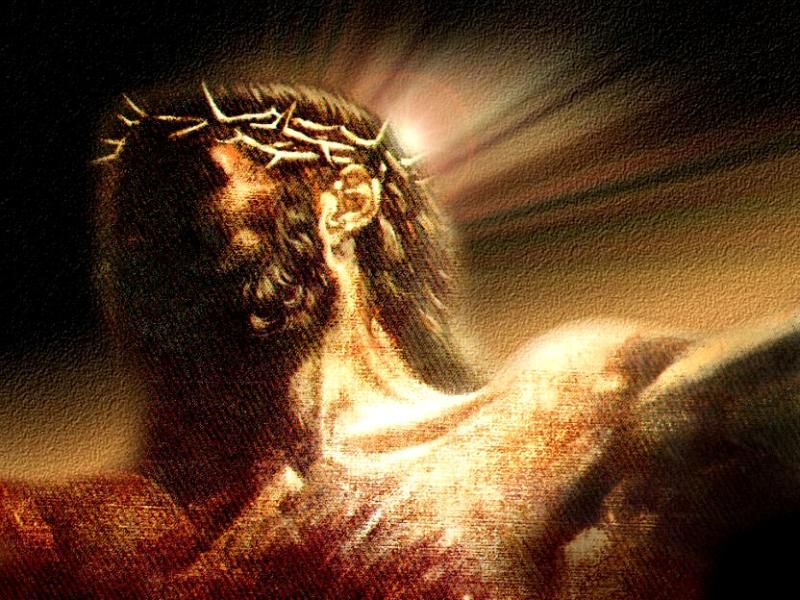
One day after having selected an artist’s rendering of the Christ wearing a crown of thorns for my wallpaper, I noted how I had allowed the desktop of my PC to become cluttered with icons and files. Though they made finding things more manageable, they obscured the image I had chosen for my inspiration. I had to do some cleaning so that I could once again see Christ!
Spiritually, I feel as if we sometimes equally “mask” the presence of the Christ in our lives. It is not our intention to do so, of course. We are just going about our regular business. Yet, there comes the point in out lives in which we begin doing what we feel is most convenient, despite what this “convenience” does to the presence of the Christ in our lies. Soon, others are unable to readily see the Christ in our lives since He has become obscured by our ephemera. If this persists, others will be unable to see Him at all.
When this happens, it is time to clean up or bring order to the chaos. One needs to put things in their proper place so that the image of Christ becomes accentuated rather than obscured (cf. Matthew 6.33). It may take a bit of work, but the effort is worth more than anything else in this world because of its eternal implications.
Dear reader, are others able to see the Christ in your life? If not, perhaps it is time for spiritual cleansing. The only thing equal to the task, great or small, is the blood of Jesus Christ. For the one having never clothed him or herself in Christ (Galatians 3.27), baptism brings about the forgiveness of sins (Acts 2.38). For the immersed believer, the blood of Christ continuously cleanses us as we walk in fellowship with Him and fellow Christians (1 John 1.7).
Check your image in the spiritual mirror (James 1.22-25). If you cannot see the Christ, rest assured others cannot see Him either. Let us always strive so others can see the Christ in us.





















 The Preacher Pollard Blog