What It Means To Be Called

Thursday’s Column: Captain’s Blog

1 Peter 5:10 says, “And the God of all grace, who called you to his eternal glory in Christ, after you have suffered a little while, will himself restore you and make you strong, firm and steadfast.” 

The entire purpose of 1 Peter is to encourage and exhort Christians in their suffering. Peter ends the entire book with a promise that God will make them strong, firm and steadfast. This same God has called us into His eternal glory in Christ. John Gill once said, “This call is not a mere external one by the ministry of the word, which is not always effectual and unto salvation; but an internal, special, and efficacious one, and which is high, holy, heavenly, and unchangeable.” 

This call is what labeled us as Christians, what saved us from darkness, and what gave us God’s Son. We can learn so much about who we are as Christians by studying this word in the New Testament. The Greek word kaleo is used by several authors to explain our spiritual state. This word teaches us what we used to be without Christ. Without being called we would not be holy, we would still be in the darkness, without being called we would not be labeled as God’s children, and without being called we would not be in the eternal glory in Christ. 

Peter’s use of the word “called” in his letter is through inspiration. It helps us recognize our condition outside of Christ. It shows servants how to endure suffering. It gives an example to wives on how to submit to their husbands. We can see that we were outside of Christ and the blessings of the light before being called.

In 1 Peter, almost every use of the word “called” is followed by a definite article. Five times out of six “you” is said immediately following the word “called.” This call is directed towards us as Christians. We are called to do or be these various things for God. God also has called us. Peter writes that God is the one calling which implies that we must do the answering. So when are we going to answer the call from God?

As we live our Christian lives we must keep in mind our former condition, and be thankful for where we are now. God has truly blessed us by calling us as Christians. So do we give thanks to Him for what He has done? Do we carry out the standards that are in place by being called out? We must evaluate our christian walk and see if we are living up to our call to be separated from the world, and connected to Christ.

Carl Pollard

Teachers’ Aids

Thursday’s Column: Captain’s Blog


Several of our classes have assistants to the Bible class teacher. She (or
perhaps in select cases “he”) serves in a support role, helping students do handwork, find Bible verses, or occasionally keep order. These are vital roles, and often a teacher’s aid later actually becomes a teacher. Teachers’ aids are part of a great team and education system that benefits everyone in the classroom.
There is a constant, pressing need for more teachers’ aids. I don’t mean in the actual classroom during the “Bible class hour.” These aids are needed Sunday afternoons, late Wednesdays, Saturday afternoons, and/or opportune moments between these times. These aids have even more power than those helping the teacher in the classroom. They are the parents and care-givers of the students. There are several ways they can “aid” the teachers who put in hours of preparation time and tons of energy and emotion into the task of teaching.
Aid teachers by making sure your children do their homework. Most teachers give homework, memory work or activity sheets. This is a vital supplement to the actual lesson taught in class. When children come to class with their homework done, teachers are elated and made to feel that their efforts are appreciated. They feel that their students take the class as seriously as they do.
Aid teachers by asking about what they have learned. Ask your children what they talked about in class that day. Ask them to review as much as they can. Ask them what they learned and how they can make application from the class. What better topic of conversation can parents and children discuss on the way home from services?
Aid teachers by making sure they feel appreciated. One way to do this is by making sure you practice the first two suggestions. However, having the child send a thank you note or by personally thanking your child’s teacher, you are aiding through the means of encouragement. Everyone likes to feel appreciated. Teachers are no different.
The qualifications are simple enough. To be this type of teacher’s aid, simply do all you can to partner with the efforts of your children’s teachers. Your child, your home, and your child’s teacher will all be blessed by it.

Neal Pollard

pinch-hitting for Carl, who is in the delivery room!

Following Instructions

Saturday’s Column: Learning From Lehman

David Chang

Have you ever gotten something—maybe a piece of appliance or a new faucet that you needed to assemble or install—and it seemed too simple? You see all of the pieces that came in the box, and you recognize all of it and their functions. Maybe, because it looked so simple and straightforward, you overestimated your ability to put it together and went straight into installing it by yourself without reading the manual. What happens usually? Well, if you’re lucky (or just that skilled), you may do it just right. But most times you either get stuck and eventually are forced to read the manual anyway, or you think you installed it correctly but actually didn’t do it all that right. Whatever the case is, there are times in our lives when we may have foregone the instruction manual because they are tedious or you think you know the steps, only to find out soon that there is a good reason why the instruction manuals are included with the product!

Even the simplest looking assembly comprised of just a few steps can quickly become quite intricate if there are specific order and method to the process. And if one, out of the abundance of their self-confidence, refuses to read the manual for that crucial piece of information, the process can be very frustrating indeed. Maybe you’ve had to witness someone stubbornly try to put together or operate something without first reading the manual for it.

I’ve heard people describe the Bible as an instruction manual for life. Although this is an oversimplification of the Word of God, I think we can agree for the most part that the Bible contains instructions and concepts that directly impact our lives—both physical and spiritual. We should not develop a dysfunctional view of Scripture as a mere checklist of things to do to get a passing grade to get into heaven, but we should also recognize that the Bible as a whole is a guide for us to internalize as we navigate this life.

The Bible and its contents are profound yet simple, and everyone can understand it. Logically speaking it must be so, because throughout Scripture there is a consistent expectation for the people of God to study and understand the laws (in the Old Testament) and the teachings of Jesus Christ and his apostles and disciples (in the New Testament). We know that “All Scripture is breathed out by God and profitable for teaching, for reproof, for correction, and for training in righteousness, that the man of God may be complete, equipped for every good work” (II Tim. 3:16-17). The gospel is “the power of God for salvation to everyone who believes” (Rom. 1:16). The doctrines, precepts, principles—all of these things contained in Scripture both Old and New Testament are there for us to read, to understand, and to let impact our lives in a meaningful and transformative way.

Now then, how are we to do so without examining the book? The Bible may not be as simple as a checklist of things or like an instruction manual for some furniture assembly, but we cannot deny the reality that it contains guidance that we need for our navigation through this life into eternity. It would be foolish and inefficient at best for us to recognize such a fact but still fail to read it and study its contents. Do not be stubborn and try to go through life without the guide revealed to us by the very Creator who is the source of life itself. Make sure to foster that need to meditate on God’s Word regularly.

The Mystery Of The Thundering Voices

Tuesday Column: Dale Mail

blond man with goatee smiling at camera with blazer on
Dale Pollard

John is getting ready to faithfully record more of the incredible (and incredibly bizarre) visions in heaven as Revelation ten begins. However, the text says this, 

Then I saw another mighty angel coming down from heaven. He was robed in a cloud, with a rainbow above his head; his face was like the sun, and his legs were like fiery pillars. He was holding a little scroll, which lay open in his hand. He planted his right foot on the sea and his left foot on the landand he gave a loud shout like the roar of a lion. When he shouted, the voices of the seven thunders spoke. And when the seven thunders spoke, I was about to write; but I heard a voice from heaven say, “Seal up what the seven thunders have said and do not write it down.” 10.1-4 

This wouldn’t be the first time that partial information is purposefully held back. The book of Daniel is considered to be “Revelation’s relative” and in Daniel 12 we see a similarity. The prophet understands that Israel will be destroyed and, understandably, he would like to know when these things will take place. 

“Although I heard, I did not understand. Then I said, “My lord, what shall be the end of these things?” 12.8 

The answers aren’t given and Daniel is left to wonder. The angels goes on to say, 

 “Go your way, Daniel, for the words are closed up and sealed till the time of the end. Many shall be purified, made white, and refined, but the wicked shall do wickedly; and none of the wicked shall understand, but the wise shall understand. And from the time that the daily sacrifice is taken away, and the abomination of desolation is set up, there shall be one thousand two hundred and ninety days. Blessed is he who waits, and comes to the one thousand three hundred and thirty-five days. But you, go your way till the end; for you shall rest, and will arise to your inheritance at the end of the days.” 

9-13 

We don’t get to know everything. In fact, we know based on these two accounts that God doesn’t reveal all of the information we’d like to know. We can rest peacefully knowing that God does reveal everything we need to know. For those of us who enjoy a good mystery, there are many to be found within scripture. 

The content shared by the thundering voices in Revelation 10 aren’t revealed in scripture. Perhaps because we don’t need to know these things. Maybe what was being said has already taken place, or maybe the information is beyond our earthly comprehension. God’s Word is a fascinating and incredible collection. It has the ability to save all of us— as well as the tendency to make us scratch our heads. 

3 Reasons Vacation Bible School Is Worth It!

Tuesday’s Column: Dale Mail

Dale Pollard

This time of the year congregations are planning and preparing for another Vacation Bible School. When and why was this summer tradition started? It seems that even those who aren’t “church goers” still share childhood memories with those of us in the religious world. Across America kids will soon be drinking kool-aid and making Noah’s ark out of Popsicle sticks. They’ll also make memories that will stick with them for their whole lives.

The Hazy History 

 As much as this week means to many of us, one might assume the history to be well documented. However, who started the first VBS and when— is still debated. Some claim it all began in 1870, while others place the date closer to the 1920s. So the “when”’proves to be a little fuzzy, but the “why” seems constant. A thread that can be traced through many a VBS origin story is the reason it’s done. It was always designed with our children’s spiritual growth in mind. The goal was always to provide them wholesome entertainment while at the same time, introducing them to God and the Bible. 

So with that in mind… 

Here are 3 reasons why VBS is a worth the effort: 

  1. Youthful brains need this week. Studies done by Psych INFO, ERIC, MEDLINE, and Google Scholar as well as the University of Virginia library, all seem to agree that kids from 12-18 years old are the most impressionable. Meaning, the things they are taught and their experiences in these years will often impact their worldview for the rest of their lives. Any program within the church that’s geared towards teaching young people about Jesus can only have a positive influence on them. That window is relatively short so it’s crucial that parents do all they can to set them up for spiritual success. 
  2. Church families need this week. VBS takes a lot of work and it’s the kind of work that brings the church together. It’s mainly about the kids, but it’s not all about the kids. This is a time where members have an opportunity to bond and grow closer through the planning and preparation. Work days, crafts, skits, staff/teacher curriculum, decorating, T-shirt’s, and advertising all take teamwork. Team work is good work for good teams. 
  3. Adults need this week. The happiest among us are typically the children. With all of that work, the sweat, tears, and time that’s shoveled into this event— the payoff is the sound of an auditorium filled with energy and excitement. It’s good for adults to spend a week listening to the sound of voices singing loudly and unashamed. It’s good for the teachers and the chaperones to act and look a little ridiculous. There’s value in letting kids see us trade the khakis and neckties for face paint and costumes because it will send a message. To be a christian doesn’t mean to be serious, stoic, or stern— all the time. Those of us who have been members of the church for sometime know this to be true, but children who’s parents don’t think or speak highly of Christianity now have a chance to experience something to the contrary. 

While there might be mixed feelings about VBS within the church, there’s no denying it’s potential to effectively introduce Jesus to the young and young at heart. 

A picture of a Wyoming VBS from several decades ago.

12 Truths You Can Hang Your Hat On

Tuesday’s Column: Dale Mail

Dale Pollard

In every chapter of Ecclesiastes you can expect at least two kinds of verses. At least one verse will make you wonder what Solomon is talking about and one verse will hit you in a profound way. As it turns out, humans haven’t changed that much over the years and our current experience of life share many similarities. Here are twelve amazing truths found in this book. 

1.4-8 

Some things never change. 

2.24-25 

Pleasing God will bring you more joy than chasing the things that bring momentary pleasure. 

3.9-11 

God has given us a desire to know the future. Because of this, we understand that while we don’t know the future we’re better off serving a God who does. 

4.9-12

It’s by design that we can accomplish more with help. God can do more with us when we are team players. 

5.19-20 

There’s joy to be found in hard work and that too is by design. Satisfaction is a natural feeling produced by the work of our hands. 

6.6

If you don’t find joy in life then life will drag on and feel slower. 

7.13-15 

When life is good, enjoy it. When life is hard— remember that it’s like that for everybody. Ups and downs are part of living. 

8.16-18 

This world is not just but don’t let that fool you into thinking that God isn’t just. We can’t understand how God’s mind operates in every circumstance. 

9.11-12 

Not everything happens for a reason! God might have a hand in any event, Satan may have something to do with it— or maybe it’s all a coincidence.

10.8-15 

Every job has it’s dangers but wisdom can make a job run smoother just as a sharp knife can make a task easier. 

11.7-8

It’s good to be alive! It’s nice to see the light from the sun. You should enjoy the life you live with eternity on your mind. 

12.11 

You can put your trust in any wisdom and teaching that comes from God. 

Each chapter of Ecclesiastes is filled with wisdom and life changing words. Our world needs to spend more time studying this inspired collection of truth. 

Dead Sea Scroll 109 (Ecclesiastes, commons image)

Twenty Lies We Tell Ourselves (And God’s Responses)

Monday’s Column: Neal At The Cross

Neal Pollard
  • “I did this by myself” (Deut. 8:17)
  • “I’ll do it tomorrow” (Prov. 27:1; Jas. 4:13)
  • “I’ve gone too far and done too much” (cf. Luke 15:13-24)
  • “I can’t do it!” (Num. 13:31; Phil. 4:13)
  • “Nobody will ever know!” (Ecc. 12:14; Rom. 2:16).
  • “I deserve this” (Luke 12:15-21;
  • “This feels right so it must be right” (Prov. 14:12; 16:25)
  • “I’m not good enough” (Eph. 1:6; Heb. 12:28)
  • “No one will miss me; I’m not needed” (1 Cor. 12:14-27)
  • “It won’t matter a thousand years from now” (Mat. 25:46)
  • “God is trying to keep me from enjoying life” (Gen. 3:4-6)
  • “I can quit anytime I want to” (John 8:34; Rom. 6:16; 2 Pet. 2:19)
  • “Everybody does it” (Exo. 23:2)
  • “I’m only hurting myself” (Luke 17:1-2; Rom. 14:13; 1 Cor. 8:9-13)
  • “If God loved me I wouldn’t be going through this” (Prov. 3:12; Heb. 12:6)
  • “I can’t help it” (Rom. 8:13; 1 Cor. 9:27)
  • “I was born this way” (1 Cor. 6:9-11)
  • “It’s too late for me” (Matt. 20:6-9)
  • “I don’t need help” (Ecc. 4:9-12)
  • “Nobody cares about me” (Rom. 8:35-39)

“Behold, You desire truth in the innermost being, And in the hidden part You will make me know wisdom” (Psalm 51:6)

via Pixabay (creative commons)

Exaleipsei

Wednesday’s Column: Third’s Words

Gary Pollard

Jesus is the great healer and the Bible is full of passages that comfort, encourage, give endurance, and help us cope with a broken world. It’s full of so much more! A higher purpose gives us existential meaning, and the Bible outlines that purpose. It also has a few passages that fire me up, and those are the ones I want to share today.

Revelation 21

This is our reason to live the Christian life (Matt 19.28; Rom 8.18-25; I Pet 1.3-7, 13; 4.12-19; II Pet 1.3-4, 10-11; 3.3-13; I Jn 3.1-3). We’re looking forward to something much better, but what kind of stuff are we looking for?

  • –  Zero dysfunction! No pain, grief, disease, crime, taxes, tornados, war, death in general, aimbots (if you know you know), etc.
  • –  God gets rid of tears (Rev 21.4)! The context is a message of hope for early Christians who were dealing with devastating loss. But God will ἐξαλείψει all tears. Exaleipsei is future (will happen), and seems to be a comfort word. I had always pictured a Men in Black kind of thing, where all painful memories are obliterated and new ones made. But the word seems to indicate that an interaction with an infinitely compassionate Father will be more than adequate to get rid of any pain. If you’ve ever comforted a spouse or child who was grieving and physically wiped their tears away, that’s what this word describes.
  • –  Everything is brand new (21.5)! None of the junk that we’ve dealt with here will be compatible with our new home.It will be wildly exciting: the best accomplishments of each nation will be there (21.25-26). God and his son provide all we need (21.22-24). True unity exists because we’ll all be on the same side (21.27). No need for healthcare or accountants or coroners or search and rescue or militaries or law enforcement! Those exist to push back against evil, which won’t exist in our new home. Revelation 21 is a rich chapter, but it’s full of excitement! God doesn’t speak empty words. Take him at his word and read the chapter very carefully. It’s hard to walk away from that study without getting pumped for heaven!!!

Test His Truth

Tuesday Column: Dale Mail

image-e1601983688162

Dale Pollard

(now the pulpit minister of the Tompkinsville church of Christ, Tompkinsville, KY)

   With countless opinions and information out there, God is just another “option” and the Bible is just “good advice to follow.” Dave Mustaine summed up how many people feel when he said, “The Bible and several other self help or enlightenment books cite the Seven Deadly Sins. They are: pride, greed, lust, envy, wrath, sloth, and gluttony. That pretty much covers everything that we do, that is sinful… or fun for that matter.”

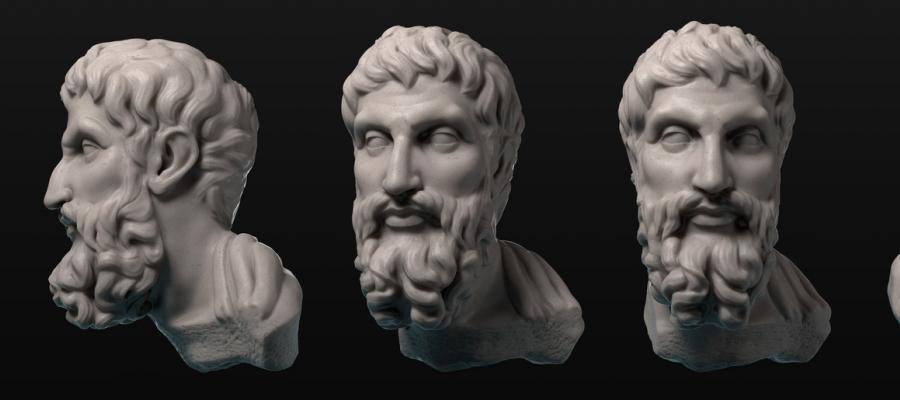
Is the Bible just an ancient “self-help” book that tells us not to do anything fun? Questioning God is not something new. Even Epicurus said, “Is God willing to prevent evil, but not able? Then He is not omnipotent. Is He able, but not willing? Then He is malevolent. Is He both able and willing? Then whence cometh evil? Is He neither able nor willing? Then why call Him God?” I truly believe that you can understand who God is just based on scripture. When He gave that book to man, He gave us a piece of Himself.

God wants a relationship with us (I Peter 5:6-7). This is why He has purposefully informed us about Himself. People need God whether they know it or not. I’d encourage you, as an individual,  to put the Bible on trial. Put the accuracy of its pages to the test. It has withstood hundreds of years of accusations and doubt. Often we are able to grow in our faith and belief as a result of seeking and searching. As His church, we have a responsibility to proclaim the excellence of our creator. We do it by our love for others, exposing the evidence of His existence, and introducing Jesus every opportunity we have. 


Mine!

Wednesday’s Column: Third’s Words

garyandme521

Gary Pollard

When I first got into shooting, I relied pretty heavily on what others believed. There was (and is) a wide range of opinions on which platforms are the best, which calibers are the most effective, or which subcultural group is the worst (mall ninjas, fuds, tacticool operators, etc.). Most hold their opinions with great passion and will advocate for their position vehemently. I never really enjoyed shooting with the platforms and calibers I initially chose because I made all of my decisions based on the preferences of people I respected and admired. There’s nothing wrong with this, but I did not yet feel as if the sport was truly mine. Several years later, countless thousands of rounds, and hours of research, and I’ve found my place. I prefer 9mm, Glocks or Caniks, Combloc, AR platforms, 6.5 Grendel is the best intermediate round, etc. In other words, it’s not an “inherited” faith. I like what I like based on the energy I’ve dedicated to study and practice.

When it comes to elements of our faith, how often do we challenge our personal beliefs? Unlike firearms – which are subjective and spiritually irrelevant – our faith is based on an objective standard. It is difficult to have a strong, personal faith if most of what we believe is based on what others taught us or what others believe. We may even adopt their beliefs because we admire and respect them as people. That’s not a great foundation. Humans are fallible!

Approaching scripture as a blank slate, asking only, “What does God want me to believe about ______?” is the best way to grow. The only opinion that matters is God’s! When we hear something that elicits an emotional response and seems to conflict with our current beliefs, we shouldn’t panic. God’s word determines validity. If we can approach scripture without bias, we’ll grow exponentially. Challenging our beliefs does more than simply refine our understanding – it forces us to take ownership of our faith. Not only will this cause growth, it will also deepen our love for God and our confidence in eternal destination!

On an elk hunting trip in Gunnison, CO, around 2008.

But Grow In Grace And Knowledge…

GUEST WRITER: Charlie Smith

smith20web20column_2

“But grow in the grace and knowledge of our Lord and Savior Jesus Christ. To him be the glory both now and forever. Amen.” – 2 Peter 3:18

Peter writes this letter knowing that he’s going to die soon (2 Peter 1:14), and he wants the church to remember his teachings after he’s gone (1:15). This illustrates how deeply invested Peter was in the church’s success:

  • He had been on the ground floor of Jesus’s ministry, literally walking off the job site, leaving everything behind, to become a fisher of men
  • He had seen the crucifixion, the empty tomb, and the pierced side of his resurrected savior
  • He had helped the church grow from 120 to untold thousands covering the entire known world in one generation

And now Peter realizes that he’s soon going to be gone and the church will not have the direct guidance of the apostles but instead will need their indirect guidance through the New Testament writings. What are the last words of this apostle, his final thoughts for the church that he loved so dearly, which continue to echo down to us today as the spiritual successors of those first-century Christians?

Always keep growing!

First, he asks us to grow in the grace of Christ. When we obey the gospel, our sins are completely forgiven; God forgets them; we are “saved to the uttermost,” according to Hebrews 7:25, and when we walk in the light, the blood of Jesus cleanses us from all sins (1 John 1:7). So how can we grow in something that is complete?

I think a key is found in 2 Cor. 12:7-9. Paul has been given this thorn in the flesh, a messenger from Satan, to torment him, and he prays three times that the Lord will take it away. But God tells Paul that His grace is sufficient. It was enough that Paul was a Christian; Paul did not need any particular problem taken away; God’s grace sufficed.

Likewise, no matter what we face in this life, it really doesn’t matter if we’re a Christian.  God’s grace is enough. It takes effort and maturity, though, to gain this perspective. We need to keep growing in the grace of Christ!

Second, Peter asks us to grow in the knowledge of Christ. This is an easier interpretation: We must go to The Book! In my experience, and from what I’ve observed in others, those who grow as Christians are those who study the Bible on their own, digging in to see for themselves what God says. The preacher who baptized me told me one time that, in addition to his other study, he read a chapter a day from Proverbs and the gospels because he wanted to remain connected to the wisdom of God and the heart of Jesus; this is the attitude of someone who, know matter how much they know about the Bible, is still striving to grow in the knowledge of Christ.

May we all have this desire to grow in the grace and knowledge of our Lord and Savior Jesus Christ.

We’ve been blessed to have the Smiths at Lehman since last August. Charlie begins work as an economics professor at Freed-Hardeman next month. We’re so sad for us, but very happy for them. What a wonderful family!

8 Interesting Facts About The Bible

 Tuesday’s Column: Dale Mail

dalejanelle2021

Dale Pollard

  1. The Bible was written by 40 different writers. 
  2. The Bible was written from 3 continents: Asia, Africa, & Europe.
  3. It was written in 3 ancient languages: Hebrew, Aramaic, & Greek. 
  4. The original manuscripts making up the cannon contain 611,000 words. 
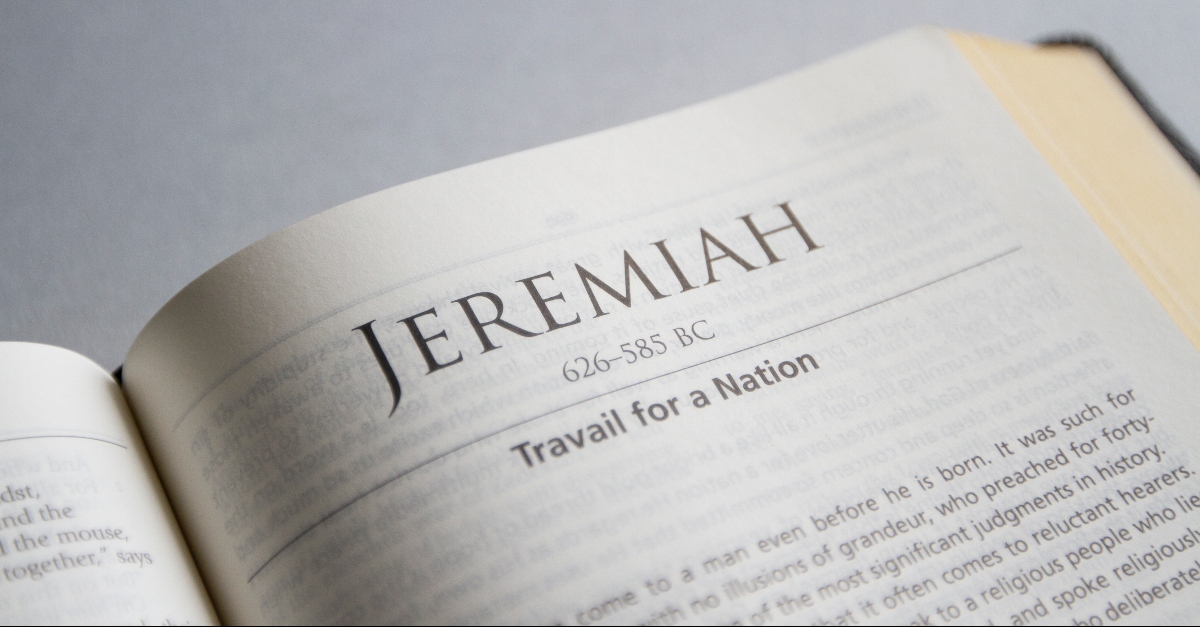
  5. The longest book is Jeremiah. 
  6. The shortest book is 3rd John.
  7. The Bible contains around 185 songs. 
  8. The Bible records around 21 dreams.  

The Bible is more than just fascinating trivia, it’s the only book that God ever wrote. Let’s make sure we’re spending time in His Word daily. 

New Life From Ancient Seeds

Monday’s Column: Neal At The Cross

Neal Pollard

The Winter 2020 edition of Biblical Archaeology Review has a fascinating article about a recently completed project involving date palm seeds from the Judean Wilderness. The Judean Date Palm (Phoenix dactylifera) was widely grown and sold for at least 1600 years, from at least the fifth-century B.C. until the 11th-century A.D. Archaeological excavations at Masada, Qumran, and Wadi Makukh netted several ancient seeds which researchers then went to work to try and germinate. Of the 32 planted, six germinated. It takes 4-10 years for female palm trees to produce fruit, and in the fall of 2019 this extinct fruit tree was brought back (“New Fruit From Old Seeds,” BAR, Vol. 46, No. 5, Megan Sauter, p. 18-19). 

To me, it’s particularly fitting that such a discovery and experiment transpired in the very area where the church was established. The fact that ancient seed was planted and successfully produced results today serves as an illustration of a Bible truth. Peter wrote, “Since you have in obedience to the truth purified your souls for a sincere love of the brethren, fervently love one another from the heart, for you have been born again not of seed which is perishable but imperishable, that is, through the living and enduring word of God” (1 Pet. 1:22-23). Peter draws on an imagery he heard his Lord use in His parables (Luke 8:11). Other New Testament writers draw the same analogy (1 Cor. 3:6-9). They planted the Word and it produced disciples of Jesus. How do we produce true followers of Him today? We plant the same, ancient seed. The researchers involved in the Judean date palm project had to soak and fertilize those seeds to coax their growth, but their perseverance paid off in reestablishing the original, fruit-bearing tree. 

How often in history have people taken the ancient seed, planted it in hearts, watered it, tended it, and produced the exact same thing despite the passing of centuries? Restoring New Testament Christianity is possible. In fact, if we believe the Bible, it’s necessary. If we plant what they planted, the living and enduring word, we will have what they had–purified souls who obey the truth and are born again. We cannot give up on that principle. It’s essential, but also doable! Let’s be looking for new soil to plant that ancient seed in, then watch God work! 

merlin_176514033_28188a63-cc1a-4821-a4b9-18fb88a09191-superjumbo


The Power Of The Word

Wednesday’s Column: Third’s Words

Gary III

Gary Pollard

Angels are not the dainty, long-haired Western Europeans they’re often depicted as being. In Matthew 28, their appearance was like lightning and they had white clothes. Evidently their appearance was other-worldly enough to frighten these soldiers almost to death (28.4). Whether this was some cardiac event or simply shock we cannot know. But to frighten someone that tough to that extent would take something pretty crazy. 

But some of these same guys still went straight to the chief priests and took a bribe to keep quiet and spread disinformation (28.11-15). After what they had just seen and experienced, you’d think they would run to a therapist and not the chief priests to help perpetuate something they knew to be false. 

We can be tempted sometimes to think that evangelism requires more than just showing someone the word. We might think the miraculous or incredible could persuade even the most stubborn non-believer. The power of our job (making disciples) is in the Word and in faith. The Bible has many accounts of people seeing incredible feats of supernatural power with their own eyes and still rejecting God. Abraham informed the rich man in Luke 16.29-31 that God’s Word is what saves; if that is rejected, no miracle will change this. 

If we place our faith in the power of the Word and work to deepen our understanding of the Word, we have all we need to show the power of Jesus. 

“Self-Sufficient Study”

Wednesday’s Column: Third’s Words

Gary III

Gary Pollard

All gas internal combustion engines require three things to operate: fuel, spark, and compression. If one of the three is working improperly, a number of symptoms can arise. This is an oversimplification, of course, but those three systems must be mostly operable in order to be usable. 

Troubleshooting can be expensive if a person has little or no experience with this common engine type. Learning to maintain a vehicle and enact basic repairs saves an enormous amount of money! Relying on someone else to do it is often very costly. 

We fully understand that not everyone is equipped to be a scholar-level theologian. However, many Christians take this idea and swing the opposite direction. How many have been Christians for decades and have just a basic understanding of scripture? How many multi-generational Christians snore at the thought of advanced biblical studies? How many have only the knowledge they retain from a sermon? How many base their understanding and beliefs on the values held by respected friends or family? 

No one is perfect; the more a person learns through deep bible study, the more they are confronted with their own inadequacies. But a dedicated student of the scriptures also gains this: 

  1. A profound appreciation for grace and its role in our practical lives. 
  2. Mind-blowing discoveries and realizations about the nature of God and eternity that bullet-proof our faith. 
  3. The full emotional and intellectual impact of biblical principles. 
  4. A deeper understanding of the goals, message(s), meaning, and practical applications of a book. 
  5. A heartwarming and emotion-eliciting  appreciation for the role of The Word, Jesus, and His hand in creation, sustaining the genetic line that brought about His physical death, the timeless sacrifice He made by subjecting Himself eternally to the Father, and the role He plays today on our behalf.
  6. An ability to defend the faith, refute false doctrine, convert a lost soul, and build faith in others. 
  7. An ability to avoid sin more effectively. 
  8. A far lesser likelihood of accepting false doctrines or harmful practices.  
  9. Excitement, joy, and fulfillment about being a Christian! 
  10. A great disdain for arguments over petty issues that are weakening the church, and the ability to shut them down and refute them soundly. 

As a bonus, learning to read and translate Greek or Hebrew (at least with the help of a lexicon, a decent understanding of rules of each language, and their proper application in each context) will give even more profound insight into words and concepts we read in our native translations. 

Relying on what others tell us is not sufficient! We may find that the cost, eternally, is far steeper than what we would pay to the most expensive mechanic for repairs we could do at a fraction of the cost. Not only will we gain a great appreciation for what we know and live by becoming true Bible students, but it also greatly enhances our ability to live a faithful Christian life. 


Learning A Lesson From A Lantern

Wednesday’s Column: Third’s Words

Gary III

Gary Pollard

I’m a big fan of old fashioned lighting, especially old kerosene lanterns because they’re simple. I went to light one of my lanterns and the flame wouldn’t stay alive for more than a few seconds. I thought, “Maybe the vent is covered in carbon and there isn’t enough oxygen for the flame.” So, I took it apart, cleaned it out, and put it back together. I was sure it was the vent.

To my chagrin, the flame died within seconds even after the lantern was cleaned. Next I trimmed the wick because it seemed too dark; perhaps having a fresh wick would allow the flame to stay alive. It wasn’t a stopped vent, so it had to be the wick. Sure enough, the flame died even with a fresh wick. At this point I was stumped. 

The next day it occurred to me whilst putting gas in my car: the lantern was just out of kerosene! It was obvious to the extreme. I knew Chelsea would never let that one go. When I got home I put the kerosene into the lantern which, of course, was the solution to a simple problem that I overcomplicated.

This is a mundane example of a profound truth: we make mistakes as humans. Worse yet, some people put words in God’s mouth that He never used. “My God is a God of love – He wouldn’t condemn me just for this one little sin.” “God doesn’t care if we live the way we want.” Some use phrases like this with great confidence while overlooking an obvious truth: God has told us what He does and does not care about in His word.

If we aren’t in the word listening to God and allowing Him to change us, our solutions will end in failure. There was only one solution to keep that flame going in my lantern. There is only one right way to follow God, and He’s told us how to do that! Life will be so much easier for those who look to God for answers before relying on their own wisdom.

welcome-home

Why I Am Not a Buddhist

Friday’s Column: Supplemental Strength

B

Brent Pollard

There is one teaching of Buddhism that I have looked upon favorably, that our problems stem from earthly attachment and desire. I cannot argue with principles I also find recorded in the pages of the Bible, after all. Yet, despite the growing popularity of Buddhism in the West, I find Buddhism wholly deficient in addressing the spiritual needs I have. In a nutshell, Buddhism lacks two essential things I believe are needed to save.  

First, it does not embrace the only name given among men, whereby we must be saved (Acts 4.12). I recognize this is not an insurmountable obstacle for a nonbeliever. The nonbeliever secularizes the Christ and strips Him of His Divinity. Or he or she might declare Jesus of Nazareth to be a mere fabrication of men. Interestingly enough, though, since I am considering Buddhism, there are those co-opting Jesus as One influenced by the teachings of the Buddha. The theory is that Jesus was in India, learning Buddhism somewhere between the ages of 12 and 30. (That would be a fantastic departure for One Who proved His knowledge of Scripture on par with rabbis many years His senior at the age of 12, wouldn’t it? –Luke 2.46-47. This supposed abandonment of Moses’ Law also ignores His stated purpose of being the living embodiment of the same –Matthew 5.17.) 

Second, it foolishly looks within oneself to find salvation. Buddha claimed to be an ordinary man. Thus, Buddha implied anyone could achieve “enlightenment” as he had done. Buddha said that you find salvation looking within yourself. Perhaps it sounds like an oversimplification of a system of faith, but that is a distinct difference. Within Buddhism, one does not need even the existence of gods, let alone the True and Living God, since he or she attains enlightenment all alone. Meanwhile, the great monotheistic religions acknowledge that man is incapable of saving himself. Those traditions maintain that despite being created innocent and pure, we utilized our free moral agency to serve the lust of the flesh, lust of the eyes, and pride of life (1 John 2.15-17). 

Which of these ideas are more consistent with observation? Outside of the innocence of youth, do people tend to be motivated by selfishness or altruism? There has been a long-standing debate as to whether humans are born inherently good or bad. Few are those attributing good as the default position of the mature heart. Indeed, a child left to his or her own devices, without proper guidance, will become subject to the corrupting influence of those three avenues to sin previously identified above. Thus, Judaism, Islam, and Christianity all encourage parents to guide children properly regarding morality, to mold them into the servants of principle.  

In contrast, the Holy Bible teaches that there are ways seeming right to us, leading to our destruction (Proverbs 16.25). Jeremiah, the prophet, confesses to God that man cannot even order his steps (Jeremiah 10.23). These two truths ensure as Jesus taught that the vast majority of people are traveling the broad, highway to hell (Matthew 7.13-14).  

To allow for such blind groping in the dark, Buddhism has to allow for a continuous system of rebirth. In other words, few, if any, are they who manage to attain enlightenment on their first try through life. He or she will more likely fail only to be reborn and try again and again. And that is the greatest tragedy of the belief that you can look within yourself to find salvation. You get stuck on this Ferris wheel of rebirth. Paul tells the Athenians that even those who are groping can easily discover God since He is not far from us (Acts 17.22-30).  

Though I do not wish to be unfair to those embracing the Buddhist belief system, I have to wonder if the attraction of the Western mind to Buddha’s religion has more to do with the mindset implanted by the liberty afforded to citizens of Western democracies.  In other words, do Westerners instead prefer the idea of independence from God, telling him or her what to do to be righteous?  I am inclined to believe the latter.  

I can speak to my own heart. I know its evil. So, I find myself caught up in that same war with my members, as experienced by the apostle Paul (Romans 7.14ff). Like Paul, I ask who can save me from this body of death (Romans 7.24). And like Paul, I find my Savior to be Jesus Christ (Romans 7.25;8.1-2). For that reason, when presented with the choice, I believe in the Son of Man rather than Siddhartha Gautama. My righteousness is like filthy rags (Isaiah 64.6). A wretch like me can only be saved by grace through faith (Ephesians 2.8-10). 

Study The Bible!

Thursday’s Column: Third’s Words

Gary III

Gary Pollard

I doubt that many of us would question the importance of knowing our Bibles. We talk about this a lot as a church family! While some Christians may approach Bible study with the mentality of loading their theological guns with argument-ending ammunition, others consider it a duty of their Christianity.
Few of us would argue that the Bible is always simple and easy to understand. This life, our faith, and many questions we have about our day-to-day lives require answers far too complicated to get from a cursory study of scripture.
So why is it important to study our Bibles, and how can we do it effectively (that is, to walk away from Bible study with more knowledge and faith than when we entered it)? It is important to study the Bible because ignorance of what it says is a major underlying cause for any problem a church might face. Do we want unity? Study the Bible. Do we want peace among ourselves? Study the Bible. Do we want strong, faithful Christians? Study the Bible. Do we want godly attitudes? Study the Bible. Do we want wisdom to know when to practice righteous judgment and when to keep silent? Study the Bible! Effective Bible study – when practiced by the majority of a congregation – will effectively strengthen and grow that church. So how do we effectively study our Bibles?
First, have a purpose to your study. Winning an argument with a friend, coworker, acquaintance, or contact on social media is rarely a good reason to approach the word of God in study. It is too easy to allow our pride or ego to get in the way of honest truth-seeking. Instead, approach your study with purpose. Are you seeking to grow your faith in God? Study accordingly. Are you seeking to understand how to respond to something in your Christian walk? Study accordingly. Are you trying to cope with grief, tragedy, or frustration? Study the Psalms and the end of Job. Whenever you sit down to read, have a purpose.
Secondly, study like a scholar. There is a time and place for covering as much text as you can (like reading the Bible through in a year). However, this should not be our primary method of study. Spend time in a small section of scripture. Look for key words (words that repeat themselves in your section of study), ask questions of the text when something does not make sense, look for words like “therefore,” “but,” and phrases like, “I urge.” See how they fit into the context of your passage. Use multiple versions in your study to gain a better understanding of the “feel” of the passage. As much as you can, look to the original language for definitions or insights. If you have a smartphone, download an app called Logos Bible Software. It will give you access to tools that will help you understand the meaning of words in their original language, even if you cannot read Hebrew or Greek. Avoid commentaries if you can at all help it. They are often (though not always) platforms for the writer to voice an opinion and rarely explain the meaning of the text with accuracy.
Thirdly, study frequently. I recommend printing out the passage you are interested in studying and complete one printed section per day. This is arbitrary, of course, but will still help to create some consistency. Use colored pencils/pens/highlighters to make the text come alive and to aid in recognizing patterns.
Finally, share what you have found with your friends in the church! If you have a group of friends studying the same passage, find ways to share what you observed in the text in your daily bible reading. This not only creates accountability for reading daily, but will also grow your faith and knowledge when you understand that passage so very well!
If you take up Bible study like this, you will be amazed at how much closer you will grow to God and to your church family. If all of us approach study this seriously and with this much commitment, we will grow as a church family in unity, faith, knowledge, love, patience, grace, and wisdom.
child-reading-bible-bed-thumb

Meditation: What is it? Why do it? How do I do it?

Tuesday’s Column: Dale Mail

Daleheadshot

Dale Pollard

The concept of Biblical mediation is viewed as a mystery to many of us. The simple answer to “How do I do it?” can seem frustratingly vague. Common answers are—

“you read a passage that stands out over and over and then you think about it.”

Or maybe…

“you find a verse and then pray about it.”

Here’s what you should know about true Biblical meditation.

Three Facts About Biblical Mediation

1. It does not involve emptying your mind, but rather filling your mind with God’s mind.
2. It’s not a complex ritual in which you must reach a higher “spiritual place” to accomplish. It’s a simple act that God intended for everyone to be able to do— in order to bring you to a better spiritual place.
3. It is an intentional act. You won’t find yourself meditating accidentally. We must make time for God.
Here’s why we should all be doing this.
Four Reasons To Meditate
1. For Improved Worship
2. For Perfect Instruction
3. For Needed Encouragement
4. For Spiritual Transformation
Here’s what you will need to accomplish it.
Three Tools For Great Meditation
OBSERVATION – What does the text say?
INTERPRETATION – What does it mean in context?
APPLICATION – What does it mean for me?

Note: Combine With Prayer before and after for best results.

Here’s what you will get out of it.
Ten Benefits Of Biblical Meditation
1. Proven to lower blood pressure
2. Decrease anxiety
3. Improve heart rate
4. It enables your to relax
5. It brings peace
6. It draws you closer to God
7. It gives us confidence
8. It offers an escape from temptation
9. It provides helpful correction
10. It makes us better Bible students (Psalm 119:11)

Finally, here’s an exercise to help us see the many categories on which we can mediate. Simply answer the questions in your mind, and try to develop a habit of asking yourself personal questions about what you’re reading.

A Meditation Exercise From The Psalms
You could meditate…

On His rules (Ps. 119; look up in the ESV)
• What rules do you tend to break?
• Why do you break them?
• What’s the point behind His “rules”?

On His Promises (Ps. 119:148)
• Which of His promises bring you the most comfort?
• Has God kept His promises to you? How?

On His mighty deeds (Ps. 77:12)
• Which specific mighty deeds has God performed in the history?
• What mighty deeds do you believe God has performed in your life?
• What could God do with you today if you allowed Him to?

On His unfailing love (Ps. 48:9)
• There has never been a moment in your life when God hadn’t loved you.
• What does that tell you? What does it expose about yourself?

I hope this helps clarify what real mediation is— and how it can change your life!

person-prayer-book-bible

How To Slay A Dragon

Thursday’s Column: Captain’s Blog

IMG_0806

Carl Pollard

There’s a part in Sleeping Beauty where the Prince slays a fire breathing dragon with his sword. This is at the climax of the movie, so this entire time the story has been building up to this one, final moment. It’s pretty epic. In our lives, we have many “Fire Breathing Dragons.” At this moment I would like to talk about three of them and how to “kill” them.

First, notice with me the “dragon” of lying. If you look at Colossians 3:9, it says, “Don’t lie to each other, for you have stripped off your old evil nature and all it’s wicked deeds.”
Lying in Colossians is labeled under “evil nature.” If we have stripped our old ways, why do we continue to lie? Because much of the lying that we do is for personal gain. For example, someone could come up to me and ask, “How much can you bench?” and I might say “850 pounds.” That’s a classic example of lying for personal gain. From now on that person will believe that lie I told them and possibly tell others. We can slay this dragon by telling the truth. Challenge yourself to tell full truths, and not half-truths.

Second, there is the “dragon” of Hate. Luke 6:27 says, “But I say to you who hear, Love your enemies, do good to those who hate you.” The hardest part of this verse is the second half. Trying to love those who hate us is extremely difficult because in our minds they started it so we have the right to hate them back. If you look at Jesus, our example, He says to love those who hate us. How do we do this? It requires a change of vision. We should try to look at those who hate us as a lost soul that needs saving. Looking at them this way might help us to love them more.

Third, and finally, is the “dragon” of Gossip. This one can be very dangerous because it might tear apart a friendship, a person, and the church. If you look at Ephesians 4:29, It reads, “Let no corrupt communication proceed from your mouth, but that which is good to the use of edifying, that it may minister grace unto the hearers.” Instead of tearing down someone or spreading rumors, let’s try to build up one another! To keep from letting something slip about someone, let’s try to practice what our parents told us from day one: “Think about what we say before we say it.”

Now there is one more thing we can use to slay “dragons.” The ultimate Two-Edged Sword is for slaying any kind of “dragon.” This Two-Edged Sword, the Bible, can slay any dragon that Satan sends our way. Today we only looked at three of the dragons that Satan uses against us. There are many more, and we must study Scripture to see what they are, and how we can slay them.

73667.jpg.cf