Tearing Lions And Toeing Lines

Tuesday’s Column: Dale Mail

image

Dale Pollard

He wore a name we know well but accomplished the will of a Name we know better. Samson the judge was the man who dropped a thousand Philistines with a jawbone while dropping the jaws of those who would read these accounts years later.
In Judges 13 through 16 we find the awesome, yet tragic life of the strongest man who ever walked the earth. From the moment of his miraculous conception to those dramatic moments between the pillars, he captivates our imagination. Some tend to idolize his prowess as a warrior and rebel, but the real lessons we can learn from Samson can be appreciated by everyone. What if a mortal human could act in place of God? While impossible, let’s just humor this thought. In a way we get a glimpse of how miserable life would be if we didn’t serve a righteous Lord. When Samson lost his temper, became annoyed, bored, or defiant he would always choose to act in his own self interest. He was empowered by a God he didn’t serve and that is seen time and again in these three chapters. His final act of killing over three thousand Philistines who mocked him in their pagan temple were slain out of revenge (Judges 16:28) and hatred. His eyes had been gauged out and he is led by a servant through a crowd of people who were not even supposed to be living in the same land as the Israelites (Numbers 31:17). In other words, the Philistines were a hole dug by God’s children in the first place. Samson was a tool in God’s hand to relieve His people from the oppression of these ruthless “fish people.”

I’m sure you know many of the accounts from the life of Samson so here are a few things that God intended for us to learn from him.

1. God is infinitely more powerful than His creation (including Samson) and is infinitely more loving and patient than His creation. If Samson had the power of God, his own humanity would provoke him to destroy anyone who irritated or upset him. How many times has God forgiven us and then placed those sins out of His sight? Too many times to count, I’d imagine.
2. God can use the self-seeking people in the world to accomplish His own will. He never lost control of Samson and God hasn’t lost control in the world today.
3. Nothing could make us serve God, even if He paid us a supernatural visit (see Jesus). Samson’s abilities were given to him by the Lord, and yet that wasn’t enough to convince him to dedicate his life to Him. Consider Solomon that was given wisdom in a miraculous way— yet still fell. In the end it comes down to the individual heart, the desire, and the determination to commit ourselves to His service.
4. God’s desire to protect His people is great and His methods are creative. The Israelites could have never dreamed that their savior would be a man like Samson. They were plagued by a race of wicked warriors, but God used one man to turn the tables. When we look at our country today we may think there’s no way that things could be different but let’s not forget how powerful and how creative God is. It doesn’t matter whether or not WE can see a path forward when God has proven that He is more than capable and willing to see us through.

You could ponder over the life of Samson and come up with more great lessons to build your faith. Why not read through Judges 13-16 to remind yourself of God’s control in this world? As a bonus, you’d be treating yourself to one of the most fascinating sections in the Old Testament.


Choose or Refuse to Live in Fear — Life and Favor (Job 10:12)

By Janelle Pollard Each new year brings with it excitement and hope. While 2020 was not without countless blessings, it will forever be remembered as a time when fear gripped the lives of millions. “What if I get COVID-19?,” “What if someone I love gets it?” These are just a couple of questions many of […]

Choose or Refuse to Live in Fear — Life and Favor (Job 10:12)

GOD BENT DOWN, BUT THE PEOPLE BENT AWAY 

Monday’s Column: Neal At The Cross

TVheadshot

Neal Pollard

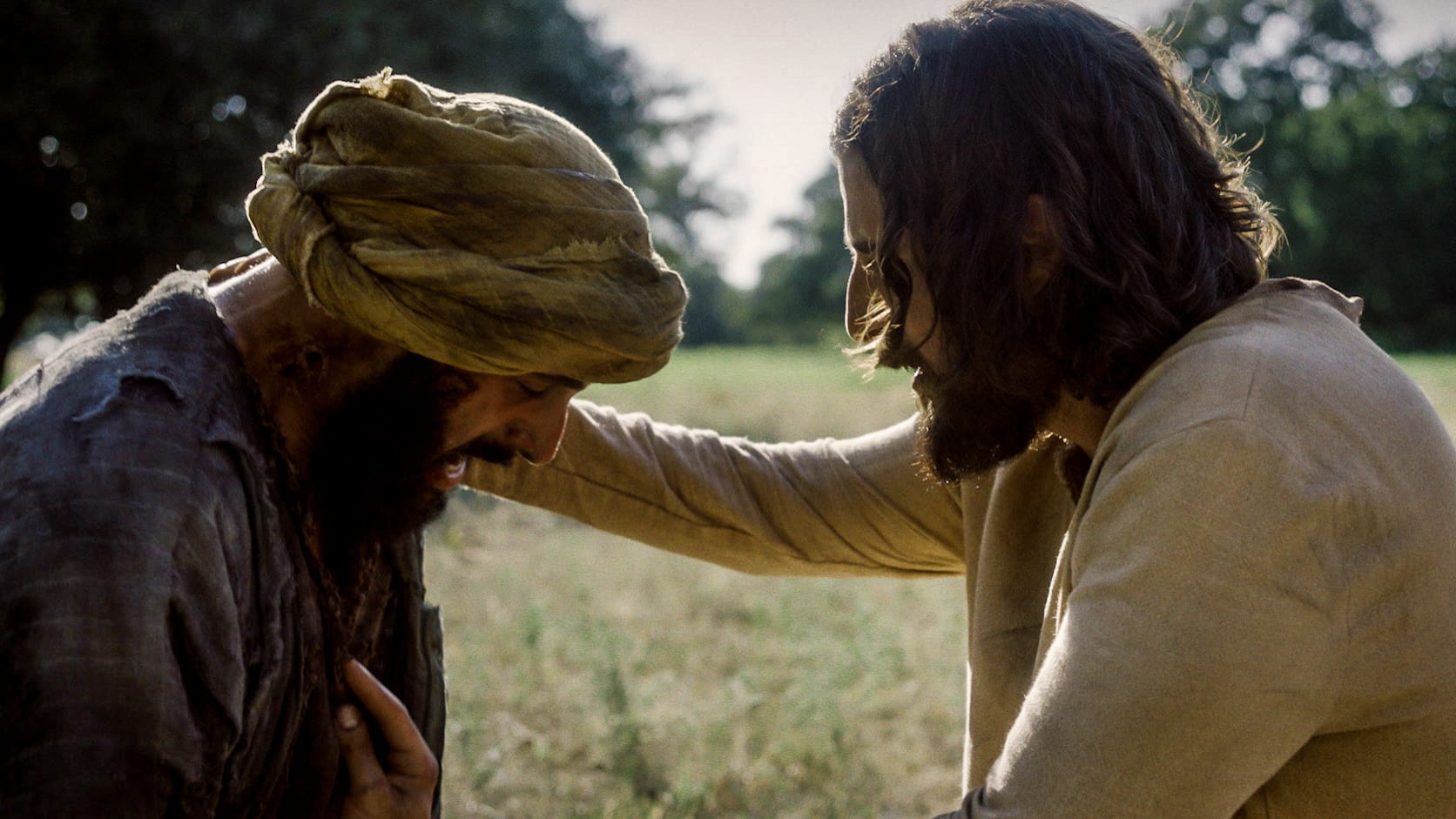
The story of Hosea is a microcosm of the human experience. In chapter eleven, God appeals to the people to understand how much He loved His people. God loved Israel, but the people loved the Baals (1-2). God healed them, but they did not know that He did (3). He held them with cords of love (4), but they preferred the bonds of Assyria with their swords and their fires (4-7). One way God depicts this is by saying, essentially, I bent down to feed them, but His people were bent on turning from Him (4,7). 

Have you ever reached down to feed your child only to have that child bend away in disgust and disapproval? Especially is this true when the food is good for them but does not taste good to them. Hopefully, in the process of training and development, they get over this tendency. Yet, God paints the picture of His children doing the same thing as they reject their Almighty Creator for a world that hates them.

When Hosea says God “bent” down, he uses a word found over 200 times in the Old Testament. Often, when referring to God’s outstretched hand, the writers are referring to it being extended in judgment against man (especially in Isaiah where we see the repeated phrase, “His hand is still stretched out,” several times in chapters 9 and 10). But that mighty hand is gently reaching down to care for, love, and hold His wayward people. But what do they do when He bends down? With rigid posture, they stubbornly turn away. They call Him “God Most High” but they do not honor Him with submission and obedience.

But then I consider my circumstance. Through Christ, God made the ultimate gesture of reaching down. Jesus allowed Himself to be lifted up on the cross, but this was God extending Himself and His love to me (Rom. 5:8; Gal. 2:20). In my daily life, what do I do with His outstretched hand. Am I ever determined to turn away from Him by my rebellion and self-will? I need to see how utterly foolish and self-defeating that is, and I need to see it for what it is. I am rejecting the love, the help, and the grace of the Omnipotent One who longs to be in a relationship with me. What do I hope to get anywhere else that can even compare to that? Thank God that His Word draws me back and reminds me of what He’s done for me and what He wants to do for me! May I be wise and humble enough to reach up when He reaches down! 

Everything You Want

 Friday’s Column: Brent’s Biblical Bytes

81121814_2462862270639428_5746232403106463744_n

Brent Pollard

There is a rite of passage dreaded by aging music fans; It is the day that your favorite music, your youth’s music, becomes relegated to a niche station on platforms like satellite radio. Fortunately, music providers have found more creative ways of marketing such specialty stations than slapping the “classic” or “oldies” label upon it. Instead, you are now a member of an exclusive club of people with exquisite musical taste. Yes, I am such a club member, and I listened to “my station” while running errands. The unofficial theme of my present love life began playing on the radio: “Everything You Want.” As one who finds illustrations in practically everything, I started drawing religious parallels. However, before you can understand those parallels, I first need to fill you in about the song. 

“Everything You Want” was released by the alternative rock band Vertical Horizon in 1999 and became a hit in July of 2000. It became Billboard’s Most Played Single of 2000. Matt Scannell, the songwriter, explained that an ex-girlfriend inspired the song. She looked for love and acceptance everywhere but the person who loved her the most. Obviously, as a listener unaware of the backstory, I interpreted the song differently. I thought of those times when a member of the fairer sex made an offhanded comment about wanting to meet someone “just like” me. (I seem to live in a place called “the friend zone.”) I wished to reply, “Why do you want ‘just like’ when the original is available?” Unrequited love can be frustrating, as it has been for me, or sad, as with the songwriter. 

Would it surprise you to know God experienced unrequited love too? God compared Himself to the husband of two faithless women, Oholah and Oholibah (Ezekiel 23.1ff). Elsewhere, Solomon admitted his spiritual infidelity in the book of Ecclesiastes. Solomon looked for happiness and contentment in EVERYTHING but what ultimately mattered. After his vain pursuit of such things, Solomon says, “The conclusion, when all has been heard, is: fear God and keep His commandments, because this applies to every person.” (Ecclesiastes 12.13 NASB1995) The famous baseball player-turned-preacher, Billy Sunday, once summed up such people as Oholah, Oholibah, and Solomon. They have only enough religion to make them miserable. Sunday added, “If there is not joy in religion, you have got a leak in your religion.” Indeed. The problem lies not with the Bridegroom but the bride. Yes, if there is no love for Him, or our love has faded, the fault lies in us.  

How do we show our love for the Bridegroom? He says we show our love by keeping His commandments (John 14.15). Is it that simple? Yes, obedience springs from the mindset of putting God and His kingdom first (Matthew 6.33). We stray when we look for fulfillment elsewhere. And for the one yet to put on Christ in baptism (Galatians 3.27), the preference is for another whom he or she believes can bring similar joy: “The love of God enamors me, but the world gives me pleasure without requiring ‘burdensome’ commandment-keeping.” Jesus assures us that His yoke is not a burden (Matthew 11.28-30). As Saul discovered on the road to Damascus, we only hurt ourselves when we fight against that yoke. Jesus told Saul that he was kicking against the sharpened sticks (i.e., goads) used to pen cattle (Acts 26.14). Thus, I urge you, whether you have left your first love like Ephesus (Revelation 2.4) or have not confessed your love for the Savior, that you don’t ignore the Greatest Love you have ever known or can ever know (John 3.16). 

It may seem odd to close devotional thoughts out with secular lyrics, but I will do so anyway. I pray that you do not find a relevant metaphor for your relationship with Jesus Christ in these lyrics. He loves you. Don’t make His an unrequited love: 

“He’s everything you want 
He’s everything you need 
He’s everything inside of you 
That you wish you could be 
He says all the right things 
At exactly the right time 
But he means nothing to you 
And you don’t know why.” 

Works Consulted 

“Vertical Horizon.” Billboard, Billboard Media, LLC, www.billboard.com/music/Vertical-Horizon/chart-history/HSI/song/67304

Erica. “Out and About in Jax.” Out and About in Jax: Interview with Lead Singer of Vertical Horizon Matt Scannell, Blogger, 18 Nov. 2010, web.archive.org/web/20120326110903/www.outandaboutinjax.com/2010/11/interview-with-lead-singer-of-vertical.html

“Vertical Horizon – Everything You Want Lyrics.” MetroLyrics, MetroLyrics, www.metrolyrics.com/everything-you-want-lyrics-vertical-horizon.html


The Unified Church

Thursday’s Column: Carlnormous Comments

tempImagehquiDk

Carl Pollard

In a society of division and separation, many churches have begun to struggle with unity. Members are bickering with each other, elders are unsure of how to respond to the events that have unfolded in the past year, and deacons are struggling to maintain the proper relationship with each member.. All of these factors combined has caused several churches to split or lose the unity they once had. 

Paul writes in 1 Corinthians 11:17ff  that some who came to worship would be hungry, while others would be drunk and incapable of edifying each other. His point? Far too many churches are split due to a lack of understanding. We fail to understand why it is that we assemble together in the first place. Having a unified assembly starts with the individual. No church will find harmony if each member is unwilling to submit to God’s will and to His church family. 

When we come to worship, there are key aspects that we must insure take place (1 Corinthians 14:12-25). We must make sure what we do edifies others (v. 12). Paul in the context of tongues and prophecy says,  “So with yourselves, since you are eager for manifestations of the Spirit, strive to excel in building up the church” (14:12). 

Our actions must help build up the Christians around us. Our words must edify our brothers and sisters who are dealing with problems we may never even know about. And so the questions we must constantly be asking ourselves are these: How am I edifying? Am I being an encourager (making my fellow Christians stronger)? Am I building up others (boosting their confidence to help them deal with the world)? Am I promoting unity? 

As humans we thrive on encouragement.  We feel good when we receive a compliment. That’s because there is power in edification. As fellow brothers and sisters we should be actively trying to find ways to build each other up. 

This also means we must be sure to understand the power of our words and actions. Rather than spreading gossip or discord with our lips we must make it a priority to edify, encourage, lift up, serve, compliment, and look out for the good in our church family.

Effective

Wednesday’s Column: Third’s Words

1C7A60F4-5581-47D0-BD3D-C752D2F0A072

Gary Pollard

How do we know if we’re effective Christians? We’ll look at II Peter 1.5ff for answers.
 
  1. Faith is a starting point (5). Believing in God is critical, but far from adequate (James 2.19).
  2. Add excellent character to faith (5). This word is αρετή, which describes someone with dedication to a flawless character, often in a civic setting. In this case, a character that reflects dedication to God.
  3. With great character, add knowledge (5). This is more than an intellectual understanding of something, it is an application of what we know. Gaining knowledge is important, but living it out is what makes us effective.
  4. With that knowledge we have to add self-control (6). This means restraining emotions, impulses, and desires.
  5. Self-control should naturally lead to endurance (6). This is the ability hold up under difficulty. It naturally follows self-control, a quality that gets us outside of self. Once we adopt a selfless and restrained character, we can more easily deal with life’s difficulties.
  6. With these qualities in place, we adopt godliness (6). It is interesting that godliness is this far down the list! Godliness comes after faith, excellent character, applied knowledge, self-control, and endurance.
  7. Godliness should naturally lead to affection for our church family (7). We can’t claim to be godly and not have affection for our own eternal family!
  8. With that affection must come a selfless kind of love (8). “If these qualities are yours and continue to grow, you will not be ineffective or unfruitful in the knowledge of our lord Jesus Christ” (8).


THE BLINK

Tuesday’s Column: Dale Mail

Dale Pollard

God created the world in 6 days.

144 hours. 

8,640 minutes. 

518,400 seconds. 

That’s not a lengthy period of time to create the human experience but it’s all destined to end in an instant. Just like that, time is gone— 

everybody. Everywhere. Will be carried off into eternity. 

The blink of an eye happens in 0.3 of a second. 

God gave us that ability so that we might protect our delicate corneas and sclera from dust particles and other small debris which easily aggravate the eye. 

The reflex and speed of the human blink is testimony to our mighty Creator’s designing ability but in His divine wisdom, He knew the blink would also be an illustration for the way in which He will return on day. 

The average person will blink 15 to 20 times a minute.

900 to 1,200 times an hour.

14,400 to 19,200 times a day.

100,800 to 134,400 times a week.

That’s between 5.2 and 7.1 million times a year. 

In other words, it seems like God intended to remind us all millions of times a year that He is coming back.

The blink of an eye occurs in 0.3 a second. 

You can’t hear the gospel message in that time.

You can’t believe that Jesus is the son of God in that time.

You won’t be able to repent in that amount of time.

You couldn’t confess Jesus as your Lord and Savior in that time.

You certainly can’t be immersed in water for the forgiveness of sins in that time. 

“In a moment, in the twinkling of an eye, at the last trumpet. For the trumpet will sound, and the dead will be raised imperishable, and we shall be changed.” – I Cor. 15:52

Now is the time to prepare for that last and final blink.

Breaking The All-Time Assist Record

Monday’s Column: Neal At The Cross

IMG_1922

Neal Pollard

The FIBA basketball glossary defines an assist as a pass to a teammate that directly leads to a score by a field goal (a basket scored on any shot). When I was in High School and college, Duke University had a guard named Bobby Hurley who would break the all-time NCAA record for assists with 1076 in 140 games (sports-reference.com). That means an average of almost eight times per game, he gave up the ball to a teammate whose three-point shots, slam dunks, or other baskets made the crowds stand up and cheer. While knowledgeable enthusiasts of the game appreciate the importance of the “assist man,” the average fan may miss the vital contribution of the one making that assist. But the very concept suggests unselfishness and one with a team mentality. For them, satisfaction and enjoyment comes in a well-timed, well-placed contribution that allows others to get recognition and praise.

Scripture places a great premium on the person who assists others. Our first thought may be financially. Paul tells the Ephesian elders that he had taken care of his own financial needs (and of those with him) while doing missionary work, recalling words of Jesus not recorded in the gospels that “it is more blessed to give than to receive” (Acts 20:35). In the matter of “giving and receiving” (Phil. 4:15), Paul encouraged a mindset that applied to more than just monetary things. It was not a mind which sought “after their own interests, not those of Christ Jesus” (2:21). It was a “humility of mind” that could “regard one another as more important than” themselves, that could “look out” not merely for their “own personal interests, but also for the interests of others” (2:3-4). It is the Christ-like heart that chooses to “please his neighbor for his good, to his edification” (Rom. 15:1-3); cf. 1 Cor. 10:24,33). Oh, to say with Paul, “So then we pursue the things that make for peace and the building up of one another” (Rom. 14:19).

Would you like to be the assist-leader in your home, in your congregation, and in your community? Look for ways to put others in the spotlight for their efforts and kindness. That may mean reorienting how you see life, looking to give glory and not needing to have it. What a righteous revolution would occur when our focus would be on how to make others look good, helping others to be appreciated and recognized, and setting others up for praise and admiration. It will in no way hinder us from receiving the highest accolade of all, given by the most important witness–the One who sees all with perfect perspective (Ecc. 12:14). A “well done” from Him has eternal implications (Mat. 25:21,23). What more do we need than that?!

The Shadow of Things to Come 

Friday’s Column: Brent’s Biblical Bytes

81121814_2462862270639428_5746232403106463744_n

Brent Pollard

Standing before a lantern flashlight, I happened to notice my shadow on the wall. I won’t lie. I was displeased by what I saw. My large stomach? No, that is not what bothered me. That has been with me most of my life. What disturbed me was seeing evidence of how advanced my ankylosing spondylitis has become. To put what I witnessed in self-deprecating humor: my shadow confirmed that a certain cathedral in France could hire me to be a bell ringer. I should start practicing my dialogue. “Sanctuary!”  

Though I am confident of my person at this point in my life, I appear to be hunched over with insecurity since my head seems downcast. I admit to being perturbed by that since confidence is a part of the initial impression one makes on another. I must bend my knees to straighten upright (somewhat). It isn’t easy to walk with your knees bent! I take a TNF inhibitor to slow the progress. (Ankylosing spondylitis has no cure.) However, my shadow is a preview of things yet to come, the substance of who I will later be. If only my material substance was going to be as marvelous as the spiritual “substance” I will eventually enjoy (1 John 3.2).

Paul calls the Old Testament the “shadow of things to come” (Colossians 2.17). The New American Standard Bible adds the adjective “mere” (“a mere shadow”). Yet, what the Old Testament portended was the wondrous substance of Christ. It is odd to see the shadow of something before seeing that which cast the shadow, but that was the case with God’s eternal plan. One might philosophize about humanity’s ability to witness the substance first that he could not do so.  

Suppose you recall the people’s reaction to Moses’ glowing face after he had been in God’s audience (Exodus 34.29-30). In that case, you ponder whether they could have endured seeing something as glorious as the transfigured Christ, like Peter (Matthew 17.1ff). Whatever the reason, God had selected the optimum time for the incarnation of Christ. That time coincided with the Roman Empire’s days (Daniel 2.40-45; Galatians 4.4). However, even then, the appearance of Christ remained as unexpected to them as vegetation sprouting from the parched ground (Isaiah 53.2). 

Paul said that this “shadow” served like a tutor taking people to Christ (Galatians 3.23-25). A “tutor” during the days of Paul was a servant who took the master’s children to their teacher. In the twenty-first century, we might call the Old Testament the “bus driver.” I can recall several of the bus drivers I had in my youth. I think a couple of drivers would serve as a good role model, but at least one would have invited me along to commit mischief.  

We note that bus drivers only need a high school diploma with no disrespect intended toward bus drivers. (I’ve had family serve as bus drivers.) On the other hand, teachers must go to college and earn a specialized degree. The teacher is the one to whom you entrust the child’s education. Yet, we have people showing a preference for the “bus driver” today. These prefer the shadow to the substance. That preference is not in the best interest of his or her undying spirit. 

In what ways do people show a preference for the shadow? For example, in worship, they might indicate a preference for manmade mechanical instruments of music allowable under the Old Testament but unauthorized in the New Testament (cf. Ephesians 5.19; Colossians 3.16; Hebrews 13.15). In Hebrews 8-10, the Hebrews’ writer discusses at length the necessity for covenant change and the transference of authority from one to the other. Saying one can use a guitar or piano because David employed a lyre in his songs overlooks that David lived in the shadow. 

People also show a preference for the shadow when doing things like following the kosher diet of Judaism for religious purposes. Some of these same people will likewise insist that the day of worship remains on Saturday. Even though Gregory XIII, an apostate from the Faith, changed the calendar, he did nothing to change the verbiage indicating Sunday (“the first day of the week”) as the day of observing Christ’s memorial feast and giving of one’s means (Acts 20.7; 1 Corinthians 16.1-2). We might also note that when people prefer the religious use of iconography and incense, they likewise demonstrate a desire to live in the shadow rather than walking by faith (2 Corinthians 5.7). 

Yes, the Old Testament was only the shadow of things to come. It cannot save (Hebrews 10.1-4). We can enjoy and fellowship with the Substance, Jesus Christ. Come out from the shadow today! Live in the blessed Sonshine of Jesus Christ.   

It’s Time To Wake Up

Thursday’s Column: Carlnormous Comments

tempImagehquiDk

Carl Pollard

Lately I’ve been shocked at the worldliness I’ve seen around me…oh wait, no I haven’t because it’s THE WORLD! The world is a place filled with corruption and pure evil. We shouldn’t be surprised when a godless world continues to live in darkness. But what has been a shock is the despair and hopelessness that has shown itself in the Church. We of all people should know better than to put our faith in man because eventually a nation that has left God will fail. 

It’s sad to see the hopelessness that has crept into the Church, but it is easy to see why it has happened. We are surrounded by sin almost 24/7. At times, the news twists reality to pander to the majority or to push their own opinions. No one wants to read about unity, peace, and pleasant events. Some news outlets go out of their way to find drama and depressing stories. Social media isn’t exactly helping, either. It is filled with false hope, fighting, and fake connections. Rulers and those in power have lost the trust of many by showing their true colors. Once again we shouldn’t be shocked by the world’s selfishness and greed.

Everywhere we look, it seems as if there is nothing but hatred, lies, filth, and sin. That’s why it has never been more crucial for the Christian to stand up and proclaim the power of God. It is time to defend our beliefs. It is time to show our convictions. It is time for a wake up call. Now more than ever is the time to trust in the King of Kings. We have hope in knowing that Jesus is Lord of everything. He has overcome the world and now we must have the courage to proclaim Him to those in sin. 

Christ is the Savior of the world, the ONLY Savior. He is the only hope for mankind. We know this is true, but sometimes we need a reminder.  We need a reminder that Christ is bigger than the world around us and that we shouldn’t worry because God is in control. Sometimes we need to be reminded of Who Jesus is.  

John 1:1-5 says, “In the beginning was the Word, and the Word was with God, and the Word was God. He was in the beginning with God. All things were made through him, and without him was not any thing made that was made. In him was life, and the life was the light of men. The light shines in the darkness, and the darkness has not overcome it.” 

The next time you feel discouraged remember Who OUR Savior is. He is: 

      • The Almighty God (Jn. 1:1)
      • The Creator of all things (3)
      • The Source of Life (4) 
      • The Conquerer of Darkness (5) 

It is time we start acting like we actually believe these facts. It is time to wake up and proclaim these truths with conviction to a lost and dying world. 

Crisis

Wednesday’s Column: Third’s Words

Gary III

Gary Pollard

  • 1918 had the Spanish Flu pandemic that killed at least 675,000 people in the United States and 50,000,000 worldwide.
  • 1929 birthed the Great Depression, a multi year period of societal upheaval and economic collapse.
  • 1941 ultimately led to our involvement in a world war after the attack at Pearl Harbor.
  • 1963 saw the dramatic assassination of JFK.
  • 1986 put a damper on the excitement of space exploration with the tragedy of the Challenger explosion.
  • Violent crime rose dramatically from the 60’s to the 90’s, enough that most people no longer left their houses unlocked and were less likely to trust their fellow people.
  • 2001 marked the beginning of a global war on terror with an awful display of evil.
  • 2008 saw the Great Recession, the aftermath of which may be one of the causes of our great political division.
  • 2020 was a train wreck we need not discuss further.
 
This is by no means an exhaustive list! It covers some major events that affected Americans in the last 100 years, but much more could easily be said about the negatives of our history.
 
This is important: Immunity was attained after two years of the Spanish Flu pandemic. Lifespans increased by a few years during the Depression and led to a hearty generation of folks who helped to win the Second World War. That war, as horrible as it was, led to many incredible breakthroughs in medical and other sciences, not to mention historically unprecedented economic prosperity. The 1960s at least exposed the ungodly, ugly nature of hatred and racism, leading to some positive changes that were long overdue.
 
Even in the worst of times, good happens. But even if it doesn’t, hope is invulnerable! For a Christian, these issues are simply the result of a fallen world and they’re temporary. The end of life for us is the beginning! We have one important thing that no crisis can destroy: hope. We are absolutely certain that death will be the moment we get to live in a perfect world with our creator (see also II Peter 3.13ff; Matthew 19.28; Ephesians 1.18ff).
 
Nothing can or should dampen our faith in God, our hope for a better life, our mission to pull people out of darkness, our attitude, our love for each other, our dedication to spiritual growth, our responsibility to take care of people, our resilience in difficult times, and our critical compulsion to emulate Jesus in every possible way while we still breathe.

“In The Wilderness” — The Preacher Pollard Blog

Tuesday’s Column: Dale Mail Dale Pollard The original Hebrew name literally mean, “In The Wilderness.” Later on, Greek translators referred to these inspired writings as “Numbers.” For the Israelite people, it was the historical records of how they were shaped and Divinely-groomed while making an unnecessarily long hike through desert lands (Not to be confused […]

“In The Wilderness” — The Preacher Pollard Blog

“In The Wilderness”

Tuesday’s Column: Dale Mail

image

Dale Pollard

The original Hebrew name literally means, “In The Wilderness.” Later on, Greek translators referred to these inspired writings as “Numbers.” For the Israelite people, it was the historical record of how they were shaped and Divinely-groomed while making an unnecessarily long hike through desert lands (Not to be confused with “dessert land” which sounds far better). The book of Numbers also served, and still serves, as a way for God’s people to get a bird’s-eye view of how our lives are significantly better when we are following our Leader. While there are far too many spiritual applications to be in just one article, here are three great ones. 

  1. There is no one more patient than the Lord. It’s easy to cringe when the Israelites complain or rebel time and again but God showed them more patience than any of us are capable of. 
  2. God always keeps a promise. It may have taken them 40 years to reach Canaan, but He kept His promise. We’re on a wild ride right now as a country, but God is predictable when it comes to keeping His Word. You can make a no-risk bet that heaven is coming and it’s better than what you imagine it to be. 
  3. God is always glorified in the end. When you look at Numbers and the big picture, God is the hero. He’s rejected and tossed aside by the people on several occasions, but just like at the end of this age— He gets all the glory. 

THE CONNECTION BETWEEN HUMILITY AND RELIEF

Monday’s Column: Neal At The Cross

IMG_1922

Neal Pollard

“Therefore humble yourselves under the mighty hand of God, that He may exalt you at the proper time, casting all your anxiety on Him, because He cares for you” (1 Pet. 5:6-7). Peter has just told younger men to be subject to elders (1-5), and for each group to conduct themselves with humility toward each other. The motivation for this is to avoid God’s rejection. Peter quotes Proverbs 3:34 to reinforce the point. 

Peter then urges everyone to humble themselves in their relationship with God. That’s the same word that describes what Jesus did by being obedient to the point of death on the cross (Phil. 2:8). It means to go lower, to surrender prestige or status (BDAG 990). This humbling concerns a specific aspect of all of our lives. Each of us has “anxiety” to cope with. By definition, an anxiety is “a feeling of apprehension or distress in view of possible danger or misfortune” (Louw-Nida 312). 

Right now, there are no doubt things which make you apprehensive and distressed. You may be facing danger or misfortune. On some level and to some degree, that describes the pressure and reality for nearly all of us these days. As beings created with the freedom of choice, we can try to cope with that ourselves with our own coping tools. Maybe, in our pride, we boast in our own ability to handle it all. Not only is that a delusion and a self-deception, it is flirting with disaster. Why not choose a better way? Peter lays that out for us. 

Let’s survey the facts here.

GOD IS ABLE–You are entrusting yourself in His mighty hand. He is in control and has the power to rule in every situation. This is the same hand He holds you in the hollow of (Isa. 40:12). 

GOD IS AWARE–He has the exclusive benefit of perfect foreknowledge. He knows what is going on now and He can see what will happen. As He works through time and events, He is choosing the proper time to lift you as you have surrendered yourself to His power and His wisdom. He knows everything that is going on in your situation. In fact, He knows about it at a much more intimate level than even you do.

GOD IS AFFECTIONATE–What motivates Him to act? He cares for you! Peter is telling us to throw all our anxiousness on God, like the disciples threw their coats on the colt so that Jesus could sit on it (Luke 19:35). Take each burden, fear, and worry you are carrying right now, that is weighing you down, and toss it into His mighty hand (a hand you will examine and find very capable–read Isaiah 40:12 again). Peter says He feels anxious concern for us. Sure, He can handle it. But it’s more than that. He wants to handle it. Why? Because you mean that much to Him!

I read this promise and I admonish myself. Why am I trying to carry this all by myself when God is offering to do this for me? He tells me to get myself out of the way and let Him handle this. Faced with my limitations and His limitless resources, it is futile and foolish to face these distressing matters in any other way! 

“All Our Yesterdays” 

Friday’s Column: Brent’s Biblical Bytes

81121814_2462862270639428_5746232403106463744_n

Brent Pollard

The original Star Trek series’ penultimate episode (“All Our Yesterdays”) had a compelling plot about how the residents of a planet chose to save themselves from impending doom from when their star would go nova. There were disks within a library enabling travel through a machine to any point in the planet’s past. Kirk, Spock, and McCoy, the show’s leading trio of protagonists, inadvertently got sent back into two different epochs of the planet’s history. Fortunately for the three, their bodies had not been “prepared” for living in the past. Thus, they could return. No sooner were they able to return to the library that the librarian, Atok, leaped into the machine just in time to be spared the planet’s destruction. Kirk signaled the ship to transport himself, the science officer, and the doctor to theEnterprise. In the remastered version, the star explodes, and you see the planet they had been on being dissolved as the ship moves away and the end credits begin to roll.   

“All Our Yesterdays” is one of my favorite Star Trek episodes. It is a favorite since I wonder what it might be like to live within our planet’s past. If I could pick up with my life in the 1950s, would I do it? Before watching a program about the CIA’s overthrow of a legitimate Guatemalan government in the 1950s to help an American banana company, I might have said, “yes.” It turns out that my idealized slice of Americana had a moldy underside. I had seen other signs of this, of course. However, I still clung to the idea that the 1950s HAD to be better than today. The politicians of the 1950s were just as “swampy” as they are today, though. The only difference was how the press chose to cover them. And even if there were the “June and Ward Cleavers” of America, vis-à-vis Leave It to Beaver, there were likewise the Rosa Parkses having to sit at the back of the bus and drink from separate water fountains because of skin color. As Solomon reminds us, “That which has been is that which will be, and that which has been done is that which will be done. So there is nothing new under the sun” (Ecclesiastes 1.9 NASB1995). That truth means that there truly was no ideal time for fallen humanity, despite our desire for there to be so. 

Psychology suggests we indulge in nostalgia more often when we are depressed than happy. We use nostalgia like medicine to treat our sadness. However, like the “wrong” flu shot, e.g., Type A vaccine for a Type B outbreak, it may not rectify the problem but make it more bearable. Since nostalgia does not “solve” our problems, it is incredible that it becomes a panacea for some. Such cannot be said of the Apostle Paul, though. The Apostle Paul was not one to indulge nostalgia even when reflecting on his past (Philippians3.2-11). He considered his past achievements under Judaism as rubbish (8). Paul told us to strive to live in the future of a better tomorrow instead (Philippians 3.12-14). Paul said that his “today” belonged to the church’s work (Philippians 1.21-26). And Paul encouraged us to imitate him as he imitated Christ (1 Corinthians 11.1).   

It may be that all our yesterdays may seem sweeter to us but may we ever “press on toward the goal for the prize of the upward call of God in Christ Jesus” (Philippians 3.14 NASB1995).  


Two Cats On A Clothes Line

Thursday’s Column: Carlnormous Comments

carl-pic

Carl Pollard

Did you know that there can be union without having unity? A union is an association or group formed by people with a common interest or purpose, while unity is the state of being united or joined together as a whole. There can be union without unity. For example, you can tie two cats together by their tails and throw them over a clothes line. By doing so you have created a union, but there won’t be unity between these two cats, only fighting and chaos.

The church formed by Christ is a union, but that doesn’t mean there will always be unity. God understood this when He created the church. He knew that we wouldn’t always get along, so He gave us His word to help us in this matter. Paul spends a few chapters in the book of Romans discussing Christians and their relationships. In 12:17-13:14 he writes about our relationship with the world. In Romans 14:1-16:27,  his focus is on getting along with our brothers and sisters in Christ.

Beginning in chapter 15, Paul spends a few verses talking about the responsibility of those who are strong in faith. Romand 15:1-3 says, “We who are strong have an obligation to bear with the failings of the weak, and not to please ourselves. 2 Let each of us please his neighbor for his good, to build him up. 3 For Christ did not please himself, but as it is written, “The reproaches of those who reproached you fell on me.”

Paul commands the strong in faith to bear the weakness of those without strength (be patient), not be pleasers of self (Phil. 2:3-4), do that which is for the weaker ones’ good, and follow the example of Christ. Paul then spends a moment talking about the power and importance of the Old Testament in verse four.. It was written to teach us (there’s value in studying the O.T.), it was written to encourage us (by reading of faithful people, as in Heb. 11), and it also helps us achieve unity through its teachings. The rest of this chapter is focused on unity. We are given many commands on how to grow our relationship with each other.

Why should we follow these commands? It brings about unity in Christ. Have you ever driven a car that backfires? Or that isn’t firing on all cylinders? It is usually caused by an engine that is out of timing, faulty wiring, or fouled spark plugs. A church that isn’t unified in Christ, runs like a car that is mechanically unstable. Without unity and timing in the cylinders, you experience a lack of horse power and worsened gas mileage. It fails to function the way it was designed to run. The Lord’s body needs maintenance and work in order to function properly.

Our relationship with one another helps us to achieve this perfect unity and efficient operation. A great example of unity is a snowflake. While it is a rare sighting in Alabama, we know what they look like. Snowflakes are one of nature’s most fragile things, but just look at what they can do when they stick together. The church is made up of fragile and imperfect people, but through unity we can accomplish so much more for Christ.

Proceed

Wednesday’s Column: Third’s Words

Screen Shot 2020-12-02 at 7.31.57 AM

Gary Pollard

I have some hobbies/passions that require caution: motorcycles, shooting, off-roading, auto mechanics. These are things that could be dangerous, but are enjoyable and safe if appropriate caution is used.
 
The reason any person would get on a motorcycle or under their vehicle or into a swamp or behind an optic is the reward associated with those activities. There’s no freedom like riding back roads or around beautiful scenery on a cruiser. Saving hundreds on auto repairs makes the effort worth it. Seeing how much mud/water/rock/terrain you can keep moving through is a blast. Racing the timer and improving consistency, all while hearing the satisfying “ding” of a steel target is exhilarating.
 
If an activity is enjoyable – potentially risky, but fun – we tend to do it anyway, with appropriate caution. Even those who don’t enjoy these kinds of activities are likely licensed drivers and are glad to assume the risks involved with driving (according to the WHO, 1.25 million die in a wreck worldwide every year, with an additional 20-50 million getting injured or disabled).
 
I cannot justify being willing to assume risks in many other aspects of my life, but cutting out the one aspect that impacts eternity. The CDC has accidents as the third leading cause of death in the U.S. Most of us drive to go anywhere or do anything more than a mile or so away, and we do this without a second thought.
 
Even if Christian fellowship were the most dangerous activity possible (for many in the early church it was, for some today it might be), we should be willing to pursue it. We could never hope for a greater reward than we will receive for the risk we might assume when we come together as a church.
 
(Acts 2:42; Hebrews 10:25)

Six Lessons From The Tower of Babel

Tuesday’s Column: Dale Mail

DaleandJanelledirectorypic
(Happy birthday to Janelle)

Dale Pollard

 
We all know the story of the Tower Of Babel. It’s the event that gave us all the diverse languages of the world. That account is not just for our entertainment or education, but there are many spiritual applications that can be pulled from the event. Here are just six from Genesis 11:1-9. 
  1. What we are building will only be successful if God designed the blue prints. What are we building? Where do we choose to place our time and effort? Making a name for ourself? Making the most money? Getting the most pleasure out of life? If this is the life we’re building, like the foolish man that’s a life built on sand. 
  2. We are free to do as we want, but for every bad decision there are consequences. 
  3. There is a truth to what God said about our ability to accomplish much as a unified people. There’s also a positive side to this not so positive account. When the church body is unified there is no limit to what we can accomplish. When there’s dissension we are weaker. 
  4. Ignorance does not mean a blissful existence. It was ignorant to think that a closer relationship with God involved building a stairway into the sky that in their minds would allow God to have the ability to descend to earth. The opposite is true. God built us a way to go to Him. 
  5. Be mindful of the presence you keep and the vision you share. It seemed that most if not all mankind at this time was unified under one vision. “To make a name for themselves,” they worked together. They planned, schemed, spent resources and time to build something that would change the world forever— but it wasn’t God’s vision. The presence you keep and the shared vision matters. What are we building? 
  6. Accounts in the Bible that seem unrealistic or mythical should not weaken our faith but strengthen it when we do our due diligence in digging into His word. God is capable of great things, and that hasn’t changed. We serve a powerful God who has big plans for the world. Are we willing to side with Him? 

L-E-O

Monday’s Column: Neal At The Cross

IMG_1922

Neal Pollard

I am a lifelong fan of the SEC (Southeastern Conference), as a diehard, if long-suffering, Georgia Bulldog. In fact, I was born in Oxford, Mississippi, home to the Ole Miss Rebels football team that took on and beat the Indiana Hoosiers on January 2 at the Outback Bowl in Tampa, Florida. But, I could not help but love the charisma and philosophy of Indiana’s head football coach, Tom Allen. They had a remarkable season, giving Ohio State all it could handle in the Big Ten Championship game. They are up-and-comers. They are over-comers. A big reason why is Allen’s motto. It has helped them deal with internal tragedy and loss. It has brought them together in a year that tore so many people apart, politically, racially, and philosophically. The motto is simply “L-E-O”: Love Each Other. He preaches to his players to live for something larger than themselves. He explained, “…You have to live your life with core values and core principles. There are anchors in your life. This is what we talk about all the time, that when these storms come — not if they come, when they come — you have a rock-solid foundation that cannot be shaken” (Jon Blau, Bloomington, IN, Star-Times, 1/3/21). He sees his opportunity as head coach as about much more than wins and losses, but about shaping young men at a crucial time in their lives. And what they need to succeed, he’s convinced, is “brotherly love.”

As fantastic as that, promoted by a man of faith like Allen, he’s simply echoing the motto Jesus already gave His disciples 2,000 years ago. John records Jesus’ admonition to His followers, when He said, “A new commandment I give to you, that you love one another, even as I have loved you, that you also love one another. By this all men will know that you are My disciples, if you have love for one another” (John 13:34-35). OK, technically, that’s L-O-A, but, when we remind each other, it’s L-E-O. More than a motto, it is our identifying mark. Jesus knew the power of selfless, sacrificial love. Love, defined as “the quality of warm regard for and interest in another” (BDAG, 6), helps us through the storms of life. It gives us something bigger than ourselves to lean on. 

New Testament writers tell us what L-O-A will do:

  • It causes us to serve one another (Gal. 5:13)
  • It roots and grounds us (Eph. 3:17)
  • It helps us show tolerance for one another (Eph. 4:2)
  • It makes us spiritual laborers (1 Th. 1:3)
  • It leads us to highly esteem one another (1 Th. 5:13)
  • It shows us as proper examples of a believer in Christ (1 Tim. 4:12)
  • It will cover a multitude of sins (1 Pet. 4:8)

Of course, the list is much longer than that, but think about the impact we can make on the world, especially right now, if we will work to master such a motto in the body of God’s Son. Love each other! Don’t divide into camps, suspect, prejudge, accuse, isolate from, and indict each other. That’s the world’s modus operandi (M.O.). We do that, and we have nothing to offer them that they do not already have. Offer them love, and you help fill a crucial void. God’s nature is love (1 John 4:8). It’s to be our nature, too! Let’s love each other. A desperate world is waiting. 

“We Have Nothing to Offer but Fear Itself” 

Friday’s Column: Brent’s Biblical Bytes

81121814_2462862270639428_5746232403106463744_n

Brent Pollard

We have entered the vestibule of a new year. Upon reflection, one might realize how subjective the significance of this day is. Neil deGrasse Tyson likes to point this out annually. For example, in 2011, he tweeted: “January 1, 2011: Happy New Year to all –at this arbitrary spot in Earth’s orbit around the Sun.” (Tyson) Consider China. They may observe the Gregorian calendar to conduct global business, but they will not celebrate the new year until February 12, 2021. Why is there a discrepancy? The Chinese, like the Jews, have a lunar-based calendar. God may have created time as a construct in our material universe, but the only “clocks” He provided were the moon and the sun (Genesis 1.14-19), and it is easier to mark time by the moon since we watch it wax and wane. The sun may appear a little lower or higher in the sky, but it is always making its same east-west circuit.  

Even so, we choose January 1 as a special day to begin making necessary or desirable changes to our lives. I would hope that in an age of “fear porn,” the child of God will choose calm. I apologize if the use of that four-letter word is offensive. However, “fear porn” is an expression that has entered our vernacular. Oxford defines this specific usage of the word “porn” as follows: “[in combination or with modifier] Television programs, magazines, books, etc. that are regarded as emphasizing the sensuous or sensational aspects of a nonsexual subject and stimulating a compulsive interest in their audience.” (“Porn”)  Perhaps the definition provided by a user of the less-authoritative Urban Dictionary is more accessible.  “Mainstream Media content that deliberately and enticingly plays on people’s fears about disaster, disease, and death.” (Animalfarm1984) 

While addressing the Great Depression, Democrat Franklin Delano Rosevelt famously stated, “…the only thing we have to fear is fear itself.” Among others, Michael Reagan, speaking of his political opponents, has altered the maxim to be “the only thing we have to offer is fear itself.” (Reagan) I imagine there are those considering that indictment up to debate. However, it is not my point to assign blame to political parties or politicians. Many thrive on instilling fear regardless of political affiliation. As one writer for a pop-psychology magazine opined, fear is “the most powerful motivator of all.” (Wilson)    

I set out to recall a time in my life in which no Chicken Little was trying to scare me about something. I fail to remember a season when all was well with the world. In nearly a half-century of life, alarmists told me of the perils I face from nuclear war, a new ice age, a hole in the ozone layer, acid rain, killer bees, the deforestation of the Amazon region, the policies of Ronald Reagan, Y2K, global-warming-no-wait-let’s-call-it-climate-change-to-cover-all-our-bases, the policies of Barrack Obama, Ebola, the very existence of Donald Trump, the Illuminati, Globalists, Antifa, Black Lives Matter, COVID-19, and, now, Joe Biden’s socialist regime. Phew. Sadly, I have occasionally given such Chicken Littles a greater hearing than the assurances found in God’s Word.  

What was it that the inspired Apostle John said? “You are from God, little children, and have overcome them; because greater is He who is in you than he who is in the world” (1 John 4.4 NASB1995). Jesus created and now sustains creation (Colossians 1.16-17). It is He who will destroy it when the time comes (2 Peter 3.10). In the interim, as God promised Noah: “While the earth remains, seedtime and harvest, and cold and heat, and summer and winter, and day and night shall not cease (Genesis 8.22 NASB1995).” It may be that we figuratively see the writing on the wall as Belshazzar indeed did in Daniel 5, but even so, God will be our Rock. Even if the mountains crumble and fall into the sea, He is still our refuge (Psalm 46). It is OK to face uncertainty with apprehension like Habakkuk did as he awaited the impending Babylonian invasion (Habakkuk 3.2,16). Yet, like Habakkuk (and the Apostle Paul), we must bravely move forward, recognizing our dependence upon Providence (Habakkuk 3.17-19; Philippians 4.11-13). Regardless of what 2021 may hold, if you seek God and His Kingdom first, God has your back (Matthew 6.33)! 

Works Cited 

Tyson, Neil deGrasse (neiltyson). “January 1, 2011: Happy New Year to all –at this arbitrary spot in Earth’s orbit around the Sun.” 1 January 2011, 2:55 p.m. Tweet. 

“Porn: Definition of Porn by Oxford Dictionary on Lexico.com Also Meaning of Porn.” Lexico Dictionaries | English, Lexico Dictionaries,www.lexico.com/en/definition/porn

Animalfarm1984. “Fear Porn.” Urban Dictionary, Urban Dictionary, 26 June 2020, www.urbandictionary.com/define.php?term=Fear+Porn

Reagan, Michael. “Stories in the News – Ketchikan, Alaska – The Fear Peddlers.” Sitnews, Stories in the News, 15 May 2003, 4:25 p.m.,www.sitnews.net/Columnist/051503_reagan.html

Wilson, Robert. “The Most Powerful Motivator.” Psychology Today, Sussex Publishers, 23 Sept. 2009, www.psychologytoday.com/us/blog/the-main-ingredient/200909/the-most-powerful-motivator