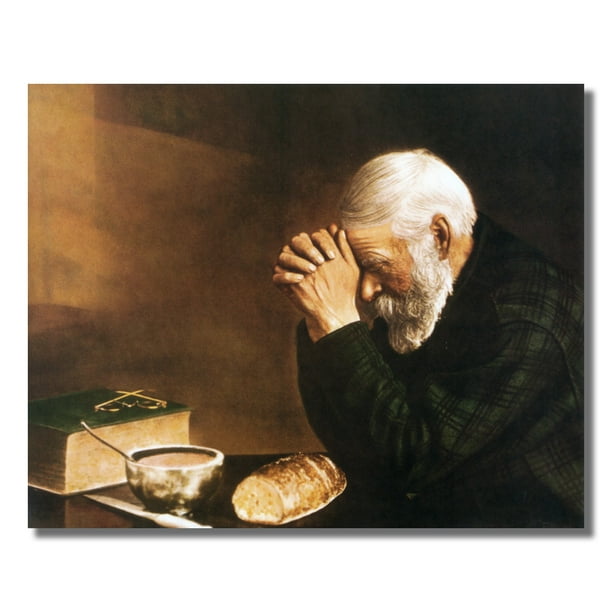
Some of the most powerful messages are often delivered through song. If you want to really show someone how much you love them, you write a song. If you want to tell others about yourself or your family, you write a song. Songs are a great way to get across a message in a powerful way. In the church we sing songs for several reasons.
Paul tells us in Col. 3:16, “Let the word of Christ dwell in you richly, teaching and admonishing one another in all wisdom, singing psalms and hymns and spiritual songs, with thankfulness in your hearts to God.”
We sing to help the word of God dwell in our hearts. We sing to teach each other. We sing admonish and correct. We sing out of thankfulness for God. Since there are so many different reasons we sing, each song has a different message. Some are encouraging, some are reminders, and some are a plea to the sinner. We call some of these “invitation songs. ” And usually these are sung after a lesson as a way to encourage lost souls to respond and return.
“Though Your Sins Be As Scarlet” identifies a major problem that has plagued man since the Garden of Eden, our sin. The choices we make, the way we live, has stained us. This song calls to our attention the sin problem of man. This song is based on Isaiah 1:18, “Come now, let us reason together, says the Lord: though your sins are like scarlet, they shall be as white as snow; though they are red like crimson, they shall become like wool.”
This invitation song shows us the blessing that Christ has given. Though we’ve been stained by sin, they shall become like snow. Pure, holy, undefiled. If you’ve ever spilled grape juice on a white T-shirt, that’s the imagery.
Sin has ruined our hearts, but Christ is the perfect stain remover. He is able to remove every spot and blemish. Rom. 3:23 tells us that all have sinned and fallen short of the glory of God. Do we really think that we could live up to the glory of God himself? Could we have fixed this sin problem on our own? No. And we sing this song to remind us of WHO our solution is.
Through the gift of Christ they will be removed. Though your sins be as scarlet, they shall be as white as snow.
On an old rugged crossJesus paid it all, and all to him I owe. I come just as I am, but I surrender all. Will you cherish the old rugged cross? Do you recognize the blessing and the blood that has washed us whiter than snow?
One of my favorite preachers delivering the invitation in Lexington, KY (2018)
There are just too many voices in the world today muddying the waters when it comes to 21st century Christianity. In fact the term, “Christianity,” doesn’t mean much the average person. In fact, the average person will most likely have several friends who carry this title and they know based on their morals— they’re not really different. Sadly it’s a description that doesn’t describe much, other than an individual that believes in God. That’s really it! This word has been tragically stripped of what we understand to be the most rewarding life you could possibly live. There’s simply no higher calling, there is no greater purpose in life, and you just can’t beat the retirement plan.
Now let’s do something to help the seeking world out.
Let’s make it our priority to understand the church in such a way that we can simplify her mission and her origin.
Here are two terms that will help:
The term “restoration” may sound similar to “reformation”, but the two terms could not be more contrary to each other. Restoration is an attempt to return the church to the pattern we find in the New Testament, while reformation is a changing of what currently exists. It’s a modification or addition which creates something new entirely. The Old Testament is filled with the pleas of the prophets for the people to restore their relationships with God.
2. The definition of the word “denomination” is evidence that restoration is not only possible, but needed. Denomination, in the religious world, describes a branch off of an original. Any branch coming off of the New Testament church, is simply not it.
Five Facts About The Lord’s Church
The New Testament church was established by Jesus, not Luther, Henry the 8th, Calvin, Smith, or Wesley
The New Testament church was established in Jerusalem, not Oxford, London, or Amsterdam
In New Testament times people were told to believe in Jesus, repent of their sins, be baptized by a total immersion of water, and to live faithfully (Acts 2:38, 16:30-31, 2:16, Mark 16:15-16; Romans 6:1-4; Revelation 2:10)
Christians in the New Testament met on the first day of the week to partake in the Lord’s Supper (Acts 20:7)
The New Testament church was a united church, while denominationalism is, by its very nature, divided.
If the church you are a part of can say the same, you can be confident that it is the church that Jesus established. If this is not what the church you are a part of teaches and practices, then perhaps this will be some information that will help you begin a life-changing search to find God’s will for your life.
One of the most intriguing people in all the gospels, to me, is the beggar sitting by the road near Jericho. Mark 10:46 tells us that the man’s name is Bartimaeus. Matthew tells us that there is another man sitting with him, and that man’s name is not given (20:30). This man was shameless in a good way, persistent despite the crowd sternly discouraging him (39). I wonder if there is a more pathetic person disclosed to us in the Bible (maybe Lazarus back in Luke 16). He is needy in at least five ways, according to Luke 18:35-43:
He’s physically impaired (35)–“a blind man”
He’s economically disadvantaged (35)–“by the road begging”
He’s socially outcast (39)–He’s not depicted as a respected member of society, but one to be corrected by the others
He’s emotionally distraught (38-41)–Begging for mercy and longing for sight
He’s spiritually incomplete (42)–When Jesus heals him, He tells the man, “Your faith has saved you.”
I love how the man is so stripped of his dignity, power, and resources that he boldly pleads for Jesus’ help. It may seem strange, but all of us need to get to that place if we will receive what only He can give. He wanted His mercy. When he received it, look at the response. He “began following Him, glorifying God; and when all the people saw it, they gave praise to God” (43). Don’t you want your submissive, obedient life to be a drawing card for others to see their need of God and to glorify Him? God really shows His power when He takes the lowliest and transforms them by what He does with and through them. That’s why I love this account.
How much does your Bible mean to you? Each time we pick it up and read from its pages, we are reading the very words of God. God has revealed His Character, His will, and His love through inspired men. Each time we open our Bibles we are seeing the mind of God.
What an awe inspiring fact to think about.
We aren’t the first ones to feel this way.
In response to the perfect Law of God, David wrote Psalm 19. It is a tribute to the perfection of scripture. As we read through this chapter, David puts into words these feelings of awe and gratitude.
He begins by stating a fact that has always been true.
“The heavens declare the glory of God, and the sky above proclaims His handiwork.”
In a psalm dedicated to the perfect Law of the Lord, David starts by praising the Author. The God of creation, who can be seen in every aspect of our world, is the One responsible for writing such a perfect book. We can look around and the world declares the glory of God. The Author of life itself gave us a book that leads to eternal life.
In verse 7 David describes the Law of the Lord as being perfect. Notice what this perfect Law does for us: it “revives the soul.” The words of God are sure and steadfast. They are truly perfect and are ever relevant to us, His creation.
We continue reading and he goes on to say that God’s Word:
Gives us wisdom (wisdom we would otherwise never have)
Is always right (there is no doubting, thinking that they might be wrong)
His commandments are pure (no false motive)
His word enlightens our eyes (we can now see the truth)
His rules are true
His word is righteous
With such a perfect Law, it is only natural that we should desire it more than Gold. David says in verse 10 that the words we read in scripture are “sweeter than honey.” His response to God’s word should be every Christian’s response. We should value and cherish God’s perfect Law.
The Bible is a blessing like no other. In its pages we are warned about the things we should avoid. By keeping His commands we receive a great reward. Psalm 19 is a beautiful tribute to a beautiful book.
With these facts in mind, how much does God’s book mean to you?
It was 2008, just 20 days shy of his 90th birthday, when Fred Baur died. On the way to the funeral home, his kids decided to stop at a nearby Walgreens to pick up some salty snacks. They debated for a bit, should it be sour cream and onion, cheddar cheese maybe? Larry and his siblings finally decided on Original.
You see, Fred adored his kids, but his passion was snacks. His accomplishments included a variety of frying oils and freeze-dried ice cream.
Fred was an American organic Chemist that had received both his masters and PhD at The Ohio State University, and it was 1966 when P&G came calling. Evidently, in the 1960s, there was a problem with the packaging and shipping of potato chips. By the time the consumer would pick up potato chips at a store, well, they were merely in pieces. This is where P&G thought Fred could help solve this problem.
After two years of experimentation, Fred developed a chip of dried potato flakes, added a bunch of unpronounceable ingredients, and cut them into thin hyperbolic paraboloids. With this shape, Fred could neatly stack his chips into his vacuum sealed tube.
By this time, you know that I am referring to Fred’s invention of Pringles, but the story doesn’t end there. Fred still wasn’t done with his invention.
There were problems:
First and foremost, they tasted like sawdust, so Fred spent another 2 years to improve the taste. Then, another issue. Frito-Lay sent lawyers because they said Fred’s chips weren’t potato chips at all because they were just 42% potato.
After some time and haggling, they decided to call them potato crisps.
Fred persevered.
He gave birth to an iconic brand that many of us still enjoy today. Through years of experimentation, development, and disappointments, lawyers-at one point P&G wanted to trash the idea.
But Fred persevered.
He was able to see his brand break 100 million in sales. He was able to see it break 500 million in sales. However, he wasn’t there in 2011 when P&G sold Pringles for almost 2.5 Billion Dollars.
That brings us back to 2008 when Fred’s children showed up to the funeral home with the Original flavored can of pringles. Fred’s wish was to have his ashes be placed in a Pringles can when he passed.
Fred got his wish.
As great as this story is, we wouldn’t have this story if it wasn’t for Fred’s perseverance. And as great as Fred’s perseverance was, we have so many examples of greater perseverance in the Bible.
Consider Joshua, Job, Jeremiah, Nehemiah and our greatest example of perseverance, Jesus. These are just a few of the many examples the Bible gives us.
Two points I want to quickly make about Perseverance, and the lesson is yours.
Number 1. WE HAVE A NEED FOR PERSEVERANCE.
It’s not a matter of if, but when…Christians Will Face Tribulations in Life. Jesus says in John 16:33, “These things I have spoken to you, that in Me you may have peace. In the world you will have tribulation; but be of good cheer, I have overcome the world.”
Christ never promised us that this life would be a bed of roses. The Gospel never said we’d go to Heaven on “flowery beds of ease.” Rather, we are promised that we shall have hardships and tribulations in this life, especially if we are faithful Children of God.
Only those who persevere receive the reward. Revelation 2:10-11 tells us, “Do not fear any of those things which you are about to suffer. Indeed, the devil is about to throw some of you into prison, that you may be tested, and you will have tribulation ten days. Be faithful until death, and I will give you the crown of life.”
Number 2. PERSEVERANCE IS DEVELOPED IN TRIBULATION.
Romans 8: 18-28 can be summarized as this: Viewed in faith, tribulation is a friend rather than an enemy. I don’t know a lot of adversity that is necessarily fun, but we can learn from it, and we can grow from it.
In Deuteronomy 8, the Israelites failed to see the benefits of their trials.
In Numbers, we see there was an Exodus of over one Million Israelites.
We later see that only two Persevered and reached the promised land.
In 1 Corinthians and Hebrews, Paul admonishes us not to imitate the Israelites.
Rather than complain, rejoice in God’s work in your life.
Difficulties and trials would not normally be considered an occasion for joy but think about James and Paul and how they exhort us to look beyond the immediate pain and discomforts of trials to the lasting effect they have on the character of the Christian.
It is the development of our character, that should cause us to rejoice in adversity. Always remember who wins in the end.
We all have mountains to climb and sometimes holes to dig ourselves out of. Perhaps you want to begin to persevere and put on the armor of God through Baptism. There is no better time than now. Perhaps you’ve been baptized, and you’re currently trying so hard to climb the mountain that you’re on and you’ve had setbacks. We would love to help you reach the peak.
The Index Librorum Prohibitorum was a Roman Catholic list of prohibited Bible versions. Anything other than the Vulgate was illegal to possess. Violations had severe penalties. No lay person would ever want to be caught with a common, modern translation while the Index had force of law.
While not nearly as dramatic as a forbidden book list, some have inadvertently created similar prohibitions. Their reasons are different, their motives less nefarious, but the outcome is equally destructive.
Are translations like the ERV and NIV perfect? No! But no one translation is perfect. Read multiple, but be sure to include versions like these in your study. If and when something comes up that seems different, investigate it! Spend some time figuring it out! Look at context, consult multiple translations, see how it fits with the author’s overall message.
This is a difficult statement, but true: many Christians do not understand the Bible. Some equate memorization with knowledge, but could not accurately elaborate on what a passage means. Secularization and hectic schedules are partially to blame, but difficulty understanding their translations is often the culprit.
Some examples:
(ESV): Long ago, at many times and in many ways, God spoke to our fathers by the prophets, but in these last days he has spoken to us by his Son, whom he appointed the heir of all things, through whom also he created the world. He is the radiance of the glory of God and the exact imprint of his nature, and he upholds the universe by the word of his power. After making purification for sins, he sat down at the right hand of the Majesty on high, having become as much superior to angels as the name he has inherited is more excellent than theirs.
(KJV): God, who at sundry times and in divers manners spake in time past unto the fathers by the prophets, hath in these last days spoken unto us by his Son, whom he hath appointed heir of all things, by whom also he made the worlds; Who being the brightness of his glory, and the express image of his person, and upholding all things by the word of his power, when he had by himself purged our sins, sat down on the right hand of the Majesty on high; Being made so much better than the angels, as he hath by inheritance obtained a more excellent name than they.
(ERV): In the past God spoke to our people through the prophets. God spoke to them many times and in many different ways. And now in these last days God has spoken to us again. God has spoken to us through his son. God made the whole world through his son. And God has chosen his son to have all things. The son shows the glory of God. He is a perfect copy of God’s nature. The son holds everything together with his powerful command. The son made people clean from their sins. Then he sat down at the right side of the Great One (God) in heaven. God gave him a name that is a much greater name than any of the angels have. And he became that much greater than the angels.
Which was easier to read? Which was easiest to understand? The last probably shed some light on the ESV and KJV. How? It’s translated the way people actually communicate. It removes an obstacle to understanding that formal equivalence has kept in place for some time.
This quote is famously attributed to Albert Einstein, “If you can’t explain it simply, you don’t understand it well enough.” The same readily applies to the Bible, which was originally written in the recipients’ common language.
The translation committee for the English Bible for the Deaf include this statement at the beginning of their work:
“The main concern of the translators was always to communicate [the message] of biblical writers as effectively and as naturally as the original writings did to people in that time. Faithful translation is not just matching words in a dictionary. It is a process of expressing the original message in a form that will not only have the same meaning, but will sound as relevant, attract the same interest, and have the same impact today as it did thousands of years ago.”
Reading a modern translation that utilizes dynamic equivalence (alongside other translations) in personal Bible study is extremely helpful. Doing so can have no other effect than enhancing one’s understanding of God’s word!
I was too young to remember any of the Apollo missions (the first moon landing was six months before my birth). As a child of the ’80s, I remember the NASA space shuttle missions (there was a total of 135 of them) including the two disastrous ones. In 2021, a new era is underway. This one is being driven, not by government, but by private funding. This new chapter in space flight and exploration is a space race between well-known billionaires, Richard Branson (Virgin Galactic), Jeff Bezos (Blue Origin), and Elon Musk (SpaceX). I missed Sir Richard’s flight in the rocket plane, Unity, on July 11th. But this morning I watched the entire maiden voyage of Bezos’ rocket, New Shepard, as he reached a height of 66.5 miles in the suborbital flight carrying Jeff, brother Mark, and both the oldest and youngest people to fly into space (Oliver Daeman is 18 and aviation pioneer Wally Funk is 82). From take off to touch down, the flight took 11 minutes.
These new ventures, like their predecessors, are sure to fire the imagination of the next generation, develop new technology, and generate national pride. The new frontier, for now, seems to be to launch space tourism. It dawned on me that those bankrolling these ventures and putting in the time and manpower to realize these goals creates multiple challenges to overcome.
Sure, there was a little flight training for the four passengers of New Shepard (classroom instruction, demonstrations, and practice), but the company website adds these facts: “Blue Origin has been flight testing New Shepard and its redundant safety systems since 2012. The program has had 15 successful consecutive missions including three successful escape tests, showing the crew escape system can activate safely in any phase of flight” (Source). Today’s flight was originally slated for 2018 (Source). Fortune Magazine says that Bezos has spent $5.5 billion of his own money on Blue Origin to this point (Source). Why expend the effort, money, energy, and risk? Men like these billionaires have proven they know what sells and how to turn a profit, but it also taps into the daring and adventure of the human spirit.
The dreams and visions of Joel 2:28-32, fulfilled on Pentecost when the church was established, are the miracles, signs, and wonders by which the apostles proved the truth of their message. In context, those dreams and visions were specific, supernatural demonstrations of the Holy Spirit. But Jesus wants us to share His dream and vision, first articulated in Matthew, Mark, and Luke. We call it the Great Commission. He spelled out the game plan for His apostles in Acts 1:8. Start local, move regional, and end up global. Share the gospel. Reach the lost. Grow the church. Over and over and over again! We’re going to have to dream big and conjure of visions of great things. We serve the same God the apostles did.
But, audacious dreams are hard, expensive, risky, and frustrating. They require us to change and grow. They cost us time, talent, and treasure. They may cost us friendships and relationships. They will include failures and misses as well as successes and hits. Yet, we are reaching higher than even outer space. Our ultimate goal is heaven!
As impressed as I am with these billionaires’ ambitions for outer space, we are children of the Creator and heirs of the Most High. His resources as infinite. His promises are sure. His mission is clear. Let’s launch ambitious dreams for Him. Lost souls are counting on it!
Creative Commons: January 23, 2019: NS-10 Platform: New Shepard Location: West Texas Launch Site Photographer: Blue Origin
My husband, Neal, and I have this strange habit of turning people’s names into parts of speech and using them in our conversations with each other. For instance, the other day we were discussing a couple of friends who are facing a stressful situation. I said, “We need to Russell them.” Russell is one of our elders at church and also one of the greatest encouragers we know. We’ve only known him for a couple of years but have received countless texts from him filled with positive vibes. He will send reminders about God’s power and goodness, or thoughtful compliments, or simply tell us he loves us. Neal and I want to follow his example. We appreciate how Russell makes us feel and want to do the same thing for our friends.
Over 20 years ago we stayed in the home of Bill and JoAnn Sharbine in…
I love the poetry and melody of the William Tappan hymn, “‘Tis Midnight, and on Olive’s Brow.” It is also so rich with meaning, but inasmuch as it was written 191 years ago it is possible that its wording gives younger worshippers, new Christians, non-Christian visitors, and a good many of the rest of us difficulty with comprehension. Good worship requires not only proper actions, but mental engagement and a heart-connection with the lyrics.
The first verse begins, “‘Tis midnight, and on Olive’s brow.” Some may have no idea what that means. The song is about Jesus in the Garden of Gethsemane the night He was arrested and ultimately led to the cross. Tappan seems particularly influenced by Luke’s account of the events. While scripture does not single out the hour of midnight, it does indicate Jesus was there at night (see Lk. 22:56, 66; cf. Jn. 18:3; Mt. 26:31, 34; etc.). Luke 22:39 indicates the garden’s location as the Mount of Olives. “Brow” would be a poetic, late Middle English word for the top of a hill. The phrase, “The star is dimmed that lately shown” would simply reinforce the idea of darkness and the anxiety such would add to Jesus’ suffering.
The second verse is pretty self-explanatory, though it might help some to remember that the phrase, “the disciple whom Jesus loved” (John 19:26; 20:2; 21:7,20) appears to be a humble term the apostle John uses to describe himself in his gospel. “Heeds not” simply means “does not hear”; he had fallen asleep with the rest of Jesus’ inner circle of disciples (Mk. 14:37).
The third verse is also straightforward, though we have another allusion to Luke’s gospel, with “the Man of Sorrows weeps in blood.” Luke 22:44 tells us that Jesus, “being in agony” was “praying very fervently; and His sweat became like drops of blood….” The second line of this verse speaks of Jesus’ kneeling in anguish, which Luke cites in the last part of Luke 22:44, saying Christ’s sweat was “falling down upon the ground.”
The last verse might cause some trouble, especially without consulting the footnote found under the song in the “Praise for the Lord” songbook. “‘Tis midnight, and from ether plains is borne the song that angels know,” is, for many, incomprehensible. “Ether plains,” as explained in the book, is a poetic way to reference “upper regions” or “heaven.” The song seems to allude to that part of the garden experience where “an angel from heaven appeared to Him, strengthening Him” (Lk. 22:43). While this verse of the song seems to strain the meaning of Luke’s words, it is a beautiful thought that angels or even the Father sang to comfort the suffering Son (cf. Heb. 5:7).
We should take the time to understand the words of the songs we sing in worship to God. This keeps worship from being merely external, without heart, and a disconnection. Perhaps, too, it serves as a notice that we should explain the meaning of older songs, especially those couched in language we do not use today. It should also awaken the awareness that we need to incorporate songs in worship that are more contemporary in language and melody along with these beautiful, older songs.
Two parables and an incident in Luke 18:1-17 reveal three attributes Jesus is looking for in His disciples. As you read through these verses, ask yourself if you struggle with one or more of these. The examples Jesus holds up are all lowly characters–a defenseless widow, a sinful tax collector, and babies and little children. They were all either financially, spiritually, or physically dependent on others, yet these are the ones Jesus tells us to imitate. What are the qualities?
PERSISTENCE (1-8). The parable of the widow and the unjust judge is delivered to his listeners for a specific reason, “that at all times they ought to pray and not to lose heart” (1). A widow pleaded for legal protection from a judge who neither feared God or respected men (2). She wouldn’t stop coming to him and pleading her case until finally he relented and granted her request out of frustration and annoyance at her continual coming (3-5). Jesus’ point is that the perfect God will bring justice to His elect who faithfully pray to Him (7). He ties this persistence to faith (8). Jesus is giving us insight into God’s heart and desires. He wants to hear from us in prayer, and He is influenced by our prayers. Do we have faith in that?
HUMILITY (9-14). Jesus launches into a second parable about prayer, to highlight another necessity in the practice of it. He focuses on an unlikely duo, a prominent religious leader and a contemptible tax collector. Both enter the temple, both for the purpose of prayer. Both prayers are recorded. Jesus evaluates them. The first prayer, uttered by the Pharisee, is self-directed (he prayed to himself), self-righteous (God, I thank You that I am not like other people: swindlers, unjust, adulterers, or even like this tax collector), and self-promoting (I fast twice a week; I pay tithes of all that I get). He shows no recognition of or need for God. He’s pretty self-satisfied. The second prayer, uttered by the tax collector, is selfless, self-indicting, and self-emptying. Jesus notes his hesitance (standing some distance away), abjection (even unwilling to lift up his eyes to heaven), emotion (beating his breast), and honesty (his entire prayer is, “God be merciful to me, the sinner”). Jesus’ analysis? The second man was the one who went home justified, not the first. Jesus’ point is explicit: “everyone who exalts himself will be humbled, but he who humbles himself will be exalted” (14). I may know more sophisticated ways to exhibit my pride and self-righteousness, but the response and result will be the same in heaven. Faithful followers humbly recognize their need of God’s favor.
RECEPTIVITY (15-17). Parents were bringing their children to Jesus at this time so that He could touch them. We aren’t told why the disciples rebuke them for this, though it could be they were wrestled with pride of position or self-importance. Jesus corrects their course, telling them to let the children come to Him. In fact, He says, “Truly I say to you, whoever does not receive the kingdom of God like a child will not enter it at all” (17). He tells them that the kingdom of God belongs to those like these little children. How so? They were dependent on others (15). They were apparently willing (16). They were open (17). Certainly, this is a great exhortation to us as parents, to bring our children to Jesus in the impressionable years of life. But beyond that, there is an admonition to each of us to keep child-like faith and recognize our need to come to Jesus in order to have a place in God’s kingdom.
Often, we think that being in the kingdom is about us daring and doing great things for God. But, doesn’t it begin with our having the lowliness of heart to come to Him, persistent, humble, and receptive? These three qualities put the focus on His attractiveness, ability, and power. If we allow ourselves to be tools in His hand and recognize that it’s about Him and because of Him, then we’ll be faithful followers.
Fun fact about myself…I would be a whole lot more comfortable running into a burning building than I am standing up here speaking.But just like any situation on a fire ground, the job will get done.
James 5:19 says,“My Brethren, if any among you strays from the truth and one turns him back, let him know that he who turns a sinner from the error of his way will save his soul from death and will cover a multitude of sins.”
There have been countless times in my life where help was not only desired or needed, but necessary.As a Fireman I’d like to tell you that I’m made of iron, nothing can hurt me and I don’t need help from anyone, “I got this”. Problem is, this would be the furthest thing from the truth. In order to get the job done it takes a team. We have guys that fight fire, guys that search for victims, guys that drive the trucks, pump the water, we have guys in charge of the operational strategy, and so on.We even have guys that their only job on a fireground is to go in and save a fellow firefighter in trouble if they get stuck, disoriented or hurt. This is called a RIT team.We as Christians work in a similar fashion. Ok, so we don’t have the ranking system, but we all have duties. We all have jobs and responsibilities, right?
Robert Muszynski was a fire chief in Chicago Ridge, Illinois. He had worked at multiple fire departments throughout his career but this is where he finally decided to retire in 2014 at the age of 58. I do not know specifically if he was a follower of Christ. I do, however, know of his dedication to his work and his firefighters. He was recognized several times in magazines and various fire department-related web articles for his encouraging quotes and respectable works in the fire service. I’d like to share with you a couple of his quotes and how I’ve related it not only to my job but my spiritual life as well.
Bob said, “Always stay hungry for the job, and you will never get full.” Complacency causes you to become bored, disengaged, and think that you know it all.Keeping interest and staying engaged is very important.You could say for us as Christians to always stay hungry for the word of God, read as often as you can and you’ll never get full. There is always more to learn from scripture. Create discussion among your friends or host a Bible study. Always Stay Hungry for the word.
He also said, “Good firefighters will know their job. Great Firefighters will also know the job of the person above them as well as teach their job to the people below them.” As an Engineer I am in between the ranks of firefighter and captain. I have a great relationship with my captain. He’s been a fantastic guide, teacher, mentor, and leader of our crew. I know his job and what it entails, and I strive to be in that position someday. As with the firefighters below me I try to be that role model that teaches them everything it takes to become an engineer and give them ample opportunities to come to me for guidance. A good Christian will know what it takes to be a good Christian, but is that where it stops? No. To be great Christians we need to be aware of what our elders and deacons have in the works. They do so much for us already; maybe there’s something you can help with? Take a task off their plate so they can work on the next important project. What about the people who need saving? You might not see yourself as a great teacher, but there is something inside every one of us that we have to offer to someone else. By creating conversation with our visitors you might reveal their needs. You could be the one to lead them to where they need to be and teach them something along the way.
As hard as it is to admit, sometimes a Fireman can use a little help.Christians can too.Leading up to the scripture reading above, James has been talking to fellow believers in Christ, encouraging them to never give up faith. It’s so easy today for us to stumble and fall. We have people and priorities tugging and pulling us in every direction away from God. James knew this. He makes it clear that we are to help our fellow Christians who may wander from the truth and become worldly. It’s our job to help them get reconnected with God. Like addressing and correcting poor behavior in the firehouse this can be a difficult assignment. We need to be careful in how we complete this task so we don’t fall into the same sin or come across as too “high and mighty” (Galatians 6:1 says, “Brethren, even if anyone is caught in any trespass, you who are spiritual, restore such a one in a spirit of gentleness; each one looking to yourself, so that you too will not be tempted.”) This means be tactful not attacking. Genuine love and care must be the tactic.
Steve interviewed last year by NBC about the walk to honor firefighters who died on 9/11.
I ran across an illustration on Facebook the other day that went like this:
“During a BRUTAL study at Harvard in the 1950s, Dr. Curt Richter placed rats in a pool of water to test how long they could tread water. On average they’d give up and sink after 15 minutes. But right before they gave up due to exhaustion, the researchers would pluck them out, dry them off, let them rest for a few minutes – and put them back in for a second round. In this second try – how long do you think they lasted? Remember – they had just swam until failure only a few short minutes ago…How long do you think? Another 15 minutes? 10 minutes? 5 minutes? 60 hours! These rats swam for another 60 hours before they gave up. The conclusion drawn was that since the rats BELIEVED that they would eventually be rescued, they could push their bodies way past what they previously thought impossible. If hope can cause exhausted rats to swim for that long, what could a belief in yourself and your abilities, do for you?”
While this illustration was made to show the value of believing in yourself, as Christians it’s more than just a belief in yourself! How much more could we endure if we hoped in the Almighty God?
As a Christian, remember what you’re capable of. Remember why you’re here. Remember the hope that is placed within us. Never give up. When you face ridicule for the godly choices you make, don’t give up. When you start to lose zeal and the fire begins to die. Don’t let it go out. When life seems overwhelming and you’re drowning in stress, don’t quit. When health issues plague your body, don’t give up. Never give out, never give in, and NEVER give up. Remember the cross, remember the hope, remember the eternal home that will soon replace this temporary dwelling.
As a wise fish once said in a cartoon movie, “just keep swimming.” And we are given a beautiful reason why. In Philippians 3, Paul gives every Christian our motivation. Our reason why we should never give up. We stay motivated by pressing on (14). What lies ahead? The goal, the prize, the upward call of God in Christ Jesus. We press on by holding fast (16). Once you’ve got it, don’t let go. Look to those who have set the example (17). Imitate the mindset of Paul and ignoring the enemies of the Cross. Paul pleads to them with tears (18). Don’t get distracted and don’t follow the wrong example. Finally we never give up by letting go (20). Let go of this world and what ties you to it. Our true home is in heaven.
We can find motivation and comfort in recognizing what we can accomplish and endure through Christ.
Jesus wants us to have a perfect eternity with him because he sees us as family (Heb. 2.11-14). He took drastic measures to make sure anyone who wants to could easily get a passport to heaven.
He took a 33 year demotion to save us (Heb. 2.9). The engineer and fabricator of reality stepped down to an entry-level position so His own creation could abuse and kill him.
An immortal being allowed Himself to die. He did this to experience what all of us have to experience (2.9).
The best pulmonologists have a respiratory disorder (or a family member with one). They empathize and know from personal experience what works. Jesus was the perfect person to give out freedom because He personally experienced what we go through. If someone’s going to be in charge of handing out grace, who better than someone who can empathize with our struggles (2.10; 17,18)?
He makes us perfect in God’s eyes (2.11).
He brags on His family to the father and to the faithful dead who are hanging out with Him until judgment (2.11-13; 12.21-23).
Death is scary and uncertain, but not for Christians. Satan used our fear of death against us (2.14; cf Rom. 8.15), but Jesus confiscated Satan’s power.
He made God very accessible, which makes it easy to stay faithful (4.16).
He’s better than ancient human priests – and even they were gentle/patient with ignorant and weak believers (5.1,2). If they were patient with ignorant, weak believers, He’s even more patient (5.5-10).
Teens stand for Scripture reading at recent Summer Youth Series (Chase Johnson reading)
Those who lived on earth while Christ was here in the flesh would have described Him differently, depending on their experiences with Him.
Many of the wealthy people would have called Him a “demanding person” (Matt. 19.22).
The Pharisees, Sadducees, and most Roman officials would have labeled Him a “trouble maker.”
All of the folks who were healed by Jesus would say that He was a powerful man, but I believe that a great many would say that He truly cared for children.
He calls the peacemakers “children of God” at the beginning of His first recorded sermon (Matt. 5.9). He heals a boy with a particularly vicious demon inside him (Matt. 17). But in the next two chapters He will show this love toward innocent children in a way that can touch the heart.
In chapter eighteen, the disciples of Jesus ask an ignorant question, “Who is the greatest in the kingdom of heaven?”
It’s after this question that Jesus places a child in front of them. This must have been a little confusing for the disciples, but a powerful point is made. Jesus says, “Truly I tell you, unless you change and become like little children, you will never enter the kingdom of heaven.Therefore, whoever takes the lowly position of this child is the greatest in the kingdom of heaven.And whoever welcomes one such child in my name welcomes me.”
In chapter nineteen, Jesus is teaching on the subject of divorce. It’s a lesson that didn’t sit very well with His listeners then, and it still doesn’t sit well with many people today. At some point in His lesson, women begin to bring their infants to Jesus so that He can bless them. This was a tradition done by Jewish people but the disciples started to rebuke the parents because they thought this was a job below their great leader. Again, Jesus shows us His love for children by saying, “Let the little children come to me and do not hinder them, for such belongs the kingdom of heaven.” He then goes on to lay His hands on them and then leaves. Did He have more to say to the crowd that had gathered to listen to Him? Was He finished with His lesson? Apparently this visual illustration was a great way for our Lord to end.
The point is, Jesus loves children. Not just little children, but adult children, too. He compares the innocent nature of children to how we can be in the sight of God once we are added to the kingdom. It’s a beautiful picture and something we should all crave. Innocence. When Jesus lays “His hands on us” when we follow the plan of salvation, He has the power to change our sinful ways into something pure and holy. Jesus loves the little children, and the big children, of the world.
On September 18, 1895, Booker T. Washington addressed a crowd at the Cotton
States and International Exposition in Atlanta concerning racial progress in the South. In
what has been named one of the most influential speeches in American history, Booker
T. Washington talks to white and African Americans about how equality and progress
can be achieved peaceably. His proposed solution is summarized in one phrase, “Cast
down your bucket where you are.”
This statement comes from an illustration Washington recited in his speech, “A
ship lost at sea for many days suddenly sighted a friendly vessel. From the mast of the
unfortunate vessel was seen a signal, ‘Water, water; we die of thirst!’ The answer from
the friendly vessel at once came back, ‘Cast down your bucket where you are.’ A
second time the signal, ‘Water, water; send us water!’ ran up from the distressed vessel, and was answered, ‘Cast…
He was eight years old when his parents divorced, leaving his mom with a total of eight children to take care of. The family needed financial help, so his mother contacted the church in the small town where they lived. The church provided them some assistance, and to show gratitude the woman and the children attended a few services. Soon, she took her family back to the denomination they were members of, but she had heard enough gospel preaching in that short period of time to become dissatisfied with the teaching she was now hearing. The preacher and an elder from that benevolent body of believers studied with and baptized the lady. Since this woman could not drive, different families from church would come and pick this large family up. This continued on. The boy and his siblings, nurtured in such an environment, were all influenced by gospel teaching and preaching. Many of them would also obey the gospel through time.
Then, he was a young husband and father, working for the Post Office, when he decided he wanted to attend a school of preaching and train to share the good news with others. Now, some decades later, he has spent years as a gospel preacher, professional counselor, missionary, preacher trainer, and professor. Not long ago, there was a vacancy in the pulpit of the church where he learned the gospel. The elders reached out to him and asked if he would consider taking the job. He did. Now, he is in the community preaching and teaching the lost and building up that body. Every soul he was won, every soul the countless men he has trained have won, and every one he has encouraged who has brought others to Jesus are all fruit to their account (cf. Phil. 4:17).
The moral of this story is not to shame congregations into practicing the reactive “benevolence” they are solicited to provide by those “frequent fliers” who professionally panhandle. It is a reminder, though, that we all know people in our community who suffer losses and are in genuine need. God has always expected His people to be benevolent, individually and collectively. He tells the church at Galatia, “Therefore, as we have opportunity, let us do good to all, especially to those who are of the household of faith” (Gal. 6:10). James praises Christians as practitioners of pure religion who help those in need (Js. 1:27). Not everyone helped will obey the gospel, but when God’s people share the love of Jesus things like I’ve described will happen. Who knows how many will wind up on the Lord’s right side at the Judgment because we showed kindness and met needs, which opened people’s hearts to the gospel? Let’s find out!
“Now the Lord is the Spirit, and where the Spirit of the Lord is, there is freedom” (2 Cor. 3:17).
Without the proper understanding of the context, this verse can be taken to mean many different things. With a little bit of digging we can know what Paul is saying. In reference to the Jews who read the Old Law, Paul says that they had a veil over their hearts (15). What veil is he referring to? The Jews failed to see the Messiah in the Old Law. They had preconceived ideas about what He would look like, talk like, and His mission. They dreamed up a Messiah that was completely different from the One prophesied about.
These Jews read the Old Law with a veil over their eyes. They failed to see the Messiah. Their heart and mind was made up about Christ. It was so much so that they failed to see the true Messiah. Paul says all of this to make a point, “But when one turns to the Lord, the veil is removed” (2 Corinthians 3:16).
Those who turn to the Lord are able to see the Messiah for who He is. In Christ and being in the spirit of the Lord, we now have freedom from this veil. Rather than failing to see Christ, we can read and understand His Word for what it is, the Words of LIFE.
What happens when you wear glasses inside on a hot humid day? You can see just fine, but the second you step out of the AC and into the heat and humidity, the glasses fog up almost instantly. This is how the Jews read the Old Testament. With a pair of fogged over glasses. But those who are in Christ can see the story of the Bible. We can see the prophecies and their fulfillment. We can clearly see God’s plan for mankind, All of this is a direct result of the freedom God has given each one of us in His Son.
While we don’t have the same circumstances surrounding us today, we can still fall into a similar problem. Sometimes when we go to the Word we only search for the things we should or shouldn’t do. Instead of studying to learn more about our Savior, we get caught up in the rules and regulations of Christianity. While this isn’t necessarily a bad thing, if we only see the Bible as a rule book we will never have a deeper relationship with God. Studying like this effectively places a veil over our hearts and keeps us from finding that true, meaningful and love-filled relationship that God longs for us to have.
The Jews had a veil over their hearts that kept them from seeing Christ and the New Covenant. And we can sometimes do the same thing by treating God’s Word as a rule book rather than a Book that gives us a connection with God the Father.
These rules and guidelines are important, but there’s a lot more to Christianity than this.