The Last Public Prayer of Jesus

Carl Pollard

Spending time focused on the family is a necessity. God has given parents a responsibility that should never be taken lightly. There are many opportunities in the church that we can take advantage of to create unified families– youth rallies, potlucks, family retreats, and so much more! Spending time together as a unified body, made up of many individual families, is a unique blessing only found in the church. When we choose to bring our families together and worship, eat food, and enjoy fellowship in Christ we imitate the early church.

In Acts 2, the church has just been established, and they eat together, sing together, learn together, pray together, and loved to spend time with each other. A close family In Christ spends time together. Worshipping together is a unifying process, but time spent together outside of the worship setting contributes to growth in our relationships with each other. 

Shared history makes for a closer bond. Creating memories with our spiritual family builds unity. 

That should be our goal today, tomorrow, and for our entire time on this earth. What does the Bible say about the fellowship we have together as a family? 

We are given all kinds of descriptive names in the Bible. 

The early church was called: 

  • Those of the Way
  • The Called out
  • Christians

All of these names paint for us a special picture. Those in Christ are FAMILY. We are unified with each other by a bond stronger than any force on earth. June 4th, 1940 Winston Churchill gave a powerful speech that changed the tone of the Second World War. In his speech he said, “we shall fight on the beaches,
 we shall fight on the landing grounds, we shall fight in the fields and in the streets, we shall fight in the hills.” 

Sadly, in today’s society this sounds like a description of most people’s family vacation…uh ha haaa. 

When there is a lack of unity in our physical families, there will be a lack of unity in the spiritual family. For us to understand the importance of the fellowship we have in Christ, we need to define some terms. The Greek word translated “fellowship” in Acts 2:42 is koinonia. This is defined as “Close association involving mutual interests.” Basically, it is a group of people who have a tight bond because they all have the same interests.

Christian fellowship, then, is the mutually beneficial relationship between Christians, who can’t have the identical relationship with those outside the faith. We are, or should be, closer to each other than anyone in the world. This is a FAMILY. God expects us to have mutual interests, (His Will) and to spend time together building a mutually beneficial relationship. 

So, what is Christian Fellowship? The context for the “high priestly prayer” in John 17 actually begins back in chapter 13. This is the last supper. Jesus washes the disciples feet, He tells the apostles one of them will betray Him, Satan enters into Judas, Jesus tells His followers to love each other, Simon is told he will deny Christ, Jesus tells us He is the Way, the truth and the life, Jesus promises the Spirit to the apostles, He tells them that He is the true vine, that they will be hated by the world, BUT, He has overcome the world. 

After He says all of this, “Jesus lifts His eyes up to heaven and begins to pray” (John 17:1). This prayer is powerful, it’s humbling, it’s personal. Jesus truly cared for His disciples, and He cares for us today. This was the last prayer the apostles would hear before His death. Immediately after He finished they went to the garden and Jesus was arrested. So the question is, what does Jesus pray for just moments before His crucifixion? UNITY! Jesus was concerned about His apostles, He wanted them to be one, and He prayed for every Christian to be one! The bond we have through Christ is so precious, we should never neglect the family Christ died to create. 

In John 17:20-26, Jesus prays specifically for those who will believe the apostles’ teachings, that is, US. 

Why should we be so concerned about our unity? Because Christ died to create what we have today. And we can show the world the Father by creating lasting relationships with each other. 

Team Work

Dayton Depp

As many of you know, in sports a team has to work together to succeed in the game. According to the Merriam Webster Dictionary teamwork is  “work done by a group acting together so that each member does a part that contributes to the efficiency of the whole.” 

Turn with me to Psalms 133:1 “Behold, how good and how pleasant it is For Brethren to dwell together in unity.” Just as team members are unified in the goal of winning, we as Christians should be unified in our efferts to please God and win a home in Heaven. 

Proverbs 27:17 says, “As iron sharpens iron so a man sharpens the countenance of his friend.” this verse demonstrates the positive effect we can have on one another. 

Ecclesiastes 4:9-12 reads, “Two are better than one because they have a good reward for their labor. For if they fall one will lift up his companion. But woe to him who is alone when he falls, for he has no one to help him up. Though one may be overpowered by another, two can withstand him. And a threefold cord is not quickly broken.” We should be uplifting to each other, and working together we can accomplish more. 

A month ago I had the opportunity to play with the JV soccer team against Monroe County, In that game our team had many assists for our goals. These assists were very important in the game because without them there wouldn’t be a goal.

Romans 12:4-8 teaches, “For as we have many members in one body, but all the members do not have the same function, so we, being many, are one body in Christ, and individually members of one another. Having then gifts differing according to the grace that is given to us, let us use them: if prophecy, let us prophesy in proportion to our faith; or ministry, let us use it in our ministering; he who teaches, in teaching; he who exhorts, in exhortation; he who gives, with liberality; he who leads, with diligence; he who shows mercy, with cheerfulness.” Just like our team, not every one has the same job- one has to score the goal, someone provides the assist, others provide defense, while the goalie protects the goal.  Not every one has the same position, every one plays a different role. 

Just as a team practices for a winning game. God has provided us with the necessary things to win. 

In Ephisions 6:13-18, Paul says, “Therefore take up the whole armor of God, that you may be able to withstand in the evil day, and having done all, to stand. Stand therefore, having girded your waist with truth, having put on the breastplate of righteousness, and having shod your feet with the preparation of the gospel of peace; above all, taking the shield of faith with which you will be able to quench all the fiery darts of the wicked one. And take the helmet of salvation, and the sword of the Spirit, which is the word of God; praying always with all prayer and supplication in the Spirit, being watchful to this end with all perseverance and supplication for all the saints.”

Just as teams strive to win a championship, we too can win a reward living for God. 

Colossians 3: 23-24 says, “And whatever you do, do it heartily, as to the Lord and not to men,  knowing that from the Lord you will receive the reward of the inheritance; for  you serve the Lord Christ.”

God wants you on His team!

Imperfection And God’s Plan

Carl Pollard

Imperfect people have been called by a perfect God. Our imperfection can hinder the church’s unity, contaminate our own faith, and corrupt our relationship with God as well as with each other. What steps can we take to make sure our humanity doesn’t pollute the unity of Christ’s body? In Romans 15 we find four tips that Paul gives us on how we can achieve unity in Christ. 

We can find perfect unity in Christ if we: 

  • Serve One Another
  • Accept Each Person (As Christ did) 
  • Join Together in Glorifying God 
  • Have the Same Mind

This unity in Christ leads to stronger relationships with each other. Our healthy relationships with each other can help us achieve our designed end. When we are unified in mind, our weaknesses and imperfections are minimized. If we want to accomplish the tasks that God has set before us, we must be unified as a church body–a body that is connected by a shared goal.

God in His infinite wisdom knew that we wouldn’t always get along, so He gave us His word to help us in our relationships with each other. We could never achieve unity if it wasn’t for God’s Word. It is the source of unity and wisdom. 

God has always had a plan for His creation. He wants every person to be saved and have access to salvation. Whether it was through the Patriarchal Law, Mosaic Law, Moral Law, or the Christian dispensation, mankind has always had a means to be saved. 

But the Jewish Christians didn’t agree with God’s decision to include the Gentiles. 

Romans 15:8-12 explains why everyone has access to salvation. The Jews had a hard time letting go of their background. They didn’t see it as right to let Gentiles into the church. But Paul tells them they’re wrong. In fact, Paul uses writings the Jews were familiar with. He says, 

“For I tell you that Christ became a servant to the circumcised to show God’s truthfulness, in order to confirm the promises given to the patriarchs, and in order that the Gentiles might glorify God for his mercy. As it is written, “Therefore I will praise you among the Gentiles, and sing to your name.” And again it is said, “Rejoice, O Gentiles, with his people.” And again, “Praise the Lord, all you Gentiles, and let all the peoples extol him.” And again Isaiah says, “The root of Jesse will come, even he who arises to rule the Gentiles; in him will the Gentiles hope.”

God’s plan from the beginning was to include the Gentiles. The early church was divided because the Jews had their own ideas about who could be a Christian and who could not. If we wish to have unity, we must recognize God’s plan. We must respect and follow God’s plan rather than our own. The problem with humans is that each person usually thinks his or her own ideas are the best. Every one of us has our own ideas. We have an opinion on just about every little thing. 

So how do we get a church body that is filled with many different ideas and opinions to be unified? By following the plans of someone Who is greater than us. God’s plan is flawless and perfect. If we want to have unity in our relationships we must recognize God’s plan for His church. We should see God as the ultimate authority. We should submit to His plan understanding that He knows what is best for His creation. 

The Jews Didn’t want to include the Gentiles because it wasn’t what THEY had in mind. Paul reminds them that it isn’t up to them to decide, and that God has ALWAYS longed for EVERY person to come to salvation. 

Why is this important for us? I’ve never heard anyone in the church complain about Gentiles. So whats the application for us? We should be thankful that God wanted Gentiles in the church because thats exactly what we are. If God didn’t include the Gentiles, we would never be a part of the church. 

These verses should move us to be grateful that God wanted us. They should also serve as a warning to obey God’s commands over our own. Unity in Christ is created when we recognize God’s plan.

Join The Winning Team! Come Together And Give Selflessly.

Friday’s Column: Brent’s Bent

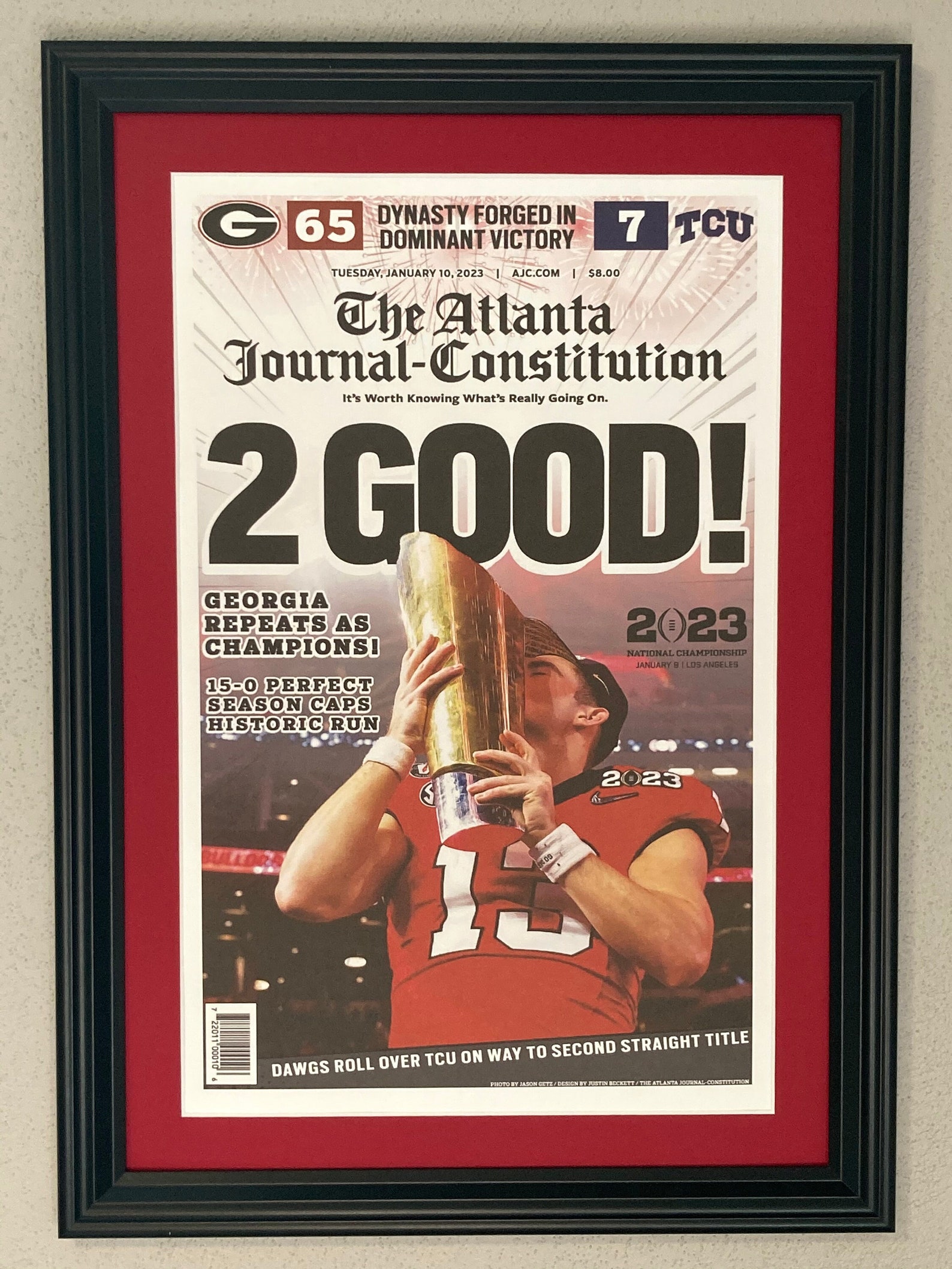
The 2022 college football season has gone, and the Georgia Bulldogs have repeated as national champions. Some argue that our national admiration of sports numbs us to the deterioration of our society. (Think ancient Rome and circuses and bloody spectacles.) However, there are also critics within the college football fan base who believe that the current method of crowning a national champion is unfair. The latter is more a matter of sour grapes. But when I consider paid college football players and transfer portals that foster a sense of entitlement among four- and five-star recruits, I find it difficult not to listen to some criticism. 

As Kirby Smart’s teams have improved over the years, so has their emphasis on teamwork and selflessness. They’ve made it a permanent part of their game strategy, and as a result, they consistently give it their all in most contests. ESPN sports pundits marveled at Kirby’s ability to make his team believe they were undervalued and disrespected despite being labeled the favorites. But, as the adage goes, the proof is in the pudding. Many athletes wanted to help pave the way to victory for their teammates. That is to say, rather than dwelling on how many times they had possession of the ball or how many big plays they had made, they celebrated the accomplishments of their teammates. Nolan Smith, a senior, is a prime example of this because his senior season was cut short due to an injury. After his stellar play on last year’s national championship team, he was eligible to enter the NFL draft. But he returned to Georgia for his senior year. However, his injury hasn’t stopped him from acting as a de facto coach for the rest of the team. Marvin Jones, Jr., one of Smith’s admirers, says he wants to fill the void Smith will leave after graduation. 

Some readers might assume I’m just trying to boast about “my” Georgia Bulldogs. Trust me; there’s more to it than that. An even more valuable group needs the same sense of teamwork and selflessness. Yes, I’m referring to the church. Like sports teams, the church requires teamwork and a selfless attitude to work together for the same mission. Paul writes that each church member contributes to its growth by fulfilling their role (Ephesians 4.16). One aspect of this role is encouraging and supporting each other (1 Thessalonians 5.11). Paul even went so far as to say that we should defer to our weaker brothers’ scruples to pursue peace and edification (Romans 14.19). While it is true that we will give an account of ourselves to God (Romans 14.12), we must focus on the “team.” Jesus loved the church so much that He gave His life for her (Ephesians 5.25). As a result, we are to have the mind of Christ (Philippians 2.5ff). And the early church had its counterparts to people like Nolan Smith, most notably Andrew and Barnabas, two men about whom less is known but who undoubtedly had a significant impact on the early church. These two provided the selflessness and humility the church needs today by following the Lord’s call and putting aside their desires. 

Remember, we are not competing for a stylized black football atop a golden pedestal. Instead, we seek an imperishable crown (1 Corinthians 9.25). As a result, our devotion to the church must outweigh our enthusiasm for a football team on any autumn Saturday, especially in the South.  

Sources Consulted: 

Bender, Bill. “Entitlement at Georgia? Kirby Smart Keeps His Bulldogs Hungry and Focused on Winning Titles.” Entitlement at Georgia? Kirby Smart Keeps His Bulldogs Hungry and Focused on Winning Titles | Sporting News, 10 Jan. 2023, https://www.sportingnews.com/us/ncaa-football/news/georgia-kirby-smart-keeps-his-bulldogs-focused-winning-titles/kliyimqy9z6q6xu5dcg2rmz4

Riley, Connor. “How Injured Nolan Smith Continues to Help Georgia Football Win: ‘He’s Been a Huge Help to Everyone.’” DawgNation, 30 Dec. 2022, https://www.dawgnation.com/football/good-day-uga/georgia-football-nolan-smith-win/H6VP2U6SQJHL7AYDPXPK6HG4LI/

Brent Pollard

Let The World Be The World And The Church Be Different

Monday’s Column: Neal At The Cross

Neal Pollard

Many of us were startled by an automatic alert sent to our phones last Saturday morning, alerting us of potential violence and danger in our usually serene city. The reason was a planned protest and counterprotest, a racially-charged event centering on a horrible incident that happened almost seventy years ago in another state. Predictably, it stirred up some division and exposed extreme and racially-prejudiced views from some.

The world prefers to keep people divided on the basis of race, gender, political affiliation, and the like, and uses such tools as identity politics (Brittanica defines this as “political or social activity by or on behalf of a racial, ethnic, cultural, religious, gender, or other group, usually undertaken with the goal of rectifying injustices suffered by group members because of differences or conflicts between their particular identity or misconceptions of their particular identity and the dominant identity or identities of a larger society”) and tribal alliances. Subject to human biases, emotions, and subjectivism, easy to misjudge and assume others’ motives and intentions, it becomes a massive roadblock to oneness and unity.

But we would expect no less from the world. Who is the prince and ruler of this world? He is a murderer (John 8:44), a devourer (1 Pet. 5:8), a sinner (1 Jn. 3:8), and a deceiver (2 Co. 11:3,14). Chaos, disorder, and division serve his purposes quite effectively.

In the midst of such mayhem, the Lord has the church in this world to be a beacon and light (Mat. 5:13-16). What an opportunity we have in the midst of the world’s divisiveness to show a people united on the foundation of truth, regardless of our race, background, education level, economic strata, or any other way the world wants to divide us. We won’t compromise the eternal truth of God’s Word, but we will stand together on that even however difficult or unpopular. We will live by 1 Corinthians 1:10, “Now I exhort you, brethren, by the name of our Lord Jesus Christ, that you all agree and that there be no divisions among you, but that you be made complete in the same mind and in the same judgment.” We will honor His objective and follow His blueprint to achieve it.

When an onlooking world gets a glimpse of us in action, red, yellow, black, and white, working in love, harmony, and acceptance of one another, they will find an alternative to the world’s hate. When they see the poor esteemed and accepted as much as the well-to-do (Js. 2:1-8), they will see a bright alternative to a cold, status-conscious world. If the church will be the church, we can help the world–one searching person at a time. But the world will always be the world. We should not expect them to show us the way to be one. Their ruler wants chaos. Ours wants peace.

The Tie That Binds

Tuesday Column: Dale Mail

image-e1601983688162

Dale Pollard

When it comes to the families that make up the church, what ties us together is a common bright future. While every family has its differences, one constant remains— the church. All strive to follow those guidelines laid out in scripture. Paul says in Philippians 1:6, “And I’m SURE of this, that He who began a good work in you will bring it to completion at the day of Jesus Christ.” 

The writer speaks with assurance and that confidence is well-placed. From His-story we see that God always completes His projects. He never dreams, He creates. He decided to create the world and here it is. He decided to save the world, and here we are. 

Paul also would write in Romans 7-8 that the flesh tends to get in the way of the spiritual. God is perfect, but we’re not. That’s what makes us a work in progress. Aren’t we thankful that God provides the solutions to “fix” us up? 

We’re involved in a great work because there simply is no better work  than what is being done by His church. That being said, many of us struggle with overcomplicating things. We try to make sense of our individual lives, and when we leave God out it all becomes a discouraging battle. Where’s the peace? Joy? Confidence? Maybe it was left behind when we left God’s path. Thankfully God came down to earth years ago to teach us everything we need to know. We see that in His interactions with people. Even His twelve original followers were an odd group. 

Each had a diverse background. Some were Fishermen and some tax collectors. 

Each one had a unique personality too! They ranged from timid to assertive.

Each one had spiritual battles from greed to crippling doubt.  

Yet each one rallied under His leadership and were united through a common hope. 

What’s changed? Not much. 

The personalities, talents, backgrounds, and flaws mixed together create a unique blend that make up each one of us. Yet, here we are rallied under His leadership, united in common hope. 

Members of the church in the Bowling Green area at an FCA fundraiser.

Three Keys To Better Bible Classes

Tuesday’s Column: Dale Mail

image

Dale Pollard  

The Tompkinsville church family is blessed to have some righteous and knowledgeable elders. In the past week and in separate Bible classes these men have each shed some insight on three different biblical texts. One elder brought a passage of scripture to the table that clarified the difference between anger and sinful anger. Another elder gave a separate take on the dispersion of humanity after the language change at Babel. After a discussion surrounding the blessing that was promised to Jacob, one of the elders broadened the scope and showed how that promise played out in Jacob’s life and in the life of the Israelites. Though the insights they offered in class were contrary to some beliefs in the brotherhood, they navigated the disagreements with grace and tact. These were not matters of salvation and in some cases were simply a matter of opinion.

The biblical text is not always clear in the English translations since there is the cultural and linguistic barriers that must be taken into consideration. Since that’s the case, there are occasionally opposing views that could both be correct. To some degree, speculation and educated guess work will attempt to fill in the gaps. Is there a hard line in the sand that indicates when anger becomes sinful? Certainly. Could God have miraculously scattered the confused people after the Tower of Babel was completed? Yes. God could have also allowed them to naturally migrate to their respective regions. Are there several applications that can be taken from Genesis 32 where we read that Jacob wrestled with God? Definitely. A church family should appreciate an eldership with a heart and mind so immersed in God’s word that they have drawn their own conclusions based on their personal study. Godly men and women express their faithfulness in Bible classes in several ways. 

  • First, they understand that the truth must be spoken in love (Ephesians 4.15). They are able to tell the difference between matters of opinion and matters of salvation. 
  • Second, they are eager to maintain a unity of spirit and a bond of peace (Ephesians 4.3-6). Godly members are not purposefully divisive or quick to start heated debates. 
  • Third, the older Christians recognize the responsibility they have to share their wisdom with the younger generation and the godly youth respect the wisdom that is given from the older generation (Titus 2.2-12). 

When the body of Christ is unified it’s also unstoppable. The church family that respects those God-given rolls that we are all assigned will find that Bible classes, Biblical discussion, and relationships are enriched and strengthened. Knowledge is both shared and received in love and humility. 

Handling Thorny Issues

Wednesday’s Column: Third’s Words

IMG_3575

Gary Pollard

Christians live on planet earth and aren’t immune to social issues. The vaccine is one of them. This article is NOT about vaccination specifically. I am not qualified to write about it, but this wouldn’t be an appropriate forum even if I was.

However, this issue has influenced the church in a few timeless ways: misapplying scripture, creating division, and engendering hostility.

Misapplying Scripture: Applying Romans 13 to this subject is not appropriate. Nothing about the passage sheds light on which governing authority we should follow. What if federal law contradicts state or local law? Which do we follow then? I Peter 2.13-14 does address varying levels of governing authority, but does not specify which takes precedence. Both passages demand submission to everyone who has authority over us because it’s what God wants. As it stands now, neither passage applies to this issue. We cannot use God’s word to enforce or condemn issues that have no bearing on salvation. When state or local law is in conflict with federal law (or vice versa) and the issue at hand isn’t a salvation issue, it falls under the jurisdiction of Romans 14.

Creating Division: Differences in opinion aren’t new to the church. No reasonable person will call this a salvation issue, so it does fall under the purview of Romans 14. We need to remember the commands in this passage: accept those who have different opinions (1), do not think poorly of those who disagree (3), do not judge someone who exercises preference (3), make decisions based on conviction (5), do not condemn each other over opinions (13), don’t let opinions destroy relationships (15), and don’t let your decision become a problem (16). What does this mean for us? Respect your Christian family’s decision, do not think less of them because of their decision, make the decision you feel is best for you, don’t condemn someone based on their decision, and don’t let an issue that has no bearing on our Christian lives become a source of division.

Hostility: The previous point addresses this somewhat, but sinful behavior has come out of this. Thinking less of a Christian who gets the vaccine is sinful. Thinking less of a Christian who doesn’t get the vaccine is sinful.

Nothing about this issue is new or different. Controversial opinions over military service, firearms, holiday observance, or vaccination are not handled any differently. God expects us to put these kinds of issues in their proper place: the back seat.

“We have to love each other, because love comes from God and everyone who has love belongs to God and knows him. Anyone who doesn’t love doesn’t know God, because God is love” (I Jn. 4.7-8).

“Love each other deeply with a pure heart” (I Pt. 1.22).
“You must continue to love each other” (Heb. 13.1).
“Pursue righteousness, godliness, faithfulness, love, endurance, and gentleness” (I Tim. 6.11).

Freedom Fighter And Traitor

Wednesday’s Column: Third’s Words

Gary Pollard

In the following fictional scenario, an unnamed extremist country has defeated the United States of America (work with me, there’s a point to this). They established a puppet government and required survivors to pay exorbitant, unreasonable taxes. The country has dealt with oppression under their rule for long enough that rebellions start to take place, but aren’t very successful. 

Some are desperate enough (or simply weren’t patriotic to begin with) to work for the state controlled by the enemy. Worse, their job is to force an already oppressed people to pay tributes they can’t afford. The enemy has killed too many Americans. The enemy has humiliated the country – once the global power – in ways that may never be reversed. Any American working for the enemy is a traitor. 

Imagine we have two different individuals in this dystopia: one is a freedom fighter, dedicated to overthrowing the enemy, the other is a traitor (and fair game for the freedom fighters). Both of them somehow find God, follow His word, and end up working together in a congregation of dedicated followers. The freedom fighter would kill the traitor, except for something that changed his mind forever: Jesus. The traitor would abuse and absolutely ruin his own people before Jesus. 

If this seems far-fetched, consider that two of Jesus’ disciples were Matthew (a tax collector for the Romans and a traitor in the eyes of Jewish people) and Simon the Zealot (a freedom fighter sworn to kill people like Matthew). Their political and social views were radically different, but Jesus brought adjustments to their world views that changed them forever. They were no longer a freedom fighter and tax collector, but followers of Jesus (see Acts 1.12-14). 

While there aren’t likely too many Christians with national animosity at that level, we aren’t strangers to the political division that affects every aspect of our lives. You may have even seen it play out in your church. We have focused too much on politics! 

Many with good intentions (that includes me) have even said something like, “We should be able to get along, Republican and Democrat, if we’re in the same church.” That’s technically true, but misses the point. 

We are not republicans or democrats (or any other political party, for those outside of the States). Our identity is not tied to a political party. We are Christians. Our leader is Jesus, our country is Heaven, our flag is His church. Yes, we live in our own countries and must be good citizens (Romans 13). Yes, we’re going to have differing viewpoints on social issues. 

We have to stop blurring the line between our political parties and our faith! On both sides of the political aisle is immorality and incompetence. Christianity is beautiful because it shifts our primary allegiance and focus to God, not government. It’s a new allegiance that allowed former traitors and freedom fighters to work together for a greater cause! 

If someone asks us to describe our world view and our first thought is political preference, we’re wrong. We will only have unity and peace when God is our common king. We can say that He is already, but our actions confirm or deny that claim. If God is our king, we will be good citizens (Romans 13.1-7). If God is our king, we will love each other deeply (I Peter 1.22). If God is our king, our morality/worldview/outlook will come from His word and not from our preferred political party (principle found in I Peter 1.14-19; Romans 14; Acts 1.13; John 18.36). I struggle with this. Many of us do. We have to be Christians before anything else, and remember that our primary allegiance is to God! 

Division

Wednesday’s Column: Third’s Words

Gary III

Gary Pollard

In this volatile political climate, many Christians face some uncomfortable dilemmas. Is party line a salvation issue? How do we handle seemingly irreconcilable differences? What do we do going forward?
 
Rather than delving into those questions, I’d like to focus on the attitude of the early church, which faced internal division–Jew/Gentile controversies like in Acts 15, opinions over cultural matters as seen in I Corinthians 8 and Romans 14, and external pressures.
 
In keeping with the spirit of the early church, let’s focus on the following list.
 
  1. We must focus on and grow our own spiritual culture, independent of our earthly nationality (while observing Romans 13).
  2. We must be faithful Christians who value being righteous, no matter the cost.
  3. We must manage our concerns and worries by spending MORE time with each other and developing our faith.
  4. We may need to see ourselves less as Americans and more as Christians. If we remember that our kingdom is the church first, we will be far more united.
  5. Be awesome citizens. When outsiders hear about us, it should be that we never cause trouble, we are loyal to each other, we are selfless, we help people, we have strong families, we rely on each other, we are pleasant to be around, we are dedicated to our faith, and we love people who treat us poorly.
  6. We must remember that priority number one is heaven. Everything else is second.
  7. We must avoid talking or posting on social media about non-salvation issues that can and do create division or offense, out of courtesy and respect for each other (Romans 14.1-4; 13ff).
 
If these are the things we worry about and focus on, no political division or any other heartburn-inducing unpleasantness can affect us. Besides being happier, we’ll be a stronger church!

The Unified Church

Thursday’s Column: Carlnormous Comments

tempImagehquiDk

Carl Pollard

In a society of division and separation, many churches have begun to struggle with unity. Members are bickering with each other, elders are unsure of how to respond to the events that have unfolded in the past year, and deacons are struggling to maintain the proper relationship with each member.. All of these factors combined has caused several churches to split or lose the unity they once had. 

Paul writes in 1 Corinthians 11:17ff  that some who came to worship would be hungry, while others would be drunk and incapable of edifying each other. His point? Far too many churches are split due to a lack of understanding. We fail to understand why it is that we assemble together in the first place. Having a unified assembly starts with the individual. No church will find harmony if each member is unwilling to submit to God’s will and to His church family. 

When we come to worship, there are key aspects that we must insure take place (1 Corinthians 14:12-25). We must make sure what we do edifies others (v. 12). Paul in the context of tongues and prophecy says,  “So with yourselves, since you are eager for manifestations of the Spirit, strive to excel in building up the church” (14:12). 

Our actions must help build up the Christians around us. Our words must edify our brothers and sisters who are dealing with problems we may never even know about. And so the questions we must constantly be asking ourselves are these: How am I edifying? Am I being an encourager (making my fellow Christians stronger)? Am I building up others (boosting their confidence to help them deal with the world)? Am I promoting unity? 

As humans we thrive on encouragement.  We feel good when we receive a compliment. That’s because there is power in edification. As fellow brothers and sisters we should be actively trying to find ways to build each other up. 

This also means we must be sure to understand the power of our words and actions. Rather than spreading gossip or discord with our lips we must make it a priority to edify, encourage, lift up, serve, compliment, and look out for the good in our church family.

Coming Together, Coming Apart

Monday’s Column: Neal At The Cross

pollard

Neal Pollard

Last Saturday, John Moore and I traveled a couple of hours over to Lexington, Kentucky, to see several places associated with the “Restoration Movement.” This restoration effort, coming at a time of spiritual awakening where people were rethinking their approach to the Bible as well as questioning religious teaching, led to independent movements of people who concluded it was not only possible but necessary to go back to the Bible for everything they taught and believed. Rejecting religious creeds, disciplines, and manuals, they sought to do Bible things in Bible ways, speaking where the Bible speaks and being silent where it was silent. While we should not revere or unduly exalt the people who led this effort, neither should we abandon their work. We should imitate their spirit of letting the Bible, not human tradition, be our sole rule and guide.

Two independent movements, most associated with Barton W. Stone and Alexander Campbell, began to conclude that they were of the same mind and judgment in desiring to get back to simple, New Testament Christianity. They met in 1832 in downtown Lexington on Hill Street. John and I stood at this very spot, now a parking lot for a major bank.

Untold numbers of people from the northern and mid-Atlantic United States to the southern and, at the time, western United States obeyed the simple New Testament message they and others preached. They established colleges, held lengthy evangelistic meetings to preach the gospel, had religious discussions and debates, began journals and periodicals, wrote books, and shared the gospel with their neighbors, family, and friends. More and more were leaving religious division to simply be New Testament Christians. 

John and I went from that place where great hope and renewal occurred just a few minutes north up to a little community called Midway. It is a quaint little town, with antique shops, trains, and a beautiful little college named for the town. We first went to a church building, built on the site of another building where in 1860 the well-meaning group of saints there, to aid what in their view was atrocious singing, accompanied their singing with a piano-like instrument known as a melodeon. The practice of adding mechanical instruments of music would spread to congregations throughout the state and ultimately out to the Lord’s church all over the country. Something lacking the authority and approval of Christ, but meeting with the tastes and preferences of men, was introduced and disrupted the unity and harmony of God’s people. It would take years to form a wedge wide enough to cause systemic division and disunity, but it happened alarmingly fast. 

Throughout history, the precious attribute of unity (Psa. 133:1) has required great effort to achieve and has proven difficult to maintain (1 Kings 12:1ff). However, God commands it (1 Cor. 1:10; Rom. 12:16; Phil. 1:27). He is pleased when we pursue and preserve it, so how does He view when we viciously sever, undermine, and destroy it? History is a great teacher, if we allow it to be. May we have hearts desiring nothing else than God’s Word as the foundation of our teaching and lives, and pursue that with a spirit of harmony and oneness which permeated the church at its very beginning! 

“Making Our Defense In The Darkness”

Wednesday’s Column: Third’s Words

 
Gary III
Gary Pollard
 
One night Chelsea and I were walking the dog before bed and came across an enormous armadillo. We were in a rural area and it was pitch black outside except for her flashlight. I had a rifle with me, so I took a shot at the armadillo. Instead of falling where it stood (as they had usually done), this one jumped a couple feet into the air and then ran off with surprising speed.
 
We thought that was the end of it, so she walked the opposite direction with the flashlight and the dog. In the pitch black, I heard the angry armadillo heading towards me full-steam.
 
Being rushed by an armadillo in the dark is terrifying, no two ways around that. The darkness accentuates our helplessness and makes defense a lot harder. I John 2.11 makes it very clear that if we hate our church family, we’re walking in darkness and don’t know where we’re going because the darkness has blinded us. If we’re in darkness, we have no fellowship with Jesus and we’re liars (1.6).
 
2020 has given our mortal sides quite a bit of strain. We’re so divided as a nation that a person’s political party alone is enough to preclude their value in the eyes of their opposition. The church has to be different.
 
Had the moon not come out just a little and the laser on my optic not worked, I would have been cut up pretty good by that armadillo. Light gave me the means to save my skin!
 
If we show love to our church family and are walking in the light, we have been given the ability to be saved. If we live and die in the light, we gain an eternity where there is no night or darkness in a new heaven and a new earth (Rev. 21 ). As November 3rd looms ominously over us, let’s remember that our eternal destination hangs – at least partially – on how we treat one another after this stressful election.

“Soft Civil War”

Wednesday’s Column: Third’s Words

Gary III

Gary Pollard

It is no secret that we are politically divided in this country. Larger cities are typically progressive, while the majority of a state’s rural populations are conservative. This has even dictated what kind of news we watch! If you watch CNN, you fit in with progressives. If you watch Fox News, you are most likely conservative. Both approach reality with their own highly specific bias in order to appeal to their respective audiences. As a result of this, we have entered into what is being called a “soft civil war.” Liberals speak with extreme hatred against conservatives. Conservatives speak with great hatred against liberals. It may be a soft civil war right now, but it would not take much at this point to become a full-fledged war.

As a church, we are a kingdom. Our king is Christ and the citizens of this kingdom are Christians. Sadly, the church is not immune to soft civil wars. In Philippians 4, Paul strongly rebukes Euodia and Syntyche because their argument was destroying the church. How easily we can become heated and hateful over matters of opinion! The way we handle differing opinions on matters not pertaining to salvation determines whether we will be unified as a church or whether – like Euodia and Syntyche – we will be a force for division. The greatest tragedy of the American Civil War was that families fought on opposing sides and killed one another. As the body of Christ, let us continue to handle our differences with godliness, love, and patience.

The Tie That Binds 

Tuesday’s Column: Dale Mail

image

Dale Pollard

When it comes to the families that make up the church, what ties us together is a common bright future. While every family has it’s differences, one constant remains— the church. All strive to follow those guidelines laid out in Scripture. Paul says in Philippians 1:6, “And I’m SURE of this, that He who began a good work in you will bring it to completion at the day of Jesus Christ.”

The writer speaks with assurance, and that confidence is well placed. From His-story we see that God always completes His projects. He never dreams, He creates. He decided to create the world and here it is. He decided to save the world, and here we are.

Paul also would write in Romans 7-8 that the flesh tends to get in the way of the spiritual. God is perfect, but we’re not. That’s what makes us a work in progress. Aren’t we thankful that God provides the solutions to “fix” us up?

We’re involved in a great work because there simply is no better work than what is being done by His church. That being said, many of us struggle with overcomplicating things. We try to make sense of our individual lives, and when we leave God out it all becomes a discouraging battle. Where’s the peace? Joy? Confidence? Maybe it was left behind when we left God’s path. Thankfully God came down to earth years ago to teach us everything we need to know. We see that in His interactions with people. Even His twelve original followers were an odd group.

Each had a diverse background. Some were Fishermen and some tax collectors.

Each one had a unique personality too! They ranged from timid to assertive.

Each one had spiritual battles from greed to crippling doubt.

Yet each one rallied under His leadership and were united through a common hope.

What’s changed? Not much.

The personalities, talents, backgrounds, and flaws mixed together create a unique blend that make up each one of us. Yet, here we are rallied under His leadership, united in common hope.

800px_colourbox1580110

Maybe Nobody’s Right?

Tuesday’s Column: Dale Mail

DaleandJanelledirectorypic

Dale Pollard

Wasted potential is a terrible tragedy and this could not be more true when it comes to those who squander their potential in the church. Consider two common examples we find in many congregations today. There may be an older man who uses the respect, earned by his lengthy life experiences, as a platform to give strong opinions— disguised as gospel truth. Or, what about the young woman who has been labeled as a liberal? She has these new and fresh ideas, but many aren’t Divinely authorized in scripture.

Both of these individuals could not be any different, yet both have caused severe damage in their local church families. The older man clearly has a commanding presence. When he speaks, people will listen. What a gift! He could build up and strengthen the church in numerous ways— if he put his mind to it. He owns the power of persuasion, a talent others deeply desire. The young woman also has talent. She’s outspoken, energetic, and inspiring to many of her peers. She’s loving, gentle, and full of life. With so much to offer, how could she throw it all away by pushing her modern, but unbiblical views?

The elderly may argue that the problems we find in the church today are on account of young minds with liberal beliefs. The younger generation have become disenchanted with “church” because they believe it’s outdated, hypocritical, legalistic, and impossibly demanding. While there is truth to be found on both sides of the fence, it’s also true that talent is a tool that is often misused.

The elderly bring experience and wisdom. The young bring energy and enthusiasm— though I do acknowledge that these stereotypes may occasionally be seen in members of both groups. If there are thoughtless accusations, without thoughtful solutions, you end up with a congregation full of members fighting for the spoon which stirs the pot. A serious solution can only be scriptural. After all, God made people and He knows how to fix them.

Maybe we need to go back to those basic and foundational principles that we find in that thriving first century church. Despite adversity and an overwhelming hostile environment, they had Jesus’ power over the world (John 16:33). Since this is the case, may we never fool ourselves into believing the lie that the strange darkness of our time is too dark for The Light that is Christ. When this poison is digested, the devil smirks, and droves of people stumble into eternity unprepared all on account of a literal and tragically damning lie.

God has allowed us to discover hope, experience growth, and uncover a calming peace when simple Christianity is practiced. It’s this beautiful simplicity that makes God’s will a rewarding journey to seek and follow. The power of God can turn a struggling congregation into a thriving one, but there must be a radical transformation in the heart of each individual that makes up that Body. It’s radical, but it’s not complicated. It will take prayer, a reliance on God, courage to act, and a willful determination to follow Jesus wherever He goes (Luke 9:57-62).

So where do we begin? With a dedication to the understanding of Him, and those made in His image.

6016780468_67a298ed8e


God is Protective of His Church

Wednesday’s Column: Third’s Words

Gary III

Gary Pollard

Many have heard, “Do not be deceived: bad company corrupts good morals” (I Corinthians 15.33). It’s not difficult to understand the concepts in this verse. If our closest relationships are with worldly people, our ethics and behavior will reflect this. Fun fact: the word for company here is ὁμιλία (homilia). The first part of the word sounds a lot like “homie,” so it’s easy to remember. 

I want to look at the word “corrupt” a little more closely. At first, I thought it might be similar to Ephesians 4.29, “Let no corrupting talk come out of your mouths…” But that word is completely different and more closely describes decomposition. “Corrupt” in I Corinthians 15.33 means, “To cause deterioration of the inner life” (BDAG 1054). 

Paul uses this same word earlier in the book. In I Corinthians 3, Paul talks about the church and her foundation (as in, her foundation is God and not men). By verse seventeen – still addressing the church – he says, “If any man destroys the temple of God, God will destroy him, for the temple of God is holy, and that is what you are” (emp. mine). 

“Destroy” is usually ἀπόλλυμι (apollumi) or λύω (luo), but in this verse it’s the same word that’s translated “corrupt” in I Corinthians 15.33. 

So what does this mean for us? It’s an extremely solemn warning to those who are corrupting or dividing the church today. At Corinth, the division was due to worldliness and basing their Christianity on prominent men like Paul or Apollos. 

If our conduct is dividing the church, we need to read I Corinthians 3.17. 

If what we’re talking about corrupts the bride of Christ, we need to read I Corinthians 3.17. 

If we abuse the influence we have in the church, we need to read I Corinthians 3.17. 

If our opinions, preferences, political views, or behaviors are in any way eroding the family of God, we have to quit them. A bad argument was enough for Paul to tell Euodia and Syntyche to, “Work out your salvation with fear and trembling” (Philippians 2.12). Their argument was hurting the church at Philippi, so Paul told them to get it together or their souls would be lost. 

If love for the church does not motivate us to pursue unity, then it is time for us to cultivate a healthy fear of what negative actions can do to our souls. The church is eternally important and infinitely precious, so what could go wrong if we’re always looking out for others? 

cross-cornerstone

Of One the Lord Has Made the Race

Friday’s Column: Supplemental Strength

81121814_2462862270639428_5746232403106463744_n

Brent Pollard

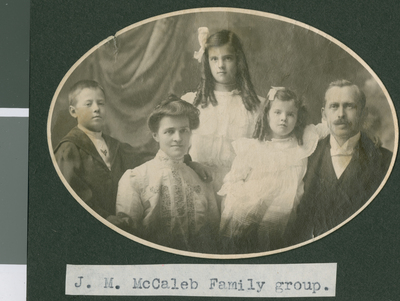
 John Moody McCaleb was a missionary in Japan for the better part of his life. He moved to the island nation during the Meiji era, in which Japan was sprinting to catch up to the technology and emulate the political philosophy of the West. The war-weary pacifist, David Lipscomb, strongly influenced McCaleb. (I would dare say that it did not take much to sway him since his father, a Union soldier, was shot and killed by a fellow Union soldier as he was crossing a stream since he did not hear the latter’s order to halt. 1)

 Hence, when Japan became an Imperial state in its early Showa era, McCaleb’s pacifistic ideology put him at odds with his adopted home. He was sent “home” to the United States in October of 1941, just a couple of months before the Japanese bombed Pearl Harbor. Since his expulsion, McCaleb’s house, which survived the tumultuous world war, has become a museum. A contemporary caretaker of the museum noted that McCaleb never flew an American or Japanese flag in front of his residence, stating “my true nationality is the kingdom of heaven.” 2

 Perhaps, it should not surprise us that the first stanza of a hymn penned by McCaleb reads as follows: “Of one the Lord has made the race, Through one has come the fall; Where sin has gone must go His grace: The gospel is for all.” Yes, this pioneering American missionary of the Restoration Movement wrote one of the most beloved hymns highlighting the Great Commission (cf. Matthew 28:19-20), The Gospel Is for All.

 I wished to share this to drive home one point. McCaleb failed to see cultural distinctions as “racial” in nature. McCaleb understood as Paul told the Athenians in Acts 17.26-27: “and He made from one man every nation of mankind to live on all the face of the earth, having determined their appointed times and the boundaries of their habitation, that they would seek God, if perhaps they might grope for Him and find Him, though He is not far from each one of us. (NASB)” Indeed, we are of one race, the human race.

 When we look for the genesis of our divisions in God’s Word, we read Genesis 11 and the account of the Tower of Babel. Within that chapter, humanity, united, sought to use its solidarity to rebel against God. God couldn’t allow that for, because thus united, He observed, “Behold, they are one people, and they all have the same language. And this is what they began to do, and now nothing which they purpose to do will be impossible for them” (Genesis 11:6 NASB). And so, God divided us by giving us different languages.

 Someone might scoff that vocabulary is not an insurmountable barrier since we learn the tongues of others today. First, it is not as if there were primers to teach one another the new languages existing initially after the Tower of Babel. Second, thus motivated to disperse, they went on to develop cultures independent of one another centered on those communication divisions. They intermarried those of their lingual group who had developed customs different from other lingual groups. It was a positive feedback loop.

 Might I humbly suggest that this remains the source of our societal ills today when it comes to poorly labeled “race relations,” since we are only one race? We have different cultures and customs. Language is not an insurmountable obstacle because we know the syllabaries and alphabets of those speaking different languages from ourselves. With this knowledge, we take the Gospel to every creature.

 But if we want to know what causes a man to kneel on the neck of a subdued man because he has more melanin in his skin, it is not a “racial problem.” It is a sin problem. And even though we all like to think that those resembling ourselves are free of such biases, it is something against which we all must carefully guard our hearts, whether we possess little or much melanin.

 Each of us is created in the image of God and must seek to treat one another as we desire to be treated (Matthew 7.12). Please keep this in mind whenever you see the “if-it-bleeds-it-leads” type of headlines the devil likes to employ to impede the progress of the Gospel in this world. He seeks to do so by convincing men that the essential things are the least important, but that the amount of melanin in one’s skin is of greater import.

REFERENCES

1 Walker, Wayne. “‘The Gospel Is For All.’” Hymnstudiesblog, WordPress.com, 6 Nov. 2008, hymnstudiesblog.wordpress.com/2008/11/06/quotthe-gospel-is-for-allquot/.

2 Ikuma, Koji. “The Old Missionary Museum of Zoshigaya, a Story of One of the Famous Christian Missionaries in Japan.” Unfamiliar Japan Tours, Unfamiliar Japan Tours.com, 19 Aug. 2016, uj-tours.com/missionary-house/.

preview

Chasing Calm In The Chaos Of Conflict

Wednesday’s Column: Third’s Words

Gary III

Gary Pollard

Conflict stinks. It’s unpleasant, uncomfortable, and far too easy to do poorly. Conflict is a delicate game balancing a desire to achieve a certain outcome without causing unnecessary escalation.

We live in a world where evil is alive and well. No one wants evil to exist, but it does because of sin. Both good and bad people sometimes do evil things. Those people should be held accountable and justice meted. Our country has had a consistent pattern of civil unrest after an injustice. We no longer know how to have healthy conflict. 

  • Do you want to perpetuate hate? Use the actions of an evil person as an excuse to harm others, burn businesses, and contribute to civil unrest. 
  • Do you want to stifle positive change? Share polarizing rhetoric. It will flawlessly push either side more firmly into their ways. 
  • Do you want to keep a rift between entire groups of people? Play the blame game instead of holding those responsible accountable. And, when those responsible have been held accountable, continue to accuse others of complicity. 

Every single person on the planet is guilty. Every single person on the planet is hopeless without God. Every person on the planet would die lost if not for Jesus and the forgiveness He offers. Not one person is perfect. 

  • Do we want peace? Be good to all people (Galatians 6.10). 
  • Do we want to eradicate prejudice? Unite within the family of God (Galatians 3.28). God created people, not factions. 
  • Do we want to eliminate hatred? Be patient, kind, humble, not jealous, not self-centered, not easily provoked, not a grudge-holder, not someone who relishes in dysfunction, love truth, not retaliatory, and be full of hope (I Corinthians 13). 

We must face the fact that the only way to have true stability, love, acceptance, and goodness is to go through God. Only when we look to an objective standard – one that cannot change simply because man’s threshold of tolerance has – will we have peace. 

“Happy are the peacemakers, because they will be called children of God” (Matthew 5.9). 

dab46cd60d45467fbeb55e9d8cd36b60

Untied States

Wednesday’s Column: Third’s Words

20638721_440919206307154_5479040032968788217_n

Gary Pollard

My wife and I were watching an NCIS episode where terrorists attempt to use fake currency to carry out an attack on the U.S. power grid. Their trail was picked up when instead of “United States” on the bills, “Untied States,” was found. 

With the pandemic we’re facing, we have briefly enjoyed some unity not seen in seven decades. A lot of the partisan stuff has slowed, a lot of the animosity between political parties has simmered down, and people are beginning to treat each other like neighbors again. 

With the cautiously optimistic breakthroughs in our fight against this virus, we seem to be slipping back into the “Untied States.”  I think our enjoyment of the peace accompanying this unity will stick around and we’ll be as neighborly as we have been, even after quarantines have been lifted. We’re witnessing the ugliness of a government not unified and perhaps we will have gained some perspective as a result of this global trial. 

That feeling of relief, calm, peace, reset, unity, and love has to be what God feels when His church is unified. It is what we experience when we put others above ourselves and treat each other like family. 

We have a super cool opportunity once quarantines are lifted! I miss my family at Hebron like crazy – I’m not alone in missing my church family. We have a chance to use that momentum to love more, be more selfless, argue less, and encourage more. If we take these qualities and run with them, the church will grow like wildfire. Beyond that, the world will see the love we have and will want to be a part of it. 

John 13.35 

christmas-dinner-2428029_960_720
Scene from a church potluck