Daniel was a faithful servant of God. No matter the circumstances, he would put his trust in God. Let us look at how Daniel was faithful to God in all times.
We see Daniel being faithful to God in trials. The other wise men in the kingdom were jealous of Daniel and wanted to have him killed. So they went to the king and asked for a decree to be made that only the king could be prayed to. Daniel trusted in God even though he could have faced dire consequences if he prayed to God. “When Daniel knew that the document had been signed, he went to his house where he had windows in his upper chamber open toward Jerusalem. He got down on his knees three times a day and prayed and gave thanks before his God, as he had done previously. Then these men came by agreement and found Daniel making petition and plea before his God. Then the king commanded, and Daniel was brought and cast into the den of lions. The king declared to Daniel, “May your God, whom you serve continually, deliver you!” And a stone was brought and laid on the mouth of the den, and the king sealed it with his own signet and with the signet of his lords, that nothing might be changed concerning Daniel.” Daniel 6:10-11, 16-17 shows us that even though the king banned prayer to God, Daniel still put his trust in God.
In our lives today do we show this kind of faith and trust in God? Do we understand the consequences, but stick with God? Many today have a faith that is dependent on the circumstances. But we must be like Daniel. Have a full trust in God to deliver us in our trials and understand that He is in control.
There are a plethora of men and women in the Old Testament who we can look to as an example of faith. Abraham, Joseph, Joshua, Sarah, and many more. However one of the strongest examples of true faith in God is found in the book of Daniel. Daniel is someone we would say was a faithful servant of God. No matter the circumstances, he would put his trust in God. Even in the toughest times, Daniel remained a servant for the Father. One instance where Daniel showed this incredible trust is found in Daniel 6.
Daniel was apart of the kings appointed wise men. However, the other wise men in the kingdom were jealous of Daniel and wanted to have him killed. So they went to the king and asked for a decree to be made which stated that only the king could be prayed to. they did this knowing that Daniel prayed constantly to God. Despite this decree, Daniel trusted in God even though he faced dire consequences if he prayed to God.
Daniel 6:10-11, 16-17, “When Daniel knew that the document had been signed, he went to his house where he had windows in his upper chamber open toward Jerusalem. He got down on his knees three times a day and prayed and gave thanks before his God, as he had done previously. Then these men came by agreement and found Daniel making petition and plea before his God. Then the king commanded, and Daniel was brought and cast into the den of lions. The king declared to Daniel, “May your God, whom you serve continually, deliver you!” And a stone was brought and laid on the mouth of the den, and the king sealed it with his own signet and with the signet of his lords, that nothing might be changed concerning Daniel.”
The king banned prayer to anyone other than himself, but upon learning this Daniel still fell to his knees and prayed. In fact, the moment he learned that the document had be signed, he left and went to go pray to God.
In a culture that is consistently moving further and further from Gods Word, how will His people respond? In our lives today do we show this kind of faith and trust in God? Do we understand the consequences, but still choose to obey God? Sadly many today have a faith that is dependent on circumstances. But we must be like Daniel. We should have a full trust in God to deliver us in our trials and understand that He is in control.
If prayer was outlawed, would you publicly show your faith in God? If going to church was made illegal, would you still show up on Sunday morning? These are situations that will hopefully never happen, but if they do I pray that we will be like Daniel in our response.
The wandering Albatross is the biggest flying creature on earth today.
It’s lifespan can be over 60 years.
They can go years without ever touching the ground.
Did you know?
Many people today haven’t decided that God is the answer to the void we have in our lives. For this reason, James will give us the following instructions to help us in our prayer lives.
He writes,
“But when you ask, you must believe and not doubt, because the one who doubts is like a wave of the sea, blown and tossed by the wind.” James 1.6
God wants His children to trust Him, and He is ready to reward the evidence of our trust in Him.
The Evidence
We show God our faith in Him in two major ways based on this verse and its original context.
God’s where we go when we need wisdom (verse 5).
We’ve decided and are convinced that God is the answer by praying to Him without doubting His ability to aid us.
Unlike the albatross that wanders for years without touching the ground, we’re not commanded to drift through the air without landing. We’re expected seek out the truth, land, and stay there.
Maybe you’ve wandered off and you’re starting to see the signs. Signs like constant panic, unrest, anxiety, and feeling a loss of control. These can all point to a spiritual problem that you’re no longer grounded.
God is always the answer and we can prove to Him that we believe this truth by letting Him take the lead.
Our younger and non-U.S. readers may not be able to relate to the economic news that the U.S. economy is experiencing inflation, unlike anything we’ve seen in 40 years. Indeed, this period of “stagflation” (i.e., stagnant economy plus inflation) began even before my birth, noticeably during the Administration inherited by Gerald Ford after Richard Nixon’s resignation.
The genesis for this economic downturn started with the decision of President Nixon to take the United States off the gold standard in 1971. It was necessary to prevent the country from defaulting on its debts but was only a short-term solution. Had government become fiscally responsible, they could have gotten the nation out of debt and reinstituted the gold standard. But, rather than curb spending, the government began spending more since they could print more bills. And Ford was honest to a fault, from a political perspective, since he admitted the poor state of the Union in his address in 1975.
“I must say to you that the state of the Union is not good: Millions of Americans are out of work. Recession and inflation are eroding the money of millions more. Prices are too high, and sales are too slow. This year’s Federal deficit will be about $30 billion; next year’s probably $45 billion. The national debt will rise to over $500 billion. Our plant capacity and productivity are not increasing fast enough. We depend on others for essential energy. Some people question their Government’s ability to make hard decisions and stick with them; they expect Washington politics as usual.”1
Looking to make a change, Americans voted for the Democrat candidate running against Ford in 1976. Supreme Court Justice Warren Burger swore in President Jimmy Carter on January 20, 1977. However, instead of bringing positive changes to the economy, things grew worse under President Carter. Ironically, candidate Carter had successfully used Arthur Okun’s “Misery Index” in his campaign to highlight the miserable performance of Ford’s economy.2 Yet, it would not be long until the “Misery Index” became an albatross around Carter’s neck. Carter’s opponent in the 1980 presidential race, Ronald Reagan, even made a point to note that Carter was mum about the “Misery Index” of his tenure.3 I dare say that most laymen still associate the “Misery Index” with Jimmy Carter, not Gerald Ford.
The CPI (consumer price index) is used to gauge inflation. Unfortunately, it has risen to 8.5%.4 To curb inflation, the Federal Reserve Bank will inevitably raise interest rates. The simple explanation for this is that the Federal Reserve Bank wants to discourage you from spending money. So, with rising interest rates, that new automobile or house will cost even more, and you will decide to make do with what you have. As a result, demand will decrease and theoretically lower inflation. The only positive thing resulting from such an economy is that your savings account will finally accrue more interest. The bad news is that the money you earn will not have the same buying power if inflation is high.
I was but a child, but I recall the stagflation of the Carter Administration. My father preached for a domestic mission church in west Georgia. He received financial support from a congregation in Tennessee but still had to find other employment periodically to provide for his family. Briefly, my mother even tried to get a job as a seamstress at a Hanes factory outside of LaGrange, Georgia. We lived austerely and had more than one of Dolly Parton’s “Hard Candy Christmas.” However, my father could parlay those savings into later real estate purchases when the economy improved. The point is that even Christians experience lean times, but they don’t last forever.
Would you believe that this is what Paul talked about with his financial supporters in Philippi? He told them he had learned to get along with much or little (Philippians 4.11-12). Paul said that even meant having to go hungry at times. Yet, he could do it because Christ gave him strength (Philippians 4.13). So, yes, that oft-quoted verse is about money. Though it is nice to think we can tap into our Lord’s power to accomplish difficult tasks, like quitting a bad habit, we should not lose sight of the context, especially in a terrible economy.
David said long ago that he had never seen the righteous forsaken or his seed begging for bread (Psalm 37.25). Indeed, Jesus reminds us that God will supply the needs of those seeking Him and His Kingdom first (Matthew 6.33). But our necessities are just that, necessary. Beans and cornbread can sate hunger as effectively as filet mignon and mushroom Bordelaise. So, God is not promising you the “king’s dainties” (cf. Daniel 1.8 ASV). But you will receive enough sustenance to maintain life.
Moreover, as a Christian, you have the added blessing of your church family. The first Christians saw after one another’s needs, even selling their property to help support their brethren (cf. Acts 4.32-35). I am not suggesting that things will become bad enough today to necessitate such drastic measures, but it is still encouraging to know that we have others watching our backs. Indeed, they will help us with our burdens as we help carry theirs (Galatians 6.2,10).
Yes, things may get worse before getting better. The younger generations may not know what to make of these things. And we might see people sinning as the post-exilic Jews who robbed God by withholding their tithes to Him (Malachi 3.8-12). In these times, God encourages more generosity, not stinginess. As He told the Jews of old, He is more than capable of opening the portals of heaven to shower us with blessings. Do not lose that faith and trust that as we learn to do without, we might also learn how to properly conduct ourselves when we abound in this world’s goods.
Sources Cited
1 Ford, Gerald. “President Gerald R. Ford’s Address before a Joint Session of the Congress Reporting on the State of the Union.” Gerald Ford’s 1975 State of the Union Address, Gerald R. Ford Presidential Library and Museum, www.fordlibrarymuseum.gov/library/speeches/750028.htm.
Don’t carry burdens that aren’t yours (Proverbs 3.5-6)
Remember the extraordinary times that God has carved out a path where there was no path before (Isaiah 43.16-19)
Don’t forget, God can see what you can’t see (Proverbs 16.9)
Even if you stumble, God won’t let you stay down (Psalm 37.23-24)
God’s vision is bigger and better than yours (Jeremiah 33.3)
God hasn’t forgotten about you (Proverbs 20.24)
Remember to be very specific when praying to God (2 Samuel 5.19)
Always be sure your will is His will (James 4.15)
If you’re struggling with the anxieties that can come from making life’s difficult decisions, read these verses. Perhaps they will give you some insight that help you to answer that crucial question,
“How should I be praying about this?”
Give it to God and rest up!
“When you lie down you will not be afraid, when you lie down your sleep will be sweet.”
Six hundred years before Christ would make His providential appearance, a righteous man finds himself in captivity. While exiled, Ezekiel, was able to witness the spirit of God in a very intimate way (Ezekiel 1). Even so, he was still living under the thumb of the Babylonians like every other Israelite with him. While under these unideal circumstances though, he is privileged to see awe-inspiring visions from God. Have you ever paid attention to the eerie sensations described throughout this book? In Ezekiel 1:4 the prophet feels a great and stormy wind on the bank of the river Chebar. The wind brings with it a massive cloud with fire flashing around it and a substance like glowing metal in the center of it. The wings of the creatures he saw (verse 24) made sounds like that of roaring waters. The voice of the Almighty was like the sound of a great army camp. What sights he was able to see! This great connection to God didn’t take away his pain or sorrow, though.
Chapter 19 is one long lament as Ezekiel cries over his hardhearted Israelite brothers. Why won’t they listen to him? Even after Ezekiel performs some radical visual illustrations like eating his bread over dung and laying on his side for an entire year, they won’t respond to the “invitation.” How frustrating is that, preachers? God never abandons His faithful servant, but His confused prophet is still left to wonder what God is going to do about the mess which makes up his reality. A familiar feeling for many faithful Christians today.
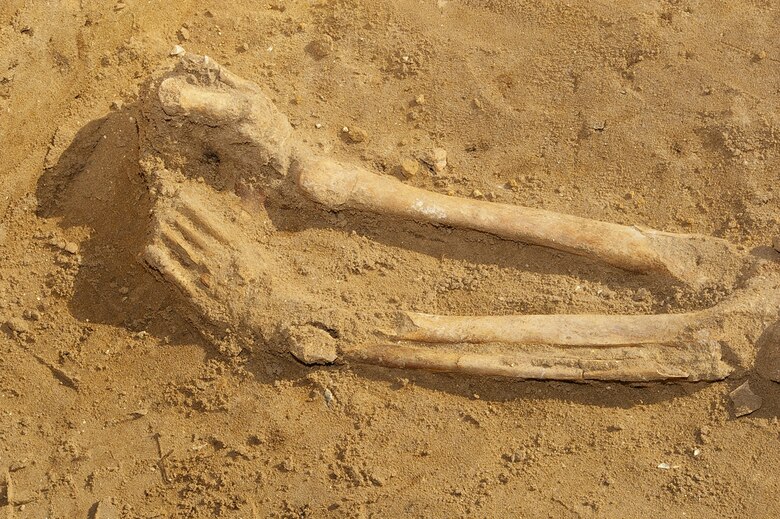
Never underestimate the hand of the Almighty. This truthful statement can be pulled from Ezekiel 37, when the prophet is taken up and then placed in the middle of a dark valley. Ezekiel is surrounded on all sides by heaps of dry human bones and he’s probably wondering why in the world God has taken him to such a place. The text answers the question by asking a question. God speaks to Ezekiel and says, “Can these dry bones live again?” What an odd thing to ask. However, Ezekiel responds, “Only you know, O Lord.”
It’s always when we’re deep in the valley’s of life that we’re forced to answer the difficult questions about God’s abilities. When we’re surrounded by darkness, the question we have to ask is, “Does God have the power to see me through this?” If you remember, Ezekiel has become frustrated with the fact that Israel just won’t listen to him or Him. He’s lost hope in their ability to change— they’re just too far gone. However, God demonstrates to His prophet in a dramatic way that NOTHING is impossible for Him.
He doesn’t bring the bones to life in the blink of an eye, but we know He could have. Instead, He allows Ezekiel to hear those bones rattle and to hear the sounds of fibers and flesh sticking together. He wanted to leave an impression on Ezekiel to demonstrate the might of the Almighty. Ezekiel had no idea how those bones came to life, but he knew one thing for certain. God did it. You may not understand why God has allowed you to enter your valley, but you can be certain that He has the power to see you through. You are standing on your two feet because God has given you the strength to do so. God has promised His faithful servants a heavenly light at the end of our tunnels and whatever God says— He will always accomplish (Ezekiel 37:14).
The story is told about a man hanging from the end of a rope at the bottom of a well. His feet hadn’t touched the ground and he estimated that he still had about 100 more feet to go.
With no way out, and his grip starting to fail, he figured he was in the last few moments of his life. Finally he couldn’t hold on any longer and fell…6 inches to the ground.
Just like the man in the well, we all have those times when we get worried and stressed for no reason. Because this man couldn’t see the bottom of the well, he was worried.
How often are we like this? We can’t see the future, we don’t know what’s underneath us and so we do what feels natural and worry. Sometimes we let the things that we can’t control worry us and God has told us to trust Him.
Jesus in His sermon on the mount addresses this problem of worry. In Matthew 6:25-27 He tells us that God cares for our wellbeing.
Jesus said to “look at the birds of the air that they do not sow, nor reap, nor gather into barns.” Now I hope that we feel more important than birds, because we are.
Christ didn’t suffer on the cross for birds, He did that for us. Birds aren’t given the promise of eternity, But we are.
And yet, we still worry.
The man in the well thought that it was 100 feet to the bottom of the well, but that was what he thought.
Lucky for us we don’t have to “think” or guess what life holds or if we will have food and clothing. The things we get anxious about are foretold to us in scripture.
Those that aren’t Christians are worried about death, but we KNOW what happens after we die. Those that aren’t Christian’s are anxious about so much. And that all goes away if we are in Christ. Fear of the unknown is transformed into trust.
So, even though it may seem like we are hanging on the verge of death in life, don’t be anxious. I encourage all of us to let go, and let God.
We may think that there’s a 100 foot drop beneath us, but in reality God is right below us, waiting for us to let go and trust in Him.
We know that tomorrow isn’t promised and we also understand that, unless God comes first, everyone will die one day. With that being said, I am almost 100% certain that nobody reading this will pass from this life after having a cow fall through your roof. The “steaks” just aren’t that high. While this is an unlikely way to die, it’s not an impossible way to go. In fact, this is exactly what happened to Joao Souza in 2013. A one-ton cow was grazing on the hills behind his home in Caratinga before it somehow found it’s way up on to his roof. An unknowing Souza was snoozing on his couch when suddenly his life was over. The asbestos-filled roof collapsed under the weight of the cow. Being done in by a bovine is not exactly a bodacious way to make that final transition, but the media had reported two more similar events of cows seemingly falling from the sky in this area just two years prior. Even though this event actually occurred, how ridiculous would it be for us to spend our days in fear— worrying that we will meet a similar fate?
The last verse of Matthew six will tell you not to exert so much energy worrying about tomorrow. This passage has brought peace and comfort to many Christians throughout the years, but many of us still worry about our tomorrows. I guess if our tomorrows were actually ours to begin with, we may really have something to fear. The truth is, God owns the future. He doesn’t tell us not to worry about the things that are unlikely to happen, He simply tells us not to worry. God’s almighty hand still holds the world, and for the faithful believer this reality can set your mind to rest. I’m not sure what tomorrow brings. It’s possible that a cow could even come crashing through my roof and send me into eternity— but that’s alright. It’s not just alright because I could use a little more dairy in my diet, but it’s alright because a life in Christ comes with a secure future. It doesn’t matter what Fox News tells us when the Good News already told us everything we need to know. No matter what the day may bring nothing can change the fact that Jesus came, He died, and He definitely is alive, well, and active every day. Don’t worry about tomorrow. Let’s live our lives with joy and in the peace only He can provide.
I hope this moos you and that you have an udderly fantastic day. If this beefed up your spiritual cow-fidence please share with someone else.
If he was nervous, it was clear that the king’s palace guards couldn’t tell. They checked his left thigh for a weapon, and when they were satisfied they allowed Ehud to enter the throne room chamber. Ehud is just steps away from going down in history as the man who delivered the Israelites from the Moabite oppression. If he can pull this off, he and his people will enjoy eighty years of peace. It was a big job, and if you know this account, it was a big in more than one way. Hanging from his right side, unknown to anyone but him, is an eighteen inch double-sided sword. It was a weapon made for stabbing, and Ehud planned to use it for it’s created purpose. The guards stationed outside the chamber open the door for him. The room is filled with servants and more armed security, but this is probably not the first thing to catch your eye. There, in the middle of the room on the throne sat an extremely obese man. He’s been the ruling power over God’s people for eighteen years now and as king, he clearly took advantage the royal food supply. His name was Eglon. He, along with the sons of Ammon and Amalek, defeated the Israelites and then claimed the city of palm trees, Jericho.
Ironically, the palm tree was considered a symbol of peace and victory. Many years later, people would lay the branches of these trees down before Jesus the Nazareth as He enters Jerusalem. It seems reasonable to assume that Eglon was glad when he saw Ehud walk towards him. After all, Ehud was the man in charge of gathering Israel’s tribute and delivering it to him. With these funds, the king was free to continue living his life of gluttony and leisure. However, this time God was about to give a gift to the Israelites— Eglon’s life.
Ehud begins to look for the perfect opportunity to kill the king. He says to Eglon, “I have a secret message for you.” At this, Eglon clears the room. Now it’s just Ehud and the king. They’re alone in Eglon’s roof chamber. Ehud continues, “It’s from God.” This is out of the ordinary, and the king seems to have some level of respect for Jehovah, because he then stands up. I would imagine, a man of his size didn’t usually make a habit of standing unless it was absolutely necessary. Ehud pulls from his right thigh the hidden sword and quickly thrusts it into Eglon’s belly. The fat closes over the blade, and his insides spill out. Ehud locks the door and makes his escape. The guards assume Eglon is relieving himself in the coolness of his roof chamber. They wait until the point of embarrassment before opening the door, only to find their king dead. Ehud manages to rally the Israelite troops— slaying ten thousand mighty Moabites. Peace fell on the land for the next eighty years until the children of Israel once again fell away from God.
This account is found in Judges 3, and it’s an interesting, perhaps disgusting account, of how God delivered His people. Believe it or not, there are a few takeaways for us today. Sometimes Christianity involves bravery on our part. God was with Ehud, and He’s still with us today. Even so, humans still face very real fears. Whether you’re asked to lead a prayer in worship, or you’re thinking about talking with those in your social circles about Christ, or making an uncomfortable hospital visit, faithful service requires courage. It’s always been that way. Another lesson we can learn from this account is that God strengthens our faith by testing that faith. Just look at how zealously Ehud conquers the strong and valiant Moabites after Eglon’s death. When we can witness how God has worked in our past, it can build our faith in God’s ability to assist us in the future. If God is for us, who can be against us? Absolutely nobody.
Military Threats. Whether Al Qaida, the Taliban, Iranian nuclear weapon building, alliances between China, North Korea, and Russia, or armed forces spread too thin.
Natural Catastrophe. Whether global warming, meteors crashing through the atmosphere, glacial melting, California sliding off into the ocean, or events like tornadoes, tsunamis, and hurricanes.
Economic Collapse. Whether the breaking of Social Security, a major stock market crash, the mounting U.S. debt, recession, the real estate bubble bursting, bankruptcy, out of control inflation, or job losses to illegal immigrants.
Potential Persecution. Whether the steadily rising antagonism against Christianity, overthrow by foreign oppressors, the mounting tide of immorality promoting sin, or the epidemic ignorance of the Bible in our land.
Health Problems. Whether Coronavirus, cancer, heart disease, Alzheimer’s, ALS, AIDS, kidney failure, dementia, arthritis, blood clots, or liver disease.
Academic Decline. Whether comparative test scores with children in other nations, a socially-charged curriculum agenda, the “dumbing down of America,” the de-emphasis of classroom competition, or outcome-based education programs.
Rather, “Fear God” (Ecc. 5:7; 1 Pet. 2:17). “Do not fear those who kill the body but are unable to kill the soul; but rather fear Him who is able to destroy both soul and body in hell” (Matt. 10:28). “You shall follow the Lord your God and fear Him” (Deut. 13:4). “The secret of the Lord is for those who fear Him” (Psalm 25:14). “He will fulfill the desire of those who fear Him; He will also hear their cry and will save them. The Lord keeps all who love Him, but all the wicked He will destroy” (Psalm 145:19-20). “And His mercy is upon generation after generation toward those who fear Him” (Luke 1:50). “I most certainly understand now that God is not one to show partiality, but in every nation the man who fears Him and does what is right is welcome to Him” (Acts 10:34-35).
We find God not in an anxious mind, but a still heart. God exhorts us in Psalm 46.10a, “Be still, and know that I am God” (KJV). Contextually, this statement occurs amid the possibility of much turmoil. We admit sometimes we must move forward to receive God’s deliverance, as the Israelites did when pressed by pharaoh’s army at the Red Sea (Exodus 14.13-16). Yet, there are also times when we can do nothing. For those times, we’re to be still.
What do we mean by “still?” Without trying to sound like a Hebrew scholar which I’m not, allow me to suggest by using this word God is saying, “Drop your arms!” In other words, quit fighting or putting up a resistance. The New American Standard states in Psalm 46.10a we are to “cease striving.” Each of us reach a point in our life when the time for our struggle ends and we must enter the vestibule of God’s Providence.
What do we do, for example, when the doctor says we have cancer? The Kubler-Ross model of grief puts anger as third on its list of seven stages. We all experience grief differently, so anger may come either sooner or later for you than at stage three. However, I can tell you from experience, anger is something you feel dealing with cancer. “Why me? Why not this sinner over here? I never smoked. I never drank. I’ve been chaste.” Yet, God says, “Be still, and know that I am God.” He has shown us through His Word, His grace is enough (2 Corinthians 12.8-10). And for any lingering anxiety, there’s prayer. What does prayer do? It grants peace we cannot even comprehend (Philippians 4.6-7).
Though an entire lesson can be given about Providence, let me briefly suggest why it’s more awesome than the miracles for which people beg when they hear “cancer.” For a miracle, God instantaneously suspends natural law, and directly intervenes. It’s amazing, I admit. It shows His power in a way one cannot ignore (e.g. parting the Red Sea). Yet, it’s also not the thing to which He must resort to heal one’s body of a disease like cancer. His Providence is there to use the immune system which He placed within us. Providence is quiet. It requires that we be still to observe it. When we do, we see God in a thousand different things. Like a domino stacking champion, God aligns the bits and pieces that, when struck, fall into place revealing the beautiful mosaic He planned for us all along.
The more still you make yourself throughout life, the more you see His Providence. Through prayer comes peace, yes, but so, too, the wisdom to know when to move and when to be still (James 1.4-6). So, let go and let God. Live faithfully and trust Him do the rest.
My problems are so big, my worries so mighty, there’s nothing my anxieties can’t do. Wait, that’s not how that song goes. It’s been said that the there are more stars in the known universe than all of the sand on earth combined. That being said, in just one grain of sand there are more atoms than all of the stars. That’s pretty amazing. Our planet is but a speck in the grandeur of space. Countless stars, planets, galaxies, lightyears and somehow God is well aware of the happenings of people.
Have you stood on the mountain tops? Have you observed the power of the oceans as the waves crash on the shore? Has your heart almost stopped after the vibrating sensation of a thunder clap resinates in your chest? The might of the Creator is everywhere in the world around us and at times it just demands to be noticed.
1 Kings 19:11-13 is a section of scripture that is mysterious and fascinating. The Lord of hosts is about to show Himself to a depressed and exhausted Elijah, but in a way that he would never forget. “The Lord said, ‘go out on the mountain in the presence of the Lord, for the Lord is about to pass by.’ Then a great and powerful wind tore the mountains apart and shattered the rocks before the Lord, but the Lord was not in the wind. After the wind there was an earthquake, but the Lord was not in the earthquake. After the earthquake came a fire, but the Lord was not in the fire. And after the fire came a gentle whisper. When Elijah heard it, he pulled his cloak over his face and went out to stand at the mouth of the cave. Then the voice said, ‘what are you doing here Elijah?’” In the hush of Horeb, Elijah seeks to avoid the troubles of his world. The acoustics of the mountainous area along with the time spent in silence must have made the shattering rocks, raging fire, splitting hills, and rumbling earth all but deafening and definitely a terrifying display of divine power. Then in sharp contrast, a still whisper comes. This gentleness, no doubt, is the reason Elijah decides to cautiously emerge from his hiding place. God is teaching His worn-out servant a lesson that holds true for us today.
The fact is, there is no more God, His wisdom, power, and presence in an earthquake than there is in the sweet breath of a blooming flower. The quiet ticking of a wrist watch reveals just as much intelligence and purpose as does the striking of a clock tower’s bell. One may walk out into an open field at night and stare up into the vast sky, lit up with numerous twinkling stars and declare, “I’ve found God!” But God is no more in the sky than He is in the blades of grass flattened beneath your feet. The question came to Elijah from that still voice, “What are you doing here?” To the prophet, his problems were too great and too large and his solution was to run and hide. God, in a magnificent way, is trying to remind Elijah of his place. Our place in life is not to take matters into our own hands or solve life’s many difficulties on our own. The answer is not to run away, but to walk humbly with our awesome God. He is strong enough to lift our burdens, wise enough to counsel us, patient enough to allow us to learn, and loving enough to constantly forgive. My God is so big, so strong, and so mighty, there’s nothing my God cannot do— for you, too.
Brent is a 1998 graduate of Faulkner Univ. He’s done full-time ministry in AL, TN, VA, and NC.
Brent Pollard
Without delving into the minutiae of my medical history, suffice it to say I’ve been through a lot. Consequently, I could not accomplish all I hoped and dreamed to do in life. If you were to ask others about my legacy, you might well hear expressions of admiration about how I deal with adversity. Had I the righteousness of Job and could imagine my plight the consequence of a conversation between God and the adversary, in which God allowed the latter to test me, then I might find a little bit of solace in the thought. Stripping away the complimentary aspect of those words, though, people are telling me I suffer well. Nevertheless, I suppose it permits me a small measure of wisdom, rooted in Scripture, I can share with others.
Jesus calls us to complete submission. As gracious as His invitation is (Matthew 11:28-30), it requires acceptance of a yoke. Though ours is not an agrarian society, we remain familiar with a yoke’s purpose. Yokes enable control over beasts of burden. Agriculturally-engaged animals experience harm, despite benevolent masters, only when fighting the guidance of said masters. (Consider Jesus’ words to Saul on the road to Damascus about kicking against the goads in Acts 9:5; 26:14.)
How many realize that with acceptance of a celestial yoke, one agrees to give up any pretense of control he had over his life? I am not referring to self-control, in which we govern our passions. We should discipline our bodies (1 Corinthians 9:27). Yet, we’ve been told it is hubris to make plans with disregard to Divine will (James 4:13-15). Hence, Robert Burns’ maxim: “The best-laid plans of mice and men often go awry.” There are too many factors beyond our purview to speak confidently of anything aside from that established in God’s word. Sadly, because of false confidence, it takes only tragedy to remind us of reality.
How then should we act? Obviously, we cannot be like the Thessalonians who seemingly gave up on life as they awaited the perceived imminent return of Christ. There are responsibilities that are ours alone. For example, a man must work to eat (2 Thessalonians 3:10-12). Outside of what is our concern alone, though, everything falls to the Will of God. Even the politics over which we too often become preoccupied is a matter of God’s will for the nations of the earth (Daniel 2:21; Acts 1:6-7; Romans 13:1). And what of life’s length? Barring our Lord’s return, we even have an upcoming appointment with death we cannot change (Hebrews 9:27). These truths drive home Solomon’s inspired observation:
“The conclusion, when all has been heard, is: fear God and keep His commandments, because this applies to every person. For God will bring every act to judgment, everything which is hidden, whether it is good or evil.” Ecclesiastes 12:13-14 NASB)
Thus, despite how glib it may sound, lesson one is: “Let go and let God.”
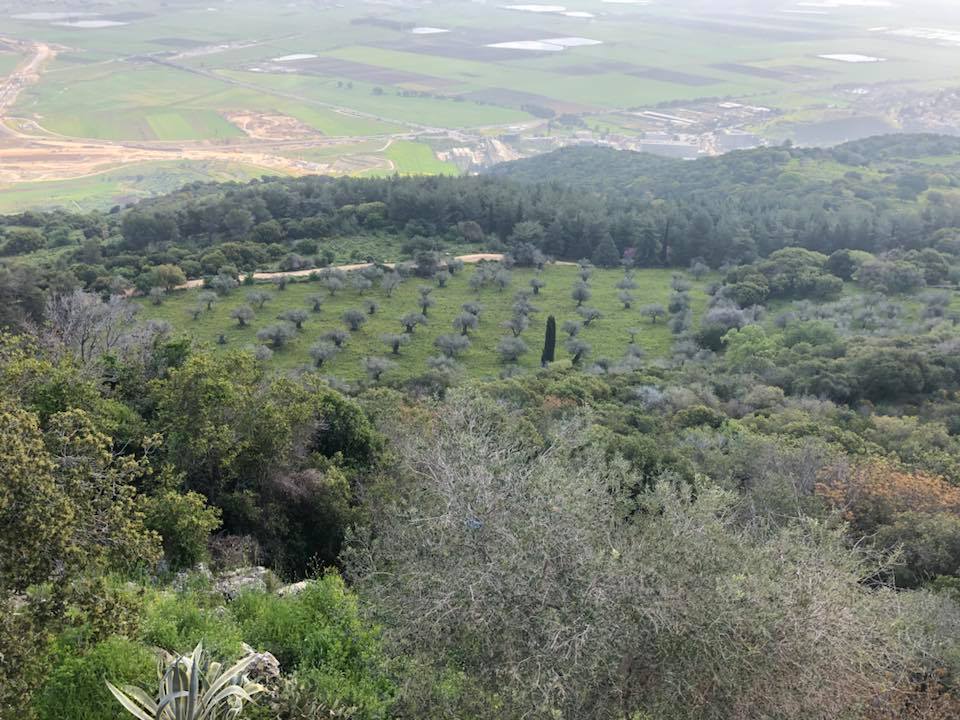
This statement in Psalm 104:10 is spoken literally of God’s physical provision for His creatures. But, have you ever thought about how that is true for you and me when we find ourselves in the valleys of life? In between the mountaintops of successes and happy days, we can find ourselves seemingly down in the valley of the shadow of death (cf. 23:4). I am so thankful that in those moments that might seem dry and thirsty, God sends forth springs in the valleys of life. Whatever creates the valley for us, it can seem like a deep place hard to climb out of. How does God send forth spiritual and emotional springs for us, even in the valleys of life?
The church is a spring in the valleys of life. Other Christians lifting and encouraging us can be the medicine we need to take the next step through the valley. No wonder the church is such an expression of God’s wisdom (Eph. 3:10-11).
Prayer is a spring in the valleys of life. Pouring out our hearts to a God who understands us and knows our situation perfectly strengthens us.
Our family can be a spring in the valleys of life. Those of us who have Christian parents, siblings, children, and other relatives have a double blessing, family twice over. They can be the support and encouragement we need to keep moving.
Spiritual blessings are a spring in the valleys of life. Ephesians 1:3 says in a general way what the rest of the New Testament enumerates in a specific way. God is blessing us in so many ways because we are in His Son. Never do we appreciate that more than when we struggle.
The Bible is a spring in the valleys of life. There is wisdom and insight on every page, guidance for our journey. God has revealed the road map to help us traverse the narrow way to heaven. The narrow way will not keep us from traveling through valleys, and often it has valleys the broad way does not.
Faith or trust is a spring in the valleys of life. Like Paul, who often camped in the valleys of life, “I know whom I have believed and I am convinced that He is able to guard what I have entrusted to Him until that day” (2 Tim. 1:12). My eyes may be wet with tears in the valley, but my eyes of faith see with crystal clarity.
Hope is a spring in the valleys of life. It anchors the soul (Heb. 6:18-19), but it also helps lift us up. Because I face the future with confidence, no setback will keep me discouraged but so long. Tomorrow will be a brighter day!
Christian service is a spring in the valleys of life. Maybe nothing leads me through the valley any more than finding a fellow sojourner to help out of their valleys. When I focus outside of myself on other strugglers, I soon forget my unpleasant experience.
Many years ago, I heard Franklin Camp talk about the valleys of his life and how he overcame. His young daughter accidentally burned to death in a brush fire. He faced other huge losses in life, but brother Camp through it all was a man who had his eyes fixed on the ultimate mountaintop experience. In the valleys of life, let us look for the springs God sends. They will refresh, renew, and relieve us until our journey is complete.
She was born the year after the Civil War. Her mother died when she was three. Her father dropped her and her newborn sister off at the home of the widow of an army friend. Unable to care for the girls, the widow ultimately transferred care to a sweet, religious couple in the community. The girls spent happy years through their school days, but the older sister came to suffer from rheumatoid arthritis as a teenager. It steadily grew worse until she could not walk. Their adopted parents died within months of each other, and the young women were poor and had little prospect of earning money for themselves. Before her affliction, she had developed aspirations as a concert pianist and shown great promise as a poet and writer. Arthritis robbed her on the musical dreams, but she flourished as a poet and hymn writer. Rather than seek relief from her pain through suicide, she channeled her suffering into beautiful writing that continues to comfort others as it did in her lifetime. Ravi Zacharias summarized her suffering, saying, “Her body was embarrassed by incontinence, weakened by cancer, and twisted and deformed by rheumatoid arthritis. She was incapacitated for so long that according to one eyewitness she needed seven or eight pillows around her body just to cushion the raw sores she suffered from being bedridden” (“The Cry For A Reason In Suffering,” np; other information from The Story of Annie Johnson Flint, Rowland Bingham). Her poetry and songs are not riddled with bitterness or even soul-wrenching questions of why. You’ll find titles like “The Grace Of God,” “Not Down, But Through,” “Rest, Tired Heart,” “Grace Sufficient,” “He Giveth More Grace,” “He’s Helping Me Now,” and on the hopeful, positive compositions flow.
We have only one of her hymns in our song book, and it is entitled, “The World’s Bible.” These familiar words include the lines, “Christ has no hands but our hands to do His work today, He has no feet but our feet to lead men in the way….” I appreciate the living testimony Ms. Flint was of the way one who believes in Christ ought to respond to the tragedies and difficulties that can strike in this fallen world. I pray that I will never be wracked by such suffering, but if I do I would want the world to see the spirit in me that so many saw in her. Her life was one of trust in God’s sufficiency and strength through the darkest moments of life.
Our state (Colorado) was one of a few that has passed physician-assisted, right to die legislation in the recent election cycle. Besides the ethical slippery slope of people, even doctors and patients, selecting when to end life, there is in such an effort a failure to see the intrinsic value of life as well as God’s sovereign right over His creation. Ms. Flint’s situation makes us cringe in discomfort at first blush, but we see the refined beauty of a trusting heart to impart profound comfort despite life’s harshest turns. To persecuted Christians, Peter offers this hope for all strugglers when he writes, “After you have suffered for a little while, the God of all grace, who called you to His eternal glory in Christ, will Himself perfect, confirm, strengthen and establish you” (1 Pet. 5:10; cf. 1 Pet. 1:6-7). Whatever the trial, we can choose life instead of death, trust in God rather than trust in our own thoughts. Let us live in triumphant expectation, no matter what we may have to endure for the moment (Rom. 8:38-39; Psa. 30:5).
Any religious figure besides Jesus Christ (even those claiming to represent Him).
Family members and friends.
In Jeremiah 3:23, the prophet writes, “Truly in vain is salvation hoped for from the hills, and from the multitude of mountains: truly in the Lord our God is the salvation of Israel.” Jeremiah’s brethren put all their eggs in the wrong baskets. They neglected to see where true hope was found and where saving faith was to be put. Their misguided trust led to their downfall. It cannot be otherwise in any generation, including our own.
We may never say we put our trust in anything besides God, but “the proof is in the pudding.” We demonstrate what’s first and foremost to us every day, in word and deed. Ultimate deliverance from our greatest trials, struggles, and challenges comes from only one source. Jeremiah succinctly identifies it. Is that what you are trusting? If so, let’s make sure everyone who knows us knows that!
Yes, Paul does say it the other way in 2 Corinthians 5:7, and this isn’t an attempt to contradict the Holy Spirit there. His message, in that context, is trust in a Lord you can’t physically see rather than place your faith in what might be set up as an alternative to Him. Evolutionists reject the idea of God because He cannot be quantified, measured, sampled, or empirically experienced. They walk by sight. Some give up the Christian life because they have a preference for the things of the flesh, things they can experience through their senses.
Some are putting their faith in the wrong things while failing to look in the right direction. Consider what God says in His Word about this.
Some things do not deserve our faith and trust:
Military might or weapons (Ps. 44:6)
Brute force or robbery (Ps. 62:10)
Government or nobility (Ps. 146:3)
Self-delusion (Jer. 7:4)
Sinful associates (Jer. 9:4)
Men and women who aren’t loyal to the Lord (Mic. 7:5)
Ourselves as opposed to God (2 Co. 1:9)
The uncertainty of riches (1 Ti. 6:17)
But, sometimes God urged us to “see”:
“Behold the Lamb of God” (Jn. 1:29)
We “look” for Jesus to come from Heaven some day (Ph. 3:20)
We are to be found “looking for the blessed hope and His glorious appearing” (Ti. 2:13)
We “see Jesus,” One who by God’s grace died for everyone (He. 2:9)
We “look” unto Jesus, the author and finisher of our faith (He. 12:2)
We are to “see to it” that we do not come short of God’s grace (He. 12:15)
We are to be found “looking for the coming of the day of God” (2 Pe. 3:12).
Obviously, this is a play on words. The only way to “see” the things God urges is “by faith.” And, as Paul writes, “Hope that is seen is not hope; for why does one also hope for what he sees?” (Ro. 8:24b).
The exhortation of the Bible is to “wake up” and think about what it is you put your trust in. Is it a good job? Is it a “perfect” relationship? Is it money? Is it pleasure? Is it things? Is it power and control? Is it family? Is it recreation? What is it? Is it the Bible? Is it Christ? Is it heaven? We should walk by spiritual sight, never by misguided faith!
There are some people with “trust issues.” They are stuck in a negative frame of mind, believing the worst in others with little expectation that they will improve. They may even castigate anyone who would encourage you to put faith in people. Certainly, our greatest faith must always be in God. He never fails, forsakes, or leaves us (Heb. 13:5-6), but people invariably do those things. We cannot put more faith in people than God, listening to and following them when they contradict His will. That’s a false, wrong extreme, but so also is a cynicism that fundamentally, inherently distrusts people to do the right thing. This does not mean that there are people in our lives who do not struggle with sin because we all do (Rom. 3:23).
Let me encourage you to have faith in God’s people. Why?
Jesus did. He selected twelve men, salty fishermen, shady tax collectors, strident nationalists, and selfish materialists. While the latter let Him down, the other eleven grew and accomplished much. Jesus entrusted His mission to them (Mat. 28:18-20), having faith that they would accomplish it. But, Jesus also had faith in others—the woman at the well, the woman caught in adultery, Zaccheus, Bartimaeus, Nicodemus, and so many others. Some He put faith in failed Him and even left Him, but that did not ever stop Him from investing that faith in others. Do you remember what He said to Peter after He had failed? “I have prayed for you, that your faith may not fail; and you, when once you have turned again, strengthen your brothers” (Luke 22:32; emph. mine). That was faith in Peter!
It empowers others. When somebody expresses faith in your ability to accomplish something, how do you respond? When you are given responsibility with the explicit or tacit understanding that the giver believes in you, don’t you give it your all to live up to that trust? 2 Timothy 2:2 seems to imply this reaction is a natural consequence of being entrusted with something.
People live up (or down) to our expectations. Have you ever had someone in your life who handled you this way: “You’re no good!”; “You’ll never amount to anything!”; “You’re hopeless!”? Maybe they don’t say it, but they convey it. Preachers and teachers communicate the word through such a pessimistic prism. Leaders convey it in ways both spoken and unspoken. Love “believes all things, hopes all things” (1 Cor. 13:7).
It brightens life. Would you like to maintain a PMA (possible mental attitude)? Never lose the ability to believe in others! A glass half full approach is necessary to retaining an optimistic, hopeful way of life. I’m not saying to be delusional, but you can improve your own quality of life with a fundamental belief that most people, when they know what’s right, want to do what’s right.
It is biblical. Paul had confidence in Philemon’s obedience (Phile. 1:21). He had confidence that Corinth would do the right thing (2 Cor. 2:3). He had confidence in Galatia’s doctrinal resilience (Gal. 5:10). He had confidence in Thessalonica’s continued faithfulness (2 Th. 3:4). What an example, and oh how we should imitate him in this!
Teresa of Calcutta is often associated with certain verses found on the wall of her children’s home, even credited for authoring it. Kent Keith is the likely author. In the composition, “Do It Anyway” (aka “The Paradoxical Commandments”), he notes that people will criticize and be petty. He encourages doing good, loving, and serving anyway. You can choose how you will spend your life, expecting the best or worst of others. May I urge you to have the most faith in God, but leave room for faith in people—especially God’s people! You will not regret it.



















 The Preacher Pollard Blog