Another Heroic Sacrifice

Neal Pollard

Heather Christensen, a 33 year old music teacher from Spanish Fork, Utah, contributed the ultimate sacrifice on behalf of dozens of band students on October 10, 2009. The bus driver, bringing back the band competition winners from Idaho State University, slumped over in his seat and Christensen left her seat and grabbed the steering wheel in an attempt to keep the bus from crashing. While there were still several injuries, there was only one fatality. The 44 students on board were treated but released from the hospital. The 50 year old driver also survived. Only Christensen, partially ejected in the bus’ rollover, died.

It melted the hearts of an entire community that Heather was willing to lose her life in an attempt to save and rescue everyone on the bus. A gymnasium full of people at American Fork High School honored her at a Sunday night vigil. She was hailed as a true heroine.

The future of 45 people was dramatically changed by Heather’s decision to act. The obvious reaction of these students’ friends and family was to honor her sacrifice. It would be shameful to ignore it!

Jesus Christ deliberately decided, from eternity, to die on a cross in an attempt to save all mankind. His was a completely selfless act, requiring Him to take the place not of one but of all. Tragically, the majority of humanity for whom He offered Himself ignore His sacrifice. It does not move or touch them, and it certainly does not motivate them to do what they should do. Yet, for those of us who have obeyed the gospel and are Christians, we come together–not once–but once every week to commemorate His sacrifice. Each day we live, we live mindful of what He did in our place and for our sins. May our hearts stay soft to this supreme act of heroism!


6713611_orig

“Wait Until Fall”

Neal Pollard

It was a beautiful experience, talking with our newest brother in Christ last night. It was beautiful watching him be bombarded with love and attention from member after member. Listening to him tell his story built my confidence in the simplicity of the Bible when a person reads it without prejudice or agenda. What an affirmation that God has a will for us and He made sure it was understandable to the seeker. As Jesus put it, “Seek, and you shall find” (Mat. 7:7).

Roberto has been seeking. As he has been attending a large, area Community Church, he has also been studying his Bible. He’s been a diligent student. Along the way, he read the repeated emphasis upon baptism as a necessity for salvation. This prompted him to approach his church and ask if he could be baptized. He was told that they baptize in the fall, and he could be baptized then. His immediate concern? What if I am killed in a car wreck or my phone blows up when I charge it? There was no manipulative or badgering teacher filling his head with such scenarios. Instead, he could make the connection between a command from God and the consequences of disobeying it.

He started Googling the importance of baptism and eventually found World Bible School. This led him to connect with Terry Pace, a Christian in Flint, Michigan, who studied with him. Roberto wanted to know if he could be baptized. Terry went to work. Terry’s son, Sam, happens to preach at the Northwest congregation in Westminster. One of the Northwest members, Allan Javellana, met him to study with him on Monday and found out he had sufficient understanding to be baptized. Since he lives close to Bear Valley, Allan brought him to our building where Wayne Nelson let him in. Allan stressed with Roberto the importance of working and worshipping with a group that is trying to answer Bible questions with Bible answers.

On Pentecost, they asked “What shall we do?” (Acts 2:37). They were told (Acts 2:38), and they acted that day (Acts 2:41).

On the road to Gaza, the eunuch asked Philip (who had preached Jesus to him, Acts 8:35), “Look! Water! What prevents me from being baptized?” (Acts 8:36). They stopped the chariot right there and then, and he was baptized (Acts 8:38).

At Cornelius’ house in Caesarea, this Gentile asked Peter to come over from Joppa (Acts 10:23ff). Cornelius knew Peter would be speaking words by which he could be saved (Acts 11:14). When it was clear that God wanted Gentiles to be saved (Acts 10:44-47), Cornelius and his household were baptized on the spot (Acts 10:48).

In the prison in Philippi, the jailor asked, “What must I do to be saved?” (Acts 16:30). He’s told to believe on the Lord Jesus Christ (Acts 16:31), Who they proceed to teach him about (Acts 16:32). Armed with this knowledge of the Savior, this jailor “immediately…was baptized, he and all his household” (Acts 16:33).

Nobody waited because God’s answer was “now.” What has changed from then to now? What would make a different answer acceptable today? Roberto is another, amazing example of what a receptive heart does when faced with God’s Word and will. Simply, humbly do what He says. Oh, that I will approach God’s Word the same way!

water-baptism

THE HUMAN CHAIN AND SALVATION

Neal Pollard

Incredibly, nine people in one family were in serious danger of drowning as they were swept into a riptide in Panama City Beach, Florida. It started with some little boys, but soon included would-be rescuers that included their mother and some other relatives. All of them were floundering in about 15 feet of water. The USA Today story seems to indicate that Jessica Simmons and her family thought of the idea of creating a human chain out to the imperiled family and towing them back to shore. About 80 people “started a football field-sized human chain to help bring them back to shore” (Mary Bowerman, 7/11/17, online ed.). The mother, Roberta Ursrey, summed it up well when she said, “I owe my life and my family’s life to them. Without them, we wouldn’t be here” (ibid.).

What a great story! It reveals the possibility of unity for profound purpose. It shows the power of working together. It says something about the best part of the human heart. It also illustrates the power of rescue and salvation.

The Bible makes it clear that God is the one who saves (Titus 2:11). His Word is His power to save (Romans 1:16). His divine plan is the means of salvation (Acts 16:30-31; Romans 10:9-10,13; Ephesians 2:8; 1 Peter 3:21). But, the Bible makes it just as clear that He does His saving through the preaching, teaching, influence, and efforts of His people, sharing the good news with those who are languishing in the waters of iniquity. That’s suggested in “The Great Commission” (Matthew 28:18-20; Mark 16:15-16; Luke 24:46-47). It’s demonstrated in the constant efforts of New Testament Christians, taking the message of Christ with them throughout the world to those lost in sin (cf. Acts).

Think of the church as the God-given human chain, reaching out to the struggling, needy soul. They are drowning in sin and in desperate need of help. Unreached, they will drown (see the imagery of 1 Timothy 6:9). God wants you and me, as those who ourselves have been saved, to join hands and help others who need to be helped onto the shores of safety! We cannot delay! We must act while there’s time. Lives—souls!—depend on it.

mjxbw1M3

A Wonderful Savior!

Neal Pollard

Since I was a boy, “A Wonderful Savior” has been one of my favorite hymns. A multitude of reasons are cited in this beautiful song, all of which builds my adoration for the Lamb of God! Let me suggest three reasons why I think Jesus is a wonderful Savior.

He has a wonderful nature. Jesus is Divine and eternal. He possesses all the traits of Deity without qualification or limitation (Col. 2:9). That means He has the power to save “to the uttermost” (Heb. 7:25). Not only does He, as God, have the power, but He has the love (1 John 4:8). He has not only the power and the will, but also the desire.

He demonstrated wonderful love. Again, what could drive the perfect God to die for woeful, sinful, and wicked man? There was nothing in us deserving of love, so this says everything about Him and nothing about us. He loves me because HE is wonderful (Gal. 2:20; Eph. 5:25; cf. Rev. 3:9).

He has opened wonderful doors of opportunity. Paul loved using this terminology. He told Corinth in two letters about the Lord opening such doors for him (1 Cor. 16:9; 2 Cor. 2:12). He told the church at Colosse (4:3). He reported as much to the church at Antioch at the end of the first missionary journey (Acts 14:27). We cannot separate these opportunities from the Savior. Who do we seek to promote? What is our message? Who is the object of hope? He opens doors because of who He is. The Godhead, when we pray and seek His will, opens the doors through divine providence. How enriching and rewarding when we step through those wonderful doors!

Fanny J. Crosby had in mind the event up on Mt. Sinai when Moses received the ten commandments and the Lord descended in a cloud and stood with Moses there. It is a beautiful picture of a God who condescends to lowly man. That’s what Jesus did! He lowered Himself for us (Phil. 2:5ff). Thank God for such a Savior as we have!

blesed-assurance


Is There No Balm In Gilead?

Neal Pollard

Jeremiah asks that question rhetorically? It comes at the end of an oracle God gave this prophet to share with his people, Judah. He had asked if the people had turned to idolatry because God was not in Zion (Jer. 8:19). He then ends by saying, “Is there no balm in Gilead? Is there no physician there? Why then has not the health of the daughter of my people been restored?” (8:22). In context, the people were sin-sick, but the cure was available. It was not because God was unable to restore them that they were ailing, but because they refused to seek the cure.

Certainly, today’s society mirrors this attitude of Jeremiah’s contemporaries, but this, in context, was spoken to those who had been healed in the past. These were God’s people. Now, they were spiritually sick and not getting better. The logical question is the one Jeremiah asked—“Why not?” When we are sick with sinful habits, lifestyles, attitudes, and speech, why don’t we turn to God for the cure?

  • Sometimes, we are oblivious to our symptoms.  Paul speaks of some who are “past feeling” (Eph. 4:19). We can become callous to our condition and rationalize it. As long as we persist in that state, it is as if there is no balm.
  • Sometimes, we look elsewhere for the cure. Judah had her idols, and so can we. People struggling with life turn to so many poor substitutes to numb, deaden, and try to eliminate the pain. Nothing can substitute for the Balm of Gilead (cf. Jer. 3:23).
  • Sometimes, we feel ourselves to be a hopeless case. As we struggle with our temptations and sins, we can get to the point where we feel we’ve gone too far or been too often to reverse the problem. This is not God’s message. He provides hope to every one who will come to Him for help (Heb. 6:9-12).
  • Sometimes, we underestimate God’s power. Jeremiah’s predecessor, Isaiah, shares God’s message regarding this, saying, “The Lord’s hand is not so short that it cannot save” (59:1). Jeremiah would echo this idea, writing, “Ah Lord God! Behold, You have made the heavens and the earth by Your great power and by Your outstretched arm! Nothing is too difficult for You” (32:17; keep reading in context for more beautiful truth along this line). Though we should know better, sometimes we forget God’s power to save.
  • Sometimes, we neglect our support system. God gave the church as a hospital where all of us, sick with sin, can not only receive healing from Him but help each other. In a sense, we’re a leper colony that has found the One who will keep us from dying. But we need each other for help to survive this spiritual sickness (Gal. 6:1-2).
  • Sometimes, we don’t avail ourselves of God’s medicine. How tragic to die from spiritual disease when God has the means to heal us. We have His Word as a divine prescription. We have prayer. We have the confidence of faith. We have the trust in His providence. He has armed us sufficiently with the cure, if we accept it (cf. Luke 5:31).

While they await the cure for cancer, cystic fibrosis, ALS, multiple sclerosis, and the like, our greatest illness has already been remedied. This illness carries with it the greatest repercussions. We cannot neglect the cure. But if we spiritually die, it will not be because there is no balm and no Physician. It will be because we would not come to Him for healing. May we not let this be the reason.

hqdefault

Celebrating Independence Day

Neal Pollard

Scores of people from virtually every nation on earth make the journey by land, sea, and air to come to the United States, “the land of the free and the home of the brave.”  The day in American history, marked by the signing of the Declaration of Independence during the Revolutionary War with Britain, is considered the birthday of America.  “Independence Day” symbolizes not merely a day, but a way of life and the blessings of living in a free nation.

Mark’s gospel begins with the life of John the Baptist, the forerunner of Christ.  In the passage, Mark tells about the many people from Jerusalem and all the land of Judah who came to be baptized by him.  This immersion, though not the one to which all believers must submit today for salvation (cf. Mark 16:16), was an important precursor to Jesus’ earthly ministry.  Apollos (Acts 18:25) and certain men of Ephesus (Acts 19:1ff) were among those even in the Christian age who had previously undergone it.  The baptism bears a remarkable resemblance to the water baptism of the Great Commission.  It was a baptism involving repentance (Mark 1:4), as is baptism under Christ’s covenant (Acts 2:38).  It was a baptism resulting in the remission of sins (Mark 1:4), as is baptism into Christ today (Acts 2:38).  It was a baptism done in much water (Mark 1:5; cf. John 3:23).  So it is with baptism into Christ (Acts 8:38-39; Romans 6:3-4).  It was a baptism properly submitted to only by those understanding its importance in light of their sin problem (Mark 1:5).  So it is with baptism into Christ (Acts 22:16).

Both the baptism of John and the baptism of the Great Commission share this, too.  Both brought freedom and independence from sin, each in its proper dispensation.  Freedom to vote, own property, and pursue happiness are wonderful, but nothing compares to the Independence Day we celebrate when we are baptized into Christ.

miamifireworks

He Can Carry What’s Too Heavy For You

Jeff Wiant has been a Christian since early 2015. Since then, he has written 11 hymns. They are all beautiful, but this may be his best. It’s his first invitation song to write.

Poem inspired by this beautiful new song by Jeff Wiant, member at Bear Valley.  Click on the link below to hear it:

CLICK HERE: Jeff Wiant’s “Won’t You Come”

Neal Pollard

We struggle and strain to carry our load
We buckle as it gets heavier on our backs
We fall and hurt on this rough, rocky road
The weight makes us stop in our tracks

Looking around with a face full of pleading
We wonder who is observing our pain
We’re wounded, weary, broken and bleeding
Set to surrender from the stress and strain

Tears flow freely, we have been here before
We know how the journey seems endless
Certain we can’t make it alone to the door
We feel solitude, helpless and friendless

It’s bigger than us, crushing and enormous
And the contents shameful and unsightly
We’ve borne it so long it’s begun to conform us
To a stooped struggler holding on tightly

A voice calling gently, “Bring it over to Me,
I can help you and give you My best,
Your burden is heavy, I know you are weary,
Come to Me and I will give you rest.”

Could you double down, wincing and worn,
Grit your teeth and ignore His free aid?
Eventually, it will bury you after making you mourn
You know an exorbitant price must be paid.

He is able and willing, but waiting for you
To seek what He offers you without reservation
Let Him do for you what only He can do
Give your burdens to Christ with no hesitation.

Think of the journey, partnered with One
Without limits in power, purity and pity
Who’ll stay with you until your journey is done
As together you arrive at His heavenly city.

Dockers de Cap-Haïtien

Carelessness And Ignorance

Neal Pollard

Of course it happens on a week where you are already running a little late, and it contributes to an improper decision.  Sunday morning, en route to teach my Bible class, I approached the red light at Ken Caryl and Wadsworth to turn right and head up to the church building.  However, I did not execute a clean stop but rolled through it (since I could see that no cars were close enough to overtake me).  Unfamiliar with the mandatory use of the acceleration lane, I pulled on into the right lane of northbound traffic.  It was about fifteen seconds later that I noticed the State Trooper inviting me to pull over and chat about it. Truthfully, I did not realize I had rolled rather than stopped and I did not realize that I had to use the acceleration lane first. The extremely polite officer let me know that my ignorance and relative indifference did not make my actions lawful. Only because of his kindness and the validity of my insurance and registration did he let me go with just a warning. But, I was “dead to rights.”  It would have been an expensive lesson for a man who has been driving for 30 years as of this year. Oh, and I was 30 seconds late to my Bible class, too.

I will claim that I am a courteous and ordinarily lawful driver with a clean MVR (motor vehicle record), but that did not make me exempt from Colorado driving laws.

It is sobering to contemplate the great day of judgment. “All nations will be gathered before [Christ]” (Mat. 25:31). “Each one of us will give an account of himself to God” (Rom. 14:12; cf.  2 Cor. 5:10). “God will judge the secrets of men through Christ Jesus” (Rom. 2:16). “God will bring every act to judgment, everything which is hidden, whether it is good or evil” (Ecc. 12:14). While every child of God will be the benefactor of amazing grace available to all who walk in the light (Ti. 3:7; 1 Jn. 1:7), there will be moral, upright people lost for eternity (Mat. 7:21-24). God will deal out fiery retribution to “those who do not know God and to those who do not obey the gospel of our Lord Jesus” (2 Th. 1:8). Despite this, they will pay the penalty of eternal destruction (2 Th. 1:9; cf. Mat. 25:46).

I cannot help but think of how many people will stand before the kind, beneficent Christ and claim ignorance or carelessness. He will have demonstrated great patience and doled out so many “second chances” (2 Pet. 3:9), but His long-suffering will have been exhausted in that day “when He comes to be glorified in His saints” (2 Th. 1:10). May we “regard the patience of our Lord as salvation” (2 Pe. 3:15) and make sure we are in compliance with His reasonable expectations.

320px-colorado_state_patrol_car

Hazards of Firefighting

Neal Pollard

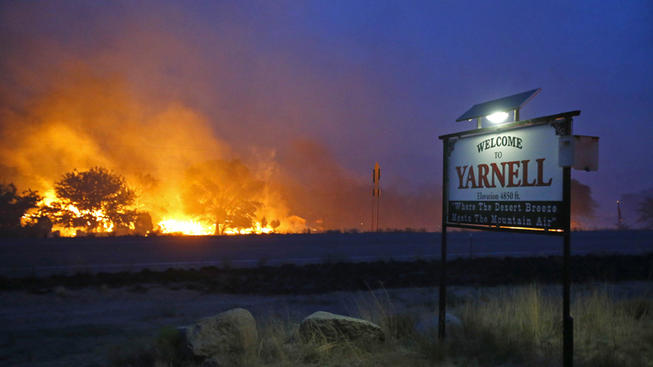
343 on 9/11/2001 in New York City. 86 in 1910 across Washington, Idaho and Montana. 29 in 1933 in Los Angeles. 27 in April, 1947, in Texas City, Texas. 21 on December 22, 1910, in Chicago. 19 on June 30, 2013, near Yarnell, Arizona (Firefighter Tragedies).  Those are the deadliest incidents for firefighters in American history, in number of fatalities. Firefighting is deadly, if heroic, business. Those answering the call know that each response, however simple or innocuous it may seem, masks many dangers. Firefighting is hazardous business.

The same is certainly true in the firefighting business Jesus calls us to perform. The Bible clearly indicates that the fire prepared for the devil and his angels will be eternally shared by those who know not God and do not obey His gospel (Mat. 25:41ff; 2 Th. 1:8-9). As Christians, then, we are God’s firefighters (Jude 23). We should do this job out of a sincere concern and love for souls and a desire to be working for and serving the One who rescued us from so great a death (2 Co. 1:10). But, by stepping into that arena, we should realize the risks and dangers involved.

  • We can be ill-equipped.  Firefighters can’t hope to do their work with old, shoddy, or faulty equipment. The best equipment available is ineffective when not put into use. In our spiritual battle, we know that our “equipment” (2 Tim. 3:17) is perfect for every situation. But, we have to know it (2 Ti. 2:15). We also need to know how to use it. We need to make sure our approach to people is not shoddy or faulty (cf. Gal. 6:1). To be boisterous or bullying with God’s Word not only further harms the one in danger, but also endangers us!
  • We can get too close to the fire. Firefighters can be the victim of their proximity to the conflagration. It’s often difficult to judge how close is too close, but it is an ever-present hazard. In our spiritual firefighting, we can get too close to the fire through compromising God’s Word, conforming to the world, committing sins of attitude, morality, ethics, or the like in our outreach. We must avoid behaving in a worldly way when trying to help save those out in the world. In trying to help a struggling soul, we can sin with our tongues or gossip about the one whose troubles we’ve been made aware of.
  • We can ignore the dangers. It’s true in firefighting as in all professions that one may occasionally choose not to practice what he has been trained to know, see and think. In the heat of the moment, one may not focus on certain warning signs. Buildings collapse, air runs out, black draft areas are entered and serious results follow. Spiritually, we must be careful in how we go about this “business.” Going alone when we need another with us, trying to help someone when we are too emotionally invested, or responding out of hurt and anger instead of “cooling off” are all ways we can ignore the dangers we might face.

Let us be aware of the risks we take in reaching out to those who are in spiritual danger, but let us be eager to respond to the need. Despite the ever-present risks firefighters take, they still are faithful and dedicated to the job. God needs us on the front line, too. May we simply factor in the perils of firefighting, then do it!

ap525541180459

Why Travel The Road Less Taken?

Neal Pollard

Gunnar Garfors is the youngest “hobby traveler” to have visited every country in the world. He’s written a book about it, entitled 198: How I Ran Out Of Countries. I have not read the book, but his website offers a very interesting article on The 25 Least Visited Countries in the Whole Wide World. Guess which one is least visited. He tells us, statistically, it is Nauru, a Pacific island country with no capital and no armed forces. It is 8.1 square miles in size, having only 10,000 inhabitants. They have the world’s highest level of type 2 diabetes and the highest obesity rate in the world (97% of men and 93% of women are overweight or obese). It has no seaport and no daily news publications. Perhaps some or all of these factors lead this country to be most frequently avoided by travelers, but somebody has to own that distinction (read more here: Independent UK, BBC, and Gunnar Garfors).  Perhaps none of these facts inspire you to work to help Nauru lose its notorious tourism distinction.

Robert Frost wrote his famous poem about the two roads which diverged in a yellow wood. He took the one less traveled by, and that made all the difference.  It appears he may have actually stood before such a fork, but he used the experience to speak metaphorically. We can all appreciate this figurative choice. We must choose a path in life, and the one we choose does make all the difference!

Jesus uses such a metaphor to describe the way of life we choose on this earth. He says, “Enter through the narrow gate; for the gate is wide and the way is broad that leads to destruction, and there are many who enter through it. For the gate is small and the way is narrow that leads to life, and there are few who find it” (Mat. 7:13-14). In this familiar passage, He gives us multiple reasons why we should take His way.

  • Its aim (“leads to life”).
  • Its alternative (“leads to destruction”).
  • Its autonomy (it is a road each one chooses to “enter through”; it is not arbitrarily chosen for us).
  • Its assumption (one must choose between these two, and no other, ways).
  • Its accessibility (it can be “entered” and “found”).
  • Its attainability (Jesus says “few” find it and not “none” find it).
  • Its associability (one is not absolutely alone, for there are “few” rather than “none”).

Jesus compares our brief time on this earth with a road trip. We are not fated to stay on the broad way, but we are not unconditionally guaranteed a spot on the narrow road. As Frost surveyed the two paths and made his choice, so must we. Jesus says we make this decision daily (cf. Lk. 9:23). And our choices determine which path we are traveling. Be deliberate and prepared for this arduous journey that terminates all too quickly. The right choice is the one less taken and most avoided, but take it anyway!

2784284196_2d950420d6_b
That’s the whole country of Nauru

What Keeps People From Salvation?

Neal Pollard

  • Ignorance: They have not learned how to be saved
  • Fear: They know the potential cost of being saved
  • Pride: They do not want to admit they are not saved
  • Loyalty: They fear that they will be tacitly condemning those they care for if they are saved
  • Comfort: They do not want to do what it takes to be saved
  • Emotion: They feel they are saved
  • Guilt: They do not believe they can be saved
  • Prejudice: They cannot see the necessity of following what certain scriptures say they must do to be saved
  • Sin: They enjoy something(s) too much to surrender in order to be saved
  • Self: They want to follow their own terms to be saved
  • Blindness: They cannot see through their religious traditions and doctrines in order to be saved
  • Responsibilities: They are too busy with life to be saved

So many more excuses might be given by someone who refuses to do what God says to do in order to be saved, but whatever excuse is given overlooks the fact that God allowed no excuse to keep Him from sending His Son, that Christ allowed no excuse to keep Him from going to the cross, that the Holy Spirit allowed no excuse to keep Him from revealing to us through the Bible how to be saved, that the apostles and early Christians allowed no excuse to keep them from sharing and doing God’s will for salvation (even at the cost of their lives), and that so many throughout time have not allowed these same excuses to keep them from obeying the gospel to be saved. Salvation is so important, eternity is so long, the soul is so precious, sin is so destructive, the devil is so ravenous, and the world is so wrong that we must remove every barrier that might stand in our way. If we were to write down our reason for not being saved and keep it until the day of judgment, how valid and reasonable would it sound as we conveyed it to Christ? If we would not want to tell Him then, let’s not let it keep us from Him now.  “Behold, now is the acceptable time, behold, now is the day of salvation” (2 Cor. 6:2b).

South Fork Church of Christ baptistry mural looking in from the

Devon Allen’s Baptism

Neal Pollard

I will preface this by saying I cannot determine anything specific about the religion of Devon Allen, a remarkable college student-athlete at the University of Oregon. He is in the headlines now as a starting football player who qualified for the Olympics in track and field.  It was during his training and competition for the latter that he decided the time was right to be baptized. So he was, in the Willamette River in Eugene last Friday before the watchful gaze of family and teammates from his track and football teams. No less than ESPN reported on his religious quest alongside his impressive athletic achievements. The article ended with the proper sentiment, particularly if Allen was baptized in the right way for the right reason. It reads, “It was the right starting line for two different races” (Chantel Jennings, espn.com).

I am encouraged that Jennings found this newsworthy. I am encouraged that Allen thought baptism to be so important. I am encouraged that his friends and family showed up in impressive numbers to witness this act.

When even so many in Christendom go the extra mile in denying the importance and significance of baptism, Devon troubled himself to do it. We do not know, but he might have said what the Ethiopian said: “Look! Water! What prevents me from being baptized?” (Acts 8:36b). As he studied with Oregon football team chaplain, could he have been taught the New Testament truth that baptism is for the remission of sins (Acts 2:38), baptism washes away sins (Acts 22:16), baptism reenacts Christ’s death, burial, and resurrection (Romans 6:1-4), baptism puts one into Christ (Galatians 3:27), baptism buries one with Christ (Colossians 2:12), and baptism saves one (1 Peter 3:21)? If he was taught baptism from the New Testament, these are the kinds of things he would have heard.

Regardless of Allen’s understanding about baptism’s function in God’s plan to save us, one who is taught in accordance with the several passages above and who has a good and honest heart (cf. Luke 8:15) will want to be baptized without delay (cf. Acts 22:16). Like the jailor at Philippi, they will submit to baptism even if it is the middle of the night (Acts 16:33). Like the 3,000 on Pentecost, they will demonstrate gladly receiving the word by being baptized (Acts 2:41). Thus, they will be saved.

My prayer is that Devon Allen understand these Bible facts and responded the way he did because he humbly accepted their truth. More than that, my prayer is that those who need to make the decision to be baptized will not let anything hinder them from doing what Jesus died to make possible for us all. May we ignore all rationalization that leads us to resist the act which, from a believing, penitent heart, washes our sins away.

102707-oregon-autzen-uoentrance1

In Awe Of The Greatest Freedom


Neal Pollard

I once was without representation,
Not a citizen of that chosen nation,
Enslaved and oppressed,
Deprived of the best,
And discouraged by my lowly station,

But my freedom was bought at a price,
With the one ransom that would suffice,
Sweet liberty was bought,
And my freedom I sought,
When I opted for virtue instead of vice.

Independence is becoming and sweet,
It is found when I fall at His feet,
And make Him my Master,
I avoid pain and disaster,
He offers me victory for my defeat.

I celebrate privileged position,
Embrace His heavenly mission,
Knowing the blessings He gives,
Is because He still lives,
He hears the faithful disciple’s petition.

As we celebrate the blessings in this land,
Bestowed by a Providential hand,
Let us never forget,
That He paid our great debt,
He’s preparing what’s infinitely more grand.

Whatever may become of our dear country,
I pray that our eyes will always see,
That no earthly place is home,
We are strangers who will roam,
’Til we reach the Great City across the sea.

flag-468345_640

Devil Anse: A Sinner Redeemed?

devil-anseNeal Pollard

I just finished reading best-selling author Lisa Alther’s book, Blood Feud: The Hatfields & The McCoys, The Epic Story of Murder & Vengeance. It chronicles the often-confusing causes and effects, crimes and consequences between these two families. While it was neither the longest-standing nor bloodiest feud of its kind in 19th-Century America, it, probably thanks to T.C. Crawford’s stereotyping, contemporary book about the hillbilly feud, is by far the most famous. Alther, related by an ancestor’s marriage to the McCoys, includes a great many fascinating facts concerning the feud and its aftermath. None interested me more than something she mentions several times throughout the book. Long after the feud, an elderly Devil Anse Hatfield, the patriarch of the Hatfield side of the fight, was baptized by Dyke Garrett, a former Civil War chaplain, and Devil “went on to found a Church of Christ congregation in West Virginia” (142; cf. Hatfield and Spence, Tale of the Devil, 97).  I do know that a member of the church where I preached in Virginia, transplanted from West Virginia, was a direct descendent of Devil Anse, but I did not know about his baptism.

The Christian Chronicle did a feature on this in 2012, authored by Bobby Ross, Jr.  Ross interviewed Doug Foster, church historian at Abilene Christian University, who seemed doubtful that the Hatfields were anything other than primitive Baptists. However, Foster confirmed that Garrett was a member of the church of Christ. A genealogical site managed by Charles Douglass Brown echoes Alther’s report that Hatfield helped establish a church of Christ in an unspecified West Virginia location (https://www.geni.com/people/William-Anderson-Devil-Anse-Hatfield/6000000006903464087). A man taught by Alexander Campbell, Alexander M. Lunsford, is said to have converted Dyke Garrett in the 1870s. “Garrett began his ministry near Crooked Creek in Logan County on December 14, 1878” (http://blueridgecountry.com/blogging/hatfields-mccoys-revisited-blog/hatfields-and-mccoys-revisited-week-4religion/). One year soon thereafter there were nearly 100 conversions in Logan and Boone Counties, and growth continued to occur in the area built on the foundation of their work (ibid.).

All of this lends credence to the multiple reports that Hatfield, goad of so many McCoy murders, responded to the gospel call about a decade before his death. How sincere he was at the time or how faithful he was thereafter is difficult to tell. But, if he was, there is truth to Ms. Alther’s tongue-in-cheek designation of Hatfield as “a sinner redeemed” (p. 171). What Scripture makes clear is, that a sinner who sincerely turns from sin and obeys from the heart (cf. Rom. 6:17) follows Paul’s example. The apostle wrote, “Yet for this reason I found mercy, so that in me as the foremost, Jesus Christ might demonstrate His perfect patience as an example for those who would believe in Him for eternal life” (1 Tim. 1:16). If so, what a redeeming end to a tragic, tragic tale. Certainly, whatever our past, obedience to the gospel brings triumph where there was once tragedy! “Thanks be to God for His indescribable gift!” (2 Cor. 9:15).

“Truly In Vain Is Salvation Hoped For From…”


  • A politician or political party.
  • Wall Street.
  • Military might.
  • Our net worth or economic savvy.
  • Government programs.
  • The second amendment.
  • Popularity and fame.
  • The worship of nature.
  • Exercise and fitness.
  • The appeal of our good looks.
  • Walls.
  • The importance of our occupation or position.
  • Our national identity.
  • The Supreme Court.
  • Ethnicity and race.
  • Science and technology.
  • Any religious figure besides Jesus Christ (even those claiming to represent Him).
  • Family members and friends.

In Jeremiah 3:23, the prophet writes, “Truly in vain is salvation hoped for from the hills, and from the multitude of mountains: truly in the Lord our God is the salvation of Israel.” Jeremiah’s brethren put all their eggs in the wrong baskets. They neglected to see where true hope was found and where saving faith was to be put. Their misguided trust led to their downfall. It cannot be otherwise in any generation, including our own.

We may never say we put our trust in anything besides God, but “the proof is in the pudding.” We demonstrate what’s first and foremost to us every day, in word and deed. Ultimate deliverance from our greatest trials, struggles, and challenges comes from only one source. Jeremiah succinctly identifies it.  Is that what you are trusting? If so, let’s make sure everyone who knows us knows that!

—Neal Pollard

11800435_10153091791310922_2631856048550949852_n

Can You Imagine Being $53 Million In Personal Debt?

Neal Pollard

USA Today’s Maria Puente is reporting music star Kanye West’s tweet where he writes, “I write this to you my brothers while still 53 million dollars in personal debt…Please pray we overcome…This is my true heart….” (USAToday.com).  Hearing that Facebook creator Mark Zuckerberg and wife Priscilla were going to give away some of their billions to philanthropic causes, West tweeted that he wanted to be a recipient of some of that charity.  Since most of us will probably not make a total of $53 million in our lifetimes, we have a hard time imagining how someone could accrue that amount in personal debt! Perhaps horrible investing, profligate lifestyle decisions, and the like might explain it, but the lack of restraint and wisdom seems appalling. How could one person be so foolish and wasteful? We wring our hands and shake our heads, maybe condescendingly.
Until we consider something.

In a spiritual sense, we all faced a debt infinitely greater. Jesus illustrates this in a parable regarding a slave who owed his master 10,000 talents (Mat. 18:23ff). Biola University business professor Philip Massey did some modern-day math equivalency with that figure and estimates in 21st Century dollars that debt would be $7.04 billion dollars, and according to the 2010 Forbes list of billionaires would need to be at least the 102nd most wealthy person on the entire planet just to be able to pay such a debt (chimes.biola.edu).  Jesus’ point in the parable is to show how utterly audacious it is not to forgive the relatively minuscule transgressions others commit against us in light of how great our spiritual debt is to God.  All the combined wealth of the world is not enough to pay for one sin (cf. Mic. 6:6-8; Mat. 16:26). Colossians 2:14 uses the term “debt” to describe our sin problem, but the same verse tells us that we had someone more powerful and capable than any earthly magnate or mogul to help us pay off our debt.  In fact, “having nailed it [the certificate of debt consisting of decrees against us] to the cross,” He provided payment sufficient for the sin debt of every single person in this world.

Can you imagine anyone refusing help who faced such an insurmountable obligation? Yet, the majority of this world has done and will continue to do so. By refusing to submit to the Lordship of Jesus, they continue to pile up their debt. When the Day of Accounting comes, they’ll stand bankrupt and unable to pay. The consequences will be eternal!

Without Christ, we all face a debt that cannot be sufficiently estimated.  We need His blood applied to our sins or our situations are hopeless! How Zuckerberg will respond is unclear. How Jesus will respond is ironclad! Reach out to Him.

kanye_west_at_the_2009_tribeca_film_festival-2_cropped

Ebenezer!

Neal Pollard

No, not Scrooge (though my favorite version starred George C. Scott)!  That Ebenezer is the one even most Christians are more familiar with. The Ebenezer I’m referring to is from the Bible. You’ll read about it between 1 Samuel 4-7. The first two references are to an existing village (4:1; 5:1). But, it’s the last reference that Robert Robinson makes use of in his well-known, 1758 hymn, O Thou Fount Of Every Blessing.

In the thread of Jewish history, Eli is rejected as High Priest for the corruption perpetrated in his house against the people in their priestly functions. Samuel is chosen to be his replacement. Due to the terrible leadership of Eli’s sons and their influence over the people (2:24), God allows the Philistines to rout them in battle (4:2). The Israelites try to form their own solution by bringing the Ark of the Covenant from Shiloh to Ebenezer as an icon of power (4:3-4) and perhaps to intimidate the Philistines (4:6-9). This backfires, the Philistines steal the ark (4:11), and keep it in the house of their god, Dagon, for seven months (5:2; 6:1). This brings what might have been Bubonic Plague on the Philistines until they, desperately, return the ark to Israel (6:12). Except for the over 50,000 people of Beth Shemesh who look into the ark when it was returned to them and were destroyed (6:19), things were much improved for Israel.

By now, Eli’s successor has been named. Eleazer cares for the ark, safeguarding it for 20 years at Kirjath Jearim. Samuel leads a Restoration Movement to free Israel from Philistine oppression. The people repent when they gather at Mizpah. The Philistines hears of Israel’s prayer meeting and prepare to fight them.  Samuel urges prayer and sacrifice (7:8-9). It was then God made His appearance and confused the Philistines so much that Israel utterly defeats them. There, between Mizpah and Shen, Samuel takes a stone and laid it on the ground, calling the place Ebenezer. This means, “Thus far the Lord has helped us” (7:12). Israel regains cities lost to Philistia and were relieved from their oppression. The place where Israel had been defeated twice became the place where God helped His people win with finality!

Why would Robinson use such a relatively obscure Old Testament moment to talk about God’s guidance and assistance? First, Israel had to come as far as they could from wickedness to salvation. But, it was not by their goodness or power that they were delivered. Far from it! God “thundered with a loud thunder upon the Philistines.” The Lord “confused them.” So, Samuel sets up a memorial in an attempt to remind Israel of their dependence on Him.

Because of human nature, we still need that reminder today. The Lord’s Supper is a memorial of dependence, a continual reminder of our need for a substitute sacrifice to save us from hell. Prayer is an inherent reminder that we’re preserved only by the Lord’s help. Even our bodies remind us we are finite. When we look at the incredible world of nature, our souls sing out, “How Great Thou Art!” The next time you sing that Robinson hymn, remember that “it is of the Lord’s mercies that we are not consumed, because His compassions fail not” (Lam. 3:22).

300px-cloughmore_stone

Shipwreck

Neal Pollard

The hope of finding survivors on the cargo ship El Faro has severely dwindled, as one of two lifeboats, severely damaged, has been discovered as well as one body.  While the other lifeboat from the ship, with a capacity for 43 persons, has not been found in the ocean waters off the Bahamas, the 735 foot long ship sent a distress signal Thursday from near the eye of Hurricane Joaquin as it battled 20-30 foot waves.  The Coast Guard is hopeful, but the realistic expectation is that this will soon be a recovery rather than rescue mission (info from cbsnews.com and reuters.com). Out of all the frightening ways to face death, being lost at sea has to be near the top.  There’s the foreboding strength of battering waves, the immense, liquid darkness of the deep, the mystery of what lies beneath the surface, the horrific experience of drowning, and the overall helplessness in the face of a fierce overwhelming force.  Since maritime history goes back for millennia, people both ancient and modern have faced the terrors of shipwreck. Dating at least as far back as the ship found off Dokos, Greece, dating back to 2700-2200 B.C. carrying a cargo of pottery (read more at http://www.mhargolid.nl/data/webb1992.pdf), mankind has experienced the sinking of ships.

No wonder New Testament writers seize on this common situation of life. Luke records (Acts 27:14) and Paul looks back on (2 Cor. 11:25) literal shipwrecks the apostle survived.  How fitting that he is the one who describes those who lose their faith as those who have “suffered shipwreck” (1 Tim. 1:19). Preventing shipwreck, according to Paul, necessitates.

  • A fighting (1:18). Just as crew members must strain at their tasks on deck, despite weathering difficult winds and choppy seas, we cannot be passive and yielding in spiritual storms. Paul warns Ephesus against being “tossed here and there by waves and carried about by every wind of doctrine, by the trickery of men, by craftiness in deceitful scheming” (4:14).  Faith is vital to equipping one for the spiritual fight.
  • A keeping (1:19). You can imagine someone clinging to ropes and rails or staying at the helm or rudder as they weather the storms of life. But the lifelines to which we must cling in such torrents is faith and a good conscience (see 1:5). Our spiritual constitution and fortitude spell the difference between survival and lostness.
  • A teaching (1:18-20).  Training often spells the difference in surviving out at sea.  Certainly, keeping a cool head and being able to use, when needed, that which has been previously learned is vital!  Paul says as much regarding the survival of spiritual shipwreck.  He mentions an entrusted command (1:18), prophesies (1:18), and being taught (1:20). The best teaching may not help the literal sailor in storm-tossed seas, but heavenly teaching is guaranteed to rescue those so equipped even in the face of the most seemingly insurmountable difficulties of life.

We had the feeling of finality of those lost at sea.  Thankfully, as long as one lives, he or she can be recovered from spiritual shipwreck. But, they must come back from such depths and take hold of God’s life preserver, His Son Jesus Christ! Let us do our part to rescue the perishing, snatching them with pity from sin and the grave (2 Pet. 3:9).

A Daring Escape

Neal Pollard

Before Arthur Turner “Bud” Morris died at home on December 15, 2012, following service to our country in the army in World War II and a 35-year career as a truck driver for Carolina Freight (see more here), he granted an interview for Atlanta’s NBC affiliate, WXIA, in which he not only claimed to be the cousin of famous Alcatraz escapee Frank Morris but more boldly that he helped him escape. In the interview (WXIA), he tells the reporter about giving multiple payoffs to prison guards presumably to get them to look the other way.  Frank Morris, said to have had an IQ of 133, and brothers John and Clarence Anglin of Lee County, Georgia, disappeared and were thought drowned in the cold waters of the San Francisco Bay.  However, anecdotal evidence and alleged sightings are offered to suggest these men actually did escape from the infamous Alcatraz Prison.

Whether or not they escaped from a place formerly thought impregnable and impossible, you and I have the opportunity to escape something far more imposing.  Peter writes the scattered saints in his second epistle, reminding them of those exceeding great and precious promises that they came to possess “having escaped the corruption that is in the world through lust” (1:4).  The way to complete that escape is listed out, starting in verse five: faith, virtue, knowledge, self-control, perseverance, godliness, brotherly kindness, and love.  I have lived long enough to see those young, middle-aged, and old, caught in the trap of the world.  They started or became faithless, without virtue, spiritually ignorant, undisciplined, without endurance, ungodly, unkind, and unloving.  They didn’t just slip up and find themselves guilty of these things from time to time. They allowed themselves to be imprisoned to such things because of their “lust,” their desire for the world.  Their view of past and future were distorted, and it hurt them in their present, day to day lives (cf. 1:9).

For Morris and the Anglins, the promise was freedom from a dank prison and the hopelessness of their sentence there.  For you and me, it is the exceeding great and precious promises that should cause us to sharpen our view of the past we’ve escaped and the future we trust in.  Don’t give up!  Continue your daring escape!

WHO KILLED CUSTER?

Neal Pollard

There’s quite the controversy over who killed General George Custer at the Battle of Little Big Horn in Montana on June 25, 1876. There is even a book by the title, “Who Killed Custer?,” authored by Bruce Brown. There are so many mysterious and hard-to-document events that made up this notorious battle that symbolizes the “Indian Wars” of the late 1800s.  Brown, analyzing eye witness accounts, gives an interesting top three suspect list:  (1) an Oglala Sioux warrior named White Cow bull, shooting him near the beginning of the battle, (2) Custer himself, committing suicide as he dashed away from the battlefield near the battle’s end on his horse Victory, and (3) Brave Bear, a Southern Cheyenne warrior, given the honorary title of “Custer’s Killer” at an Indian council in 1909 (www.astonisher.com/archives).  About ten years ago, the Helena Independent Record revealed the long-circulated, but secret oral history of the Northern Cheyenne Indian storytellers, crediting a woman, Buffalo Calf Trail Woman, for striking the fatal blow (helenair.com).

It is fitting that a man surrounded by so much controversy and whose reputation and achievements are incredibly enigmatic would have such a mysterious cloud hanging over his death. His killer is upheld by many as a tangible standard-bearer of justice and righteous revenge. For others, it is simply a matter of historical fascination.  There are even those who lamented his death, as the brash and rash Custer was widely viewed as a “war hero” by his U.S. contemporaries in the years immediately following his death. Yet, one thing we know for sure.  Custer was killed.  Two fatal bullet wounds loudly testify.

There is another mystery, one with far weightier and eternal implications.  Who killed Jesus?  He is the most enigmatic figure in human history.  He was viewed contemptuously as a blasphemer and traitor by the religious leaders of His day. He was viewed with depraved indifference by the masses who switched from adoration to execration in a matter of days.  He is viewed even more diversely today, 2000 years after He died on the cross.  The power and proof of the resurrection is a matter to write about another day (see, for example, https://www.christiancourier.com/articles/644-resurrection-literal-or-merely-symbolic).

But, there is another vital question surrounding the death of Jesus.  Who was really responsible?

  • Was it the devil? Yes!
  • Was it the Jewish leaders? Yes!
  • Was it the onlookers that day? Yes!
  • Was it Pilate? Yes!
  • Was it the Roman soldiers? Yes!
  • Was it God? Yes!
  • Was it you and me? Yes!

How could all of these be mutually responsible for the death of Christ? There is no controversy.  The devil desired Jesus’ death, through which he longed to defeat the Lord’s purpose (cf. Gen. 3:15; Rev. 12:4ff). In this, he failed (Heb. 2:14). The people that day were instruments in the hands of God, who accomplished His eternal plan of salvation through Christ’s death, burial, and resurrection (Acts 2:23; 3:18; etc.). We are responsible because we sin (Rom. 4:25) and He had to be made sin for us (2 Co. 5:21). The good news is that the death of Jesus was not the defeat of God’s plan. It accomplished the plan.  However, for the plan to be effective, we must properly respond to it.  The fact of His death does nothing for us, if we do not respond to it the way Scripture tells us to.  Thus, there is a much more important question than, “Who killed Jesus?” It is, “Who will follow Jesus?”