Lessons from the Apostasy

Wednesday’s Column: Third’s Words

20638721_440919206307154_5479040032968788217_n

Gary Pollard

One of the more difficult passages to understand in scripture is found in II Thessalonians 2. This chapter talks about a figure known as the Man of Lawlessness. Theories abound concerning his/its identity which, thankfully, is immaterial to our salvation and will not be the focus of this article. I would prefer to focus on the apostasy (also translated “rebellion” [ESV] or “falling away” [KJV]) preceding the appearance of the man of lawlessness in our passage. 

Paul wrote to the church in Thessalonica because some false teachers, evidently posing as Paul and Sylvanus (2.2), had convinced several members that they had missed out on the second coming (2.1-3). Paul begins by telling them not to believe anything other than what he had already taught them (2.2, 5) and rehashes a proof he taught in person (2.5). Before the second coming, two things had to occur: 1. The Apostasy, 2. The Man of Lawlessness. This would not be a sign of the second coming but an event that would be obvious (2.8, 9) and of unknown duration, eventually brought to an end by the appearance of Christ (2.3, 8). Clearly this had not happened yet or it would be an irrelevant comfort or proof to the Thessalonian church. 

Whoever/whatever the man of lawlessness may be, no one argues that its advent is preceded by the apostasy (2.3). The construct of the original language seems to describe this apostasy as being a major, far-reaching event rather than an isolated or regional one. Regardless of the timing of its advent (as in, has it happened or is it yet to come?), the apostasy was or is to be a tragic event. 

The word is ἀποστασία which means, “Defiance of established system or authority” (BDAG 121). Keeping the context in consideration this apostasy is an event characterized by a mass “falling away” from the church. It is a tragic event. To quote a great fictional philosopher, “Today is not that day.” It is easy to get caught up in the doom and gloom of current events and think, “There’s no hope.” 

Bear Valley Bible Institute recently released their annual report on the work being done through its mission efforts. This is just one school and one evangelistic effort among hundreds, but the church is doing great work in a world that seems to falling apart. Last year alone over 800 preachers were trained and over 3,000 people converted. Again, this is just one great effort among many. The soil is still fertile. There is still work for us to do. There is still hope. When we get overwhelmed by the political chaos in our own country or stressed about events overseas, let’s remember this: this world is not our home, and with our limited time here there is still so much good to be done! 

15138380_10208166212493957_8859475062011671645_o
Photo credit: Keith Kasarjian (Limbe, Cameroon, near Bear Valley Bible Institute extension)

Adopting Orphans

Neal Pollard

It was nearly twenty years ago that I walked with Keith Kasarjian through an orphanage in eastern Ukraine. I cannot remember how many children were there, but there were many. My first impression was their appearance–unwashed and tattered clothes, dirty bodies, and many had mussed or shaved heads. But my overwhelming impression was regarding their behavior. They clung to us, wanting our attention. They couldn’t speak much, if any, English, and our Russian was sparse. There was a hunger in their eyes, not for food but for attention and affection. While we were not there for very long, the memory of that evening is as fresh today as it has ever been. They had no family, few possessions, and terribly uncertain futures. Legally, culturally, and financially, adopting dozens of foreign children was virtually impossible. Not a few tears were shed when we said goodbye and as we looked back at that evening.

An orphan “is someone whose parents have died, are unknown, or have permanently abandoned them” (Merriam Webster online; Concise Oxford Dict.). While Scripture mentions physical orphans 36 times, including twice in the New Testament, the concept of spiritual adoption is an important way the New Testament describes what God does through Christ to make us part of His family. Particularly, Romans 8-9, Galatians 4-5, and Ephesians 1 describe this process.

Consider how we appear to God. Even our righteous deeds are like filthy garments (Isa. 64:6). He even figuratively described His Old Testament people as like castoff children abandoned and helpless whom He bathed, clothed, and took care of (Ezek. 16:1ff). But, that figure could certainly be applied to us today. Scripture depicts sin as making us stained (2 Pet. 2:13), spotted (Eph. 5:27; 1 Pet. 1:19), and unclean (Rev. 21:27). Yet, God saw us and loved us (Rom. 5:6-8). He wanted us to be part of His family (Eph. 2:19).

The difference between God and us is that He is able to take all of us. He wants to, and He has the resources and power to make it a reality. He feels perfect pity for us who are orphaned by sin, and He acts on that compassion by inviting us into His family. If we accept His offer, He makes it happen. That being the case, why would we ever reject what only He can give? We can go from being the lowliest reject to being a child of God!  Truly, it doesn’t seem like much of a dilemma. If we see ourselves, spiritually, as we are, we will anxiously accept what only He can give us.

Ukraine 2003

The Greatest Longing Of The Soul

Neal Pollard

Quick. Name the top three accomplishments of Grover Cleveland’s presidency. I’ll wait. 

Nothing? Don’t feel dense or unpatriotic. He’s not in most historians’ top 10 (25?) of American presidents. But on yesterday’s date, 132 years ago, he was at the helm and dedicated the Statue of Liberty in New York Harbor.  This, if you don’t recall, was the proposed gift of French historian Edouard de Laboulaye in honor of America’s alliance with France during the Revolutionary War, sculpted by Frederic-Auguste Bartholdi, designed by Viollet-le-Duc and Alexandre-Gustave Eiffel (yes, that Eiffel), completed in France in 1884, and delivered to America the next year with the last rivet fitted on October 28, 1886 (via Instagram). The pedestal of the statue contains a sonnet by poet Emma Lazarus, well-known to most of us, that reads, 

“Give me your tired, your poor,
Your huddled masses yearning to breathe free,
The wretched refuse of your teeming shore.
Send these, the homeless, tempest-tost to me.
I lift my lamp beside the golden door” (ibid.).

With all the debate about immigration–a Reuters story revealed that immigration tops the economy and healthcare as the top issue for voters (Read here)–there is no denying why so many people around the world want to come to the United States. We have long been regarded as the haven for poor masses yearning to breathe free and wanting a home inside “the golden door.” Many have come and achieved incredible success in our country. Many more than that have come to find that immigrating here did not solve their problems or make their dreams come true.

There is a greater longing of the soul, a desire for something even more than prosperity.  Jesus teaches us that material things won’t last (Mat. 6:19-20). Peter tells us what comes of such ultimately (2 Pet. 3:10). 

There is a greater longing of the soul than even freedoms afforded by nations and governments. Many will abuse those freedoms through immoral choices.  Proverbs 14:34 strongly applies.

The most noble, highest longing of a soul is for the freedom only Christ can provide. To be free from the slavery of sin (John 8:31-36), from guilt of sin (Psa. 51:1-14), and from the power of sin (Heb. 2:14) is man’s wisest quest. A person with an abundance of money, liberty, and other earthly advantages may still be buried by the influence of sin. To know there’s a solution right now–who wouldn’t want that?

Don’t forget what Jesus tells people everywhere: “Come to Me, all who are weary and heavy-laden, and I will give you rest” (Mat. 11:28). 

23905208_10155150150870922_199173094846852320_n

Processing…

Neal Pollard

I woke up just before 5 AM to an ominous notification from my Jerusalem Post app. Downstairs, turning on the news, the horrific truth was confirmed. The worst mass shooting in modern American history. Not long after, I was in my gym locker room. A gym buddy, Mike, a self-described C&E (i.e., “Christmas And Easter”) Catholic, greeted me. Usually, I am not tempted to ask this, but I found myself asking him, “How does something like this happen?” His 5-word, profound answer was, “No love, no Jesus, man.”

Some random thoughts occurred to me, in processing the events in Las Vegas late on Sunday night, October 1st.

  • Luke 13:1-5. This did not happen because the people in Las Vegas, Nevada, are more wicked and evil than people in other parts of this country or the world. The need among the over 20,000 accountable adults at that country music festival is the same need that all of us have, to be penitent believers in Christ.
  • Second Amendment And Gun Control. Investigations are still ongoing, but there is preliminary reason to believe that at least one or some of the guns used by the shooter would have been obtained illegally. Gun control laws would not prevent illegal weapons. At the same time, there were several fire arms on those in attendance. They proved useless against a shooter from 1000 feet away and 32 stories high. Guns are not inherently evil nor the all-encompassing answer.
  • Man. Man was both perpetrator and victim. Yet, man is so limited. We are not all-knowing or all-powerful. Highly trained law enforcement officers and first responders, who doubtless saved many lives, did not prevent this. How humbled these events make us!
  • Atheism. Nearly every news interview ended with the reporter or anchor with a pledge of prayers or similar reference to God. The president’s brief statement continuously referred to God and even quoted Scripture. Nobody invokes “survival of the fittest,” “big bang,” or “there is no God” to provide help, comfort, or strength to anyone. A Godless worldview is a hopeless one.

Big questions emerge from this fog of suffering. Christians, we not only have the answer, but as God works through us, we are the answer! I read a social media post from Sheila Butt, challenging us to take Christianity off the pew and into our daily lives. The soul we reach and life we help change might change the course of the world for good (or the prevention of evil). Mike nailed it. “No love, no Jesus, man.” Amen!

297901_10150264597445922_585245921_7806090_7777855_n-1

What To Do When Faced With A Sinking Ship

Neal Pollard

The ship is breaking apart. The timbers of civility. Crack! The planks of morality. Splinter!  The mast of critical thinking. Pop! As we hope to stay afloat, we cannot help but feel growing apprehension over the current state of our society. It’s not a matter of preserving or plastering over a past. It’s a matter of preserving peace in the present, but only if that means God’s people are serious about sharing the only possible remedy–Jesus! Yet, as it increasingly seems our country is ratcheted by prejudice, hatred, division, and rancor, we see the tranquility and calm from so many quarters threatened with the dark storms of violence and uncertainty.

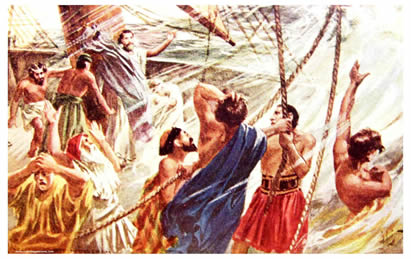
In Acts 27, Paul was with 275 other passengers on a boat bound for Rome from Caesarea, and its captain decided to test the Mediterranean Sea at a turbulent time. A violent storm, known as Euraquilo, caught the ship and ultimately battered it to pieces. It must have been an apprehensive time for the passengers and crew. Luke says the wind was violent, the ship was driven, the sun and moon didn’t appear for days, violently storm-tossed, they incurred damage and loss, and that all hope of their being saved was gradually abandoned. I cannot imagine the helpless, vulnerable feeling they must have felt. At least not literally.

It would be easy to let our national unrest and storminess tempt us to act irrationally (like some on Paul’s ship were tempted) or to give in to fear. But, Paul did five things we should do as we try to respond to the current turbulence.

  • He listened to God (Acts 27:23-24). Nobody else had a better or equal solution to their dire problem. The only way to be saved was to listen to God. Paul sought to persuade the people of this. In the ruckus and tumultuous noise, listen harder to God’s Word! It’s an anchor in stormy waters.
  • He believed God’s Word (Acts 27:25). It’s one thing to comprehend something, but quite another to put your trust in it. What God promised must have seemed quite far-fetched, that this way would save everyone. But, Paul didn’t waver. He said, “I believe God that it will turn out exactly as I have been told” (25). We are surrounded by people who need to witness our faith. As many as are persuaded will escape a shipwreck of faith (cf. 1 Tim. 1:19).
  • He encouraged hope (Acts 27:21-26). Despite the foolishness of their leaders, these people were given a message of hope. Paul says, “Keep up your courage!” (22,25). Despite the frightfulness of the moment, Paul offered a possible escape. Right now, you and I are uniquely positioned to give the only true hope available. It’s like an anchor for the soul, both sure and steadfast (Heb. 6:19)!
  • He warned the disobedient (Acts 27:31-32). There were those trying to break from God’s Word and will and do things another way. They were trying to take matters into their own hands. Paul spoke up against this! Such was defiance against the divine plan. What a message for us, who justify their sins rather than repent of them. We need to keep the message of righteousness, self-control, and the judgment to come before people (Acts 24:25).
  • He prayed faithfully (Acts 27:35). In this ordeal, Paul was a public example of prayer. Read every epistle of Paul’s and you’ll see his faithfulness in and dependency upon prayer. He appealed to the God he knew was the only hope for salvation. How much are we praying about the turmoil in our country (and world)? How much do those around us believe that we are dependent upon God?

Instead of focusing on the frightful winds currently blowing, let’s focus on the One who can calm the storm. Let’s get others to join us in that focus. Whatever happens to our nation, we must save as many souls as possible!

paul20in20storm


My Hope For Youth

Neal Pollard
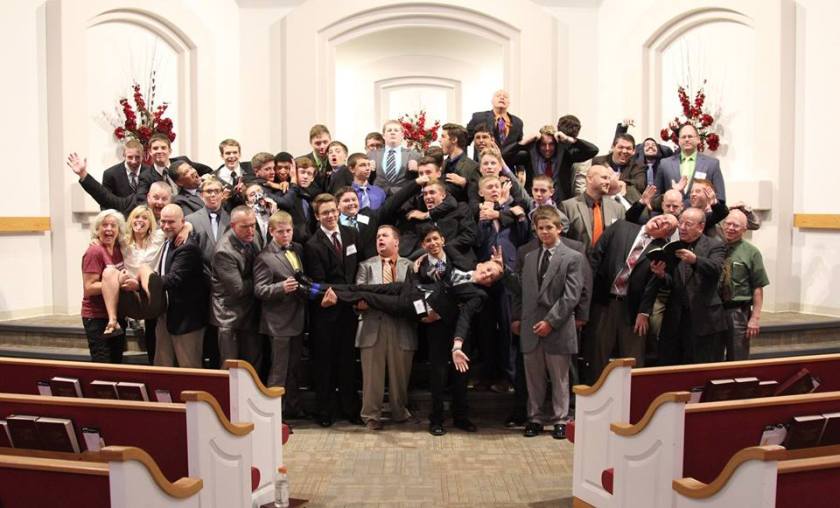
This week has reaffirmed a fundamental view I have about youth. It has been affirmed by what I see in  our youth group, but it is bolstered by what I have seen in so many young people this week. Hearing youthful voices singing whenever they found an opportunity, I thought about how hopeful I felt for the church’s future as these beautiful voices blended in heartfelt song. Our world is growing more vile and wicked each day, but I have bathed in a spiritual oasis this week. It led me to think about how much hope we rest on the future of the church, but how much we should.
My hope for our youth is that they will develop their own faith. Some of those youth I speak of were converted, but many more are the product of Christian homes and heritages that go back for generations. Apathy and indifference can infect our youth who go through motions they have been taught but which have not been internalized. As one in that latter category myself, I found that a challenge I faced as a youth. I want our youth to grow a conviction and belief system founded upon the rock solid nature of God and His Word.
My hope for our youth is that they will maintain their purity. The aforementioned world is bombarding all of us with insidious messages. On every hand, the devil tempts us to let go of holiness. With so many ways to “get in,” I pray our youth will lock the door of their heart when evil is on the stoop.
My hope for our youth is that they will have proper examples in us. How heavily this point hits home! So much of what we hope for our youth begins, continues and ends with our impact upon them. They will be, in large part, the product of our training, what we emphasize, value and show to be important, and what our passions and priorities are. They will have great difficulty rising above what we model before them!
I certainly hope so much more for them, but in all of this my hope is that whatever peril or persecution they must face in the years to come they will be faithful even to the point of physical death. But I believe in them! They have showed me so much now, and faith is built before the storms of life come.

19224994_10154730412325922_1050303890532924516_n
2017 edition of the Denver Future Preachers Training Camp in a more serious moment

WHY TODAY IS AN EXCITING DAY (poem)


Neal Pollard

From sea to sea, He is the same
No man can change His essence
From year to year, His eternal flame
Show His power and effervescence.

Whoever sits upon a throne
Or reigns a group or nation
We must that One make fully known
Through tireless proclamation

For all mankind must know that One
Who is changeless and transcendent
They must to Him yield before life’s done
And acknowledge on Him they’re dependent

Fickle, transient trends and times
Can’t blind us on this matter
The church’s mission in fair or foul climes
Is to take the Kingdom seed and it scatter.

And, so, we shall live and by such find peace
No matter the climate of our homeland
Leaning on God, who doesn’t change or cease
The trustworthy Rock upon which we stand!

Sunrise, Kauai

Characteristics of Hope

Neal Pollard

An epistle centering around the superiority of Christi as our all-sufficient One would certainly be expected to contain a message of hope. While some had apparently given up Jesus as their hope (6:4-6), the writer of Hebrews had a higher estimation of those to whom he writes. for one thing, they had a legacy of good works and brotherly love and benevolence (6:10). His desire was that they would continue to stay strong. In expressing this, the writer suggests hope as an integral tool to keep them hanging onto their faith in Christ. In these final ten verses of Hebrews six, he mentions three qualities of hope that would help them–and will help us–hang onto our hope in Christ no matter what.

This hope is durable (11). Look at the language he uses. This hope was tied to an assurance that would endure “until the end.” It was a hope that would lead them to “inherit the promises” (12), just as Abraham’s hope in God led him to his inheritance (13-17). God desires to show us, as heirs of the promise through Christ, His unchanging purpose (17), so He guarantees that promise through an oath build upon the foundation of Himself. Hope which is guaranteed by the very nature and character of God is hope that will outlast anything! Nations rise and fall. Presidents serve only one or two terms. Supreme court justices, at most, can serve only a lifetime. Our hope transcends time.

This hope is tangible (18). These Christians needed to count on a refuge in difficult times (see 12:4), and we desire the same thing in our lives! Knowing that God is so trustworthy, we are encouraged to “take hold of hope” that is found only in Christ. To say that we can take hold of hope and that it is set before us means that it has substance. In a world where nothing seems certain, evidence from scripture, nature, order and design of the universe, and so much more allows us, by faith, to grab this hope. He had already told them to hold onto that hope in Christ earlier in the letter (3:6) and to encourage this response he points them to scripture (cf. 3:7-11; Psa. 95:7-11). Scripture helps us see the solid hope we have in Jesus.

This hope is stable (19). It is an anchor. Anchors keep a vessel from drifting, an appropriate illustration since the Christians were tempted to drift from Christ (2:1). By maintaining their hope, they could anticipate three blessings: (1) sureness, (2) steadfastness, and (3) the service of the sacrificial Savior (19-20). All three of these descriptions of this Almighty anchor underline the security found in keeping ourselves anchored in Christ. Those who keep Jesus as their hope are able to weather the most horrific storms of life!

As Christians, we may find ourselves ready to abandon Jesus as our hope. So many things attempt to pull us from Him. Let us draw encouragement from this inspired writer, as surely these first Christians did, and rejoice in these changeless characteristics of hope!

anchor_england_-_scan01

In Awe Of The Greatest Freedom


Neal Pollard

I once was without representation,
Not a citizen of that chosen nation,
Enslaved and oppressed,
Deprived of the best,
And discouraged by my lowly station,

But my freedom was bought at a price,
With the one ransom that would suffice,
Sweet liberty was bought,
And my freedom I sought,
When I opted for virtue instead of vice.

Independence is becoming and sweet,
It is found when I fall at His feet,
And make Him my Master,
I avoid pain and disaster,
He offers me victory for my defeat.

I celebrate privileged position,
Embrace His heavenly mission,
Knowing the blessings He gives,
Is because He still lives,
He hears the faithful disciple’s petition.

As we celebrate the blessings in this land,
Bestowed by a Providential hand,
Let us never forget,
That He paid our great debt,
He’s preparing what’s infinitely more grand.

Whatever may become of our dear country,
I pray that our eyes will always see,
That no earthly place is home,
We are strangers who will roam,
’Til we reach the Great City across the sea.

flag-468345_640

“Truly In Vain Is Salvation Hoped For From…”


  • A politician or political party.
  • Wall Street.
  • Military might.
  • Our net worth or economic savvy.
  • Government programs.
  • The second amendment.
  • Popularity and fame.
  • The worship of nature.
  • Exercise and fitness.
  • The appeal of our good looks.
  • Walls.
  • The importance of our occupation or position.
  • Our national identity.
  • The Supreme Court.
  • Ethnicity and race.
  • Science and technology.
  • Any religious figure besides Jesus Christ (even those claiming to represent Him).
  • Family members and friends.

In Jeremiah 3:23, the prophet writes, “Truly in vain is salvation hoped for from the hills, and from the multitude of mountains: truly in the Lord our God is the salvation of Israel.” Jeremiah’s brethren put all their eggs in the wrong baskets. They neglected to see where true hope was found and where saving faith was to be put. Their misguided trust led to their downfall. It cannot be otherwise in any generation, including our own.

We may never say we put our trust in anything besides God, but “the proof is in the pudding.” We demonstrate what’s first and foremost to us every day, in word and deed. Ultimate deliverance from our greatest trials, struggles, and challenges comes from only one source. Jeremiah succinctly identifies it.  Is that what you are trusting? If so, let’s make sure everyone who knows us knows that!

—Neal Pollard

11800435_10153091791310922_2631856048550949852_n

Can You Imagine Being $53 Million In Personal Debt?

Neal Pollard

USA Today’s Maria Puente is reporting music star Kanye West’s tweet where he writes, “I write this to you my brothers while still 53 million dollars in personal debt…Please pray we overcome…This is my true heart….” (USAToday.com).  Hearing that Facebook creator Mark Zuckerberg and wife Priscilla were going to give away some of their billions to philanthropic causes, West tweeted that he wanted to be a recipient of some of that charity.  Since most of us will probably not make a total of $53 million in our lifetimes, we have a hard time imagining how someone could accrue that amount in personal debt! Perhaps horrible investing, profligate lifestyle decisions, and the like might explain it, but the lack of restraint and wisdom seems appalling. How could one person be so foolish and wasteful? We wring our hands and shake our heads, maybe condescendingly.
Until we consider something.

In a spiritual sense, we all faced a debt infinitely greater. Jesus illustrates this in a parable regarding a slave who owed his master 10,000 talents (Mat. 18:23ff). Biola University business professor Philip Massey did some modern-day math equivalency with that figure and estimates in 21st Century dollars that debt would be $7.04 billion dollars, and according to the 2010 Forbes list of billionaires would need to be at least the 102nd most wealthy person on the entire planet just to be able to pay such a debt (chimes.biola.edu).  Jesus’ point in the parable is to show how utterly audacious it is not to forgive the relatively minuscule transgressions others commit against us in light of how great our spiritual debt is to God.  All the combined wealth of the world is not enough to pay for one sin (cf. Mic. 6:6-8; Mat. 16:26). Colossians 2:14 uses the term “debt” to describe our sin problem, but the same verse tells us that we had someone more powerful and capable than any earthly magnate or mogul to help us pay off our debt.  In fact, “having nailed it [the certificate of debt consisting of decrees against us] to the cross,” He provided payment sufficient for the sin debt of every single person in this world.

Can you imagine anyone refusing help who faced such an insurmountable obligation? Yet, the majority of this world has done and will continue to do so. By refusing to submit to the Lordship of Jesus, they continue to pile up their debt. When the Day of Accounting comes, they’ll stand bankrupt and unable to pay. The consequences will be eternal!

Without Christ, we all face a debt that cannot be sufficiently estimated.  We need His blood applied to our sins or our situations are hopeless! How Zuckerberg will respond is unclear. How Jesus will respond is ironclad! Reach out to Him.

kanye_west_at_the_2009_tribeca_film_festival-2_cropped

Confident And Unafraid

Neal Pollard

Some are afraid of death because they’re uncertain of where they are going, but others are afraid of death because they are certain of where they are going! Paul was confident even in the face of death (2 Tim. 4:6-8). He could see his end coming but he embraced it. While it is possible to have a false hope and confidence about eternity (cf. Mat. 7:21-23), the faithful New Testament Christian should be confident and unafraid of death. By looking at the last words we have from Paul, we can learn from him how to face death. How could he be so confident even in the face of death?

He was going to face Jesus as judge (1). Our relationship with Christ makes the difference. If I don’t know Jesus and haven’t made Him Lord, I don’t want to face Him in the judgment. But if I’m in Christ, there are several reasons why I long to face Him there.

  • He understands us (Heb. 2:17-18; 4:15). Even before Christ came to earth, God was “mindful that we are but dust” (Psa. 103:14). When I stand before Christ, He will know what it was like to be me. He will have experienced temptation and be sympathetic and merciful.
  • He will be fair (2 Tim. 4:8—He’s the righteous judge). This means in accordance with what God requires. That means He won’t be more lenient than He’s promised, so I can’t expect to disobey His will in this life and hear Him say, “Claim your eternal inheritance in My Father’s house.” If I never obey the gospel, when I face Christ at the judgment He’ll be fair. If I obey the gospel but become unfaithful, when I face Him at the judgment He’ll be fair. But if I’ve tried to walk in His light, though I sometimes fell short, He’s going to be fair (1 Jn. 1:7-9). He knows I’ll be struggling with sin up until the day I die, but if He sees me struggling, He’s going to be fair. More than that, He’ll be merciful and faithful to atone for my sins!
  • He’s told us by what we’ll be judged (2 Tim. 4:2). It’s why we must faithfully present it in spirit and in truth “with great patience and instruction.” Jesus said His word will judge us in the last day (John 12:48).

I can face death confidently because it won’t be just any man judging me. Like you, I’ve had some people judge my actions and motives pretty harshly and unfairly. They may have thought they knew my heart or every fact, and they were ready and seemingly eager to pronounce me guilty. That’s not going to happen with Jesus! He’ll be consummately fair!

He spent his life doing good (5). This verse is the measuring stick of every gospel preacher, who asks, “Was my mind, endurance, work, and ministry as God wanted it to be?” No preacher wants to go through life and have these answers to be no. But in a broader sense, that’s a question every Christian needs to ask. Paul could look at his life with spiritual confidence (7). Three times, Paul, in essence, says, “I have” lived a faithful Christian life. You’ll remember that the first part of Paul’s life was spent not doing good, but from his conversion to his death he did good. Think about his missionary journeys in Acts. Think about all he went through for Christ that we read about in 2 Corinthians 11. What about the trials he mentions in Philippians 1? You may have a past you are ashamed of. Even as a Christian, you may have some regrets and things you wish you could change. But, if you’ve tried to walk in the light of Christ, you can face death and the judgment with blessed assurance.

He knew that he had a crown waiting (8). When we stop to think about death, it contains many variables that tend to make us anxious if not fearful. But Paul could look to death with the idea of its reward. The crown Paul speaks of is described in many ways in the New Testament:

  • It’s perfect (2 Tim. 4:8).
  • It’s permanent (1 Cor. 9:25).
  • It’s payment (Jas. 1:12).
  • It’s preeminent (1 Pet. 5:4).
  • It’s personal (Rev. 3:11).

But there’s not just one crown or a few crowns available. There’s one for “all who have loved his appearing.” If you sincerely desire it, you can receive it.

He knew that God would be with him (16-18). At the time he wrote, Paul knew betrayal and abandonment. Good friends had left him (10). At times, he had no one to stand with him. But he knew that One was always there (17). He was even confident of the future. Being delivered didn’t mean escaping physical death, but it meant rescue in the eternal sense.

You and I can live with the same blessed assurance of Paul. We’ll never go through anything alone (cf. Mat. 28:20). We may be pilgrims and strangers on earth (1 Pet. 2:11), but we aren’t one this journey by ourselves. The Lord will preserve and deliver us, as He did Paul.

I want to remain on this earth to enjoy family, friends, and brethren. I want to be as useful as I can be for as long as I can. But, like Paul, I can look forward to dying (cf. Phil. 1:21-24). We can be confident, even in the face of death!

leap_of_faith3

We Walk By Sight And Not By Faith

Neal Pollard

Yes, Paul does say it the other way in 2 Corinthians 5:7, and this isn’t an attempt to contradict the Holy Spirit there. His message, in that context, is trust in a Lord you can’t physically see rather than place your faith in what might be set up as an alternative to Him.  Evolutionists reject the idea of God because He cannot be quantified, measured, sampled, or empirically experienced. They walk by sight. Some give up the Christian life because they have a preference for the things of the flesh, things they can experience through their senses.

Some are putting their faith in the wrong things while failing to look in the right direction. Consider what God says in His Word about this.

Some things do not deserve our faith and trust:

  • Military might or weapons (Ps. 44:6)
  • Brute force or robbery (Ps. 62:10)
  • Government or nobility (Ps. 146:3)
  • Self-delusion (Jer. 7:4)
  • Sinful associates (Jer. 9:4)
  • Men and women who aren’t loyal to the Lord (Mic. 7:5)
  • Ourselves as opposed to God (2 Co. 1:9)
  • The uncertainty of riches (1 Ti. 6:17)

But, sometimes God urged us to “see”:

  • “Behold the Lamb of God” (Jn. 1:29)
  • We “look” for Jesus to come from Heaven some day (Ph. 3:20)
  • We are to be found “looking for the blessed hope and His glorious appearing” (Ti. 2:13)
  • We “see Jesus,” One who by God’s grace died for everyone (He. 2:9)
  • We “look” unto Jesus, the author and finisher of our faith (He. 12:2)
  • We are to “see to it” that we do not come short of God’s grace (He. 12:15)
  • We are to be found “looking for the coming of the day of God” (2 Pe. 3:12).

Obviously, this is a play on words. The only way to “see” the things God urges is “by faith.” And, as Paul writes, “Hope that is seen is not hope; for why does one also hope for what he sees?” (Ro. 8:24b).

The exhortation of the Bible is to “wake up” and think about what it is you put your trust in. Is it a good job? Is it a “perfect” relationship? Is it money? Is it pleasure? Is it things? Is it power and control? Is it family? Is it recreation? What is it? Is it the Bible? Is it Christ? Is it heaven? We should walk by spiritual sight, never by misguided faith!

eye-321961_960_720

FAITH IN PEOPLE

Neal Pollard

There are some people with “trust issues.”  They are stuck in a negative frame of mind, believing the worst in others with little expectation that they will improve.  They may even castigate anyone who would encourage you to put faith in people.  Certainly, our greatest faith must always be in God.  He never fails, forsakes, or leaves us (Heb. 13:5-6), but people invariably do those things.  We cannot put more faith in people than God, listening to and following them when they contradict His will. That’s a false, wrong extreme, but so also is a cynicism that fundamentally, inherently distrusts people to do the right thing.  This does not mean that there are people in our lives who do not struggle with sin because we all do (Rom. 3:23).

Let me encourage you to have faith in God’s people. Why?

  • Jesus did.  He selected twelve men, salty fishermen, shady tax collectors, strident nationalists, and selfish materialists.  While the latter let Him down, the other eleven grew and accomplished much.  Jesus entrusted His mission to them (Mat. 28:18-20), having faith that they would accomplish it.  But, Jesus also had faith in others—the woman at the well, the woman caught in adultery, Zaccheus, Bartimaeus, Nicodemus, and so many others.  Some He put faith in failed Him and even left Him, but that did not ever stop Him from investing that faith in others.  Do you remember what He said to Peter after He had failed? “I have prayed for you, that your faith may not fail; and you, when once you have turned again, strengthen your brothers” (Luke 22:32; emph. mine).  That was faith in Peter!
  • It empowers others.  When somebody expresses faith in your ability to accomplish something, how do you respond?  When you are given responsibility with the explicit or tacit understanding that the giver believes in you, don’t you give it your all to live up to that trust?  2 Timothy 2:2 seems to imply this reaction is a natural consequence of being entrusted with something.
  • People live up (or down) to our expectations.  Have you ever had someone in your life who handled you this way:  “You’re no good!”; “You’ll never amount to anything!”; “You’re hopeless!”?  Maybe they don’t say it, but they convey it.  Preachers and teachers communicate the word through such a pessimistic prism. Leaders convey it in ways both spoken and unspoken.  Love “believes all things, hopes all things” (1 Cor. 13:7).
  • It brightens life.  Would you like to maintain a PMA (possible mental attitude)?  Never lose the ability to believe in others!  A glass half full approach is necessary to retaining an optimistic, hopeful way of life. I’m not saying to be delusional, but you can improve your own quality of life with a fundamental belief that most people, when they know what’s right, want to do what’s right.
  • It is biblical.   Paul had confidence in Philemon’s obedience (Phile. 1:21). He had confidence that Corinth would do the right thing (2 Cor. 2:3). He had confidence in Galatia’s doctrinal resilience (Gal. 5:10). He had confidence in Thessalonica’s continued faithfulness (2 Th. 3:4).  What an example, and oh how we should imitate him in this!

Teresa of Calcutta is often associated with certain verses found on the wall of her children’s home, even credited for authoring it. Kent Keith is the likely author.  In the composition, “Do It Anyway” (aka “The Paradoxical Commandments”), he notes that people will criticize and be petty.  He encourages doing good, loving, and serving anyway.  You can choose how you will spend your life, expecting the best or worst of others. May I urge you to have the most faith in God, but leave room for faith in people—especially God’s people! You will not regret it.

Christ-less In Crisis

Neal Pollard

It is hard to describe the beauty of faith evidenced in Room 913 yesterday as all the elders and their wives, Wes and Teri Autrey, and Tiffanie and Bethany Vaught stood with Myrna and the rest of the Murphy family at University Hospital yesterday.  We sang songs and Dave Chamberlin prayed a touching, loving prayer.  Moments later, a godly, wonderful woman made her transition from this life to the better one. Despite the inevitable, natural flow of tears, the heartache of separation, and the final earthly stanza of a beautiful, 59-year-old love song played by Ray and Myrna.  Myrna was an obvious success as a mother, wife, grandmother, and friend, but central to everything she did and who she was was Christ.  She did not fear death nor the condition that brought it.  She was ready because of Christ.

When I think of the red-letter days that have occurred in our nation and world during my lifetime, whether the bombing of the Murrah Building, the horrors of 9/11, the unbelievable natural disaster of the December 26, 2004, tsumami (“Boxer Day Tsumami”), the disappearance of the Malaysia Airliner, and the like, I am made to think how many stood in the wake of such tragedy without the hope and promise made possible through Christ.  Yet, every ordinary day where death looms through the natural course of life, people come to those final moments either ignorant or bereft of the bright prospect of what happens beyond death.  Certainly, some think they have hope, but it is not hope rested in what they can find in Scripture but rather what they think, feel, or have been told is real and true.  In some ways, those situations are the most tragic of all. Others are convinced that we are the result of chance and will cease to be when we draw our last breath, yet they continue to try and live with purpose and even act in the interest of others without bothering to ask why they behave civilized with such an animalistic point of view.

But for the one whose hope is built on the truth of what God’s Word says, there is no tidal wave of heart or explosion of life powerful enough to wrench us free from that hope. Paul exalts that we are saved by unseen hope (Rom. 8:24-25). In the rest of the chapter, he proclaims the unfailing love and promise of God for the redeemed who place their trust in Him.  Paul encourages the Thessalonians not to face death, sorrowing like a world without hope (1 Thess. 4:13).  Without Christ’s resurrection, there is no hope (cf. 1 Cor. 15:19-20).  However, because He lives, we can face tomorrow, all fear is gone, we know who holds the future, and life is worth living (Bill Gaither lyrics from “Because He Lives”).

The Murphys will have sorrow and grief to bear.  This is a testimony to their humanity.  But they look at tomorrow with an even brighter anticipation.  This is a testimony to the Christ who lives in them.  It is available for us all!

A dear sister in Christ, Myrna Murphy

What Does God See In You?

Neal Pollard

The inimitable historian, David McCullough, has churned out another masterpiece in his new book, The Wright Brothers.  Chronicling their lives before, on, and after that famous December day in 1903 in Kitty Hawk, North Carolina, McCullough, in his unique way, peels back the layers of the people who made the history.  One particular example of this is seen in the author’s conveyance of Wilbur Wright’s misgivings about what he was going to make of his life.  Writing to his older brother Lorin, Wilbur said, “The boys of the Wright family are all lacking in determination and push. That is the very reason that none of us have been or will be more than ordinary businessmen” (24). It is amusing to think that Wilbur made this statement in 1894, less than a decade before that historic first flight.  Every airplane trip you make is a testimony to the Wrights’ determination, push, and extraordinary industry of the bicycle shop brothers, Orville and Wilbur Wright.

What do you see when you look at your life?  Are you dismissive of your talents and opportunities?  Do you think yourself in terms of your “can’ts” or your “cans”?  Perhaps you are prone to discount your potential.

If that is you, you should consider the case of a few other people.  Moses resisted leadership, claiming to be a nobody (Exo. 3-4).  Saul hid himself in the baggage (1 Sam. 10:22).  Jeremiah apparently tried to hide behind his age (Jer. 1:6-7).  Timothy seems to have been fearful (2 Tim. 1:7).  Yet, each rose to a position of greatness and played an important part in God’s plan.  What was the “X” factor in every case?  As God told Judah through Jeremiah, “I know the plans I have for you, declares the Lord, plans for welfare and not for calamity to give you a future and a hope” (Jer. 29:11).  Solomon would say, “Commit your works to the Lord and your plans will be established” (Pro. 16:3).  Then, a millennia later, Paul tells the church at Philippi, “It is God who is at work in you, both to will and to work for His good pleasure” (Phi. 2:13).

Relax! Take the pressure off of yourself because, frankly, it is not about you.  It is about the God who is at work in you.  Chart a course that puts Him first in your life and dedicate yourself to trying, as hard as you can, to please Him.  Isn’t He strong and smart enough to open the right doors?  Is He able to do great things? Yes!  The incredible thing about that is that He has chosen to do great things through lowly people like you and me! Stop and consider this.  What does God see in you? What will He do through you to His glory?  Never stop asking that question!

Coping With The Loss Of A Child

Neal Pollard

I have never lost a child and pray that I will precede them all in death.  Imagining the difficulty of that situation in no way equips me to feel the grief involved in such a loss.  Yet, the Bible is the answer book on this, as with any, situation.

In 2 Samuel 12:18-24, the Bible says, “And it came to pass on the seventh day, that the child died. And the servants of David feared to tell him that the child was dead: for they said, Behold, while the child was yet alive, we spake unto him, and he would not hearken unto our voice: how will he then vex himself, if we tell him that the child is dead?   But when David saw that his servants whispered, David perceived that the child was dead: therefore David said unto his servants, Is the child dead? And they said, He is dead.  Then David arose from the earth, and washed, and anointed himself, and changed his apparel, and came into the house of the LORD, and worshipped: then he came to his own house; and when he required, they set bread before him, and he did eat.   Then said his servants unto him, What thing is this that thou hast done? thou didst fast and weep for the child, while it was alive; but when the child was dead, thou didst rise and eat bread.  And he said, While the child was yet alive, I fasted and wept: for I said, Who can tell whether GOD will be gracious to me, that the child may live?   But now he is dead, wherefore should I fast? can I bring him back again? I shall go to him, but he shall not return to me. And David comforted Bathsheba his wife….”

The occasion of the death o a pre-born, newborn, infant, or young child must be a peculiarly difficult burden to bear.  It is untimely.  It is filled with the most painful of mysteries.  It is a most intense reminder of the ultimate end of all humanity (Hebrews 9:27).  Yet, it offers a ray of hope and comfort like no other funeral can.  Even as tears stain the cheek, there can be rejoicing in knowing the child is eternally safe.  It will never know the heartache, pain, disappointment, shame, guilt, fear or betrayl through which we routinely go simply by virtue of earthly life.

The Bible says that other parents lost small children.  An unnamed woman lost a son to death at the age of three days old (1 Kings 3:16-27).  1 Kings 14 tells of the death of Abijah, son of Ahab and Jezebel.  All we can tell from the term “child” in that text is that he was anywhere between infancy and adolescence; thus, a small child.  In the New Testament, Jairus lost a “little daughter” (Mark 5).  From ancient Job to the New Testament widow of Nain to today, parents have endured the difficult, unnatural task of burying their children.  Yet, there are special lessons to be learned in the account of David and Bathsheba’s little boy.  Consider four things, from the above text, to be gained when dealing with the loss of a little child.

Do not forget your relationship with God (20).  When David hears news of the child’s death, what is the first thing he does?  He arises from the dust of dejection and goes to church!  He had been praying to God all the time the child was dying.  It is natural that David continued his relationship with God.

It must have been a test of David’s faith.  Read the Psalms and you find the man after God’s own heart (cf. 1 Samuel 13:14) often asking God “why?”.   In Psalm 10:1, he said, “Why, O LORD, do you stand far off? Why do you hide yourself in times of trouble?”  He later says, “My God, my God, why have You forsaken me? Far from my deliverance are the words of my groaning.  O my God, I cry by day, but You do not answer; And by night, but I have no rest” (Psalm 22:1-2, NASU).   Remember that David cried seven days and nights over the child he lost.  Certainly, he knew that God was near, God cared, and God loved him, but he was hurting and things surely seemed unfair.

You may very well feel the same way when you lose a child.  Remember that this is natural, but do not forget your relationship to God.  Know that God is near, cares for you and loves you, too.  An oft-quoted but appropriate saying goes, “Where was God when my child died?”  “Exactly where He was when His Son died.”  Tragedy and suffering can always serve to build spiritual strength.  It can cause us to realize our dependence upon God.  It can help us sharpen our focus on heaven.  It can lead us to count our blessings and remember what we do have.

Remember that your lives must resume (20-22).  No, not today… or tomorrow.  In an unavoidable way, life could never be exactly the same.  Grief is natural and necessary, and it has no exact timetable.

Yet, look to David.  He got back to daily life.  When he received news of his baby’s death, he got up, went to worship, ate a meal, and resumed his work affairs.  As painful as such a loss has to be, one can be thankful and mindful of all that remains that is to be lived for and the many loved ones with whom one has left to live.  As hard as it is to imagine in the midst of grieving such a peculiar loss, you will laugh again and enjoy life again when the time is right.

Let a heavenly reunion motivate you (23).  To me, these are the most impressive words of the story.  David says, “I shall go to him, but he shall not return to me.”  We know where the baby was, so we know where David wanted to go.

Those who lose a little child have an extremely powerful motivation to go to heaven.  Not just that heaven is infinitely better than the awful alternative.  Not just the excitement of seeing God “face to face.”  There is a little child up there waiting for the arrival of his/her parents.  Imagine what a sweet reunion that will be, to see it there.  Each time such parents sing, “Won’t it be wonderful there…?,” they will have an extra measure of appreciation of those words.  Parents grieving this loss can live the remainder of their lives determined to “go to him.”

Find comfort in one another (24).  There is something in the text easy to overlook.  David goes and comforts his wife, Bathsheba.  Didn’t David need comforted, too?  Yes, but Bathsheba had a bond and relationship with the child that David did not.  Her emotional makeup and needs, in such loss, were different from his own.

There is a special need for a wife and mother at such a time as this.  As this tragedy can bring parents closer to God, it can also bring mutually aggrieved mates closer to one another.  It is a time when you can better appreciate Ecclessiastes 4:9, that “two are better than one….”  Thessalonica was going through tremendous heartache and even loss, and you will notice that at least seven different times Paul admonishes them to “comfort one another.”  God knew there would be times when we would need support.  There is special support available from one’s help-meet and companion.

When a little child dies, there is grief because of that tragedy.  There is also cause for rejoicing because of the assurance that can be had concerning the baby’s soul.  The sun will shine again through the clouds of sorrow.  The brightness of God’s love will break visibly before the dewy gaze once more.  Thank God for the comfort possible only in Christ.