The Kind Of Church God Doesn’t Want Us To Be

  Within the one body (Colossians 3:15) He claims, however, are individual congregations who in time depart from His doctrine, lose their distinctiveness, or drift from their evangelistic direction.  When this happens, even these are in danger of rejection (John 12:48).  Churches in Asia Minor felt this sting (cf. Revelation 2:5).  What kind of church does God not want us to be?

Neal Pollard

    The commercials are eye-catching.  The products have differed, but the aim of the ad has been the same.  Sit people, blindfolded, before a TV camera.  Parade a line of tastes and smells before them and let them choose their favorite.  Of course, the camera keeps only the records of the consumers who pick their product over the others.  How many others, whose experiments lay dead on the cutting room floor, choose “the leading brand” over the competitor paying for the commercial?  All of that is neatly set aside, thanks to the selective wonders of technology.

    How many religious groups parade themselves before God in each generation?  From His exalted throne up in heaven, He discards with perfect omniscience all who carry the doctrines of men along with their faith in Christ, their intense morality, or their evangelistic zeal (cf. Matthew 15:13).  He claims only one religious group, the one for which His Son gave His life (Acts 20:28), the one founded upon the foundation of Christ (Matthew 16:18), and the one following the pattern He has left them (John 16:13).

    Within the one body (Colossians 3:15) He claims, however, are individual congregations who in time depart from His doctrine, lose their distinctiveness, or drift from their evangelistic direction.  When this happens, even these are in danger of rejection (John 12:48).  Churches in Asia Minor felt this sting (cf. Revelation 2:5).  What kind of church does God not want us to be?

    God does not want weary churches.  Paul warns against weariness in well-doing (Galatians 6:9).  It is possible to find the narrow way so difficult to travel that a congregation finally gives up on doing right.  The right way is rarely the easiest way.  The opposition of the world pressures God’s people, and faint-hearted saints must strive to endure.

    God does not want weakened churches.  He abhors church leaders who are so afraid of losing “contributors” that they kowtow to them.  His wrath is kindled by preachers so pensive about their pension that they fall prey to tickling the ears of the worldly (2 Timothy 4:3). He has difficulty stomaching a lukewarm membership, made tepid in failing to be distinct (cf. Revelation 3:16). As always, those who stand for nothing will fall for anything.

    God does not want worldly churches.  He warns against it (James 4:4).  When churches try so hard to look like the world to the world, they ultimately fail to reach it.  They have nothing to offer it which it does not already have.  But, in the process, they lose God’s acceptance.

    God does not want “wanting” churches.  Belshazzar was “weighed in the balances” and “found wanting” (Daniel 5:27).  The goal of any church is to get beyond this stage of “wanting” (i.e., lacking) maturation and completion (James 1:4).  But, what about churches who are not trying to grow, win souls, train her males to be preachers, elders, deacons, and teachers, and train her females to be strong, convicted, pure, and holy Christian women, and learn more and more of God’s Word?

    God does not want wasteful churches.  American churches have the overwhelming majority of the money, trained preachers, facilities, schools, persons of influence, healthy bodies, and related resources.  That we are not “turning the world upside down” (Acts 17:6) is surprising.  No church, in these affluent circumstances, should struggle to meet unchallenging budgets.  Brethren should not be begged and prodded to do personal work.  Involvement and commitment should be assumed traits of born-again people!  We are sitting on a gold mine of opportunity and material wealth.  We must be able to stand before the King some day and make a good accounting of our stewardship of these things.

    Opportunities abound before us (Galatians 6:10).  Let us blossom into the churches the Father wants us to be (James 1:27)  — Jesus died for us to be (cf. Titus 2:14), and the Spirit teaches us to be (Revelation 2:7ff).  God wants a willing, working, waiting, and watchful church.  At all costs, let us avoid becoming a church God does not want us to be.

Swords Into Plowshares 

Friday’s Column: Brent’s Bent

Brent Pollard

“And He will judge between the nations, And will render decisions for many peoples; And they will hammer their swords into plowshares and their spears into pruning hooks. Nation will not lift up sword against nation, And never again will they learn war.” (Isaiah 2.4 NASB1995) 

Once upon a time, my family and I shared a condo in Hinesville, Georgia. It was 1989. Life in a condominium was…interesting. Aside from the paper-thin walls, strangers were coming and going at all hours. Unfortunately, some of those strangers were individuals proselytizing for their religious beliefs. One lazy Saturday, a couple knocked on my door and started talking to me, eventually directing my attention to Isaiah 2.4 and asking what I thought of it. 

I was only 14 then, and my knowledge of the Scriptures was still immature. However, a glance revealed it seemed too idyllic to be related to earth, so I responded with “heaven.” My visitors agreed that I was on the right track with my interpretation and explained how it referred to the Millennial Kingdom that Christ would establish on Earth one day. I politely listened but knew that their explanation, at the very least, did not match what my parents and teachers had shown me in the Bible. 

I’m an adult “of a certain age” in 2022, and I’ve had more time to study the Scriptures. Nonetheless, I wish I had known what I know now in 1989 so that I could have tried to persuade my solicitors where they went wrong in their understanding. My initial response had been partially incorrect. What God revealed to Isaiah was heavenly in origin but established on earth in the first century AD. Verse two gives an obvious hint by stating that the events of verse four will happen in the “last days.” 

The Holy Spirit descended on Peter and the other apostles on Pentecost, around 33 AD. They started preaching the first Gospel message. People wondered if Peter and his companions were inebriated, but Peter assured them that they had witnessed the fulfillment of Joel’s prophecy about the end times (Acts 2.17-21; Joel 2.28-32). God was pouring out His Spirit on men, heralding the arrival of the end times, the final dispensation governed by Christ’s Covenant. 

On Pentecost, Peter used the keys entrusted to him by the Lord to unlock the kingdom God promised (Matthew 16.18-19; Daniel 2.44-45). The fact that it was the promised kingdom is also evident in Jesus’ statement in Mark 9.1. He stated that those to whom He spoke would be alive to witness the kingdom’s arrival with power (i.e., the Holy Spirit). Unless 2,000-year-olds are walking around, the kingdom has already arrived. 

However, take note of the end of Isaiah 2.2: “…all the nations will stream to it.” This statement refers to Abraham’s Messianic promise (Genesis 22.18). Through Abraham’s seed, God would bless the nations of the earth. So, we have Jacob or Israel through Abraham’s seed, and through Israel, we have Judah. David was born of Judah’s lineage, to whom God promised an heir to establish His kingdom, build a house for God’s name, and establish His throne forever (2 Samuel 7.12-13). 

God’s promise to Jehoiakim, a descendant of David, that none of his descendants would sit on David’s throne in perpetuity shows that this cannot refer to the same earthly throne on which David sat (Jeremiah 36.30-31). Indeed, no son of David would reign over Israel after their return from captivity. Descendants of Levi ruled the Hasmonean kingdom until the Romans conquered it about six decades before Christ’s birth. The Romans made Herod the Great, an Idumean who had married into the Hasmoneans, a vassal king over Judah. 

When Jesus stood before Pontius Pilate, the Roman governor, Pilate asked Jesus if He was a king. Jesus informed Pilate that He was, but that His kingdom was not of this world (John 18.36-37). Instead, Jesus declared Himself to be the ruler of a spiritual kingdom whose subjects heeded His voice of truth. Jesus’ answer prompted Pilate to ask the age-old question, “What is truth?” (John 18.38) Before ascending to the Father, Jesus told His apostles to preach the forgiveness of sins to all nations, beginning in Jerusalem, where they would wait until clothed with power from on high (Luke 24.44-49). Take note of the word “power” (24.49) and Jesus’ statement in Mark 9.1. 

So, the church is the kingdom. We could have determined this without reading these Scriptures by looking at Matthew 16.18-19, where Jesus uses the terms “church” and “kingdom” interchangeably. However, false beliefs about Christ’s kingdom and premillennialism seriously threaten generic Christendom. As we’ve seen, Jesus intended His followers to preach the Gospel to all nations, so He would also save Gentiles. In Acts 10, Peter converted a Gentile and his family. From that point forward, God’s kingdom included non-Jews.  

Previously, a barrier separated Jews and Gentiles. That wall was the Mosaic Law. In the second chapter of the epistle bearing their name, Paul explains to the Ephesian brethren that enmity existed while the wall stood. Jesus tore down that barrier, making Jews and Gentiles one in the body of Christ (Ephesians 2.11ff). Jesus brought peace through this act. Let us return to Isaiah 2.4. The prophecy’s poetic language points to a time when warring parties living under the auspices of one Judge would transform their weapons of war into peacetime tools. Despite being on Earth, it sounds like heaven because the church is a heavenly place (Ephesians 1.3). 

So, the church is this wondrous place where we turn swords into plowshares. The church has “neither Jew nor Greek, slave nor free man, male nor female” because we are all one in Christ (Galatians 3.28). As a result, rather than fighting one another, we must focus our efforts on our common foe, the devil (Ephesians 6.10ff). 

“I Wish The Church…”

Monday’s Column: Neal At The Cross

pollard

Neal Pollard

  • “…Cared More About The Lost!” (But, when did I last invite someone to church or invite someone to study the Bible?)
  • “…Checked On The Sick And Shut In.” (But, when did I last make a call or visit to them?)
  • “…Was Friendly!” (But, do I talk to, welcome, and make feel at home visitors and more than my close circle of friends?)
  • “…Did A Better Job With The Singing.” (But, do I sing out, show enthusiasm, and participate with my whole heart?)
  • “…Invested More In The Youth.” (But, am I doing all I can to help them grow, from my attitude toward the church to my personal investment in them?)
  • “…Was Active!” (But, do I volunteer when help is needed, prioritizing it over the things of the world?)
  • “…Was Growing.” (But, how invested am I in being an ambassador for Christ, 2 Cor. 5:20?)

So often, we talk about “the church” in a passive, third-person way. We are critical of her leaders, her activities (or lack thereof), and her members as if we are detached observers. The picture of the early church was of individuals who were personally invested. We are overcome by the consumer mindset of the culture when we sit back and take shots at the perceived shortcomings of our local congregation. Look at the New Testament Christians. Barnabas didn’t fret about how stingy or discouraging the church was; He was generous and encouraging (Acts 4:36-37). Stephen didn’t express his frustration at the church’s lack of courage and conviction; He literally preached himself to death (Acts 6-7). Dorcas didn’t wring her hands at how uncaring and detached the church was; She continually did deeds of kindness and charity (Acts 9:36). They may have been extraordinary in their actions, but they were just “regular members of the church.” They were the church. They didn’t sit in judgment of her. Why? They were too busy working to build her up. When I am tempted to play armchair analyst, I should begin with my own faithfulness and involvement. There is so much the Lord expects me to do to help the church. My investment may cause others to be grateful and excited to be a part of the church! I can most influence me (2 Cor. 13:5)! 

On January 20, 1961, in John F. Kennedy’s inaugural address, he uttered the famous line, “Ask not what your country can do for you–ask what you can do for your country.” Here is the very ending of the address: “With a good conscience our only sure reward, with history the final judge of our deeds, let us go forth to lead the land we love, asking His blessing and His help, but knowing that here on earth God’s work must truly be our own.” If that is true of a citizen’s mindset of a nation, how much more a Christian’s mindset in that holy nation, the church? 

The Church Is A Family

Thursday’s Column: Learning From Lehman

IMG_3998

Kason Eubanks

A few months ago, Lehman and a bunch of other churches went to church camp. During that week, I got to think about family. A quote I read once by Lisa Weed said, “Being a part of a family means you are a part of something very wonderful. It means you will love and be loved for the rest of your life.”

Let me start off by defining family. According to Webster’s dictionary, one definition is “the group of one or more parents and their children living together as a unit.” That kind of family can be shown through the illustration of a loving husband giving his wife some facial masks on Christmas Morning. As she opened the gift, her 5-year-old daughter asked what they were. The Mom replied, “It’s a present to make me beautiful.” After the mom applied one of the facial masks, the little girl looked at her mom and replied, “Mom, it didn’t work.”

Another definition Webster’s gave is “all the descendants from a common ancestry.” To me, that sounds like the relationship God has with His church. 2 Corinthians 6:18 says, “And I will be a father to you, and you shall be sons and daughters to Me,” says the Lord Almighty. Ephesians 5:25-27 defines the church family as being without blemish. “Husbands, love your wives, just as Christ also loved the church and gave Himself for her, that He might sanctify and cleanse her with the washing of water by the word, that He might present her to Himself a glorious church, not having spot or wrinkle or any such thing, but that she should be holy and without blemish.” 

Thankfully, God has given us the opportunity to be part of a perfect family. Maybe you’re not a member of the church family, and you would like to put Christ on in baptism or you want us to pray with you and for you so you can get your life on track. Whatever your need, please reach out to God’s perfect family. 

Lehman on last day of camp this year.

We’re Different & The Same 

Tuesday’s Column: Dale Mail


Dale Pollard

When it comes to the families that make up the church, what ties us together is a common bright future. While every family has its differences, one constant remains— the church. All strive to follow those guidelines laid out in scripture. Paul says in Philippians 1:6, “And I’m SURE of this, that He who began a good work in you will bring it to completion at the day of Jesus Christ.” 

The writer speaks with assurance, and that confidence is well-placed. From “His-story” we see that God always completes His projects. He never dreams; He creates. He decided to create the world and here it is. He decided to save the world, and here we are. 

Paul also would write in Romans 7-8 that the flesh tends to get in the way of the spiritual. God is perfect, but we’re not. That’s what makes us a work in progress. Aren’t we thankful that God provides the solutions to “fix” us up? 

We’re involved in a great work because there simply is no better work  than what is being done by His church. That being said, many of us struggle with overcomplicating things. We try to make sense of our individual lives, and when we leave God out it all becomes a discouraging battle. Where’s the peace? Joy? Confidence? Maybe it was left behind when we left God’s path. Thankfully God came down to earth years ago to teach us everything we need to know. We see that in His interactions with people. Even His twelve original followers were an odd group. 

Each had a diverse background. Some were Fishermen and some tax collectors. 

Each one had a unique personality too! They ranged from timid to assertive.

 Each one had spiritual battles from greed to crippling doubt.  

Yet each one rallied under His leadership and were united through a common hope. 

What’s changed? Not much. 

The personalities, talents, backgrounds, and flaws mixed together create a unique blend that make up each one of us. Yet, here we are rallied under His leadership, united in common hope. 

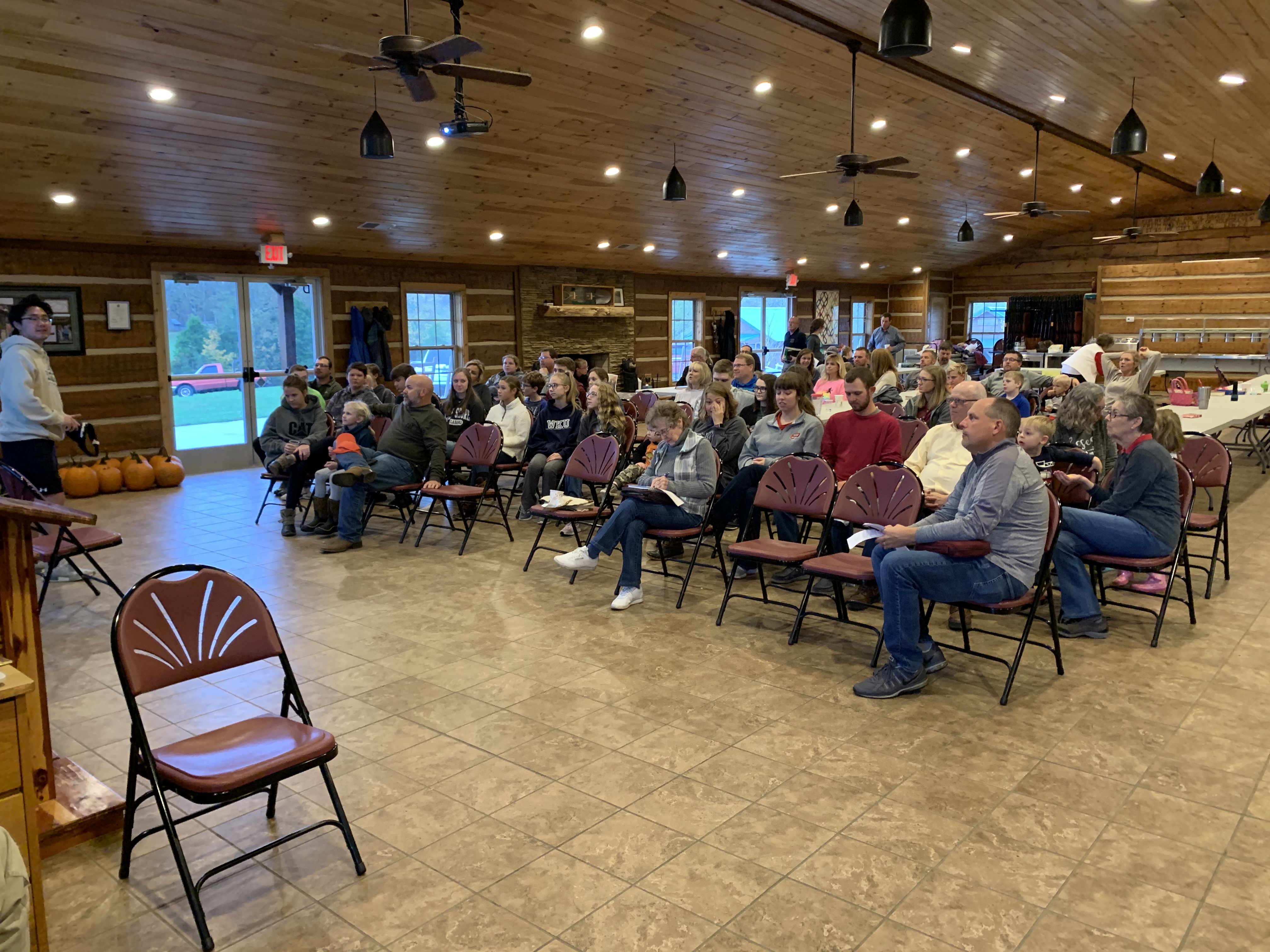
Several Lehman ladies (men are at the table in the foreground) enjoying “Federal Grove” the night before it (sadly) closed, being regaled with one of Kathy’s stories. I think this one was about snakes crawling out of a hole.

How To Win Souls Without Compromising Doctrine

Wednesday’s Column: Third’s Words

Gary III

Gary Pollard

It’s hard to have balance while times change. Some seize current social realities and use them as opportunities to push unbiblical ideas (God’s design for marriage, leadership in worship, leadership in the home, etc.). As a result, our human nature kicks in and we’re ready to swing the other way. After all, we don’t want to be associated with groups who don’t teach or practice what God wants, right? 

Balance is way more difficult to maintain than reactionary practices in either direction. Both are extremely harmful to the church! Compromising doctrine is never acceptable, but gaining a reputation for being old-fashioned or otherwise incompatible with modern culture is equally harmful. 

I Corinthians 9.19-23 is an awesome text for this. We’ll look at a few key points in this passage briefly. 

  1. It’s About Serving Other People (9.19)
  2. It’s About Winning Them (9.19)
  3. It’s About Meeting Them Where They Are (9.20-22)
  4. It’s About the Message (9.23)

We do what we do because we want to save souls. We cannot maintain a church culture based on reaction because it does not save souls. It is not a sustainable culture and has led to many viewing the church as being incompatible with the modern world. This was never God’s design! We must never compromise doctrine, but we must always try to win souls. We need to do what we can to meet folks where they are and show them something better. 

“I have become all things to all people, that by all means I might save some” (9.20). 

The Bosque Redondo Blunder

MONDAY’S COLUMN: NEAL AT THE CROSS

Neal Pollard

In the wake of James Polk’s vision for “manifest destiny,” the United States purchased and/or fought for the territory that gave us the current boundaries of our nation. To maintain and protect this newfound territory, one of the military strategies included the building of forts throughout the west to protect settlers from especially the Native American tribes who were reacting to the invasion of their ancestral home. Kit Carson, former fur trapper, explorer, and extraordinary tracker, was a civilian ultimately urged into serving out west in a military stretched thin back east by the Civil War. He was appointed by General James Carleton to round up 9000 Navajo and 500 Mescalero Apache and place them in a reservation Carleton dreamed up. From the time he visited there, he was enamored with the terrain, trees, and beauty of the place. So the nearly 10,000 Native Americans were detained and displaced and forced to settle at Bosque Redondo. 

While it was a disaster on paper, it was even worse in real life. Neither the Navajo nor Apache were agrarian people, but both were forced to farm. They were enemies of one another, but they were forced to live together at Bosque Redondo. The crops were destroyed by cut worms and hail storms, and the army rations inadequate. The water was alkaline, making them sick. Smallpox decimated their numbers. Winters were bitterly cold and the inhabitants were ill-prepared and ill-equipped.  They were forced laborers, slaves ironically settled at this reservation by the U.S. Government and President Lincoln the very year of the Emancipation Proclamation. It was as much a failure for the government. It was an exorbitantly expensive venture, costly to start and even more to maintain. Beyond the inhumanity and immorality of the venture, it was inept and inane. Carlton envisioned paradise, but delivered purgatory (information a summary of content in Hampton Side’s book, Blood And Thunder).

Bosque Redondo is but one example of the disaster which follow’s man’s attempt to create what he vainly sees as either utopian or idyllic. Contrast that with some of God’s plans. First, He put man and woman in a perfect paradise wherein He supplied their every need (Gen. 2:8-14). Later, after they sinned and were expelled from there, God promised a land which flowed with milk and honey. It was a good and spacious land (Exo. 3:8). While sin tainted their existence there and ultimately cost them ownership, the provision was not the problem. 

Along the way, God promised the creation of a domain unlike any other. It would be for all nations (Gen. 22:18; Isa. 2:2). It would never be destroyed, nor left to other peoples (Dan. 2:44). It was the result of the eternal planning and purpose of God (Eph. 3:9-11). God left a perfect blueprint for its creation and for the citizens’ conduct (Isa. 2:3; Mic. 4:2). We know it as the church (Eph. 1:22-23; 4:4). It is described in that epistle: “So then you are no longer strangers and aliens, but you are fellow citizens with the saints, and are of God’s household, having been built on the foundation of the apostles and prophets, Christ Jesus Himself being the corner stone, in whom the whole building, being fitted together, is growing into a holy temple in the Lord, in whom you also are being built together into a dwelling of God in the Spirit” (2:19-22). 

In this divine institution, God has brought together people diverse and unlike each other and united them through His Son. He has taken spiritual slaves and gave them freedom. He has taken those poor and emaciated by sin and made them rich (Eph. 2:7; Phil. 4:19). He has given them boundless blessings by His Son (Eph. 1:3). His church is right in design, discharge, and destiny. Far from a blunder, His body is a bountiful blessing! Only God could take a people besieged by sin and dysfunction and give us something infinitely better. Just imagine what our eternal home is going to be (Rev. 21-22)! 

Why I Love The Church

Thursday’s Column: Carlnormous Comments

carl pic

Carl Pollard

I love the Church because…
  1. God loved me enough to establish it.
  2. Jesus loves the Church.
  3. The Church loves Jesus.
  4. The Church is a family.
  5. The Church is filled with true friendships.
  6. The Church is a source of encouragement.
  7. I’ve seen firsthand the comfort that the Church provides.
  8. The Church is considerate of others.
  9. The Church is a place for the broken.
  10. The Church is a place for the weak.
  11. In the Church I belong to God.
  12. The Church has perfected potlucks.
  13. Jesus is the Head of the Church.
  14. The Church is the unified body of Christ.
  15. The Church helps me to be a better Christian.
  16. The Church helps to show me my purpose in life.
  17. I’ve met people that have changed my life.
  18. The Church helps me love God more.
  19. The Church is motivated.
  20. The Church reminds me that this world is not my home.
  21. The Church shows me the power of song.
  22. The Church shows me the power of the Gospel.
  23. The Church creates a bond that is impossible to find anywhere else.
  24. The Church shows me how amazing grace really is.
  25. The Church is a place of spiritual support.
  26. The Church is a place of physical comfort.
  27. The Church is a place of emotional healing.
  28. I leave every service feeling renewed.
  29. The Church helps me interact better with people.
  30. The Church at times helps me practice patience.
  31. The Church is a reminder that we are equal in Christ.
  32. The Church is a place filled with servants.
  33. The Church helps bring out the best in me.
  34. I want to go to Heaven.
  35. The Church helps me glorify God.
  36. The Church is the family I worship God with.
  37. The Church is exciting!
  38. The Church is where I belong.
  39. I can’t imagine a life without the Church.
  40. The Church puts my focus where it belongs; on God, and other people.
  41. The Church is selfless.
  42. The Church is life changing.
  43. God wants me to love the Church.
  44. The Church makes you feel needed.
  45. The Church makes me more considerate of others.
  46. I want to be a part of God’s plan.
  47. The Church helps me be closer to my physical family.
  48. The Church gives me memories that will last a lifetime.
  49. The Church is filled with people that I will never have to say goodbye to.
  50. The Church of Christ helps me keep heaven in view.
1 Corinthians 12:12-13
 
 
Photo credit: Grant Wilson

Patriotism

Wednesday’s Column: Third’s Words

Gary III

Gary Pollard

I’m a red-blooded American. I love my rights, I love my guns, I love my country, I love my freedoms. I am filled with patriotic pride whenever these things come into play and whenever this great country succeeds. I love the United States of America. 

It hit me whilst mowing at my parents’ property that I do not usually feel the same sense of “patriotism” when it comes to the church. There is absolutely nothing wrong at all with being patriotic, but most of my fervor, emotional energy, love, and grace is awakened by love for a country that won’t last forever. 

We’re all — to some extent — in this boat. We live on this earth, in this time, with these problems. It’s hard to draw focus away from what’s going on here and balance that with undying love for the church. 

Our nation has made some big mistakes in the past (and present), but because it is — overall — a great nation, we don’t pack our bags and move to a different country. Yet, many allow hurt feelings, imperfections, miscommunications, differing opinions, and even stuff like dress codes and translation preference dampen their love for the church. 

If we show (and we means me, too) the same level of love, concern, and emotion for the body of Christ that we do for our country, there isn’t anything that can slow us down. If we extend the same level of grace for the imperfections of others in the church as we do for the imperfections of our nation, there’s no stopping us. Our allegiance is to our country, but even more to our King. If we can live that out, we will grow the church immeasurably. 

pledge_of_allegiance_to_the_flag2c_8th_division_lccn2001703605

The Tie That Binds 

Tuesday’s Column: Dale Mail

image

Dale Pollard

When it comes to the families that make up the church, what ties us together is a common bright future. While every family has it’s differences, one constant remains— the church. All strive to follow those guidelines laid out in Scripture. Paul says in Philippians 1:6, “And I’m SURE of this, that He who began a good work in you will bring it to completion at the day of Jesus Christ.”

The writer speaks with assurance, and that confidence is well placed. From His-story we see that God always completes His projects. He never dreams, He creates. He decided to create the world and here it is. He decided to save the world, and here we are.

Paul also would write in Romans 7-8 that the flesh tends to get in the way of the spiritual. God is perfect, but we’re not. That’s what makes us a work in progress. Aren’t we thankful that God provides the solutions to “fix” us up?

We’re involved in a great work because there simply is no better work than what is being done by His church. That being said, many of us struggle with overcomplicating things. We try to make sense of our individual lives, and when we leave God out it all becomes a discouraging battle. Where’s the peace? Joy? Confidence? Maybe it was left behind when we left God’s path. Thankfully God came down to earth years ago to teach us everything we need to know. We see that in His interactions with people. Even His twelve original followers were an odd group.

Each had a diverse background. Some were Fishermen and some tax collectors.

Each one had a unique personality too! They ranged from timid to assertive.

Each one had spiritual battles from greed to crippling doubt.

Yet each one rallied under His leadership and were united through a common hope.

What’s changed? Not much.

The personalities, talents, backgrounds, and flaws mixed together create a unique blend that make up each one of us. Yet, here we are rallied under His leadership, united in common hope.

800px_colourbox1580110

How TEN Creative Congregations Are Growing In 2020 

Tuesday’s Column: Dale Mail

DaleandJanelledirectorypic

Dale Pollard

COVID19 may be a serious problem, but the real damage is the affect it has had on congregations who are tempted to just throw in the towel. These congregations are just hoping that next year will be a better one. It’s this mindset that makes some feel like God has somehow lost control over this year— is God smaller or weaker than the virus? Absolutely not. 

Here are TEN creative congregations that have decided to adapt and overcome some of the challenges of 2020— and they’re working! Who’s to say it won’t work for your church family? 

  1. The Hebron church of Christ in Grant, Alabama, despite a smaller building, bought new microphone equipment so that they are able to have drive-in services and members are able to listen through their car radios. An un-intimidating way for visitors to be able to drive up and hear the gospel preached from the comfort of their own vehicles. Many other churches are also doing this, bringing people from the community to hear the gospel preached.
  2. The Chase Park church in Huntsville, Alabama, has implemented the local police force to help people exit in and out of the building in an orderly fashion. This has developed a great relationship with the police officers who have shown interest in the church after meeting some of the loving members. 
  3. The Farley church in South Huntsville, Alabama, had a food drive for those in the community who have fallen on hard times. Gloves and masks were worn to load the groceries up in people’s cars. Some church pamphlets were given, emails and phone numbers were written down, along with any prayer requests they might have. It has resulted in several local contacts. 
  4. Many of the Lehman Avenue church members in Bowling Green, Kentucky, led by the elders, have been driving around every Sunday afternoon to visit shut-ins. They deliver bread, sing, and pray with them. It has made a great impact on the morale within the body there. 
  5. The Wisconsin Avenue church in Huron, South Dakota, have come up with a creative way to reach out to the community by building what they call a “Blessing Box” in front of the building. In this box the locals have access food and Bible study material. 
  6. The preacher of the LaFollete church, Ben Shafer, in Tennessee, has been producing daily devotional videos to help the members stay connected and in the Word. This is also being done by Bud Woodall, the preacher for the Northeast congregation in Albuquerque, New Mexico, Andy Miller, a minister for the Southern Hills church in Franklin, Tennessee, and in countless other congregations.
  7. The hispanic minister, Chase Turner, at the Jackson Street church in Monroe, Louisiana, has discovered that posting videos/messages in Facebook groups that locals are a part of is a great way to get people interested in spiritual conversations. It has proven to be very effective! 
  8. Colt Mahana, who ministers at the Dahlonega church in Georgia, has started a daily college Bible study over Zoom. This daily study has made the college group there more engaged than they were before the pandemic. 
  9. Dr. Bob Turner had this to say about a church in Mannford Oklahoma: “I visited with several elders from numerous congregations over the last few months…I wanted to share what an eldership in Mannford, Oklahoma, has done over this period of time. While they do their classes over Facebook live, they have done additional things to help the congregation. First, they spend their Wednesday night time for prayer. Instead of teaching a class, they invited people from the community to submit prayer requests and they spend Wednesday evening praying for all the requests they receive. Second, they make special use of each holiday. For example, at Easter, since they could not host an Easter Egg hunt at the park with a potluck, the elders and wives stuffed eggs and the elders went to every home with children in the congregation and hide eggs for all the kids to have their own hunt at home. For Mother’s Day, they made a customized card and personally wrote a note and signed each card for every mother in the congregation. These are a few of the areas they have been creative to do and help members know they are cared for, thought about, and prayed over during this time. They have also emphasized that when they get back together, they want to do it right in order to make a good impression on anyone that might visit. They have constantly communicated with everyone in the congregation each week to make sure they have opportunity to share anything they might be dealing with.”
  10. Chuck Ramseur is working with a congregation in Virginia Beach, Virginia. This church family set up the Marco Polo app and encouraged everyone to share anything and everything going on during the day in their lives. It has helped them stay connected daily. Another area they took up working on is helping with the Crisis Pregnancy Center (alternative for woman thinking about abortion).This ministry has been one of the best outreach programs for the church. They’ve also planned services in the park on Sundays when they could not meet in the building, but could meet with social distancing in an open area.

So, there’s the proof! God is bigger than COVID19.

105950189_3248468518508147_1343333531772853091_o


What Is The Church To Be?

Monday’s Column: Neal At The Cross

pollard

Neal Pollard

Conceived of in God’s mind in the eternity before time (Eph. 3:9-11), purchased by Jesus’ blood (Acts 20:28), spoken of as the body (Eph. 1:22-23) and bride (Rev. 19:7) of Christ, and described as the temple of the Holy Spirit (1 Cor. 3:16), the church is valued and treasured by Him. As members of that church, we might develop a distorted picture of what the church should look, feel, think, and act like in our ever-changing world. What is the church to be?
A Museum? Is the church meant to be a relic of the past, a historical marker where the past is revisited, revered, and enshrined? No doubt, we stand on the shoulder of great workers and warriors of the past, but we are not meant to devote our focus to days gone by. It is but a slight renovation to go from museum to mausoleum.  Our best days should be ahead!

A Marketplace? Some see the church as a direct reflection of the culture. Stands on moral, social, and doctrinal issues are dictated by the views of the moment. “Change” is the key word, and selling the gospel becomes the preeminent goal (John 2:16; 2 Pet. 2:3). A church built foremost on society rests upon sand (Mat. 7:26-27). 

A Monastery? The church–though a haven from the craziness of the world–can become insulated and isolated. It is great to let our closest friendships and relationships to be fellow Christians, but we can become so secluded and shut off that we become a cloister that ceases to be soul-winners. Our worship services and Bible classes can be so full of insider language that the unchurched have no idea what we say much less what we mean. 

A Movement? Sometimes, we speak of the Restoration Movement whose leaders were trying to get people back to the Bible for “rule” and “practice.” But the New Testament church did not begin on the American Frontier during the Great Awakening or even shortly before it. It is not to be a political, national, or even social movement. To think of it on those terms is to degrade and devalue it. 

It is to be a model, safe to follow and imitate by others because she follows Christ (Mat. 5:13-16; 1 Cor. 11:1). It is to be a militant group, whose weapons build and save and defeat the devil (2 Cor. 10:3-5; Eph. 6:10-17). It is to be a mission, on a mission for the Master (Mat. 28:18-20; Eph. 4:11-16). It is to be a medicine dispensary, offering salve and healing from the Great Physician (Luke 5:31-32). It should reflect the Master in thought, in tone, in teaching, and target! May we all think more critically about what we think about the church!

antique-church-pew-1

 The People Project  

Tuesday’s Column: Dale Mail

Daleheadshot

Dale Pollard

This post is for the lady across the street. She works at the gas station. This post is for Charles. That’s the guy we always call when the office printer breaks down or a leaky roof needs repaired. This article is for my family. My family means the world to me and if my life can help ensure an eternal future together (and I mean every one of them) then I have accomplished something truly great. This post is for my wife. My wife will be in heaven with me— she must be! The truth is, this post is for the faithful child of God, the disgruntled member in the pew, the discouraged elder, and frustrated preacher— this post is for people. It’s for the new child of God that is still dripping wet from the waters of baptism, to the battle-hardened Christian with years of faithful service. God drew a line in the sand long ago after humans fell from grace and separated ourselves from Him. On one side of that line you have the lost. Their sheer abundance in our communities and the world has caused many congregations to become numb to their horrific eternal state. Still, on the other side of that line you have the faithful. No, not the uncommitted pew-warmers, but the faithful. Sadly there are those inside the church that are on the wrong side of the Divine line. Often they blend in with the faithful because they look and act like the faithful do. This is nothing new, but elderships still scratch their heads over stunted growth and disappearing members. Preachers lose their voices as they pound evangelism and outreach from the pulpit. The reservoirs are being depleted by years of drought. 

You’ll hear a lot of this kind of talk in some men’s meetings as the guys will sit around the table. After drinking coffee and filling their bellies with biscuits and gravy, it’s common for them to kick back and discuss what’s going on in the church. Obviously there are some big issues! So, who’s to blame? In an attempt to unmask the villain, one middle aged man exclaims, “if the leaders would _______”. A couple of his friends, who have clearly visited this topic a few times, nod their heads in approval. Another gentleman, with a white mustache, grunts as he repositions himself in his tin folding chair. Talk like this is uncomfortable, and it’s exhausting for many of them. The head hog at the trough clears his throat to let the others know he’s about to offer his respected opinion. He squints his eyes, leans back, then makes this statement. “It’s really society, you know. People just don’t go to church like they did when I was growing up!” Following this declaration, most of them will give their affirming “Mmm”’s and “exactly rights.” It’s at this point the tragic generational blame game begins. The wheels spin for a while, then everyone gets up and goes back to their homes to enjoy the rest of their Saturday. Tomorrow morning they dress up in their suits and ties and drive to worship. At worship they sit in the same spot, as the service carries on in it’s usual order. 

In a world full of people intent on destroying and demonizing one another, the church needs to be the church— now more than ever. Our communities, friends, family, and nation need us to be the church. That starts with you and me. Paul said, “Encourage and build one another up…” in 1 Thessalonians 5:11. We can’t do this enough, and we can’t overstate it’s importance. Who have you encouraged and built up this week? How will you do it today? The church is God’s way of improving people, and  the church is God’s perfect project— for people. 

4029650707_94207d006e_c

Unity Between The Old And The Young

Wednesday’s Column: Third’s Words

10423661_10207901451272315_9069631728203375436_n

Gary Pollard

An engine needs three things to run: fuel, spark, and air (compression). Engines have come a very long way since their initial designs and unless you’re driving an e-car, these items still have to be in place and tuned properly. I’m partial to older engines simply because they’re easy to understand and work on. 

When diagnosing a problem, you can often tell if you’re getting fuel by looking at the in-line filter or simply smelling for it. You can tell if you’re getting spark by disconnecting a plug, grounding it to the body, and looking for a spark. You can tell if you have compression by sticking your finger over a plug-hole and turning the engine over. The older engines were simple. 

Newer engines are far more difficult. They operate under the same basic rules, but computers and fuel injection systems and tight spaces make it much harder to work on them. However, they are generally more reliable, fuel efficient, and powerful. Carl’s 1986 F-150 with a 351 Windsor (5.9L V8) has about half the power (and a third of the fuel economy) of his 2017 F-150 with a 2.7L Ecoboost, for example. 

The church is made up of more than just one generation. There are both old people and young people. Both are prone to emphasizing the strengths or weaknesses of their generation when it comes to the health of the church. Young people might complain that old people move too slowly (getting things done), are too traditional, and have no place in the future of the church. Old people might complain that young people are too quick to change things, don’t take church seriously, and are self-centered. 

Both generations are vital to the health of the church. The elderly bring experience, toughness, and proven life experience to the table. They’ve been through it, they’ve seen it, and they got through it. Younger Christians must learn from this experience and show older Christians the love and respect they deserve. Younger Christians bring energy, enthusiasm, and a willingness to execute vision to the table. As stated before, modern engines still have the critical components of older engines at the heart of their function. They may be more efficient, but would not be operational without those functions. 

When the church works together, older and younger alike, to promote growth, unity, and faithfulness, the result is awesome. No other group can enjoy that kind of peace! A church that works together will influence the world in ways that terrify satan. Not only is this something we should want, it’s also commanded (I Timothy 5.1; Romans 12.10; See also Leviticus 19.32; Proverbs 16.31). 

In a polarized world, we can really make a difference when we’re loving and respectful to everyone in our spiritual family. It is a breath of fresh air to anyone who experiences it, it proves the church is from God, and it will save lost souls. 

august2008pictures154
My brothers and me with Ela Beth and George Bailey at Polishing the Pulpit, 2008

Defeating The Adversity of Loneliness In The Communication Age

Friday’s Column: Supplemental Strength

brent 2020

Brent Pollard

Human connections are necessary. Though stated in the context of needing a mate comparable unto himself, God nevertheless said of man it wasn’t good for him to be alone (Genesis 2.18). Thus, God provided Adam with Eve. Elsewhere, the wise man of God reminds us of the advantages of having companions:

Two are better than one because they have a good return for their labor. For if either of them falls, the one will lift up his companion. But woe to the one who falls when there is not another to lift him up. Furthermore, if two lie down together they keep warm, but how can one be warm alone? And if one can overpower him who is alone, two can resist him. A cord of three strands is not quickly torn apart. (Ecclesiastes 4.9-12 NASB)

Hence, even if being around many people wearies our soul, we admit it’s a blessing to have those precious few upon whom we can depend to be there for us when we emerge from our solitude.
Jesus had His close companions. We don’t doubt He loved all those men He chose to be His apostles, but He singled out Peter, James, and John to be His “inner circle.” They were His confidants. It was to these three alone He shared His true glory (Matthew 17.1ff). Peter, James, and John also went further into the Garden of Gethsemane with Jesus as He prayed (Mark 14.32-35). In addition, John refers to himself throughout the Gospel he was inspired to pen as “the disciple whom the Lord loved” (John 21.20). This same passage also shows us that John leaned against the Lord during the last Passover (Can you imagine?).

God never intended us to face life alone. As mentioned previously, God provided the foundation for the family in the very beginning. The family has often been called the “bedrock of society.” Aristotle wrote in Politics that humans organized themselves first in families that birthed villages which, in turn, gave rise to the polis (i.e. city-state).  As we live in a world into which sin was welcomed, we understand people bound to us, even by ties of blood, may betray or abandon us. We see, then, the wisdom of God in giving to us the church.
It’s a sad paradox in a world of virtual, perpetual interconnectedness people feel lonelier than ever. The HRSA reveals that loneliness and social isolation is as bad for one’s health as smoking 15 cigarettes a day! 1 Just type in the words “loneliness epidemic” in a search engine and see what pops up. This isn’t a problem just for our seasoned citizens either. 2 There’s no excuse for the child of God to be lonely, however. Christ instituted the church to be God’s Household on earth (Ephesians 2.19). If we assemble as we ought, we will be stirred to love and the performance of good works (Hebrews 10.24-25). Furthermore, we encourage and build up one another in the church (1 Thessalonians 5.11; Ephesians 4.15-16).
Yes, we’re currently facing a global epidemic not physical in nature. It’s a disease of the heart perpetuated by loneliness, which focuses one’s attention inward on troubles and wants. God didn’t create you to be alone. Dismiss the foolish notion that the church is for the weak and embrace the strength it supplies the lonely heart. You’ll never find an app that can do for you what the church can.

References

1 “The ‘Loneliness Epidemic.’” Health Resources & Services Administration, HRSA.gov, 10 Jan. 2019, www.hrsa.gov/enews/past-issues/2019/january-17/loneliness-epidemic.


2 Howe, Neil. “Millennials And The Loneliness Epidemic.” Forbes, Forbes Media LLC, 3 May 2019, 13:21, www.forbes.com/sites/neilhowe/2019/05/03/millennials-and-the-loneliness-epidemic/#77096a8f7676.


66176598_10156443546915922_8223081566729928704_o

“THE CHURCH”

Neal Pollard

Did you know that Paul uses the phrase, “the church” nine times in the relatively brief letter to the church at Ephesus? This is a church Paul worked with for three years (Acts 20:18,31). He taught them in person and then he sends this epistle full of teaching (Eph. 1-3) and application (Eph. 4-6). In both parts of the letter, he makes important statements about “the church.”

• “(God) gave Him to be head over all things to the church, which is His body…” (1:22-23a; see 4:4).

• The manifold wisdom of God is meant to be made known by the church (3:10).

• God’s glory is meant to be shined through the church (3:21).

• Christ is the head and savior of the church (5:23).

• The church is subject to Christ (5:24).

• Christ loved the church and gave Himself up for her (5:25).

• Christ seeks to present to Himself the church in all her glory (5:27).

• Christ nourishes and cherishes the church (5:29).

• The husband/wife illustration is about Christ and the church (5:32).

When you add in the times Paul discusses “the body” (1:23; 2:16; 3:8; 4:4; 4:12; 4:16; 5:23; 5:30), it is easy to see why Ephesians has often been labeled the book which exalts the church of the Christ (in contrast with Colossians, touted as the book which exalts the Christ of the church).

Ephesians destroys the concept of the religious division also known as denominationalism. Where Christ has spoken on how to be saved, how to worship, how the church is to be organized and led, and religious bodies teach as divine doctrine the precepts of men (Mat. 15:9), they become plants which the heavenly Father has not planted (Mat. 15:13). If that is true of what the Pharisees did with God’s law concerning honoring father and mother (Mat. 15:3ff), doesn’t it follow that it would include all of Christ’s doctrine?

Ephesians is a great letter to discover the truth that Christ desires religious unity among believers, a unity derived from believers submitting to His teaching and will. But to limit our interpretation of this book to just that idea is a tragic shortcoming. The whole letter begins with a powerful, humbling truth: “God chose us” (1:4). We are His treasures, the praise of His glory. We are precious and valuable to Him–He predestined us to adoption as sons (1:5), He redeemed us with His blood (1:7), He lavished us with His grace (1:8), He made known to us the mystery of His will (1:9), He gave us an inheritance (1:11), hope (1:12), and a pledge (1:13-14) that we might be wise, knowledgeable of His will, enlightened, and strengthened (1:15ff). All these spiritual blessings (1:3) are reserved for those who submit to Jesus as the head and strive to follow the pattern of New Testament teaching. When we do, we have access to the greatest possible relationship in the whole universe! “To Him be the glory in the church and in Christ Jesus to all generations forever and ever. Amen” (3:21).

SNAPSHOTS

Neal Pollard

During our recent move from Colorado to Kentucky, I sifted through several boxes and shelves and found paper and digital photographs all the way from Kathy’s and my childhood to our sons when they were small. It’s incredible to witness the dramatic transformation they reveal. We’re still taking pictures, which will be snapshots we look back on in years to come.

As I try to get to know the Lehman Avenue congregation better, I have been given recent church directories. Did you know that we have directories going back to 1955? That one has no photographs in it. The first one that does have photos is from 1978. There are not many in that directory who still worship here today, though you will see entries with the last names Bruner, Daniel, Dickerson, Dunning, Ennis, Gilbert, Hunt, Nicks, Phelps, Raymer, Tabor, and no doubt others including those who may have a different last name today. Do you think the 1978 picture looks like the 2019 person? There are resemblances, but also changes. 

That 1955 directory does give a snapshot of a different kind. In the forward is written the following: 

“The purpose of this directory is three-fold: To give a brief history of the beginning, development and progress of the Lord’s church in Bowling Green; to perpetuate a list of charter members forming the Lehman Avenue congregation; and to better quaint the members of this local congregation with one another, in order that we may work together in the best way possible.” 

I appreciate that the compilers of this directory went to the trouble to trace the history of the church’s establishment in Bowling Green. Eugenia Hayes’ research is included in this first edition. She says that Stone and the Campbells were here, helping to establish the church. The first congregation established here was in the mid-1840s, with six members meeting each Lord’s Day and eventually meeting in a house build on a property on College Street. When threatened by digression in the late 1800s, the church here was aided by such men as M.C. Kurfees from Louisville, Daniel Sommer from Indianapolis, and James Harding from Nashville. A building was built on Twelfth Street in 1899, and Lehman was established from this congregation in 1955. Roy J. Hearn was the first preacher. 

From these “newborn” and “infant” photographs, we can trace our “development and progress.” More “snapshots” are being made constantly, and not just those which show up in the latest directories or on social media. In encouraging Timothy to embrace his ministry and gifts, Paul urged, “Take pains with these things; be absorbed in them, so that your progress will be evident to all. Pay close attention to yourself and to the teaching…” (1 Tim. 4:15-16a). “Take pains” means to improve by care or study, practice, cultivate…” (BDAG 627). “Be absorbed” is better translated “be in them” but conveys the idea of being involved in or devoted to (BDAG 284).”Progress” means “to change one’s state for the better by advancing and making progress” (Louw-Nida 154). “Pay close attention” means “to be mindful or especially observant” (BDAG 362). Put it all together. Improve, involve, and observe yourself in order to make progress. 

When we sit for family portraits, we normally put on clothes we think will flatter us, we give attention to grooming, and we attempt to look our best. What Scripture calls for goes beyond just skin deep. God wants us to focus intently on our “inner man” so that, even as our outer man is decaying, we can “look better” to God each and every day (cf. 2 Cor. 4:16). Look at snapshots of your spiritual past. Look at yourself today. Progress? Regress? “No-gress”? Which is it? Take heart! There’s still time to make changes that will look good to God (and you), so that we can look back with gratitude and satisfaction that we took pains with our spiritual appearance! Strike a Christlike pose! 

IMG_0087

Dark Churches

Neal Pollard

I was intrigued by an article written by Janet Thompson of crosswalk.com. The eye-catching title asked, “Why Is The Church Going Dark?” She meant this literally. Her complaint was about the design of many auditoriums having dim lighting and being windowless, almost like a movie theatre or concert venue. She wondered if this was to reach a younger generation or to set a certain mood. 

While I prefer a well-lit room, there is a more significant concern. Jesus taught, “You are the light of the world. A city set on a hill cannot be hidden; nor does anyone light a lamp and put it under a basket, but on the lampstand, and it gives light to all who are in the house. Let your light shine before men in such a way that they may see your good works, and glorify your Father who is in heaven” (Mat. 5:14-16). His words have nothing to do with church building designs, LED lighting, or window sizes. Preaching to His disciples, Jesus wants us to know that those reflecting His light cannot be hidden, but shine in such a way that others will see our good works and glorify God. 

  • Dark churches are situated in neighborhoods that know nothing about them.
  • Dark churches are so indistinct that the world can see no difference between themselves and those churches. 
  • Dark churches have no vision or plan to fulfill God’s purpose for them.
  • Dark churches exist to assemble, but not much more.
  • Dark churches focus inwardly, but neither outwardly nor upwardly. 
  • Dark churches operate from fear and prefer the safe route, taking no risks and attempting only what they can produce.
  • Dark churches are disconnected from the Light of the world.

It is good for us to constantly challenge ourselves, when setting budgets, making plans, gauging our true priorities, or evaluating the leadership or the pulpit. Are we doing what will help us be “Light-Bearers” or what will cause us to be “Dark Churches”? What an important question! Our actions determine the answer. 

dark churches

“It Shall Stand Forever”

Neal Pollard

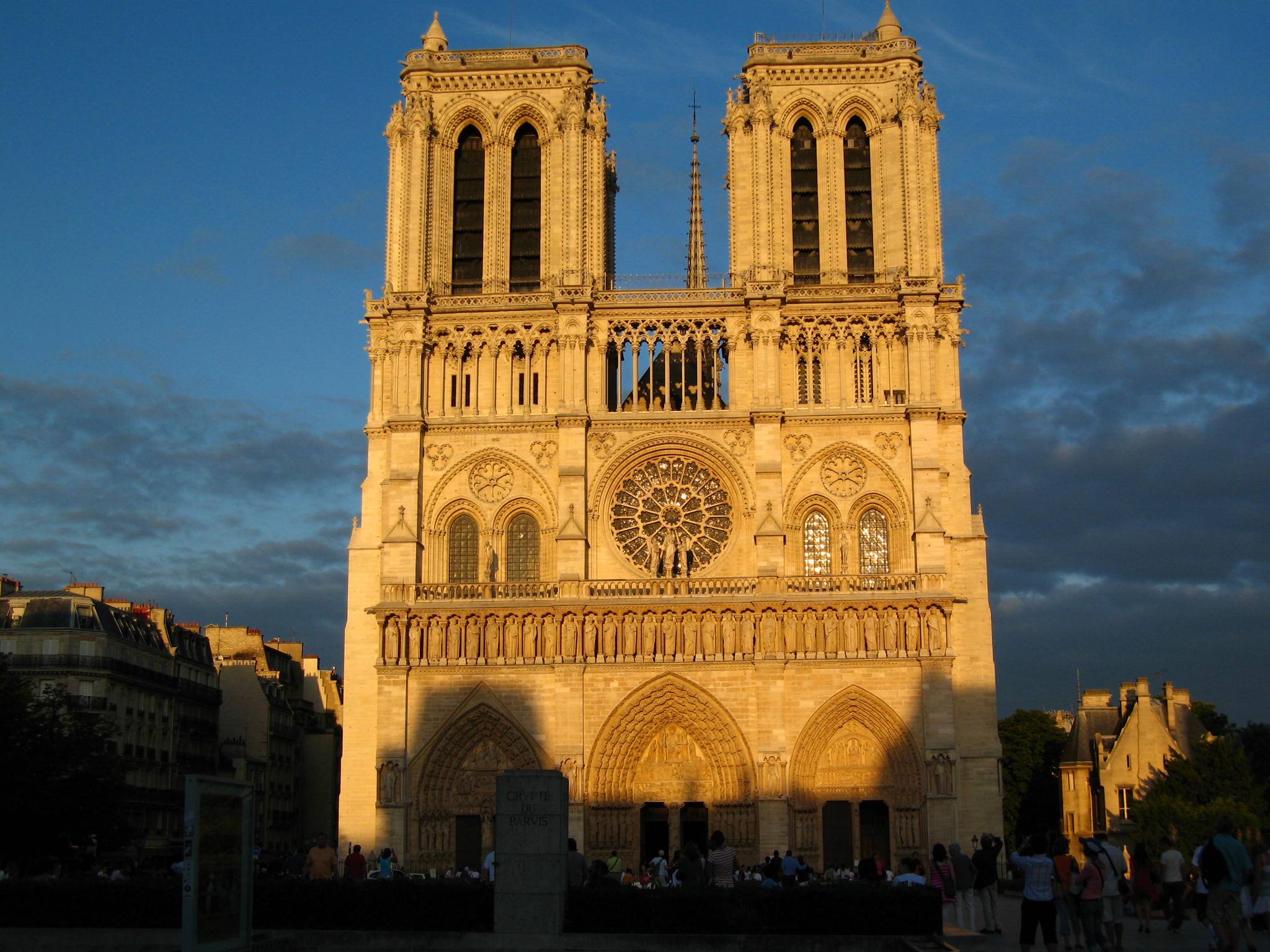
Kathy and I visited the Notre Dame Cathedral in Paris, France, in February of 2006. It is an ornate, historic building. It dates to the 1100s, surviving the threats of many wars including World War I and World War II. But, it has been dilapidating for some time. Earlier today, a fire inside the spire caused it and one of its towers to collapse. Now, officials are saying that the whole frame is burning and will not survive. Whether or not they rebuild this Catholic Church building, this 900 year edifice will be gone.

There are buildings that have been around millennia before New Testament Days on most of the continents. If they continue until the Second Coming of Christ, they will cease to exist that day (2 Pet. 3:10). King Nebuchadnezzar had a dream over 500 years before Christ, and God helped Daniel understand its meaning (Dan. 2:28). The colossal figure he saw in that dream was a vision about the coming Kingdom of Christ. Daniel says, “In the days of those kings the God of heaven will set up a kingdom which will never be destroyed, and that kingdom will not be left for another people; it will crush and put an end to all these kingdoms, but it will itself endure forever” (Dan. 2:44). 

A careful study of unfolding history reveals this particular kingdom to be the church of our Lord, a Kingdom Jesus said would be established during the lifetime of some of His disciples (Mat. 16:28). It would come with power (Mark 9:1), a promise Jesus reiterates in Acts 1:8-11. That power came by way of the Holy Spirit’s coming upon the apostles on the Day of Pentecost in Acts 2. Through this means, the Lord’s church was established in Jerusalem that day (Acts 2:37-47). The Roman Empire, which ruled the earth that day, eventually collapsed. No nation or empire can rival the spiritual Kingdom of Christ. His church will stand forever (Heb. 12:28). Nothing can overtake or overpower it (Mat. 16:18). 

Assaults against the church have been ongoing for twenty centuries. At times, it has been invisible to recorded history, but it continues to stand. Her members have been assaulted many times throughout the centuries. Property has been destroyed. Possessions have been taken. Lives have been lost. But, still she stands! This Kingdom shall stand forever! A Divine promise encircles it. This confidence is fire proof! 

notre_dame_a_paris_01
Notre Dame Cathedral before today’s fire

A Strong Sense Of Family

Neal Pollard

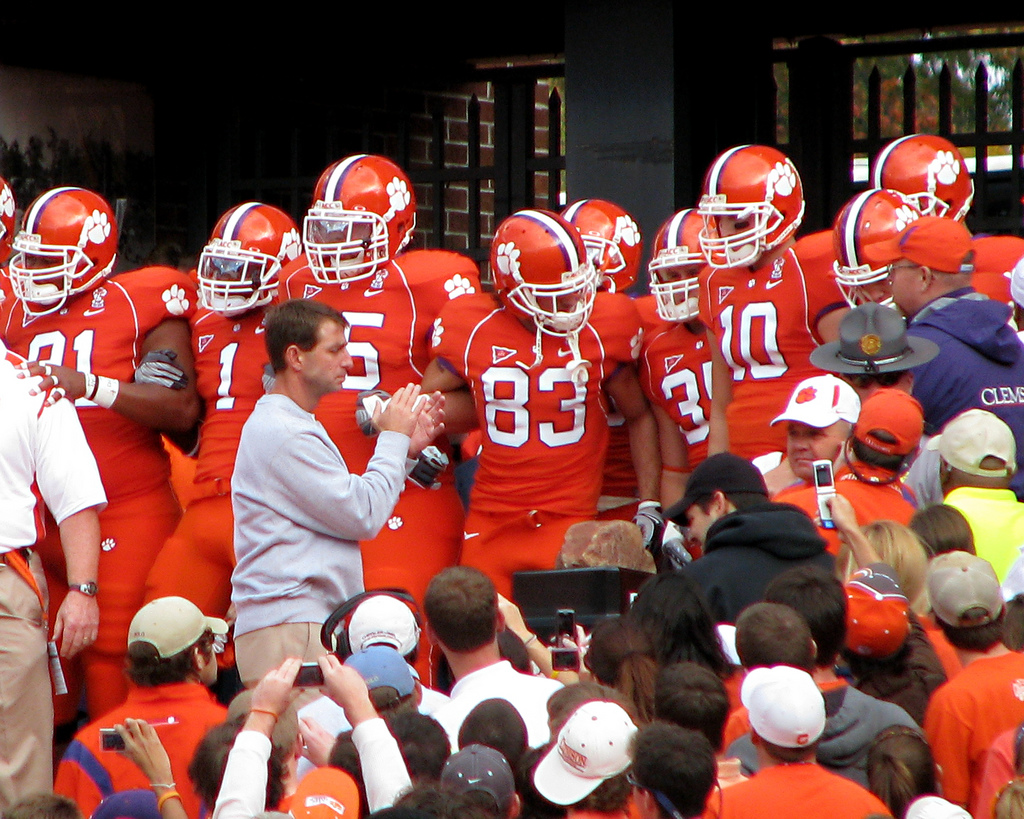
Trevor Matich was being interviewed on ESPN radio, asked about why he thought that Clemson had built such a strong football program in the last few years. His quick response was, “They have built a strong sense of family.” He talked about how Head Coach Dabo Sweeney and his staff wanted players to see their coaches not just as coaches but also as husbands and fathers. Consequently, the coaches’ families spend a lot of time around the athletic facilities or hanging out with the players. They have intentionally built a strong family environment that doesn’t compartmentalize but rather coalesces. Recruits talk about sensing it when they make a visit, but, more importantly, players on the roster speak just as strongly about it. 

How many teams make such an emphasis isn’t clear, but you don’t seem to hear that said often enough. While I find such human interest stories heartwarming, it makes me wonder, “Do people describe our congregation with similar terminology?” Are we creating, developing, and nurturing a strong sense of family?

The early church definitely majored in that priority. From the time the first church of our Savior was established, we find this emphasis (Acts 2:42-47). Often, New Testament writers spoke of the church with family terminology (Eph. 2:19; 3:15; 1 Tim. 3:15; 5:1-2; Ti. 2:1-8; etc.). The church exists as a sub-community within the broader community around them. People from that broader community are looking for greater intimacy and meaningful relationships. One place they often turn is to various churches. Whether through our efforts to evangelize or through their seeking that brings them within our walls, we have an opportunity to expose them to a “strong sense of family.” 

But, by being faithful to New Testament teaching, we offer this in the context of truth rather than error. We cannot settle for simply offering truth, as eternally vital as that is. Along with it, we must love, embrace, and work to incorporate them into our family. God has His church designed to follow His written will in the context of a tight-knit, spiritual family. A true sense of family will draw them into a relationship with us. It will better open their hearts and minds to being drawn into a relationship with Christ. The net effect will be greater than a national championship. It will be many, many souls won to eternal life. We cannot afford to miss the opportunity to be spiritual family!

Dabo_Swinney_2008_01
Dabo in his early days at Clemson