777 Movies In A Year?

Neal Pollard

On July 5, 2023, Zach Swope’s set a Guinness World Record by watching 777 movies. The 32-year-old man did it for a cause, to raise awareness about autism and suicide awareness. He did it at a cost, even though he had an unlimited membership that allowed him to watch all these movies for $22 per month. After all, consider the time expended. He saw several movies multiple times to reach this historic milestone, including one movie (“Puss in Boots: The Last Wish”) 47 times (Source). 

While there are a multitude of applications we could observe about Mr. Swope’s endeavor, I want to focus in on just one. Zach was dedicated to be present as often as possible. He was willing to do what it took to be there because it was part of an ultimate goal. It caught the attention of others. It was the result of an attempt to fulfill a tangible purpose. 

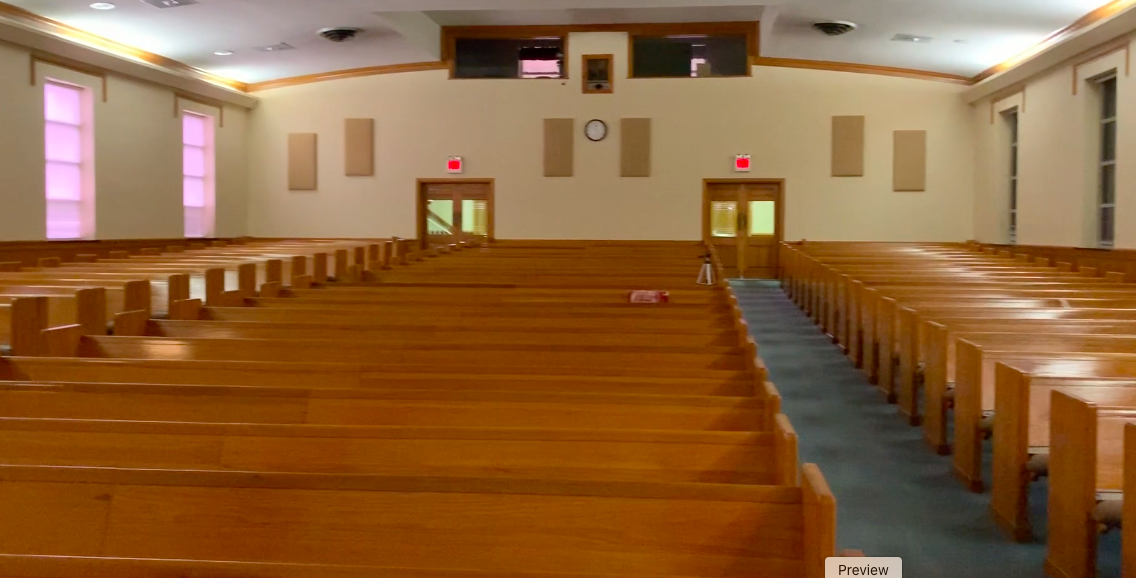
However you feel about Swope’s use of time or money, consider an opportunity we have. The Lord and the local church provide us multiple times to come together to study the Bible each week. There are, typically, multiple opportunities to assemble to worship God together. Periodically, there are extra occasions given to study and worship through special events or classes. While merely attending these will not earn one the reward of eternal life, it can greatly aid the aim. The time spent is invaluable. Any expense or sacrifice potentially rewards and enhances life. It can certainly influence people in our lives in a most positive way! 

Perhaps the best-known passage on the subject provides the most insight on the value of attending: “And let us consider how to stimulate one another to love and good deeds, not forsaking our own assembling together, as is the habit of some, but encouraging one another; and all the more as you see the day drawing near” (Hebrews 10:24-25). What does God tell us here?

  • Assembling is deliberate–“Let us consider”
  • Assembling is cooperative–“Let us…together”
  • Assembling is purposeful–“How to stimulate one another to love and good deeds”
  • Assembling is considerate–“Stimulate one another…encouraging one another”
  • Assembling is habitual– Just as “forsaking our own assembling together” is
  • Assembling is spiritual– “As you see the day (Judgment, cf. 10:26ff) drawing near”

It is true that one can attend every service, but still not go to heaven. One’s heart might not be right there (Matthew 15:8-9). One’s life might not be right when not there (Jeremiah 7:9-10). But, it is much more difficult to go there when our approach to attending is lackadaisical, not prioritized, or deemed optional and dispensable. Wouldn’t it be wonderful to develop a reputation within our circle of influence as one as dedicated to worship as this young man was to moviegoing? 

Seeing The Future With Our Family

Carl (and Rich) Pollard

 On February 3, 2018, Robert Meilhammer, 51, of Crapo, Maryland, was struck in the head by a dead Canada goose. The bird that hit him was 14 pounds and had a nearly 6 foot wingspan. It plunged from the sky after a fellow waterfowl hunter fired a blind shot on a flock overhead. Meilhammer was in the midst of a hunting party with three friends in Easton, Maryland. The goose fell about 90 feet, knocking the hunter out instantly and causing head and facial injuries. If you could see what was coming you would prepare. Odds are, if Robert Meilhammer would’ve known about the goose coming he could’ve taken a step forward to keep from getting knocked out. 

If we knew what was coming, we would prepare. Thankfully, we know! God in His love and grace has revealed what is coming and what needs to be done in order to prepare. 

That’s why as a church we come together to remind each other of the day that is coming in the future. We come together to encourage our church family to fight the good fight, keep the faith, and to stay the course. 

Mark 16:16, “Whoever believes and is baptized will be saved, but whoever does not believe will be condemned. The judgement day is coming and God is clear on what we should be doing. Get prepared and stay prepared through constant fellowship with likeminded brothers and sisters. 

2 Peter 2:9, “then the Lord knows how to rescue the godly from trials, and to keep the unrighteous under punishment until the day of judgment.” Does going to church make us more godly or unrighteous? Which one do we want to be on that day of judgment? 

In 2 Timothy 4:7-8 Paul says, “I have fought the good fight, I have finished the race, I have kept the faith. Henceforth there is laid up for me the crown of righteousness, which the Lord, the righteous judge, will award to me on that day, and not only to me but also to all who have loved his appearing.”

We go to church so we can say what Paul once said. God has revealed to us the future event that is going to take place. Have we fought the good fight? Have we kept the faith? Fighting and faith are strengthened with our church family. 

An Inspired Appeal To Assemble

Neal Pollard

I’m writing this during one of the best gospel meetings I’ve ever attended. Robert Hatfield is doing an incredible job! He has a way of telling even challenging truths with kindness while reaching the heart and the mind. He has been prepared and has presented each sermon masterfully. I’m also grateful our elders had the wisdom to invite him to come.

Have you thought about why special events like gospel meetings, like our “regular services,” are so beneficial? Why should they draw our interest and be important to us? The writer of Hebrews gives us at least three reasons in an exhortation in Hebrews 10:24. He writes, “Let us consider how to stimulate one another to love and good deeds…” The context of this passage is assembling together. He contrasts “neglecting to meet together” with “encouraging one another” in verse 25, but the why is in verse 24.

COOPERATION–“Let Us…One Another”

You will find the exhortation “let us” three consecutive times in Hebrews 10, in verses 22-24. The first is about our relationship with God (22), the second is about our relationship with the world (23), and the third is about our relationship with each other (24). The writer identifies it as “one another.” It requires each of us to do our part, to decide to act. The more who embrace this encouragement, the more effective we will be at obeying this command. “Us” can be a small number of people or a large number of people, but truly “the more, the merrier.” 

CONSIDERATION–“Consider”

This literally means “think carefully about.” It pictures sitting down and being intentional. Perhaps visualize specific faces of brothers and sisters, those who are friends, new Christians, visitors, newcomers, family members, and the like. Visualize that great High Priest who is also there (19-21). We will hop in our cars after a long day (or week) of work and school and rally together when we have taken the time to reflect on who we are going to meet with. 

CAUSATION–“Stimulate…To Love And Good Deeds”

It never fails! When you think about how the reason for assembling is to praise and glorify our Lord and Savior, there is already ample motivation. But then there is what our mutual presence and participation does for one another. It causes us to think and feel and to do right. We constantly need that prompting and urging. The world is all too ready to be unloving and to either do wrong or neglect right actions. Every opportunity to assemble holds stimulating possibilities.

There have been non-Christian visitors at each service of our gospel meeting. That’s exciting! But just as exciting, you and I get to be together in a time of worship and study. We’ll come with buckets emptied by the day and week, then leave with them filled to overflowing. God knew that’s how life is! It’s why he urges us, “Let us consider how to stimulate one another to love and good deeds.” He gives us assembling together as a powerful outlet. “Let us” take advantage!  

Motivation For Attending Church Services

Neal Pollard

“An Italian newspaper recently carried an interesting story about a young couple in Milan who had a wonderful attendance record at a particular cathedral. The priest assumed they were very devoted to their faith because they regularly spent an hour before one of the statues in the church’s worship area.  He thought they were doing some intense praying.  Only later did he discover the couple simply came to re-charge their cell phone from the electrical outlet behind the statue” (King Duncan, via Waterview, Richardson, TX, 3/16/14).

My first reaction to that was to chuckle, then be a little indignant, and then become introspective.  The thought that someone may come to church services for apparent honorable intentions but be serving some baser motive may be shocking, but it is not unheard of.  Jesus taught, “This people honors me with their lips, but their heart is far away from me” (Mat. 15:9).  Jesus is quoting Isaiah, and it was a problem in that prophet’s day, too.  Think of what another prophet wrote.  Ezekiel said, “They come to you as people come, and sit before you as My people and hear your words, but they do not do them, for they do the lustful desires expressed by their mouth, and their heart goes after their gain” (Ezek. 33:31).

When I come before the Great I Am, not only must I keep from distractions.  Deeper than that, I must examine my overall motivation for being at worship or serving the Lord.  Why am I a Christian?  Self-examination is as important as any spiritual exercise there is (2 Cor. 13:5).  Nobody else may know why we are before the Lord in worship, but He does.  May He see our motivation as transparent and true, honest and sincere!  

Why Going To Church Matters

 Saturday’s Column: Captain’s Blog

Carl Pollard

There’s the story told of an elderly lady that was amazed at how nice the young man next door was. Everyday he would help her gather things from her car or help her in her yard. One day the old lady finally asked the young man, “Son, how did you become such a fine person?” The young man replied, “Well, when I was a boy, I had a drug problem.” The old lady was shocked and said, “I can’t believe that.” The young man replied, “It’s true, my parents drug me to church on Sunday morning, drug me to church on Sunday night, and drug me to church on Wednesday night.”
Have you ever paused and thought about why you go to church? What reason causes you to bring your kids to worship? What’s the point? Contained in the pages of God’s Word we can find at least three reasons why we go to church. 

A Past Example

God is a God of remembrance. He would repeatedly instruct, comfort, and encourage the Israelites by reminding them of things He had done in the past. He used reminders of past instances to help motivate His people. God’s Word continues to do that for us today. It is filled with past examples to help remind us why we come together each week. We go to church because of a past example (Acts 2:41-47; Acts 20:7). 

A Present Encouragement 

1 Thessalonians 5:11 says, “Therefore encourage one another and build one another up, just as you are doing.” Hebrews 3:13 says, “But exhort one another every day, as long as it is called ‘today,’ that none of you may be hardened by the deceitfulness of sin.”
Each week in the world we may feel outnumbered trying to live a godly life. When we come together we’re reminded that we aren’t the only ones that are trying to be like Christ. William Ward once said, “Flatter me, and I may not believe you. Criticize me, and I may not like you. Ignore me, and I may not forgive you. Encourage me, and I will not forget you.” Our present encouragement comes from unity and the sharing we all have with each other. We’re encouraged through fellowship, but also praise. Worship is a time to reflect on God and what He has done for us. We focus on His nature and His love and we praise Him because we are blessed beyond belief. Our present encouragement comes from our time spent praising God our Father. We come to worship to receive our present encouragement.

A Future Event

On February 3, 2018, Robert Meilhammer, 51, of Crapo, Maryland, was struck in the head by a dead Canada goose. The bird that hit him was 14 pounds and had a nearly 6 foot wingspan. It plunged from the sky after a fellow waterfowl hunter fired a blind shot on a flock overhead. The goose fell about 90 feet, knocking the hunter out instantly and causing head and facial injuries. If you could see what was coming you would prepare. If Robert Meilhammer would’ve known about the goose coming he could’ve taken a step forward to keep from getting knocked out. If we knew what was coming, we would prepare. God in his love and grace has revealed what is coming and what needs to be done in order to prepare. We come together to remind each other of the day that is coming in the future. We come together to encourage our church family to fight the good fight, keep the faith, and to stay the course. Mark 16:16 says, “Whoever believes and is baptized will be saved, but whoever does not believe will be condemned.” The judgement day is coming and God is clear on what we should be doing. Get prepared and stay prepared by going to church. 
We assemble as a family on the first day of the week because of a past example, a present encouragement, and a future event. 

What I Saw On Sunday

Monday’s Column: Neal At The Cross


Neal Pollard

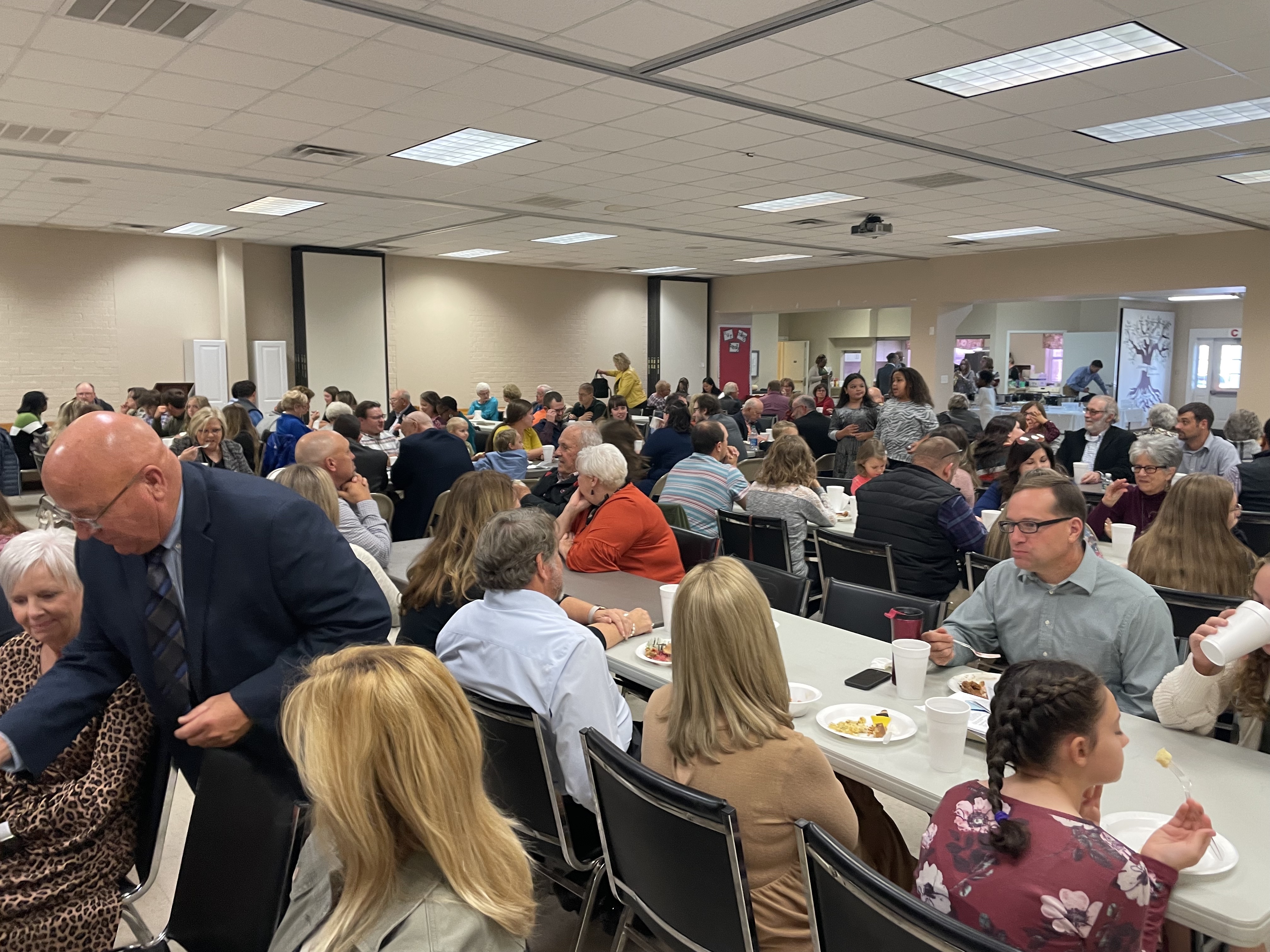
It was our largest crowd since before the Pandemic. It was a targeted effort to fill the building. The building was full! I asked several how many non-members were present and the most conservative answer was dozens, perhaps fifty. While we know that filling the pews is only one factor in encouraging people to follow Jesus (discipleship), it is a pretty fundamental and important one. Let me share a few exciting things I saw.

I saw the power of an invitation. The elders laid out a challenge to us to invite every non-member we could think of, coworkers, family members, friends, classmates, acquaintances, etc. That’s not revolutionary. Perhaps it was the sheer volume of invitations so many members issued. Such seeds were spread far and wide, and Sunday was an indication that some will come if asked. I am confident that many who were invited will come in the future, if we continue to ask. Philip invited Nathanael to “come and see” (John 1:46), and it changed Nathanael’s life! Andrew told his brother, Peter, “We have found the Christ” (John 1:41)! It changed not just Peter’s life, but the thousands of lives Peter eventually touched. Who knows the eternal impact made by all the invitations issued this weekend, but it shows that there’s still power in a simple invitation!

I saw the strength of teamwork. That was on display in so many ways. There was a huge team of people greeting those who entered our doors. Anticipating a lot of visitors, this was organized beyond the ordinary measure. It was exciting to see so many doing this, and it seemed to be infectious. Others joined in. It was evident in the efforts of multiple deacons and vision groups coordinating various works. It extended to members in the auditorium warmly welcoming unfamiliar faces and making our visitors feel at home. It continued on to the potluck after Bible class with the scores of people bringing an abundance of food, serving, assisting, and cleaning up. We were a finely-tuned machine of coordination. I could not help but think of Paul’s words, to Philippi (“make my joy complete by being of the same mind, maintaining the same love, united in spirit, intent on one purpose,” 2:2) and Colosse (“beyond all these things put on love, which is the perfect bond of unity,” 3:14). Sure, he had more in mind that one event on one day, but this is a key way such overall unity is built. 

I saw the example of leadership. This began with the eldership. They not only challenged us to invite, they led the way. It’s not an exaggeration to suggest that the four of them invited hundreds of people by text, phone, and face-to-face. They invited friends, family, acquaintances, and strangers! True leadership shows the way! This included those who led in worship. There was forethought, effort, and coordination from the greeting to the announcements and every act of worship in between them. This involved the membership who enthusiastically engaged in the worship. It also takes in every one that helped people find bathrooms and classrooms. Leadership always breeds more leadership. The writer of Hebrews says, “Remember those who led you, who spoke the word of God to you; and considering the result of their conduct, imitate their faith” (13:7). 

I saw the hope of tomorrow. The effects of the last 18-plus months have been deflating and demoralizing. We have lost members to Covid, physically and spiritually. It has derailed plans. It has distracted us. But Sunday showed that by faith in God and by following His plan, the best is yet to be! As we were reminded at the end of the day yesterday afternoon, we have worship every Sunday so let’s keep inviting. How many Bible studies will result from inviting others to church? How many future preachers, elders, deacons, soul-winners, and Bible class teachers are represented in those who walked through our doors yesterday, some for the first time ever? To some degree, we’ve got to be like Paul and say, “forgetting what lies behind and reaching forward to what lies ahead, I press on toward the goal for the prize of the upward call of God in Christ Jesus” (Phil. 3:13b-14). 

There’s more to do! There’s more inviting to do. There’s more follow up to do. But I see more than a special event in what occurred on Sunday! I see a culture change and a purposed people. Think what God can do with that!

“I Can’t Come To Church Because Of Covid”

(Tuesday Supplement. Note: I am well aware that there are those who are immunocompromised and cannot attend. This is not in any way meant to discourage or dishearten those in this condition. God knows and understands.)

Neal Pollard

Covid has touched nearly every family I know, including my own. It would be foolish to say that it is harmless. It has claimed nearly 5 million lives as of today. So, I have heard from many good, thoughtful people, this statement: “I can’t come to church because of Covid.” Please accept that with deep, genuine love, there are a few questions that need to be asked alongside of this.

Are we being consistent? Are we still going to the grocery store, the restaurants, the beauty shop, the office, the classroom, the gym, and the doctor? Chances are at least as great that we will contract Covid in one of those places as at church. People are not more clean or careful in those places. 

Are we properly prioritizing?  Perhaps we see the stores, the job, the school, and the medical as essential and necessary. Jesus puts our spiritual health and that of His body above all else (Mat. 6:33; 16:26). How could we conclude that any of these others are more important than His kingdom?

Are we considering others? Perhaps we console ourselves by saying that we’re getting what we need by watching Facebook, Vimeo, YouTube, or wherever services are live-streamed. But, worship and Bible class is not simply about our being fed. We must consider one another to stimulate unto love and good deeds (Heb. 10:24). That is said in connection with assembling together (Heb. 10:25), and how is this done by one who stays away from the assembly?

Are we weakening our spiritual strength? Is it getting easier to stay away or opt to just catch it on the phone, computer, or TV when we don’t feel like coming? Are we losing our desire to be with God’s people? Isolation has many effects, some more subtle than others.

Are we assessing our fears? Those who are waiting for Covid to go away will be waiting years or longer. This is a virus. Scientists doubt that it can be eradicated. It spreads too quickly. Perhaps it will be like Polio or smallpox, but how long will that be? Will we stay home for years? Meanwhile, where will be, spiritually, years from now if we have disconnected from our spiritual family? 

After 18 months, perhaps it is time to do some serious reevaluating? Instead of only allowing news outlets to be our guide, we need to balance that with careful study of God’s Word. Instead of considering just this life on earth, we should balance that by considering this life is for preparing for eternity. We need to be back together–all of us, now more than ever. 

HE’S SO EXCITED TO GO TO CHURCH

Thursday’s Column: Carlnormous Comments

pollard

(Pinch-hitting for the groom-to-be)

Neal Pollard

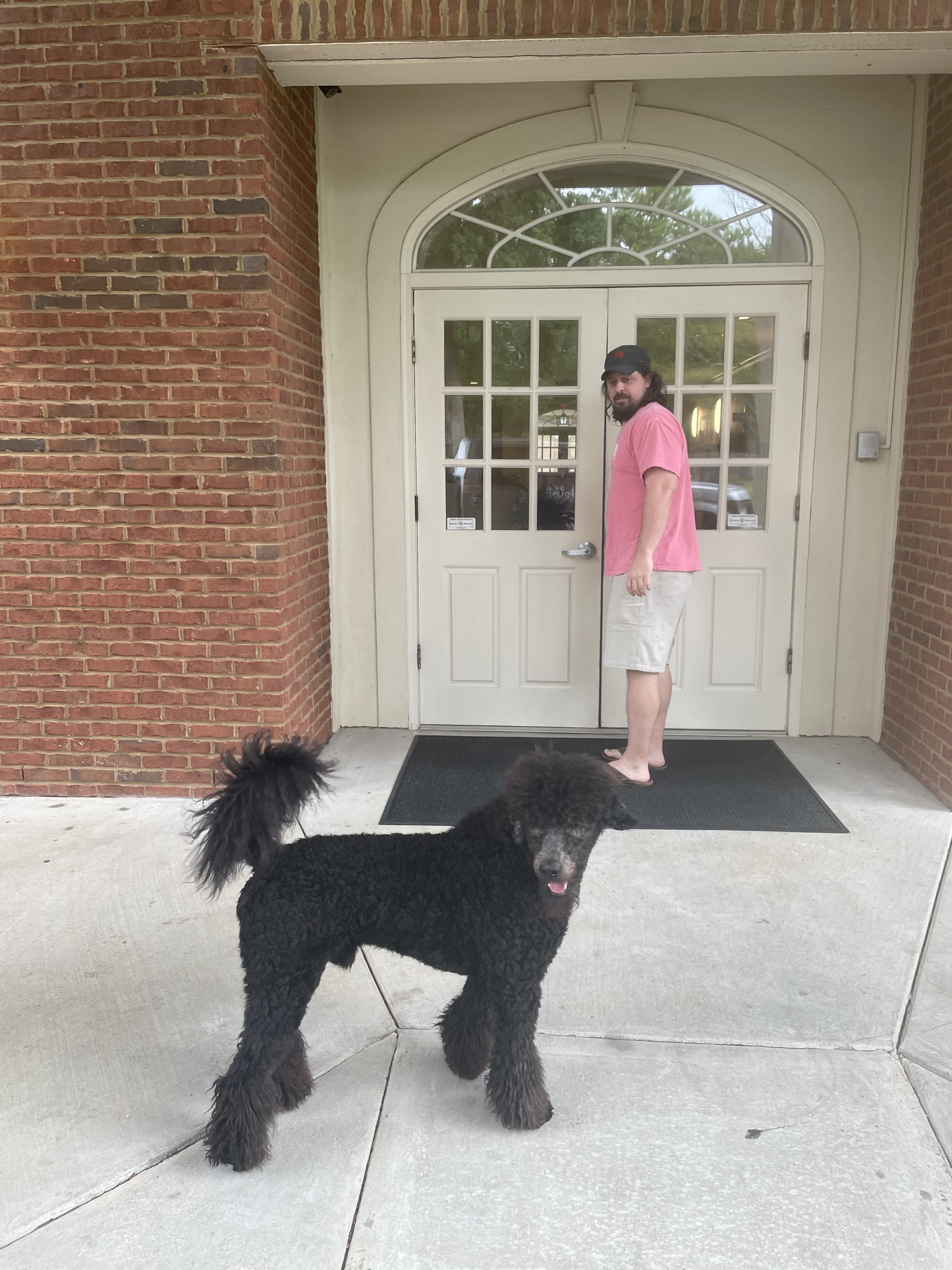
Last weekend, we had an opportunity to see good friends of ours when Kathy did a Ladies Day in “L.A.” (Lower Alabama). We met Justin and Anna Maynard when they served as missionaries in Tanzania, and we have also been to Israel with them. They have two beautiful Standard Poodle puppies, a girl named Ruby and a boy named Colton. They are both smart, but Colton has to be a canine Einstein. Perhaps the best measure of his intelligence is his absolute love of going to the church building with Justin (see picture below). Some years ago, I wrote about a dog from my childhood that was faithful to be at the building when the church met (The Dog At Church). What I appreciate about Colton is how eager he is, every single time, to “go to church.” When Justin asks, “You wanna go to church?,” Colton goes ballistic! When he gets there, he sprints to the door and impatiently waits for his “dad” to open the door. Then, he runs around excitedly (I watched him do laps around the auditorium for several minutes before contentedly sprawling out on the floor to rest). He does a flying leap onto one of the other minister’s couch and thoroughly enjoys the whole experience at the church building.

His enthusiasm is so high, it made me think of what David once said: “I was glad when they said to me, ‘Let us go to the house of the Lord’” (Psa. 122:1). The sons of Korah described being in the house of the Lord, “with the voice of joy and thanksgiving” (Psa. 42:4). Maybe it was his memories of “sweet fellowship together” with others who “walked in the house of God in the throng” (Psa. 55:14). In those last two passages, the writers look back with longing to a time when they could do freely what now was impossible to do. They longed to be there. The psalms, as much as any book, describes zealous worshippers. Think about Psalm 95:6, which admonishes, “Come, let us worship and bow down, let us kneel before the LORD our Maker!”

I watched Colton and I asked myself, “Do I have that attitude toward going to ‘church’?” Frankly, I can let a sour mood or personal problems or distractions dampen my joy and zeal for being there. Here’s a creature who will not live eternally, is not made in the image of God, and for whom Jesus did not die, but whose unbridled enthusiasm is overflowing! The next time I’m tempted to grumble or grimace as I approach the “next appointed time,” I hope I will remember Colton Maynard, who loves to go to church! 

Colton and Justin

ESSENTIAL

Monday’s Column: Neal At The Cross

Neal Pollard

  • Grocery store–Place where we buy food to sustain our physical bodies
  • Restaurant–Place where we pay someone else to provide food for our physical bodies
  • School–Place where our children receive an education to prepare them to live on earth as adults
  • Hospitals and Doctor’s office–Place where we go to address issues with our physical health
  • Workplace–Place where we go to earn money to take care of our physical needs

There are other places that have remained open or reopened whether to provide what we’d deem essential or places that are more diversionary but which various experts call essential to economic or social survival (malls, bookstores, ballfields and arenas, etc.). In fact, “essential” can be put into a lot of categories–academic, economic, social, emotional, medical, physical, and spiritual.

Pandemic restrictions have impacted and altered public behavior for almost a year. It’s more than mask mandates, hand sanitizer, social distancing, and the severe reduction of handshakes and hugs. It has been the reduction of personal interaction at the assemblies. Many congregations have devised virtual means of meeting for Bible class and worship. Just like virtual doctor visits, online instruction, and telecommuting lack the desired qualities of the in-person alternative, so it is with the virtual gathering. 

The first-century church labored under restrictions, too. The threat was not a virus, but often a virulent government hostile to their faith. Christians in various places faced severe persecution and even the death penalty if this identity was known (Mat. 24:9; Rev. 2:10; 1 Pet. 4:12-16). The assemblies were an easy way for Rome to know a Christian’s identity. Despite the potential cost of discipleship, what do we find the early Christians doing and being commanded to do? As a good preacher friend, Terrence Brownlow-Dindy, recently said, Acts 20:7 not only told the saints when to take the Lord’s Supper (the first day of the week) but also how (come together). Despite governmental interference and opposition to them, Christians were still commanded to assemble (Heb. 10:25). It was essential to be present to stimulate each other to love and good deeds (10:24). It was essential to be present to encourage one another (10:25). It was essential to be present to prepare for Christ’s second coming (10:25). 

What’s the difference between the risks incurred in Cracker Barrel, Wal-Mart, Home Depot, and Hobby Lobby walking aisles, touching items, and standing in line with strangers and coming together and running any risks we might incur by assembling together for worship and Bible class? The commodities and services provided at places like those at the beginning of this article serve us only in this life. The wisdom of God, who designed the church including the importance of coming together, commands assembling to address our most essential need. It is absolutely true that Christianity is not confined to the church building, a great lesson we discovered or remembered at the start of this crisis. Perhaps, though, we inferred from this that actually coming together was less essential than shopping, going to school, and going to work. 

I have seen brothers and sisters in Christ at stores, restaurants, weddings, and funerals who have not come into the church building to give and receive the fellowship and encouragement God made essential both for our own spiritual health and that of our spiritual family. Scripture repeatedly tells us the earth and all its works will be burned up some day (2 Pet. 3:10). Our souls will never die. As we prioritize the essentials, what is more essential than that? The dictionary defines essential as “absolutely necessary; extremely important.” If anything qualifies, our assemblies do. 

Hebrews 10:25 And COVID-19

Wednesday’s Column: Third’s Words

Gary III

Gary Pollard

An alarming number of people today are obsessed with the COVID-19 outbreak. Nearly every post on social media is focused on it, stores are selling out of essentials, and it comes up in nearly every conversation. This article is not about Coronavirus-19. I’m tired of reading about it and I’m assuming you are, too.

Because the virus is particularly dangerous for older people or those with underlying conditions (a healthy demographic in the church), many congregations have cancelled or reduced services until something can be worked out. As a result, some have attempted to use scripture to claim that these measures are unscriptural.

Some have pointed to the early church: despite the threat of death from man, they continued worshipping. This is true, but that threat was persistent for years. Even then, many early churches met at extreme hours and in extreme secrecy during the worst of persecution. This is not the case today.

Some have pointed to Hebrews 10.25 to say that cancelling services is the same as “forsaking the assembly.” We will look at this passage closely, but we need to keep something very important in mind: most of writings set after the establishment of the church are focused on Christian living. Our standard of conduct, our speech, our attitude toward the world, our understanding of God, how to employ wisdom, etc. are the focus of the vast majority of the New Testament.

For perhaps more than a few, the sum total of their Christianity is the worship assembly on Sunday and Wednesday. Worship is extremely important to godly living and it would be egregiously false to state otherwise (as some state, “I am dedicated to God, not the church”). However, there is but one fragment of a sentence in all of scripture dedicated to the importance of consistent attendance. It is binding and important, but some place a disproportionate emphasis on this passage to the neglect of the rest of scripture. To use the words of Jesus, “They strain at a gnat and swallow a camel” (Matthew 23.23ff).

Hebrews 10.25 states, “not forsaking our own assembling together, as is the habit of some, but encouraging one another; and all the more as you see the day drawing near.” The next verse says, “For if we go on sinning willfully after receiving the knowledge of the truth, there no longer remains a sacrifice for sins…” Verse 29 makes it very clear that 10.25 is talking about “trampling under foot the son of God…”

It is important to note that “forsaking” in 10.25 is ἐγκαταλείποντες (eingkataleipontes), which means to leave, abandon, or desert. The word is also a present active participle in this text, which describes a continuous, willful abandonment of the worship assembly. The same word is to describe a man leaving his father and mother and clinging to his wife. It is a more or less permanent abandonment, not a temporary one.

What does this mean for Christians in 2020? It means that cancelling a few services to avoid spreading a very contagious virus is not a sin. This does not equal, “trampling the son of God under your foot.” It means that trying to bind Hebrews 10.25 in this case is worse than merely bad scholarship – it is binding where God has not bound. It means that, while worship is vital and important, we must focus just as much on godly living and the whole of scripture as we do this one verse.

Screen Shot 2020-03-18 at 6.49.56 AM

It’s Not Business; It’s Personal

Neal Pollard

Some years ago, when our sons were all teenagers and they were given a cell phone, there were times when they failed to use those to communicate if they got to their destination or answer when we needed to reach them. While I never did it, I was tempted on more than one occasion to contact the cellular provider and suspend their service. Why? Was it because I thought it was wasted cost? No. It was because it reflected a lack of thoughtfulness and responsibility. It wasn’t business. It was personal.

Hebrews 10:25 is a sobering, New Testament passage. It addresses the Christian’s attitude toward the sacred assemblies of the church. What makes it sober is its contextual attachment to the eternal ramifications of abandoning those assemblies. God speaks of “no more sacrifice for sins,” “severer punishment,” “vengeance,” and “terrifying” (26-31) in connection with sinning willfully, of which forsaking the assemblies is a contextual example. But, why is God so exacting about this matter of our meeting together? In a nutshell, it is because these times, to God, are personal. The Bible is full of references to God’s desire to be worshipped and receive our worship. He is worthy. As Creator, He has the right. But, in this passage, it is personal in the sense that what He commands is so helpful to you and me.

Written on the foundation of the fact that our High Priest, Jesus, has given us access to God (19), the writer urges us to do three things: (1) Draw near (22), (2) Hold fast, and (3) Consider. It’s the third one I want to briefly notice:  “and let us consider how to stimulate one another to love and good deeds, not forsaking our own assembling together, as is the habit of some, but encouraging one another; and all the more as you see the day drawing near” (24-25).

There should be a personal connection. Notice how the writer reveals this. He says “us” and “our.” He says “one another” twice as well as “together.” Christianity is not a solitary condition. We must see ourselves in connection with the rest of the body. Assembling is about seeing ourselves as a vital piece of a more important whole. Forsaking the assemblies is, for whatever reason, selfish and self-centered. It is done blind to the needs of others.

There should be a personal submission. The command is “consider” followed by two participles that tell us how to obey the command: “not forsaking” and “encouraging” (more on that in a second). So, in a discussion about the whole group, there is a command each must strive to obey. As it is a command, ultimately this is as personal as God and the individual. I fail to consider my role, I fail in my relationship with God.

There should be a personal obligation. Each of us is obligated to stimulate and encourage everyone else. It’s not just those who publicly lead worship or teach class. The reclusive saint who dashes out before services are over has missed this. The clammed up Christian who never reaches out to fellow saints but is closed to others misses this. The discouraging and unloving brother and sister rebels against their duty. I should never be focused on how well others are stimulating and encouraging me. Instead, I should be so lost in my efforts to be a blessing to others that I have no or energy to evaluate how others are doing.

There should be a personal anticipation. This is more than social and emotional. It’s spiritual and eternal. Those other aspects are means to that end, but don’t miss the end. Be a blessing to others at “church services” “as you see the day drawing near” (25). Not Sunday. Keep reading. The Judgment Day. I need to remember that “here we do not have a lasting city, but we are seeking the city which is to come” (13:14). One of the best places to stay reminded of that is through our assemblies, as our activities in class and worship and our teaching and preaching keep us anchored to that ultimate reality. This world is not my home!

Christianity is not about the business of going through the motions, even doing right things. No, no! It is personal. May that truth permeate our attitudes toward not just God, but His children.

1024px-business_plate_green-svg

Victories Of Our Friends And Family Day

[Disclaimer: I mention specific names, knowing that I cannot possibly know every story and detail. These are included to encourage. God saw it all and will reward accordingly!]

Neal Pollard

  • There was an air of excitement. We did not meet our numerical goal, but there was a noticeable buzz yesterday. So many new faces milling around and so much focus on that, from Bible class to worship to the sermon, just charged the atmosphere.
  • We were very deliberate and thoughtful about how we approached worship.  Thom Vaught and Michael Hite put together the “explanation slides” for the acts of worship (which would be great to use every Sunday, I think). Doug McNary did a masterful job planning the worship and each man shined in leading us. There appeared to be such enthusiastic participation. Thom’s elder remarks at the end were worth the price of admission!
  • Many of our members got out of their comfort zone to meet and greet visitors. This is a significant area where we need to grow, but where we have grown. While there will always be some who do not step outside the known, so many did!  Some were “pulled in.” Others did the pulling in (Mike Ripperton was almost like a traffic cop in the foyer!). A warm, loving church is merely reflecting the face of Jesus.
  • We got future commitments from invitees.  Many of us invited several people to come, but they did not come or even backed out. Madie Murphy had two friends back out yesterday morning, but one is coming next week and bringing her mother! The Parkers and Maria Thompson invited a wonderful young couple who are searching for a church home. Look for that to bear fruit! I believe we will see people show up in the weeks and months to come because of our Friend And Family Day.
  • We asked people to come to church. Dean Murphy called this the biggest victory of the day, 100 people asking people to come to church. That is who we all need to become if we are not already that. God saw your attempts and was pleased. And if you, like me, had to fight nerves and fears to invite friends, keep practicing! It gets easier with the effort.
  • We planted so much seed. I am convinced that efforts like these will pay off in many ways we do not anticipate. I have never seen an endeavor like yesterday fail to yield return visits, Bible studies, community impressions, and unseen impacts that yield souls won to Christ. What we did in inviting friends and family was right and pleasing to God! He will not let that work produce nothing.
  • There were great, individual victories. Many of us did have non-Christian visitors in the assembly. The Walkers had a neighbor there. Danielle Thompson had her husband there. Guy and Kathryn Lindsay had a guest. The Fleury guys were back. No doubt there were other individuals. Derek Rose tracks our visitors and says that our response was off the chart. But the day would have been worth it if the only success was Janice Edwards. She’s not been a member of the Lord’s church very long, but she had NINE family members come with her yesterday—four children, two in-laws, and three grandchildren!
  • We focused on our “3 P’s.” Our mantra is “devoted to getting it right, inside and out” from Acts 2:42-47. That involves praise (worship), participation (family/community), and proclamation (evangelism). The more we can remind ourselves of our purpose as a church, the more productive and successful we will be at accomplishing the Lord’s work to His glory.

I loved the Bear Valley church of Christ before yesterday, but I love her even more this morning! Thank you for loving the Lord and souls enough to do what you did. Now, let’s keep doing it.

17352047_1358574034165630_9157918034812969913_n


Dying Villages (And Dying Churches)

Neal Pollard

Liza Zhakova and Dima Zharov have written an extensive expose of a phenomenon I was totally unaware of—the depopulation of villages throughout the Kostroma region northeast of Moscow, Russia. 200 villages have been abandoned and 20,000 villages have faded away, a remarkable, mystifying fact for a vast region—it counts merely “660,000 residents for its 23,000 square miles” (source). Factors contributing to this include “low living standards, high unemployment, and a lack of housing and public services” (ibid.).  The ones who have remained are an odd assortment who either prefer isolation or cannot see another way.

Appreciation for salvation, the power of the gospel and the beautiful simplicity of the restoration plea, the exalted mission of the church, and much more should cause the church to spread and grow across the nation and throughout the world despite the opposition of the darkest forces against it. But, especially in America, the statistics show a decline in total number of members even as the nation’s population rises. Last Spring, Christian Chronicle reported that over 100,000 fewer souls were members of the church in 2015 than in 1990 (source). The United States’ net population increase over that period was 70 million (source). My experience in visiting churches in various parts of the country and in visiting with brethren from all over is that most churches are not experiencing growth. Some have seen an increase in attendance, almost always as the result of transfer from other congregations (over doctrinal issues, lack of resources and activities, or even churches that have to close their doors). But instances of churches that are taking the gospel into their communities and winning souls should, per the factors cited above, have us growing like wildfire.  In especially “mission fields” and rural areas, the church is often fighting for survival. My parents and brother, for example, work in a ministry called Carolina Outreach. Through their exposure to churches in the Carolinas, they witness and work with tiny congregations fighting to keep their doors open. They lack funds and workers to get the gospel to the souls in need of the truth in that part of this nation. I have spent over 20 years as a local preacher in states that are typically considered a mission field, outside of the traditional “Bible Belt” (i.e., Virginia and Colorado). In these and surrounding states, I have been saddened to hear about churches closing their doors or simply fighting just to “keep their doors open.”

As the Lord looks down at these shrinking parts of His glorious body, His heart must be breaking. Yet, He gave us the blueprint to address this problem and to reverse this trend when He gave us the New Testament. It is not more vibrant youth programs. These are wonderful and beneficial, but many of us faithful to Christ today grew up in small churches with virtually non-existent youth programs (including Kathy and me). It is not big, beautiful buildings. These can at times cause more problems than not. It is not extremism, whether to the right or the left. Building on the foundation of man is sand (Mat. 7:24-27). It is a resource available to everyone, in rural and urban areas, in depressed or booming economies, in north, south, east or west. In a word, it is “commitment.” The first commentary on the first church begins, “They were continually devoting themselves…” (Acts 2:42). Christianity meant everything to them in their daily lives. They were dedicated to seeking the lost, dedicated to helping each other, dedicated to following their Lord and Savior. They were dedicated in prosperous and perilous times. Their living hope was so strong (1 Pet. 1:3), they persisted even in dire persecution (see the rest of 1 Peter).

What a challenge this is to me. My dedication and commitment has room to grow. My complacency and apathy must decrease and His importance in my life must increase. If the church all over catches hold of this, the familiar phenomenon of “dying churches” will be a bad memory. May God grant us the strength and courage to reverse this tragic trend. May it begin with me!

zhakovazharovdesert-16

Allergic To Church?

Neal Pollard

A Christian lady asked her neighbor to attend a gospel meeting with her. The neighbor said neither “yes” nor “no.” He said that he and his wife could not attend church because of her allergies! Apparently, the perfumes of those attending so bothered her that she could not go to a house of worship. He conceded the awfulness of her situation, but he was confident God would overlook their lack of attendance.

This same sister, who knows and loves that couple, had bumped into her sneezy neighbor countless times in the grocery and department stores. The couple celebrated their 50th anniversary with a party they hosted in their home. Many guests attended, most of whom presumably “attended church” somewhere. The sister attended, too, and sorrowfully reported that almost every guest wore perfume. Fortunately, the neighbor survived the party.

Few excuses will outdo getting sick from church. Yet, some of the excuses we give are equally flimsy, if more trite. Truly, God will judge each individual for only He knows the heart and the circumstances (cf. Rom. 8:33-34; Heb. 4:12). As that is so, how often is He snubbed and insulted by Christians who willfully intend to miss the assemblies? What does He think of the chronic excuser, who attempts to justify “skipping church” with horribly poor rationale?

True Christians truly seek the Kingdom of God first (Mat. 6:33). Spiritually living Christians hunger for each opportunity to worship God and fellowship with other Christians (cf. Psa. 95:6; Mat. 5:6; Acts 12:12; etc.). Cross-centered saints do not look for “reasons” to miss worship and Bible study with other saints! It is incongruous to think of a spiritual-minded person (cf. 1 Pet. 2:5) battling with the decision (?) of whether or not to attend. May each of us develop the yearning of David and say, “I was glad when they said unto me, let us go into the house of the Lord” (Psa. 122:1).

article-2422779-1458af3c000005dc-752_306x423

Googling Church

Neal Pollard

Despite Seth Stephens-Davidowitz’s fall, 2015, pessimistic forecast in the “Sunday Review” column of the New York Times, where he perhaps wistfully reports Google searches for God down 15% in the first half of this decade and presents data showing Kim Kardashian as at least 10 times more popular than Jesus (if such is gauged by Google searches)(“Googling For God,” 9/15/15), a front-page “USA Snapshot” from last weekend’s USA Today’s front page reveals a different statistic. Google Trends, which has been tracking searches since 2004, says that Google queries for the word “church” peak at Easter and spiked last year at 68% (3/25-3/27, 1A). Looking at Google.com/trends, searches for church in the last seven days spiked in too many categories to list but included “church service” (110% rise), “mass-church” (100%), “churches near me” (90%), and “Catholic Church (near me)” (both 100%).  Good friends of mine who are devout Catholics have referred to such querists and Easter or Christmas-only attendees as “C&Es” (Christmas and Easter), “CEOs (Christmas-Easter Only),” “Chreasters” (Christmas and Easter Christians) and “Submarine Christians” (because they only surface a few times per year). I’m not picking on Catholics, but singling them out since they see the biggest attendance spike and put special emphasis on those holidays as “holy days” with heightened importance over other days of the year.  Protestant denominations experience something similar if on a smaller scale. Many congregations of churches of Christ can attest to a rise in visitors on certain days, whether Easter, Mother’s Day, or Christmas.

While I strongly disapprove of the unpalatable, but predictable, gigging and gauging of those provocateurs with “in your face,” polarizing statements and ensuing debates praising and condemning these religious holidays, I am hard pressed to ignore the hard and anecdotal data. More people come to church services, including our church services, on these days.  While I have preached on the resurrection at Easter and the birth of Christ when Christmas fell on a Sunday (and cannot see how such is wrong) and while I have also preached “educational” sermons about the origin of these holidays and how we celebrate these great truths each Sunday and each day (which I believe is also legitimate), there is a matter of greater importance we must consider.

Yesterday morning, Bear Valley had a big crowd that included several visitors. Mark Hanstein preached on the work of elders. Nothing was said to highlight or downplay the resurrection. There were no awkward speeches about the origin of the Easter holiday and no pageantry to pander to guests. The worship, from the singing to the supplications and the Supper to the sermon and the sacrificing of the salary, was uplifting and encouraging.  As usual.

Every time we assemble to praise God and encourage our fellow Christians, we need to be sensitive to the fact that we are blessed with visitors. If we want to impact and reach those who “come into all the building,” on “special” or “ordinary” days, we need to prove it by doing everything we can to connect with them and take the conversation further. As you warmly greet them and find out more about them, ask them what brought them to church, what questions they might have, what their lunch plans are, if they are members of the church of Christ, and what you might do to be of service to them. Be genuinely interested and prove it with your words, facial expressions, and body language.

Did you know that the top church related search trends include “the church” (up 100%), “Christ church” (up 30%) and “church of Christ” (up 20% and the seventh most popular church related search), according to Google.com/trends? Who knows exactly what that means? But I can tell you what it means when a non-Christian visitor comes to one of our services. They are searching for something bigger than themselves. The real question is, “Are we searching for them?”

google search

HOW CAN WE ENSURE THE CHURCH WILL NOT GROW?

Neal Pollard

  • Talk Up Big Plans And Follow Through With Inactivity. This will build frustration and discouragement. Satanfears not the plan, but rather the working of it.
  • Make No Plans For The Future: Just Accept The Status Quo.  Just hope that the future will take care of itself. Buy into the “is/ought” fallacy: “The way it is is the way it ought to be.”
  • Do Not Practice Church Discipline. Let the disorderly walk unchecked in ungodliness. Let all members see how nonchalantly bad or grossly negligent behavior is treated.
  • Under-appreciate The Leadership. Do not pray for the elders, actively seek to help them, encourage them, express appreciation for them, submit to their authority (Heb. 13:7,17), or respect them. Just expect them to be without flaw or feelings.
  • Do Not Actively Enlist. Allow a small nucleus of folks to do the brunt of the work. Leave the majority of the members in the dark as to how and where to be involved. Ignore the fact that people must be personally invested to be faithful.
  • Pressure Or Allow The Pulpit To Be Form Over Substance. Make sure the preached message is soothing and non-offensive, fostering comfort and expecting little to nothing. Have the pulpit heavy on the social and light on Scripture.
  • Get Into The “Change Extremes”: “Nothing Is Sacred” Or “Nothing Is Changeable.”  Departing from the left or right will kill the church, whether its identity or effectiveness. Buy into every new fad that comes along or suspect and oppose any change which may scripturally improve the life and work of the church.
  • Make Personal Preferences And Opinions Binding. Equate personal discomfort with doctrinal sin. Take presumptuous positions, supposing there is biblical foundation without finding such. Allow the nay-saying of one or two thwart effective, soul-winning, and needed programs.
  • Have No Follow-up Program For New Christians. Let them make their own way to heaven after the water of baptism dries. Have no Bible study follow-up, fellowship mechanism, or other effort to integrate and educate these spiritual babes.
  • Maintain An Unchallenging Budget. Do not risk offending non-sacrificial members. Make plans by sight, not by faith. Do not make ambitious financial goals as a congregation.
  • Be Distant And Unloving With One Another. Confine association and fellowship to the building, and that in passing. Stay out of each others’ homes. Do not visit. Do not build friendships with those of like faith. Do not be involved in one another’s lives.
  • Take “Christ” Out Of Christianity. Be secular and worldly. Fail to be distinctive to a world desperately seeking something different from itself.
  • Ignore The Small And Voiceless. Be it children, elderly members, or the sick and shut-in, let them fall through the cracks of inattention. Treat singles, new Christians, and weak, struggling members as second-class citizens of the Kingdom.

It is easy to arrange things in the local congregation so that the church fails to grow. But, the Lord wants His body to grow. The early church grew (Acts 6:1,7; 9:31). A growing church reflects a church on fire for the Lord’s mission (Mat. 28:18ff) and in focus with the Lord’s desire (2 Pet. 3:9). May we overcome these church-shrinking tendencies and build a great church!

2908804_1b43e842

Bible Classes, Special Services, And P.M. Worship Services

Neal Pollard

  • I attend because I want to honor God in the special way that occurs when the church assembles to worship Him
  • I attend because I want to encourage others and be with them every opportunity I can
  • I attend because I find the acts of worship so meaningful
  • I attend because there’s so much of the Bible I have yet to master, and I want to hear what the teacher and the other students may have to say about it
  • I attend because what I do know and have learned I feel compelled to share when given the opportunity occasioned by the assemblies
  • I attend because I often meet those searching for truth, those new to the area, and those brothers and sisters visiting from out of town during those times
  • I attend because I think it sets a good example for my family, friends, and neighbors
  • I attend because the very exercise of what’s done in assembling, if my heart is engaged, helps me grow in my Christian walk and strengthens me for the week ahead.
  • I attend because I want to rise above the bare minimum expectations

Certainly there are many more and probably better answers regarding the motivation for attending every time the local saints are assembled.  But these are enough to move me, when I am able, to join my spiritual family in both study and worship.  I try to prioritize the assemblies above the unnecessary things and the things that will not endure beyond this life.  The same reasons will draw me to come when we have seminars, gospel meetings, Vacation Bible School, lectureships, and the like.  When I can attend, I want to attend and will attend!  I’m thankful that so many others must feel the same way.  There’s always room for more!