The Foreshadowing Of Faith

The Bible’s divine nature never ceases to amaze me. The more I study it, the more I’m convinced it’s God’s Word—perfect, infallible, and life-giving. It’s unlike any other book, offering purpose, wisdom, and a unified story of salvation through Christ.

Carl Pollard

The Bible’s divine nature never ceases to amaze me. The more I study it, the more I’m convinced it’s God’s Word—perfect, infallible, and life-giving. It’s unlike any other book, offering purpose, wisdom, and a unified story of salvation through Christ.

What proves a book is divinely inspired? It must be free of errors, contain knowledge beyond human reach, and fulfill prophecies with precision. The Bible does all this. It reveals scientific truths unknown until recently, remains consistent from Genesis to Revelation, and fulfills thousands of prophecies. The odds of just 48 prophecies coming true by chance are 1 in 10^157—an impossibility for human authors. Isaiah 53 and Psalm 22, written centuries before Christ, detail His suffering with uncanny accuracy. Archaeological discoveries and identical manuscripts further confirm its reliability.

For a moment, let’s explore one proof of the Bible’s divine origin: the parallel between Abraham and Isaac in Genesis 22 and God’s sacrifice of Jesus. Written 2,000 years before Christ, this account mirrors His sacrifice with stunning precision.

1. A Father’s Love: God asked Abraham to sacrifice his beloved son, Isaac (Gen. 22:2). Similarly, God gave His only Son, Jesus, for us (John 3:16). God’s love for humanity surpassed even His love for His Son.

2. The Son’s Obedience: Isaac, a young man, carried the wood for his sacrifice and didn’t resist (Gen. 22:6, 9). Jesus carried His cross to Golgotha, submitting to God’s will (Luke 22:42). Both show obedient trust we’re called to emulate.

3. The Journey: Abraham and Isaac traveled three days to Moriah (Gen. 22:4). Jesus’ ministry led to the cross. Both journeys reflect trust in God’s plan.

4. A Substitute: God stopped Abraham, providing a ram instead of Isaac (Gen. 22:11-13). Jesus, the Lamb of God, became our substitute, bearing our sins (John 1:29).

5. Resurrection Hope: Abraham believed God could raise Isaac (Heb. 11:19). Jesus rose on the third day (1 Cor. 15:4). Both stories proclaim God’s power over death.

6. Blessing for All: Through Abraham’s obedience, God promised blessings for all nations (Gen. 22:18), fulfilled in Christ’s salvation (Gal. 3:16).

Genesis 22 foreshadows God’s sacrifice of Jesus for humanity. Both Isaac and Jesus, only sons, carried the means of their sacrifice. Isaac was spared; Jesus took our place. The Bible points to the One who gives eternal life. Do you know Him?

God’s Word Is Your Compass

Brent Pollard

“For this commandment which I command you today is not too difficult for you, nor is it out of reach. It is not in heaven, that you should say, ‘Who will go up to heaven for us to get it for us and make us hear it, that we may observe it?’ Nor is it beyond the sea, that you should say, ‘Who will cross the sea for us to get it for us and make us hear it, that we may observe it?’ But the word is very near you, in your mouth and in your heart, that you may observe it.” (Deuteronomy 30.11–14 NASB 1995)

The Bible is widely known, but not all individuals believe in it. Moreover, simply believing in the Bible does not guarantee a transformation in behavior. This fact is unfortunate, as the Bible provides easily understandable and actionable instructions from God (see Psalm 19:7).

Despite the varying levels of belief, it is essential to acknowledge the Bible’s widespread availability and recognition. In this digital age, accessing God’s word is just a swipe away on a smartphone. Given the Bible’s evergreen status, it’s reasonable to assume that most people also possess a printed copy. This accessibility demonstrates God’s neverending ability to provide guidance and wisdom.

Given the Bible’s widespread availability, it is crucial to understand that it offers guidance and advice. We should always count on the Word of God as our compass, using it as both guidance and assurance. The Bible instructs us to discuss and share its teachings as a practical guide for daily living, using the phrase “in your mouth” (v. 14). It’s like a handbook for navigating life, packed with wisdom we can draw upon for all our daily decisions.

However, merely reading or hearing God’s words is insufficient; they must be internalized in our hearts (see Psalm 119.11). The text emphasizes the importance of internalizing the Word of God in our hearts. It is crucial to adopt the messages conveyed by the Bible to develop our values and actions. This internalization marks the beginning of a genuine transformation. As the teachings of the Bible permeate our existence, they shape our decisions, leading us to act with deep understanding.

The ultimate purpose of religious truth is to promote obedience, not satisfy curiosity or thought. Consequently, the word of God has immense power to motivate us to take action. As believers, we must implement the teachings of the Bible into our daily lives. Following its principles is a clear indication of our genuine faith. The Bible reinforces the importance of putting one’s beliefs into action (see Hebrews 11 and James 2.14–26). As James urged, we must be “doers of the word, and not merely hearers” (James 1:21 NASB 1995).

In conclusion, the Bible is more than just a book; it is a personal compass that deeply connects with our hearts and influences our conduct. God has crafted the teachings to make them easy to understand and practice daily. To fully benefit from the Bible, we must actively engage with it, allowing it to shape our beliefs, decisions, and actions. By doing so, we can experience the transformative power of God’s word in our lives.

The Flying Priest

Dale Pollard

Adeulir Antonio de Carli was a priest who became famous after strapping hundreds of helium filled party balloons together in an attempt to break a world record. The stunt was part of a fund-raising plan but it would end, predictably, in disaster. 

Before his flight the priest was being interviewed by a News outlet and on camera he’s informed about approaching bad weather. After hearing this he states, 

“There will only be good weather during my flight…” 

Moments later, the 41-year-old priest strapped himself to a seat attached to green, red, white and yellow balloons that hoisted him high up into the air.

He was reported missing some eight hours later after his final contact with port officials in which he had asked for assistance in using a GPS device that was tracking his coordinates. His final recorded words were, 

“I need to get in touch with the ground crew so that they can teach me how to use this GPS tracking device. It is the only way I will be able to transmit my latitude and longitude coordinates in order for them to know where I am.” 

The deceased Priest, Adeulir Antonio de Carli, was spotted in the ocean by a tugboat near the city of Macae, three months after he disappeared.

You’ve likely heard that the individual letters in the word Bible can be used as an acronym— “Basic Instructions Before Leaving Earth.” While perhaps this has become cliche, much like WWJD (What Would Jesus Do), there’s still much truth to be found in it. 

Paul tells Timothy that God’s Word is something which must be used properly. The Bible won’t be able to tell us where we are spiritually, or even how to get to our desired eternal location unless we know how to use it effectively. Why would anybody “take off” without knowing how to utilize such an important tool? If we don’t know how to apply the inspired Word in our lives then we’re hopelessly trying— like a high-flying priest. 

“All Scripture is God-breathed and is useful for teaching, rebuking, correcting and training in righteousness, so that the servant of God may be thoroughly equipped for every good work.”

2 Timothy 3.16-17 

“This Book Is Valuable”

Neal Pollard

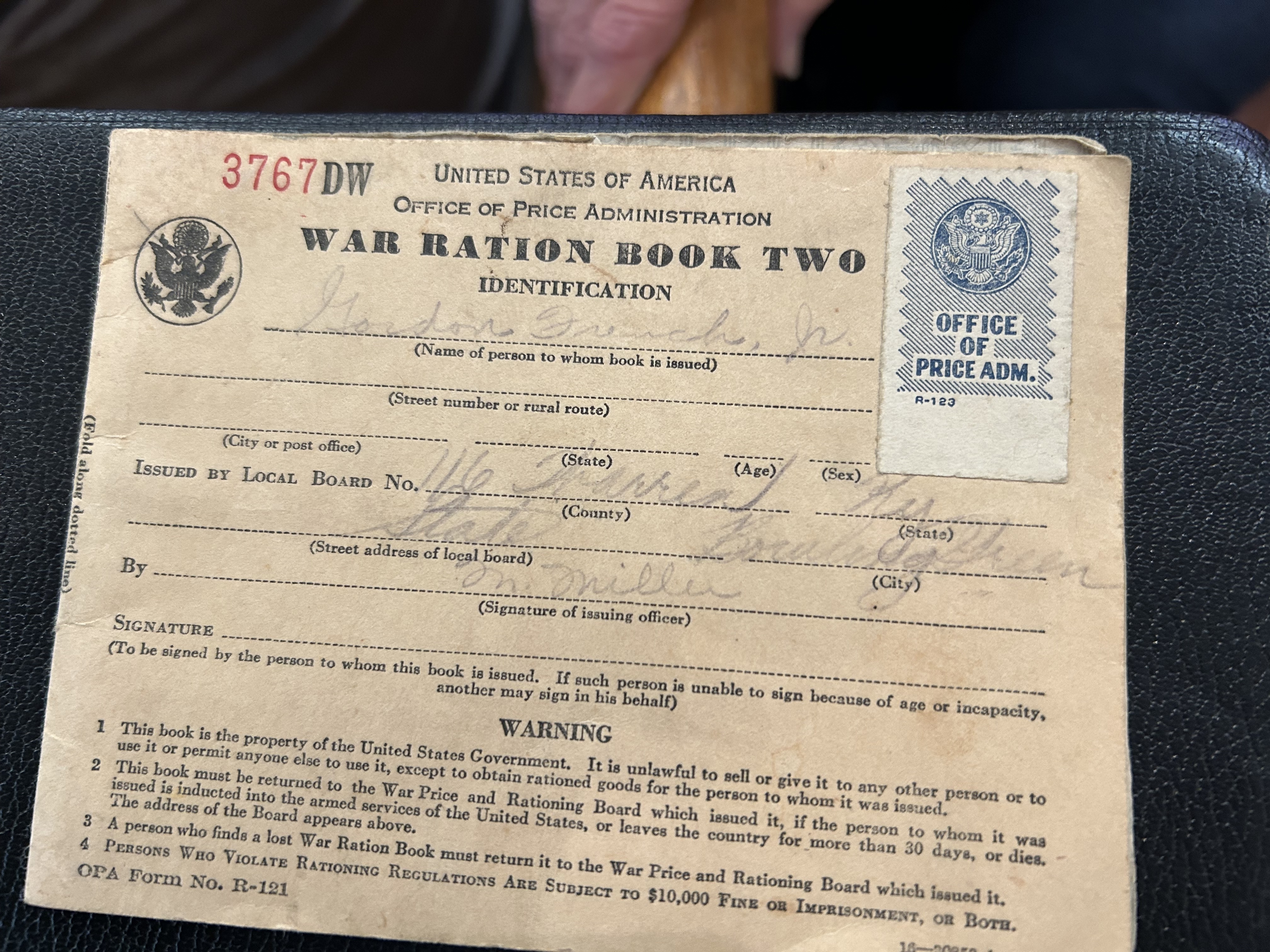
Not long ago, visiting two of our wonderful members, Dorothy and Buster French, we talked about everything from politics to family to farming and their memories growing up. Somehow, talk shifted to their memories from youth growing up during World War II. Times were difficult and Americans had to make sacrifices, doing without. This sweet couple had tangible proof of that sacrifice in a ration card they had kept from Buster’s father. 

Families and households had to limit their purchase of common goods, like gasoline, butter, sugar, and canned milk (https://www.nps.gov/articles/rationing-in-wwii.htm). This allowed the government to divert needed supplies and manufacturing to goods and supplies needed to prosecute the war overseas. What I found most interesting of all was the explanation on the back of the ration book. It included the following statements:

  • “This book is valuable. Do not lose it.”
  • “Detailed instructions concerning the use of this book…will be issued from time to time.”
  • “Do not throw this book away…”
  • “You may be required to present this book…”

The last paragraph was an admonition for the bearer to do his or her part. A failure to follow the rules, they said, “helps the enemy.” The book carried the weight and authority of the Government Printing Office and was dated 1942.

It’s so hard for us, even in the volatile economics conditions of the past few years–including a disruption in the supply chain–to fathom what ordinary families endured for a half a decade or more. But the exhortations on the back of that book can be timelessly applied to the most important book of all.

Whether or not we have a favorite, well-worn copy of it, but the Bible is most valuable and its message and content cannot be lost as a lamp to our feet and light to our way (Ps. 119:105). God designed for us to have detailed instruction, “from time to time,” given concerning its use. He calls it preaching (Acts 2:42; 20:7; 1 Cor. 1:21). Figuratively speaking, morally, ethically, and doctrinally, we must never throw this book away (Ps. 50:17). Peter reminds us that we may be required to present this book to anyone who asks (1 Pet. 3:15)!

I could not help but think, God’s written word must be the most valuable resource in our lives. It supplies everlasting food and gives us access to more than consumable goods. It is to treasured above our “necessary food” (Job 23:12). 

So many in the Buster and Dorothy’s generation (and their parents’) have contributed much good and the prosperity so many of us enjoy today. Things like their honest participation on the Homefront through means like rationing are example of why. We can bless our world today by being Christians who treasure the Book of books and put it to use in our lives! 

The Power Of God’s Word

Saturday’s Column: Learning From Lehman

Stephen Pitcock

One of the greatest influences I have had in my life is my mom. I’m not sure if you were aware, but my mom has frequently been in and out of jail over the past several years. Not that she did anything to be thrown into jail, but rather she volunteers to go to the Detention Center in Elizabethtown and conduct bible studies with the women there. However, when she goes, she is only allowed to take her Bible in with her and they shut the door and lock it behind her. We’ve talked about it several times and there is only a couple of instances when she felt scared, when she felt like she was in danger.

Once she was having a Bible study and the topic was things we must do as Christians. Ephesians 2:10 tells us, “For we are His workmanship, created in Christ Jesus for good works, which God prepared beforehand that we should walk in them.” However, there was one woman there that was adamant that she did not have to do anything once she was “saved”. It got to the point that the woman was furious, and my mom was scared, and she wasn’t sure what to do or if the woman would harm her in some way. So, mom very calmly opened her Bible to Matthew 25 and gave it to the woman and asked her to read verses 31-46.

These verses reveal a judgment scene where the nations are gathered before God’s throne and are separated as a shepherd divides the sheep from the goats. Those to the right will inherit the kingdom prepared for them (meant for us) because they ministered to the least of these their brethren. Those to the left will depart into the everlasting fire prepared for the devil and his angels (not meant for us) because they did not minister to the least of these.

Upon reading the verses the woman broke down crying. She knew what she believed to be true wasn’t. If you ask my mom, she’ll tell you it was nothing she said that provoked this sudden and instant change in the woman, but rather it was the word of God.

Hebrews 4:12-13 tells us “For the word of God is living and powerful, and sharper than any two-edged sword, piercing even to the division of soul and spirit, and of joints and marrow, and is a discerner of the thoughts and intents of the heart. And there is no creature hidden from His sight, but all things are naked and open to the eyes of Him to whom we must give account.”

  •  Living – God’s word is active, able to achieve its purpose, working in people’s lives and it’s as relevant today as it was 2000 years ago.
  • –  Powerful – God’s word has the power to change our thoughts, change our lives and change our eternal destiny.
  •  Pierces – God’s word pierces our soul with truth, points out our sins and provides the cure.
  • –  Discernment – God’s word can perceive and recognize our every thought and intention.Isaiah 55:11 tells us “So shall My word be that goes forth from My mouth; It shall not return to Me void, but it shall accomplish what I please, and it shall prosper in the thing for which I sent it.” I’m not sure about the rest of the story. I hope the woman was able to leave with a new resolve to study and obey God’s word. However, we have God’s word available to us and it can do the same in our lives if we allow it.
    James 1:21 tells us, “Therefore lay aside all filthiness and overflow of wickedness, and receive with meekness the implanted word, which is able to save your souls.” That is, if we read and meditate in it, pray for understanding and if we are faithful and obedient to God’s commandments therein. God’s word is able to do instantly what man is unable to do.

Test His Truth

Tuesday Column: Dale Mail

image-e1601983688162

Dale Pollard

(now the pulpit minister of the Tompkinsville church of Christ, Tompkinsville, KY)

   With countless opinions and information out there, God is just another “option” and the Bible is just “good advice to follow.” Dave Mustaine summed up how many people feel when he said, “The Bible and several other self help or enlightenment books cite the Seven Deadly Sins. They are: pride, greed, lust, envy, wrath, sloth, and gluttony. That pretty much covers everything that we do, that is sinful… or fun for that matter.”

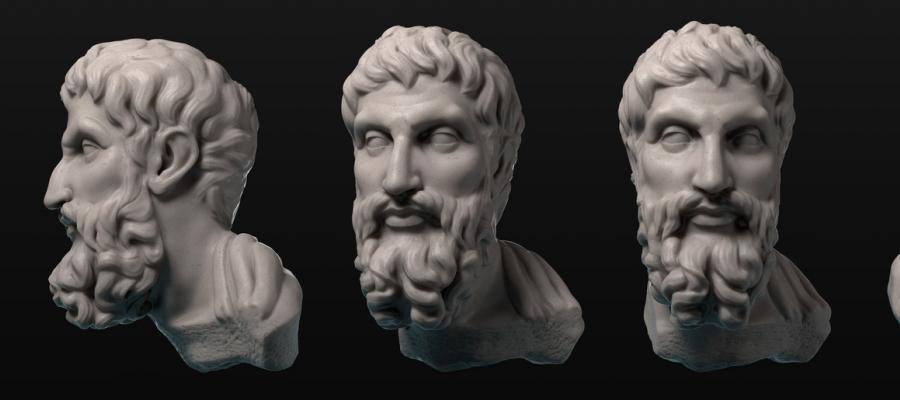
Is the Bible just an ancient “self-help” book that tells us not to do anything fun? Questioning God is not something new. Even Epicurus said, “Is God willing to prevent evil, but not able? Then He is not omnipotent. Is He able, but not willing? Then He is malevolent. Is He both able and willing? Then whence cometh evil? Is He neither able nor willing? Then why call Him God?” I truly believe that you can understand who God is just based on scripture. When He gave that book to man, He gave us a piece of Himself.

God wants a relationship with us (I Peter 5:6-7). This is why He has purposefully informed us about Himself. People need God whether they know it or not. I’d encourage you, as an individual,  to put the Bible on trial. Put the accuracy of its pages to the test. It has withstood hundreds of years of accusations and doubt. Often we are able to grow in our faith and belief as a result of seeking and searching. As His church, we have a responsibility to proclaim the excellence of our creator. We do it by our love for others, exposing the evidence of His existence, and introducing Jesus every opportunity we have. 


The Law Of The Lord

Friday’s Column: Captain’s Blog

IMG_0806

Carl Pollard

How much does your Bible mean to you? Each time we pick it up and read from its pages, we are reading the very words of God. God has revealed His Character, His will, and His love through inspired men. Each time we open our Bibles we are seeing the mind of God. 

What an awe inspiring fact to think about.

We aren’t the first ones to feel this way.

In response to the perfect Law of God, David wrote Psalm 19. It is a tribute to the perfection of scripture. As we read through this chapter, David puts into words these feelings of awe and gratitude.

He begins by stating a fact that has always been true.

“The heavens declare the glory of God, and the sky above proclaims His handiwork.”

In a psalm dedicated to the perfect Law of the Lord, David starts by praising the Author. The God of creation, who can be seen in every aspect of our world, is the One responsible for writing such a perfect book. We can look around and the world declares the glory of God. The Author of life itself gave us a book that leads to eternal life.

In verse 7 David describes the Law of the Lord as being perfect. Notice what this perfect Law does for us: it “revives the soul.” The words of God are sure and steadfast. They are truly perfect and are ever relevant to us, His creation.

We continue reading and he goes on to say that God’s Word:

  1. Gives us wisdom (wisdom we would otherwise never have)
  2. Is always right (there is no doubting, thinking that they might be wrong)
  3. His commandments are pure (no false motive)
  4. His word enlightens our eyes (we can now see the truth)
  5. His rules are true
  6. His word is righteous

With such a perfect Law, it is only natural that we should desire it more than Gold.
David says in verse 10 that the words we read in scripture are “sweeter than honey.”
His response to God’s word should be every Christian’s response. We should value and cherish God’s perfect Law.

The Bible is a blessing like no other. In its pages we are warned about the things we should avoid. By keeping His commands we receive a great reward. Psalm 19 is a beautiful tribute to a beautiful book.

With these facts in mind, how much does God’s book mean to you?

8 Interesting Facts About The Bible

 Tuesday’s Column: Dale Mail

dalejanelle2021

Dale Pollard

  1. The Bible was written by 40 different writers. 
  2. The Bible was written from 3 continents: Asia, Africa, & Europe.
  3. It was written in 3 ancient languages: Hebrew, Aramaic, & Greek. 
  4. The original manuscripts making up the cannon contain 611,000 words. 
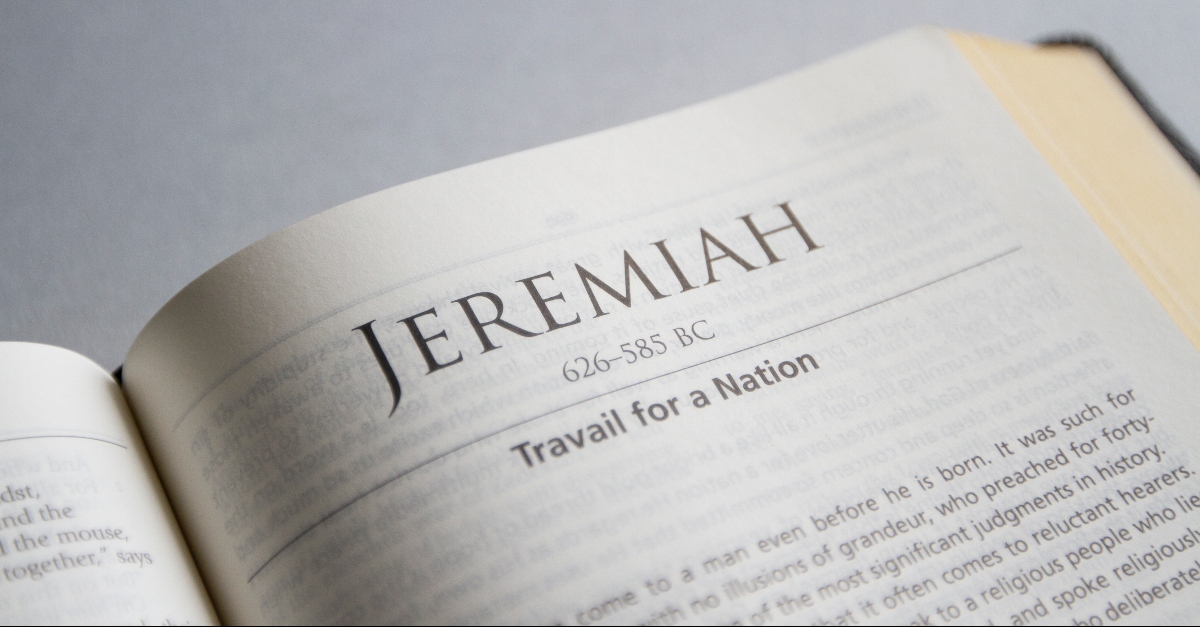
  5. The longest book is Jeremiah. 
  6. The shortest book is 3rd John.
  7. The Bible contains around 185 songs. 
  8. The Bible records around 21 dreams.  

The Bible is more than just fascinating trivia, it’s the only book that God ever wrote. Let’s make sure we’re spending time in His Word daily. 

New Life From Ancient Seeds

Monday’s Column: Neal At The Cross

Neal Pollard

The Winter 2020 edition of Biblical Archaeology Review has a fascinating article about a recently completed project involving date palm seeds from the Judean Wilderness. The Judean Date Palm (Phoenix dactylifera) was widely grown and sold for at least 1600 years, from at least the fifth-century B.C. until the 11th-century A.D. Archaeological excavations at Masada, Qumran, and Wadi Makukh netted several ancient seeds which researchers then went to work to try and germinate. Of the 32 planted, six germinated. It takes 4-10 years for female palm trees to produce fruit, and in the fall of 2019 this extinct fruit tree was brought back (“New Fruit From Old Seeds,” BAR, Vol. 46, No. 5, Megan Sauter, p. 18-19). 

To me, it’s particularly fitting that such a discovery and experiment transpired in the very area where the church was established. The fact that ancient seed was planted and successfully produced results today serves as an illustration of a Bible truth. Peter wrote, “Since you have in obedience to the truth purified your souls for a sincere love of the brethren, fervently love one another from the heart, for you have been born again not of seed which is perishable but imperishable, that is, through the living and enduring word of God” (1 Pet. 1:22-23). Peter draws on an imagery he heard his Lord use in His parables (Luke 8:11). Other New Testament writers draw the same analogy (1 Cor. 3:6-9). They planted the Word and it produced disciples of Jesus. How do we produce true followers of Him today? We plant the same, ancient seed. The researchers involved in the Judean date palm project had to soak and fertilize those seeds to coax their growth, but their perseverance paid off in reestablishing the original, fruit-bearing tree. 

How often in history have people taken the ancient seed, planted it in hearts, watered it, tended it, and produced the exact same thing despite the passing of centuries? Restoring New Testament Christianity is possible. In fact, if we believe the Bible, it’s necessary. If we plant what they planted, the living and enduring word, we will have what they had–purified souls who obey the truth and are born again. We cannot give up on that principle. It’s essential, but also doable! Let’s be looking for new soil to plant that ancient seed in, then watch God work! 

merlin_176514033_28188a63-cc1a-4821-a4b9-18fb88a09191-superjumbo


The Power Of The Word

Wednesday’s Column: Third’s Words

Gary III

Gary Pollard

Angels are not the dainty, long-haired Western Europeans they’re often depicted as being. In Matthew 28, their appearance was like lightning and they had white clothes. Evidently their appearance was other-worldly enough to frighten these soldiers almost to death (28.4). Whether this was some cardiac event or simply shock we cannot know. But to frighten someone that tough to that extent would take something pretty crazy. 

But some of these same guys still went straight to the chief priests and took a bribe to keep quiet and spread disinformation (28.11-15). After what they had just seen and experienced, you’d think they would run to a therapist and not the chief priests to help perpetuate something they knew to be false. 

We can be tempted sometimes to think that evangelism requires more than just showing someone the word. We might think the miraculous or incredible could persuade even the most stubborn non-believer. The power of our job (making disciples) is in the Word and in faith. The Bible has many accounts of people seeing incredible feats of supernatural power with their own eyes and still rejecting God. Abraham informed the rich man in Luke 16.29-31 that God’s Word is what saves; if that is rejected, no miracle will change this. 

If we place our faith in the power of the Word and work to deepen our understanding of the Word, we have all we need to show the power of Jesus. 

“Self-Sufficient Study”

Wednesday’s Column: Third’s Words

Gary III

Gary Pollard

All gas internal combustion engines require three things to operate: fuel, spark, and compression. If one of the three is working improperly, a number of symptoms can arise. This is an oversimplification, of course, but those three systems must be mostly operable in order to be usable. 

Troubleshooting can be expensive if a person has little or no experience with this common engine type. Learning to maintain a vehicle and enact basic repairs saves an enormous amount of money! Relying on someone else to do it is often very costly. 

We fully understand that not everyone is equipped to be a scholar-level theologian. However, many Christians take this idea and swing the opposite direction. How many have been Christians for decades and have just a basic understanding of scripture? How many multi-generational Christians snore at the thought of advanced biblical studies? How many have only the knowledge they retain from a sermon? How many base their understanding and beliefs on the values held by respected friends or family? 

No one is perfect; the more a person learns through deep bible study, the more they are confronted with their own inadequacies. But a dedicated student of the scriptures also gains this: 

  1. A profound appreciation for grace and its role in our practical lives. 
  2. Mind-blowing discoveries and realizations about the nature of God and eternity that bullet-proof our faith. 
  3. The full emotional and intellectual impact of biblical principles. 
  4. A deeper understanding of the goals, message(s), meaning, and practical applications of a book. 
  5. A heartwarming and emotion-eliciting  appreciation for the role of The Word, Jesus, and His hand in creation, sustaining the genetic line that brought about His physical death, the timeless sacrifice He made by subjecting Himself eternally to the Father, and the role He plays today on our behalf.
  6. An ability to defend the faith, refute false doctrine, convert a lost soul, and build faith in others. 
  7. An ability to avoid sin more effectively. 
  8. A far lesser likelihood of accepting false doctrines or harmful practices.  
  9. Excitement, joy, and fulfillment about being a Christian! 
  10. A great disdain for arguments over petty issues that are weakening the church, and the ability to shut them down and refute them soundly. 

As a bonus, learning to read and translate Greek or Hebrew (at least with the help of a lexicon, a decent understanding of rules of each language, and their proper application in each context) will give even more profound insight into words and concepts we read in our native translations. 

Relying on what others tell us is not sufficient! We may find that the cost, eternally, is far steeper than what we would pay to the most expensive mechanic for repairs we could do at a fraction of the cost. Not only will we gain a great appreciation for what we know and live by becoming true Bible students, but it also greatly enhances our ability to live a faithful Christian life. 


Learning A Lesson From A Lantern

Wednesday’s Column: Third’s Words

Gary III

Gary Pollard

I’m a big fan of old fashioned lighting, especially old kerosene lanterns because they’re simple. I went to light one of my lanterns and the flame wouldn’t stay alive for more than a few seconds. I thought, “Maybe the vent is covered in carbon and there isn’t enough oxygen for the flame.” So, I took it apart, cleaned it out, and put it back together. I was sure it was the vent.

To my chagrin, the flame died within seconds even after the lantern was cleaned. Next I trimmed the wick because it seemed too dark; perhaps having a fresh wick would allow the flame to stay alive. It wasn’t a stopped vent, so it had to be the wick. Sure enough, the flame died even with a fresh wick. At this point I was stumped. 

The next day it occurred to me whilst putting gas in my car: the lantern was just out of kerosene! It was obvious to the extreme. I knew Chelsea would never let that one go. When I got home I put the kerosene into the lantern which, of course, was the solution to a simple problem that I overcomplicated.

This is a mundane example of a profound truth: we make mistakes as humans. Worse yet, some people put words in God’s mouth that He never used. “My God is a God of love – He wouldn’t condemn me just for this one little sin.” “God doesn’t care if we live the way we want.” Some use phrases like this with great confidence while overlooking an obvious truth: God has told us what He does and does not care about in His word.

If we aren’t in the word listening to God and allowing Him to change us, our solutions will end in failure. There was only one solution to keep that flame going in my lantern. There is only one right way to follow God, and He’s told us how to do that! Life will be so much easier for those who look to God for answers before relying on their own wisdom.

welcome-home

Mysterious Seeds

Monday’s Column: Neal At The Cross

pollard

Neal Pollard

In recent weeks, packets of seeds have been mailed to apparently random homes across the country. Dozens of folks received the seeds, which have Chinese labels but have not been confirmed as originating from China. A few days ago, the USDA confirmed that the seeds were harmless but still cautioned recipients not to plant them. The seed packets included mint, sage, cabbage, roses, and other plants. One working theory is that this was part of a “brushing scam,” where people receive unsolicited items from sellers who then post fake reviews (Joseph Wilkerson, msn.com, “Mysterious China seeds received by Americans identified by USDA”). But, given the current political climate, skepticism–and concern, suspicion, and even fear– abound!

One of the major projects Kathy has begun in our backyard is a “cottage garden.” You can research the origin and history of these gardens, which started in England perhaps as far back as the Medieval period. These gardens have a mix of flowers, herbs, and bushes, and the more elaborate of these gardens have trees, bees, and even livestock. Ours is simpler, with climbing roses on a trellis, boxwoods in the middle, herbs planted throughout, but included among the many packets of seeds planted was a mix called bee feed.  It has been fun to see a variety of mysterious seeds appear, like California poppies, Chinese forget me not, Coreopsis, and Sweet Alyssum. We’re not sure where the tall fringed bluebells came from, but it’s incredible to see such an eclectic mix growing and thriving and demonstrating Genesis 1:11 before our eyes. 

In the New Testament, Jesus teaches several parables involving seeds. In one, a man sows wheat seed in his field, then his enemy sows darnel, a weed resembling wheat. Only after they started growing could the two be differentiated. The landowner instructs his slaves to let them both grow up and separate them at harvest time (Mat. 13:24-30). This parable illustrates the lives of the righteous and unrighteous, whose destiny will be sorted out at the judgment (Jesus explains the parable in Mat. 13:36-43). It certainly can apply to true and false teachers (lawless stumbling blocks), who can seem similar but are also distinguishable to the discerning.

Jesus also teaches the parable of the mustard seed (Mat. 13:31-33), which shows God’s power to do great things through seemingly humble deeds attempted in true faith. Matthew, Mark, and Luke record the parable of the sower, the soils, and the seed. Luke 8:11 identifies the seed as the Word of God. The soils represent the different conditions of heart, three of which are futile and one of which is fertile. The sower is the one who spreads the word to people. 

Then, there is the parable of the seed (Mark 4:26-29). A man casts seed on the soil, and then gets to behold the marvel of how it transforms from seed to sprout, the soil producing it from blade to head to mature grain in the head. Then, he harvests it. The power is not in the sower, who is not around (or, in the parable, awake) when the seed produces. The growth of the seed is a marvel even to the sower. Where is the power? In the seed!

There are certainly some malicious ideas and teaching out there in the world. Sometimes, even truth can be shared from improper motivation. But, God’s Word is a seed which can produce incredible things in a heart and life that is good and fruitful. Have you ever seen someone who seemed like a poor candidate to become a Christian, much less become a force for good in God’s Kingdom? How does that happen? We can talk about planters and waterers, but God causes the growth (1 Cor. 3:6). You may not be an eloquent, sophisticated Bible teacher or soul-winner. You may feel you are unskilled.  But, when you share God’s Word with others, you will see the wonders of this mysterious process. It has been said that persuasion happens in the absence of the persuader, as the Word gets to work on a heart. The power is in the seed! Let’s be about planting it however, wherever, and to whomever we can, then witness the marvel of the seed producing in the recipients’ lives. It’s God’s plan! It works in mysterious ways! 

seeds

Study The Bible!

Thursday’s Column: Third’s Words

Gary III

Gary Pollard

I doubt that many of us would question the importance of knowing our Bibles. We talk about this a lot as a church family! While some Christians may approach Bible study with the mentality of loading their theological guns with argument-ending ammunition, others consider it a duty of their Christianity.
Few of us would argue that the Bible is always simple and easy to understand. This life, our faith, and many questions we have about our day-to-day lives require answers far too complicated to get from a cursory study of scripture.
So why is it important to study our Bibles, and how can we do it effectively (that is, to walk away from Bible study with more knowledge and faith than when we entered it)? It is important to study the Bible because ignorance of what it says is a major underlying cause for any problem a church might face. Do we want unity? Study the Bible. Do we want peace among ourselves? Study the Bible. Do we want strong, faithful Christians? Study the Bible. Do we want godly attitudes? Study the Bible. Do we want wisdom to know when to practice righteous judgment and when to keep silent? Study the Bible! Effective Bible study – when practiced by the majority of a congregation – will effectively strengthen and grow that church. So how do we effectively study our Bibles?
First, have a purpose to your study. Winning an argument with a friend, coworker, acquaintance, or contact on social media is rarely a good reason to approach the word of God in study. It is too easy to allow our pride or ego to get in the way of honest truth-seeking. Instead, approach your study with purpose. Are you seeking to grow your faith in God? Study accordingly. Are you seeking to understand how to respond to something in your Christian walk? Study accordingly. Are you trying to cope with grief, tragedy, or frustration? Study the Psalms and the end of Job. Whenever you sit down to read, have a purpose.
Secondly, study like a scholar. There is a time and place for covering as much text as you can (like reading the Bible through in a year). However, this should not be our primary method of study. Spend time in a small section of scripture. Look for key words (words that repeat themselves in your section of study), ask questions of the text when something does not make sense, look for words like “therefore,” “but,” and phrases like, “I urge.” See how they fit into the context of your passage. Use multiple versions in your study to gain a better understanding of the “feel” of the passage. As much as you can, look to the original language for definitions or insights. If you have a smartphone, download an app called Logos Bible Software. It will give you access to tools that will help you understand the meaning of words in their original language, even if you cannot read Hebrew or Greek. Avoid commentaries if you can at all help it. They are often (though not always) platforms for the writer to voice an opinion and rarely explain the meaning of the text with accuracy.
Thirdly, study frequently. I recommend printing out the passage you are interested in studying and complete one printed section per day. This is arbitrary, of course, but will still help to create some consistency. Use colored pencils/pens/highlighters to make the text come alive and to aid in recognizing patterns.
Finally, share what you have found with your friends in the church! If you have a group of friends studying the same passage, find ways to share what you observed in the text in your daily bible reading. This not only creates accountability for reading daily, but will also grow your faith and knowledge when you understand that passage so very well!
If you take up Bible study like this, you will be amazed at how much closer you will grow to God and to your church family. If all of us approach study this seriously and with this much commitment, we will grow as a church family in unity, faith, knowledge, love, patience, grace, and wisdom.
child-reading-bible-bed-thumb

What Does The Bible Say?

Monday’s Column: Neal at the Cross

pollard

Neal Pollard

Most people have very strong convictions, pro or con, about religious matters.  Many who claim to be religious form opinions and draw conclusions with very little if any biblical consultation.  How ironic is it to claim to follow God while ignoring and even rejecting His very revealed will?

Many religious people, church attenders and not, are guided by their feelings, desires, opinions, preferences, and consciences (cf. 2 Tim. 4:3; Prov. 14:12).  Perhaps they have a favorite preacher or other religious figure they implicitly trust.  Their religion may be submitted and subjugated to the message of the culture or even the media. It may be based on convenience and comfort.  Throughout time, man has attempted to serve God on his own terms and based on what he thinks is right.  Whether ignorantly or defiantly, he puts himself on a throne upon which only Jesus belongs (Mat. 28:18).

How long could religious error survive if potentially divided parties could lay aside personal interests and objectively study the sacred text?  So often, the religious world is divided because of man-made doctrines and traditions.  Instead of looking to the Bible to answer the important questions of time and eternity, men often come up with the answers they want and then go looking for Bible verses to support their predetermined views.  Consider that some of the most popular religious ideas—salvation by saying the sinner’s prayer, premillennialism, speaking in tongues, women worship leaders, once-saved, always-saved, and instrumental music—are not practiced or believed based upon their being taught in Scripture but instead their being the beliefs and views of mankind.  How thrilling it would be if we could unite every religious person in the desire to come to the text, the glasses of prejudice or sectarian beliefs removed, and let God tell us what to believe and how to live!  That is possible, but it begins with each of us humble, sincerely asking, “What does the Bible say?”

4543060842_e4fdb33047_b


The World Is Desperate

Thursday’s Column: Captain’s Blog

IMG_0806

Carl Pollard

Generalizations are almost always wrong. For example, just because you’re from Colorado doesn’t mean you smoke weed, or just because you’re homeschooled doesn’t mean you’ve never seen a person before. Just because you live in Alabama doesn’t make you an Alabama fan. Just because many people fall into a category, doesn’t mean that every person is the same.

There is one generalization that is true: the world is desperate. Without Christ, many issues in life go unsolved. Family problems are harder to overcome, job issues get blown out of proportion, and questions go unsolved. Over the next few weeks I’d like to look at three major issues that the world has no answer for. But these three topics are easily explained through God’s Word.

Each one of us has had these thoughts before. Every single person ever born at some point will have these questions. So number one, the world is desperate for Guidance (Psa. 119:105). Ever been lost? It is amazing how easy it is to get turned around. I’m terrible with directions, and even with maps up on my phone, I still find a way to get lost.

The world feels the same way–they’re lost. They don’t have direction in life. They float around going from one thing to the next looking for guidance. As Christians, our guide is God’s Word. It gives us a map for life. Psalm 119, the longest chapter in the Bible, has to do with guidance. Each section in this chapter covers different aspects of keeping God’s Word. In the first eight verses, the psalmist says things like, “blessed are those who walk in the Law of the Lord,” and “I shall not be put to shame, having my eyes fixed on all your commandments.” The rest of the chapter sticks with this pattern.

If you ever find yourself questioning why you follow scripture, study this chapter and you will find reason after reason. Looking at verse 105, it says this, “Your word is a lamp to my feet and a light to my path.”

Are you anxious? Turn to God’s Word. Are you hurting? Turn to God’s Word. Are you afflicted? Turn to God’s Word (119:107). Has your family disowned you? Turn to God’s Word. Have your kids left the Church? Turn to God’s Word. Did you lose your job? Turn to God’s Word. See, the world doesn’t turn to scripture when it faces these problems, and they are left without a guide, without comfort, and without something to rely on. There’s a reason God inspired men to write the Bible, and that reason is so that flawed man can have a guide through life.

563871_3978156290465_1606961254_n
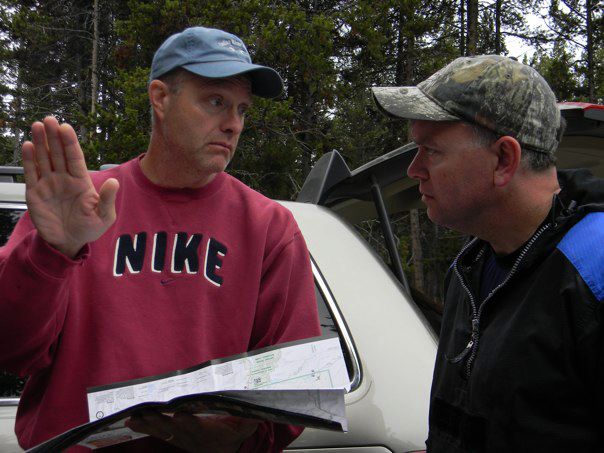
As my dad and Wes Autrey demonstrated in Yellowstone Park, you also                    need to know how to use a roadmap to avoid getting lost.


The Bible Is Not Boring (“Grace”

65093899_10156405640240922_1795016641457684480_o

Another of the episodes Gary, Dale, Carl, and I recorded in Fort Payne, Alabama, recently. In this episode, we discuss an often misunderstood, misapplied, but absolutely vital Bible subject. This topic is anything but boring.

Click here for audio

the Bible is not boring (episode one)

Click above to hear a sample of our latest project. We’re working on a new program which will air on the Gospel Broadcasting Network (watch GBN here) in the future. The premise is just as the program title suggests: “the Bible is not boring!” It is exciting and fulfilling to drill down and study God’s Word. Each episode will follow the same format, a general topic which the four of us (Gary, Dale, Carl, and myself) will break down and discuss. Our aim is to help encourage Christians and open a door for those who may be searching for God’s truth out there. This first episode explores how to approach the Bible itself. We hope you enjoy!    –Neal


WHY DO YOU BELIEVE?

Wednesday’s Column: Third’s Words

10423661_10207901451272315_9069631728203375436_n

Gary Pollard III

I believe that God exists. I believe that He communicated with His creation by direct contact, messengers, and a series of ancient texts. I believe that He wants His human creation to be with Him after they die. I believe that He expects those who claim to be His to act within the guidelines He set in those ancient texts. I believe that there is life after death and that where we go depends on whether or not we follow this God.

Why do I believe this, though? What reason do I have to believe in something I cannot experience with my senses? I was not there thousands of years ago when the prophets and Hebrews talked to God. I was not there when God came among men and taught. I was not there when the Spirit-inspired authors of the original texts delivered their writings to the early church. The ancient texts translated into English sometimes do not effectively communicate the emotion of the words and concepts in the original language. So why do I believe these things? Why do you believe these things?

Think about this carefully.  From Genesis to Revelation the message is clear; God wants His people to exist with Him after time is destroyed. This message was communicated to an impossible variety of people, sometimes separated by hundreds of years, thousands of miles, culture, kingdom, race, and language. There are tens of thousands of manuscripts of these ancient texts in many, many different languages. There are some 25,000 New Testament manuscripts or fragments that are separated by about a thousand years, at least 8 different languages, hundreds (if not thousands) of miles of geography, and many different cultures. Yet, they are at least 95% accurate to each other. The remaining 5% do not contain a single contradiction; rather, they are spelling errors, slips of the pen, writing on the wrong line, or minor variances (“God said” vs. “He said” or “and” vs. “but”).

Of the rich libraries we have of ancient literature, none can hold even the dimmest candle to the profound accuracy and unity of the scriptures. They could not have been produced by man alone. There had to be Someone not confined by time supervising each person as they wrote. Keep in mind, these ancient cultures did not have the advantage of modern communication. They were almost totally isolated from each other and would have known little of the others’ existence, much less what they experienced or wrote from God. Our Bible has supernatural origins and its contents reveal the nature of our Creator. What I believe comes from this book because I know it is God’s message to mankind. I encourage those who have not already done so to do an in-depth study of the origin of scripture. It is one of the most faith-building studies anyone could undertake. When you know with certainty that what you are reading contains the actual thoughts and desires of God, it bolsters your faith in ways I could not begin to adequately describe.

764px-uncial_0220_rom-4.23-5.3
Uncial 220 (fragment of Romans 4:23-5:3)