Decades earlier, out in the wilderness, a young Caleb stood (nearly) alone. Moses sent the twelve spies into Canaan to scout the land (Numbers 13), in the minds of the terrified ten– the land of giants was unconquerable. Only two men believed that God was bigger, Joshua and Caleb. They urged the rest to move forward and take what He had promised, but it wasn’t going to happen.
Dale Pollard
Decades earlier, out in the wilderness, a young Caleb stood (nearly) alone. Moses sent the twelve spies into Canaan to scout the land (Numbers 13), in the minds of the terrified ten– the land of giants was unconquerable. Only two men believed that God was bigger, Joshua and Caleb. They urged the rest to move forward and take what He had promised, but it wasn’t going to happen.
For his courage, God vows to Caleb:
“But my servant Caleb, because he has a different spirit and has followed me fully, I will bring him into the land into which he went, and his descendants shall possess it” (Numbers 14:24).
That promise wouldn’t be fulfilled for nearly half a century! By the time the land being divided among the tribes, Caleb was 85 years old. His spirit, however, was stronger than before. In Joshua 14, Caleb goes confidently to Joshua. He says,
“I am 85 years old. I am still as strong today as I was in the day that Moses sent me… Now therefore give me this mountain of which the Lord spoke in that day” (Joshua 14:10-12).
Which mountain? That would be Hebron. A mountain that was still inhabited by the Anakim– giants descended from the very people who melted the hearts of those ten spies years ago. To anybody else Caleb’s inheritance seemed like an impossible one. It would have appeared more like a curse– certainly not a blessing.
But up the mountain he went. God and Caleb secured that territory (Joshua 15.13-14), and the mountain that covered the people in a shadow of their previous shame now serves as a reminder. Between Faith and fear, the former is the more formidable force.
Four Quick Lessons:
Faith will always outlast fear.
Waiting is not wasted. Caleb looked forward for 45 years, but never became bitter or gave up on God.
Strength is spiritual. That “different spirit” that Caleb possessed sounds similar to that of the saints (Romans 8.9-11, I Corinthians 3.16).
Excuses are useless, God uses the toothless (Caleb was 85).
Herodotus casually mentions that there were snakes that would fly from Egypt every year from the Sinai wilderness (Herodotus 2.75-76). This may strike fear in the heart of any snake-fearing person, but it sure is interesting. Marco Polo would also write in his travel log about flying venomous “birds” as well as snakes of gigantic proportions as he explored Asia.
The Bible records several strange serpents and one passage in particular is especially fascinating.
Dale Pollard
Herodotus casually mentions that there were snakes that would fly from Egypt every year from the Sinai wilderness (Herodotus 2.75-76). This may strike fear in the heart of any snake-fearing person, but it sure is interesting. Marco Polo would also write in his travel log about flying venomous “birds” as well as snakes of gigantic proportions as he explored Asia.
The Bible records several strange serpents and one passage in particular is especially fascinating.
In the book of Numbers there’s an account that’s made many readers scratch their heads as they wonder what these fiery serpents are (6-9) that God sent to plague the Israelites.
“TheLord sent fiery serpents among the people and they bit the people so that many people died in Israel. So the people came to moses and said “we have sinned because we have spoken against the Lord and you; intercede with the Lord, that He may remove the serpents from us. And Moses interceded for the people. Then the Lord said to Moses make a fiery serpent and set it on a standard, and it shall come about that everyone who is bitten when he looks at it he shall live. And Moses made a bronze serpent and set it on the standard and it came about that if a serpent bit any man, when he looked at the bronze serpent he lived.”
Some commentators have suggested that perhaps the strange description is of a particular kind of venomous snake. Others have made the observation that the Hebrew word for serpent here (Saraph) could be symbolic to indicate their color since it means “burning ones.” Interestingly enough there are bronze colored serpents around today in Australia that are incredibly poisonous. Perhaps there’s something to this based on the Lord’s instruction to Moses to fashion a serpent made of brass. Of course this description could also literally be taken to mean snakes which either breathed fire, or were somehow on fire. God was, after all, punishing a people who had complained of their miraculous meals of manna.
Though the identity of these fiery serpents may always be a mystery, the lessons taught to us through this event are powerful. The connections John will make (Jn. 3.14-15) as well as the Hebrew writer (12.2) focus on the crucifixion and the concept of looking to Jesus for our salvation.
The relationship between belief and action here are also telling. Those Israelites that believed were led by that same belief to look— then were healed. If we believe Jesus can and will heal us of our sins, then that belief must lead us to the water (Act 2.38, Mk. 16.16).
Recognizing The “Big Three” Temptations In The Bible And Today
Brent Pollard
The number three is significant in many areas, reflecting its longstanding presence in human consciousness and the natural world. Often, it represents balance, harmony, and the union of opposites, making it a powerful symbol in spiritual practices. The “rule of threes” is a common phenomenon, likely due to confirmation bias, where people tend to notice and remember patterns more quickly, leading them to attribute significance to events that occur in threes.
The number three holds significant importance in religious contexts, especially in Christianity. In 1 John 2.16, John identifies three fundamental categories of temptation leading to sin: the lust of the flesh, the lust of the eyes, and the pride of life. These categories offer insight into the underlying causes of human moral struggles, with most sins attributable to one or a combination of these three factors.
This pattern of temptation is evident in several biblical narratives:
The Beguiling of Eve (Genesis 3.1–6):
Lust of the flesh: The fruit was “good for food.”
Lust of the eyes: It was “a delight to the eyes.”
Pride of life: It was “desirable to make one wise.”
The Choice of Lot (Genesis 13.10–13)
Lust of the flesh: Fertile plains to support abundant livestock.
Lust of the eyes: The appealing appearance of the land.
Pride of life: Desire for social and economic advancement near Sodom.
The Temptation of Jesus (Luke 4.1–13)
Lust of the flesh: Satan tempted Jesus to turn stones into bread.
Lust of the eyes: Satan offered Jesus all the kingdoms of the world.
Pride of life: Satan challenged Jesus to prove His divinity by jumping from the temple.
These examples show how the “big three” temptations shaped human decision-making and moral choices throughout biblical history. Recognizing these patterns allows us to understand better temptation and how it affects human behavior.
In today’s world, Christians face similar temptations in various forms. The lust of the flesh manifests itself in overconsumption, addiction, and sexual immorality (Galatians 5.16–17). The lust of the eyes manifests itself in materialism, covetousness, and the constant pursuit of the next best thing (1 John 2.15–17). The relentless pursuit of status, power, and self-importance gives rise to life’s pride (James 4.6). However, just as Jesus resisted temptation by referring to Scripture (Luke 4.4, 8, 12), modern believers are encouraged to arm themselves with God’s Word (Ephesians 6.17). They are encouraged to “flee from youthful lusts and pursue righteousness, faith, love, and peace” (2 Timothy 2.22), remembering that God has provided a way out of every temptation (1 Corinthians 10.13). By recognizing these patterns of temptation and actively seeking God’s guidance, Christians can navigate the complexities of modern life while remaining spiritually intact.
We know that the water can be metaphorically muddied rather quickly when there are countless faulty interpretations of books like Revelation, Daniel, Ezekiel, Isaiah, and other prophetic or apocalyptic literature. Typology is another misunderstood, and often misapplied, method of Bible study. I’m convinced that if we can spend some time studying the different “types” found in scripture, we can see God’s message for mankind more clearly and have a more profound grasp of His Word. This also happens to be a great way to grow our knowledge of scripture more quickly!
So first, let’s try to clarify exactly what typology is. Summed up in one sentence it’s, “referring to Old Testament things which are prefigured or symbolized by events and characters of the New Testament.”
This may sound a little confusing, but let’s look at a few examples.
John 3:14: just as Moses lifted up the snake in the wilderness, so son of man must be lifted up. (Ref. Numb. 21:9) The Christ “type” is the bronze serpent; we know because of a specific New Testament reference.
1 Peter 3:20: “…God waited patiently in the days of Noah while the ark was being built, only a few people, 8 in all were saved through water,” this illustrating how in the same way baptismal water saves those who submit to Christ today.
Typology is not some mystic Bible code where we are free to translate events and characters in scripture as we please because God tells us exactly what He intended to say. 1 Corinthians 14:33 says that God is NOT the “author of confusion.” He has a message for us all— and it’s a message of hope.
The past is a valuable teacher. Often, we look back and are humbled at how much our forefathers achieved with relatively fewer resources and opportunities. Society often reflects back and sees ancestors who appear to have been more moral and righteous, and we decry our comparative spiritual decline. We say, “These things would not have happened back then.” Well, Paul reminds us that sometimes we should look to the past as an example of how not to behave. If you take the generation of Jews who were part of the wilderness wandering, you have a people so faithless and disobedient that God washed His hands of them. Yet, Paul warned that some of their traits and tendencies could taint the thinking and actions of the Christians at Corinth.
Disunity Arises When We Ignore Our Blessings (1-5)
Israel had every spiritual advantage they needed to succeed. God was leading them (1). He did so through Moses (2) and Christ (4). God provided for their every need (3-4). Despite this, they displeased God (5a). Every congregation of God’s people ought to seriously reflect on how much God has blessed us. He has given us a perfect Word to lead and guide us. He gives us every spiritual blessing in Christ (Eph. 1:3). He gives liberally (Jas. 1:5,17). We fail and fall short despite our advantages, not because of them.
Disunity Arises When We Give In To Our Flesh (6-11)
Paul enumerates the divisive behavior of these wandering Jews. They craved evil things (6; Num. 11:4), were idolatrous, worshipping pleasure and comfort (7; Ex. 32:4-6), were sexually immoral (8; Num. 25:1ff), tried the Lord (9; Num. 21:5ff), and grumbled (10; Num. 16-17). Notice the spectrum of immoral behavior they put on display. Also notice God’s strong response to it. They fell and were destroyed (8-10). As their next generation learned, a congregation cannot thrive with unchecked sin in the camp (Josh. 7). Paul had just made that point with Corinth earlier in the letter (1 Cor. 5). It is vital to remember something Paul told Galatia: “Now those who belong to Christ Jesus have crucified the flesh with its passions and desires. If we live by the Spirit, let us also walk by the Spirit. Let us not become boastful, challenging one another, envying one another” (5:24-26). Israel shows us how to rise above the call of our flesh (11).
Disunity Arises When We Mishandle Temptation (12-14)
Churches are full of people, which is also to say full of sinners. Christians are pardoned, but not perfect. How do we properly handle the temptations that can plague us and prevent our unity?
Be humble (12). How often do we personally fail when we consider ourselves immune from and impervious to temptation? The emphasis of our preaching, teaching, fellowship, and relationships within the body ought to be sober vigilance (1 Pet. 5:8) and active resistance (1 Pet. 5:9; Jas. 4:7) regarding the Tempter. We also must honestly view our own tendencies and understand we are prone to be weak and willing in the face of temptation (Jas. 1:13ff). Spiritual giants so great as David, Solomon, and Peter fell hard by giving in to temptation. So, the counsel is wise to “let him who thinks he stands take heed that he does not fall.”
Avail yourself of God’s help (13). These are some of the most comforting words in all of Scripture. You are not alone nor are you the first to encounter this temptation. You always have a door of escape, if you will take it. The temptation is not bigger than you and God! How could it be? The key to this principle is that “God is faithful.” Maybe it does seem bigger than you. It is never bigger than God.
Run (14). You won’t escape if you hold hands with, embrace, and nurture that temptation. Joseph didn’t just stand there with Potiphar’s wife. He didn’t ease away or even walk. He fled. Some sins are more subtle than sexual sins, and Paul deals with a variety of behaviors. We must build our conviction to handle temptation in all areas the same way. Get away from it as quickly as possible!
Congregations full of people committed to Christ’s standards of ethics and morality, in speech, attitude, and conduct, rise up together and do great things. Unity is disrupted and prevented, though, when sin runs amuck among us. We have an individual and collective responsibility to imitate Christ and those who effectively model Him (11:1). We also do well to see how not to do it, too!
What better way is there to preach a climactic conclusion than to put a powerful emphasis on God? In these last 20 verses, Moses mentions “the Lord your God” a stunning 15 times (“Lord” 19 total times and “God” 17 total times). He makes a full court press for these travel-worn wanderers to be totally committed to “return” (2), “obey” (2,8,10,17,20), “love” (6,16), “observe” (8,12-14), “keep” (10,16), “turn” (10), “walk” (16), “choose” (19), and “hold fast” (20). This is the divine expectation. He punctuates it with the repeated use of the word “all”–all your heart (2), all I command (2,8), all your heart and all your soul (6,10)!
Yet, in response to their commitment, look at what God would do. He would “restore” (3), “have compassion” (3), “gather” (3,4), “bring” (4,5), “prosper” (5,9), “multiply” (6), “circumcise their hearts” (6), punish their enemies (7-8), “rejoice over you” (9), and “bless” (16). He wanted this for them and their descendants (6, 19).
In the absence of obedience, Moses has repeatedly reminded them of how painful, counterproductive, and defeating life would be. Serving a substitute god would be unfulfilling, and its end would be divine rejection. In the humble practice of obedience, God would bless them beyond their comprehension. Through Moses, God encourages them to see this choice as one they were fully capable of making. In the heart of this chapter, Moses says these commands to obey were not out of reach or too difficult (11-13). It was near to them (14)! They could do this!
So, what’s the bottom line? Much like Joshua will do at the end of his tenure as Israel’s leader, Moses says “choose.” But understand what you are choosing between– “life and prosperity” or “death and adversity” (15), “life and death” (19), and “the blessing and the curse” (19). In case it was not abundantly clear, Moses final word is, “So choose life in order that you may live, you and your descendants, by loving the Lord your God, by obeying His voice, and by holding fast to Him; for this is your life and the length of your days, that you may live in the land which the Lord swore to your fathers, to Abraham, Isaac, and Jacob, to give them” (19b-20). The blessings of choosing God, when summed up, are life, legacy, love, length of days, and a land of promise. While the particulars have changed under Christ, it is only because they are better. They are parallel to these, only superior! We face the same contrasting choices, framed by New Testament writers as the world or the Lord (Js. 4:4; 1 Jn. 2:15-17). It’s really not much of a choice, is it?
Jesus knew temptation. The writer of Hebrews makes that point about Him in assuring us He, as our High Priest, knows just what we are going through in this life (2:18; 4:15). His suffering allows Him to sympathize. I am comforted to know that He understands, since He is like me (Heb. 2:17). Luke records this significant and pivotal moment in Jesus’ life before He begins His public ministry (Luke 4:1-13). It gives me necessary insight into who Jesus is, and it helps me fight the common battle against the enticements of my flesh, my eyes, and my pride.
TEMPTATION STRIKES THOSE IN A HEALTHY RELATIONSHIP WITH GOD. To be clear, temptation strikes “every man” (Heb. 4:15). But, sometimes we conclude that it’s not so bad or so frequent for the spiritually strong. Here is the perfect Son of God, described as full of the Holy Spirit and led by the Spirit (1), who encounters the tempter (2). Being spiritually strong can help make navigating temptation easier than it is for those who live according to the flesh (Rom. 8:5-14), but no one was closer to God and more spiritually healthy than Jesus as He walked the earth. How helpful to consider Paul’s warning here: “Therefore let him who thinks he stands take heed that he does not fall” (1 Cor. 10:12).
TEMPTATION STRIKES IN PREDICTABLE AREAS. John classifies temptation into three major categories: “the lust of the flesh and the lust of the eyes and the boastful pride of life” (1 Jn.2:16). Methodical Luke lists Jesus’ temptation in that very order (cf. Mat. 4:1-11). The serpent, approaching Eve, must have appealed to these very areas at the beginning (Gen. 3:6). The devil does not have to get more complicated than that because these avenues are overwhelmingly effective for him. Though this and other passages reveals the evil one’s intentions and efforts, we are fully accountable for how we respond to temptation (Jas. 1:13-15). We must take responsibility for how we handle temptation.
TEMPTATION STRIKES WHEN WE ARE VULNERABLE. Jesus has gone an unfathomable 40 days without food when He encounters the devil (2ff). The devil goes straight for this susceptible area. Think back to times when you haven’t gotten proper rest, you faced stress and pressure, you were sick or felt poorly, and other trying times. These can easily become doors we open to sin. All of us will experience physical and emotional weakness. We must be aware that these lead to spiritual exposure.
TEMPTATION CAN MAKE US CALL WHAT WE KNOW INTO QUESTION. Twice, the devil uses conditional statements to try and create doubt. First, he says, “If You are the Son of God” (3). He called Jesus’ identity into question. Then, he says, “if You worship me” (7). He seeks to get Jesus to question His loyalty. It was not a matter of what Jesus intellectually knew, but Jesus dwelled in the flesh (John 1:14; Heb. 2:14). Be aware that temptation will cause us to question things we know, too. That includes our exalted identity and our true motivation.
TEMPTATION IS THWARTED BY AN OMNIPOTENT TOOL. Jesus wins His battles with the devil and temptation by leaning on truth. There are 86 quotations of Deuteronomy (the second giving of the Law of Moses) in the New Testament, and Jesus quotes this book in reference to each of the devil’s temptations (8:3; 6:13; 6:16). Proper knowledge and handling of Scripture helps even when enemies of truth, even the devil, try to misuse Scripture against us (as he does with Jesus, misapplying Psalm 91:11-12). Scripture is God’s own weapon, given to us not to cut and maim others but to fight off temptation and fend off the biggest threats to our faith and soul (Heb. 4:12; Eph. 6:17).
It is wonderful to contemplate a day in which temptation will be permanently past-tense (cf. Rev. 21:1ff; 1 Cor. 15:55-58). Until then, we benefit so much from seeing how Jesus coped with the bane of temptation. It also helps us appreciate what He endured in order to give us salvation.
The Book of Joshua is a powerful account of the Israelites’ conquest of Canaan and subsequent settlement in the Promised Land under God’s leadership. This account is woven with a resounding call for courage and strength as God exhorts Joshua and the people five times (Joshua 1.6-7,9,18; 10.25). These admonitions emphasize the importance of these virtues in a life of faith, obedience, and service to God.
Though Christianity emphasizes the virtues of humility, gentleness, and forgiveness, it does not minimize the importance of courage and strength. On the path of faith, we must exhibit courage and strength to confront the inevitable challenges and adversities. Our responsibility is to be resilient and brave in the face of these hurdles.
Believers consider fear a greater sin than non-believers because faith provides them with greater motivation for courage (1 John 4.18). Thus, discouraging fear is a comfort and a call to action, encouraging believers to confront danger, responsibility, pain, loss, and even ridicule without succumbing to fear. Avoiding the path of risk may lead us astray from our divine calling while shying away from duties that appear daunting and fail to honor our commitments.
Therefore, strength is a desirable trait and a requirement for overcoming sin and fulfilling our mission. Believers must confront their inner sinful desires and external evils by facing and overcoming moral weakness, which often stems from spiritual deficiencies. Believers, like the Israelites in Canaan, must deal with these and life’s general uncertainties.
Grave dangers and the completion of difficult tasks emphasize the importance of bravery and strength. To claim their spiritual inheritance, resist sin and temptation, and expand God’s Kingdom, believers must actively engage and struggle, just as the Israelites confronted their enemies.
Fortunately, Joshua’s pages contain the secret to courage and strength. We must recognize that these characteristics are divine gifts that, through faith and reliance on His power, even the most naturally timid can obtain. As Moses handed over the reins to Joshua, he told the people, “Be strong and courageous, do not be afraid or tremble at them, for the Lord your God is the one who goes with you. He will not fail you or forsake you.” (Deuteronomy 31.6 NASB95).
Personal and communal victories serve as reminders of God’s faithfulness and power. They strengthen our courage to face future challenges. For example, the conquest of Canaan by the Israelites not only reinforced their faith in God’s promises but also empowered them to confront future battles. Nevertheless, the journey of developing courage and strength is ongoing, demanding the active application of divine grace. We can expand our capacity for these virtues by stepping out in faith and obedience. While developing courage and strength requires practice, individuals can enhance these traits through dedication and effort, becoming stronger and more courageous. The synergy between courage and strength equips believers with the spiritual armor needed to face life’s battles with resilience confidently.
Viewed through the Book of Joshua, God reminds us that courage and strength are virtues for the battlefield and integral aspects of the Christian life. These virtues require our continual attention and cultivation as we maneuver through the intricacies of faith, obedience, and service. Likewise, as God equipped Joshua and the Israelites for their challenges, He provided us with the same divine resources to be courageous and strong in our spiritual journey.
“Have I not commanded you? Be strong and courageous! Do not tremble or be dismayed, for the Lord your God is with you wherever you go.” (Joshua 1.9 NASB95)
There are multiple memory tools–the rule of three, memory palaces, chunking, mnemonics, acronyms, and I am sure there are others I’m forgetting. How many of us have upset and disappointed others, especially loved ones, because of failing to remember something that was important to them? Three times in this chapter, Moses mentions forgetting (11,14,19). Twice, he says to remember (2,18). Yet, the whole chapter centers around the importance of remembering and the danger of forgetting. His most serious warning was that they would forget God and think they did all of it by themselves (12-13,17). Self-reliance would make them forget the One responsible for all their blessings. So Moses warns:
Don’t forget God’s past provision (1-5,14-16). He points them all the way back to Egypt and the exodus from slavery (14), but he repeatedly reminds them of how God had taken care of them in the wilderness these past forty years. There was the manna (3), the durability of their clothes and shoes (4), the protection from scorpions and serpents (15), and the provision of water (15). Without God’s provision, they would neither be free nor alive that very day!
Don’t forget God’s precepts (6, 11). Attached to His gifts, God blesses them with perfect direction. He calls it “commandments” (6), “His ways” (6), “His commandments and His ordinances and His statutes” (11). It contained His covenant (18). Studying each of these synonyms gives aspects of God’s authority and right to govern, and each are conditions for His blessings. Moses has just restated the Ten Commandments for them. His Law was to govern them and aid them in daily life. They would forget it to their own peril!
Don’t forget God’s promises (7-10). God is not simply being a domineering autocrat, who threw His weight around just because He could. Earthly rulers might inevitably act that way, but not the perfect God. God longed to lavish His blessings on them. He wants them to remember these promises He is making: a good land, many waters, valleys and hills, a land producing all sorts of sustaining food, and precious metals. All of it would be abundantly given! If they would remember Him and His Word, they would be blessed beyond anything any of them had experienced.
Don’t forget God’s power (18-20). All of this was possible because of His power (18). If they forgot Him, the power He would use to overthrow their enemies in the conquest would be turned on them. He ends by saying, “Like the nations that the Lord makes to perish before you, so you shall perish; because you would not listen to the voice of the Lord your God” (20). Are you reminded of God’s impartiality? Though Israel was His special, chosen people (7:5), God is eminently fair! Thankfully, through Christ, that impartiality opens the door wide to whosoever will (Acts 10:34-35)!
Memory is a powerful thing! Even those who suffer dementia may retain long past memories. Yet, nothing is worse than choosing to forget or allowing something else to crowd from our minds the very things that must remain firmly in place. Israel stood at the threshold of incredible hope and promise. God wants them to remember the source and respond appropriately. God wants the same of you and me today.
“But that is the time to be careful! Beware that in your plenty you do not forget the Lord your God and disobey his commands, regulations, and decrees that I am giving you today” (Deuteronomy 8.11 NLT).
In today’s world, self-sufficiency and autonomy are highly valued. But Deuteronomy 8.7-20 reminds us of our reliance on a higher power. Moses used this passage to warn the Israelites before they entered Canaan, and it teaches a valuable lesson for individuals and nations: the dangers of forgetting God in times of prosperity.
Humans often overlook and take the natural world’s consistent and predictable patterns for granted. When we receive everything we require from the natural order, we may mistakenly believe our success and sustenance are solely due to our efforts or luck. We fail to recognize the divine orchestration underlying the natural order. This passage encourages us to look beyond the natural laws that govern our daily lives and recognize the divine hand that propels these laws forward.
Moving from direct divine provision in the wilderness to self-sustained agriculture in Canaan represents a spiritual journey. It depicts a shift from visible reliance on God toward a faith-based partnership. As we live, success may tempt us to forget that our progress results from working with divine will and instead take sole credit for our efforts. This forgetfulness can cause alienation from our spiritual source, arrogance, and a false sense of self-reliance.
Many civilizations rose to great heights throughout history but eventually collapsed when they abandoned divine principles. The text warns us that ignoring God’s role in our success leads to spiritual decay, which frequently precedes physical and societal decline. The Canaanites and Israelites serve as stark reminders of what awaits those who choose to live without acknowledging God’s authority.
In an increasingly atheistic society, where people prioritize “science” over spiritual beliefs, it is critical to acknowledge God’s presence in all aspects of our lives. Our achievements and the beauty and order we see in nature are not solely the result of human effort or natural laws but rather evidence of God’s grace.
As we navigate the complexities of modern life, Deuteronomy 8.7–20 reminds us of God’s omnipresence and benevolence. Remembering God during times of prosperity promotes humility, gratitude, and a sense of purpose. Let us strive to keep God at the forefront of our minds and recognize that every blessing, no matter how small or insignificant it appears, is a testament to God’s unfailing love and provision.
What’s the call to action? How can we apply the lessons from Deuteronomy 8.7–20? Take a moment to reflect on your own life. Are there any areas in which you may have overlooked God’s role? Try something as simple as keeping a gratitude journal to record God’s providence. Also, consider ways to work with God to bring about good in the world. Instead of waiting for adversity to remind you of your need for the divine, strive to live each day with a conscious recognition of God, who is the source of all your blessings (see James 1.17).
The principles outlined in Deuteronomy 8:7-20 hold significance for individuals and our communities, cities, and nations. In this secular and complex world, it is crucial to have a place where people can gather and celebrate their shared values, including faith. Coming together can cultivate wisdom, kindness, and cooperation in these spaces. Let us consider this timeless advice as a guide that reminds us that we cannot achieve true prosperity unless we are at peace with God, ourselves, and each other, not just in material terms.
“The signs” are a thread that run throughout the gospel of John. It is the signs observed by Nicodemus that brings this Pharisee to Jesus by night to speak with Him. He is a member of the Sanhedrin (7:50; 19:39), which is what John highlights by calling him a “ruler of the Jews” (cf. 7:48). The Sanhedrin, from the Greek word meaning “seated together,” was “a council in Jerusalem that functioned as the central judicial authority for Jews” (Myers, Eerdmans, 912). Yet, while that group will notoriously and constantly oppose Jesus and plot His death, Nicodemus approaches Jesus as a believer. He says, “Rabbi, we know that You have come from God as a teacher; for no one can do these signs that You do unless God is with him” (2). Who is the “we”? We are not told, but we do know that faith in Jesus is already beginning to spread.
Jesus, however, controls the direction of the conversation. He responds by teaching Nicodemus about the necessity of one being born again (3ff). This intrigues and mystifies that respected teacher. In this starlit classroom, Jesus lays the groundwork for a truth which future students like you and I also need to grasp.
The new birth is essential (3-5). Jesus says one must be born again. One must be born of water and the Spirit. Without this new birth, one cannot see or enter the kingdom of God. Paul is going to call this the “washing of regeneration and renewing by the Holy Spirit” (Titus 3:5).
The new birth is spiritual (6-8). Nicodemus is trying to understand Jesus’ teaching from a physical perspective, wondering if He meant literal rebirth–which he knew was impossible. Jesus contrasts that fleshly idea with being born of the Spirit. He likens this rebirth to the wind, something real but not something observable. We can see someone being baptized, but the cleansing of the soul and becoming a child of God is something actual which God sees but which we accept by faith.
The new birth is understandable (9-15). Now, Nicodemus is struggling to make sense of it, but Jesus says that is because he is thinking in earthly rather than heavenly terms. Those signs Nicodemus marveled at were designed to verify the truths He was teaching. All of it was meant to create faith in open hearts. To aid his understanding, Jesus asserts that He had come down from heaven to be “lifted up” (14). He refers this Old Testament scholar to an event during the wilderness wandering, when the brazen serpent was put on a pole to save the sinful Israelites who had complained and been bitten by serpents (Num. 21:9). Those who trusted in this remedy God provided to save their lives and looked on the pole did not die. Those who did not believe and look died. Jesus ties God’s grace and man’s obedient faith together to teach the new birth.
The new birth is providential (16-21). Simply put, God provided the new birth as part of His eternal plan. Jesus came to earth to teach that plan, but also to enact that plan. He was like the brazen serpent. He would have to be lifted up (14). He would have to be “given” (16). It was because men would not believe this that they would act in violence to kill Him, ironically facilitating God’s eternal plan of redemption (18-20). Jesus was going to expose the evil of men’s deeds, and they would hate Him for it. But Jesus, referring to Himself as Light (five times from verse 19 to 21), was illuminating the path of righteousness for those who believe (21).
I wonder what went through Nicodemus’ mind when he left Jesus that night. How many times did he review this lesson in his mind, pondering the weighty truths Jesus shared with him? What about when he tactfully defended Jesus when the Sanhedrin doubtfully disputed about Him (7:50-52)? What about when he helped fellow-Council member Joseph prepare Jesus’ body for burial after His crucifixion (19:38-39)? However that went, Nicodemus was taught one of the most important, yet basic, truths of all. He was faced with embracing it, and so are we. A place in God’s kingdom, eternal life, salvation, and coming to the Light are all blessings of being born again! It is an awesome thought that Jesus not only invites us to that, but gave His life to make it a reality.
“Man did eat the bread of angels; He sent them food in abundance” (Psalm 78.25 NASB1995).
The Bible is a book whose depths we cannot comprehend. As a result, we discover something new every time we read the Scriptures. Recently, as our devotional Bible reading turned to Psalm 78, I had one of those moments. In verse 25, Asaph refers to manna and says God gave the Israelites “bread of angels.” I couldn’t recall hearing that addressed by any preacher I’d heard, nor had I previously read any commentaries on the verse. So I put on my “scuba gear” and went for a dive.
We must establish the context first. The main goals of Psalm 78 are that Israel should not repeat their unruly past and properly instruct future generations about God’s Law. Asaph recalls God’s miracles in Israel’s history, but Israel still rebelled. Asaph mentions one of these wonders: God feeding the people with manna from heaven. And God did this, although the Israelites had repeatedly enraged Him. According to Asaph, they put God to the test in their hearts (78.18).
As a result, our “bread of angels” was a providential answer to a need. The people were hungry, and God satisfied their hunger and provided more than they required. However, Asaph recalls that the people believed God should cater to their food preferences (78.18). So, God punished them again because they complained after He sent the manna (78.31-33). Asaph’s point was that they were unappreciative of a lavish gift.
Following the context, we will move on to the Hebrew language. Lechem abbirim is Hebrew for “bread of the mighty ones.” The word “abbir” appears 47 times in the Old Testament, referring to everything from animals to strong or stubborn men. However, only twice in some of our English translations is this word rendered as angels (Psalm 78.25,cf. Psalm 103.20). Why is this the case? The Septuagint is most likely the answer because the Greek translation of the Hebrew Scriptures uses the word “angels” here. We should also mention that the Latin Vulgate uses the phrase “panem angelorum” (bread of angels). And the translators of the King James Version were heavily influenced by the Latin Vulgate. But there could be more to it than that.
Another hint comes from a non-canonical book written by a Jew living in Alexandria during the first century BC who pretended to be Solomon. People refer to this as the Book of Wisdom. “In contrast, you fed your people with the food from angels,” Wisdom 16.20 says. Again and again, you provided your people with a bread that had been prepared in heaven. It was a bread that was able to satisfy anyone’s longing and please anyone’s taste.” (Common English Bible) Even though it lacks the weight of what God-breathed (cf. 2 Timothy 3.16), it still provides valuable commentary for understanding Jewish thought before Christ’s birth.
As a result, Asaph may have referred to angels—mighty ones—as ministering spirits (cf. Psalm 103.20-22; Hebrews 1.14). In other words, God prepared and sent the manna from heaven via the angels. If true, it would not be the first time the Bible mentions angels in passing. For example, Stephen stated that an angel was present in the burning bush (Acts 7.35). Otherwise, all we know about manna is that it came with the dew (Numbers 11.9). As a result, it descended from heaven.
Finally, most commentators agree that the bread of angels refers to food fit for angelic consumption or the king’s table (cf. Daniel 1.8). Manna, in other words, was a dish fit for heaven. Nonetheless, God gave it to men who did not value it. We might find a modern parallel in being given a free meal at a three-star Michelin restaurant but complaining that we would rather have eaten at McDonald’s. (With no offense to McDonald’s.)
Fortunately, this is not a matter of salvation, and there is room for debate. I agree with most commentators that the phrase refers to the quality of the food rather than the consumers’ identity. However, it is intriguing to speculate that angels may have been responsible for distributing it to the people. After all, people did not always see the angels who were present. The Arameans, for example, once pursued Elisha to his home in Dothan. The servant of Elisha was terrified, but Elisha prayed to God to open his eyes. God complied, and the servant saw the heavenly host encircling Dothan, protecting Elisha (2 Kings 6.15-17). So, even if manna arrived with the dew, it could still have been brought down from heaven by angels.
———————————————————-
[No, I haven’t given up on the book of Proverbs. Chapter 8 will pick up where the previous installments left off. I believe that my articles on Proverbs have become white noise for some of my readers. And they’ve lost interest. I appreciate the kind words of individuals who have read and valued those posts. Your kind words always make their way to me. Before tackling another block of Proverbs for a month or two, I’ll present a few weeks of non-Proverbs-related content. And God willing, I shall eventually conclude my study of Proverbs. Even once I resume the series, I anticipate taking a few more breaks, so please be patient with me until we finish the book of Proverbs. Thanks, Brent]
Gratefulness is defined as warm and deep appreciation for kindness received; gratitude or thankfulness. Something that my family has to work on continually is an attitude of gratefulness. In today’s world, teaching our children gratefulness can sometimes be challenging not only for them but also for us. Have you ever met individuals who constantly complain and seem ungrateful? More specifically, have you ever met Christians who constantly complain and seem ungrateful? I would dare to say most of us try to avoid certain people because you know they are probably going to be complaining about something. Regarding church, do you ever catch yourself complaining about elders’ decisions, something the preacher might have said, or the temperature in the church building? I know I do sometimes! So, what causes a spirit of complaining or ungratefulness? Could it be a lack of faith? Maybe selfishness? In my opinion, they both can cause ungratefulness. For example, we have several accounts in the Old Testament of the Israelites complaining! In Numbers 21:5 we read, “They spoke against God and against Moses, and said, “Why have you brought us up out of Egypt to die in the wilderness? There is no bread! There is no water! And we detest this miserable food!” God had just delivered them Egyptian bondage and they still showed a lack of faith and ungratefulness.
Sometimes our selfishness can create an attitude of ungratefulness. We sometimes just want our way or want more and more which can lead to a complaining or ungrateful attitude. There’s no doubt God has blessed our country economically but sometimes that may lead to contentment problems. We have to be careful not to fall in the trap of wanting more and more. Contentment can help produce gratefulness. Paul tells us in Philippians 4:11-12, “Not that I speak in regard to need, for I have learned in whatever state I am, to be content: I know how to be abased, and I know how to abound. Everywhere and in all things I have learned both to be full and to be hungry, both to abound and to suffer need.” We know that Paul was in prison when he wrote this. Can you imagine being in prison and speaking of contentment? Then what about us? Surely, we can learn to be content and grateful for the things that we have by Paul’s example.
On top of everything else God doesn’t seem to be a big fan of complaining nor did He take it lightly. In Numbers 11:1 we read, “And the people complained in the hearing of the LORD about their misfortunes, and when the LORD heard it, his anger was kindled, and the fire of the LORD burned among them and consumed some outlying parts of the camp.” Grumbling can be a problem. None of us are above the temptation to murmur or complain, but we need to learn from the book of Numbers that this is a serious issue with God. He sent fire to consume some, swallowed up others with the earth, and sent fiery serpents among the people, all because of complaining!
The Bible also has many verses that touch on the subject of gratitude.
1 Chronicles 16:8 says…..Oh give thanks to the Lord; call upon his name; make known his deeds among the peoples!
Psalm 7:17 says….. I will give thanks to the Lord because of his righteousness; I will sing the praises of the name of the Lord Most High.
1 Thessalonians 5:16-18 says….Rejoice always, pray continually, give thanks in all circumstances; for this is God’s will for you in Christ Jesus.
Colossians 3:15 says….Let the peace of Christ rule in your hearts, since as members of one body you were called to peace. And be thankful.
Those are just a few examples, but with having so many verses regarding gratitude there’s no doubt how God feels about it. If anybody in this world should be grateful it should be Christians! God has shown us so much love, grace, and has blessed us both materially and spiritually beyond measure and we should be expressing a spirit of gratitude living as a Christian! We as Christians should being showing gratitude throughout all aspects of our life and let our light shine! If we go around complaining or being ungrateful what kind of example are we setting and how can we expect to evangelize to the lost? They’re response might be, “I don’t want any part of that religion”!
Not only should we show gratitude toward God, we should show gratitude toward our fellow man. Some simple acts of gratitude could be just saying thank you, a thank you card, email, or text. Occasionally, I will receive a thank you note or message from a fellow church member for something that I didn’t think was a big deal but it still meant a lot to receive that.
I would challenge all of us to keep working hard towards a grateful attitude. If you have a moment where you lapse, there are many scriptures to study regarding this subject. Let’s concentrate on the things God has given us not the things we don’t have. Let’s stay focused on the big picture which is our Heavenly home. Having a grateful attitude pleases our Father and is contagious. After all, would you rather fellowship with grateful or ungrateful people? Be careful, as they say misery loves company!
Jesus knew temptation. The writer of Hebrews makes that point about Him in assuring us He, as our High Priest, knows just what we are going through in this life (2:18; 4:15). His suffering allows Him to sympathize. I am comforted to know that He understands, since He is like me (Heb. 2:17). Luke (4:1-13) records this significant and pivotal moment in Jesus’ life before He begins His public ministry. It gives me necessary insight into who Jesus is, and it helps me fight the common battle against the enticements of my flesh, my eyes, and my pride.
TEMPTATION STRIKES THOSE IN A HEALTHY RELATIONSHIP WITH GOD. To be clear, temptation strikes “every man” (Heb. 4:15). But, sometimes we conclude that it’s not so bad or so frequent for the spiritually strong. Here is the perfect Son of God, described as full of the Holy Spirit and led by the Spirit (1), who encounters the tempter (2). Being spiritually strong can help make navigating temptation easier than it is for those who live according to the flesh (Rom. 8:5-14), but no one was closer to God and more spiritually healthy than Jesus as He walked the earth. How helpful to consider Paul’s warning here: “Therefore let him who thinks he stands take heed that he does not fall” (1 Cor. 10:12).
TEMPTATION STRIKES IN PREDICTABLE AREAS. John classifies temptation into three major categories: “the lust of the flesh and the lust of the eyes and the boastful pride of life” (1 Jn.2:16). Methodical Luke lists Jesus’ temptation in that very order (cf. Mat. 4:1-11). The serpent, approaching Eve, must have appealed to these very areas at the beginning (Gen. 3:6). The devil does not have to get more complicated than that because these avenues are overwhelmingly effective for him. Though this and other passages reveal the Evil One’s intentions and efforts, we are fully accountable for how we respond to temptation (Jas. 1:13-15). We must take responsibility for how we handle temptation.
TEMPTATION STRIKES WHEN WE ARE VULNERABLE. Jesus has gone an unfathomable 40 days without food when He encounters the devil (2ff). The devil goes straight for this susceptible area. Think back to times when you haven’t gotten proper rest, you faced stress and pressure, you were sick or felt poorly, and other trying times. These can easily become doors we open to sin. All of us will experience physical and emotional weakness. We must be aware that these lead to spiritual exposure.
TEMPTATION CAN MAKE US CALL WHAT WE KNOW INTO QUESTION. Twice, the devil uses conditional statements to try and create doubt. First, he says, “If You are the Son of God” (3). He called Jesus’ identity into question. Then, he says, “if You worship me” (7). He seeks to get Jesus to question His loyalty. It was not a matter of what Jesus intellectually knew, but Jesus dwelled in the flesh (John 1:14; Heb. 2:14). Be aware that temptation will cause us to question things we know, too. That includes our exalted identity and our true motivation.
TEMPTATION IS THWARTED BY AN OMNIPOTENT TOOL. Jesus wins His battles with the devil and temptation by leaning on truth. There are 86 quotations of Deuteronomy (the second giving of the Law of Moses) in the New Testament, and Jesus quotes this book in reference to each of the devil’s temptations (8:3; 6:13; 6:16). Proper knowledge and handling of Scripture help even when enemies of truth, even the devil, try to misuse Scripture against us (as he does with Jesus, misapplying Psalm 91:11-12). Scripture is God’s own weapon, given to us not to cut and maim others but to fight off temptation and fend off the biggest threats to our faith and soul (Heb. 4:12; Eph. 6:17).
It is wonderful to contemplate a day in which temptation will be permanently past-tense (cf. Rev. 21:1ff; 1 Cor. 15:55-58). Until then, we benefit so much from seeing how Jesus coped with the bane of temptation. It also helps us appreciate what He endured in order to give us salvation.
It will make congregations forsake God’s command to practice church discipline, especially in the age of Facebook and Instagram. It will disrupt, cancel, and in other ways impact congregational plans, faced with something that has killed .0004% of the world’s population. It will cause congregations to abandon the biblical position on any number of things that accommodates the cultural point of view. But, biblically speaking, what is particularly the fear of the devil, mankind, or things of this earth?
F-AITHLESS. You’ll find fear and faith contrasted in Scripture (Mat. 14:31; Mark 4:40; Heb. 11:23). Jesus rebukes a fear which hinders faith more than anyone. When we are driven by fear rather than faith, we confess that we believe in something more than we believe in God. Fear is completely understandable, something the Bible’s greatest heroes felt. But, they overcame their fear of men and even the devil by a greater faith in God’s power. The generation of Israel Moses led were the poster children of fear (Num. 14:9), yet what does the writer of Hebrews diagnose as the root cause of their punishment and rejection? “Unbelief” (3:19).
E-PIDEMIC. Have you noticed how quickly and widely fear spreads? The spies sent to Canaan came back afraid and they transmitted it to the whole nation almost immediately (Num. 13:31-33; 14:1ff). The devil has plenty of channels to transmit fear, from traditional to social media. But even pulpits, private meetings, and informal discussions can fan the flames of fear. Fear plays to our flesh, and the voice of fear travels at light speed.
A-MPLIFYING. Have you ever suffered from economic, relationship, occupational, or spiritual problems? Lie still in your bed at night (or wake up in the middle of the night) and those fears grow exponentially. Like worry, fear is often greater than the problem. It’s why the devil finds it a useful tool in his warfare (cf. Rev. 2:10; 21:8–“cowardly” is the word “afraid” in Mark 4:40; 2 Tim. 1:7). The enemy looks bigger and scarier than it is, but giving in to fear can make it seem gigantic.
R-ASH. Jesus makes this clear during His earthly ministry. He says, “Do not fear those who kill the body but are unable to kill the soul; but rather fear Him who is able to destroy both soul and body in hell” (Mat. 10:28). The analogy is definitely disturbing. There are physical and spiritual entities out there with the power to take our lives. We can be so quick to respond to them by retreating or withdrawing. But if the fear of those things replaces or supplants the fear that belongs rightfully only to God, we are in big trouble.
These, are fearful times! Who doesn’t wrestle with fear? It seems that Jesus did (Luke 22:44; Heb. 5:7). God understands we’ll struggle with fear (Psa. 103:14). But His lovingkindness and compassion are “on those who fear Him” (Psa. 103:11,13,17). There is more Kingdom work to do than ever! There are numerous obstacles, but let’s not get in our own way through fear!
The Bible is not a mysterious book of codes that can’t be cracked, though some might try and lead you to believe that.
We know that the water can be metaphorically muddied rather quickly when there are countless faulty interpretations of books like Revelation, Daniel, Ezekiel, Isaiah, and other prophetic or apocalyptic literature. Typology is another misunderstood, and often misapplied, method of Bible study. I’m convinced that if we can spend some time studying the different “types” found in scripture, we can see God’s message for mankind more clearly and have a more profound grasp of His Word. This also happens to be a great way to grow our knowledge of scripture more quickly!
So first, let’s try to clarify exactly what Typology is.
Summed up in one sentence it’s referring to Old Testament things which are prefigured or symbolized by events and characters of the New Testament.
This may sound a little confusing, but let’s look at a few examples.
John 3:14 says that just as Moses lifted up the snake in the wilderness, so the Son of man must be lifted up (Num. 21:9). The Christ “type” is the bronze serpent. We know because of a specific New Testament reference.
1 Peter 3:20: “…God waited patiently in the days of Noah while the ark was being built, only a few people, 8 in all were saved through water,” This illustrates how in the same way baptismal water saves those who submit to Christ today.
Typology is not some mystic Bible code where we are free to translate events and characters in scripture as we please because God tells us exactly what He intended to say.
1 Cor. 14:33 says that God is NOT the “author of confusion.” He has a message for us all— and it’s a message of hope.
Are you interested in learning more about typology? The perfect book for you to study would be the book of Hebrews as it makes more Old Testament references than any other New Testament book. By diving into Hebrews you will appreciate and understand both the Old Testament, and the Bible as a whole.
The original Hebrew name literally means, “In The Wilderness.” Later on, Greek translators referred to these inspired writings as “Numbers.” For the Israelite people, it was the historical record of how they were shaped and Divinely-groomed while making an unnecessarily long hike through desert lands (Not to be confused with “dessert land” which sounds far better). The book of Numbers also served, and still serves, as a way for God’s people to get a bird’s-eye view of how our lives are significantly better when we are following our Leader. While there are far too many spiritual applications to be in just one article, here are three great ones.
There is no one more patient than the Lord. It’s easy to cringe when the Israelites complain or rebel time and again but God showed them more patience than any of us are capable of.
God always keeps a promise. It may have taken them 40 years to reach Canaan, but He kept His promise. We’re on a wild ride right now as a country, but God is predictable when it comes to keeping His Word. You can make a no-risk bet that heaven is coming and it’s better than what you imagine it to be.
God is always glorified in the end. When you look at Numbers and the big picture, God is the hero. He’s rejected and tossed aside by the people on several occasions, but just like at the end of this age— He gets all the glory.
For the next few weeks we will look at some of the lesser known Biblical accounts, and the lessons we can learn from them.
In Numbers sixteen there is a strange and terrifying event that unfolds. It has all the ingredients of a great movie. There’s rebellion, jealousy, vengeance, and drama but it’s so much more than a story. It’s history, and it’s been divinely recorded for our learning.
Korah seems to be the individual that starts a rebellion against God’s chosen leader, Moses. He hops up on his high horse and rallies together two hundred and fifty other leaders among the people. This group, no doubt, gave him the confidence to directly confront Moses face to face. He says, “You’ve overstepped yourself, Moses! Take a look around at the people you’re trying to lead. They are just as righteous as you, and God is in their midst!” Moses falls on his face, then says, “Tomorrow, God will make His stand with who He chooses.”
When morning comes, Korah and his fellow rebels bring incense to the Tent of Meeting to offer up to God. In the meantime, an intense conversation between God and Moses takes place. God, filled with righteous anger, is about to demolish every one of them in their tents, but Moses pleads with God to give them a chance. So, a warning is given to the people, “stay away from the tents of these evil men!” No sooner had the warning been given, the earth opens up and Korah and all those belonging to him are swallowed up by the earth. Fear spreads among the people as they were afraid for their lives, and who could blame them? God then strikes down the two hundred and fifty leaders with fire— the worship offerings still in their hands. What an account! Of course there are several applicable lessons for us, but here are just three.
Mind your Maker.
God chose for His people who He wanted to be in the leadership positions. When Korah felt that he knew better, the consequences were fatal. May we never fall victim to the mindset that tells us that we know better than God. Our Lord wants us to live a certain way, and worship a certain way. When we make changes to His divine commands, just like Korah, we have overstepped our bounds.
Mind your mingling.
How did so many band together with Korah? They were all mingling in the wrong crowd. Every one of those men made a choice. They chose to grumble and complain together, then they died together. It doesn’t matter how many people think the same way we do if that thinking isn’t Patterned after God’s thinking.
Mind your motives.
What drove these men to take such a stance? They were motivated by pride, discontentment, anger, greed, and self-righteousness. All of these attitudes are toxic for the church today, and all of them still lead to destruction.
While this account is a humbling reminder of God’s reaction to disobedience, there’s more to the story. Although Korah was out of line, his descendants would prove to be more upright (Numbers 26:11). They even go on to write some of the Psalms in the years to come, including Psalm 42. Your upbringing and roots do not have to dictate your eternity. Like Korah, we all have a choice. My prayer is that as these historical events are read we learn from them and press forward, more determined to be faithful children to a perfect Father.
“As the dear thirsts for water, so my soul longs for you, O God. My soul thirsts for God, for the living God.”
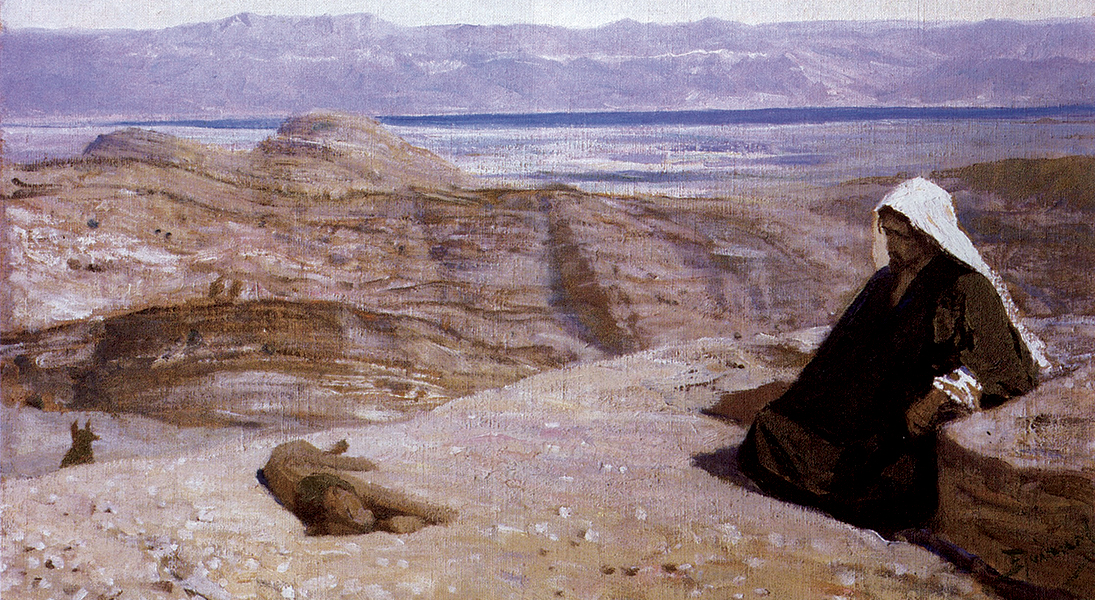
I thought about this question as I meditated today on the state of the church in our nation. Composed of so many dedicated, wonderful people, the church as a whole, nonetheless, is tempted to drift from biblical moorings. It is anecdotal to observe seismic philosophical shifts in the leadership and direction of various congregations, pulled for one reason or another from the place and being the people God wants it to be. The whole wilderness analogy is drawn from the events in the book of Numbers, a wandering that went for forty years in the wake of a 40-day scouting trip. It might have been different for Israel, and it can be different for us. Return with me for a moment to that fateful event that would forever shape their nation.
It begins with leadership (Num. 13:25ff). The spies chosen were “leaders” among the 12 tribes (13:2). Obviously, they had sway with the people (14:1). Because of their negative influence, the people went the wrong direction–into the wilderness and ultimately to their deaths.
It involves faith-driven obedience (Num. 13:30). Caleb understood this and argued for the people to proceed on that basis. Yet, their reaction was the opposite of obedience. Moses, Aaron, and Joshua warned them, “Only do not rebel (emph. mine) against the Lord…” (Num. 14:8). That very rebellion, called “iniquity” by Moses in his prayer to God (Num. 14:19), cost them the promised land (Num. 13:23ff). Instead, they earned a trip into the wilderness. Why? Hard-hearted disobedience and unbelief (Heb. 3:15, 18-19).
It includes courage (Num. 13:25-33). The majority of the spies lacked the courage to act and obey. They were content to go back to Egypt (Num. 14:2ff). They would rather face bondage alone than Canaan with God. So, their cowardice was not only wrong but misplaced. They were afraid of the wrong things and the wrong ones. This fear led them into the wilderness (cf. Num. 14:9).
We live in daunting times, yet in them God still has given us a job to do. If we do not do it or if we fail to do it the way He has commanded, we will wind up, like Israel, in the wilderness! God give us the leadership, faith-filled obedience, and courage to follow Christ and thereby miss the wilderness.










 The Preacher Pollard Blog