The Comfort Of Complacency

Carl Pollard

Church attendance in western culture has shifted toward a consumer model: people want inspiration, community, and moral reinforcement without reciprocal obligation. 

Surveys from Barna and Pew consistently show that active involvement (serving in ministries, financial giving beyond easy amounts, discipleship) hovers below 20% in most congregations. So around 1 in 5 people in the church are actively involved and growing. 

This pattern reflects a deliberate preference for low-pressure environments. People gravitate toward churches that minimize demands on time, energy, and resources, creating a feedback loop where leaders, fearing decline, reduce expectations to retain attendance. The result is a complacent church that prioritizes comfort over transformation.

Scripture offers us helpful insights. In Matthew 25:14–30, the parable of the talents illustrates stewardship as non-negotiable. The servant who buries his talent is not condemned for incompetence but for inaction rooted in fear and misunderstanding of the master’s character (v. 25). In the same way, modern complacency often stems from a distorted view of grace, treating it as permission to coast instead of power to grow. 

Paul counters this in Ephesians 2:8–10: salvation is “not by works,” yet Christian’s are “created in Christ Jesus for good works, which God prepared beforehand.” The text puts grace before works, but never severs them. Involvement is not additive to faith; it is its evidence!

James 2:14–17 provides more clarity: faith without action is “dead,” not deficient, but non-existent in functional terms. A body without movement is a corpse. Complacent churches foster spiritual necrosis: members gather, sing, and leave unchanged. The pressure to engage, whether through serving, giving, or accountability, is not manipulative; it is medicinal. 

Hebrews 10:24 uses the verb paroxysmon (“spur” or “provoke”), a term elsewhere negative (Acts 15:39), here used to describe mutual exhortation. Healthy tension is intrinsic to growth.

Psychologically, avoidance of pressure is (what people smarter than me call) “loss-aversion bias.” This is where the perceived cost of involvement outweighs anticipated benefits.

Theologically, it reveals a failure to grasp the church’s identity. The church is not a service provider but a body (1 Corinthians 12:12–27), where each member’s function is non-optional. Passive behavior disrupts organic unity and destroys our ability to live out the mission Jesus left us (Matt. 28:18-20). 

This article isn’t about putting down the church, but a call to disciplined obedience. Leaders must model and teach expectation without compulsion; members must embrace responsibility without resentment. The goal is not busyness but faithfulness. Complacency, however lovingly cloaked, dishonors the cost of redemption and delays the kingdom’s advance. Grace equips; it does not excuse. 

The question isn’t whether pressure belongs in church, but whether the church belongs to Christ.

What Is A Blessed Day?

Dale Pollard

 After the six days of creation God rested (Gen. 2.2). The word rest literally meant to stop or, according to Strongs, “desist from exertion” (H7673). Once He finished His work, God does something else that carries a mysterious significance— God blessed a day. So what does that actually mean? Looking at our passage (Gen. 2.3) it says that He does two things and the two verbs that are used are important to help us grasp what’s being said. God blessed the seventh day and made it holy. 

 Blessed (barak): 

 In ancient Hebrew thought, to bless something was to fill it with life, fruitfulness, or some kind of ongoing benefit. When God blesses living creatures (both man and beast), they multiply (Gen. 1.22, 28, 9.1). When He blesses the seventh day, He bestows on time itself some kind of divine favor. It was a day that gives spiritual renewal rather than physical productivity. Maybe all the details of that won’t be fully understood or appreciated on this side of eternity. 

 Made holy (qadash): 

 To “make holy” meant to set apart. This is also the first time in the Bible that anything is called holy — not a place or an object, but a day. The early Hebrew understanding saw the seventh day as more than a simple pause in labor. God gave them this and He made it a healthy spiritual function of creation. 

 What’s so significant about all that? This is God blending the spiritual and physical elements of His creation together. It wasn’t like a model train that a boy puts together just for fun. This was proof that existence would be more than a complex physical shell. God “created” an entire day, in part, so we could reflect on that.

A Kingdom Opportunist

October hits, and life kicks into overdrive. Halloween, Thanksgiving, Christmas, New Year’s, it’s a relentless lineup! Family visits, work parties, and the creeping numbers on the scale keep you on your toes and in a food coma. In all this, it’s easy to let Bible study and prayer slip. But if you’re too busy for God, you’re too busy. So how do you balance life with spiritual growth?

Carl Pollard

October hits, and life kicks into overdrive. Halloween, Thanksgiving, Christmas, New Year’s, it’s a relentless lineup! Family visits, work parties, and the creeping numbers on the scale keep you on your toes and in a food coma. In all this, it’s easy to let Bible study and prayer slip. But if you’re too busy for God, you’re too busy. So how do you balance life with spiritual growth? Be a Kingdom Opportunist,  someone who spots and acts on God-given moments to advance His work, not for personal gain, but for His glory.

A Kingdom Opportunist sees openings in daily life and responds with faith and courage. Scripture shows us people who lived this way, always ready to act when God opened a door. 

Paul didn’t let circumstances stop him. In Acts 16:25-34, he and Silas are beaten and chained in a Philippian jail. Instead of giving up, they’re praying and singing hymns at midnight. When an earthquake opens the prison doors, they don’t run; they stay and share the gospel with the jailer, leading him to Christ. In Acts 17, Paul’s in Athens, surrounded by idols. He spots an altar to an “unknown God” and uses it to preach the gospel. Synagogue, marketplace, or jail cell, Paul turned every moment toward Christ. He teaches us to see opportunities in tough spots: a coworker’s question, a neighbor’s grief, a delayed schedule. These aren’t interruptions, they’re opportunities! 

In Acts 16:13-15, Lydia, a businesswoman in Philippi, hears Paul’s message by the river. God opens her heart, and she responds immediately, following Jesus and opening her home to Paul’s team. Her hospitality makes her house a base for the early church. Lydia didn’t need a stage or a title, she used her home, influence, and resources to serve God. What do you have? A spare hour? A skill? A kitchen table? Like Lydia, you can use what’s in your hand. 

Barnabas, the “son of encouragement,” saw what others missed. In Acts 9:26-27, when the disciples feared Saul (later Paul) because of his past, Barnabas took a chance, vouching for him and bringing him into the church. In Acts 11:25-26, he tracked down Paul in Tarsus, kickstarting his ministry. He also gave John Mark a second shot after a failure (Acts 15:36-39), helping him grow into a key servant. Barnabas invested in people, seeing God’s work where others saw problems. Who needs your encouragement? A struggling teen, a new Christian, a friend who messed up? A kind word or second chance can shift someone’s path for God’s glory.

Scripture is filled with examples. Esther risked her life to save her people, seeing her role as queen as God’s timing (Esther 4:16). The Shunammite woman gave Elisha a room, creating space for God’s work (2 Kings 4:8-10). Andrew brought his brother Peter to Jesus in a simple act that changed everything (John 1:40-42). Each saw God’s hand and acted, not for themselves, but for His purpose.

Unlike worldly opportunists chasing self-interest, Kingdom Opportunists are driven by God’s glory. They’re prayerful, discerning, and bold, ready to move when God opens a door. To live this way, pray daily for eyes to see opportunities. Study Scripture to be ready to share your faith. Use what you have: time, talents, or a listening ear. Step into hard situations with trust, like Paul. Encourage others, like Barnabas. And stay humble, pointing to Jesus.

God’s still opening doors every day, at work, home, or in your community. My prayer is that we’ll see these moments, respond with faith, and act with courage. As we do, God’s Kingdom grows, one opportunity at a time. You’re equipped for this moment. 

Be a Kingdom Opportunist!

The Season of Impermanence:

What does an ancient oriental custom have to do with time management and the appreciation of the preciousness of time? No one can make the connection like Brent. Read more and be challenged by his unique perspective.

Reflections Beneath the Cherry Blossoms on Time, Purpose, and Eternity

Brent Pollard

In a poem, a twelfth-century Buddhist monk named Hoshi Saigyo stated that the cherry tree, or Sakura, only had one problem: it caused people to gather. Saigyo was undoubtedly referring to the ancient practice of hanami, which translates as “flower viewing.”

Indeed, people have gathered to view the lovely sakura blooms since at least the Heian period (794–1185 AD). Regarding motivation, the Japanese value the ephemeral quality of all flowers, especially cherry blossoms.

Each year, the Japanese Meteorological Corporation releases a calendar that estimates the bloom dates for sakura, reflecting Japan’s cultural reverence for impermanence. While the residents of Japan’s northernmost climes, such as Hokkaido, usually have to wait until the end of April or the first of May to see sakura flowers, people in Okinawa come together as early as mid-January to view the hikanzakura—also known as the Taiwan cherry—blossoms. Outside of the cherry trees gifted from Japan within the Tidal Basin of Washington, D.C., or the same variety of cherries planted in sufficient numbers for Macon, Georgia, to host the International Cherry Blossom Festival, one wishing to emulate the practice of hanami might well substitute another flowering tree, such as the plum or dogwood.

Some Japanese are so committed to hanami that they will travel throughout Japan’s 47 prefectures to catch the various cherry blossom spots. As for what hanami entails beyond the camera, one brings all the accouterments of a ground picnic: blankets and bentos (lunch boxes). Should you wish to participate in the celebrations, please be advised that some locations are so popular that people camp out early to secure a prime viewing spot. The most beloved of these blossoms is the Somei Yoshino, or Yoshino cherry—a variety whose pale petals are as fleeting as they are breathtaking.

In Japanese culture, the cherry blossom season marks the beginning of numerous significant life transitions. Since the academic and fiscal years begin in the spring, sakura is often associated with new responsibilities, personal growth, and the transition into adulthood—a theme not unlike the “season for everything” described in Ecclesiastes 3. It is common in Japanese films or anime to show two characters—possibly destined lovers—meeting beneath the cherry trees, their encounter tinged with beauty and impermanence as delicate pink petals fall around them. Such moments may seem mystical, but they reflect a more profound truth: Life moves quickly, bringing opportunities we must seize or let slip away. For Christians, this symbolism echoes the call to live purposefully and steward each season well—particularly those that signal the beginning of new responsibilities or callings.

The well-known Latin phrase carpe diem, meaning “seize the day,” may serve as a fitting analogy for the Japanese passion for flower viewing. Those of us in Christendom can better understand this concept through the eyes of the wise King Solomon. In Ecclesiastes 9.10, Solomon says, “Whatever your hand finds to do, do it with all your might; for there is no activity or planning or knowledge or wisdom in Sheol where you are going” (NASB95).

In other words, as the beauty of the sakura flower is fleeting, so too are our lives (see James 4.14). Though perhaps unspoken, the practice of hanami reminds participants of the impermanence of life, teaching us to hold what we have with reverence. In this way, hanami reflects a deeply rooted Zen sensibility that embraces transience not as a cause for sorrow but as an invitation to be fully present. For those of us shaped by Christian thought, this quiet awareness harmonizes with the wisdom of Ecclesiastes: that life, though brief, is to be lived with purpose, gratitude, and wholehearted devotion (see Ecclesiastes 12.13-14).

Given this potentially upsetting truth for some, it is clear how important it is to manage our time effectively. In the context of Ephesians 5.15-17, the Apostle Paul suggests that we make the most of our time by walking—or acting—wisely. Moses tells us in Psalm 90 that we are likely to live 70 years, but if we are strong, we may live to 80 (Psalm 90.10). Even so, there is no guarantee. Each of us has a set appointment with death (Hebrews 9.27) unless God’s will allows the second coming of Christ to occur first.

Thus, would you hoard the Gospel’s sacred treasure? How quickly could you overcome procrastination if you knew tomorrow would never come? How soon would you mend your broken relationships? Would you remain silent in the face of the wicked’s schemes? The questions linger—sobering, urgent, and real.

Indeed, the words of Laura E. Newell from the hymn “As the Life of a Flower” ring true: “As the life of a flower, as a breath or a sigh, so the years that we live as a dream hasten by; true, today we are here, but tomorrow may see just a grave in the vale, and a memory of me.”

The Fleeting Nature Of Legacy

Lessons From The Parable Of The Rich Fool

Brent Pollard

The breadth of human recollection is rather fleeting. In merely three generations, the essence of most lives—their trials, victories, and the simple moments of each day—slips quietly into the shadows of forgetfulness. Though history may enshrine its Shakespeares and Einsteins, the greater multitude of us shall fade into obscurity, our tales slipping quietly into the annals of time. This obliteration of individual narrative unfolds through various avenues. As time flows onward, the clarity of memory tends to wane, and the stories of those who came before us, beyond the realm of our grandparents, often fade into a misty obscurity. Families frequently choose to uphold only sure tales, usually centering on those kin who have forged remarkable legacies while permitting others to fade quietly into the obscurity of yesteryear. Those who depart this world without the blessing of children tread a more arduous road to remembrance since their narratives rest solely upon the commitment of distant kin to keep them alive in memory. In this age of mobility, it is all too common for families to drift apart, their bonds fraying and shared memories fading into the ether. The myriad forces at play—natural memory decay, the art of selective storytelling, the absence of children, and the scattering of families—combine harmoniously to guarantee that our recollection barely reaches a century for most of us.

The fleeting essence of human memory imparts a significant lesson regarding the quest for legacy through earthly riches, a truth vividly depicted in the Parable of the Rich Fool (Luke 12:13-21). In this narrative, a man of considerable means is convinced that his vast possessions will safeguard his future and ensure his legacy. Yet, in a twist of fate, death arrives to strip away the significance of his meticulously crafted designs. The inquiry posed by the parable—”Then who will receive what you have laid aside for yourself?”—gains a more profound significance when we reflect upon the fleeting nature of our very names within the tapestry of family remembrance. If destiny determines to erase our lives from memory within a few generations, the quest for wealth, as the means for leaving a legacy, reveals itself as a pursuit devoid of true purpose. Instead, this poignant truth beckons us to reflect upon what genuinely lasts: the far-reaching impacts of our connections, the principles we impart to those around us, and the uplifting transformations we foster within our communities. Though the allure of worldly achievements may offer fleeting solace, the unseen connections we forge—the impact we have on the lives of others, the insights we impart, the affection we extend—hold the promise of resonating far beyond our time on this earth. This viewpoint invites us to redirect our attention from the mere gathering of riches to the nurturing of a more profound spiritual and relational abundance, one that may surpass the limits of recollection, thus fostering a legacy that is both meaningful and lasting.

Rather than entangling us in a web of despair, the certainty of being forgotten liberates us to embrace life with greater authenticity and purpose. When we free ourselves from the weighty expectation of leaving a tangible legacy, we understand a profound reality: our authentic influence is not measured by what we bequeath but rather by how our deeds resonate through the ages, often beyond our sight. The folly of the Rich Fool lay not merely in his accumulation of riches but in his profound misunderstanding of the enduring legacy that binds one generation to another through unseen threads of influence. A gentle word uttered in the present may resonate within a family’s principles for generations; a selfless deed could ignite a legacy of generosity that endures beyond our remembrance; a fleeting insight imparted might influence choices long after its origin fades from memory. This insight reshapes our perspective on the fleeting moments life grants us. Rather than laboring to erect grand monuments in our honor, let us turn our efforts to sowing seeds of virtue that will blossom long after we have departed. We may find solace in the understanding that our impact can persist, even when our names have slipped into the shadows of time. This parable extends beyond its sacred beginnings to impart a wisdom that resonates universally: a profound legacy continues to yield fruit, even when circumstances cut it from its roots.

The Dogtrot Deathtrap

Dale Pollard

 I was given permission to search around a home that was over one hundred years old  and rumored to have treasure buried on the property. The abandoned homestead was set off the road and down in this wooded valley and after making my way down to it, I decided to take a look under it. It’s a dogtrot house, meaning there’s an opening in the middle with two doors. This style of home was commonly found in old western settlements as the opening allowed for more air flow in hot summers. On the side of the house I could see the massive stone foundation had large gaps that I was able to peer through. It was flooded and there were timbers that had caved in. I just slipped through the gap in the foundation with my metal detector which sounds easier than it was. There was sheet metal on the ground that my unit was not happy about. 

The stench of sulfur under the house was overwhelming. The water I had seen was not from past flooding. My guess is that the house was either built over a sulfur spring, or perhaps more terrifying, a sinkhole that had since opened under the foundation. My heart began to pound as I was attempting to swing the detector in search of old coins, my foot slipped and my boot sank down into the water. It was deep. I’m not sure how deep but I thought it was only a couple inches when I had originally decided to crawl under the home. Surrounded by an old stone foundation, any sound I made would have been muffled to the outside world. That could have become deadly in a blink. Had I known how treacherous the loose footing would be and how deep that hole of water was, I wouldn’t have entered. Sadly, the risk yields nothing. No relics, no coins, though I’m sure they’re under there. 

Christ does not deprive us of our treasure, but directs us in the choice of it. In Matthew 6.21 we’re reminded that what we hold most dear to us, has our heart. A treasure is an abundance of something that is, at least in our opinion, precious and valuable. God knows that earth’s treasure is not going to last so the most prudent thing to do is to load up our loot in eternity. The vanity of valuables became all too real to an aging Solomon and that’s seen throughout the inspired collection of his lived experiences that we call Ecclesiastes. What treasure is worth pursuing? Only those that are found in the kingdom. Jesus will attempt to save us the time that could so easily be wasted in searching for something we hope will satisfy us by telling us what to look for. He simply says, “..seek first the kingdom” (6.33). If you’re not seeking that, you’re looking in the wrong place.

The End Of All Things

Gary Pollard

In I Pt 4.1-6, we’re reminded that “new life” means adopting a new lifestyle. Jesus was willing to suffer, so we should be too. For those who converted recently, their friends might think it’s rude that they don’t do the same things they used to. They might even be painted in a bad light around their old friends. It’s hard for anyone to lose their friends! 

But we’re reminded in 4.7 that the end is near. In the context of I Peter, that was the end of their lives. For them, it was the end of all things. Its double meaning is that the end of the world is near. But this was written 2000 years ago, so how was the end near? God doesn’t experience time the same way we do. But in light of world history, 2000 years isn’t that much time. The Patriarchal Age lasted 2500 years. The Old Law was in effect for 1500 years. Until about 500 years ago, the Bible was not accessible to most of the world. It’s not too much of a stretch to assume that God assigned a dual meaning to this passage. We have no idea when the end will be, so we need to “keep our minds clear and control ourselves.”

How does God expect us to live while we’re waiting for the end of all things? 4.8 tells us to love each other deeply. How? By opening our homes to each other and sharing the food we have without complaining (9). By remembering that God gives us so much grace, and we should use our talents to help each other (10). If we’re good at encouraging, we should pursue that with all our strength. The same goes for serving others (11). This section tells us that time is too unpredictable and limited for us to be messing around. Humanity is diving headfirst into chaos, but that isn’t our concern. Even if this is the end, God wants us to use our time to help each other. 

The Eye of God

Carl Pollard

We used to sing a song in church growing up called, “There’s An Eye Watching You.” The chorus goes like this, “watching you, watching you, every day mind the course you pursue; watching you, watching you, there’s an all-seeing eye watching you.” As a kid and even into adulthood, I would sing this song and envision a giant eyeball in the sky. While this isn’t case, maybe it would do us good to think of God’s eye watching us each day. 

Psalm 33:13-14 says, “The Lord looks down from heaven; he sees all the children of man; from where he sits enthroned he looks out on all the inhabitants of the earth.”

If God sees “all the inhabitants of the earth,” He is automatically breaking the laws of time and space. Tanzania, Africa is 8 hours ahead of where I am in Kentucky. Cambodia is 12 hours ahead. Half the world is asleep because half the world is in darkness at any given point in time. God is naturally present in every aspect of the natural order of things, in every manner, time and place. He sees EVERYONE! 

God saw Hagar when she was on the run from Sarah (Gen. 16), and Hagar gives God a new name…”the God who sees” because God saw she was in need and helped her.

God saw righteous Noah in a world of wickedness. God saw Cain when he slaughtered his brother. God saw Israel in Egyptian captivity. God saw Joseph thrown into a pit and sold off by his brothers. God saw David as he hid from Saul and his men while they were trying to kill him. God saw Abraham obey His words and try to sacrifice his son Isaac. God saw His own Son, abused, rejected, spit on, and killed. God saw the early church as they were persecuted for following Christ. God sees you as you’re reading this article right now. God sees every deed and it is written down for the judgement day. 

God sees everyone. Proverbs 15:3, “the eyes of the Lord are in every place, watching the evil and the good.” We live in a physical world with its four known space-time dimensions of length, width, height (or depth) and time. However, God dwells in a different realm—the spirit realm—beyond the perception of our physical senses. It’s not that God isn’t real; it’s a matter of His not being limited by the physical laws and dimensions that govern our world. 

“For thus says the One who is high and lifted up, who inhabits eternity, whose name is Holy: ‘I dwell in the high and holy place, and also with him who is of a contrite and lowly spirit, to revive the spirit of the lowly, and to revive the heart of the contrite’” (Isaiah 57:15, ESV). God is spirit in the realm of timelessness rather than flesh in the sphere of time.

As Christians, we have a deep sense of comfort knowing that God, though timeless and eternal, is in time with us right now; He is not unreachably transcendent, but right here in this moment with us. And because He’s in this moment, He can respond to our needs and prayers.

We serve an incredible God. There’s no denying His amazing power and holiness. 

A God who created everything with His Words. A God who sees all the inhabitants of the earth. A God who has the power and might to be everywhere on this earth at one time. A God who looked at me, who looked at you, and saw that we needed a savior. 

So why then do we understand God’s power and yet still neglect our prayer life to Him? Or forget to study His Holy word? He sees what we do with our time, so make the most of it! 

True understanding of Who God is will always result in righteous living.

The End Is Near?

Gary Pollard

The message of I Peter could be summarized like this: God calls us to endure suffering, just like Christ suffered. He calls us to live morally pure lives, if for no other reason than our fear of dying in a lost state. We can live morally pure lives through exposure to his word and through submission to each other. We have no idea how much time we have, so we should make the best of it. 

The key verse of I Peter is 4.7 — The end of all things is near. Keep your minds clear and control yourselves. This will help you in your prayers. 

Several times throughout the letter, Peter warns them of their impending suffering, which would cause many of them to die. He uses what sounds like military terminology in a few verses, the kind of pep-talk a leader would give his soldiers before doing battle. “Many of you won’t make it through this. What’s more important than this life is how you live it, because this life isn’t the end for any of us.” 

Over the next few weeks, we’ll do an application-based study of I Peter. For those interested in reading more than will be discussed in these articles, I highly recommend using the Easy to Read Version (free on biblegateway.com and on their app). It does a fantastic job of relaying the full meaning of the original text using language a child could understand.

What Could I Say At The Funeral Of A Non-Christian?

Dale Pollard

God is far wiser than we are, and there’s plenty of guidance for such potential scenarios (2 Pt. 1.3). Here are some quick things to fill your mind with before you walk into a room filled with the grieving. 

First, we all need to be reminded

A good name is better than fine perfume, and the day of death better than the day of birth.

It is better to go to a house of mourning than to go to a house of feasting, for death is the destiny of every man; the living should take this to heart.

Sorrow is better than laughter, because a sad face is good for the heart.

The heart of the wise is in the house of mourning, but the heart of fools is in the house of pleasure.” – Ecc. 7.1-4 

A funeral is better than feasting… for three reasons. 

  1. Because a funeral serves as a motivator for needed change. 
  2. Because it serves as a reminder that life is finite. 
  3. Because we inevitably think of what will be said at our own funeral. 

Your name is assigned at birth but defined in life. 

The Trans–Siberian Railway which connects Moscow with the Russian far east is still the world’s longest direct rail route, running for 5,753 miles. The journey passes through the Ural Mountains, Siberia’s birch forest and Lake Baikal, and the entire trip, were you to ride from beginning to end, would take six days. 

We’ll all reach the end of the line at some point. Each of our journeys are at various stages of completion, some just beginning, some farther along, but the meaning of life is that it stops. However, it doesn’t end. The vast majority of all the world’s religions teach and believe in an eternal existence of some kind. 

Death is a reality that’s juxtaposed. 

It’s the end and it’s the beginning. Or as Solomon said, “…the destiny of every man.” 

Many would rather not think of their final destination because they feel it’s unknown while others avoid the thought because the subject of death is an unpleasant one. While we should celebrate the accomplishments and one’s life, funerals have always been for the benefit of the living. 

The “house of mourning” requires at least four areas of focus in order for it to benefit us. 

  1. A time to grieve loss.
  2. A time to reminisce. 
  3. A time to comfort one another.
  4. A time for reflection. 

It’s healing, it’s healthy, and it’s enlightening. Every culture on every continent would attest to this, but more importantly— God’s provided us with this truth. 

Use the time, while in the house of mourning, for the  intended purpose. 

Don’t dismiss any sobering thoughts of mortality and use this valuable time properly. 

“I will not doubt, tho all my ships at sea come drifting home with broken masts and sails 

From seeming evil worketh good to me. 

And tho I weep because those sails are battered, 

Still will I cry,while my best hopes lie shattered, ‘I trust in thee’ 

19th Century poet, Ella Wilcox 

It’s Black Friday, Or Is It?

Friday’s Column: Brent’s Bent

Brent Pollard

We commonly refer to today as “Black Friday.” Though retailers have begun holding sales before the actual day, “Black Friday” retains its significance as the day when most businesses will finally make a profit for the year, moving from being “in the red” (a deficit) to “in the black” (a profit). It never fails to astound me that a nation can go from offering thanks to God for their gifts to enjoying a scuffle over a discounted television in a day. People’s whimsy, however, is hardly unprecedented. Wasn’t Jesus hailed as the Messiah the same week the mob demanded His crucifixion? Humans, admittedly, are inconsistent creatures. 

Some people use the term “Black Friday” to refer to what is also known as “Good Friday,” or the day Jesus bore the world’s sins on the cross. This moniker is because, for a total of three hours, the world was in total darkness. An issue with trying to discern such specifics retroactively is that tradition can often take precedence over Scripture. To pinpoint the year of Jesus’ death in Jerusalem, some have even resorted to using computers and date-calculating software.  

So that I do not fall into the same trap, let me quickly raise a couple of issues that may make a nice and tidy timeline for the death, burial, and resurrection of our Lord problematic. In the first place, let me state one undeniable truth. Early on a Sunday morning, the women found the tomb empty (John 20.1). From this one point, we apply Jesus’ words to the evil and (spiritually) adulterous generation seeking a sign: “for just as Jonah was in the stomach of the sea monster for three days and three nights, so will the Son of Man be in the heart of the earth for three days and three nights” (Matthew 12.40 NASB). So, Jesus would be in the grave for three days and three nights. 

A Friday crucifixion would not permit three full days and nights. According to religious scholars, a fraction of a day counts as an entire day. How do we know this, though? It turns into a speculative game. As a result, some argue that the Romans crucified Jesus on Wednesday. This alternative is also a possibility. But first, consider another hint. Because they were preparing for a high Sabbath, they had to bury Jesus quickly (John 19.31). That suggests another vote for Friday. Is that correct? What was the last meal Jesus wished to share with His disciples before His crucifixion? It was Passover (Matthew 26.18). Matthew 26.17 states that Jesus sent His disciples ahead to secure a room to eat the Passover meal on the first day of Unleavened Bread. 

A careful reading of the text reveals that everything from the institution of the Lord’s Supper to the death of Jesus occurred on Passover since it occurred between the span of one sunset to the next (e.g., Leviticus 23.32). This coincidence is apropos, given that Jesus was the Lamb of God (John 1.29). Moreover, according to Leviticus 23.5-6, Passover was immediately followed by the Feast of Unleavened Bread. But note Leviticus 23.7. The first day of the Feast of Unleavened Bread was a holy convocation on which keepers of Moses’ Law were not supposed to work. In other words, it was a special Sabbath. Aha! 

So, the high Sabbath that led to the quick burial of Jesus was not a typical Saturday Sabbath. This truth creates an intriguing scenario, and the Gospels do provide hints. A regular Sabbath may have fallen after a special Sabbath. Take note of what the Gospels say about women. They went to see where Joseph and Nicodemus buried Jesus before returning home to prepare spices and perfumes to anoint Him (Luke 23.55-56). These women, according to Luke, kept the Sabbath. But then Mark says something that skeptics say contradicts Luke. After observing the Sabbath, the women purchase spices for Jesus’ anointing (Mark 16.1). But instead of contradiction, it more likely indicates a two-Sabbath week. Whatever the reason, the women could not attend to Jesus’ body as they had hoped until Sunday morning. This day was when they discovered the empty tomb. 

Our conclusion may not please those insisting on specifics, but I believe it allows our Lord’s words to be proven. He spent three days and three nights in the tomb, as He said because that was the sign. It was not an hour or two here and there, coupled with two full days. So, those of you better with math and willing to consult astronomical computer programs can give me a date based on those variables, but until then, we hear the words of Jesus to Thomas Didymus: 

“Blessed are they who did not see, and yet believed (John 20.29 NASB). 

Time Flies, But We Navigate

Monday’s Column: Neal At The Cross

Neal Pollard

Ann Turner Cook passed away at her St. Petersburg, Florida, home on Friday, June 3, 2022. She was 95 years old, was an educator, a novelist, a wife, and a mother. Her father was a well-known cartoonist. But you almost certainly know her for a charcoal drawing that was made of her by an artist neighbor, Dorothy Hope Smith. It was submitted for the label of a baby food company and chosen in 1928, then trademarked in 1931. Ann was the original Gerber baby (news report here)! You’ve seen that iconic picture. If you realized she was a real person, you never thought about the fact that this baby grew up and eventually grew old. Or that she would now be dead.

I know nothing about Mrs. Cook’s religious life or spiritual preparation. But I do know that she is part of a universal truth concerning life, and that is that death comes relatively soon for us all. How soon? 

  • Like water spilled on the ground (2 Sam. 14:14). 
  • Like a weaver’s shuttle (Job 7:6; Isa. 38:12). 
  • Like a breath (Job 7:7).
  • Like a shadow (Job 8:9; 1 Chr. 29:15; Ec. 6:12). 
  • Like a flower (Job 14:2).
  • Swift as a runner (Job 9:25).
  • Like a handbreadths (Ps. 39:5).
  • Like a wind that passes (Ps. 78:39). 
  • Like a sigh (Ps. 90:9). 
  • Like smoke (Ps. 102:3).
  • Like a lengthened shadow  and grass (Ps. 102:11; 109:23). 
  • Like a passing shadow (Ps. 144:4). 
  • Like a fading flower or withering grass (Isa. 40:7-8; Js. 1:10; 1 Pet. 1:23-25). 
  • Like a vapor (Js. 4:14). 

With that in mind, shouldn’t we pray with David, “LORD, make me to know my end and what is the extent of my days; Let me know how transient I am” (Ps. 39:4).

Yes, we can look at the Gerber Baby and see that. Or we can look through our own family albums. The baby, childhood, and young adult photos of our grandparents, parents, or ourselves. The weathering winds of time do sure and quick work, reminding us of the many ways the Bible depicts it for us. Time is short and it passes quickly.

Rather than a depressing inevitability, this should be a respected teacher. We should pray with Moses, “So teach us to number our days, that we may present to You a heart of wisdom” (Ps. 90:9). We should take Paul’s inspired advice and “be careful how you walk, not as unwise men but as wise, making the most of your time, because the days are evil” (Eph. 5:15-16). Don’t leave undone what needs to be done. Don’t put off what must be done before this life is over. It will be over before you know it. As the writer of Hebrews tells us, “It is appointed for men to die once and after this comes judgment” (9:27). 

“The Most Dangerous Word”

Saturday’s Column: Learning From Lehman

Mack Pugh

What is the most dangerous word? Anger, wrath, revenge, retaliation? The most dangerous word doesn’t “sound” dangerous, doesn’t “look” dangerous, it hides its dangerous ability, but it is the great enemy of advancement. It leaves tasks undone, books unread, programs unlatched, and resolutions unkept. It is a very great enemy of the church. It is the great enemy of the soul. It causes people to be lost. It is Satan’s favorite word. If he can get you to say it and say it often, he may not destroy your faith in the Bible or God, but he will definitely win the battle. That word is tomorrow!

Proverbs 27:1 says, “Boast not thyself of tomorrow, for thou knows not what a day may bring forth.” We’re not even promised the rest of this evening, let alone tomorrow. There are two reasons: You may lose the desire or you may lose an opportunity. There are two scriptures:

2 Corinthians 6:2: “For he saith, I have heard thee in a time accepted and in the day of salvation have I succored thee: behold, now is the accepted time; behold, now is the day of salvation.”

Hebrews 3:15: “While it is said, ‘Today, if ye will hear his voice, harden not your hearts as in the provocation.”

You can lose your desire, owing an apology, a thank you note, or something you needed to do. You can lose your opportunity, to see a family member or being busy at work.

The danger of delay and tomorrow is losing your desire and/or opportunity! It is losing the desire and opportunity to become a Christian or dying before repenting. Don’t put off to tomorrow what you can do today!

Joshua 24:15 says, “And if it seem evil unto you to serve the LORD, choose you this day whom ye will serve; whether the gods which your fathers served that were on the other side of the flood, or the gods of the Amorites, in whose land ye dwell: but as for me and my house, we will serve the LORD.” Joshua said this before the Israelites in the hope they would follow his example with no intention of turning back.

In Acts 26:26-27, we see, “Festus said with a loud voice, Paul, thou art beside thyself; much learning doth make thee mad. But he said, I am not cmad, most noble Festus; but speak forth the words of truth and soberness. For the king knoweth of these things…” Then King Agrippa said, “Almost thou persuadest me to be a Christian.”

Then, Jesus said, “I must work the works of him that sent me, while it is day; the night cometh, when no man can work” (John 9:4). The same is true with our lives! What about those that do not obey the gospel of Christ? Hebrews 9:27 says, “And as it is appointed unto men once to die, but after this the judgment!” If you are willing to live how you’re living, you’ve got to be ready to die in your current condition. If you are not, don’t wait for tomorrow!

Twenty Seconds

Friday’s Column: Brent’s Bent

Brent Pollard

Twenty seconds seems like a short time, yet it is sufficient to kill viruses and microbes from your hands with thorough handwashing. Thus, when the SARS-CoV-2 pandemic began, we were inundated with public service announcements that asked us to wash our hands to stop the spread. Again, it seems like a small step to achieve a beneficial result, but it is effective. 

Twenty seconds is also the time required to receive health benefits from a hug. For example, a study conducted in 2003 found that twenty seconds spent in a warm embrace increased oxytocin levels and decreased cortisol levels. 1, 2 Oxytocin is also known as the “love drug,” “love hormone,” and “cuddle hormone.” 3 Believe it or not, the primary function of oxytocin is to facilitate childbirth by causing uterine contractions. However, within adults, especially for a couple, it increases feelings of attachment.  

As a cautionary note, we might cite this to instruct our youth to limit their physical contact with their dates before marriage since the creation of oxytocin can blur the lines between true, agape love and eros love. As oxytocin is considered a “feel-good hormone,” parents should guide their offspring to create it instead through singing with a group and exercise.Otherwise, like with any drug, one might seek it out just for the pleasant feelings it brings without considering the complications.  

But what of our spiritual lives? What can twenty seconds do to help that? I did an experiment using the Lord’s model prayer to find out. First, using the NaturalReader Dotcom website, I copied and pasted the text from Matthew 6.9-13 from different Bible translations. Next, I selected a variety of A.I. voices offered by the website, both American and British. Then, I used a stopwatch to see how long it took for the computer-generated voice to read the text. You might be surprised to learn that the model prayer only took 21 to 28 seconds to read. However, when I removed the final sentence that some academics say is missing from the various manuscripts consulted to create modern English translations, the reading time was between 18 and 20 seconds.  

Paul tells us that we are to “pray without ceasing” (1 Thessalonians 5.17). Unfortunately, our prayer lives may suffer because we think we must dedicate a lot of time to pray and thus cannot find time for it within our busy schedules. Yet Jesus shows us that we can say a prayer encompassing most of our needs with about twenty seconds! What often “pads out” our prayers are the needed expressions of thanksgiving and the petitions we lift on behalf of others. But when confronted by temptation or needing to check our temper, twenty seconds of prayer might make the crucial difference.  

Consider this a friendly public service announcement for Christians. It only takes twenty seconds to clean your heart and deepen your love for God.   

Sources Cited 

1  Alloway, Tracy. “What 20 Seconds of Hugging Can Do for You.” Psychology Today, Sussex Publishers, 19 Jan. 2022,www.psychologytoday.com/au/blog/keep-it-in-mind/202201/what-20-seconds-hugging-can-do-you.  

2   Grewen, Karen M, et al. “Warm partner contact is related to lower cardiovascular reactivity.” Behavioral medicine (Washington, D.C.) vol. 29,3 (2003): 123-30. doi:10.1080/08964280309596065 

3  Watson, Stephanie. “Oxytocin: The Love Hormone.” Harvard Health, The President and Fellows of Harvard College, 20 July 2021,www.health.harvard.edu/mind-and-mood/oxytocin-the-love-hormone

4  Ibid. 

Timeshares

Wednesday’s Column: Third’s Words

Gary Pollard

Not much is worse than investing time, emotion, and resources into something that doesn’t pay off. Like spending days working on an engine, only to have the transmission give out. Parents with small children are familiar with the frustration of cleaning their house, then having it trashed nanoseconds later. Or putting time, financial risk, and great sacrifice into starting a business, only to have a terrifically mismanaged pandemic destroy it. 

In each of these examples, a person’s reaction to negative outcomes is rarely positive. Having invested so much in something, we hope to have good outcome. 

Jesus invested heavily in Judas, only to be betrayed by him. He healed people, brought dead loved ones back, fed people, and gave them hope. He worked very closely with his apostles for  years, only to have them miss the point the entire time he was on earth (Acts 1.6; Mk 8.14-32). 

I am grateful that he isn’t like us. He doesn’t give up on us when we mess up (I Jn 1.9). He has immense patience with us (II Pt 3.9; I Tim 1.16). But it isn’t blind acceptance of dysfunction — God is patient with our flaws to give us a chance to change (Rom 2.4). God doesn’t make decisions the same way we do! 

From our perspective, humanity was a terrible investment. Jesus invested something we aren’t capable of investing, only to have most of humanity reject him. But he didn’t scrap the car, yell at the kids, or harbor resentment. He gives us his patience, his love, and time. It’s up to us to make the most of those things while we’re here!

How Many Blades Of Grass Are There?

Tuesday’s Column: Dale Mail

image-e1601983688162

Dale Pollard

How many blades of grass are there?
According to one study, there are approximately 418,000,000 blades of grass for every person on the planet.

How many fish are in the sea?
Scientist admit that it’s nearly impossible to know the answer to this question but that hasn’t stopped several educated guesses. One study estimated around 3,500,000,000,000 as their total.

How many cars are there in the world?
There are around 1.446 billion cars total. America has approximately 350 million vehicles and Antarctica has about 50.

Psalm 90.12 states, “So teach us to number our days so that we might apply our hearts to wisdom.”

This verse has nothing to do with the actual length of our individual lives but it does deal with the human perspective of time. Nobody can accurately determine how many days or years they’ll be around for. That’s not for us to know and something we don’t have to concern ourselves with. This Psalm seems to point us all in a different direction. Instead of trying to count how many days we have left, we should view each day as our last. Here we see the connection between time management and our spiritual lives. Since we can’t know the exact day of our death, our time is best spent chasing His wisdom and the application of it. We’re essentially asking God to teach us to view our mortal lives the way He does and that only happens when we dedicate our ways to His words.

Where Is He?

Wednesday’s Column: Third’s Words

Gary Pollard

It’s tempting to run with Jesus’ words in Matthew 24, “But of that day and hour no man knows…only the father.” We might think we’re all set or that he won’t come in our lifetime. I Thessalonians 5.1-3 reinforces the surprise nature of his return. II Peter 3 says the same. For sure, we won’t know when, but it’s good to be reminded that we aren’t promised tomorrow. 

The Patriarchal Age lasted roughly 2500 years, the Law was in effect for around 1500 years, and we’ve been in the last age for nearly 2000 years. No one can point to a day, but there’s nothing wrong with living as if He’s coming back in our lifetime. 

“Since all of these things will be destroyed, what kind of people should you be in lives of holiness and godliness, waiting for and hurrying God’s return?” (II Pet. 3.11). 

“Now, brothers and sisters, about times and dates we do not need to write to you, for you know very well that the day of the Lord will come like a thief in the night. While people are saying, ‘Peace and safety,’ destruction will come on them suddenly, as labor pains on a pregnant woman, and they will not escape” (I Thess. 5.1-3). 

TIME

Tuesday’s Column: Dale Mail

image

Dale Pollard

Our lives are based on time. Everything we do is on a schedule. We all have limited time, we waist time, we spend time, we invest time, we make time, the world is on a clock. 

God has the title of the Creator. 

He created 

  • You
  • me
  • the world 
  • Galaxy 
  • Universe 

He was and is and ever will be, the Alpha Omega beginning and end. 

He is the God of history, of Abraham, Isaac and Jacob.

He is God of the present, and God of the future. 

God is the originator of time; He invented it, it’s His. 

Here are three quick thoughts to consider about this precious commodity.

  1. Money and time share similarities. Don’t waste it. Spend it wisely. Invest it in the future. 
  2. All good things come to an end but thank God that the best thing, heaven, will never end.
  3. With the proper perspective we can clearly see that we’re all on God’s time. 

What will we do with the time God gave us today?

But do not overlook this one fact, beloved, that with the Lord one day is as a thousand years, and a thousand years as one day. – 2 Peter 3:8 

All the Time in the World 

Friday’s Column: Supplemental Strength

81121814_2462862270639428_5746232403106463744_n

Brent Pollard

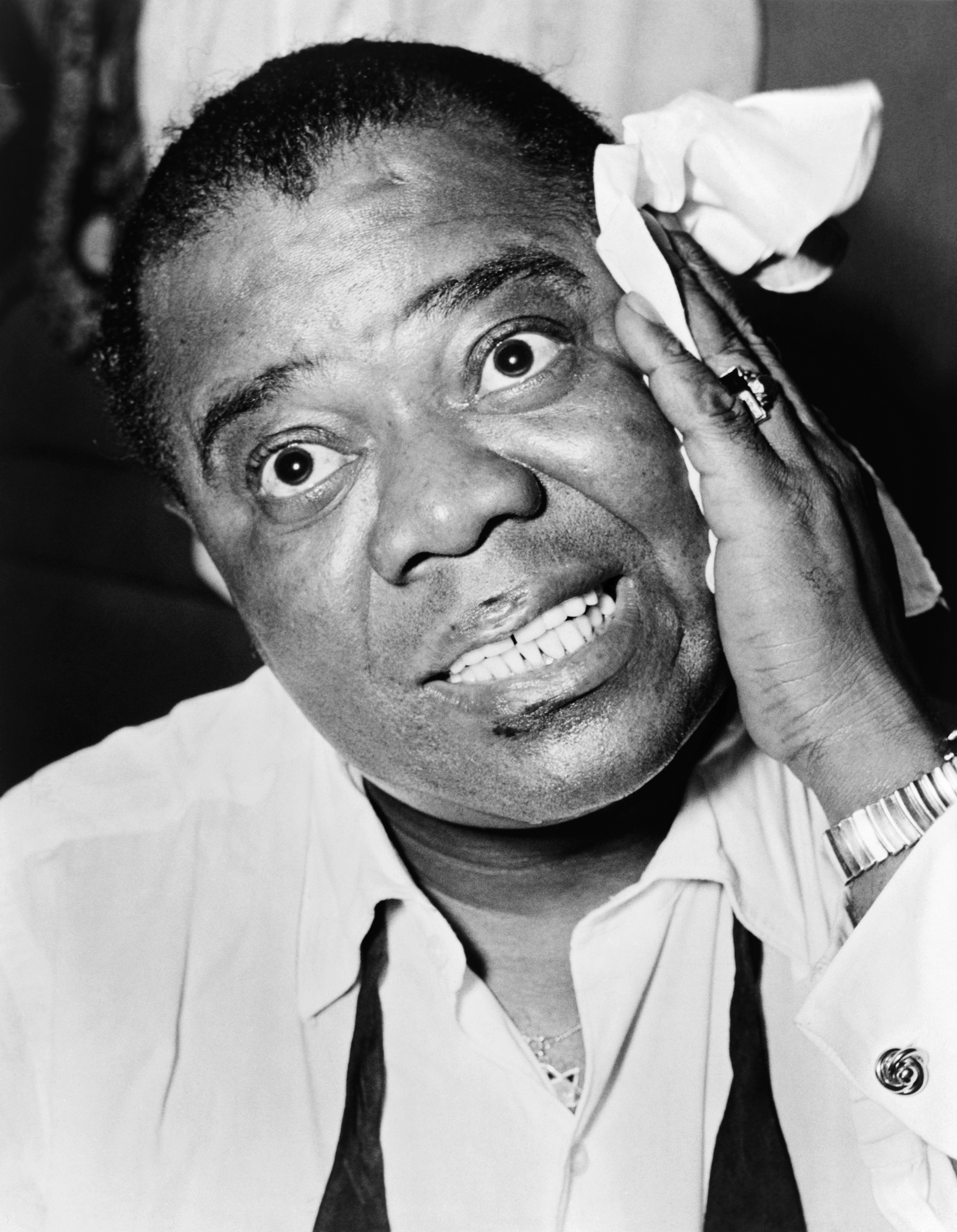
1969 was a landmark year in many respects. Most notably, the year saw a man walk on the moon. Of much lesser note, 1969 witnessed George Lazenby take on his sole (some say, forgettable) performance as the iconic spy, James Bond. I am not a Bond fan, seeing as nothing is entertaining about an unrepentant philanderer. Yet, I do enjoy music. Thus, I am familiar with this Bond movie because of its soundtrack, which featured a Moog synthesizer for the first time in its main theme. Louis Armstrong recorded the love theme for On Her Majesty’s Secret Service. The song was titled, “We Have All the Time in the World.” It was Armstrong’s last studio recording. 1Sadly, he was too weak to play the trumpet during the piece, performing only the vocal. 2

The love theme belies the movie’s sad ending well. Music composer, John Barry, chose Louis Armstrong to do the vocal for the love theme precisely because he felt that Armstrong could deliver the titular line with irony. 3 The song’s title is Bond’s last spoken dialogue in both the Ian Fleming book and the film of the same name. I doubt I am spoiling a movie that is 50 years old by revealing its ending but provide warning that there is spoilage ahead.

With the sixth Bond installment, Bond is finally allowed to fall in love and marry. In the closing moments of the story, however, the antagonist kills Bond’s wife as they are heading out on their honeymoon. The movie’s love theme, as an instrumental, Armstrong’s vocal performance, and several reprises play prominently throughout the film’s score. Hence, this pretty false promise crashes down under the weight of reality in the end. Not even spies saving the world have time promised to them.  The atypical Bond ending makes it more of a cult favorite among fans of the franchise. It didn’t do well at the box office. Of course, that may likewise be attributable to Sean Connery’s absence from the screen. Critically, the movie is well received, with at least one reviewer considering it the third best film of the franchise. 4

I think this subject strikes a chord with me more because of it being Armstrong’s last recorded song than for anything otherwise related to On Her Majesty’s Secret Service. Armstrong is a man of declining health singing about having all the time in the world. I wonder if Armstrong had a sense that he was nearing his departure. In the final years of his life, Armstrong battled poor health but went against the advice of physicians by continuing to tour and perform. 5 I suppose one may chalk that up to dying doing what one loves?

But what of us? Do we ignore the stark reality of James 4.14? We are like the morning fog burned away by the rising noontime sun. And sometimes our lives are such that even if lengthy we may sound as Jacob speaking to the pharaoh: “The years of my sojourning are one hundred and thirty; few and unpleasant have been the years of my life…” (Genesis 47.9 NASB). Even so, we act as if we have all the time in the world. Jesus reminds us that we have but a small window in which to do what we must (John 9.4). Yes, the night is coming. Perhaps, you have been putting off those things you know must be done to save your soul or improve your example as a Christian. Don’t listen to Satan’s sweet melody telling you about the time you do not have. Your only time is now.

“Behold, now is ‘the acceptable time,’ behold, now is ‘the day of salvation’” (2 Corinthians 6.2b NASB).


REFERENCES

1 “On Her Majesty’s Secret Service (Soundtrack).” Wikipedia, Wikimedia Foundation, 24 June 2020, en.wikipedia.org/wiki/On_Her_Majesty%27s_Secret_Service_(soundtrack).

2 “We Have All the Time in the World.” Wikipedia, Wikimedia Foundation, 14 July 2020, en.wikipedia.org/wiki/We_Have_All_the_Time_in_the_World.

3 ibid

4 Hausmannsgate. “All 25 Bond Films, from the Best to the Worst.” IMDb, IMDb.com, 21 Nov. 2015, www.imdb.com/list/ls055107293/.

5 “Louis Armstrong.” Wikipedia, Wikimedia Foundation, 2 Aug. 2020, en.wikipedia.org/wiki/Louis_Armstrong#Death.

louis_armstrong2

Outside Time 

Friday’s Column: Supplemental Strength

81121814_2462862270639428_5746232403106463744_n

Brent Pollard

Our Creator is eternal. Hence, he has and will always exist. Having no beginning, He will never have an end. It hurts our feeble brains to try and comprehend this truth, but we accept it, seeing it with an “eye of faith.” Time is a concept held only by the mortal construct of an immortal God. Time means nothing to Him. Since that is the case, a couple of truth becomes evident.

Since God is outside time, He can work out what is best in our life.  From our perspective, life is a complex picture puzzle with pieces collected over some 70 or 80 years (cf. Psalm 90.10). Since Adam opened “Pandora’s Box” of sin, those pieces of the puzzle handed to us do not always make sense. Sin may cause a single bit even to hurt us. Yet, God’s Providence ensures it works out in accordance to His Divine Will (Romans 8.28). God knows how the completed puzzle picture looks. No piece escapes His observation. So, even if a part was not what He had hoped because sin marred the edges, He still ensures that those pieces fall into the right place. When we leave this world, perhaps, we will see the completed picture too. Like the apostle Paul, we might gain clarity before our departure. Paul had a good grasp of his life as he summed it up for Timothy (2 Timothy 4.6-8). Hopefully, we will speak as confidently as Paul concerning our future when granted the clarity of life’s impending end.

Since God is outside time, He is longsuffering. I do not seek to diminish God’s love in making this case. I merely emphasize what Peter wrote in 2 Peter 3.8-9:

But do not let this one fact escape your notice, beloved, that with the Lord one day is like a thousand years, and a thousand years like one day. The Lord is not slow about His promise, as some count slowness, but is patient toward you, not wishing for any to perish but for all to come to repentance. (NASB)

Contextually, the two ideas are related. God’s lack of concept of time equals longsuffering. Can you see how that makes sense? Would it not be easier to be patient with someone if you had no idea of time? We lose patience with others since we feel we can quantify progress with a predetermined amount of time: “I asked you to do this a week ago, and you still have not completed it?” (Can you not hear the frustration in that question? Maybe you even read it in your mind with a voice of exasperation.) Yet, time does not constrain God. He sees the beginning and end of our life simultaneously. Thus, that one becoming a worker at the eleventh hour is paid the same wage as those laborers working all day (cf. Matthew 20.1-15).

We could give other examples to illustrate the benefits of God’s existence outside time, such as how that quality of God enabled prophets to write with 100% about events that would occur hundreds of years after the seer’s lifetime. Hopefully, though, we have considered enough to enrich our faith. Yes, God’s existence outside time enables His Providence to work flawlessly and suffer each of us long. We serve an amazing God!

1320377