There is something beautiful about cut flowers. For a little while, they still look alive. Their color remains, and their shape stays intact. But everyone knows the same thing about cut flowers, they are dying. Why? Because they have been separated from their source of life.
Isn’t that a fitting picture of morality without God? A person can cut off the flower and still admire it for a while. And in the same way, a society can cut itself off from God and still hold on to certain moral values for a time. People may continue speaking about honesty, kindness, fidelity, justice, compassion, and decency. Outwardly, the flower is still there, but cut flowers die.
If morality is the flower, then God is the root. If righteous living is the fruit, then God’s word is the seed. Once people sever morality from the authority of Scripture, they may preserve the appearance of goodness for a generation or two, but it will not last! Morality can’t survive long when it’s disconnected from the One who defines what is good.
God Is The Source Of What Is Good
The Bible doesn’t present morality as something man invented. Goodness doesn’t begin with culture, education, public opinion, or human consensus. It begins with God!
Psalm 119:68 says, “You are good and do good; teach me Your statutes.” Good is rooted in God’s character. He is the standard.
James 1:17 says, “Every good gift and every perfect gift is from above, and comes down from the Father of lights.” If every truly good gift comes from above, then moral truth does too. Man doesn’t discover morality by looking within himself. He learns morality by reading the Word of God. Micah 6:8 says, “He has shown you, O man, what is good.” Micah doesn’t say man figured out what is good, he says God has shown him. Moral truth is revealed truth!
Morality Without God Cannot Stand
Many people want the flower without the root. They want the benefits of biblical morality without submission to biblical authority. They want strong families without God’s design for the family. They want justice without acknowledging the Judge of all the earth. They want dignity, value, love, sacrifice, and truth, but they don’t want the God who gives those words meaning.
But once morality is detached from God, it becomes unstable. Why is honesty good? Why is murder wrong? Why is sexual purity honorable? Why should someone sacrifice for another person? Why should the strong protect the weak? Why should truth matter more than desire?
If theres no God, then those questions have no fixed answer. Morality becomes preference, tradition, social convenience, or majority opinion. And what one generation calls virtue, the next generation may call oppression. What one culture honors, another may reject. Without God, morality becomes negotiable!
Judges 21:25 describes the chaos that results when God’s rule is cast aside,
“Everyone did what was right in his own eyes.” That is the natural end of morality cut loose from God. When man becomes his own standard, he doesn’t gain freedom, he finds confusion.
Proverbs 14:12, “There is a way that seems right to a man, but its end is the way of death.” What “seems right” isn’t enough. Human instinct isnt a trustworthy moral compass. Feelings change, cultures drift, and hearts deceive.
Jeremiah 10:23 says, “O Lord, I know the way of man is not in himself; it is not in man who walks to direct his own steps.” Man can’t author a lasting morality because he was never meant to be his own god.
Cut flowers are beautiful, but eventually they whither and die. Moral decency without God is doomed to fail.
I recently read something very powerful and felt it was worth sharing. It is a fitting reminder that materialism and a pursuit of physical wealth do our soul no favors — in fact, they sabotage our pursuit of God’s wisdom. It further illustrates God’s statement that the love of money is the root of all kinds of evil (1 Tim. 6:10).
An obligatory disclaimer: I don’t agree with everything this author wrote. This should not be seen as an across-the-board endorsement of his writings on spiritual topics, though his works on Egyptian history are invaluable. But we’ve likely all heard quotations in the pulpit that were taken from Einstein, Reagan, Eisenhower, and other secular figures — consider this a quotation in the same spirit.
“May the people of our time, who by reason of the alleged comforts derived from their scientific technology are falling more and more deeply into matter, come to understand that if the end of bodily life is death, the end of what constitutes the body’s life is to survive and liberate itself from what is mortal. The means of attaining this end is no more difficult than it is to live. Yet this is precisely what few people know how to do. Most are solely concerned with distracting themselves, passing the time that separates them from the hour of death they so greatly fear.
To live is not to work. If we are condemned to work in order to maintain our life, this sentence constitutes the suffering through which we must acquire the intelligence-of-the-heart that is, in itself, our life’s spiritual aim. To base existence on work is as unwise as to found society on economic principles. Love of the task makes work joyful, and a good economic order is a secondary result. Mechanicalness, the emanation of a warped consciousness, as well as valueless money, these have been the cause and means of action for ambitious leaders to drag our world into the depths of misery. Out of this comes a reaction which will betray the expectations of these misguiding masters. The divine spark ever slumbers within man, and when animated by a new breath is irresistible.”
To accurately understand Isaiah 5.20 against the backdrop of modern moral ambiguity, it is crucial to comprehend its original historical and literary context…
Brent Pollard
Text: “Woe to those who call evil good, and good evil; Who substitute darkness for light and light for darkness; Who substitute bitter for sweet and sweet for bitter!” — Isaiah 5.20
Expository Background: The Context of Isaiah 5.20
To accurately understand Isaiah 5.20 against the backdrop of modern moral ambiguity, it is crucial to comprehend its original historical and literary context. The prophet Isaiah shared his prophecies during the reigns of Uzziah, Jotham, Ahaz, and Hezekiah, a timeframe of around 740–686 BC. Concurrently, the kingdom of Judah experienced both material prosperity and a concerning spiritual decline.
The Literary Structure of Isaiah 5
Isaiah 5 opens with the famous “Song of the Vineyard” (vv. 1–7), in which God compares Israel to a carefully tended vineyard that produced sour grapes instead of the anticipated good fruit. The vineyard represents the chosen community, whereas the wild grapes symbolize their moral decline, despite being bestowed with plentiful spiritual blessings.
Following this parable, Isaiah announces six “woes” (vv. 8–23) that clearly illustrate how Israel has produced these “wild grapes.” Each lament tackles a particular transgression that had become prevalent in Judean society:
An insatiable craving for acquiring land and possessions (vv. 8–10)
A state of intoxication coupled with a lack of spiritual enthusiasm (vv. 11–17)
Intentional misconduct and ridicule of the sacred (vv. 18–19)
Labeling what is evil as good and vice versa (v. 20)
Excessive pride and unwarranted confidence (v. 21)
Corrupt authority and injustice (vv. 22–23)
The Specific Context of Verse 20
The fourth woe (verse 20) is essential in this list, underscoring its significance. The Hebrew phrasing employs four parallel clauses that form a chiastic, or mirrored, structure:
A: “those who call evil good”
B: “and good evil”
B’: “who substitute darkness for light”
A’: “and light for darkness”
This literary device underscores the significant shift in moral standards that occurred in Judean society. The messenger does not reflect accidental ethical ambiguity but rather an intentional and systematic inversion of the divine order established by the Creator.
Historical Circumstances
Archaeological evidence and scriptural records suggest that the land of Judah faced significant social unrest in the eighth century. While wealth increased and an elite class emerged, many people suffered from poverty and oppression. The political alliances of that era required concessions to the customs and beliefs of non-believing nations.
Crucially, in Judea, society developed complex justifications for actions that clearly violated divine laws. The wealthy justified their mistreatment of the poor as vital for economic growth. Religious leaders conformed to local customs to maintain political ties. Social elites altered moral standards to fit their personal goals.
Isaiah 5:20 specifically highlights the changing perspectives on morality within both intellectual and cultural contexts. The Hebrew verb amar, meaning “call,” suggests more than just a personal viewpoint; it denotes an authoritative pronouncement—key individuals were reshaping society’s moral discourse.
Theological Principles for Application
Several hermeneutical principles enable the legitimate application of Isaiah 5:20 to modern contexts:
Divine moral standards are universal: The distinctions upheld by Isaiah testify to God’s immutable nature. What God deems wicked in one age remains wicked throughout all ages.
Patterns of Betrayal in the Covenant: Though we do not belong to ethnic Israel, the New Testament recognizes the church as Israel’s spiritual counterpart (Galatians 6:16; 1 Peter 2:9).
The Influence of Culture on Moral Understanding: Isaiah’s message targets the broader evolution of societal ethical standards, making his warnings perpetually relevant.
The Weight of Leadership Endures: Isaiah’s woes address influential figures who shaped public values. Today, spiritual leaders bear a similar responsibility.
“How can we genuinely live out the principles of Christ’s kingdom now?”
This truth does not suggest believers withdraw from the world or avoid pursuing righteousness. Throughout history, those motivated by sacred teachings have passionately sought justice, advocated for the vulnerable, and worked to elevate their communities. However, our engagement arises from a strong faith in the divine order, not from anxiety about social changes or the failures of institutions.
Brent Pollard
“If the foundations are destroyed, What can the righteous do?”— Psalm 11.3
This verse resonates with us during crises. When faced with cultural upheaval, political turmoil, or moral decline, many Christians turn to Psalm 11.3. Sometimes, they do so out of despair over society’s deterioration, while at other times, they do so as a rallying cry for their preferred solutions. The verse becomes a flexible instrument for urgency, affirming concerns or motivating action on various issues.
However, we frequently overlook a crucial aspect: David isn’t the one asking this question.
The Context Makes All the Difference
Psalm 11 opens with David’s bold declaration of faith: “In the Lord I take refuge; How can you say to my soul, ‘Flee as a bird to your mountain…’” (v. 1). David stands resolute, confronting those who would counsel retreat amid peril.
The composition of the psalm unfolds a conversation between two viewpoints:
The Voice of Fear (vv. 1b-3): David’s advisors see the wicked preparing their bows (v. 2) and come to a grim realization: when moral foundations crumble, the righteous become vulnerable. Their response? To flee and seek safety.
The Voice of Faith (vv. 4-7): David does not react with fear but with deep theological insight into God’s unwavering sovereignty.
A biblical commentator, Derek Kidner, points out that the entire middle section, including verse 3, represents “the voice of defeatism,” which David firmly rejects. “What can the righteous do?” isn’t a lament from David; instead, it captures the worried thoughts of those who have forgotten the basis of their genuine security.
David’s Counter-Argument: God Still Reigns
David’s reply cuts through the fog of anxiety with deep theological insight:
“The Lord is in His holy temple; the Lord’s throne is in heaven; His eyes behold, His eyelids test the sons of men.” (v. 4).
Although many see only the world’s chaos, David perceives the divine harmony that supports all creation. In his Treasury of David, Charles Spurgeon articulates this thought with remarkable clarity: “When we cannot see our way, we can see our God. When we cannot trace his path, we can trust his heart.” David places his trust not in the transient nature of human institutions but in the enduring foundation of divine sovereignty. God’s throne stands firm, unaffected by the upheavals of earthly power, and His justice persists, steady even when human systems fail.
Spurgeon remarks that David “answers the craven counselors” not by arguing but through a deep comprehension of God—focusing not on the immediate dangers posed by wicked men with their bows ready. Instead, David looks beyond what is visible into the invisible throne room of heaven, where God watches, evaluates, and will eventually pass judgment on all issues.
The psalm ends with a promise: “For the Lord is righteous, He loves righteousness; The upright will behold His face.” (v. 7). This is not simply hopeful thinking; it is the foundation of theology.
The Danger of Misapplication
In today’s world, Psalm 11.3 often serves as a rallying cry for various causes—whether political efforts, social movements, or institutional reforms. Some people exploit this verse to create a sense of urgency around specific agendas, implying that failing to support a particular cause amounts to a total abandonment of righteousness.
The warped perspective appears in several forms: Some cite “crumbling foundations” to justify political involvement, while others promote questionable social theories. Some reinforce institutional biases or traditional practices not backed by Scripture. Scripture fosters discord rather than a call to unwavering biblical loyalty in all these cases.
The early church repeatedly faced this temptation. They were under the weight of Roman oppression, witnessing the surrounding moral decline and suffering persecution. However, the apostles’ writings consistently guided believers beyond simple human solutions to the profound spiritual truths that lie ahead. While imprisoned by a corrupt regime, Paul wrote some of his most optimistic passages, strongly affirming that external circumstances cannot determine the ultimate safety of God’s people.
Berean biblical scholarship teaches us that, although earthly institutions fulfill God’s objectives (Romans 13.1-7), the church’s primary mission surpasses any specific human system or movement. Our true citizenship lies in heaven (Philippians 3.20), and our ultimate hope is anchored not in any earthly cause, no matter how noble, but in Christ alone.
What Can the Righteous Do?
When the very foundations tremble, the Word of God offers unwavering guidance:
Pray Without Anxiety:“Be anxious for nothing, but in everything by prayer and supplication with thanksgiving let your requests be made known to God.” (Philippians 4.6). During times of uncertainty, we should avoid panic and instead pursue the unfathomable peace of God through sincere prayer.
Seek God’s Kingdom First:“But seek first His kingdom and His righteousness, and all these things will be added to you.” (Matthew 6.33). We prioritize advancing the divine purpose over merely endorsing political ideologies.
Stand Firm in Faith:“Therefore, take up the full armor of God, so that you will be able to resist in the evil day, and having done everything, to stand firm.” (Ephesians 6.13). We do not retreat; instead, we remain steadfast, strengthened by our inner determination.
Live as Salt and Light (Matthew 5.13-17): We engage with society, aiming to effect change through the gospel instead of withdrawing from its challenges. By embodying integrity, serving others, and speaking truth with courage, we influence the world around us.
The Church’s Distinctive Response
The church offers a distinct promise that goes beyond any earthly pursuit: a message of eternal hope rooted in Christ’s victory. When society’s foundations appear to be trembling, our primary question should not be, “How can we advance our ambitions?” but instead, “How can we genuinely live out the principles of Christ’s kingdom now?”
This truth does not suggest believers withdraw from the world or avoid pursuing righteousness. Throughout history, those motivated by sacred teachings have passionately sought justice, advocated for the vulnerable, and worked to elevate their communities. However, our engagement arises from a strong faith in the divine order, not from anxiety about social changes or the failures of institutions.
J.W. McGarvey powerfully asserted that the true strength of the church is not found in human systems or movements but rather in the profound work of spiritual transformation. As we proclaim the gospel, we delve into the depths of the human heart, confronting the fundamental issues that no worldly remedy can address.
Conclusion: Standing on the True Foundation
In Psalm 11.3, the inquiry does not stem from David but reflects the anxious assumption he rejects. The righteous do despairingly ask, “What can we do?” Instead, we declare with David, “The Lord is in His holy temple.”
Charles Spurgeon reminds us that “the believer’s safety lies not in the absence of danger, but in the presence of the Lord.” We stand firm when the ground shakes beneath us, for our foundation is immune to chaos. We do not retreat in fear to the mountains; instead, we draw near to the Lord with steadfast faith. We do not turn away from the world; instead, we face it with the confidence that comes from knowing Who truly reigns.
The fundamental elements that uphold human society are fragile and can be easily disturbed. In contrast, the foundation of God’s kingdom remains eternally firm and steadfast. This reality shapes how we respond when the world trembles around us.
“For no man can lay a foundation other than the one which is laid, which is Jesus Christ.” (1 Corinthians 3.11).
Anecdotal and emotional appeals are made. Expressions of dissatisfaction with how things are “done in churches of Christ” and anxious concerns that we are in the minority seem to ignore something much more significant. What does the Bible say?
A preacher recently wrote, “I wonder how many of our members are as dumbfounded as many of our ministers about our current practices with women in our churches, but have allowed fear and caution to keep them silent as our practices remain the same. Is it groupthink? Do we have well thought out theologies supporting our current practices? Do most of us realize the oddity of our male dominated services in 21st century society? Perhaps there are more who want to ask these questions than we sometimes imagine.”
In an age when women have been allowed by society to ascend all the way to the top of the corporate ladder, assuming the heads of companies, the fields of medicine, science, politics, and education, it may seem odd to some that she does not lead singing, lead prayers, “preside” over or serve the Lord’s Supper, preach, or serve as an elder or deacon in mainstream churches of Christ. Is this a civil rights issue? Is it a cultural issue? Exactly what is the issue?
The reason that those certain preachers feel “there comes a time that silence must give way to words and actions” seems bigger than a single issue. The reason has to do with a basic approach to the Bible and an attitude toward what it is and how it serves today. If the issue was simply what the Bible has to say, the issue would be an open and shut case. In 1 Timothy 3:15, Paul tells Timothy he is writing that letter “so that you will know how one ought to conduct himself in the household of God, which is the church of the living God, the pillar and support of the truth.” This follows a “household of God” matter already mentioned by Paul in 1 Timothy 2:8- 15. Amid a discussion of women’s role, Paul says, “A woman must quietly receive instruction with entire submissiveness. But I do not allow a woman to teach or exercise authority over a man, but to remain quiet” (11-12). The reason he gives is not tied to first century culture. As Timothy was the preacher at Ephesus and was half-Greek himself, Paul did not appeal to ethnicity. He goes back to the creation, a different time, place, and ethnicity. Cultural practice or norm was not the issue.
Here is the issue. What is our attitude toward the Bible? Is it God-breathed, equipping man for every good work (2 Tim. 3:16-17)? Is the God who created each of us, our world, and the universe, with every amazing intricacy of design, smart enough and powerful enough to successfully communicate to man in written form in a way that would stand the tests of time, transmission (making copies from original documents), and translating it into different languages? Certainly, man would be incapable of this, but dare we say that God did not do this? Especially should we be careful when the Bible claims over and over again that God did communicate through inspired men.
If scripture is not reliable as the standard of religious authority and does not contain an established pattern for teaching and practice, so many other matters are up for grabs–the institution of marriage as it is, homosexuality, abortion, calling our Creator “Jehovah” rather than “Allah,” the Deity, atonement, and resurrection of Christ, and the list is truly inexhaustible. On what grounds do we reject clear teaching on women’s role in churches of Christ while accepting that there is no way to the Father but through Christ? Beware! This is bigger than a single issue. One’s attitude toward the inspiration and authority of scripture is the real, underlying issue!
Historically, I’ve seen the Book of Revelation as rooted in a bygone era, primarily relevant to the early Christians of the first and second centuries. Therefore, Revelation 2.10, which urged faithfulness to achieve eternal life, crystallized the central message for contemporary Christians. Earlier readings of Revelation painted it as a cryptic missive, but recent interactions, set against the backdrop of current news and social media, have reshaped my understanding of its relevance to our times. (And, no, I’m not referring to premillennial notions of the end times.)
Faith & Integrity:
Revelation emphasizes the importance of unwavering allegiance to one’s beliefs. Individuals today frequently navigate the turbulent waters of societal expectations and political correctness, just as early Christians did with the imposing orthodoxy of the Roman Empire. The letters to the seven churches can be read as a call to fortitude, warning against surrendering one’s values to the winds of societal change.
Furthermore, the church in Pergamum, which Jesus chastised for its flirtation with idolatrous teachings, serves as a stark warning against even seemingly minor compromises. Deviating from long-held Biblical teachings for modern ideologies can resemble the ancient seduction of the Imperial Cult.
Perseverance & Opposition:
Revelation encourages perseverance, especially when faced with persecution. Like their forefathers, modern Christians may face scorn or disdain for their steadfast adherence to biblical values. On the other hand, Revelation offers solace by promising rewards for unwavering faith.
Hope & Future:
In the grand narrative, Revelation emphasizes the transient nature of earthly regimes. The predicted demise of “Babylon” (Rome) is a powerful reminder of the transient nature of societal norms and structures. Current political correctness or societal mores are fleeting, particularly when viewed through eternity.
Revelation’s resounding theme is hope despite its occasionally bleak portrayals. Regardless of current challenges, the promise of the New Jerusalem and God’s ultimate triumph herald a brighter horizon.
Discernment & Judgment:
The rich tapestry of symbols and visions in Revelation invites discernment. This challenge reflects today’s environment, which is rife with competing narratives and information overload. The imperative is to cut through the noise and identify truths that align with biblical beliefs.
In conclusion, Revelation is not limited to the period in which John wrote it. It sends an enduring message, urging believers throughout the ages to remain steadfast in the face of external pressures and to cherish the eternal promise. This message emphasizes Revelation’s continuing relevance, encouraging our forefathers and current believers to consider its teachings.
For even more on the book of Revelation, we highly recommend Hiram Kemp’s study of Revelation at Lehman Avenue church of Christ (all archives are on our YouTube page and the class is a little over halfway done.
What do Svalbard, Norway, Tracy Arm Fjord, Alaska, and Ittoqqortoormiit, Greenland have in common? They’re all cold, isolated, beautiful, and quiet. Their remoteness alone is what drives at least part of their economies! The absence of “noise” is extremely attractive to a lot of people. Getting away from all the hatefulness, conflict, combat, and general unrest of society sounds like a dream!
God expects Christians to be getaways just like these cities. “…lead a quiet life and handle your own business…” (I Thess 4.11). “…lead a quiet, calm life defined by godliness and dignity” (I Tim 2.2). “…be at peace with everyone” (Rom 12.18). “…live in peace…” (II Cor 13.11).
Someone looking to get away from the noise of our world may look to the spiritual. When these outsiders look into our spiritual families, what do they see? A way to escape the world by seeking God, or more of the same old noise they were trying to get away from?
“Do you want to live a great life? Watch your mouth, and don’t try to fool people. Run away from evil, practice good. Look for peace and chase it” (I Pet 3.10-11).
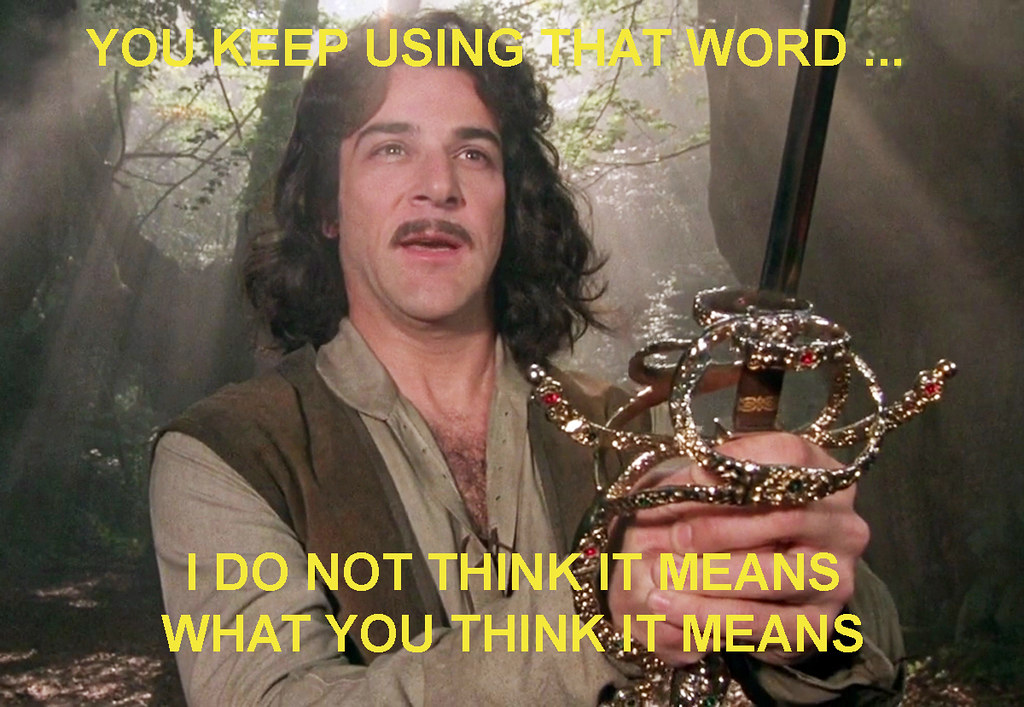
In The Princess Bride, one character questions another for the latter’s repeated use of a word telling him that he did not think that word meant what the one using it thought it meant. I have run into a little bit of that myself recently with the odd usage of the word “wholesome.” I grew up when “wholesome” described something good for the body, mind, or spirit. The folks at Lexico dot-com have my back on this one:
“Conducive to or suggestive of good health and physical well-being.”
1.1 “Conducive to or characterized by moral well-being.” 1
However, for current usage, it sometimes helps to consult a tertiary source like Urban Dictionary dot-com. Anyone can define a word, and users vote for the meanings they think are best. User, 265daysofpatandspongebob, provided the most current and popular user-contributed definition of “wholesome.”
“An embodiment of the following: self-less, considerate, sweet, compassionate, thoughtful, generous, genuine, doesn’t talk trash about other people,”2
Yes, I realize that the grammar is not perfect, but that is not the point. Somehow people have come to associate this adjective with the result of having been nurtured by the wholesome. For example, it would be hard to be selfless without wholesome influences. A secondary definition offered by another contributor was essentially something or someone bringing a smile to another’s face.3 Finally, there was the usage I had encountered. The fourth most popular submission asserted that something wholesome expressed love and affection, not lewdness.4
While I can appreciate that people realize that lewdness is not a virtue, not all love and affection are “wholesome.” The forum in which I encountered this word recently was about a story of a young adult who took in a runaway teen. Sadly, the young woman previously traded her body for a place to stay and assumed her new caretaker would desire the same type of “payment.” To his credit, he told her that she had value other than just her body and deserved good treatment with no strings attached. Those who are saying that the story was wholesome, I suppose, were expressing surprise that a vehicle of popular culture was not glorifying casual relations, especially between those of about a ten-year age difference. Thus far, the relationship presented is platonic. Perceptions of the story’s “wholesomeness” among audience members may change if a romance develops between the adult and the teen, even if the former waits to pursue romantic feelings until the latter reaches what the West considers the age of majority.
While I would prefer people to react this way because of moral instruction, I fear it stems more from the self-righteousness associated with political correctness. In other words, it has more to do with #MeToo than God said. After finally understanding how people are using “wholesome,” I thought of how I’ve previously seen the word used by other forum members in the past. The very first time I encountered this odd definition of “wholesome” was in a story with a fantasy setting. A woman befriends a female dragon. The dragon assumes a human form and lives with the woman, and takes care of her like a maid. The dragon acts smitten with the human, but the human has no romantic interest. But with the addition of other dragons who take up residence with the human, the setting assumes the form of a non-traditional family. Like the other story, I referenced, the relationship is platonic. However, the LGBTQ+ community lifted it as a positive example of the gay lifestyle. Commentators talked about how “wholesome” it was. Again, the idea was that it highlighted love and affection without lewdness. Hence, making it more acceptable to the “straights” in the audience.
It seems religious instruction is as lacking as English education today. If newspeak continues replacing our language, we might see other words perverted to accommodate meanings wordsmiths never intended for them. I am mindful of the warning from God as given by His prophet, Isaiah.
“Woe to those who call evil good, and good evil; Who substitute darkness for light and light for darkness; Who substitute bitter for sweet and sweet for bitter!” (Isaiah 5.20 NASB1995)
In the interim, take the time to teach the young people in your life what is wholesome. Let them know that being wholesome requires more than the absence of lewdness, causing others to smile, or remaining selfless. To be wholesome means you surround yourself with makes you a better, more moral person. The only thing capable of doing this is Christ, the Word, and the church.
Works Cited
1 “WHOLESOME: Definition of WHOLESOME by Oxford Dictionary on Lexico.com Also Meaning of WHOLESOME.” Lexico Dictionaries | English, Lexico Dictionaries, www.lexico.com/definition/wholesome.
Robert Aaron Long serves as a vivid example of how one should NOT deal with his addiction. While politicians and activists may seek to politicize the “massage parlor shooter’s” motives, law enforcement is painting the picture of a mentally disturbed man who seeks to justify the murder of others because of his sex addiction. Long evidently has a problem dealing with his lusts. Hence, these massage parlors’ existence, which he patronized in the past, presented such a temptation that he felt it necessary to kill the proprietors and workers of said establishments.
As rationally thinking people, we readily see the problem with Long’s logic. Why would the perpetrator of the violence not turn his anger inwardly? He is the sinner, regardless of who the temptress may be. Would it not have been more effective to actually pluck out his eyes or remove other body parts causing him to sin? At least, one could twist Jesus’ hyperbole in Mark 9.34ff in such a fashion to justify self-mutilation for the sake of entering the Kingdom of God. If you seek to live righteously, would such extremes not be better than taking the life of eight people?
If anything, this incident demonstrates the sad state in which our modern world finds itself. Long knew enough to realize he had a problem with his fleshly appetites. Had no one taught him to “flee from youthful lusts and pursue righteousness, faith, love and peace, with those who call on the Lord from a pure heart” (2 Timothy 2.22)? Had he pursued righteousness with others calling on God’s name, he would have learned how to “possess his own vessel in sanctification and honor” (1 Thessalonians 4.4 NASB1995). Older Christian brothers could have encouraged Long to exercise self-control (Titus 2.6).
I cannot claim to know the particulars of Long’s home life, but I can inspect the fruit born of contemporary society (cf. Matthew 7.20). These types of crimes result from a nation that has excluded God from the public square. With God’s teachings, one notes that the one accountable for sin is the individual committing it (James 1.13-15). John identifies the three main avenues the world uses to tempt us: “lust of the flesh and the lust of the eyes and the boastful pride of life” (1 John 2.16 NASB1995).
The correct application of the passage from Mark 9.34ff mentioned previously is that one takes personal responsibility in removing such influences. In the case of sex or pornography addiction, turn off the television and internet. Avoid the parts of town where more seedy businesses operate. Remove your libertine friends who desire to patronize things like strip clubs and “massage parlors.” As Paul indicates of his daily walk, it is self-discipline (1 Corinthians 9.24-27).
And do not try to tackle addiction alone. Again, we observed that Paul told Timothy to flee lusts and pursue righteousness, faith, love, and peace with other Christians. (2 Timothy 2.22) Addiction is difficult to overcome. The addicted can fall off the wagon periodically. Hence, he or she needs others to help lift them back up. We are mindful of the truth that “two are better than one” (Ecclesiastes 4.9-12). Join this truth with prayer and Bible study, and one can find the necessary strength to overcome. Isaiah reminds us that God gives strength to the weary and increases the power of the weak. (Isaiah 40.29)
Having seen how not to deal with your addiction, like Robert Aaron Long, decide to take responsibility, purge your life of the evil leaven, ask others for help, and turn to God for strength.
While many today have no idea who Jesse Roper Mohorovic is, he was a celebrity from the moment of his birth on March 30, 1942, off Cape Hatteras, North Carolina. The United States had entered World War II only a few months before, and German U-Boats “prowled the Atlantic sea lanes, and the waters off the Virginia-Carolina coast were ‘the most dangerous on earth'” (C. Brian Kelly, Military History, 9/05, 74). In fact, the Germans killed twice as many seamen in their U-boat campaign off the east coast than died at Pearl Harbor.
Jesse’s mother, Desanka, was 8 1/2 months pregnant, traveling on a passenger freighter that was torpedoed. She faced peril after peril, from getting out of her cabin to the harrowing escape in a lifeboat to an overnight storm. In the middle of all of it, the freighter sunk and her doctor injured in their dramatic escape, she gave birth in Lifeboat #4 to a baby boy at 2:30 A.M. Two days later, they were rescued by the Navy destroyer Jesse Roper.
The media covered many of the early milestones of his life, and even documented his interests and favorite baseball team. He later appeared on the TV shows To Tell The Truth and I’ve Got A Secret. He earned a law degree, served in the Navy, and had a career in marketing. He died of lung cancer about two years after his 2003 retirement (via JOC.com).
It is no wonder that “The Lifeboat Baby” would become such a sensation, especially given the real drama behind his birth. Perhaps he would have been part of anonymous tragedy if he and his mother had been among the 5000 who perished, but his birth and life became a symbol of hope and victory. Indeed, “Newspapers heralded Jesse as living proof the Allies could not be defeated” (Kelly).
We live in increasingly grim times. Our current battle is spiritual in nature, as sin and immorality seem to have the upper hand. Souls are perishing in infinitely greater numbers (cf. Mat. 7:13-14). While we cannot save them all, we need to be in search of those we can reach with the gospel. We must muster greater courage to share the good news and help those searching reach safety. They need to know there is hope and victory possible, and that Christ will ultimately win (1 John 5:4-5; 1 Cor. 15:24-25).These babes in Christ are unlikely to capture the attention of the media, but each of them have the rapt attention of heaven. God is counting on you and me helping to deliver them, regardless of how stormy things may be. Each individual matters to God. How wonderful that we might partner with God and His Word, and help a soul be one whose name is written in the Lamb’s Book of Life (Rev. 21:27)!
Ahab was the most wicked king in Israel’s history (1 Kings 16:30). To top it off, he was married to perhaps the most immoral woman revealed to us during the time of the divided kingdom in the Old Testament. Her name, Jezebel, is still somewhat infamous today. She destroyed the prophets of the Lord (1 Kings 18:4). The prophets who survived feared for their lives because of Ahab (18:9). Instead, Jezebel kept a stable of false prophets, 450 prophets of Baal and 400 prophets of Asherah (18:19). Read this section of 1 Kings and the first nine chapters of 2 Kings to get the full flavor of who this notorious couple was.
How ironic that when Elijah appears to Ahab before the prophet’s infamous confrontation with the false prophets on Mount Carmel, Ahab’s first words to him were, “Is this you, you troubler of Israel?” (18:17). There was controversy, division, problems, and trouble in the land, but Ahab’s narrative was distorted. Ahab was like a reckless drunk driver weaving in and out of traffic and blaming a law-abiding pedestrian for being in his way on the sidewalk. Elijah was not the troubler of Israel for daring to oppose the false ways of Ahab and Jezebel. He was doing exactly what God wanted him to do!
In our present, lawless age, there are so many “prophets” who come along with a message appealing to right ideas like peace, grace, unity, and love. Many of them package themselves in the garments of relevance, using our culture as their props and stage. The causes célèbre which our age reveres, some of which are diametrically opposed to the doctrine, ethics, and morality outlined in Scripture, are pushed at God’s people—who are shamed and made to feel unrighteous if they dare protest what is said. In some circles, it is asserted that anyone teaching that the Bible is authoritative, contains a pattern, and is God’s objective truth for all times, is Pharisaical, consumed with self-righteousness, hateful, mean-spirited, and divisive. In short, that they are “troublers of Israel.”
As a quick side-note, there are some who do press their personal proclivities, traditions, and convictions as divine truth. This is as accursed a thing as seeking to nullify what God has bound in heaven (cf. Mat. 16:19; Rev. 22:18-19). Such folks manufacture trouble rather than trouble people by faithfully sharing God’s Word. These occupy unenviable ground, in view of the end of all things.
Yet, anyone who conscientiously tries to follow God’s blueprint for how to share His truth (Eph. 4:15; 2 Tim. 2:24-26; Col. 4:6), who takes care to handle Scripture accurately (2 Tim. 2:15), is going to invariably encounter the Ahabs, Jezebels, Baalites, and Asherahists. Teach the singular, undenominational nature of the church (Eph. 4:4), the role of women in the church (1 Tim. 2:9-12), the essentiality of baptism in God’s saving plan (Acts 2:38), God’s plan for marriage and sexuality (Mat. 19:1-9; Heb. 13:4; Rom. 1:26-27), and the like, and it will come. The Ahabs will label you the troublemaker and the source of the problem.
In what may sound dark and grim, Paul warns Timothy that difficult times will come (2 Tim. 3:1). He speaks of men immoral in nature and inaccurate in message who succeed with the weak and impulsive (3:6), who themselves are “always learning and never able to come to the knowledge of the truth” (3:7), who in fact “oppose the truth, men of depraved mind, rejected in regard to the faith” (3:8). Ultimately, they will not carry the day (3:9). But they will always have their eager followers who “accumulate for themselves teachers in accordance to their own desires, and will turn away their ears from the truth and will turn aside to myths” (4:3-4).
Suppress the victim mentality if you are trying to be an Elijah in this Ahab society. On the job, at home, in the community, within the religious community at large, and even at times within the church, “preach the word” (2 Tim. 4:2). Do it with great patience and instruction, as Paul counsels. Don’t be a troubler in God’s eyes, but know that you will be seen as one in the eyes of some in this world. Keeping company with Elijah is not a bad thing.
My sweet daughter-in-law, Chelsea, was incensed about how cavalier a “California-based” couple were about their divorce. She sent me the link to the article and it’s hard to believe this is not “fake news” or an April Fool’s joke written on a December day. The BuzzFeed News article, written by Remy Smidt and entitled, “These Parents Threw A Lit ‘Divorce Party’ To Make Their Split Less Awkward,” and subtitled, “Eat, Drink, And Remarry,” features a couple, married more than 20 years. They have two daughters, 20 and 18, who helped them plan their party. There was catered food, drinking, dancing, a “divorce cake,” and a life-sized poster of them both that says “just divorced.” Judging from the many comments below the story, a great many find their idea novel, noble, and neat. The daughters seem happy for them, the couple are cordial and friendly, and all that is missing is a line like “they each, separately, lived happily ever after” (article here).
In Matthew 19:6 and Mark 10:9, Jesus taught, “What therefore God has joined together, let not man separate.” In that context, He gives an exception that allows one to divorce and remarry (fornication, Mat. 19:9). Yet, He is anything but lighthearted when He says it. The situation when such divorces occur is most grave. To God, marriage is a sacred, solemn vow that, as is often stated, requires “for better or worse, richer or poorer, sickness or health, until death…” For a myriad of reasons other than Jesus’ stated exception, a great many husbands and wives give up on their marriages. They may not be lighthearted and all smiles, as Michelle Mahoney, Jeff Becerra, Rylie and Emma were, but they have about as much regard for God’s design and intention for marriage as this interesting family.
Through the ups and downs, the give and take, the good times and bad times that are inevitable between a husband and wife throughout time, something beautiful can be built. It requires growth, maturity, unselfishness, compromise, and mutual submission, but as God is the founder of this wonderful institution He knows how we can be best served. His regard for marriage is such that He uses it to illustrate the bond between Christ and the church (Eph. 5:22-34). Our society may be enamored with a disposable approach to something God meant to be permanent but may we be devoted to the daily effort and blessing of something God put in place at the very beginning of time. As we do, we will be blessed for it!
Labor Commissioner Brad Avakian declared war on establishments which wished to decline services to those of the LGBT community. Aaron and Melissa Klein, owners of Sweet Cakes bakery, were driven out of business by a lawsuit in the wake of their refusal to bake a wedding cake for a lesbian couple. According to Todd Starnes,
They faced boycotts and picket lines and other wedding vendors were threatened with similar action if they did business with Sweet Cakes. The family’s young children received death threats and the store’s social networking platforms were overrun by militant LGBT activists posting obscene and profane messages (read here).
On top of that, they were ordered by the court to pay the couple $135,000 in emotional damages.
The Kleins refused on the grounds that it violated their “deeply-held religious beliefs” (ibid.). Anyone familiar with the Bible could understand the roots of their conviction, even if those ones don’t agree with the Bible (Rom. 1:26-27; 1 Cor. 6:9-11; 1 Tim. 1:8-11). Unfortunately for the Kleins, “tolerance” was not extended to them. Freedom of religion did not cover their attempt to freely practice their religion in their daily lives.
We have seen forces within our country, in politics, education, the media, and the like, pushing a moral agenda that is often cloaked under the guise of creating tolerance for absolutely everyone. But such is a logical impossibility. For those who see the Bible as their unalterable, unchanging guide, there are moral, ethical, and doctrinal absolutes. Nothing, be it culture, situations, or moral shifts, can alter and change God’s commands. In other words, killing the unborn does not become morally acceptable just because our nation passed a law. We do not want our money to fund what we deem sinful. Fornication, adultery, homosexuality, and any other sexual relationship the Bible identifies as sinful does not cease to be so just because the culture embraces it. We don’t want to be forced to accept what we believe, from Scripture, to be unacceptable to God. Yet, the very articulation of such conviction is increasingly rejected. That seat at the table of civil discourse has been removed and stuck in the corner (if not thrown into the yard).
For some, tolerance has come to mean acceptance of their world view and philosophy. It is not extended to those who disagree or who advocate a divergent point of view (isn’t that what tolerance means?). But, such is inevitable. There is no such thing as absolute tolerance. Immorality and morality, biblically defined, cannot peacefully coexist. Paul says, “Put on the full armor of God, so that you will be able to stand firm against the schemes of the devil. For our struggle is not against flesh and blood, but against the rulers, against the powers, against the world forces of this darkness, against the spiritual forces of wickedness in the heavenly places. Therefore, take up the full armor of God, so that you will be able to resist in the evil day, and having done everything, to stand firm” (Eph. 6:11-13). It is a struggle against powers and forces. It requires a firm stand and a resistance. Not a physical, literal fight (cf. 2 Cor. 10:3-5). It’s a battle of the mind. It depends on the rank and file of people having properly trained, sharpened consciences, formed and spurred by God’s truth as revealed in Scripture.
Jesus says this is to be expected (John 15:19). Peter (1 Pet. 4:12) and John (1 Jn. 3:13) echo it. Our task is to find the honest hearts and minds (Luke 8:15) who are seeking truth amid the cacophony of cultural noise. And, no matter what it costs us, hold onto truth and teach it to our children (cf. Deut. 6:1ff) which every way the cultural wind blows. Jesus did not call us to be tolerant (Rev. 2:2,20), but rather teachers of truth in love (Eph. 4:15). May we never lose sight of that.
Today, we are finding out that three winning lottery tickets were sold in the record-setting Powerball jackpot, one in California, one in Florida, and one in Tennessee. Each ticket is worth $528.8 million dollars. That’s an attention-getting number. Here are a few more. $70.1 billion dollars, the amount Americans spend on lottery tickets every year (more than Americans spend on sports tickets, books, video games, movies, and music combined). $755. That’s the average per-capita spend on lottery tickets in South Dakota. $800. That’s the per-capita spend in Rhode Island, who holds the ignominious distinction of leading the nation in this category. $230. That’s the per-capita average spend of every man, woman, and child in the 43 states where the lottery is played. One-third and one-half. The poorest third of households buy half of all lottery tickets (statistics via theatlantic.com, Derek Thompson, “Lotteries: America’s $70 Billion Shame”).
Newscasters often report on these jackpots and encourage viewers to “check the numbers.” Lottery commercials often vie with beer commercials as some of the more humorous, clever ones to be seen. In the media and public venues, lottery ticket purchasing is usually portrayed as a harmless, even exciting, diversion. Perhaps many have failed to look more closely at what these other numbers mean for a person’s ethics and morality.
John A. Hobson, in the January 1905 edition of International Journal of Ethics, examined “The Ethics Of Gambling.” In an examination of gambling, including lottery contests, Hobson observes:
Gambling involves the denial of all system in the appointment
of property: it plunges the mind in a world of anarchy where
things come upon one, and pass from one miraculously. It does
not so manifestly sin against the canons of justice as do other
bad modes of transfer, theft, fraud, sweating (sic.), for every one
is said to have an equal chance; but it inflicts a graver damage
on the intellect. Based as it is on an organised rejection of all
reason as a factor, it removes its devotees into a positive atmosphere
of miracles, and generates an emotional excitement that inhibits
those checks which reason more or less contrives to place upon
emotional extravagances. The essence of gambling consists in
an abandonment of reason, an inhibition of the factors of human
control (Vol. 15, No. 2, 138).
Hobson was looking at the underlying psyche of those so eager to gain as much as possible while exerting as little effort as possible. But he decries more than laziness. He puts his finger on the most dangerous aspect of things like playing the lottery—the Bible calls it “covetousness.” It is an irrational, often compulsive, attempt to obtain wealth.
The BDAG lexicon defines the covetous person as “one who desires to have more than is due, a greedy person, whose ways are judged to be extremely sinful by Christians and many others. In Hellenic society this was a violation of the basic principle of proportion and contrary to the idea of beneficent concern for the citizenry” (Arndt, William, Frederick W. Danker, and Walter Bauer. A Greek-English lexicon of the New Testament and other early Christian literature 2000 : n. pag. Print.). Greed is not confined to practices like playing the lottery, but it is legitimate for one to ask what motivates their play?
What is clear is what Scripture says about covetousness: it prevents one’s inheriting the kingdom of God (1 Cor. 6:10), it is idolatry which again prevents inheriting this kingdom (Eph. 5:5), it is a failure to love one’s neighbor (Rom. 13:9), and it is a defilement of the heart (Mark 7:22). Let’s make sure that greed and covetousness do not “have our number.”
In 1 John 5:19, John readies the close of this epistle by observing, “We know that we are of God, and the whole world lies under the sway of the wicked one” (NKJ). The Greek word translated “lies in the power of” (ESV, NAS) or “is under the sway of” is a word meaning “to be in the power of one” (Zodhiates) and “to lie in” (TDNT). Bauer adds, “As the believer abides in Christ, so that he is nourished and fruitfully sustained by Him, so the world lies in the devil, by whom it is controlled and rendered helpless and powerless, and finally killed” (ibid.). This gives us a clear picture of not only what the saints in John’s day dealt with, but also what our current spiritual climate is.
There is a growing culture of unbelief in contemporary society, a skepticism toward a truly biblical worldview. With that, there is an intolerance bred by ignorance, a bias against the objective truth of Scripture. In its place, there is a glorification of and infatuation with people and things the Bible calls sin. That is not novel to our age. Yet, it is good for us to be reminded that such misplaced affection is the result of a culture that lies in the devil, controlled and subdued by his way of thinking. Paul tells the would be soul-winner to approach that work this way, “gentle to all, able to teach, patient, in humility correcting those who are in opposition, if God perhaps will grant them repentance, so that they may know the truth, and that they may come to their senses” (2 Tim. 2:24-26a). What’s their problem? They are in “the snare of the devil, having been taken captive by him to do his will” (2 Tim. 2:26b).
We encounter people every day whose choices are the result of having come under the sway of the devil. They have shaped their lives, their goals, and their desires, by the way he says that fulfillment, satisfaction, and pleasure are derived. For many, they do not know another way much less the way God has laid out in His Word. Perhaps if we remind ourselves how people got where they are, we can help them get where Christ wants them to go. So many are looking for a better way and they know they have not found it. Let us invest ourselves in them and through that relationship show them “the way, the truth, and the life” (John 14:6).
One of the feature stories in today’s USA Today is a glowing feature about a homosexual couple getting married in Maryland, one of the states to legalize homosexual marriage in the last election. The article is also about changing attitudes in our nation. Chuck Raash, the author, states in the course of writing that 53% of Americans surveyed say they think that same-sex married couples should enjoy the same rights as heterosexual couples. Perhaps the statistic I found more interesting was that 36% of people surveyed have changed their mind about this issue during their lifetime. While those numbers are not further analyzed, the tone of the article would suggest that most, if not all, have changed from opposing to accepting it. One of the grooms summed up the “three stages” homosexuals often face when they reveal their preference to the people in their lives–“tolerance, acceptance, embrace” (USA Today, 1/9/13, A-1). I do not doubt any of the statistics in the article, nor do I disagree with the fact of such gradual change in thinking in people’s minds toward matters like homosexuality.
Yet, I would disagree with this man and those who support his lifestyle that such change is positive. Sin is very often met with such a gradual, changing attitude. The 18th Century English poet, Alexander Pope, is actually the originator of the thought from the afore-quoted groom. In “Essay on Man,” Pope said, “Vice is a monster of so frightful mien, as to be hated needs but to be seen. Yet too oft, familiar with her face, we first endure, then pity, then embrace.” The idea, especially in context of the whole, is that people’s attitude toward sin soften through the attrition of exposure. That is, the more we are exposed to sin, the more comfortable and desensitized to it we become. When a sin is increasingly portrayed as positive and right and people stop speaking against it, that society inevitably moves from disapproval to embrace.
Isaiah speaks of people getting things spiritually backward, calling evil “good” and good “evil” (5:20). Consciences get seared (1 Tim. 4:2). They become callous, having “given themselves over to sensuality for the practice of every kind of impurity with greediness” (Eph. 4:19). Someone may deny God’s existence or that the Bible is His inspired Word, but those who claim faith in both cannot consistently do so but tolerate, accept, or embrace what He says therein is sin!















 The Preacher Pollard Blog