A Kingdom Opportunist

October hits, and life kicks into overdrive. Halloween, Thanksgiving, Christmas, New Year’s, it’s a relentless lineup! Family visits, work parties, and the creeping numbers on the scale keep you on your toes and in a food coma. In all this, it’s easy to let Bible study and prayer slip. But if you’re too busy for God, you’re too busy. So how do you balance life with spiritual growth?

Carl Pollard

October hits, and life kicks into overdrive. Halloween, Thanksgiving, Christmas, New Year’s, it’s a relentless lineup! Family visits, work parties, and the creeping numbers on the scale keep you on your toes and in a food coma. In all this, it’s easy to let Bible study and prayer slip. But if you’re too busy for God, you’re too busy. So how do you balance life with spiritual growth? Be a Kingdom Opportunist,  someone who spots and acts on God-given moments to advance His work, not for personal gain, but for His glory.

A Kingdom Opportunist sees openings in daily life and responds with faith and courage. Scripture shows us people who lived this way, always ready to act when God opened a door. 

Paul didn’t let circumstances stop him. In Acts 16:25-34, he and Silas are beaten and chained in a Philippian jail. Instead of giving up, they’re praying and singing hymns at midnight. When an earthquake opens the prison doors, they don’t run; they stay and share the gospel with the jailer, leading him to Christ. In Acts 17, Paul’s in Athens, surrounded by idols. He spots an altar to an “unknown God” and uses it to preach the gospel. Synagogue, marketplace, or jail cell, Paul turned every moment toward Christ. He teaches us to see opportunities in tough spots: a coworker’s question, a neighbor’s grief, a delayed schedule. These aren’t interruptions, they’re opportunities! 

In Acts 16:13-15, Lydia, a businesswoman in Philippi, hears Paul’s message by the river. God opens her heart, and she responds immediately, following Jesus and opening her home to Paul’s team. Her hospitality makes her house a base for the early church. Lydia didn’t need a stage or a title, she used her home, influence, and resources to serve God. What do you have? A spare hour? A skill? A kitchen table? Like Lydia, you can use what’s in your hand. 

Barnabas, the “son of encouragement,” saw what others missed. In Acts 9:26-27, when the disciples feared Saul (later Paul) because of his past, Barnabas took a chance, vouching for him and bringing him into the church. In Acts 11:25-26, he tracked down Paul in Tarsus, kickstarting his ministry. He also gave John Mark a second shot after a failure (Acts 15:36-39), helping him grow into a key servant. Barnabas invested in people, seeing God’s work where others saw problems. Who needs your encouragement? A struggling teen, a new Christian, a friend who messed up? A kind word or second chance can shift someone’s path for God’s glory.

Scripture is filled with examples. Esther risked her life to save her people, seeing her role as queen as God’s timing (Esther 4:16). The Shunammite woman gave Elisha a room, creating space for God’s work (2 Kings 4:8-10). Andrew brought his brother Peter to Jesus in a simple act that changed everything (John 1:40-42). Each saw God’s hand and acted, not for themselves, but for His purpose.

Unlike worldly opportunists chasing self-interest, Kingdom Opportunists are driven by God’s glory. They’re prayerful, discerning, and bold, ready to move when God opens a door. To live this way, pray daily for eyes to see opportunities. Study Scripture to be ready to share your faith. Use what you have: time, talents, or a listening ear. Step into hard situations with trust, like Paul. Encourage others, like Barnabas. And stay humble, pointing to Jesus.

God’s still opening doors every day, at work, home, or in your community. My prayer is that we’ll see these moments, respond with faith, and act with courage. As we do, God’s Kingdom grows, one opportunity at a time. You’re equipped for this moment. 

Be a Kingdom Opportunist!

You Can Do It!

What have you wanted to try to do for the Lord but convinced yourself is impossible? Memorize 100 Scriptures? Preach a sermon? Teach a class? Share the gospel with a lost soul? Serve in church leadership? Whatever is within the scope of God’s will and authorization and whatever is within the field of human possibility, you can do it!

Neal Pollard

Kansei Matsuzawa is from Tokyo, Japan. He grew up there playing soccer until the thought occurred to him as a teenager that he wanted to try American football after watching his first NFL game. He had never kicked a football until the age of 20. Of course, it took a lot of practice as well as watching YouTube and Instagram videos. Last Saturday, Kansei’s last second kick helped Hawaii defeat Stanford if both teams’ 2025 opener. This is his fourth year of playing college football in America. His goal is to kick in the NFL, and who’s to doubt him? He’s come so far already!

What have you wanted to try to do for the Lord but convinced yourself is impossible? Memorize 100 Scriptures? Preach a sermon? Teach a class? Share the gospel with a lost soul? Serve in church leadership? Whatever is within the scope of God’s will and authorization and whatever is within the field of human possibility, you can do it! Find the tools needed and use them. Research, explore, and attempt! Consider what happened when men and women in Bible times thought this way:

  • Caleb was ready to fight giants (Num. 13:30), then 40 years later he drove them out (Jos. 14:12; 15:14).
  • Jael, an unassuming woman, killed the evil commander of an army with a tent peg and ended Canaan’s oppression of Israel (Jud. 4:17-23).
  • David slew a frightening giant with a sling and a rock (1 Sam. 17:49-50).
  • David’s mighty men, Adino, Eleazar, Shammah, Abishai, and Benaiah, among others, did incredibly daring and memorable things among God’s enemies (2 Sam. 23:8ff).
  • Elijah out-dueled 450 prophets of Baal on Mt. Carmel and called down fire from heaven (1 Ki. 18:36-46).
  • Peter walked on water (Mat. 14:28-29), then later preached the first gospel sermon (Acts 2:21-36).
  • Paul won the Gentile world to Christ in one incredible effort after another (Acts 13-28).
  • Hebrews 11 breaks down a highlight reel of incredible, often unlikely, accomplishments men and woman made for God by faith through the ages.

It still happens today. No, not through miraculous means and not of the physical, material kind. Not even in episodes that are earth-shattering and dramatic. It may be a brief conversation, a courageous stand, an act of service, or a show of genuine love. 

God once asked Moses, “What is that in your hand?” (Ex. 4:2). Is He asking you and me that? The answer? “Whatever your hand finds to do, do it with all your might” (Ec. 9:10)! 

Walk As A Disciple

Carl Pollard

The story is told of a father and son stepping off a rickety stagecoach in a dusty western town, looking for an uncle they’ve never met. Across the town square, a man strides away, and the father says, “That’s him!” The son, puzzled, asks, “How do you know? You’ve never seen him!” With a grin, the father replies, “Son, he walks just like my dad.” That’s the thing about a walk—it gives you away. As Christians, our lives should shout that we’ve been with Jesus, even to those who’ve never seen Him. Like Peter, spotted as a disciple by a servant girl despite his fear (Luke 22:56-57), our walk should tell the world who we follow.

We’ve all felt that tug to live for something bigger, haven’t we? To wonder if our faith is making a difference or if we’re really following Jesus the way He meant. I’ve wrestled with that myself, wanting my life to count in a world that’s starving for hope. Jesus’ Great Commission in Matthew 28:18-20 isn’t just a pep talk—it’s a command: “Go and make disciples of all nations, baptizing them… teaching them to obey everything I’ve commanded.” Paul backs this up in Colossians 1:28-29, pushing us to proclaim Christ and work hard to help others grow in Him. This isn’t about just showing up to church or believing quietly—it’s about being all-in, living as disciples who reflect Jesus through our words, love, and actions.

What’s a Disciple? 

The Greek word for “disciple,” mathetes, means someone who learns by imitating their teacher. Jesus put it plainly in Luke 6:40: a disciple, when fully trained, becomes like their teacher. God’s plan is to shape us into Christ’s image (Romans 8:29). A woman once asked a preacher, “What’s discipleship in one word?” He held up a blank piece of paper and said, “It’s signing your name at the bottom and letting God fill in the rest.” That’s it—handing over your life, like Peter or Mary Magdalene did, leaving everything to follow Jesus. Are you ready to give God the signed blank paper? 

How do I know I’m walking the walk? 

Jesus gave us three clear signs of a true disciple. First, stick to His Word. John 8:31 says, “If you hold to my teaching, you are really my disciples.” This means diving into Scripture and living it out, like the Bereans who studied daily (Acts 17:11). It’s not just reading—it’s letting God’s truth change how you live. Second, love each other. Jesus said in John 13:35, “By this everyone will know you are my disciples, if you love one another.” The early church shared everything, and their love drew thousands to faith (Acts 2:44-45). Are you forgiving, serving, or lifting up your brothers and sisters? Third, bear fruit that lasts. John 15:8 says God is glorified when we produce “much fruit.” This isn’t a one-off good deed but a life of impact that points to Jesus. Is your life showing His work?

Following Jesus isn’t cheap. He said in Luke 14:26 that He comes before family, friends, even your own desires. It might mean sacrifice or persecution (Luke 14:27). Polycarp, facing death in 156 AD, said, “Eighty-six years I’ve served Him, and He’s never done me wrong.” What do you need to let go of—pride, plans, fears? But here’s the good news: you don’t do it alone. Colossians 1:29 talks about God’s power working mightily in us. That same power turned the Roman Empire upside down through ordinary disciples. It can help you share your faith, mentor someone, or stand firm today.

At the end of the day, discipleship isn’t about what you get but what you give—how you love, serve, and sacrifice. The rewards? Eternal life free from pain (Revelation 21:1-8), plus peace, joy, and a spiritual family right now (John 14:27; Mark 10:28-30). It starts with baptism, uniting you with Christ’s death and resurrection (Romans 6:3-4), and continues with a life of learning and obeying His commands (Matthew 28:20).

Jesus calls us to live as His disciples—loving deeply, bearing fruit, and surrendering fully. Let your walk show the world you’ve been with Him. Sign that blank page, let God fill it, and pass your faith on. He promises, “I am with you always” (Matthew 28:20). So, share your faith with a neighbor, encourage a new believer, or let go of what’s holding you back. The world needs disciples who shine with Christ’s light. Are you ready to walk the walk?

The Gardener’s Promise

“Her Savior was right there, but grief hid Him. We miss Jesus too, expecting Him to show up in a way WE want, instead of seeing Him in the Word, worship, or answered prayers. Mary saw a gardener, but His name was Jesus.”

Carl Pollard

 I’m no gardener, but I’ve got one story of botanical triumph. In Alabama, I had a fire pit where I burned all sorts of junk—boxes, old couches, mattresses, you name it. One day, I threw in a box of rotten vegetables. Didn’t think much of it. But a few months later, three corn stalks were growing right out of that pit. Shallow roots on a plywood slab, pushing through a metal grate. I didn’t water or tend them, yet they produced nine whole kernels! I ate that corn, somehow didn’t get tetanus, and I’m still amazed. 

Sometimes, where only death is expected, life is found. 

In John 20:11-18 Jesus’ followers expected a dead body but found a living Savior. Mary Magdalene met a “Gardener” who turned her tears into purpose. Christ’s resurrection plants hope in barren places, calling us to share His life with a world in need.

Mary found the tomb empty and wept, thinking someone stole Jesus’ body. She’d stood at the cross (John 19:25), watched Him die, and now even His memory seemed lost. Her tears show what life would be like if Jesus stayed dead—a world without hope. Two angels asked, “Why are you crying?” but grief blinded her to God’s messengers. We do the same, dwelling on broken families or a culture that’s left God, missing what He’s doing. A 2024 Gallup poll says most Americans feel hopeless. If you’re in Christ, the empty tomb is our hope—rejoice in it!

Mary turned and saw Jesus but thought He was the gardener. Gardeners worked tombs early, so it made sense. He asked, “Why are you crying? Who are you looking for?” Her Savior was right there, but grief hid Him. We miss Jesus too, expecting Him to show up in a way WE want, instead of seeing Him in the Word, worship, or answered prayers. Mary saw a gardener, but His name was Jesus.

Jesus said, “Mary,” and she knew Him, crying “Rabboni!” (Teacher). All 4 Gospels make women the first resurrection witnesses. This was countercultural, and some rejected their claims (even the apostles). Skeptics like Celsus called Mary “hysterical.” But she was the perfect witness: she followed Jesus, heard His prophecies, watched Him die, and saw Him rise. He spoke her name, like the Good Shepherd (John 10:3), and it shows He knows your name, your pain, and calls you to life as your Great High Priest and Shepherd. 

Jesus told Mary, “Go tell my brothers I’m ascending to my Father and your Father.” His resurrection makes God our Father. Mary ran to share the news. Only 10% of Christians regularly share their faith (Barna, 2021), but 1.6 billion people haven’t heard the gospel. Don’t hold onto safe faith—plant the seed of hope. Where death is expected, life is found. God will bring the increase.

Trust the Savior in barren places—brokenness, doubt, or pain. Jesus plants hope, as He did for Mary (John 16:33). Hear His call to repentance, baptism, or renewed commitment (Acts 22:16). 

Plant hope boldly—share your faith, serve others, invite someone to worship with you. The harvest is ready, and it’s more than nine kernels.

Top 10 Scriptural Social Skills

What would you add to the list?

Dale Pollard

  1. Sharpen your perception because, “The wise of heart is called perceptive, and pleasant speech increases persuasiveness” (Proverbs 16:21) 
  2. Be gentle and…
  3. show courtesy to all people (Titus 3:2) 
  4. Do all the good you’re able do to for somebody else (Gal. 6:10) 
  5. Pick up stuff for other people spiritually and physically— if you’ve got a strong back. Bear one another’s burdens (Gal. 6:2) 
  6. Be golden. As you wish that others would do to you, do so to them (Luke 6:31) 
  7. Understand what makes your own mind turn. Discern your own thoughts, identify your intentions (Heb. 4:12) 
  8. Talk to others like you would talk Jesus. How would you interact with 
    Him? (Matthew 25:40) 
  9. Grace is like the Savior’s All-Spice seasoning; use it on every relationship (Col. 4:5-6)
  10. Don’t underestimate the power of joy. Also, try and use your face to show it so your joyfulness isn’t your best kept secret. Praise God and be joyful as it attracts both the people that you need and people that need you— a win-win! (Psalm 100:1-5)

Demonic Faith

Carl Pollard

Demonic Faith 

James 2:18-19 reads, “But someone will say, “You have faith and I have works.” Show me your faith apart from your works, and I will show you my faith by my works. You believe that God is one; you do well. Even the demons believe—and shudder!” 

Until you have works, you cannot show that you have faith. Any verbal attempt is futile if your life doesn’t reflect your belief in God. The only real way to show your faith is to do something. If you never told someone that you were a Christian, could they tell by your actions? The question isn’t, how many works do I need to do to have eternal life, it is, how much disobedience can I have in my life and still call Jesus my master?

We aren’t working toward our reward and getting paid back like it’s a job; this faith motivates us to obey our master. James says, “show me a faith without works.” You can’t. In verse 19, he says, “you believe that God is one, that is good.” That is the Jewish Shema, and it is a great step in the right direction but it won’t save you if that’s all you have. Even demons believe. Satan ain’t an atheist! He believes in God more than most people do! It’s great that you believe in God, but so do many others who are filled with evil. 

If all you need is belief, why isn’t Satan saved? Why are the demons condemned? They believe in God! But their actions are contrary to their belief. Demons have faith! But it is an imperfect faith because it is not coupled with obedience. Demons believe and “TREMBLE!”

This is a step above dead faith. A demonic faith is comprised of intellect and emotion. Belief, and fear. But can this kind of faith save? No! Noah could have believed God and even been afraid of the coming punishment, but if he never built the ark would he have been saved? 

Saving faith demands a change in your life; it demands action. Dead faith is no works. Demonic faith is belief and emotion, but still no obedience, and God expects our faith to change our very being. He wants our lives to reflect the trust we have in Him. That can only be seen through action. 

Passive Prayer

Carl Pollard

Far too often we believe (or act) as though once we pray about something, we don’t have to do anything more. It’s almost as if we see devotion to God and helping others as being mutually exclusive. We will pray for someone who is hurting, sick, or hungry and then do nothing more. Jesus prayed often, for long periods of time, but He was never passive. He didn’t separate faith from action. Jesus would pray, then heal. He believed, then acted. He would preach, then live what He taught. 

Why do we think it would be any different? 

Could it be that we are the answer to our prayers more often than we realize? Maybe we are the ones to comfort those who are mourning. Maybe we are the ones who are supposed to feed the hungry. Maybe we are the ones who need to study with the lost. 

It’s important we pray for others, but we cannot be passive and expect our prayers to be answered. 

Jesus warned against being passive. 

In Matthew 25:31-46, Jesus is teaching about the final judgment we will all face in the end. 

Notice how Jesus rejects those who aren’t concerned for the physical well-being of others. He will have nothing to do with Christians who fail to have an active prayer life. Verses 33-40 say, “And he will place the sheep on his right, but the goats on the left. Then the King will say to those on his right, ‘Come, you who are blessed by my Father, inherit the kingdom prepared for you from the foundation of the world. For I was hungry and you gave me food, I was thirsty and you gave me drink, I was a stranger and you welcomed me, I was naked and you clothed me, I was sick and you visited me, I was in prison and you came to me.’ Then the righteous will answer him, saying, ‘Lord, when did we see you hungry and feed you, or thirsty and give you drink? And when did we see you a stranger and welcome you, or naked and clothe you? And when did we see you sick or in prison and visit you?’ And the King will answer them, ‘Truly, I say to you, as you did it to one of the least of these my brothers, you did it to me.’” 

A prayer by itself won’t clothe someone. 

Prayer by itself won’t fill an empty stomach

A prayer with no action will never give someone a drink. Jesus accepts those who DO SOMETHING. Prayer should open our eyes to the needs of those around us. If we have a say in the matter, if we have the ability to change someone’s circumstances WE ARE THE ANSWER TO OUR PRAYERS. 

Then, in verses 41-46, Jesus says, “Then he will say to those on his left, ‘Depart from me, you cursed, into the eternal fire prepared for the devil and his angels. For I was hungry and you gave me no food, I was thirsty and you gave me no drink, I was a stranger and you did not welcome me, naked and you did not clothe me, sick and in prison and you did not visit me.’ Then they also will answer, saying, ‘Lord, when did we see you hungry or thirsty or a stranger or naked or sick or in prison, and did not minister to you?’ Then he will answer them, saying, ‘Truly, I say to you, as you did not do it to one of the least of these, you did not do it to me.’ And these will go away into eternal punishment, but the righteous into eternal life.”“

Jesus will reject a spirituality that is not concerned for the tangible needs of those around us. People matter to God, so much so that our eternity depends on how we care for anyone we may meet. Don’t get me wrong, God expects us to pray for others (Jesus’ example of prayer included praying for our enemies and those we love), but He also expects us to be His hands and feet. 

James 2:14-17 says, “What good is it, my brothers, if someone says he has faith but does not have works? Can that faith save him? If a brother or sister is poorly clothed and lacking in daily food, and one of you says to them, “Go in peace, be warmed and filled,” without giving them the things needed for the body, what good is that? So also faith by itself, if it does not have works, is dead.”

Unfortunately, we often use prayer as a substitute for action. In fact, it sounds so spiritual to say that we will pray about it; but highly hypocritical to have the tools and resources to do something about it but not act. Wives, how would you feel if you went to your husbands and asked them to put together that piece of furniture you bought from the store and they answered by saying, “I’ll be praying about it.” Maybe you need the oil changed on your car and they say, “I’ll definitely be praying that gets taken care of.” How frustrating would that be? 

At some point our prayers should open our eyes to the works we should be doing!

Like Jesus, we should pray as though it all depended on God, but act responsibly and obediently as though it all depended on us.

He prayed over big decisions, then did something. In His prayers, He was never passive. We would do well to imitate His example! 

Will You Serve God For Nothing?

Saturday’s Column: Learning From Lehman

Dave Eubank

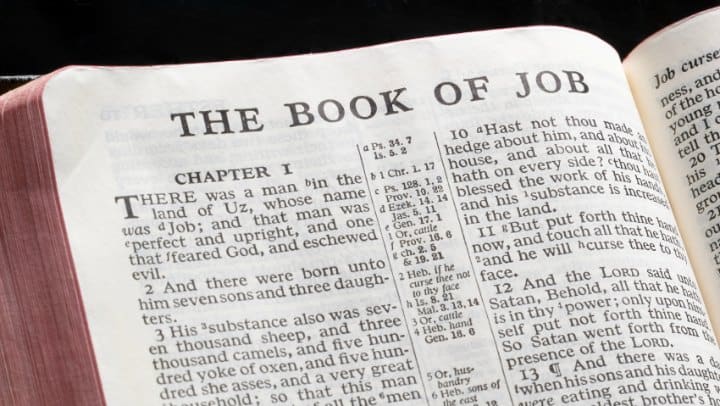
Recently at the suggestion of some teachers and podcasts I listen to, I took some time and in one setting read through whole books in the Bible. If you haven’t done this I would highly recommend it. Just read through the book not looking for anything or zeroing in on any specific point; just read through the book and let it teach you its main themes and allow it to speak for itself. One of the books I recently read through and want to briefly discuss is the book of JOB. We are very familiar with this book and story and can learn a lot of things from it including sufferings, patience, steadfastness, God’s perspectives, and others. However, I would like to share with you what really stood out and stayed with me as I read through the 42 chapters of this book. Job 1:8-9 says,

Then the Lord said to Satan “Have you considered My servant Job, that there is none like him on the earth, a blameless and upright man, one who fears God and shuns evil?” So, Satan answered the LORD and said, Does Job fear God for nothing?

Right there is the true question: “Will you fear and serve God for nothing.” It is not only a question that Satan asks the Lord referring to Job, but it is also for us today. Satan was assuming that Job would have a transactional relationship with God, that as long as he was doing what was righteous that Job would assume that he has earned his blessings or somehow God is obligated to bless him. Do we fall into this mindset that Satan is stating her is verse 9? Is it easy to fear and serve God while things are going good in our life or for fear of punishment? Do we have this transactional relationship that says I have done all these righteous X’s so I deserve these Y’s (blessings)? Would we serve God if everything (wealth, family, health) in an extremely short period of time was taken from us and we were in the situation Job found himself in? Satan is saying that taking comforts of this life away will push even the strongest to curse God to his face. Satan states this in Ch 1:11 and notice that as early as 2:9 Job’s wife actually uses the same language when she tells Job, “Do you still hold fast to your integrity? Curse God and die!”

Sometimes bad things happen because we make bad decisions and we must deal with those consequences. However, Job shows us that sometimes bad things happen outside of our decisions and we do not know all like our Creator GOD. God lays this out in his answer to Job out of the whirlwind in Chapters 38-42 basically stating that, “I created everything and have it all under My control, I AM GOD, even when you don’t realize it and so you must trust Me no matter what circumstances you find yourself in.” In chapter 42 we read exactly what Job did in response to God’s challenge to Job. Now as he repents and fears God he is in dust and ashes. This is the definition of serving God for nothing. Every worldly comfort had been taken from him and he had nothing, not even physical health, and nothing as of yet had been restored to him. But he through great tribulation feared God for nothing except he is God the creator and sustainer of everything.

We do need to serve God just because he is God and the creator of all things but the good news is we don’t serve him for nothing. Read Job 19:25: For I know that my Redeemer lives, and he shall stand at last on the earth; Just as we read Job and see his longing for a mediator between him and God, we now have that through Jesus. God gives us eternal life that can be found in Christ our mediator, not because we deserve it like a transactional agreement but because He is a benevolent, gracious and loving God.

THREE QUALITIES OF A FAITHFUL FOLLOWER

Monday’s Column: Neal At The Cross

preachingatPBL

Neal Pollard

Two parables and an incident in Luke 18:1-17 reveal three attributes Jesus is looking for in His disciples. As you read through these verses, ask yourself if you struggle with one or more of these. The examples Jesus holds up are all lowly characters–a defenseless widow, a sinful tax collector, and babies and little children. They were all either financially, spiritually, or physically dependent on others, yet these are the ones Jesus tells us to imitate. What are the qualities?

PERSISTENCE (1-8). The parable of the widow and the unjust judge is delivered to his listeners for a specific reason, “that at all times they ought to pray and not to lose heart” (1). A widow pleaded for legal protection from a judge who neither feared God or respected men (2). She wouldn’t stop coming to him and pleading her case until finally he relented and granted her request out of frustration and annoyance at her continual coming (3-5). Jesus’ point is that the perfect God will bring justice to His elect who faithfully pray to Him (7). He ties this persistence to faith (8). Jesus is giving us insight into God’s heart and desires. He wants to hear from us in prayer, and He is influenced by our prayers. Do we have faith in that? 

HUMILITY (9-14). Jesus launches into a second parable about prayer, to highlight another necessity in the practice of it. He focuses on an unlikely duo, a prominent religious leader and a contemptible tax collector. Both enter the temple, both for the purpose of prayer. Both prayers are recorded. Jesus evaluates them. The first prayer, uttered by the Pharisee, is self-directed (he prayed to himself), self-righteous (God, I thank You that I am not like other people: swindlers, unjust, adulterers, or even like this tax collector), and self-promoting (I fast twice a week; I pay tithes of all that I get). He shows no recognition of or need for God. He’s pretty self-satisfied. The second prayer, uttered by the tax collector, is selfless, self-indicting, and self-emptying. Jesus notes his hesitance (standing some distance away), abjection (even unwilling to lift up his eyes to heaven), emotion (beating his breast), and honesty (his entire prayer is, “God be merciful to me, the sinner”). Jesus’ analysis? The second man was the one who went home justified, not the first. Jesus’ point is explicit: “everyone who exalts himself will be humbled, but he who humbles himself will be exalted” (14). I may know more sophisticated ways to exhibit my pride and self-righteousness, but the response and result will be the same in heaven. Faithful followers humbly recognize their need of God’s favor. 

RECEPTIVITY (15-17). Parents were bringing their children to Jesus at this time so that He could touch them. We aren’t told why the disciples rebuke them for this, though it could be they were wrestled with pride of position or self-importance. Jesus corrects their course, telling them to let the children come to Him. In fact, He says, “Truly I say to you, whoever does not receive the kingdom of God like a child will not enter it at all” (17). He tells them that the kingdom of God belongs to those like these little children. How so? They were dependent on others (15). They were apparently willing (16). They were open (17). Certainly, this is a great exhortation to us as parents, to bring our children to Jesus in the impressionable years of life. But beyond that, there is an admonition to each of us to keep child-like faith and recognize our need to come to Jesus in order to have a place in God’s kingdom.

Often, we think that being in the kingdom is about us daring and doing great things for God. But, doesn’t it begin with our having the lowliness of heart to come to Him, persistent, humble, and receptive? These three qualities put the focus on His attractiveness, ability, and power. If we allow ourselves to be tools in His hand and recognize that it’s about Him and because of Him, then we’ll be faithful followers. 

Labor Day

(Bulletin Preview)

Neal Pollard

Tomorrow, most of us will be able to celebrate the Labor Day Holiday. That means, ironically, that most of us will have a day off from–well–labor. Schools and workplaces across the nation will shut their doors and many will be off for their last “summer vacation.” Friday, an anticipated 3 million passengers took to the friendly skies to enjoy the long weekend. We can either thank Peter McGuire or Matthew Maguire for being the mastermind of this holiday, both secretaries for New York labor unions who made significant efforts to recognize a day for American workers.

The U.S. Department of Labor has published a lot of useful information about this holiday, which it states was started as a “national tribute to the contributions workers have made to the strength, prosperity, and well-being of our country” (dol.gov). It was a local observance in the northeast at the height of the Industrial Age, though Oregon was the first state to pass statewide legislation to observe the holiday. That same year, 1887,  Colorado, Massachusetts, New Jersey, and New York followed suit. In 1894, Congress made it a legal holiday to be celebrated the first Monday of September. 

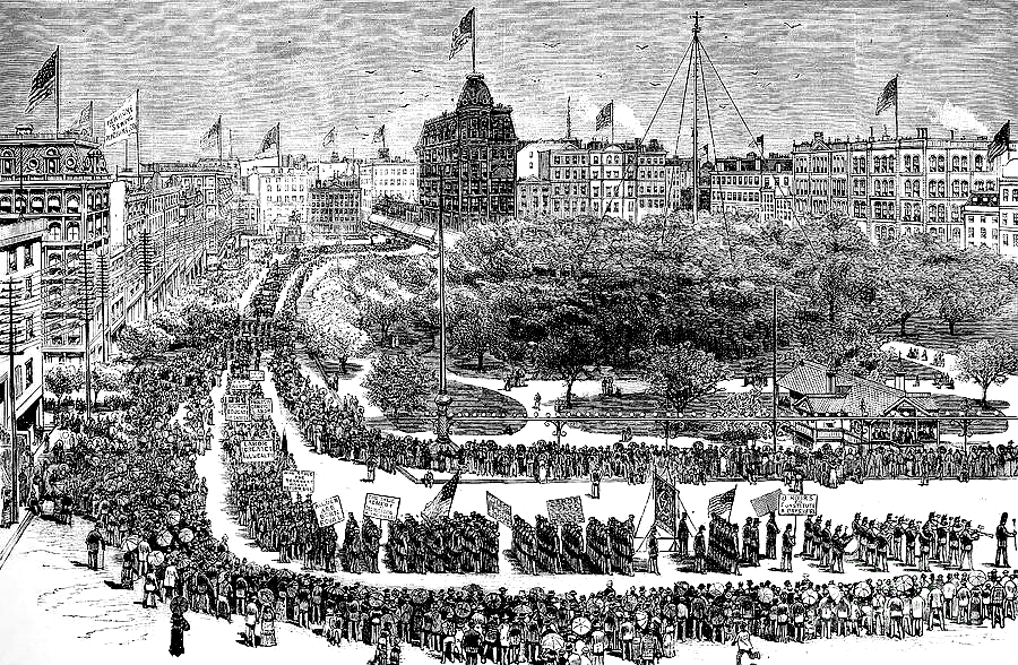
In the early days, there were picnics, street parades, speeches by prominent men and women, and “Labor Sunday” which was “dedicated to the spiritual and educational aspects of the labor movement” (ibid.). The first parade, in New York City in 1882, had up to 20,000 marchers as well as “Windows and roofs and even the lamp posts and awning frames…occupied by persons anxious to get a good view of the first parade in New York of workingmen of all trades united in one organization” (ibid.).

I find it interesting that we honor work with a day of rest and that the holiday itself has seen a shift in emphasis and expression. That’s neither a complaint or criticism. I intend to enjoy Labor Day with Kathy, taking the vacation day given to me in my working agreement. 

But, as we celebrate this national holiday, it’s fitting to recognize the hard work done by so many in this congregation. When you teach Bible classes, lead in worship, decorate bulletin boards, provide transportation to services, stock our pantry, do work on our facilities, engage in soul-winning efforts, practice hospitality, serve officially as church leaders (whether elders, deacons, or someone else tasked with some work), prepare the communion, clean the kitchen, organize the teacher’s work room, go on mission trips, make visits, handle church finances, coordinate worship, serve as ushers and greeters, host youth devotions, or the many, many other things you do, you are doing honored work. Jesus taught that greatness comes through service (Mat. 20:25-28; Jn. 13:12-17). New Testament writers honored those who work among us, Paul urging us not to “be weary in well doing” (Gal. 6:9) and to “always give yourselves fully to the work of the Lord” (1 Cor. 15:58, NIV). Often, Scripture speaks of the Godhead working. It instructs us to be “to the work.” Enjoy the holiday tomorrow. Yet, in the general, ongoing sense, “We must work the works of Him who sent Me as long as it is day; night is coming when no one can work” (Jn. 9:4). Labor on, brothers and sister!

labor_day_new_york_1882

“Just A Broken Guy…”

Neal Pollard

The chilling audio from Richard “Beebo” Russell reveals an internal conflict nobody, not family, friend, or co-workers, knew was going on. The 29 year old ground worker at Seattle-Tacoma International airport took a Horizon Air Dash-8 airplane on an unauthorized joy ride, complete with complicated aerial stunts before crashing into a remote island on Puget Sound. Before crashing, he spoke with air traffic controllers and pilots and confessed to the inner turmoil. The words used by loved ones to describe him range from “warm” and “compassionate” to “happy” and “regular” (Alex Horton, Washington Post, 8/13/18).  Of course, the behavior was irregular and bizarre, and it ended tragically for the young man as he fatally crashed the plane.

As we walk through this world, we meet and interact with people who may be projecting an outward appearance that is masking inward pain and trouble. It may lie behind their broad smile. That’s a disturbing thought, but what can we do? We cannot read their minds. There is no full-proof way to prevent every tragic action, but we may have more power than we think. Consider some things all of us can do with everyone in our lives.

Be kind. Look people in the eyes. Smile at them. Even if it slows you down from some important task, don’t overlook the people God puts in your path. Your helpful word might sink deeper into their spirit than you realize. Let’s be like the inhabitants of Malta, who showed Paul and his companions “extraordinary kindness” as they simply “kindled a fire and received” them all (Acts 28:2). We’re told as Christians to put on a “heart of kindness” (Col. 3:12). How will anyone know the proof of our kind hearts? We will display it.

Be concerned. We fear being nosy or busybodies. Don’t do that. But there is room for active concern. Such is more apt to listen than advise, to help and not gossip, and to do than to judge. People who are surrounded by those they know care for them have a better chance at emotional survival. Look at the example of Paul, pressured by the concern for congregations and intensely concerned for individuals led into sin (2 Cor. 11:28-29). The word Paul uses for his concern for individuals literally means “to cause to be on fire; burn” (BDAG, 899). It’s the word used to describe the heavens being on fire (2 Pet. 3:12). Paul was “inflamed with sympathy, ready to aid” (ibid.). That’s got to be us, too!

Be helpful. Our Christianity should be tangible, not theoretical. We must be attuned to needs and ready to help (cf. Titus 3:14). Let’s avoid empty words that lack the intent of action. Acts of service, doing for others, are powerful and penetrating. God tells us, “On the day of salvation I helped you” (2 Cor. 6:2; Isa. 49:8). A helper sees a need and meets it. Oh, the impression that can make on a weary struggler. 

Listen, for all we know, this young man was surrounded by people who were kind, concerned, and helpful. Ultimately, each of us is individually accountable for our actions (2 Cor. 5:10). But, our neighborhoods, cities, states, and nations will be a better place when Christians are active bearers of such faithful fruits. Treat everyone you see as the eternally-bound souls that they are! Help them. We know the One who mends the broken (cf. Ezek. 34:16). 

a6866107-2a6b-41a4-a91e-365513e5516c-seattle_plane