We all have spiritual responsibilities. Unfortunately, we do not always meet them. We frequently let these responsibilities slip despite being fully aware of their importance. A study of the Scriptures reveals three significant sources of distraction from our spiritual obligations.
First is pursuing material wealth (refer to Matthew 6.24–34). In this passage, Jesus warns against serving God and the embodiment of wealth, or Mammon. Life isn’t all about material things. We create a spiritual void when we focus solely on meeting material needs. The theologian Augustine referred to this as a “God-shaped blank” within us, emphasizing our innate desire to worship and serve God. If God does not fill this void, something else, most often Mammon, will. Possessions and pleasures can quickly become idols in our lives. However, Jesus assures us that if we prioritize God’s kingdom and righteousness, our material needs, like those of the creatures in His creation, will be met. The problem arises when our faith wanes, and we forget God’s promise. In times of financial difficulty, we may believe it is solely our responsibility to fix things rather than trusting God’s provision. While we must continue to work, like the birds searching for worms, we must not allow anxiety to consume us. Excessive devotion to Mammon causes spiritual suffering and neglect of spiritual responsibilities.
Second, we may pay attention to the wrong things (Matthew 14.28–33). This passage depicts Peter walking on the raging Sea of Galilee, echoing Jesus’ feat. But Peter begins to sink when he starts paying attention to the wind and waves rather than focusing on Jesus. Similarly, the people in our lives might serve to divert our attention from Jesus, which is why 1 Corinthians 5.6 and 15.33 warn us to be cautious. Likewise, worldly concerns, wealth, and pleasures can choke out God’s Word, preventing us from bearing fruit (Luke 8.14). Our faith may wane, just as Peter’s did if we allow the world’s distractions and temptations to consume us. We must constantly refocus our attention on Jesus and place our relationship with Him first and foremost. We can ensure that we continue to grow in our faith and bear fruit for God’s kingdom by doing so.
Finally, we become fixated on minor issues (Luke 10.38–42). In this story, Martha over-prepares because she intends to serve Jesus and His disciples. Jesus corrects her, saying that her sister Mary is doing what is genuinely needed by focusing on her spiritual needs. Too often, we allow valid but minor issues to divert our attention away from our spiritual responsibilities. Brother Maxie Boren gave an example of a congregation arguing over a surplus of bricks rather than focusing on evangelizing their community, which resulted in zero evangelistic efforts. Sometimes, even good intentions can distract us from our spiritual responsibilities, like chasing after money or being in a negative environment. Recognizing that our spiritual needs should always precede trivial matters is crucial. We can better serve our community through the proclamation of the Gospel if we put our spiritual duties first. Maintaining vigilance and not allowing eternally insignificant matters to impede our progress in fulfilling our spiritual responsibilities is critical.
Let us strive to stay focused, fulfilling our spiritual responsibilities and avoiding pitfalls related to wealth, our environment, and trivialities.
Let us delve into the depths of a father’s concern as we reflect on the sacred role of fatherhood, drawing inspiration from the stories of four fathers in Scripture. We learn profound lessons about love, leadership, redemption, and our children’s spiritual well-being from their experiences.
Let us start with the most unfavorable example: Eli. Eli is more concerned with his position and its trappings than his relationship with his sons. Eli never restrained his sons despite their blasphemy and sexual immorality. The writer of Hebrews reminds us that a father’s discipline indicates a relationship (Hebrews 12.4–11). According to the implication, only illegitimate (i.e., unloved) children are left undisciplined. Though we don’t know Eli’s heart, we must question his love for his sons by allowing them to be unruly.
Eli may have become more enamored with his position’s prestige than fatherhood’s benefits (cf. Psalm 127.3-5). He habitually sat on an elevated seat near the Tabernacle’s entrance (1 Samuel 1.9). As Sigmund Freud might have suggested, his elevated platform could represent how he wished others to see him or how he viewed himself.
God didn’t like it because it demonstrated Eli’s desire for glory that belonged only to God. Thus, God had had enough of Eli and his sons and sent an unnamed prophet and the young Samuel to inform Eli of his and his family’s demise. The news that caused Eli to fall from his elevated seat on the day his sons died in fulfillment of prophecy was not the deaths of his sons but that the Philistines had taken the Ark of the Covenant (1 Samuel 4.18).
Even if a man is serving God, he must prioritize the well-being of his children. The father’s concern should be the nurturing and admonition of the Lord (Ephesians 6.4), not the trappings of success or status.
Moving on, we encounter the mighty King David, a man after God’s heart (1 Samuel 13.14; Acts 13.22). David teaches us to strike a balance between love and obligation. He accomplishes this by showing concern for his traitorous son Absalom, who is unworthy of such consideration. This misplaced concern caused David to lose sight of his responsibility to his loyal subjects, who had defended David and his family from patricide and regicide.
This display did not sit well with General Joab. Note 2 Samuel 19.5-7.
Then Joab came into the house to the king and said, “Today you have covered with shame the faces of all your servants, who today have saved your life and the lives of your sons and daughters, the lives of your wives, and the lives of your concubines, by loving those who hate you, and by hating those who love you. For you have shown today that princes and servants are nothing to you; for I know this day that if Absalom were alive and all of us were dead today, then you would be pleased. Now therefore arise, go out and speak kindly to your servants, for I swear by the Lord, if you do not go out, surely not a man will pass the night with you, and this will be worse for you than all the evil that has come upon you from your youth until now.” (NASB95)
While David’s affection for Absalom was undeniable, his leadership suffered as a result, and his devoted followers bore the brunt of the consequences. Fathers must strike a delicate balance of love, responsibility, and obligation. Most fathers may never know the weight of a crown, but all fathers must learn to show compassion without sacrificing justice and to extend forgiveness while maintaining accountability.
Job is our next father. Job exemplifies proper concern for one’s children’s spiritual well-being. Job constantly offered sacrifices on his children’s behalf in case they had sinned (Job 1.5). Job recognized the significance of their spiritual journey and interceded on their behalf before God. Fathers should model Job by encouraging their children’s spiritual development alongside their physical growth. Oh, if all fathers were as concerned about their children!
Finally, we should mention the ideal father, the prodigal’s father (Luke 15.11ff). In the story, the father genuinely cares about his son. This care reveals this father’s unconditional love and allows the prodigal son to find redemption. We see the unfathomable love of a father in this parable. Every father should try to live up to this standard.
Although his son had squandered his inheritance and caused him great pain, the prodigal father’s concern outweighed his pain. His heart was overflowing with unconditional love and longing for his errant child. Indeed, this father demonstrates that a perfect father’s love knows no bounds, and redemption is always available. We thank God that this Father is also our heavenly Father.
As we conclude these reflections, let us embrace the complex concern that these biblical fathers demonstrated. Fathers should prioritize meaningful connections with their children, devoting time and effort to nurturing and disciplining them. Let them remember that love and obligation can coexist and that they can lead their families with grace and accountability. Above all, fathers should model the unconditional love of the Heavenly Father by cultivating an environment of redemption, forgiveness, and spiritual growth.
May God give fathers the strength to prioritize their children’s spiritual well-being, interceding on their behalf, directing them toward righteousness, and empowering them to model His love, compassion, and wisdom in their homes.
Wherever light is, there is no darkness. That almost sounds silly and maybe a little obvious. Light and darkness in the Bible often depict the concept of good and evil but nowhere is the impression given that the dark is equal to light. In both the Old and the New Testaments, we find the concept of light and darkness. It represents the believers and the nonbelievers and it also represents good and evil. Biblical writers understood God to be the ultimate Light— the ultimate goodness of the world. When John refers to Jesus as “light” in his gospel this is the concept that he is trying to get across. Jesus is pure. He’s a beacon of hope— he is Light. Strangely, scientists are still baffled by light. NASA spent a mountain of money attempting to come up with a color so dark that it could even consume light but it just isn’t possible.
No darkness can stifle the light of Jesus.
To this day He is shining bright through His followers to ensure that this dark world can see Him and that means we have an important job to do. In gospel of John, we find this profound statement, “…the light has come into the world, and men loved darkness rather than the light, for their deeds were evil” (John 3:19). At this point John begins another section on light and more is revealed about the two contrasting realities. There is the light, who is Jesus, and those who did not love the light because their deeds were evil. The reason they rejected the Light was because they were separated from it by their own wickedness. Evil is done with ease in the dark and we tend to fool ourselves into thinking that we are hidden and secure under its cover.
Alaska’s crime rate significantly drops in the summer because the sun shines continually, but in the winter months the crime rate is much higher. It’s easier to get away with evil in darkness. Notice the bold statement following this, “Everyone who does evil hates the Light, and does not come to the light for fear that his deeds will be exposed” (John 3:20). Light exposes the wickedness, and exposure is not something an evil person desires.
Today lights are used by doctors to shine down your throat, in your ear, and to expose any potential problems. We have automatic porch lights and flood lights as well as “brights” for those backroads. Jesus is here to expose the sins of others and welcome those that come to Him. This also goes to show that an individual can claim to love the Light, while living in darkness— this person hates the Light. Action speaks louder than words and in a spiritual sense this could not be more accurate. Do your actions reflect that you love the Light?
The concept of righteousness is quite similar to holiness; both terms refer to a state of being morally upright and emotionally attuned to God’s will. It comprises all that we term justice, honesty, morality, and affections of the heart; in a nutshell, it is true religion. And while there is this type of righteousness to emulate, there are other types of righteousness to avoid.
The first type of righteousness we need to avoid is that which originates in a person’s mind, which is distinct from the righteousness that originates in God. We identify this type of righteousness as “self-righteousness.” Self-righteousness, often born out of pride, is when a person relies on his or her sense of morality to judge right and wrong.
Another example of false righteousness is John Calvin’s teaching on imputed righteousness. By imputed, Calvin meant that God credited the elect sinner with Christ’s righteousness. As a result, God shifted His attention away from the sinner and toward Jesus, whom He acknowledges to be sinless. Consequently, Calvin believed that a person God has chosen for salvation does not need to worry about living a good life. When God looks at him, he can only see Christ. (As a side note, it is expected that the one chosen by God will seek a life of righteousness. But the truth is that according to the doctrine, it’s possible to be a willful sinner and still have the righteousness of Christ imputed to them.)
There are seven occurrences of the word “impute” in the KJV. None of these verses suggests that a person can appropriate Christ’s righteousness as their own. The atoning sacrifice of Jesus Christ allows for the transformation of sinners into saints through forgiveness. Entrance to the heavenly kingdom is granted only to those who do God’s will (Matthew 7.21–23). Thus, while imputation suggests that God finds one without guilt and blame, it does not mean that a person can take on the righteousness of Jesus Christ and expect to gain entrance into heaven.
A sinful man becomes righteous through faith in God, not through any meritorious works he can perform. But faith does not exclude human participation. Man must do something. James 2 and Hebrews 11 remind us that faith works the works of God (Ephesians 2.10). A sinner becomes righteous, sanctified, and justified by God’s grace. God gave him his righteousness, and God counts it as his righteousness, not on account of the goodness of Christ or anyone else, living or dead.
Abraham is a great role model for how to achieve righteousness. First, Paul says that Abraham believed in God, which God credited him as righteousness (Romans 4.3–9, 17–22). Second, it is also important to note that Abraham’s righteous status was independent of his being circumcised (Romans 4.10–12). Third, Abraham’s faith was active, working by grace (Galatians 3.6–9; James 2.21–23).
So, it was Abraham’s faith in God rather than Jesus’ own sinless life and obedience that God credited as righteousness. Even though Abraham’s efforts would have been futile without Jesus’ perfect life and obedience, he could not leave everything to be accomplished by God. This truth meant that God gave Abraham the tools he needed, but Abraham was the one who had to use them.
We must do as Abraham did. And just as God will not credit us with Christ’s righteousness, neither will He credit us with the righteousness of anyone else (e.g., a parent or spouse). Our evaluation before God is personal (2 Corinthians 5.10). We must avoid doing as Paul did before his conversion, seeking righteousness contingent on anything other than Christ (Philippians 3.9).
Nineteen kings sat on the throne of the northern kingdom, from Jeroboam (931 B.C.) to Hoshea (722 B.C.), and Jehu was the closest any of them came to being righteous. His “righteousness” was the zealous way he fulfilled the mission God gave him in destroying the house of Ahab and the followers of Baal. In fact, the Lord speaks directly to him and says, “Because you have done well in executing what is right in My eyes, and have done to the house of Ahab according to all that was in My heart, your sons of the fourth generation shall sit on the throne of Israel” (2 Kings 10:30). God recognizes and rewards him for his commitment to His cause. He enjoys a 28-year reign, second only to his great-grandson Jeroboam II. He is remembered for his deeds and his might (34).
Yet, after the lengthy chronicling of Jehu’s extermination campaign, the Bible says little else good about the man. Here’s the summary in 2 Kings 10:
He did not depart from the sins of Jeroboam the son of Nebat, which he made Israel sin (29,31).
He kept the golden calves at Bethel and Dan (29).
He was not careful to walk in the law of the Lord with all his heart (31).
He suffered the loss of significant territory to the Arameans (32-33).
His excessive bloodshed would draw divine retribution (Hos. 1:4).
Essentially, he lacked the moral and spiritual resolve to effect religious restoration. He lacked the conviction necessary to be fully obedient to God. He did not purify his heart to align with the heart of God. He was reckless regarding God’s law.
For over 200 years, Jacob’s descendants in the northern kingdom were spiritually adrift. Their best chance to turn that around was after Jehu purged the capital city of Samaria of the temple of Baal, its priests, and its worshippers. A hopeful start was overcome by the general spiritual trajectory of an entire people who did not have God in their hearts.
My daily life is aimed in a general direction. It is important for me to do more than conform outwardly to some of what God’s Word commands. I need to begin in my heart and conscientiously strive to follow His will and demonstrate that in my outward dedication and my inward devotion to Him. I want it to be said of me that I did what was right in His sight (30) AND that I was careful to walk in the law of the Lord with all my heart (31)!
A woman is again the embodiment of Wisdom in Proverbs 8. And we find language similar to what we saw earlier in Proverbs 1.20-23: Wisdom desires to be heard by men (8.3-4). Not unlike other women, Wisdom craves attention and acknowledgment. However, Wisdom isn’t shy about raising her voice to get people’s attention.
In contrast to the harlot in the previous chapter (Folly?), Wisdom does not play coy. Instead, she chooses to be in the spotlight. As a result, she is the center of attention. She perches herself on the rise overlooking the gateway to the city below (8.3). Wisdom does not want to be heard by a select few; she wants to be heard by everyone, whether the sons of men (8.4) or the fools (8.5). She hopes to impart wisdom to anyone open to hearing it.
Wisdom gives us praiseworthy and righteous counsel (8.6), words of truth and righteousness (8.7-8), and a straightforward and virtuous way of thinking (8.9). The benefits of wisdom are priceless, far exceeding the value of any material possession (8.10-11).
Thus, Wisdom implores everyone to listen so that she may impart her excellent knowledge. But even if that weren’t impressive enough, verse 12 shows that she is wise, knowledgeable, and has good judgment. Consequently, Wisdom hates conceit, lust, and evil because she respects God (8.13). That’s why she’s a reliable source of guidance, wisdom, and resolve (8.14).
Wisdom delights in providing these things to everyone, including those to whom God has given earthly authority. Wisdom will bestow riches, honor, righteousness, justice, and wealth on those who love her (8.15-16). She makes it possible for kings, princes, nobles, and judges to rule justly (8.17-21).
Wisdom testifies that she was God’s companion even before He made the world. Therefore, she existed before the cosmos (8.22). So, according to Solomon, Wisdom is eternal (8.23). Indeed, Wisdom is “older than dirt” (8.26), existing before the oceans, mountains, and hills (8.24). So, Wisdom was present to see the Lord at work, creating the universe. Wisdom saw God create the heavens and the world (27-29) and stood beside Him as a master craftsman, rejoicing in His creation (8.30-31).
Those who are open to Wisdom’s advice will prosper (8.32). Therefore, instead of disregarding her message, we should listen to her advice and act wisely (8.33). Those listening to her with care will be blessed (8.34a). They’ll sometimes have to wait for her (8.34b), but she’ll bring those who are patient new life and the Lord’s favor in return (8.35). However, those whose sins bring dishonor to her suffer spiritual damage (8.36a).
Those hating Wisdom demonstrate a desire to die (8.36b). This mindset means that people who like death will get what they want. Thus, wisdom implores us to listen to her so that she may impart wisdom, knowledge, truth, and righteousness; and endow our lives with wealth and glory, especially as the Lord bestows.
To quote Wisdom:
“Blessed is the man who listens to me, Watching daily at my gates, Waiting at my doorposts. For he who finds me finds life And obtains favor from the Lord.” (Proverbs 8.34-35 NASB1995)
In the first chapter of Proverbs, Lady Wisdom was shouting at the crowd in the town square. From our last article, we know that she was looking for simpletons, mockers, and fools to warn about what would happen if they didn’t listen to her advice. In Proverbs 2, we meet another set of three people, but these are servants of Lady Folly who are ready to lead people down the path to eternal damnation. But first, we are told to find wisdom once more.
Lady Wisdom is not always in plain sight. If she were, you wouldn’t have to dig sometimes to find her, just like a miner who digs precious metals and ores out of the ground. One can, thankfully, also cry for her (2.3-6; cf. James 1.5). Crying is a good way for a baby to get food (1 Peter 2.2), and it works just as well for people who are hungry and thirsty for righteousness (Matthew 5.6). God will not only feed us, but He will also tell us what to do to please Him.
Lady Wisdom also helps people deal with their neighbors fairly and correctly (2.9). She shows us what God’s justice looks like so we can do the same thing when dealing with others. This example is critical because people don’t always see things as God does. But her advice is also helpful when dealing with risks posed by others. God’s wisdom, which Lady Wisdom represents, is great because it acts as a shield and watchman (2.7-11).
But here is where our triplet comes in. We have a perverse guy, people who walk in the dark, and the adulteress (2.12ff). God’s wisdom is helpful because it tells us more than just what to avoid. It gives us what we need to do. So, when our triplet comes, we know how to send them away. This wisdom comes from letting God’s word into our hearts, where it guides us. As David said, “Your word I have treasured in my heart, That I may not sin against You” (Psalm 119.11 NASB1995).
But we must do more than say no to evil. We must take charge of being good. How does that happen? When you don’t hang out with bad people, you hang out with good people instead (2.20-21). Paul told the Corinthians that the people they hung out with could change their morals (1 Corinthians 15.33). Lady Wisdom helps you tell the difference between good and bad people so you can be a good judge (Matthew 7.20).
The end of Proverbs two is a warning. Those who aren’t looking for Lady Wisdom or calling for her will be led astray by our trio. Once a person is lost, God will take them out of His garden like he would a dead branch or tree. No one wants this to happen to them. In the meantime, let’s also remember what Jesus said about seeking, asking, and knocking:
“Ask, and it will be given to you; seek, and you will find; knock, and it will be opened to you. For everyone who asks receives, and he who seeks finds, and to him who knocks it will be opened” (Matthew 7.7-8 NASB1995).
Last week, we looked at our syllabus for Wisdom 101. Professor Solomon has outlined the aims of our course. And now, Solomon will introduce us to the “texts” we will be studying. The primary “text” will come as no surprise to the believer. That source is God (Proverbs 1.7). But there is also a secondary “text’ that Solomon encourages us to study. We will examine this more in a moment.
Wisdom begins with the “fear of the Lord” (1.7). That fear is the primary text. But what do we have in mind when we say “fear?” It cannot mean that God causes an unpleasant emotion making us apprehensive to approach Him. If God were scary, how could we entice another to listen? In their commentary, Old Testament scholars Carl Friedrich Keil and Franz Delitzsch give a superb definition. Fear is a “reverential subordination” to God.1 In other words, when you recognize the superiority of God, you stand in awe of Him. Who better to learn wisdom from than the One you admire? You should desire to hang on His every word. God, for His part, is glad to impart His wisdom to us. As James reminds us, if we ask Him, He will generously give us wisdom (James 1.5).
Yet we know not everyone esteems God highly. Those disrespecting God are called “fools” (1.7). But by calling them fools, we are not suggesting that such people lack the intellectual capacity for growth. Rather “fool” demonstrates their disposition. In the original Hebrew, the word translated as “fool’ is “evil.” No, not our English word, evil, but a word transliterated as such from the Hebrew language. Hebrew scholars Francis Brown, S.R. Driver, and Charles A. Bridge observe that the word always denotes one is “morally bad.”2 Confirming this interpretation is the Septuagint version of the Scriptures. The 70 or so Jewish scholars translating the Hebrew Scriptures into Greek used the word “asebēs” for “fool.” That Greek word means “impious.”3 Thus, one who is impious (i.e., morally bad) despises wisdom and instruction. Such foolish persons might echo the pharaoh who asked, “Who is God that I should listen to Him?” (Exodus 5.2). So, if we were to cite a secular maxim to explain this part of our proverb, it might well be that “you can lead a horse to water but cannot make him drink.”
Yes, God can boost your wisdom, but you must desire to sit at His feet, develop a relationship with Him, and learn from Him those words leading to eternal life (John 6.68). But since I used the plural form of source in our title, you know there must be at least one other source. Indeed. You have probably heard of Wikipedia. Wikipedia is essentially an encyclopedia that anyone can edit. It is supposed to be an unbiased source of information, but a quick perusal of hot-button topics often reveals the bias of Wikipedia editors and publishers. At best, though, Wikipedia is a tertiary source of information. The word “tertiary” is from the Latin tertiariesmeaning “of or containing a third.”4 So tertiary is a fancy way to say that Wikipedia provides third-party information (i.e., information twice removed from its source). But what sources come before the tertiary one? The educational field gives us a clue by using the terms “primary” and “secondary” when describing its schooling. Primary is the category coming first and takes youth through to the age of 12, or 14, depending on the country. Following primary education, a child enters secondary education. Secondary schools will see the child through graduation from high school, the highest level of compulsory education. From there, a young person may elect to pay for “post-secondary” education in college or university.
So, for the believer, God is the primary source of wisdom. And though we can learn wisdom elsewhere, before listening to those tertiary sources of wisdom, Solomon reminds us of our secondary source of wisdom in Proverbs 1.8. “Hear, my son, your father’s instruction, and do not forsake your mother’s teaching.” Note that God makes parents the secondary source of wisdom. Hence, parents become the secondary “text” for Wisdom 101. Recall the first institution created by God in Genesis 2.18-24. That institution was the home, the family.
Despite causing great harm to the family by signing the so-called Great Society Legislation, Lyndon Baines Johnson nevertheless stated that “the family is the cornerstone of our society.”5 Indeed, Johnson’s “reforms” helped break the home. He bolstered single-parent households and turned birthing children out of wedlock into a cottage industry. The State stepped in to fill the vacancy left by the absent parent, and education became the responsibility of the public-school educator. This innovation was never the intention of God.
Solomon was aware of the Law given to Moses. Fathers were to instruct their children at every opportunity (Deuteronomy 6.1-8). What we observe today in our society is that which played out countless times in Old Testament history. First, you would have a faithful generation that failed to impart wisdom to the next generation. God’s people would then enter a decline, followed by apostasy. God would then punish them using the military might of their pagan neighbors until they repented and cried out for mercy. Finally, God would bring a deliverer who would lead the people into a new righteous era. This period would persist until a new untaught generation arose, and the cycle would begin again.
Though we are not a theocracy, righteousness still exalts a nation (Proverbs 14.34). And this democratic republic is buoyed by the faith of its citizenry. As a result, we have noted prosperity resulting from periods of “goodness” (e.g., the post-WWII boom). And times of difficulty that seem to result from times of “excess” (e.g., the “Roaring Twenties” and the Great Depression). One wonders where we are within our cycle of apostasy and renewal when he hears news stories of public-school teachers confusing children about being oppositely gendered or talking openly about their perverted lifestyles. There is a significant disconnect between what parents would teach their young and what some teachers teach in schools. That was, at least, one blessing from the COVID pandemic shutdown. Parents overheard what teachers were teaching their children and would have none of it.
So, what happens when you have children who do not have a trustworthy secondary source of wisdom (i.e., parents)? Tertiary sources step in and instill man’s wisdom, which arises from man’s dark heart (Romans 1.21ff). The children worship the creature rather than the Creator. And these progenies ignore all authority: God, parents, and even the civil government (Romans 13.1ff). There can be no substitute for the wisdom mom and dad are to instill. You cannot even delegate instruction over to the faithful brethren of the church. The Bible school teacher can be a trusted tertiary source, it is true, but he or she does not have the amount of time with the child given by God to parents. Christian parents must stop abdicating God’s role in their children’s lives.
And the result from having the proper primary and secondary source for wisdom? Wisdom becomes one’s attractive accessory, like a graceful wreath upon one’s head or a necklace around their neck (Proverbs 1.9). We observe this in Peter and John. We trust the secondary wisdom imparted to them by their parents was adequate but take note of the primary wisdom they received spending time with Jesus. As they stood before the Sanhedrin, the Jewish leaders noted the confidence with which they spoke. They concluded these men had been with Jesus (Acts 4.13).
So, what are the reliable sources you have that boost your wisdom? First and foremost, it is the fear of God. The second source is the godly instruction you receive from your parents. But wherever you are in your journey to find Lady Wisdom, whether one who is still learning from his parents or who may soon be the secondary source of wisdom for a child or grandchild, remember the words of our Lord to those feeling deficient. “Ask, and it will be given to you; seek, and you will find; knock, and it will be opened to you. For everyone who asks receives, and he who seeks finds, and to him who knocks it will be opened” (Matthew 7.7-8 NASB1995).
Jesus wasn’t going around just trying to make enemies of anyone, but He was fearlessly living and telling the truth no matter the circumstances. What we read in Luke 11:37-54 is how the scribes, Pharisees, and experts on the Law were living by the gospel according to self. They looked really righteous and knowledgeable on the surface, but of course Jesus can see below the surface at what’s actually going on in the heart and mind. It seems that there are several reasons why Jesus offended these religious leaders on this occasion.
He Exposed “Surface Spirituality” (37-41). They were so obsessed with appearances, doing things to look good to others. Yet, Jesus said they were full of corruption and wickedness in their hearts. They knew how to look spiritual without being godly, a deadly condition!
He Exposed “Majoring In The Minors” And “Minoring In The Majors” (42). He doesn’t rebuke the attention to details, but says they neglected what really mattered when making gestures that appeared to show how scrupulous and careful their religion was. True religion is supposed to stand on huge pillars like divine justice and love. Operate from those qualities and you are well on your way to true righteousness.
He Exposed “Appearance-Driven Actions” (43-45). Jesus called them on their love of the chief seats and respectful greetings. Surely most people appreciate being appreciated, but such can never be what drives or motivates us to do praiseworthy things.
He Exposed “Hypocritical Holiness” (46). They were good at making rules others needed to follow while not bothering to live by those same rules. Beware holding others to a standard you do not submit to yourself. Here, these appear to be their own convictions which they bind on others rather than God’s laws.
He Exposed “Artificial Admiration” (47-51). They seemed to conclude that revering long-dead prophets was the spiritually acceptable thing to do, but they rejected and hated the greatest man in history–God in the flesh. While decorating the tombs of men their ancestors had slaughtered throughout the Old Testament, from Abel (Gen. 4) to Zechariah (2 Chron. 24:20-21)–like saying A to Z, they were actively fighting One even greater and ready to do the same to His disciples.
He Exposed “Wicked Watchdogs” (52). Jesus’ last accusation is as piercing as they come. He says they took away the key to knowledge. They refused to enter the kingdom, but they actively hindered others who were trying to enter. They made themselves the gatekeepers to God, a presumptuous but also misguided effort.
And did they humbly repent and change their ways when the Son of God called them out? No. Their pride overrode any other impulse, and they grew more hostile, plotting how they might trap Him in something He might say. They became more critical and vicious. They had hardened their hearts that much. The takeaway for me is abundantly clear. What do I do with Jesus’ will? Do I take to heart His admonitions and challenges, or do I allow sinful pride to eclipse my view of it? Do I dig my trenches deeper or do I allow His will to shape and influence me? I pray that I will choose the latter!
Romans 12:1 says, “I appeal to you therefore, brothers, by the mercies of God, to present your bodies as a living sacrifice, holy and acceptable to God, which is your spiritual worship.” What is a holy sacrifice? Holy means, “to be set apart.” It’s living free of moral filth and being devoted to God. A holy sacrifice is one who is devoted to the service of God. Matthew 6:33 says, “But seek first His kingdom and His righteousness, and all these things will be added to you.”
God’s agenda comes first. We are now used as an instrument of righteousness. Romans 6:13 says, “and do not go on presenting the members of your body to sin as instruments of unrighteousness; but present yourselves to God as those alive from the dead, and your members as instruments of righteousness to God.” We should want to be useable in the hands of God! We should also look to accomplish that which is pleasing to God.
Ephesians 5:6-10 says, “Let no one deceive you with empty words, for because of these things the wrath of God comes upon the sons of disobedience. Therefore do not be partakers with them; for you were formerly darkness, but now you are Light in the Lord; walk as children of Light (for the fruit of the Light consists in all goodness and righteousness and truth), trying to learn what is pleasing to the Lord.” Who are we trying to please? If we want to be a holy sacrifice we must be aiming to please God.
People make sacrifices all the time, but think about something or someone you love. It’s easier to sacrifice for family. God is our family, so why do we not sacrifice for Him? If anyone is deserving of sacrifice, it’s God. I once had a pet squirrel when I was 11. My older brother Gary and I saved it from falling out of a tree. Every day I used an eye dropper to feed it milk and nurtured it into an adult.
It would be with me during school, and at night I’d have to stay up super late feeding and caring for it. Stuart the squirrel was great, but to nurture him back to health and care for him took a lot of sacrifice on my part. But I was willing to do it. I loved that squirrel.
Love makes sacrifice easier. How do you feel about living the Christian life? Do you feel like you are sacrificing other pleasures in order to live a life for God? How much does your sacrifice take from you? Be a holy sacrifice when others around you are unholy. Imitate Christ around your coworkers, your kids, your spouse, your friends. Be holy in your service to God and wholly sacrifice your life.
I stood at the doorway of her humble apartment in a small Kentucky town. This Christian woman in her mid 80s, mother of three and newly-widowed, was adopted by the local church and seen after especially by a son who lived in the same town. I had received a sweet letter from her, expressing her appreciation for the great work being done by especially World Video Bible School. Her former preacher in the 1990s had introduced it to her, and she told me that she gave their DVDs away all the time.
Between the time I received her letter and dropped by her home, I talked to another lady in that same, small congregation. She praised the character and good works of the woman who wrote me the letter. I was told of the various hardships and challenges faced by my penpal. She was raised in religious error, but learned the truth from her husband’s family. The husband never obeyed the gospel and did not encourage her faith. Despite being subject to cruel treatment, she was not only a faithful, submissive wife, but she was full of righteous works. She became a walking Bible, the fruit of tenacious daily Bible study. She has written, supported, and encouraged missionaries all over the world for over 40 years. For decades, she has graded Bible Correspondence Courses.
The woman I met had the humility and sweet spirit of a child. She bore the marks of hardship, having undergone hip replacement and other maladies of aging and falls. But the thing that struck me was the twinkle in her eye and the genuine joy she has in being a Christian. As she talked about her life and as I had ultimately heard about her life from a few of her church family members, I could not help but think that this woman has suffered so much physically and emotionally. But you could not tell it from her attitude and disposition. The gentle enthusiasm I first read in her writing translated to a winsome smile and zeal face to face.
She had been weathered and battered by life, yet she had all the marks of a triumphant overcomer. Still faithful to meet with the saints every time the doors are opened, she lives Christ in her daily life. I could not help but think of the woman Mark tells us about in his gospel, the one who anointed Jesus’ head with “an alabaster vial of very costly perfume of pure nard” (14:3). In praising her “good deed” (14:6), Jesus summed it up by saying of her, “She has done what she could” (14:8). No one knows this dear sister across our brotherhood. She’s not an author, public speaker, gospel writer, or appointed church leader. But she epitomizes greatness as defined by Jesus.
I left my visit doing some serious self-examination. How’s my attitude? What am I doing with what God has given me? How am I blessing the lives of others? When others have been around me or speak about me, what characteristics come to mind? Every life is given a variable amount of resources and opportunities (Mat. 25:14-30). We will account for how we used them. Have we tried to tell others about Jesus? Have we reminded others of Jesus? Helen reminded me of my Savior! I left resolved to be more like her, trying to imitate her as she so clearly imitates Him (1 Cor. 11:1)!
Christianity is important to us. Making sure we live the right way is important to us. Because our loyalty to God is important to us, and because our lifestyle is characterized by avoiding evil, many believe that our mission in life is to defeat evil. Some Christians believe that this involves social activism or influencing public opinion. Nothing about this is intrinsically wrong, but it cannot be our primary focus.
Evil exists, period. Humanity introduced evil when we disobeyed God. As we noted last week, evil is on borrowed time thanks to Jesus, but it will exist until the end of time. So, what’s our job if fighting evil isn’t top of the list?
Christians are people who decide to follow God. That means living based on his moral code, not on humanity’s. That means we avoid practicing morally evil things. We recognize the influence that evil has on the world. We understand the consequences of choosing evil over God.
Christians are recruiters! We’re a tight knit group of people with shared goals, views, and struggles. Part of our job is to keep each other strong (Gal. 6.10; I Pet. 1.22; Heb. 3.12,13). The rest of our job is to recruit people to populate heaven (Matt. 28.19; Acts 20.24; Jn.15). God also expects us to be good citizens and live quiet, peaceful lives (Rom. 13; I Pet. 2.13; I Tim. 2.2; I Thess. 4.11).
Jesus defeated evil (I Jn. 3.8, 4.4; Col. 2.15), and he will personally destroy it forever at the end (Rev. 20; II Pet. 3.7). For now, though, evil is inevitable (I Jn. 5.19). Our job is to share God’s hope with those who don’t have it. By avoiding evil ourselves and helping others escape its influence, we help diminish its influence on the world!
To get your concealed carry permit for a firearm in Kentucky, you can expect to undergo a background check, complete gun safety training, and pay a fee. There is a minimum age requirement, and there are other conditions to meet while holding a permit (which can be revoked or suspended). Did you know that in 2020, there were over 68,000 permits either issued or renewed? Since 1996, well over one million have been issued and renewed here. What does all that mean? It means that there are a lot of people you run into on the road, in the store, and just about any other public place who are carrying and you don’t know it.
I do not mention any of this to induce or participate in a Second Amendment debate. There is a different type of “concealed carrier” which Jesus does not approve of. He preaches about it in His sermon on the Mount. He says, “You are the light of the world. A city set on a hill cannot be hidden; nor does anyone light a lamp and put it under a basket, but on the lampstand, and it gives light to all who are in the house. Let your light shine before men in such a way that they may see your good works, and glorify your Father who is in heaven” (Mat. 5:14-16).Jesus exhorts His disciples not to conceal the light of their influence.
It is impossible for a true disciple to conceal their influence (14). Truly, one can claim to be a follower of Christ in an affirming environment like at church services or around Christians. Yet, if we can be around people away from these “easy” situations and no one knows, from our speech, action, attitude, and presence, that we are a Christian, how much of a disciple are we? Jesus says it should be totally obvious to everyone!
It is unprofitable for a disciple to conceal their influence (15). What good is it to be a disciple if those characteristics are suppressed and concealed? A lamp might as well be a piece of furniture if it is covered up. All the knowledge of who Jesus is and what He means is useless if we do not apply that by sharing Him in our daily lives!
It is dishonorable for a disciple to conceal their influence (16). Our “light” is connected to doing the good works of a disciple and others glorifying the Father by witnessing the fruits of our influence. If seeing Christlike influence at work honors God, what does the opposite do?
God needs us spreading the influence of Christ every day and everywhere. There is no “secret service” branch in the Lord’s Army, and He doesn’t want any “concealed carry” light-bearers! No, not practicing your righteousness to be seen of men. Instead, practicing righteousness openly and without shame as you conduct yourself among the world.
The Redwood National Park in California is home to the world’s tallest tree. Standing at over 380 feet tall this tree is incredible to look at. The California Redwood is estimated to be able to reach a staggering 425 feet in its lifetime. It continues to grow all its life and there’s a reason it gets so tall, as the lifespan of this tree is up to 2,200 years. Think about that! There are redwood trees that are still growing today that were planted 200 years before Christ was born.
The California Redwood is massive. It is over 29 feet in diameter and has a root system that spreads over three miles underground. These trees are truly incredible. But like most trees, the key to their growth is water. California redwoods consume over 56,000 gallons of water each year or 150 gallons of water each day!
In Psalm 1:1, we are given this description: “Blessed is the man who walks not in the counsel of the wicked, nor stands in the way of sinners, nor sits in the seat of scoffers.” This person is blessed when they avoid the progression of sin. Notice how the psalmist describes the progression:
Walk not in the counsel of the wicked.
Nor Stands in the way of sinners.
Nor Sit in the seat of the scoffers.
These steps illustrate what people do when they are tempted by sin. They walk among it, noticing the wicked and their deeds. Once they walk among it, their curiosity gets the best of them and they begin to pause and spend time in the presence of sinners. Finally they are fully drawn into sin and they sit down and practice the evil that they have observed.
Rather than walking, standing and sitting with sinners, the righteous man delights in the law of the Lord. Verse two says, “But his delight is in the law of the Lord, and on his law he meditates day and night.” The choice is obvious for the righteous man. He avoids the sin and chooses the Word of God over anything else.
Verse three reads, “He is like a tree that is planted by the waters that yields its fruit in its season, and its leaf does not wither, in all he does he prospers.” The source of life for this tree is water. Just like the California Redwood needs water in order to grow, the saved man spends his time next to the source of life. What is this water? John 4:14 reveals, “But whoever drinks of the water that I will give him will never be thirsty again. The water that I will give him will become in him a spring of water welling up to eternal life.” For the Christian, our source of life comes from Christ. We are able to grow and thrive on the words of God.
Let’s make the decision daily to be firmly planted in the words of life. That way, we too can be counted as righteous!
In Mark 11:12-14, we read a short and slightly strange account of Christ and his disciples, “On the following day, when they came from Bethany, he was hungry. And seeing in the distance a fig tree in leaf, he went to see if he could find anything on it. When he came to it, he found nothing but leaves, for it was not the season for figs. And he said to it, “May no one ever eat fruit from you again.” And his disciples heard it.” Why did he curse the tree?
It seems to me that it would make more sense if he cursed the tree because it was in season and failed to bear fruit, but it wasn’t in season. So why curse the tree? It wasn’t supposed to have fruit. Many people say that what Jesus did was a little extreme. It appears that the only reason Jesus cursed the tree was because He was hungry and was upset that it had no fruit. At first glance His actions seem harsh and unwarranted, but Christ is illustrating a very important lesson.
This tree illustrated hypocrisy. Jesus cursed the fig tree because it had the appearance of being fruitful, but it was a lie. It lacked fruit. It was this lie that caused Jesus to curse the tree. It clearly states that this tree was not in season, but it still had leaves. So from far off it seemed to have the appearance of fruit, but it offered nothing but leaves. Jesus doesn’t want us to have the appearance of holiness; He wants us to bear fruit.
It’s not about looking like a Christian, but living like one.
Emily told me a story from when she was younger and literally had a run in with a peach tree. She was driving a golf cart at a friend’s house and ran over a young peach tree. The golf cart stripped off the bark and flattened the small tree. The owners had to spray fake bark onto the tree just to keep it alive and healthy, and to this day it’s an ugly tree. But, despite being deformed and mangled, this tree, according to Emily and all her friends, makes the best peaches out of all the peach trees on the property.
What’s the point? It’s not about how you look. It’s about what you produce. Jesus doesn’t care about our appearance and if we look like a Christian. The ONLY thing that matters is if we are bearing fruit.
This tree was an illustration of the hypocrisy that was found in the Pharisees in Matthew 23:27-28. Like the whitewashed tombs which Jesus references in these verses, the fig tree looked beautiful on the outside. It looked like it was ripe with fruit! But upon closer examination, it was a lie.
It had nothing. It made itself out to be something it wasn’t. Christ had no tolerance for hypocrisy. If we claim to be Christians and that we have a relationship with God, and yet fail to dwell on His word and spend time in prayer, we are living a life of hypocrisy. Jesus uses this tree to show us how he feels about those who claim to be one thing, when in reality it is all a lie.
After Jesus curses the fig tree, they immediately enter the temple and what do they see but a living example of the fig tree? In verse 15 Jesus sees people using the temple as a place to rip off others. They had turned the temple into a den of thieves. The fig tree had the appearance of having fruit to offer, but it gave none. The temple, Jerusalem, and the Pharisees had the appearance of having holiness and offering salvation, but had none.
We must use this account as motivation to practice what we preach and be who say we are to those around us.
Robert Aaron Long serves as a vivid example of how one should NOT deal with his addiction. While politicians and activists may seek to politicize the “massage parlor shooter’s” motives, law enforcement is painting the picture of a mentally disturbed man who seeks to justify the murder of others because of his sex addiction. Long evidently has a problem dealing with his lusts. Hence, these massage parlors’ existence, which he patronized in the past, presented such a temptation that he felt it necessary to kill the proprietors and workers of said establishments.
As rationally thinking people, we readily see the problem with Long’s logic. Why would the perpetrator of the violence not turn his anger inwardly? He is the sinner, regardless of who the temptress may be. Would it not have been more effective to actually pluck out his eyes or remove other body parts causing him to sin? At least, one could twist Jesus’ hyperbole in Mark 9.34ff in such a fashion to justify self-mutilation for the sake of entering the Kingdom of God. If you seek to live righteously, would such extremes not be better than taking the life of eight people?
If anything, this incident demonstrates the sad state in which our modern world finds itself. Long knew enough to realize he had a problem with his fleshly appetites. Had no one taught him to “flee from youthful lusts and pursue righteousness, faith, love and peace, with those who call on the Lord from a pure heart” (2 Timothy 2.22)? Had he pursued righteousness with others calling on God’s name, he would have learned how to “possess his own vessel in sanctification and honor” (1 Thessalonians 4.4 NASB1995). Older Christian brothers could have encouraged Long to exercise self-control (Titus 2.6).
I cannot claim to know the particulars of Long’s home life, but I can inspect the fruit born of contemporary society (cf. Matthew 7.20). These types of crimes result from a nation that has excluded God from the public square. With God’s teachings, one notes that the one accountable for sin is the individual committing it (James 1.13-15). John identifies the three main avenues the world uses to tempt us: “lust of the flesh and the lust of the eyes and the boastful pride of life” (1 John 2.16 NASB1995).
The correct application of the passage from Mark 9.34ff mentioned previously is that one takes personal responsibility in removing such influences. In the case of sex or pornography addiction, turn off the television and internet. Avoid the parts of town where more seedy businesses operate. Remove your libertine friends who desire to patronize things like strip clubs and “massage parlors.” As Paul indicates of his daily walk, it is self-discipline (1 Corinthians 9.24-27).
And do not try to tackle addiction alone. Again, we observed that Paul told Timothy to flee lusts and pursue righteousness, faith, love, and peace with other Christians. (2 Timothy 2.22) Addiction is difficult to overcome. The addicted can fall off the wagon periodically. Hence, he or she needs others to help lift them back up. We are mindful of the truth that “two are better than one” (Ecclesiastes 4.9-12). Join this truth with prayer and Bible study, and one can find the necessary strength to overcome. Isaiah reminds us that God gives strength to the weary and increases the power of the weak. (Isaiah 40.29)
Having seen how not to deal with your addiction, like Robert Aaron Long, decide to take responsibility, purge your life of the evil leaven, ask others for help, and turn to God for strength.
In this volatile political climate, many Christians face some uncomfortable dilemmas. Is party line a salvation issue? How do we handle seemingly irreconcilable differences? What do we do going forward?
Rather than delving into those questions, I’d like to focus on the attitude of the early church, which faced internal division–Jew/Gentile controversies like in Acts 15, opinions over cultural matters as seen in I Corinthians 8 and Romans 14, and external pressures.
In keeping with the spirit of the early church, let’s focus on the following list.
We must focus on and grow our own spiritual culture, independent of our earthly nationality (while observing Romans 13).
We must be faithful Christians who value being righteous, no matter the cost.
We must manage our concerns and worries by spending MORE time with each other and developing our faith.
We may need to see ourselves less as Americans and more as Christians. If we remember that our kingdom is the church first, we will be far more united.
Be awesome citizens. When outsiders hear about us, it should be that we never cause trouble, we are loyal to each other, we are selfless, we help people, we have strong families, we rely on each other, we are pleasant to be around, we are dedicated to our faith, and we love people who treat us poorly.
We must remember that priority number one is heaven. Everything else is second.
We must avoid talking or posting on social media about non-salvation issues that can and do create division or offense, out of courtesy and respect for each other (Romans 14.1-4; 13ff).
If these are the things we worry about and focus on, no political division or any other heartburn-inducing unpleasantness can affect us. Besides being happier, we’ll be a stronger church!
Judges 12 details a civil war between Ephraim and the Gileadites of Manasseh. God used Jephthah and the Gileadites to humble Ephraim. The haughty Ephraimites felt they could bully Jephthah and the Gileadites as they had previously bullied Gideon (Judges 8). Jephthah and his men ended up slaying 42,000 Ephraimites. One of the keys to the Gileadites’ lopsided victory was seizing the fords over the Jordan River. And when fleeing Ephraimites tried to cross, they were asked for a “password.” The password was “shibboleth.” Various commentators have offered different definitions for the word, but its meaning is not necessary to understand the text. Here is what we need to know: The Ephraimites could not pronounce the word “shibboleth,” as the Gileadites. Thus, they replied, “sibboleth.” Having been betrayed by their dialect, the Gileadites then slew the Ephraimites.
Wordsmiths know that, beyond its Biblical source, shibboleth has come to mean any word or practice separating one group from another. Christians should have shibboleths, correct? They are called upon to transform themselves from the world rather than conform to it (Romans 12.1-2). However, while perusing several online dictionaries, I noted that they also tended to look upon a shibboleth unfavorably, calling it an “old-fashioned” or “outdated” idea still clung to by some. In the example sentences provided by those aforementioned dictionaries, shibboleths seem connected with “conservative-thinking” people. So, evidently, “progressives” must not be hampered by them. Frankly, it is hard to keep up with the self-righteousness of progressives. Their mores change so swiftly that sometimes they snare even themselves when a past tweet or video surfaces. It reminds me of the foolish man building his house upon the sand (Matthew 7.26-27).
God is aware of the mindset that mocks established standards. Jeremiah records God’s words: “Stand by the ways and see and ask for the ancient paths, where the good way is, and walk in it; and you will find rest for your souls.” (6.16) Not unlike those living today, Jeremiah’s contemporaries replied, “We will not walk in it.” (ibid.) To borrow modern parlance, those in ancient Judah found the old paths “shibboleth.” But who gives such persons the right to esteem something as antiquated? Honestly, it seems like it is the “right” of the squeakiest wheel, those with the largest echo chamber. Those of us with our shibboleths abandoned the arena of popular culture, education, and media. Hence, we can only blame ourselves for allowing the castigation of truth as incompatible with temporary society.
But lest we forget, the victors from the source material had their shibboleth while the defeated had their sibboleth. As someone has said in summation of the book of Revelation, the message is that in the end, God wins. That is applicable here as well. God brings victory to those with the shibboleth, not sibboleth. No, it is not a superior concept because it is older. We can find new ways to do something that is “old.” (e.g., We may use new mediums to teach the “old Jerusalem Gospel.”) The shibboleth is what was given by God in His inspired word. Sibboleths reflect the precepts of men (cf. Matthew 15.8-9). We must not drop even one consonant sound (cf. Deuteronomy 4.2; 12.32; Proverbs 30.6; Revelation 22.18).
When I eventually cross the Jordan River ford, I want to find life, not death. Don’t you agree? To safely cross, an obedient life is our “password.”
Were you ever in the 4-H Club in school? It is an organization teaching skills you might not learn at home, urging you to get involved in your community, and helping you with a wide variety of life skills from public speaking to caring for animals. The acronym stands for “head, heart, hands, and health.” Their slogan was that you learn by doing.
In Matthew 23, Jesus gives His harshest barrage of condemnation in the Bible. He didn’t aim it at godless, irreligious heathens, but to religious leaders. They were faithful churchgoers who professed faith in God, but Jesuscalls them on some glaring problems that made God reject them .
THEY WERE HYPOCRITES (3-4)
They told others to observe things but they didn’t do them (3). They laid heavy burdens on others but were unwilling to life a finger to move them themselves (4). While hypocrisy can be defined as being a spiritual chameleon, acting one way with the righteous and another way with the world, is also hypocrisy. Seven times in this chapter, Jesus says, “Woe unto you, Scribes and Pharisees, hypocrites.” The world sees double standards and a person who says one thing and does another as a hypocrite. It doesn’t necessarily make them bitter or angry. It makes them not care. They are conditioned to expect that all Xians are hypocrites. Being hypocritical only reinforces and heightens the stereotype. But the Bible calls for us to have a sincere faith (1 Tim. 1:5). We are to possess pure and undefiled religion, which is objectively measured (Jas. 1:27). We have an opportunity to blow the stereotype by being the genuine article who reflects the attitude and speech of Christ each day with the world.
THEY WERE HOLLOW (5)
If there’s anything worse than beauty that’s only skin deep, it’s religion. Jesus condemns those who did all their deeds to be seen of men. The world is repelled by professed Christians who don’t take time to see them as people. Often, they feel as if their only importance is as a potential convert or as a sinner to be judged. If we’re not careful, we fail to see every person as precious to God. That includes the immoral, the edgy, the rough, and the square peg. They see us doing or saying good things, but it’s hollow. We may do it be be noticed as a good, godly person, but we miss the opportunities to actually do good and be godly with those we interact with. Paul says, “Conduct yourselves with wisdom toward outsiders, making the most of the opportunity. Let your speech always be with grace, as though seasoned with salt, so that you will know how you should respond to each person” (Col. 4:5-6).
THEY WERE HAUGHTY (6-12)
They wanted honor, respect, and recognition. Jesus diagnoses their problem as one of self-exaltation (12). 2. It was the Pharisee in Jesus’ parable on prayer who thanked God for his perceived superiority over other people (Lk 18:10). The world sees smug, self-righteousness as a total turn off. Jesus later says that these folks were like whitewashed tombs, beautiful outside but full of dead men’s bones (27). This is not the religion and life Jesus calls His followers to live. He describes greatness as service (11) and self-denial (16:24). The world will never be won to Christ by proud Pharisees. It takes humble hearts and helping hands to point people to Christ.
THEY WERE HARSH (13-15)
Christ says, “But woe to you, scribes & Pharisees, hypocrites, because you shut off the kingdom of heaven from people; for you do not enter in yourselves, nor do you allow those who are entering to go in” (13). This is how the world sees all Christians, as Judge, jury and executioner. They don’t see the love of God and the grace of Christ. They see exclusive, isolated people who have written off everyone else. Jesus suggests that those they reach are those likeminded (15). Some people are drawn to harsh and hateful rhetoric, but they don’t make good converts of Jesus—if they stay that way. Jesus told His disciples that their identifying mark should be love (John 13:34-35). This world is an unloving place and so sincere love will reach people. At first, they may not believe we could be the real thing, but persistent compassion and grace will ultimate reach the honest heart.
The world doesn’t need Christians who compromise the truth. But they do need to see transformed disciples (Rom 12:1-2). We can be righteous without being self-righteous; We can be courageous without being callus. Matthew 23 shows that this is a must, if we will practice true righteousness.
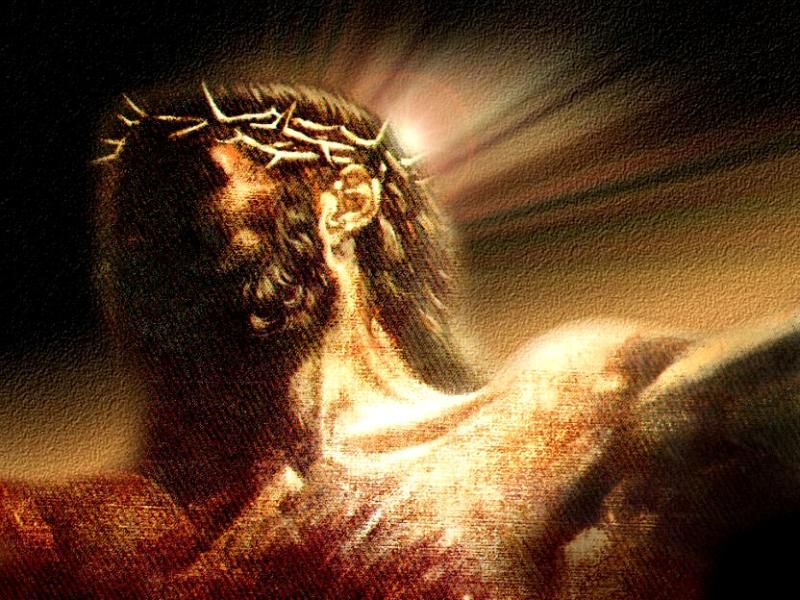
Once I preferred laptops, but since the advent of Android and Apple tablets, I migrated back to the desktop PC. When attempting to accomplish work, there is something to be said for sitting at a dedicated workspace to help productivity. Even so, I usually choose desktop wallpaper to reflect my interests from the religious to whimsical. My capricious nature typically ensures that wallpaper is changed frequently.
One day after having selected an artist’s rendering of the Christ wearing a crown of thorns for my wallpaper, I noted how I had allowed the desktop of my PC to become cluttered with icons and files. Though they made finding things more manageable, they obscured the image I had chosen for my inspiration. I had to do some cleaning so that I could once again see Christ!
Spiritually, I feel as if we sometimes equally “mask” the presence of the Christ in our lives. It is not our intention to do so, of course. We are just going about our regular business. Yet, there comes the point in out lives in which we begin doing what we feel is most convenient, despite what this “convenience” does to the presence of the Christ in our lies. Soon, others are unable to readily see the Christ in our lives since He has become obscured by our ephemera. If this persists, others will be unable to see Him at all.
When this happens, it is time to clean up or bring order to the chaos. One needs to put things in their proper place so that the image of Christ becomes accentuated rather than obscured (cf. Matthew 6.33). It may take a bit of work, but the effort is worth more than anything else in this world because of its eternal implications.
Dear reader, are others able to see the Christ in your life? If not, perhaps it is time for spiritual cleansing. The only thing equal to the task, great or small, is the blood of Jesus Christ. For the one having never clothed him or herself in Christ (Galatians 3.27), baptism brings about the forgiveness of sins (Acts 2.38). For the immersed believer, the blood of Christ continuously cleanses us as we walk in fellowship with Him and fellow Christians (1 John 1.7).
Check your image in the spiritual mirror (James 1.22-25). If you cannot see the Christ, rest assured others cannot see Him either. Let us always strive so others can see the Christ in us.




















 The Preacher Pollard Blog