THE CRAZY WOMAN IN A ROMAN PRISON

Dale Pollard

 In A.D. 165, during the reign of Marcus Aurelius, Roman authorities dragged a Christian woman named Felicitas into a stone prison beneath the streets of Rome. The cell was so dark that the prisoners kept there couldn’t see their own hands. Food was scarce, disease wasn’t, and dampness never dried. Yet accounts record something strange— Felicitas spent her final days singing songs of thanksgiving. The guards outside stood there surprised as they listened through the iron bars. Thankfulness—in a place built to erase hope. That kind of gratitude seems nearly impossible today, but it sounds a lot like a verse from the Psalms that rarely makes its way to the microphone. 

 “I will offer to thee the sacrifice of thanksgiving, and will call upon the name of the LORD.” — Psalm 116:17 

 Most might breeze past the line, but the phrase “sacrifice of thanksgiving” reveals something profound. The psalmist isn’t talking about gratitude when life is full, comfortable, and convenient. He’s talking about gratitude that costs something—gratitude that must be fought for. It’s the kind Felicitas offered in that Roman cell. 

 A “sacrifice of thanksgiving” is what happens when gratitude is chosen, not felt. It can be seen in something small like that “thank you” we give Him without seeing the outcome. When we praise God before we understand the plan. When we hold onto God not because everything is good, but because everything is hard.

 In a sentence, it’s the kind of thankfulness that’s forged— not found. 

 Happy Thanksgiving!

An Excellent Wife

She is careful about how she approaches the various duties of the home, which she rules and oversees. She adopts a wise, God-approved character. This leads her to bless all who are in various relationships with her. Husbands do well to approach their duties, character-development, and relationships in the same way.

Neal Pollard

The book of Proverbs ends with an investigation (chapter 31). The writer, whether Lemuel is making observations or passing along his mother’s sage guidance, leads the search. He writes how rare and valuable an excellent wife is (31:10). It is a literary masterpiece, an acrostic poem (each verse begins with a successive letter of the Hebrew alphabet), a chiasm (“a rhetorical or literary figure in which words, grammatical constructions, or concepts are repeated in reverse order, in the same or modified form,” Apple Dictionary, 2.3.0). You would diagram the outline of the chiasm like this: A B C B A. The chiasm was a literary way to show the heart or focus of a specific section of Scripture. It would be readily identified by a Jewish reader, but it enriches our study when we understand that it’s intentionally there. The heart of this poem is verse 23: “Her husband is known in the gates when he sits among the elders of the land.” The net effect of the kind of wife described here is that it blesses her spouse’s life. That should be the goal of every married person, to raise others’ view of him or her through the righteous conduct of our life. What is the character of the wife described here?

  • She is prized and praiseworthy (10, 30-31).
  • Her husband and home are profited by and praise her (11-12, 28-29).
  • She is a hard worker (13-19, 27). 
  • She is generous with her material things and her wisdom (20, 26).
  • She is not ruled by worries and fears (21,25).
  • She dresses her children and house well and she dresses her character well (21-22, 24-25).

Some have used this poem to try and hold up a “Renaissance Woman,” an ideal so unrealistic that no woman could ever live up to her standard. These have had too narrow a view of the author’s purpose. He is trying to demonstrate the kind of approach that a wife, in this context, should take to her role and responsibility. She is careful about how she approaches the various duties of the home, which she rules and oversees. She adopts a wise, God-approved character. This leads her to bless all who are in various relationships with her. Husbands do well to approach their duties, character-development, and relationships in the same way. Society will be benefited from its members taking who they are and what they do more seriously. So will the church and the home. 

What a blessing to be married to an excellent wife! There is no substitute for this. How it makes the inevitable burdens of life easier to carry. Let us all strive to be excellent in the role(s) God has given to us! 

Is God Listening?

When we look at this psalm, attributed to David, we see a mixture of needs and desires.  He acknowledges his dependency, but he also affirms his devotion. When we’ve been recipients of such generosity, how can we keep from praising and serving Him?

Neal Pollard

Psalm 61 is a song with musical instructions, according to its title. I can think of at least two songs whose lyrics seem drawn from thoughts and phrases in this brief psalm. There’s a Gaither song, “Lead Me To The Rock That Is Higher Than I,” and brother Tillit S. Teddlie’s, “Hear Me When I Call” (1962). Thoughts in both songs seem related to the first three verses here.

When we look at this psalm, attributed to David, we see a mixture of needs and desires.  He acknowledges his dependency, but he also affirms his devotion. It is interesting to note David’s reference to God’s hearing: “Hear my cry” (1), “Give heed” (1), “I call” (2), “You have heard” (5), and “I will sing praise to Your name” (8). This is a beautiful image of God caring and listening as we speak to Him. How often do you visualize the personal nature of that?

As we break down this psalm, we can see at least three actions from the writer. These should mirror our response to God for all He is and has done for us.

AN APPEAL (1-2,4,7b)

David pleads with God to hear his cry and prayer. He feels isolated and detached, low and faint. He longs for safety and refuge. He wants God’s lovingkindness and truth to preserve him.  In short, he acknowledges his needs and God’s ability to supply them. We are in a dangerous place, spiritually, when we fail to see our need of God. It will keep us from appealing to Him and relying on Him. We are never independent, whether we know it or not! 

AN APPRECIATION (3,5-7a)

He credits God, acknowledging His generosity. He appreciates God’s refuge, inheritance, preservation, and fellowship. Kathy often says, “Gratitude is the key to contentment.” How true! It can also play a vital role in our faithfulness. When we understand that “Every good thing given and every perfect gift is from above, coming down from the Father of lights, with whom there is no variation or shifting shadow” (Jas. 1:17), it can revolutionize our relationship with God. 

AN ASPIRATION (8)

Responding to God’s gifts is so important to Him. What shows gratitude to God better than a transformed life. David wants to worship (8) and pay vows (5,8). The writer makes the point that it’s worse to be separated from God’s house than to be far from home. Having been given so much, he wants to reciprocate. As Jesus says later, “From everyone who has been given much, much will be required” (Luke 12:48).

Make no mistake about it! God is to be worshipped because He is God, not for the blessings and gifts He gives. But, when we’ve been recipients of such generosity, how can we keep from praising and serving Him?

Additional notes:

–Some believe this psalm to be written by a king, others by a priest, or by an exile. The longing to reconnect is reflected by any of these. 

–Compare this psalm to Psalm 21. Look for similarities.

–There are some compelling reasons to reinforce the idea that this is a psalm of David, like “the tent” (4), an expression that would make little sense after the temple is built, and the discussion of the inheritance in verses 5-7 that sounds a lot like 2 Samuel 7. 

Angels In The Old And New Testaments

Angels are so often misrepresented and misunderstood. A lot of our “theology” about them come from religious error and even Hollywood (wings? women? children?). What does the Bible teach us about them?

Dale Pollard

Old Testament Role

In the Old Testament, angels serve, for the most part, as divine messengers and “secret agents” of God’s will. They appear in human-like or supernatural forms to deliver God’s messages, guide, protect, or even execute His judgment.

Here are some examples: 

1. Messengers: Angels communicate God’s instructions, such as the announcement to Abraham and Sarah of Isaac’s birth (Genesis 18:1-15) or God’s commands to Moses (Exodus 3).

2. Protectors & Guides: Angels protect individuals or Israel, like the angel guiding the Israelites during the Exodus (Exodus 14:19) or protecting Daniel in the lions’ den (Daniel 6:22).

3. Agents of Judgment: Angels carry out divine punishment, such as destroying Sodom and Gomorrah (Genesis 19) or striking down the Assyrian army (2 Kings 19:35).

4. Worship & Service: Angels are depicted as part of God’s heavenly court, praising Him (Isaiah 6:2-3) and serving His purposes (Psalm 103:20-21).

The various types of angels include cherubim (guardians, Genesis 3:24) and seraphim (worshippers, Isaiah 6). Angels are subordinate to God, and their appearances are often horrifying as those they visit are often terrified (Judges 13:21). 

New Testament Role

We find that angels continue as God’s messengers and servants but are now closely tied to the life of Jesus and His church. Here are some examples of their role in the New Testament: 

1. Announcers of Christ: Angels herald Jesus’ birth (Luke 1:26-38, Gabriel to Mary; Luke 2:8-14, to shepherds) and resurrection (Matthew 28:2-7).

2. Ministers to Jesus: Angels support Jesus, such as after His temptation (Matthew 4:11) or in Gethsemane (Luke 22:43).

3. Guides & Protectors: Angels assist believers, like freeing Peter from prison (Acts 12:7-11) or guiding Cornelius to Peter (Acts 10:3-7).

4. Angels of Judgment: Angels are prominent in Revelation, executing God’s judgments (Revelation 8-9), gathering the elect (Matthew 24:31), and fighting demonic forces (Revelation 12:7-9).

5. Worshippers: Angels praise God and Christ (Revelation 5:11-12) and are part of the heavenly host.

Angels are clearly seen as subordinate to Christ (Hebrews 1:4-14). They inspire awe but— not to be worshipped (Colossians 2:18).

Worthy of Praise!

Have you ever made a list of why God is worthy to be praised? David did, in Psalm 111. Take a moment and explore his inspired, itemized list…

Neal Pollard

WORTHY OF PRAISE (PSALM 111)

Neal Pollard

One of those names that remind me of my childhood love of singing is Tillit S. Teddlie, a prolific songwriter and member of the church of Christ who lived to be 102. His songs have a trademark sound, and we have sung so many of them: “Heaven Holds All To Me,” “When We Meet In Sweet Communion,” “Oft We Come Together,” “Singing Redemption’s Song,” “Hear Me When I Call,” “Don’t Wait Too Long,” and “Into Our Hands.” He wrote about soul-winning and personal devotion, but he also devoted a lot of his hymns to worship. I love his song, “Worthy Art Thou.” 

It is said that Teddlie wrote this hymn in 1930, sitting on his front porch on a Sunday morning. He was studying a commentary, Johnson’s Notes, looking for something to put into his sermon. His Bible was open to Revelation, where the elders are before the throne and singing, “Worthy is the Lamb that was slain to receive power, and riches, and wisdom, and strength, and honour, and glory, and blessing” (Rev. 5:11)(biographical info via hymnstudies.blog). Teddlie could as easily have been studying Psalm 111. While the phrase, “worthy of praise,” is not found in the psalm, the psalmist calls for praise and then sets out to show why. 

HIS WORKS ARE WORTHY OF PRAISE

The psalm’s writer mentions God’s “work” and “works” four times in this brief psalm. They are “great” and “studied” by those who delight in Him (2). They are splendid and majestic (3). They are “powerful” (6). “The works of His hands are truth and justice” (7). The God who created everything did not step back and cease His activity among men after the creation. The God who calls for our works of obedience sets the example by continuing to work in the affairs of mankind. Whether His natural laws set in motion at the creation, His providential care, His answer to prayer, or His redemption, He is at work! For this, He deserves our praise. 

HIS WONDERS ARE WORTHY OF PRAISE

“He has made His wonders to be remembered” (4). These are unusual things beyond human capabilities. It means “to be wonderful” or “to cause a wonderful thing to happen” (TWOT 723). While the psalmist doesn’t mention specifically what these wonders are or give examples, any of the attributes and actions would qualify. The psalmist mentions who He is and what He has done. If we think deeply about those, we are left to dwell on how incredible and awesome our God is!

HIS WORD IS WORTHY OF PRAISE

The psalmist does not confine his praise to God’s nature and activity. There are His precepts (7), His commandments (10), and His covenant (5,9). God’s greatness is found in what He has revealed to us and what that revelation does for us in this life and for the life to come. My maker has seen to it we have the owner’s manual, to help us know how to best live. I am blessed by His truth (7,8). 

HIS WISDOM IS WORTHY OF PRAISE

While I must obtain wisdom myself, it is truly a “wisdom from above” (Jas. 3:17). I get wisdom through the fear of the Lord (10). This good understanding, brought about by His Word (see above), helps me avoid the folly of the unbeliever and the heartache of the rebellious. 

When I assemble with the saints to worship, I need to have a proper frame of mind. That occurs by intentional preparation beforehand. It helps me to meditate on who God is and what I am about to do in worship. This can help me focus and bring a better offering. There is no shortage of matters to consider. This psalm shows me just a few of the reasons why the object of my worship is praiseworthy! 

Two Key Elements for Powerful Prayers

Dale Pollard

1. Pray With A Proper Motive (Mark 8.2) 

What motivates us to pray? Proper motivation is praying with God’s will in mind and we can be sure that His will is for us to know Jesus. 

In Matthew 8.2 the leper asks Jesus to heal Him but the way in which he asks Jesus is telling. He says,

“Lord, you have the power to heal me if you want.” 

That’s another way of saying, “Lord, if it’s your will, you can heal me.”

Consider the following verses: 

“If you remain in me and my words remain in you, ask whatever you wish, and it will be done for you” (John 15.7).  

“Now this is the confidence that we have in Him, that if we ask anything according to His will, He hears us. And if we know that He hears us, whatever we ask, we know that we have the petitions that we have asked of Him” (I John 5.14-15). 

2. Pray With Proper Priorities 

(Mark 2.1-12) 

A paralytic is lowered through the roof by his friends but Jesus cleanses him of his sin first, then mends his physical problem. What is God’s will? Your spiritual wellbeing. Prioritize your prayer life by placing spiritual health at the top.

Pause And Be Grateful

Neal Pollard

When do we normally appreciate good health? Often, it is when we are aching and running a fever (or worse). When do we most keenly contemplate financial security? For many, it is in a time of financial crisis. take away food and water, and you see how vital and blessed it is to have such provisions. When things are going wrong, we wistfully long for and desire that feeling and state when things are all right.

When was the last time we thanked God for these things when they were not a pressing need or something elusive to our grasp? It is harder to remember these things when all is well. Yet, don’t you think God is pleased and impressed with a heart that knows how to be grateful at times when those things are abundantly present in that life? How must He appreciate the person who wakes up or pauses through the day, assesses life, and from the overflow of thanksgiving tells God in heartfelt sincerity how much he or she appreciates the cornucopia of blessings.

It takes so little effort, but it shows such spiritual maturity and goodness. Remember that God is pleased with such sacrifices as doing good (Heb. 13:16), which showing gratitude certainly is (Psa. 92:1). Won’t you say with David, “I will give thanks to the Lord with all my heart…” (Psa. 9:1a). He is imminently worthy and we are infinitely indebted!

A Call To Joyful Worship And Thankful Praise

Brent Pollard

Psalm 100 is a joyful prayer of praise and thanksgiving to God. Psalm 100 encourages everyone to worship the Lord and joyfully recognize His sovereignty and goodness. It highlights several important reasons for praising God and offers a framework for approaching Him in worship.

Reasons to Praise God:

  1. God is the Creator and Sustainer (v. 3). The psalmist reminds us that God Himself is our Creator and made us. We do not create or sustain ourselves; we owe our existence to God, our Creator. As His creation, we have a compelling reason to praise Him and recognize His authority over our lives.
  2. We are God’s people (v. 3). The psalm also confirms that we are God’s flock, sheep in His pasture. This imagery shows God as a loving and caring Shepherd who diligently cares for His flock. As His people, we have a special relationship with Him, and we can approach Him confidently, knowing He cares about us and meets our needs.
  3. God’s character (verses 4–5) The psalm praises God’s goodness, lovingkindness, and faithfulness. These characteristics are everlasting and extend to future generations. God’s character deserves our praise and thanksgiving because He is always good, loving, and faithful to us.

How to Worship God:

  1. Shout joyfully (verse 1). The psalm begins with the command to “shout joyfully to the Lord, all the earth.” Celebrating God’s greatness and goodness joyfully through worship is important, rather than keeping it somber or subdued. Our praise should be loud, exuberant, and full of joy.
  2. Serve with gladness (v. 2). True worship includes praising and serving God. We are to “serve the Lord with gladness,” indicating that we dedicate our lives to Him. Service should not be burdensome but rather a joyful response to God’s love and grace.
  3. Sing joyfully (verse 2). The psalmist urges us to “come before Him with joyful singing.” Singing is a powerful way to worship, allowing us to express our praise and love for God through our voices and hearts.
  4. Enter with thanksgiving and praise while blessing His name (verse 4). The psalmist encourages us to “enter His gates with thanksgiving and His courts with praise” as we approach God’s presence. Gratitude and praise should be at the forefront of our worship, acknowledging God’s goodness and thanking Him for His blessings. Furthermore, the Holy Spirit instructs us to “thank Him” and “bless His name.” Blessing God’s name entails honoring His greatness, holiness, and worthiness through our worship. This verse captures the attitude of gratitude, adoration, and reverence that should guide our approach to God in worship.

Psalm 100 is a beautiful reminder of why we should praise God and how to worship Him with joy, gladness, and thanksgiving. Reflecting on God’s character, creation, and love for us should inspire us to approach Him with hearts full of praise and gratitude, actively expressing our devotion to Him.

Thirsting for God

Brent Pollard

In Judah’s dry and barren wilderness, David composes one of the Bible’s most stirring and heartfelt expressions of spiritual yearning. Psalm 63 is a profound meditation of the soul’s thirst for the living God. David’s use of vivid imagery and passionate language in Psalm 63 exemplifies all who seek to draw closer to the Lord, showcasing the depths of his longing.

The psalm opens with David’s earnest cry: “O God, You are my God; I shall seek You earnestly; My soul thirsts for You, my flesh yearns for You, In a dry and weary land without water.” (Psalm 63.1 NASB). David’s intense yearning for God’s presence mirrors the desperation of physical thirst in a desert.

This longing echoes the Israelites’ experience wandering in the wilderness when they complained to Moses, “Why, now, have you brought us up from Egypt, to kill us and our children and our livestock with thirst?” (Exodus 17:3). 

David finds relief for his parched soul in the oasis of God’s power and glory, contrasting it with the dry and weary landscape of the Israelites. He repeatedly mentions God’s name (“O God…my God”), demonstrating his unshakeable recognition and relationship with the Almighty. His thirst is quenched by witnessing God’s manifest attributes in the holy place.

In Exodus 33.18, Moses expressed his desire to see God’s glory, which foreshadowed the coming of Jesus Christ, the radiance of God’s glory, as mentioned in Hebrews 1.3. Jesus promised in John 4.10 that whoever drinks the water He gives them will never thirst again, as stated in John 4:14.

David continues: “Because Your lovingkindness is better than life, My lips will praise You.” (Psalm 63:3). The psalmist praises God’s covenant love, superior to physical life. We love, because He loved us first. (1 John 4:19)

With hands raised in joyful blessing (Psalm 63.4), David declares: “My soul is satisfied as with marrow and fatness” (Psalm 63.5). Unlike his ancestors, who had physical abundance but spiritual emptiness, David had tasted and seen that the Lord is good (Psalm 34.8). He feasted on the Bread of Life (John 6.35) and had his deepest hunger divinely fulfilled.

Even in the night watches, a time of spiritual dryness for many, David reflects on his Beloved: “When I remember You on my bed, I meditate on You in the night watches” (Psalm 63.6). The darkness holds no fear because “the Lord is my light” (Psalm 27.1), dispelling the gloom and igniting songs of joyful praise (Psalm 63.7).

David models wholehearted devotion by clinging to God as his help and rejoicing in the shadow of the Almighty’s wings (Psalms 63:7-8). His vivid depiction of pursuing hard after God (Psalm 63.8) recalls Jacob’s fervent wrestling with the Divine (Genesis 32.22–32). Both David and Jacob emerge wounded yet holding tightly to their heavenly Companion, the One whose presence alone can quench the longings of the human soul.

Psalm 63 is a timeless expression of spiritual hunger and holy satisfaction found only in God. From the barren landscapes of wilderness wanderings to the urban deserts of modern faith, the words of the psalmist beckon all who thirst to come to the waters (Isaiah 55.1). The path leads to Christ, the fountain of living waters (Jeremiah 2.13; John 7.37-39). Will you drink deeply from His heart of steadfast love?

Deuteronomy: The Second Giving Of The Law (XXXIII)

The Song Of Moses (31:30-32:52)

Neal Pollard

John sees a sign in heaven which he calls “great and marvelous,” a sign involving angels, a sea of glass mixed with fire, victorious saints standing beside that sea, “And they sang the song of Moses, the bond-servant of God, and the song of the Lamb” (Rev. 15:1-2). Then, in Revelation 15:3 he quotes Deuteronomy 32:2-3. In one of our hymns, “On Jordan’s Stormy Banks,” there is a line that anticipates that as we rest in that fair and happy land, we will “sing the song of Moses and the Lamb, by and by.”

This song comes from God (cf. 31:19) and is first spoken by Moses (31:30) and then, of course, ultimately written down. It reminds us that Moses was not only familiar with Hebrew poetry, but he was the first to write it down (cf. Psa. 90). What can we learn from this inspired song, composed for Israel’s good?

It praises (1-4).  He proclaims the Lord’s name, and calls for others to ascribe greatness to Him (3). He calls God “the Rock” (cf. 15,18,30,31), indicating His steadfastness and dependability. He upholds God’s character as perfect, just, faithful, righteous, and upright (4). How many songs have followed this pattern, declaring to God in song in many different words, “How great Thou art!”?

It admonishes (5-6). Given the integrity and greatness of God, we certainly should not act corruptly, deny our heritage, and become crooked and perverse (5). Yet, this song charges, or at least warns, that such a response is never far away from us. This kicks off a big part of this song that could not have left the singers feeling warm and fuzzy. Notice the admonition: “Do you thus repay the Lord, O foolish and unwise people? Is not He your Father who has bought you? He has made you and established you” (6). For being a great and giving God, how could we repay Him with anything less than gratitude and obedience?

It reminds (7-14). The song is historical, looking back to an event that is still in the future for the first singers of it. The lyrics were for their descendants, to remember the giving of Canaan. This part of the song carries them through the deliverance and provision in the wilderness all the way through the conquest. It also contains a reminder of how choice and plentiful the resources are in this land. Don’t we need reminded, not only of the Lord’s substitutionary sacrifice through events like the weekly observance of the Lord’s Supper? Don’t we need reminders of past blessings, especially our salvation from the wilderness of sin? As the song urges, “Roll back the curtains of memory now and then, show me where you brought me from and where I could have been; Remember, I’m human, and humans forget, so remind me, remind me dear Lord.”

It warns (15-27). The largest portion of this song is borne of divine love. It is a warning against forgetting! It foreshadows future apostasy and God’s inevitable response to it, in keeping with His perfect nature and character. The warning centers around the folly and destructiveness of idolatry, how God would respond to it with omnipotent punishment. We do not like warnings, but we benefit from them. They are deterrents from a God who supplies all our needs (cf. Phi. 4:19). 

It laments (28-33). Following this lengthy rebuke, there is the emotional response of a fallen, punished people. Note the lyrics, “Would that they were wise, that they understood this, That they would discern their future!” (29). The future defeat of apostate descendants was not the result of a God who lacked ability (31), but because they chose to plant and harvest unrighteousness (32-33). Weeping always follows wickedness, whether in this life or the next! 

It hopes (34-38). How does one respond and rebound from such a grim picture? Focus on God! The song shifts from earth to heaven. After their reaping the harvest of their unrighteousness, Israel could anticipate divine intervention: “For the Lord will vindicate His people, And will have compassion on His servants, When He sees that their strength is gone, And there is none remaining, bond or free” (36). In His deliverance, He would point out the futility of serving any rival (37-38). He points out that hope is only found in Him, and these singers would audibly say so. 

It highlights (39-43). From the hope springs the ending that connects back to the beginning. Remember the character of that praiseworthy God? He is unique (39)! He is able (39). He is eternal (40). He is just (41-42). He brings joy (43). He atones (43). What better way to end this momentous song than by pointing the worshipper to heaven? 

Following the song which followed the preceding instruction (essentially, the first 31 chapters, as we know it), Moses ends it this way: “Take to your heart all the words with which I am warning you today, which you shall command your sons to observe carefully, even all the words of this law. For it is not an idle word for you; indeed it is your life. And by this word you will prolong your days in the land, which you are about to cross the Jordan to possess” (46-47).  The song was to touch their emotions, put their guard up, guide their descendants, bring them life, prolong their days, and fuel their mission. 

The chapter ends with God’s instructions that Moses ascend Mount Nebo, reminding him that he could not enter the Promised Land with the people because he “broke faith” with God and did not “treat Me as holy in the midst of the sons of Israel” (51). That mountain would be the place of his death after he had glimpsed that Promised Land (52). Though this is the fate of the great leader of Israel, this song is a vital part of his lasting legacy. We do well to study this song and be reminded of how God wants us to think when we worship Him in that way today. Our song service should be filled with all these elements, and our hearts should be tuned in to the God described in this powerful song! 

Effective Prayers For An Election Year

Dale Pollard

God’s people are going to be lifting up many prayers for the USA this year. In order for those prayers to be as potent as possible, here’s four biblical principles that will give them more power. 

  1. Evaluate your spiritual life. The prayers of righteous men and women make the most impact (James 5:16). 
  2. God can’t be seen as just one option. Think of the rascally child who, after receiving a “no” from his father, approaches his mother in secret seeking a “yes.” That child should receive a stern chat— perhaps a spanking? When we approach God, we must do so with His will above our wants. Sometimes the two line up! If they don’t, accept the answer and press on. 
  3. Saturate your petitions with praise and thankfulness. Even when odd viruses seem to mysteriously appear or the “wrong” man takes the office— God deserves your praise with a thankful heart. After all, He reigns with perfection and justice on His throne (Psalm 97:1). God has given us the cure to a horrible sickness that not even all the scientists in the world could cure (Ephesians 2:8). Nothing that happens today or any day will ever change those things. We’ve only just scratched the surface here, too. God deserves every bit of your praise and thankfulness, no matter what. 
  4. Don’t miss the big picture when you pray. Our minds have a way of fooling us into thinking that current events are the big picture. That’s just not true. What’s more important? The growth and faith of every member in His church. For an encouraging study, look at all the congregations in biblical history that were built up numerically and spiritually— despite who was leading the country at the time. What’s most important is not this country or nation, it’s His kingdom and that kingdom to come. 

Are you righteous? Please pray for this world and pray for His church. If there’s something keeping you from the righteousness of God, that’s far more urgent than anything else and that’s what deserves your full attention. 

Let’s be a happy and hopeful people— let’s be those who practice righteousness. 

David’s Song Of Victory

Neal Pollard

David penned roughly half of the psalms. His name appears above 73 of the psalms and the New Testament attributes him as the author of two more (Psalm 2 and 95). He may also have been the author of several more of the 50 anonymous or unattributed psalms. But we also find poetic work from David outside the psalms. There is 1 Chronicles 16:8-36, given by David to the sons of Asaph as a song of thanksgiving and worship (some of which appears also in Psalm 105:1-15). Then, there is 2 Samuel 22:1-51, which reflects much of the content of Psalm 18:2-50. 

The occasion of this psalm is explicitly stated. It is a song to the Lord, acknowledging His delivering David from Saul and his other enemies. David was a man of war, and he was challenged and disrespected by so many over time during his 40 year reign. We might call him embattled, continually weighed down by difficulties with others. While he had some extreme spiritual low points and multiple lapses in judgment, his overall character was of a man who trusted in God to deliver him and who tried to faithfully follow Him.

In 2 Samuel 22, David centers his thoughts on who God is. Notice what about God he focuses on.

  • GOD IS OUR RESCUER (1-20,44-49).
  • GOD IS OUR REWARDER (21-22,24-27).
  • GOD IS OUR RULER (23). 
  • GOD IS OUR REDEEMER (28).
  • GOD IS OUR ROCK (32,47).
  • GOD IS OUR REFUGE (29-31,33-34).
  • GOD IS OUR REINFORCER (35-43).
  • GOD IS OUR REASON (50-51). 

Read through this beautiful psalm and see the gratitude and praise David pours out toward God. He had been in many valleys and through some uncertain and frightening times, but he refused to blame God and was unwilling to believe he had been abandoned by God. Perhaps we have no better example of how to respond to personal adversity and unfair treatment than David. Instead of turning bitter and losing faith, David doubled down on what he knew about God! He put his trust in Him and counted on Him to carry him through. He was confident in God’s ability to prove Himself the victor against any and every foe. Whatever you are going through right now, please focus on who God is–your rescuer (2 Tim. 4:18), your rewarder (Heb. 11:6), your ruler (Rev. 1:5), your redeemer (Ti. 2:14), your rock (1 Cor. 10:4), your refuge (Heb. 6:18), your reinforcer (Eph. 6:10), and your reason (John 20:30-31)!

What Kind Of “Man” (Or Woman) Are You? (Proverbs 28)

Neal Pollard

The proverbs in Proverbs 28 are still part of the collection of those transmitted during the reign of King Hezekiah well over 200 years after Solomon’s death. They are filled with warnings and instructions, many of them similes. In this chapter, Solomon speaks of various types of men both good and bad.

“A poor man” (3, 6, 11,15). The poor man is not always painted sympathetically, nor is he always approved by God. Solomon mentions the audacious poor man who oppresses other poor people as being a destructive rainstorm (3). But the poor man who walks in integrity is said to be better than the crooked-acting rich man (6). Solomon praises the one who looks after the poor (8). A poor man with understanding is wiser than a rich man wise in his own eyes (11). God condemns wicked rulers who trample over the poor (15). A stingy miser bequeaths poverty to his descendants (22). Giving to the poor does not impoverish a person, but the one who turns his eyes away from the poor is cursed (27). 

“An evil man” (5). This man is also referred to as “wicked” (1,4,12,15, 28), a synonym of evil meaning one who is guilty of a crime and deserving punishment. This evil one is unpleasant and malignant in God’s eyes. In Proverbs 28:5, they are depicted as being as far from God as possible such that they do not understand justice. Keeping with that contrast, law-abiding people fight against the wicked (4). People avoid wicked rulers (12,28), and with good reason (15). Yet, the wicked are full of instability and insecurity (1). Even their prayer is an abomination to God (9). 

“A rich man” (6,11). While the book of Proverbs makes clear, as does the rest of Scripture, that being rich is not inherently evil or wrong, that state of being often comes with caveats and warnings. Paul says, “But those who desire to be rich fall into temptation, into a snare, into many senseless and harmful desires that plunge people into ruin and destruction” (1 Tim. 6:9). Jesus taught, “It is easier for a camel to go through the eye of a needle, than for a rich man to enter the kingdom of God” (Mat. 19:24). He says it is hard for a rich man to enter the kingdom of heaven (Mat. 19:23). In keeping with biblical teaching in other places, Solomon, one of the wealthiest men who ever lived, speaks from experience. Wealth can easily be abused or misused. He can easily trust in himself (11). Several statements about the poor in this chapter show the danger to those who trust in their riches. As Solomon writes, “A stingy man hastens after wealth” (22) and “a greedy man stirs up strife” (25). 

“A faithful man” (20). This man is literally one who is full of faith, steady, trustworthy, honest, and dependable. He is a blessed in his ways. He walks in integrity (18). They fear the Lord always (14). “The one who keeps the law is a son with understanding” (7). They are among the righteous (28). He is not exempt from wrongdoing, but he is faithful to confess and forsake it (13). If he is rebuked (23), he will respond wisely and appropriately.

Character is built thought by thought, decision by decision. It is not dramatic. While there may be defining moments that stand out, it is mostly subtle and gradual. Each one of us is becoming some kind of man or woman, moving in one direction or another. Jesus says it most dramatically, that we are traveling on one of two roads leading to one of two eternal destinies (Mat. 7:13-14). We are not what we wish, hope, or intend to be. We are the product of our choices. God wants us to consider carefully and be faithful (Rev. 2:10). 

Praying Like David

Thursday’s Column: Captain’s Blog

Carl Pollard

One of the many valuable lessons that I was taught at Bear Valley Bible Institute came from Corey Sawyers. He was our instructor for the book of Psalms. He was known to say “there’s a psalm for that” just about every day. But there really is a Psalm for just about every situation we encounter and emotion we feel. But a psalm’s true beauty is recognized when you say it in a prayer to God. 

Many of David’s psalms were prayers to the God of Heaven, so why don’t we do the same? Corey showed us a way to feel the depth and emotion that these psalms contain, and I encourage every Christian to try this method the next time you read Psalms. 

Take each sentence and put it in your own words. Then pray it to God. It’s pretty straight forward, but here are 3 examples: 

Psalm 8:

God how perfect and holy is your name in all of the earth. You have shown your glory and power through your creation. Everyone can see your strength, Your power over every person. We can look around and see your works. We see creation and recognize that it was you that made it. Knowing all of this we are amazed that you would be mindful of us, but not only are you mindful, but you care for us. So much that you would send your son. Making him lower than the angels. All for us. Your son has power over everything and we understand that you put all things under his control. God how perfect and holy is your name in all of the earth. 

Psalm 13: 

Heavenly Father we come to you asking if you have hidden your face from your children? Do you forget us? We know it isn’t possible for us to comfort ourselves. At times we feel discouraged and think that Satan has won, that our enemies have taken control. And so because of this we ask you to answer our plea. Help us to focus on you in times of trial. Help our enemies to see that you have won. Through everything help us to trust in you, help us to recognize your love for us. Help us to find joy in our salvation. We praise you and thank you for blessing us beyond what we deserve. 

Psalm 23 

God we come before you thanking you for taking care of us. For giving us all our needs. You bless us with more than we could give to ourselves. You comfort and restore us. You give us the path to righteousness. Even when we go through trials we know you are still with us. You never desert us. No matter what happens you comfort us. You take care of us and bless us to the point that we overflow. Because of you we have goodness and mercy given to us our entire life. And we can stay in your presence forever. Thank you God for everything. 

Something as simple as praying a psalm in your own words can add depth, meaning, and emotion to your prayer life. I encourage us all to imitate David when we approach the throne of God.

The Law Of The Lord And Happiness

Monday’s Column: Neal At The Cross

Neal Pollard

The third section of Psalm 119 is highlighted by the third Hebrew letter, “gimel.” It has been said that this section contains the basic idea that the Law of the Lord makes a righteous person happy. If we let God define happiness, this makes sense. Even when a stranger (19), when full of reproach and contempt (22), when princes sit and talk against him (23), the righteous can see wonderful things (18) and experience delight (24). Notice what this righteous Bible student does as he drinks in the Word.

He Makes Tangible Requests

He asks God to “deal bountifully” with him (17), to “open his eyes” (18), and to “take away reproach and contempt” from him (22). Studying God’s Word is meant to be practical and life-changing. What an attitude to see Bible study as a partnership between ourselves and it’s powerful, transforming nature. We should expect blessing, enlightenment, and transformation when we plant the Word deep on our hearts.

He Makes Personal Application

Notice how many times in these eight verses the writer says “me,” “my,” and “I.” The request for blessing is “that I may live” (17). “Open my eyes, that I may behold” (18). “I am a stranger” (19). “Do not hide your commandments from me” (19). “My soul is crushed” (20). He asks that reproach and contempt be taken “from me” (22). “I observe” (22). Princes “talk against me” (23). His testimonies “are my delight” and “my counselors” (24). Bible study is a first-person endeavor first, before we make it a second-person (you) or third-person (them) task.

He Makes An Important Connection

The writer sees God’s power in the written word. His tribute is to the God who had these things written down and revealed to him. When we can make the connection that God is speaking to us when we read the Bible, it changes what we do with what we read. He refers to “Your word” (17), “Your law” (18), “Your commandments” (19,21), “Your ordinances” (20), “Your testimonies” (22,24), and “Your statutes” (23). No wonder some even so-called scholars try to undercut the inspiration of Scripture. If I can reduce the words of Scripture to the work of men, even “later scribes” who changed and added to some original, lost message or if I can express doubt over the validity or legitimacy of a passage or Bible book, then it becomes more of a take it or leave it message. Contrast that attitude with passages like 1 Peter 1:23 (“the living and enduring word of God”), Jeremiah 23:29 (God’s word is a fire and a hammer), 1 Thessalonians 2:13 (the word of God which performs its work in you who believe), Ephesians 6:17 (the sword of the Spirit), and John 12:48 (the word that will judge us in the last day). The Bible is from God to us, and we must always make that connection!

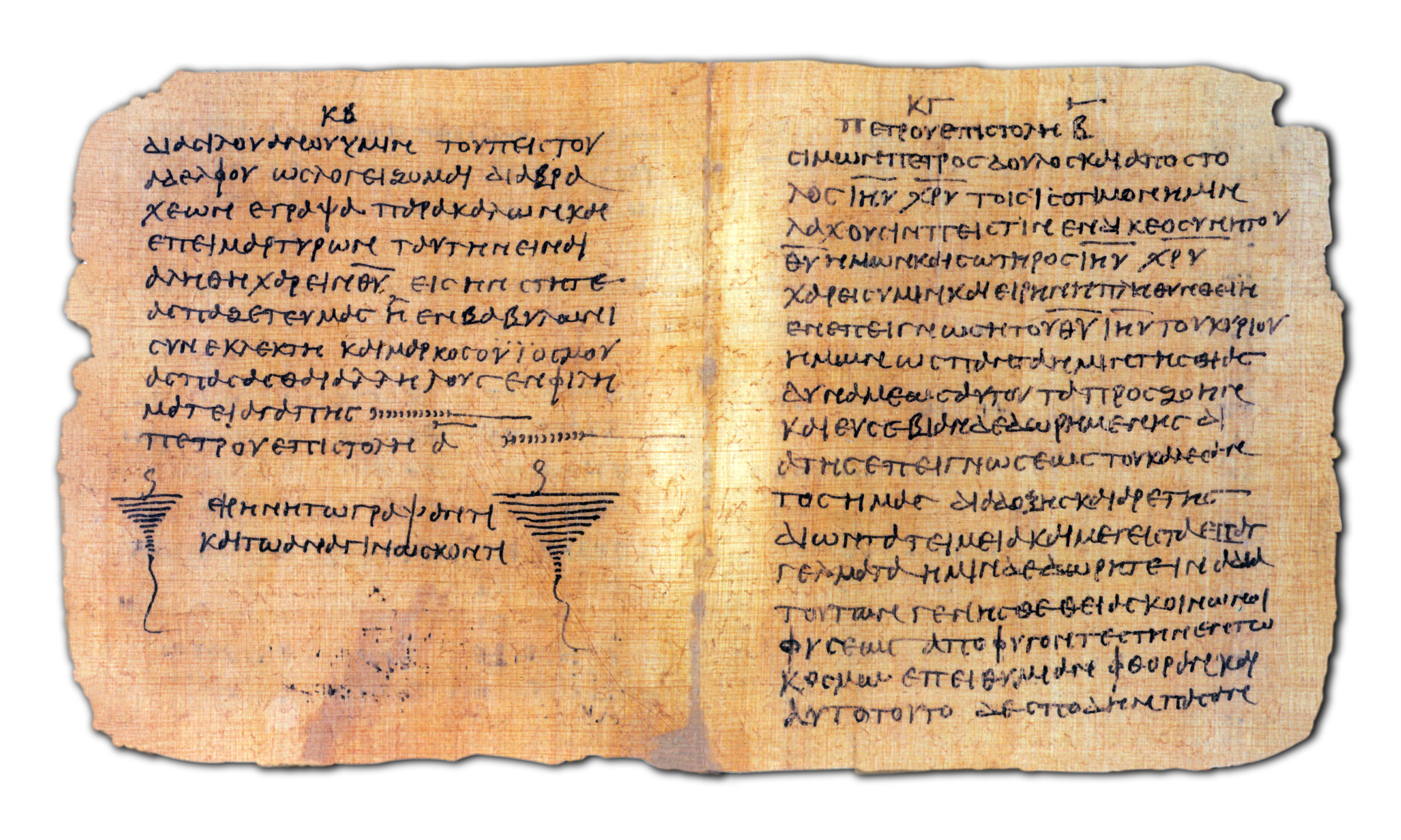
A Simple Study Of 1 Peter (Part One)

Wednesday’s Column: Third’s Words

Gary Pollard

For the next several weeks, I’ll be repeating the book of I Peter in present-day terminology. It’s not a true translation of the book, as I am not qualified to do so. It will be based on an exegetical study of the book and will lean heavily on the SBL and UBS Greek New Testaments, as well as comparisons with other translations (ESV, NASB, NIV, ERV, NLT). My goal is to reflect the text accurately, and to highlight the intent of the author using concepts and vocabulary in common use today. 

This is not an essentially literal translation, and should be read as something of a commentary. 

I Peter I – Intro to Hope

I am Peter, one of the special messengers that Jesus chose to follow him. This is for the chosen ones who had to leave their homes; they are spread out over Pontus, Galatia, Cappadocia, Asia, and Bithynia. 

You were chosen by our father, God, because that was his plan. It was his Spirit that made you special people who live differently from everyone else. He chose us [Christians] to be the ones who obey him. He chose us to enjoy grace through Jesus’s blood, the one who came here to rescue us. May you have plenty of grace and peace. 

God, the father of our master Jesus (the one who saved us), deserves our love and praise! He has so much good will for us that he gave us new life and a hope that can never die. We have that hope because Jesus came back to life. 

This hope is for something we’ll get when we die: a brand new, untouched, permanently perfect place to live forever. It’s reserved for you right now, protected in heaven. God’s power is protecting you right now because of your faith. He’ll make sure you get the results of your hope when it’s revealed at the end of time. 

Praise The Lord!

Neal Pollard

Your version may use the word “hallelujah” to begin Psalm 135. Hallelujah means “praise the Lord.” While it is synonymous with giving thanks, it means to laud a superior quality or act, to acclaim and express joy in doing so. What is so noteworthy is that the psalmist does this in very specific ways, recounting times in history when God demonstrates His power and glory on behalf of His people. As we walk through the psalm, we see this. Why is He to be praised?

  • HIS CHOOSING OF HIS PEOPLE (4)
  • HIS NATURE (5)–Great, Above All
  • HIS WORK IN CREATION (6-7)–Heaven, Earth, Seas, All Deep, Vapors, Lightning, Wind, Rain
  • HIS DEFEATING OF THEIR ENEMIES (8-11)–Egypt, Amorites, Canaanites
  • HIS BLESSINGS (12)–Gave His People A Heritage (Possession)
  • HIS POWER (13)–His Name And Remembrance
  • HIS PROMISES (14)–Compassionate Judgment
  • HIS SUPERIORITY OVER HIS RIVALS (15-18)–Deaf, Dumb, And Blind Idols, Just Like Humans

The writer calls on God’s people to praise and worship Him in song, expressing their adoration (1-3). He ends with a threefold call to “bless the Lord” (19-21). May I suggest that you work through something both in your daily life and in your preparation before every time you assemble to worship? Call it setting the table for fellowship with the Divine. Either meditate on the specific works and ways of God that are worthy of admiration, praise and honor or pray to Him, expressing these matters in specific terms. Focus on how He’s demonstrated greatness in blessing your life and the lives of those around you. Perhaps it’s answered prayer, providence, deliverance, or relief. Focus on His power and might in the affairs of our nation, in the activities of our congregation, and the occurrences within your family and personal life. Let the worship flow as you look around at all you see in nature, from the universe to right out your window. Think about the gift of Jesus for your sins. All of this will surely cause you to echo the writer in Psalm 135 and call out to others, “Praise the Lord!”

Photo credit: Kathy Pollard

THE BEGGING MAN WHO KNEW HE NEEDED JESUS

Monday’s Column: Neal At The Cross

Neal Pollard

One of the most intriguing people in all the gospels, to me, is the beggar sitting by the road near Jericho. Mark 10:46 tells us that the man’s name is Bartimaeus. Matthew tells us that there is another man sitting with him, and that man’s name is not given (20:30). This man was shameless in a good way, persistent despite the crowd sternly discouraging him (39). I wonder if there is a more pathetic person disclosed to us in the Bible (maybe Lazarus back in Luke 16). He is needy in at least five ways, according to Luke 18:35-43:

  • He’s physically impaired (35)–“a blind man”
  • He’s economically disadvantaged (35)–“by the road begging”
  • He’s socially outcast (39)–He’s not depicted as a respected member of society, but one to be corrected by the others
  • He’s emotionally distraught (38-41)–Begging for mercy and longing for sight
  • He’s spiritually incomplete (42)–When Jesus heals him, He tells the man, “Your faith has saved you.”

I love how the man is so stripped of his dignity, power, and resources that he boldly pleads for Jesus’ help. It may seem strange, but all of us need to get to that place if we will receive what only He can give. He wanted His mercy. When he received it, look at the response. He “began following Him, glorifying God; and when all the people saw it, they gave praise to God” (43). Don’t you want your submissive, obedient life to be a drawing card for others to see their need of God and to glorify Him? God really shows His power when He takes the lowliest and transforms them by what He does with and through them. That’s why I love this account.


Breaking The All-Time Assist Record

Monday’s Column: Neal At The Cross

IMG_1922

Neal Pollard

The FIBA basketball glossary defines an assist as a pass to a teammate that directly leads to a score by a field goal (a basket scored on any shot). When I was in High School and college, Duke University had a guard named Bobby Hurley who would break the all-time NCAA record for assists with 1076 in 140 games (sports-reference.com). That means an average of almost eight times per game, he gave up the ball to a teammate whose three-point shots, slam dunks, or other baskets made the crowds stand up and cheer. While knowledgeable enthusiasts of the game appreciate the importance of the “assist man,” the average fan may miss the vital contribution of the one making that assist. But the very concept suggests unselfishness and one with a team mentality. For them, satisfaction and enjoyment comes in a well-timed, well-placed contribution that allows others to get recognition and praise.

Scripture places a great premium on the person who assists others. Our first thought may be financially. Paul tells the Ephesian elders that he had taken care of his own financial needs (and of those with him) while doing missionary work, recalling words of Jesus not recorded in the gospels that “it is more blessed to give than to receive” (Acts 20:35). In the matter of “giving and receiving” (Phil. 4:15), Paul encouraged a mindset that applied to more than just monetary things. It was not a mind which sought “after their own interests, not those of Christ Jesus” (2:21). It was a “humility of mind” that could “regard one another as more important than” themselves, that could “look out” not merely for their “own personal interests, but also for the interests of others” (2:3-4). It is the Christ-like heart that chooses to “please his neighbor for his good, to his edification” (Rom. 15:1-3); cf. 1 Cor. 10:24,33). Oh, to say with Paul, “So then we pursue the things that make for peace and the building up of one another” (Rom. 14:19).

Would you like to be the assist-leader in your home, in your congregation, and in your community? Look for ways to put others in the spotlight for their efforts and kindness. That may mean reorienting how you see life, looking to give glory and not needing to have it. What a righteous revolution would occur when our focus would be on how to make others look good, helping others to be appreciated and recognized, and setting others up for praise and admiration. It will in no way hinder us from receiving the highest accolade of all, given by the most important witness–the One who sees all with perfect perspective (Ecc. 12:14). A “well done” from Him has eternal implications (Mat. 25:21,23). What more do we need than that?!

“Praying The Scriptures”

MONDAY’S COLUMN: NEAL AT THE CROSS

Neal at ATF 2020

Neal Pollard

Yesterday morning, Chuck Raymer prayed an especially beautiful prayer, well-thought-out and earnest, but also filled with quotations of Bible verses or parts of them (near the beginning, he quoted Psalm 100:3)(his prayer begins at about 6:30 of the recording on YouTube of yesterday morning’s service: It starts here). My good friend and former co-worker in Colorado, Corey Sawyers, would often adapt the words of an entire psalm and pray it as he led us in the assemblies. There is something especially powerful about prayers that are Scripture quotations. It’s certainly something biblical.

In Acts 4:23, Peter and John, after having been released from being held by the Jews for preaching Jesus, met with the Jerusalem congregation. They lifted their voices to God with one accord and addressed Him. In their brief prayer (note verse 31), they quoted Exodus 20:11 (also found in Nehemiah and Psalms) and Psalm 2:1-2. They were so full of the Word that it came out even in their prayers. Look at the Levites who led Judah in prayer in Nehemiah 9:4-37. Much at that prayer quotes passages and events found in the Pentateuch (the first five books of the Old Testament). Most powerfully of all, Jesus prayed Scripture at a more difficult moment than any other human being will ever face (Mark 15:34). The praying prophet, Daniel, turned to God in prayer being moved by the words of Jeremiah (Dan. 9:2-3). How will it help us to pray the Scriptures in our own lives, whether in publicly leading prayer or in our private devotional lives?

IT LETS THE GOD WE WANT TO HEAR US KNOW THAT WE ARE LISTENING TO HIM.

Certainly, God knows His Word, but so does He know our every innermost thought, desire, and need. But, there is something about addressing God by including great truth from His Word that can really enrich those prayers. It tells Him we are mindful of His will even as we seek to influence it. 

IT BUILDS OUR FAITH IN THE TRUTH AND PROMISES OF HIS WORD.

Repetition is not just the key to learning, but it can also greatly aid our comprehension and retention. As you pray Scripture, you help reinforce those promises and truths. You will actually be reflecting on them as you pray it back to God. 

IT HELPS US TO APPLY THE WORD TO OUR DAILY LIVES.

Scripture can become more real and meaningful as we make verbalize it in prayer. It can take incidents and teachings in Scriptures and directly apply those verses to what we are going through. So often, we are going through the same exact types of things men and women of the Bible were going through. How can it be more practical than this: “Your word I have treasured in my heart, that I may not sin against You” (Psa. 119:11)?

There are probably several more reasons why we should quote and allude to Scripture in our prayer lives, but these are at least a few. You will certainly never say anything more truthful and right in your prayers than God’s Word. You will also be walking in some very righteous footprints, of those in Scripture who prayed Scripture back to God.